
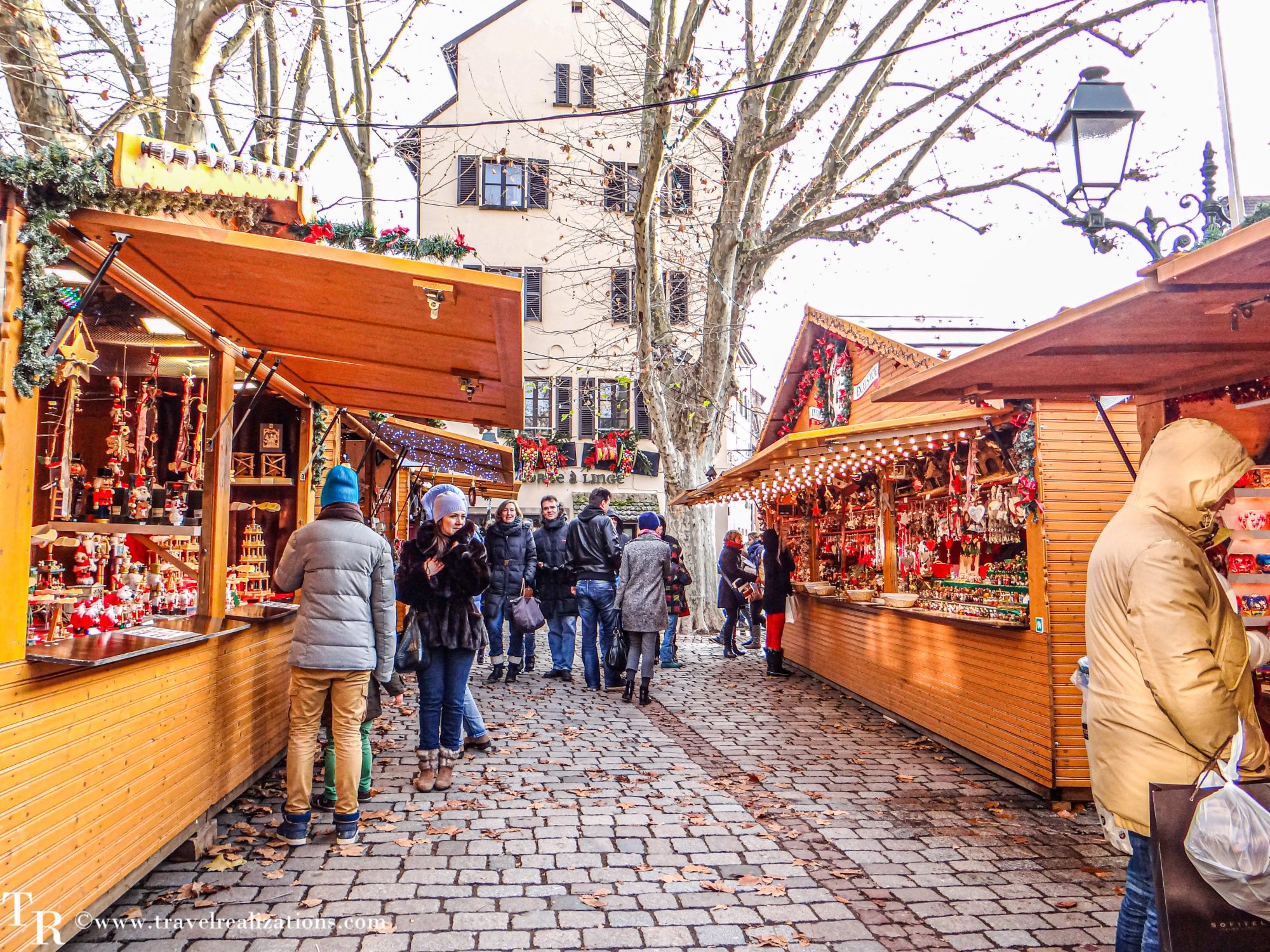
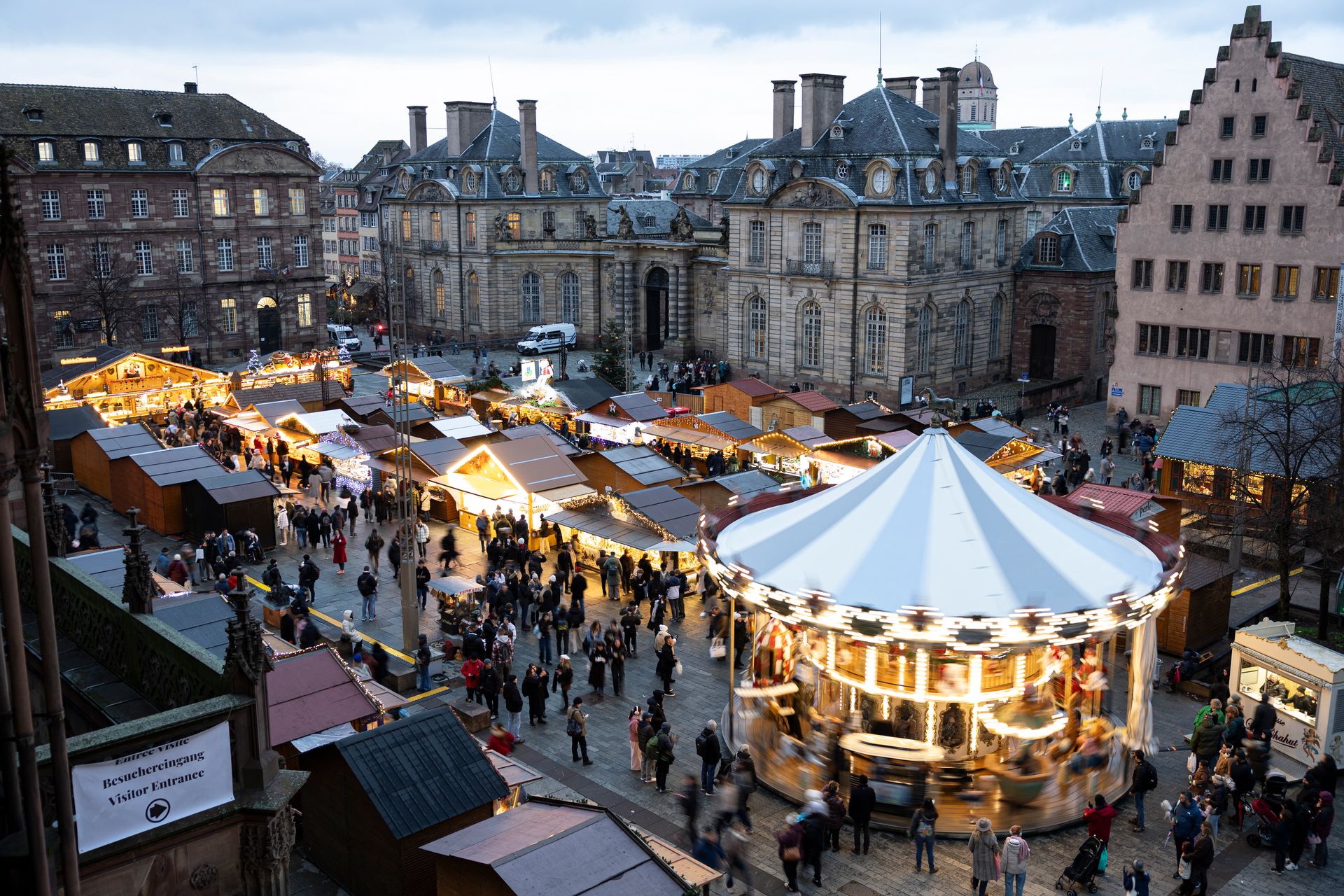
The scent of spiced gingerbread and toasted almonds hangs in the crisp Alsatian air, mingling with the glow of a thousand lights draped over half-timbered houses and a Gothic cathedral.
Strasbourg isn’t just another Christmas market; it’s the historic “Capital of Christmas,” where thirteen distinct markets sprawl across a walkable medieval center older than most countries.
This guide cuts through the noise to help you decide exactly which markets to visit, what to eat, and how to experience the magic without the misery of peak crowds.
Budget roughly €25-€40 per day for hearty street food and mulled wine, €50-€100 for a mix of meals and artisan souvenirs, and over €100 if you’re indulging in fine Alsatian dinners and premium gifts.
Quick-Reference: Strasbourg’s Top Christmas Markets
This snapshot covers the highest-value decisions for a first-timer—pick your priority and go.
| If You Want… | Go Here | Insider Note |
|---|---|---|
| Ultimate historic atmosphere | Place de la Cathédrale | Go at opening or after 9 PM to avoid the worst crowds. |
| The iconic giant tree | Place Kléber | For the best view, go upstairs inside the Aubette 1928 building—it’s free and empty. |
| A relaxed food & wine focus | Square Louise-Weiss | This is where you find true regional Alsatian producers, not mass-market stalls. |
| Quicker vin chaud with fewer lines | Place Broglie (Christkindelsmärik) | Same great mulled wine, often a fraction of the wait compared to the cathedral. |
| Eco-conscious artisan goods | Place Grimmeisen (OFF Market) | Expect to pay more for the organic ethos; great for unique, sustainable gifts. |
| Collector-quality ornaments | Petite France (Meisenthal stand) | Buy hand-blown glass ornaments from the famous Meisenthal glassworks here only. |
Is Strasbourg’s Christmas Market Worth Visiting?
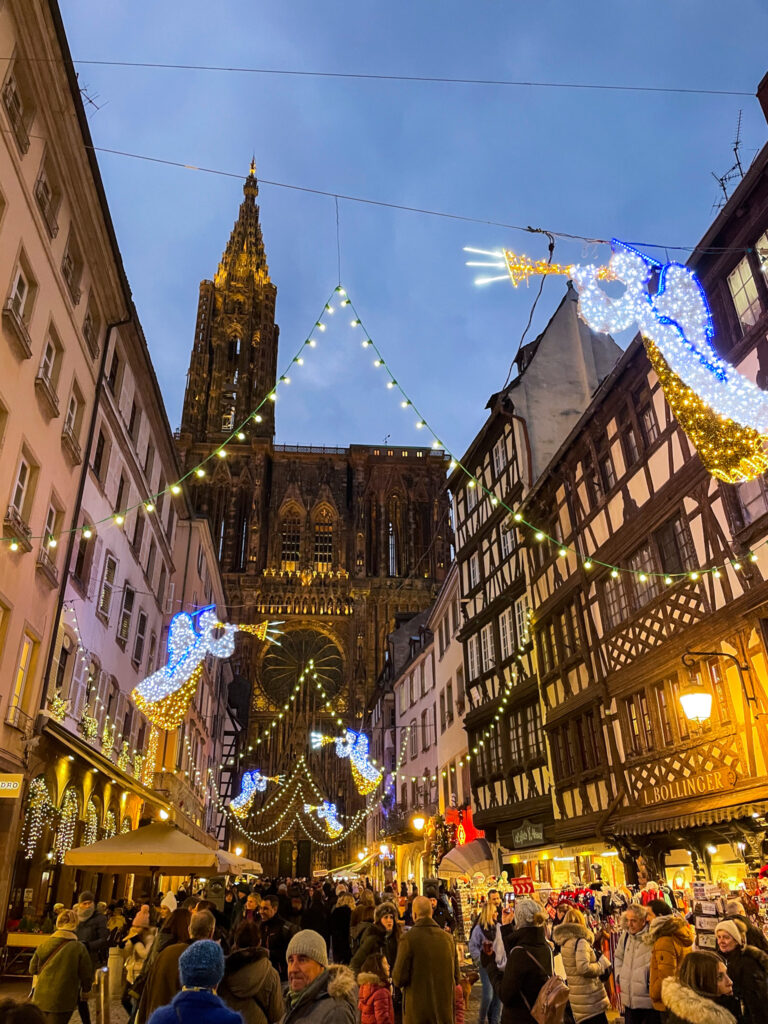
Thirteen distinct markets fill a medieval city center that’s been doing Christmas since 1570 — Strasbourg didn’t earn the title “Capital of Christmas” from tourism boards alone. The sheer density of markets packed into a walkable Old Town means you can stumble from Alsatian gingerbread stalls to a glowing Gothic cathedral to a giant illuminated tree in Place Kléber without ever breaking stride.
For anyone who’s done a German market and wants something bigger, older, and far more atmospheric, this is the upgrade.
Yes, it’s worth it. Unequivocally.
But it’s worth it correctly — which means going on a weekday in late November or early December, not the final Saturday before Christmas when the crowds turn the narrow streets of Petite France into a standing-room-only crush. The magic is real, but so is the congestion if you pick the wrong dates.
What Sets Strasbourg Apart from Every Other European Christmas Market
- Scale: Thirteen markets across the Grande Île, the entire historic center. Most cities have one or two. Strasbourg has a whole circuit — each square has its own personality, from the intimate producers’ stalls at Square Louise-Weiss to the massive spectacle at Place Kléber.
- Age: The Christkindelsmärik on Place Broglie dates to 1570, making it the oldest Christmas market in France. You’re walking through centuries of tradition, not a pop-up event.
- Architecture: Half-timbered houses, the cathedral’s sandstone facade draped in lights, and the canals of Petite France create a backdrop no purpose-built market can match.
- Food and drink: Vin chaud (mulled wine) with a collectible ceramic mug — you pay a small deposit, keep the mug as a souvenir or return it. Pair it with bredele (Alsatian Christmas cookies), foie gras, and flammekueche. This isn’t generic fair food; it’s regional cuisine in full holiday mode.
- The tree: The Place Kléber tree is genuinely enormous and spectacular after dark. Insider move: head up to the Aubette 1928 building for a free bird’s-eye view of it — it’s almost always empty.
What Could Disappoint You
The crowds are the biggest caveat. Weekends in mid-to-late December are shoulder-to-shoulder in the core areas around the cathedral and Place Kléber.
The damp Alsatian winter air makes 2°C feel colder than you’d expect — underdressed visitors cut their time short because they’re freezing, not bored. And some stalls sell mass-produced souvenirs you’ll find at any European market, so focus your euros on local vendors, especially at Square Louise-Weiss and the Alsatian Delicacies Market at Place du Marché-des-Poissons.
The Bottom Line
Strasbourg’s Christmas market is worth visiting if you go smart: book a hotel in the Old Town or Petite France area months ahead, aim for a weekday visit in the first two weeks of the market season (usually late November through early December), dress in serious layers, bring cash for smaller vendors, and give yourself at least two full days to wander rather than rush. The 2025 season runs approximately November 27 to December 27 — confirm exact dates with the official tourism site closer to the season, as they shift slightly each year.
Everything that follows in this guide — market-by-market breakdowns, crowd strategies, what to eat, where to see the best decorations — is built to help you experience this at its best, not its busiest.
Best Time to Visit Strasbourg’s Christmas Markets
Strasbourg’s markets open a full month before Christmas — and that’s your biggest planning advantage. Arriving in late November or the first week of December means you get every stall, every decoration, and every mug of vin chaud without the crushing shoulder-to-shoulder crowds that define the final ten days.
Most visitors don’t realize this, and it’s the single best decision you can make for your trip.
When Do the Markets Open and Close?
The Strasbourg Christmas Markets typically run from late November through December 27. For 2025, the confirmed dates are November 27 to December 27, 2025.
That’s roughly five weeks of operation — longer than most European Christmas markets. Confirm exact dates on the official Strasbourg tourism site before booking, as they shift slightly each year.
Most stalls open around 11:00 AM and close by 8:00 PM on weekdays, extending to 9:00 PM or later on weekends and closer to Christmas. Food and vin chaud stands often stay open a bit later than craft vendors.
The big exception is December 25 itself — many stalls close or operate on reduced hours.
How Many Days Do You Really Need?
Two full days is the sweet spot. One day is technically possible but guarantees you’ll either rush through the markets or skip entire neighborhoods — and Strasbourg has thirteen markets spread across the Old Town, so ticking them all off in a few hours isn’t realistic.
Two days lets you explore at a relaxed pace, see the markets in both daylight and after dark (which is non-negotiable for the full experience), and still have time for a proper Alsatian dinner.
If you want to include a day trip to Colmar’s markets or explore Petite France without time pressure, budget three days. Base yourself in the Grande Île or Petite France area for walkable access to every market — hotels here fill up months ahead for December weekends, so book as soon as your dates are set.
How to Avoid the Worst Crowds
- Weekdays over weekends: This is the single biggest crowd-reducer. Saturdays in mid-to-late December are packed to the point where navigating the stalls around the Cathedral and Place Kléber becomes unpleasant. If you can only visit on a weekend, aim for the opening weekend (late November) when the festive energy is high but the masses haven’t arrived yet.
- Early season over final week: The last days before Christmas draw the heaviest crowds of the entire run. Late November through the first week of December delivers the full Christmas market experience — identical stalls, same decorations, same food — with noticeably thinner crowds.
- Mornings and late evenings: Arrive by 11:00 AM when stalls open for the calmest browsing window. After 8:00 PM on weekdays also thins out considerably. The sweet spot for photos with fewer people is around 5:00–6:00 PM, when the lights come on but dinner crowds haven’t arrived.
- Go where others don’t: The markets at Square Louise-Weiss and Place Grimmeisen (the OFF Market) attract a fraction of the foot traffic compared to the Cathedral and Place Kléber. They’re smaller but more relaxed, and you’ll actually find locally made products instead of mass-produced souvenirs.
What’s the Weather Like in December?
Strasbourg averages around 1–6°C (34–43°F) in December, but the damp Alsatian air makes it feel significantly colder than those numbers suggest. This is not the place to tough it out in a light jacket.
Layer aggressively: thermal base layer, warm mid-layer, insulated coat, scarf, hat, and gloves. You’ll be standing outside for hours, not just walking through — warm hands matter when you’re holding a mug of vin chaud and browsing stalls.
Rain is common, so a waterproof outer layer or compact umbrella is worth carrying. Snow happens occasionally in late December but is never guaranteed.
The coldest stretch is usually the final two weeks of the month, which conveniently overlaps with peak crowd season — another reason to visit earlier in the run.
Comfortable, waterproof shoes are essential. The Old Town is almost entirely cobblestones, and you’ll cover several kilometers moving between the thirteen markets. Heeled boots or fashion sneakers will ruin your evening by hour three.
The Best Christmas Markets in Strasbourg
The oldest Christmas market in France isn’t in Paris — it’s huddled at the foot of Strasbourg’s cathedral, and it’s been drawing crowds since 1570. But the “capital of Christmas” now has eleven distinct markets spread across the city center, and most visitors waste hours wandering between the wrong ones.
Here’s exactly which markets deserve your time, which ones to skip, and the one insider move that almost nobody knows about.
Quick-Reference Comparison
| Market | Vibe | Best For | Crowd Level |
|---|---|---|---|
| Place de la Cathédrale | Grand, historic | Atmosphere, ornaments | High |
| Place Broglie | Bustling, food-heavy | Vin chaud with shorter lines | Medium |
| Place Kléber | Showstopper | The giant tree | Very high |
| Place Gutenberg | International | Yearly guest-country showcase | Medium |
| Square Louise-Weiss | Local, mellow | Regional food, fewer crowds | Low |
| Place du Temple Neuf | Quiet, artisanal | Browsing without shoulder-to-shoulder | Low |
| Place Grimmeisen | Eco-conscious | Organic-only shoppers | Low |
| Place du Marché-des-Poissons | Wine-focused | Alsatian wine tasting | High |
| Petite France (Benjamin Zix / St. Thomas) | Postcard streets | Meisenthal ornaments | Medium |
Place de la Cathédrale and Place du Château
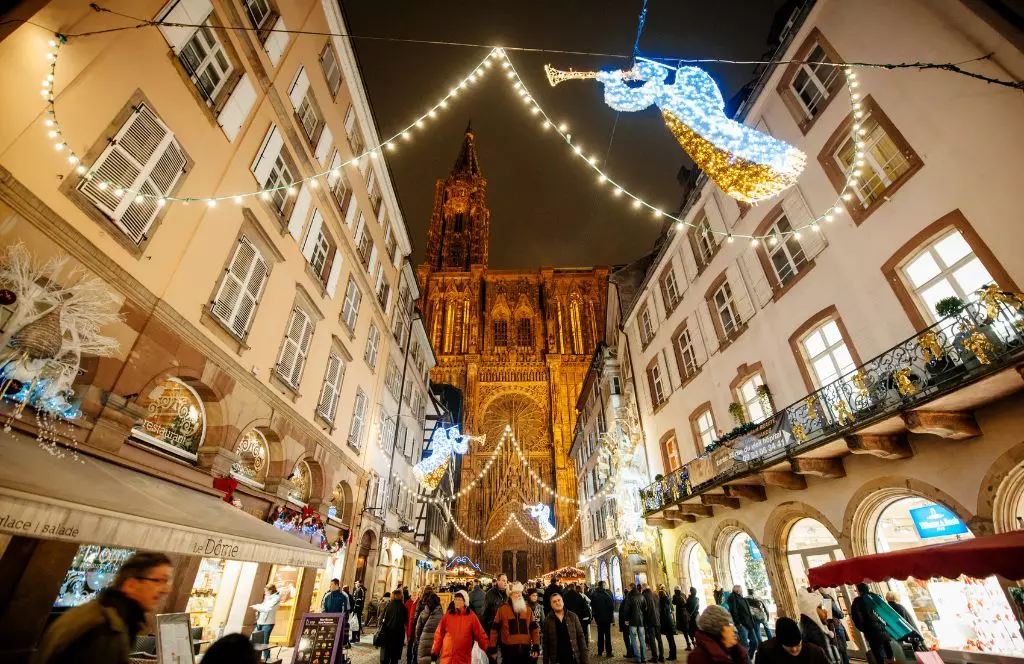
This is the heart of everything — the market that started it all nearly 450 years ago, wrapped around the base of Strasbourg’s Gothic cathedral. The half-timbered chalets, the scent of spice and toasted almonds, the cathedral lit up behind the stalls — no other market in the city comes close on atmosphere.
The stalls here lean toward handcrafted ornaments, Nativity figurines, and Alsatian keepsakes rather than generic souvenirs.
Insider move: Go at 10 a.m. when stalls open or after 9 p.m. The midday crush is genuinely unpleasant — shoulder-to-shoulder, impossible to browse, and the vin chaud lines stretch ten deep. Early morning and late evening are when this market actually feels magical.
Place Broglie (Christkindelsmärik)
Place Broglie is Strasbourg’s original Christkindelsmärik and the smartest spot for vin chaud when the lines at the cathedral or Place Kléber look unbearable — it’s the same mulled wine, often with a fraction of the wait. The mix here skews toward food stands, warm drinks, and souvenir-type stalls rather than fine crafts.
If you’re doing a vin chaud crawl, this is your mid-route breather.
Place Kléber

The main event: a 30-meter-tall Christmas tree that dominates the entire square and genuinely stuns after dark. Place Kléber also hosts “The Starry Soup” event each year, where local celebrity chefs sell gourmet soups for charity — look for it near the tree if you want to eat well and support a good cause simultaneously.
Best view of the tree: Head upstairs inside the Aubette 1928 building on the square. It’s free, nearly always empty, and gives you a bird’s-eye perspective over the tree and the surrounding chalets that you simply can’t get from ground level.
Most visitors never think to go inside.
Place Gutenberg (International Guest Market)
Each year a different country is invited to showcase its holiday traditions at Place Gutenberg, so the stalls and offerings change annually. The square itself sits right off the main tram line and makes for an easy stop between the cathedral area and Place Kléber.
Check the official Strasbourg Christmas market program before your visit to see which country is featured — it determines whether the market is a quick walk-through or worth lingering.
Square Louise-Weiss (Small Producers of Alsace Market)
This is the market for anyone who actually wants to taste Alsace, not just sip the same vin chaud found on every corner. The Advent Village here features mostly local vendors selling products that genuinely come from the region — regional cheeses, charcuterie, jams, and small-producer wines you won’t find at the bigger markets.
It’s smaller, calmer, and a welcome escape when the cathedral crowd starts wearing on you.
Pair this with a visit to the Alsatian Delicacies Market nearby for a proper food-focused afternoon.
Place du Temple Neuf (Carré d’Or Market)
Set in the shadow of the Protestant Temple Neuf church, this is the quietest market in the city center. The focus is artisanal and small-scale, which sounds ideal — but the vendors are genuinely hit or miss.
Some years the quality is excellent; other years the stalls feel thin. Worth a walk-through if you’re already in the area, especially for browsing handmade jewelry and ceramics, but don’t make a special detour for it.
Place Grimmeisen (OFF Market)
The OFF Market brands itself around sustainability — every product is organic or eco-certified, which creates a refreshing contrast to the commercial feel of the larger markets. The catch: prices are steep.
Expect to pay noticeably more for vin chaud here than at any other market in the city. Come for the ethos and the artisan goods if that matters to you; skip it if you’re budget-conscious.
Alsatian Delicacies Market (Place du Marché-des-Poissons)
Wedged beside the Rohan Palace terrace, this small market is essentially a wine bar under open sky — Alsatian tastings, vin chaud, and regional bites in a gorgeous historic setting. It’s atmospheric but compact, and it gets wall-to-wall packed by mid-afternoon.
Arrive before 2 p.m. or accept that you’ll be squeezed in with everyone else.
Petite France Markets (Place Benjamin Zix and Place Saint Thomas)
The Petite France district looks like it was designed for Christmas cards — half-timbered houses, canal reflections, narrow medieval lanes. But the market stalls here are fewer and the decorations, frankly, don’t match the cathedral area’s spectacle.
What does make it worth a stop: the Meisenthal Christmas ornament stand at Place Benjamin Zix, selling hand-blown glass ornaments from the famous Meisenthal glassworks in nearby Lorraine. These are collector-quality, made in France, and unavailable at the bigger markets — the one thing here you genuinely cannot get elsewhere in Strasbourg.
Bottom line: Start at the cathedral for atmosphere, hit Place Kléber for the tree (and the Aubette view), use Place Broglie for quick vin chaud when lines elsewhere look absurd, and save Square Louise-Weiss for your best regional food finds. Everything else is a bonus round.
Where to Find the Best Christmas Decorations in Strasbourg
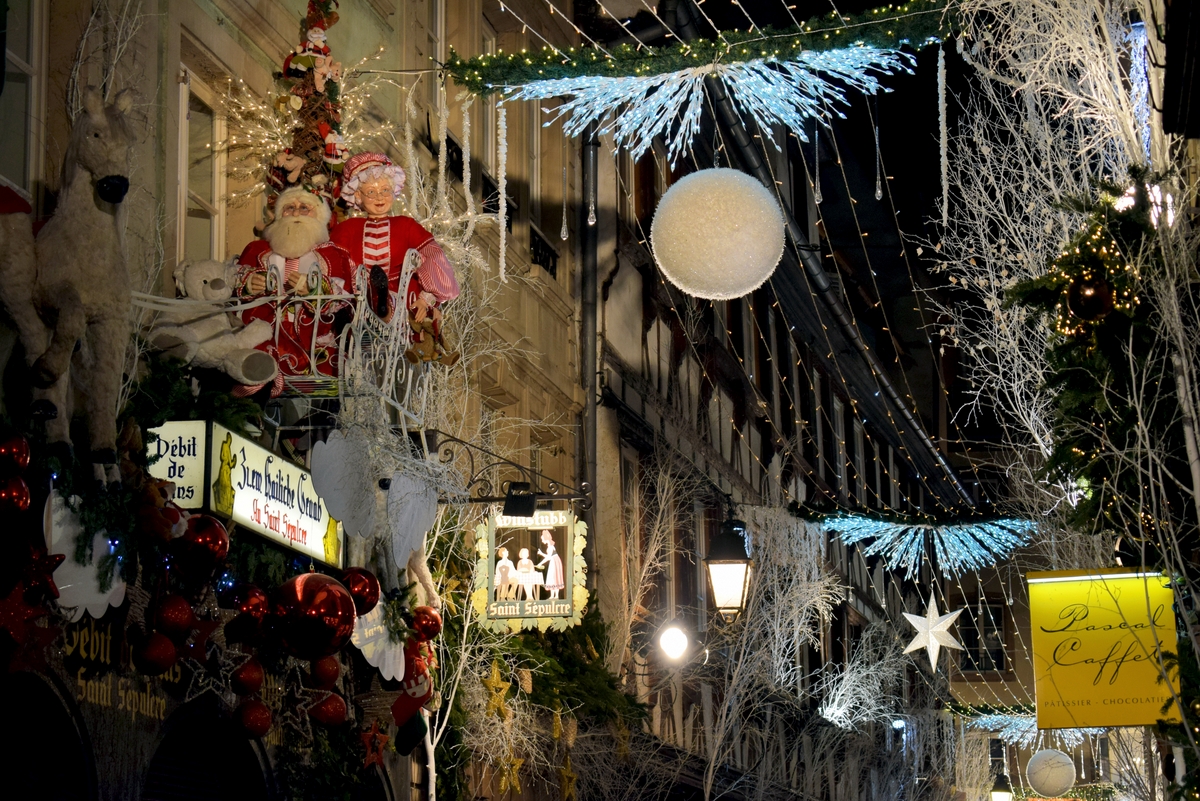
Forget the market stalls for a moment — Strasbourg’s real jaw-dropper is how seriously shop owners and residents take their facade decorations. Entire streets compete for “most over-the-top display,” and the result is a walking gallery of illuminated teddy bears, penguin scenes, gingerbread men, and pastry-themed windows that puts most theme parks to shame.
These streets are all within a 15-minute walk of each other on Grande Île, so base yourself in Strasbourg’s old town and you can hit every one on foot. Here’s how they compare at a glance:
| Street | Standout Display | Best Time to Visit | Crowd Level |
|---|---|---|---|
| Rue des Orfèvres | Highest density of decorated storefronts | Evening, any day | High |
| Rue du Maroquin | Teddy Bear Building | Early morning or after 9 PM | Very High |
| Rue Mercière | Cathedral framed by holiday lights | After market closes (~8 PM) | Low at night |
| Rue des Tonneliers | Cozy, historic lane charm | Daytime | Moderate |
| Rue des Grandes Arcades | Gingerbread man LED installation | After dark | Moderate |
Rue des Orfèvres and Rue du Chaudron
This narrow street has the single highest concentration of decorated Christmas storefronts in the city — think of it as Strasbourg’s official decorating runway. Follow the lit-up “Carré d’Or” trail signs from Strasbourg Cathedral and you’ll walk straight into it.
Pains Westermann does a gorgeous pastry-themed window display, and Maison Naegel goes all out with elegant winter decor every year. Saint Sépulcre Restaurant runs a whimsical penguin-and-polar-bear scene that’s worth a stop even if you’re not eating there.
Rue du Chaudron, the small connecting lane, picks up the same festive energy with less foot traffic.
Best move: walk this route on your way to or from the Carré d’Or market at Place du Temple Neuf — the trail connects them naturally. Evening light makes the displays pop, but afternoon gives you better photo conditions without shoulder-to-shoulder crowds.
Rue du Maroquin (The Teddy Bear Building)
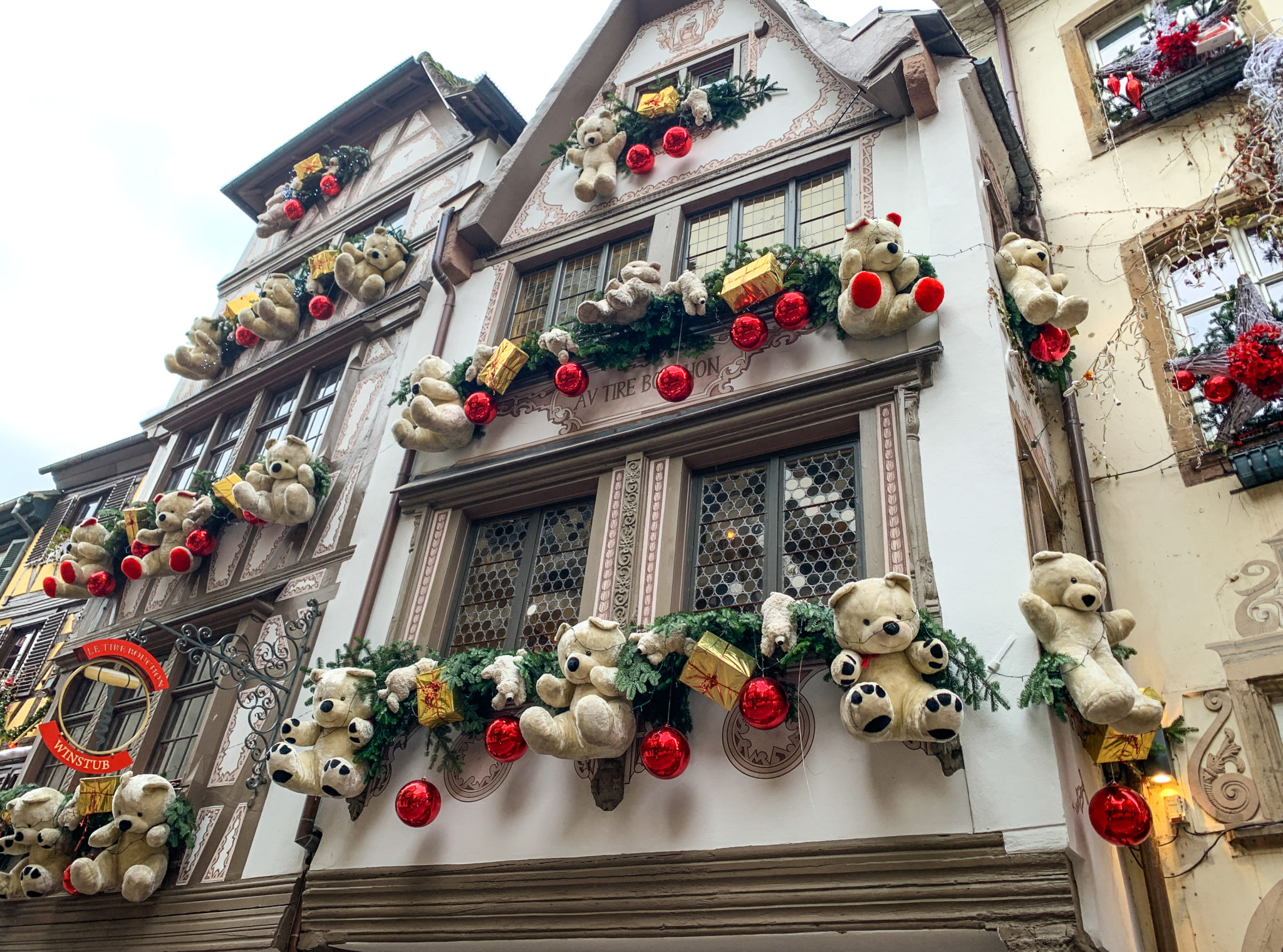
This is the single most photographed facade in Strasbourg during the holidays — a building blanketed in oversized teddy bears, ornaments, and lights. The owners decorate the entire exterior each year, and nearby LED installations on the square (including a glowing Christmas tree and teddy bear) make the whole block after-dark essential.
The problem: everyone knows about it. Rue du Maroquin gets absolutely packed during peak hours.
Your best windows are before 9 AM or after 9 PM for photos without a wall of selfie sticks. Le Gruber, the restaurant right here, draws crowds of its own, adding to the bottleneck.
Don’t plan to linger — snap your shots and move on.
Rue Mercière
This street delivers the single best unobstructed view of Strasbourg Cathedral framed by Christmas lights, and most tourists miss it because they’re crammed into the market squares instead. The trick is visiting after the markets close for the evening — the cathedral stays illuminated, the street goes quiet, and you’ll have one of the most photographed holiday scenes in France practically to yourself.
Aim for roughly 8 PM or later, depending on market closing times (which shift by year — confirm locally).
Rue des Tonneliers and Rue des Grandes Arcades
Rue des Tonneliers is the quieter, more atmospheric walk — a historic lane once used to roll barrels from the docks, now lined with timber-framed buildings dressed in holiday garb. It won’t overwhelm you with giant displays, but it’s the street that makes you feel like you wandered into a storybook.
Rue des Grandes Arcades, running between the cathedral and Place Gutenberg, delivers something completely different: a full-length gingerbread man LED light installation featuring a candy-cane-wielding figure strung above the entire street. It’s playful, it’s bright, and it only reads properly after dark.
Walk both in sequence — they connect naturally.
Other Must-See Facades and Light Displays
- Patisserie Christian (Rue des Orfèvres area): Beautifully decorated building with holiday flair — step inside for outstanding pastries after you’ve taken your photo. Worth the detour even if you weren’t planning a sweet stop.
- Winstub le Clou: Every year this restaurant puts up a miniature holiday scene at its entrance. Skip the food (the cooking doesn’t earn a recommendation), but the decorative display is genuinely charming and takes 30 seconds to see.
- Place Kléber’s Giant Christmas Tree: The best vantage point is from inside or on the balcony of Aubette 1928, the cultural building on the square — you’ll see the tree at full scale without craning your neck in a crowd. This is the decoration that anchors the entire city center.
The ideal decoration walk: Start at the cathedral, follow the Carré d’Or trail down Rue des Orfèvres, cut through Rue du Chaudron, hit the Teddy Bear Building on Rue du Maroquin, loop back via Rue Mercière for the cathedral view, then walk Rue des Tonneliers to Rue des Grandes Arcades. Total walking time is roughly 30–40 minutes without stops — plan for an hour with photos.
Do it at dusk so you catch the transition from golden hour into full illumination.
What to Eat and Drink at Strasbourg’s Christmas Markets
Forget the generic hot chocolate; the real winter fuel here is vin chaud, and Strasbourg’s markets elevate it with flavors like gingerbread, pear, and cherry that you won’t find at most European markets.
Vin Chaud (Mulled Wine)
This is your first purchase. The classic is excellent, but the flavored versions are the move—the gingerbread and pear are standout choices.
Skip the massive lines at Place Kléber and head to Place Broglie (Christkindelsmärik) for the same quality with a calmer vibe. Expect to pay around €5-7, which includes a few euros deposit for the collectible mug.
Tarte Flambée / Flammekueche
This is the one dish I’d prioritize above all others. A paper-thin, crispy flatbread topped with crème fraîche, onions, and smoked bacon (the classic).
Avoid the pre-made versions under heat lamps. The only way to eat it is fresh from a wood-fired oven at a sit-down chalet.
The difference in texture and flavor is night and day. Find these dedicated stalls at the larger markets like Place de la Cathédrale or Place du Château.
Choucroute Garnie
A hearty Alsatian classic that’s a full meal: tangy sauerkraut braised in wine, piled with various sausages, salty pork, and potatoes. It’s substantial and perfect for a cold evening.
For the best version, seek out the stalls at Place Kléber. It’s more of a sit-down dish, so grab a spot at one of the communal tables.
Grumbeerekiechle with Munster Cheese
A lesser-known but fantastic local specialty. Grumbeerekiechle are crispy, savory potato pancakes, often served topped with a slice of pungent, melted Munster cheese.
It’s a perfect shareable snack. A reliable spot to find them is at the Christkindelsmärik on Place Broglie.
Bredele, Pain d’Épices, and Other Sweet Treats
For sweets, focus on traditional Alsatian baked goods rather than standard carnival fare.
- Bredele: Dozens of tiny Christmas cookie varieties—almond, cinnamon, hazelnut, and lemon. They’re perfect for grazing as you walk and make excellent gifts. The Alsatian Delicacies Market (Place du Marché-des-Poissons) is a top spot for high-quality, local ones.
- Pain d’Épices: A sweet, dense spiced honey bread. It’s less of a quick snack and more of a souvenir or treat to enjoy later with tea.
- Kougelhopf: The iconic Alsatian bundt cake, often filled with raisins and dusted with powdered sugar. Look for whole cakes to take home.
Spätzle, Knack, and Pretzels
When you need something quick, savory, and handheld:
- Spätzle: Alsatian egg noodles, often served as a side but sometimes in a cheesy, gratinéed form at stalls. It’s a warm, carb-heavy comfort.
- Knack: The Alsatian take on a frankfurter—a fine, snappy sausage usually served in a simple baguette with mustard.
- Bretzel: A freshly baked, soft pretzel, ideally still warm. It’s the ultimate simple snack for wandering.
Alsatian Wines
Beyond vin chaud, the markets are a chance to sample the region’s excellent white wines. Look for stalls selling tastings or small glasses of crisp Riesling, aromatic Gewürztraminer, or the bubbly Crémant d’Alsace.
It’s a more sophisticated sip if you’re wined-out on mulled versions. The Square Louise-Weiss market often has dedicated wine stands from local producers.
Insider Tip: Not all food stalls accept cards, especially smaller ones. Carry €20-30 in cash to avoid missing out. Also, the free public restrooms at Place du Château (down the stairs) and Place Broglie are your best friends between tastings.
What to Buy: Best Souvenirs from Strasbourg’s Christmas Markets
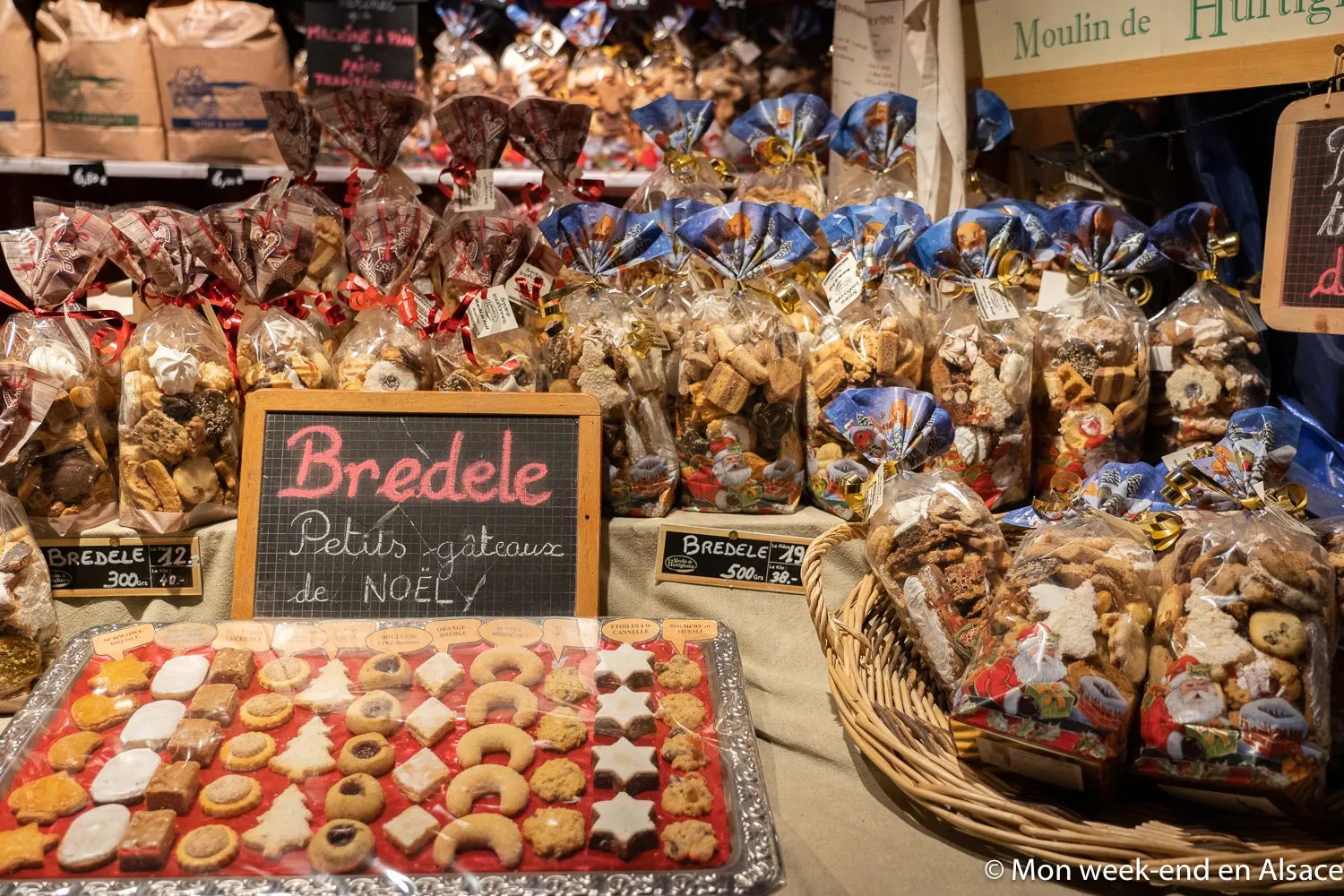
The single best souvenir from Strasbourg’s Christmas markets isn’t a decoration — it’s a tin of bredele. These traditional Alsatian Christmas cookies come in dozens of varieties (butter, anise, cinnamon, hazelnut) and most stalls sell them by weight in decorative boxes or tins.
Buy them late in your trip so they survive the journey home, or buy early and accept you’ll eat half before packing.
Bredele and Local Alsatian Food Products
Bredele are everywhere, but quality varies wildly between stalls. The best ones come from vendors at the Alsatian Delicacies Market (Place du Marché-des-Poissons) and the Small Producers of Alsace Market (Square Louise-Weiss) — both prioritize local makers over mass-produced tourist fare.
Expect to pay roughly €5–12 for a nicely packaged box, depending on size and variety.
While you’re at the food-focused markets, grab these too:
- Kougelhopf mold: The iconic fluted cake pan of Alsace. Buy one at a food stall and bake the real thing at home — it’s the souvenir that keeps giving.
- Munster cheese: Strong, pungent, and impossible to find this good outside the region. Only buy if your travel time home is short — this is not a suitcase-friendly choice.
- Alsatian jams and mustards: Quetsch (plum) and mirabelle jams are regional standouts. Jars travel well and make easy gifts for anyone back home.
- Foie gras: Alsace is one of France’s key foie gras regions. Small tins make excellent host gifts and are significantly cheaper here than at a Parisian épicerie.
Christmas Ornaments and Decorations
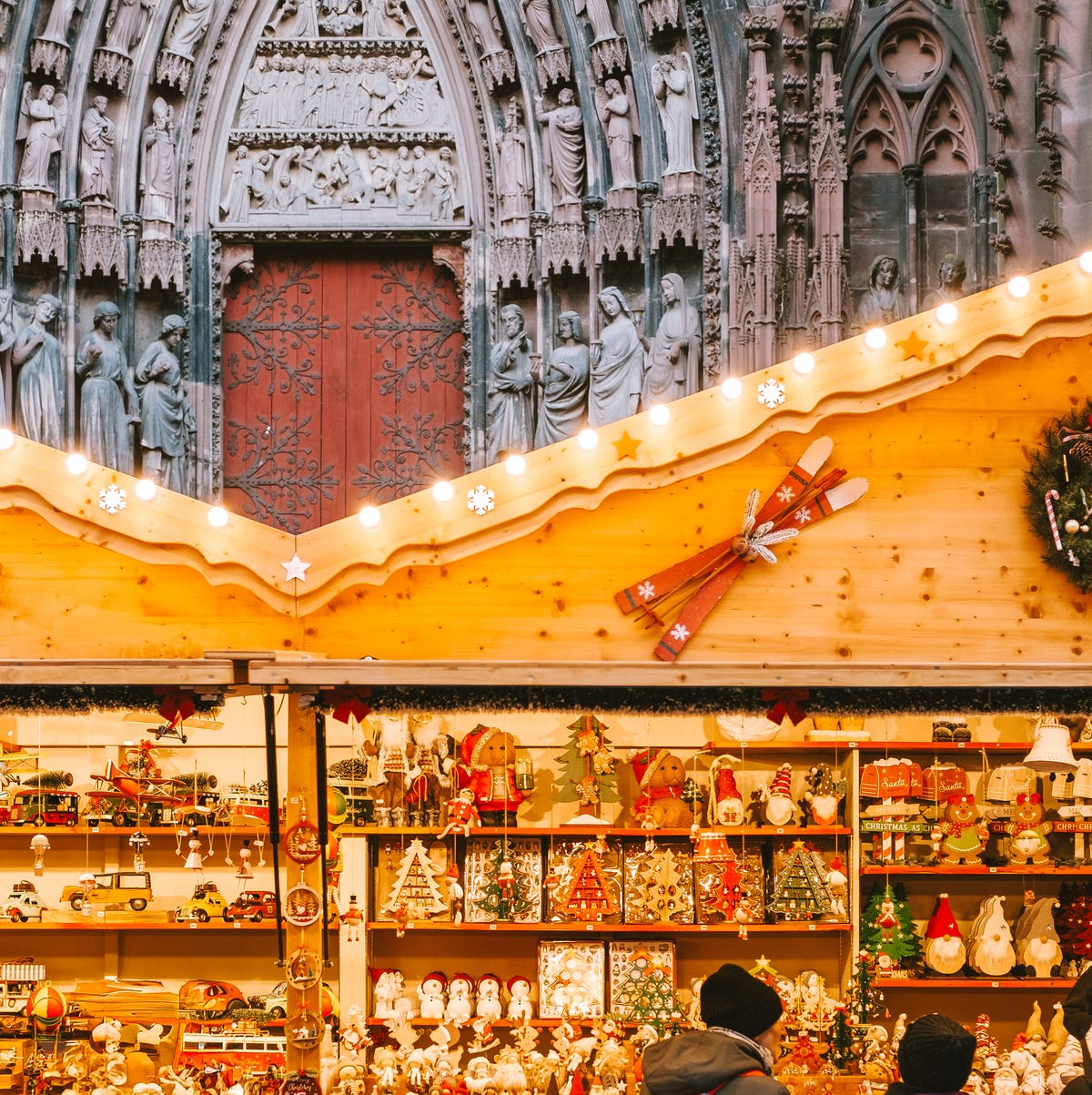
Hand-painted glass ornaments are the signature decoration purchase. You’ll find them at nearly every market, but the stalls around Place de la Cathédrale and along Rue des Orfèvres tend to have the best selection of traditional Alsatian designs — half-timbered houses, storks, and cathedral silhouettes.
Prices typically range from €5 for small baubles to €25+ for intricate hand-painted pieces.
A few honest warnings:
- Mass-produced vs. handmade: Many stalls sell cheap imported ornaments next to genuine artisan work. If the price seems too low or you can’t see the artist’s booth, it’s factory-made. Ask where it was made — legitimate crafters will tell you proudly.
- Fragile packing: Bring bubble wrap or buy a small roll at a market stall. Paper bags from vendors won’t survive a checked suitcase.
- Wooden ornaments from the Marché de Noël tradition: Carved wooden figures, nutcrackers, and miniature nativity scenes show up at several markets. These are sturdier than glass and pack flat.
Alsatian Wine Glasses and Golden Bookmarks
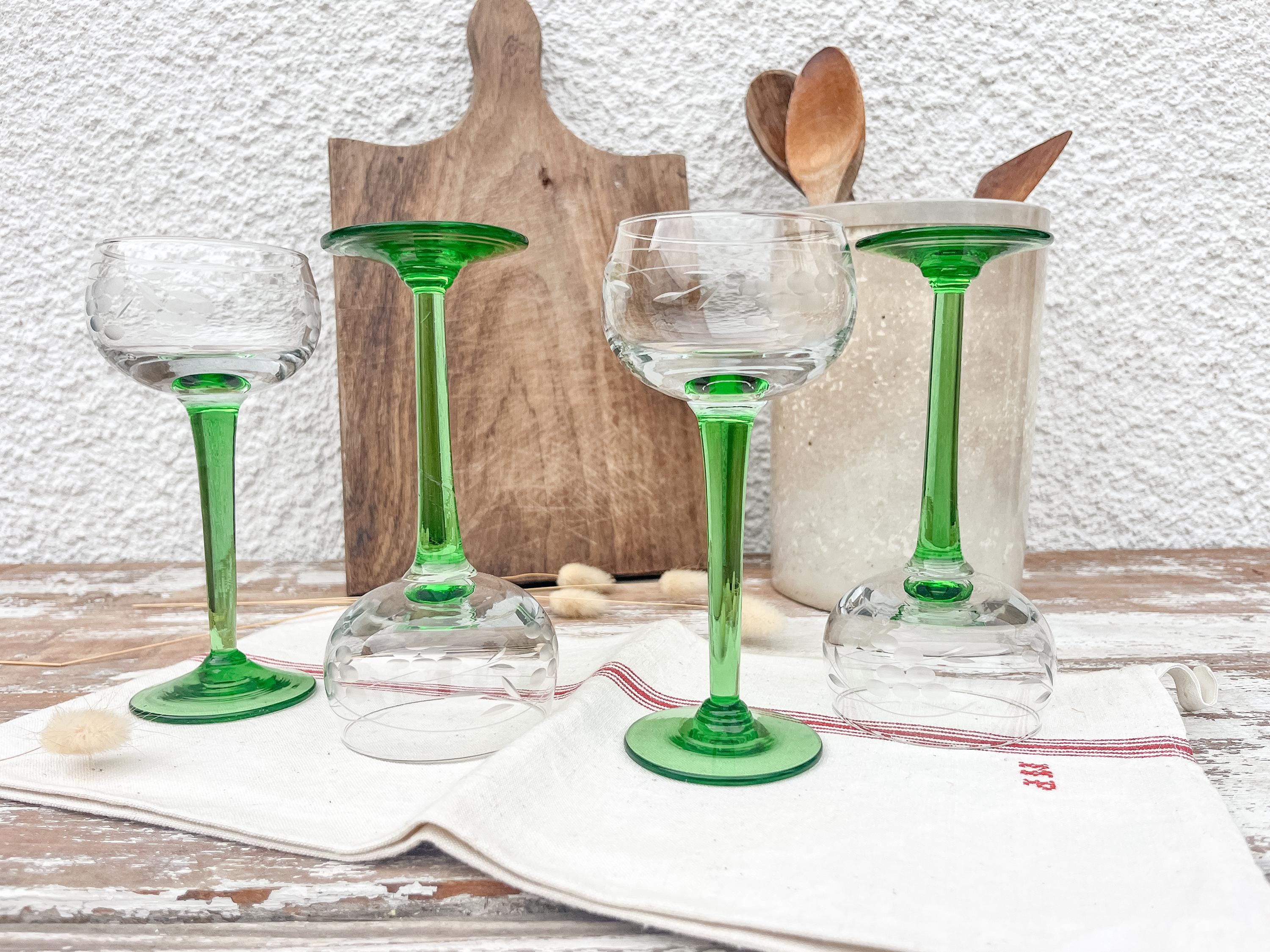
Drink enough vin chaud or Alsatian Riesling at the markets and you’ll notice the recurring pattern: stubby little wine glasses with distinctive green glass stems. These are the traditional Alsace tasting glass, and several vendors sell them as standalone souvenirs.
They’re compact, lightweight, and genuinely useful at home — one of the few market souvenirs that becomes part of your daily life rather than collecting dust.
The golden bookmarks stamped with Strasbourg Christmas market designs are another easy, packable gift. You’ll spot them at smaller craft stalls, particularly around Place du Cathédrale.
They cost just a few euros and slip into a carry-on without a second thought.
The mugs change design each year, making them genuinely collectible. This is the single cheapest and most authentic Strasbourg Christmas market souvenir you can grab.
Other Unique Gift Ideas
- Alsatian wine bottles: Riesling, Gewurztraminer, and Pinot Gris from small local producers. The markets carry bottles in the €8–18 range that would cost double at a U.S. wine shop — if you could even find them. Wrap in clothing for the flight home.
- Handmade Alsatian textiles: Embroidered table linens and tea towels with traditional cross-stitch patterns. Lightweight, flat, and easy to pack. Look for them at craft-focused stalls, not the big souvenir booths.
- Soap and candles from local artisans: Small-batch soaps scented with lavender, pine, or regional botanicals show up at the OFF Market (Place Grimmeisen) and smaller producer markets. Good filler gifts that won’t break the bank.
- Vin chaud spice kits: Some food vendors sell packets of the mulling spice blend used in the market’s hot wine. Cheap, light, and lets you recreate the Strasbourg experience at home through January.
One last thing: Bring cash. Many vendors at the Christmas markets do not accept credit or debit cards, and the ATMs near popular squares charge withdrawal fees.
Hit a bank ATM before you arrive and keep small bills on hand — it speeds up every transaction and keeps you from walking away from something you wanted because the card reader was down.
Practical Tips for First-Time Visitors
Police bag checks at every market entrance, cash-only vin chaud stands, and a car-free old town mean Strasbourg’s Christmas markets need a bit of prep most blogs gloss over. Nail these basics and you’ll spend your time sipping mulled wine instead of hunting for an ATM.
How to Get to Strasbourg
The TGV from Paris Est takes roughly 2.5 hours — book on SNCF-Connect as early as possible, since the cheapest fare tiers sell out weeks ahead. Strasbourg also has a small international airport with connections across Europe.
The train station sits about a 10-minute walk from the Grande Île, the historic island where every market clusters, so you can hit the stalls within minutes of arriving.
How to Get Around the Markets
Taxis and private cars are banned inside the market zone during opening hours, and trams only stop at the outer edges. You’re walking everywhere on cobblestones — comfortable shoes are non-negotiable.
Grab a free market map at the tourist office or scan the QR codes posted on billboards around town. They’re easy to miss but save you from unnecessary backtracking between the dozen-plus market squares.
Cash, Security, Mug Deposits, and Restrooms
- Cash: Not all vendors accept cards. Hit an ATM before entering the market zone — options inside are limited and lines get long.
- Security: Designated entrances have police bag inspections — mandatory, not optional. Budget a few extra minutes at peak hours.
- Vin chaud mugs: Every mug carries a deposit of a few euros built into the drink price. Return it to any stand for your money back, or keep it — the designs change annually, making them genuine collectibles.
- Restrooms: Free public restrooms are available throughout the old town. The two most convenient are at Place du Château (follow the stairs underground) and at Place Broglie.
Booking Restaurants and Train Tickets in Advance
Walk-in dining during market season is a gamble you’ll lose, especially on weekends. Reserve lunch and dinner ahead of time — even casual winstubs book up.
For trains, lock in TGV tickets on SNCF-Connect early. Regional TER trains between towns like Strasbourg and Colmar run frequently and don’t require reservations, so those are easy to handle on the fly.
Base yourself on the Grande Île to walk to every market without relying on transport. Hotels here fill up months ahead for December — book as soon as your dates are firm.
Other Festive Things to Do Beyond the Markets
The markets pull most visitors, but Strasbourg’s holiday atmosphere extends well past the stalls. Stroll through Petite France after dark when the half-timbered houses glow with lights.
For decorated streets, Rue des Orfèvres, Rue du Maroquin, and Rue Mercière all deserve a detour. Rue Mercière offers the most dramatic cathedral view in town — go after the markets close at night for near-solitude.
Patisserie Christian on Rue des Orfèvres is worth stepping inside for pastries that match the building’s over-the-top holiday décor.
Where to Stay in Strasbourg for the Christmas Markets
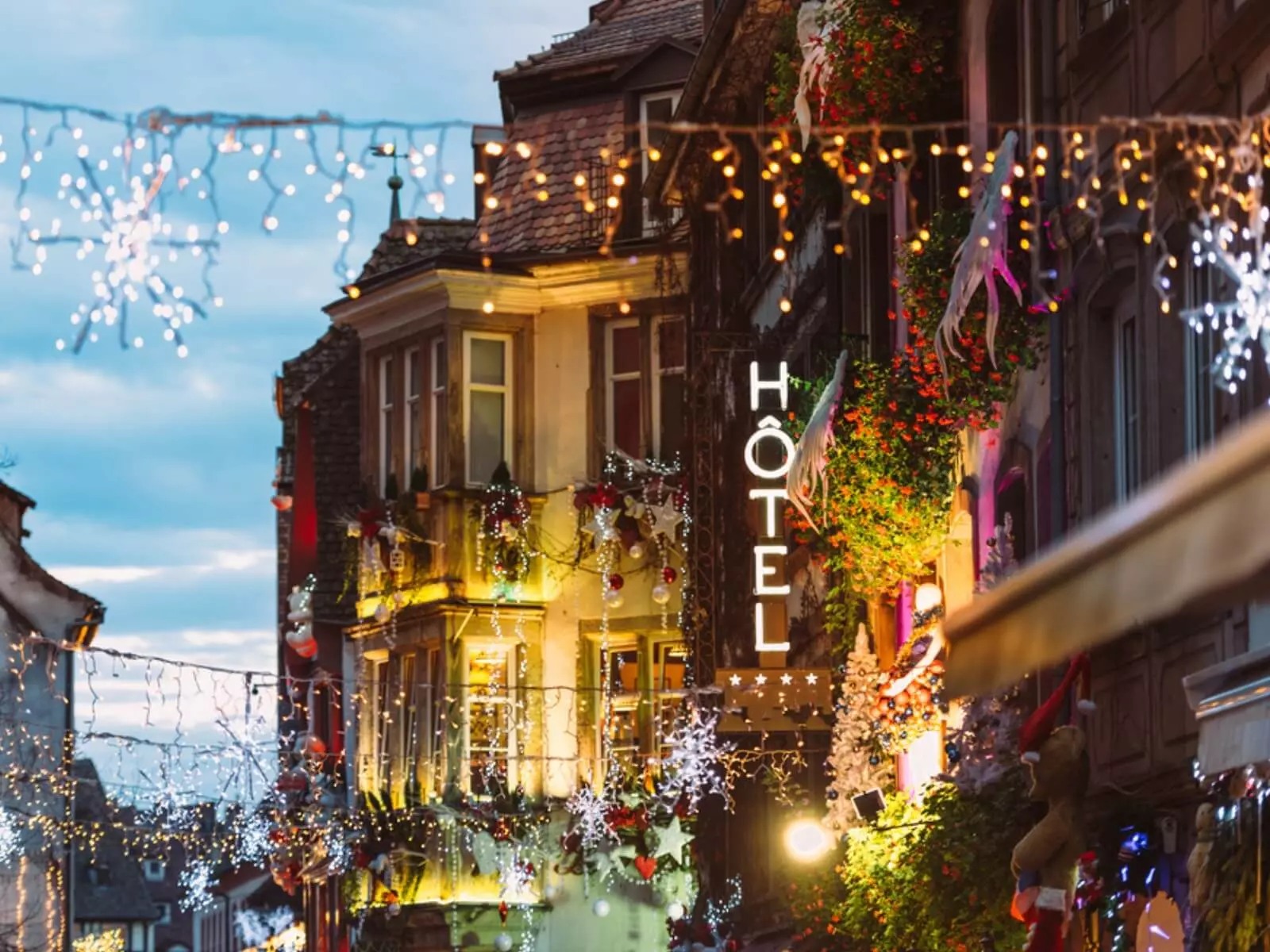
Hotel rooms with prime market access vanish faster than mulled wine on a cold night—book for December at least six months out, especially if you’re targeting a weekend.
| Category | Top Pick | Best For | Key Advantage |
|---|---|---|---|
| Luxury | Hôtel Cour du Corbeau – MGallery | Location purists & design lovers | Hidden courtyard steps from the cathedral chaos |
| Mid-Range | Okko Hotels Strasbourg Centre | Modern convenience & social travelers | Inclusive evening aperitif & central station location |
| Budget | Aloft Strasbourg Etoile | Value-focused visitors with tram passes | Reliable brand comfort at a third of the old-town price |
Best Luxury Hotels Near the Markets
For luxury, you’re paying for location and quiet above all else. Hôtel Cour du Corbeau – MGallery is the standout choice.
Its half-timbered façade and secluded courtyard feel a world away from the crowds while placing you a two-minute walk from Place de la Cathédrale. The rooms are beautifully appointed, but the real win is retreating to its peace after a day in the festive fray.
Book a courtyard-facing room for maximum quiet.
Hôtel & Spa Le Bouclier D’or in La Petite France is another top-tier option. It’s perfect if you want to be immersed in the most picturesque quarter, though it’s a slightly longer walk to the central markets.
The in-house spa is a genuine perk for warming up after market browsing.
Best Mid-Range Hotels Near the Markets
This category is about striking the best balance between price and access. Okko Hotels Strasbourg Centre, located right by the train station, is my recommendation for its fantastic value.
The inclusive evening aperitif with snacks and the stylish, pod-like rooms make it a hit with couples and solo travelers. It’s a 10-15 minute walk or quick tram ride to the markets, and the location is superb for day trips to Colmar.
For a more boutique, old-town feel within this range, look at hotels in the Krutenau neighborhood. You’ll be between the university and the river, within a 10-minute walk of most major markets but in a slightly quieter, more local residential area.
Best Budget-Friendly Options
Budget lodging near the markets is limited and books first. Your best move is to prioritize excellent tram access.
Aloft Strasbourg Etoile, while outside the center (a 20-minute tram ride), consistently offers the most reliable, clean, and modern experience for the price. Its staff is helpful, and the beds are genuinely comfortable.
Alternatively, the K Hotel is a no-frills but well-located choice in the train station area, making it functional for pure market access. Expect small rooms and basic amenities, but the price-to-location ratio is hard to beat.
For both options, confirm your Strasbourg tram pass covers your stay—the savings add up fast.
The insider booking tip: Don’t just look at Strasbourg proper. Charming towns like Obernai or Molsheim are 20-30 minutes away by regional train (TER), often have cheaper lodging, and offer a quieter Alsatian village experience after a day in the city’s festive chaos.
Frequently Asked Questions
Are the Strasbourg Christmas markets free to enter?
Yes — every single market is free. No tickets, no entry fees, no reservations required.
You simply walk in and wander. That said, the “free” part is dangerous for your wallet: mulled wine, Alsatian pretzels, handmade ornaments, and spiced kougelhopf have a way of adding up fast.
Budget roughly €20–40 per person for a few hours of snacking and small purchases, more if you’re shopping for gifts.
Do vendors accept credit cards?
Not all of them. Cash is essential at the Strasbourg Christmas markets.
Some food stalls and smaller artisan booths only take euros. ATMs are available throughout the old town, but lines get long in December — hit one before you start exploring.
Can I visit the Strasbourg Christmas markets in one day?
You can see the highlights in a single day, but you’ll be racing. The markets sprawl across eleven different locations, and the best part is lingering — sipping vin chaud under the lights, browsing without a checklist.
One full day gets you the cathedral market, Place Kléber’s giant tree, and a stop in Petite France. Two days lets you actually enjoy it.
If you can stay overnight, do it: the evening atmosphere after dark is where Strasbourg earns its “Capital of Christmas” title.
What should I wear to the Strasbourg Christmas markets?
Warmer than you think. Strasbourg’s damp Alsatian air makes 2°C (36°F) feel significantly colder than a dry cold at the same temperature.
Layers are non-negotiable — thermal base, warm coat, scarf, hat, and gloves. And comfortable shoes are critical: the old town is entirely cobblestones, and you’ll easily walk 8–12 km in a day moving between markets.
Skip the cute boots if they aren’t broken in.
Ready to Plan Your Strasbourg Christmas Market Trip
Book your hotel in the Grande Île or Petite France neighborhood now for late November or the first week of December, aiming for weekdays to sidestep the crushing weekend crowds.
This is the one European Christmas market destination where the centuries-old tradition, staggering scale, and fairy-tale architecture genuinely live up to the legendary hype.
Pin this guide, choose your top two markets, and start that hotel search—your most atmospheric holiday trip is waiting.
Leave a Reply