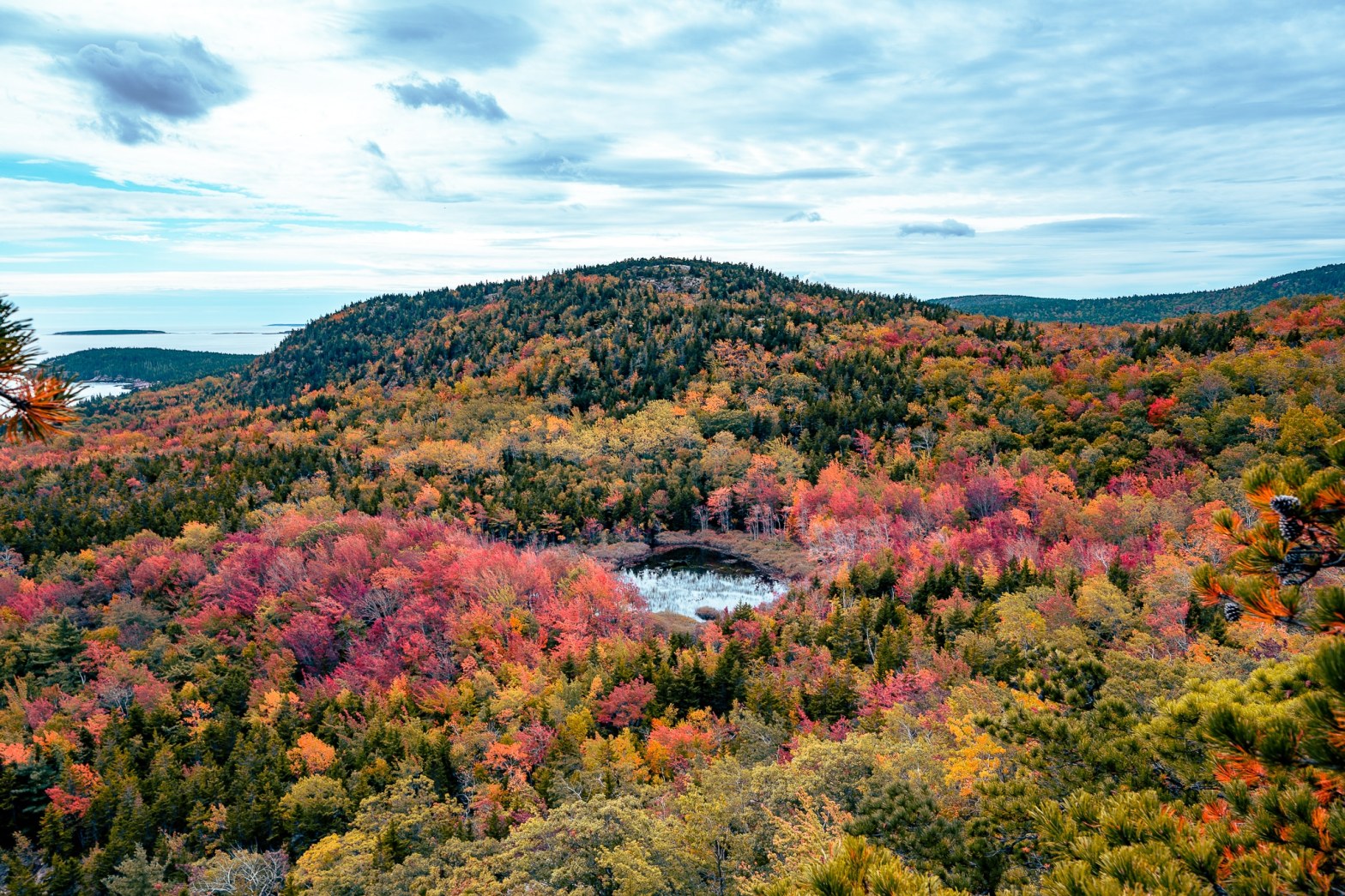
The crisp Atlantic wind cuts through fiery maples and birches as you stand on Cadillac Mountain watching the sunrise paint the sky pink and gold — this is Acadia in peak October, and it’s why thousands of people time their entire fall around these two weeks. The first two weeks of October deliver the most saturated reds, yellows, and oranges you’ll see anywhere on the East Coast, but the exact peak shifts every year depending on temperature and rainfall, so there’s no single guaranteed date.
What makes Acadia’s fall different from other New England parks is the collision of coastal drama and forest color — you’re not just seeing trees change, you’re seeing them change against rocky cliffs, still ponds that mirror the canopy, and the Atlantic Ocean as backdrop. This guide helps you decide whether to chase peak color (and the crowds that come with it) or shift your dates slightly for solitude with still-stunning foliage.
Budget roughly $80–150 per night for lodging outside Bar Harbor, $150–300+ in Bar Harbor itself, plus $40–60 for gas and $25–50 per day for bike rentals if you want to explore the carriage roads.
Peak Foliage Timing and What to Expect
Late September: Early color, mostly green, light crowds — ideal if you prioritize solitude over peak color.
First week of October: Building color with some peak reds, moderate crowds — balanced foliage and manageable parking.
Second–third week of October: Peak reds, yellows, oranges, heavy crowds — maximum color but arrive by 7 a.m. to beat parking gridlock.
Late October onward: Color fading, leaves dropping, moderate to heavy crowds — avoid unless you’re flexible on intensity.
The real move: Book the second or third week of October if peak color is non-negotiable, but arrive at trailheads by 7 a.m. If crowds stress you more than missing peak color, choose the first week of October instead — you’ll still see tremendous foliage and actually enjoy the experience.
Track foliage in real time: Check the Maine Department of Agriculture’s weekly foliage report (maine.gov/dacf/mfs/projects/fall_foliage) starting in late August, and use Acadia’s Travel & Parking Forecast Tools to avoid peak hours before you visit.
When Is Peak Fall Foliage in Acadia National Park?
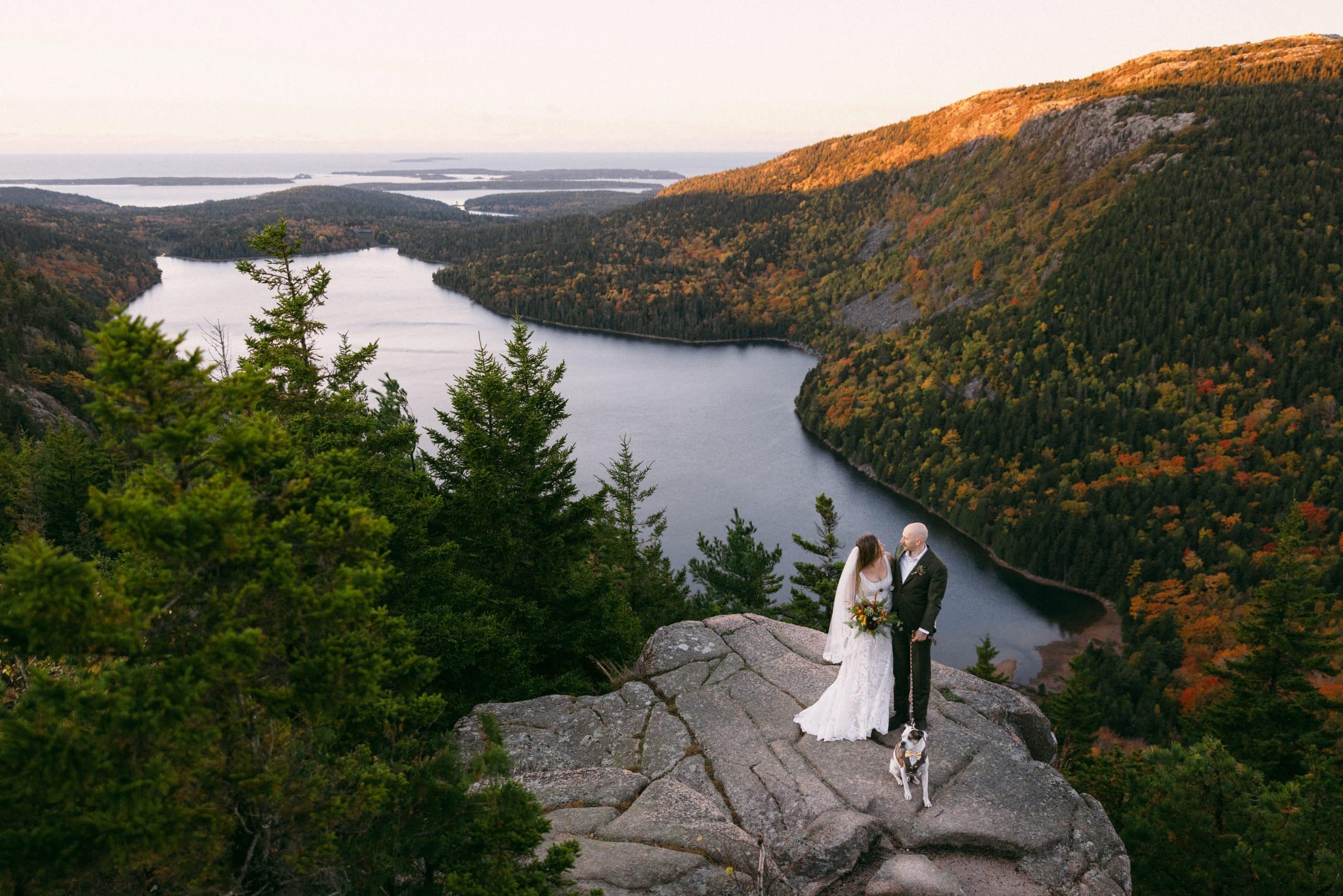
The first two weeks of October deliver the most saturated reds, yellows, and oranges — but the exact peak shifts every year depending on temperature and rainfall, so there’s no single guaranteed date. Plan around mid-October for the best odds of peak color without committing to a specific week months in advance.
Early Fall vs Late Fall
Early Fall (late September to early October): Trees are still mostly green with pockets of color appearing on maples and birches. The crowds are noticeably lighter, parking is easier, and the air is crisp without being cold.
This window works if you prioritize solitude and don’t mind missing the absolute peak — you’ll still see beautiful color, just not the full blaze.
Late Fall (mid-October onward): Peak color hits hardest during the second and third weeks of October, when maples turn deep red and birches glow yellow. This is also when the park reaches maximum capacity — parking fills by mid-morning on weekends, and trails feel crowded.
By early November, most leaves have dropped and the landscape turns brown. Late October is the trade-off: best colors, worst crowds.
Peak Color Timing by Week
| Timeframe | Color Status | Crowd Level | Best For |
|---|---|---|---|
| Late September | Early color, mostly green | Light | Photographers who want solitude and crisp light |
| First week of October | Building color, some peak reds | Moderate | Balanced foliage and manageable crowds |
| Second–third week of October | Peak reds, yellows, oranges | Heavy | Maximum color; arrive early or plan weekday visits |
| Late October onward | Color fading, leaves dropping | Moderate to heavy | Avoid unless you’re flexible on color intensity |
The real move: Book the second or third week of October if peak color is non-negotiable. Arrive at trailheads and scenic drives by 7 a.m. to beat parking gridlock.
If crowds stress you out more than missing peak color, choose the first week of October instead — you’ll still see tremendous foliage and actually enjoy the experience.
How to Track Foliage Reports
Don’t guess. Use these live tracking tools to confirm color status before finalizing your dates:
- Maine Department of Agriculture, Conservation & Forestry: Issues weekly foliage reports and regional updates throughout fall. Check maine.gov/dacf/mfs/projects/fall_foliage starting in late August — this is the official state resource and updates every week during peak season.
- Acadia National Park Travel & Parking Forecast Tools: Shows real-time vehicle volume and parking predictions by location within the park. Use this to avoid peak hours and plan your drive times accordingly.
- New England regional foliage maps: Search for current foliage forecast maps that show color progression across Maine and the region — these help you time your visit to the exact week colors peak.
- Local blog posts and social media: Search recent posts (within the last week) from Acadia visitors and local guides — real photos beat predictions every time.
Insider tip: Check the Maine foliage report on a Tuesday or Wednesday — that’s when the state updates its weekly assessment. If it shows “peak” or “near peak” for Mount Desert Island (where Acadia sits), book your trip for the following week.
This gives you a 7-day window to confirm before committing to lodging.
How Do You Get to Acadia National Park in Fall?
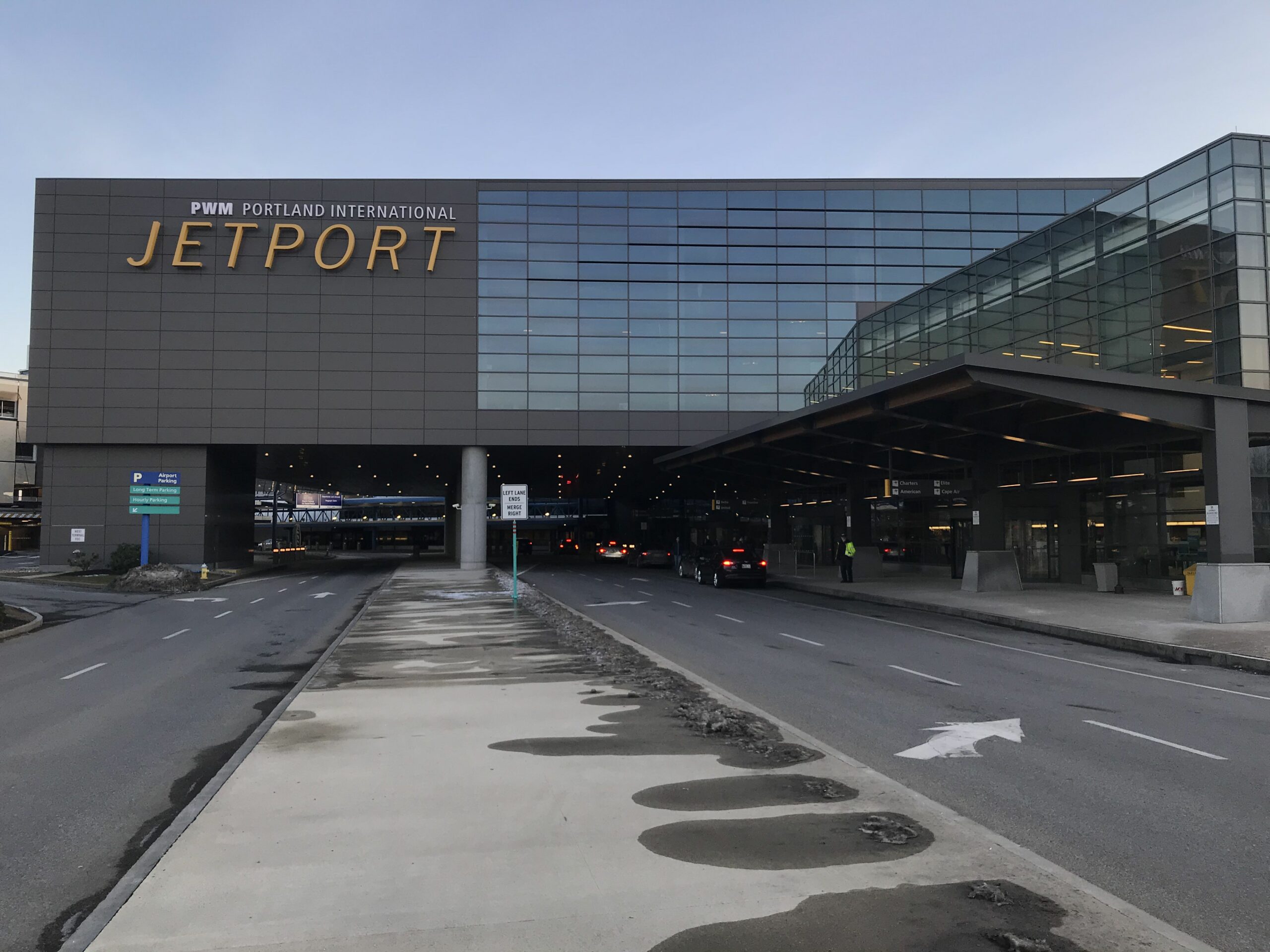
Most fall visitors fly into Portland International Jetport (PWM), about 120 miles south of Acadia, because it offers more flight options and better prices than Bar Harbor Airport—then rent a car for the 2-2.5 hour drive north. This is the move if you’re coming from a major U.S. hub and want flexibility to explore beyond the park.
Bar Harbor Airport exists, but it has limited carriers and typically costs more, so it only wins if you’re connecting through a regional hub or prioritize shaving 30 minutes off your drive.
Flying Into Portland and Renting a Car
Rent your car at Portland airport and drive straight up I-95 North to Route 3 East toward Bar Harbor. The drive is straightforward, takes roughly 2-2.5 hours depending on traffic, and puts you at the park’s main entrance by early afternoon if you leave the airport by noon.
Fall traffic is heavier than summer but lighter than peak summer weekends—still, expect slowdowns on Friday afternoons and Saturdays in early October.
Book your rental car at least 2-3 weeks ahead during peak foliage season (late September through mid-October). Prices spike 30-50% above summer rates, and compact cars disappear first.
Upgrade to a sedan or small SUV if the price difference is under $15/day—you’ll appreciate the comfort on the winding Park Loop Road and easier parking in Bar Harbor’s tight downtown lots. Skip the premium insurance if your credit card covers rentals; Maine’s roads are well-maintained and fall weather rarely causes major hazards.
Gas up before entering the park—there are no fuel stations inside Acadia. Fill up in Bar Harbor or along Route 3 on your way in.
In fall, expect to spend roughly $40-60 on gas for a week of park driving, depending on your vehicle and how many scenic loops you drive twice.
Driving the Route: Portland to Bar Harbor and Into the Park
The Portland-to-Bar Harbor route is a straight shot with no scenic detours necessary—save your stops for the park itself. If you arrive with daylight left, skip the downtown Bar Harbor traffic and head directly to the park’s main entrance on Route 3.
You can explore Bar Harbor’s restaurants and shops after sunset or on a slower afternoon.
Once inside the park, the Park Loop Road is your main artery: a 27-mile scenic drive that passes cliffsides, ocean overlooks, and dense forests ablaze with maples, birches, and oaks. Drive it slowly—this is not a highway.
Budget 3-4 hours for the full loop if you stop at overlooks; many visitors drive it twice (once for the drive itself, once for a specific hike). Jordan Pond Road and Eagle Lake Road are quieter alternatives where foliage reflects beautifully on water, ideal if you want to avoid the Park Loop Road crowds on peak weekends.
Cadillac Mountain, the highest point on the U.S. Atlantic coast, requires a timed vehicle reservation through most of October—book these online in advance.
Sunrise reservations fill fastest and offer the most dramatic light over fiery autumn forests. Sunset is equally stunning and slightly less crowded than sunrise.
Where to Base Yourself
Stay in or near Bar Harbor, the park’s gateway town, if you want walkable restaurants, shops, and nightlife after hiking. This keeps your driving to 10-15 minutes to most trailheads.
Quieter alternatives like Northeast Harbor or Southwest Harbor offer more peace and equally easy park access, though fewer dining options. Budget-friendly lodging exists outside Bar Harbor—research these in the dedicated lodging section—but the trade-off is a 20-30 minute drive to popular trailheads, which matters when you’re chasing morning light or trying to beat crowds.
Book lodging 6-8 weeks ahead for peak foliage (late September through early October). October weekends fill completely, and mid-week rates drop 20-30% compared to weekends.
If you’re flexible, visiting the first or last week of October saves money and cuts crowds by half.
Where Should You Stay in Acadia National Park in Fall?
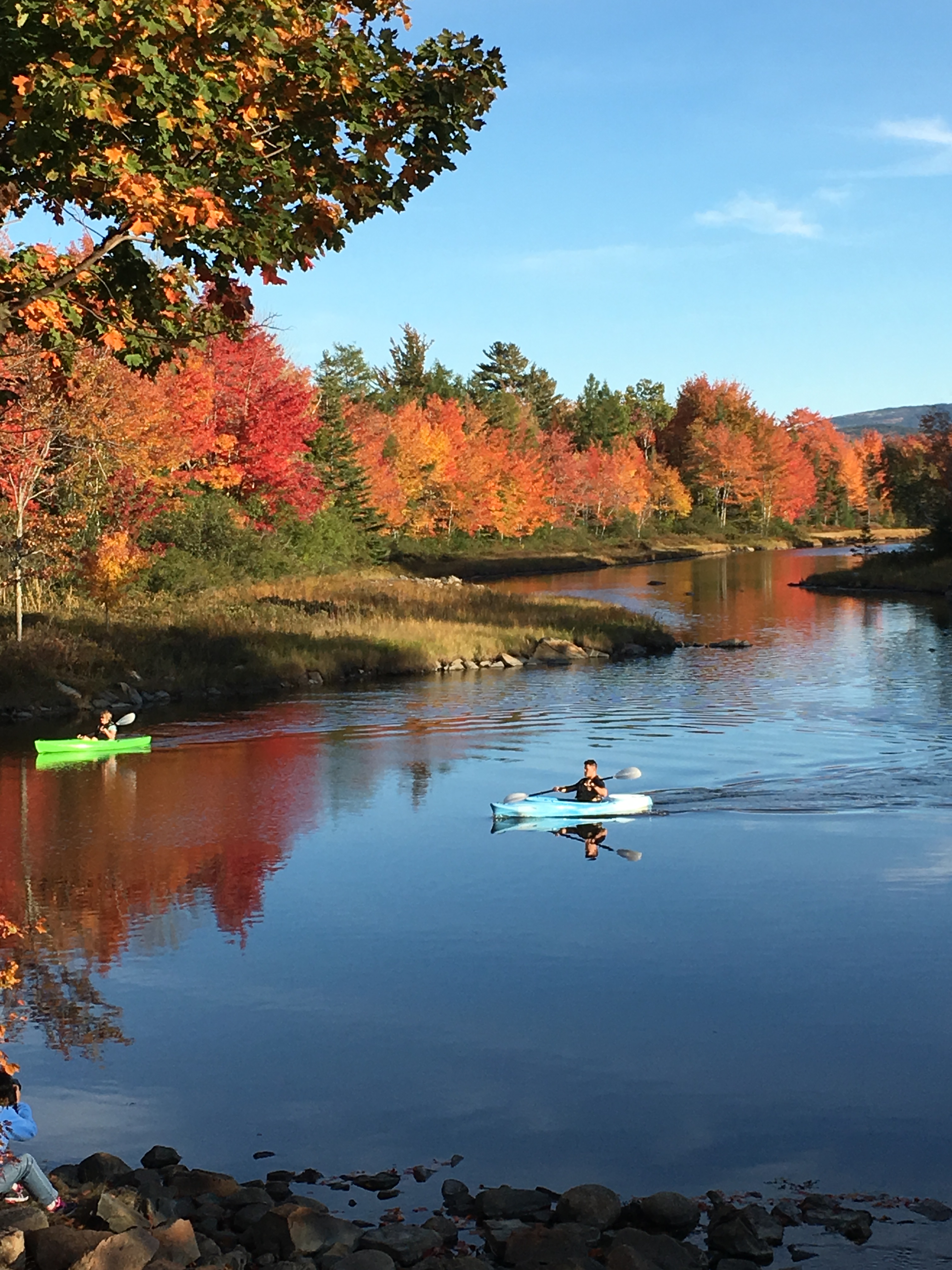
Location matters more than you think in fall — staying close to the park entrance saves you 30–45 minutes of driving each morning, which means you’ll actually catch sunrise at Cadillac Mountain instead of arriving when the light is already gone. Your budget and tolerance for crowds will determine whether Bar Harbor is worth the premium or whether a quieter town outside the park makes more sense.
Budget-Friendly Options Outside Bar Harbor
Anything outside Bar Harbor will cost less, but you’re trading price for convenience. Towns like Southwest Harbor, Northeast Harbor, or even further south in Ellsworth offer cheaper lodging — expect roughly $80–150 per night compared to $150–300+ in Bar Harbor — but you’ll spend an extra 20–40 minutes driving to the main park entrances each morning.
This only makes sense if you’re staying 3+ nights and don’t mind an early alarm, or if you’re flexible about which trails and viewpoints you prioritize (the carriage roads and quieter Eagle Lake Road are closer to these towns than Cadillac Mountain).
Book these towns early if you’re traveling mid-September through mid-October — fall foliage season fills rooms fast, and rates climb as peak color approaches. Late September offers the best value with fewer crowds and still-vibrant early color.
Staying in Bar Harbor
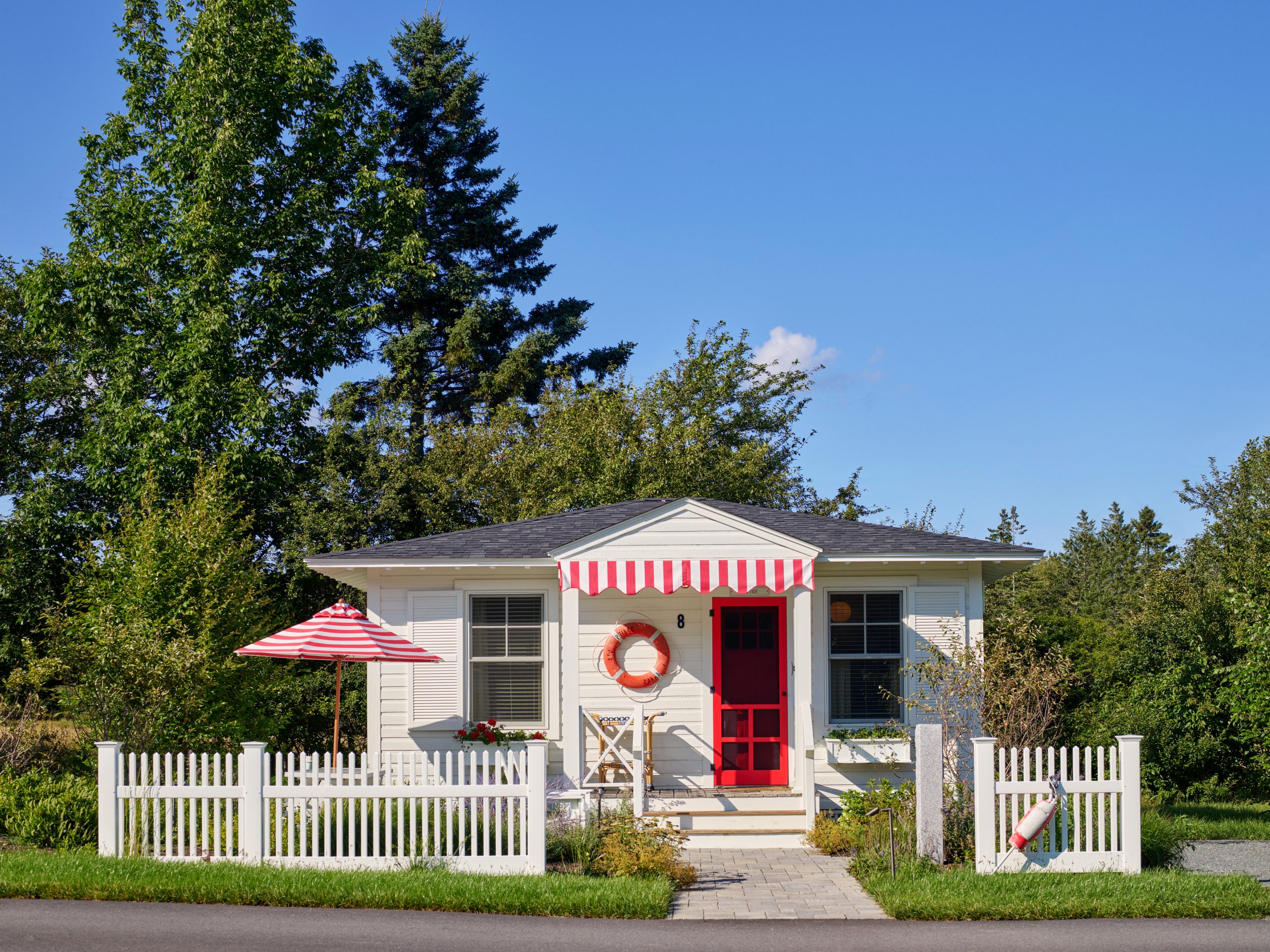
Bar Harbor is the right choice if you want zero friction — it’s the closest town to the park’s main attractions, has the most restaurant and activity options, and puts you minutes from Park Loop Road, Jordan Pond, and Cadillac Mountain. The tradeoff is cost: expect $150–300+ per night during peak foliage season, and book 2–3 months ahead if you want any choice in where you stay.
The aesthetic payoff is real — the town itself is charming enough to spend an evening exploring, and the waterfront views add to the fall experience.
Bar Harbor also has bike rentals for the carriage roads and is the natural base if you want to combine hiking, scenic drives, and cozy town time without moving your lodging. If budget is less of a concern and you want maximum convenience and the full Maine fall experience, Bar Harbor wins.
Best Hikes for Fall Colors in Acadia National Park
The four standout hikes in Acadia deliver fall color in completely different ways — from cliffside drama to quiet forest reflection — so your choice depends entirely on fitness level and nerve. All four reward early morning starts with better light and fewer crowds, and all are best visited in early to mid-October when the maples, birches, and oaks are at peak flame.
Jesup Path and Sieur de Monts Loop
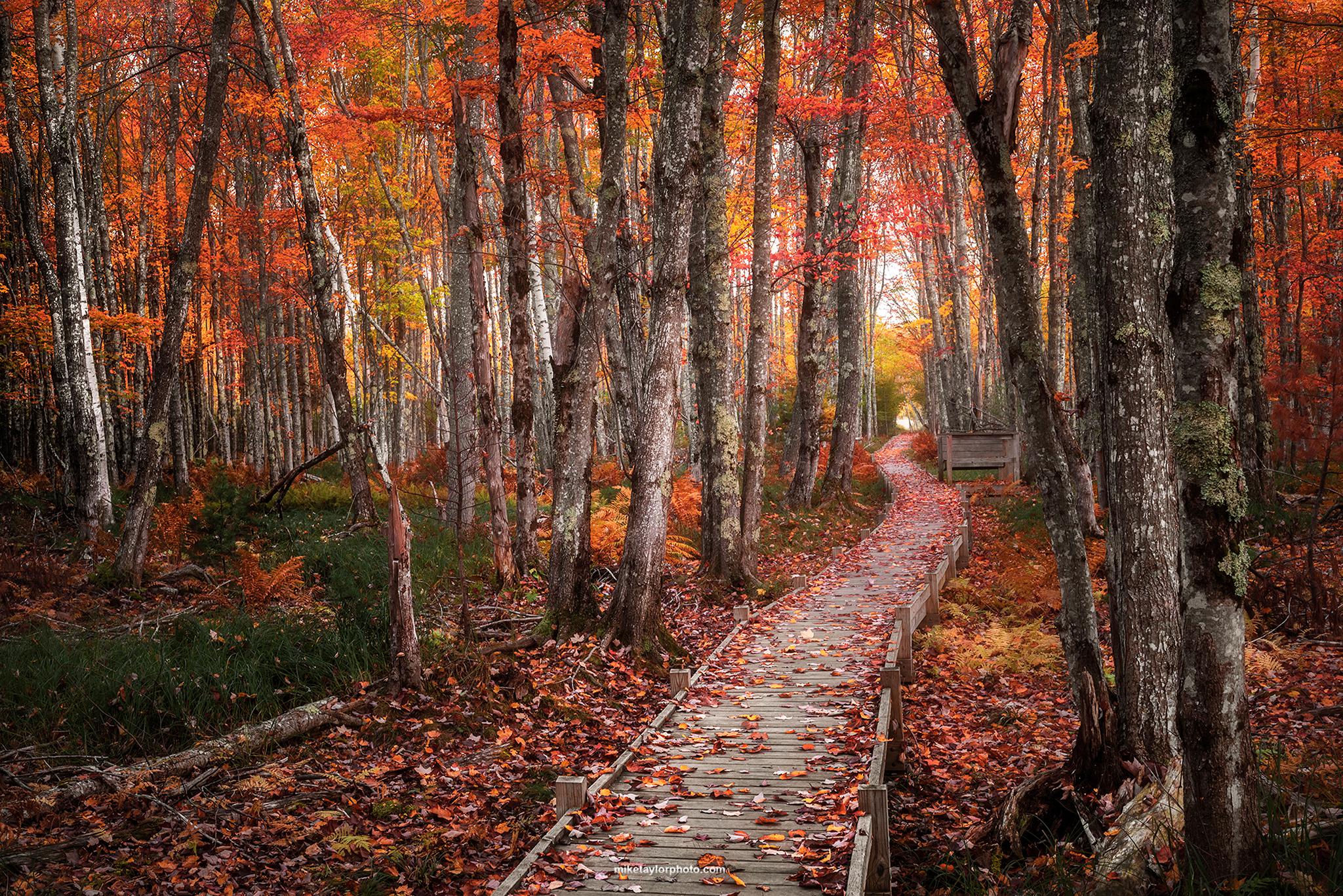
This is the move if you want maximum color with zero technical risk. The Jesup Path is flat, quiet, and packed with deciduous trees — meaning reds, yellows, and oranges all in one walk.
It’s the kind of hike where you can actually stop and absorb the view instead of watching your footing, which makes it ideal for photography, couples, or anyone who wants a genuine morning stroll rather than a workout. The Sieur de Monts area surrounding it amplifies the experience with a concentration of color-changing trees that other parts of the park don’t match.
- Best for: Photographers, couples, easy morning walks, anyone avoiding steep terrain.
- Why it wins for fall: Deciduous-heavy forest means all the color happens here — you’re not searching across the park for variety.
- Insider tip: Arrive by 7 a.m. to have the trail essentially to yourself and catch the softest light on the foliage.
Beehive Loop Trail
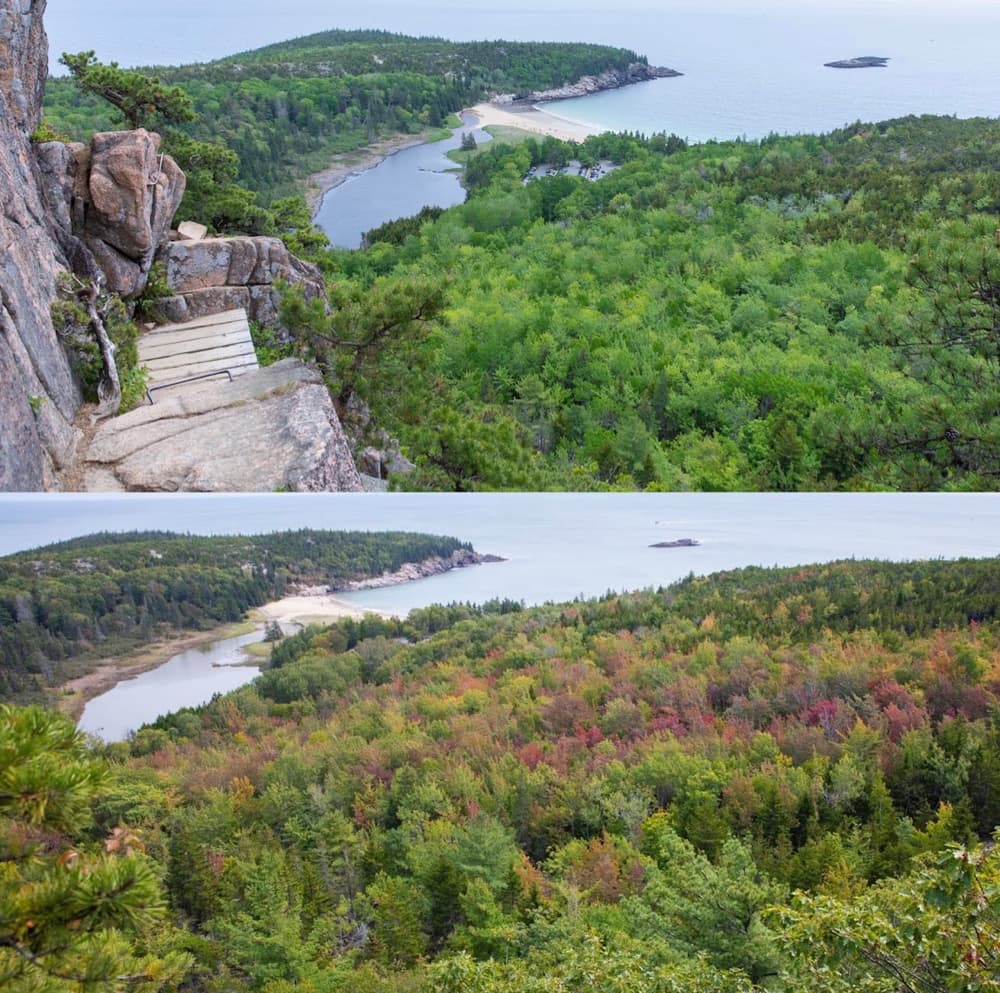
Skip this if heights make you uncomfortable. The Beehive Loop is rated hard not because of elevation gain, but because you’re cliffside with ladders and exposed scrambling — the kind of hike where one misstep matters.
That said, if you’re comfortable on vertical terrain, the payoff is unmatched: you get coastal views colliding with fiery forest canopy, and the physical challenge means fewer casual hikers clogging the trail. The combination of Maine coastline and autumn color in a single loop is genuinely rare.
- Best for: Experienced hikers comfortable with exposure, thrill-seekers, photographers willing to work for the shot.
- Why it wins for fall: Coastal cliffs + forest color = views you cannot get anywhere else in the park.
- Insider tip: The ladder sections are manageable but unforgiving in wet conditions — do this hike only on clear, dry days, which narrows your window in October.
Jordan Pond Loop
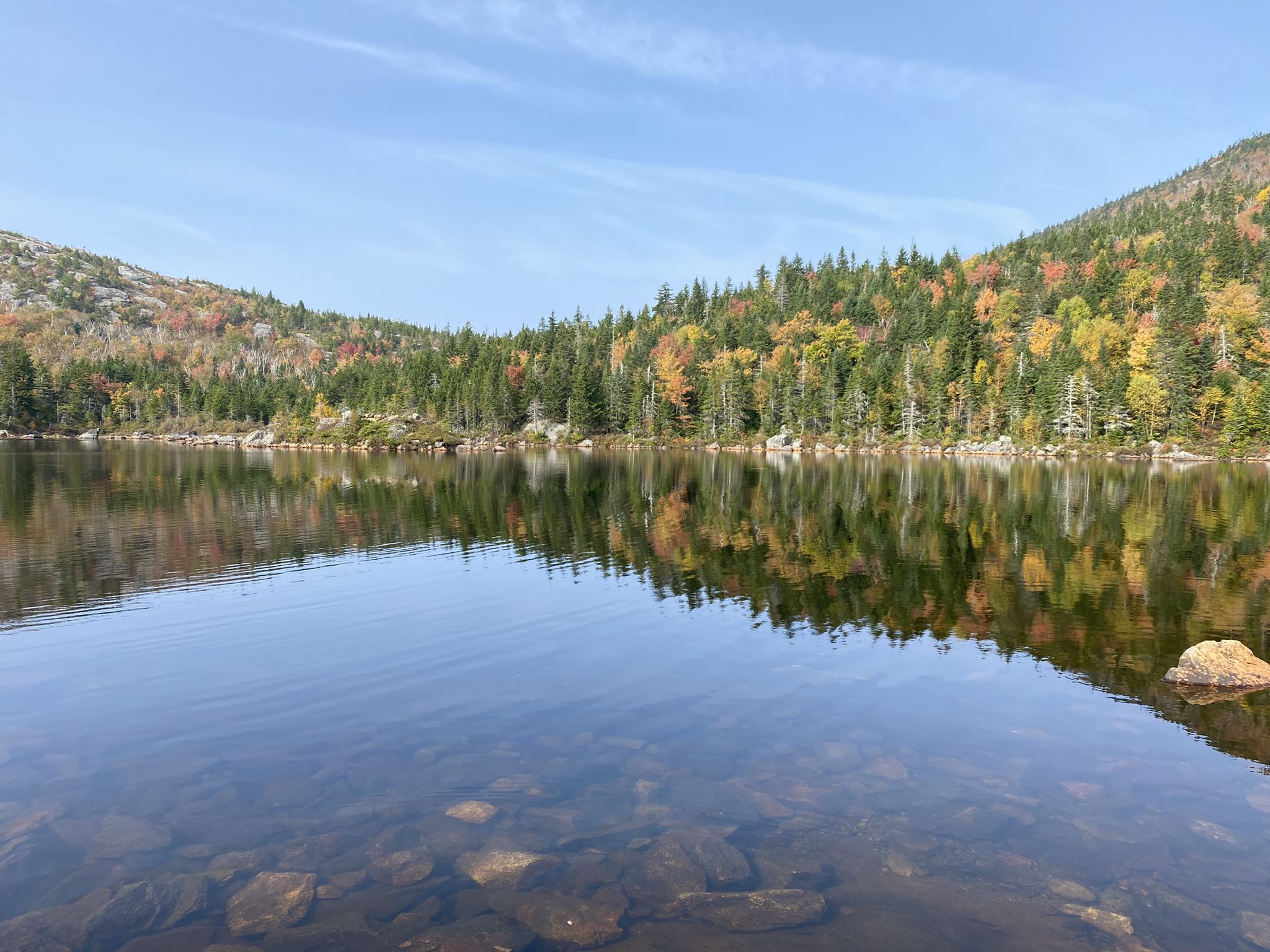
This is the gentle alternative that still delivers stunning color. The loop circles the pond with the Bubble Mountains reflected in the water — and in fall, those reflections are doubled beauty.
It’s longer (roughly 3.3 miles) but genuinely easy, making it perfect for families, older hikers, or anyone who wants distance without difficulty. Early morning light on the water is especially magical here, so the early-arrival rule matters even more than on other trails.
- Best for: Families, older hikers, anyone wanting a longer walk without steep sections, reflection photographers.
- Why it wins for fall: The water acts as a mirror for the color — you see the foliage twice.
- Insider tip: Visit between 7 and 8 a.m. when the light is soft and the water is calm enough to actually reflect the trees clearly.
South Bubble
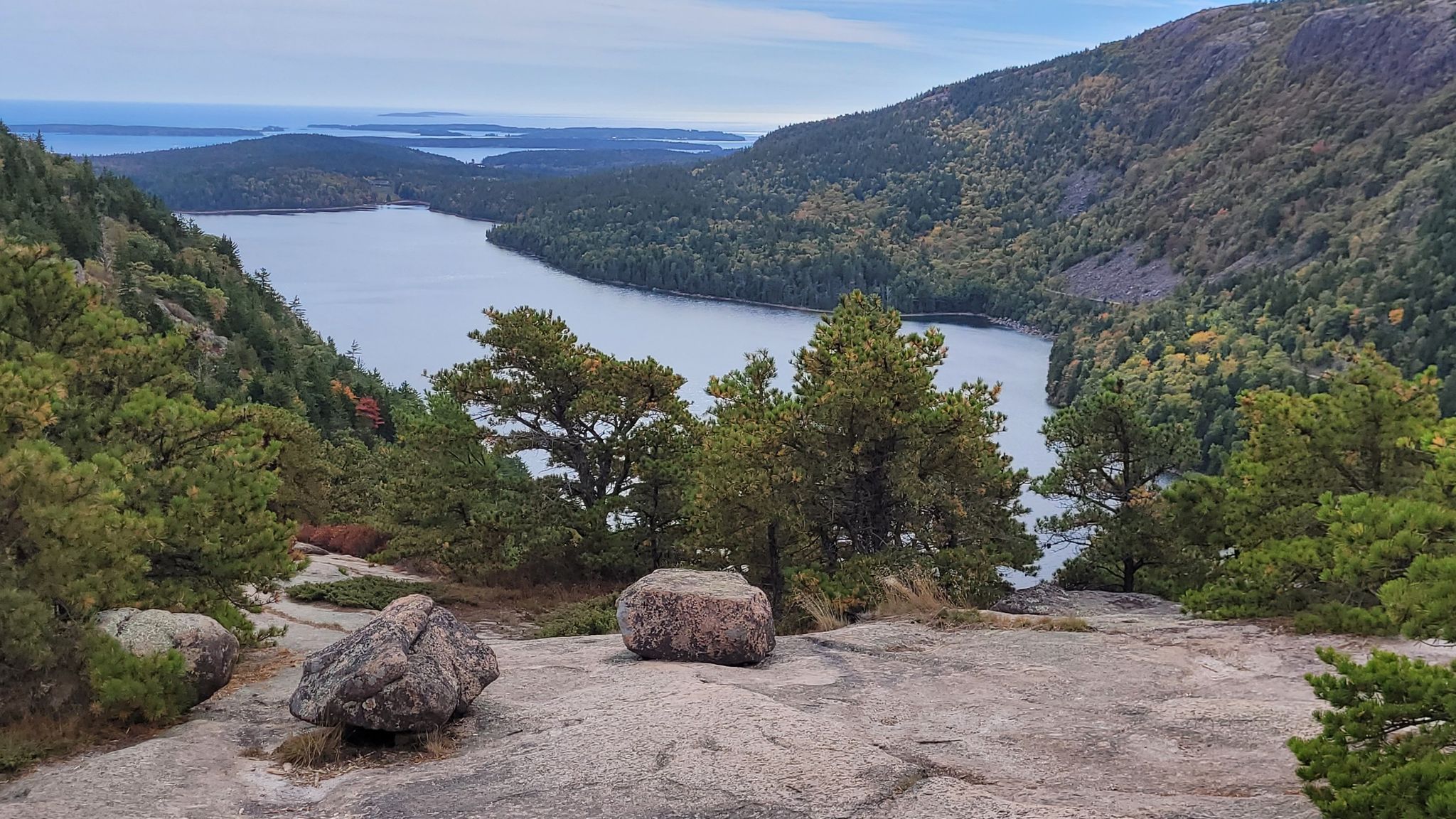
This is the compromise hike — moderate effort with outsized views. South Bubble is a shorter, steeper climb than Jordan Pond but far less technical than Beehive, and the summit gives you 360-degree views of the park’s fall palette.
You’re not cliffside or exposed, but you are climbing, so it filters out the casual walkers without demanding mountaineering skills. The views from the top are especially rewarding in fall when the entire landscape is ablaze.
- Best for: Hikers wanting a real climb without serious exposure, anyone who wants summit views without committing to a full day.
- Why it wins for fall: The elevation gain puts you above the canopy at the top, so you see color in all directions.
- Insider tip: The trail is steep but short — plan for roughly 1.5 to 2 hours round trip, leaving plenty of time to explore other areas of the park the same day.
Base yourself in Bar Harbor for easy access to all four trails — they’re all within 15–20 minutes of town, and Bar Harbor has the most lodging and restaurant options for fall visits. Arrive in early to mid-October, and plan to hike in the first few hours after sunrise for the best light and solitude.
Best Scenic Drives and Overlooks for Fall Foliage
The Park Loop Road delivers the most dramatic foliage payoff per mile — 27 miles of cliffside driving with maples, birches, and oaks blazing against rocky coastline and ocean backdrop. But if you want solitude and water reflections that amplify the color, skip the main loop and take Jordan Pond Road or Eagle Lake Road instead, where fewer cars mean easier parking and time to actually absorb the view.
Cadillac Mountain
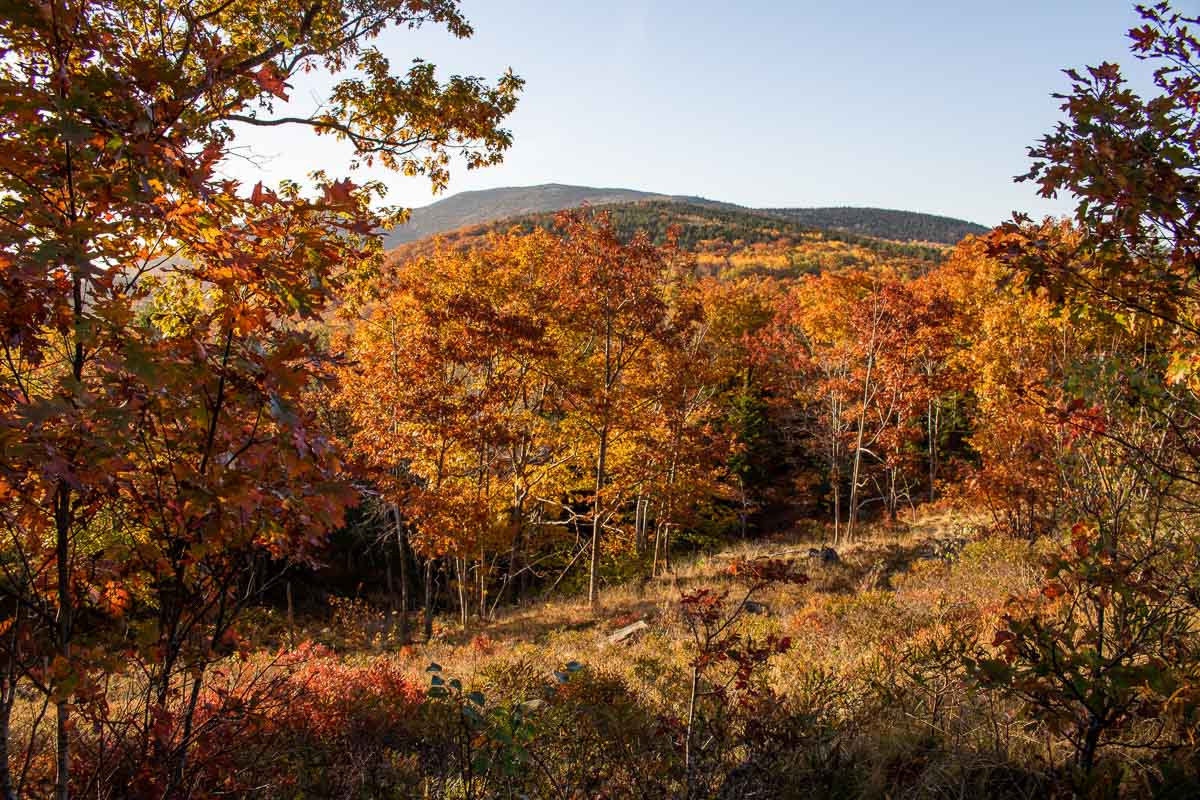
This is the highest point on the U.S. Atlantic coast, and in fall it’s the single best vantage for sunrise or sunset over fiery forests — think glowing pink skies framed by reds and golds stretching to the horizon.
The payoff is worth the early wake-up or evening wait. Book a timed vehicle reservation well in advance through most of October; spots fill fast during peak color weeks.
- Best for: Photographers and sunrise chasers.
- Timing: Arrive 30–45 minutes before sunrise or sunset for optimal light and parking.
- Insider tip: The summit is often windy and cold even in early October — bring a jacket regardless of the forecast.
Schooner Head Overlook
This is prime coastal Maine in miniature: jagged rocky coastline with trees jutting from stone, framed by fall foliage. It’s accessible by car and requires minimal walking, making it ideal if you want dramatic views without committing to a long hike.
The composition is tighter and more intimate than the Park Loop Road vistas, and crowds are lighter.
- Best for: Photographers seeking intimate coastal-forest framing.
- Parking: Small lot; arrive early morning or late afternoon to avoid midday backup.
Park Loop Road and Jordan Pond Road
The Park Loop Road is the classic fall drive — 27 miles of ocean cliffs, forest tunnels, and pullouts designed for leaf-peeping. Maples, birches, and oaks create a color corridor that shifts from green to gold to crimson depending on your timing in October.
But it’s also the busiest route in the park during peak foliage, especially weekends.
Jordan Pond Road is the smarter choice if you prioritize quiet and reflection. The water acts as a mirror for the colorful Bubble Mountain peaks, and traffic is a fraction of the main loop.
Eagle Lake Road offers similar solitude with dense forest color on both sides.
- Park Loop Road: 27 miles; expect 2–3 hours if you stop at overlooks. Peak crowds mid-October weekends.
- Jordan Pond Road: Shorter, quieter alternative with water reflections that amplify foliage color. Better for morning light and photography.
- Eagle Lake Road: Dense forest drive; less famous but equally colorful and far less crowded.
- Insider detail: Drive these routes in the early morning (before 9 a.m.) or after 4 p.m. to avoid tour buses and midday parking gridlock.
Base yourself in Bar Harbor if you want easy access to all three routes and restaurants for post-drive meals. If you’re staying elsewhere in the park, prioritize whichever drive is closest to your lodging — the foliage is excellent throughout, and fighting traffic to reach a specific road defeats the purpose.
What Activities Should You Prioritize in Acadia National Park in Fall?
Sunrise and sunset dominate fall in Acadia — not because they’re pretty, but because the light transforms fiery maples and birches into something you cannot replicate in photos, and the crowds thin out dramatically in early morning hours. Skip the midday scramble and structure your days around these two windows instead.
Sunrise and Sunset Viewing

Cadillac Mountain is the only move if you want the most dramatic light in the park. As the highest point on the U.S.
Atlantic coast, it clears the horizon first at dawn and holds the last glow at dusk — both times when the surrounding forests glow amber and crimson. The payoff is real: pink skies bleeding into gold over a canopy of color.
The catch: a timed vehicle reservation is required through most of October. Book these the moment they open (typically 30 days in advance) because sunrise slots fill first.
Arrive 15 minutes early to secure a parking spot near the summit overlook — the lot fills fast even with reservations. Bring a tripod if you’re serious about photography; the light lasts roughly 20–30 minutes before it shifts.
If Cadillac is full, Schooner Head Overlook offers ocean-backed light without the reservation requirement, though the forest color is less dense. Sunset works here if you’re willing to skip the mountain-peak drama.
Carriage Roads Walking or Biking
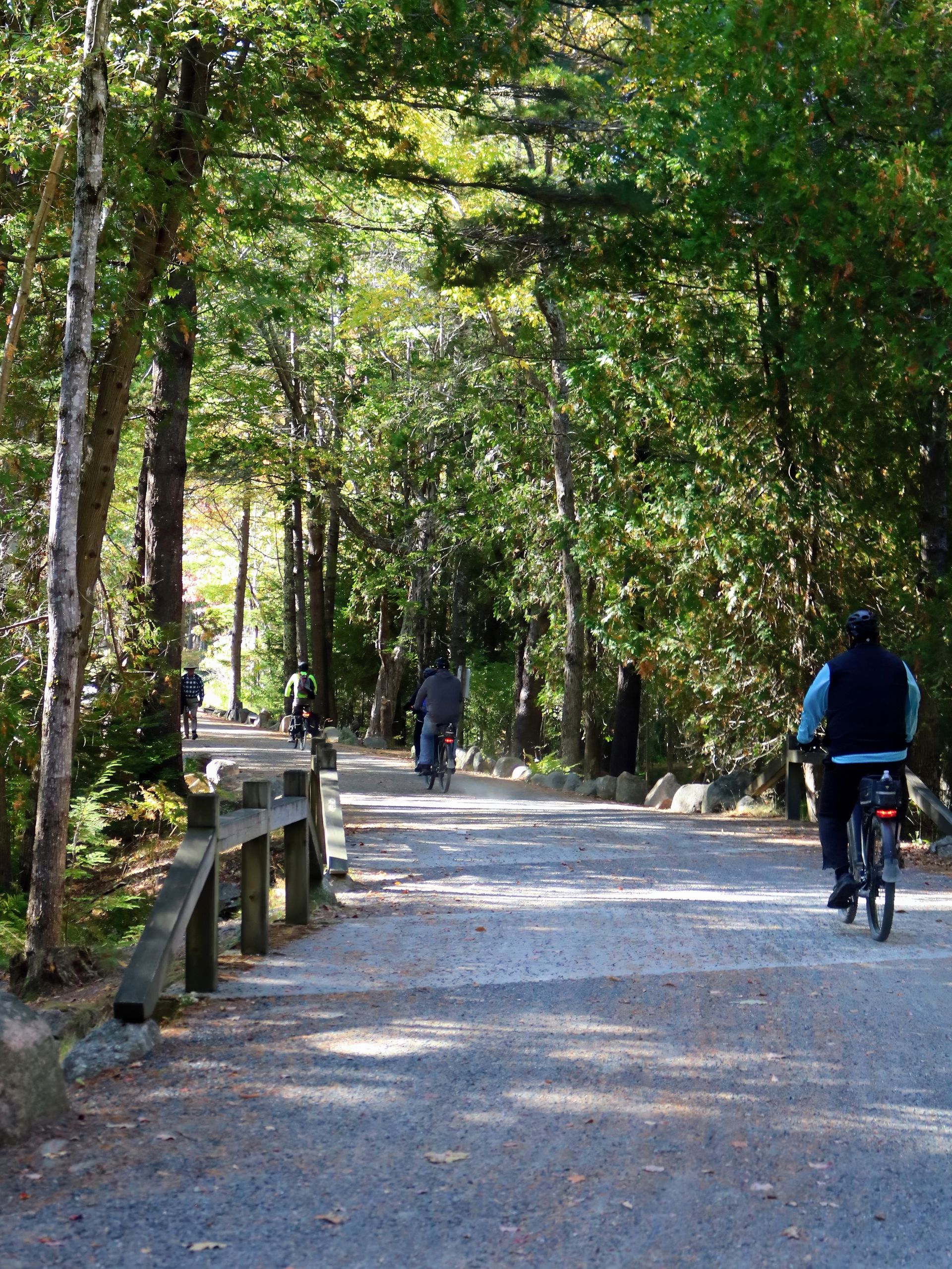
Acadia’s 45 miles of historic carriage roads — built by John D. Rockefeller Jr. and completely car-free — are the secret to experiencing fall color without fighting crowds on hiking trails.
These are gentle, wide paths that wind through sugar maples and birches reflected in lakes. They’re perfect for anyone who wants stunning scenery without steep elevation gain.
Biking beats walking here because you cover more ground and the wind keeps the experience crisp and energizing. Rent a bike in Bar Harbor if you don’t have one — expect roughly $25–50 per day depending on the rental shop.
Start early (before 9 a.m.) to avoid the afternoon foot traffic, and aim for the loops around Eagle Lake and Jordan Pond, where water reflections double the color impact.
Insider detail: the carriage roads closest to Bar Harbor (near Sieur de Monts) get crowded by mid-morning, but the northern sections around Eagle Lake stay quiet all day. If you’re staying in Bar Harbor, head north first.
Photography and Wildlife Watching
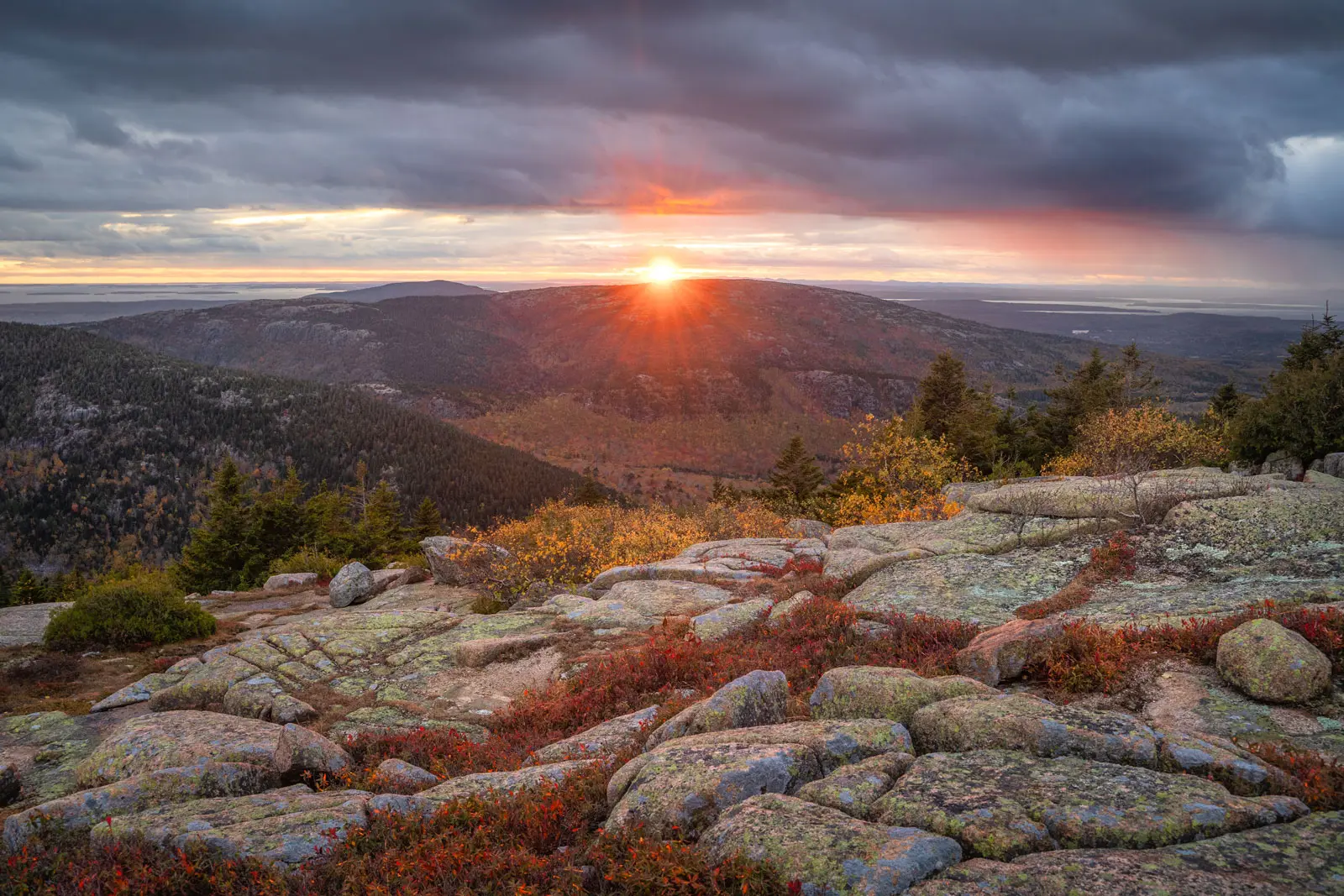
Fall light in Acadia is so good that even smartphone photography looks professional — but serious photographers should prioritize early morning and late afternoon when the sun is low and warm. The best light lasts roughly 90 minutes after sunrise and 90 minutes before sunset.
Jordan Pond is the most photographed spot for a reason: the Bubble Mountains reflect perfectly in still water, and the foreground maples frame the shot naturally. Arrive before 7 a.m. to shoot without other people in your frame.
The Jordan Pond Loop trail itself is a gentle 3.3-mile walk that gives you multiple angles without backtracking.
Wildlife watching is quieter and more rewarding in fall than summer because fewer tourists mean less disturbance. White-tailed deer are most active at dawn and dusk on the carriage roads and around Jordan Pond.
Bald eagles hunt over the lakes in October. Bring binoculars and patience — scanning the shoreline for 20 minutes often yields sightings that hikers rushing past miss entirely.
Local Events and Cozy Town Experiences
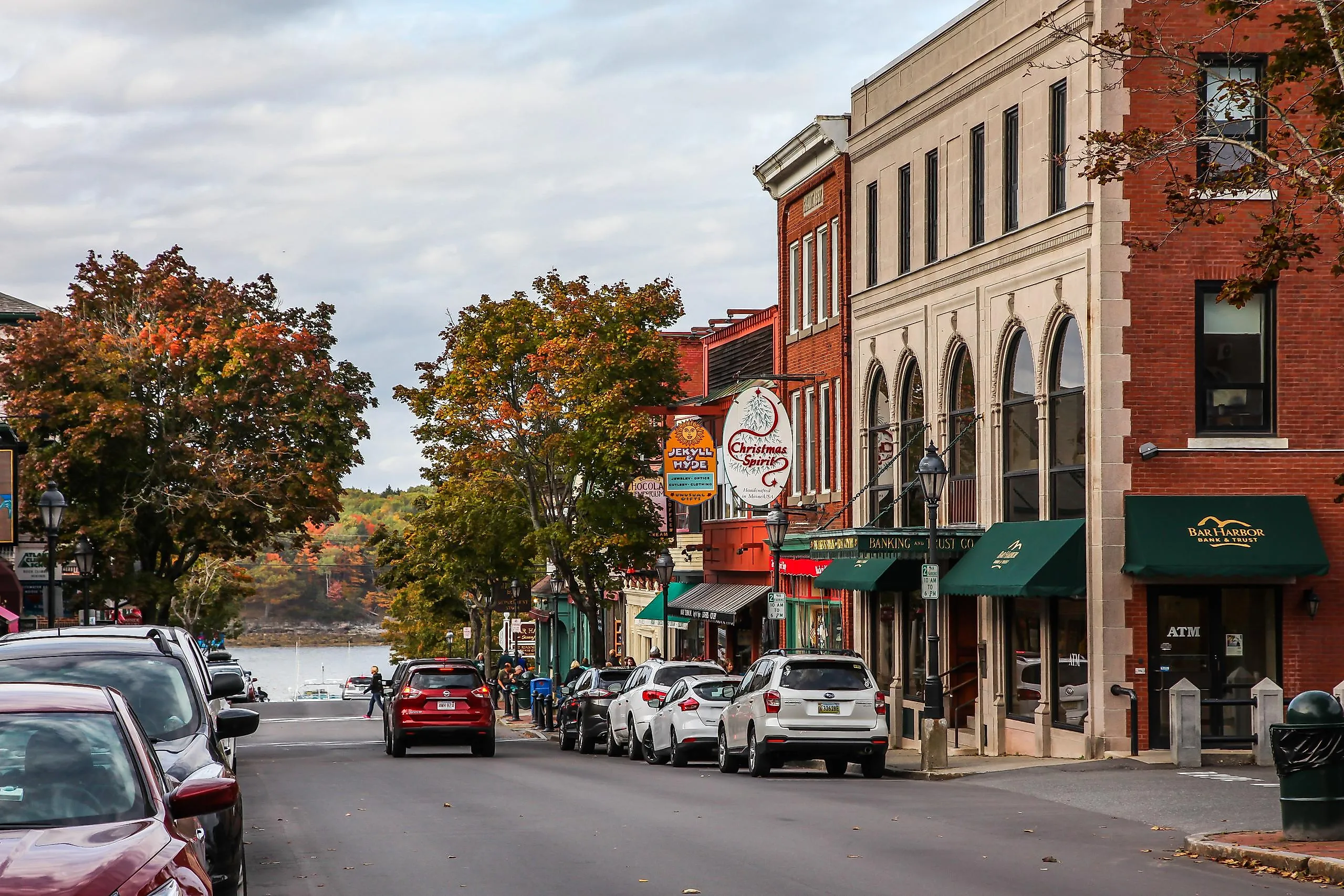
October in Bar Harbor shifts from summer tourism chaos to a quieter, more authentic Maine rhythm. The town’s restaurants and shops stay open, but the lines disappear — this is when locals reclaim the waterfront.
Spend a morning browsing independent bookstores and galleries, grab lunch at a casual seafood spot, and walk the Shore Path without dodging crowds.
Fall festivals and events vary by year, so check the Bar Harbor Chamber of Commerce website closer to your travel dates for October happenings. Many years include harvest markets and seasonal events, but these are not guaranteed.
What is guaranteed: the town feels like a real place again, not a summer resort, and that alone makes the experience worth a half-day away from the park.
The cozy-factor matters here because fall in Maine means crisp mornings (expect 40–50°F) and early darkness (sunset by 5:30 p.m. by late October). Base yourself in Bar Harbor or a nearby lodge with a fireplace — you’ll actually use it, and the warmth after a cold morning hike feels earned.
This is not a section to rush through; it’s where the trip shifts from activity-driven to restorative.
How Do You Prepare for Weather and Crowds in Acadia in Fall?
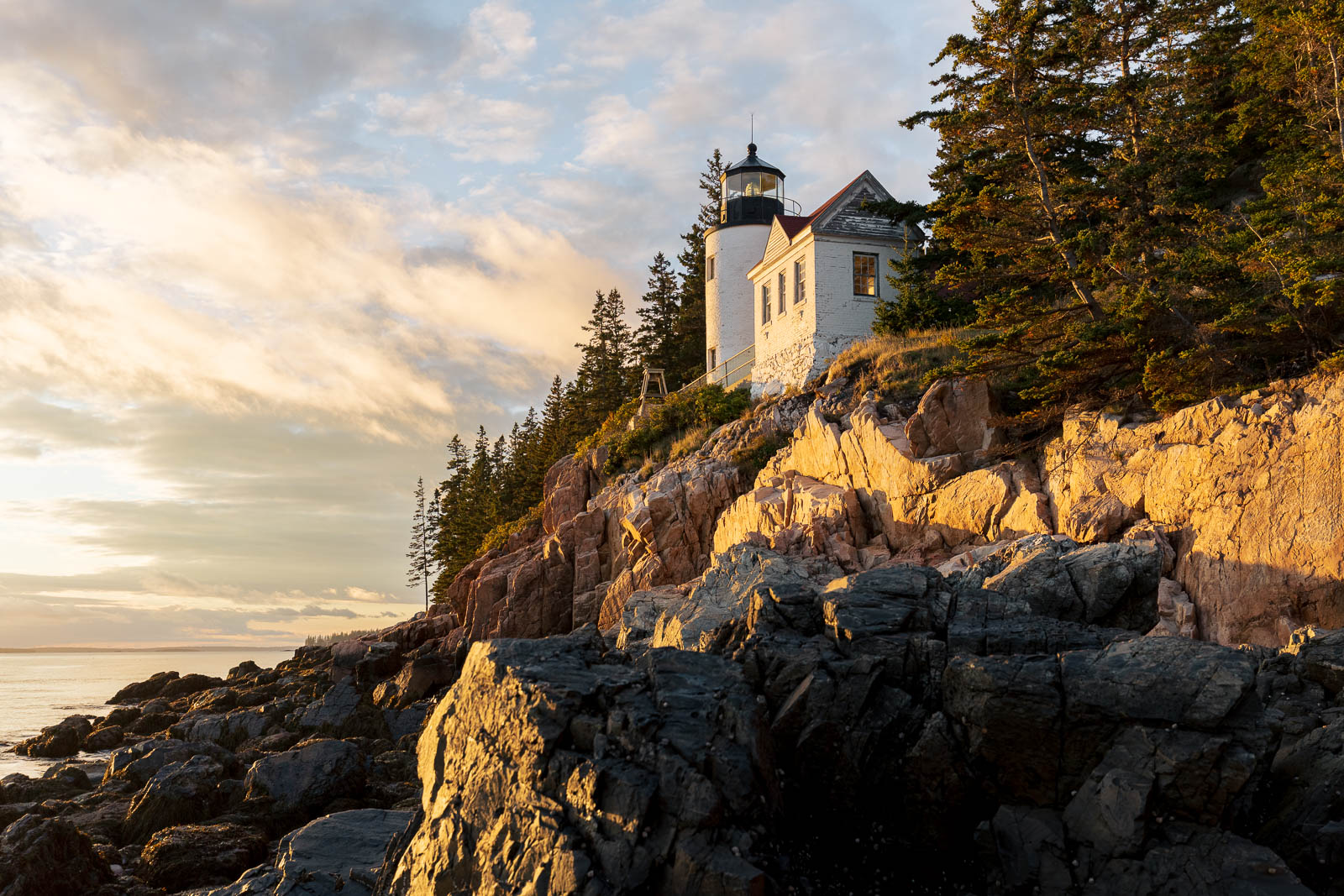
October in Acadia means unpredictable weather swings and peak-season crowds that can turn a perfect hike into a frustrating parking lot hunt. The first two weeks of October deliver the most vibrant reds and oranges, but they also bring the heaviest visitor traffic — Indigenous Peoples’ Day weekend is especially packed.
Smart planning means either shifting your dates slightly or arriving early enough to secure parking and trailhead access before midday.
What to Pack for Variable Conditions
Fall weather in Acadia is not one thing — it’s layers, waterproofing, and backup plans. Mornings are crisp with mountain air that can feel cold at sunrise on Cadillac Mountain, but afternoons warm up enough to shed a jacket.
Rain is common, and the Atlantic wind cuts through lightweight clothing instantly. Pack for three distinct scenarios, not one.
- Base layer: Moisture-wicking long sleeves and leggings. Cotton holds sweat and cold; merino wool or synthetic blends dry fast and regulate temperature through temperature swings.
- Insulation: A fleece or lightweight down jacket that packs small. You’ll remove it by midday most days, but you’ll need it for sunrise viewing and exposed ridge hikes like Beehive Loop.
- Wind and rain shell: A packable waterproof jacket is non-negotiable. October rain in Maine is not gentle, and wind on exposed peaks makes wet clothing dangerous fast.
- Footwear: Waterproof hiking boots with aggressive tread. Wet leaves hide slick rocks and roots — the same trails that are stunning in color become hazardous underfoot.
- Accessories: A warm hat, gloves, and a neck gaiter. Sunrise on Cadillac Mountain requires these even if the forecast says 50°F; wind chill at elevation is real.
- Sun protection: Sunscreen and sunglasses. Fall sun reflects off water and light-colored rocks intensely, and the crisp air masks how strong the rays are.
Bring a small daypack with water, snacks, and a basic first aid kit. Trails are busier in October, which means help is closer, but also that trailheads fill by 9 a.m. on weekends — you need to be self-sufficient for at least a few hours.
Strategies to Avoid Peak Crowds
Acadia’s fall crowds are real and concentrated. The park’s Travel & Parking Forecast Tools show vehicle volume predictions — check them before you go, and use that data to time your visit and plan your day.
Avoiding crowds is not about missing peak color; it’s about choosing smarter timing within peak season.
- Visit late September instead of early October: Late September offers beautiful early color without the Indigenous Peoples’ Day weekend crush. You’ll see yellows and some reds, not the full blaze, but parking and trailheads are manageable, and the experience is exponentially less stressful.
- Arrive at trailheads before 8 a.m.: Popular hikes like Jordan Pond Loop and Beehive Loop fill by mid-morning on weekends. Early arrival guarantees parking and gives you the bonus of softer light for photography and quieter forest time.
- Use the carriage roads instead of hiking trails: Acadia’s 45 miles of historic car-free carriage roads wind through equally colorful forests and are far less crowded than popular hiking trails. Walking or biking these routes delivers the same foliage experience with a fraction of the crowds. Rent a bike in Bar Harbor if you don’t have one.
- Drive quieter routes instead of Park Loop Road: Park Loop Road is the scenic spine of the park, but it’s also the bottleneck. Jordan Pond Road and Eagle Lake Road offer equally stunning foliage with water reflections and far fewer vehicles. These drives take longer but reward you with space to pull over and actually enjoy the views.
- Skip Cadillac Mountain sunrise on weekends: The timed vehicle reservation system (required through most of October) means the parking lot fills by 5:30 a.m. on clear weekend mornings. Weekday sunrises are dramatically quieter, or choose sunset instead — fewer people plan for it, and the light is just as spectacular.
- Book accommodations early and base yourself in or near Bar Harbor: Staying in Bar Harbor puts you close to trailheads and carriage road access, which means you can hit trails at dawn and avoid the midday crush. Lodging fills fast in October — book by summer if possible. Budget-friendly options exist outside Bar Harbor, but the drive time to trailheads cuts into your hiking window and increases your chance of arriving after parking fills.
The single most useful move is checking Acadia’s Travel & Parking Forecast Tools before each day of your trip. This tool shows real-time parking volume predictions by area.
If Jordan Pond parking is already 80% full at 8 a.m., pivot to Eagle Lake Road or the carriage roads instead. Flexibility beats stubbornness in October.
Frequently Asked Questions
When exactly should I book my Acadia fall trip to see peak color?
The first two weeks of October deliver the most vibrant reds, yellows, and oranges — that’s your peak window. Indigenous Peoples’ Day weekend (second weekend in October) hits maximum color but also maximum crowds and maximum prices.
If you want genuine peak foliage without fighting for parking and reservations, aim for the second or third week of October instead. Late September shows beautiful early color with far fewer people, though you’ll see more green mixed in.
Book lodging 2–3 months ahead for October dates; fall is the most competitive season in Maine, and rooms fill fast.
Do I need a car reservation for Cadillac Mountain in October?
Yes — timed vehicle reservations are required through most of October for Cadillac Mountain, the highest point on the U.S. Atlantic coast and the best sunrise and sunset spot in the park.
Book these in advance through the National Park Service website; they fill up quickly during peak foliage season. Arrive 15 minutes early to secure your spot, and bring a camera for the glowing pink skies over fiery autumn forests.
What should I pack for Acadia fall weather?
Pack for unpredictability — the forecast could call for sunny and warm, but you’ll get foggy and cold instead. Bring rain gear and a warm layer regardless of what the weather app says.
Mornings are crisp, afternoons can warm up, and fog rolls in without warning. Layering is your best strategy, and waterproof jackets are non-negotiable.
Can I enjoy fall colors in Acadia without hiking?
Absolutely — the park is designed for multiple ways to experience foliage. Park Loop Road is a 27-mile scenic drive with ocean views and colorful forests; Jordan Pond Road and Eagle Lake Road offer quieter drives where foliage reflects beautifully on water.
Acadia’s 45 miles of historic carriage roads (built by John D. Rockefeller Jr.) are car-free and perfect for walking or biking through sugar maples and birches — rent a bike in Bar Harbor if you don’t have one.
The Jordan Pond Path is a gentle loop with stunning reflections of the colorful Bubble Mountain peaks, especially beautiful in early morning light. You don’t need to be highly mobile to see the best colors.
Book Your Acadia Fall Trip with Confidence
Start by checking the Maine foliage report on a Tuesday or Wednesday — that’s when the state updates its weekly assessment — and if it shows “peak” or “near peak” for Mount Desert Island, book your trip for the following week. This gives you a 7-day window to confirm before committing to lodging.
Acadia’s fall colors are genuinely worth the planning because the combination of coastal light, forest color, and manageable weather creates something you cannot replicate anywhere else — the foliage is stunning, but the setting is what makes it unforgettable.
Book your lodging 2–3 months ahead for October dates, rent your car at Portland airport (120 miles south, cheaper and more flight options than Bar Harbor), and plan to arrive at your first trailhead by 7 a.m. on your first morning — this single decision will transform your entire trip from frustrating to transcendent.
Leave a Reply