
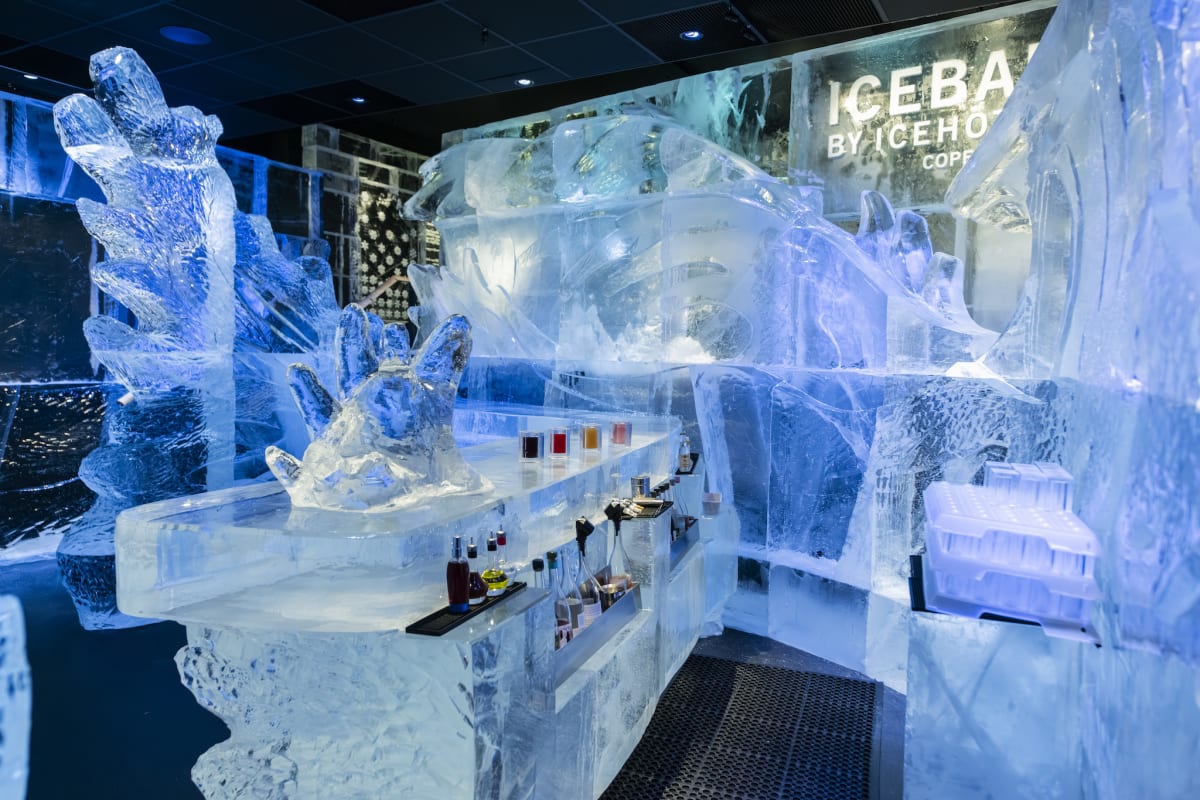
Your breath freezes on the sleeping bag collar within minutes, and the only sound in the room is the river moving under the ice outside.
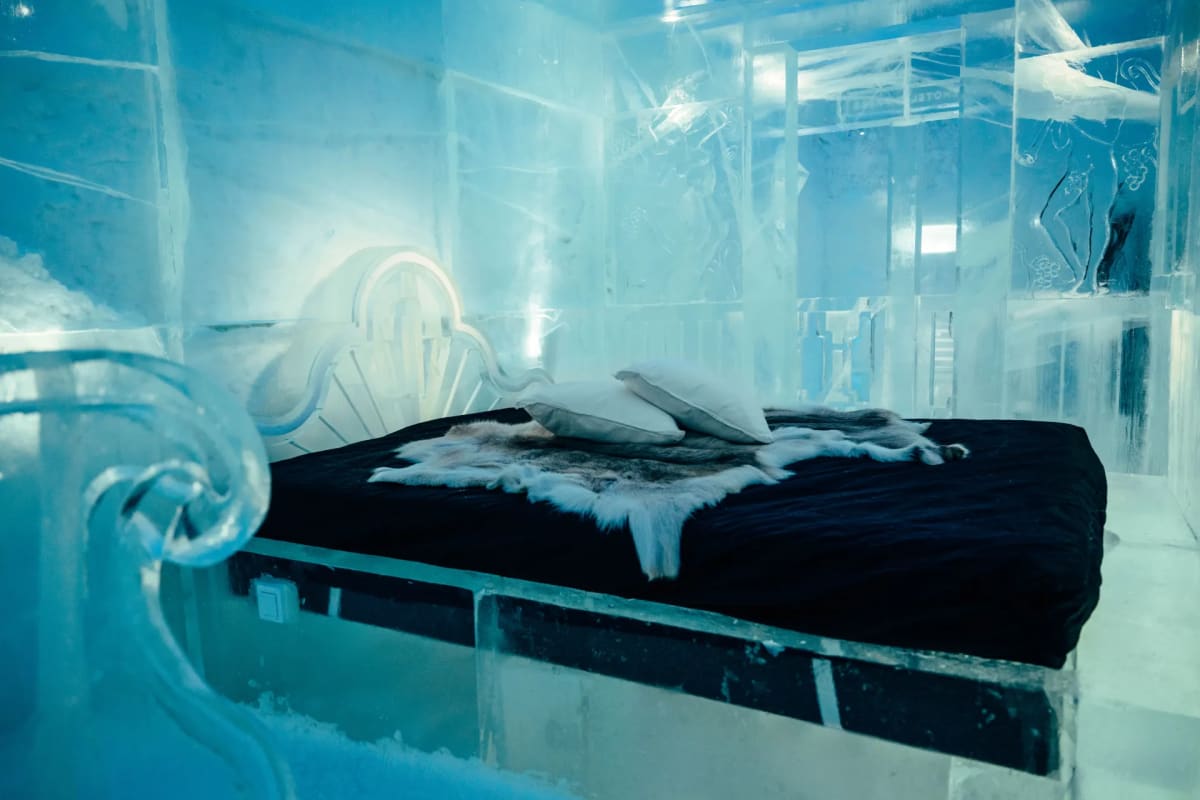
Blue light glows through a hand-carved wall, reindeer hides bunch under your shoulders, and every surface you touch is below zero.
Europe is the only continent where a genuine night inside a frozen building sits twenty minutes from an airport town, with warm rooms and cheap beds within the same small resort.
That tier ladder is the whole trick: sleep on real ice for one night, then move to heated comfort without changing your trip.
This guide helps you decide which of the four European properties — and which room type at each — actually fits the way you travel.
Expect to budget roughly €290–420 per person for a classic ice room, €360–610 for an on-site warm cabin, and €580–940 or more for an artist-designed suite.
If you want the ice architecture without the frozen night, town beds nearby run about €22–48 and a daytime visit costs a fraction of an overnight.
The four European ice hotels at a glance
- Cheapest full ice night: Sorrisniva, Alta — about NOK 2,250 per person for an ice room, roughly −5°C inside, and 20 minutes from Alta with almost no light pollution for aurora.
- Best for room design: ICEHOTEL Jukkasjärvi — ice rooms run 2,500–4,500 kr and artist suites 5,000–9,000 kr, with heated facilities only 30 meters away and bookings that sell out within hours of the September release.
- Best if you hate the cold: Kakslauttanen — a heated glass igloo under the aurora at roughly €210 pp low season on half board, or about 635 CHF at peak; confirm whether you are in Igloo East or Igloo West.
- Cheapest region, biggest gamble: Poiana Brașov, Romania — genuine ice lodging at the lowest price in Europe, but only January through March and the season has been suspended twice since 2019.
- Skip it as lodging: Levi SnowVillage — a daytime snow and ice gallery with no overnight rooms, despite what listings claim.
- Best budget structure: one ice night first, then warm or town beds — ICEHOTEL warm rooms at 1,800–2,800 kr and Kiruna dorm beds near €32 keep the trip bookable without cutting the night everyone came for.
How much does an ice-hotel night actually cost in Europe?
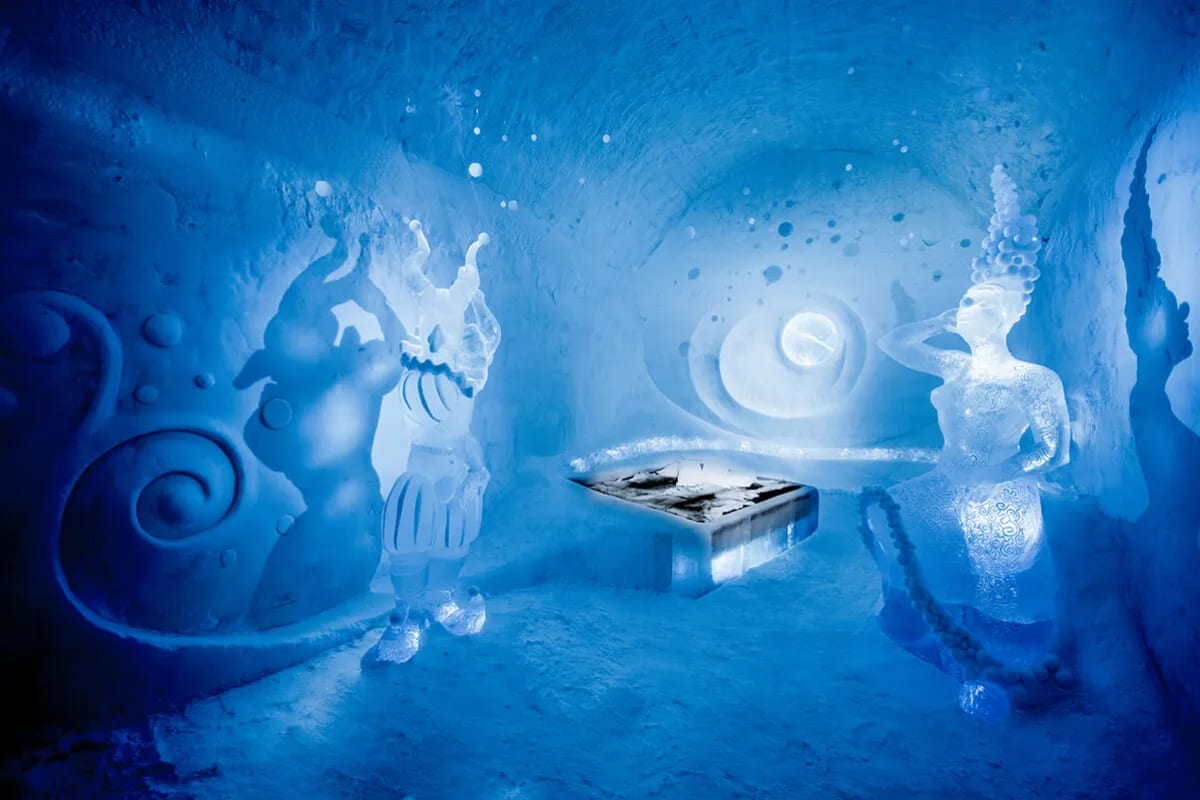
Fewer than twelve ice hotels in the world rebuild their walls, beds and bar from river ice every winter, and only a handful of those sit inside Europe — Sweden, Norway, Finland and Romania. That scarcity is the entire pricing story: there is no competition to push rates down, so a genuine ice night runs €290–420 per person for the cheapest bed and climbs past €900 for a designed suite.
Expect these as per-person, per-night baselines; property rates shift with season and exchange rates.
What “ice hotel” means for pricing purposes
Two products get sold under one name, and the price gap between them is the largest single decision in this article.
- Ice room: A plain sleeping chamber carved from ice, with an ice bed frame under reindeer hides and a thermal sleeping bag. No sculpted theme, no artistry — just the cold and the silence. This is the entry tier at roughly €290–420 per person, and it is the only tier where “affordable” and “ice hotel” honestly belong in the same sentence.
- Art suite: A one-off sculpture by an invited artist — an ice organ, a frozen forest, a carved chandelier — with a private anteroom carrying the toilet and shower. Standard suites sit at €580–940 per person, and you are paying for the artwork and the privacy, not for a warmer or safer night.
Anything built from snow, timber or glass is a different product at a different price. I would ignore the word “ice” in a listing and ask one question: am I sleeping on a bed made of ice? If not, it is not an ice hotel and should not be priced like one.
The four tiers you are actually choosing between
| Tier | Per person / night | What the money buys | Best for |
|---|---|---|---|
| Classic ice room | €290–420 | Ice bed, thermal gear, breakfast and a guided tour of the ice hall; shared heated facilities elsewhere in the building | Budget-first travelers, photographers, one-night experimenters |
| Standard art suite | €580–940 | Artist-designed room, private anteroom with toilet and shower, dedicated concierge and an artist briefing | Couples and special occasions where the room is the destination |
| Warm cabin (on site) | €360–610 | Full heating, private bathroom, breakfast, and a short walk to the ice hall and ice bar | Families, older adults, anyone cold-sensitive |
| Partner hostel (nearby) | €22–48 | A dorm or private room with a kitchen; the ice hotel becomes a daytime visit you book separately | Backpackers and multi-day Lapland itineraries |
My read: the art suite is a splurge that delivers, the warm cabin is a comfort purchase that quietly deletes the point of the trip, and the hostel tier is the smartest number on this page if the ice night is one chapter of a longer northern route rather than the whole vacation.
Why the cheapest room is rarely the best value
At €290–420, the classic ice room is the headline bargain — and it is where most first-timers lose money, because the rate covers only a few hours of actual exposure before you are asleep in a bag.
- Short exposure, full price. You pay a hotel-night rate for what is functionally a two-hour evening plus a night’s sleep. If the ice hall, the bar and the art are what you came for, a daytime visit plus a hostel bed captures most of it.
- Art suites hide a second night. Standard suites commonly carry a two-night minimum and stiffer cancellation terms, so the €580–940 figure becomes a two-night commitment — always price the stay, never the night.
- Add-ons outrun the room. Mandatory dinners, gear and transfers are where a budget booking doubles. Add them before you compare tiers.
- The middle tier wins for most people. One ice night for the experience, warm accommodation for the rest of the trip — that combination beats two consecutive ice nights in comfort and in cost.
Europe’s ice hotels ranked by what a night really costs
A single ice night in Europe runs anywhere from roughly NOK 2,250 per person at Sorrisniva in Alta to 635 CHF at Kakslauttanen in peak weeks — a spread wide enough that the property you pick matters far more than any booking hack. Below are the four European properties worth pricing out, ranked by what you actually pay for a night in the cold, plus the one Lapland name that gets miscategorized as a hotel and should not be on your shortlist at all.
Read the ranking as a cost ladder, not a quality one. Sorrisniva wins on price and aurora darkness, ICEHOTEL wins on range of room types, Kakslauttanen wins if you want warmth and a glass roof over your bed, and Poiana Brașov is the gamble.
Prices here are planning baselines in each property’s local currency; confirm current rates directly with the operator before you lock flights, because Nordic and euro pricing shifts seasonally.
#1 Sorrisniva Ice Hotel, Alta, Norway — the cheapest verified full ice night
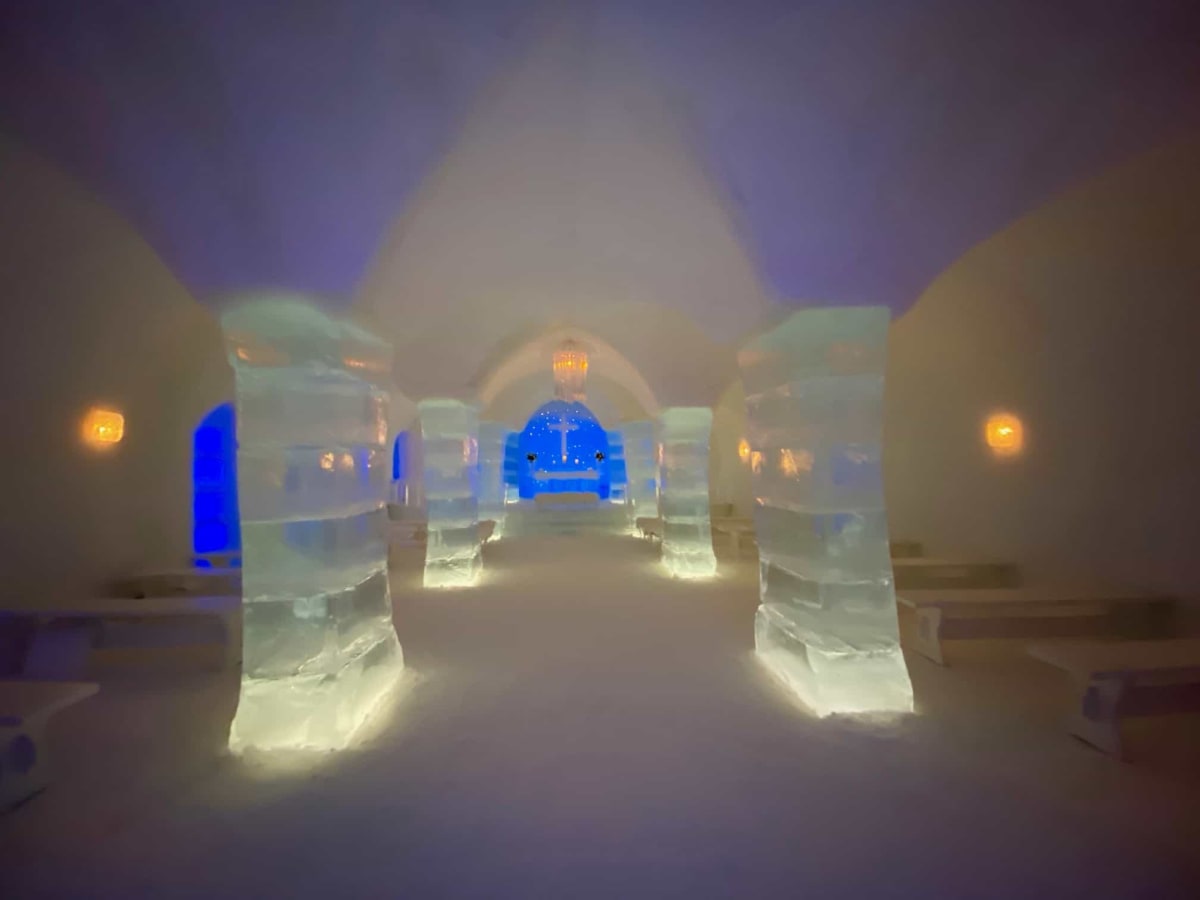
Sorrisniva is the move if your priority is sleeping in real ice at the lowest verified per-person price in Europe: about NOK 2,250 per person for an ice room and NOK 2,500 for a suite, in a structure that holds around −5°C inside. It sits roughly 20 minutes from Alta, which makes it the rare ice hotel you can reach without a second domestic flight or a long transfer once you land.
- What the price buys: an ice room or ice suite at roughly NOK 2,250–2,500 per person per night — the floor for a genuine overnight in a fully frozen room in Europe.
- Budget lever: the three-course dinner is about NOK 645 per person. Factor it in before you compare totals, because meal pricing is where the “cheap” ice night quietly doubles.
- Cheap alternative to sleeping over: a daytime visit runs around NOK 200 per person if you want the architecture and photos without the frozen night.
- Temperature to expect: about −5°C inside the ice rooms, the mildest cold exposure of the properties on this list.
- Access: roughly 20 minutes from Alta, so a rental car or taxi is the whole logistics story.
My judgment: this is the best value ice night in Europe, and the reason is not the price alone. Sorrisniva is the northernmost ice hotel in the world, far from any sizable town, and the light pollution is close to nil.
The frozen river directly in front of the hotel is where guests set up tripods, and even on a quiet aurora forecast the sky show here outperforms brighter, more built-up resorts. If the northern lights are your reason for going to Lapland, Sorrisniva beats Jukkasjärvi on darkness and beats Kakslauttanen on price.
Insider detail the website won’t give you: the riverbank in front of the hotel, not the ice rooms, is where the aurora happens — book dinner early enough that you are outside and dressed before the sky turns, because the good displays on low-KP nights arrive and vanish fast.
#2 ICEHOTEL Jukkasjärvi, Sweden — the widest price spread, from basic ice room to art suite
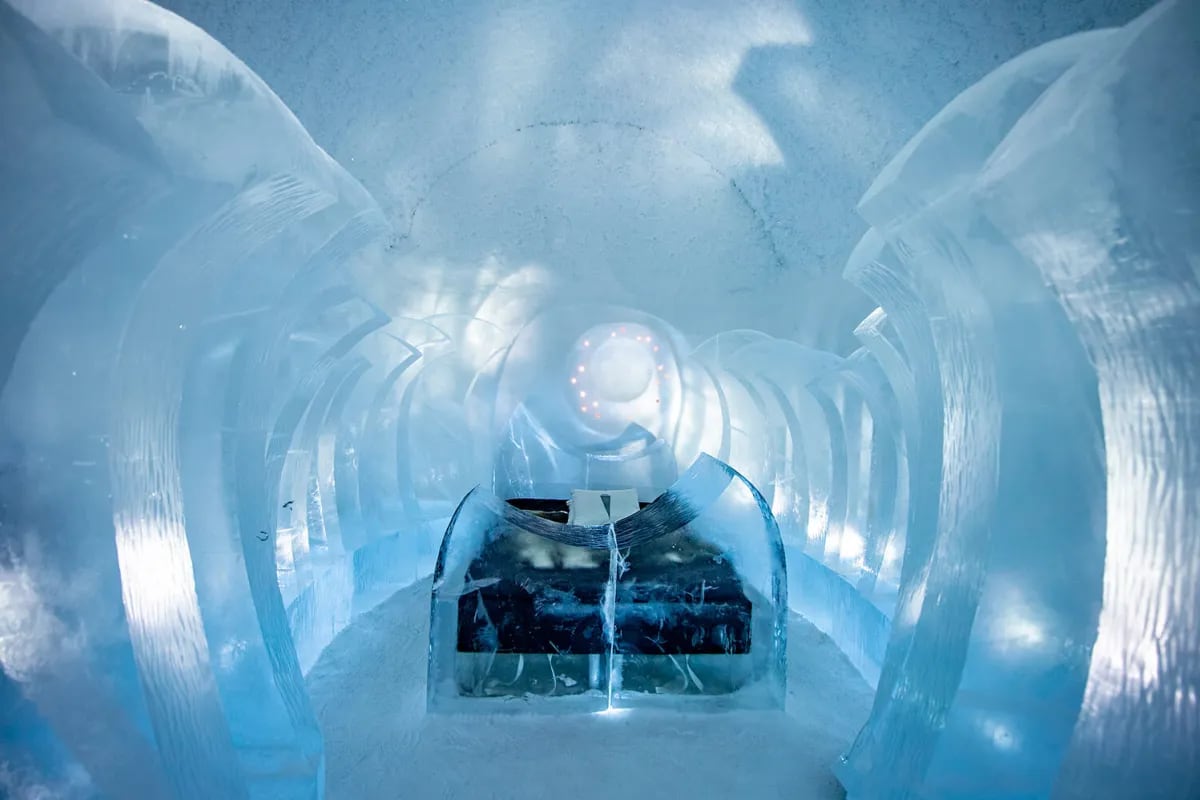
ICEHOTEL is where the price ladder gets steep: a basic ice room runs roughly 2,500–4,500 kr per person per night, while an art suite runs 5,000–9,000 kr per person — both at −5 to −8°C, both with the warm facilities a short 30-meter walk away. The property sits about 17 km from Kiruna, so plan transport from the airport or town as a separate line item.
- Ice room, 2,500–4,500 kr per person: the entry price for the real experience. Take the low end of that range and this becomes competitive with Sorrisniva.
- Art suite, 5,000–9,000 kr per person: the sculpted, one-off rooms built by invited artists. Pay this only for a celebration, not for a first experiment with sleeping cold.
- Cold exposure: −5 to −8°C in both room types, so the extra money buys design and space, not warmth.
- Warmth logistics: the heated facilities are about 30 meters from the ice rooms — one of the shortest cold walks of any ice hotel, which matters more than it sounds at 3 a.m.
- Distance: around 17 km from Kiruna. Guests who want flexibility usually split time between the hotel and Kiruna town rather than paying resort rates for every night.
My judgment: pick ICEHOTEL if room design is the point of the trip, and pick the ice room tier if the budget is. The art suites are genuinely serious sculptural work and they photograph better than anything else on this list, but paying 5,000–9,000 kr to sleep just as cold as a 2,500 kr room is a decision I would make only for a honeymoon or milestone birthday.
For everyone else, the ice room tier plus the on-site warm experience is the smarter allocation.
Booking reality: the property opens its booking in September each year, and ice rooms have sold out within hours of that opening in past seasons. If Jukkasjärvi is your target, treat early September as a hard deadline in your calendar rather than a soft reminder — this is the fastest-selling inventory of the four properties ranked here.
#3 Kakslauttanen Arctic Resort, Finland — snow and glass igloos, half board included
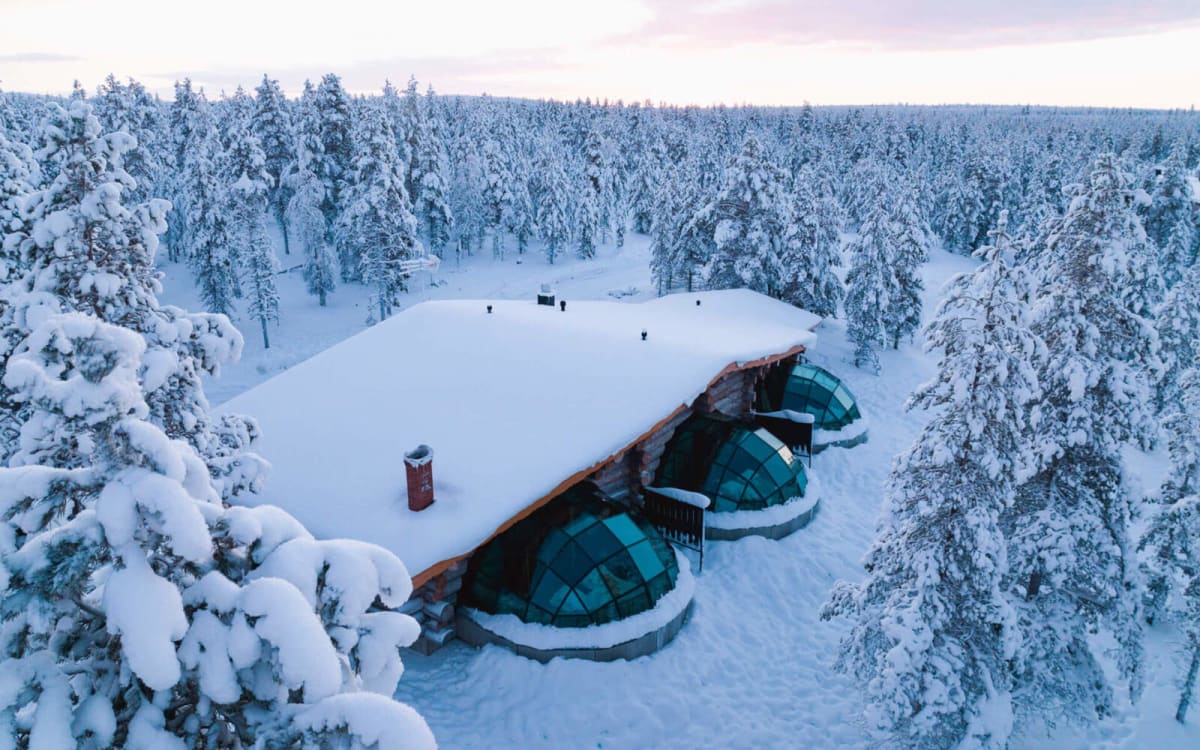
Kakslauttanen is the property whose photos launched a thousand bucket lists, and the price reflects it: around €210 per person in low season on a half-board basis, climbing to roughly 635 CHF for a high-season night. What you are buying is a glass-roofed igloo with a heated bed under the aurora, not a frozen room — which is exactly why it belongs on this ranking and why it is the easiest cold night here to survive.
- Low season: roughly €210 per person per night, half board included. That meal inclusion is why the effective gap to the Nordic ice hotels is smaller than the headline price suggests.
- High season: about 635 CHF for a night at the peak — the widest seasonal swing of any property on this list, so your dates decide your budget.
- Layout that matters: the resort runs two villages, Igloo East and Igloo West, about 5 km apart. Confirm which one your booking is in before you arrange transfers and activities.
- Why half board matters: dining is effectively built into the rate, so unlike Sorrisniva there is no separate NOK 645-sized surprise at checkout.
My judgment: Kakslauttanen is the best pick for anyone who is cold-sensitive, traveling with parents, or doing a multi-night Lapland stay and willing to pay resort prices for comfort. The West Village is the more atmospheric of the two — set in the forest, with chalets and snow igloos as neighbors and the main reception and restaurant about a five-minute walk from the glass igloos.
But for pure value per night in a frozen structure, Sorrisniva and the ICEHOTEL ice room tier both beat it.
Honest caveat: the glass igloos share a wooden annex with a lounge, Wi-Fi and sauna facilities that feel functional rather than luxurious. If your fantasy includes a design-hotel lobby, spend the 635 CHF elsewhere; if your fantasy is lying under the aurora without freezing, this is where the money goes.
#4 Ice Hotel Poiana Brașov, Romania — the budget pick that may not be open
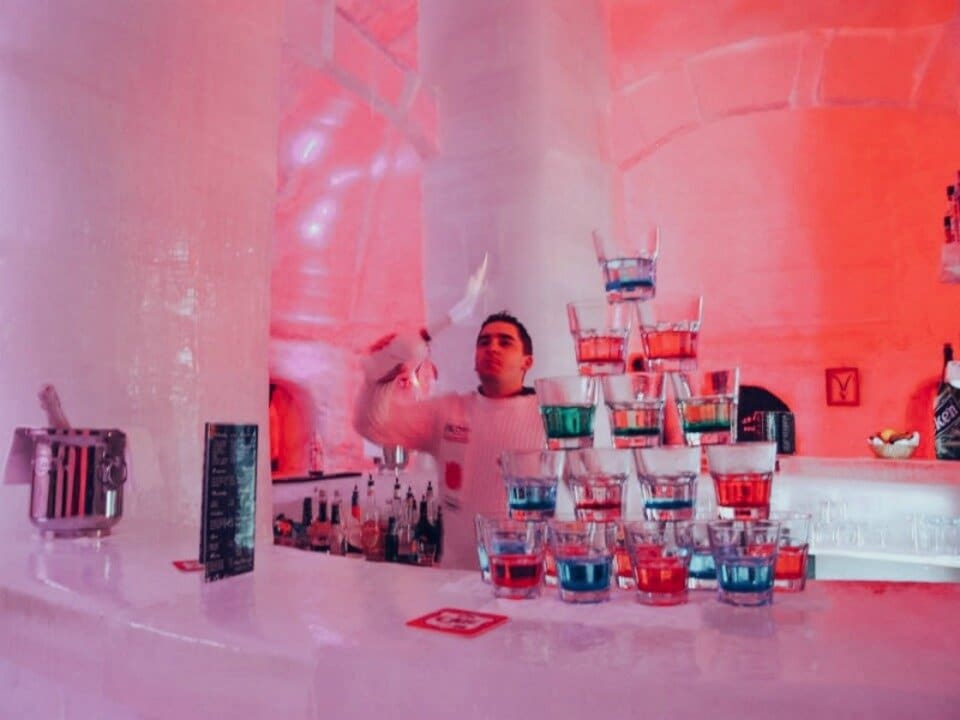
Poiana Brașov is the only Southern European entry and the cheapest region on paper, but the operating window is brutally short: it runs January through March only, and the season has been suspended twice since 2019. Treat it as a flexible add-on to a Brașov trip, never as the anchor of a flight itinerary.
- Operating window: January to March only. Everything outside that is off the table, regardless of what third-party listings imply.
- Reliability risk: the season has been suspended twice since 2019. Verify the property is actually operating before you book non-refundable flights or connecting stays.
- Why it still makes the list: when it does run, it is the lowest-cost way to sleep in a genuine ice structure in Europe, and it pairs easily with a wider Romania trip.
My judgment: Romania is the right call for travelers with flexible January-to-March dates who want to test the ice-hotel concept at the lowest possible cost. It is the wrong call for anyone booking flights six months out around a fixed date.
Build the trip around Brașov and the Carpathians, and treat the ice night as the bonus — if the season is running, you win; if it is suspended, the trip still works.
Why Levi SnowVillage does not make the list
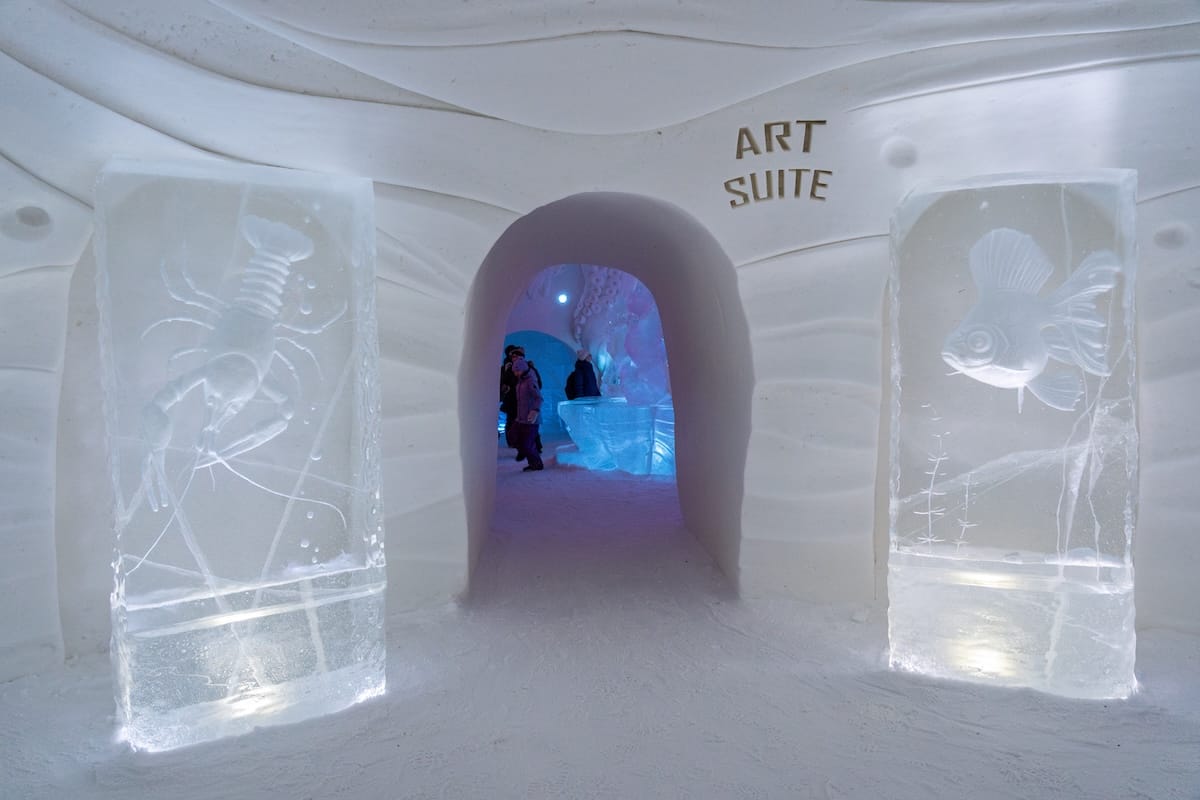
SnowVillage near Levi, Finland shows up constantly in “ice hotel” search results, and it is the most common booking mistake in this category: it has no overnight rooms. The snow and ice structures operate as a daytime exhibit and gallery, so there is no price to rank and no night to book.
My judgment: skip it as lodging and consider it only as a daytime stop if you are already based in Levi for skiing. Anyone selling an “overnight at SnowVillage” is selling something the property does not offer — walk away from that listing and put the money toward one of the four properties above.
The cheapest ways to sleep in (or beside) the ice
ICEHOTEL’s warm rooms run 1,800–2,800 kr per person per night and a dorm bed in Kiruna costs about €32 — that gap, not a promo code, is the entire budget strategy for a European ice-hotel trip.
There are three moves that actually work: book one cold night and pay warm prices for everything else, skip the overnight entirely and buy the daytime ice experience, or build a short split that mixes both. Each one keeps the trip bookable; they just trade different things.
Here is the math and my read on who each fits.
One ice night, then warm nights
The cold night is the reason you are flying to the Arctic. The warm nights are the reason the trip survives your budget.
At ICEHOTEL the warm rooms (1,800–2,800 kr per person) and warm chalets (2,200–3,500 kr per person) sit at normal hotel temperature inside the same complex, so you lose nothing logistically by alternating.
- Warm room (1,800–2,800 kr): My pick for couples and solo travelers. This is the room type that makes the trip affordable, and I would rather add a warm night here than downgrade the ice night to a cheaper property.
- Warm chalet (2,200–3,500 kr): Worth the extra cost only if you need separate space — families, or anyone traveling with gear that needs to dry out. Otherwise the warm room does the same job.
Budget an illustrative 15,000–20,000 kr total for a couple on this kind of ICEHOTEL trip with an activity each, and treat that as a ceiling rather than a target. The saving comes from the warm-night rate, not from shaving the ice night.
The one detail most itineraries get wrong: put the ice night first, not last. You arrive with adrenaline and sleep better on night one than you will after three days of husky sledding and late aurora watches, and the warm room afterwards feels like a reward instead of a recovery ward.
Sleep in town and pay only for the daytime ice visit
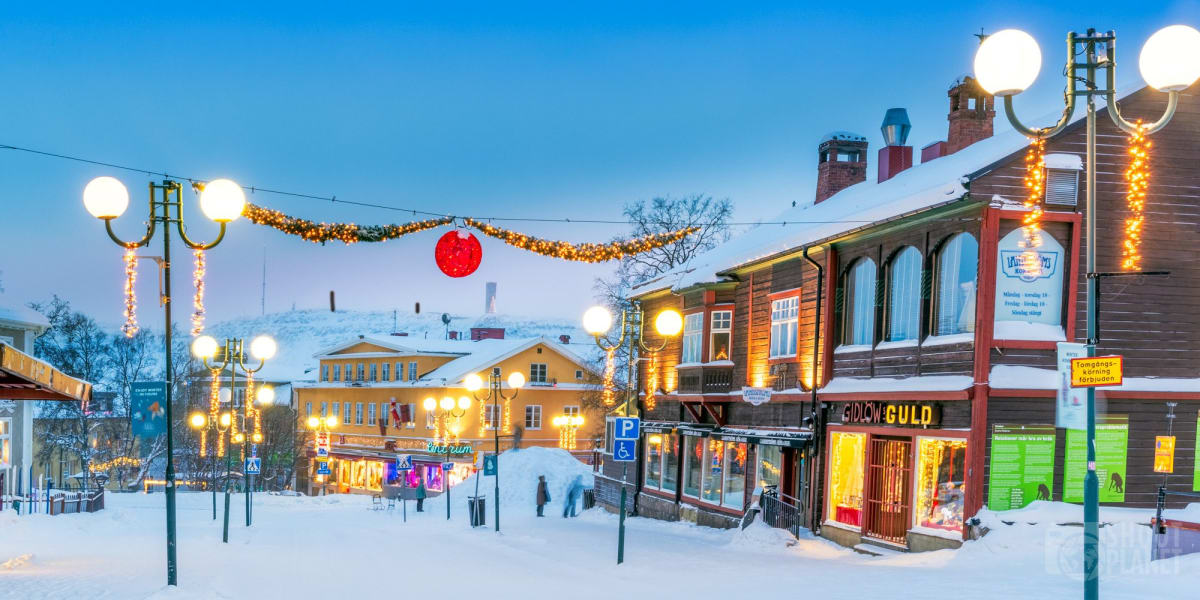
If the ice night is the part of the budget you are least willing to defend, cut it. Base yourself in the nearest town, book the ice experience as a daytime activity, and you keep the photos and the ice bar for the price of a hostel bed plus a bus fare.
| Base | Where you sleep | Typical price | Getting to the ice |
|---|---|---|---|
| Kiruna, Sweden | Kiruna Vandrarhem, dorm bed | about €32 per person | local transport, roughly €12–25 round trip |
| Levi, Finland | Levi Backpackers Hostel, dorm bed | about €38 per person | local transport, roughly €12–25 round trip |
| Poiana Brașov, Romania | Hotel Alpin, double room | about €42 per room | hotel shuttle service |
| Quebec City (pricing benchmark) | Auberge Place d’Youville, private room | about €65 | bus 800 at about €4.50, or a shuttle at about €28 round trip |
My verdict: the town-base route wins for anyone already renting a car or chaining several Lapland stops, because the €12–25 round-trip transport cost is invisible next to what an overnight ice rate adds. It loses for one-night visitors — after you pay the separate day-visit fee and the transfer, the gap to a warm room on site narrows fast.
The transport spread is wider than people expect. Where a municipal bus exists, it is dramatically cheaper than the hotel shuttle — the Quebec City benchmark of about €4.50 by bus 800 versus roughly €28 round trip by shuttle is the ratio to look for in Europe too.
Always check whether your base town has a public route before paying for a transfer.
The two-night split that keeps the trip bookable
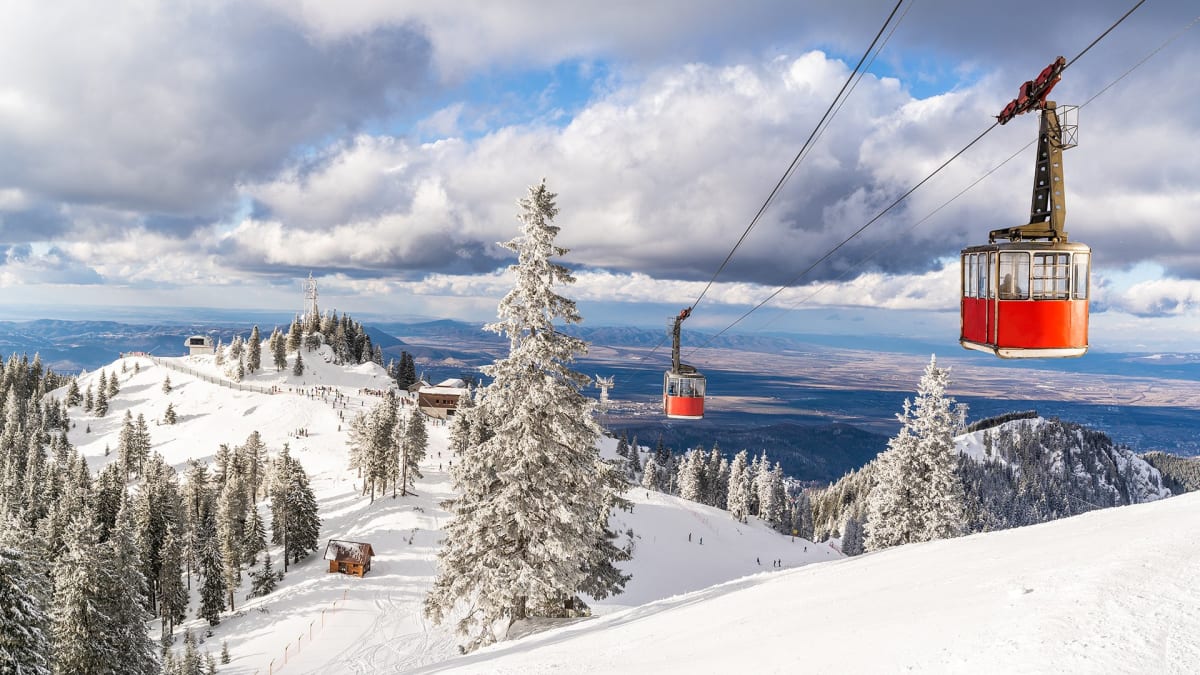
This is the version I would book for most first-timers, and it is the one that fits a normal vacation budget without gutting the experience.
- Ice night first: one cold night, thermal gear included, done while your energy is highest.
- Warm room second: 1,800–2,800 kr at ICEHOTEL buys you a real bed, a hot shower, and the ice bar without the sleeping bag.
- Town bed for the tail: extend the trip with €32–42 beds in Kiruna, Levi, or Poiana Brașov instead of paying hotel rates for nights you will spend on a bus or a snowmobile.
That structure is what turns a headline ice-hotel price into an actual trip. You get the one night everyone is there for, you keep warm-room comfort where it matters, and the extra nights cost less than dinner.
If the split still pushes you over budget, cut the extra warm nights before you cut the ice night — a day visit is a good trip, but it is not the trip.
When should you book to land the cheapest rate?
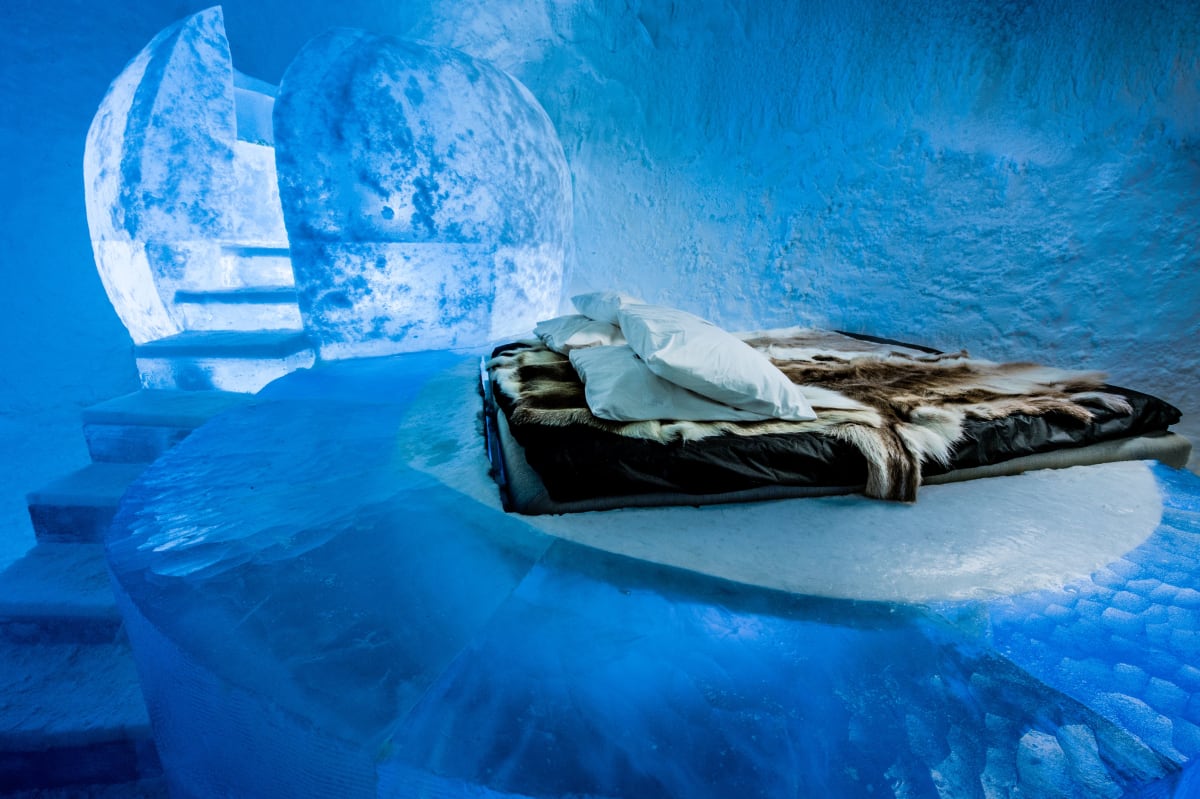
Inventory drops in mid-May for the coming winter, and roughly 68% of the lowest-tier rooms are gone within 72 hours of that release. That is the whole game: the cheapest ice-hotel night you will ever see is the one you commit to before summer, not the one you hunt for in January.
Book five to seven months out and you are buying at early-season rates; book two months out and you are buying someone else’s leftovers.
Early-season and mid-week dates
Prices climb an average of 18–32% between the first weeks of the season and the peak holiday stretch. That gap is larger than any discount code, membership, or negotiation tactic in this business, so date selection is your primary lever — everything else is secondary.
- First month of operations: The ice is freshly built, the art is intact, and rates are at their floor. This is the window I recommend to anyone whose priority is price over holiday atmosphere.
- Sunday-through-Thursday arrivals: Mid-week inventory moves slower, so the lowest tier stays bookable longer and is likelier to still be there when you log on.
- Avoid the Christmas-to-New-Year and February school-holiday stretch: You pay peak money for peak crowds in the corridors and the day-visit traffic. Not worth it on a budget trip.
- Shoulder weeks before the melt: Late-season dates are cheaper but the sculptures are visibly worn. Fine for a first ice night; disappointing if the art is your reason for going.
Skip the bundles and book accommodation only
Bundled dinner-and-experience packages are where budgets quietly double. Dinner packages typically run €95–135 per person on top of the room, and they are frequently sold as if they were mandatory.
They are not. Search directly on the operator’s site for an accommodation-only rate — book the room, then decide on food once you arrive.
- Groups of four or more: Ask for the group rate before you book anything. Discounts typically land in the 10–15% range, and they are usually negotiated by email, not shown online.
- Students and seniors: Expect 10–12% off, but only on warm cabins — the discount does not apply to ice rooms, so do not build your savings plan around it.
- Free date changes: Several operators allow penalty-free changes up to 21 days before arrival. Use that as your insurance policy instead of paying for a flexible-rate premium.
Why last-minute discounts do not exist
Ice hotels cannot discount their way out of a problem. The building melts on a fixed schedule, the lowest tier is capped at a handful of rooms, and 68% of it sells inside three days of release — there is no distressed inventory to clear in January.
What looks like a “deal” late in the season is almost always a warmer room type, a bundle you did not want, or a mid-week date you could have had cheaper in October.
The realistic last-minute play is different: call the local tourism office for the gateway town directly and ask about same-week cancellations. Websites lag, phones do not.
But treat that as a bonus, never the plan — the plan is mid-May, five to seven months ahead, accommodation only.
Is a budget ice-room night worth it?
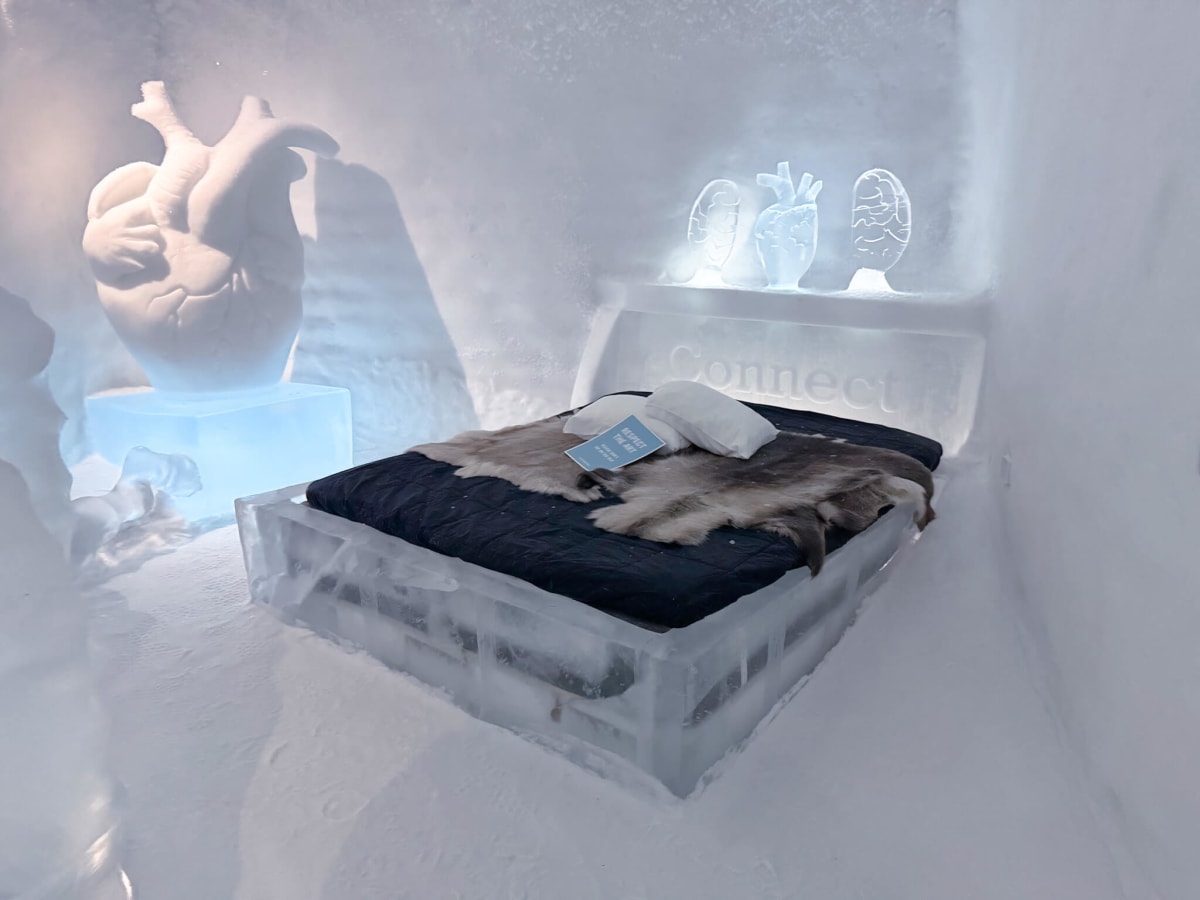
Your basic ice room will hold somewhere between −3°C and −23°C, and the sleeping bag matters more than the price tag: ICEHOTEL issues bags rated to −35°C, and any other operator should be able to name an EN 13537 rating of at least −30°C before you pay. Ask for the number.
If staff cannot produce it, the discount is coming out of your night’s sleep, not their margin.
What a basic ice room gives up
The cheap ice room is not a hotel room with a cold theme. It is a carved chamber with a mattress on ice, and the trade-offs are physical, not cosmetic.
- Electricity: There is none in a classic ice room. No charging, no heating, no reading light you control — your phone battery drains faster in the cold anyway, so leave it in the warm building’s storage.
- Plumbing: Nothing in the room carries water, which means no sink, no toilet, no shower. The shared heated bathroom is typically 100–200 m away through cold air.
- The 2 a.m. decision: Once you are zipped into a mummy bag wearing thermal layers, the walk to that bathroom is unappealing enough that most guests simply don’t make it. Use the heated facilities immediately before bed.
- Evening hours: Expect a maximum of roughly two to three hours inside the ice room before it’s time to sleep. Operators move you in near bedtime; this is a place to sleep, not to linger with a book.
- Dark and quiet on your terms: Some ice rooms have accent lighting in the sculpture that guests cannot switch off. Bring a contoured eye mask — the one piece of kit the gear rental never includes.
What the money buys that a hotel cannot
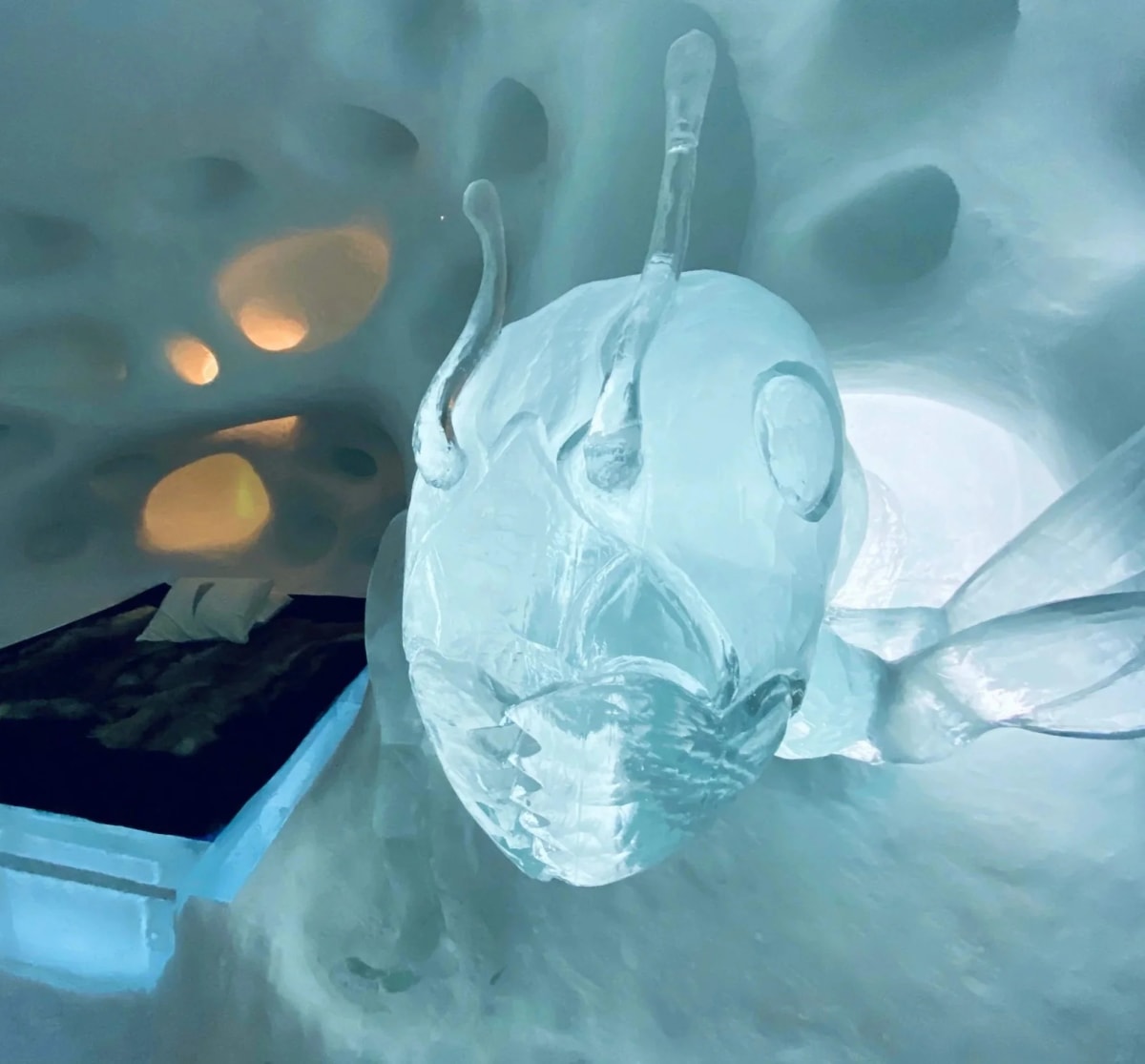
What you are actually buying is the sequence: ice room to freezing outdoor air to a warm wooden building to a sauna to a hot breakfast at a table near a fire. The contrast is extreme, and it resets your sense of temperature for the rest of the trip.
No heated hotel room at any price produces that.
My honest read: the experience is complete after a single night. A second night adds more cold, not more value — by then the novelty has landed and you are simply tired.
Spend the extra money on the guided ice-carving tour or a long dinner instead of another night on the mattress, and you will remember the trip more clearly.
Who should skip the ice room entirely
Ice hotels are not a universal experience, and operators will turn people away for good reason. Skip the ice room if any of these describe you.
- Medical exclusions: Guests with asthma, and cardiovascular or circulatory conditions, are typically excluded from overnight cold exposure. Cold urticaria and poor circulation in extremities fall into the same category. Do not attempt to book around this; the cold is the product.
- Anyone who needs the bathroom at night: Mobility limits, pregnancy, or simply a small bladder turn the 100–200 m bathroom walk into the defining memory of your stay. Choose heated accommodation and visit the ice halls as a day guest instead.
- Families with young children and cold-sensitive adults: The thermal gear comes in adult sizing and the cold tolerance required is real. Heated rooms on the same property keep everyone happy without pretending otherwise.
- Light sleepers: Ice rooms echo, and you will hear other guests. If a bad night ruins the next day of your holiday, this is the wrong room.
For everyone else — reasonably healthy, curious, and willing to be uncomfortable for a few hours — the ice room is the version of this trip worth booking. The upgraded suites are beautiful, but the basic room contains the entire story.
Red flags that disqualify a “budget ice hotel”
A listing that promises a private bathroom inside an ice room is describing something that cannot physically exist — and once you spot that, everything else in the ad deserves suspicion. Budget ice lodging is a real, bookable category; fake “ice hotel” marketing is a real and growing one.
These are the claims and documents that separate the two.
Marketing claims that cannot be true
Three promises should end your consideration immediately:
- “Open year-round”: No authentic ice structure survives May through November. A property using “ice” in its branding while selling summer dates is a themed building, not an ice hotel — and you will pay premium prices for ordinary accommodation.
- “Private bathroom in the ice room”: Plumbing cannot function at sub-zero temperatures. This is misleading marketing, full stop. Bathrooms are in a separate heated building, and honest properties say so up front.
- “No gear rental needed”: This signals inadequate preparation, not convenience. Proper thermal gear is mandatory for an overnight stay, and a responsible operator supplies it and tells you exactly what.
Safety details worth confirming in writing
Before you pay a deposit, get these four things in an email. A legitimate operator answers all of them without hesitation.
- Heated transition area: Confirmed access to a warmed lounge or anteroom before and after ice time. This matters for safe body-temperature regulation, not comfort.
- Room occupancy: Demand confirmation that no more than two people are booked into a single ice room. Overcrowding is how budget operators cut corners.
- Staffing on ice: I would not stay anywhere that cannot commit to a minimum of one staff member per eight guests during ice hours. Ask for the ratio in writing.
- Medical readiness: Staff trained in cold-exposure response, an AED on site, and the stated distance to the nearest clinic.
Also request the make and model of every piece of gear you will sleep in. Vague answers here are the clearest sign the outfit is improvising.
Frequently Asked Questions
What should I pack for an ice-hotel night?
The thermal gear and sleeping bag are supplied with the room, so your packing job is really about the gaps in that kit. Ask the operator for the EN 13537 rating on the bag before you pay — anything below −30°C is a red flag.
Bring a contoured eye mask, because sculpted accent lighting is often impossible to switch off, and plan for your phone battery to drain fast in the cold.
Where do I leave luggage, phones and valuables overnight?
Everything stays in the heated building, where operators provide storage for guests moving into the ice rooms. Treat the ice room as a place to sleep in a bag, not as a room with amenities.
Do I need a rental car to reach these properties?
Not necessarily. Sorrisniva is about 20 minutes from Alta and ICEHOTEL around 17 km from Kiruna, and both are reachable by taxi or local transport in the €12–25 round-trip range.
If you are basing in a town like Kiruna, Levi or Poiana Brașov, check for a public route first — municipal buses beat hotel shuttle pricing by a wide margin.
Book the one ice night, then let the trip breathe
Start by choosing your property: Sorrisniva for the cheapest verified ice night and the darkest sky, ICEHOTEL for the ice room tier plus a warm room right next door. Then hold your dates around the mid-May inventory release, when roughly 68% of the cheapest rooms go within 72 hours.
A single night inside walls carved from river ice changes how every warm bed feels for the rest of the year, and Europe is the only place where you can do it this affordably.
Put the ice night first on your itinerary and book the warm room for the night after, then lock the earliest season dates your calendar allows.
Leave a Reply