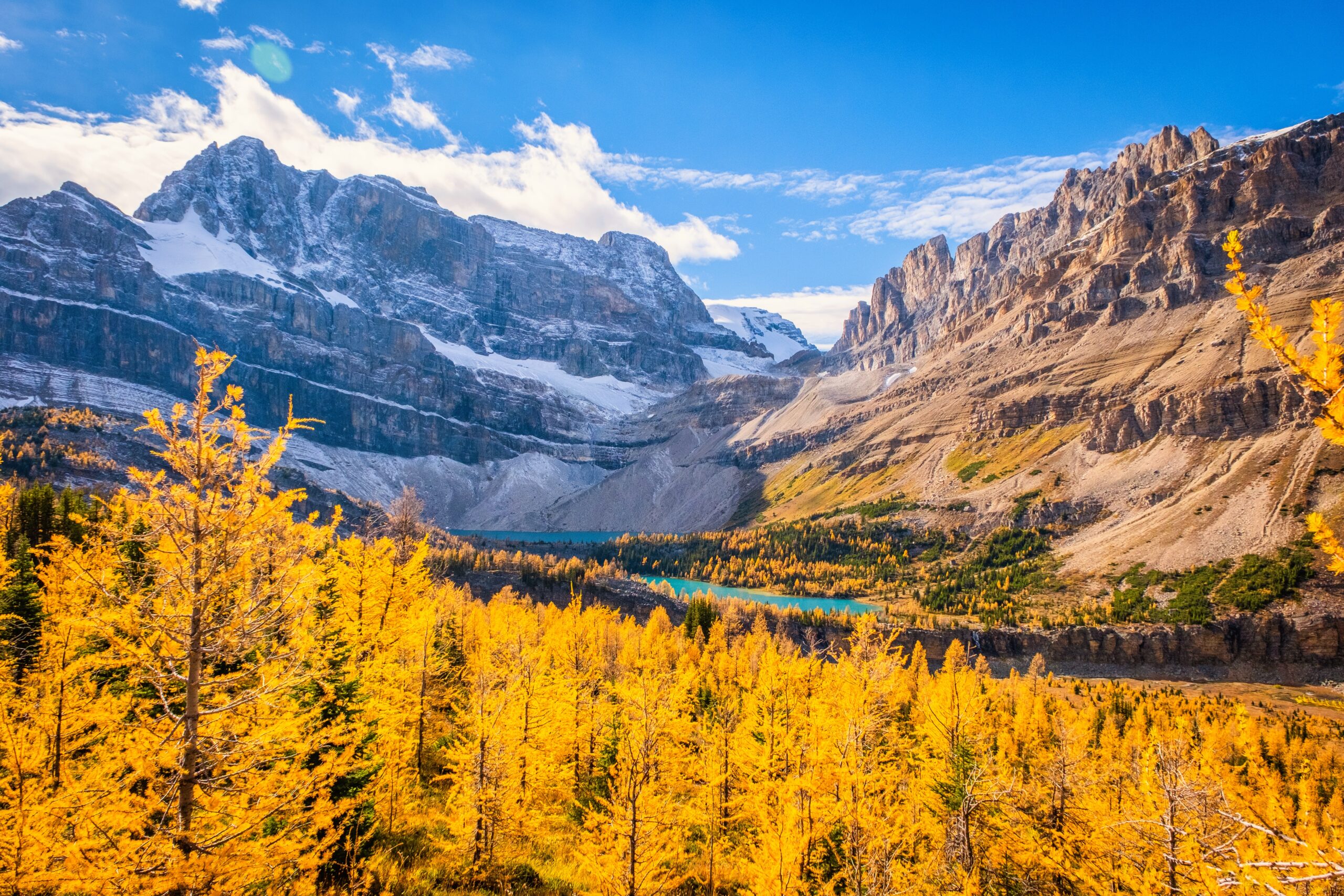
The air smells of pine and cold, clean water as you stand at the edge of a turquoise lake. Around you, entire mountainsides are on fire—not with flame, but with the impossible gold of a larch tree at its peak.
This isn’t just any fall foliage; it’s a fleeting, high-altitude spectacle where the color ignites from the valley floor to the alpine ridges. My guide cuts through the noise to tell you exactly where to go, how to get there without a car, and where to stay for a front-row seat.
You’ll find budget stays around $150 CAD per night in Canmore, mid-range lodges from $250, and splurge-worthy lakefront resorts starting near $800.
Best Time to Visit Banff for Peak Autumn Colors
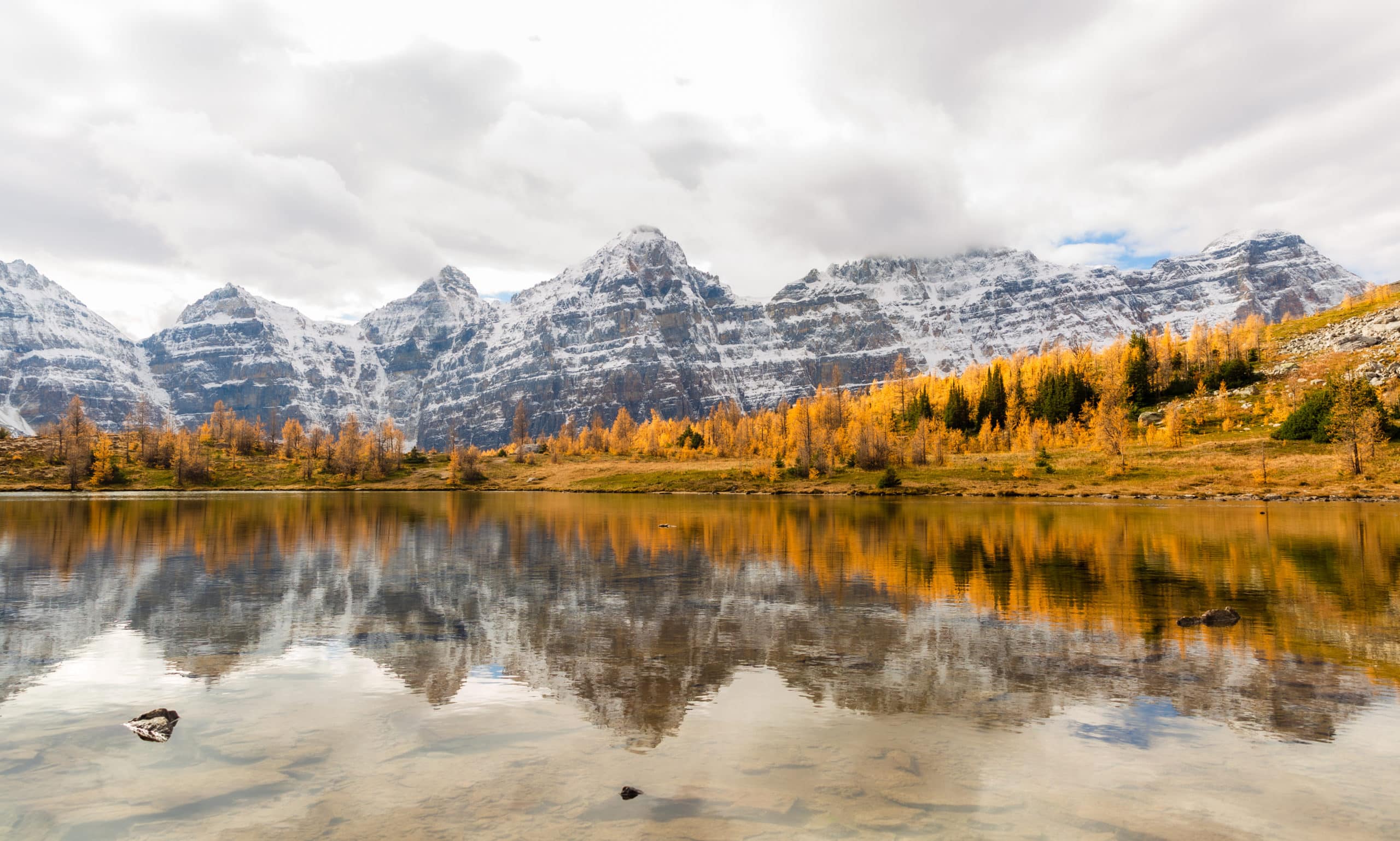
The last two weeks of September are your window — that’s when larches ignite gold across the high valleys and aspens blaze yellow along the rivers. Miss this stretch and you’re chasing bare branches.
Arrive too early and you’ll find green canopies with only a tease of color.
When Do the Larches and Aspens Turn Golden?
Larches and aspens don’t peak at the same time, which actually works in your favor if you plan a full week. Here’s the typical sequence:
- Aspens (mid-September): These turn first, lining the Bow River corridor, Cascade Ponds, and the shores around Quarry Lake in Canmore. If you arrive in the second week of September, you’ll catch them near their prime while the larches are still catching up.
- Larches (late September): The high-elevation larches — the trees everyone comes to see — hit peak gold roughly September 20–30. This is when places like Larch Valley, Pocaterra Ridge, and other alpine basins look like someone poured honey across the mountainsides. The window is narrow, typically lasting about 10 days before needles drop.
- Overlap window (September 18–28): This is the sweet spot where you get both aspens and larches at or near peak. Plan your trip around this period if seeing both species in full color matters to you.
One important caveat: peak timing shifts every year depending on frost patterns and elevation. The single best move you can make is calling the Banff Visitor Centre (403-762-8421) a few days before your trip and asking where color stands.
Staff track this closely and will tell you which elevations are peaking.
How Long Does Fall Foliage Typically Last?
The entire fall color season in Banff runs roughly from mid-September through the first week of October — about three weeks from first blush to last needle. But “lasts” is generous.
Peak color at any single location holds for roughly 7–10 days before wind and frost strip the branches bare.
Plan for at least five to seven days on the ground. Here’s why that’s not optional:
- Weather insurance: Fall in the Rockies is wildly unpredictable. Rain, early snow, and overcast skies are common, and they’ll derail a two-day trip. A week gives you enough clear windows to actually see what you came for.
- Elevation chasing: Aspens peak lower down first, then larches peak higher. A longer trip lets you follow the color upslope instead of gambling on a single weekend.
- Crowd timing: Weekends at popular trailheads are packed. A full week means you can hit the marquee spots on Tuesday or Wednesday and save weekends for drives and easy walks.
Base yourself in Canmore or Banff townsite — both give you day-one access to the Bow River corridor and Cascade Ponds for early aspens, plus quick drives to trailheads when the larches peak. If you’re booking accommodation, expect fall weekends to sell out by mid-August in Banff proper; Canmore is slightly easier to secure and only 25 minutes from the park gates.
For lodging options across all budgets, see the Where to Stay section.
One last detail the research won’t tell you: the first hard frost after a warm spell accelerates needle drop dramatically. If a cold snap hits while you’re there, shift your plans immediately to the highest-elevation larch spots that morning — you may only have a day or two before those golden ridgelines go brown.
Flexibility isn’t a suggestion here; it’s the entire strategy.
How to Reach the Best Fall Color Spots Without a Car
Skipping the rental car from Calgary means surrendering the freedom of the open road, but in peak fall, that can be a strategic win. You’ll avoid the parking chaos at trailheads and gain the ability to simply stare at the golden larches instead of white-knuckling the Icefields Parkway.
The trade-off requires planning, but it’s entirely doable and can be less stressful.
Shuttles & Guided Tours: Your Car-Free Backbone
The core of a car-free trip hinges on Banff’s excellent shuttle network and private tours that handle the logistics for you.
- Parks Canada Shuttle (to Lake Louise & Moraine Lake): This is the official, most reliable service for accessing the iconic spots. Book early—these tickets release in the spring and sell out fast for September. It’s the only way to guarantee access to Moraine Lake for sunrise without a private operator.
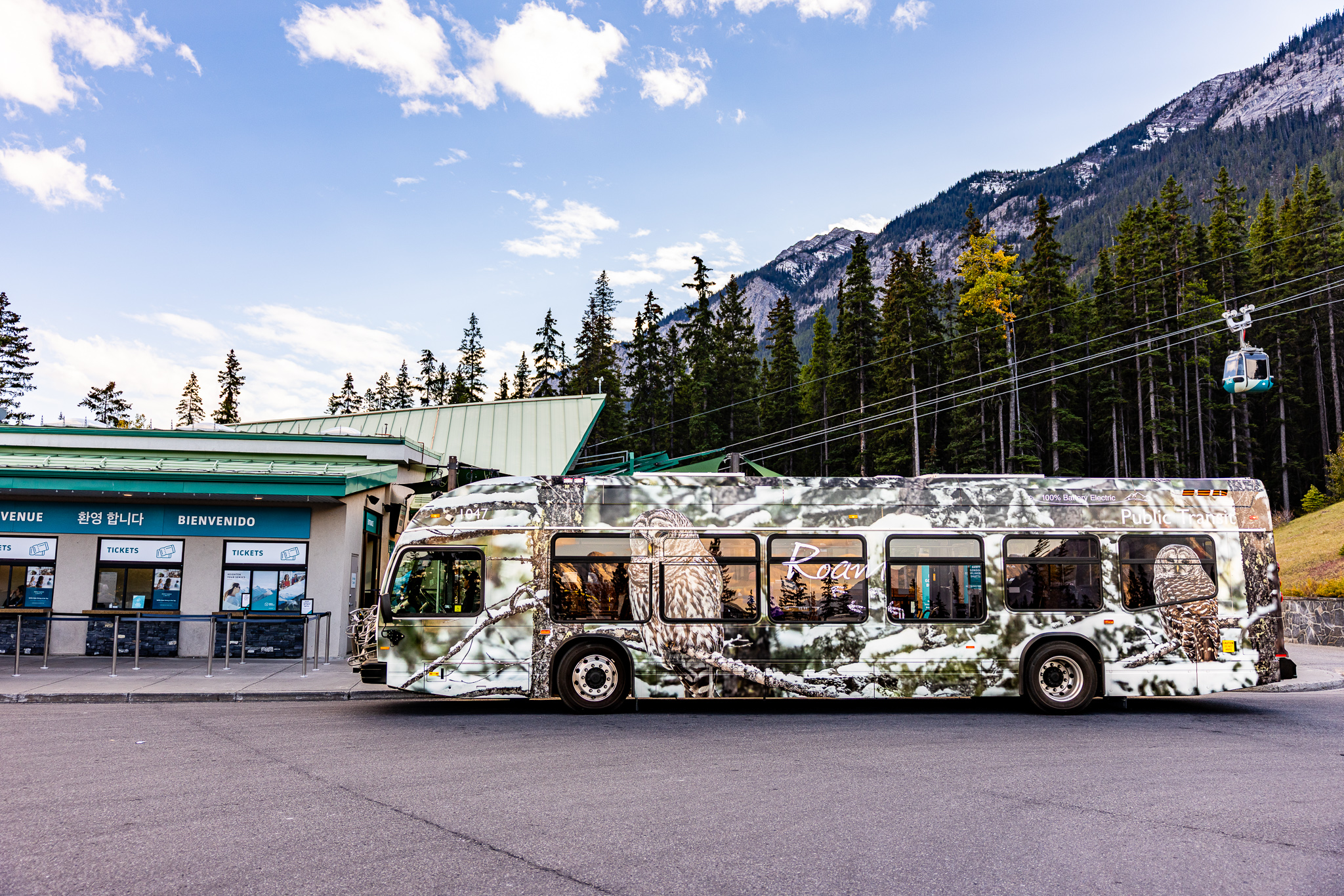
- Roam Transit (Local Bus): Connects the towns of Banff, Canmore, and Lake Louise. The Route 8X “Lake Louise Express” is your key link between Banff and the Lake Louise lakeshore. It’s affordable, runs frequently in peak season, and eliminates parking headaches entirely.
- Private Tour Operators: For a guided, all-inclusive experience, operators like the Moraine Lake Bus Company and Fairview Limo offer guaranteed sunrise access and scenic drives. This is the splurge option for maximum convenience and local insight.
| Option | Best For | Insider Tip |
|---|---|---|
| Parks Canada Shuttle | Budget-conscious hikers who want independence. | Set multiple alarms for the spring ticket release day. Have your account pre-made and be ready to refresh the second sales open. |
| Roam Transit | Flexible day-trippers staying in Banff town. | Use the “Route 8X” for Lake Louise; the regular “Route 6” is too slow for a full day of exploration. |
| Private Tours | Travelers who want a curated experience without planning. | Book a combined tour that includes both Lake Louise and Moraine Lake to maximize your dollar and photo ops. |
Bike Rentals: Access the Valleys on Two Wheels
For colors right from town, renting a bike is a fantastic alternative. The paved Legacy Trail between Banff and Canmore offers 22 kilometers of valley-floor views with golden aspens and panoramic mountain backdrops—it’s an easy, mostly flat ride.
In Banff, the trails around Cascade Ponds and along the Bow River are simple, scenic loops perfect for a casual morning ride. Bike shops in both towns rent everything from comfort bikes to e-bikes for the hills.
The Non-Negotiable: Banff Park Pass
Whether you arrive by shuttle, tour, or bike, everyone needs a valid Banff National Park Pass to enter the park. You can purchase this online in advance or at the park gates.
It’s a per-day or annual fee based on group size—simpler than the old machine vouchers.
The Verdict: For maximum flexibility and access to the best hikes like Larch Valley, combine a pre-booked Parks Canada shuttle with Roam Transit and a day of biking. If you value zero planning and expert guidance, a private tour is worth the premium.
Base yourself in the town of Banff itself for the easiest walk to Roam Transit hubs, bike rentals, and shuttle pick-up points, putting everything within a short stroll of your hotel.
Top Drives for Spectacular Fall Foliage
Highwood Pass delivers the closest thing to a guaranteed golden larch show you’ll find from a car seat — and you don’t need hiking boots to see it. These three drives are ranked by how much color you’ll see per kilometer of asphalt, starting with the most iconic.
| Drive | Time from Banff | Best For | Peak Color |
|---|---|---|---|
| Icefields Parkway | Starts in Banff | Epic all-day road trip | Late Sept – early Oct |
| Highway 40 to Highwood Pass | ~1 hour via Hwy 1 South | Dense larch forests from the road | Late Sept |
| Bow Valley Parkway | Starts in Banff | Short scenic drive + bike option | Late Sept – early Oct |
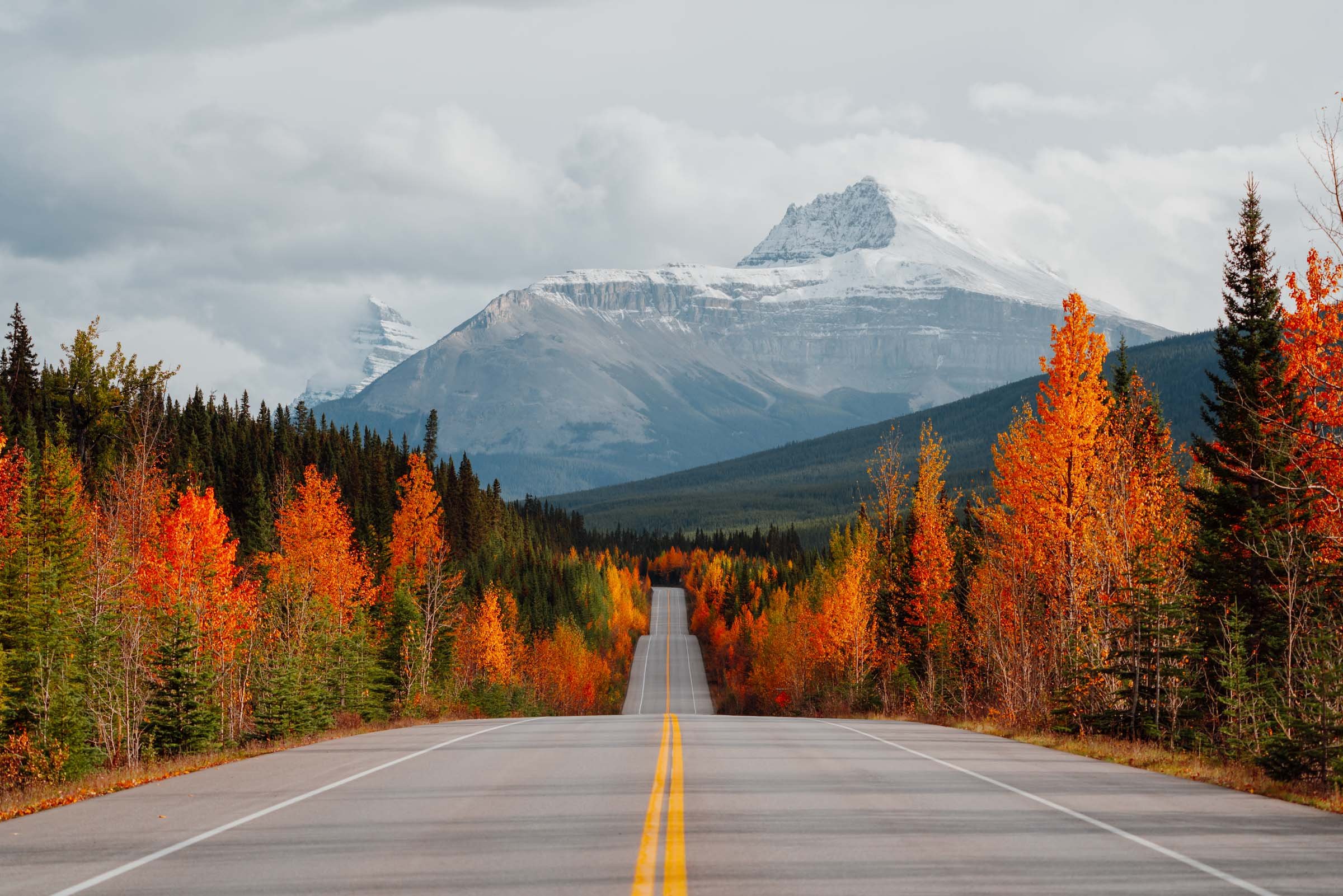
Icefields Parkway
This 232 km stretch from Lake Louise to Jasper is the drive most people fly to Alberta for — and in fall, it earns that reputation. Golden larches, glacial lakes, and massive mountain walls line nearly every kilometer.
Plan a full day minimum; two is better if you want to stop at pull-offs like Peyto Lake, Waterfowl Lakes, and the Columbia Icefield without rushing.
- The move: Drive north from Banff in the morning so the sun hits the eastern mountain faces — that’s where the larch groves glow brightest.
- Must-stop pull-offs: Bow Lake (golden larches reflected in turquoise water), Mistaya Canyon (a short walk from the parking lot), and the Saskatchewan River Crossing area for wide-open valley views.
- Fuel reality: Gas up in Lake Louise. Saskatchewan River Crossing has fuel but at significantly higher prices — budget roughly $0.20–0.40 more per liter than Banff town.
- Insider detail: Download the Guide Along audio app before you leave. Cell service vanishes past Saskatchewan River Crossing, and the GPS-triggered narration points out stops you’d otherwise blow past at highway speed.
Base yourself in Lake Louise or along the Bow Valley Parkway corridor to start this drive early. If you’re planning the larch hikes at Pocaterra Ridge or Arethusa Cirque, combining them with this drive makes for a long but unbeatable day.
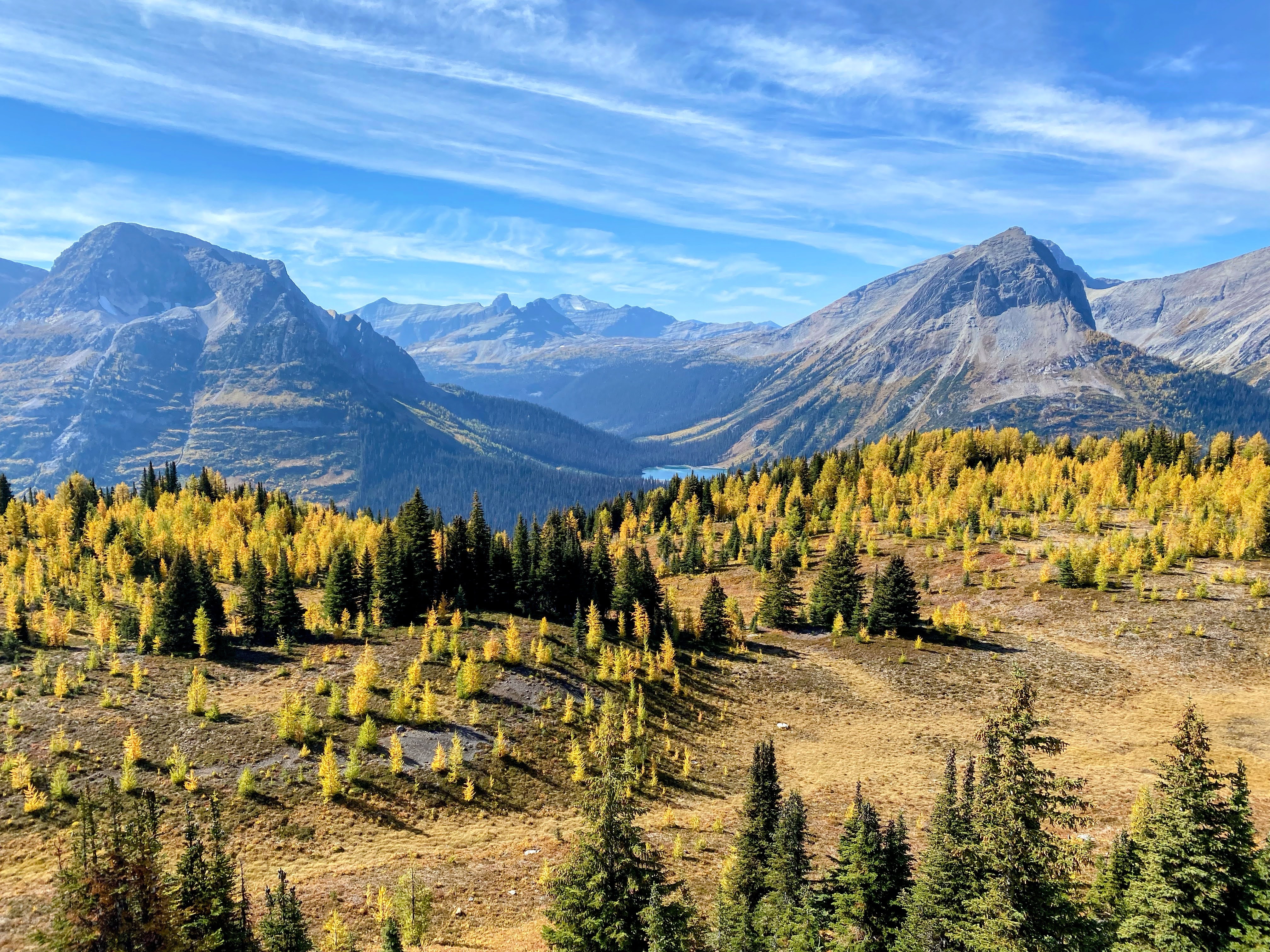
Highway 40 to Highwood Pass
If your single goal is maximum larch density seen from the driver’s seat, this is the road. Highway 40 runs through Kananaskis Country and delivers what most people assume only exists at the end of a trail: entire hillsides blazing gold.
The payoff spot is Highwood Pass Day Use Area, at 2,206 meters — the highest paved pass in Canada.
- Where color starts: Barrier Lake, roughly 30 minutes from the Trans-Canada junction. Don’t stop here — it only gets better.
- The payoff zone: Keep driving to Highwood Pass Day Use Area. The larch concentration here dwarfs what you’ll see from the Icefields Parkway roadside.
- Timing matters: Highway 40 typically closes for winter around early December, but the larch show peaks late September. Confirm road status with 511 Alberta before driving — early snowfall can close the pass temporarily.
- Getting there: From Banff, take Highway 1 South to the Highway 40 exit near the Stoney Nakoda Resort. Expect roughly one hour to reach Highwood Pass with no stops.
This drive pairs naturally with Pocaterra Ridge or Burstall Pass if you want to combine a hike with the scenic route. The Pocaterra Ridge trailhead sits right off Highway 40, making it the easiest all-in-one fall day in the Canadian Rockies.
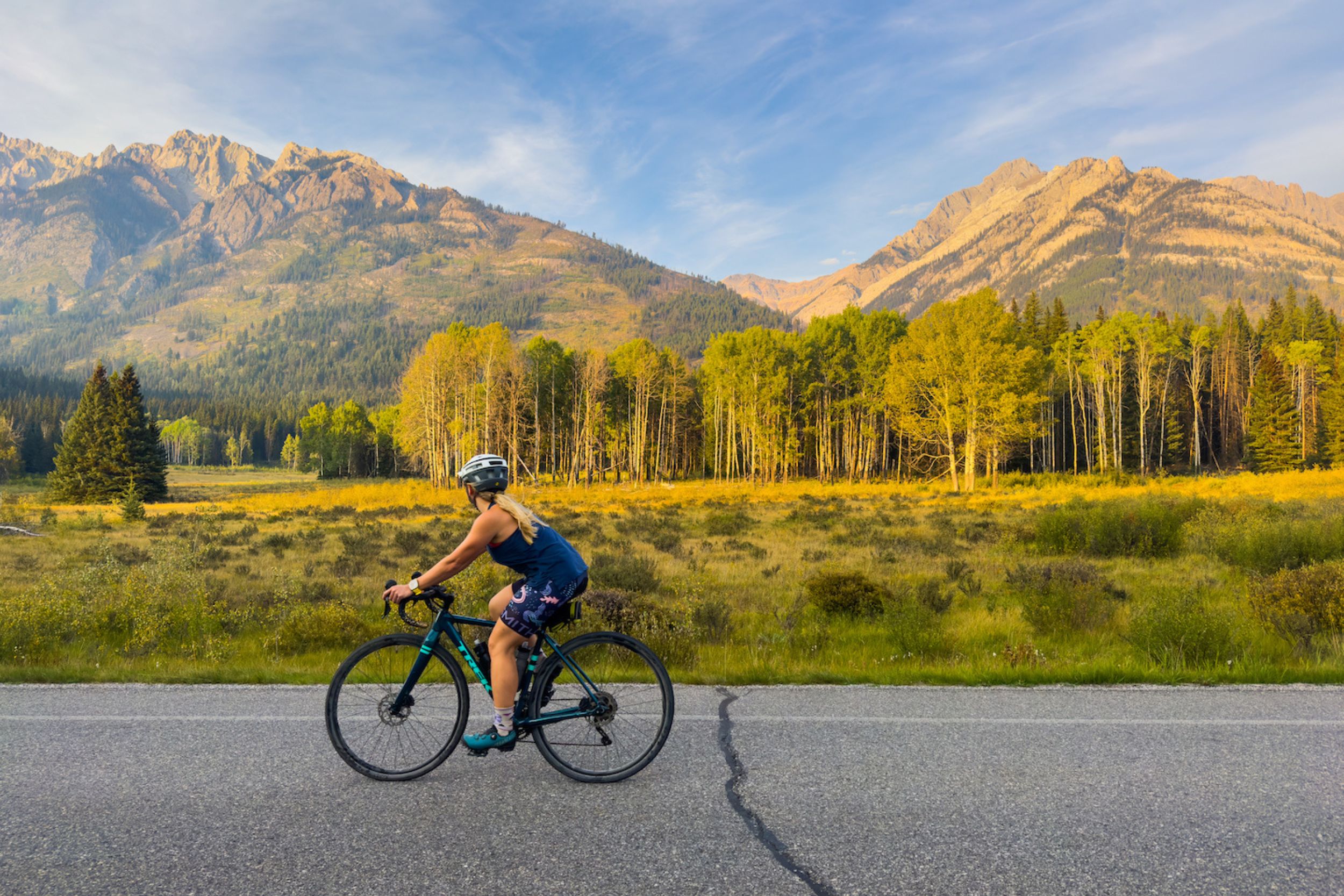
Bow Valley Parkway
The Bow Valley Parkway (Highway 1A) is the mellow alternative to the Trans-Canada between Banff and Lake Louise — slower speed limit, tighter forest, and far more wildlife sightings. In fall, the aspens and poplars along this corridor turn a warm gold that contrasts against the darker conifers.
- Key closure to know: Parks Canada closes the section between the Fireside Day-use Area and Johnston Canyon to private vehicles during September. This makes it one of the best car-free cycling routes in the Rockies — no traffic noise, just fall color.
- Cycling option: Bring a bike lock and stop at Johnston Canyon for a hike, or book a guided eBike and hike tour if you don’t want to pedal the full distance.
- Driving the open sections: The western portion from Castle Junction to Lake Louise stays open to vehicles and delivers quiet, winding road through dense forest with occasional elk sightings.
- Best time of day: Early morning or late afternoon — the low-angle light turns the narrow valley golden, and wildlife activity peaks at dawn.
Stay in Banff town or along the Bow Valley corridor to access this drive in minutes. It works as a warm-up drive before heading to Lake Louise, or as a sunset return route after a day on the Icefields Parkway.
Best Non-Hiking Ways to View Autumn Colors
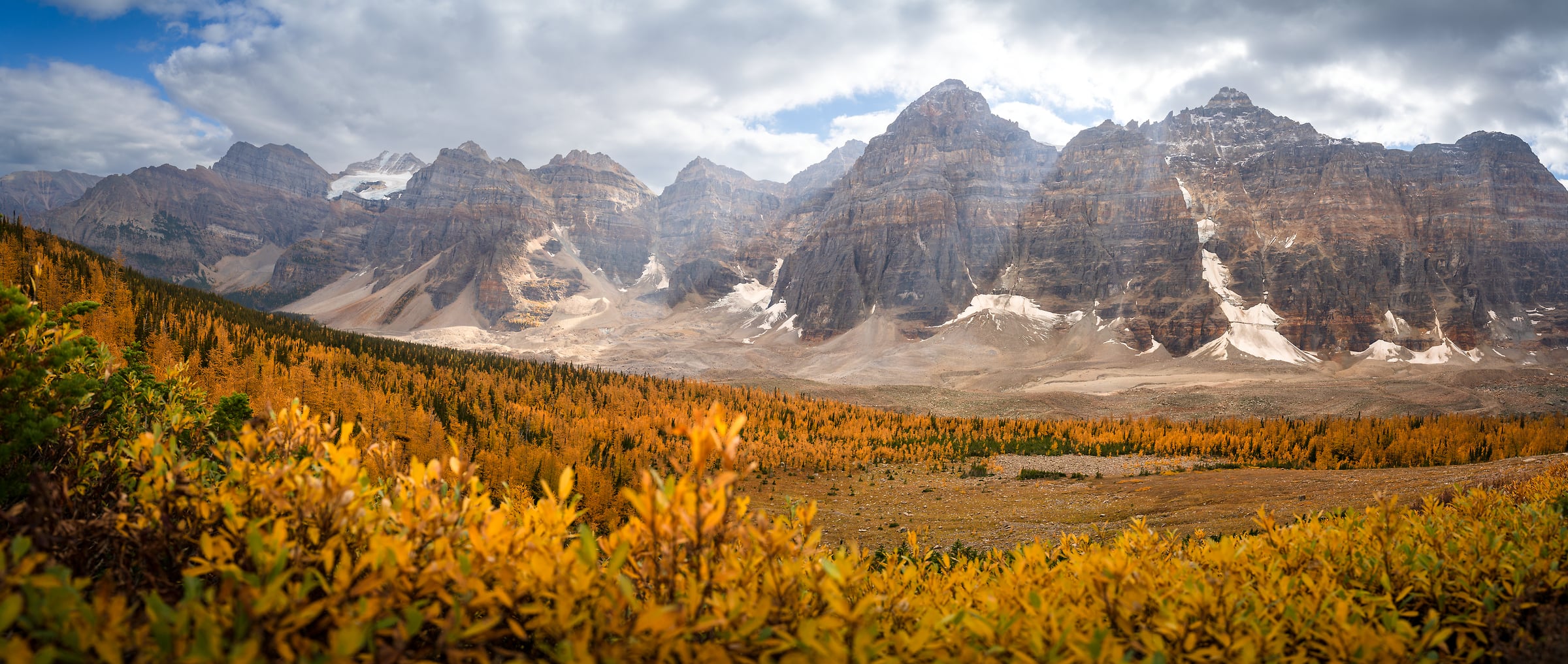
Not every stunning larch valley requires a 14-kilometer slog. These five options get you into golden canopy territory with minimal elevation gain — ideal for families, recovery days, or anyone who’d rather save their legs for tomorrow’s summit push.
| Option | Effort | Best For | Book Ahead? |
|---|---|---|---|
| Lake Louise Gondola | Zero | Families, photographers | Yes — check 2026 dates |
| Horseback to Lake Agnes | Low (riding) | Couples, bucket-listers | Yes — limited departures |
| Bow River & Cascade Ponds walk | Minimal | Everyone, especially first day in town | No |
| Legacy Trail & Lake Minnewanka bike | Moderate | Active travelers | Bike rental only |
| Helicopter tour | Zero | Splurge travelers, photographers | Yes — weather dependent |
Helicopter Tours Over Kananaskis and Canmore
Aerial tours launch from Canmore’s small airport and sweep over the Spray and Kananaskis valleys — terrain that turns patchwork gold and burnt orange by mid-September. Operators like Alpine Helicopters typically run 12-to-30-minute flights starting around CAD $150–$350 per person, though pricing and availability shift each season.
This is the single fastest way to grasp the scale of fall color across the Canadian Rockies, and it’s the only option on this list that gives you a true overhead perspective on the larch stands that otherwise take hours to reach on foot. Flights are weather-dependent, so book a morning slot and keep an afternoon backup.
Lake Louise Gondola and Viewpoints
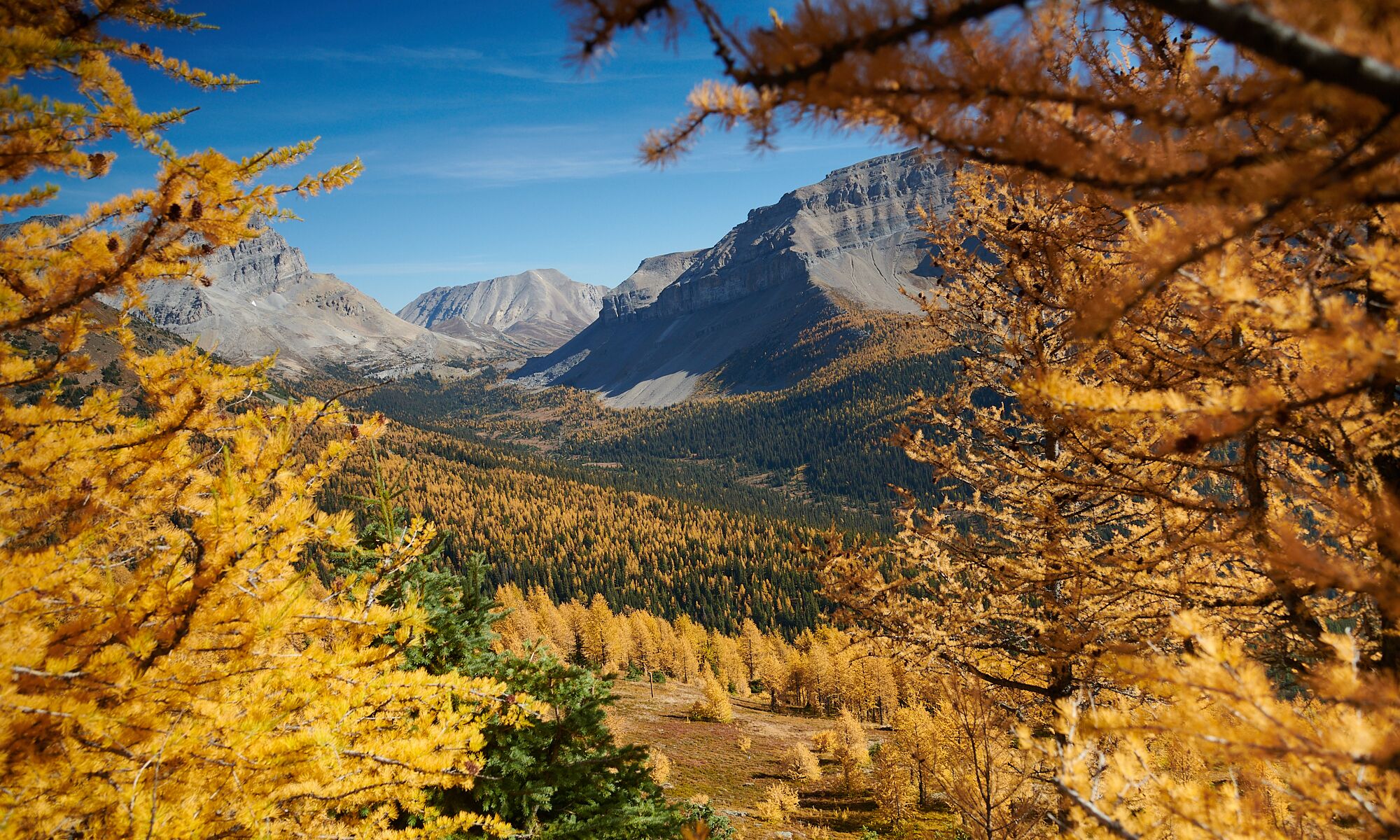
In a perfect fall, the Lake Louise Gondola carries you over carpets of golden larch to a viewing platform with Lake Louise’s turquoise water spread below and Mount Fairview and Little Temple rising across the valley. You also get a direct sightline to the larches along Saddleback Pass — the same trees hikers work hard to reach from the valley floor.
The catch in 2025: The gondola closed on September 1st, well before peak larch season even started. Confirm 2026 operating dates directly with Ski Louise before planning around it — historically, it runs through mid-October, but the 2025 early closure means nothing is guaranteed.
If it does reopen for fall, ride up and walk the Pika to Ptarmigan Viewpoint Trail at the top — an easy, flat walk through yellow larch stands that counts as the best no-sweat fall hike in the Lake Louise area.
Insider note: The chairlift option is cheaper than the enclosed gondola and gives better unobstructed photo angles on the way up. Go for the chairlift if the weather is dry.
Horseback Rides to Lake Agnes and Skoki
Brewster Adventures runs three-hour horseback tours up the Lake Agnes trail from Lake Louise, with departures at 9:00 a.m. and 1:00 p.m. You’ll ride through the same golden larch forest that hikers crowd onto — except from the back of a horse, which is both easier on the knees and significantly more memorable. The morning departure catches better light on the trees and thinner trail traffic.
Book well in advance for September dates; horseback tours have far fewer daily slots than gondola chairs, and peak larch week fills up fast.
Scenic Walks Along the Bow River and Cascade Ponds
These are your zero-planning, zero-reservation fall color options — and they’re better than most people expect.
- Bow River walk, Canmore: Larches, aspens, and golden shrubs line both banks. Start near the pedestrian bridge downtown and walk toward the Three Sisters viewpoint. This is the best “just arrived, need to stretch” option, and it’s free. Early morning light hitting the east-facing bank is noticeably better for photos.
- Quarry Lake, Canmore: A short paved path circles the lake with orange and yellow foliage reflecting off still water — excellent for easy-access photography without crowds.
- Cascade Ponds, Banff: Right off the Trans-Canada near the Banff entrance, this network of shallow ponds sits in a pocket of aspen groves. Flat, family-friendly, and gorgeous in late September when the aspens peak. Less famous than anything on the Icefields Parkway, which means fewer tripods competing for your shot.
Bike Rides on the Legacy Trail and Lake Minnewanka Loop
September is prime cycling weather in Banff — cool enough to ride without overheating, warm enough that you won’t freeze on descents.
The Legacy Trail runs 26 kilometers between Banff and Canmore on a paved, car-free path. Flat, scenic, and lined with aspens and larches that peak in late September.
Rent bikes in either town and ride one way, then arrange a shuttle back — or tack on the Lake Minnewanka Loop, which branches off the Legacy Trail and wraps around Banff’s largest lake through stands of golden aspen with mountain backdrops that rival anything you’d see from a hiking ridge.
Bike rentals in Banff and Canmore typically run CAD $40–$70 per day for hybrid or e-bikes, depending on the shop and bike type. E-bikes make the Minnewanka climb painless — highly recommended if you want to enjoy the scenery without arriving at the lake gasping.
After October 1st, rental availability drops as shops begin winding down for the season, so book early if you’re visiting in the second half of September.
Most Beautiful Larch Hikes for Autumn Color
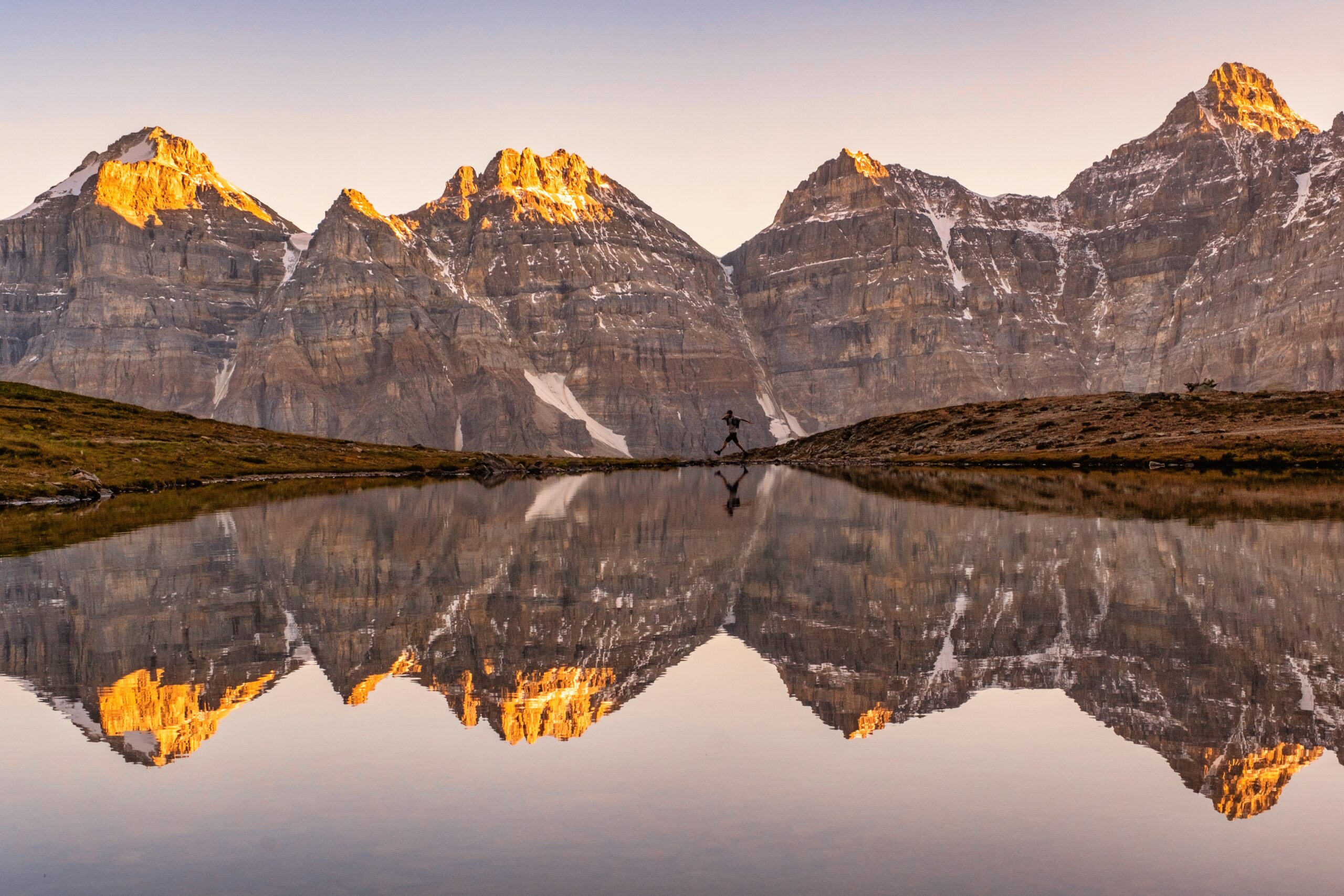
For roughly three weeks in September, the subalpine meadows around Banff and Kananaskis erupt in a fierce, temporary gold. These larch hikes are the main event, but their popularity is fierce too. Your strategy matters more than your stamina.
Larch Valley and Sentinel Pass
This is the undisputed king of larch hikes, and for good reason. The trail begins at the iconic Moraine Lake, leading you into a dense valley of golden larches with the dramatic Ten Peaks as a backdrop.
The payoff for the steep switchbacks is one of the most photographed autumn scenes in the Rockies.
- Best For: The classic, must-do experience for first-time visitors.
- The Reality: Expect massive crowds. The trail is well-trodden and you will not be alone unless you start at sunrise.
- Insider Tip: Moraine Lake Road closes for the season in mid-October. In 2025, the last day of vehicle access is scheduled for October 13th. Book your Parks Canada shuttle or private bus (like Moraine Lake Bus Company or Fairview Limo) well in advance.
Pocaterra Ridge
Pocaterra is an excellent, more challenging larch hike that rewards you with panoramic ridge views instead of just a valley. It’s a solid choice if you’ve already done Larch Valley or want a slightly less congested (though still popular) option in Kananaskis.
- Best For: Hikers who want 360-degree views and a good workout.
- Trailhead: Starts at the Pocaterra day-use area in Peter Lougheed Provincial Park.
- Decision Factor: This is a ridge hike, so expect more exposed, windy sections compared to the sheltered valley of Larch Valley.
Taylor Lake
A beautiful, moderate hike that delivers you to a pristine alpine lake surrounded by larches and the imposing Mount Bell. It’s a fantastic alternative that feels more secluded than the Moraine Lake corridor.
- Best For: Hikers seeking a gorgeous lake setting with golden larches and fewer people.
- The Vibe: More of a quiet, rewarding backcountry lake experience than a crowded scenic viewpoint.
- Logistics: The trailhead is located off the Trans-Canada Highway, east of Lake Louise. There’s no shuttle service here; you need a car.
Plain of Six Glaciers
This hike starts from the famously turquoise Lake Louise, offering a two-for-one: the stunning lake views at the start, followed by a walk into a dramatic glacial valley. The larches here are mixed with the glacier scenery, creating a different but equally spectacular palette.
- Best For: Combining iconic Lake Louise views with a classic glacier walk.
- The Trade-off: You share the initial, crowded lakeshore path with all Lake Louise visitors before thinning out toward the plain.
- Pro Move: Start early. The Lake Louise parking lot fills to capacity most mornings in September, often requiring you to use the Parks Canada Park and Ride shuttle from the Lake Louise Ski Area.
Arethusa Cirque and Burstall Pass
These are two separate, fantastic Kananaskis options often mentioned together. Arethusa Cirque is a shorter, family-friendly loop into a stunning cirque bowl dotted with larches.
Burstall Pass is a longer, more rewarding hike that passes multiple lakes before opening up to a vast meadow with expansive larch stands.
- Choose Arethusa Cirque if: You want a shorter, easier hike with a high scenic payoff. The loop is under 6 km.
- Choose Burstall Pass if: You want a full-day adventure through varied terrain to a truly grand, open alpanse.
- Key Difference: Burstall Pass delivers more solitude and a greater sense of wilderness, while Arethusa Cirque is more concentrated and accessible.
For a quick comparison to help you choose:
| Hike | Best For | Crowd Level | Key View |
|---|---|---|---|
| Larch Valley / Sentinel Pass | Iconic, first-time visit | Extremely High | Ten Peaks & golden valley |
| Pocaterra Ridge | Panoramic ridge views | High | 360-degree ridgeline |
| Taylor Lake | Secluded alpine lake | Moderate | Lake & Mount Bell |
| Plain of Six Glaciers | Glacier scenery combo | High (initial lake section) | Glaciers & larch stands |
| Arethusa Cirque | Short, family-friendly loop | Moderate | Cirque bowl |
| Burstall Pass | Full-day wilderness | Moderate to Low | Vast alpine meadow |
The Non-Negotiable Rule: Start every one of these hikes at sunrise or as early as possible. Trailhead parking is the biggest bottleneck, especially at Moraine Lake and Lake Louise.
For the latter, consider booking the Park and Ride shuttle in advance. The golden color peaks usually during the third week of September, but always check recent trail reports for current conditions before you go.
Where to Stay for Easy Access to Fall Colors
The hardest part of a Banff fall trip is choosing between a room with a front-row view of golden larches and a budget that doesn’t vanish overnight. Base yourself right at the spectacle or in a lively town with better value — both are winning strategies, but for different reasons.
Luxury Resorts Near Lake Louise
If your priority is sunrise over a turquoise-and-gold lake without moving your car, one resort stands alone. It’s the only property directly on the Lake Louise shoreline, making it the most coveted (and expensive) address in the Rockies during larch season.
- Fairmont Chateau Lake Louise: The undisputed champion for location. Book a lake-view room to wake up to the iconic scene. The trade-off is a steep price (often $800-$1200+ CAD per night in peak fall) and the need to reserve 6-12 months in advance. The insider move is to book a “Fairmont” room, which faces the lake but is in the main building, offering the view without the premium of the more recent “Alpine” wing.
- Wilderness Lodge or Cabins: Properties like the Post Hotel & Spa or Lake Louise Inn offer a 5-minute drive to the lake at a lower cost. You gain a more intimate, rustic feel and lose the instant-access convenience. This is the better choice if you plan to hike in the area daily and don’t need the lakeside view from your pillow.
Mid-Range Lodges in Canmore and Banff
For 90% of fall visitors, basing in Canmore is the smarter play. You get more space, better rates, and a vibrant town with excellent dining, all while staying a short, scenic drive from all the color spots.
Banff town is a fine alternative but commands a higher price for smaller rooms.
- Canmore Lodges: The Blackstone Mountain Lodge and Basecamp Resorts hit the sweet spot: condo-style units with kitchens (save on dining), good views, and proximity to the Trans-Canada for quick access to the park. You’ll typically save 30-50% compared to an equivalent stay in Banff or Lake Louise.
- Banff Town Options: Look at Moose Hotel & Suites or Banff Caribou Lodge for walkable access to Banff Avenue’s shops and restaurants. These are convenient, but parking is limited and you’ll still drive 45 minutes to reach Lake Louise.
- The Golden, BC Factor: Consider Golden, BC as a base if your itinerary focuses on the Icefields Parkway and Kicking Horse area. It’s farther from Lake Louise but offers stunning fall drives and significantly lower lodging costs.
| Area | Best For | Trade-Off | Fall Booking Window |
|---|---|---|---|
| Lake Louise Shore | Ultimate convenience, iconic views | Very high cost, books out fast | 6-12 months ahead |
| Canmore | Value, space, dining, central location | 15-20 min drive to Banff, 1 hour to Lake Louise | 3-6 months ahead |
| Banff Town | Walkable atmosphere, park shuttle access | Higher price, smaller rooms, parking hassle | 4-8 months ahead |
The insider decision: If you want to photograph Lake Louise at golden hour without a 5 AM shuttle, splurge on one night at the Fairmont. For every other night, stay in Canmore.
You’ll have a better culinary scene, more breathing room, and a fatter budget for adventures.
Frequently Asked Questions
Where are the best autumn color spots in Banff?
You can see fall colors almost everywhere once you enter the park — the real question is how much effort you want to invest. For golden larches that stop you in your tracks, Larch Valley and Pocaterra Ridge are the top hikes covered in this guide.
For zero-effort color, drive Highway 40 to Highwood Pass or take the Bow Valley Parkway — both deliver jaw-dropping foliage without leaving your car. The Lake Louise Gondola is another strong option if you want panoramic views without breaking a sweat.
How many days do you need in Banff for fall colors?
Plan for at least five to seven days. Banff’s fall weather is unpredictable — you could easily lose a day or two to rain or early snow, especially at higher elevations.
A full week gives you the flexibility to shift plans around weather windows and still hit the larch hikes, scenic drives, and gondola views without rushing. Anything shorter than four days and you’ll be making painful trade-offs between hiking and driving days.
What’s the weather like in Banff in the fall?
Expect a wide range. September days can hit the mid-60s°F in the valley, but mornings are crisp and trailhead temperatures often sit in the 30s°F.
By October, daytime highs drop to the 40s and 50s°F, and snow at higher elevations is common. Rain can roll in for an entire day with little warning.
Pack layers — a waterproof shell, warm mid-layer, and a toque are non-negotiable. The temperature difference between a sunny valley floor and a windy ridge can be 20°F or more.
Is Banff crowded during peak fall foliage?
Yes, especially the last week of September through the first week of October. Larch Valley and Moraine Lake access see the heaviest traffic, and parking at popular trailheads fills before 7 a.m. on weekends.
Weekdays are noticeably quieter. The best strategy: start early, target midweek for your most popular hikes, and save the scenic drives for busier days when you can enjoy them without competing for trailhead parking.
Late October thins the crowds considerably, though some higher-elevation trails may already be snow-covered.
Ready to Chase the Gold
Book your Parks Canada shuttle to Moraine Lake and Larch Valley now—tickets sell out fast for the last two weeks of September. Call the Banff Visitor Centre a few days before you arrive to get the latest on where color is peaking that week.
Seeing these ancient forests ignite for a brief, brilliant moment is a once-a-year spectacle that sticks with you long after the needles fall.
Stop researching and start reserving: your autumn adventure in the Canadian Rockies is waiting.
Leave a Reply