
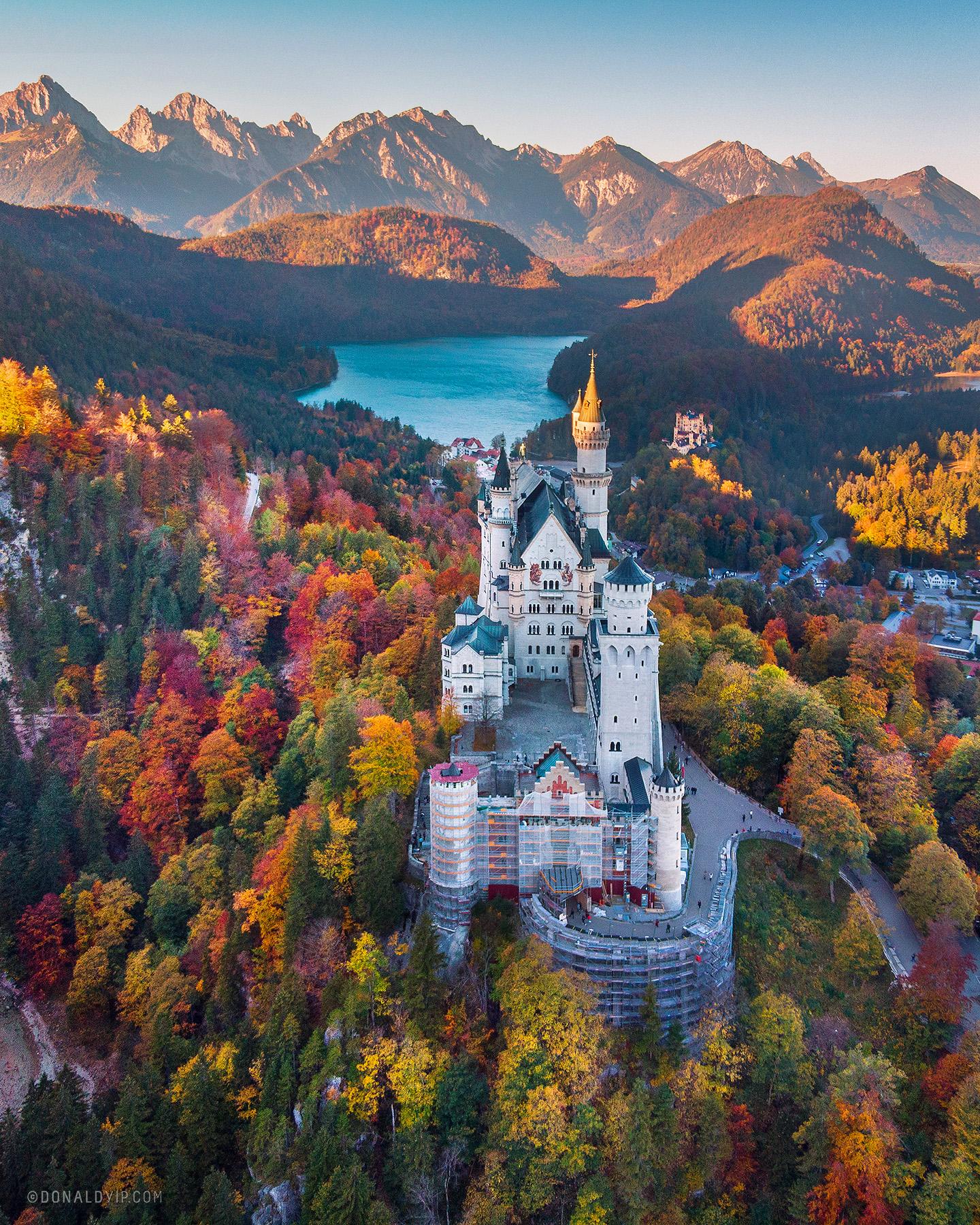
The morning mist lifts off the Königssee in slow, ghostly ribbons while the surrounding peaks burn copper and gold down to the waterline. Somewhere below, a church bell rings across the valley and the scent of roasting chestnuts drifts from a village square you haven’t found yet.
Bavaria in autumn is not just pretty foliage — it’s a complete sensory collision of Alpine grandeur, centuries-old harvest rituals, and beer culture that shifts from raucous festival tents to crackling fireplace taverns in a single month.
This guide helps you choose exactly when to go, where to chase the best color, and which castles and towns deserve your limited vacation days.
Budget travelers can manage Bavaria on roughly €80–120 per day with regional rail passes and guesthouses, mid-range visitors should plan €180–280 for boutique hotels and proper restaurant meals, and a splurge trip with mountain lodges and private guides runs €350–500 daily.
Bavaria in Fall at a Glance
Skimming? These are the six decisions that will shape your entire trip — distilled from everything below.
- Best Timing for First-Timers: Late September to early Oktober for festivals and energy — book Munich hotels 6+ months out.
- Best Timing for Scenery Lovers: Mid-October is the sleeper pick — peak foliage, 20–30% lower hotel rates, and zero beer tent chaos.
- Top Foliage Spot You Can Reach by Train: Starnberger See — 30 minutes from Munich via S6 S-Bahn, with Alpine views behind the color.
- Best Castle for Autumn Photos: Neuschwanstein at dawn from the Marienbrücke — book timed entry online weeks ahead.
- Best Munich Palace for Fall Gardens: Nymphenburg — the Botanical Garden next door (€6 entry) has curated maples and beeches that outshine the palace grounds.
- Smartest Transit Move: The Deutschland-Ticket (€49/month) covers all regional trains, S-Bahn, buses, and trams across Bavaria — no car needed.
When Is the Best Time to Visit Bavaria in Fall?

Mid-October is the sweet spot — fall foliage peaks at lower and mid-altitudes, Oktoberfest crowds have cleared out, and you still have enough daylight and manageable weather for long days outdoors. But the right week depends entirely on what you want from the trip.
| Early Autumn (Late Sept – Early Oct) | Late Autumn (Mid-Oct – Nov) | |
|---|---|---|
| Atmosphere | Festive and buzzing — Oktoberfest and folk festivals dominate Munich and surrounding towns | Quiet, cozy, more local-feeling as peak tourist season ends |
| Weather | Daily highs in the mid-60s°F — comfortable for outdoor dining and strolling | Daily highs drop to the upper 30s°F. November is often the driest fall month |
| Crowds | Large, especially around Munich and festival towns | Noticeably thinner — expect lower airfare and hotel rates |
| Scenery | Trees just beginning to turn golden and amber | Peak autumn color across valleys, lakeshores, and Alpine foothills |
| Daylight | Longer days for sightseeing | Significantly shorter — plan around 4:30–5 PM sunsets by November |
| What’s Open | Everything: beer gardens, outdoor festivals, full palace hours | Many beer gardens close; museums and palaces shift to shorter winter hours |
Early Autumn vs. Late Autumn: Which Season Fits Your Travel Style?
Choose late September through the first week of October if you want the full Bavarian party experience. This is when Oktoberfest dominates Munich, smaller folk festivals and Volksfeste fill towns across the region, and beer gardens are packed.
The weather cooperates for long outdoor days, and you’ll catch the very beginning of color change. The trade-off is obvious: higher prices, fuller hotels, and reservation-dependent everything.
Book accommodation in Munich at least three months out — six if you want anything central during Oktoberfest.
Choose mid-October through November if you want Bavaria to yourself. This is the sleeper pick for travelers who prefer golden forests over beer tents.
Peak foliage hits lower-altitude areas (the Bavarian Alps foothills, Franconia, and around lakes like Chiemsee and Starnberger See) right around mid-October, while higher Alpine elevations may already carry a dusting of snow for dramatic contrast. Hotel prices drop meaningfully — often 20–30% below peak — and you can walk into restaurants and attractions without the crush.
My honest take: For first-time visitors, late September wins on energy and access. For repeat visitors or anyone who values scenery and breathing room, mid-October is superior in every visual way.
What Weather Should You Expect and How Should You Pack?
Bavaria’s fall weather shifts fast, and the difference between late September and late October is not subtle.
- Late September – Early October: Highs around 63–66°F, lows in the mid-40s. Rain is possible but not constant. A light jacket and layers cover you for most days.
- Mid-October: Highs drop to the mid-50s, lows in the upper 30s. Morning frost appears in rural and higher-altitude areas. You need a real jacket, not just a sweater.
- November: Highs in the upper 30s to low 40s, lows below freezing outside cities. Snow is possible in Alpine areas. This is full winter-coat territory.
Packing essentials regardless of when you go:
- Waterproof outer layer — Bavarian fall rain can last all day, and umbrella-only protection fails on windy mountain trails.
- Sturdy walking shoes with grip — castle paths, lake trails, and cobblestone old towns get slick when wet.
- Layers, not bulk — mornings and evenings are cold, but midday sun can warm up quickly, especially in sheltered valleys.
- A compact daypack — you’ll shed and add layers multiple times per day.
Insider detail: Bavarian weather apps like Warnwetter (from the German weather service DWD) give hyper-local, hour-by-hour forecasts that are significantly more accurate than generic international weather apps for this region.
Which Public Holidays Affect Your Trip?
Three dates can shut down shops, alter transit schedules, and spike hotel bookings if you don’t plan around them:
- October 3 — German Unity Day (Tag der Deutschen Einheit): A national public holiday. Expect closed shops and banks, reduced public transit, and packed tourist sites as Germans use the day off for travel. If this falls near a weekend, the long holiday period can mean higher hotel demand across Bavaria. Book accommodations early if your trip overlaps.
- November 1 — All Saints’ Day (Allerheiligen): A public holiday in Bavaria (and several other German states, but not all). Shops and many businesses close. Transit runs on a holiday schedule. It’s a quiet, reflective day — cemeteries fill with families tending graves with candles and wreaths. Respectful visitors will find it atmospheric, not inconvenient, but don’t plan a shopping day.
- Bavarian Autumn School Holiday (Herbstferien): A week-long break, usually falling in late October or early November depending on the year. Dates shift annually, so confirm with Bavaria’s official school holiday calendar before booking. Family-oriented attractions — Neuschwanstein, the Deutsches Museum, Legoland — get noticeably busier during this window.
Planning tip: If your dates are flexible, aim to arrive the week after German Unity Day (October 3) and before the autumn school holiday starts. That mid-October window gives you the best overlap of fall colors, manageable crowds, and open services.
Where Are the Best Places to See Autumn Colors in Bavaria?

The peak of Bavaria’s foliage shift is mid-October at lower to medium altitudes, turning landscapes into a mosaic of amber and gold. You don’t need a car or a long hike to find it—some of the best displays are inside Munich itself or just a short train ride away.
Top Parks and Gardens for Fall Foliage
For sheer scale and variety, Englischer Garten is the undisputed city champion. Its vast canopy of maples and chestnuts creates a golden tunnel effect, best experienced on a weekday morning to avoid crowds.
Skip the crowded central beer gardens and walk north toward the Japanisches Teehaus for serene, reflective water views paired with color.
- Best for: A full morning of walking with easy café stops. Grab a table at the Chinesischer Turm beer garden for classic atmosphere, but know the food is mediocre—eat elsewhere.
- Insider move: Enter from the Osterwaldstrasse entrance for the fastest, quietest access to the park’s most photogenic groves.
Nymphenburg Palace offers a more manicured, regal display. The vast canal flanked by linden trees is magnificent, but the real win is the Botanical Garden adjacent to the palace grounds (entry typically around €6).
It’s less crowded, and the collection of maple and beech trees is curated for peak color.
- Best for: Photographers and anyone wanting palace architecture framed by fall hues. Combine it with an inside visit if weather turns.
- Note: The palace grounds are free; the Botanical Garden requires a separate ticket.
The Isar Riverbanks between Reichenbachbrücke and Wittelsbacherbrücke deliver the most dramatic urban foliage. The avenue of plane and oak trees along the gravel paths is stunning, and the backdrop of the river and city skyline is unbeatable.
Go at sunset for the best light.
Scenic Lakes and River Views
Lake Starnberg is the obvious and correct choice. It’s 30 minutes from Munich’s Hauptbahnhof via S-Bahn (S6 line to Starnberg).
The real spectacle is the view across the water toward the Alps, with the wooded shoreline ablaze in color. Walk the path from the town of Starnberg toward the Votivkapelle (Votive Chapel) for the iconic vista.
- Best for: A half-day trip combining lakeside strolls, autumn views, and a relaxed lunch at a lakeside restaurant like Seehaus (book a terrace table in advance).
- Decision factor: If you have a full day, continue by ferry (operates seasonally, check schedule) to the village of Berg for a quieter experience.
Tegernsee is the deeper, more dramatic mountain lake option. The town of Tegernsee is a 1-hour train ride from Munich.
The absolute top-tier autumn view requires effort: take the Wallbergbahn cable car (round-trip around €30) to the summit. From the top, the panorama of the lake, surrounding peaks, and rolling foothills covered in color is a Bavarian postcard come to life.
Mountain and Countryside Spots Worth the Trip
For accessible Alpine color, head to Garmisch-Partenkirchen (1.5 hours by direct train from Munich). From the town, take the Wankbahn cable car.
The mid-mountain hiking trails at around 1,000-1,200 meters elevation offer a surreal mix of fall foliage below and first dustings of snow on the peaks above.
- Best for: Day-trippers who want a mountain fix without extreme hiking. The trails from the Wank top station are manageable for casual walkers.
- Insider detail: The autumn light in the valley is best from late morning onwards, as the sun rises behind the eastern peaks.
The most concentrated countryside color is in the Allgäu region, around towns like Oberstdorf or Füssen. The rolling hills, dotted with farms and deciduous forests, turn a brilliant yellow-orange.
It’s a fantastic region for a scenic drive, but a car is almost essential here.
If you’re prioritizing accessibility via public transit, Chiemsee (the “Bavarian Sea”) is a strong contender. Reach Prien am Chiemsee in under an hour by train from Munich.
The island of Herrenchiemsee, with its palace modeled on Versailles, is surrounded by water and forested grounds that peak in mid-October. It combines culture and color perfectly.
Which Castles and Palaces Should You Visit in Autumn?
Bavaria’s castles look like storybook illustrations in autumn, but the experience varies wildly depending on which one you choose. The right pick depends on whether you want a mountain fairy tale or a city escape with manicured gardens.
Fairy-Tale Castles Near Füssen
The iconic duo of Neuschwanstein and Hohenschwangau are best done together in a single day trip from Munich. Set against the Ammergau Alps, the surrounding forest erupts in color by mid-October, making the white limestone towers pop against the gold and crimson hillsides.
- Neuschwanstein: The real-life Disney inspiration. Its interior tour is theatrical but brief—the reason you come is for the exterior and the view from the Marienbrücke bridge. Book tickets online weeks in advance, as same-day tickets are almost impossible to get in peak fall weekends.
- Hohenschwangau: The less crowded, more lived-in family castle across the valley. It offers more historical context and better views of Neuschwanstein. A combo ticket for both is the smart play.
- Insider Tip: For the best golden-hour light on Neuschwanstein without masses of people, arrive at the Marienbrücke by 8:00 AM. The morning sun hits the castle face perfectly. The afternoon is backlit and crowded.
Base yourself in Füssen or Schwangau for overnight stays. The town of Füssen is a charming, walkable base with hotels and restaurants, and it puts you a short bus ride from the castles.
This makes it possible to arrive for the first tours and avoid the peak day-trip crowds that arrive from Munich by 11 AM.
Munich-Area Palaces with Stunning Grounds
For royal grandeur without the travel time, Munich’s own palaces deliver spectacular fall scenery right on the U-Bahn line.
- Nymphenburg Palace: This is the top choice for autumn foliage chasers. The sprawling Baroque landscape garden, with its canals, hidden pavilions, and tree-lined avenues, becomes a mosaic of amber and rust. It’s less about the interior (though the Gallery of Beauties is worth it) and more about losing an afternoon in its vast, tranquil parks. It’s easily reachable via tram 17.
- Munich Residenz: Europe’s largest city palace is primarily an indoor experience—its opulent rooms and Treasury are mesmerizing. Its outdoor space, the Hofgarten, is a lovely but formal garden. Choose the Residenz for a deep dive into Wittelsbach history and art, especially on a rainy fall day.
| Palace | Best For | Time Needed | Access |
|---|---|---|---|
| Nymphenburg | Autumn gardens & photography | Half-day | Tram 17 from Munich central |
| Munich Residenz | Indoor art & history | 2-3 hours | Walking distance from Marienplatz |
| Füssen Castles | Mountain scenery & fairy-tale vibes | Full day | ~2-hour train or drive from Munich |
If you only have time for one Munich-area palace, go to Nymphenburg. Its garden is one of the city’s most stunning autumn landscapes, and the experience feels more like a grand country estate than a city museum.
For the Füssen castles, the journey is part of the magic—the train from Munich passes through the foothills as the foliage gets more intense.
What Festivals and Events Happen in Bavaria During Fall?
Forget the generic autumn foliage chat; Bavaria’s fall calendar is defined by the raucous, brass-band-driven sound of a stein being clinked. The season is packed with events that are equal parts harvest celebration and excuse for communal revelry.
Oktoberfest and Major Folk Festivals
Oktoberfest (Munich, late September to the first weekend in October) is the heavyweight. My advice: experience it once for the spectacle, but know it’s peak tourism.
If the crush of millions isn’t your scene, Bavaria’s real charm lies in its regional Volksfeste. These town-level festivals—from Rosenheim’s Herbstfest to Landshuter Ländlerfest—offer the same oompah bands, beer tents, and gingerbread hearts with a fraction of the crowds and cost.
Local Markets and Smaller Celebrations
For a genuinely local autumn ritual, skip the mega-events and time your visit around these:
- Auer Dult (Munich): This trio of seasonal markets (the autumn one is Mariahilfdult) is your top pick for authentic, crowd-free Munich flavor. It’s a mix of massive food stalls selling roasted almonds and duck, plus Europe’s largest antique fair. Come for the market, stay for the grilled fish on a stick.
- Almabtrieb: In rural Alpine villages (typically late September/October), catch this joyful parade where cows, adorned with flowers and bells, are walked down from summer pastures. It’s followed by village-wide parties with food, music, and beer. Check local tourist board sites for exact dates in places like Garmisch-Partenkirchen or the Allgäu.
- Pumpkin Festivals & Wine Weeks: Donauwörth hosts a famous giant pumpkin exhibit. In Franconia (Bavaria’s northern wine region), smaller Weinwochen (wine weeks) in villages like Iphofen spotlight the new vintage with local food pairings.
Festival Planner: What to Book When
| Event Type | Typical Timing | Booking Strategy |
|---|---|---|
| Oktoberfest | Late Sept – early Oct | Book Munich hotels 6+ months out. No tickets needed, but reserve beer tent tables online months ahead. |
| Regional Volksfeste | Aug – Oct (varies) | No table reservations needed. Just show up and enjoy. |
| Auer Dult | Late July, late Oct, late Feb | No booking needed. Go on a weekday afternoon for easiest access to food stalls. |
| Almabtrieb | Late Sept – mid-Oct | Book accommodation in the specific Alpine village well in advance. |
The insider move: Many smaller town festivals aren’t well-publicized in English. Ask your hotel or check the local “Stadtmarketing” website for the town you’re visiting two weeks before you go.
You might discover a centuries-old onion market (Zwiebelmarkt in Bamberg) or a festival dedicated to the region’s beloved Asparagus (Spargelfest) that defines the experience.
How Should You Plan Your Autumn Itinerary in Bavaria?
A perfect autumn trip balances Munich’s urban energy with the region’s explosive fall colors. Base yourself in the city and use its world-class rail network for effortless day trips into the Alps, lakes, and castles draped in gold.

Ideal 3-Day Munich and Day-Trip Combination
This itinerary is built for mid-October, when fall foliage peaks and crowds thin post-Oktoberfest. It prioritizes iconic sights without rushing.
- Day 1: Munich City Core. Focus on the walkable old town (Altstadt). See Marienplatz and the Glockenspiel, then explore the Viktualienmarkt for seasonal produce. Dedicate the afternoon to the vast Englischer Garten, where the leaves are spectacular.
- Day 2: Castle Day Trip. Take the train to Füssen for Neuschwanstein and Hohenschwangau castles. The autumn forest backdrop is non-negotiable. Book your timed castle entry online weeks in advance — demand remains high.
- Day 3: Alpine Lakes. Choose one lake for a relaxed half-day. The S-Bahn to Starnberger See (stop: Starnberg) is the simplest option. Walk the shore, have lunch at a lakeside restaurant, and be back in Munich by mid-afternoon.
Stay in Munich’s old town or around Marienplatz for maximum walkability. A boutique hotel near Sendlinger Tor offers a quieter feel with direct S-Bahn access for day trips.
Best Day Trips from Munich for Fall Scenery
Prioritize these based on your interests: castles, lakes, or high-alpine drama.
| Trip | Best For | Travel Time (Train) | Insider Tip |
|---|---|---|---|
| Neuschwanstein & Hohenschwangau | Fairy-tale castles, iconic photos | ~2 hours | Book the first tour of the day to minimize crowd frustration. |
| Starnberger See | Easy lakeside stroll, beer garden lunch | ~25 min to Starnberg | Walk north from Starnberg station for quieter, forested shoreline paths. |
| Schliersee or Tegernsee | More dramatic Alpine scenery, cozy villages | ~1 hour to Schliersee | Take the train to Schliersee, walk to the village, then ferry across for different views. |
Use the Deutschland-Ticket or Bayern-Ticket for all these trips. They cover regional trains and local transit, saving significantly over point-to-point fares. The Bayern-Ticket is valid for groups and after 9 AM on weekdays.
For a more ambitious day, head to Berchtesgaden for the Königssee — its mirror-like water surrounded by steep, colorful mountains is Bavaria’s most dramatic fall panorama. It’s a longer day (2.5+ hours by train), but unforgettable.
How Do You Get Around Bavaria Without a Car?
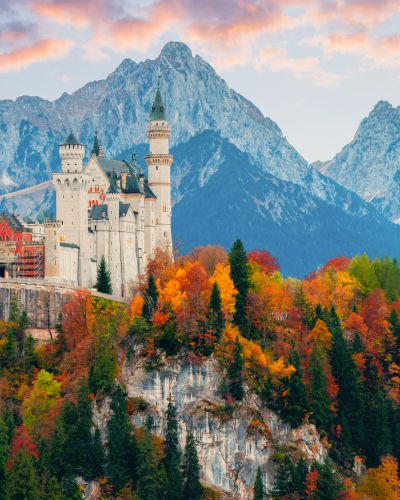
The train from Munich to Garmisch-Partenkirchen alone is worth the trip, slicing through valleys where vineyards and forests blaze in October. You do not need a car to experience Bavaria’s fall spectacle; the regional rail and bus network is extensive, reliable, and often the smarter choice.
Public Transit Tickets and Routes That Save Money
Forget buying individual point-to-point tickets for every short hop. Two pass options are the keys to affordable, flexible travel across Bavaria and beyond.
- The Deutschland-Ticket (€49/month): This is the ultimate tool for slow, exploratory travel. For a flat monthly fee, it covers all local and regional public transport—buses, trams, U-Bahn, S-Bahn, and regional trains (RE/RB)—across the entire country. The catch? It does not cover long-distance high-speed ICE/IC trains. It is your best bet if you plan to base yourself in Munich and take multiple day trips on regional trains to places like the Bavarian Alps, lakes, or Nuremberg. Buy it online via the Deutsche Bahn (DB) app or from any DB ticket machine at a major station.
- The Bayern-Ticket (from €29 for one person): This is your pass for single, ambitious day trips involving small groups. It offers unlimited travel on all Bavarian regional trains (RE/RB, S-Bahn) and most local transit (buses, trams, U-Bahn) within Bavaria from 9 AM on weekdays and all day on weekends. The base price covers one person, but you can add up to four more companions for just €10 each, making it incredibly cost-effective for families or friends. For a solo traveler doing a single major day trip, the Deutschland-Ticket is often cheaper; for a group doing one big trip, the Bayern-Ticket wins.
Insider Move: Activate the Deutschland-Ticket on the first of the month if you can, as it’s sold in calendar-month blocks only. If your trip straddles two months, you’ll need to purchase it twice.
For the Bayern-Ticket, buy it via the DB app—it’s often a few euros cheaper than the machine and you can skip the queue.
Use the DB Navigator app (Deutsche Bahn) for planning. It shows real-time delays, platform changes, and lets you purchase and store both ticket types directly on your phone.
Always have a valid ticket before boarding; conductors do spot-check, and fines for riding without one are steep.
Choosing Your Ticket: A Quick Decision Guide
| Ticket | Best For | Key Limit | Cost Range (2024) |
|---|---|---|---|
| Deutschland-Ticket | Solo travelers or couples planning 3+ day trips using regional trains over a calendar month. | No ICE/IC high-speed trains. Monthly auto-renewal; cancel if not needed. | €49/month |
| Bayern-Ticket | Groups (up to 5 people) doing a single major day trip within Bavaria. | Valid only after 9 AM on weekdays. Not valid on ICE/IC trains. | €29 (1 person) to €69 (5 people) |
For a classic autumn day trip from Munich—say, to Neuschwanstein or the Königssee—check if a bus service from the train station is included in your ticket. Often, the Bavarian Oberlandbuses (BOB) or other regional post buses are covered by the Bayern-Ticket, giving you door-to-door coverage.
Simply show your ticket to the bus driver.
Frequently Asked Questions
Is it worth visiting Bavaria after Oktoberfest?
Yes, and for most travelers it’s actually better. After the festival wraps in early October, crowds drop sharply, hotel rates fall, and the autumn color hits its stride.
Late October through mid-November is the sweet spot for anyone who wants a quieter, more local-feeling trip without sacrificing the scenery. The tradeoff is real: beer gardens close for the season, daylight hours shrink, and some attractions cut their schedules — but if you prefer cozy over chaotic, you’ll get more Bavaria for your money.
Are palaces and attractions still open in late fall?
Most major sites stay open, but with reduced hours. Nymphenburg Palace in Munich remains open through fall and winter, though its park palaces close mid-October and don’t reopen until March.
Neuschwanstein and other sites managed by the Bavarian Palace Administration operate year-round, but hours shorten — always check their website before you go. Museums in Munich generally stay open, but smaller regional attractions may shut entirely by November.
The insider move: visit palaces on weekdays in late October for near-empty halls and grounds you’d never experience during peak season.
When is the best time to see fall colors in Bavaria?
Mid-October is the most reliable window for lower and medium-altitude areas, including Munich, the lakes region, and Franconia. At higher elevations in the Alps, color peaks earlier — late September to early October — and you may even see a dusting of snow mixing with the foliage.
The third week of October tends to deliver the best display in and around Munich itself. One caveat: fall color timing shifts every year based on rainfall and temperature swings, so if foliage is your priority, build flexibility into your dates and check regional webcams before booking.
When should I book flights and hotels for a Bavaria fall trip?
For early autumn (late September–early October), book at least two to three months ahead — Oktoberfest drives prices up and availability down across Munich. For late October and November, you have more room.
Airfare and hotel rates typically drop noticeably after the festival ends, and you can often find good deals booking just four to six weeks out. Expect Munich hotel rates roughly 20–40% lower in November compared to peak Oktoberfest week, though prices vary by property and booking platform.
Your Bavaria Fall Trip Starts Now
Pick your timing window first — it dictates everything from crowd levels to what’s open. If fall color is your priority, lock in the third week of October and build outward from there.
There is no other European region where Alpine peaks, fairy-tale castles, golden lakeside forests, and a world-class rail network all converge this perfectly in a single season.
Open the DB Navigator app right now, search Munich departures for mid-October, and start building your Bavaria autumn itinerary around the day trips and foliage spots that called to you here.
Leave a Reply