
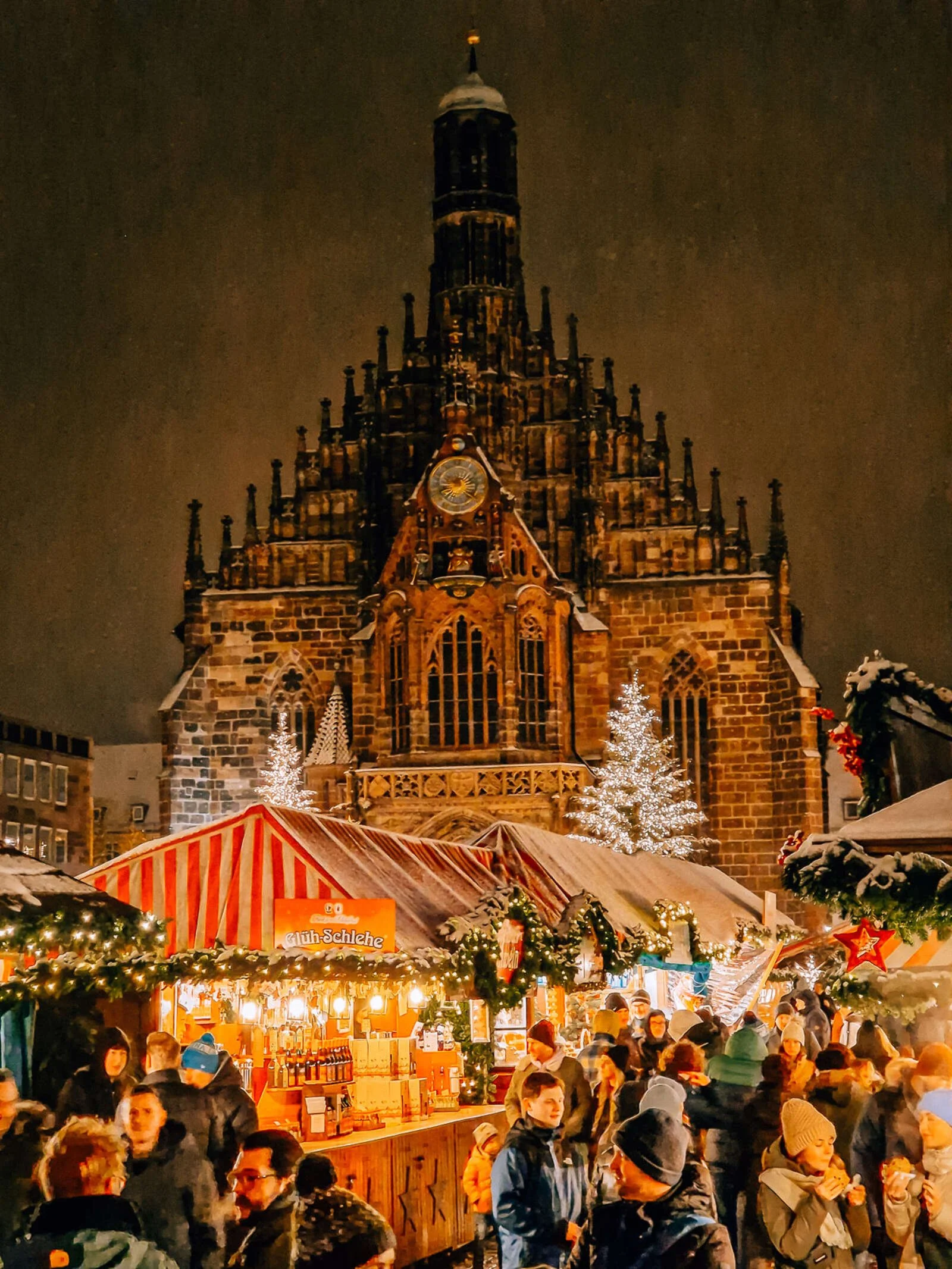
Smoke curls upward from 180 wooden stalls as tiny bratwursts sizzle over beechwood grills, and the spiced steam of Feuerzangenbowle mingles with cold air thick enough to see your breath. Golden Rauschgold angels spin from hooks above tables stacked with hand-carved ornaments, while somewhere behind you a brass band plays carols beneath the Frauenkirche’s Gothic spire.
No other Christmas market in Europe carries legally protected food — the Nürnberger Bratwurst and Lebkuchen here hold geographic designation of origin, meaning what you eat has been regulated by law for quality since centuries before anyone invented the phrase “food tourism.” Six markets sit within a ten-minute walk of each other in Nuremberg’s compact Old Town, and each one serves a completely different purpose.
This guide tells you exactly which markets to hit, in what order, and which ones you can skip depending on whether you’re traveling with kids, shopping for gifts, or just here for the bratwurst and Glühwein. Expect to spend roughly €30–50 per person on an evening of food and drinks across multiple markets, or €80–150 if you’re adding craft souvenirs and ornaments to the haul.
What Are the Best Christmas Markets in Nuremberg?
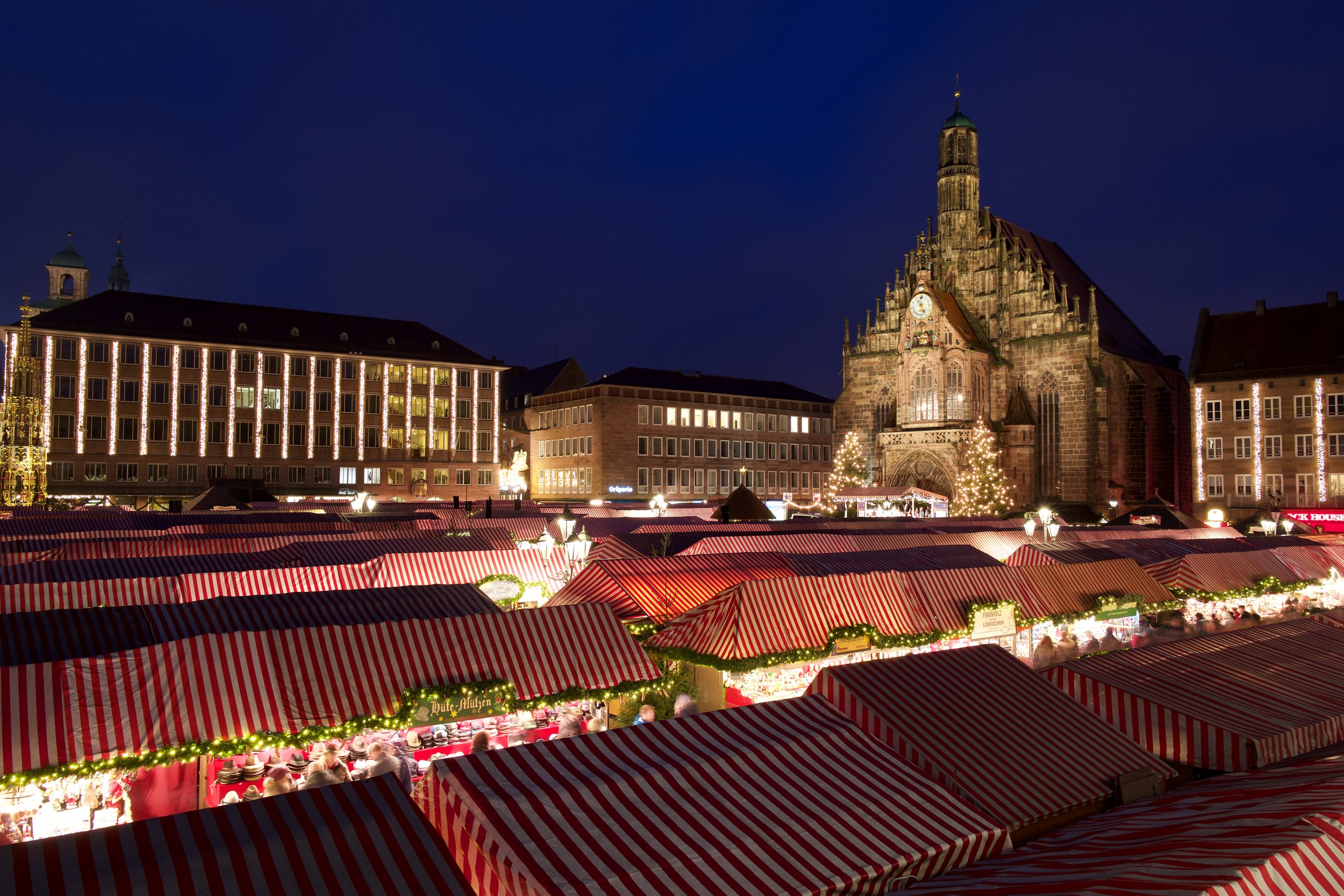
Six markets sit within a ten-minute walk of each other in Nuremberg’s Old Town, and none of them are interchangeable. Skip this map and you’ll burn your first evening wandering aimlessly between duplicate stalls — or worse, never leave the main square.
Start here to know exactly which markets fit your trip and in what order to hit them.
| Market | Best For | Location | Typical Closes |
|---|---|---|---|
| Christkindlesmarkt | Everyone — the iconic one | Hauptmarkt | Dec 24 |
| Kinderweihnacht | Families with young kids | Hans-Sachs-Platz | Dec 24 |
| Sister Cities Market | Culture-curious shoppers | Rathausplatz | Dec 23 |
| Original Regional | Food-focused visitors | Toward St. Sebaldus Church | Dec 23 |
| Handwerkerhof | Craft lovers & early arrivals | Near Hauptbahnhof | Year-round* |
| Sternenhaus | Kids needing indoor time | Heilig-Geist-Saal | Market season |
*Handwerkerhof operates year-round; its Christmas atmosphere intensifies during Advent.
Nuremberg Christkindlesmarkt (The Main Market)
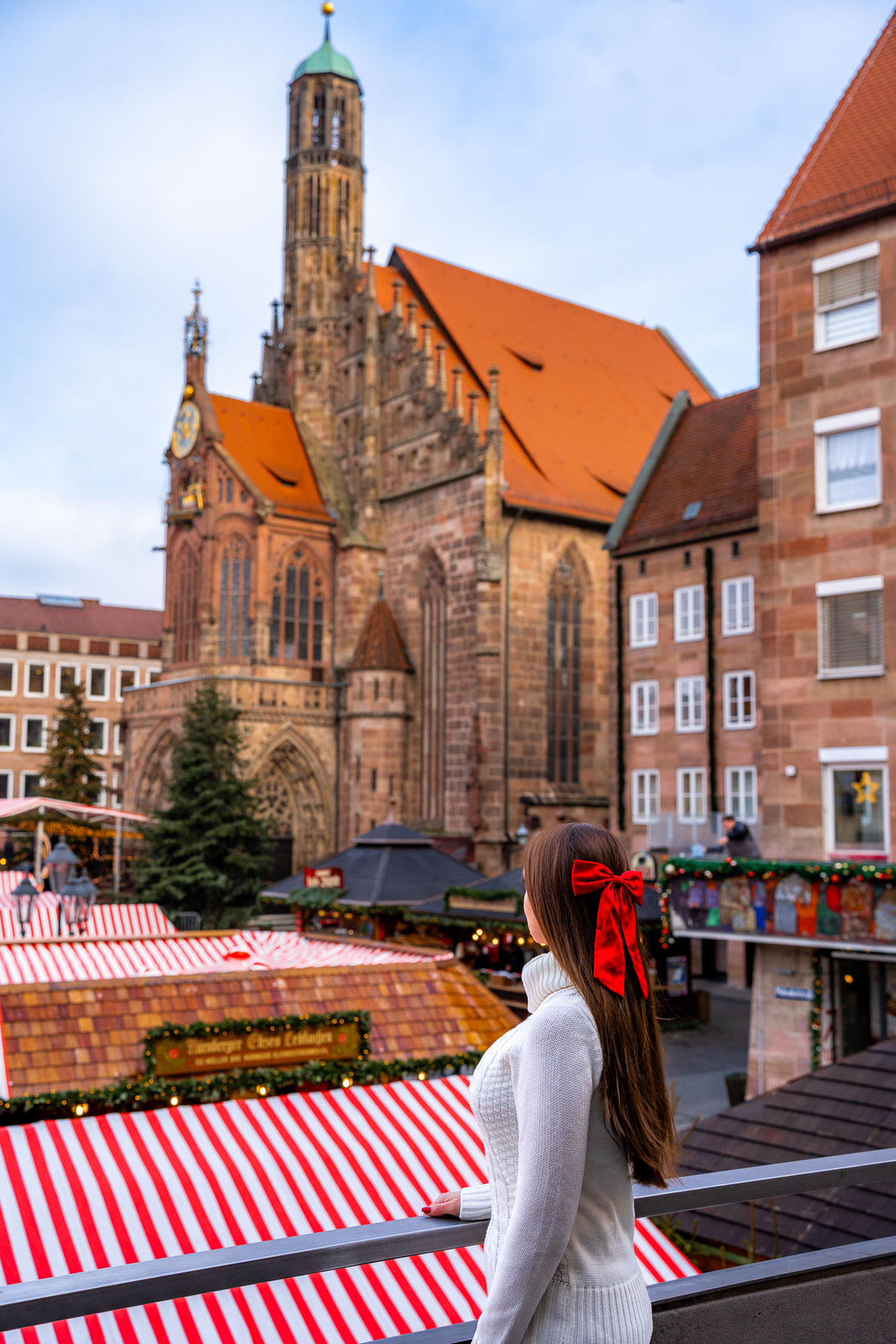
This is the one you came for — and it actually earns the reputation. Dating to the 16th century, the Nuremberg Christkindlesmarkt fills the Hauptmarkt square beneath the Frauenkirche, where the Christkind delivers her opening prologue from the balcony each year.
The food here is legally protected: the Nürnberger Bratwurst and Lebkuchen you buy carry geographic designation, meaning the recipes and origins are regulated by law. That’s not marketing — it’s enforceable quality control, and it’s unique among German Christmas markets.
The market runs roughly 180 stalls, all strictly traditional. You won’t find mass-produced plastic ornaments or LED light-up reindeer here.
Vendors must sell handcrafted or regionally produced goods, and the selection committee rejects applications that don’t fit. The result feels curated rather than chaotic, which is why it draws over two million visitors annually.
- Arrival tip: Get there before 11 a.m. on a weekday for breathing room — by 4 p.m. the crowd density makes browsing unpleasant.
- Don’t skip: The Schöner Brunnen (Beautiful Fountain) on the square — legend says turning the brass ring grants a wish.
- Skip the stagecoach: The yellow horse-drawn carriage is charming to watch but moves at walking pace through the same stalls you can cover faster on foot.
Kinderweihnacht (Children’s Christmas Market)
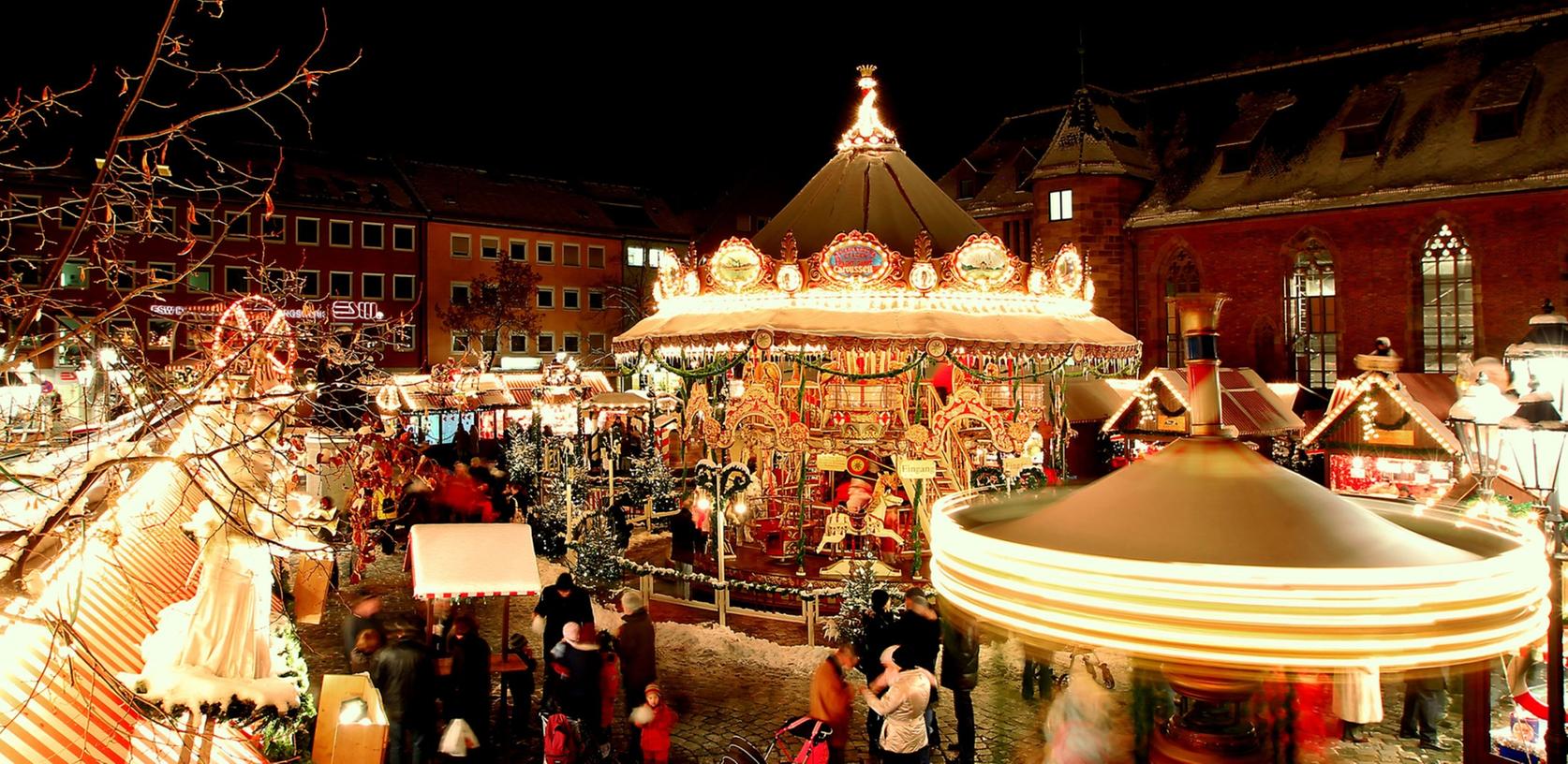
One block south of the main market on Hans-Sachs-Platz, Kinderweihnacht is purpose-built for kids under roughly age ten — and it’s the only market where children are the primary customer rather than a tolerated afterthought. A nostalgic carousel, a miniature Ferris wheel, and hands-on stations let kids bake their own gingerbread, paint designs on glass, and write a letter directly to the Christkind (who actually writes back, mailed to your home address if you provide it).
The vibe is deliberately old-fashioned and slow, which means bored teenagers will hate it and toddlers will love it. If you’re traveling as a family, start here early in the day before little legs give out, then walk the two minutes to the main market while kids are still energized.
- Budget note: The ride tickets and craft stations cost a few euros each, so budget roughly €10–15 per child for the full experience.
- Warming-up option: If the kids need a break from cold air, the Sternenhaus at Heilig-Geist-Saal (covered below) runs indoor storytelling and performances just steps away.
Market of the Sister Cities (Markt der Partnerstädte)
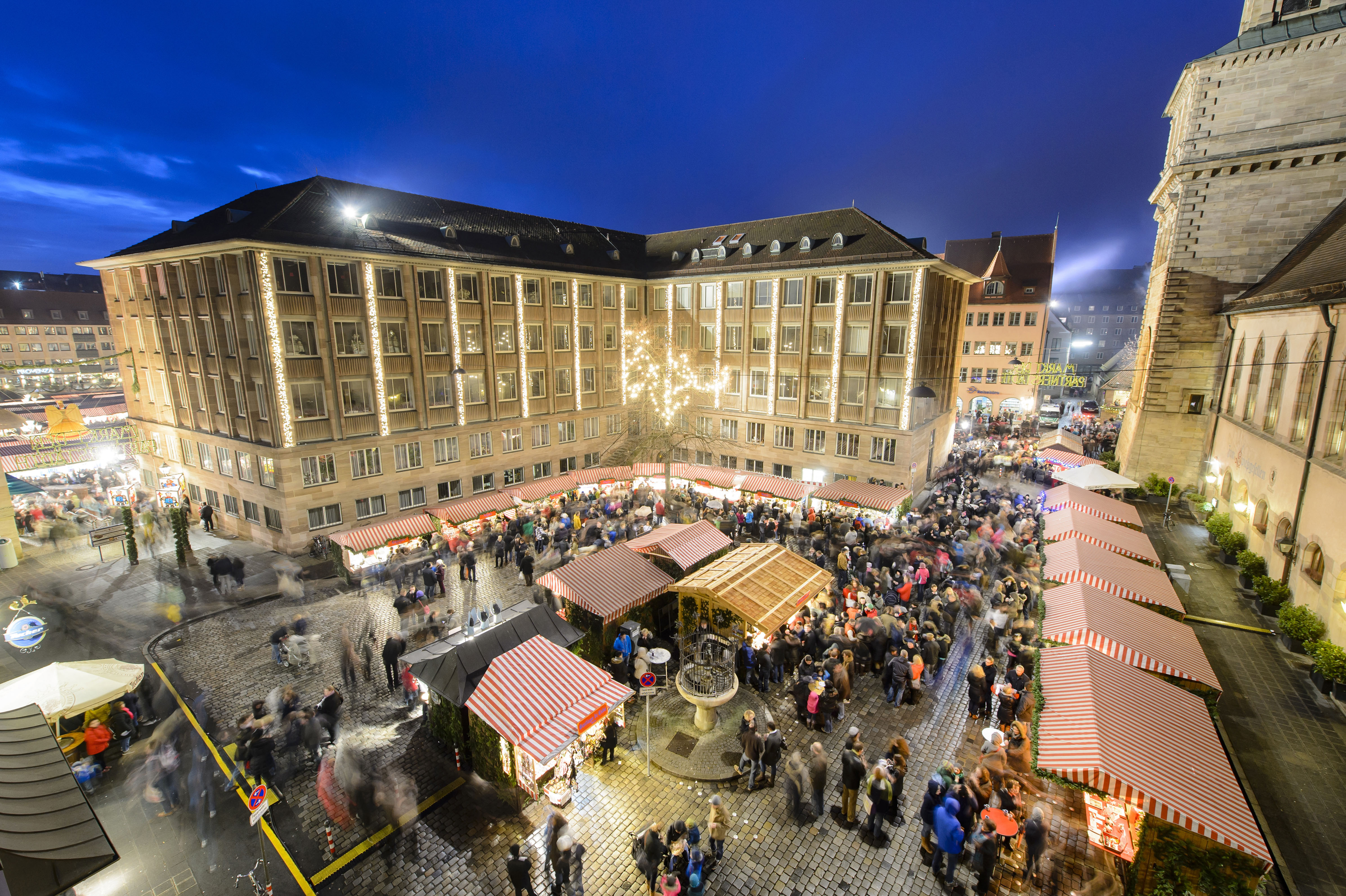
On Rathausplatz, directly north of the Christkindlesmarkt, the Markt der Partnerstädte is Nuremberg’s most internationally flavored market — and the only one where your bratwurst money funds charity. Since 1998, Nuremberg’s fourteen sister cities (including Atlanta, Kraków, Shenzhen, Glasgow, Verona, and Antalya) each operate a stall selling their region’s crafts, sweets, and specialties.
All proceeds flow back to charitable projects in those cities.
This is where you find Turkish delight next to Polish pottery next to Chinese silk ornaments, all in one compact square. It’s smaller than the main market — roughly 20 stalls — which makes it easy to browse without exhaustion.
It also closes December 23, one day earlier than the main market, so prioritize it if you’re arriving late in the season.
- Opinion: This is the best market for gifts that aren’t German. If you’re shopping for someone who already owns every nutcracker imaginable, start here.
- Walking note: You’ll naturally pass through it heading between the main market and the Original Regional market, so don’t plan a separate trip.
Original Regional Christmas Market
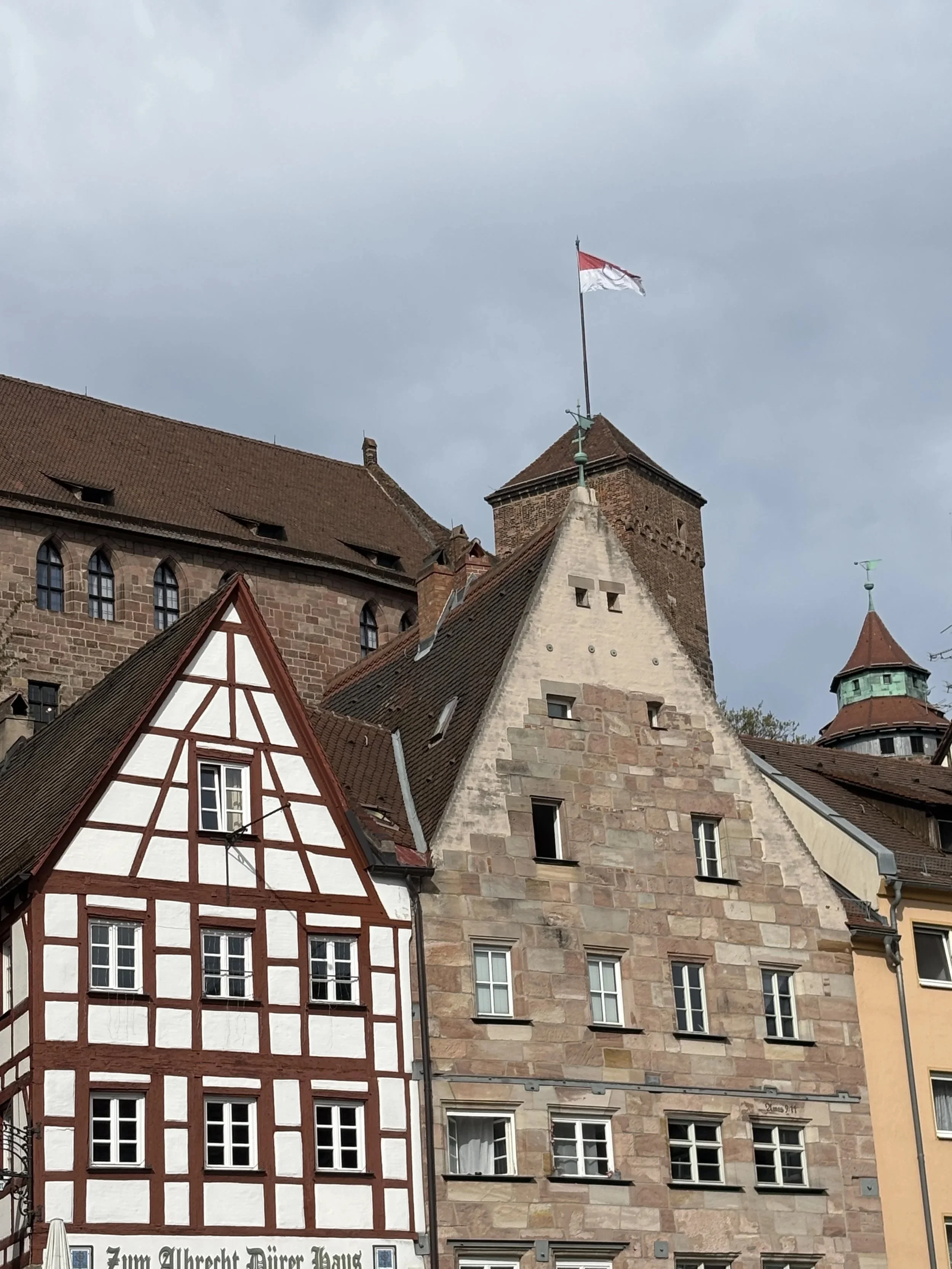
This market stretches from the Hauptmarkt uphill toward St. Sebaldus Church, and its entire identity is hyper-local Franconian products — not the tourist-facing glühwein-and-bratwurst combo you’ll find everywhere else, but regional honey, fruit schnapps, handcrafted soaps, herbal teas, and artisan foods from the Nuremberg metropolitan area. If you want edible and usable souvenirs that actually represent where you are, this is where to spend your money.
Like the Sister Cities market, it closes December 23, so plan accordingly. The stall density is lower here, which means more space to browse and talk to vendors — many of whom are the actual producers.
It’s also less photogenic than the main market (no towering church backdrop), which keeps casual crowds away.
- Best move: Grab Franconian Lebkuchen and regional schnapps here instead of the main market — same legally protected quality, noticeably shorter lines.
- Pair it with: A quick visit inside St. Sebaldus Church at the top of the walk, which is free to enter and worth five minutes of your time.
Handwerkerhof (Craftsmen’s Courtyard)
The Handwerkerhof sits just outside the old city walls near the Hauptbahnhof (main train station), and it’s the first Christmas-flavored stop if you’re arriving by train. Half-timbered workshops sell pewter, hand-tooled leather, traditional gingerbread, and local beer in a compact courtyard that channels medieval Nuremberg year-round.
During Advent, the atmosphere deepens with decorations and seasonal offerings.
This isn’t technically a “Christmas market” in the Advent-only sense — it operates twelve months a year — but it fills a specific role: if you arrive in Nuremberg before your hotel check-in or have a spare hour before the evening markets open, the Handwerkerhof gives you something worth seeing immediately. The crafts here are genuinely handmade, and watching a pewter worker or glassblower at their bench beats scrolling your phone in a hotel lobby.
- Timing: Use this as your warm-up stop on arrival day, then walk 15 minutes into the Old Town for the evening markets.
- Insider detail: The courtyard has its own small beer stand pouring local Franconian brews — a better first drink in Nuremberg than anything at the train station.
The Sternenhaus (House of Stars) at Heilig-Geist-Saal
The Sternenhaus operates inside the Heilig-Geist-Saal, a stunning medieval hall that once served as a hospital, and it’s the only market-adjacent attraction designed entirely for indoor family time. The program runs storytelling sessions, live performances, and cultural activities aimed at children throughout the Advent season — a deliberate counterbalance to the outdoor cold and crowds.
This is your contingency plan when little hands turn blue or the afternoon rain starts. The space is beautiful (exposed timber, stone arches), the programming is in German but accessible through context and visual performance, and it’s free to enter during market hours.
If your kids are already at Kinderweihnacht on Hans-Sachs-Platz, the Sternenhaus is a three-minute walk away and provides the warm-up break that keeps the afternoon from collapsing into a meltdown.
- Best for: Families already doing Kinderweihnacht who need an indoor reset between outdoor markets.
- Worth noting: Adults traveling without kids can skip this one entirely — it won’t add anything to your evening.
Must-Try Foods & Drinks at Nuremberg’s Christmas Markets
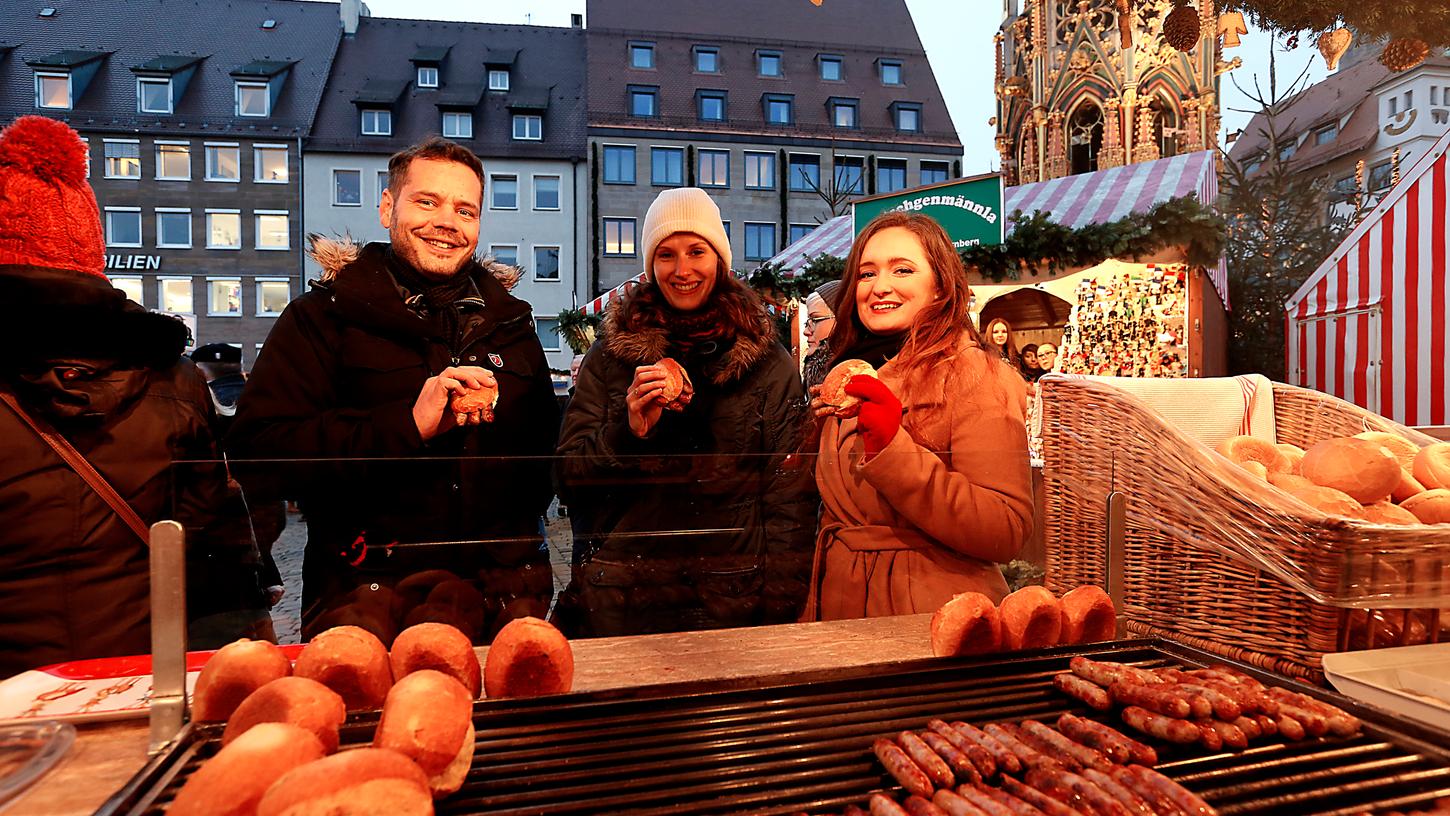
The smoke hits you before the stall does — rows of tiny sausages sizzling on open grills across every market square, sending up plumes that draw you in whether you planned to eat or not. Nuremberg’s Christmas markets are as much a food event as a shopping one, and knowing what to order (and what to skip) makes the difference between a good night and a great one.
| What to Get | Where | Verdict |
|---|---|---|
| Drei im Weckla | Any bratwurst stall at Hauptmarkt | The one non-negotiable order |
| Nürnberger Lebkuchen | Lebkuchen-Schmidt, or market stalls citywide | Skip the tourist tins — buy fresh at the stalls |
| Feuerzangenbowle | The large stand near the Sister Cities Market | Beats standard Glühwein — worth the splurge |
| Half-meter sausage | Various stalls, common across markets | Funny photo op, decent sausage |
| Zwetschgenmännla | Craft stalls throughout Hauptmarkt | Souvenir, not snack — don’t bite into it |
Drei im Weckla: Nuremberg’s Legendary Bratwurst in a Bun
“Drei im Weckla” translates to “three in a bun” — Nuremberg’s signature bratwursts are intentionally tiny, about the size of a finger, and you get three tucked into a crusty roll. They’re pork-based, seasoned with marjoram, and grilled over beechwood.
This isn’t a gimmick — Nürnberger Rostbratwurst has been a protected designation of origin since 2003, meaning only bratwursts produced within city limits can carry the name.
Grab yours from any bratwurst stall in the Hauptmarkt. They’re served with sweet or spicy mustard — go spicy.
At roughly €4–5 for a serving, it’s the single best value food item at any Nuremberg Christmas market. Eat it standing, immediately, while it’s hot.
This is your fuel for the first loop of stalls.
Nürnberger Lebkuchen: The Original Gingerbread
Nuremberg has been the gingerbread capital of Europe since the 14th century, and Nürnberger Lebkuchen has held protected designation of origin status since 1996 — it can only be called that if it’s actually baked within city limits. You’ll see elaborately decorated hearts and tins everywhere, but the real move is buying the plain, unfrosted rounds from smaller market stalls.
They’re denser, more spiced, and significantly better than the iced tourist versions.
Lebkuchen-Schmidt is the iconic name (you’ll find their shops and stalls citywide — their collectible tins are covered in the souvenirs section), but the smaller independent bakers at the Original Regional Christmas Market often sell fresher batches. Budget around €3–8 depending on size and packaging.
Buy a few extras — they travel well and make the best gifts you’ll bring home.
Glühwein, Festive Mugs & the Famous Feuerzangenbowle
Every Christmas market in Germany serves mulled wine, but Nuremberg’s version has a built-in souvenir system: you pay a deposit (typically €3–4) for the festive mug with your first Glühwein, and you keep it when you return the mug — or swap it back for your deposit. Each year and each market has a different design, so if you’re collecting, pace yourself across the different stalls.
The real upgrade is Feuerzangenbowle — a rum-soaked sugarloaf held over the mug and set on fire, caramelizing into the warm wine below. Look for the large stand near the Sister Cities Market on Rathausplatz.
It costs a few euros more than standard Glühwein, roughly €5–7, and it’s the drink that turns a cold market evening into something memorable.
Insider tip: The mugs from the Christkindlesmarkt on the Hauptmarkt and the ones from the Kinderweihnacht market next door are different designs. Hit both and you walk away with two unique souvenirs for the cost of two drinks.
Zwetschgenmännla: The Quirky Prune Figurines You Shouldn’t Eat
You’ll see these little figures made from dried prunes, figs, walnuts, and wire at craft stalls throughout the markets, and they look edible — they’re not (well, technically they are, but you won’t enjoy it). Zwetschgenmännla (prune men) and Zwetschgenweibla (prune women) are a Nuremberg-specific folk tradition dating back centuries, and they make a far better souvenir than another fridge magnet.
They’re covered in more detail in the souvenirs section, but buy them at the food-area craft stalls rather than the dedicated souvenir rows — selection is comparable and you avoid the markup. Prices range from €5 for a small figure to €20+ for elaborate ones.
Handle gently — the wire arms snap.
Half-Meter Sausages and Other Fun Street Food
The half-meter sausage (Halbe-Meter-Wurst) is exactly what it sounds like: a bratwurst roughly 50 centimeters long, served on a comically small round roll. It’s more spectacle than culinary masterpiece, but the sausage itself is decent — and the photo opportunity alone makes it worth one order per group.
Find them at various stalls across the Hauptmarkt and surrounding markets.
Other solid street food picks worth your euros:
- Schupfnudeln: Thick, pan-fried potato noodles tossed with sauerkraut and bacon — hearty, cheap, and a Franconian staple.
- Reibekuchen (Kartoffelpuffer): Crispy potato pancakes served with applesauce. The best ones are made to order, not sitting under a heat lamp — watch for stalls with a short line and a fresh sizzle.
- Roasted chestnuts (Maronen): Sold from carts throughout the Hauptmarkt. A solid hand-warmer and snack combo for under €4.
- Crepes and waffles: Ubiquitous but genuinely good when it’s below freezing. Go Nutella, always.
One rule for all food stalls: Bring cash. Most food vendors still prefer it, and the smaller stands — the ones with the best stuff — often don’t take cards at all. You don’t want to skip a stall because the card reader is down.
The Best Souvenirs & Ornaments to Buy at Nuremberg’s Christmas Markets
Forget the generic ornaments — the souvenirs worth hauling home from Nuremberg are the ones you literally cannot buy anywhere else. Four items dominate the stalls, each with a different gift-giving purpose. Here’s the short version before the details:
| Souvenir | Only in Nuremberg? | Best For | Packability |
|---|---|---|---|
| Rauschgold Angels | Yes — this is their birthplace | Meaningful tree ornaments | Excellent — flat and light |
| Lebkuchen Tins | Lebkuchen-Schmidt ships, but tins are market-exclusive | Edible gifts with lasting packaging | Good — sturdy, stackable |
| Glass Baubles, Nutcrackers & Nativity Figures | No — but the craft quality varies by stall | Traditional collectors | Fragile — wrap carefully |
| Zwetschgenmännla & Zwetschgenweibla | Yes — genuinely Nuremberg-specific | Conversation starters, quirky gifts | Decent — sturdy but bulky |
Rauschgold Angels: Nuremberg’s Signature Christmas Decoration
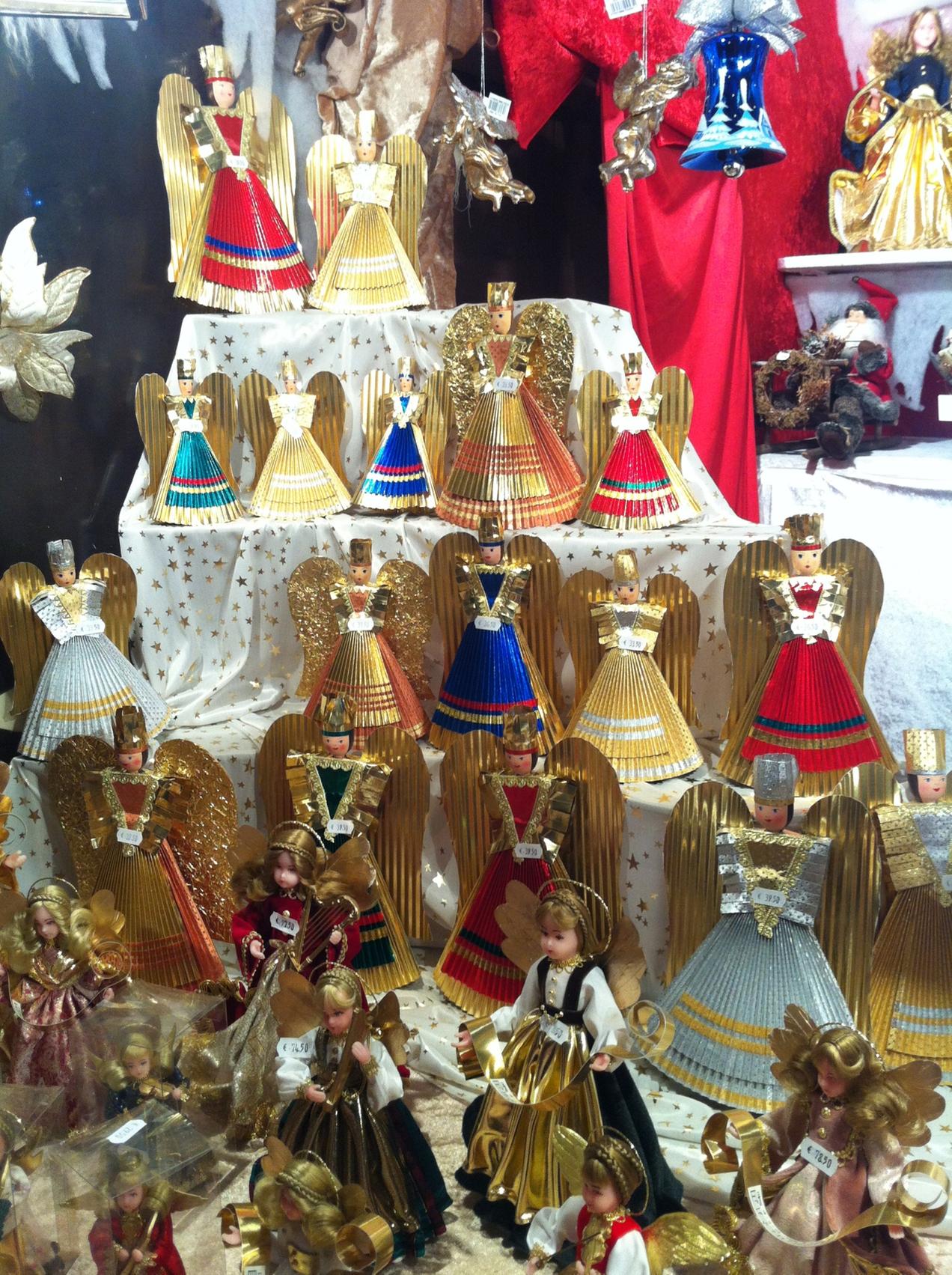
The Rauschgold angel is the single most Nuremberg thing you can pack in your suitcase. These gold-foil angels — with their curly hair, tall crowns, and wide golden sleeves — are the exact design the Christkind wears on stage at the opening prologue.
They’ve topped Nuremberg Christmas trees for generations, and buying one here feels like buying a piece of the market itself rather than a souvenir from it.
They’re flat, lightweight, and usually under €15, making them the easiest ornament to fly home without heartbreak. Look for the ones with hand-painted faces rather than the mass-printed versions — the quality difference is obvious once you see them side by side.
The proper craft stalls on the Hauptmarkt and at the Handwerkerhof carry the better-made ones.
Collectible Lebkuchen Tins from Lebkuchen-Schmidt
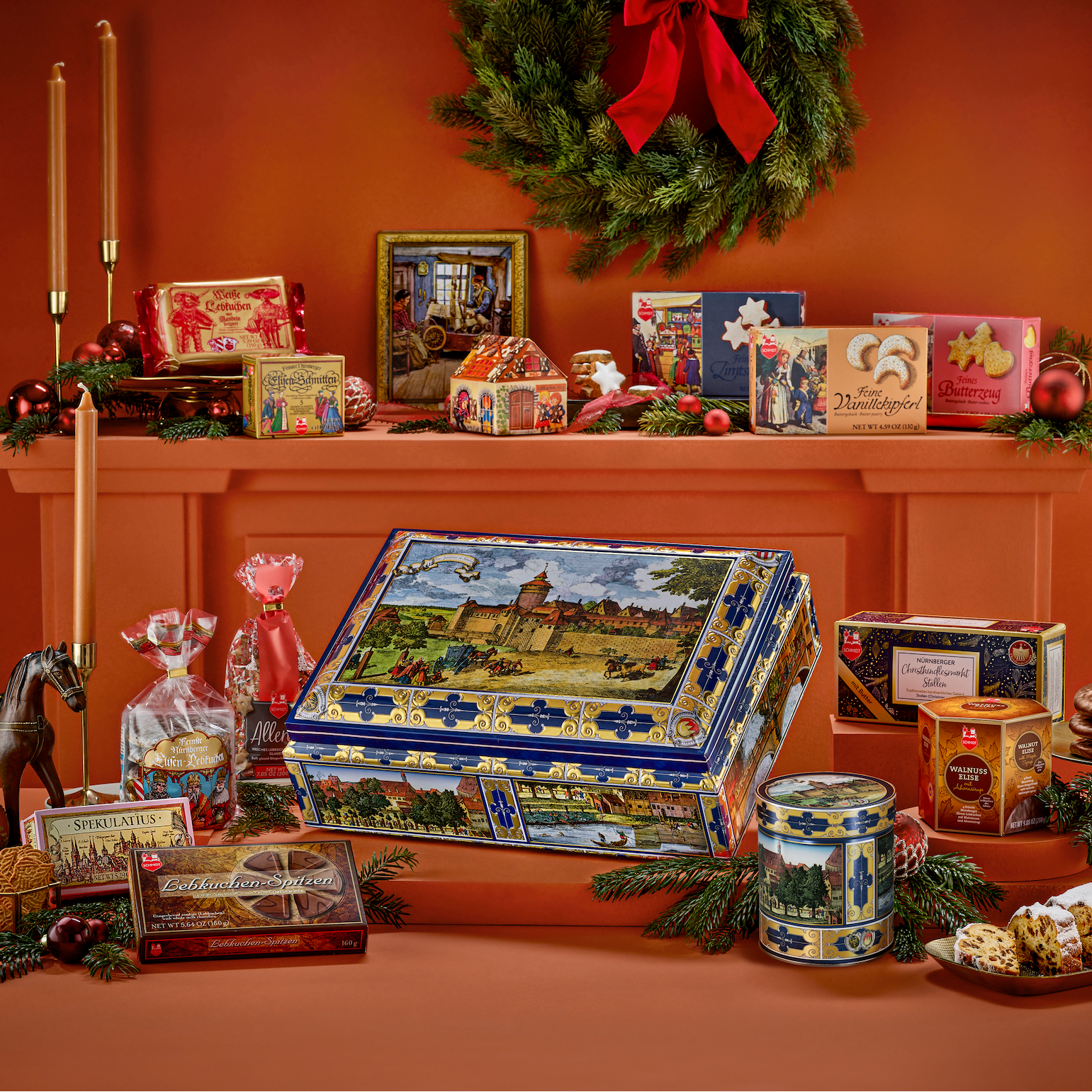
Lebkuchen-Schmidt is Nuremberg’s most recognized gingerbread maker, and their decorated tins are the smartest edible gift from the markets. The tins themselves — often featuring vintage Nuremberg city scenes or classic holiday motifs — are collectible and genuinely useful long after the cookies are gone.
You’re buying a keepsake that happens to contain excellent gingerbread.
Expect to spend roughly €10–25 depending on tin size and filling. The market stalls carry a rotating selection of tin designs that sometimes differ from what’s available in their permanent shops or online, so if you spot a pattern you love, grab it on the spot.
These make the best gifts for people who already have enough ornaments — everyone eats cookies, and nobody throws away a beautiful tin.
Handcrafted Glass Baubles, Nutcrackers & Nativity Figures
These are the stall categories where impulse-buying gets expensive fast. Glass baubles from proper German glassblowers (look for stalls from Lauscha, the Thuringian town where the Christmas bauble was invented) run €8–30 per piece.
Wooden nutcrackers from the Erzgebirge region start around €25 for small ones and climb steeply for the taller, hand-carved figures. Nativity sets — a Nuremberg specialty given the market’s religious roots — range from simple three-piece sets to elaborate multi-figure scenes.
The honest take: these are beautiful, but they’re available at every major German Christmas market. If you’re visiting multiple cities on a market trip, compare prices before committing.
Nuremberg’s stalls are not the cheapest for this category — they’re competing with Dresden, Munich, and Stuttgart on the same German craft goods. Buy here if you find a piece that stops you in your tracks, not because you feel obligated to fill a suitcase.
Insider detail: The Sister Cities Market on Rathausplatz often has handmade ornaments from Krakow, Verona, and other partner cities that you genuinely will not find at other German markets — that’s where to look for something no one back home has seen.
Zwetschgenmännla and Zwetschgenweibla (Prune Figurines)
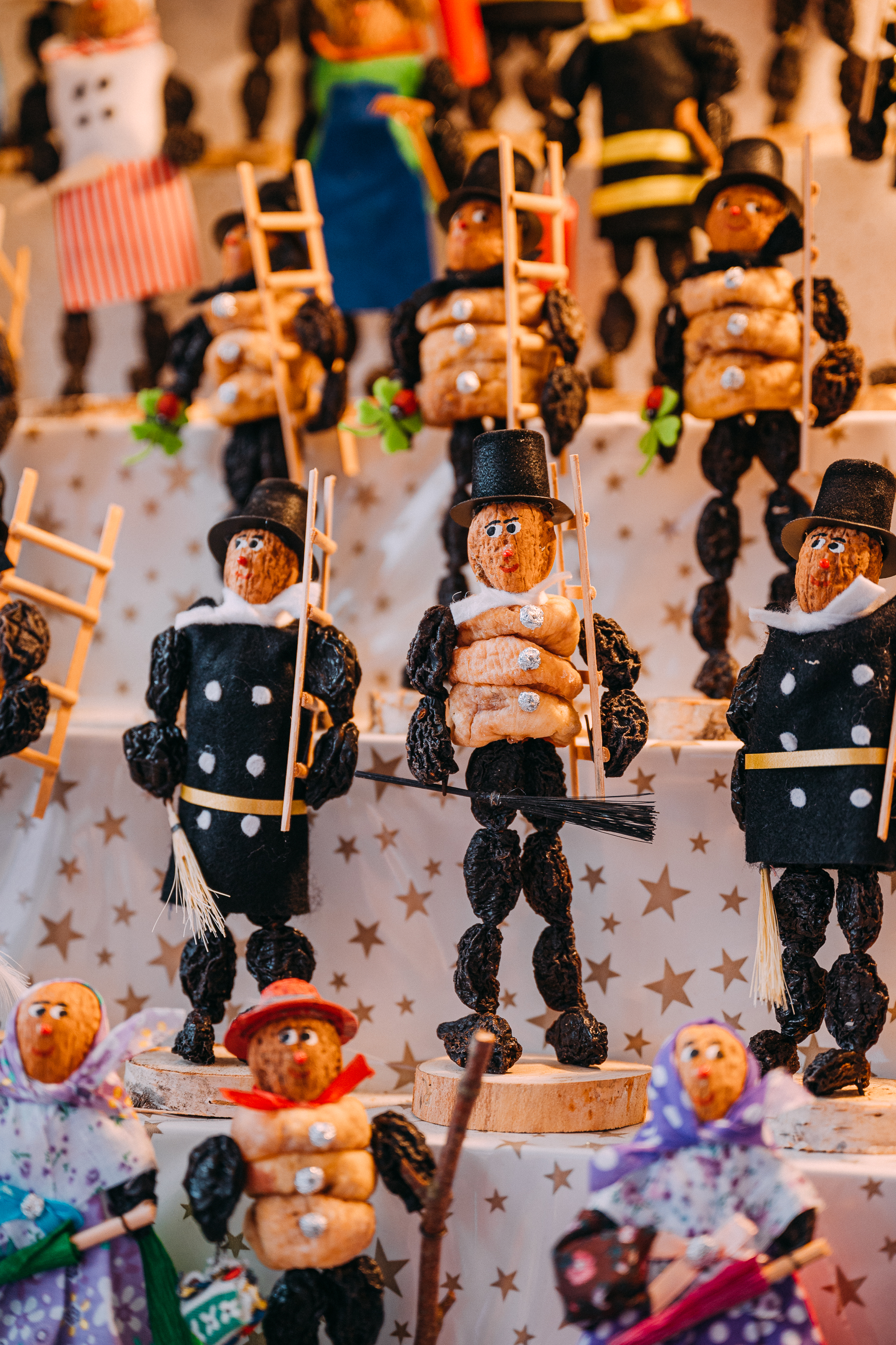
These are the ones your friends will either love or stare at in confused silence. Zwetschgenmännla (prune men) and Zwetschgenweibla (prune women) are small figurines made from dried plums, figs, and walnuts, dressed in tiny handmade outfits.
They’re Nuremberg-born, slightly bizarre, and completely unreplicable — no other Christmas market in Europe sells these as a staple.
They look like miniature scarecrows crafted by someone with an excellent sense of humor. Prices usually start around €5 for the smallest figures and reach €15–20 for larger, more elaborate dressed versions.
They’re surprisingly sturdy for travel, though the dried fruit means you should check customs rules if you’re flying outside the EU.
One practical note: bring cash for these stalls. The smaller Zwetschgenmännla vendors are among the stalls that still prefer or exclusively take cash, and you don’t want to lose out on the perfect prune person because a card reader is acting up.
And yes — the decorative mulled wine mugs you’ve been drinking Glühwein from all evening double as souvenirs. The deposit is typically €3–5, and most visitors simply keep the mug rather than returning it.
Each year’s design is different, so it’s a free bonus souvenir with every warm drink.
When Is the Best Time to Visit Nuremberg’s Christmas Markets?
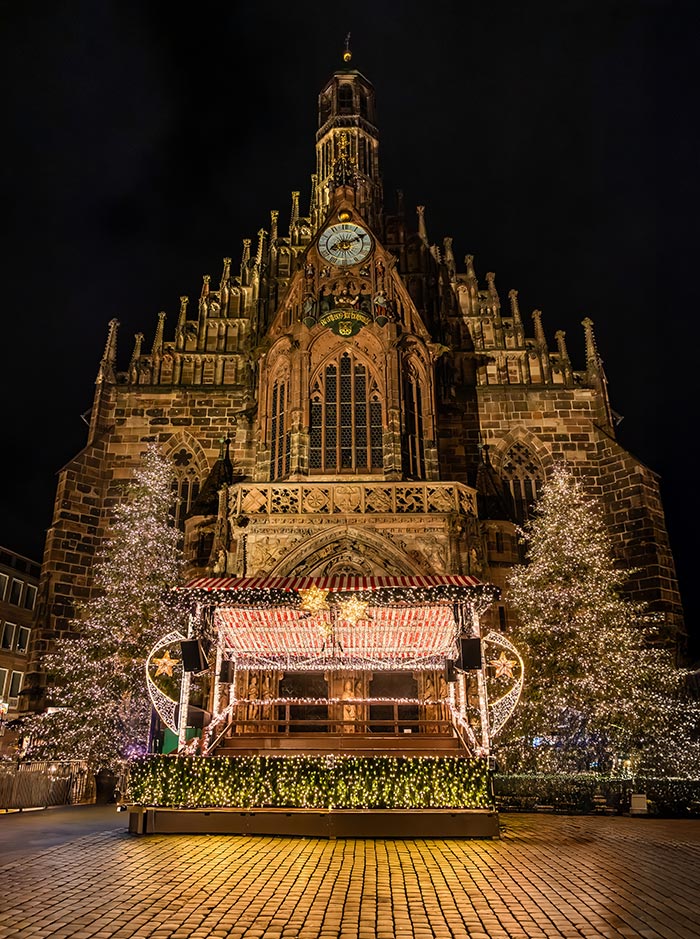
On the first Friday evening, a teenage girl in a golden robe steps onto the balcony of the Frauenkirche, and the entire Hauptmarkt falls silent. That moment — the Christkind prologue — is the single best reason to time your trip precisely, and most visitors never see it because they arrive on a Saturday instead.
2025 Opening Dates and Daily Hours
The Christkindlesmarkt traditionally opens the Friday before the first Advent Sunday and runs through December 24. In 2025, the first Advent falls on November 30, so expect the market to open Friday, November 28 and close Wednesday, December 24 — usually around 2:00 PM on closing day.
Confirm exact dates at n Christkindlesmarkt.de once they publish the 2025 calendar, as minor shifts do happen.
Daily hours typically run from 10:00 AM to 9:00 PM (10:00 PM on weekends). Those are general baselines — the official site posts confirmed hours closer to the season.
For planning context, plan to spend at least one full evening — roughly three hours covers the main Christkindlesmarkt at a comfortable pace. If you want to hit the Sister Cities market, Handwerkerhof, and the Kinderweihnacht too, block an afternoon-plus-evening combo.
How to Beat the Crowds: Best Days and Times to Go
Weekdays win, full stop. Every local source agrees: visiting Monday through Thursday is the single biggest lever on how much you actually enjoy the markets. Saturday afternoons in December are shoulder-to-shoulder.
The ideal rhythm for a two-day visit:
- Morning (10:00–11:30 AM): Stalls are open, crowds are thin, and you can actually browse the craft work without being jostled. Best for shopping and photography.
- Late afternoon (3:30–5:00 PM): The lights come on, the Old Town glows, and the atmosphere shifts. This is the sweet spot for Glühwein and people-watching before the evening rush hits.
- Evening (after 7:00 PM): Full Christmas magic — glowing stalls, live music at the Hauptmarkt, carolers in front of the Frauenkirche. Busier, but worth it at least once.
If you only have one day, arrive mid-morning on a weekday and stay through evening. You will see both faces of the market without the weekend crush.
The Christkind Prologue: Should You Go on Opening Night?
Yes. If your schedule allows any flexibility at all, arrive for opening Friday evening.
The Christkind — Nuremberg’s elected teenage “Christmas angel” — recites her prologue from the balcony of the Frauenkirche church overlooking the Hauptmarkt. The speech, originally written by Friedrich Bröger for the first post-war market in 1948, opens the season and calls the market “a little city made of wood and cloth.” It is genuinely moving, and the crowd energy is unlike any other night.
The prologue typically begins at 5:30 PM on opening Friday. Arrive at the Hauptmarkt by 5:00 PM to secure a spot with a clear view of the Frauenkirche balcony.
After the speech, the Christkind officially declares the market open and walks through the stalls — the whole square erupts. This is the insider detail most travel blogs skip: opening night is not just “another market evening,” it is Nuremberg’s real Christmas kickoff, and the city treats it that way.
The trade-off: opening night is crowded. If crowds bother you more than the cultural moment, skip it and go the following Tuesday or Wednesday instead.
What Is the Christkind and Why Does It Matter?
The Christkind is Nuremberg’s answer to Santa Claus — and, in the opinion of many locals, the superior tradition. Every two years, the city elects a young woman (typically 16–19 years old) to serve as the Christkind, a golden-robed, winged figure who represents the Christmas spirit for the entire season.
She visits children’s hospitals, opens the market, and appears at events throughout December.
This is not a mascot or a marketing gimmick. The Christkind tradition dates back centuries and was revived in 1948 to help rebuild Nuremberg’s identity after the war.
When she reads that prologue from the balcony, the speech addresses “the ladies and gentlemen who have been children once” and “the little ones at the beginning of the journey of life.” It is one of the few moments in European Christmas tourism that still feels genuinely communal rather than commercial.
Knowing this transforms the market from a nice shopping trip into something you actually understand. When you see her walking the stalls on opening night, surrounded by candlelight and brass bands, you will get why Nuremberg’s market consistently ranks as Europe’s most visited — and most beloved.
Stay tip: Book accommodation in the Altstadt (Old Town), ideally within walking distance of the Hauptmarkt. Hotels one to two blocks away — like Karl August — fill up fast for opening weekend.
Reserve six to eight weeks out; December weekends sell out earliest. Train seats on routes from Munich or Frankfurt also open roughly four months ahead, with four to six weeks before departure being the booking sweet spot.
How to Get to Nuremberg for the Christmas Markets
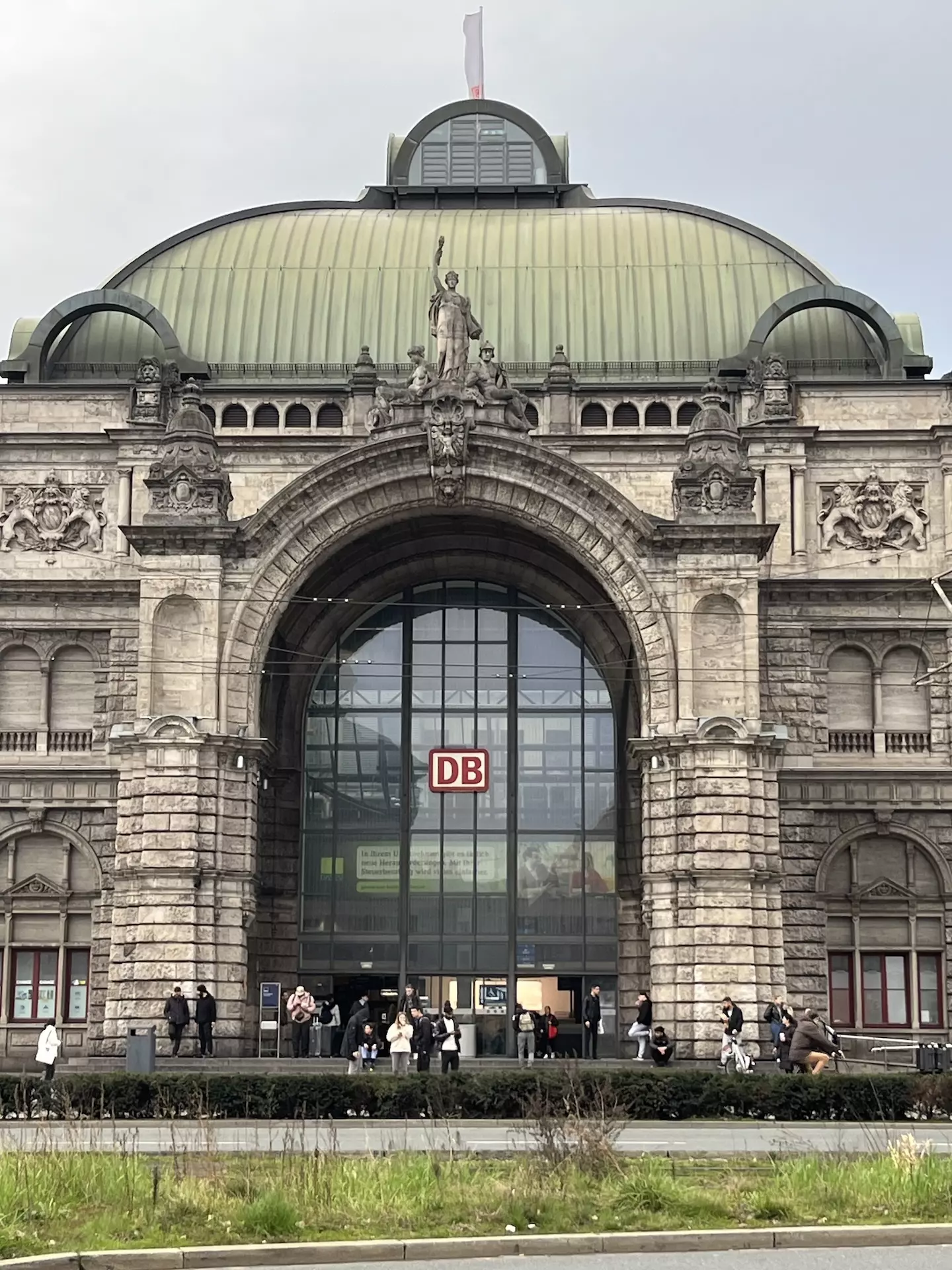
Forget the stress of winter driving — Nuremberg’s train station deposits you a flat, five-minute walk from the main market square, making rail the undisputed champion for a December arrival.
By Train: The Easiest Way to Arrive (From Munich, Berlin, Frankfurt & More)
This is your best option. Nuremberg is a major ICE high-speed rail hub, so connections are frequent and fast.
- From Munich (MUC): Direct ICE trains take about one hour. This is a no-brainer day trip if you’re based in Munich.
- From Frankfurt (FRA): The direct ICE ride is roughly two hours. While you can fly, the train from Frankfurt is often more convenient and drops you right in the city center.
- From Berlin (BER): The direct ICE journey is around three hours. It’s long for a day trip but perfect for a dedicated market visit.
December trains are popular. Book your seat four to six weeks ahead for the best prices and guaranteed travel. The Hauptbahnhof (main station) is just a 5-minute walk from the Hauptmarkt, the heart of the Christkindlesmarkt.
By Plane: Flying into Nuremberg Airport or Nearby Hubs
Nuremberg Airport (NUE) is small, efficient, and extremely close to the city center.
- Nuremberg Airport (NUE): The U2 U-Bahn (subway) line connects the airport directly to Nuremberg Hauptbahnhof in about 12 minutes. It’s seamless.
- Munich Airport (MUC): A viable hub if fares to NUE are high. Take the S-Bahn or regional train to Munich Hauptbahnhof (about 40 minutes), then switch to a direct ICE to Nuremberg. Total travel time is typically 1.5–2 hours.
- Frankfurt Airport (FRA): The ICE train runs from the airport’s long-distance station directly to Nuremberg in about 2–2.5 hours. Honestly, this beats a connecting flight.
Flying only makes sense if you’re connecting from a distant international airport. For travel within Europe, the train is almost always faster door-to-door and less affected by winter weather delays.
By Car: Is Driving to Nuremberg Worth It?
In a word: no. Driving into Nuremberg’s Altstadt (Old Town) in December is a parking nightmare you want no part of.
- The Problem: Street parking is scarce, expensive, and restricted. Garage spaces near the markets fill early and cost upwards of €20–30 per day.
- The Solution: If you must drive, park at a P+R (Park and Ride) lot on the outskirts, like at the airport or a suburban U-Bahn station, and take public transit in.
- Insider Tip: If you’re road-tripping and have a hotel with guaranteed parking outside the center, drive there and leave the car for your market visit.
Getting Around Nuremberg Once You’re There
The old town is compact and best explored on foot. For everything else, public transit is excellent.
- Walking: All major markets — the Christkindlesmarkt, Kinderweihnacht, and the Sister Cities market — are within a 10-minute stroll of each other.
- U-Bahn & Trams: The VGN network covers the city. A day ticket is your best value if you plan more than two trips. Single tickets are also straightforward.
- The Stagecoach: A fun, traditional option near the Christkindlesmarkt. It’s more of a festive activity than efficient transport, and it only operates at specific times.
Where to Stay Near Nuremberg’s Christmas Markets
Staying inside Nuremberg’s Altstadt means you can carry armfuls of Rauschgold angels and Lebkuchen tins back to your room in five minutes flat — then head right back out for another round of Glühwein. That’s the real advantage of basing yourself here instead of commuting in.
Best Neighborhoods for Walking to the Markets
The Hauptmarkt square is the absolute center of the action — the Christkindlesmarkt, the Sister Cities market, and the Kinderweihnacht all cluster within a two-minute walk of each other around the Frauenkirche. Any hotel inside the Altstadt walls puts you within a ten-minute stroll of every market listed in this guide.
- Altstadt Mitte (around Hauptmarkt): The prime zone. You step outside your door and you’re already there. This is where most mid-range and boutique options sit, and it books out fastest.
- Altstadt Nord (near the Handwerkerhof and Lorenzkirche): Slightly farther from the main square — five to eight minutes on foot — but often easier to snag a room and usually a bit quieter at night. Still fully walkable to every market.
- Südstadt / near Nuremberg Hauptbahnhof: The budget fallback. The train station is roughly a fifteen-minute walk north of Hauptmarkt. Fine if you’re arriving by rail and want cheaper rates, but you’ll be walking through cold air every morning and late at night. Worth it only if budget is the deciding factor.
Top Hotel Picks for Every Budget
December in Nuremberg is peak season for the markets — hotel rates reflect that. Expect roughly €100–€250 per night for a well-located Altstadt hotel during market season, though prices vary by exact dates and how far ahead you book.
| Budget Level | Pick | Why It Wins |
|---|---|---|
| Splurge | Hotel Victoria Nürnberg | Directly on the Hauptmarkt square — you can watch the Christkindlesmarkt from your window. Boutique feel, excellent breakfast, and you can’t beat the location. |
| Mid-Range | Karl August | One block from Hauptmarkt with a pool, sauna, and beautifully furnished modern rooms. The best balance of amenities and price this close to the markets — beats anything at this price point in the Altstadt. |
| Budget | Hotel ibis Nürnberg Altstadt | Clean, reliable, and about a ten-minute walk to the markets. No frills, but you save enough to buy extra mugs of Feuerzangenbowle. |
Insider tip: Request a room facing away from the street if you’re a light sleeper. Market season brings later foot traffic and street noise in the Altstadt core, and double-pane windows only do so much.
How Early Should You Book Accommodation?
December weekends in Nuremberg sell out fast — the closer your hotel is to Hauptmarkt, the sooner rooms disappear. Here’s a realistic booking timeline:
- Four to six months out: Ideal for any Altstadt hotel on a December weekend. You’ll have your pick of room types and best rates.
- Two to three months out: Good mid-range options remain, but the prime Hauptmarkt properties will be gone or inflated significantly.
- Under six weeks: Expect to pay a premium or settle for locations outside the Altstadt. Weekday stays are much easier to find late than weekends.
Weekday visits are genuinely the smarter move — both for the markets themselves (thinner crowds, shorter bratwurst lines) and for hotel availability. If your schedule allows it, a Tuesday-to-Thursday stay will save you money and give you a far better experience than fighting Saturday evening crowds.
Best Things to Do in Nuremberg Beyond the Christmas Markets
The Old Town is compact enough to explore between mulled-wine refills — but skipping these sights would be a mistake. Nuremberg’s real weight comes from its medieval imperial status and its 20th-century reckoning, and both deserve your time.
Here’s what to prioritize and why.
| Stop | Time Needed | Why It’s Worth It |
|---|---|---|
| Imperial Castle (Kaiserburg) | 1.5–2 hours | Best city panorama + Holy Roman history |
| St. Sebaldus & St. Lorenz | 30–45 min each | Renaissance art, free entry |
| Frauenkirche | 15–20 min | Christkind’s balcony + mechanical clock |
| Weißgerbergasse + Beautiful Fountain | 20–30 min | Most photogenic street in the city |
| Rock-Cut Cellars (Felsengänge) | 45–60 min guided | Underground medieval beer tunnels |
| Documentation Center | 2–3 hours | Essential WWII history, sobering context |
The Imperial Castle (Kaiserburg)
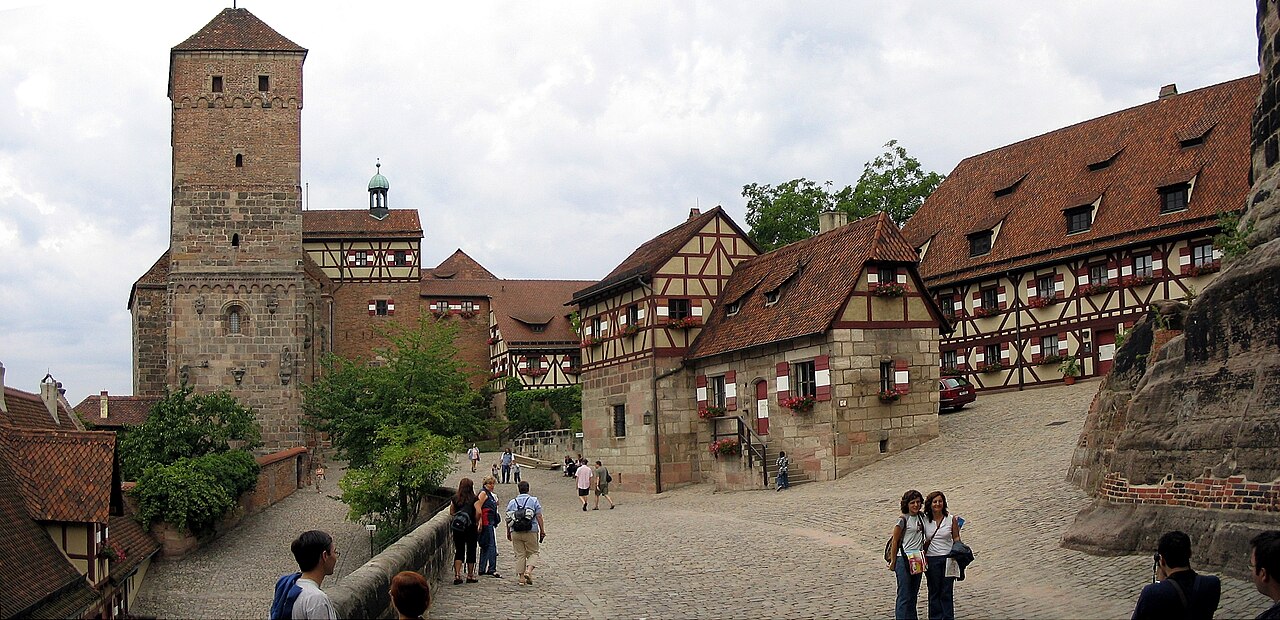
This fortress is the reason Nuremberg mattered at all. Perched on a sandstone ridge above the Old Town, the Kaiserburg was a key seat of the Holy Roman Emperors for centuries.
The climb up cobblestone streets from the Hauptmarkt takes about 10 minutes on foot — and the panoramic view from the castle courtyard is the single best vantage point in the city.
Ticket tip: The Nuremberg Card costs roughly €38 for adults, €12 for kids 6–11, and is free for children under 6. It bundles the castle interior, the Rock-Cut Cellars, and several city museums — it pays for itself fast if you’re doing more than one attraction alongside the markets.
Buy it at the tourist office on the Hauptmarkt.
Insider tip: The castle courtyard and ramparts are free to access — you only need a ticket for the interior rooms and Imperial Chapel. Arrive right at opening (usually 9 AM in winter) to beat tour groups, or come at sunset for golden light across the rooftops.
Medieval Churches: St. Sebaldus, St. Lawrence & the Frauenkirche
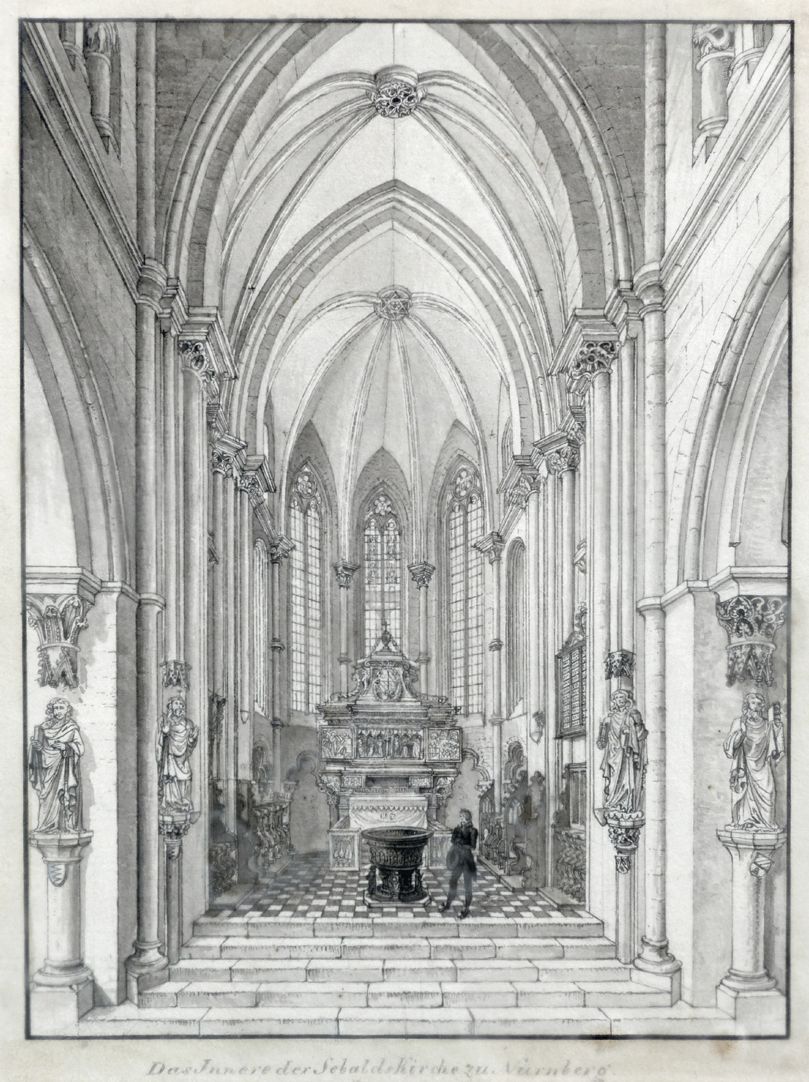
Nuremberg’s three great churches aren’t filler between market stalls — they’re masterworks that explain why this city was the unofficial capital of the German Renaissance.
- St. Sebaldus Church (St. Sebald): North of the Hauptmarkt. The oldest parish church in the city, with a stunning bronze tomb of its patron saint by Peter Vischer the Elder (1519). The Romanesque-to-Gothic transition is visible in its architecture — look for the mismatched towers.
- St. Lawrence Church (St. Lorenz): South of the Pegnitz River. The bigger, showier sibling. The Holy Blood Altar by Adam Kraft and the immense rose window in the west facade are the main draws. This is where Nuremberg’s merchant wealth is on full display.
- Frauenkirche (Church of Our Lady): Directly on the Hauptmarkt, framing the Christkindlesmarkt. The Christkind delivers her famous opening prologue from its balcony every year. The mechanical clock (Männleinlaufen) on the facade runs daily — it depicts the Holy Roman Electors paying homage to Emperor Charles IV.
Verdict: If you only have time for one interior, choose St. Lorenz. The scale and the stained glass win outright.
Weißgerbergasse, the Beautiful Fountain & the Rock-Cut Cellars
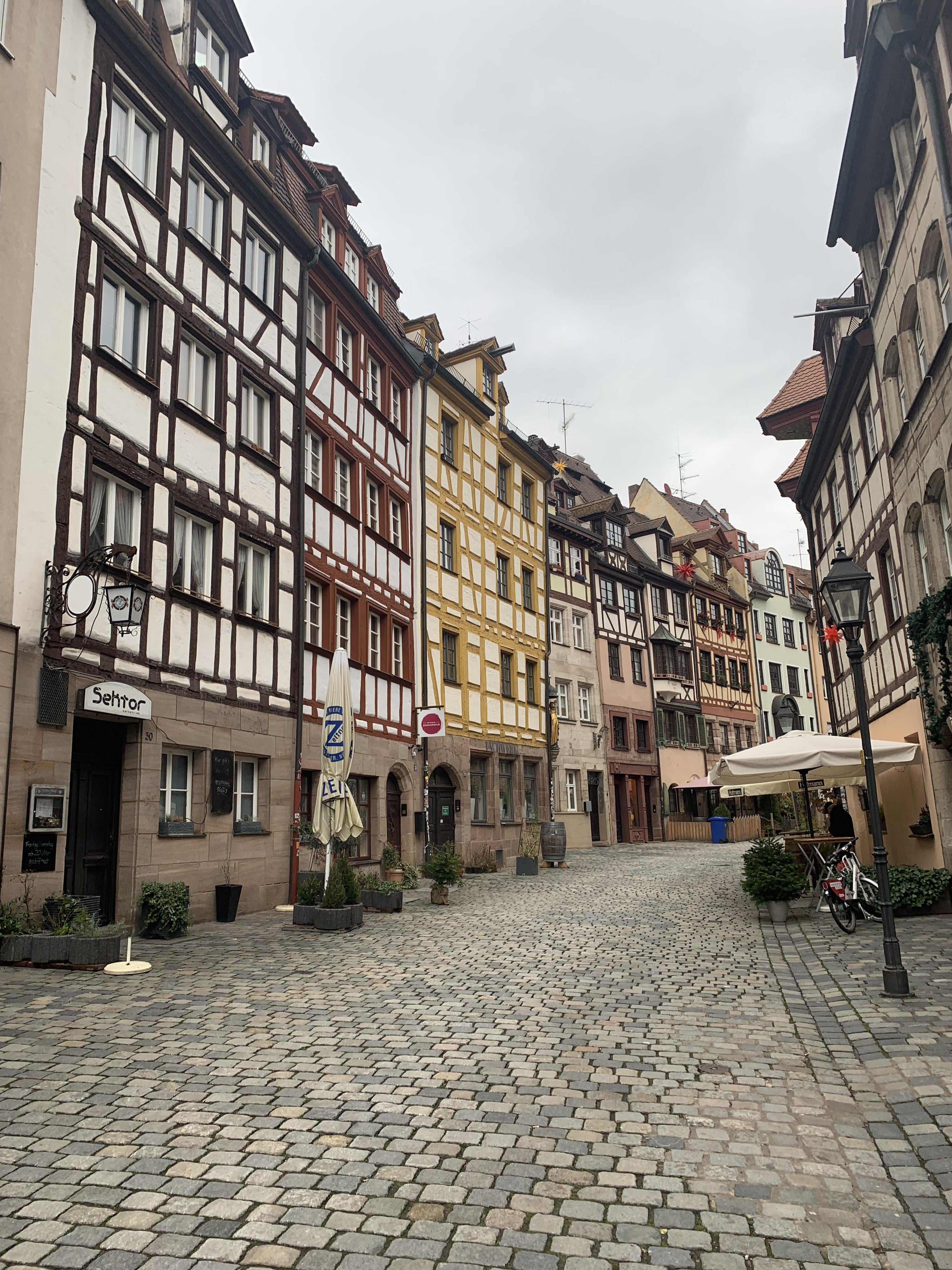
These three stops sit within a few minutes of each other and cover Nuremberg at its prettiest and its most underground.
Weißgerbergasse (Tanners’ Lane) is a short street of brightly painted half-timbered houses running along the river — easily the most photogenic lane in the city. Walk it in the late afternoon when the low winter light hits the facades.
It takes five minutes. You’ll spend twenty taking photos.
The Beautiful Fountain (Schöner Brunnen) sits right on the Hauptmarkt, a 19-meter Gothic spire of stone tracery. Grab the small golden ring on the iron gate and give it a full turn — local legend says it grants a wish.
Whether you buy that or not, the detail on the 40-odd painted figures is worth a close look.
The Historic Rock-Cut Cellars (Felsengänge) are a labyrinth of medieval sandstone tunnels carved beneath the city, originally used for beer brewing and storage. Guided tours run regularly; English tours are available but typically limited to certain times — check at the tourist office or book online in advance.
This is the perfect rainy-day stop when you need to thaw out between markets.
Money saver: If you’ve already bought the Nuremberg Card for the castle, the Felsengänge tour is included. Show your card at the entrance rather than buying a separate ticket.
The Craftsmen’s Courtyard (Handwerkerhof) by Day
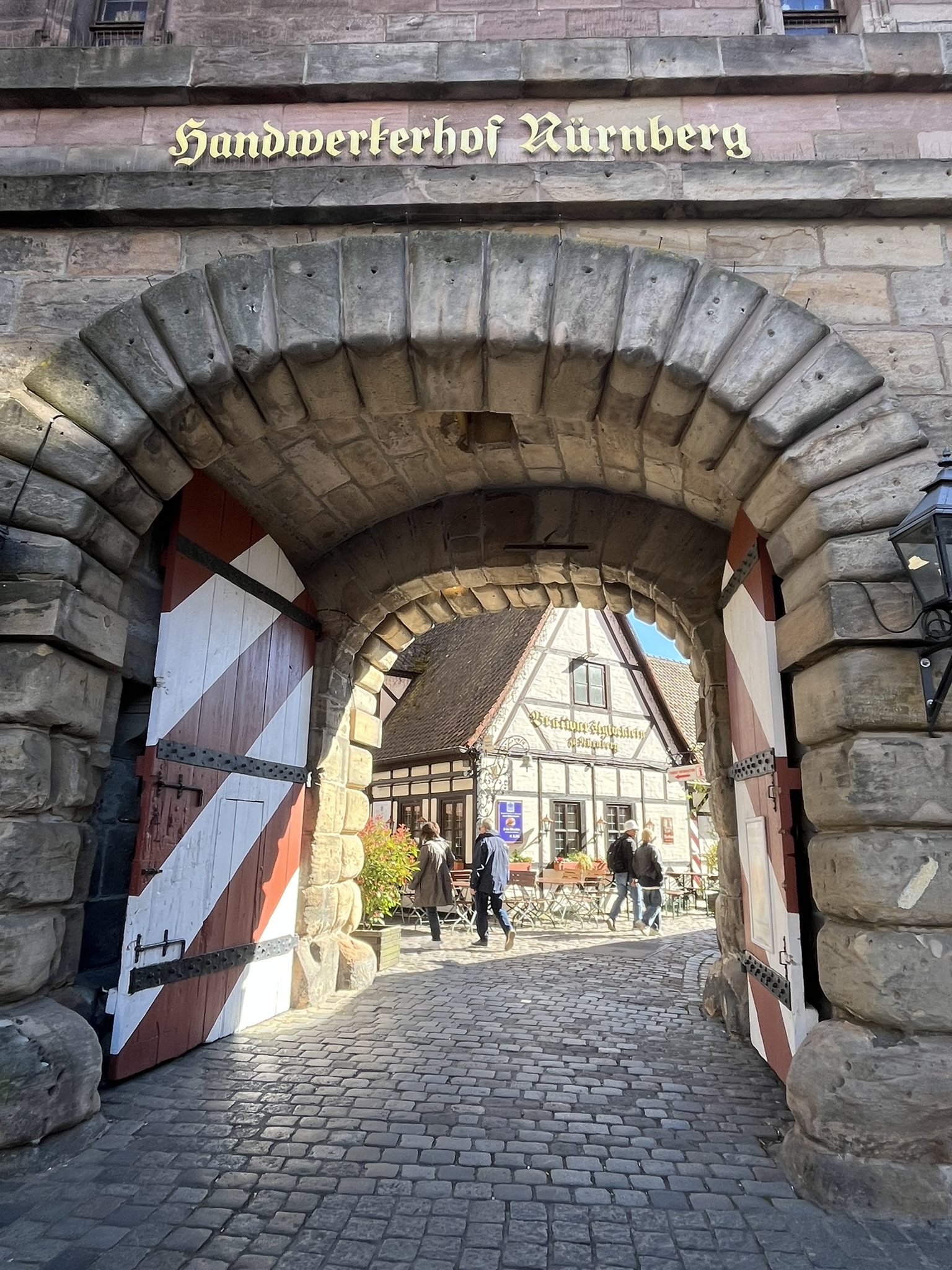
This small medieval-style courtyard sits directly across from the main train station (Hauptbahnhof), making it the easiest Nuremberg add-on if you’re arriving or leaving by rail. During the Christmas market season it runs its own stalls alongside year-round artisan workshops selling pewter, leather, gingerbread, and Franconian beer.
See the dedicated section above for full details on what to buy and when to go.
The Documentation Center at the Nazi Party Rally Grounds
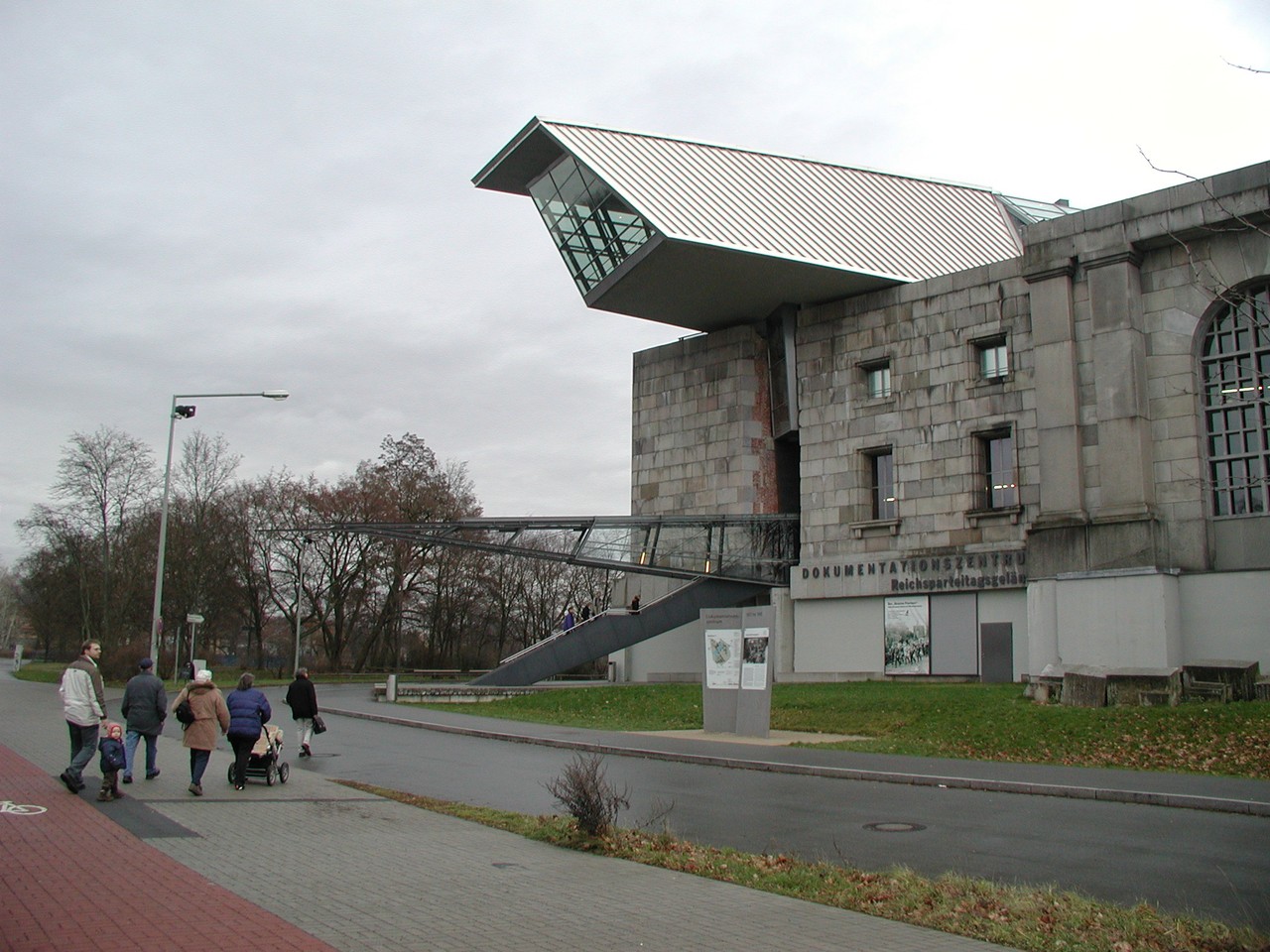
This is the responsible half-day most visitors skip — and shouldn’t. The Documentation Center sits inside the unfinished Congress Hall at the Nazi Party Rally Grounds, a massive site southeast of the Old Town.
The permanent exhibition, “Fascination and Terror,” traces how Nuremberg became central to Nazi propaganda and the postwar trials that held the regime accountable.
- Getting there: Tram line 8 or 9 from the Hauptbahnhof to “Doku-Zentrum” — about 15 minutes.
- Time needed: Budget 2–3 hours including the outdoor grounds. The Zeppelin Tribune and Great Street are open-air and vast.
- Cost: €6 for adults, reduced €1.50, free under 12. Audio guides available.
Honest take: Nuremberg doesn’t hide from this history — it confronts it head-on. The exhibition is sobering, well-curated, and essential context for understanding the city beyond Christmas charm.
Visit on a morning before heading to the markets. You’ll see the glühwein and ornaments differently afterward — and appreciate them more.
Practical Tips for Visiting Nuremberg’s Christmas Markets
Standing still in sub-zero air while your Glühwein cools faster than you can drink it is the part no guidebook warns you about. These tips are the difference between a flawless evening and a miserable one.
Should You Bring Cash or Card?
Bring cash. Most larger stalls now accept cards, but the smaller craft vendors and many food stands still prefer Euros on the table.
You don’t want to miss a Zwetschgenmännla or a round of Lebkuchen because the card reader is down — and at peak hours, it happens. Carry at least €30–50 in small bills and coins for a typical evening of food, drinks, and impulse buys.
ATMs are easy to find around Hauptmarkt if you run short.
What to Wear: Dressing for December in Nuremberg
December nights in Nuremberg hover around freezing, and the wind funnels hard through the narrow Old Town streets between half-timbered buildings. You’re standing outdoors for hours, not walking briskly — that changes everything about what you need to wear.
- Base layer: A thermal top and leggings under your clothes make a real difference after the first hour.
- Outer layer: A windproof, insulated coat — not a fashionable wool peacoat. Wind cuts through fabric fast here.
- Accessories: Gloves, a warm hat, and a scarf you can pull over your face. Non-negotiable.
- Footwear: Waterproof, insulated boots with good grip. Cobblestones get slick from spilled Glühwein and the occasional frost.
If you’re buying fragile ornaments or Rauschgold angels, bring a small rigid container or padded pouch in your bag. Ask the vendor for a sturdy box if they offer one. The walk back to your hotel through shoulder-to-shoulder crowds is brutal on delicate glass.
The NÜRNBERG CARD: Is It Worth Buying?
Yes — if you’re spending more than one full day in the city. The NÜRNBERG CARD is a two-day pass that gets you free entry to all included museums and sights, 50% off partner activities, and unlimited free public transport across Nuremberg, Fürth, and Stein.
The markets themselves are free to enter, so the card doesn’t help there. But if you want to visit the Kaiserburg (Imperial Castle), the Albrecht-Dürer-Haus, or the Documentation Center Nazi Party Rally Grounds between market sessions — and you should — the card pays for itself within a single museum-heavy afternoon.
Buy it at the tourist information office at Hauptmarkt or online before you arrive.
Walking a Perfect Evening Route Through the Markets
Three hours is all you need to hit every major market without rushing. Here’s the route that works, starting at dusk when the lights come on and the atmosphere peaks:
- Start at Christkindlesmarkt (Hauptmarkt) — get your bearings under the Church of Our Lady, grab your first Glühwein, and soak in the main square before it gets impossibly packed.
- Walk north to the Markt der Partnerstädte (Sister Cities Market) — immediately adjacent. Try something international here: Krakow pierogi or Antalya Turkish specialties.
- Head to Kinderweihnacht (Children’s Christmas Market) — a few steps further. This is where kids ride the old-fashioned carousel and make crafts. Worth a quick walk-through even without children.
- Cross to the Handwerkerhof (Craftsmen’s Courtyard) — inside the medieval city wall towers near Königstor. Buy hand-forged goods and watch craftspeople work. Quieter, more atmospheric.
- Finish at the Original Regional Christmas Market on Rathausplatz — less crowded, strong on Franconian food and drink. This is where you eat your Drei im Weckla and wind down.
Insider detail: Start at 4:30–5:00 PM on a weekday. You get 30–40 minutes of manageable crowds before the post-work surge, and the transition from daylight to full illumination over the Hauptmarkt is genuinely the best moment of the entire visit.
Responsible Visiting and Etiquette Tips
- Don’t block stall fronts while eating. Step aside. Vendors lose sales when crowds clog their counters.
- Book accommodation early. December weekends sell out months ahead. The closer your hotel is to the Altstadt, the sooner rooms disappear. Base yourself within walking distance of Hauptmarkt — a hotel like Karl August, just a block away, means no transit hassle and easy late-night returns.
- Take the train, not a car. Nuremberg’s Hauptbahnhof is a 10-minute walk from the markets, and parking near the Old Town during Advent is a nightmare. Book train seats four to six weeks ahead for the best prices.
- Skip the opening Friday if crowds aren’t your thing. The opening ceremony with the Christkind on the Frauenkirche balcony is special — but it draws a massive crowd. Weekday evenings deliver the same market magic with breathing room.
Frequently Asked Questions
Are Nuremberg’s Christmas Markets Free to Enter?
Yes. Every single market — the Christkindlesmarkt, Kinderweihnacht, the Sister Cities market, Handwerkerhof, all of them — is completely free to walk into.
No tickets, no entry gates. Your budget goes entirely to food, drinks, and the ornaments you didn’t plan on buying.
How Many Days Do You Need for the Nuremberg Christmas Markets?
Two days is the sweet spot. You can technically hit the Christkindlesmarkt and a few others in a single three-hour evening, but that leaves no room for the Original Regional Market, Handwerkerhof, or simply wandering the Old Town without a checklist.
A full day and a half lets you visit markets during the day, return at night for the full ambiance, and still have time for the Documentation Center or a proper Franconian meal.
Is Nuremberg Better Than Munich for Christmas Markets?
For pure Christmas market atmosphere, yes — and it’s not particularly close. Nuremberg’s Christkindlesmarkt is the most famous in Germany for a reason: it’s historic, tightly curated, and feels genuinely traditional rather than commercial.
Munich’s markets are larger and more spread out, which means more variety but also more crowds and less charm per square meter. Choose Nuremberg if you want one deeply immersive market experience.
Choose Munich only if you want a bigger city with nightlife and museums to fill the gaps between markets.
What Currency and Language Should You Expect?
German is the primary language, though English is widely understood at market stalls, hotels, and restaurants in the Old Town. You won’t struggle to order a Glühwein or ask directions.
Can You Visit the Nuremberg Christmas Markets as a Day Trip?
You can, but it’s not recommended. The markets really come alive in the late afternoon and evening when the lights glow against the medieval architecture — arriving by train mid-morning and leaving by 7 p.m. cuts the best part short.
Nuremberg is well connected by rail (about an hour from Munich), so a day trip is logistically simple, but staying overnight lets you experience both the daytime browsing and the atmospheric evening rush without feeling hurried. Book accommodation close to the Hauptmarkt — hotels within walking distance sell out fast on December weekends.
What Are the Market Dates for 2025?
Nuremberg’s Christmas markets typically run from the last Friday before Advent through December 24th. For 2025, expect them to open around late November and close on Christmas Eve — but always confirm exact dates on the official Nuremberg tourism website as the season approaches, since opening ceremonies and special event schedules shift slightly each year.
Your Nuremberg Market Game Plan Starts Now
Book your accommodation in the Altstadt as soon as you’ve picked your dates — hotels within walking distance of the Hauptmarkt vanish fastest, especially for December weekends. Then grab train tickets four to six weeks out from Munich, Frankfurt, or wherever your European trip begins, and arrive on a weekday if you can swing it.
Nuremberg’s Christmas markets are worth the trip because they’re the rare European tradition that hasn’t been diluted into generic tourism — the food is legally protected, the crafts are genuinely curated, and the Christkind prologue on opening night is one of the last communal Christmas rituals that still feels sacred.
Pin this guide, pull it up on your phone when you step off the train at the Hauptbahnhof, and walk straight to the Christkindlesmarkt with a plan instead of a prayer.
Leave a Reply