
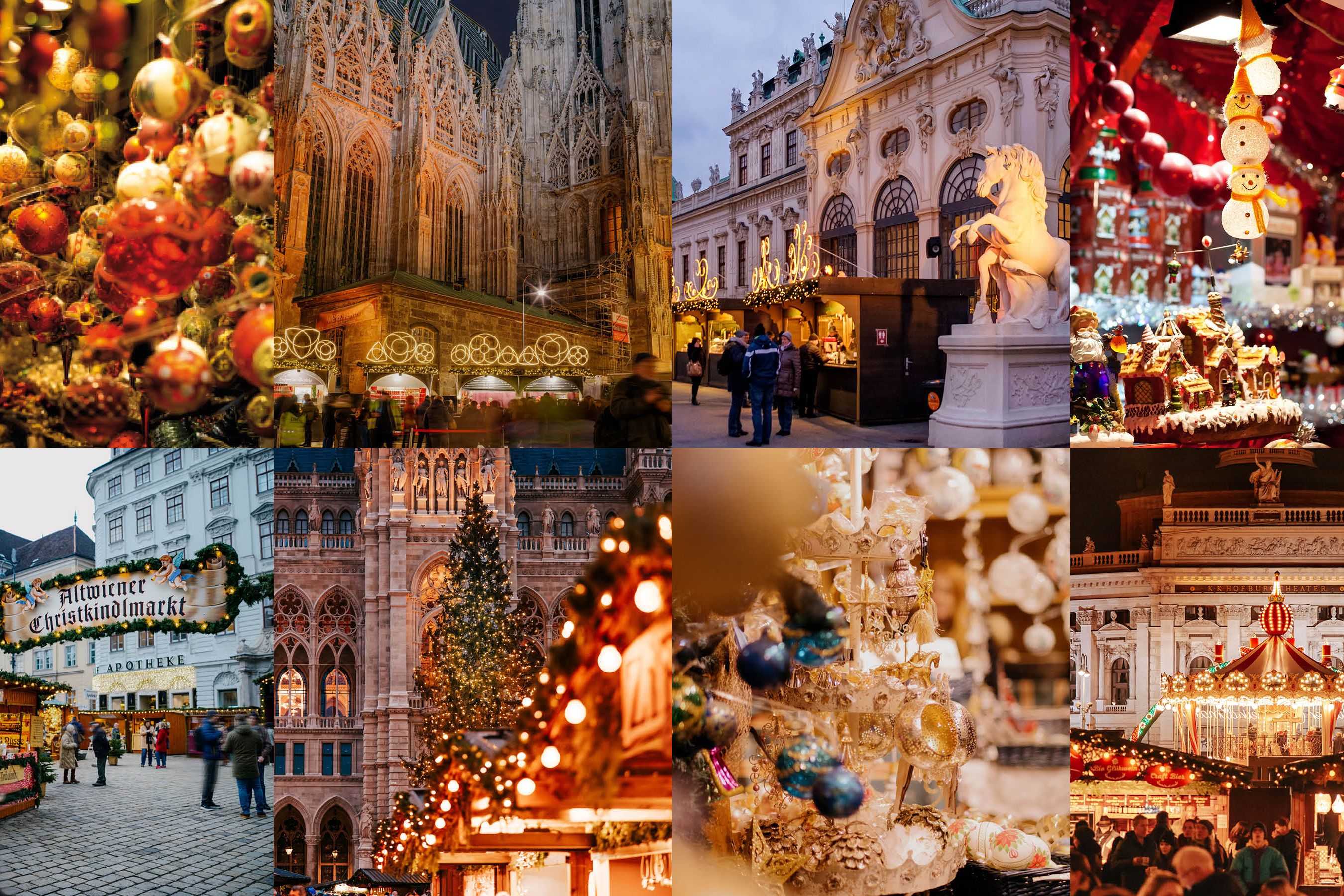
Steam curls off a mug of Punsch as the neo-Gothic façade of the Rathaus glows amber against a darkening December sky, and somewhere behind you a roasted chestnut vendor calls out in a voice half-swallowed by brass-band carols.
Walk ten minutes into the narrow Biedermeier lanes of Spittelberg and the scene shifts entirely — fairy lights thread between painted façades, and the scent of beeswax candles replaces the crowd noise.
No other European capital scatters this many distinct markets — over twenty — across its districts, each with its own personality, from imperial palace backdrops to university courtyard hangouts where locals actually gather.
This guide walks you through every major market so you can match your priorities — spectacle, crafts, family ease, or food — to the right one in minutes rather than wasting an evening at the wrong stall.
Budget-wise, entrance is free everywhere; expect roughly €4–6 per Punsch, €5–12 per food dish, and €3–4 mug deposits you can keep as souvenirs, while hotel rates in the Innere Stadt during market season run €150–350 a night for mid-range and under €100 in outer districts.
Vienna Christmas Markets at a Glance
Scan this snapshot, find your match, and scroll to the section that matters.
- First-time spectacle: Rathausplatz — the iconic City Hall market with 150-plus stalls, an ice rink, and the worst crowds you’ll brave all season.
- Jaw-drop setting: Schönbrunn Palace — Baroque yellow palace lit against twilight, open through January 6.
- Handmade crafts & romance: Spittelberg — intimate Biedermeier lanes packed with genuine artisan goods, my personal favorite.
- Families with small kids: Altes AKH — spacious university courtyard, provincial Austrian food stalls, playground, relaxed pace.
- Best traditional food: Freyung — one of Vienna’s oldest markets with quality regional stalls and fewer tourists than Rathausplatz.
- Unique artist-made gifts: Karlsplatz — more art fair than traditional market, highest craft integrity in the city.
How Do You Choose the Right Christmas Market for You?
Vienna spreads over 20 distinct Christmas markets across its districts, each with a different vibe, crowd level, and specialty—from massive commercialized spectacles to tiny neighborhood gems. Don’t try to see them all; instead, use this guide to match your priorities to the right market in minutes.
Compare the Top Markets at a Glance
This table is your cheat sheet. Scan for your priority (setting, crafts, families, or local vibe) and find your market.
| Market | Setting / Vibe | Crowd Level | Best For | Main Weakness |
|---|---|---|---|---|
| Rathausplatz | Grand, iconic, lit City Hall | Extremely high | First-timers, maximum atmosphere, families (ice rink) | Mass-market stalls, uneven food, worst crowds |
| Schönbrunn Palace | Royal palace backdrop, wow factor | High | Photos, combining with palace visit, evening ambiance | Touristy, can feel staged |
| Spittelberg | Intimate Biedermeier alleyways, fairy lights | Moderate (lower on weekdays) | Couples, handmade crafts, local atmosphere | Small, limited food, in 7th district |
| Karlsplatz | Modern, artsy, by Karlskirche church | Moderate | Unique handmade gifts, art lovers | Smaller scale, limited traditional food |
| Altes AKH | University courtyard, laid-back, local | Lower | Families with kids, local experience, provincial food stalls | Slightly outside city center |
| Am Hof | Historic square, elegant | Moderate | Central location, upscale goods | Can feel commercial |
Understand the Different Types of Markets
Vienna’s markets aren’t all the same. Knowing the types helps you pick your scene.
- The Mega-Market: Rathausplatz. This is Europe’s largest Christmas market with 150+ stalls and a giant ice rink. It’s spectacular but overwhelmingly crowded. Go for the iconic photo, but brace for shoulder-to-shoulder crowds, especially on weekends.
- The Palace Market: Schönbrunn. The setting is unbeatable, but the stalls are curated for tourists. It’s the best market if your priority is a grand, photogenic backdrop over authentic craft quality.
- The Neighborhood Village: Spittelberg, Freyung. These are my top picks for atmosphere. Spittelberg’s maze of 18th-century lanes feels magical and local, with high-quality crafts. Freyung (Altwiener Christkindlmarkt) offers a similar, traditional feel in the city center.
- The Family/Local Hub: Altes AKH. Set on a university campus, this market has more open space, a playground, and stalls featuring food from Austria’s provinces. Locals actually come here, which is the best endorsement.
- The Specialty Market: Karlsplatz. This is your market for unique, artist-made gifts—it’s more an art fair than a traditional Christmas market. The food is limited, but the craft quality is the highest in the city.
Match Your Priorities to the Market’s Strengths
Stop browsing and start deciding. Here’s the direct verdict based on what you care about most.
- If it’s your first time in Vienna: Rathausplatz is non-negotiable. Yes, it’s crowded, but the illuminated City Hall is the iconic Vienna Christmas experience. Go on a Tuesday afternoon to mitigate the worst crowds.
- If you’re with young children: Altes AKH wins. It has a more relaxed vibe, space to run, and family-focused entertainment. Rathausplatz has the ice rink and miniature railway, but the crowd density can overwhelm small kids.
- If you want serious handmade crafts: Spittelberg for traditional crafts, Karlsplatz for contemporary art and design. Avoid Rathausplatz for this; its stalls are mostly mass-produced.
- If you want to avoid crowds: Spittelberg on a weeknight is your best bet. Any market is quieter right when it opens, typically around 11 AM or noon.
- If you want the best food and drink: Skip the big markets and explore the smaller ones. Altes AKH has great regional food stalls. For a guided, efficient tasting, a dedicated Christmas Market Food and Drinks Tour is worth it to cut through the noise.
- If you’re a couple seeking ambiance: Spittelberg at dusk. The fairy lights in the narrow lanes are legitimately romantic and far from the tour-group chaos.
Insider Detail: The best market strategy is to base yourself in the Innere Stadt (1st district) or Neubau (7th, near Spittelberg) for walkable access to multiple clusters. Start your market-hopping early evening when lights come on, but before the peak dinner-hour crush.
5 Best Christmas Markets for First-Time Visitors
Vienna runs over a dozen Christmas markets across the city, but these five give first-timers the complete picture — the grand spectacle, the palace fantasy, the local neighborhood vibe, and two elegant squares you can hit on a single walk through the Innere Stadt.
| Market | Vibe | Stalls | Crowds | Must-Know |
|---|---|---|---|---|
| Rathausplatz | Grand spectacle | 150+ | Maximum | The iconic one — ice rink, massive tree, worst crowds |
| Schönbrunn Palace | Imperial romance | ~75 | High, manageable | Best setting in Vienna; 15 min from center |
| Spittelberg | Intimate, artsy | Small | Moderate | Narrow Biedermeier streets, real craft stalls |
| Freyung | Old Vienna tradition | Medium | Moderate | One of Vienna’s oldest markets, first-district charm |
| Am Hof | Elegant, refined | Medium | Moderate | Upscale feel, strong artisan food focus |
Rathausplatz (City Hall) Christkindlmarkt
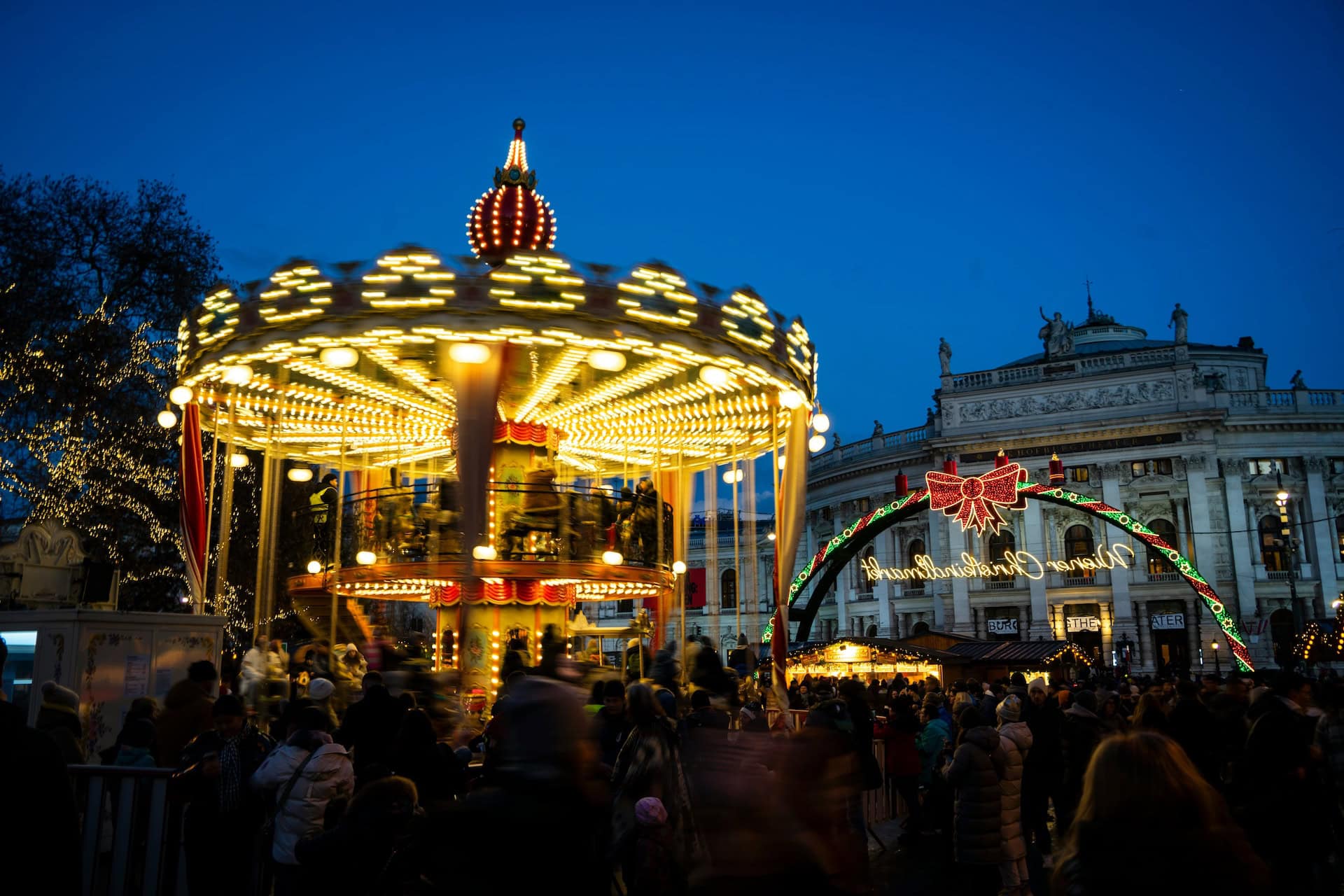
This is Vienna’s flagship — the one in every guidebook and on every postcard, and it earns that status. The neo-Gothic Rathaus façade, recently restored after a decade-long renovation, glows against the night sky in a way no photo fully captures.
With 150-plus stalls, Europe’s largest seasonal ice rink, and the Märchenbahn miniature railway for kids, it delivers the full Christmas-market fantasy.
Go here if: You want the unmistakable “I’m at a Vienna Christmas market” moment. Weekday afternoons are the only sane time to visit — weekend evenings turn into a shoulder-to-shoulder shuffle.
Skip this if: You care about food quality or authentic crafts. Many stalls sell mass-market commercial goods, and the food is uneven at best. Treat it as a spectacle, not a shopping or dining destination.
- Location: Rathausplatz, 1010 Vienna — U2 Rathaus station drops you right at the entrance.
- 2026 dates: November 13 – December 26.
- Insider move: Arrive by 3:30–4 pm on a weekday. You’ll catch the daylight atmosphere, see the lights come on at dusk (the real magic window), and leave before the 7 pm crush arrives.
Schönbrunn Palace Christmas Market
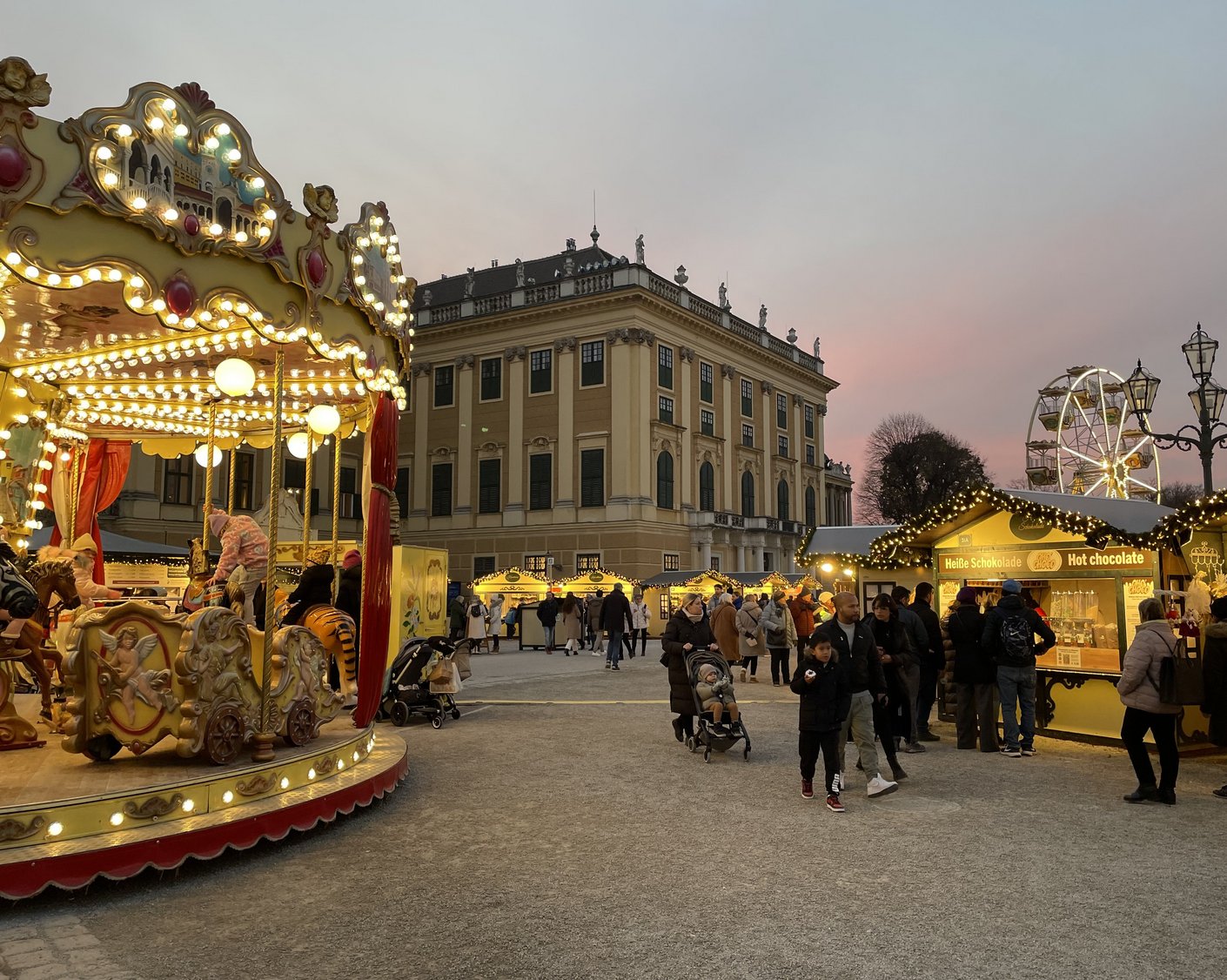
If you visit only one market outside the city center, make it this one. The Baroque yellow palace as a backdrop — lit up against the deep blue twilight, with a massive Christmas tree anchoring 75-plus stalls in a circle around it — is genuinely the most beautiful market setting in Vienna.
The whole complex also gives you a reason to spend a half-day here: the Vienna zoo, the Children’s Museum, and the palace grounds are all right there.
Go here if: You want the jaw-drop photo, a more relaxed crowd density than Rathausplatz, and a market that stays open into early January. Couples and photographers will love this one.
Skip this if: You’re on a tight budget. Prices at Schönbrunn run noticeably higher than city-center markets, and you’ll spend 15 minutes each way on the U4 metro to get here.
- Location: Schönbrunn Palace courtyard, 1130 Vienna — U4 Schönbrunn station.
- 2026 dates: November 6, 2026 – January 6, 2027 — the longest-running major market in Vienna. Hours: daily 10 am–9 pm.
- Insider move: Visit late afternoon into early evening. The palace lights up at dusk and the concert stage often has live performances — you get a full sensory experience that most day-trippers miss.
Spittelberg Christmas Market
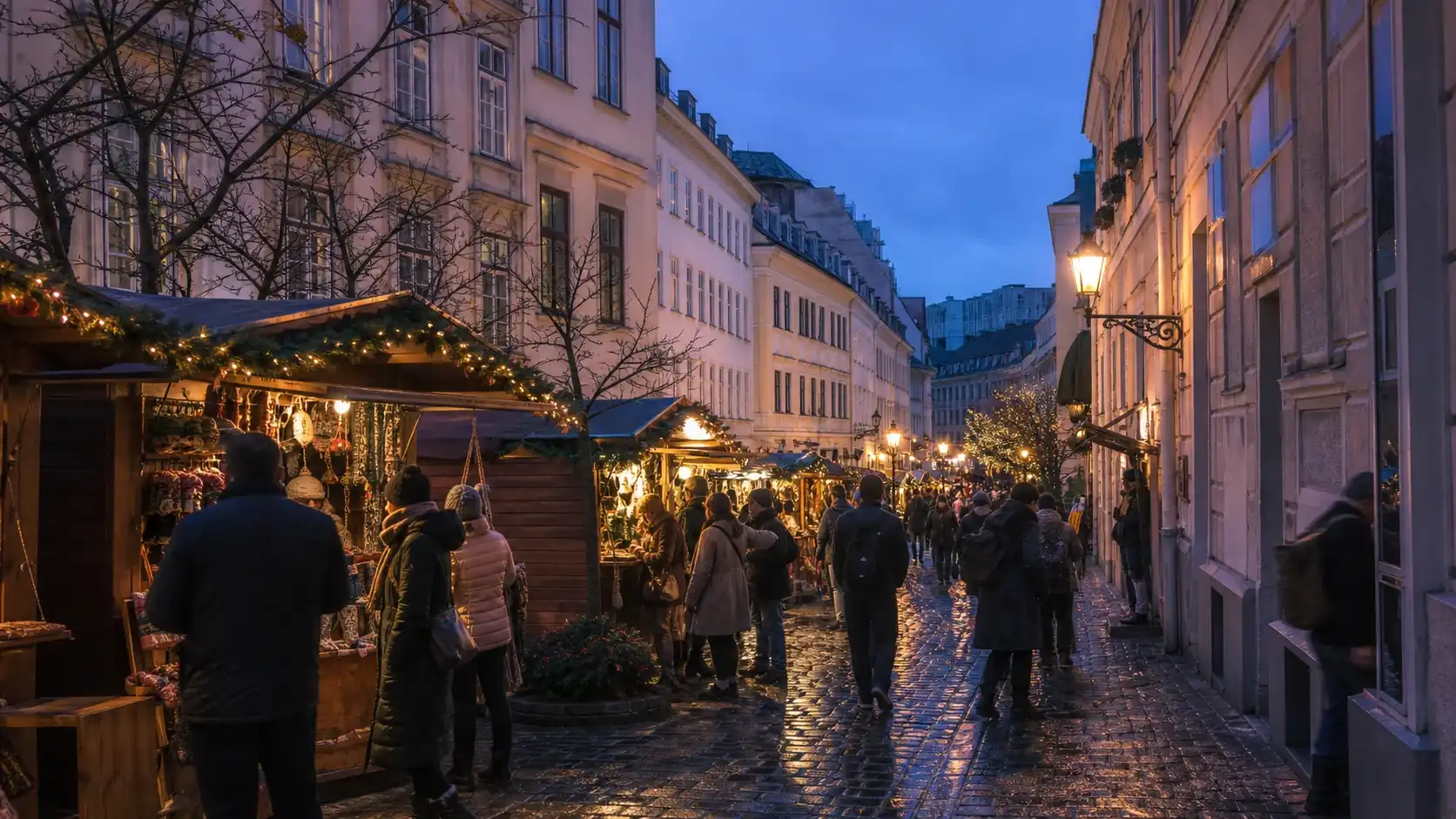
Spittelberg is the antidote to every criticism you’ll hear about Vienna’s big markets. Tucked into the narrow, cobbled Biedermeier streets of the 7th district — a 10-minute walk from the MuseumsQuartier — it trades spectacle for intimacy.
Stalls here lean heavily toward handmade crafts and artisan goods rather than mass-produced ornaments, and the surrounding streets are lined with independent cafés and small restaurants.
Go here if: You want to actually shop for unique gifts, eat well, and feel like you’ve discovered something beyond the tourist circuit. The neighborhood atmosphere — tiny lanes, painted façades, candlelit windows — is half the appeal.
Skip this if: You need grand visuals or traveling with young kids who want rides and entertainment. Spittelberg is for strolling and browsing, not spectacle.
- Location: Spittelberggasse and surrounding streets, 1070 Vienna — U2 MuseumsQuartier or U3 Volkstheater.
- 2026 dates: November 13 – December 23. This one closes earlier than most — don’t plan a late-December visit around it.
- Insider move: Come on a weekday evening. The lanes get packed on weekends because the space is genuinely small, and the charm disappears when you’re shuffling through a crowd.
Freyung (Altwiener Christkindlmarkt)
The Altwiener Christkindlmarkt at the Freyung is one of Vienna’s oldest Christmas markets, and it trades the neon-lit spectacle of Rathausplatz for something quieter and more traditional. Set in an elegant first-district square surrounded by historic buildings, it has a classic European-market feel — wreaths, wooden stalls, and the kind of mulled wine you actually want to stand and drink rather than hurry past.
Go here if: You want old-world atmosphere without the tourist crush. The Freyung sits in the heart of Vienna’s Innere Stadt, so you can fold it into a walking route with Am Hof and Stephansplatz easily.
Skip this if: You only have one evening and need maximum spectacle. Freyung rewards a slower pace — it’s a mood, not a show.
- Location: Freyung, 1010 Vienna — U2 Schottentor or a short walk from Herrengasse.
- 2026 dates: November 14 – December 23.
- Insider move: The stall selling traditional Austrian Lebkuchen (gingerbread) here is among the best quality you’ll find at any Vienna market — look for the hand-decorated hearts.
Am Hof (Weihnachtsmarkt)
Am Hof sits in one of Vienna’s most historic squares, just a few minutes’ walk from Freyung, and it carries a slightly more polished, upscale energy. The market focuses on higher-quality artisan goods and food, which means fewer tacky souvenirs and more stalls worth stopping at.
The Mariensäule (Mary Column) at the center gives the square a focal point that makes it feel curated rather than sprawling.
Go here if: You want a refined market experience close to the city center with better-than-average food stalls. It pairs perfectly with Freyung for a two-market evening walk.
Skip this if: You’re chasing the big, buzzy, all-singing Christmas experience. Am Hof is elegant, not exciting — save your energy for Rathausplatz if you want sensory overload.
- Location: Am Hof, 1010 Vienna — walkable from Freyung in about 5 minutes, or from Stephansplatz in 10.
- 2026 dates: November 13 – December 23.
- Insider move: Combine Freyung and Am Hof into a single evening. They’re close enough that you can browse both in 90 minutes, and the contrast — old-tradition Freyung, polished Am Hof — gives you a much richer picture than hitting only the big-name markets.
First-timer’s game plan: Start at Rathausplatz on a weekday afternoon for the iconic wow moment. Save Schönbrunn for a separate half-day.
Then hit Spittelberg, Freyung, and Am Hof over one or two evenings — they’re all central, walkable, and the real reason Vienna’s market scene goes deeper than most visitors ever discover.
Which Market is Best for Specific Interests?
Vienna’s Christmas markets are not interchangeable. Pick Rathausplatz when you actually wanted Spittelberg’s artisan-heavy lanes and you’ll spend an evening elbowing through crowds for mass-produced ornaments.
Matching the market to what you care about is the single decision that shapes your entire experience.
| Interest | Go Here | Why It Wins |
|---|---|---|
| Stunning views & setting | Schönbrunn | Baroque palace backdrop — no close second |
| Unique handmade gifts | Karlsplatz | Highest craft integrity: wood carvings, pottery, art |
| Families with young kids | Altes AKH | Spacious layout, provincial food stalls, relaxed pace |
| Avoiding crowds | Spittelberg | 7th-district alleys, manageable even on weekends |
| Traditional food & drink | Freyung / Karlsplatz | Less tourist-driven stalls, Austrian-province specialties at Altes AKH |
Best for Stunning Views & Settings
Schönbrunn wins this category outright. The Baroque yellow palace lit up behind 60–80 stalls creates a backdrop no inner-city square can match — especially after dark.
The trade-off is a 15-minute U-Bahn ride from the centre and prices that run above average. Go anyway.
Rathausplatz is the runner-up: the neo-Gothic City Hall is genuinely spectacular when illuminated, and the ice rink adds visual drama that’s hard to replicate. But crowd density works against you — it’s difficult to appreciate the setting when you’re shoulder-to-shoulder at 7 pm on a Saturday.
Best for Unique Handmade Gifts & Crafts
Karlsplatz is the clear winner for anyone who refuses to buy another mass-produced snow globe. Stalls here focus on high-quality art and handmade goods — think wood carvings, pottery, and original work from local artisans rather than factory imports.
The food leans traditional too, making it an easy two-hour visit without the pressure-cooker energy of Rathausplatz.
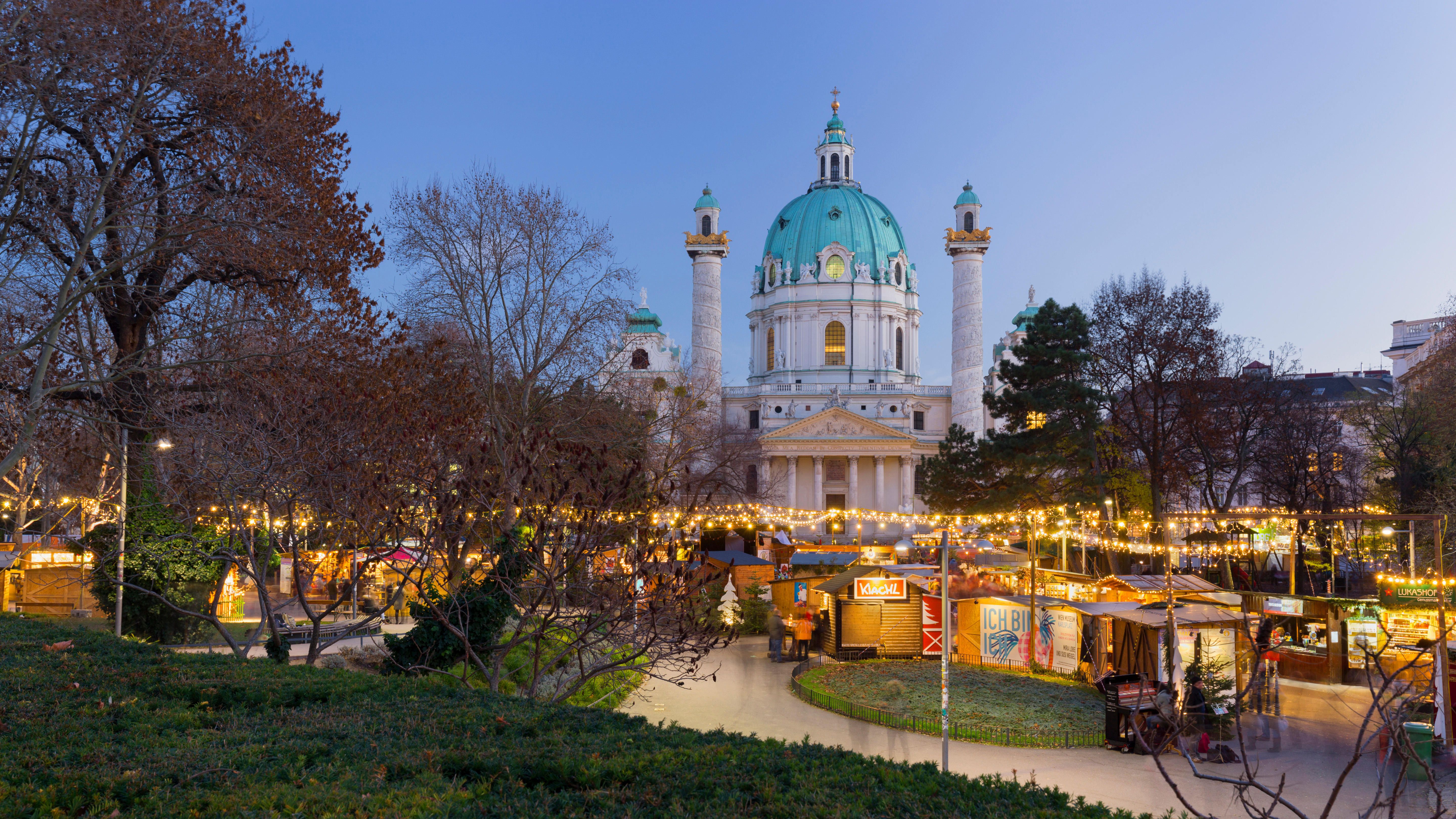
Spittelberg runs a close second for craft browsing, especially if you want it wrapped in atmospheric Biedermeier alleyways and fairy-lit lanes. The trade-off: it’s small (30–40 stalls) and food options are limited.
For maximum gift-shopping payoff, hit Karlsplatz first, then Spittelberg for anything you missed.
Best for Families with Young Children
Altes AKH is the family pick, and it’s not particularly close. Set on the old general hospital grounds — now part of the University of Vienna — it’s more spacious and laid-back than anything in the Innere Stadt.
The central plaza has stalls selling dishes from across Austria’s provinces, so picky eaters have real variety. Locals treat it as a weeknight gathering spot rather than a tourist attraction, which keeps the energy genuinely relaxed.
There’s also an indoor restaurant and several courtyard restaurants edging the market for sit-down meals when little legs need a break.
Rathausplatz is the other family draw thanks to its massive ice rink and Märchenbahn miniature railway. But weekend crowd levels make it stressful with strollers or small kids.
If you choose Rathausplatz with children, go on a weekday afternoon — or just default to Altes AKH for a calmer experience any day of the week.
Best for Avoiding Crowds & Tourists
Spittelberg is your best bet. The 7th-district location — a 10-minute walk from Volkstheater U-Bahn — filters out the casual tourists who never leave the Innere Stadt, and even on weekends the crowd level stays manageable.
The Biedermeier lane setting rewards you for the extra navigation.
Freyung offers a calmer alternative right within the Innere Stadt. The Baroque palace-lined square draws noticeably fewer tourists than Rathausplatz despite its central location.
Both markets benefit enormously from one simple tactic: arrive by mid-afternoon rather than evening. Most markets open from mid-morning, and the crowd-to-stall ratio shifts dramatically in your favor before 4 pm.
Best for Traditional Food & Drink
This is where most visitors get burned. Rathausplatz has 150+ stalls, but food quality is genuinely uneven — you’re more likely to end up with an overpriced mediocre sausage than something memorable. Skip it for dining.
Instead, Freyung and Karlsplatz deliver the strongest traditional food. Freyung offers a classic Viennese market experience within the Innere Stadt with stalls that lean traditional rather than commercial.
Karlsplatz follows the same philosophy — artisan-focused vendors where the food matches the craftsmanship standard of everything else on display.
The sleeper pick is Altes AKH. Its stalls feature dishes from across Austria’s provinces — not just Viennese standbys but regional specialties you won’t easily find elsewhere.
Combined with the on-site indoor restaurant and surrounding courtyard restaurants, it’s the market where you can actually sit down, eat well, and linger over a second mug of Punsch without fighting for a bench. If eating is a priority, build your evening around Altes AKH and use the central markets for atmosphere before or after.
What Are the Best Itineraries to See Multiple Markets?
Three markets in four hours is the sweet spot — anything more and you’re speed-walking past stalls instead of actually tasting the Glühwein.
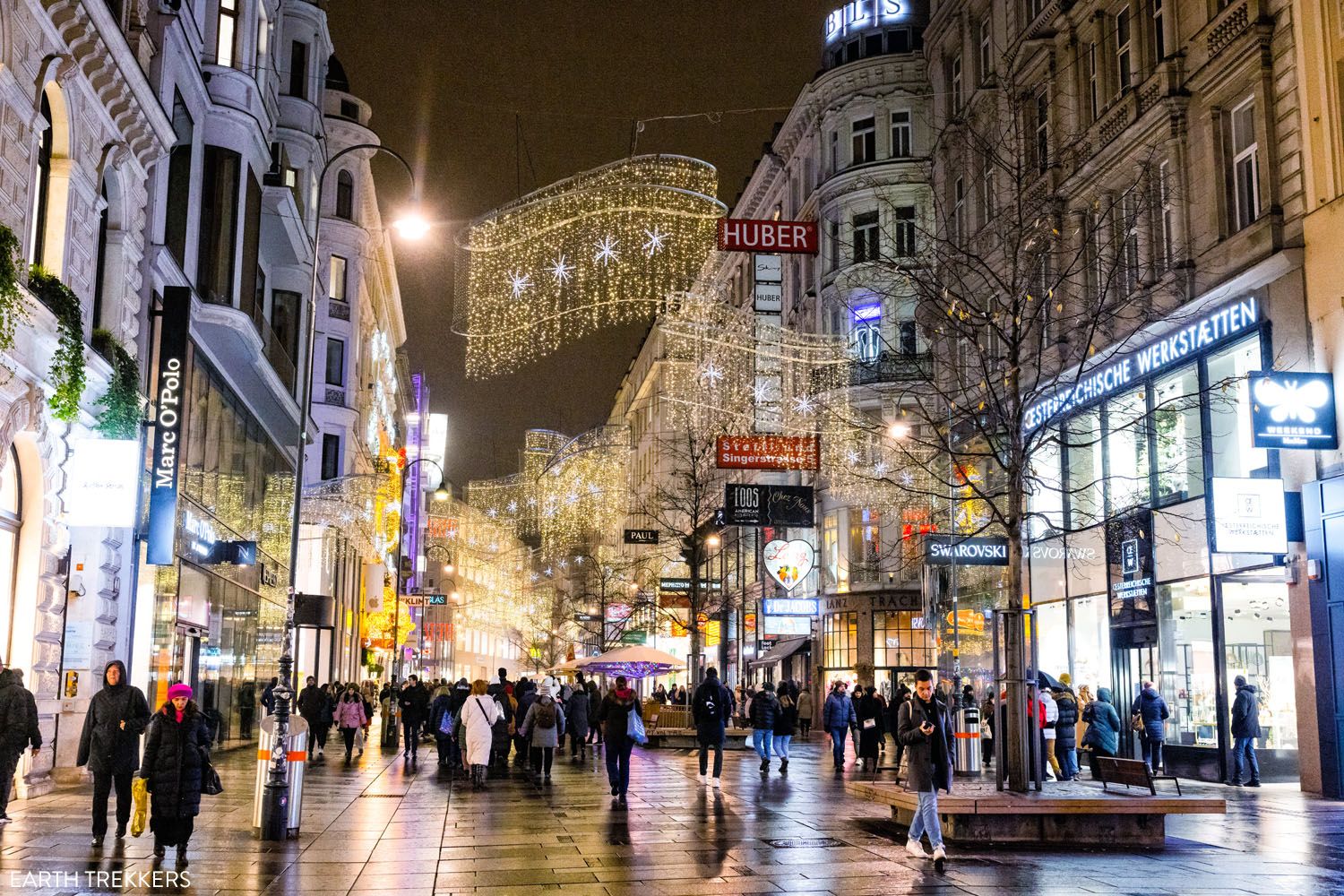
Vienna’s markets cluster in tight geographic groups, which means smart routing beats marathon sightseeing every time. These three itineraries eliminate backtracking and match the right pace to the right traveler.
| Route | Time Needed | Markets Covered | Best For | Pace |
|---|---|---|---|---|
| Central Cluster | 3–4 hours | 3–4 | First-timers, short stays | Leisurely walk |
| Palace & Village | Full day (6–8 hrs) | 2–3 | Couples, photographers | Moderate with tram |
| Family-Focused | 4–5 hours | 2–3 | Families with kids under 10 | Slow, kid-paced |
The Central Cluster: A Walking Tour
Start at Freyung around 11 a.m., when the Altwiener Christkindlmarkt opens and the crowds haven’t arrived yet. This is Vienna’s oldest market and the best place to buy actual handcrafted ornaments before the afternoon rush turns it into a shuffle.
Walk five minutes south to Am Hof, which typically runs a slightly different vendor mix and offers more breathing room. From there, it’s another ten-minute stroll to Rathausplatz — save this for last so you hit it as the City Hall lights come on around 4 p.m. in early December.
If you have energy left, tack on the short detour to Spittelberg’s winding streets just west of the MuseumsQuartier. The market there runs on a different schedule than the central cluster — it typically opens at 2 p.m. on weekdays, 11 a.m. on weekends — so build that into your timing.
- Total walking distance: Roughly 2.5 km, all flat, all on pedestrian-friendly streets.
- Transport needed: None. This is a pure walking itinerary with U2 Rathaus or U3 Herrengasse as your entry points.
- When to start: 11 a.m. on a weekday gives you the lowest crowd density across all stops.
- Insider tip: The food stalls at Rathausplatz have the longest lines between 5–7 p.m. Eat at Am Hof or Freyung instead — shorter waits, often better quality.
Verdict: This is the itinerary for anyone staying two or three nights in central Vienna who wants to sample the range without dedicating a full day. Base yourself anywhere in the Innere Stadt (1st district) and you can walk back to your hotel between stops.
The Palace & Village Contrast Day Trip
Morning at Schönbrunn, afternoon at Spittelberg, evening at Rathausplatz — this route delivers the two most visually opposite experiences Vienna’s markets offer, with zero wasted transit time.
Take the U4 to Schönbrunn and arrive by 10:30 a.m. The palace courtyard market is medium-sized (60–80 stalls), but the Baroque yellow facade as backdrop makes it Vienna’s most photographed setting. You need roughly two hours here, including coffee at one of the palace cafés.
Head back toward the center on the U4, then transfer to the U2 or simply walk to the Spittelberg neighborhood — those narrow Biedermeier streets filled with artisan stalls feel like a completely different city. Spittelberg’s weekday hours typically begin at 2 p.m., which lines up perfectly with an early-afternoon arrival.
As evening sets in, walk east to Rathausplatz. By 5 p.m. the ice rink is fully lit and the Märchenbahn miniature train is running.
This is the only itinerary where you experience the same market at both a calm afternoon pace and the full electric nighttime atmosphere — and the contrast is worth it.
- Transport: U4 for Schönbrunn; the rest is walkable from the center. Expect roughly 15 minutes each way on the metro.
- Lunch strategy: Eat near the palace or in Spittelberg — Rathausplatz food stalls are the weakest option for sit-down meals.
- Total time: 6–8 hours depending on how long you linger at each stop.
Verdict: This is the strongest itinerary for couples and anyone who cares about photography and atmosphere over sheer volume of markets. Schönbrunn and Spittelberg couldn’t be more different — one is imperial grandeur, the other is cobblestone intimacy — and pairing them in a single day is the best use of your time in Vienna.
If you’d rather have someone handle the logistics, guided evening tours typically cover three markets in about two to two-and-a-half hours, with a local guide explaining traditions and stall history. Book in advance during peak weeks (mid-December), when tours fill up days ahead.
The Family-Focused Market Route
Start at Altes AKH, the university campus market that locals actually bring their kids to. It’s less polished than Rathausplatz, but that’s the point — the old hospital courtyard feels enclosed and safe, there’s more space for small children to move, and the pace is noticeably slower.
This market typically runs from mid-November through late December with weekday hours starting in the early afternoon.
From Altes AKH, walk or take a short tram ride into the center for Rathausplatz, timed for late afternoon when the ice rink opens and the miniature Märchenbahn train is running. The train alone buys parents 20 minutes of peace.
The large illuminated trees and City Hall backdrop deliver the “wow” moment kids remember.
- Why this order works: Kids have the most energy early; burn it at the calmer Altes AKH, then use the sensory spectacle of Rathausplatz to hold attention as fatigue sets in.
- Avoid weekends at Rathausplatz with a stroller. Weekday afternoons are manageable; Saturday between 4–7 p.m. is genuinely unpleasant with young children.
- Snack strategy: Skip the long food lines at Rathausplatz. The roasted chestnuts and Kartoffelpuffer (potato pancakes) at smaller markets like Altes AKH move faster and cost less — expect roughly €3–5 per snack at most stalls.
- If the kids are older (8+): Swap Rathausplatz for Schönbrunn. The palace setting impresses school-age children more than toddlers, and the courtyard layout is easier to navigate than the dense Rathausplatz grid.
Verdict: This two-stop route respects nap schedules and attention spans. Don’t try to add a third market — families who over-plan end up with cranky kids and zero memories. Two markets, well-paced, beats four markets in a blur every time.
When Is the Best Time to Visit Vienna’s Christmas Markets?
The difference between a magical evening stroll and an elbow-to-elbow shuffle comes down to roughly three hours of planning. Timing your visit — by date, time of day, and market choice — will shape your experience more than almost any other factor.
What Are the Season Dates for 2026/2027?
Vienna’s Christmas markets typically open in mid-November and run through late December. The major markets — Rathausplatz, Schönbrunn, Spittelberg, Freyung, and Am Hof — usually open around the second or third week of November and close on December 23rd or 26th, depending on the individual market.
Exact 2026/2027 dates are typically announced in September or October, so confirm with the Vienna tourism board before booking flights.
Opening day and the first weekend draw large crowds for ceremonial lightings and the novelty factor. For markets at full operation without peak crush, aim for the second or third week of the season — roughly November 20–30 is the sweet spot of full vendor coverage with manageable foot traffic.
Day vs. Night: When Is the Best Atmosphere?
This isn’t a close call — you need both windows, but for completely different reasons.
- Daytime (10 a.m.–4 p.m.): Best for shopping artisan crafts at Spittelberg or Freyung, where you can actually see material quality and talk to vendors. Food lines are shorter, and the Schönbrunn market against the palace facade looks best in afternoon golden light.
- Evening (5 p.m.–9 p.m.): The lights, the music, the full sensory hit — this is what you came for. Rathausplatz becomes genuinely magical after dark with the ice rink and illuminated tree. Am Hof and the smaller neighborhood markets feel cozy and atmospheric under lamplight.
The move: shop by day, drink by night. Hit two or three markets in the afternoon, return to your hotel to rest and warm up, then come back out for the evening atmosphere at one or two favorites.
Staying in the Innere Stadt (1st district) keeps you within walking distance of multiple markets for this kind of split-day rhythm.
How to Avoid the Biggest Crowds
No Vienna market stays empty — but you can beat the worst of it with timing and smart market selection. Here are the four moves that matter most:
- Go early in the day. Many markets open from mid-morning, and the first two hours are noticeably calmer. You’ll get cleaner photos, shorter waits for Punsch, and space to actually browse.
- Skip Rathausplatz on weekend evenings. It’s the most popular market and the most tourist-heavy at peak hours. Visit on a weekday morning instead — you still get the ice rink and grand setting without the gridlock.
- Prioritize Spittelberg and the outer-district markets. Spittelberg in the 7th district draws a Viennese clientele rather than international tour groups — smaller scale, artisan focus, neighborhood character. The markets in Ottakring and Floridsdorf are even quieter if you want a genuine local experience.
- Avoid opening weekend and the final days before Christmas. These are the two most packed windows of the entire season. The second and third weeks are reliably less intense.
Insider detail: Locals gather at the market at the Altes AKH, which has a large central plaza, its own indoor restaurant, and provincial Austrian food stalls. It feels like a neighborhood evening out, not a tourist attraction — add it if you want to see how Viennese residents actually experience the season.
What Practical Tips Do You Need Before You Go?
The most crucial tip: your greatest enemy is time, not distance. A fifteen-minute walk between markets in Vienna’s historic center can consume an hour if you stop for photos, a Punsch, and a gift—which you absolutely should. Plan for that.
How Do You Get Between the Markets?
Forget the bus or tram for the Innere Stadt (1st district) cluster—Rathausplatz, Freyung, Am Hof, and the others are best connected on foot. For Spittelberg, take the U2 to Volkstheater and walk ten minutes.
To reach Schönbrunn, the U4 metro is direct and takes about 15 minutes from the city center.
- Buy a Vienna City Card if you’ll also use public transport for sightseeing. It offers unlimited travel and discounts at some museums and shops. A standard 24-hour ticket (€8) covers most short journeys.
- Use Vienna’s Citybike system for quick hops between clusters if the weather is dry. The first 30 minutes are free; docks are everywhere near market sites.
What Should You Eat and Drink?
Prioritize warm, handheld classics over a full meal. The lines for a table sit-down will kill your market-hopping momentum.
- Punsch (hot punch): The signature market drink. It’s sweet, potent, and served in a collectible ceramic mug with a deposit (Pfand) of about €3-€4. Returning the mug gets your money back; keeping it is a popular souvenir.
- Bratapfel (baked apple): A whole roasted apple filled with nuts, raisins, and rum sauce. It’s a warm, less messy alternative to a handheld sausage.
- Kartoffelpuffer (potato pancake): Crispy, served with applesauce or sour cream. A solid, savory choice.
- Insider snack tip: For the best local food variety in one stop, head to the Altes AKH market. Its central plaza has stalls representing different Austrian provinces, so you can sample Käsekrainer (cheese sausage) from Styria and Kiachl (fried dough) from Tirol in the same square.
What Should You Buy as Souvenirs?
Focus on handcrafted goods you can’t find in a typical tourist shop. Avoid stalls selling the same mass-produced ornaments and knit hats you see everywhere.
- Quality over quantity: The Spittelberg market (around Spittelberggasse) is your best bet for high-quality, handmade crafts from local artisans. Look for leather work, hand-printed textiles, and unique ceramics.
- Lebkuchen (gingerbread): Buy a decorated heart at Rathausplatz for the iconic photo, but get your edible ones from a stall at Freyung or a smaller market—often better quality and less sugary.
- Decorative candles and beeswax ornaments: A classic, lightweight gift. You’ll find beautiful ones at the Am Hof market.
What’s the Best Way to Handle Cash & Deposits?
Cash is still king at the stalls, but having smaller notes is key. Many vendors get flustered with a €50 note for a €3 drink.
- Withdraw €50-€100 in small notes (€10, €20) from an ATM when you arrive. This will cover most Punsch, food, and small purchases.
- Keep a separate pocket or pouch for Pfand (deposit) coins. You’ll accumulate a collection of €3-€5 coins from mug returns. Use these for your next drink instead of breaking another note.
- Cards are accepted at most larger food stalls and bars, but the small craft vendors and some food-only booths often remain cash-only. Don’t risk being without physical money.
Quick-Reference: Practical Market Tip Comparison
| Need | Best Option | Why |
|---|---|---|
| Transport between city markets | Walking | Markets are clustered; transit wait times often exceed walk times. |
| Best food variety | Altes AKH market | Stalls showcase specialties from all Austrian provinces in one plaza. |
| Authentic souvenirs | Spittelberg market | Focus on local artisans over commercial stalls; worth the short metro hop. |
| Cash management | Withdraw small notes on arrival + use Pfand coins for drinks | Avoids vendors refusing large notes; reuse deposit coins efficiently. |
Where Should You Stay to Be Close to the Markets?
Six major markets sit inside a 20-minute walk of each other in Vienna’s core. Choose your neighbourhood based on which cluster matters most — and how much you’re willing to spend for the convenience of rolling out of bed straight into mulled wine.

Best Neighborhoods for Market Access
Innere Stadt (1st District) is the no-brainer for first-timers. Rathausplatz, Karlsplatz, Stephansplatz, Freyung, Am Hof, and Michaelerplatz all fall within or on the border of this district.
Walk out after dark, hit three markets, wander back — no transit required. The trade-off: hotel rates run 30–50% higher here from mid-November through late December compared to outer districts, and rooms book out earlier.
If the Innere Stadt is your target, book by September.
Neubau / Spittelberg (7th District) is the better pick if you care about atmosphere over proximity. You’re 15 minutes on foot from Rathausplatz, but you come home to Biedermeier alleyways, independent restaurants, and the artisan Spittelberg market right outside your door.
Boutique hotels and well-reviewed apartments dominate here, often at meaningfully lower rates than the 1st district.
Josefstadt (8th District) sits just west of the Innere Stadt and puts Rathausplatz within a 10-minute walk. Quiet, residential, fewer tourists — a practical base if you’re spending evenings at markets rather than lingering at the hotel.
Rates are noticeably gentler than the 1st.
Wieden / Margareten (4th/5th Districts) works for budget-conscious travellers who don’t mind a short U-Bahn ride. Karlsplatz market is walkable; the U1 or U2 connect you everywhere else in 10–15 minutes.
Apartment-style stays here are significantly cheaper and come with kitchens — useful for breakfast before a long market day.
| Neighbourhood | Walk to Markets | Vibe | Budget Range |
|---|---|---|---|
| Innere Stadt (1st) | Under 20 min to 6+ markets | Tourist-central, maximum convenience | $$$$ |
| Spittelberg/Neubau (7th) | 15 min to Rathausplatz & Karlsplatz | Local, artsy, candlelit streets | $$–$$$ |
| Josefstadt (8th) | 10 min to Rathausplatz | Quiet residential, underrated | $$–$$$ |
| Wieden/Margareten (4th/5th) | Walk to Karlsplatz; U-Bahn for rest | Budget-friendly, local neighbourhoods | $–$$ |
Hotel Recommendations for Different Budgets
During market season, Vienna’s hotel market tightens fast. Here’s how to approach booking by tier:
- Budget (under €100/night): Look for aparthotels and private rentals in Wieden, Margareten, or Favoriten (10th district). You’ll trade walkability for space and a kitchen. Hostels like Wombat’s and MEININGER cluster near the Hauptbahnhof — a 10-minute tram ride to most markets. Book these by October at the latest.
- Mid-range (€100–€200/night): This is where the 7th and 8th districts shine. Small boutique hotels and pension-style guesthouses in Spittelberg and Josefstadt deliver charm at half the Innere Stadt price. Many include breakfast — a genuine perk when market food skews toward afternoon and evening. Expect mid-range central rooms to disappear by early November for peak weekends.
- Upper mid-range (€200–€350/night): Innere Stadt boutique hotels become accessible at this tier. Prioritise properties within the Ring — you’ll step outside to Stephansplatz or Graben within minutes. Request an upper floor facing away from the street; December nights in the 1st district get loud until midnight.
- Luxury (€350+/night): The classic grande dame hotels — the Sacher, the Bristol, Hotel Imperial — sit directly on the market route along the Ringstraße and Kärntner Straße. At this level, you’re paying for location that eliminates all transit planning. Concierge desks routinely arrange private market tours and can secure restaurant reservations that are otherwise impossible during December.
Insider booking tip: Vienna hotels regularly drop prices for stays that begin Sunday through Wednesday and spike Thursday through Saturday during market season. If your dates are flexible, arriving on a Sunday and leaving Thursday morning can save 20–30% on the same room that costs far more over a Friday–Saturday window.
Frequently Asked Questions
How many markets can I realistically visit in one day?
Three to four is the sweet spot — any more and you’re rushing past hand-carved ornaments without stopping. Rathausplatz, Freyung, and Am Hof sit within a 15-minute walk of each other and form a natural afternoon cluster.
Add Spittelberg or Karlsplatz if you want variety, but factor in tram or walking time (about 15 minutes southwest from the center). Trying to hit six or seven in one day turns holiday magic into a checklist marathon.
Which Christmas market is least touristy?
Spittelberg, in the 7th district, wins easily. Narrow Biedermeier streets, artisan stalls, and a Viennese clientele give it a neighborhood feel that Rathausplatz cannot touch.
Freyung is a close second — the Altwiener Christkindlmarkt sits in a quieter square and draws fewer international tour groups. For the truly crowd-averse, outer-district markets in Ottakring and Floridsdorf are almost entirely local, though they’re farther out and less polished.
Are any markets open after December 24th?
Yes, but your options thin out fast. Schönbrunn Palace Christmas Market stays open through January 6, 2027 — the longest-running by far.
Belvedere Palace typically runs through December 31. Rathausplatz, Stephansplatz, Maria-Theresien-Platz, and Michaelerplatz usually stay open through December 26.
Most smaller markets — Spittelberg, Freyung, Am Hof, Altes AKH, Karlsplatz — close on December 23. Confirm exact dates before booking, as they shift slightly each year.
Is the food at the Christmas markets worth it?
Yes, with one caveat: the big-name stalls at Rathausplatz lean toward tourist pricing and mediocre quality. The real food wins are at Spittelberg and Altes AKH, where stalls sell regional specialties from across Austria’s provinces.
Altes AKH also has its own indoor restaurant if you want a sit-down meal between mulled wine rounds. Stick to stalls where locals are queuing — if the line is all selfie sticks, keep walking.
Expect roughly €5–12 per dish and €4–6 for Glühwein or Kinderpunsch, though prices vary by market and stall.
What unique Austrian traditions should I look for?
Every market serves Kinderpunsch — a non-alcoholic warm punch designed for children, but genuinely delicious for adults taking a Glühwein break. Look for Lebkuchen (iced gingerbread hearts, often with personalized messages), Krapfen (filled doughnuts), and Käsekrainer (grilled cheese sausage).
At Spittelberg, you’ll find genuine handmade crafts — blown glass, woodcarvings, ceramics — rather than mass-produced ornaments. At Rathausplatz, the ice rink and Märchenbahn miniature railway are distinctly Viennese traditions that run every season.
Do I need to book tickets or tours in advance?
No. Vienna’s Christmas markets are free to enter — no tickets, no reservations, no timed entry. That said, arriving within the first hour of opening is the single best hack for avoiding crowds, especially at Rathausplatz and Schönbrunn.
Guided market-hopping tours exist and can be worth it if you want historical context, but they’re entirely optional — the self-guided walking route in this article covers the same ground on your own schedule.
Pick Your Markets and Go
Start by choosing two or three markets from the guide that match your priorities — Rathausplatz for the wow moment, Spittelberg or Karlsplatz for real crafts, Altes AKH for family ease — and anchor each one to a specific evening or afternoon on your calendar.
Book your hotel in the Innere Stadt or Spittelberg neighborhood by September, because December rooms at walkable addresses vanish fast once prices spike.
Vienna’s market scene offers a depth and variety that no other European capital even attempts, and the difference between a great trip and a forgettable one is simply knowing which market to walk into first.
Start planning your Vienna Christmas market trip now — pin this guide, share it with your travel partner, and lock in those dates before the season fills up.
Leave a Reply