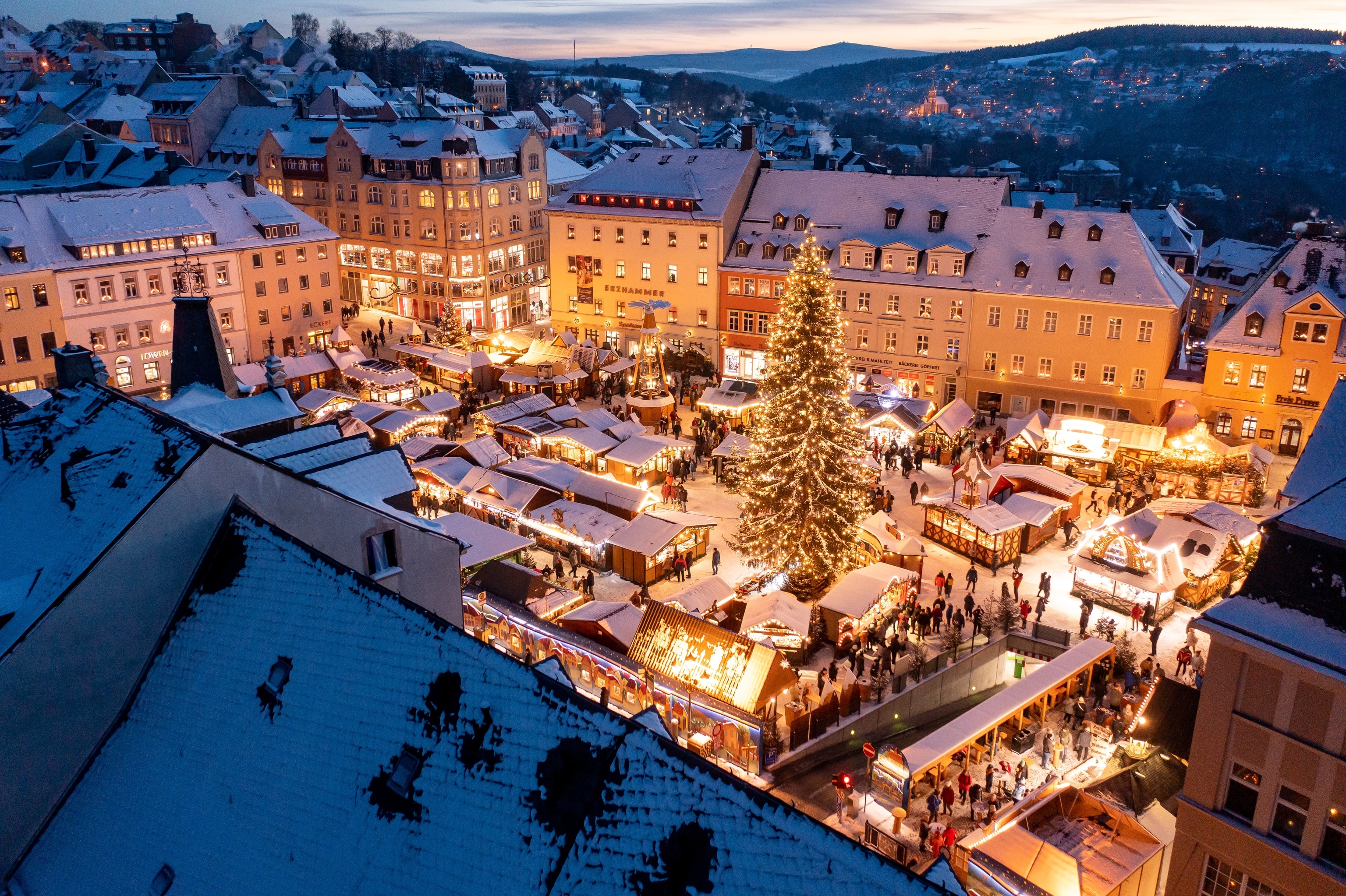
The scent of roasting nuts and mulled wine hangs in the cold air, mixing with the sound of brass choirs echoing off half-timbered houses. This is the sensory overload of a German Christmas market, a tradition so ingrained it feels less like an event and more like the country’s seasonal heartbeat.
Unlike festive attractions elsewhere, Germany’s markets are authentic community gatherings rooted in centuries of regional craft and hyper-local food traditions. This guide cuts through the noise to help you choose your perfect Christmas town, from storybook villages to grand city spectacles.
Expect a mid-range trip, with budget options around $100-150 daily for guesthouses and market food, splurge stays at $250+ in iconic hotels, and all the free magic of wandering the decorated stalls.
Why Should You Consider Germany for Christmas?
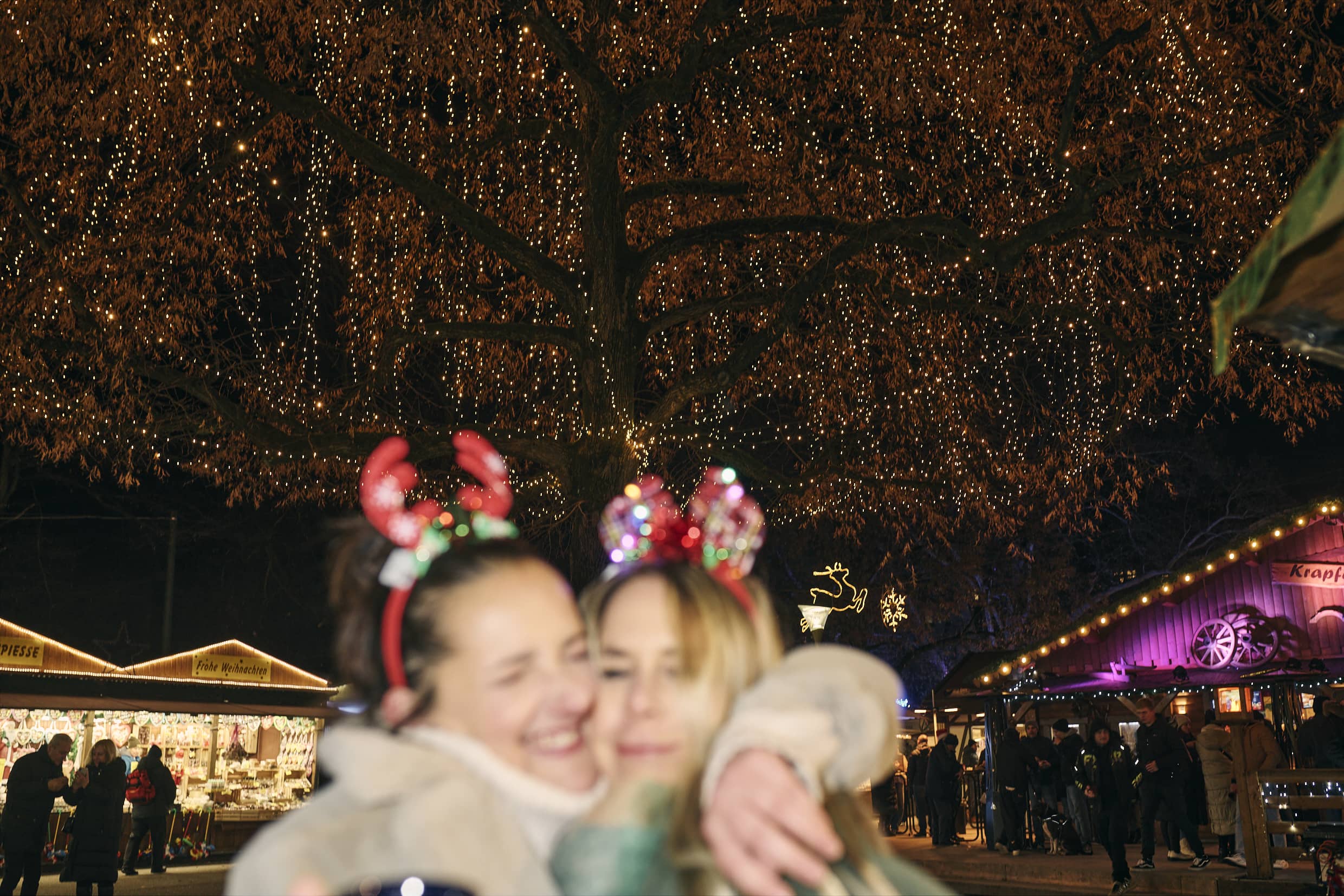
Germany’s Christmas markets aren’t a single destination—they’re a nationwide tradition embedded in the stone of medieval squares and the frost of alpine villages, offering a festive season built on centuries of craft, specific regional foods, and a cultural rhythm that prioritizes Christmas Eve over Christmas Day.
What Makes German Christmas Markets Legendary?
The legendary status isn’t marketing—it’s historical depth and sensory immersion. These markets, or Weihnachtsmärkte, function as the nation’s seasonal living rooms.
You’re not just shopping; you’re participating in a tradition that in cities like Nuremberg and Dresden spans back hundreds of years.
The core experience is consistent across thousands of markets, but the quality and focus shift by region:
- Atmosphere: Wooden stalls (Stüberl) clustered in historic squares, the scent of mulled wine (Glühwein), roasting nuts, and the sound of brass choirs. Many feature live nativity scenes and historic carousels.
- Craftsmanship: The focus is on handmade goods, not mass-produced souvenirs. Look for traditional Räuchermännchen (incense smokers), Pyramid (wooden candle arches), and hand-blown glass ornaments from the Ore Mountains region.
- Food & Drink: This is a central pillar. Beyond Glühwein, each region has a signature sausage—try Nürnberger Bratwürste in Nuremberg or a Thüringer Rostbratwurst elsewhere. Sweet stalls sell Lebkuchen (spiced gingerbread, especially from Nuremberg) and Stollen, Dresden’s dense fruit bread dusted with powdered sugar. Goslar even builds an artificial Christmas Forest of real pines amidst its stalls.
- Accessibility: Markets aren’t reserved for major cities. Expect one in almost every town and village, each with its own character—smaller ones often feel more authentic and less crowded.
The Insider Detail: The collectible Glühwein mug is different for every market and year. Your first drink includes a deposit (Pfand), usually €2-3.
Keep the mug as a free souvenir or return it for your deposit. Starting a collection is part of the tradition.
How Does Christmas in Germany Differ From What You Might Expect?
As an American visitor, the holiday’s rhythm will feel familiar in some ways and reversed in others. Understanding these differences prevents confusion and lets you experience the season as locals do.
- The Main Event is Christmas Eve (Heiligabend): This is the pinnacle. Families gather on the evening of December 24th for the big meal (often roast goose or duck), exchange gifts, and attend church. The 25th and 26th are national public holidays for relaxing and visiting extended family—quiet days when shops are closed and public transport runs on a holiday schedule.
- Advent is the Season, Not Just Christmas Day: The entire four-week Advent period leading up to Christmas is celebrated. Each Sunday, families light candles on their Adventskranz (wreath). Many calendars with 24 doors count down the days. The markets typically run from late November until December 23rd.
- The Food is Hyper-Regional: Don’t expect one “German Christmas dinner.” The centerpiece is often Weihnachtsgans (roast goose) or duck with red cabbage and dumplings, but in some coastal areas, carp is traditional. The sweet side is equally regional—Bavaria has Dampfnudeln (sweet dumplings) while the Rhineland favors Printen spiced cookies.
- A Quieter, More Reflective Tone: While bustling, the atmosphere leans more toward cozy and traditional than overtly commercial or jolly in the American sense. It’s built around Gemütlichkeit—a feeling of warmth, friendliness, and contentment, best experienced with a warm mug in hand in a cold square.
Planning your trip around these key dates—arriving by the first week of Advent and staying through December 23rd—ensures you capture the heart of the German Christmas experience before it quietly shifts into the private family days of Christmas Eve and beyond.
When Is the Best Time to Visit for Christmas Towns?
The first three weeks of December deliver Germany’s Christmas market magic at its peak—full schedules, buzzing crowds, and the festive energy of the Advent season. Plan for mid-December if you want the quintessential experience without the closures and quiet that arrive with Christmas week.
Should You Visit Before Christmas Eve or After?
Before. Without question.
Most Christmas markets close on or shortly before December 24th. A trip planned for the week between Christmas and New Year will find the stalls dismantled, the squares dark, and the festive atmosphere gone.
The main event for Germans is Christmas Eve itself, when gifts are exchanged and families gather—this is not a public spectacle like the markets.
The verdict: Book your trip to end by December 23rd at the latest. The 25th and 26th are public holidays in Germany; shops close, public transport runs on a reduced schedule, and restaurants are often fully booked with pre-reserved holiday meals.
You’ll experience more closures than celebrations.
What Are the Key Dates for Advent & Market Openings?
Advent begins four Sundays before Christmas, typically in late November. Most markets officially open in the last week of November or the very first days of December.
They run daily until December 23rd, though exact opening and closing dates vary significantly by city and change each year.
Your single most important booking step: Verify the exact dates for the specific market(s) on your itinerary on their official website before booking any flights or hotels. This is non-negotiable.
- Late November: Markets open. The first weekend of Advent is a popular start.
- Early to Mid-December: The sweet spot. All markets are fully operational, holiday spirit is high, and you avoid the last-minute crush.
- Week of Christmas (Dec 24-26): Markets are closed. The country enters private, family-focused celebration. Public life is minimal.
- Post-Christmas: Not recommended for market-goers. Some larger cities like Cologne or Berlin may have a few leftover stalls, but it’s a fraction of the December experience.
How Early Should You Book Flights and Hotels?
Early. For peak December dates, book flights and accommodations at least 4-6 months in advance, especially for popular base towns like Rothenburg ob der Tauber, Nuremberg, or the Black Forest villages.
Last-minute bookings in December mean inflated prices and slim pickings.
Flight Insight: Frankfurt (FRA) and Munich (MUC) are the two major US gateways. Both connect efficiently by train to the Christmas town clusters covered in this article.
Cologne and Düsseldorf are quick hops from Frankfurt; Nuremberg and Rothenburg are easiest from Munich.
Hotel Strategy: For towns like Quedlinburg, Goslar, or Berchtesgaden, accommodation is limited and in high demand. Prioritize booking your lodging immediately after confirming your market dates.
Consider staying in a nearby larger city (like Hannover for Goslar) only if you’re comfortable with a 1-hour train ride each way—the trade-off is less evening magic when markets close at 8 or 9 PM.
Insider Booking Tip: Germany’s rail network (Deutsche Bahn) is the best way to travel between towns in December—reliable, scenic, and less stressful than driving on winter roads. Book train tickets early online for the best fares, as last-minute prices jump significantly.
For a stay in Dresden, the Hotel Taschenbergpalais Kempinski puts you steps from the Striezelmarkt and offers a courtyard ice rink. In Cologne, the Excelsior Hotel Ernst am Dom provides direct cathedral views and a Michelin-starred restaurant.
| Planning Factor | Recommendation |
|---|---|
| Ideal Travel Window | First 3 weeks of December (ends Dec 23rd) |
| Market Check | Confirm exact dates on official city market websites before booking |
| Booking Lead Time | Flights & hotels: 4-6 months ahead for peak dates |
| Best Transport | Train (book early via bahn.de) over rental car |
| Packing Must | Layers, waterproof shoes, warm gloves (expect 32-45°F/0-7°C) |
The Quintessential Medieval Christmas Towns
Forget modern skylines — these towns are frozen in time, with half-timbered houses draped in snow and markets that feel like stepping into a living storybook.
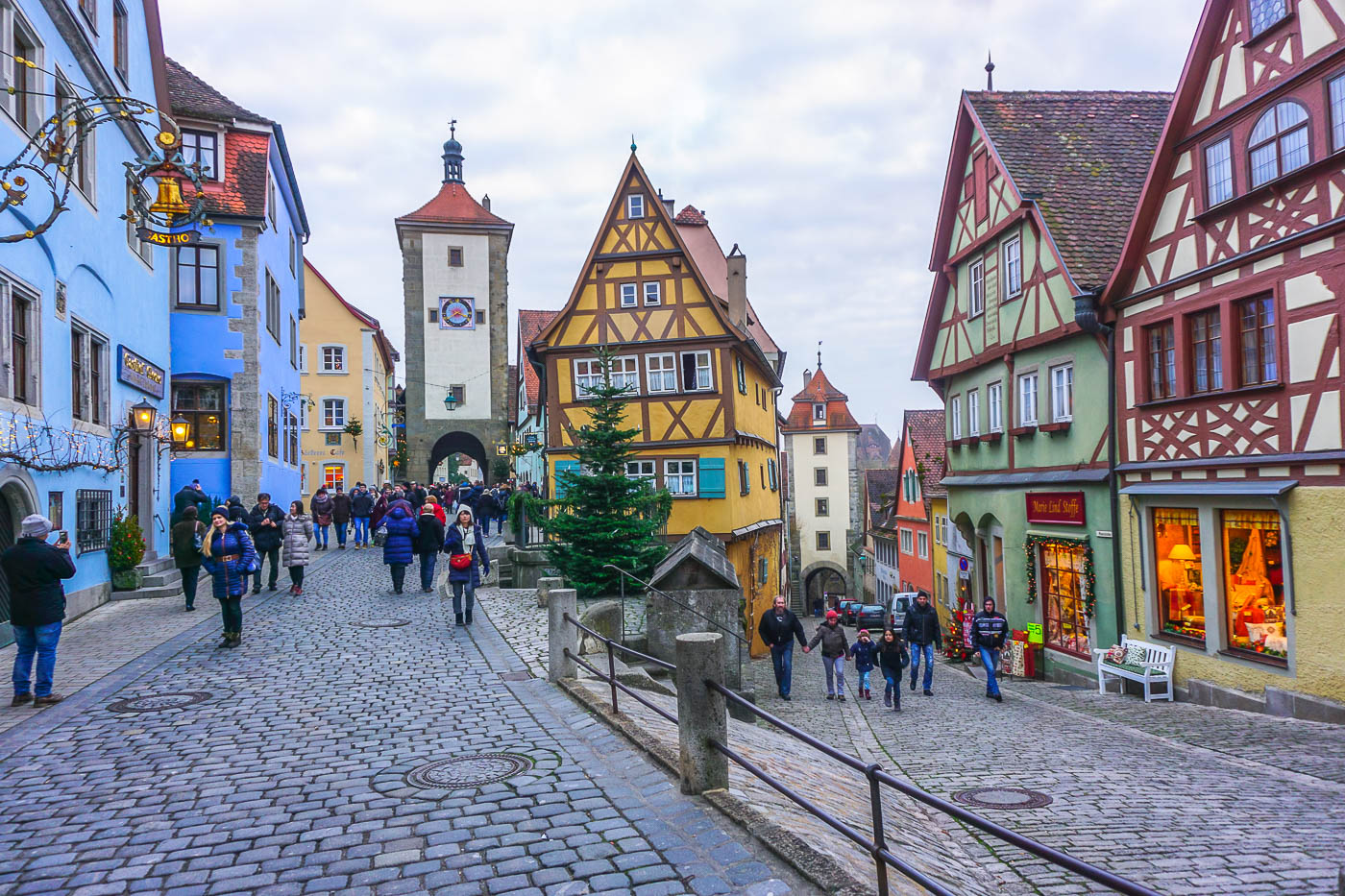
Rothenburg ob der Tauber: Germany’s Fairytale Christmas Village
This walled Bavarian town is the postcard version of a German Christmas, and its Reiterlesmarkt is the reason most couples and families put it on their list. It’s impeccably preserved, walkable, and absolutely magical. The trade-off is crowds; it’s no secret.
- Best for: First-time visitors and couples wanting the iconic, storybook Christmas atmosphere.
- Don’t miss: The Night Watchman’s Tour. It’s the single best way to hear the town’s history after the day-trippers leave.
- Stay: Book a room inside the walls at a boutique hotel like Hotel Herrnschloesschen to experience the town at dawn and dusk when it’s quietest.
- Insider move: Visit on a weekday in early December. Weekends are packed. Book your hotel months in advance — rooms sell out fast.
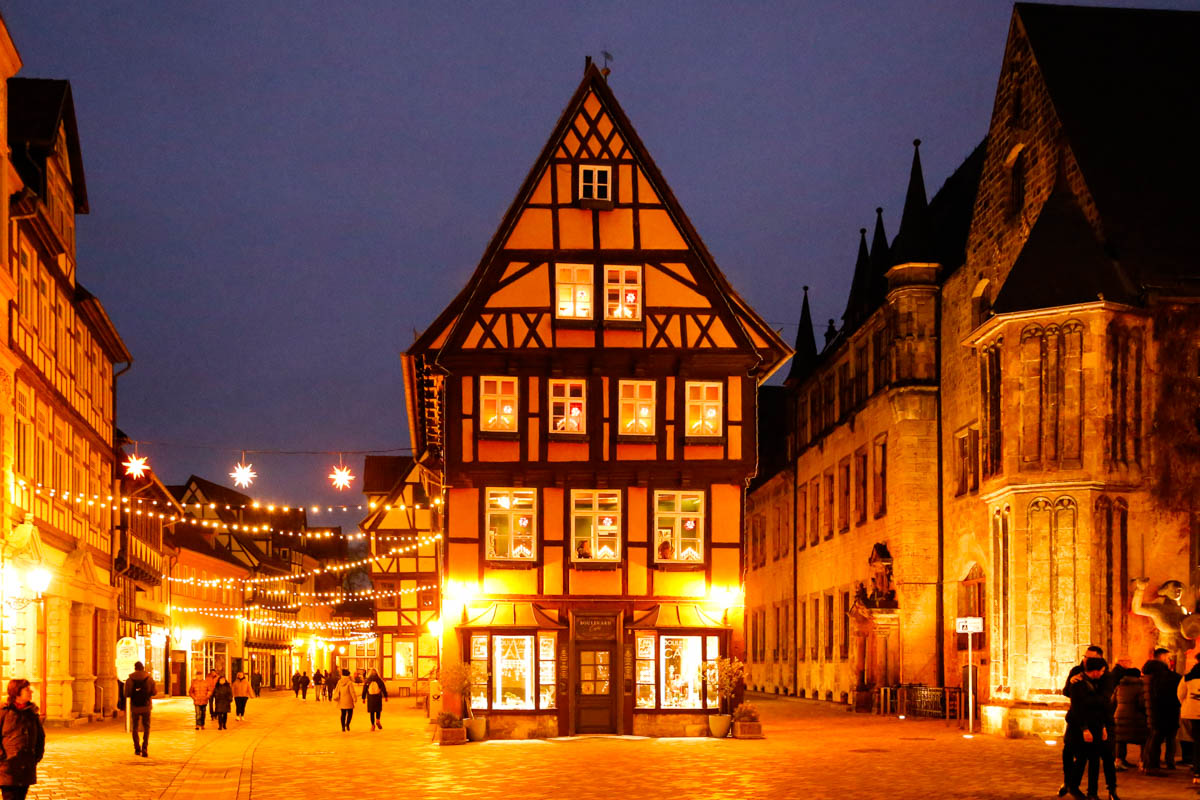
Quedlinburg: Walk Through a UNESCO World Heritage Advent Calendar
With over 2,000 half-timbered houses spanning eight centuries, Quedlinburg’s Old Town is a UNESCO site that transforms into a real-life Advent calendar each December. A new festive scene is unveiled on the town hall each day, making it a standout cultural experience beyond the market stalls.
- Best for: History lovers and anyone seeking a deeply authentic, less commercialized atmosphere.
- Key difference: The vibe is quieter and more residential than Rothenburg. You’re visiting a living town, not just a tourist attraction.
- Stay: Prioritize a guesthouse or hotel directly in the Old Town square for the best experience.
- Note: This town is mentioned as a crowd-free option in another section of this article for good reason — it delivers.
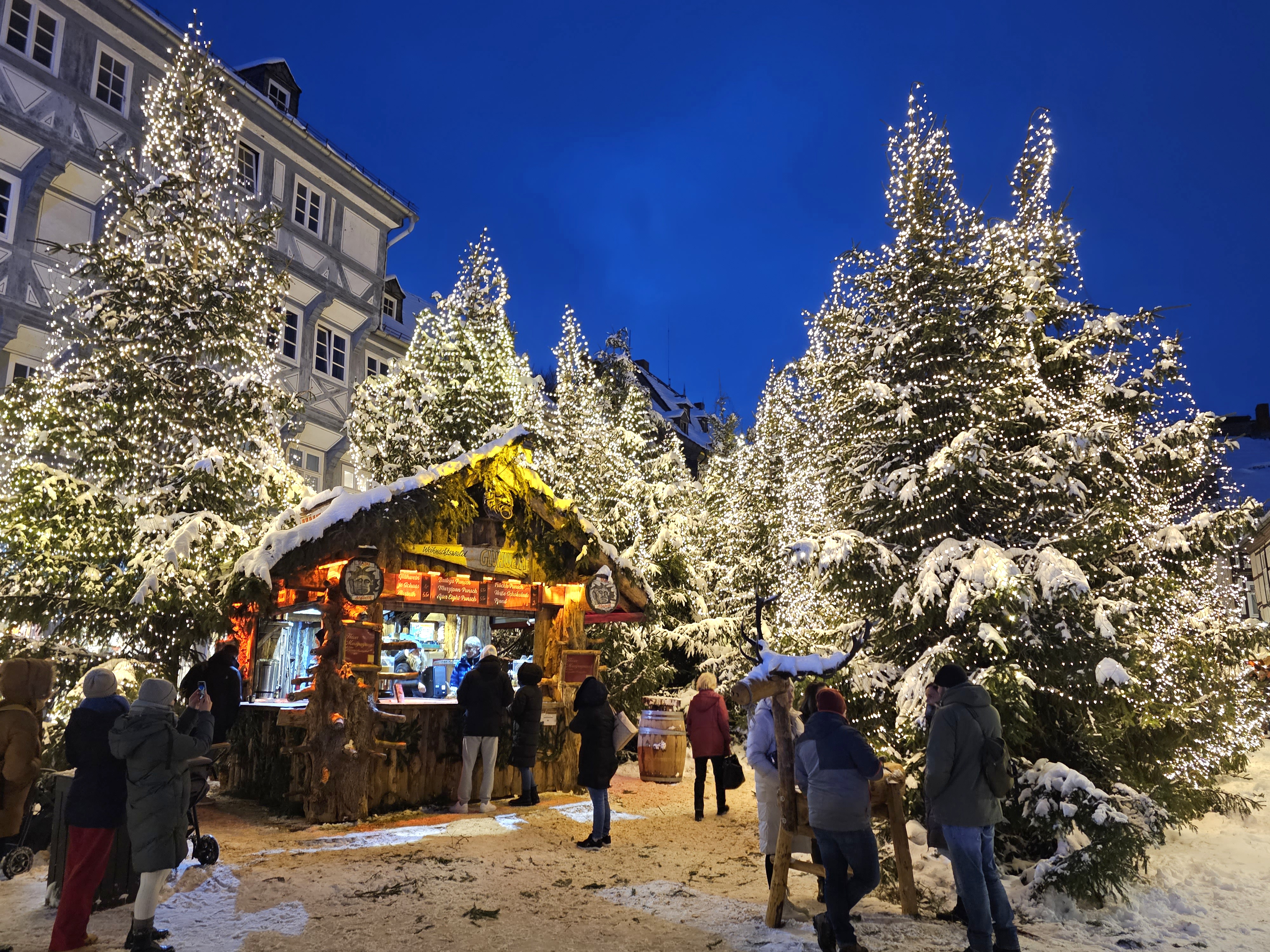
Goslar: The Harz Mountain Town with a Giant Advent Forest
Goslar’s UNESCO-listed Old Town is stunning, but its real Christmas draw is the Advent Forest — a magical forest of hundreds of lit-up Christmas trees planted right on the town’s main square. It’s an under-the-radar gem beloved by Germans but often overlooked by international tourists.
- Best for: Travelers who want a magnificent, photogenic market without the international crowds of the famous cities.
- Combine with: A trip on the Harz Narrow Gauge Railway steam train through the snowy mountains.
- Stay: A hotel in the historic center places you steps from the market and the forest.
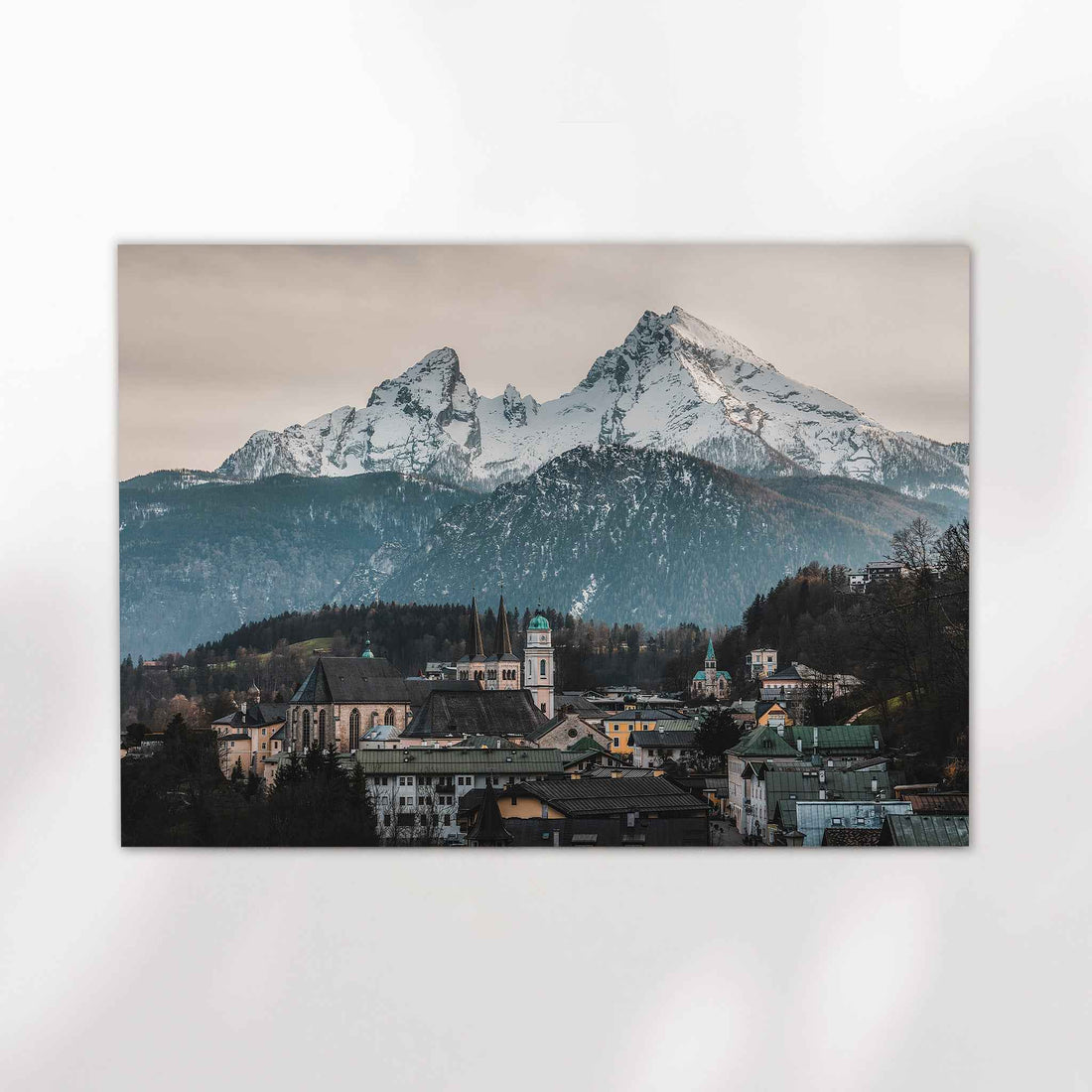
Berchtesgaden: Alpine Christmas Charm in the Bavarian Alps
This isn’t about a single large market; it’s about the setting. Berchtesgaden offers a Christmas atmosphere framed by the dramatic Bavarian Alps.
The small town market is lovely, but the real magic is the surrounding winter landscape — think mountain vistas, frozen lakes, and crisp, clean air.
- Best for: Active travelers and families who want to pair festive charm with outdoor activities like winter hiking or visiting the Salt Mine.
- Why it wins: It’s a perfect base for a nature-focused Christmas trip. The market is a cozy bonus, not the sole reason to visit.
- Stay: Choose a traditional guesthouse in the village for easy access to both the market and mountain transport.
| Town | Quick Vibe | Best For | Insider Tip |
|---|---|---|---|
| Rothenburg | Ideal storybook scene, busy | First-timers, couples | Take the Night Watchman Tour |
| Quedlinburg | Authentic UNESCO heritage | History buffs, quiet seekers | See the daily Advent calendar unveiling |
| Goslar | Magical forest of trees, local favorite | Avoiding crowds | Photograph the Advent Forest at dusk |
| Berchtesgaden | Alpine scenery + festive market | Active travelers, families | Combine with a winter hike or Salt Mine visit |
Booking Advice: For Rothenburg, book accommodation 4-6 months ahead for a December stay. The others are more flexible but still benefit from booking a few months out.
Travel between these towns is easiest by car, allowing you to explore the scenic routes between them.
The Grand City Christmas Market Experiences
In Nuremberg, the air itself tastes of gingerbread—the Christkindlesmarkt is less a market and more a sensory overload of medieval tradition and culinary fame. These four cities deliver the grand-scale festive spectacle that smaller towns can’t match, each with a distinct flavor and crowd dynamic.
Nuremberg: The Iconic Christkindlesmarkt & Gingerbread Capital
This is Germany’s undisputed Christmas market benchmark. The Christkindlesmarkt on Hauptmarkt Square traces its roots to at least 1628, and its opening by the crowned “Christkind” angel is a local institution.
Go for the culinary legends: piping hot Nürnberger Rostbratwurst (three to a roll) and authentic Lebkuchen (gingerbread). The real standout is the Lebkuchenherzen—giant, iced gingerbread hearts strung on ribbons, sold as edible love letters.
For a break from the dense crowds in the main square, walk five minutes to the Handwerkerhof craft courtyard next to the city walls, where you can watch artisans work and the atmosphere relaxes.
- Best for: Purists seeking the “classic” German Christmas market experience.
- Must-Try: The sausage from stalls numbered under 100—they’re the traditional vendors.
- Insider Move: Visit on a weekday evening after 7 PM; the crowds thin considerably, and the market’s glow is magical. The Christmas Tram (Glühwein Express) is a kitschy but fun 30-minute ride that sells out—book tickets online weeks ahead.
Dresden: The Historic Striezelmarkt & Home of Stollen
The Striezelmarkt, first held in 1434, is Germany’s oldest, and its name comes from Striezel—the original term for Dresden’s famous Christmas stollen. The entire market revolves around this fruit-laden, powdered-sugar-dusted bread.
The highlight is the Stollenfest, usually the second Saturday in December, where a two-ton stollen is paraded through town and ceremonially sliced by the city’s patron. The market is held on the Altmarkt square, framed by the rebuilt baroque skyline of the Frauenkirche.
- Best for: History buffs and serious foodies.
- Must-Buy: A small Dresdner Christstollen from a certified baker—look for the official seal.
- Crowd Note: This is a major city market; expect significant crowds on weekends. The adjacent “Augustusmarkt” on Neumarkt offers a more modern, but less historic, complement.
Cologne: Christmas at the Foot of the Cathedral
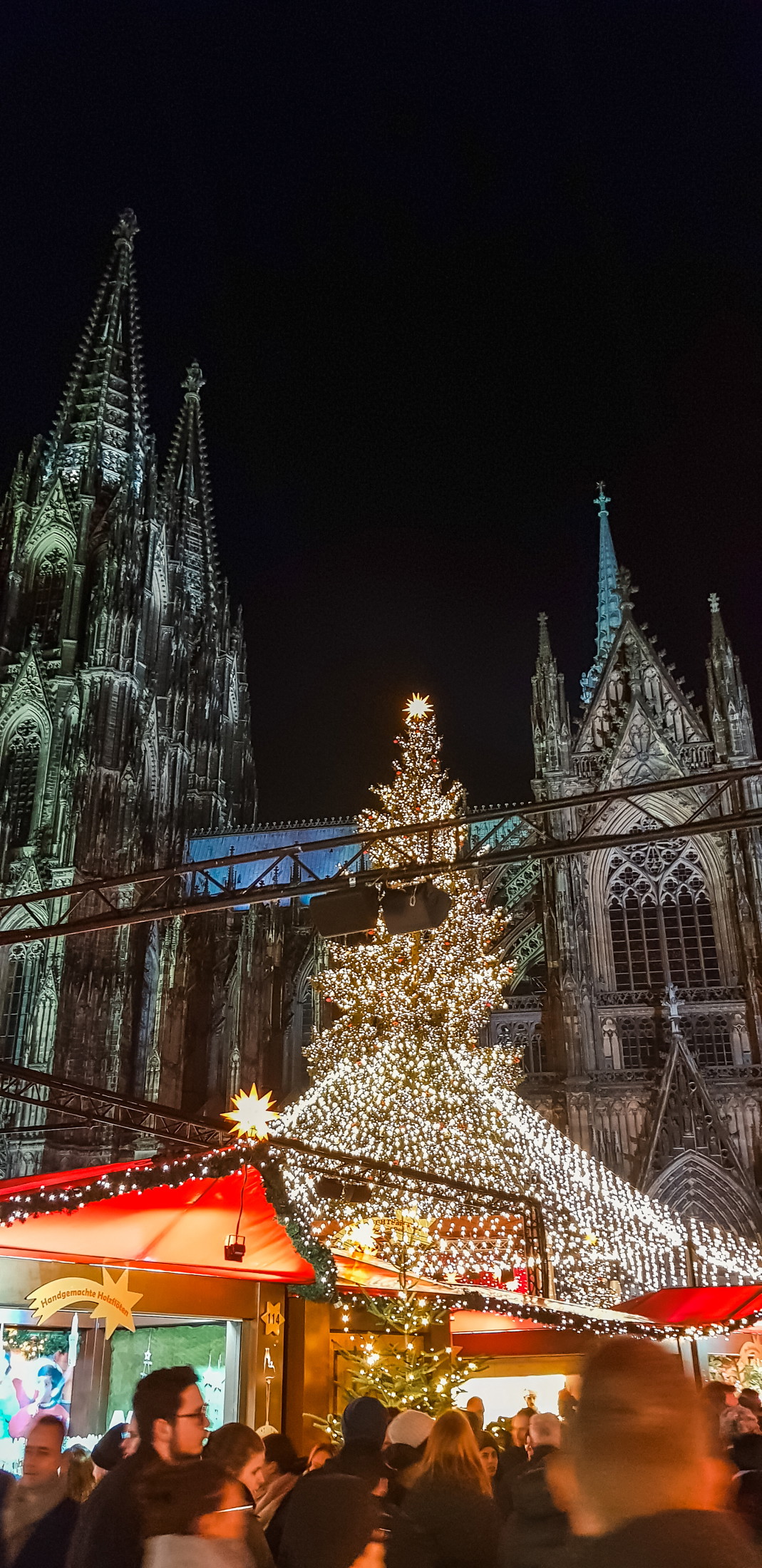
The sheer backdrop of the Kölner Dom cathedral elevates Cologne’s market from festive to awe-inspiring. While the city has over seven markets, the Am Dom market in the cathedral’s shadow is the central hub.
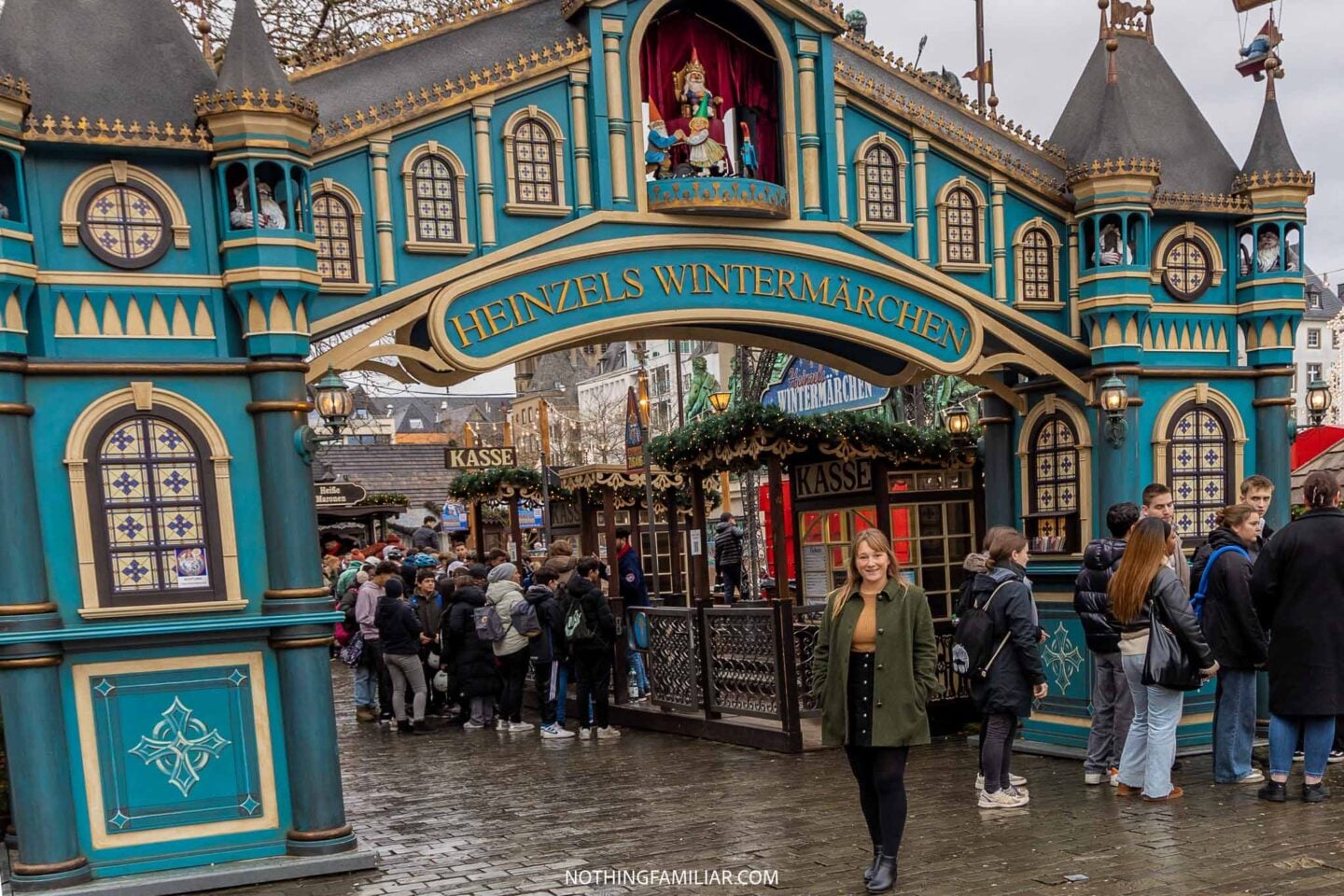
It’s crowded, commercial, and utterly spectacular. For a more sophisticated experience, seek out the Heimat der Heinzel (Gnome Market) on the Heumarkt, which has a storybook theme and excellent, artisanal food stalls.
Cologne is the most accessible big-city option for travelers flying into Frankfurt.
- Best for: First-time visitors who want a grand, accessible city atmosphere with easy train access.
- Must-Try: Reibekuchen (potato pancakes) with applesauce, and a Kölsch beer to cut the sweetness of mulled wine.
- Logistics: The main markets cluster within a 15-minute walk of the central train station. Base yourself in the Altstadt (Old Town) for maximum walkability.
Munich: Festive Markets in the Bavarian Capital
Munich’s magic lies in its variety spread across a sophisticated city. The main Marienplatz market, with the Glockenspiel clock as a backdrop, is beautiful but tourist-heavy.
The real culinary heart is the year-round Viktualienmarkt food hall, which dresses up for the holidays and is the place to load up on gourmet gifts, cheeses, and sausages. For a truly local scene, skip the center and take the U-Bahn to the Tollwood Winter Festival on the Theresienwiese.
It’s a massive, alternative-tinged market with an emphasis on organic food, live music, and theatrical tents—a more youthful, less traditional vibe.
- Best for: Travelers wanting a cosmopolitan city break with upscale shopping and diverse market options.
- Comparison: Choose Marienplatz for the iconic photo and convenience; choose Tollwood for a full evening’s entertainment with better, more varied food.
- Insider Tip: The Residenz München (Royal Palace) courtyard hosts a more elegant, quiet market with high-quality crafts—ideal for finding unique gifts away from the chaos.
Quick Decision Guide:
| City | Signature Food | Atmosphere | Best Base Area |
|---|---|---|---|
| Nuremberg | Gingerbread hearts, sausage | Medieval, intensely traditional | Altstadt (Old Town) |
| Dresden | Stollen, Dresdner Christstollen | Historic, culinary-focused | Altmarkt / Neustadt |
| Cologne | Potato pancakes, Kölsch | Grand, urban, cathedral-centered | Altstadt (near Dom) |
| Munich | Gourmet market fare, Bavarian classics | Cosmopolitan, varied | Marienplatz or near Hauptbahnhof |
Remember: all major city markets close by December 23rd at the latest. For the best culinary sampling, arrive hungry around 4 PM, eat a meal of small bites from 4-6 PM before the largest dinner crowds hit, then enjoy the atmosphere with a final mulled wine.
The popular guided food tours in Nuremberg and Munich book out a month in advance—reserve immediately if that’s your preference.
Best Christmas Towns for a Quiet, Regional Escape
The Mosel valley does something no city market can: you browse handmade ornaments with castle ruins lit above you and frost-covered vineyards stretching down to the river below. If you want Germany’s Christmas spirit without the shoulder-to-shoulder crowds of Nuremberg or Cologne, these four escapes deliver it — each with a completely different flavor of quiet.
| Escape | Best For | Vibe | Base Yourself In |
|---|---|---|---|
| Mosel Valley | Couples, wine lovers | Romantic riverside | Bernkastel-Kues or Cochem |
| Breitnau & Ravenna Gorge | Nature lovers, families | Dramatic forest magic | Breitnau village or Freiburg |
| Baden-Baden | Spa lovers, luxury seekers | Elegant & restorative | Baden-Baden town center |
| Quedlinburg & Goslar | Medieval architecture fans | UNESCO heritage, crowd-free | Either old town |
The Mosel Valley: Christmas Markets Among Vineyards & Castles
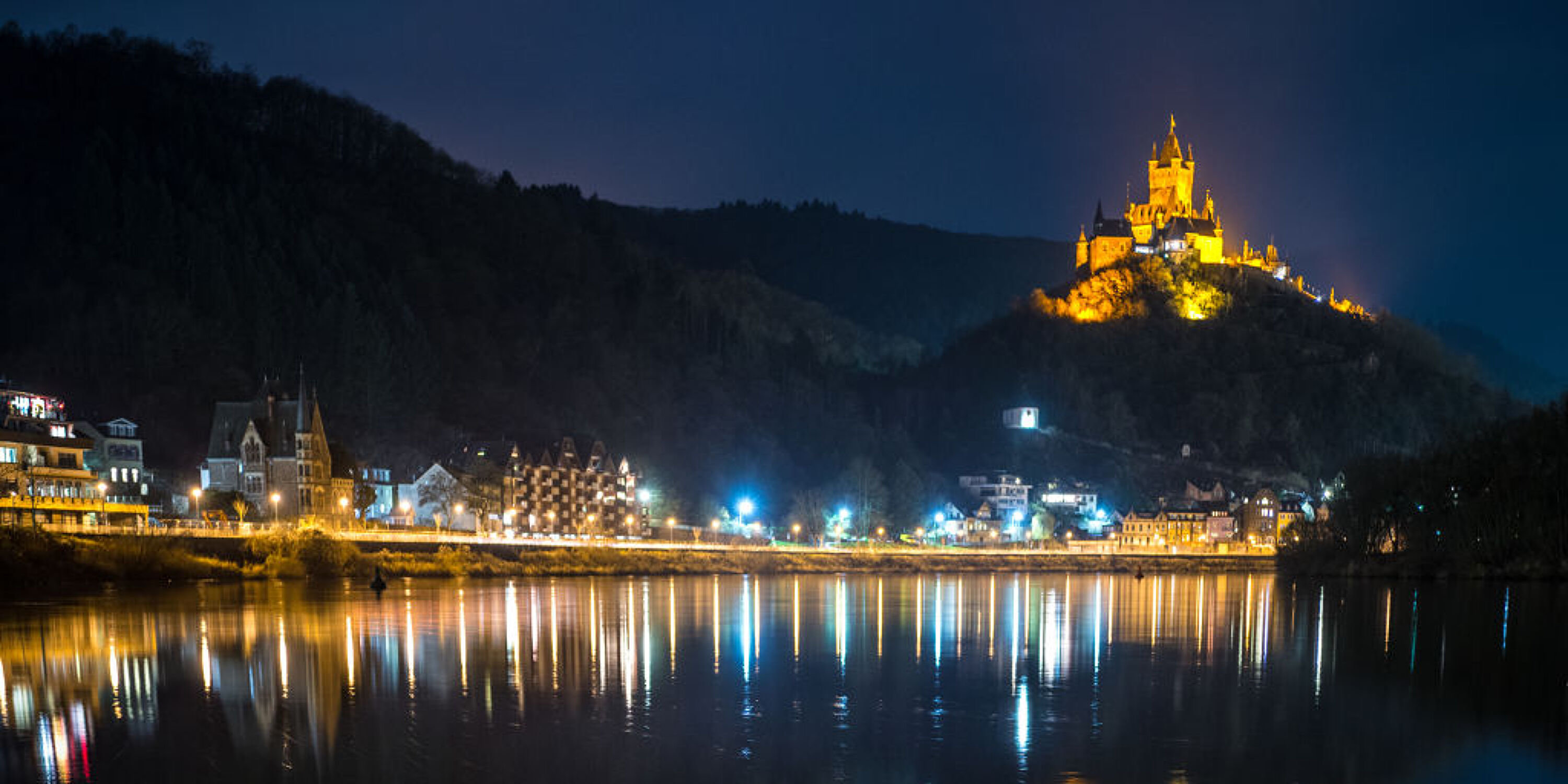
The Mosel is the quietest region on this list and that’s the entire point. Small-town markets in places like Bernkastel-Kues and Cochem sit directly on the riverbank, surrounded by steep vineyard slopes and hilltop castles that look designed for a holiday postcard.
You won’t find massive commercial stalls here — the focus is local winemakers pouring Riesling from their own estates, hand-carved wooden crafts, and Lebkuchen baked in regional bakeries.
- Why choose it: Pair a morning market stroll with an afternoon wine tasting at a Mosel Weingut (winery). Most open their tasting rooms through December.
- Getting there: Cochem is about 2.5 hours by car from Frankfurt or 2 hours from Cologne. Trains run along the Mosel line from Koblenz, though a car gives you freedom to hop between small villages.
- Stay style: Book a riverside guesthouse or Weingut (winery guesthouse) in Bernkastel-Kues for the most walkable base with multiple markets within a 15-minute drive.
- Don’t miss: The Cochem Christmas market sits directly beneath the Reichsburg Cochem castle, which runs its own holiday events — check dates locally since schedules vary yearly.
Breitnau & The Ravenna Gorge: A Black Forest Winter Wonderland
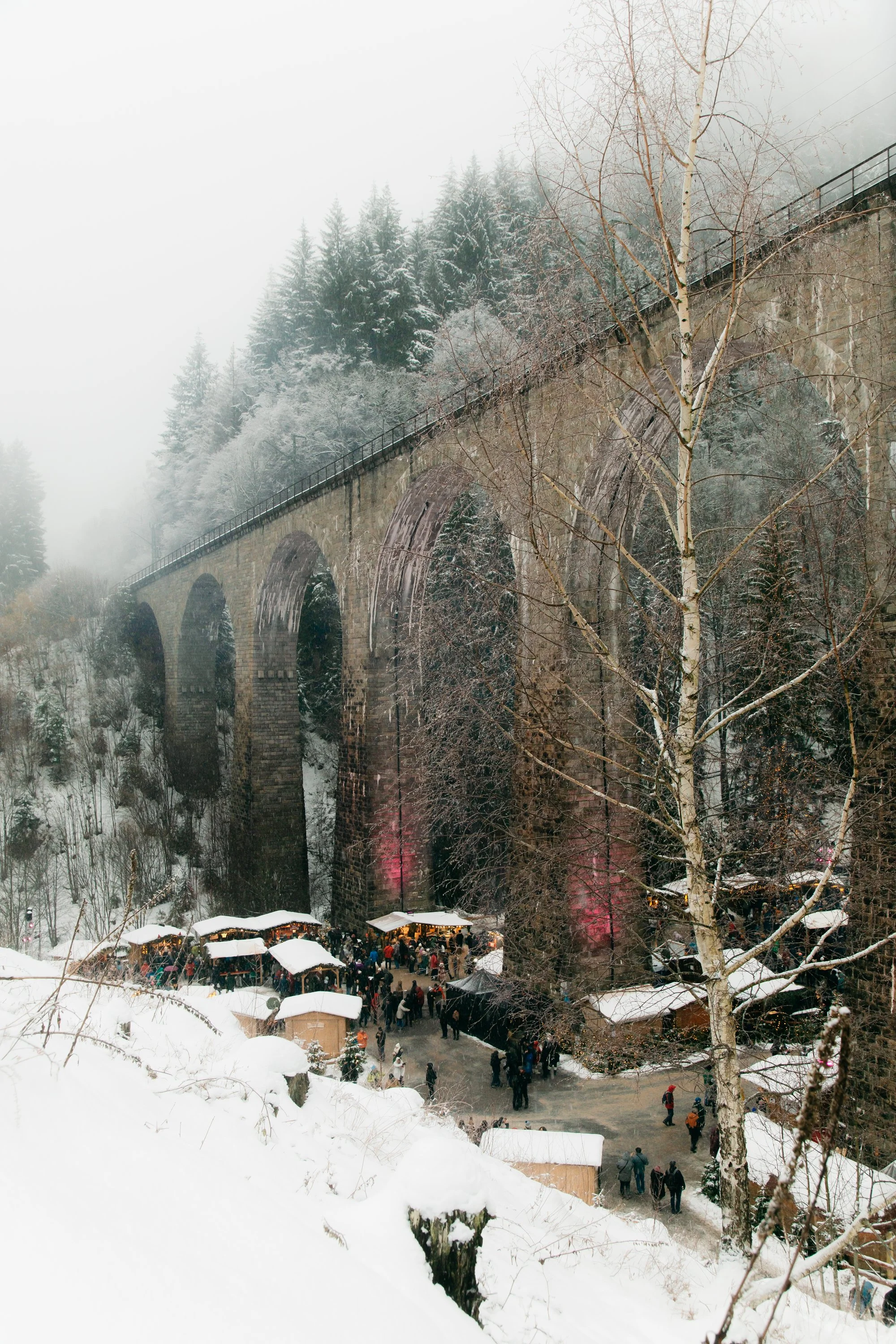
The Ravenna Gorge Christmas Market sits directly beneath a 40-meter-high railway viaduct deep in the Black Forest, with wooden stalls illuminated against sheer rock walls and snow-laden spruce trees. This is easily the most dramatic market setting in Germany — and it’s small enough that you’ll actually feel like you discovered it yourself.
The gorge is about a 45-minute drive from Freiburg, and Breitnau is the closest village to base yourself in. The village itself is tiny, which means you’re waking up inside the forest rather than next to a parking lot.
- Why choose it: This is the one for anyone who wants their Christmas market experience to feel like stepping into a Brothers Grimm illustration — the Black Forest genuinely looks like that in winter.
- What to do beyond the market: Hike the Black Forest trails (best under fresh snow), watch glassblowers at the Hofgut Sternen Glassblowing Studio near Breitnau and buy an ornament made right in front of you, then book a spa afternoon at your hotel to warm up.
- Insider tip: Arrive at the Ravenna Gorge market right at opening — it runs select weekends only (typically late November through late December) and gets packed by midday despite its remote location. Confirm exact dates with the Hochschwarzwald tourism board before planning around it.
- Logistics: A car is essential here. There’s no reliable public transit into the gorge, and the access road is narrow and steep. Some hotels in Breitnau offer shuttle service — ask when booking.
Baden-Baden: Thermal Baths and a Festive Kurhaus Market
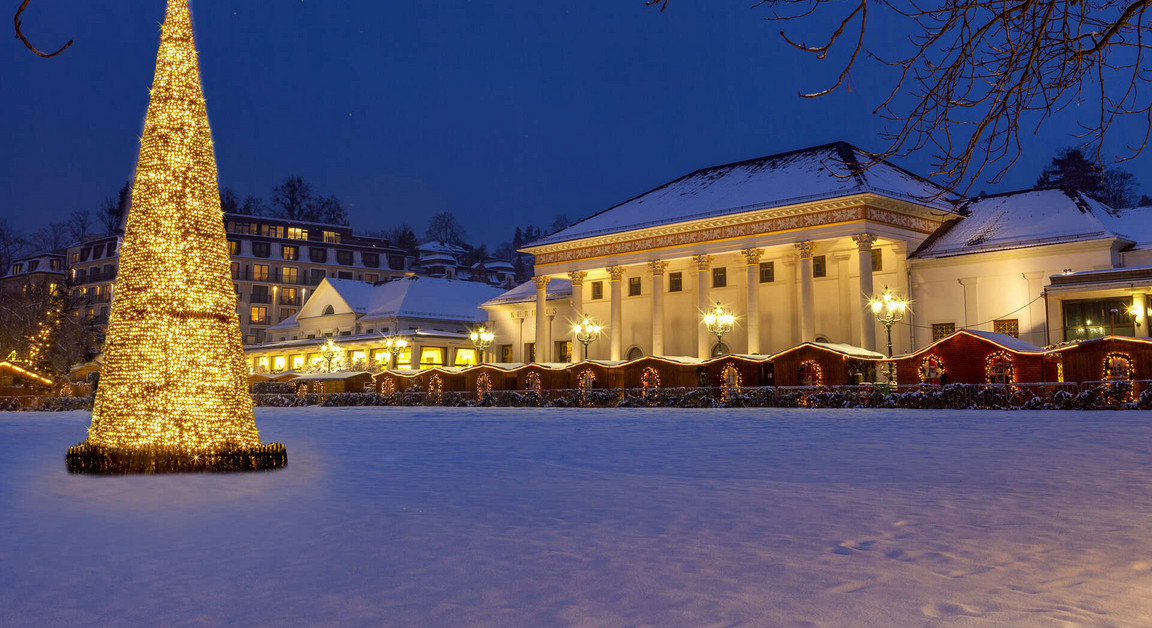
Baden-Baden is the move if your ideal Christmas trip includes a soak in steaming mineral water before you even think about shopping. This Black Forest gateway town has been a spa destination since Roman times, and its Christmas market wraps around the Kurhaus — the grand 19th-century concert hall — with the snow-dusted park of Lichtentaler Allee stretching behind it.
- Why choose it: It’s the only German Christmas town where you can genuinely split your day between world-class thermal baths and a market without rushing either. Caracalla Therme offers modern pools and outdoor hot tubs; Friedrichsbad runs a 17-step Roman-Irish bathing ritual (no swimsuits — this is the serious version). Expect roughly €25–35 per entry, though prices vary by package.
- Stay style: Book a boutique hotel in Baden-Baden’s old town center — you’ll be walking distance to both the Kurhaus market and the baths. The town is compact enough that you don’t need a car once you’re there.
- Getting there: Baden-Baden is about 2 hours by car from Frankfurt or 1.5 hours from Stuttgart. Direct trains run from both cities.
- Best pairing: Start at Friedrichsbad in the late morning, then walk the 10 minutes to the Kurhaus market in the afternoon when the stalls are fully open and the lights come on around 4 PM. End at one of the town’s wine bars — the Baden region produces excellent Spätburgunder (Pinot Noir).
Quedlinburg & Goslar (Eastern Germany): For a Medieval, Crowd-Free Experience
If you’ve read the sections on Quedlinburg and Goslar above, you already know these two Harz Mountain towns deliver some of the best-preserved medieval architecture in Europe — and at Christmas, that architecture does half the work for you. What makes them ideal for a quiet escape specifically is geography: both towns are in former East Germany, less touristed than their western counterparts, and they feel genuinely local rather than staged for visitors.
Base yourself in Quedlinburg if you want the more intimate, UNESCO-listed old town with 2,000 half-timbered houses. Choose Goslar if you prefer the larger market and the unique Rammelsberg mining heritage.
They’re about 45 minutes apart by car, so you can easily visit both over a long weekend. Trains connect them via the Harz network, though schedules thin out on weekends in winter — confirm with Deutsche Bahn before relying on it.
Which German Christmas Town Is Best for Families?
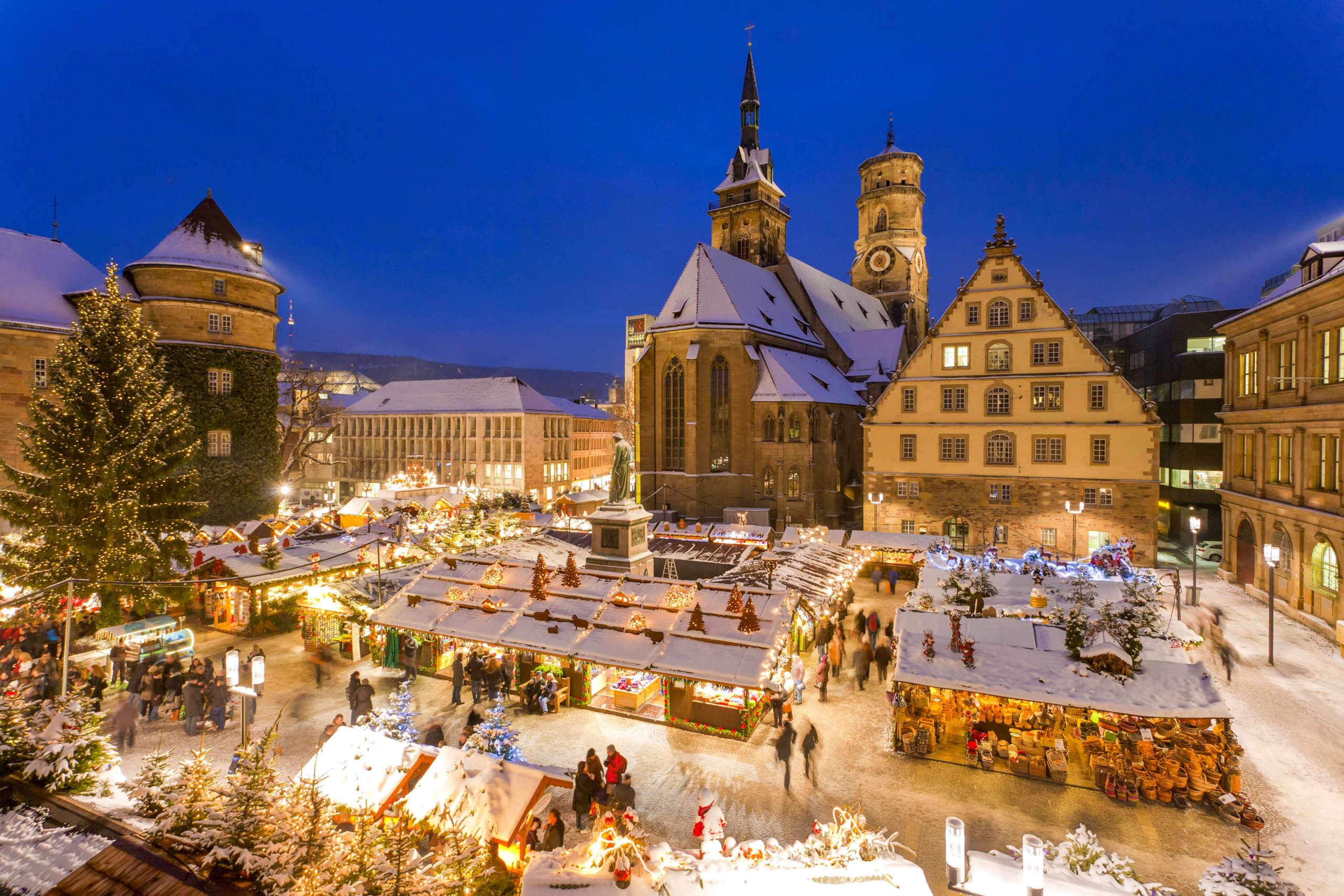
Stuttgart wins for families with kids under ten — and it is not close. The city’s Christmas market dedicates an entire zone called Märchenland (Fairy-Tale Land) with a miniature railway, puppet shows, and hands-on craft stations, which means you get real market time without bored children melting down after twenty minutes.
| Town | Best For Ages | Standout Family Draw | Easy From |
|---|---|---|---|
| Stuttgart | 3–12 | Fairy-Tale Land with rides & crafts | Stuttgart Airport; direct ICE trains from Frankfurt (1 hr 20 min) |
| Essen | 8+ | Ice rink amid industrial ruins | Düsseldorf Airport (30 min); Essen Hbf |
| Hamburg | 5–15 | City Hall market + fairground rides | Hamburg Airport; direct S-Bahn to city center |
| Quedlinburg | 4–10 | Daily Advent Calendar reveal | Harz railway from Hannover or Halle (2–2.5 hr) |
Stuttgart: Germany’s Largest Fairy-Tale Christmas Market
The Stuttgart Christmas market fills the Schlossplatz and adjoining squares with over 280 stalls, but the family anchor is Märchenland, set up specifically for children with a small carousel, a ride-on miniature train, and daily craft workshops where kids make their own ornaments or candles. Entry to the fairy-tale area is free — you pay per ride or workshop, typically €2–4 each.
- Why it works for parents: Märchenland sits within the main market, so adults can browse stalls and sip Glühwein while kids are occupied in view. No separate trip required.
- Beyond the market: Stuttgart’s State Museum of Natural History (Landesmuseum Stuttgart) and the Wilhelma Zoo both run December programming — strong backup plans for rainy afternoons. Base yourself in Stuttgart-Mitte for walkable access to everything.
- Insider move: Arrive at Märchenland by 3 pm on weekdays. Weekend afternoons from mid-December onward draw local families in serious numbers, and the small rides develop long queues.
Stuttgart’s market typically runs from late November through December 23rd — confirm exact dates with the official site each year, as they shift slightly.
Essen: Industrial Heritage Meets Festive Fun at Zollverein
The Zollverein Coal Mine Industrial Complex — a UNESCO World Heritage site — transforms part of its decommissioned coking plant into a Christmas market with an ice rink laid out between the old industrial ovens. It sounds improbable, and that is exactly what makes it memorable for older kids who have aged out of puppet shows but still want something more exciting than another row of wooden stalls.
- The ice rink is the draw: Skating among rust-red industrial structures under string lights is genuinely unlike anything else in Germany. Skate rental is typically available on-site, usually around €3–5.
- Essen city center runs its own large Christmas market with light displays and international food stalls — do both in one day. The city center market is about 20 minutes by tram from Zollverein.
- Base yourself in Düsseldorf if you want stronger hotel and restaurant options. Essen is a 30-minute train ride from Düsseldorf Hauptbahnhof.
- Best for: Families with kids who are into science, engineering, or just find traditional markets repetitive after a few days.
Zollverein’s market usually operates on select weekends in late November and December — check the site annually because it does not run daily like most city-center markets.
Hamburg: City Hall Market & the “Winterdom” Fairground
Hamburg stacks its family appeal by combining one of Germany’s grandest city-center Christmas markets with the Winterdom, a large funfair on the Heiligengeistfeld that runs through much of December with roller coasters, bumper cars, and carnival games. Few German cities offer both a classic market atmosphere and a full amusement fairground in the same trip.
- Rathausmarkt (City Hall Market): Expect roughly 3 million visitors across the season — it is big, it is crowded, and the light displays on the Rathaus façade are spectacular. The sheer density of food stalls is an advantage for picky eaters; kids can choose from crepes, Kartoffelpuffer (potato pancakes), Lebkuchen, and bratwurst within a single block.
- Winterdom: Hamburg’s permanent fairground area hosts this seasonal edition with rides, game booths, and food stands. Entry to the fairground is free; rides are individually priced, generally €2–6 each. It runs from mid-November through late December, usually closing around December 23rd.
- Split the day: Market and mulled wine in the afternoon at Rathausmarkt, then head to Winterdom in the early evening when the lights come on and the kids still have energy.
- Stay in Hamburg-Altstadt for walkable access to both the City Hall market and the Jungfernstieg waterfront. Winterdom on Heiligengeistfeld is a short U-Bahn ride from St. Pauli station.
Quedlinburg’s Real-Life Advent Calendar
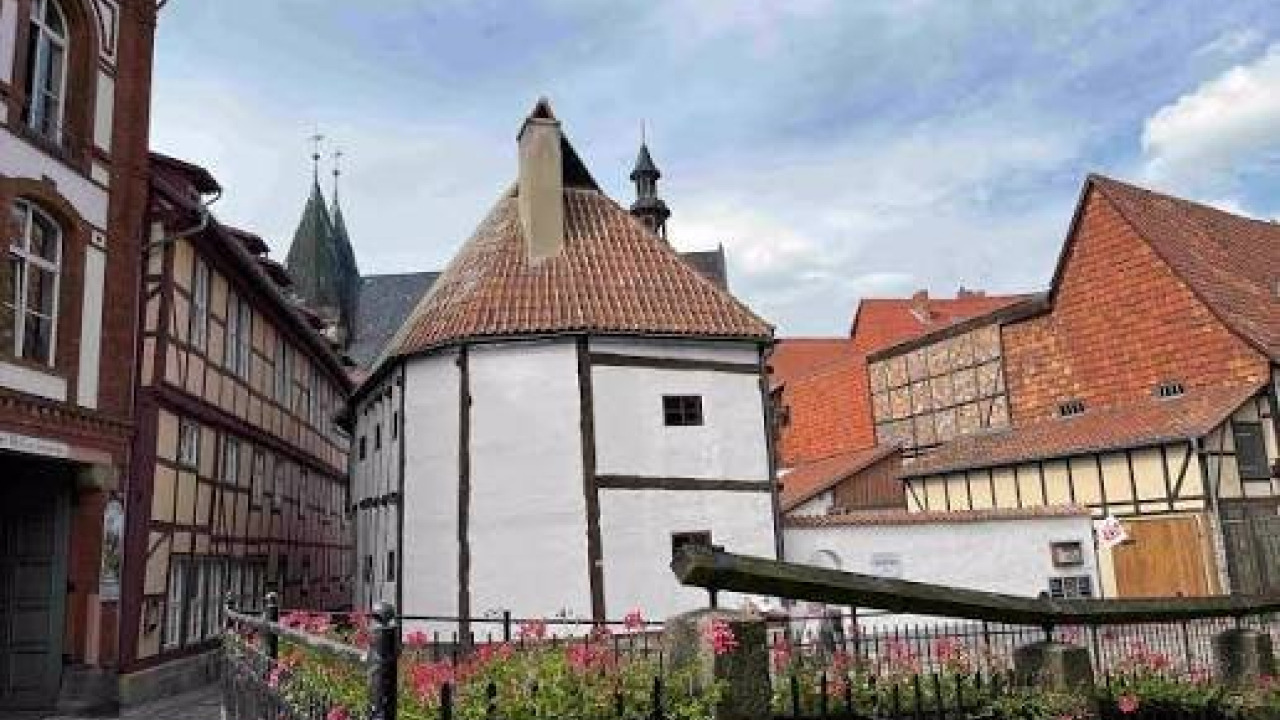
Quedlinburg’s town hall doubles as a giant Advent calendar each December: a new festive scene is unveiled in one of its windows every day from December 1st through the 24th. For young children, the anticipation of “what is behind today’s window?” — scaled up to a real building — is the kind of magic that a hundred market stalls cannot replicate.
- The setting sells itself: Over 1,300 half-timbered houses fill the UNESCO-listed old town, and the snow-covered streets are the backdrop you see on postcards. The Christmas market at Marktplatz is modest in size compared to Stuttgart or Hamburg, which is exactly the point — less crowd, more atmosphere for small kids.
- Combine with Goslar (roughly 1 hour by car through the Harz) if you want to see its Christmas Forest and Advent Calendar House on the same trip. Both towns are small enough to enjoy without rushing.
- Getting there requires planning: Quedlinburg is not on a high-speed rail line. Drive or take regional trains via Halle or Hannover — expect 2 to 2.5 hours either way. A car gives you the most flexibility for combining Harz towns.
- Base yourself in a guesthouse in the Altstadt. Options are limited and book out early for December weekends — reserve by September if possible.
The Advent calendar reveal happens daily at the town hall, usually in the late afternoon. Confirm the exact time locally once you arrive, as it varies by year.
What Unique Christmas Traditions & Activities Should You Experience?
Roast goose on Christmas Eve, gingerbread from a 600-year-old recipe, and horned figures chasing you through Alpine streets — German Christmas traditions go far beyond what the market stalls advertise.
What German Christmas Foods and Drinks Must You Try?
German Christmas food is built around comfort and long, slow meals. The centerpiece is Weihnachtsgans (roast goose), though duck and carp appear regionally, served with red cabbage, potato dumplings, and chestnut stuffing.
Sauerkraut and gravy are standard sides. What lands on the table in Bavaria is not what you’ll get in Hamburg — regional variation is real, and that’s half the fun.
The sweet traditions matter just as much as the savory:
- Lebkuchen: Spiced gingerbread, often sold in decorative tins. Nuremberg’s Elisenlebkuchen is the gold standard — dense, nutty, and nothing like the dry grocery-store versions back home.
- Stollen: Dense fruit bread dusted with powdered sugar. Dresden is the capital of this one — buy it at the Striezelmarkt if you’re passing through.
- Plätzchen: Butter cookies in dozens of varieties — bakeries and market stalls sell them by weight. Buy a mixed bag and figure out your favorite later.
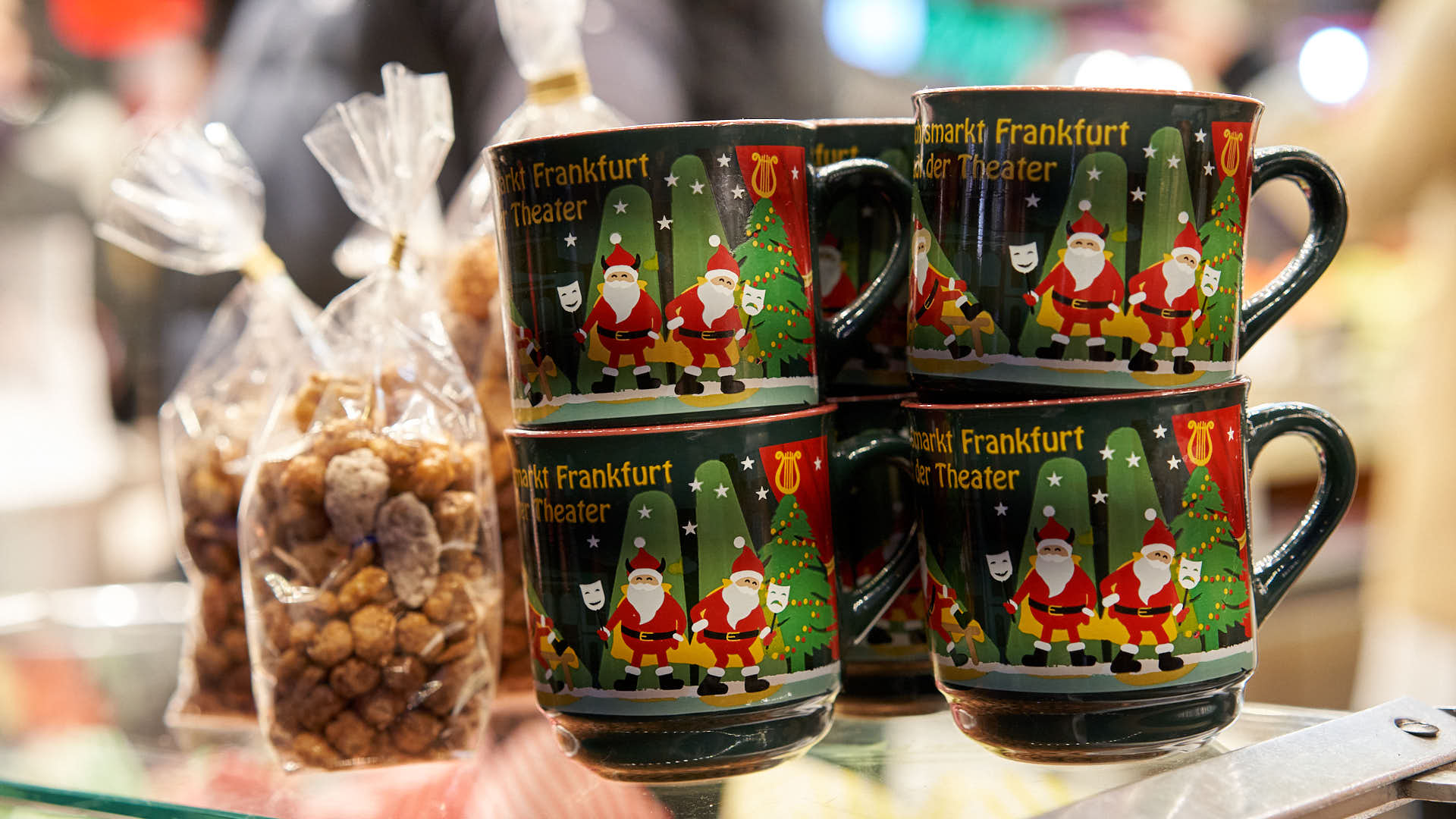
- Glühwein: Hot mulled wine, the universal market drink. Each market has its own collectible mug — keep it as a souvenir or return it for the deposit (typically €2-4, though it varies by market).
- Hot chocolate: For non-drinkers or kids, skip the generic stalls and look for vendors near church squares. The Goslar market does this well near the Market Church.
At medieval-themed markets, expect a different menu entirely — meat sticks roasted over open flame and freshly baked bread served on wooden platters. It’s messier, louder, and more memorable than the standard pastry stalls.
Insider tip: Arrive at food stalls before noon. Lunch crowds hit by 12:30, and the best goose portions sell out early. Most market food stalls are still cash-first — bring small bills and coins even if your hotel says otherwise.
Are There Unique Regional Markets Like Medieval or Themed Ones?
Most German Christmas markets follow a similar format — wooden stalls, artisan crafts, food and drink. But a few lean hard into a specific theme, and they’re worth seeking out.
Medieval markets are the most common variation. Goslar’s stands out because the surrounding half-timbered houses actually date to the Middle Ages — vendors dress in period costume, food is cooked over open flames, and the whole thing feels genuinely transported.
It’s less polished than Nuremberg’s Christkindlesmarkt, and that’s the point.
Goslar also builds an artificial Christmas Forest each year from real pine trees, with stalls for hot drinks and snacks scattered through it. After dark, it’s one of the more atmospheric setups in Germany — come for the forest, stay for the second Glühwein.
Other themed formats worth knowing about:
- Medieval-themed markets appear in multiple towns beyond Goslar — look for them in Esslingen near Stuttgart and in towns along the Mosel Valley.
- Nostalgia markets in some cities focus exclusively on pre-industrial crafts and traditional stalls — no mass-produced gifts, no plastic ornaments. Munich’s Münchner Christkindlmarkt has a section like this.
Themed markets tend to be smaller and close earlier — often by 8 or 9 PM. Plan your visit for afternoon, not evening.
What Does “Heiligabend” (Christmas Eve) Mean for Visitors?
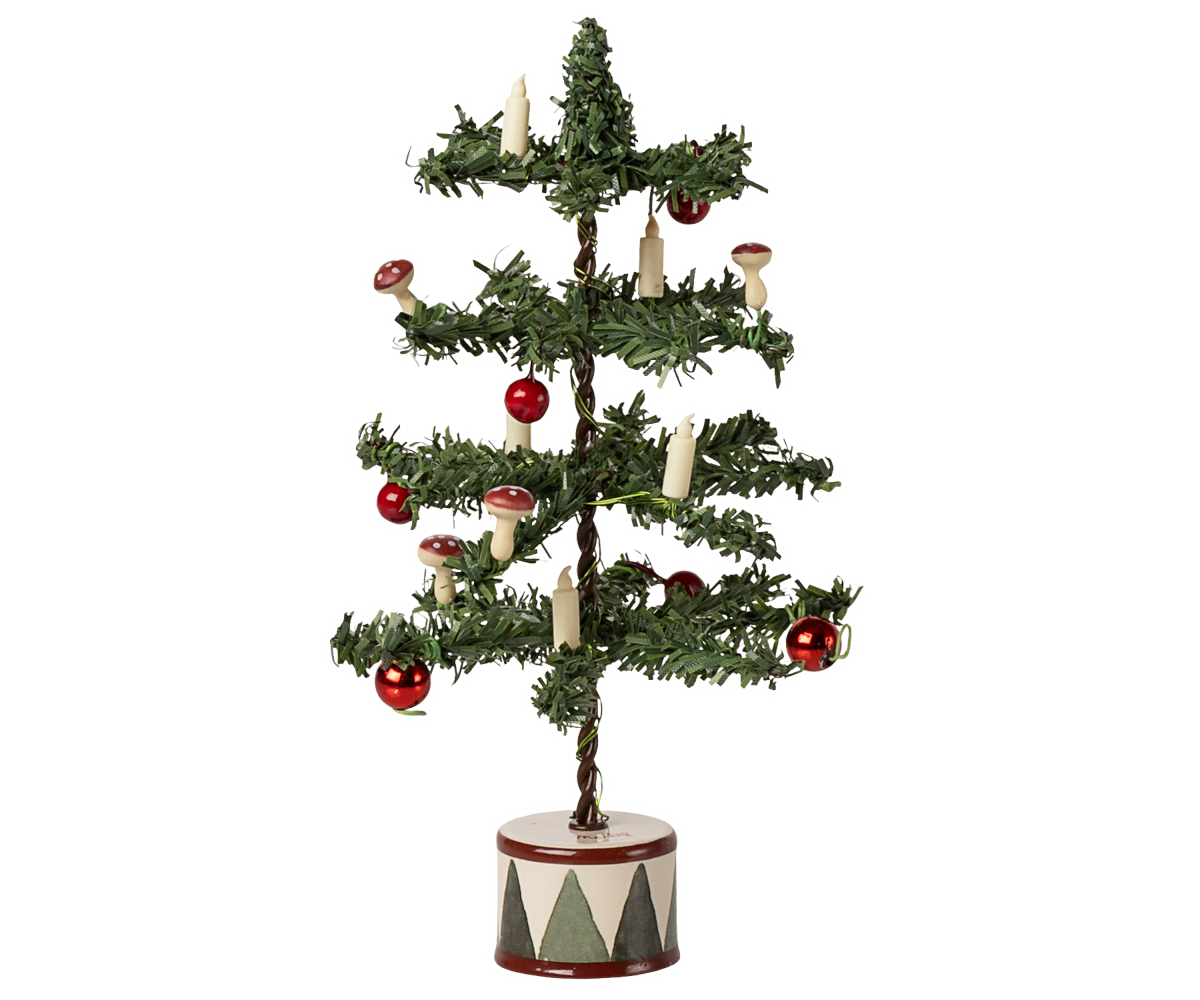
Heiligabend — Christmas Eve — is the main event in Germany, not December 25th. This single fact changes how you need to plan every day of your trip around those dates.
Here’s what it means practically:
- Most markets close by December 23rd or early on the 24th. If your flight lands on Christmas Eve, you’ve missed them entirely. Plan to arrive by December 22nd at the latest.
- Shops close by early afternoon on the 24th — typically by 2 PM. Get all shopping and groceries done before lunch.
- Gifts are exchanged on the evening of the 24th, after a family dinner and often a candlelit church service. Streets go quiet fast after dark.
- December 25th and 26th are full public holidays. Almost everything closes. Walk-in dining is unreliable — book ahead if you’re staying through, and confirm restaurant hours directly.
The upside: Heiligabend is intimate and candlelit everywhere you look. If you’re staying at a guesthouse or with locals, the evening meal is often the most memorable part of the trip.
If you’re traveling independently, book your Christmas Eve dinner at your hotel weeks in advance — availability disappears fast.
How Can You Experience the “Krampus” or “Christkind” Traditions?
Germany’s Christmas mythology goes well beyond Santa Claus. Two traditions define the season in different ways, and catching either one is worth planning your dates around.
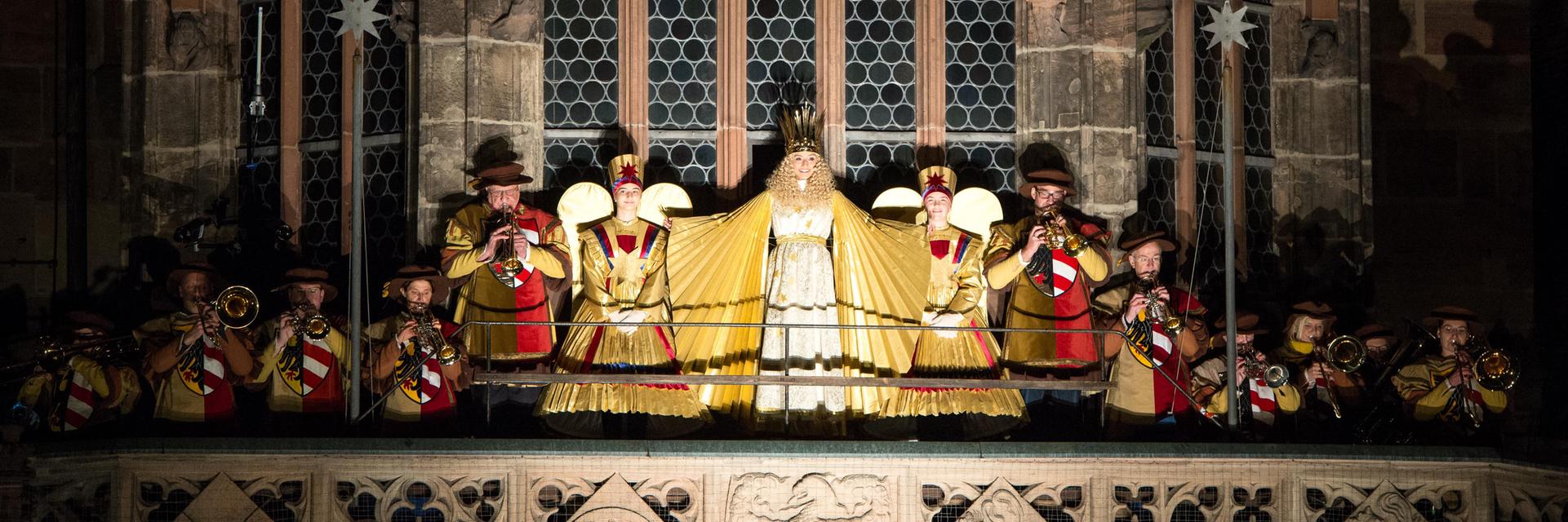
The Christkind (Christ Child) is the gift-bringer in much of southern and central Germany — portrayed as a young woman in a white and gold robe who opens the Nuremberg Christkindlesmarkt each year with a prologue from the church balcony. It’s covered earlier in this article, but the opening ceremony is the single best moment to witness at any German market.
It typically happens on the Friday before Advent begins — confirm the exact date with Nuremberg’s tourism office, as it shifts yearly.
Krampus is the darker counterpart — a horned, fur-covered figure from Alpine folklore that appears as a kind of anti-St. Nicholas. Krampus runs (Krampuslauf) happen in early December, typically around December 5-6, in Bavaria and into Austria. Participants in elaborate handmade costumes chase spectators through town streets with cowbells and birch branches.
It’s loud, chaotic, and genuinely startling if you’re not expecting it.
Where to see Krampus runs:
- Berchtesgaden and surrounding Bavarian Alpine villages host some of the most accessible runs for international visitors.
- Smaller towns in the Chiemgau region and near Garmisch-Partenkirchen have less tourist-focused runs — ask your hotel or the local tourism office for exact dates and routes.
- The runs are free, outdoors, and require no tickets. Just show up.
Insider tip: Krampus runs happen at night, usually starting between 5 and 7 PM. The costumes include real cowbells and birch branches — keep young children close and stay alert.
Bring a phone flashlight; some routes go through narrow streets with minimal lighting.
Practical Planning: How to Choose and Visit Your Christmas Town
The fastest way to kill the Christmas magic is to spend it packed shoulder-to-shoulder in a mob. The real secret to a perfect German Christmas trip is basing yourself just outside the major hubs in one of the smaller, storybook towns like Quedlinburg or Goslar, then using Germany’s stellar train network for easy day trips.
How Do You Get Around Germany’s Christmas Towns?
Take the train. Full stop. For intercity travel between Frankfurt, Munich, Nuremberg, or Cologne, Deutsche Bahn (DB) is the only smart choice.
It’s fast, comfortable, and drops you in the city center. Forget renting a car for market-hopping—you’ll waste time and money on parking, and driving between snowy medieval towns is more stressful than scenic.
- Best for Day-Tripping: Buy a Quer-durchs-Land-Ticket (Germany-wide day ticket) for regional trains. It’s typically around €45 for one adult and offers unlimited travel on slower regional trains (RE, RB, S-Bahn) after 9:00 AM on weekdays and all day on weekends. Perfect for a day trip from a base like Hannover to Goslar.
- For Short Hops: For routes under 100km, check regional tickets from the individual state (e.g., Bavaria Ticket, Schönes-Wochenende-Ticket). These can be significantly cheaper and often cover local transport (buses, trams) in your destination city.
- When to Drive: Only consider a rental car if you’re heading to remote, car-dependent spots like the Ravenna Gorge Christmas market or specific Alpine villages. Otherwise, it’s a liability.
Where Should You Stay? Hotels, Guesthouses, and Christmas Spirit
Book a Gasthof (inn) or Gästehaus (guesthouse) in a smaller town’s Altstadt (Old Town) for the best experience. You’ll be steps from the market, avoiding the need to navigate dark, cold streets late at night after your Glühwein.
- For a Grand City Base: In Dresden, the Hotel Taschenbergpalais Kempinski is the splurge—it’s a restored baroque palace with an ice rink in the courtyard and the Striezelmarkt a five-minute walk away.
- For Authentic Charm: In Quedlinburg or Rothenburg ob der Tauber, prioritize a half-timbered guesthouse inside the old town walls. Many have on-site restaurants serving hearty Franconian or Saxon food. Don’t expect luxury; expect atmosphere, creaky floors, and a breakfast you’ll remember.
- For Alpine Access: In Berchtesgaden, look for a traditional Gasthaus in the village center. You want to be able to walk to the market after a day of winter hiking, not drive.
Insider Tip: Book your accommodation’s breakfast. In smaller towns, finding an open bakery before 8 AM on a Sunday can be impossible.
A substantial German breakfast at your guesthouse (often including cold cuts, cheese, and fresh bread) fuels a long day of market wandering.
What Should You Pack for a German Winter Market Trip?
You will be outside for hours. Pack for function over fashion, and you’ll be happy you did.
- Base Layers & Warm Mid-Layer: A thermal top under a sweater or fleece is non-negotiable. Temperatures hover between freezing and 7°C (32–45°F).
- Waterproof, Insulated Shoes: Cobblestones are uneven and often wet with snow or spilled Glühwein. Ankle-height boots with good traction are your best friend.
- Warm Hat, Scarf, and Gloves: You’ll be holding a hot mug, but your ears and neck will freeze. A scarf can double as a wrap for sitting on cold benches.
- A Small, Secure Bag: Use a crossbody bag to keep your hands free for holding Lebkuchen (gingerbread) and pushing through crowds. Pickpocketing is rare but exists in packed markets.
- Power Bank: Cold kills phone batteries fast. You’ll want photos and navigation, so carry a backup charger.
How Do You Avoid Crowds and Get the Best Experience?
The difference between a magical evening and a stressful crush comes down to timing and choice.
- Visit on a Tuesday or Wednesday Night. Weekend crowds, especially in famous markets like Nuremberg’s Christkindlesmarkt, are brutal. For the best atmosphere with manageable numbers, aim for a weekday evening, ideally the first two weeks of December.
- Go Early in the Day for Shopping, Late for Ambiance. Arrive when markets open (often 10 or 11 AM) to browse stalls without crowds and talk to artisans. Return after 7 PM for the full, magical lighting and live music—but expect peak crowds.
- Escape the City Centers. Head to the smaller, regional markets listed earlier, like those in the Mosel Valley or Breitnau. They have fewer international tourists and more local families. Goslar’s Advent Forest is another brilliant alternative to a packed town square.
- Embrace the “Second Wave.” Many markets reopen for a few days between Christmas and New Year’s. The crowds thin out, and you get a more local, relaxed vibe—though some stalls may close.
The Bottom Line: Plan your travel by train, book a cozy guesthouse in an old town center, and prioritize weekday visits to smaller markets. This approach saves money, reduces stress, and delivers the authentic, festive atmosphere you saw in that first Pinterest photo.
Frequently Asked Questions
Are German Christmas Markets Expensive to Visit?
Entry to nearly every Christmas market in Germany is free — you only spend money once you’re inside. A mug of Glühwein typically runs €4–6, a Nürnberger Rostbratwurst around €3–5, and handmade ornaments or gifts range widely from €5 to €50+.
Budget roughly €20–40 per person per market visit if you’re eating, drinking, and buying a small keepsake. The real cost is accommodation and transport during peak December weekends, not the markets themselves.
Is It Safe to Visit German Christmas Markets at Night?
Yes — German Christmas markets are evening destinations by design, and that’s when they’re at their best. Most markets are set up in central town squares, well-lit, family-friendly, and patrolled.
Standard urban common sense applies: watch your wallet in dense crowds in places like Nuremberg’s Christkindlesmarkt or Cologne’s cathedral market, and keep valuables zipped. Solo travelers, including women, routinely visit evening markets without incident.
Will There Be Snow in the Christmas Towns?
Don’t count on it. Lowland cities like Nuremberg, Dresden, and Munich see snow in December in some years but not most — many visitors are surprised by how mild German winters can be.
Your best bet for a white Christmas market experience is higher-altitude towns like Berchtesgaden or the Harz Mountain region around Goslar, but even there, snowfall varies year to year. Plan for cold rain or dry cold as your baseline, and treat snow as a bonus rather than a guarantee.
What Are the Typical Opening Hours for the Markets?
Most German Christmas markets run daily from late November through December 23rd or 24th, typically opening around 10 or 11 AM and closing between 8 and 9 PM. Some smaller village markets operate only on weekends or specific Advent dates — confirm schedules before you travel, since dates shift slightly each year.
The opening weekend and the final days before Christmas Eve tend to be the most crowded. For the best experience with shorter lines and easier stall browsing, visit on a weekday between 11 AM and 3 PM.
Can You Visit Multiple Christmas Towns in One Trip?
Absolutely — and you should. Germany’s rail network makes multi-market trips straightforward.
Nuremberg to Rothenburg ob der Tauber is under 90 minutes by regional train, Cologne to the Mosel Valley markets is roughly two hours by car, and Munich to Berchtesgaden is about two and a half hours by train. A well-paced itinerary hits two to three markets over four to five days without feeling rushed.
Base yourself in a central city and do day trips, or string together a road trip with overnight stops in smaller towns.
What Souvenirs Should You Buy at the Markets?
Focus on things you can’t get anywhere else. Hand-blown glass ornaments from Thuringian workshops, hand-carved wooden Räuchermännchen (incense smokers) from the Erzgebirge region, and beeswax candles are all classic German market purchases worth packing carefully.
Lebkuchen from Nuremberg and Dresden Stollen ship well and make excellent edible gifts. Skip the mass-produced trinkets — look for stalls with the artisan’s name or town printed on the tag, which signals locally made goods rather than imported resale items.
Plan Your Perfect German Christmas Market Trip
Start by picking your primary town based on the vibes above, then book your flights to Frankfurt or Munich and your guesthouse immediately. Germany’s rail network is your best friend for day-tripping to see a second market without changing hotels.
The real magic of a German Christmas lies in these shared, sensory moments—the clink of ceramic mugs, the taste of regional specialties, and the glow of lights on centuries-old stone.
Commit to your first choice town, verify its exact market dates on the official city website, and book your core accommodation by September for the best selection.
Leave a Reply