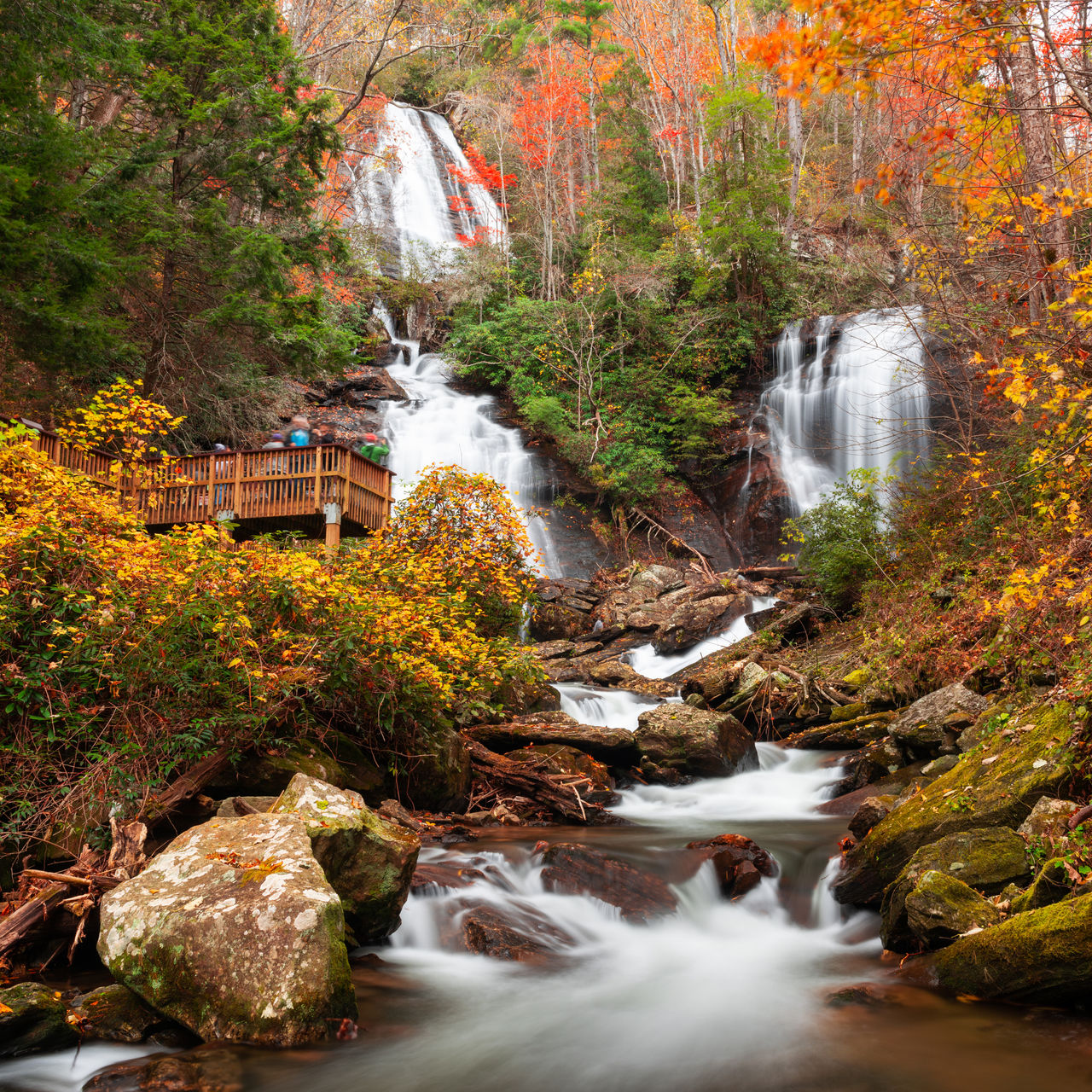
The moment you step onto a ridge at 4,000 feet in early October, surrounded by a canopy of crimson and gold that stretches to the horizon, you understand why millions of Americans abandon their weekends to chase falling leaves. The air is sharp, the light is slanting, and every direction offers a different shade of red—this is the feeling that makes fall hiking worth planning for.
Fall foliage hikes in the USA offer something you can’t replicate anywhere else: a rolling wave of peak color that starts in late August at high elevations and doesn’t finish until November at lower valleys, giving you nearly three months to chase it if you plan strategically. Unlike generic “scenic hikes,” timing here is everything—miss peak by two weeks and you’re hiking through brown leaves; hit it right and every tree becomes a photograph.
This guide cuts through the confusion about when to go where, which trails actually deliver the views, and what gear keeps you safe when fall weather turns unpredictable.
Budget estimates: budget hikes ($0–50 for parking and gas), mid-range trips ($100–300 with modest lodging near trailheads), splurge experiences ($400+ for mountain inns or multi-region road trips with guided outings).
Your Fall Foliage Hiking Timeline by Region
| Region | Best Trail Pick | Distance | Peak Color Window | Why It Wins |
|---|---|---|---|---|
| Adirondacks (NY) | Jay Mountain | ~5 miles | Late Sept–early Oct | Ridge exposure, 360-degree views, earliest peak |
| Catskills (NY) | Kaaterskill Falls | ~5 miles | Mid–late Oct | Waterfall drama, minimal elevation, family-friendly |
| Hudson Valley (NY) | Elk Pen Loop | 7.5 miles | Mid–late Oct | Dense color, close to NYC, less crowded than Adirondacks |
| Finger Lakes (NY) | Taughannock Falls | ~4 miles | Mid–late Oct | Tallest waterfall in NY, latest peak color hold |
| New Jersey Highlands | Wyanokie High Point Loop | 5–6 miles | Mid–late Oct | Ridge views, no backtracking, close to Northeast Corridor |
The timing rule: High elevation and northern regions (Adirondacks, alpine zones) peak in late August through early September. Mid-elevation ranges (Catskills, Shenandoah, Great Smoky Mountains) peak late September through mid-October.
Lower elevations and southern regions peak mid-October through November.
The booking rule: Check a fall foliage predictor tool 2–3 weeks before your trip to confirm regional peak timing, then book lodging immediately—peak foliage weekends fill 4–6 weeks ahead. Weekday hikes guarantee fewer crowds and better parking access.
When is the Best Time to Go Fall Foliage Hiking in the USA?
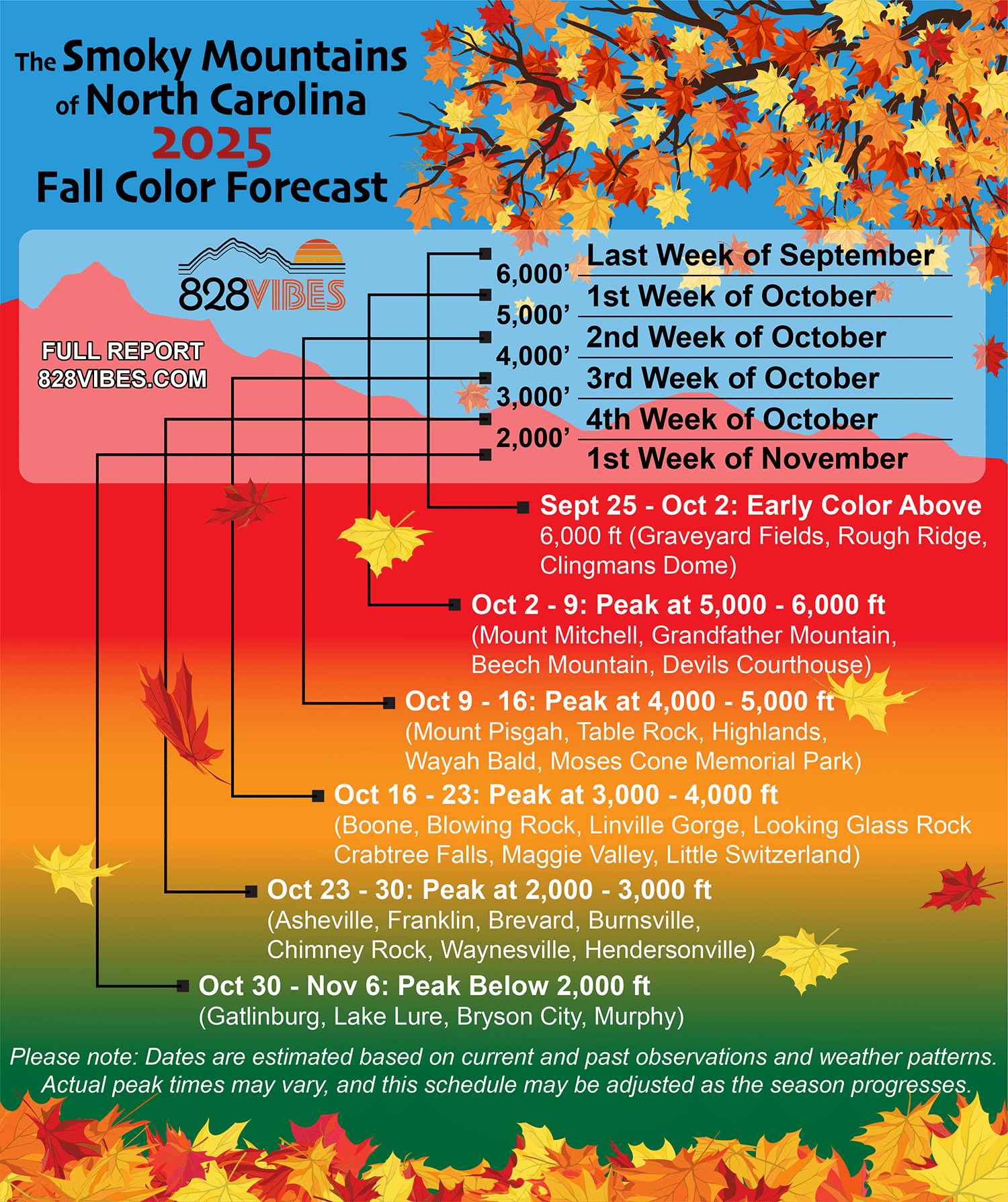
Peak foliage doesn’t arrive on the same calendar date everywhere—it’s a rolling wave that starts in late August at high elevations and doesn’t reach lower valleys until November, which means you can chase color for nearly three months if you plan strategically. The timing depends almost entirely on latitude and elevation: the higher you go or the farther north you travel, the earlier the leaves turn.
How Peak Foliage Shifts by Latitude and Elevation
High elevation and northern regions (late August through September): Alpine zones in Colorado, Montana, and the White Mountains of New Hampshire see peak color first. Aspen groves in Colorado turn brilliant gold by early September, while high-elevation trails in Glacier National Park typically peak in late August to early September.
If you’re targeting Maroon Bells near Aspen or Mount Greylock in the Berkshires, plan for early to mid-September.
Mid-elevation mountain ranges (late September through early October): The Great Smoky Mountains, Shenandoah National Park, and Acadia National Park typically hit peak foliage between late September and mid-October. Clingmans Dome in the Smokies and Old Rag Mountain in Shenandoah are most stunning during this window.
The Adirondacks in New York—including Jay Mountain and Bald Mountain—peak around late September to early October.
Lower elevations and southern regions (mid-October through November): The Hudson Valley, Catskills, and New Jersey’s Wyanokie High Point Loop reach their best color in mid-to-late October. Kaaterskill Falls in the Catskills and Elk Pen Loop in Harriman State Park typically peak in the second and third weeks of October.
Southern Appalachian trails at lower elevations can stay colorful into early November.
Critical planning note: Peak foliage dates shift year to year depending on summer rainfall, early frost, and temperature patterns. Check an annual fall foliage predictor (maintained by organizations tracking regional conditions) 2–3 weeks before your intended trip to confirm timing for your specific destination.
A warm, wet summer can delay peak color by 1–2 weeks; an early cold snap can accelerate it.
Best strategy for guaranteed color: If you’re flexible, plan a multi-region road trip that follows the foliage wave downward. Start in Colorado or New Hampshire in early September, move to the Smokies or Shenandoah in late September, and finish in the Hudson Valley or Catskills in mid-October.
This approach maximizes your chances of catching peak color without gambling on a single location’s timing.
Avoid the crowds: The most popular parks (Great Smoky Mountains, Shenandoah, Acadia) see peak visitation during peak foliage weekends. If you can hike on weekdays or aim for the shoulder weeks just before or after peak (when color is still excellent but crowds thin), you’ll have a better experience on the trail.
Which Fall Foliage Hikes in New York State Offer the Best Views?
New York’s fall hiking splits cleanly into five regions, each with distinct color timing and terrain — the Adirondacks peak earliest (late September to early October), while Hudson Valley and Catskills trails hold color longest into mid-October. Base yourself in a gateway town near your chosen region to maximize early-morning trailhead access and avoid the weekend crush that hits popular routes by 10 a.m.
The Adirondacks: Bald Mountain, Blue Mountain, and Jay Mountain
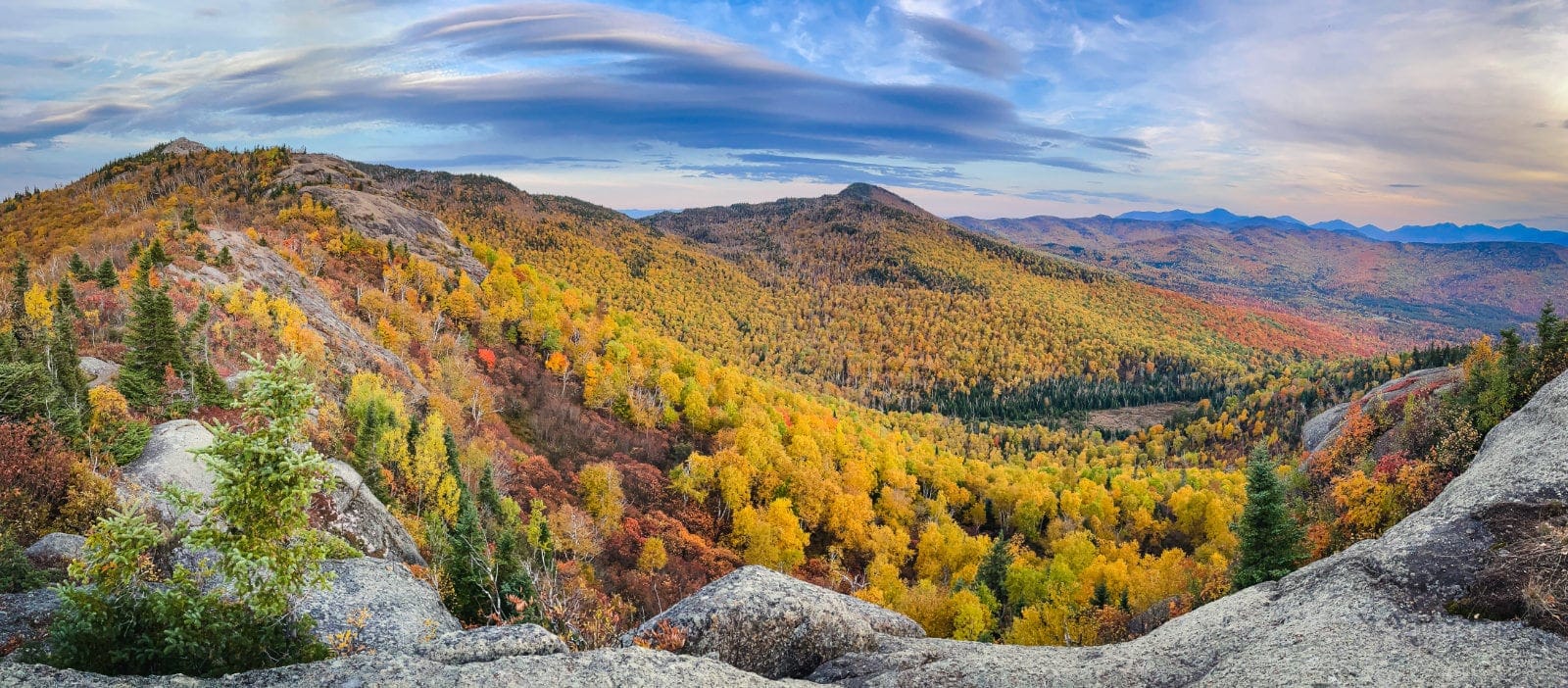
The Adirondacks deliver high-elevation ridge walks with unobstructed 360-degree views — these peaks sit above the tree line or near it, meaning you’re hiking through color rather than just looking at it from below. Jay Mountain ranks as the strongest choice for fall because the ridge trail exposes you to foliage at multiple elevations simultaneously, and the variety of viewpoints means you’re never stuck staring at one forest wall.
The hike climbs steadily but rewards effort with open vistas where bright reds and yellows dominate the canopy below you.
Blue Mountain and Bald Mountain both deliver similar ridge-walk experiences with fire tower or summit views, but Jay Mountain wins for consistent exposure — fewer tree tunnels, more sky, more color. All three peak in late September through very early October; wait until mid-October and you’ll find mostly brown foliage at elevation.
Plan 4–6 hours for any of these depending on fitness level and photo stops.
The Catskills: Kaaterskill Falls, Hunter Mountain, and the Escarpment Loop
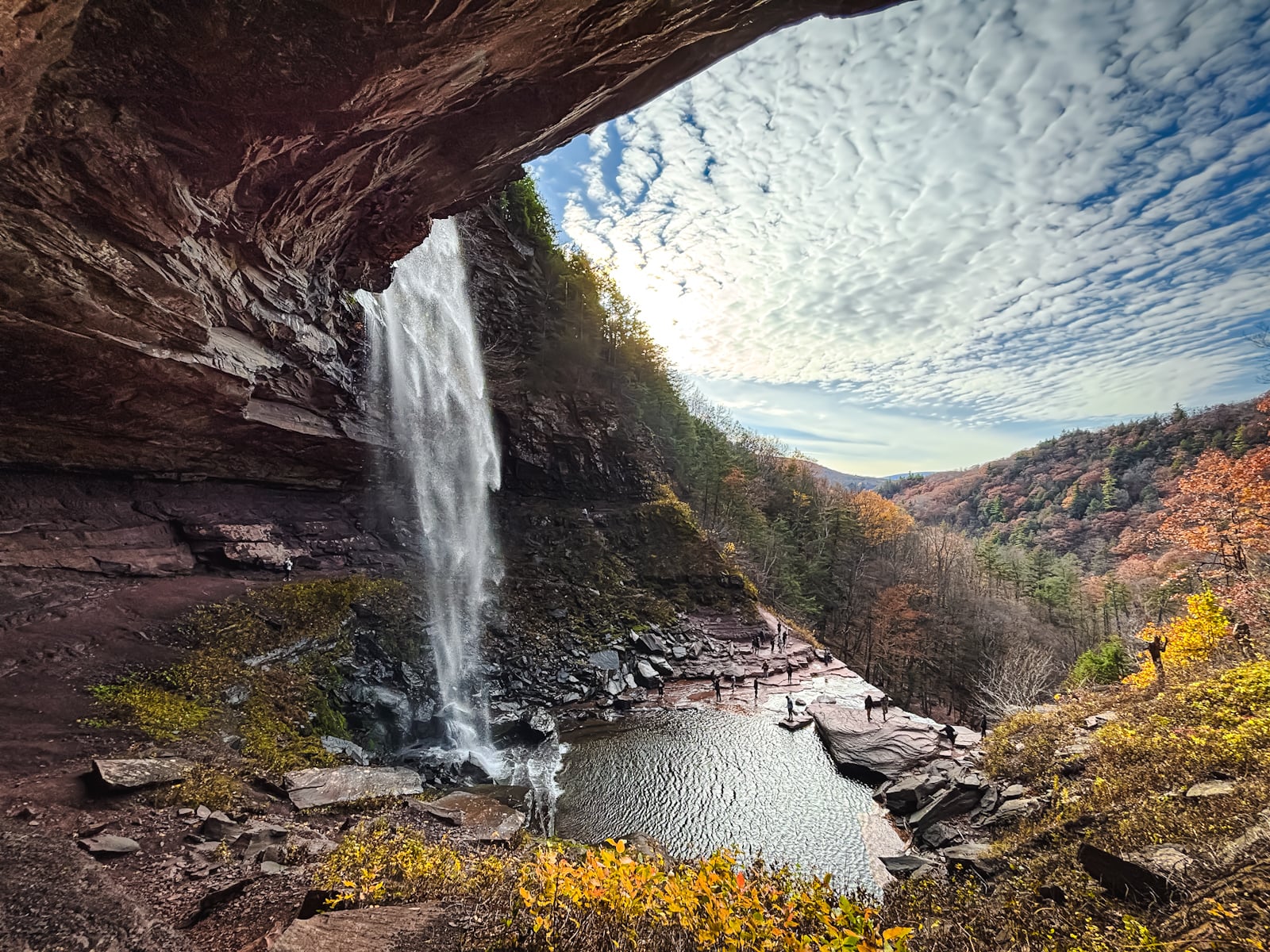
Kaaterskill Falls is New York’s tallest waterfall and the easiest entry point into Catskills fall hiking — the gorge trail is roughly 5 miles round trip with minimal elevation gain, making it accessible for families and less experienced hikers who still want dramatic scenery. The waterfall itself is framed by steep canyon walls that turn brilliant orange and red in mid-to-late October, and the mist from the falls keeps the gorge lush longer than exposed ridges.
This is the move if you want a waterfall photo with serious color backdrop without committing to a full-day ridge hike.
Hunter Mountain and the Escarpment Loop are for hikers who want sustained ridge walking and don’t mind 6–8 hour days. Hunter Mountain’s summit fire tower offers 360-degree views of the entire Catskill range in fall color, and the Escarpment Loop strings together multiple peaks with exposed ridge sections.
Both routes peak in mid-October and hold color through late October, roughly 2–3 weeks longer than Adirondack summits. The Catskills sit lower in elevation than the Adirondacks, so foliage lingers — this is your backup plan if you miss Adirondack peak timing.
The Hudson Valley: Elk Pen Loop, Shawangunk Ridge, and Sam’s Point
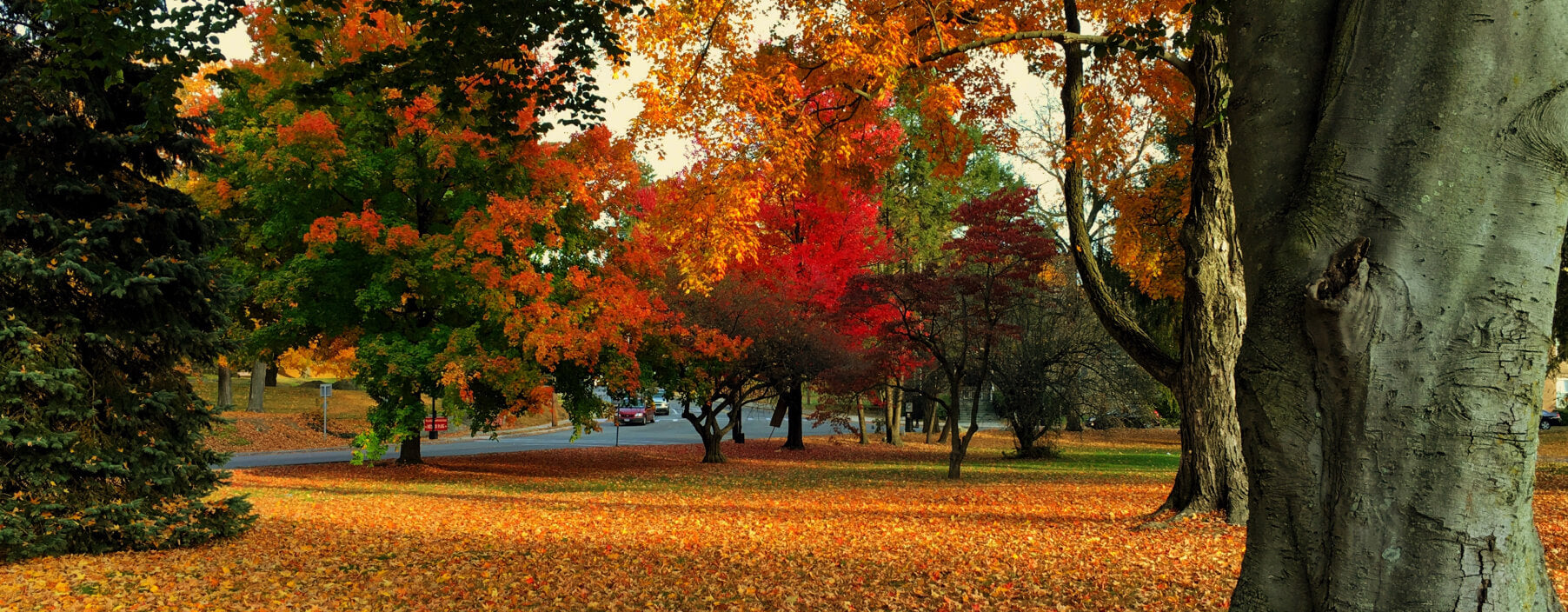
Elk Pen Loop in Harriman State Park is the best-kept fall secret within 45 minutes of New York City — the 7.5-mile loop passes through forest that turns every color simultaneously (bright reds, yellows, and oranges in the understory and canopy), includes several viewpoints, and features the quirky “lemon squeezer” (two massive boulders you squeeze between). The loop also clips the Appalachian Trail, so you get ridge exposure without the full elevation commitment of a mountain summit.
This hike peaks in mid-October and is packed on weekends; start by 7:30 a.m. on Saturdays to avoid the crowd.
Shawangunk Ridge and Sam’s Point offer longer ridge walks (5–7 miles) with dramatic cliff-edge views overlooking the Hudson Valley and surrounding forests in full color. Sam’s Point includes an ice cave and boardwalk sections, making it slightly easier than pure ridge scrambling.
Both routes hold color through late October and are less crowded than Elk Pen Loop because they require more fitness. The Hudson Valley’s lower elevation means these peaks color 1–2 weeks after the Adirondacks, making this region ideal if you’re hiking in mid-to-late October.
The Finger Lakes: Watkins Glen and Taughannock Falls Gorge Trails
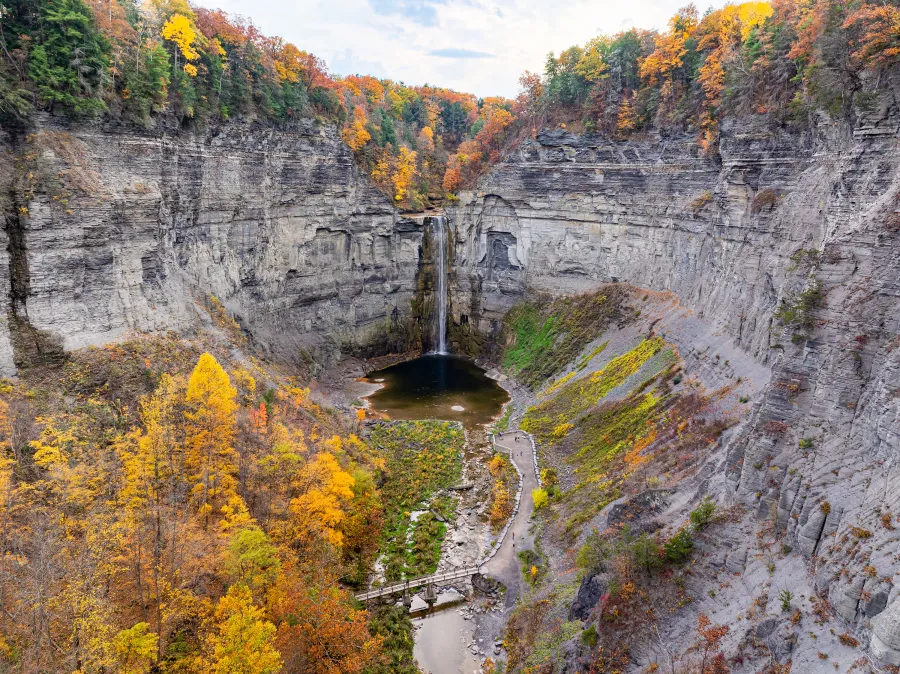
Taughannock Falls is a single 215-foot drop — the tallest waterfall in New York — and the gorge trail (roughly 4 miles round trip) is the easiest way to experience dramatic waterfall scenery with fall color. The canyon walls turn bright yellow and gold in mid-October, framing the waterfall in a way that makes for stunning photos.
This is the move if you want waterfall drama without technical scrambling or full-day commitment.
Watkins Glen offers a more involved gorge hike with multiple smaller waterfalls, stone staircases, and narrow canyon sections — the trail is roughly 3–4 miles but feels more adventurous because you’re constantly navigating water features. Both Finger Lakes routes peak in mid-to-late October and hold color through early November, the latest timing in New York State.
These trails are less crowded than Hudson Valley options because they’re further from the city, but they’re also wetter and more technical — wear good grip shoes.
Highlands & Suburban NY: West Mountain Loop, Cranberry Lake, Storm King, and Fishkill Ridge
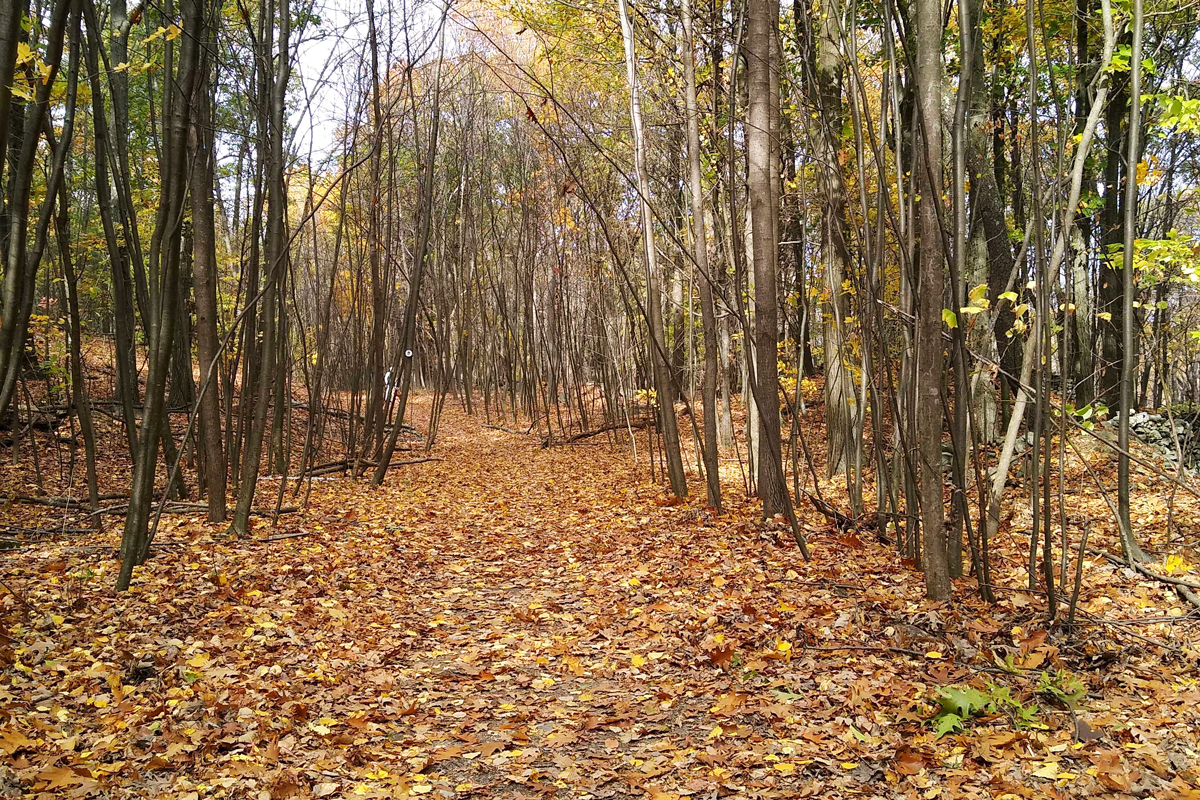
These four routes are scattered across the Hudson Highlands and Westchester County, each offering different experiences but all within 1–1.5 hours of Manhattan. West Mountain Loop (roughly 3.5 miles) is a quick ridge walk with Hudson River views and moderate crowds.
Cranberry Lake (roughly 2–3 miles) is a flat forest walk around water with reflections of fall color — best for families or anyone avoiding elevation. Storm King (roughly 4–5 miles) climbs steeply but rewards you with dramatic river overlooks and exposed ridge sections.
Fishkill Ridge (roughly 5 miles) delivers the strongest foliage display because it combines ridge exposure with dense mixed forest — the southeastern view from the ridge overlook is particularly strong in mid-October.
All four peak in mid-October and hold color through late October. Fishkill Ridge wins for pure foliage density if you want to maximize color in every direction; Storm King wins if you want the most dramatic river and landscape views.
West Mountain and Cranberry Lake are best for avoiding crowds and getting an early start before 9 a.m. Base yourself in Cold Spring or Beacon (small towns on the Hudson) to access all four routes within 15–20 minutes of parking.
| Region | Best Trail | Distance | Peak Color Timing | Best For |
|---|---|---|---|---|
| Adirondacks | Jay Mountain | ~5 miles | Late Sept–early Oct | Ridge views, exposed foliage |
| Catskills | Kaaterskill Falls | ~5 miles | Mid–late Oct | Waterfall + color, less elevation |
| Hudson Valley | Elk Pen Loop | 7.5 miles | Mid–late Oct | Dense color, close to NYC |
| Finger Lakes | Taughannock Falls | ~4 miles | Mid–late Oct | Waterfall drama, longest color hold |
| Highlands & Suburban | Fishkill Ridge | ~5 miles | Mid–late Oct | Maximum foliage density, near NYC |
Insider timing tip: Peak foliage across all five regions clusters around mid-October, which means weekends are packed and parking fills by 8 a.m. Hike Tuesday through Thursday if possible, or arrive at trailheads by 7 a.m. on weekends. If you’re locked into a specific weekend date, choose Finger Lakes or Catskills routes instead of Hudson Valley or Adirondacks — lower elevation means later peak color, so you have a better chance of catching strong color even if your dates land slightly after the regional peak.
Top Fall Foliage Trails to Explore in New Jersey
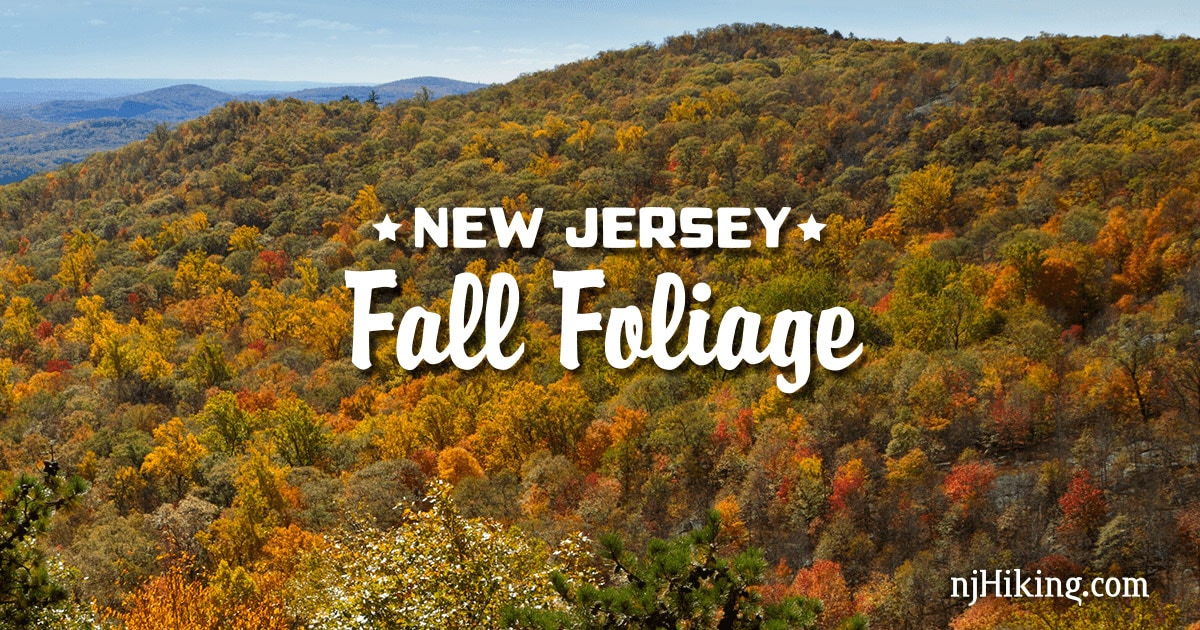
New Jersey’s fall hikes punch above their weight—dense hardwood forests compressed into accessible day trips from the Northeast Corridor mean peak color, no alpine slog, and parking that doesn’t require a lottery ticket. The state’s northwest corner, where the Appalachian Trail and Highlands Trail converge, delivers ridge views and valley color that rival much-hyped destinations an hour north.
Wyanokie High Point Loop
This loop delivers ridge-top foliage views without the crowds or elevation gain that punish knees on steeper Northeast hikes. The trail weaves through mixed hardwoods and opens onto exposed rock outcrops where you can see the color gradient shift across the valley below.
Best for hikers who want a solid workout (roughly 5–6 miles depending on your exact route) without committing to a full-day mountain push. The single reason it wins: the loop structure means no backtracking, and the ridge sections give you that “above the trees” perspective that makes fall color feel immersive rather than just pretty.
State Line, Ernest Walter, and Appalachian Trail Loop
This loop from Greenwood Lake Marina ties together three trail systems and crosses the New York–New Jersey border multiple times, making it ideal for hikers who want geographic variety and the psychological win of “hiking two states in one day.” The trail moves through dense forest with periodic water views and ridge openings. Best for intermediate hikers comfortable with route-finding and moderate elevation changes who want to maximize trail time without driving between trailheads.
The win: the Appalachian Trail section adds legitimacy and consistent blazing, so navigation stays simple even when the three-trail junction feels confusing on paper.
Forest View Trail and Closter Dock Loop
This loop from Alpine hugs the Hudson River’s New Jersey shoreline and delivers water-and-forest color contrast that inland trails miss—the river’s reflection doubles the visual impact of fall foliage, and the lower elevation means color peaks slightly later than ridge hikes, extending your window. Best for hikers seeking a gentler pace and scenic water views without serious elevation.
The reason it stands out: the proximity to the Hudson means the trail stays cooler and more humid, which keeps foliage vibrant longer into late October.
Monument Trail Loop at High Point State Park
High Point State Park sits at New Jersey’s northwestern tip, and the Monument Trail Loop circles the park’s signature stone tower with 360-degree views across three states and the Delaware River valley below. On clear fall days, the color gradient from the river flats up to the ridge is dramatic and unobstructed.
Best for hikers who want a short, manageable loop (roughly 3–4 miles) with maximum scenic payoff and a historic landmark to anchor the experience. The win: the tower itself is a built-in photo stop and turnaround point, making it easy to pace the hike and rest without feeling like you’re wasting time.
Vista Loop Trail
This trail lives up to its name—it’s designed for viewpoints, with multiple ridge openings and overlooks that break up the forest walk. The loop structure and moderate distance make it accessible to a wider skill range than some Highlands trails.
Best for hikers who want consistent scenic breaks and don’t want to gamble on whether a “scenic” trail actually delivers views. The single reason it wins: the trail is intentionally engineered for vistas rather than just passing through pretty forest, so you’re not hiking for 45 minutes between payoff moments.
Base yourself in the gateway towns of Greenwood Lake (NY/NJ border, close to State Line and Ernest Walter loops) or High Point (near the Monument Trail and Vista Loop), which offer small-town lodging and early-morning trailhead access without the resort pricing of mountain towns further north. Fall weekends fill fast—aim for weekday hikes in mid-to-late October when color peaks and crowds thin slightly after the initial foliage rush.
What Essential Gear Should You Pack for an Autumn Hike?
A sudden temperature drop at 3,000 feet can turn a pleasant morning hike into a dangerous situation—and fall weather shifts faster than foliage colors change. The difference between a safe, enjoyable day and a miserable or risky one comes down to what you actually pack before you leave the trailhead.
The Ten Essentials for Fall Trail Safety
These ten items are non-negotiable for any fall hike, regardless of trail length or difficulty. They address the core survival needs: navigation, hydration, energy, protection, and emergency response.
- Water: Carry at least 2 liters, even on shorter trails. Fall dehydration sneaks up because cooler air masks thirst, but elevation and exertion still demand it.
- Snacks and high-calorie food: Pack more than you think you need—nuts, energy bars, dried fruit, or nut butter packets. Your body burns calories faster in cold weather.
- Navigation (map and compass or GPS): Trails look different when leaves cover landmarks and daylight fades by 5 p.m. Download offline maps on your phone or carry a physical map and know how to read it.
- Sunscreen: UV rays reflect off water and light-colored rock. Fall sun is weaker, but high-elevation exposure still burns.
- Rain gear (jacket and pack cover): Fall rain can turn to sleet or snow above 4,000 feet. A lightweight, packable rain jacket is non-negotiable; a pack cover keeps your gear dry.
- First aid kit: Include blister treatment, pain relievers, antihistamine, and any personal medications. Falls on wet leaves happen.
- Headlamp with extra batteries: Sunset comes early—plan for darkness even if you expect to finish before dusk. A headlamp weighs almost nothing and prevents panic.
- Repair kit (knife, tape, cord): A multi-tool or knife handles gear failure; duct tape wrapped around a pencil fixes almost anything.
- Fire starter (waterproof matches or lighter): Carry two methods. Wet leaves make fire-starting harder than summer hiking.
- Emergency shelter (emergency blanket or bivy): A space blanket weighs ounces and reflects body heat—critical if you’re stranded after sunset.
Cold-Weather Hiking Gear and Warmers
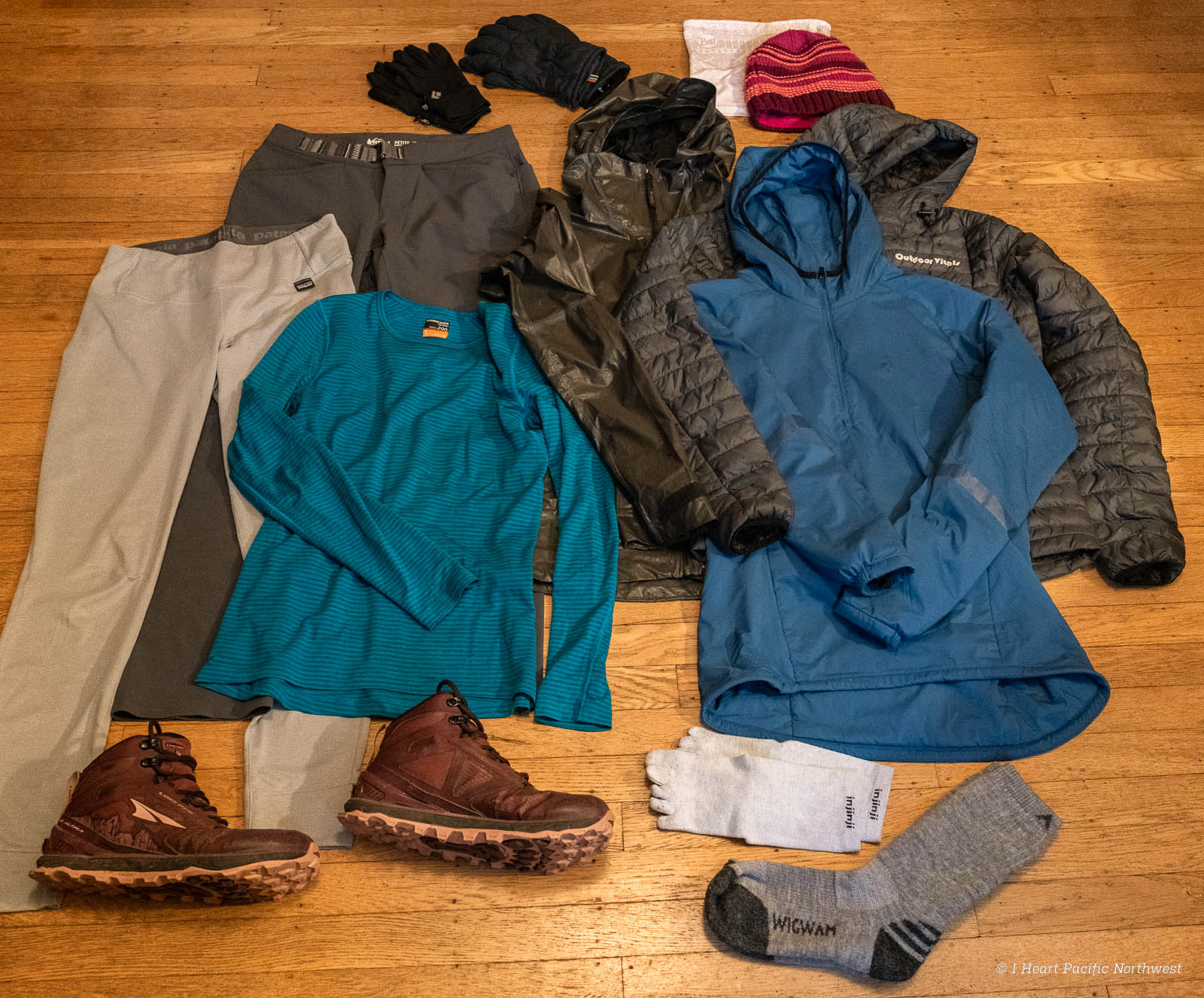
Layering is the only strategy that works for fall’s unpredictable swings from 60°F in sun to 35°F in shade. Wear three layers, not one thick jacket, so you can adjust as your body temperature and effort level change.
- Base layer (merino wool or synthetic): Cotton holds moisture and loses insulation when wet. Merino or polyester wicks sweat and keeps you warm even damp. This is the layer against your skin.
- Mid layer (fleece or lightweight down): Adds insulation without bulk. Fleece is cheaper and works when damp; down is lighter but useless if soaked. Choose based on your trail’s weather forecast.
- Outer shell (rain jacket): Windproof and water-resistant. This stops convective heat loss—the biggest threat on exposed ridges.
- Gloves: Your hands lose heat fastest. Bring gloves even if the forecast says 50°F—wind chill and elevation change that math. Bring a backup pair or mittens if you’re hiking above 3,500 feet.
- Hat or beanie: You lose 40% of body heat through your head. A lightweight wool or synthetic hat packs into a jacket pocket and is essential above 2,500 feet.
- Hand warmers (disposable heat packs): Brands like Hot Hands activate on contact and last 8–10 hours. Slip them into gloves or pockets on cold mornings. They’re cheap insurance and weigh nothing.
- Sturdy, broken-in hiking boots or shoes: Wet leaves are slippery. Boots with ankle support and aggressive tread prevent twisted ankles and falls. Test them on a short hike before tackling a major peak—new boots cause blisters, and blisters become emergencies fast.
- Moisture-wicking socks (wool or synthetic): Cotton socks absorb sweat and cause blisters. Wool socks stay warm even wet and prevent foot problems that derail hikes.
- Bug spray: Fall mosquitoes and ticks are still active, especially in lower elevations and near water. Spray exposed skin and tuck pants into socks in brushy areas.
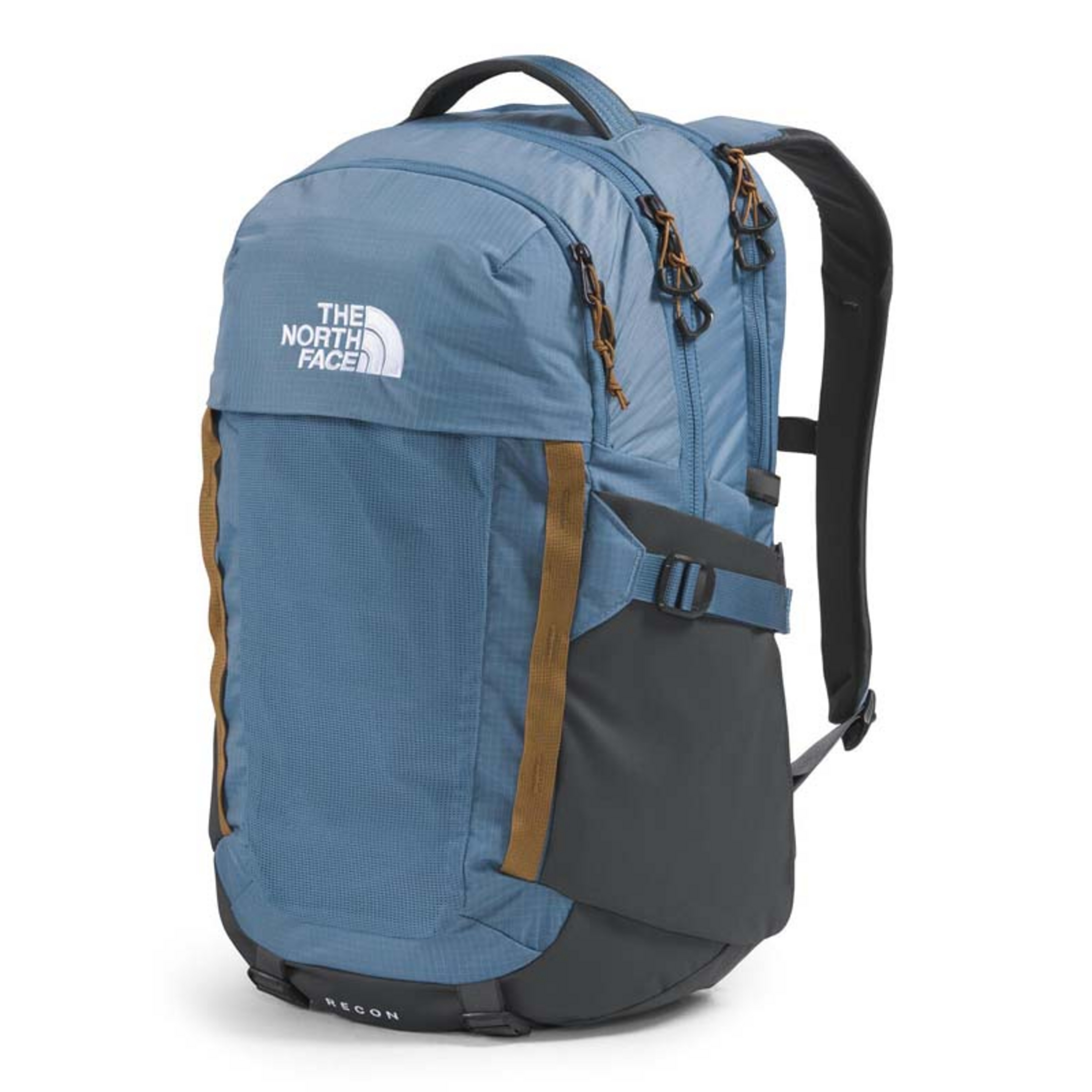
Pack all of this in a backpack with a rain cover or waterproof liner. A 20–30 liter pack is standard for day hikes; anything larger tempts you to overpack. Distribute weight evenly—heavier items (water, snacks) should sit mid-pack, close to your spine.
Frequently Asked Questions
When exactly should I plan a fall foliage hike to catch peak color?
Peak timing shifts dramatically by geography — the northern Adirondacks peak 2–3 weeks earlier than the Catskills, and elevation adds another variable within the same region. Rather than picking a fixed date, use a fall foliage predictor tool (updated weekly during autumn) to match your chosen destination, then book lodging and hikes 2–3 weeks before the predicted peak for that specific area.
Weather, rainfall, and temperature swings change the timeline every year, so checking the predictor 1–2 weeks before your trip beats any calendar date.
How do I choose between hiking in the Adirondacks versus the Catskills if I’m based in New York?
The Adirondacks (Jay Mountain, Bald Mountain, Blue Mountain) peak earlier and offer exposed ridge hikes with 360-degree views — book these for early-to-mid October for the most reliable color. The Catskills (Kaaterskill Falls, Hunter Mountain) peak 2–3 weeks later and sit closer to New York City, making them the move for last-minute trips or if you want dramatic waterfall views alongside foliage; they’re also less crowded than the Adirondacks during their peak.
If you want the longest possible foliage season within New York, hit the Adirondacks first, then return to the Catskills 3 weeks later.
What’s the difference between a “short scenic walk” and a “serious hike” for fall foliage?
Kaaterskill Falls (Catskills) and Taughannock Falls (Finger Lakes) deliver stunning color with minimal elevation gain — these work for families or anyone prioritizing scenery over exertion. Jay Mountain, Old Rag Mountain (Shenandoah), and Clingmans Dome (Great Smoky Mountains) demand real fitness but reward you with exposed ridges and panoramic views that short walks cannot match.
The Elk Pen Loop (Harriman State Park) splits the difference at 7.5 miles with multiple viewpoints and the novelty of the “lemon squeezer” rock passage — it’s the sweet spot for intermediate hikers who want challenge without brutality.
Do I need to book accommodations in advance for fall foliage season?
Yes — peak foliage weekends (typically mid-October in the north, late October in southern regions) fill lodging 4–6 weeks ahead. For the Adirondacks and Catskills, base yourself in gateway towns like Lake Placid or Tannersville to secure cabins, mountain inns, or lodges near trailheads; this also gives you early-morning access before crowds arrive.
If you’re flexible on dates and can hike on weekdays rather than weekends, you’ll find better availability and emptier trails — the tradeoff is worth it.
Book Your Fall Foliage Hike Now
Pick your region based on your calendar: Adirondacks if you can go early September, Catskills or Hudson Valley if you’re locked into mid-October, Finger Lakes if you want the latest possible color window. Check the foliage predictor this week, secure lodging in a gateway town (Lake Placid for Adirondacks, Tannersville for Catskills, Cold Spring for Hudson Valley), and plan to arrive at your trailhead by 7 a.m. on your hike day to beat the crowds.
Fall foliage hiking rewards planning more than almost any other outdoor pursuit—the difference between a transcendent day surrounded by peak color and a disappointing hike through brown leaves comes down to timing, and timing is entirely within your control.
Choose your destination and peak timing window from the table above, then set a phone reminder to check the foliage predictor two weeks before your intended trip date.
Leave a Reply