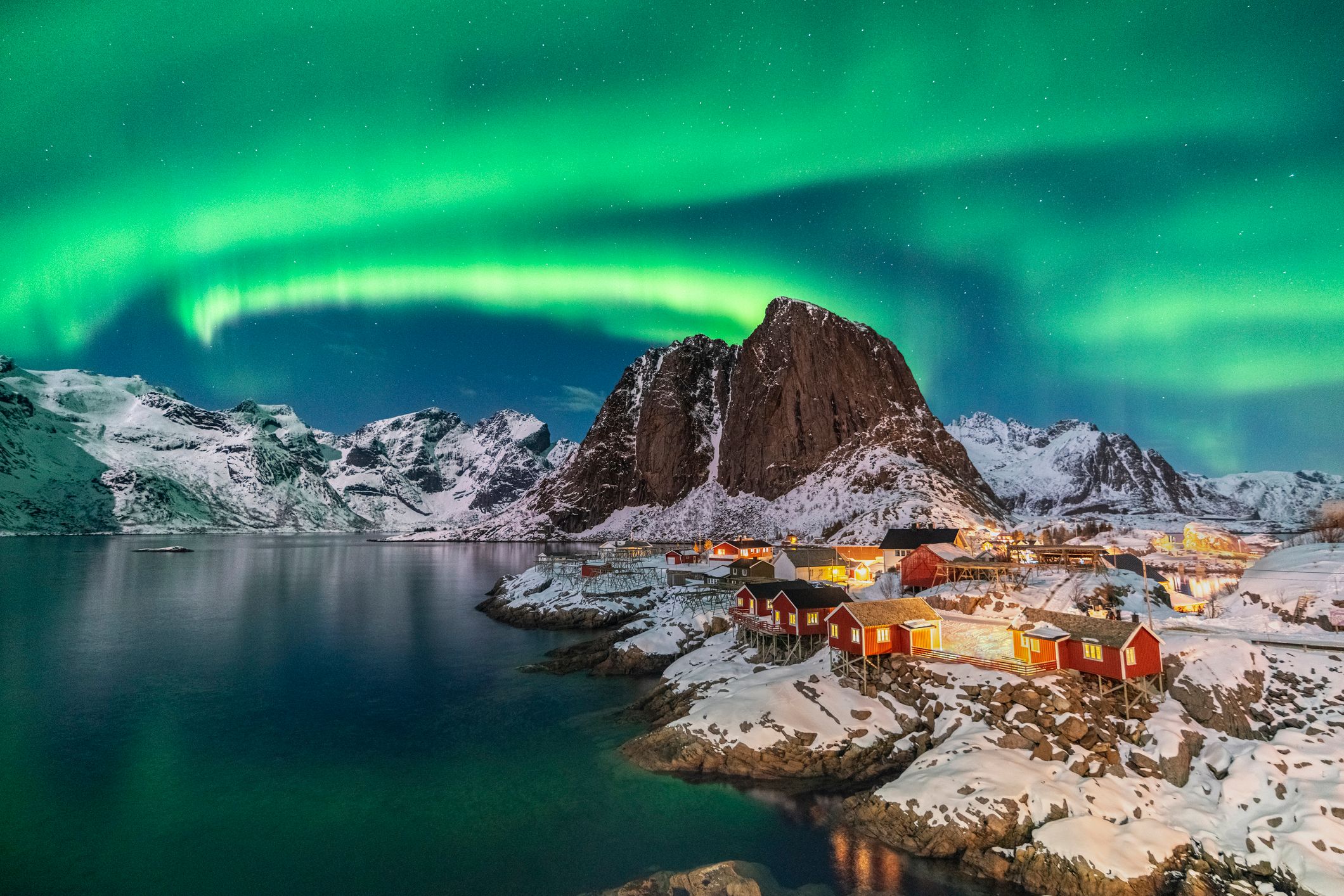
The air bites your cheeks as you step outside, each breath a visible cloud against the ink-black sky. Then it starts—a silent, impossible dance of green and violet light, rippling above a landscape of pristine, crunching snow.
This is December’s gift: the deepest, longest darkness of the year across the Arctic, transforming every night into prime aurora-viewing time fused with the unmistakable magic of the holiday season.
This guide cuts through the noise to help you choose your perfect December aurora destination, balancing clear-sky odds with the festive experience you crave.
Expect to invest anywhere from $1,800 for a budget-focused trip to Fairbanks, to $5,000+ for a premium Christmas-week package in Finnish Lapland.
Quick Picks: Top Northern Lights Destinations for December
- Best Overall & Families: Finnish Lapland (Rovaniemi, Saariselkä, Levi). Continental climate offers Scandinavia’s best clear-sky odds, all wrapped in unparalleled Christmas atmosphere with glass igloos and Santa Claus Village.
- Best for Serious Chasers: Abisko, Sweden. Its rain shadow microclimate creates the most reliable clear nights in the region, making it the top pick if aurora probability is your single goal.
- Best North American Base: Fairbanks, Alaska. Dry interior skies and dedicated aurora infrastructure (lodges, hot springs) make it the most accessible and reliable option for travelers avoiding international flights.
- Best City Experience with Edge: Alta, Norway. Designated “Christmas Town,” it blends Norwegian Arctic culture with inland climate that yields 50% more clear-sky hours than coastal Tromsø.
- Best for Extreme Darkness: Svalbard. For experienced travelers only, this 78°N destination offers 24-hour darkness and overhead auroras on even low activity nights.
Best Places to See Northern Lights in December
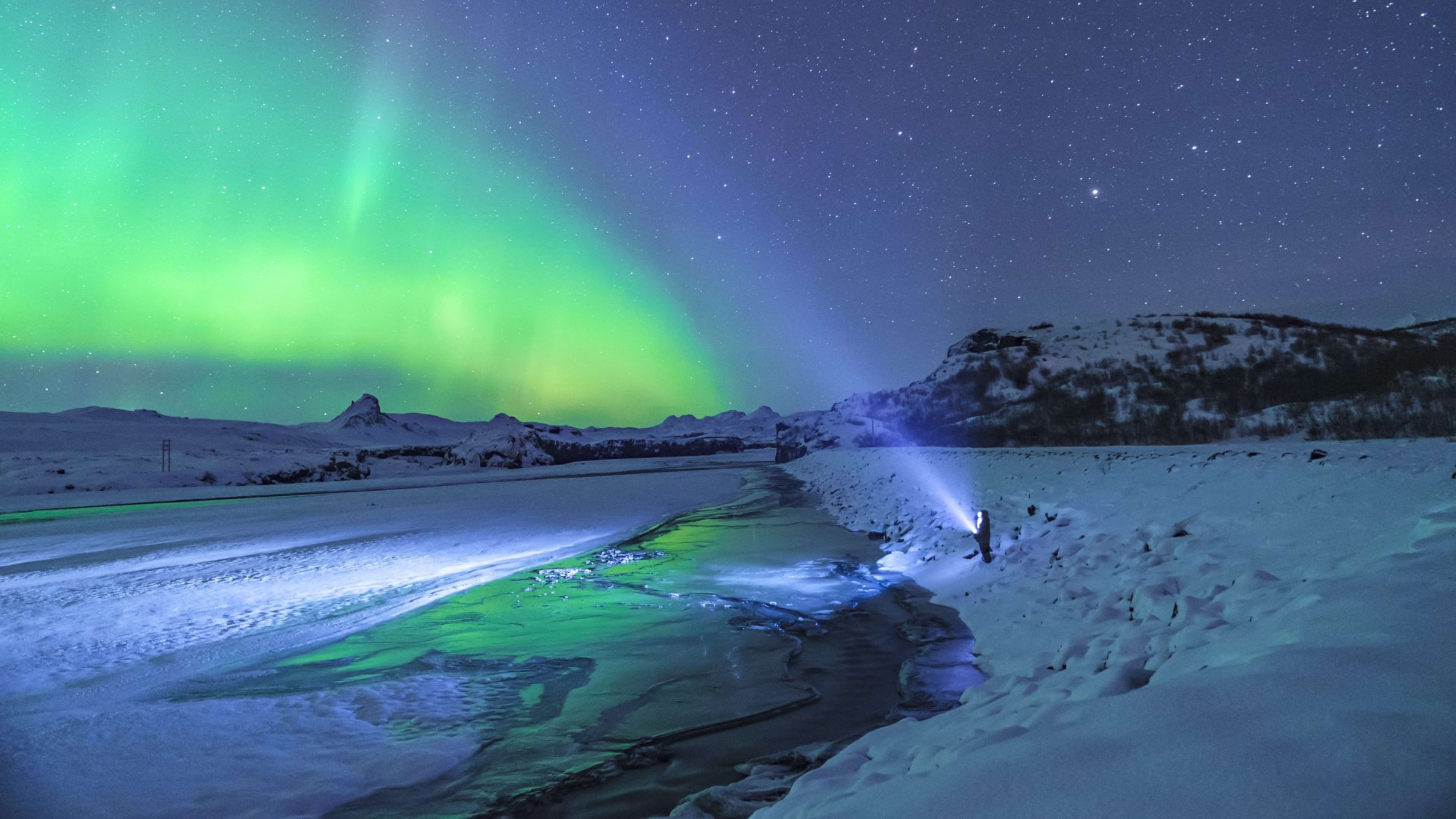
The difference between a December aurora trip and a December cloud trip comes down to one decision: where you base yourself. Inland continental destinations like Finnish Lapland and Fairbanks offer dramatically better clear-sky odds than coastal cities like Tromsø or Reykjavik, where your guide may spend the evening driving hours to find a gap in the clouds.
Choose your destination based on this map — not just the marketing photos.
| Destination | Best For | Clear-Sky Edge | December Vibe |
|---|---|---|---|
| Finnish Lapland | Families, couples, first-timers | Continental climate — best in Scandinavia | Christmas immersion, glass igloos |
| Tromsø, Norway | Solo travelers, city lovers | Coastal — drives inland for clear skies | Polar night, fjord tours, nightlife |
| Alta, Norway | Cloud-conscious Norway fans | Inland — 50% more winter sun than Tromsø | Julebyen (Christmas Town), cathedral |
| Abisko, Sweden | Serious aurora chasers | Rain shadow microclimate — best in Scandinavia | Minimal — aurora-first destination |
| Svalbard | Experienced Arctic travelers | 78°N — weak aurora visible overhead | Polar night, expedition mood |
| Fairbanks, Alaska | North American travelers | Dry interior — best in Alaska | Aurora lodges, hot springs |
| Yellowknife, Canada | Canadian travelers | Inland northern — reliable | Aurora village resorts |
| Reykjavik / Rural Iceland | Adventure road trippers | Highly variable — weather shifts hourly | Ice caves, waterfalls, volcano country |
Finnish Lapland: Rovaniemi, Saariselkä, and Levi
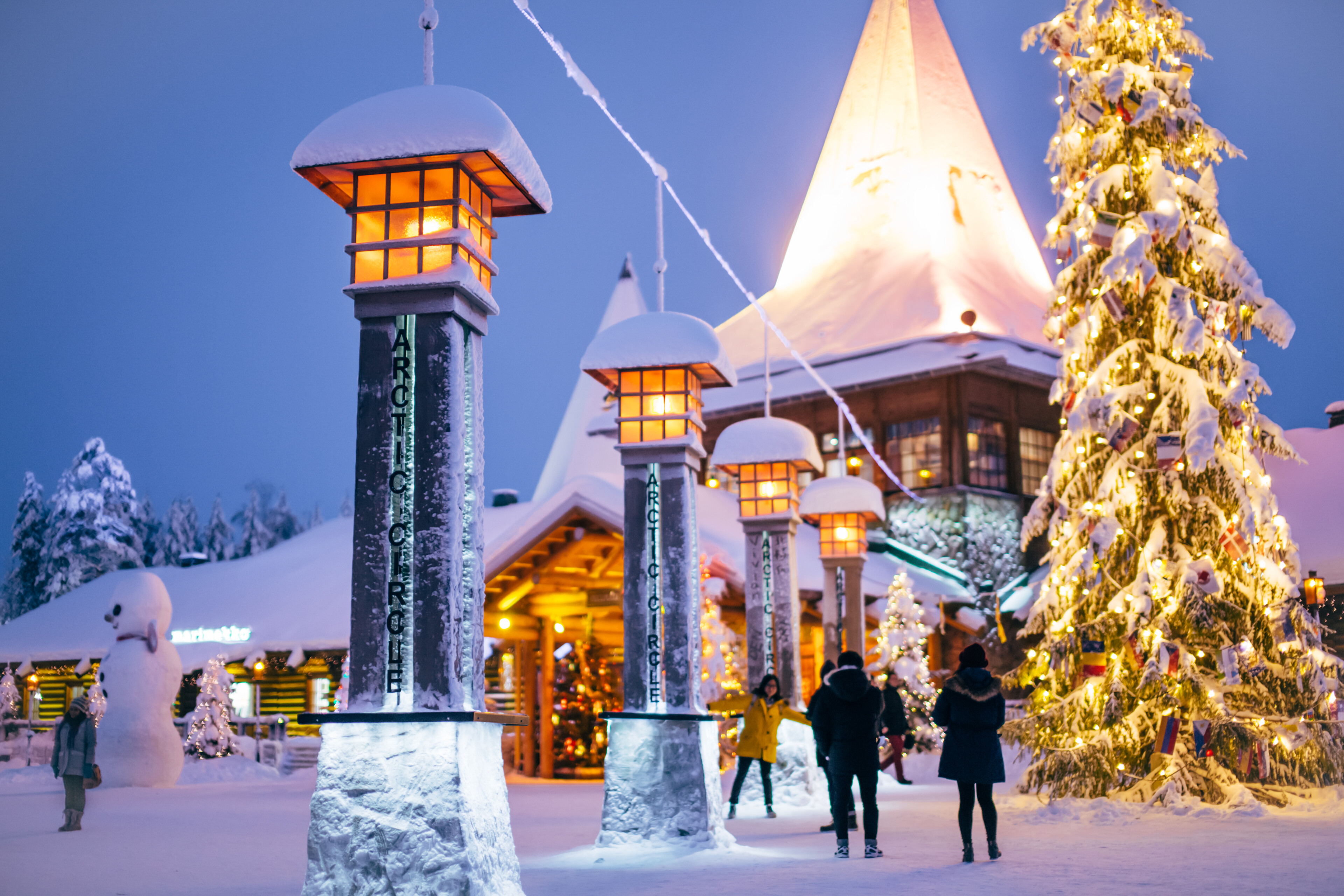
Finnish Lapland is the December destination that does everything at once. The continental climate delivers significantly better clear-sky statistics than coastal Norway, and the Christmas infrastructure — Santa Claus Village in Rovaniemi, glass igloo resorts, reindeer sleigh rides through snow-covered pine forests — creates an experience no other aurora destination matches.
A 5-night stay in inland Finnish Lapland during the current solar maximum carries a realistic 50–70% chance of at least one strong aurora display.
Rovaniemi is the family default — home to the official Santa Claus Village with the most tour operators, restaurants, and accommodation options. The trade-off: it’s the most light-polluted and tourist-heavy of the three bases. Saariselkä runs quieter and further north with darker skies and thinner crowds. Levi is a proper ski resort town with après-ski and nightlife, but less Christmas branding than Rovaniemi.
- Best for: Families, couples, and anyone who wants Christmas atmosphere baked into an aurora trip.
- Base strategy: Saariselkä or Levi for better aurora odds; Rovaniemi for the full Santa experience. All three work as bases for guided evening aurora hunts into the surrounding wilderness.
- Insider tip: Glass igloo resorts book out 6–9 months ahead for December. If they’re gone, look for cabin-style lodgings with private saunas — the real Finnish Lapland experience, and often better positioned away from resort light pollution.
- Book by: June at the latest. December sells out before any other aurora month.
Tromsø, Norway
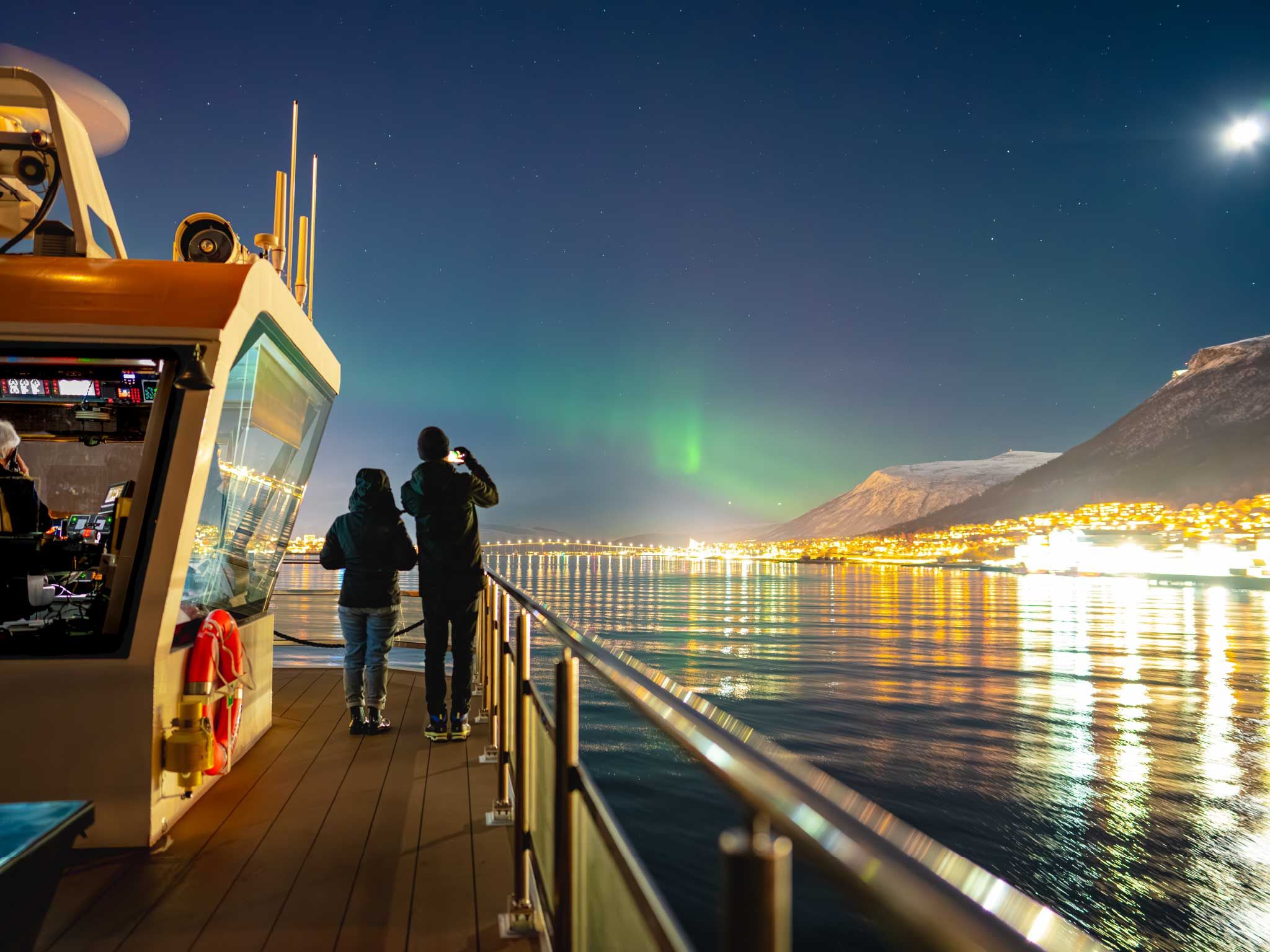
Tromsø is the Arctic city that makes northern Norway feel accessible. Guided aurora chases leave nightly, fjord cruises run daily, and polar night — no sun above the horizon from November 21 to January 21 — wraps the city in blue twilight and Christmas lights.
But Tromsø sits on the coast, and coastal cloud cover means your guide will drive 1–3 hours inland most nights to find clear skies. You’re not watching aurora from your hotel balcony; you’re earning it in a minibus.
- Best for: Solo travelers and couples who want city dining, nightlife, and professionally handled chase logistics.
- Watch-out: Cloud chases add hours to each evening. Book multi-night guided packages rather than single-night tours — one cloudy night shouldn’t kill your only shot.
- Insider tip: Guides regularly cross into Finland or drive toward the Alta region when Tromsø’s coast is locked in clouds. Ask your operator about typical chase routes and driving distances before committing.
Alta, Norway — The Christmas Town
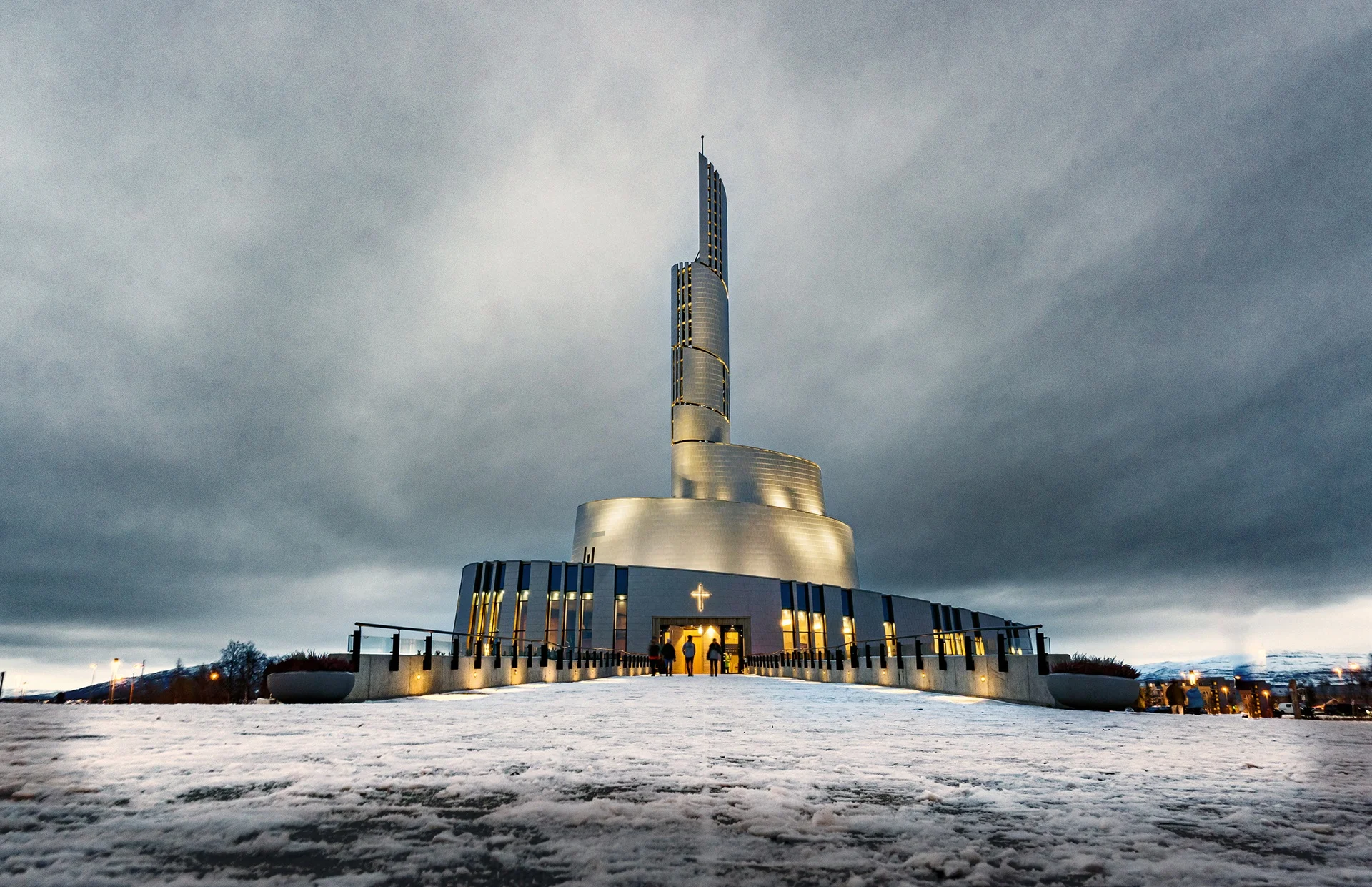
Alta holds the card Tromsø can’t play: it’s formally designated Julebyen — Norway’s Christmas Town — and it sits inland at 69.9°N, receiving roughly 50% more winter sunshine hours than Tromsø. That’s not a tourism stat; it’s a weather advantage that translates directly to fewer clouds and better aurora odds without multi-hour chases.
The Northern Lights Cathedral, a titanium-clad spiral completed in 2013, glows against the dark December sky after dusk and is one of the most photographed buildings in Arctic Norway.
- Best for: Travelers who want Norwegian Arctic culture with genuinely better clear-sky probability than Tromsø.
- Why it beats Tromsø: Less famous means fewer tourists, shorter drives to viewing spots, and the inland climate does the work that your guide’s car does in Tromsø.
- Base strategy: Stay in Alta town center — the Northern Lights Cathedral and Christmas markets are walkable, and operators run shorter evening excursions than Tromsø-based chases.
Abisko, Sweden
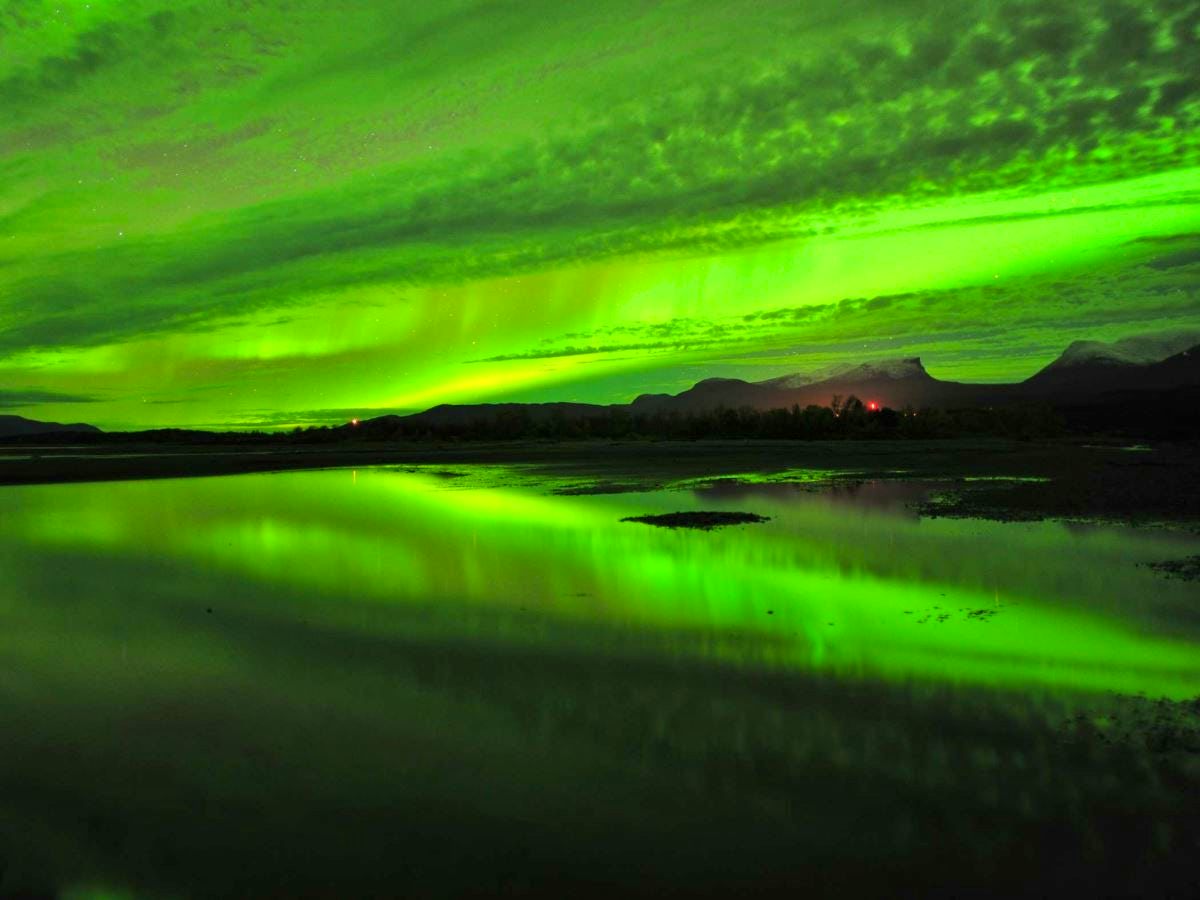
Abisko holds the strongest cloud-free reputation in all of Scandinavia. The village sits in a rain shadow at the western edge of Lake Torneträsk, creating a microclimate that produces more clear nights than anywhere else in the region.
The STF Abisko Turiststation operates year-round and runs the Aurora Sky Station on Mount Nuolja. What Abisko does not offer is festive atmosphere — there’s no Christmas village, minimal dining, and lodging capacity is genuinely limited.
- Best for: Serious aurora chasers who rank viewing probability above all other factors.
- Getting there: The overnight train from Stockholm to Narvik stops at Abisko Östra. Book rail tickets and accommodation together early — the village has limited beds and December fills fast.
- Honest take: If aurora is the mission and Christmas is secondary, Abisko beats every other Scandinavian destination. If you want festive atmosphere and reindeer sleigh rides, go to Finnish Lapland instead.
Svalbard — The Darkest Option
Svalbard at 78°N is the only destination on this list where even a weak Kp 1–2 aurora display appears directly overhead rather than low on the northern horizon. Polar night has been continuous in Longyearbyen since late October — no twilight, no hint of sun, just full darkness around the clock.
This makes Svalbard genuinely different from any mainland destination, but the logistics match the extremity: expensive flights, limited accommodations, and temperatures that demand serious preparation.
- Best for: Experienced Arctic travelers who want maximum darkness and don’t need Christmas packaging.
- Realistic expectation: Flights from Oslo or Tromsø can be delayed or canceled by weather. Build buffer days on both ends of your stay.
- Insider tip: You cannot leave Longyearbyen without an armed guide due to polar bear risk. Aurora viewing stays close to town unless you book a guided snowmobile excursion into the Advent Valley — which is spectacular and worth the cost.
Fairbanks, Alaska
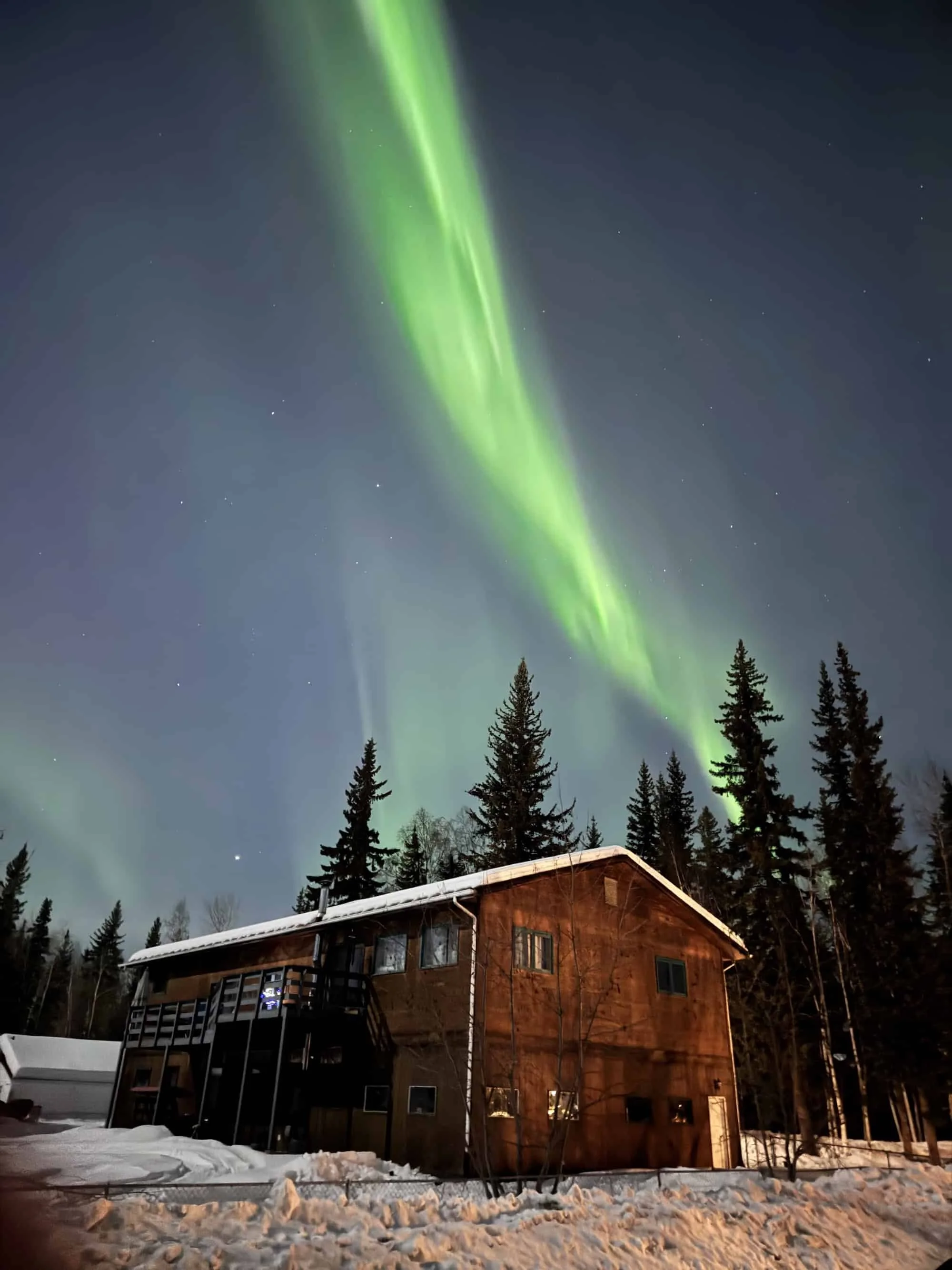
Fairbanks is the strongest aurora destination in North America, and December’s dry interior climate is why. Travel Alaska identifies Fairbanks and the surrounding Arctic region as Alaska’s best for aurora probability.
Low humidity means fewer clouds than you’d expect this far north, and the city has built a real aurora infrastructure: lodges with heated viewing cabins, dedicated alert systems, and operators who handle the extreme cold logistics for you.
- Best for: North American travelers who want serious aurora odds without a passport or transatlantic flight.
- Cold factor: December temperatures routinely drop below -20°F. This isn’t “dress warm” — it’s “your phone dies in minutes and exposed skin freezes fast.” Plan indoor warm-up breaks into every evening session.
- Base strategy: Stay 30–60 minutes outside Fairbanks — along Murphy Dome Road or toward Chena Hot Springs — for darker skies while keeping city restaurants and supply runs accessible.
- Insider tip: Chena Hot Springs Resort combines outdoor hot spring soaking with aurora viewing on clear nights. It’s roughly 60 miles from Fairbanks — book the overnight package rather than doing the icy nighttime drive back.
Yellowknife, Canada
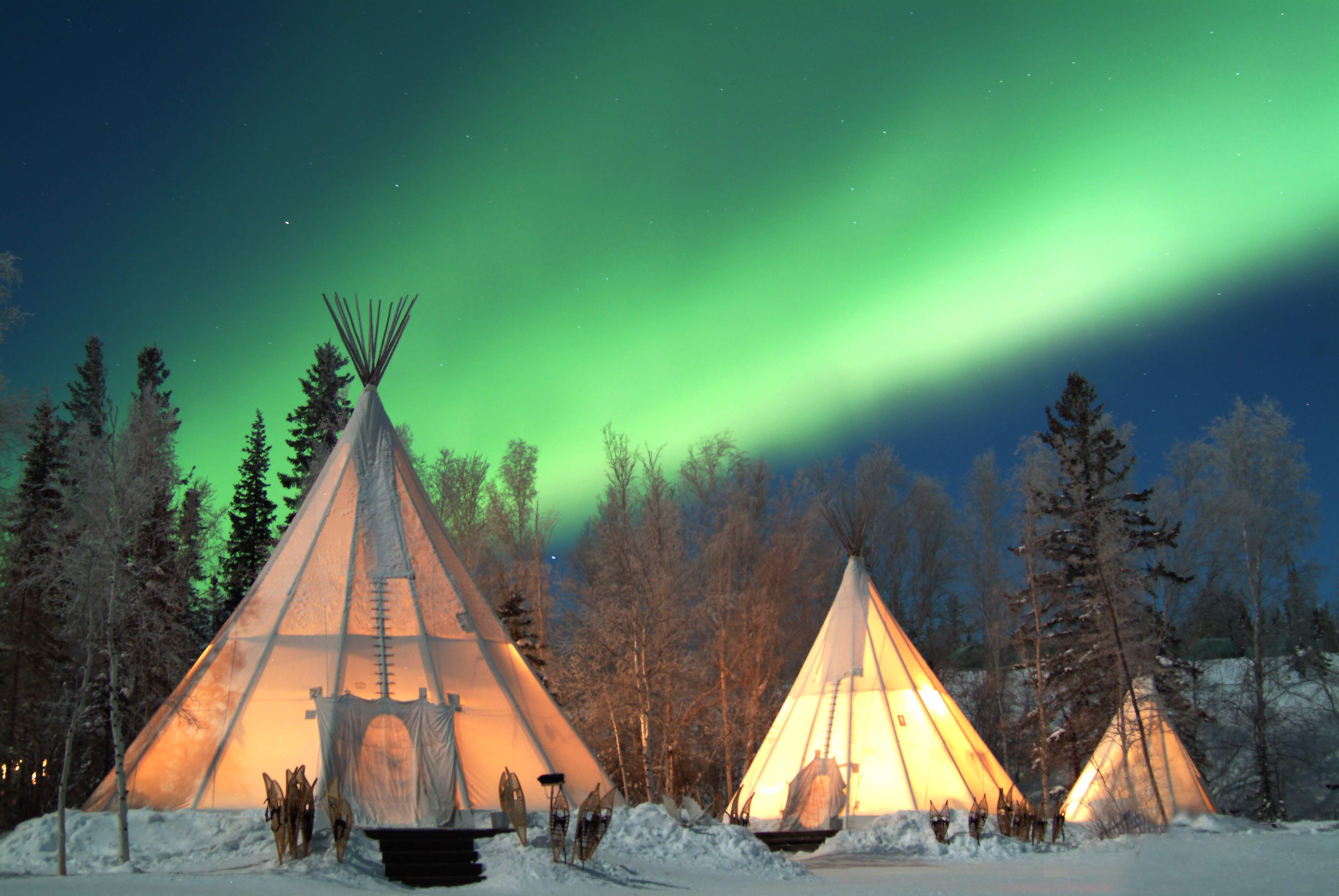
Yellowknife markets itself as Canada’s aurora capital, and the inland northern climate backs it up with dark skies, low light pollution, and a long track record of aurora tourism. Getting there and handling the deep cold, though, requires more planning than a European Arctic city break — flights connect through Edmonton or Calgary, and December temperatures rival Fairbanks.
- Best for: Canadian travelers or anyone who prefers a North American base with turnkey aurora lodge packages.
- Logistics: Fewer direct flight options than Fairbanks. Aurora village resorts bundle pickup, heated outdoor viewing, and overnight stays — worth it for first-timers unfamiliar with northern Canadian winter.
- Honest take: Fairbanks edges Yellowknife for most travelers. Easier flights, more varied winter activities beyond aurora, and a slightly larger city to absorb weather-delay days.
Reykjavik and Rural Iceland
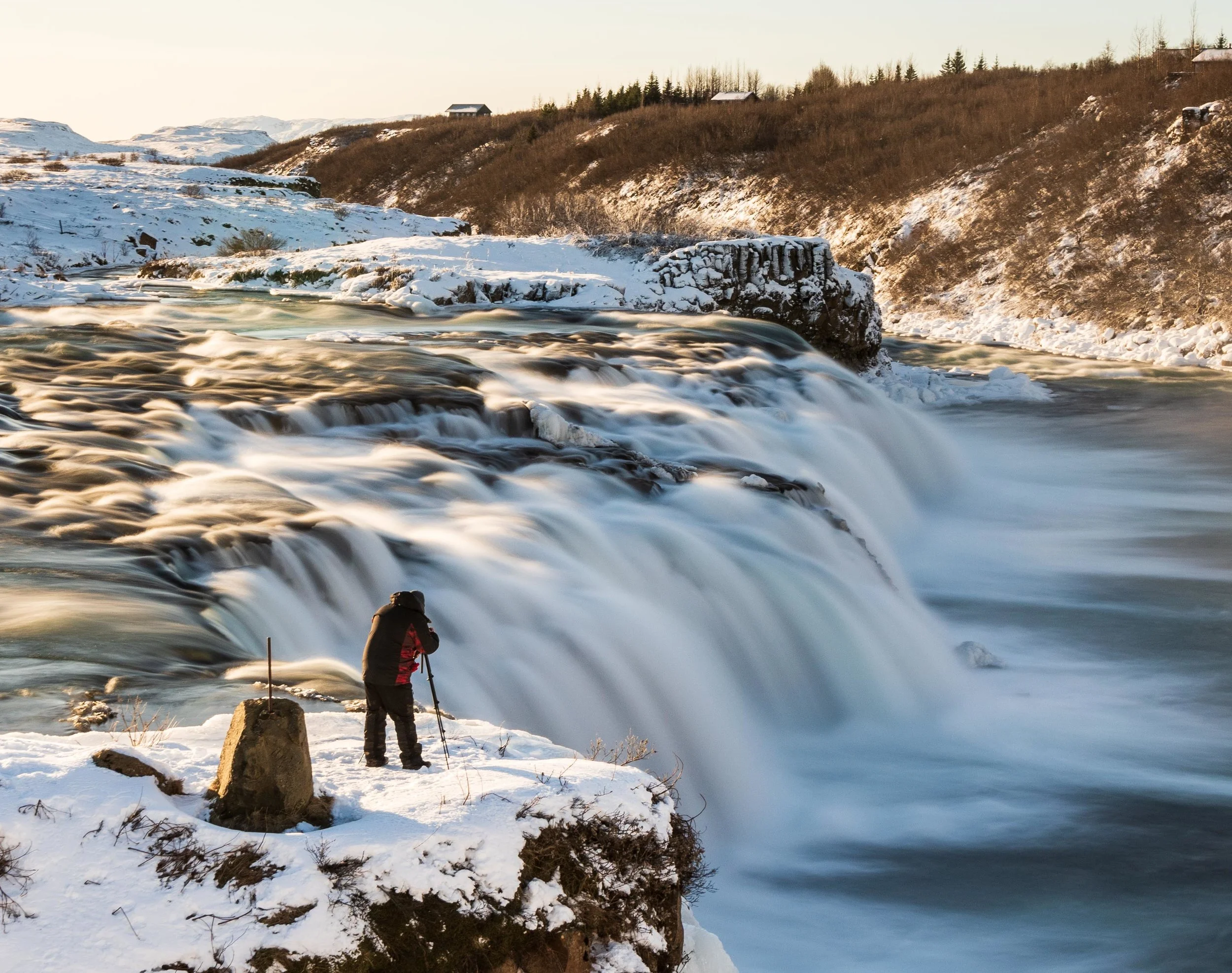
Iceland offers the easiest transatlantic flights from the US East Coast — under five hours from Boston or New York — and the winter landscapes are extraordinary: frozen waterfalls, volcanic black-sand beaches, ice caves under aurora. The problem is December weather.
Cloud, wind, and road conditions shift hourly, and self-drive plans need real caution on icy rural highways. Reykjavik itself has too much light pollution for meaningful viewing, so you must drive out or join a guided bus tour each night.
- Best for: Travelers who want a winter adventure road trip where aurora is a highlight, not the only mission.
- Base strategy: Don’t base in Reykjavik if aurora is your priority. Stay near Þingvellir National Park or along the south coast for darker skies. If you are staying in Reykjavik, book nightly bus tours that drive to clear-sky zones — they’re inexpensive and eliminate the driving risk.
- Watch-out: December road closures are common outside Reykjavik. A 4×4 is mandatory for rural driving, not optional. Check road.is daily for conditions and closures.
Why Does December Work So Well for Aurora Viewing?
The winter solstice on December 21 isn’t just a date—it’s the astronomical engine that powers December’s claim as the peak darkness month for aurora hunting. This period creates a 24-hour window for potential viewing across the Arctic Circle, turning every night into a prime-time event.
Polar Night and Maximum Darkness
North of the Arctic Circle, polar night is in full effect. In practical terms, destinations like Tromsø experience no sun above the horizon from late November to late January, while Svalbard has been dark since October.
This eliminates the constraint of short daylight hours that can limit aurora chasing in shoulder months. Your viewing window isn’t “after dark”—it’s essentially the entire 24-hour cycle, maximizing every opportunity for a clear-sky sighting.
- Plan Around It: The endless twilight can affect circadian rhythms. Factor in daytime activities like dog sledding, museum visits, or cozy cabin time to stay energized and keep warm.
- The Advantage: You can schedule dinner, a sauna, or a nap and still have hours of darkness left for aurora watching—no rush required.
Solar Cycle 25: Why This Decade’s Decembers Are Special
You’re timing your trip during a once-in-a-decade opportunity. Solar Cycle 25 is peaking in 2024–2026, meaning the sun is emitting more frequent and intense solar storms.
This directly translates to stronger, more frequent, and often more colorful aurora displays reaching down to lower latitudes.
- Take Action: This solar peak makes a December 2024-2026 trip significantly more promising than one in the early 2030s. The combination of maximum darkness and heightened solar activity is a powerful pairing.
- The Booking Reality: Because of this convergence, December is the hardest and most expensive month to book. Accommodation in prime spots sells out months in advance—by August or earlier for popular dates.
What Role Does Cloud Cover Play in December Aurora Odds?
Cloud cover is December’s primary wildcard and the biggest tactical challenge. While darkness is guaranteed, clear skies are not.
A coastal location like Tromsø, while atmospheric, can be prone to marine cloud layers, often requiring guides to drive far inland for clearings.
The strategic move is to choose your base with cloud avoidance in mind.
| Climate Type | Example Destinations | December Cloud Cover Profile | Opinionated Take |
|---|---|---|---|
| Coastal/Maritime | Tromsø, Reykjavik | Higher chance of persistent cloud banks and snow showers that obscure the sky. | Aurora chases here are real drives—tours may cover 200+ km to find clear inland air. |
| Continental/Inland | Alta, Abisko, Fairbanks, Yellowknife | Statistically drier and clearer. Alta’s continental climate, for instance, yields about 50% more clear-sky winter hours than coastal Tromsø. | Alta and Abisko are your best bets for maximizing clear nights without constant relocation. The trade-off is colder temperatures. |
Insider Strategy: For a cloud-cover hedge, consider splitting your stay: start with a few nights in a cultural hub like Tromsø for city amenities and guided tours, then transfer to a clear-sky base like Alta or Abisko for dedicated, high-odds viewing. Book this logistics early.
How December Compares to Other Northern Lights Months
December’s claim to fame is simple: the winter solstice lands on December 21, making it the darkest month of the year across the Arctic, which translates to the longest nightly window for aurora hunting.
| Month | Planning Profile | Best For |
|---|---|---|
| November | Early winter darkness, fewer crowds, lower prices. | Aurora-first trips before peak holiday demand. |
| December | Maximum darkness, snow, Christmas atmosphere, highest demand. | Full winter trips and travelers who want the festive experience. |
| January | Deep winter, often quieter and cheaper after New Year. | Aurora trips with fewer crowds and better rates. |
| February | Excellent geomagnetic activity, still very dark. | Travelers prioritizing best per-night aurora probability. |
| March | Equinox-season geomagnetic interest, lengthening days. | Balanced winter activities plus aurora. |
December vs November
Choose December if the full winter package—snow, Christmas markets, festive atmosphere—is non-negotiable. Choose November if your priority is aurora with less stress: it’s less crowded, often cheaper for flights and lodging, and darkness is still excellent by mid-month.
December is darker and more atmospheric; November is more practical and easier on the wallet.
December vs January
January is December’s quieter twin. The first week is still peak-priced and busy, but from around January 8 onward, crowds and rates drop noticeably while darkness levels remain nearly identical.
If you want the deep winter, snowy aurora trip without the holiday frenzy and sold-out tours, January is the smarter play. December only wins decisively for that specific Christmas-week magic.
December vs February and March
For pure aurora probability per night, February and March generally beat December. Geomagnetic activity often peaks around the equinoxes (March and September), and February benefits from excellent activity combined with persistent darkness.
March offers a fantastic balance: still-dark nights, higher solar activity, and the bonus of longer twilight for landscape photography. If maximizing your statistical chance of seeing the lights is the primary goal, book February or March.
Is December the Best Month for Aurora Probability?
No. Statistically, February and March often offer better geomagnetic conditions, and the shoulder months (September, October, January) are usually cheaper and less crowded. December’s unique draw is its unmatched combination of maximum polar night darkness and the immersive Christmas atmosphere.
For many, that trade-off is worth it. For others focused purely on the aurora itself and value, it’s not.
Insider Booking Pressure: The most unique December accommodations—glass igloos, wilderness cabins, and small lodges in prime aurora zones—sell out faster for December than for any other month. If you have your heart set on a specific place, you should be booking by August for December dates.
What Kind of December Northern Lights Trip Should You Book?
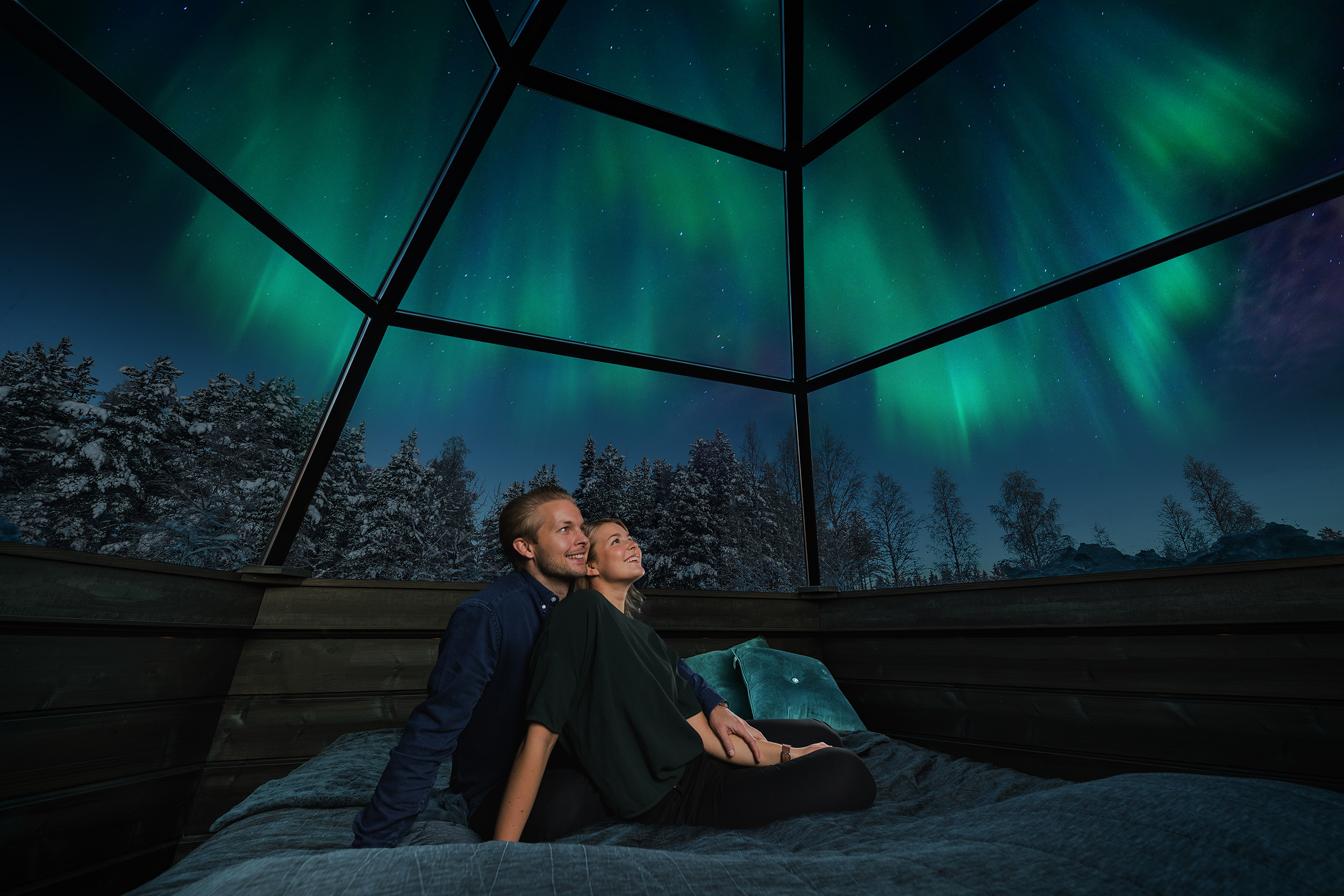
December splits into three very different trips — and the price gap between them can be $2,000 to $4,000 per person depending on which one you choose. Pick the wrong one and you either overpay for Christmas crowds you don’t need, or miss the festive magic your family actually wanted.
| Trip Type | Best For | Sweet Spot Dates | Approx. Cost Per Person (7 nights, from US) | Book By |
|---|---|---|---|---|
| Christmas Aurora Experience | Families, couples, holiday magic | Dec 20–Jan 2 | $3,500–$7,000+ | July (Christmas week), August (early December) |
| Budget-Friendly December | Aurora-first travelers watching costs | Dec 1–20 | $1,800–$3,500 | Late August |
| Dedicated Aurora Chasing | Photographers, northern lights purists | Dec 10–Jan 5 | $2,500–$5,000 | August–September |
Prices above are rough baselines covering flights from the US East Coast, lodging, and at least two guided excursions. They vary significantly by destination, accommodation type, and how far in advance you book.
The Christmas Aurora Experience for Families and Couples
If your December trip has to include reindeer sleigh rides, Santa Claus Village, and hot chocolate in a snow-covered cabin while the aurora fires overhead, Finnish Lapland is the undisputed winner. No other destination on Earth matches the infrastructure Rovaniemi, Levi, and Saariselkä have built around the Christmas-plus-northern-lights concept — glass igloo resorts, husky safaris through pine forests, and the official Santa Claus Village open daily in December.
Alta, Norway — formally designated “Julebyen” (Christmas Town) — is the Scandinavian alternative. It runs roughly 50% fewer clouds than nearby Tromsø thanks to its inland climate, which means your Christmas week has better statistical odds of clear skies.
The Northern Lights Cathedral and local Christmas markets give it genuine cultural atmosphere, not just tourist packaging.
The catch: Christmas week (December 20 through early January) is the single most expensive aurora window of the year. Glass igloos and unique accommodation — think wilderness camps and lakeside cabins — are typically fully booked by mid-September for all December dates.
Dog sled excursions, reindeer safaris, and whale-watching tours sell out almost as fast.
- Book accommodation by late August for December 10–20 dates. For Christmas and New Year week, book in July or as soon as your dates are fixed.
- Tours at the same time or earlier. Small-group aurora excursions, husky sledding, and reindeer experiences fill up before lodging does.
- Minimum three nights; four to five is safer if seeing the aurora is a priority rather than a bonus. Cloud cover can block two or three consecutive nights without warning.
- The solstice window around December 21 delivers maximum darkness across every Arctic destination — polar night means potential aurora viewing from late afternoon through mid-morning.
Insider detail: Rovaniemi’s Santa Claus Village is free to enter, but the popular activities inside — meeting Santa, the Arctic Circle certificate, husky park — each carry separate fees that add up fast. Budget an extra €50–100 per family for the “free” village visit.
Budget-Friendly December Aurora Trips
Here’s what the Christmas-heavy marketing won’t tell you: early December (December 1 through 20) delivers the exact same polar night, identical aurora conditions, and full snow coverage as Christmas week — at significantly lower prices and with far better availability. The only thing missing is the Christmas Day atmosphere itself.
If your primary goal is seeing the northern lights and you’re flexible on the holiday angle, the first three weeks of December are the smarter buy across every destination. Guided tours run at full capacity, glass igloos and wilderness lodges have open availability, and package prices drop noticeably compared to the December 20–January 2 surge.
Where to save even more:
- Fairbanks, Alaska is the strongest budget option for US-based travelers. Domestic flights eliminate the transatlantic fare, and the city’s aurora infrastructure (lodges, guided tours, the Geophysical Institute forecasts) is built for independent travelers rather than package tourists. Expect roughly $1,800–$3,000 per person for a week including flights from the Lower 48, mid-range lodging, and two to three guided outings.
- Yellowknife, Canada offers a similar value proposition with dedicated aurora villages and clear skies. It’s smaller and less developed than Fairbanks, but the aurora-viewing infrastructure is purpose-built.
- Inland Scandinavian bases like Abisko, Sweden avoid the coastal cloud cover that plagues Tromsø. The village is small, accommodation options are limited, and you’ll need to self-drive or take the overnight train from Stockholm — but the clear-sky statistics are among the best in Europe.
Timing trick: If December pricing still feels steep, the first week of January (after January 2) drops prices sharply across all Nordic destinations while polar night and snow conditions remain excellent. March offers more daylight for non-aurora activities and can be cheaper still, though the festive atmosphere is gone entirely.
Dedicated Aurora Chasing in Maximum Darkness
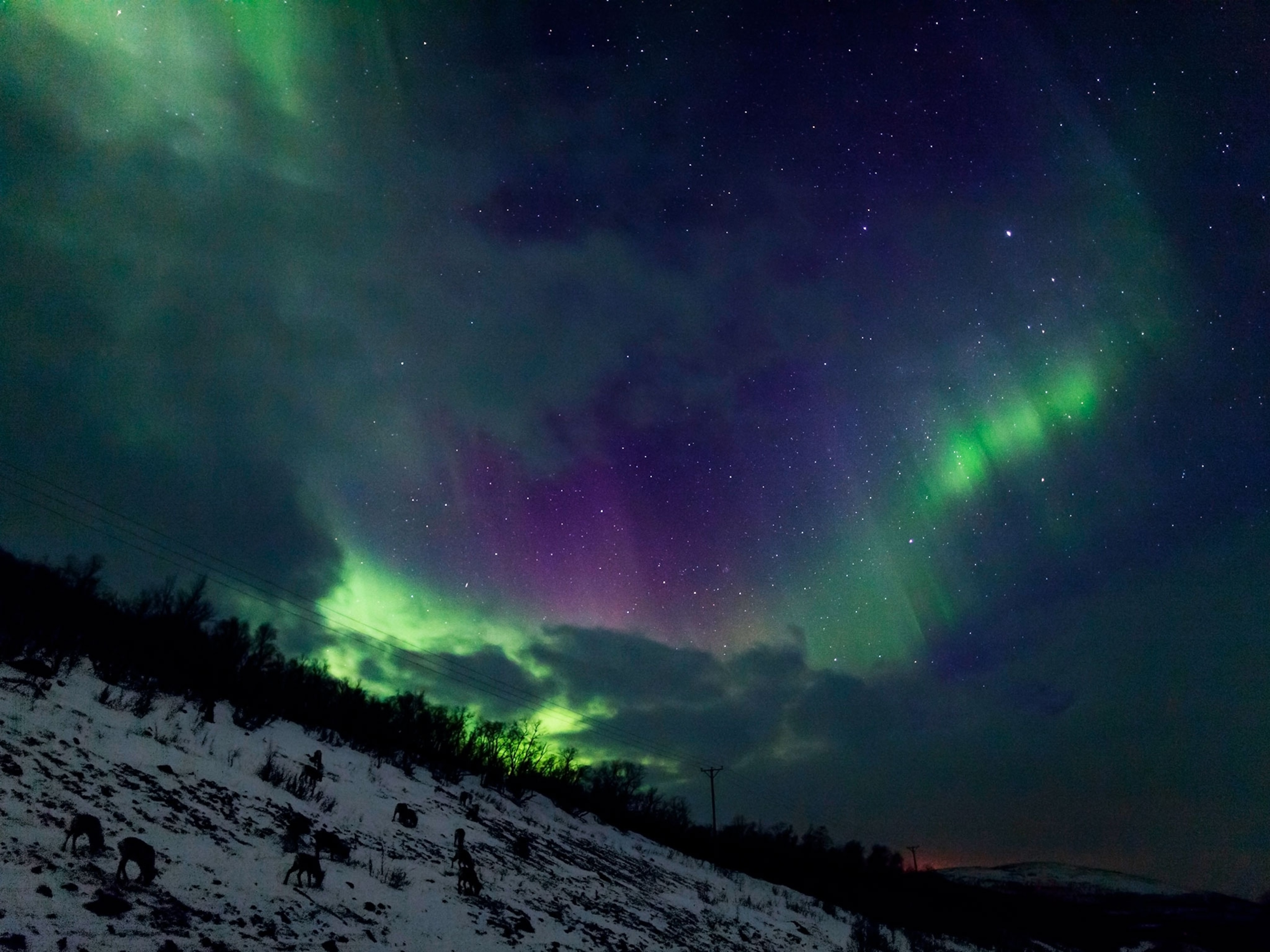
If the northern lights are the trip — not a bonus alongside Christmas markets or family activities — then choose your base by cloud cover statistics, not by cultural charm. This is where inland locations dominate.
Fairbanks and Abisko sit at the top of the list for dedicated aurora hunters because continental climates produce fewer clouds than coastal destinations. Yellowknife follows the same pattern.
Tromsø and coastal Iceland are beautiful, but their maritime weather means more overcast nights — and for a trip where the aurora is the only goal, one extra cloudy night matters.
Why December 2025 and December 2026 are special: Solar Cycle 25 is at or near its peak. Geomagnetic storms at G2–G3 level — strong enough for vivid aurora across all northern regions — have become relatively routine through 2024 and 2025.
Even quieter nights with Kp 2–3 activity produce visible aurora in places like Fairbanks and Abisko without any chasing required. This solar maximum window will not return until the mid-2030s, making this December and the next the highest-odds aurora winters of this generation.
- Base yourself in Fairbanks for the most accessible aurora-chasing in North America. Chena Hot Springs (roughly 60 miles outside town) combines geothermally heated pools with minimal light pollution — a rare combination.
- Base yourself in Abisko for Europe’s best clear-sky record. The Torneträsk lake effect creates a localized weather gap that keeps skies clearer than surrounding areas. The Aurora Sky Station at the top of Mount Nuolja is a purpose-built viewing facility — chairlift access at night.
- Stay four to five nights minimum. Aurora-only trips need more buffer than mixed itineraries. Three nights is the statistical floor; four or five gives you the margin to weather two consecutive cloudy nights and still get your shot.
- Prime viewing hours run 10 p.m. to 2 a.m. across most Arctic destinations. Plan late dinners, slow mornings, and afternoon naps — aurora chasing is a night-shift activity.
One mistake to avoid: Don’t pick a destination purely for its name recognition. Reykjavik and Tromsø are famous, but December cloud cover in both cities is unpredictable.
For a dedicated aurora trip, the inland clear-sky zones of Fairbanks, Abisko, or Yellowknife give you meaningfully better odds on any given night.
How Do You Plan a December Northern Lights Trip?
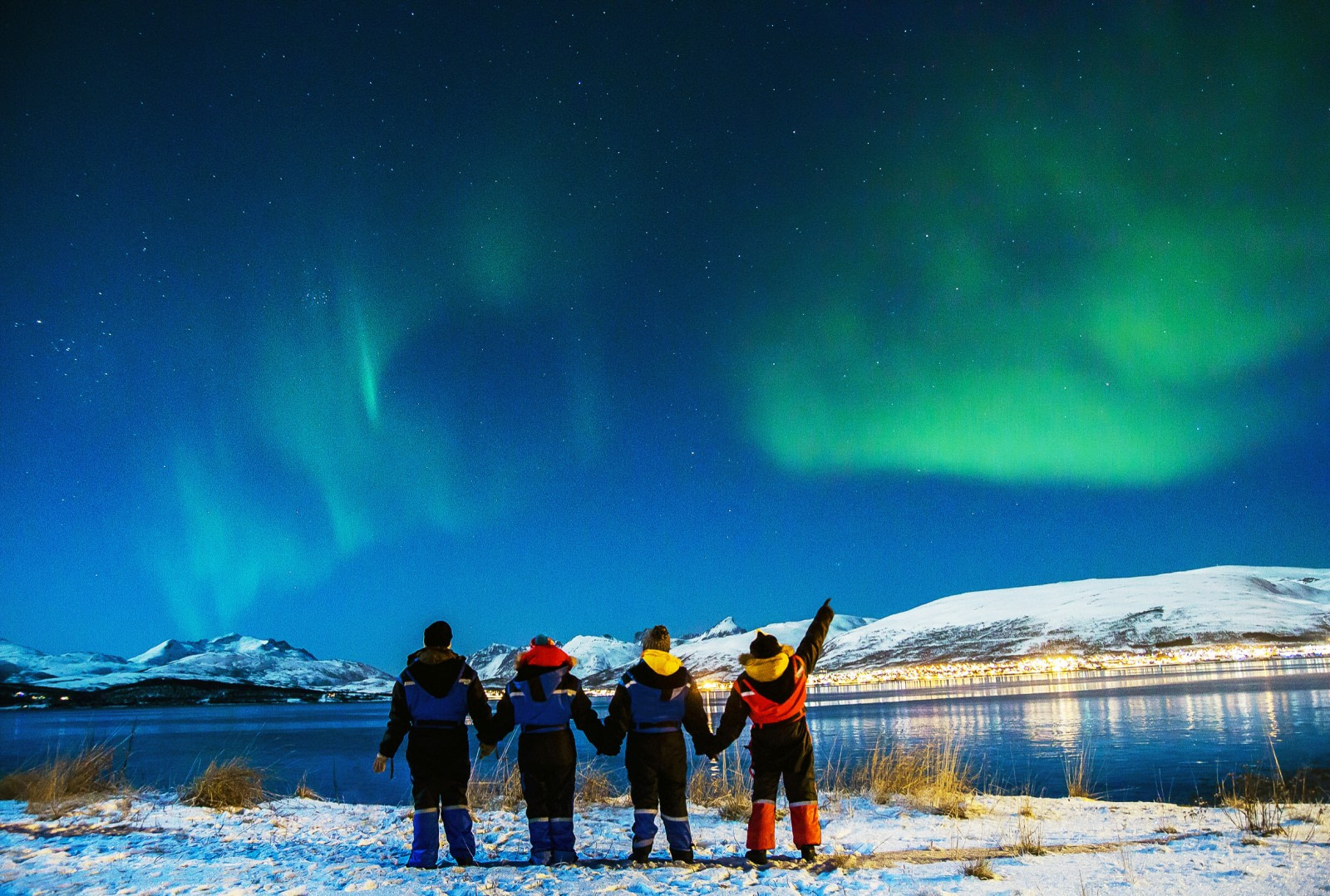
December aurora trips sell out faster than any other month of the year — and the gap between a magical Christmas-lights-and-green-skies experience and a frozen, clouded-out disappointment comes down to decisions you make months before departure.
How Many Nights Should You Book for Aurora?
Three nights is the minimum for any aurora trip. Four to five nights is the right call if seeing the northern lights is the primary reason you’re going.
That buffer accounts for the one or two cloudy nights you should statistically expect at any December destination, even reliable ones like Abisko or Alta.
- Three nights: Enough if you’re combining aurora with Christmas activities and can accept some risk. Works well in Finnish Lapland where Santa Claus Village, reindeer safaris, and glass igloo resorts fill the daylight hours.
- Four to five nights: The smarter booking for aurora-first travelers, especially in coastal destinations like Tromsø or Iceland where cloud cover is more variable.
- One to two nights: Don’t bother. The probability of catching a clear, active sky in that window is too low to justify the December premium you’ll pay.
When Should You Book December Accommodation and Tours?
The most sought-after December accommodation — glass igloos, snow hotels, wilderness lodges with aurora wake-up calls — is typically fully booked by mid-September for the entire month. That timeline is not an exaggeration.
- Peak week (December 10–20): Book accommodation by late August. Book tours — dog sledding, reindeer safaris, whale watching — at the same time or earlier.
- Christmas and New Year (December 24–January 2): Book in July or as soon as your dates are fixed. This is the highest-demand window of the entire aurora season.
- Early December (December 1–9): Slightly less competitive, but still lock in by September if you want distinctive lodging. Standard hotels remain available later.
Set aurora alerts through a live forecast service before departure so you’re notified the moment a display begins — discovering the aurora at breakfast the next morning is a planning failure, not bad luck.
What Does a December Northern Lights Trip Cost?
Expect to pay a meaningful premium over November or January. December is peak season across every Arctic destination, and Christmas week pricing can be double the early-December rate at the same property.
- Budget baseline (per person, 4 nights): Roughly $1,500–$2,500 for flights, standard hotel, and one guided aurora tour from North American gateways to Fairbanks or Yellowknife. Self-driving and apartment rentals lower this.
- Mid-range with experiences: $3,000–$5,000 per person for destinations like Tromsø or Finnish Lapland with glass igloo stays, dog sledding, and a couple of guided evening hunts.
- Premium Christmas package: $5,000–$8,000+ per person for all-inclusive Christmas-week stays at wilderness lodges with private aurora guides, airport transfers, and curated activities. These packages sell out earliest.
Flights to Tromsø, Rovaniemi, and Yellowknife spike in December. Fairbanks often remains the most affordable North American option thanks to Alaska Airlines direct routes from Seattle.
Internal flights within Scandinavia — Oslo to Tromsø, Stockholm to Kiruna — should be booked simultaneously with international flights; waiting drops you into holiday-fare territory fast.
What Should You Wear for Aurora Viewing in December Cold?
December aurora viewing means standing still outdoors in temperatures that regularly hit minus 15°C to minus 25°C in inland destinations like Alta, Finnish Lapland, and Yellowknife. Coastal cities like Tromsø are milder — averaging around minus 8°C — but wind chill off the Norwegian Sea makes exposed hilltops brutal.
The rule is simple: dress for standing still, not for walking.
- Base layer: Merino wool top and bottom. Cotton kills warmth — skip it entirely.
- Mid layer: Fleece or down jacket. Down packs smaller for travel; synthetic insulates better if it gets wet.
- Outer layer: Windproof and waterproof shell. This is your insurance against the breeze on any hilltop or frozen lake where guides position you for viewing.
- Feet: Insulated winter boots rated to at least minus 30°C, with wool socks. Sorel and Baffin are the standards guides recommend. Bring a pair of thin liner socks underneath to prevent sweat buildup.
- Hands: Ski mittens over liner gloves. Mittens beat gloves for warmth because your fingers share heat. Bring chemical hand warmers — guides in Abisko and Yellowknife hand them out, but don’t count on it.
- Face and head: Balaclava or neck gaiter pulled over your nose. Exposed skin at minus 20°C hurts within minutes and distracts from the sky. A warm hat that covers your ears is non-negotiable.
Most aurora tour operators in Tromsø, Finnish Lapland, and Abisko provide thermal suits and winter boots if you book a guided evening excursion. This is worth confirming — it saves suitcase space and ensures you have gear rated for the conditions.
For independent viewing from your lodge or cabin, bring your own full kit. Glass igloo resorts like those around Rovaniemi and Levi keep interiors warm, but stepping outside for the best photos at 2 a.m. requires the same gear as a guided tour.
Best Winter Activities to Pair with Northern Lights in December
December’s polar night doesn’t just deliver aurora — it unlocks a full menu of Arctic experiences that only exist when the snow is deep and the darkness is total. Every activity below can be scheduled around evening aurora windows, and the best operators build their itineraries exactly that way.
| Activity | Best Base | Book By | Best For |
|---|---|---|---|
| Dog Sledding Safari | Rovaniemi, Levi, Saariselkä, Tromsø, Alta | October | Adventure seekers, all ages |
| Reindeer & Sami Culture | Alta, Kautokeino, Karasjok | October | Culture-first travelers, families |
| Snowmobile / Whale Safari | Tromsø, Finnish Lapland | October | Adrenaline + wildlife combo |
| Glass Igloo & Christmas Markets | Rovaniemi, Levi, Abisko area | Mid-September | Couples, families, festive atmosphere |
A critical planning note: for Christmas week (December 24–January 2), book everything — accommodation and tours — by July. For early-to-mid December (December 1–20), late August booking still works for most things, though glass igloos sell out first.
Early December gives you the same polar night, snow, and aurora conditions at significantly lower prices and better availability.
Dog Sledding Aurora Safaris
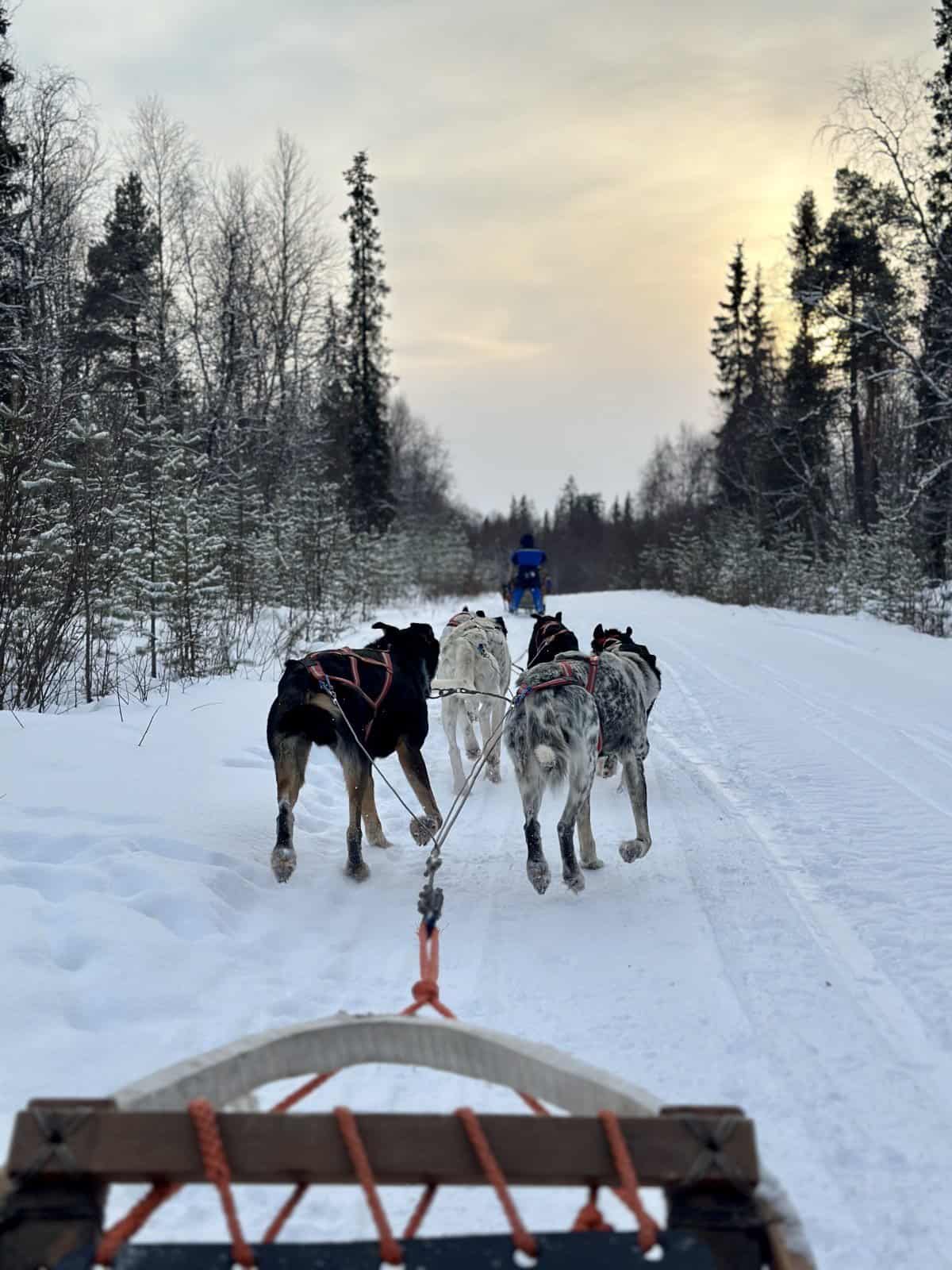
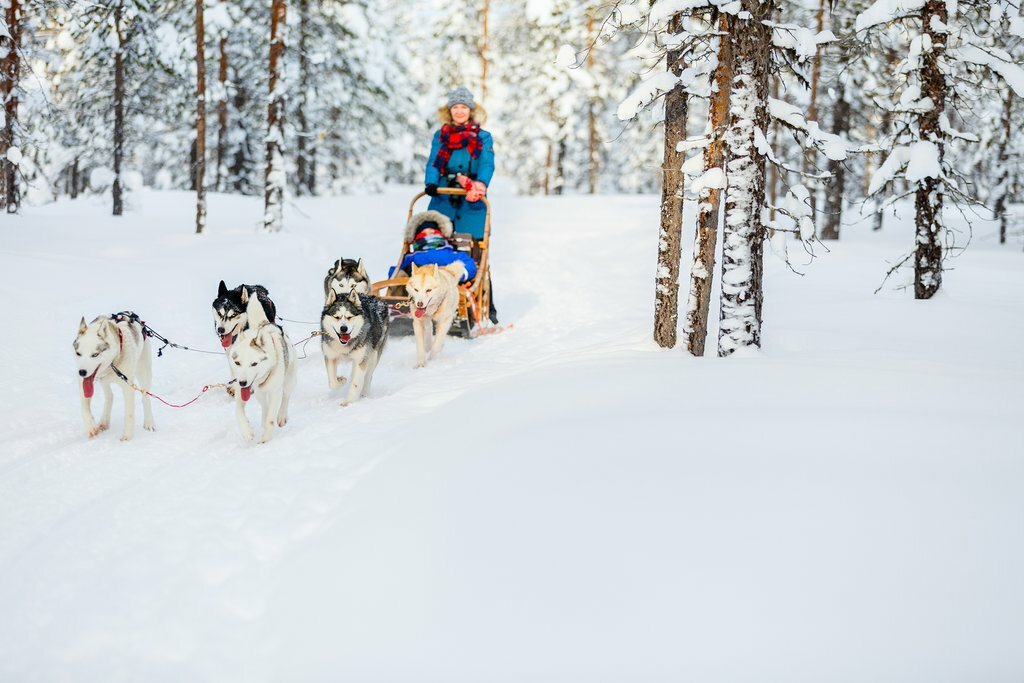
This is the December signature activity, and it earns that status. A guided sled run through snow-covered forest under a dark Arctic sky, with the possibility of aurora overhead during stops — nothing else combines motion, cold air, and spectacle the same way.
Finnish Lapland (Rovaniemi, Levi, Saariselkä) and northern Norway (Tromsø, Alta) all run evening dog sled tours specifically timed to aurora forecasts.
- What to book: An evening or overnight husky safari that includes a campfire stop and hot drinks. Daytime sledding is fun but misses the aurora window entirely — insist on an evening departure.
- Duration: Evening safaris typically run 2–4 hours. Multi-day husky expeditions exist but require prior mushing interest, not just aurora chasing.
- Insider tip: Ask whether the operator drives to a clearing away from tree cover. Forest trails are atmospheric but block the sky — the best aurora sledding stops happen in open fell or lakeside terrain.
- Price baseline: Expect roughly $150–$300 per person for a half-day evening safari, though prices vary by season, location, and provider.
- Who it disappoints: Travelers expecting to mush their own team on a first outing — most December tours position you as a passenger with a professional musher. If driving your own sled matters, book a multi-day course instead.
Reindeer Experiences and Sami Cultural Encounters
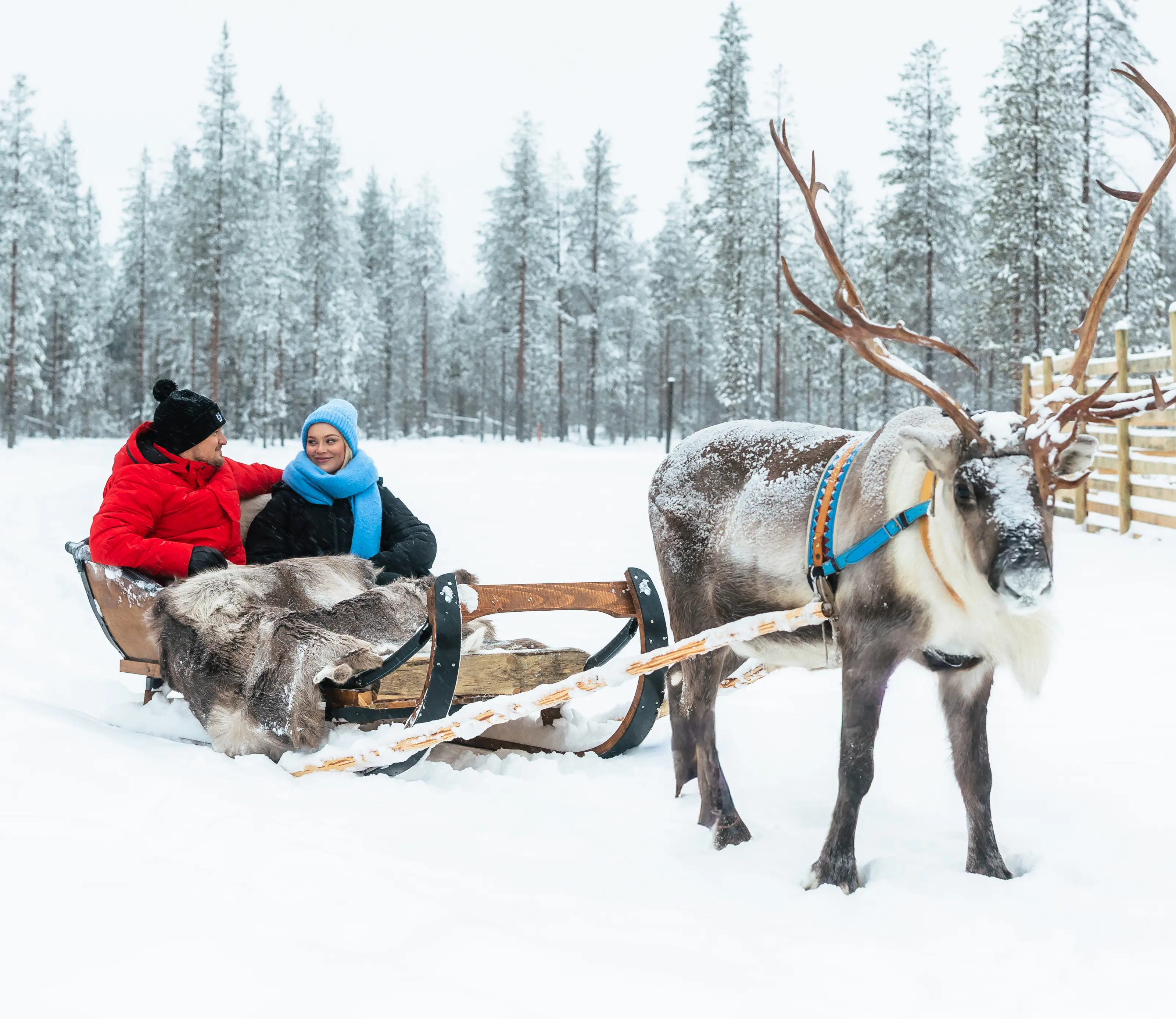
The Sami heartland around Alta, Kautokeino, and Karasjok in northern Norway offers the most authentic reindeer experiences in the Arctic. Traditional Sami families run feeding sessions, short sleigh rides, and cultural meals inside a lavvo tent — a far cry from the sanitized farm-visit version available elsewhere.
- The move: Book a combined reindeer morning and aurora evening package. Several operators near Alta and Kautokeino provide transport between the two, so you spend the daytime with herders and the evening chasing lights. This combo is among the most sought-after December experiences in all of northern Norway.
- Booking urgency: Reserve by October. Combined dog sled and reindeer packages sell out by early November, and standalone reindeer experiences follow close behind.
- Cultural depth: The best operators are Sami-owned, not tour-company-packaged. Look for experiences that include joik (traditional song), herding stories, and a meal of reindeer stew or bidos inside the lavvo — not just a photo op with animals.
- For Finnish Lapland: Rovaniemi and Inari offer reindeer farm visits and sleigh rides, but these tend to be more commercial and less culturally immersive than the Norwegian Sami heartland versions. Worth doing if you’re already based in Finland; not worth a special detour if cultural authenticity is your priority.
- The Alta Christmas market, centered around the Northern Lights Cathedral, runs through most of December and pairs naturally with a daytime reindeer experience for a full festive day.
Snowmobile Safaris and Whale Watching Adventures
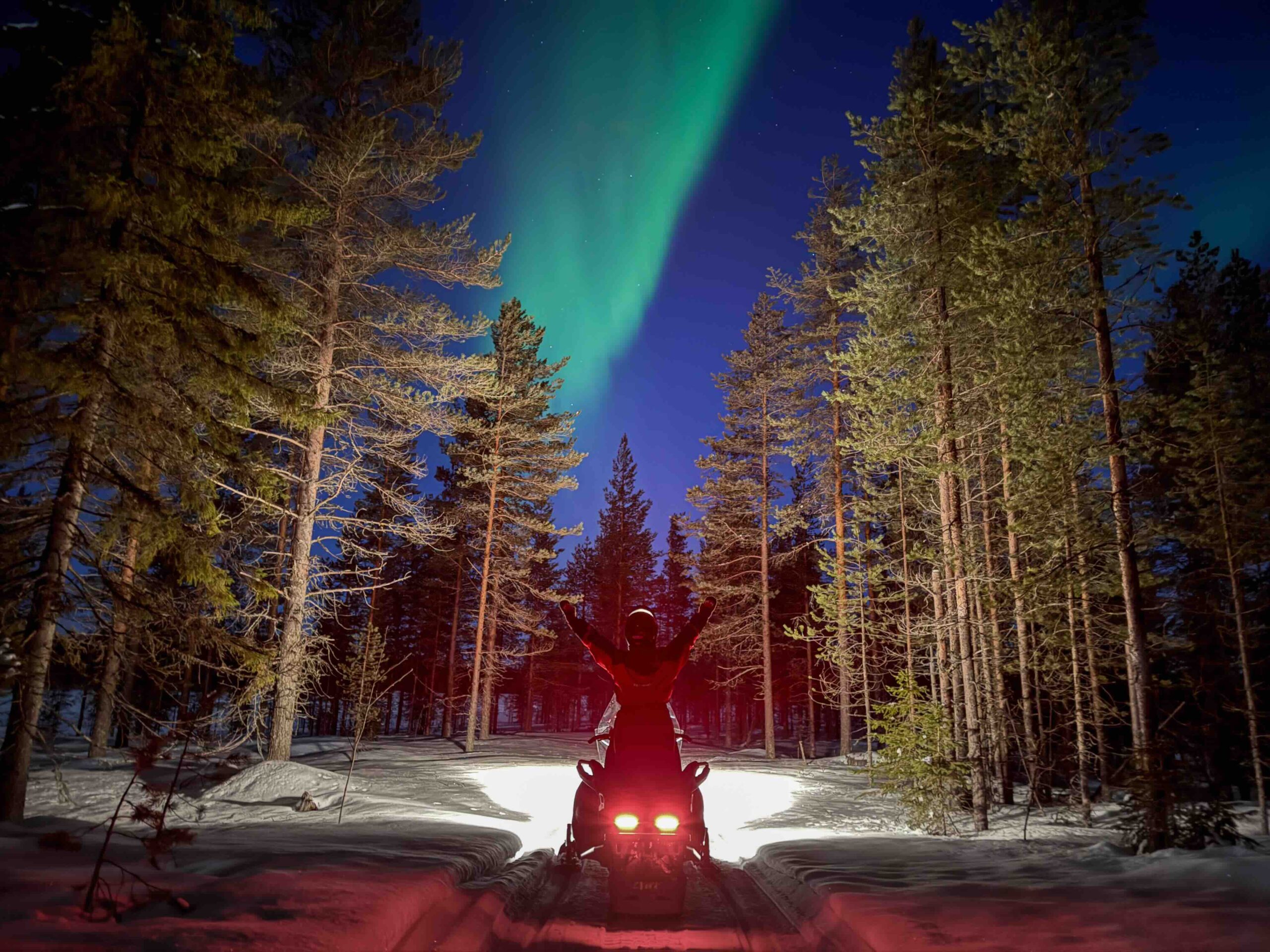
Snowmobiling and whale watching are the two activities that add adrenaline or wildlife dimension to an aurora trip — and December is prime season for both.
- Snowmobiling: Available across Finnish Lapland, northern Norway, and Sweden. Finnish Lapland’s pine forest trails are the most scenic setting; northern Norway’s coastal and fjord routes offer more dramatic terrain. Evening snowmobile safaris with aurora stops run in all major destinations. Expect roughly $150–$350 per person for a 2–4 hour guided tour. Most operators require a valid driver’s license for the lead sled; passengers ride in a sled behind.
- Whale watching: Tromsø is the primary base. Humpback and orca聚集 near the fjords outside Tromsø from late November through January, drawn by herring migrations. Boat tours run daily in December, typically 4–7 hours. Dress for wind chill on open water — this is the coldest activity on the list by a significant margin.
- The honest take: Snowmobiling delivers reliably in December. Whale watching is weather-dependent and can mean long, rough boat rides in freezing conditions with no guaranteed sighting. If you have limited days, prioritize snowmobiling unless marine wildlife is a specific passion.
- Combo potential: Some operators in Finnish Lapland offer daytime snowmobile safari plus evening aurora chase — this is an efficient use of a single day and avoids two separate bookings.
Glass Igloos, Christmas Markets, and Festive Atmosphere
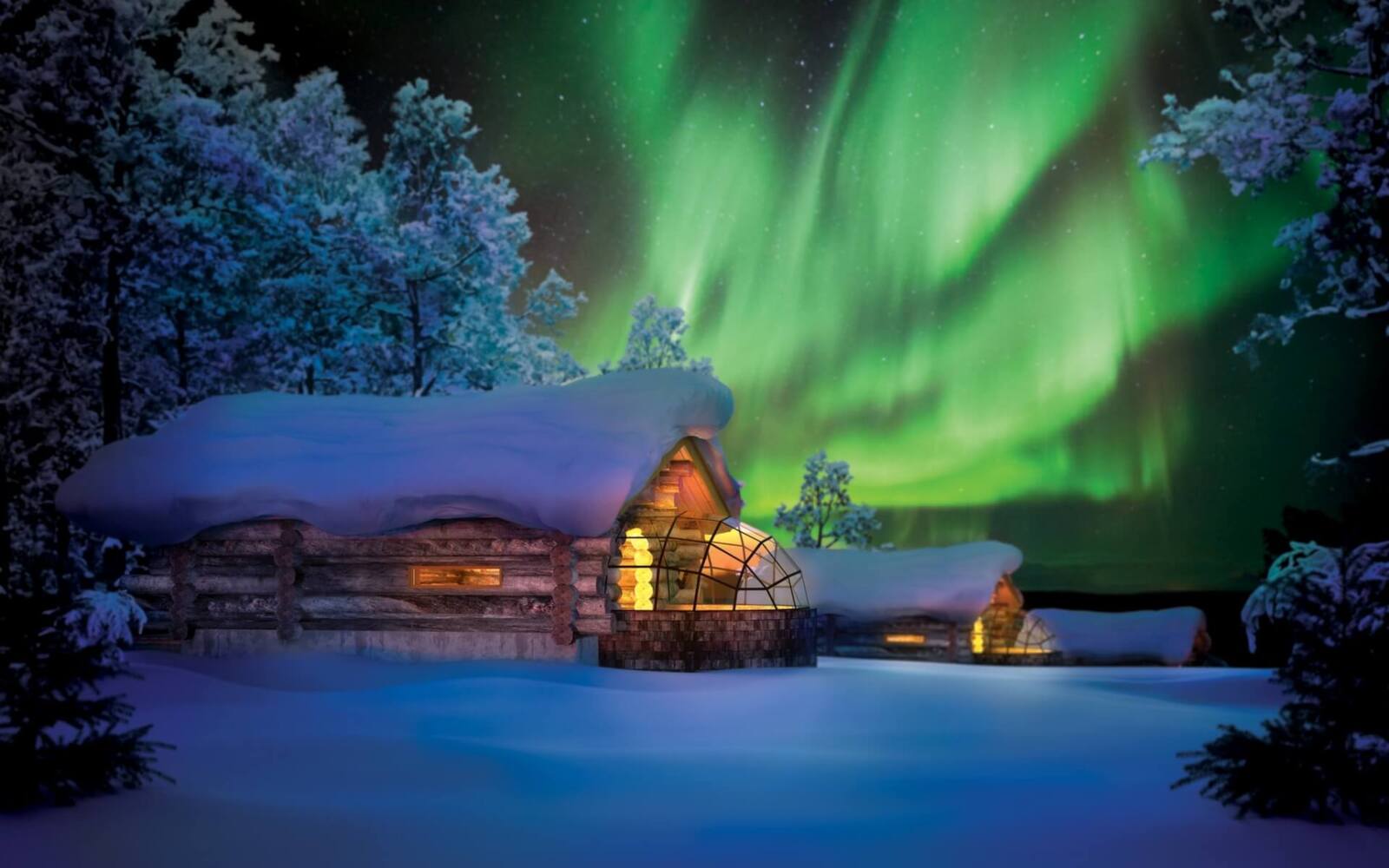
The glass igloo is the image that sells December aurora trips — and the reality matches the hype if you book correctly. A heated glass-roofed sleeping pod surrounded by snow-covered pines, with aurora potentially dancing overhead and Christmas lights glowing in the distance: this is December Lapland distilled into a single night.
- Where they exist: Finnish Lapland has the highest concentration — around Rovaniemi, Levi, Saariselkä, and Inari. Sweden’s Abisko area and northern Norway have smaller-scale options. Glass cabins and igloo hotels are a distinct category from glass-roofed hotel rooms — confirm which type you’re booking.
- Booking reality: Glass igloo accommodation is typically fully booked by mid-September for all December dates. If you’re reading this past September, look for cancellations or consider a glass-cabin alternative with more capacity.
- What you’re actually paying for: You’re paying for the chance to watch aurora from bed. On a cloudy night, you’re sleeping in an expensive glass box looking at overcast sky. Budget for this as a highlight night, not your entire accommodation strategy — two or three nights in a glass igloo with the rest in a regular lodge is the smart allocation.
- Christmas markets: Rovaniemi and Alta run the most established December markets. Finnish Lapland’s markets lean into Santa Claus Village atmosphere — gift stalls, mulled wine, gingerbread. Alta’s market centers on the Northern Lights Cathedral with a Norwegian Arctic flavor. Both are worth an afternoon, neither justifies a full day.
- Festive atmosphere baseline: Finnish Lapland has built the most complete Christmas tourism infrastructure in the Arctic. Rovaniemi’s Santa Claus Village, Levi’s resort scene, and the pervasive holiday decoration across Lapland towns create an atmosphere that genuinely cannot be replicated in Norway, Sweden, or North America at the same scale. If Christmas ambiance is a top-three priority, Finnish Lapland wins outright.
- The early December alternative: December 1–20 delivers the same snow, darkness, and winter activities without the Christmas premium. You lose the festive overlay but gain lower prices, easier bookings, and identical aurora conditions. For travelers without school-age kids, this three-week window is the better deal.
How Do You Photograph the Northern Lights in December?
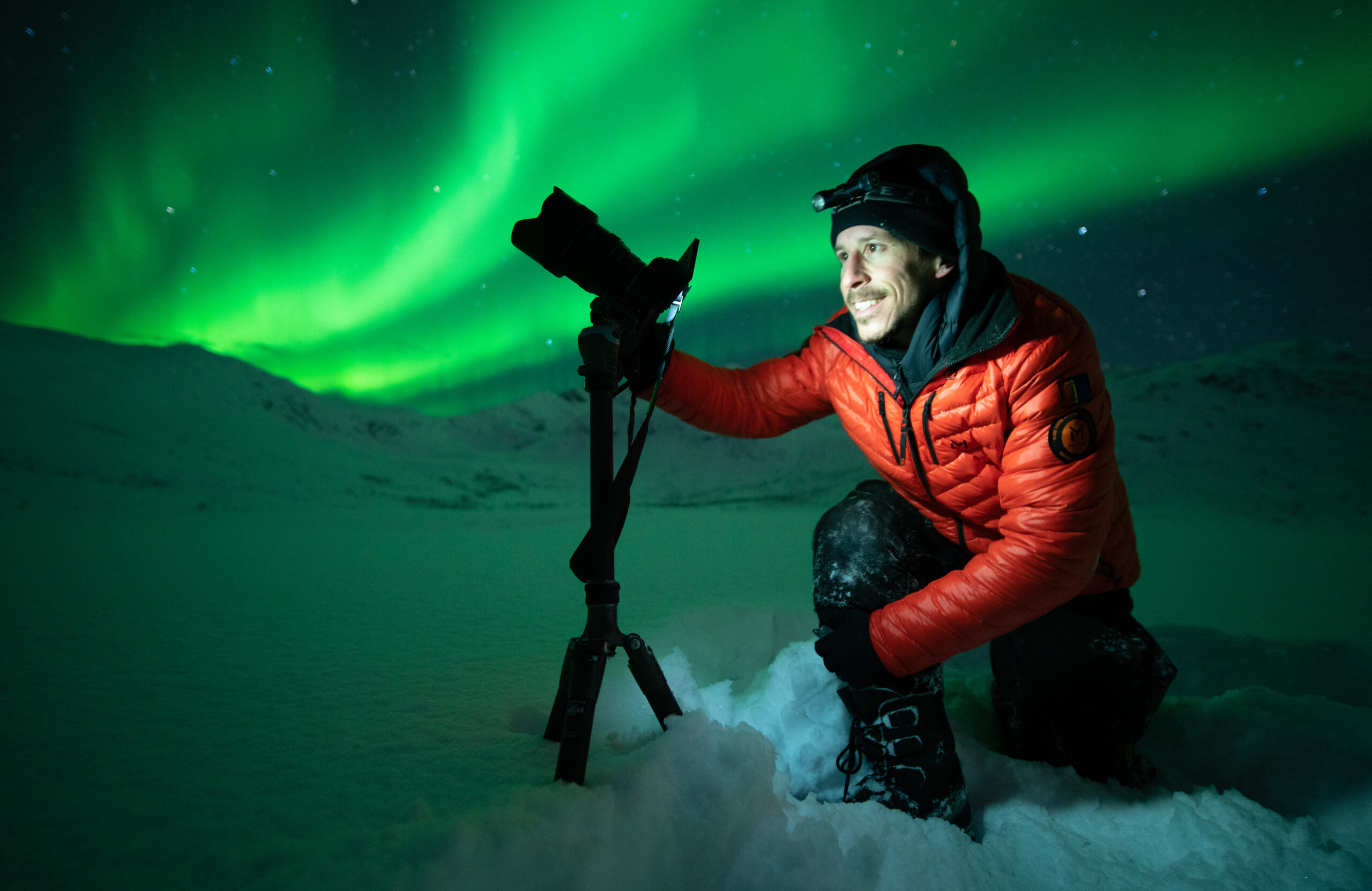
Your battery will be dead before the aurora peaks if you leave it in the camera body between shots — and December’s extreme cold makes that mistake cost you the entire display. Arrive with a shooting plan, warm pockets, and settings dialed in before you step outside, because fumbling with dials at -20°C with gloves off is how you lose fingers and photos in the same night.
Camera Settings for Aurora in Extreme Cold
Aurora photography in December demands a fast wide-angle lens and full manual control. These starting-point settings cover most displays — adjust in the field based on brightness and speed:
- Aperture: f/2.8 or wider. This is non-negotiable. f/4 works only for the brightest, most explosive displays. If your lens doesn’t open to f/2.8, rent one before the trip — a fast 14–24mm is the single most important gear investment.
- ISO: Start at 3200. Push to 6400 for faint or distant aurora; drop to 1600 when a bright coronal display fills the sky. December’s darkness means you’re not competing with ambient twilight the way you might in September or March.
- Shutter speed: 8–15 seconds for slow-moving arcs; 3–6 seconds when the aurora is fast and structured. Anything longer than 20 seconds turns crisp bands into green mush and starts introducing star trails on a wide lens.
- Focus: Manual focus set to infinity using live view zoomed in on a bright star. Verify this every time you change lenses or knock the ring. Autofocus is useless in polar darkness.
- File format: RAW only. December aurora shots need white balance and shadow recovery that JPEG cannot provide.
Set all of this indoors before heading out. Tape the focus ring in place with gaffer tape if your lens has a loose ring — one accidental bump and you’ll shoot an entire sequence of beautiful green blurs.
For a full reference walkthrough, the aurora photography guide at aurora-norway.no covers composition, foreground technique, and post-processing in detail.
Managing Batteries and Gear at -20°C
December destinations like Fairbanks, Yellowknife, and inland Abisko regularly hit -20°C to -35°C at night. At these temperatures, a fully charged lithium-ion battery loses roughly 40–60% of its capacity. Here’s how to keep shooting:
- Carry at least three batteries per camera body. Swap them on rotation — one in the camera, two in an inner jacket pocket against your body. When the in-camera battery voltage drops (you’ll notice the meter plunge suddenly), swap it for a warm one and the “dead” battery will recover partially as it reheats.
- Chemical hand warmers are your secret weapon. Tape a hand warmer to the camera body with an elastic band or velcro strip. It won’t overheat the sensor but will slow the drain significantly. Some photographers keep the entire camera inside an insulated wrap with a hand warmer pocket.
- Memory cards slow down in extreme cold. Use high-quality UHS-II cards and keep a spare in your pocket. Writing large RAW files at -30°C can cause buffer delays that cost you the peak moment of a fast display.
- Lens fog is the real killer when you come back inside. Seal the camera in a zip-lock bag or airtight case before entering warm accommodation. Let it acclimatize for 30–45 minutes. Condensation forms on the bag exterior, not the glass. Skip this step and you’ll find moisture inside the lens for days.
- Touchscreen gloves with fold-back fingertips beat full mittens for camera control. Wear a thin liner glove underneath and use chemical warmers inside the mittens for when you’re waiting between shots.
The single most common gear failure on December aurora trips isn’t the camera — it’s the photographer’s hands going numb and the session ending early. Bring more hand warmers than you think you need. They cost almost nothing and save entire evenings.
December’s Blue Hour: A Rare Photographic Opportunity
Here’s what most aurora chasers miss: December’s polar twilight creates an extended blue hour around midday that lasts 30–60 minutes — not the fleeting 15-minute transition you get at lower latitudes, but a sustained, deep indigo glow that bathes snow-covered landscapes in color no other season produces.
At destinations between 66°N and 70°N — Tromsø, Alta, Abisko, Finnish Lapland — early December still offers this blue twilight window before full polar night arrives. Snow-covered mountains turn cobalt.
Fjord water reflects steel-blue. Church spires and cabin lights glow amber against an impossibly saturated sky.
This is some of the most sought-after landscape photography light in the world, and it happens at midday, meaning you can shoot it comfortably and still have the entire night for aurora.
By the third week of December at these latitudes, true polar night takes over and the blue twilight disappears — replaced by extended starlight and aurora visibility around the clock. At extreme northern destinations like Svalbard, polar night has been established since late October, so the blue hour option doesn’t exist at all in December.
Insider tip: Use the blue hour to scout and shoot your aurora foregrounds. Compose landscapes — frozen lakes, mountain silhouettes, lone cabins — in that blue twilight light, then return to the exact same spot after dark for the aurora.
The foreground quality in blue-hour light pairs beautifully with long-exposure aurora composites, and knowing your composition in advance means you aren’t fumbling to find a good angle in pitch darkness at midnight.
For destinations and base towns covered earlier in this guide, the blue hour opportunity means you’re never “wasting” daylight hours — midday is prime shooting time for landscape work, and the long December nights begin practically in the afternoon.
Frequently Asked Questions
Can you really see the northern lights in December?
Yes, and December is one of the darkest months for it. During polar night, which establishes itself across the Arctic Circle, you have near-continuous darkness.
Aurora activity occurs on most clear nights at high-latitude destinations during the current solar maximum. The main trade-off is that geomagnetic conditions are typically stronger in March and September, meaning the lights can be more dynamic then, but the sheer darkness of December makes it a top-tier viewing month.
Is December better than other winter months for aurora?
It depends on your priority. For maximum darkness and Christmas atmosphere, December wins.
For better aurora probability per night and lower costs, February and March are often superior. January offers a sweet spot: it’s less crowded and expensive than late December after New Year’s, while still having polar night conditions in many locations.
If your trip is purely about the lights and value, January or March may serve you better.
How far in advance should I book a December northern lights trip?
Earlier than you think. For travel in mid-December (the peak week around the 10th-20th), book your accommodation and tours by late August.
Standard hotels and flights sell out quickly too. Don’t wait.
What’s the biggest planning risk for a December trip?
Cloud cover is the primary enemy, especially in coastal destinations like Tromsø, where guides often need to drive far inland to find clear skies. Inland destinations like Fairbanks or Abisko offer better odds of clear weather.
Other major risks include extreme cold (plan proper gear and indoor warm-ups), icy road conditions, and the high costs and crowds that come with the holiday season. A minimum of three nights is recommended; four or five is safer if seeing the aurora is your main goal.
Your December Aurora Adventure Awaits
Start by locking in your dates and destination, focusing on inland locations for the best clear-sky odds. Book your accommodation and key tours by late August at the latest to secure your spot.
A December trip offers a once-in-a-decade chance to combine the maximum darkness of polar night with a solar maximum, all steeped in genuine holiday magic.
Set a calendar reminder for six months before your travel dates to begin booking—this single action separates the planners from the dreamers.
Leave a Reply