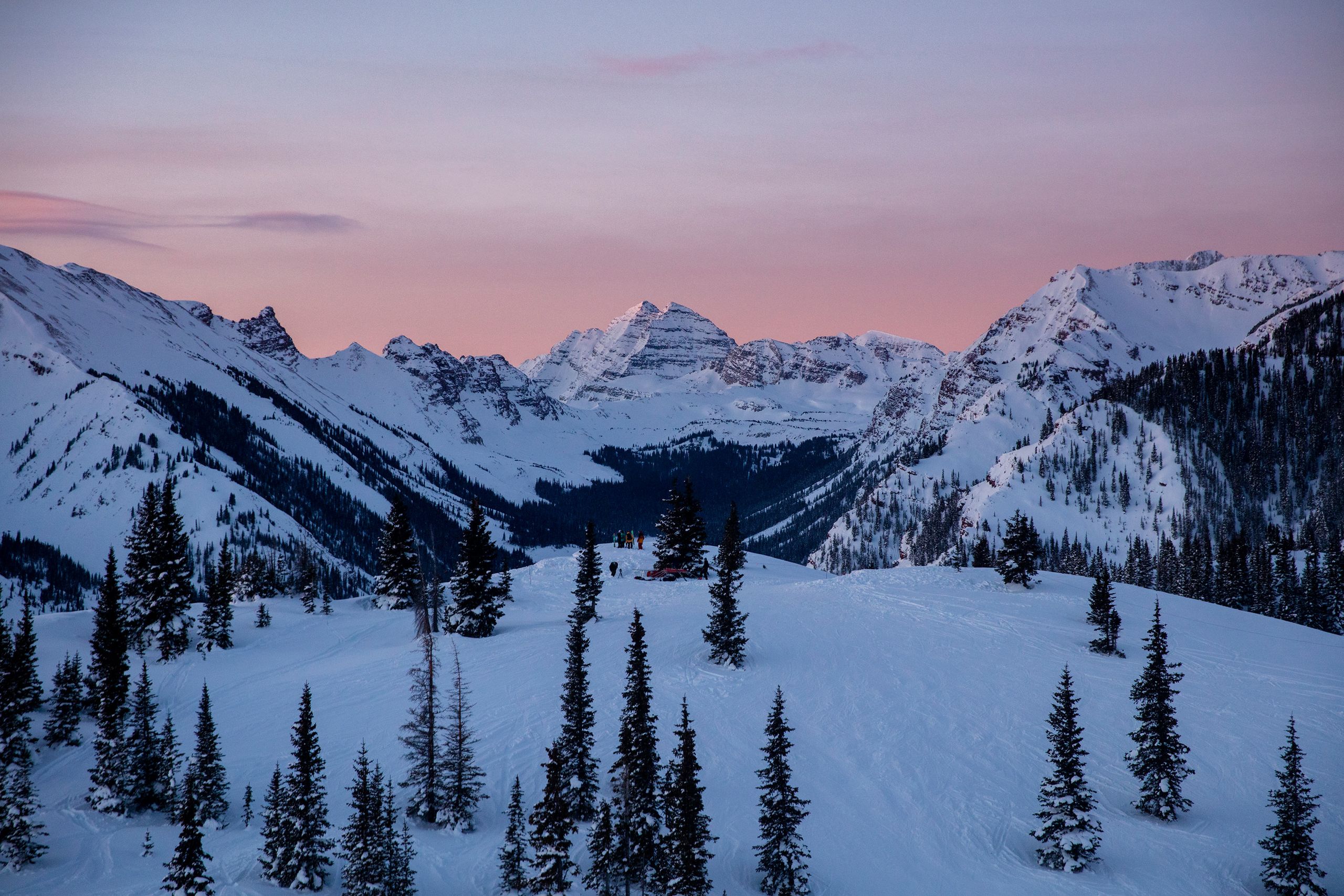
The air at 7,900 feet hits your lungs cold and sharp, and the snow under your boots squeaks the way only high-altitude powder can. Downtown Aspen smells like woodsmoke and fresh espresso at 8 a.m., and by 9 you’re riding a gondola above a valley so white and vast it looks computer-generated.
What makes an Aspen winter different from every other ski town is the density — four distinct mountains, a walkable town with Michelin-level dining, world-class cultural institutions, and non-ski adventures that rival the skiing itself, all packed into a valley you can cross in fifteen minutes.
This guide helps you decide exactly what to prioritize based on your skill level, your budget, and how many days you have.
Expect roughly $200–400 per night for lodging in early December or late April, $400–700 during peak January weeks, and $800–1,200+ around Christmas and Presidents’ Day. Dining runs $50–100 per person at mid-range spots, with fine dining climbing well past $150.
Lift access ranges from free (X Games spectating) to $3,000+ for a season pass.
Aspen Winter at a Glance: Your Quick-Decision Cheat Sheet
Short on time? Here are the standout picks across every category this article covers.
- Best all-around ski mountain: Snowmass — 3,332 acres, runs for every ability, and the least-crowded feel of the four.
- Best for expert skiers: Aspen Highlands — the Highland Bowl hike delivers 1,239 vertical feet of the best steeps in Colorado.
- Best non-ski thrill: The Breathtaker Alpine Coaster at Elk Camp — a mile-long forest ride at 28 mph, plus snow tubing steps away.
- Most memorable winter meal: Pine Creek Cookhouse — reach it by horse-drawn sleigh or cross-country ski, with Elk Mountains views you’ll never forget.
- Best free experience: X Games Aspen at Buttermilk — world-class action sports, live music, no ticket required.
- Best time to visit for value and snow: First two weeks of January — dry, cold powder, minimal lift lines, and the lowest post-holiday rates.
- Don’t skip: A Silver Queen Gondola ride to 11,212 feet and ten quiet minutes at the John Denver Sanctuary along the river.
Where to Ski & Snowboard: Understanding Aspen’s Four Mountains
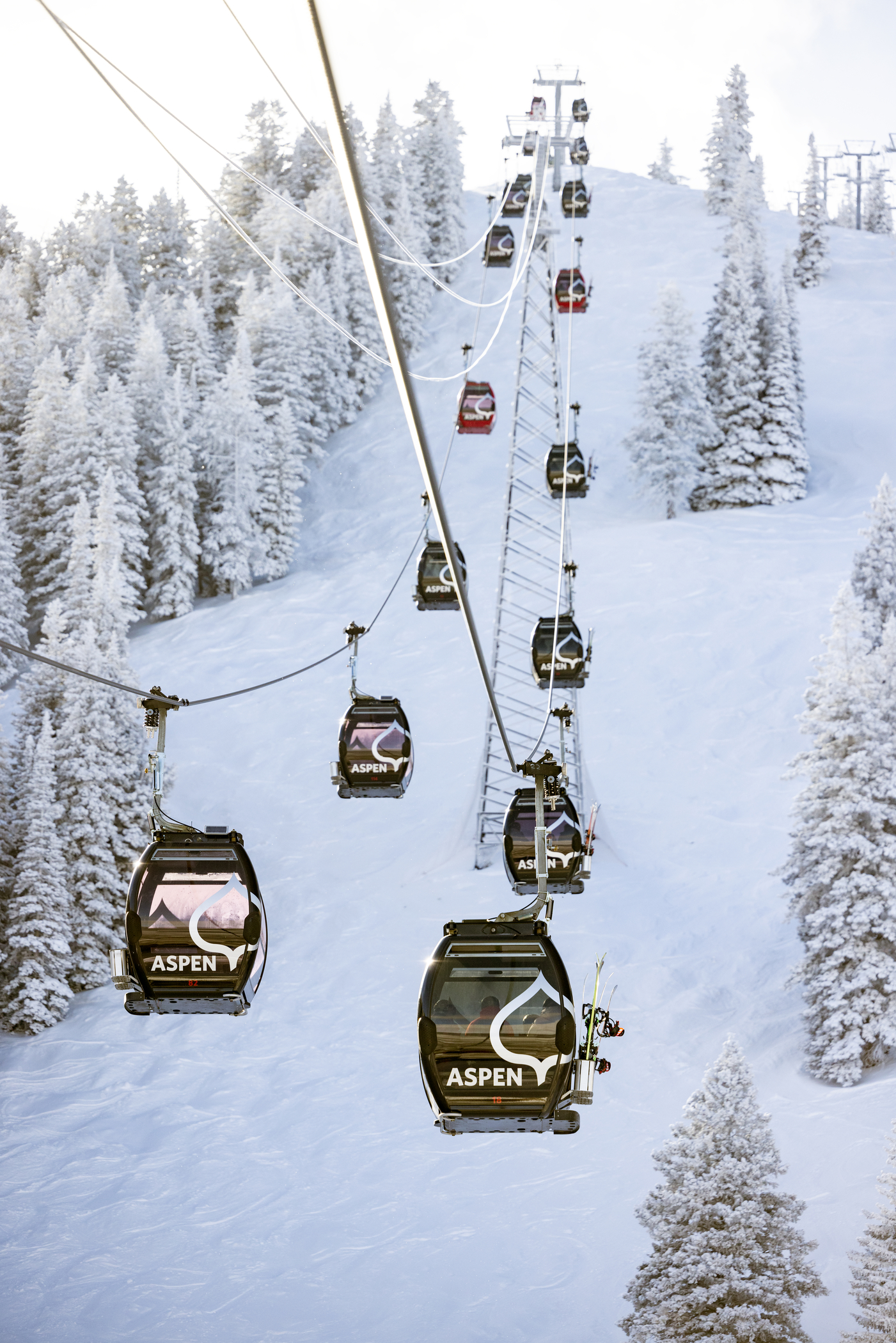
Aspen Mountain rises directly from downtown’s streets, offering 675 acres of exclusively intermediate-to-expert terrain—there are zero beginner runs here. This is the mountain for a classic, steep-and-deep day where you can finish your last run and be at a bar by 3:15 p.m.
Aspen Mountain (Ajax) — The Classic Steep-and-Deep Experience
Forget green runs. Ajax is all challenging pitches, glades, and bumps.
The gondola loads right from town, making it supremely convenient. It’s the definitive choice for strong intermediates and experts who want a full, intense ski day integrated with Aspen’s legendary après scene.
Aspen Highlands — Where the Locals Go (and the Highland Bowl Awaits)
This is the mountain with real local cred and the most celebrated hike-to terrain in Colorado. The Highland Bowl’s boot-pack leads to 1,239 vertical feet of expert-only steeps with panoramic views.
The base area is deliberately low-key—think local vibe over flashy resort. It’s where you go for serious vertical (3,635 ft, or 3,800+ with the Bowl) and to feel like an insider.
Buttermilk — Best for Beginners, Families, and Terrain Parks
Buttermilk is purpose-built for progression. With 2,030 feet of vertical and 44 trails, it’s the most approachable mountain, hosting the X Games’ superpipe and park.
Its gentle, wide-open runs and dedicated family zones make it the right call if you’re learning or traveling with kids who are.
Snowmass — The Biggest Mountain With the Most Variety
At 3,332 skiable acres, Snowmass is vast enough to never feel crowded. It has everything: long, groomed cruisers, high-alpine bowls, glades, and top-tier terrain parks.
It’s the best all-around choice for a mixed-ability group because everyone finds their line, and the sheer size means you can explore for days without repeating a run.
Which Aspen Mountain Is Right for You?
| Mountain | Best For | The Vibe |
|---|---|---|
| Aspen Mountain | Strong intermediates & experts wanting classic steep terrain with town access. | Iconic, intense, social. |
| Aspen Highlands | Expert skiers seeking the legendary Bowl hike and a local atmosphere. | Authentic, challenging, laid-back. |
| Buttermilk | Beginners, families, and park riders. | Welcoming, focused, fun. |
| Snowmass | Everyone—especially mixed groups wanting vast variety and fewer crowds. | Expansive, convenient, all-level. |
Lift Tickets, Ikon Pass, and the Aspen Snowmass Premier Pass: What You Need to Know
You have three main access pathways, and your choice hinges on how many days you’ll ski and whether you want to be locked to one mountain.
- Aspen Snowmass Premier Pass: The ultimate option. Expect roughly $3,099–$3,400+ for the season, giving you unrestricted, reservation-free access to all four mountains. Buy early for the best price.
- Ikon Pass (Full): The national pass, starting around $1,399–$1,449, gives you seven days total across the four Aspen Snowmass mountains. Crucially, lift reservations are required, and blackout dates may apply.
- Ikon Base Pass: A more budget-friendly option near $1,019, but with significant restrictions: it provides only five days and, for the 2026–27 season, access is limited to Snowmass only.
Single-day lift tickets are purchased directly from Aspen Snowmass and fluctuate with demand—expect the highest prices during peak holidays. If you’re staying for a week, do the math on a pass versus daily tickets; the Premier Pass often wins for committed skiers.
Insider Tip: The Ikon Base Pass restriction to Snowmass only is a major detail that changes the value proposition entirely for visitors wanting to sample multiple mountains. Verify current access details on the Ikon Pass website before purchasing.
Best Non-Ski Snow Adventures in Aspen
The Breathtaker Alpine Coaster sends riders through a mile of snow-covered forest at speeds up to 28 mph — and it is just one of at least six ways to fill a full Aspen winter day without ever clicking into bindings. Some of these are adrenaline-first.
Some are pure peace. Here is the honest breakdown of what is worth your time and money.
| Adventure | Vibe | Cost Per Adult | Time Needed |
|---|---|---|---|
| Snow Tubing & Alpine Coaster | High-energy, family-friendly | ~$35–70 (varies by combo) | Half day |
| ACES Snowshoe Tour | Nature immersion, guided | $85 + gondola ticket | 2–3 hours |
| Snowmobiling | Adrenaline + backcountry scenery | ~$150–350+ (varies by route) | Half to full day |
| Cross-Country Skiing | Quiet, fitness, free trails | Free (gear rental extra) | 1–4 hours |
| Fat Biking | Offbeat, active, low-key | Gear rental varies | 1–3 hours |
| Ullr Nights | Evening magic, dinner under the stars | $$$ (dinner + gondola) | Full evening |
Snow Tubing and the Breathtaker Alpine Coaster at Elk Camp
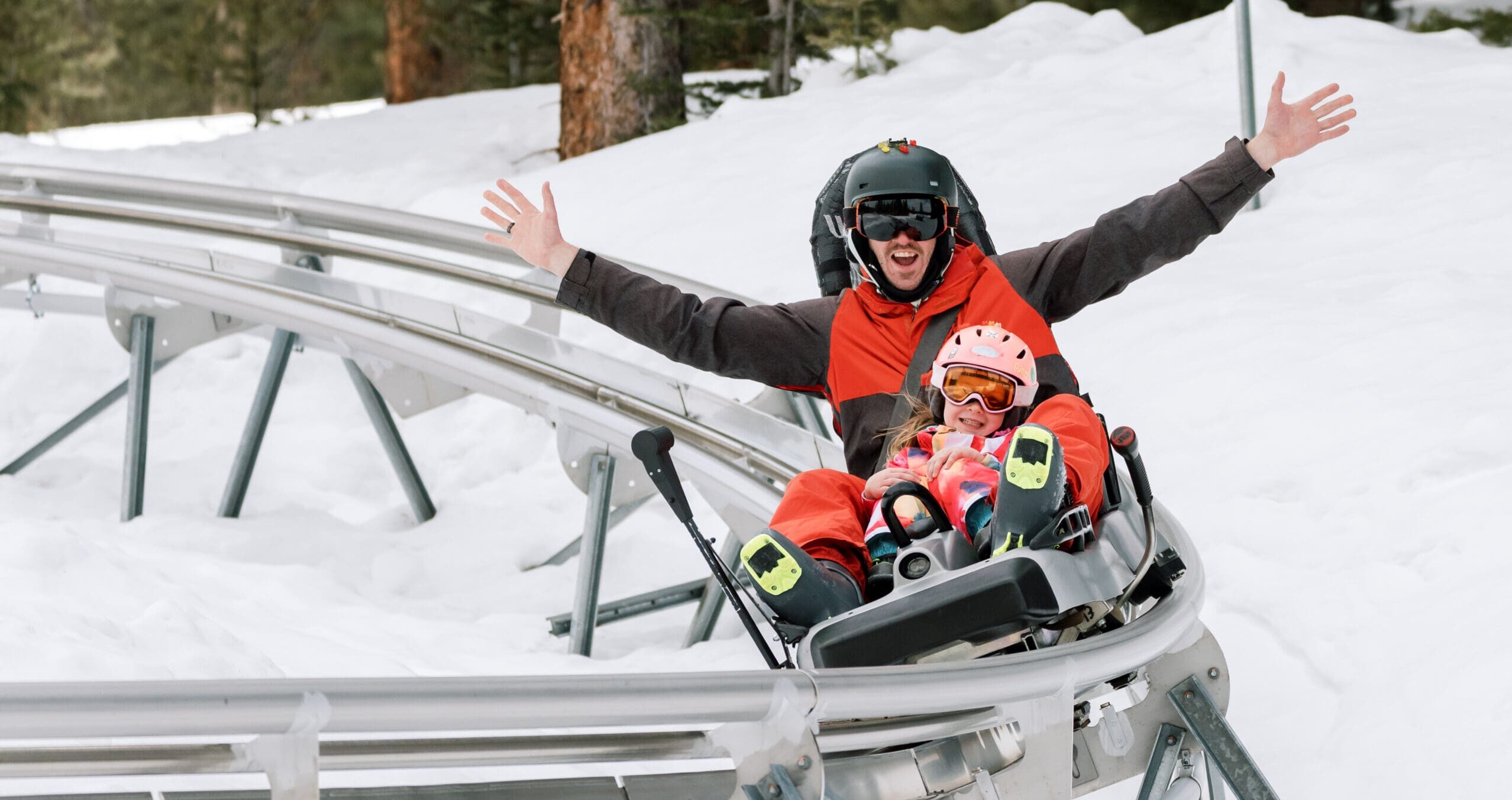
Elk Camp at Snowmass is the single best non-ski activity base for families in the valley. You ride the Elk Camp Gondola up to a dedicated adventure zone with two headline attractions: lift-served snow tubing on carved lanes (a magic carpet carries you back uphill, so no trudging) and the Breathtaker Alpine Coaster, a mile-long elevated track that winds through the forest at up to 28 mph with you controlling the brake.
The coaster alone is worth the gondola ride. Both sit right next to the Elk Camp Restaurant, so you can eat without losing momentum.
Book early on weekends — this is where every local family with kids under twelve heads on a Saturday.
Guided Snowshoe Tours With the Aspen Center for Environmental Studies (ACES)
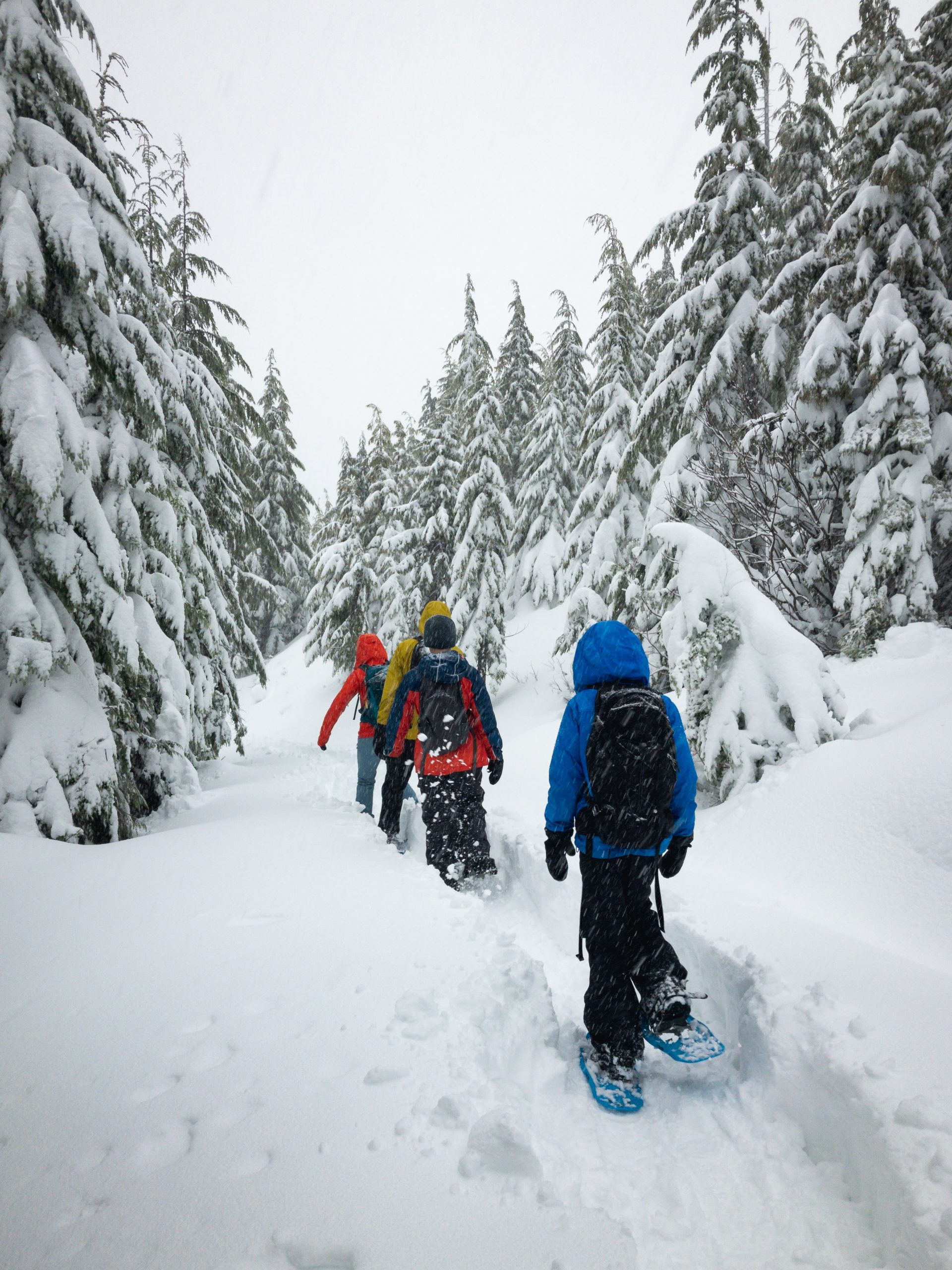
This is the single best way to understand what you are actually looking at from the ski runs. ACES runs naturalist-led snowshoe tours daily at 10:00 AM and 1:00 PM from mid-December through mid-April, departing from the ACES bell just outside the top of the Silver Queen Gondola (Aspen Mountain side) or from the Elk Camp Gondola on the Snowmass side.
The cost is $85 per adult and $63 for youth and seniors, which covers snowshoes, the guide, and the forest permit. Critical planning detail: the gondola foot-passenger ticket is separate, so budget roughly $35–49 on top of the tour fee.
These tours fill up, especially over holidays — book at least a few days ahead.
Snowmobiling Into the White River National Forest
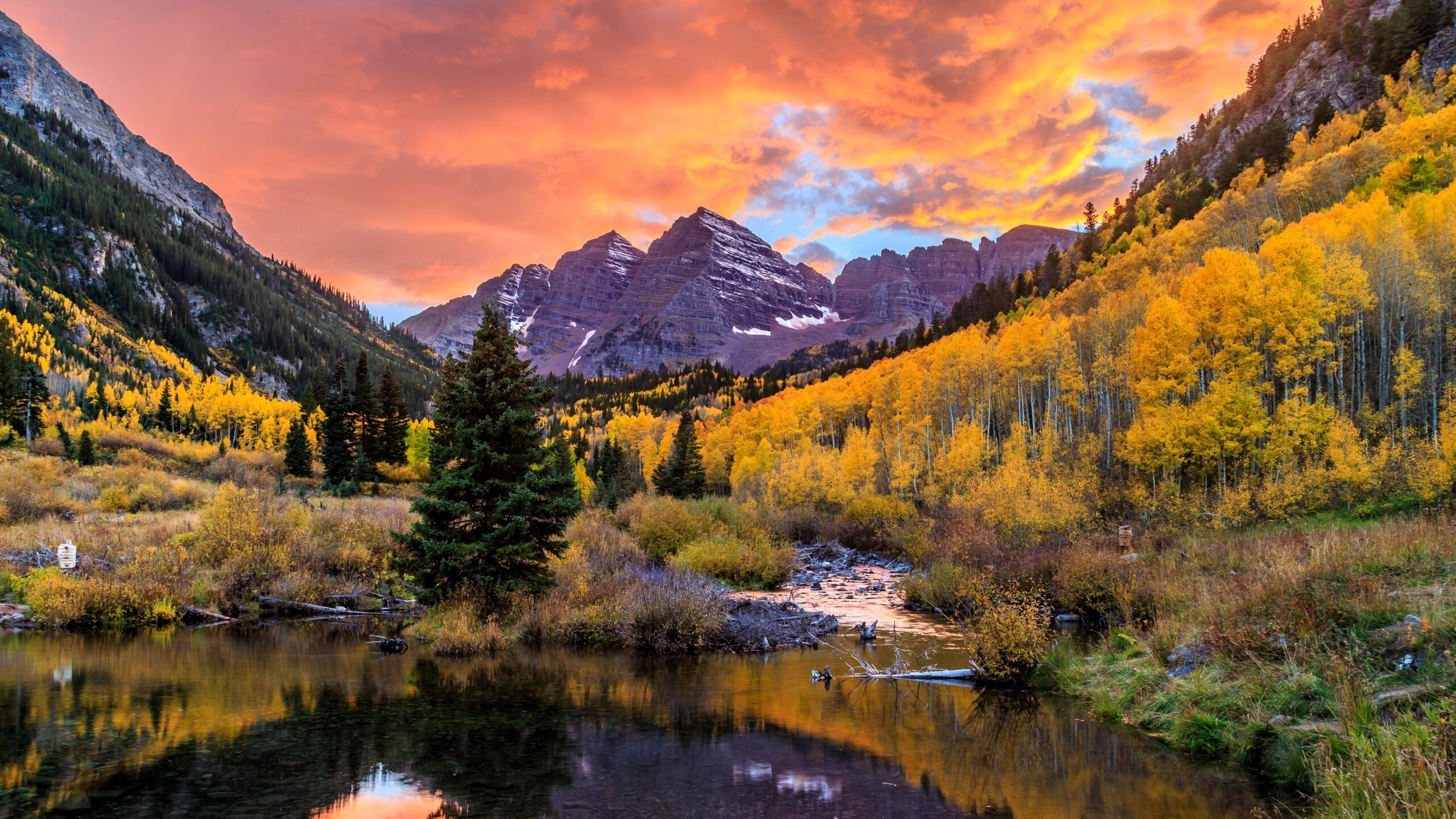
T-Lazy-7 Ranch runs the go-to guided snowmobile tours from Aspen into terrain you would never reach on your own. Three main routes stand out: rides to Klondike Cabin, out to the Maroon Bells corridor, and up toward Independence Pass.
Each includes a hot meal or hot cocoa stop and local history from the guides. The Maroon Bells route is the most scenic — a winter view of those peaks without another soul around is a completely different experience from the crowded summer shuttle.
Tours run throughout winter; contact T-Lazy-7 directly or your lodging concierge to book. Expect roughly $150–350+ per person depending on route and duration, though confirm current pricing when booking.
Cross-Country Skiing on 60 Free Nordic Trails
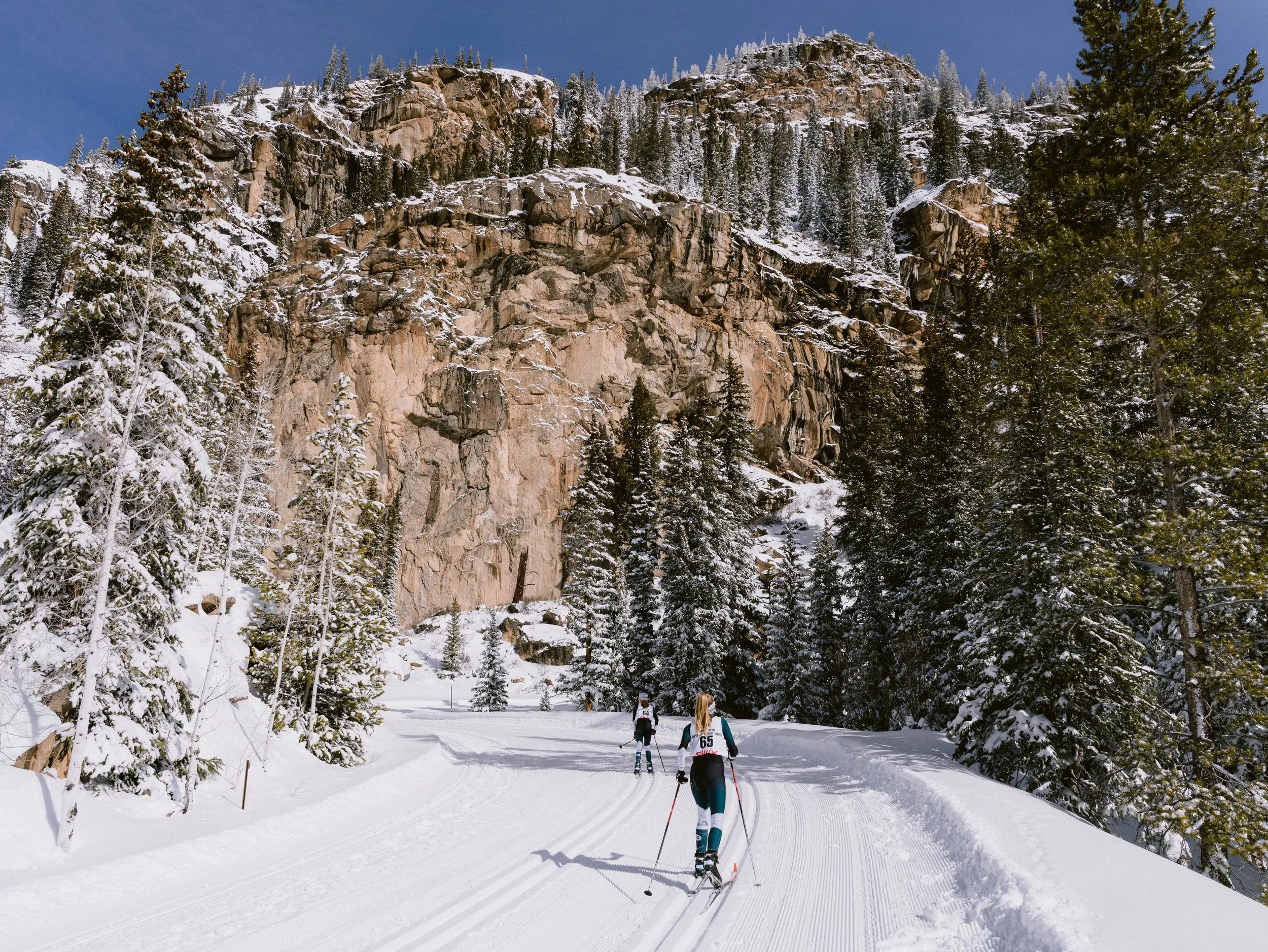
Aspen maintains around 60 kilometers of free groomed Nordic trails across the Roaring Fork Valley — a fact that surprises most first-time visitors expecting everything here to come with a premium price tag. The Aspen Golf Course and the North Star Nature Preserve trails are the easiest to access from town and are groomed for both classic and skate skiing.
Snowmass Village and the Basalt area add more options if you have a car. Gear rental runs roughly $25–45/day at most local outfitters.
These trails are the move for anyone who wants a workout in silence — you will share them with locals walking dogs, not tourists.
Fat Biking on Aspen’s Winter Trails
Fat biking has quietly become a year-round option here, with oversized-tire bikes available from several local shops for roughly $40–60/day. Designated winter trail access varies by area and season, so ask at your rental shop for current groomed routes — they track conditions daily.
The Rio Grande Trail and certain Nordic loops allow fat bikes. This is a solid half-day option for anyone who wants a cycling fix without leaving town, but it is a niche activity best suited to riders already comfortable on a bike in variable conditions.
Ullr Nights — A Gondola Ride, Gourmet Dinner, and Fireside S’mores Under the Stars
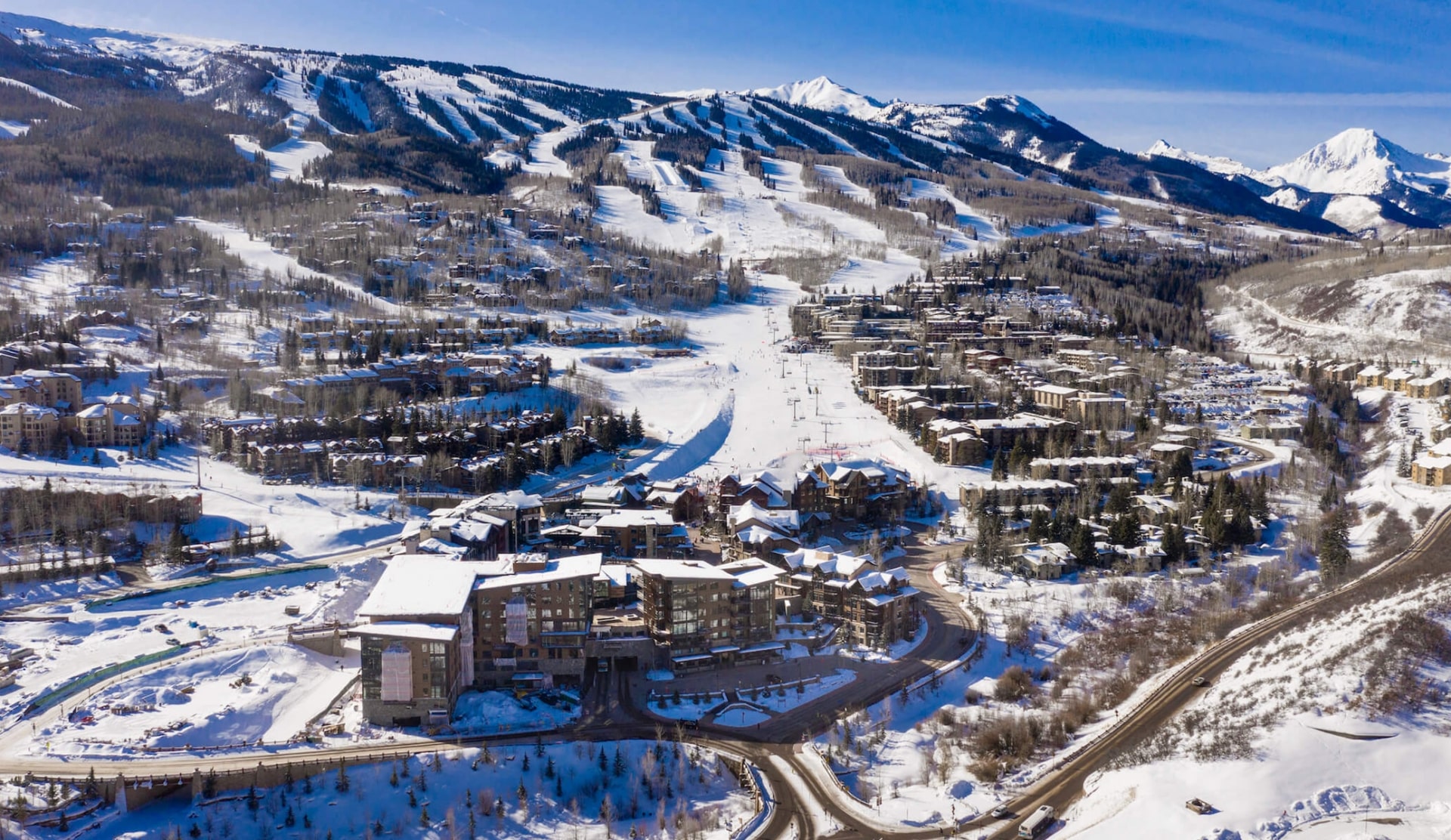
Ullr Nights transforms Elk Camp into an après-dark event with a gondola ride up, a multi-course dinner at the Elk Camp Restaurant, and fireside s’mores under a sky that, at this elevation, is genuinely dark enough to stargaze. It typically runs on select evenings during peak winter season — dates shift each year, so confirm the current schedule through Snowmass Base Village or the concierge.
This is the best date-night option in the valley that does not involve a restaurant on Main Street. Book as soon as dates are announced; capacity is limited by gondola load, and these sell out fast during holidays and Valentine’s week.
Scenic Winter Experiences You Shouldn’t Skip
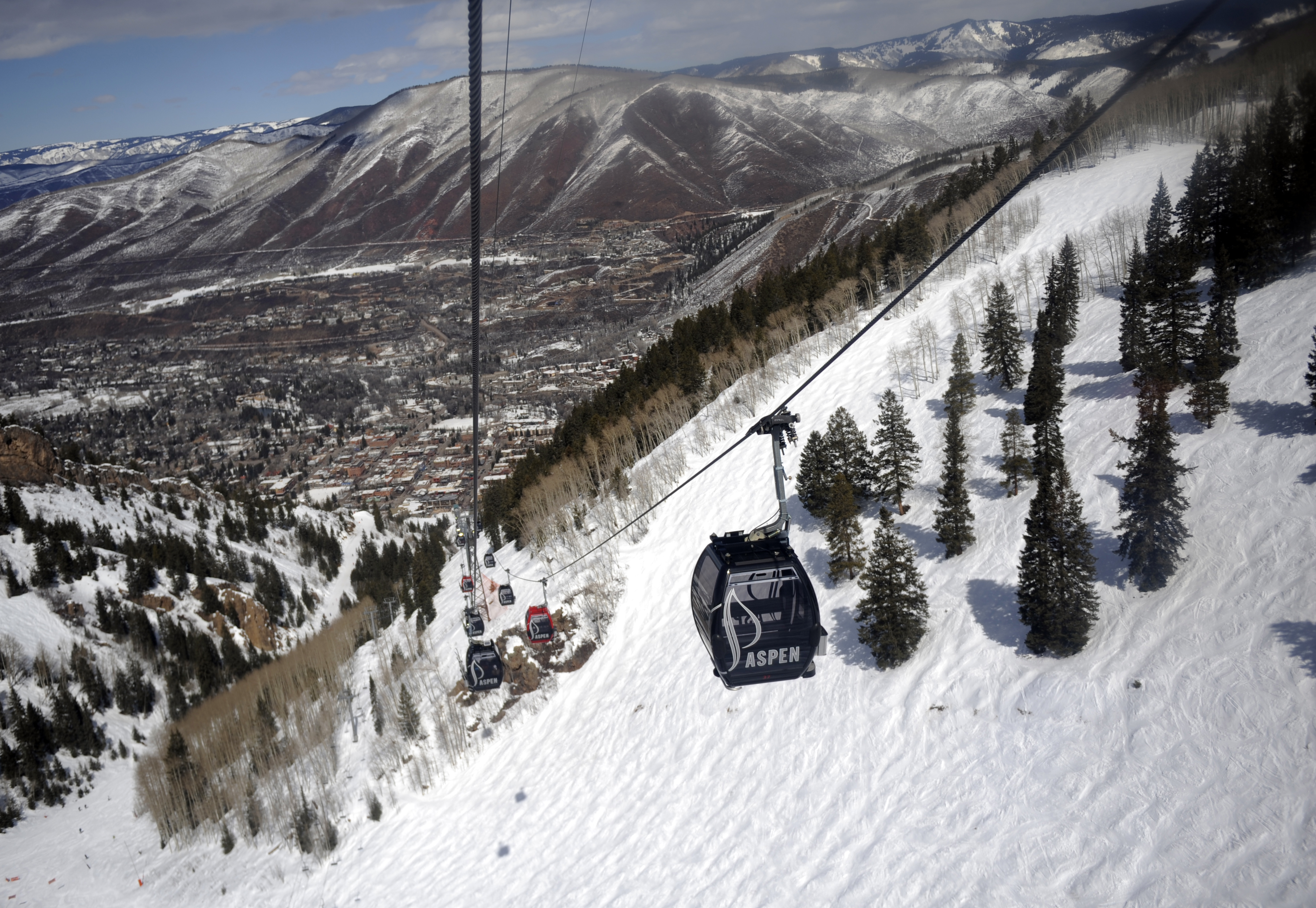
You don’t need to ski a single run to ride to 11,212 feet and see the entire Roaring Fork Valley unfold below you — and that’s just the first item on this list. These are the experiences that make an Aspen winter trip more than a ski trip: gondola rides above the clouds, horse-drawn sleighs through fresh powder, a remote mountain restaurant you reach by snowshoe, and quiet corners of town most visitors walk right past.
| Experience | Time Needed | Effort Level | Book Ahead? |
|---|---|---|---|
| Silver Queen Gondola | 2–3 hours | None | No |
| Sleigh Rides & Carriage Tours | 1–2 hours | None | Yes |
| Pine Creek Cookhouse | 3–5 hours | Low to moderate | Yes — essential |
| Maroon Bells in Winter | Half day+ | High | Depends on method |
| The Hidden Shrines | 2–3 hours | Intermediate skiers | No |
| John Denver Sanctuary | 10–15 minutes | None | No |
Ride the Silver Queen Gondola to 11,212 Feet
Fifteen minutes. That’s all it takes from Gondola Plaza to the summit — a 3,267-foot vertical rise that drops you into a panorama most skiers never stop long enough to appreciate.
The Silver Queen Gondola runs for sightseers all winter, not just skiers, and the Sundeck restaurant at the top means you can ride up, eat lunch with a view, and ride back down without owning a single piece of ski gear.
Winter hours run 9:00 AM to 3:30 PM, with the last ride down around 4:00. Foot-passenger sightseeing passes typically run $35 to $49 depending on how many days you purchase and when you visit — early season and peak holiday pricing fluctuates, so check the Aspen Snowmass website before you go.
Why this beats just skiing: You get the summit view, the mountain atmosphere, and a restaurant experience — without the physical toll of earning those turns. Perfect for non-skiers in your group, rest days, or that first afternoon when you just want to soak it in.
Insider detail: Ride up early — by 10:00 AM on a clear day the light is unreal and the Sundeck is still half-empty. By noon you’re competing with every skier on the mountain for a table.
Horse-Drawn Sleigh Rides and Carriage Tours
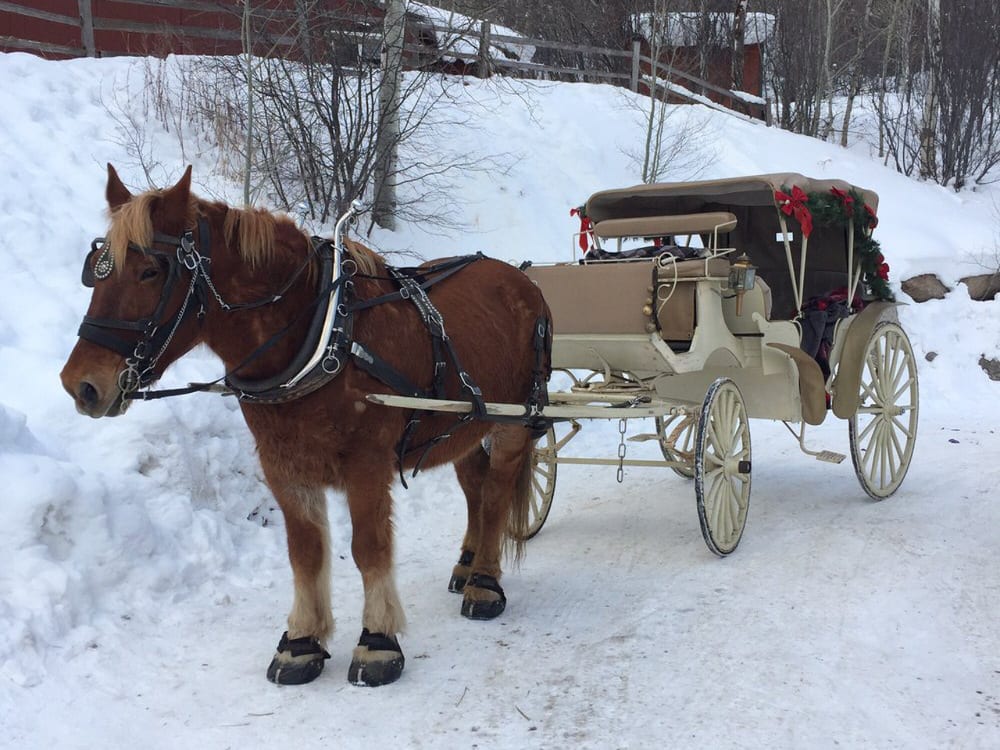
Aspen Carriage & Sleigh is the operation that’s been doing this longest and still delivers. They run downtown horse-drawn carriage tours through the historic West End, private sleigh rides, and dinner sleigh trips out toward T-Lazy-7 and Maroon Creek Road.
The dinner sleigh is the standout — you ride through snow-covered meadows as the valley goes quiet, then come back warm and full.
Book ahead. In peak holiday weeks these sell out days in advance, and there’s no reliable same-day availability. Expect pricing to vary by group size and route — call directly for current rates.
Pine Creek Cookhouse — An Adventure Wrapped Around a Meal
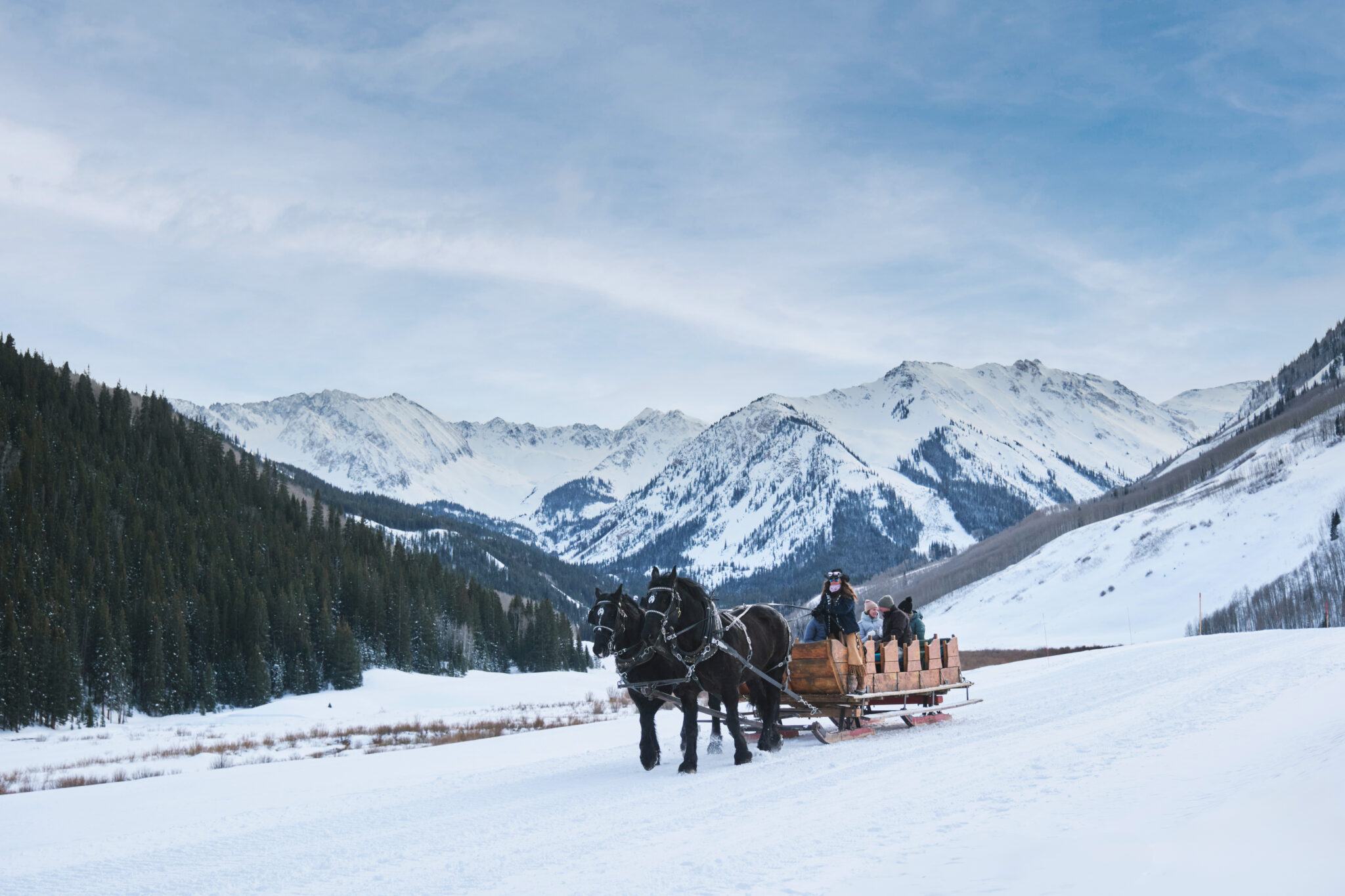
This is the single most memorable meal you can have near Aspen, and the food is only half the reason. Pine Creek Cookhouse sits on Castle Creek Road near the ghost town of Ashcroft, with unobstructed views of the Elk Mountains that will make you forget the steak in front of you.
The catch: you can’t just drive up and park. Castle Creek Road is plowed roughly 11 miles to the Ashcroft townsite, but beyond that it’s non-motorized trails and snowmobile routes only.
Three ways to reach the restaurant:
- Horse-drawn sleigh: The classic option and the one I’d recommend for most visitors. You ride from the Ashcroft parking area through snow-covered aspen groves. It’s part transportation, part experience.
- Cross-country skiing: Groomed trails wind through aspen forests from the Ashcroft area. Best for anyone who already knows how to Nordic ski — this is not the place to learn.
- Snowshoeing: Slower but accessible to anyone willing to walk. The trail is well-marked.
They serve both lunch and dinner, and you need a reservation — this isn’t a walk-in situation. Book as soon as you know your dates.
The combination of the journey, the setting, and the Elk Mountains backdrop makes this an all-afternoon event, so don’t schedule anything else nearby.
Maroon Bells in Winter: Quiet, Remote, and Unforgettable
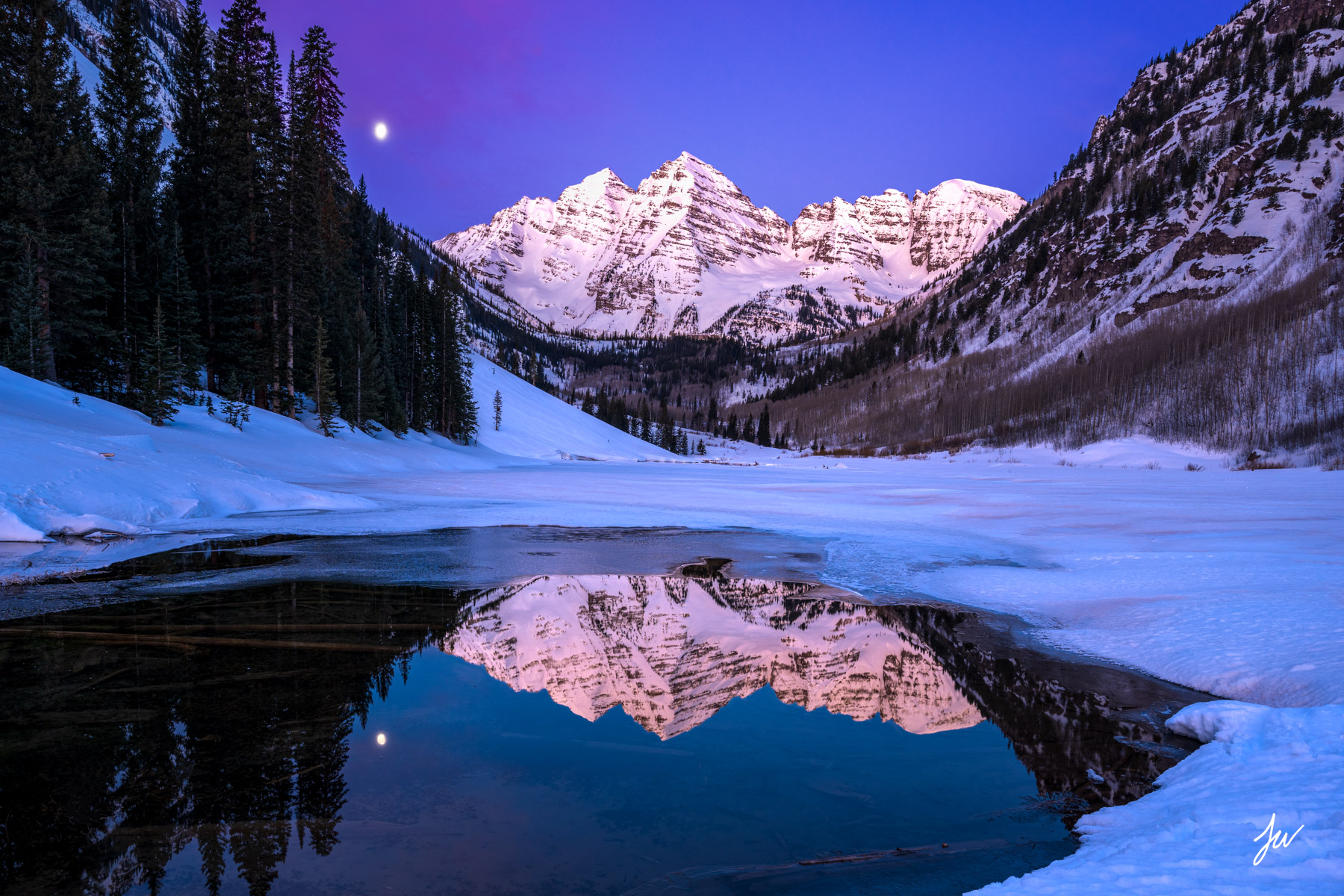
The most photographed mountains in Colorado become virtually empty from November through April. Maroon Creek Road closes to vehicles at the T-Lazy-7 gate, roughly five miles from town, which means the only way into the Bells basin in winter is by cross-country ski, snowshoe, snowmobile, or guided tour.
That access barrier is exactly what makes it special — on a bluebird winter day you can have one of the most iconic landscapes in the American West nearly to yourself.
This is not a casual stroll. You’re looking at five-plus miles each way on skis or snowshoes through a valley that can drop well below freezing.
Go with a guide unless you have backcountry winter experience and proper avalanche awareness. Several local outfitters run guided snowmobile and ski tours into the Bells — book through your hotel concierge or search for licensed Maroon Bells winter outfitters.
What to know before you go: Weather changes fast in the Bells. Even on a sunny morning, afternoon clouds can roll in and temperatures plummet.
Start early, bring layers, and carry water. The payoff — standing at Maroon Lake with fresh powder, zero crowds, and the twin peaks towering above you — is worth every cold mile.
The Seven Hidden Shrines on Aspen Mountain and Snowmass
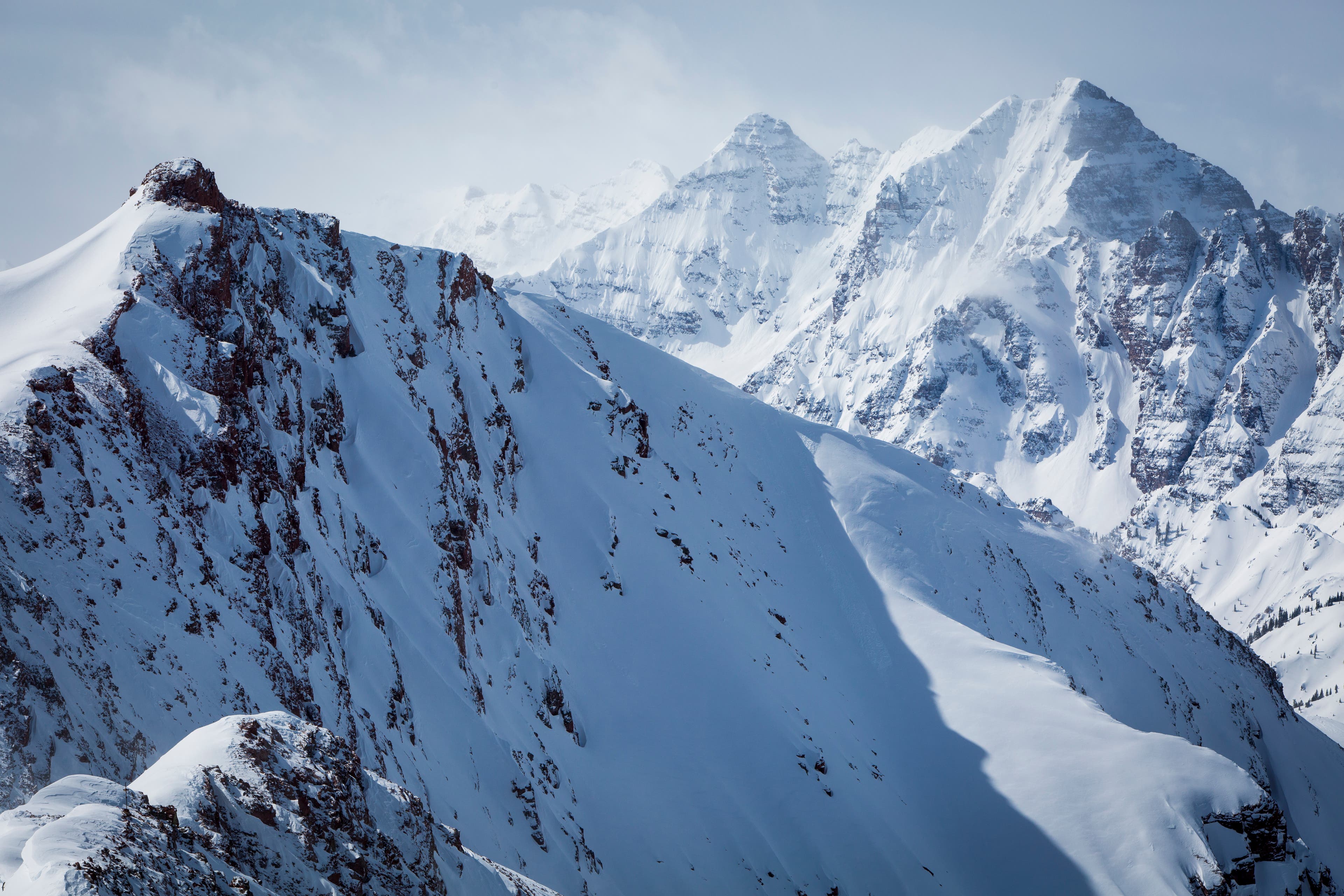
Scattered across Aspen Mountain and Snowmass are seven small, hidden shrines — tucked into trees off marked runs, easy to ski past without noticing if you don’t know they’re there. They range from tributes to musicians to memorials for fallen skiers, and finding them has become a quiet tradition among locals.
This is a treasure hunt that only works if you’re an intermediate or better skier, since the shrines sit off groomed trails in areas that require comfort on ungroomed terrain.
You won’t find these on any official trail map, which is the point. Ask a ski instructor, a bartender at a local spot, or a friendly lift rider for general directions — most longtime Aspen residents know at least a few. Part of the fun is the search.
John Denver Sanctuary — Ten Minutes of Peace in the Middle of Town
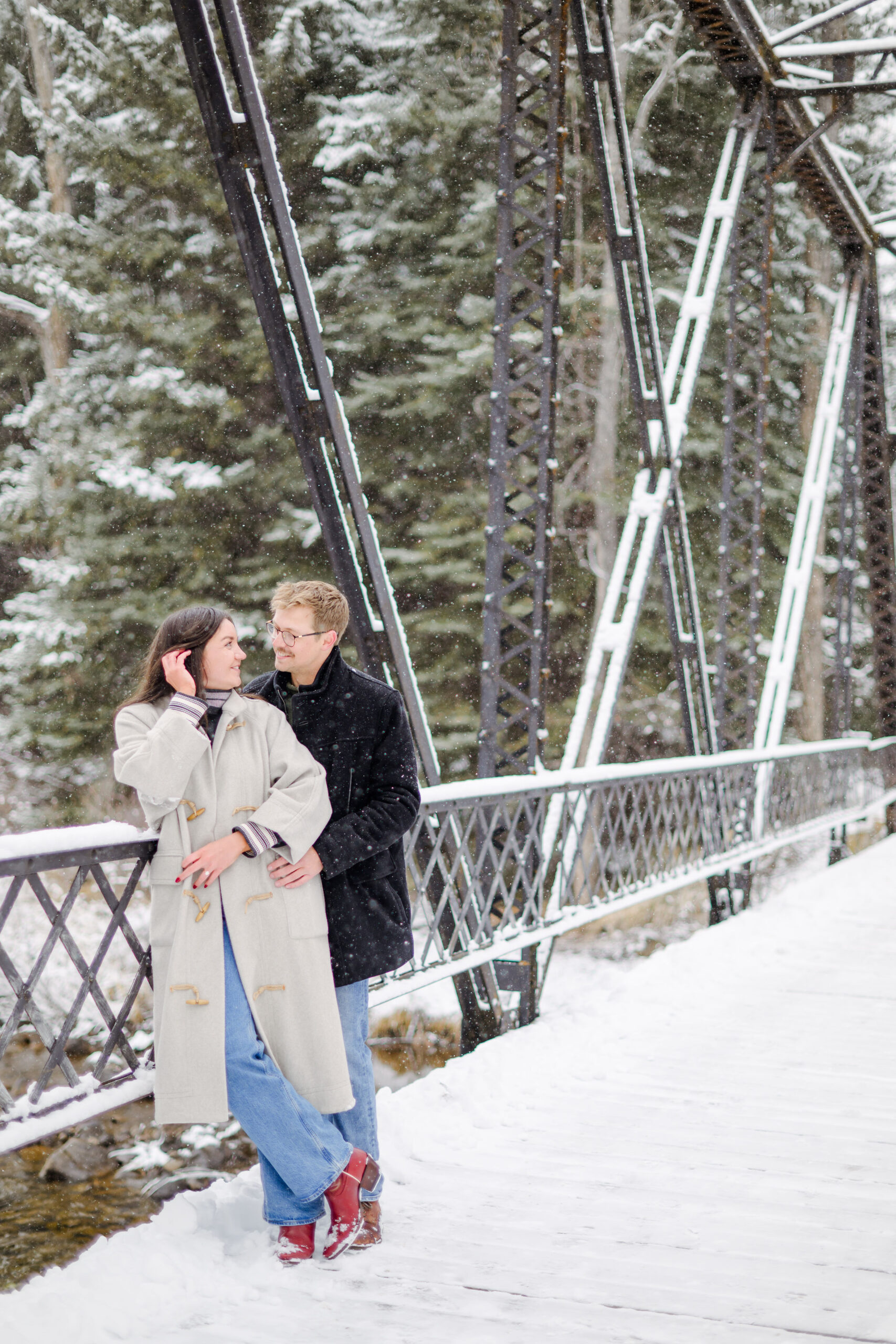
Along the Roaring Fork River at Rio Grande Park, right in downtown Aspen, open year-round and completely free. In winter the paths are snow-dusted, the granite boulders etched with John Denver’s lyrics sit under a thin layer of frost, and the whole place goes quiet in a way it never does during summer tourist season.
You need ten minutes. That’s it.
Walk in, read a few lyric stones, listen to the river, and walk out feeling like you just pressed reset.
This is the kind of stop that doesn’t sound like much on paper but consistently surprises people. It’s two blocks from the gondola, free, and requires zero planning — just show up.
Best Indoor & Off-Snow Things to Do in Aspen in Winter
The best way to beat a day of low visibility or summit-fatigue is to trade your ski boots for skates or gallery shoes. Aspen’s off-slope scene is as polished as its mountains, offering world-class culture and genuine small-town escapes within a few blocks.
Ice Skating and Curling in Downtown Aspen and Snowmass
For a classic winter scene without the lift lines, head to the Silver Circle Ice Rink in the heart of downtown. Its outdoor location, surrounded by shops and cafes, makes it perfect for people-watching while you glide.
If you prefer a serious skate or want to try curling, the indoor Lewis Ice Arena and Aspen Ice Garden are your spots.
- Silver Circle Rink: Best for casual family outings and après-skate ambiance. Expect around $15-$20 for admission and rentals.
- Lewis Ice Arena & Aspen Ice Garden: Ideal for hockey players, figure skaters, and those wanting to try curling leagues. The Ice Garden is an NHL-sized rink; some vacation rentals (like Frias Properties) include complimentary access here.
Winter Fly-Fishing on the Roaring Fork and Frying Pan Rivers
Winter is a surprisingly excellent and uncrowded time to fly-fish here. The water is clear, the fish are active, and you’ll often have the riverbanks to yourself.
The Frying Pan River below Ruedi Reservoir is famous for its consistent hatches, while the Roaring Fork through town offers easier access. This is a guided-activity day—you need an expert for winter conditions.
Plan on a half-day trip costing roughly $300-$500 for two anglers, and book a few weeks ahead.
Aspen Art Museum — Free Admission, World-Class Contemporary Art
Make the Aspen Art Museum your first rainy-day or cultural fix. Admission is always free, and the rotating exhibitions are top-tier.
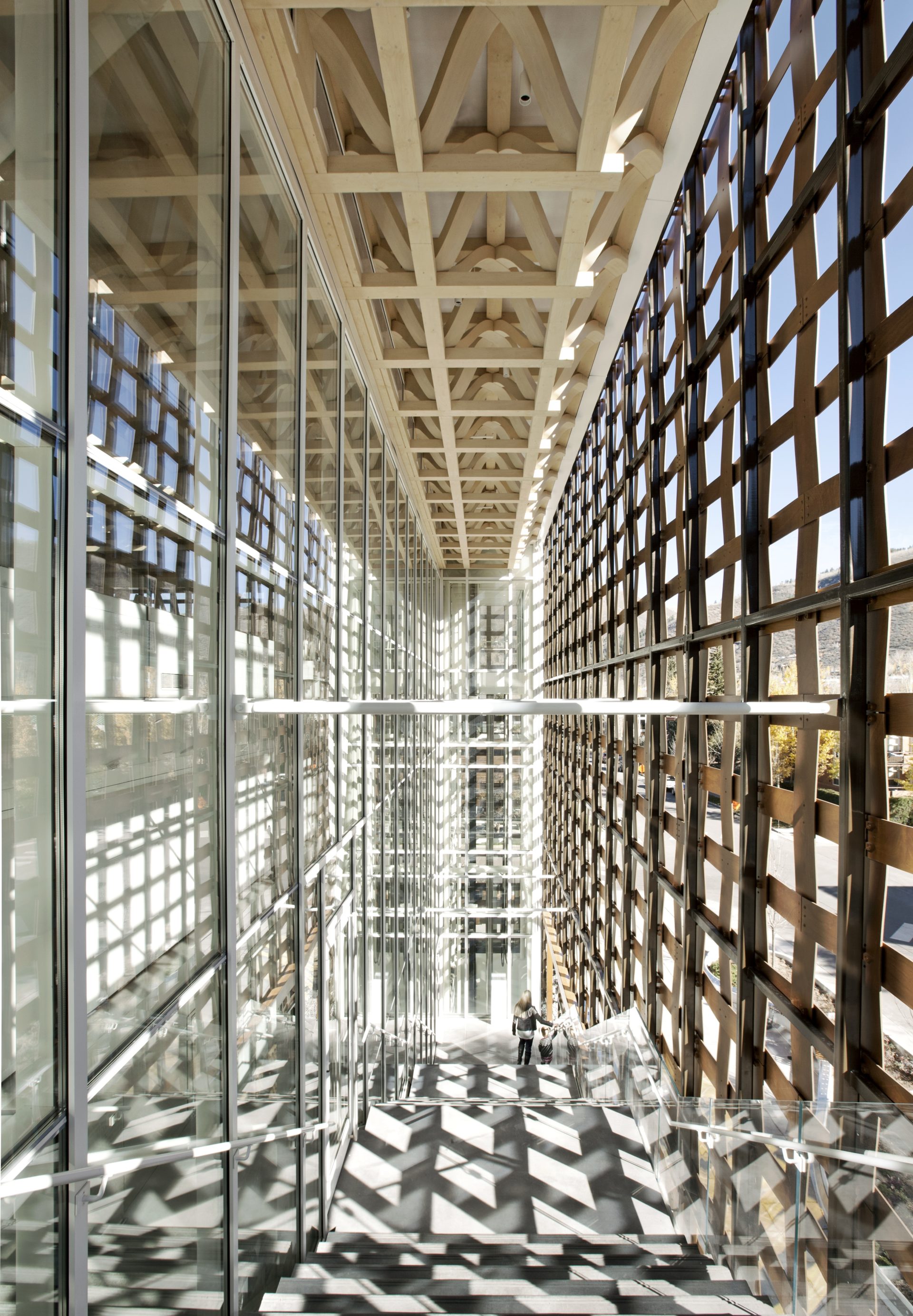
The building itself, designed by Shigeru Ban, features a striking woven-wood lattice roof and a top-floor café with views of Aspen Mountain. It’s a compact, powerful hour of art that punches far above its small-town weight.
Aspen Historical Society Tours
To understand why this town is different, take a tour with the Aspen Historical Society. They run engaging walking tours and open several historic properties, like the Wheeler/Stallard Museum and the Holden/Marolt Mining & Ranching Museum.
This is the direct line to Aspen’s silver-mining roots and its 20th-century reinvention as a cultural haven. Tours typically run daily in winter; check their schedule for specific times and any required reservations.
Spa, Yoga, and Fitness — Staying Active Off the Mountain
Recovery is part of the Aspen rhythm. For high-end spa treatments, the major hotels (The Little Nell, St. Regis, The Gant) have excellent facilities open to non-guests by appointment.
For a dedicated yoga or fitness studio vibe, O2 Aspen and Aspen Shakti offer hot yoga, vinyasa, and meditation classes in a more local setting. Book classes online; popular times fill up.
High-End Shopping Along the Aspen Core
The shopping here is as curated as the skiing. Think of it as a stroll through a luxury outdoor mall set against a mountain backdrop.
You’ll find flagship stores for Prada, Gucci, and Dior alongside boutiques for performance-luxury brands like Canada Goose and Bogner. Don’t miss local gems like Kemo Sabe for custom cowboy boots and hats.
It’s pure window-shopping entertainment, with a side of people-watching that’s world-class.
Insider Tip: For a genuinely peaceful break from the commercial core, walk ten minutes from the gondola to the John Denver Sanctuary along the Roaring Fork River. In winter, its snow-dusted paths and lyric-engraved boulders are a quiet, contemplative escape.
Stay Context: Base yourself in a walkable downtown hotel or condo to maximize these activities without needing a car. Aspen’s free Downtowner shuttle and RFTA buses connect you easily, but being steps from the museum, rinks, and shops is the ultimate convenience.
Can’t-Miss Winter Events and Festivals in Aspen
Aspen’s event calendar is wildly disproportionate to a town of roughly 7,000 residents — and the best part is that the two biggest spectacles of the season cost nothing to attend. Here’s how to plan around the events worth building your trip dates around.
| Event | When (Typical) | Cost | Best For |
|---|---|---|---|
| Wintersköl | Early–mid December (Dec 10–13, 2026) | Free (most events) | Locals’ energy, families, first-timers |
| X Games Aspen | Late January (confirm dates annually) | Free | Action sports fans, spectacle seekers |
| Gay Ski Week | Mid-to-late January (Jan 17–24, 2027) | Event packages from ~$100+ | LGBTQ+ community, après culture |
| Belly Up / Winter Arts | Season-long | Tickets usually $30–$150+ | Live music lovers, culture seekers |
| Aspen Institute Seminars | Season-long, multiple sessions | Varies; some events free and public | Ideas-driven travelers, policy nerds |
Wintersköl — Aspen’s 75th Annual Toast to Winter
Wintersköl is the most authentically local event on Aspen’s winter calendar, even though it’s been running since 1951. The 2026 edition marks the 75th anniversary — expect the town to go bigger than usual.
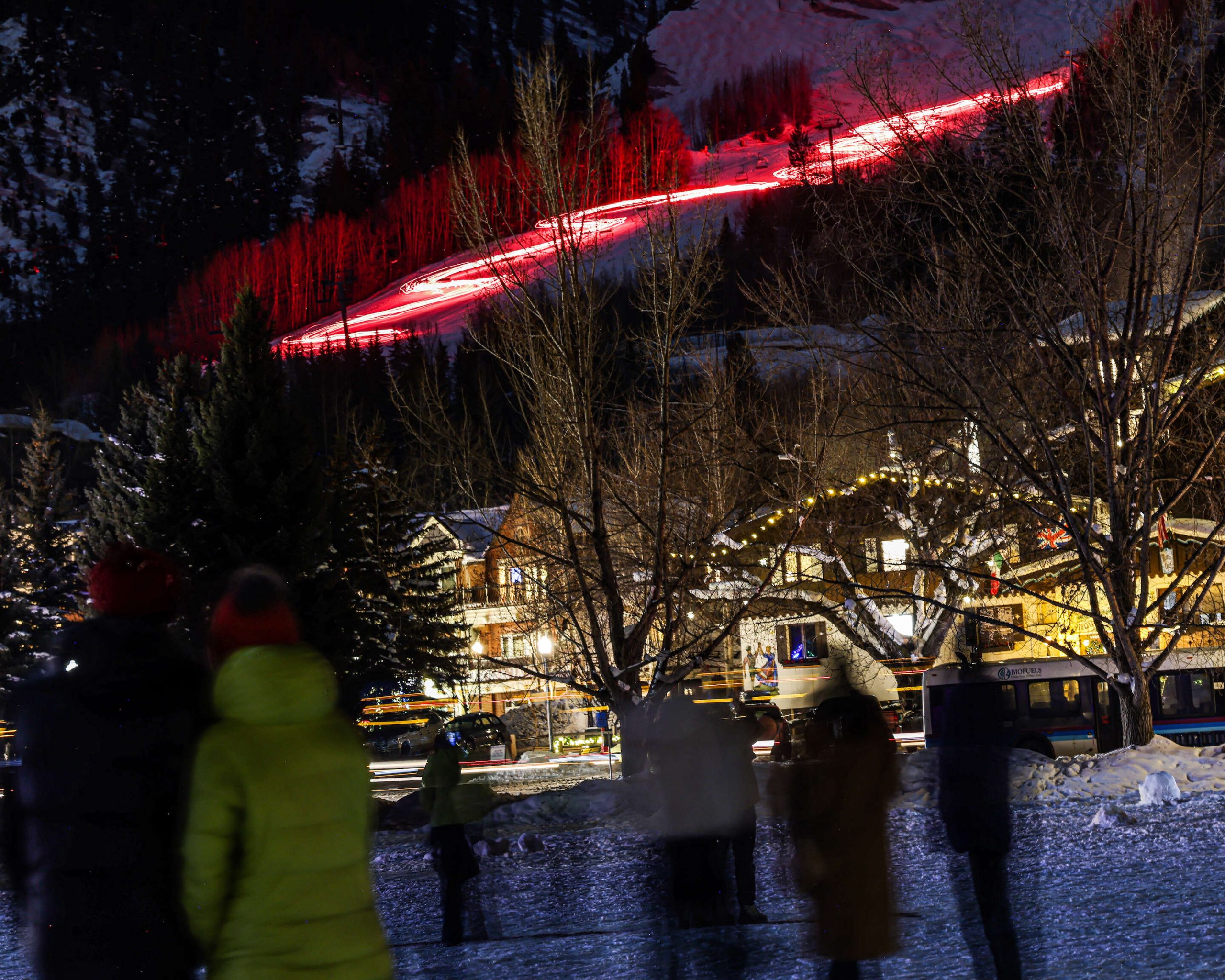
The core draws are ice sculpting competitions downtown, the torchlight parade down Ajax Mountain, and fireworks over the slopes. Most Wintersköl events are free and open to the public, making it one of the highest-value days on the Aspen calendar.
- When: December 10–13, 2026 — typically a four-day stretch in early-to-mid December.
- What to prioritize: The torchlight parade is the emotional peak — ski instructors descend Ajax carrying flares while the town watches from the base. Show up early for a spot near the Silver Queen Gondola.
- Budget move: December rates before the 18th are significantly lower than the ultra-peak stretch from December 20 through New Year’s. Wintersköl falls in the shoulder window — you get the festival energy without peak pricing on lodging.
X Games Aspen at Buttermilk (Free to Attend)
X Games Aspen transforms Buttermilk — the same mountain that’s gentler for beginners most of the season — into a massive free-admission action sports venue. SuperPipe, Slopestyle, Big Air — the world’s best competing on courses built specifically for the event.
This is one of the only X Games stops worldwide with no gate fee. Confirm exact dates each year with ESPN’s X Games schedule, but it typically lands in late January.
- Why it’s a budget win: You’re watching elite-level competition, live music acts, and an entire festival atmosphere without buying a ticket. Plan on arriving early — parking fills fast and the best viewing spots along the course go first.
- What to expect: Evening events under the lights are the most dramatic. Dress for standing outside for hours; it’s a spectator sport in every sense.
Aspen Gay Ski Week — The Country’s Oldest LGBTQ+ Winter Festival
Running since 1977, Gay Ski Week is the longest-running LGBTQ+ winter event in the United States. The 2027 edition (January 17–24) marks its 50th anniversary.
Daily ski meetups across all four mountains, themed après parties at venues throughout town, and the Downhill Costume Contest — which is exactly as unhinged and joyful as it sounds.
- Cost: Many après events and parties are individually ticketed, typically starting around $100 for event packages. Some happenings at public venues are open to all.
- Planning note: Lodging books up faster than usual during Gay Ski Week, especially walkable downtown properties. Book accommodations early — this isn’t a week where last-minute deals reliably appear.
Live Music at Belly Up Aspen and the Winter Arts Calendar
Belly Up Aspen is the town’s premier live music venue and punches absurdly above its weight — acts that play arenas elsewhere perform in an intimate room here. Tickets typically run $30–$150+ depending on the artist, but shows sell out fast, especially holiday weeks.
Check the Belly Up calendar as soon as your trip dates are firm.
Aspen’s winter arts scene extends well beyond music. The Aspen Art Museum runs rotating contemporary exhibitions (free admission), and the Wheeler Opera House — a restored 1889 jewel in the center of town — hosts film screenings, comedy, and performing arts throughout the season.
Aspen Institute Winter Seminars and Speaker Series
The Aspen Institute’s Winter Community Seminars and public speaker series roundtables on leadership, ethics, and policy are held at the Meadows campus — a Herbert Bayer–designed property that’s worth the visit for the architecture alone. Some sessions are open to the public at no charge; others are tied to membership or registration.
Check the Aspen Institute events page for the current season’s lineup.
This is one of Aspen’s most underappreciated cultural draws. The Bauhaus design legacy woven through town — from the Wheeler Opera House to the Institute campus — is a thread most ski visitors never pull.
If you care about ideas and design, this is the event that makes Aspen feel like more than a mountain town.
- Insider move: The Society of Fellows program offers deeper engagement, but you don’t need membership to attend many of the public seminars. Book early — seating at popular sessions is limited and fills well in advance.
Where to Eat: The Best Restaurants in Aspen This Winter
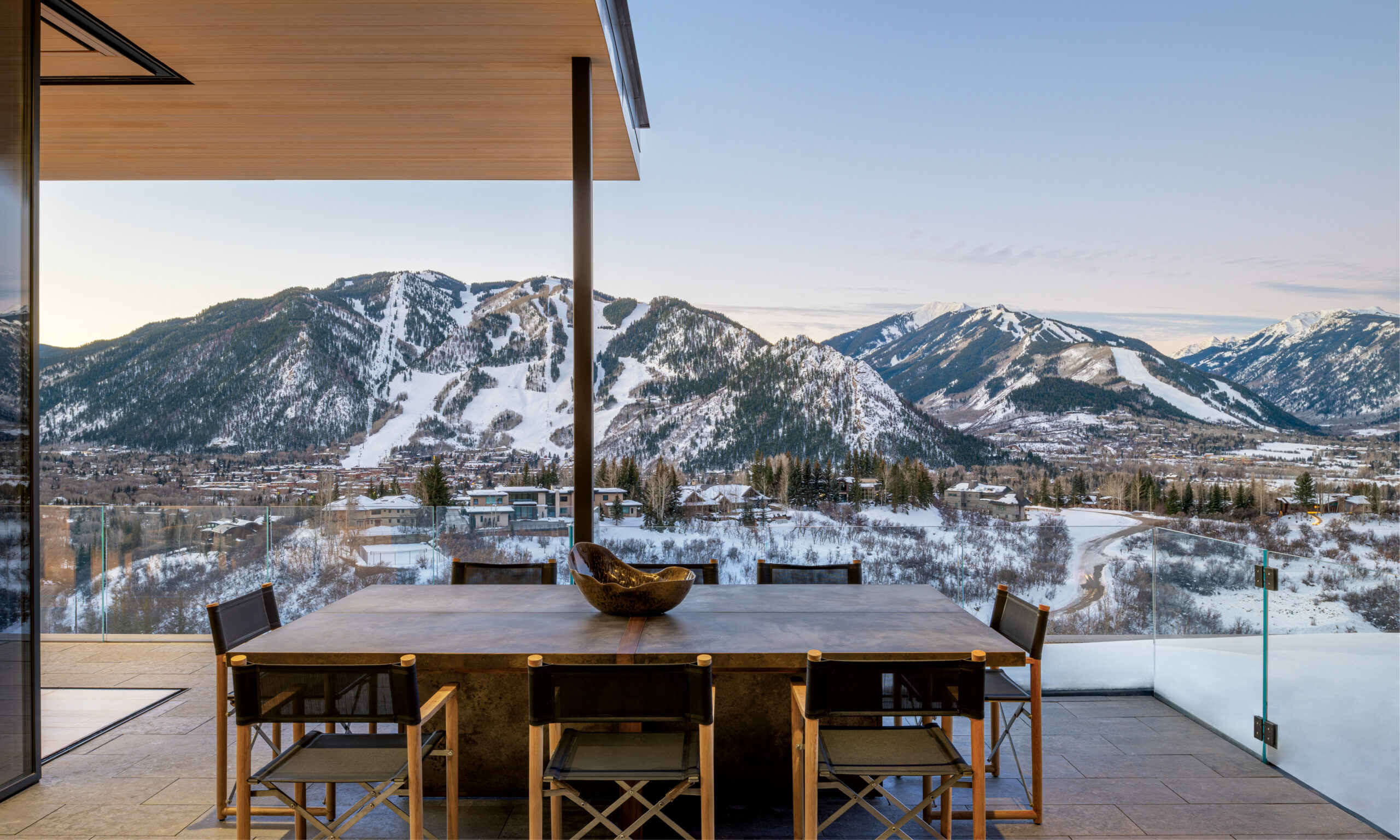
Seven thousand residents, roughly 80 restaurants — and enough high-end tables to rival cities ten times Aspen’s size. Eating well here is easy. Getting a seat at the right place on the right night? That takes strategy.
On-Mountain Dining — From Bonnie’s Pancakes to Cloud Nine Champagne
On-mountain eating in Aspen runs the full spectrum. Bonnie’s, the mid-mountain lodge on Ajax, has been serving skiers its famous pancakes and hearty lunches on a sun-drenched deck for decades — it’s a rite of passage, not just a meal. Over at Aspen Highlands, Cloud Nine is the scene: a European-style bistro lunch at 10,000 feet that regularly turns into an impromptu champagne toast when the bottles start popping at neighboring tables.
Arrive early for both — lines form fast by 11:30 a.m.
The biggest on-mountain shake-up is Mt. Rubirosa, the New York thin-crust pizza spot that replaced Chica at the base of the Silver Queen Gondola.
It’s now one of the best slope-side dining options in town — a legit pie and a cold beer steps from the snow without breaking your ski rhythm.
For a meal built around the journey to get there, Pine Creek Cookhouse on Castle Creek Road delivers Elk Mountains views and a sleigh ride or cross-country ski to the front door. (Full details in the Pine Creek Cookhouse section above.)
Best In-Town Restaurants for Winter Visitors
The three tables hardest to land: Matsuhisa, Casa Tua, and Catch Steak. Matsuhisa is Nobu’s original Aspen outpost — skip the main dining room and sit at the sushi bar for the omakase, which is still the best meal in town.
Casa Tua serves intimate Italian in a townhouse setting that feels like dining at a friend’s villa in Portofino. Catch Steak brings surf-and-turf energy with a bar scene that doesn’t quit.
For a more relaxed pace, Meat & Cheese on the Cooper Avenue pedestrian mall is the strongest casual lunch in Aspen — charcuterie boards, farm-driven plates, and a walk-in-only bar that rewards spontaneity. Felix Roasting Co. inside the Hotel Jerome is the morning coffee ritual before you head to the gondola.
The standout newcomer for sit-down dining is West End Social, which replaced Plato’s at the Aspen Meadows — the 270-degree view deck and shared-plates menu make it worth the short ride from downtown, especially at golden hour. Staying in the West End puts you within a five-minute walk; from downtown core, it’s a quick taxi or bus ride.
New and Notable: Openings and Rebrands Worth Knowing
Two changes for returning visitors. Mt. Rubirosa replaced Chica at the gondola base — a meaningful upgrade for anyone who wants slope-side food worth eating.
And West End Social took over the Plato’s space at Aspen Meadows with an expanded deck and a shareable menu that finally gives the property’s dining room the attention it deserves. Both should be on your list.
How to Actually Get a Table at Aspen’s Most Popular Restaurants
This is the single most valuable thing in this section: Matsuhisa, Casa Tua, Catch Steak, and West End Social all release reservation inventory exactly 30 days out on Resy or OpenTable, dropping at midnight Mountain Time. Set an alarm. During Christmas week and Presidents’ Day weekend, prime-time tables vanish in minutes.
Bar seating at Matsuhisa, Meat & Cheese, and Catch Steak stays first-come, first-served year-round — but during peak holiday weeks, get in line at least 15 minutes before doors open. This is your most reliable backup when online reservations are gone.
- Book early, reconfirm closer. Lock in tables 30 days out, then reconfirm 48 hours in advance. Aspen restaurants enforce cancellation fees aggressively during peak season.
- Lunch beats dinner for walk-ins. Even the hottest spots open up at midday, especially Tuesday through Thursday.
- Use your hotel concierge. Aspen’s top properties hold small reservation blocks at popular restaurants. If your hotel has a concierge desk, ask — that’s exactly what they’re for.
A quick-reference guide to the restaurants covered above:
| Restaurant | Location | Best For | How to Get In |
|---|---|---|---|
| Matsuhisa | Downtown | Omakase, special occasions | Resy 30 days out, midnight; bar walk-in |
| Casa Tua | Downtown | Intimate Italian dinner | Resy 30 days out, midnight |
| Catch Steak | Downtown | Surf-and-turf, bar scene | Resy/OpenTable 30 days out; bar walk-in |
| West End Social | West End | Sunset views, shared plates | Resy or OpenTable 30 days out |
| Mt. Rubirosa | Gondola base | Slope-side pizza | Walk-in |
| Meat & Cheese | Downtown | Casual lunch, charcuterie | No reservations; bar walk-in |
| Bonnie’s | Mid-mountain, Ajax | Pancakes, sun deck | Ski-in; arrive before 11:30 a.m. |
| Cloud Nine | Aspen Highlands | Champagne lunch scene | Ski-in; arrive before 11:30 a.m. |
When Should You Visit Aspen in Winter? A Month-by-Month Breakdown
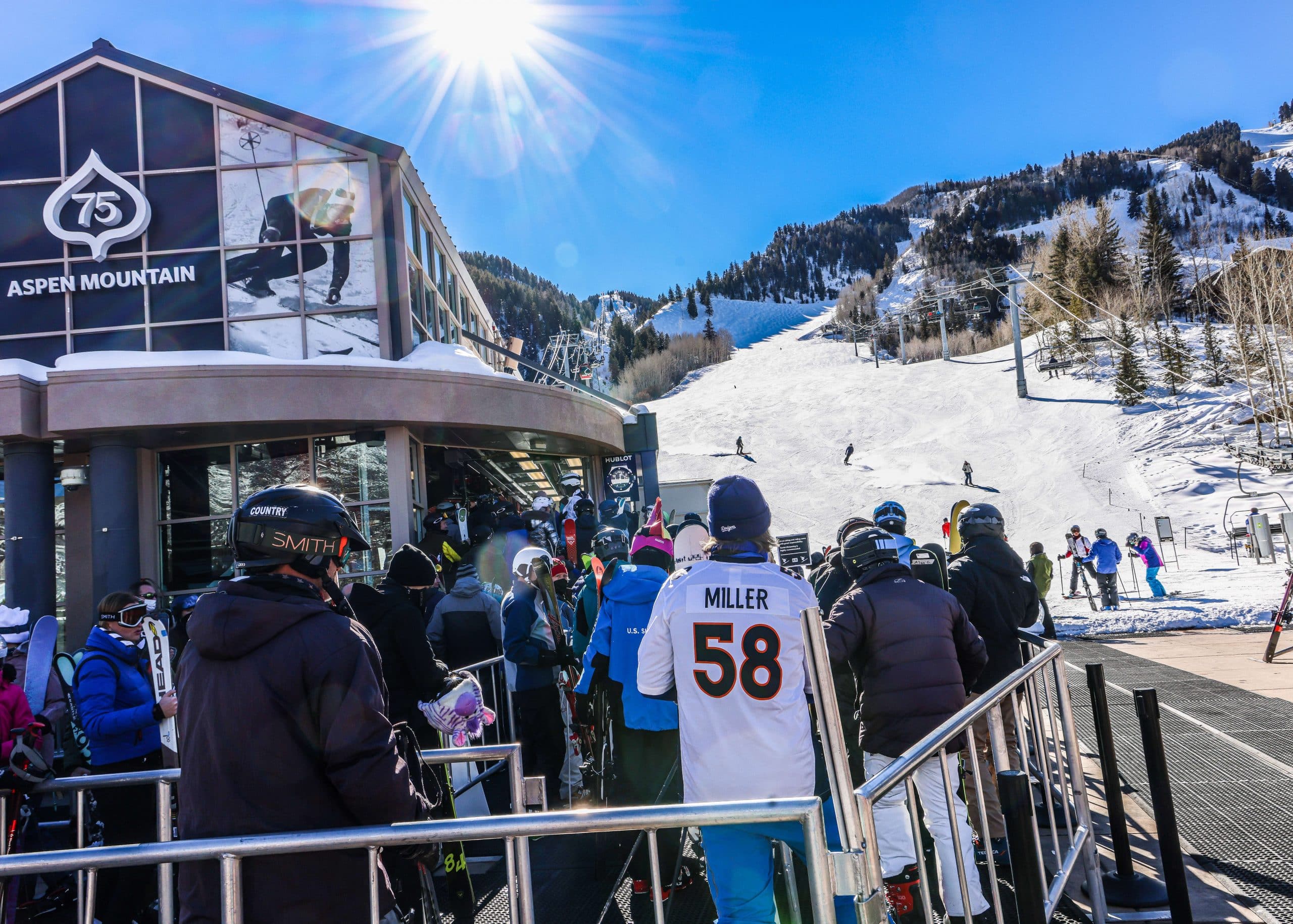
The difference between a $400/night Aspen hotel room and a $1,200 one can come down to which week you pick — and that same choice determines whether you’re skiing powder with elbow room or standing in a gondola line behind someone’s extended family reunion.
Here’s the quick comparison before the deep dive:
| Month | Crowds | Snow Quality | Prices | Best For |
|---|---|---|---|---|
| December | Low → extreme peak | Snowmaking-dependent early; solid late | Shoulder → holiday peak | Budget-conscious skiers; holiday atmosphere seekers |
| January | Lowest of the season | Cold, light, preserved | Lower (except MLK weekend) | Serious skiers; powder purists |
| February | Highest all season | Historically the snowiest | Peak all month | Deep snow variety; big-mountain terrain |
| March | High, then moderate | Depest base; sun-softened by afternoon | High, easing late month | Sunshine skiers; spring-break energy |
| April | Lowest on-mountain | Soft corn snow; freeze-thaw | Best deals of winter | Locals’ vibe; bargain hunters; sun lovers |
December — Shoulder Season Deals and Holiday Peak
Early December is Aspen’s quiet secret — the mountain is open, holiday lights are up, and nightly rates haven’t spiked yet. Through roughly December 18, you’ll find shoulder-season pricing and manageable lift lines.
Coverage those first two weeks is a snowmaking story more than a natural snow story, so don’t expect deep powder turns. Expect temperatures around 35°F highs and 11°F lows, with mid-mountain accumulating roughly 30–38 inches for the month.
Then December 20 hits, and everything flips. Lodging rates jump to their winter ceiling.
Reservations at every worthwhile restaurant become essential. The town earns the crowds, though — Wintersköl brings on-mountain contests and a wacky town festival mid-month, 12 Days of Aspen fills the holiday window with free concerts and events, and New Year’s Eve fireworks over Ajax are genuinely spectacular.
My take: Book the first two weeks if you want value and don’t mind relying on groomed runs. Book the last 10 days only if the holiday atmosphere matters enough to pay triple and fight for dinner reservations.
January — Deep Winter, Light Crowds, and X Games
The week after New Year’s, the crowds fall off a cliff. January is the connoisseur’s month — cold temperatures (highs around 35°F, lows near 9°F) preserve light, dry snow on the upper mountain, and mid-mountain typically holds a reliable 40-inch-plus base.
You’ll have days where untouched lines stay open well past noon.
Two spikes to plan around: MLK weekend brings a brief crowd surge, and the X Games (usually late January at Buttermilk) packs the town with spectators and energy — book lodging early if you want to be here for it, or avoid it entirely if you don’t.
My take: The first two weeks of January are the single best window for anyone who prioritizes skiing quality over social scene. Lift lines are short, the snow is cold and dry, and you can often walk into restaurants without a wait.
This is when locals actually enjoy the mountain.
February — The Snowiest Month and the Biggest Crowds
February historically delivers Aspen’s deepest natural snowfall — typically 28–35 inches for the month — which opens up tree runs and steep alpine terrain that aren’t skiable earlier in the season. Highs hover around 38°F with lows near 11°F, and the snowpack usually swells to its deepest by month’s end.
The tradeoff is blunt: this is peak crowd season. Presidents’ Day week is the worst offender — top-tier lodging rates, packed restaurants, and lift lines you haven’t seen since New Year’s. The entertainment upside is real, though. Belly Up Aspen (the town’s premier live-music venue) runs its strongest winter lineup in February, and the nightlife scene is at full tilt.
My take: If you can visit the first or last week of February and skip Presidents’ Day weekend entirely, you get the best snow conditions without the worst crowds. If you must come during Presidents’ Day, book lodging and dining the moment your dates are confirmed — I mean months ahead, not weeks.
March — Bluebird Skies Over the Deepest Snowpack
This is the combination that’s hard to beat: the season’s deepest snowpack — typically 55–70 inches on the upper mountain — under bluebird skies with highs around 45°F. You’ll ski in a t-shirt more than once.
Outdoor decks at the Sundeck on Ajax and Elk Camp at Snowmass open up, live music kicks off on the patios, and lunch on-mountain becomes an event rather than a refueling stop.
Spring break traffic runs high through mid-to-late March, so expect solid crowds and elevated pricing through roughly the third week. After that, things ease noticeably.
The afternoon snow gets heavy and sun-softened by midday — start early (first chair) for the best groomers, and switch to north-facing runs after 1 p.m. if you want to avoid mush.
My take: Late March (after spring break thins out) is the best overall week of the entire winter season for a balanced trip — deep snow, warm sun, manageable crowds, and the town’s aprés scene in full bloom. It’s the sweet spot between winter and spring that most visitors never target.
April — The Locals’ Month With the Best Deals
April is when Aspen finally belongs to the people who live there — and to savvy visitors willing to trade peak conditions for the season’s best value. Lodging rates drop sharply, restaurants ease their reservation requirements, and you can often find deals bundled with late-season lift tickets.
Expect highs around 53°F, lows near 25°F, and 15–20 inches of mid-mountain snow for the month.
The snow itself is freeze-thaw corn — firm and fast in the morning, soft and carveable by late morning, then slushy by mid-afternoon. It’s not powder skiing, but on a warm bluebird day with the Sundeck deck fully open, you won’t care.
Most years, Aspen Mountain and Snowmass stay open into mid-to-late April, though the exact closing date varies — confirm with Aspen Snowmass before booking.
My take: April is the move for anyone who wants Aspen without the Aspen price tag. The mountain still has plenty of coverage up high, the town feels relaxed instead of frantic, and you’ll spend half what you would in February on lodging.
The compromise is real — lower-elevation runs close early, and afternoon skiing can get sloppy — but the value equation works in your favor.
Insider detail: If you’re targeting early or mid-December or late April, base yourself in a vacation rental or lodge slightly outside the core downtown grid — properties along East Durant Avenue or the West End neighborhood often run 20–30% less than comparable units on Main Street or Galena Street, and you’re still a five-minute walk to the gondola.
How to Get to Aspen in Winter (And Get Around Without a Car)
Aspen/Pitkin County Airport sits just three miles from downtown — one of the shortest airport-to-resort transfers in North America. But that convenience comes with a catch: weather diversions are frequent, and a backup plan isn’t optional.
Here’s exactly how to get here and how to move around town once you arrive, car or no car.
Flying Into Aspen/Pitkin County Airport (ASE)
When planes land here, you’ll be on the slopes within 15 minutes of grabbing your bag. ASE runs winter nonstop routes primarily through Denver (United), Dallas/Fort Worth (American), and Chicago (United), with seasonal service from other hubs.
The runway is short and surrounded by mountains, so low clouds and snow shut it down regularly — expect diversion rates that can spike above 30% on stormy days.
Insider move: If your schedule is rigid, fly into ASE but book a refundable backup shuttle from Denver or Eagle in advance. When ASE diverts, those shuttle seats disappear within hours.
Backup Airports: Eagle County (EGE) and Denver (DEN)
Eagle County Airport in Gypsum is roughly 70 miles west of Aspen — about 1 hour 30 minutes on dry roads, often 2+ hours in winter conditions via I-70 and Highway 82 through Glenwood Springs. Diversion rates drop dramatically compared to ASE, and you’ll find rental cars plus shuttle services like Epic Mountain Express.
This is the best backup for anyone who wants a relatively short drive without gambling on ASE weather.
Denver International (DEN) sits 220 miles east — plan for 3.5 to 4 hours in clear weather, but 5 to 7+ hours during a storm or on peak weekend ski traffic. The route runs I-70 west over Eisenhower Tunnel and Vail Pass to Glenwood Springs at Exit 116, then south on Highway 82.
Shared shuttles (Pegasus, Bustang, Epic Mountain Express) and private SUV services run this corridor constantly in winter.
| Airport | Distance to Aspen | Typical Winter Drive | Best For |
|---|---|---|---|
| ASE (Aspen) | 3 miles | 10–15 min | Convenience — when weather cooperates |
| EGE (Eagle) | ~70 miles | 1.5–2+ hours | Best backup — shorter drive, fewer diversions |
| DEN (Denver) | ~220 miles | 3.5–7+ hours | Most flight options, cheapest fares, longest drive |
Driving to Aspen: I-70, Highway 82, and Colorado’s Traction Law
If you’re driving from the Front Range or flying into Denver, the route is I-70 west through the Eisenhower Tunnel and Vail Pass to Glenwood Springs, then Highway 82 south to Aspen. This is the only viable winter driving route — Independence Pass (Highway 82 over the mountains from the east) closes seasonally, typically from late October through late May.
Colorado enforces traction laws aggressively on I-70 and mountain highways, and the fines are steep:
- Traction Law (Code 15): Active during snow events. 4WD/AWD vehicles need all four tires at minimum 3/16″ tread with M+S or 3PMSF rating. 2WD vehicles must carry chains or approved alternate traction devices — M+S tires alone no longer satisfy the law for 2WD.
- Passenger Vehicle Chain Law (Code 18): Active in severe conditions. Every vehicle, including 4WD, needs chains or traction socks installed on drive tires.
- Fines: Start at $500+ and exceed $1,000 if an unequipped vehicle blocks a lane during a storm.
Bottom line: Rent an AWD or 4WD vehicle with winter-rated tires. If you’re not comfortable driving mountain passes in snow — and you shouldn’t be unless you have real experience — take a shuttle from DEN or EGE instead.
Getting Around Town: Free Shuttles, RFTA Buses, and the Downtowner App
Here’s the best news about an Aspen winter trip: once you’re in town, you genuinely don’t need a car. The Roaring Fork Transportation Authority (RFTA) runs free bus service throughout Aspen and to all four ski mountains.
The Downtowner — a free on-demand ride service — covers the downtown core, making it easy to hop between restaurants, shops, and your hotel without walking through snow in ski boots.
Base yourself in downtown Aspen if you want maximum walkability. Hotels and lodges within a few blocks of the Silver Queen Gondola base give you ski-mountain access on foot, and nearly every restaurant, bar, and shop sits within a 10-minute walk.
If you’re staying in Snowmass Village, free shuttles connect to Aspen regularly throughout the day.
If you do have a car, parking in downtown Aspen is limited and metered — the free Intercept Lot at the Brush Creek Park-and-Ride (along Highway 82 just before town) runs frequent free shuttles into the core.
Key Winter Road Closures to Know About
Independence Pass is the big one — closed all winter, no exceptions. Do not plan a scenic drive over it between late fall and late spring.
Castle Creek Road beyond the Ashcroft ghost town area also closes seasonally, which affects access to destinations like Pine Creek Cookhouse (covered in the scenic experiences section — guests reach it by sleigh, snowshoe, or cross-country ski beyond the road closure).
Highway 82 between Glenwood Springs and Aspen occasionally closes briefly during severe storms or avalanche mitigation, though CDOT clears it quickly. If you’re driving from Denver, build buffer time into your schedule for weather delays on Vail Pass and through Glenwood Canyon — these are the two spots most likely to slow you down or close temporarily.
Frequently Asked Questions
Is Aspen Worth Visiting in Winter If You Don’t Ski?
Yes — decisively so. Between fat biking on the Rio Grande Trail, snowmobile tours into the White River National Forest with T-Lazy-7 Ranch, three ice skating rinks in town, guided snowshoe hikes with ACES, and a gondola ride to 11,212 feet on the Silver Queen, non-skiers have enough to fill a full week without repeating an activity.
The earlier sections of this guide cover all of these in detail. If you’re traveling with a mixed group of skiers and non-skiers, Aspen is one of the few mountain towns where nobody gets left behind.
How Much Does a Winter Trip to Aspen Cost?
Expect to spend meaningfully. Aspen is one of the most expensive ski destinations in North America, and winter is peak season — lift tickets, lodging, and dining all reflect that.
Lift tickets vary by pass type and advance purchase — see the lift ticket and pass section above for current options. The single biggest cost saver is timing: avoid the Christmas-to-New-Year’s crush.
What’s the Best Month for Snow Conditions in Aspen?
For the combination of solid coverage and fewer crowds, January wins. The first two weeks of January after the New Year’s rush are the connoisseur’s window — cold temperatures preserve light, dry snow, and the mountains feel noticeably emptier.
Brief crowd spikes hit around MLK weekend and the X Games (typically late January). December is a split story: shoulder rates and manageable crowds through roughly the 18th, then an instant flip to ultra-peak pricing and packed slopes through New Year’s. Early December depends heavily on snowmaking — natural coverage is often still building.
Do You Need a Car in Aspen During Winter?
No, and in many cases you’re better off without one. Aspen’s core is compact and walkable, the RFTA bus system connects all four ski mountains for free, and parking in town is limited and expensive during peak weeks.
If you’re staying in Snowmass Village or downvalley (Basalt, El Jebel, Carbondale), a car becomes more practical but isn’t strictly necessary thanks to the bus network. For Maroon Bells access and snowmobile tours, you’ll need transportation to the T-Lazy-7 Ranch gate regardless.
Is It Safe to Drive to Aspen in Winter?
The main route into Aspen is Highway 82 over Independence Pass — which closes entirely in winter (typically November through May). The year-round access is via I-70 to Glenwood Springs, then Highway 82 through the Roaring Fork Valley.
This route is plowed and maintained, but winter storms can create icy, slow conditions, especially on the descent into Glenwood Canyon. Colorado law requires traction tires or chains during active chain law enforcement.
If you’re not comfortable driving mountain passes in snow, fly into ASE (Aspen’s own airport) or use a shuttle service from Denver or Eagle County airport.
How Cold Does Aspen Get in Winter?
Aspen sits at roughly 7,900 feet elevation, and winter temperatures are genuinely cold. Daytime highs in December and January typically land in the 20s–30s°F, with overnight lows regularly dropping to single digits or below zero.
Wind chill on exposed ridges and mountaintops can push effective temperatures much lower. February and March warm slightly.
The 300 days of annual sunshine Aspen claims does apply to winter — sunny days are common even when it’s frigid — but the intensity of the cold catches some visitors off guard, especially after dark.
Can You See the Maroon Bells in Winter?
Yes, but it’s a real outing — not the quick roadside photo stop it is in summer. Maroon Creek Road closes to public vehicles at the T-Lazy-7 Ranch gate around mid-November, roughly five miles below the lake.
Past that gate, access is non-motorized only: cross-country skis, snowshoes, or fat bikes. The easiest option for most visitors is a guided snowmobile tour through T-Lazy-7, which handles the route and logistics.
It’s dramatically quieter than anything you’ll experience between June and September — and arguably more beautiful under snow. See the Maroon Bells section above for full details.
What Should I Pack for a Winter Trip to Aspen?
Layer aggressively. You need a waterproof, insulated ski jacket and pants even if you’re not skiing — wind and snow are constant at altitude.
Bring warm base layers (merino wool or synthetic), a midweight fleece or down layer, waterproof boots with good traction for icy sidewalks, and serious cold-weather accessories: a warm hat, gloves (not fashion gloves — actual insulated ones), a neck gaiter, and sunglasses or goggles for bright snow days. Sunscreen is non-negotiable at nearly 8,000 feet with 300 days of sunshine — UV intensity is significantly higher than most visitors expect.
For dining out, Aspen skews upscale-casual; think nice jeans and a sweater, not formal wear.
Start Planning Your Aspen Winter Trip
Lock in your lodging first — downtown Aspen or Snowmass Village puts you within walking distance of gondolas, restaurants, and nightlife without ever needing a car. Then book your mountain priorities: if skiing tops the list, grab a pass and study the four-mountain breakdown above; if you’re mixing in non-ski days, start with Elk Camp and a Pine Creek Cookhouse reservation.
An Aspen winter delivers more variety per square mile than any mountain town in North America — steep skiing, fine dining, live music, backcountry solitude, and genuine small-town character all coexist in a valley you can navigate on foot.
Pick your dates, book your tables 30 days out at midnight Mountain Time, and let the rest unfold — Aspen has a way of exceeding every expectation you bring to it.
Leave a Reply