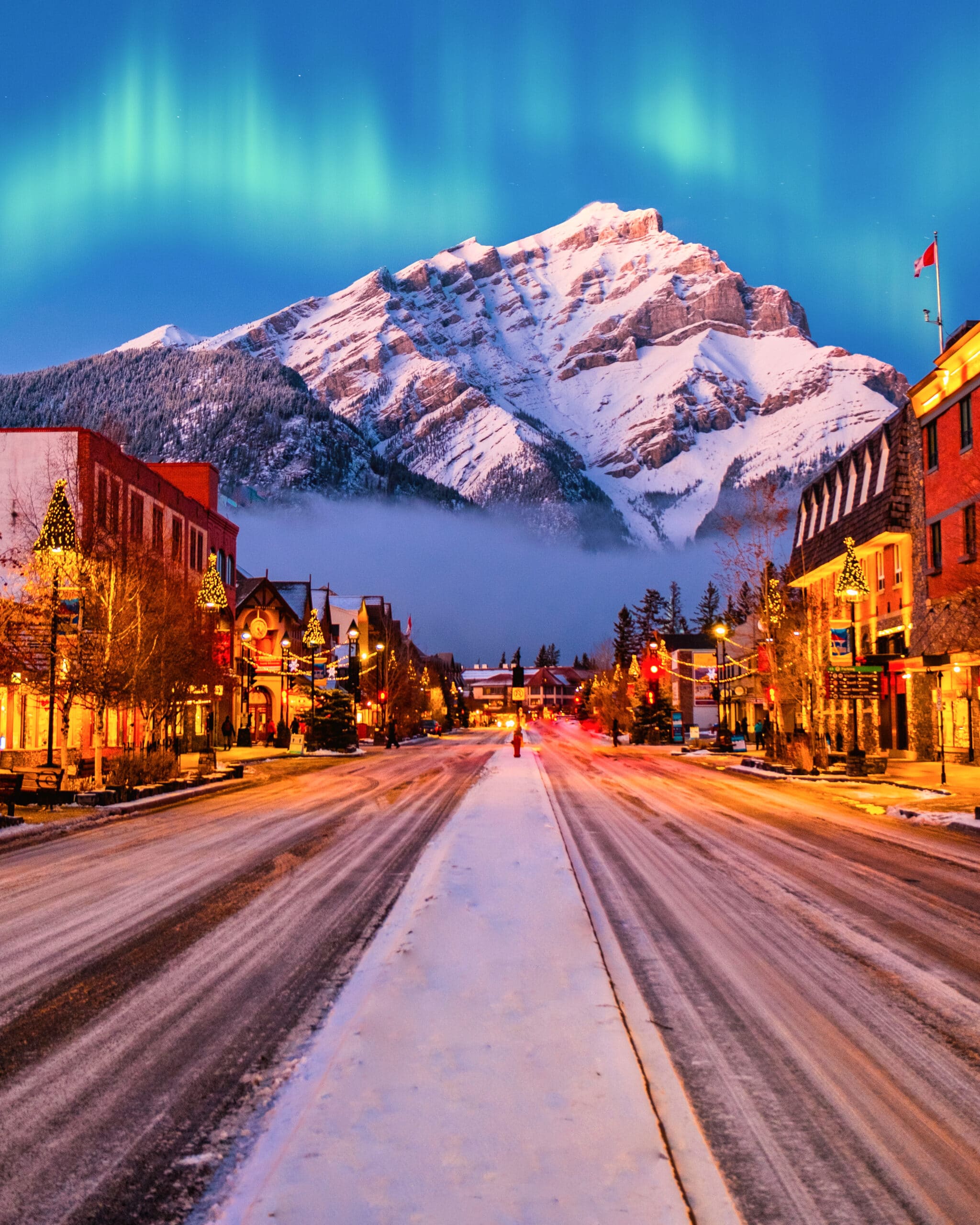
Crisp mountain air fills your lungs as frozen mist rises off the Upper Hot Springs, steam curling against the jagged silhouette of Mount Rundle while snowflakes dissolve into the 40°C water around you.
Away from the springs, the ice on Grotto Canyon glows an eerie turquoise beneath your cleats — you’re walking directly on a frozen river through a limestone canyon, and there’s not another soul in sight.
Banff in winter is nothing like a typical ski trip — here you skate on frozen lakes backed by glaciers, soak in steaming hot springs while snow falls around you, and hike through ice-sculpted canyons that feel genuinely otherworldly.
This guide helps you decide where to ski, which frozen waterfalls are worth the cold, and how to build days that balance adrenaline with the kind of stillness only a snow-covered Rockies landscape can offer.
Budget around $100–180 CAD per night for hostels and basic motels, $250–450 for a solid mid-range hotel in Banff town, or $600–1,200+ for iconic stays like the Fairmont Chateau Lake Louise.
Lift tickets run roughly $120–170 CAD per day, and most other activities range from free frozen-canyon hikes to $300 splurges like dog sledding or helicopter tours.
Your Banff Winter Cheat Sheet
Short on time? These six picks define a winter trip to Banff — start here and scroll down for the full breakdown on every one of them.
| If You Want… | Do This | Know This |
|---|---|---|
| World-class skiing with jaw-dropping views | Lake Louise Ski Resort | The SkiBig3 pass covers all 3 resorts — one ticket, zero hassle |
| A free, jaw-dropping winter hike | Johnston Canyon Ice Walk | Frozen waterfalls on steel catwalks. Arrive before 9 AM on weekends |
| The iconic Banff winter photo | Ice Skating on Lake Louise | Fairmont resurfaces nightly. Rent skates in Lake Louise Village for half the price |
| Post-ski recovery you’ll actually remember | Banff Upper Hot Springs | 40°C mineral water with mountain views. Go before 10 AM to beat the crowds |
| The best winter road trip in the Rockies | Bow Valley Parkway Drive | Morant’s Curve for train photos + Johnston Canyon as a stop along the way |
| Festival magic packed into one trip | Banff in late January–early February | SnowDays snow sculptures followed by Ice Magic ice carvings back-to-back |
Top Skiing & Snowboarding Resorts in Banff
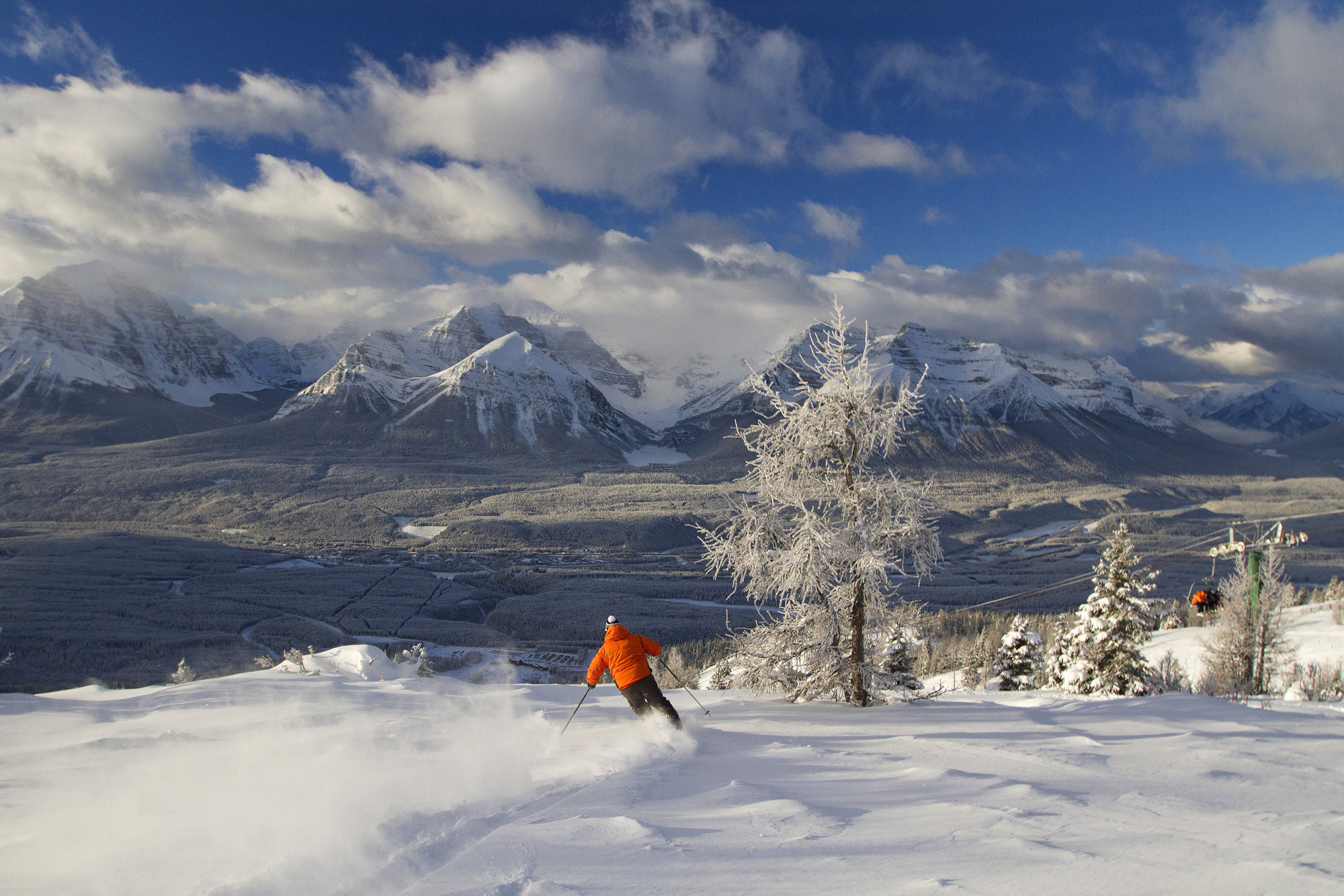
The SkiBig3 resorts are the only ski hills in Canada sitting entirely inside a national park — and between them, you get 7,700+ acres of terrain with zero commercial sprawl at the base. That combination of raw Rocky Mountain scenery and serious vertical is what makes skiing here feel nothing like Whistler or Colorado.
All three hills operate under one SkiBig3 lift ticket, which lets you split days across resorts without buying separate passes.
| Resort | Distance from Banff Town | Best For | Standout Feature |
|---|---|---|---|
| Lake Louise | ~40 minutes | All levels, scenic skiing, full-day exploration | Unmatched panoramic views, 935m vertical drop |
| Banff Sunshine Village | ~20 minutes | Intermediate/advanced, powder seekers | Gondola-only access above the treeline |
| Mt. Norquay | ~10 minutes | Beginners, families, quick sessions | Closest hill to town, night skiing, tubing |
Lake Louise Ski Resort
If you only have one ski day in Banff, spend it here. Lake Louise is one of the largest ski resorts in Canada — 142 kilometers of groomed runs, seven lifts, and a 935-meter vertical descent — but it’s the views that stop you mid-turn.
The backside bowls face directly into the Continental Divide, and on clear days you’re staring at glacier-carved peaks with no development in sight. It’s the kind of scenery that makes you forget you’re on a chairlift.
- Terrain range: Genuinely works for beginners through experts. The front side has long, wide groomers ideal for intermediates, while the back bowls and Larch area deliver steep tree runs and powder stashes for advanced riders.
- Cold-day strategy: The enclosed gondola is essential on frigid days. When temperatures drop well below zero (common here), riding the gondola between laps saves your extremities and extends your day by hours.
- Tube park: Lake Louise also runs a tubing park with daily time slots — a solid option if part of your group doesn’t ski. Check the schedule in advance, as weekend sessions sometimes include night tubing.
- Getting there: It’s about 40 minutes from Banff town along the Trans-Canada Highway. The drive is scenic but can be icy — winter tires are mandatory on Alberta highways, and road conditions can shift fast.
Insider detail: Arrive before 9:00 a.m. on powder days. Lake Louise doesn’t get the same early-morning crush as resorts near Calgary, but fresh snow on the back bowls gets tracked out by mid-morning.
Weekdays are dramatically quieter than weekends.
Banff Sunshine Village
Sunshine’s defining feature is its elevation. You ride a gondola from the parking lot just to reach the base area, which sits above the treeline at roughly 2,100 meters.
That means the snow stays dry and light longer into the season — Sunshine typically runs from early November through late May, giving it one of the longest ski seasons in Canada.
- Terrain: Strong intermediate and advanced terrain dominates. The steep chutes of Delirium Dive and the Wild West zone are expert-only and require avalanche gear — a genuine backcountry feel inside a resort boundary.
- Weather reality: Above-treeline skiing means you’re fully exposed to wind and whiteouts. On stormy days, visibility can drop to near zero across wide swaths of the mountain. Check conditions before you commit.
- Getting there: About 20 minutes from Banff town. The gondola ride from the parking lot to the village takes roughly 15 minutes and offers excellent views — worth it even on a slow day.
Mt. Norquay
Norquay is the locals’ hill — small, steep, and five minutes from town. Don’t come expecting Lake Louise’s scale.
Come expecting short lift lines, affordable lift tickets, and a surprisingly challenging pitch for its size. It’s also the only SkiBig3 resort offering night skiing and a dedicated tubing park, which makes it the easiest choice for families or anyone who wants a half-day on snow without the commute.
- Best use case: Combine a morning at Norquay with afternoon activities in Banff town — the Upper Hot Springs, Cave & Basin, or an early dinner. No other resort makes that schedule realistic.
- Beginners: Norquay’s learning terrain is well-separated from expert runs, which makes it less intimidating for first-timers than Sunshine or Lake Louise.
How to Choose the Right SkiBig3 Resort for You
Buy the SkiBig3 multi-day pass if you have two or more ski days — it covers all three resorts and usually offers better per-day pricing than single-resort tickets. Prices vary by season and booking window, so check skibig3.com for current rates before you go.
- One day, maximum impact: Lake Louise. No contest. The terrain variety and scenery justify the longer drive.
- Two days: Lake Louise plus Sunshine. You’ll get the two most distinct mountain experiences — treed glades and valley views at Louise, high-alpine bowls at Sunshine.
- Three or more days: Add Norquay for a mellow morning, a night-skiing session, or a tubing afternoon with kids.
- Powder priority: Sunshine Village gets the most consistent snow at its elevation, but Lake Louise’s back bowls hold powder longer due to less traffic.
- Families with non-skiers: Norquay. Tubing, easy access, and you’re back in town before anyone gets cranky.
Base yourself in Banff town for the most flexibility — all three resorts are reachable within 10 to 40 minutes, and you’ll have restaurants, shops, and the hot springs at your doorstep after a day on the mountain. Lake Louise village is an alternative base if you’re focused exclusively on that resort, though dining and nightlife options are limited there compared to Banff.
Best Winter Hikes & Snowshoeing Trails in Banff
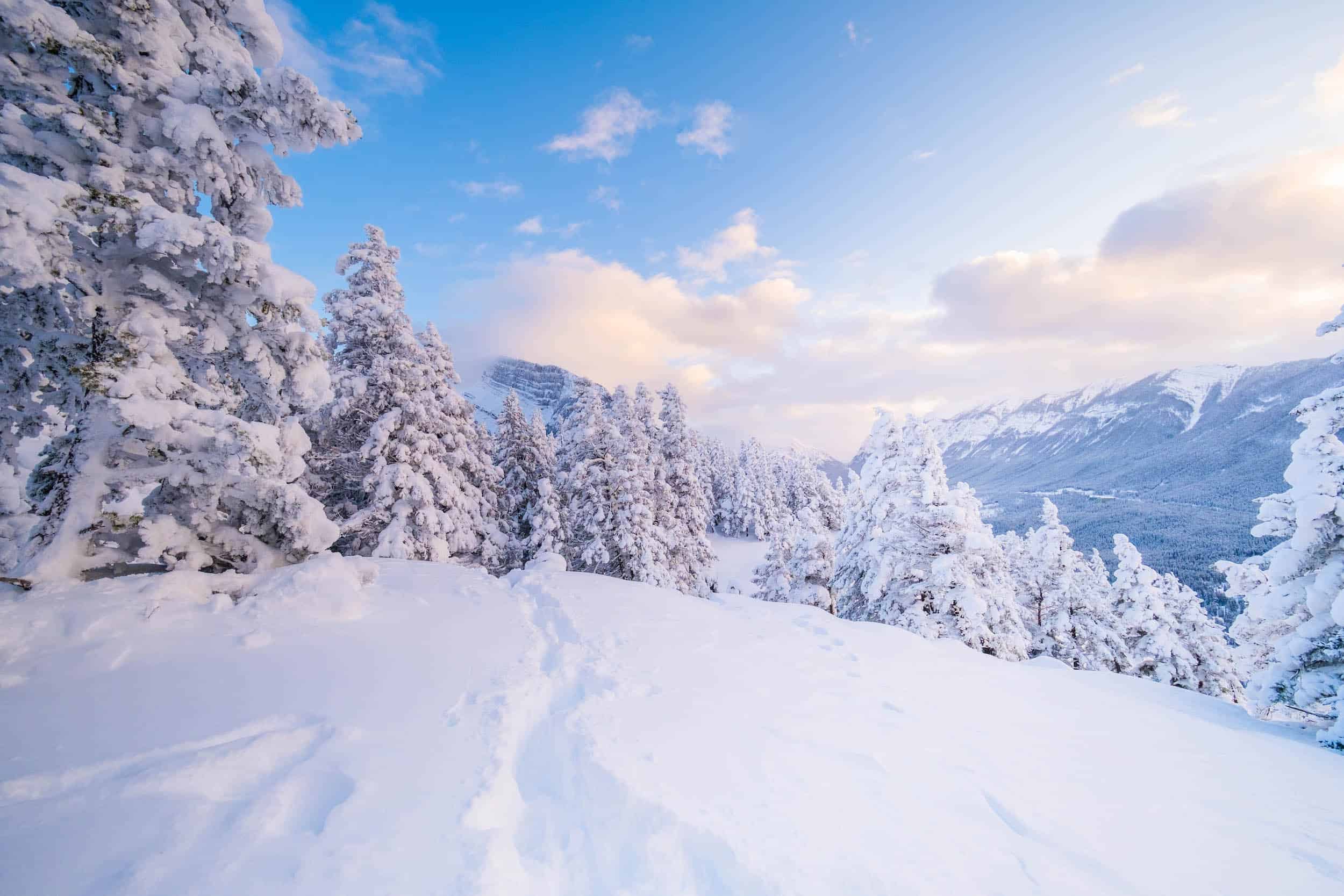
Walking on a frozen river through a limestone canyon — that’s the kind of surreal winter moment Banff delivers without requiring any technical skill. Most of these trails are packed down by mid-December and stay hikeable in regular boots or snowshoes through March.
Here’s how to pick the right one for your time and fitness level.
| Trail | Difficulty | Time | Best For |
|---|---|---|---|
| Tunnel Mountain | Easy | 1–2 hours | Quick morning hike, all fitness levels |
| Sulphur Mountain | Moderate–Hard | 3–4 hours | Fitness-minded hikers chasing summit views |
| Johnston Canyon | Easy | 2–3 hours | First-time winter hikers, families |
| Paint Pots / Marble Canyon | Easy–Moderate | 2–4 hours | Snowshoeing away from the crowds |
| Grotto Canyon | Easy–Moderate | 2–3 hours | Walking directly on a frozen river |
| Upper Stoney Lookout | Moderate | 1.5–2 hours | Panoramic views without a long day |
Hike Tunnel Mountain
Tunnel Mountain is the trail locals hit before work. It sits right in the heart of Banff — you can walk to the trailhead from downtown — and it’s one of the smallest peaks in the national park, which means it’s manageable even on snowy days.
The payoff is outsized for the effort: sweeping views of the Bow Valley and Mount Rundle from the summit. Budget about 1 to 2 hours round-trip.
Microspikes help on icy sections, but most winter hikers manage fine in sturdy boots.
Hike or Gondola Up Sulphur Mountain
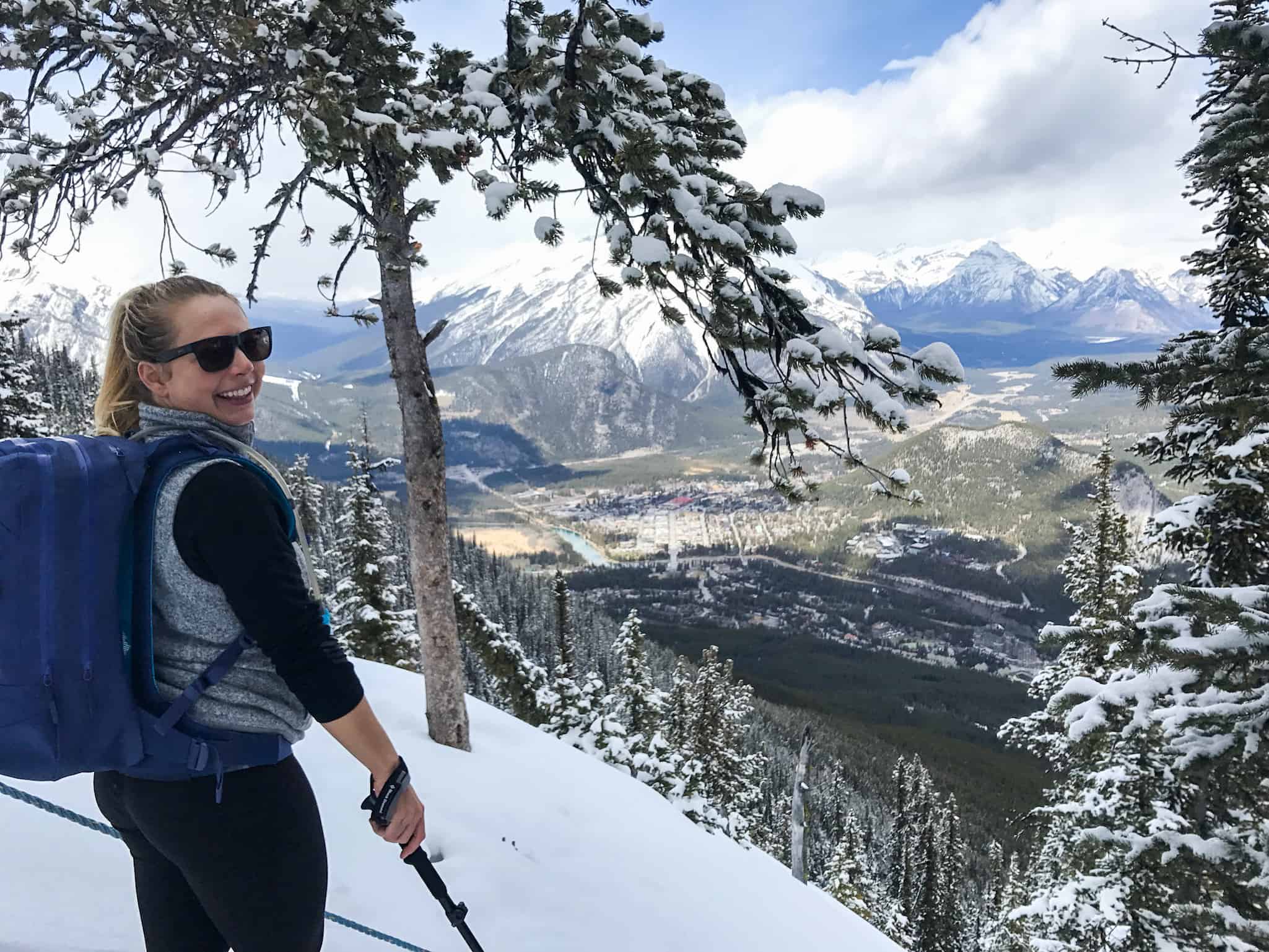
Sulphur Mountain offers two ways up: hike it or ride the Banff Gondola. The hiking trail is roughly 5.5 km one-way with about 655 meters of elevation gain — a legitimate workout on well-maintained switchbacks.
In winter, expect packed snow and icy patches; microspikes are non-negotiable. If the climb feels like too much, the gondola reaches the same summit in 8 minutes and lands you at a boardwalk with 360-degree views of six mountain ranges.
For gondola pricing and tickets, see the dedicated Banff Gondola section.
Johnston Canyon Ice Walk
This is the single best free winter activity in Banff. The waterfalls inside Johnston Canyon freeze solid around December, turning the canyon into a cathedral of blue ice.
The trail follows steel catwalks bolted to the canyon walls — flat and accessible for all fitness levels. Plan 2 to 3 hours round-trip to the Upper Falls.
The insider move: arrive before 9 a.m. on weekends. This trail gets packed by mid-morning, and you’ll have the frozen waterfalls nearly to yourself if you start early.
Ice cleats or microspikes are essential; the catwalks ice over. The trailhead sits about 25 minutes from Banff town along the Bow Valley Parkway.
Snowshoe to the Paint Pots and Marble Canyon in Kootenay National Park
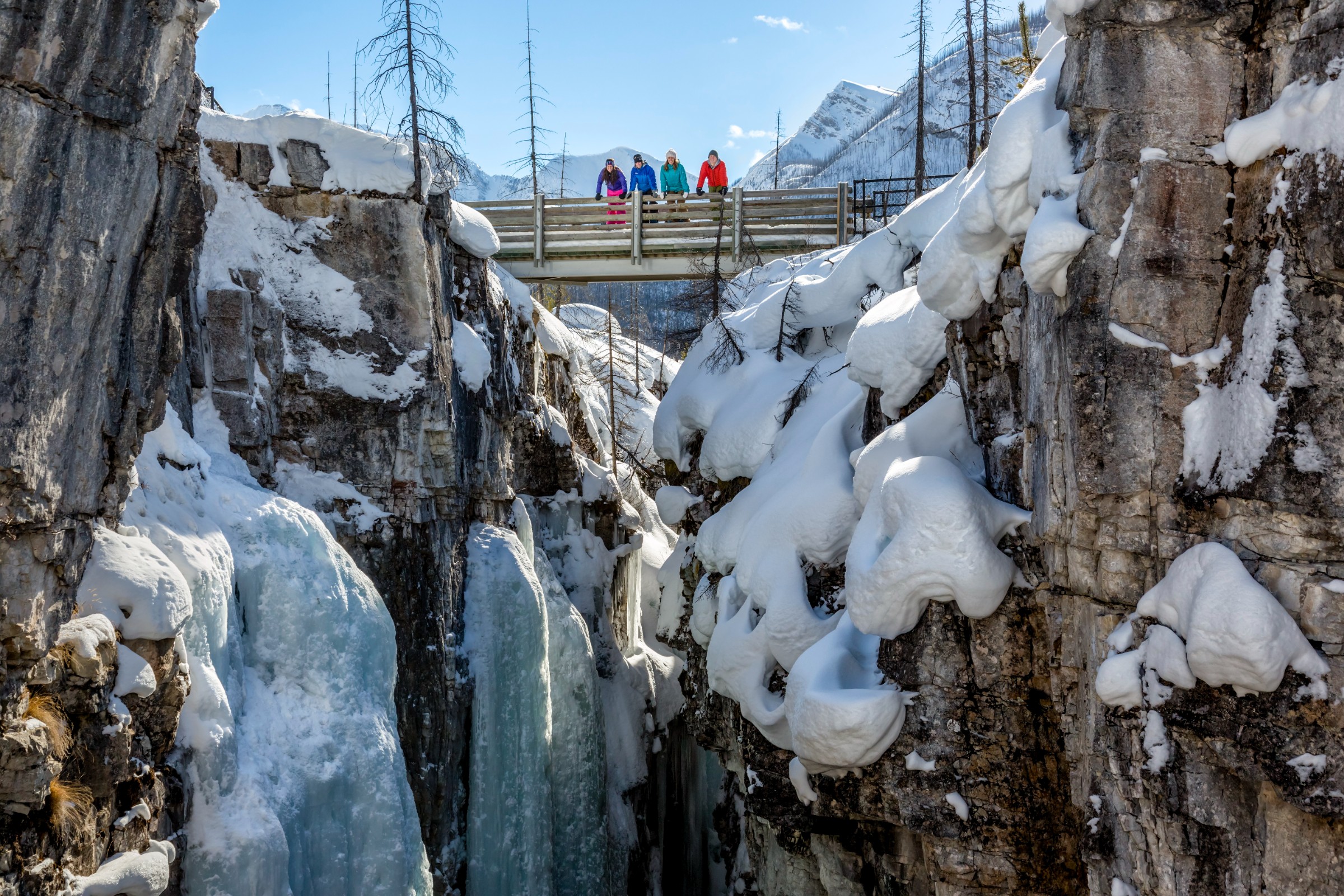
Cross into Kootenay National Park for two snowshoe trails that see a fraction of Banff’s traffic. Marble Canyon is a 1 km trail along a narrow gorge with frozen waterfalls capping the end — the snow piles deep here, so snowshoes are mandatory, not optional.
Paint Pots is an easier, flatter trail leading to iron-rich mineral springs that stain the surrounding snow orange and red, making for striking winter photos. Both trails sit off the same stretch of Highway 93 South, roughly 40 minutes from Banff.
Rent snowshoes from Snowtips Bactrax in Banff if you don’t have your own, or book a guided Paint Pots tour that includes transport from town.
Grotto Canyon Icewalk
Grotto Canyon flips the script on a typical hike: in winter, the entire trail is a frozen river. You walk directly on the ice through a narrow limestone canyon for about 4.4 km round-trip.
The frozen creek bed makes for a completely different experience than any summer trail. Ice cleats or cleated snowshoes are essential — the surface is uneven and slippery.
The trailhead sits near Canmore, about 15 minutes east of Banff. This one is the top pick for anyone who wants something genuinely adventurous without requiring technical climbing skills.
Upper Stoney Lookout and Hoodoos Trail
Upper Stoney Lookout is an underrated winter hike that delivers panoramic views over Banff National Park without the Tunnel Mountain crowds. It’s a moderate climb through forest that opens to a ridge-top viewpoint.
Pair it with the Hoodoos Trail, a relatively flat walk to a set of dramatic rock pillars eroded into strange spires. Both trails start near the same area on Tunnel Mountain Road and combine into a satisfying half-day outing.
Cross-Country Skiing Trails in Banff
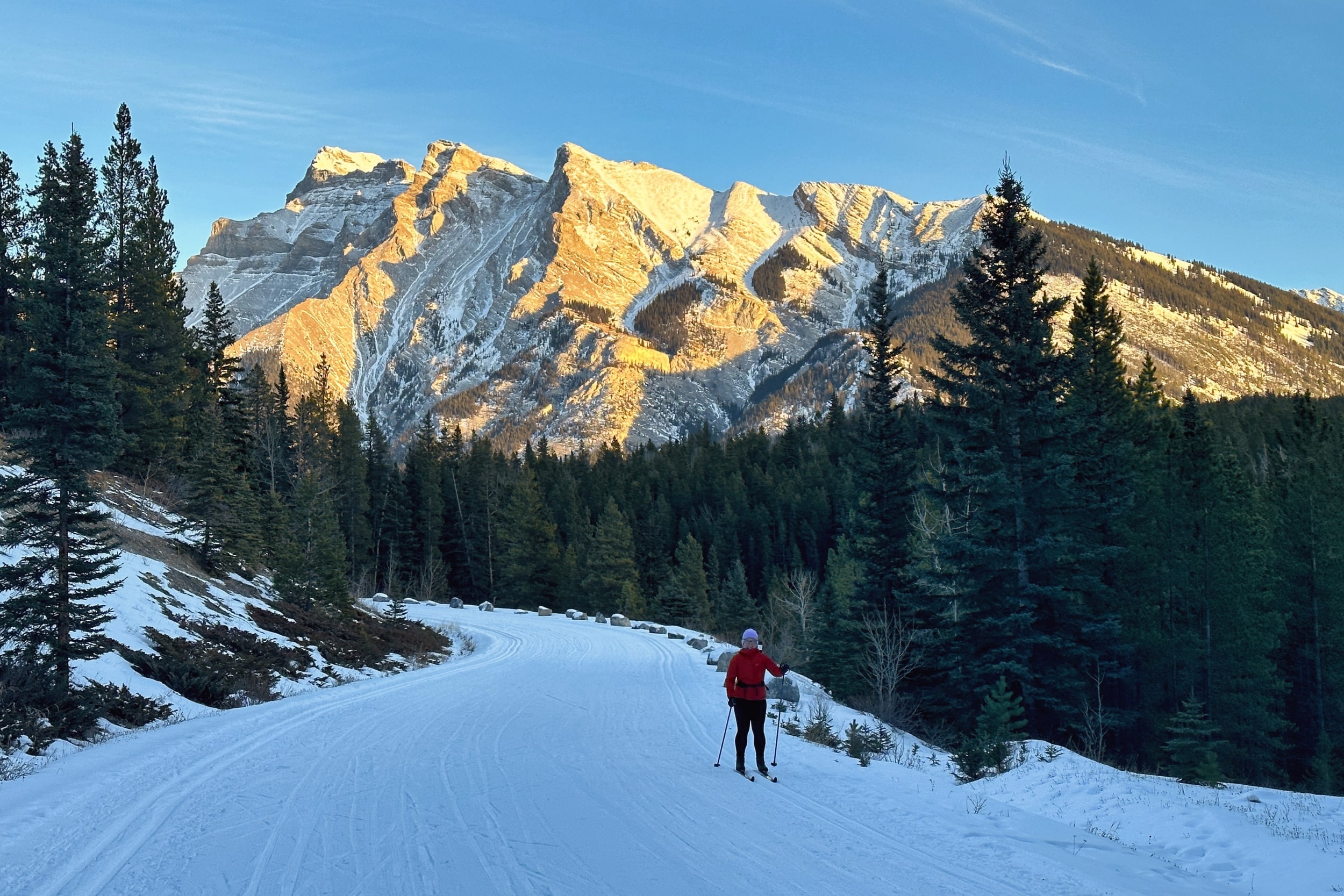
Banff has over 80 km of maintained cross-country ski trails groomed for both classic and skate skiing. The easiest options from town are the trails around the Banff Springs Golf Course and the Fenland Trail — both flat and beginner-friendly.
For a more scenic outing, head to the Lake Louise area, where trails wind through old-growth forest with mountain backdrops. A national park trail pass is required and available at the Banff or Lake Louise visitor centers.
Rent gear at Snowtips Bactrax or the SkiBig3 Adventure Hub in Banff town. Base yourself in Banff for the widest trail access and the shortest drive to every trailhead listed here.
Ice Skating on Frozen Lakes in Banff
Your frozen canvas awaits: Choose between a perfectly resurfaced rink under Victoria Glacier or a wild, silent glide on a snow-dusted mountain lake—each delivers a completely different Banff winter moment.
| Option | Best For | Keep in Mind |
|---|---|---|
| Lake Louise | Guaranteed ice, iconic backdrop, rentals on-site | Crowds; costs more (parking, rentals) |
| Wild Lakes (Two Jack, Minnewanka, Vermilion) | Seclusion, photography, free adventure | Requires thick ice & snow clearance; no services |
| Town Rinks | Convenience, no car needed, après-skate access | Less dramatic scenery; can be busy |
Ice Skating on Lake Louise
This is the postcard shot: Skating here means gliding on a perfectly maintained rink with the Victoria Glacier as your backdrop—no other Banff ice compares for that iconic view. The Fairmont Chateau Lake Louise resurfaces the ice nightly, making it reliably skatable even after heavy snow, a major advantage over unmanaged lakes.
- The Practical Choice: Rent skates from Wilson Mountain Sports in Lake Louise Village for roughly $12 per day—it’s cheaper and less hectic than the $20 for two hours at the Fairmont’s on-site rental desk.
- Insider Timing: Arrive before 10 AM or after 4 PM to avoid the peak daytime crowds that arrive with tour buses. The rink is open from roughly December through mid-April, but always check current season dates.
- Cost Factor: Budget for Parks Canada vehicle entry (around $10.50 per adult daily) and potential parking congestion. Skating itself is free.
Wild Ice Skating on Two Jack Lake, Lake Minnewanka, and Vermilion Lakes
For the purists: This is skating as it was meant to be—silent, untouched, and on lakes framed by Mount Rundle and the Sundance Range. It’s a raw, often solitary experience that requires self-reliance and a bit of luck.
- Essential First Stop: Before you go, verify ice thickness at the Banff Visitor Centre in town. Conditions change daily; never assume a frozen lake is safe.
- The Best Bet: Two Jack Lake (a 5-minute drive from Minnewanka) is the closest to town with stunning Mount Rundle views. Arrive with a thermos—it’s just you and the mountains.
- Key Reality Check: Heavy snowfall ruins these spots. You need early-season cold snaps or volunteer snow clearance to find skateable black ice. This is a weather-dependent gamble, not a scheduled activity.
Indoor and Outdoor Rinks in Banff Town
Zero-planning skating: When conditions on the lakes aren’t right or you want an easy après-ski spin, head straight to the Downtown Rink at Banff Community High School. It’s free, completely outdoors, and set against mountain views that make it feel wilder than it is.
- Logistics: Located in the heart of town, it’s walkable from most hotels and lodges. There are no rental services here—bring your own skates or rent from a local sports shop beforehand.
- The Alternative: The Fenlands Banff Recreation Centre offers a covered outdoor rink and an indoor arena for when weather turns. Check their public schedule online, as times vary for hockey and figure skating sessions.
Must-Do Banff Winter Experiences
The reason Banff National Park exists at all is a hot spring — discovered by railroad workers in 1883. Every winter experience on this list taps into something that makes this park feel fundamentally different from a ski trip anywhere else.
Soak in the Banff Upper Hot Springs
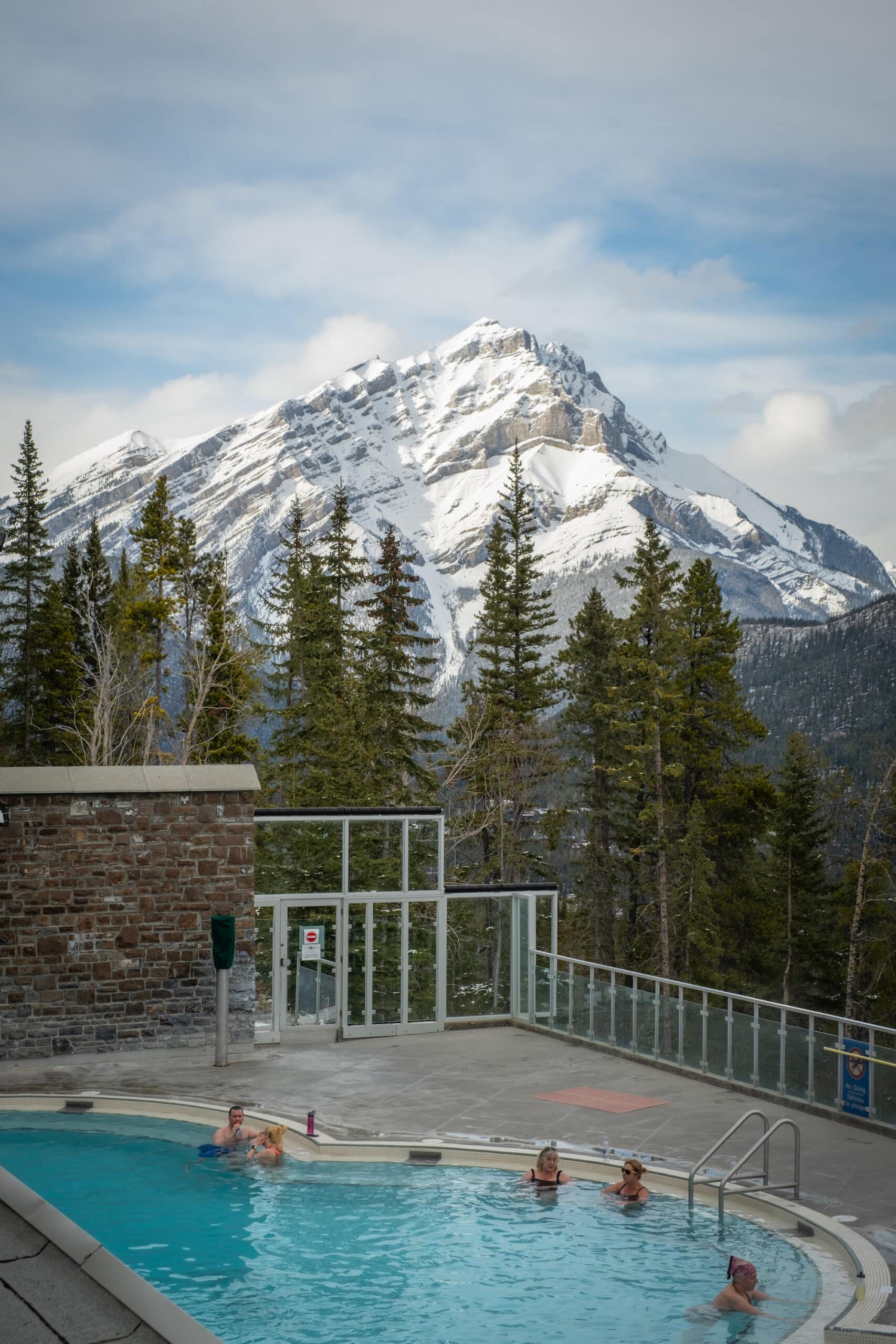
After a ski day, this is the single best reward you can give your body. The mineral-rich thermal waters pour straight from the slopes of Sulfur Mountain, and sitting in 38–40°C water while snow falls around you and the Bow Valley stretches out below is the kind of moment that defines a winter trip to Banff.
Go in the morning. Afternoons get packed, especially on weekends and holidays.
Arriving before 10 a.m. usually means fewer bodies and more space to actually enjoy the view. Expect to pay roughly $9–17 CAD per adult (rates vary seasonally — confirm with Parks Canada before you go).
Bring or rent a vintage-style swimsuit from the bathhouse if you want the full heritage vibe.
Ride the Banff Gondola to the Top of Sulphur Mountain
The eight-minute ride up delivers one of the best panoramic views in the Canadian Rockies — and in winter, it’s all dusted in white with far fewer crowds than summer. At the summit, you’ll find an interpretive center, restaurants, and an observation deck that feels like standing on top of the world.
Book online in advance. Walk-up tickets sell out on busy weekends, and you’ll typically save money compared to buying at the window.
Dress warmer than you think — the summit is exposed and significantly colder than Banff town. Budget roughly $65–75 CAD per adult; family rates and combo packages are available through the operator.
Watch Artists at the Lake Louise Ice Magic Festival
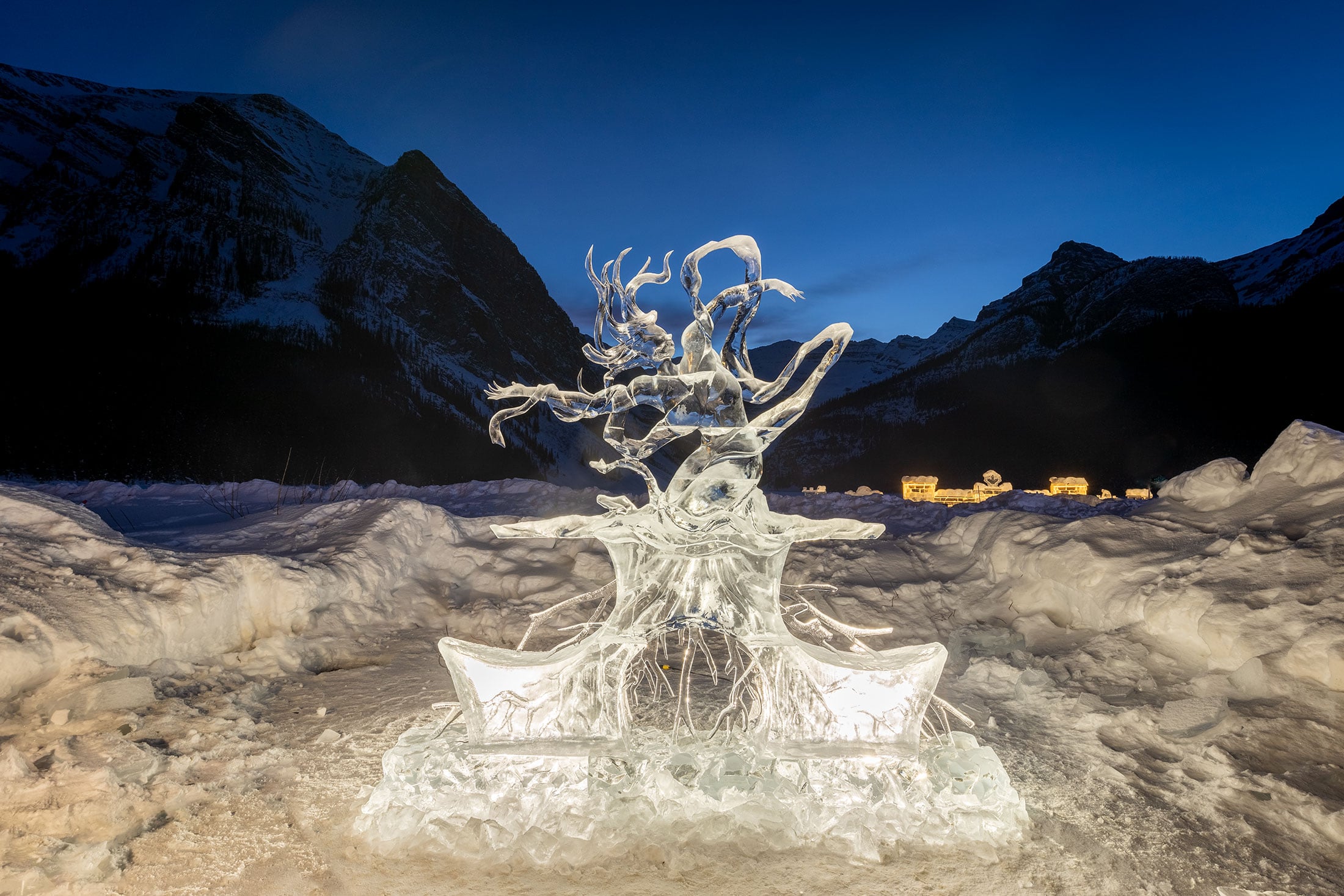
This is where ice becomes architecture. During the festival (typically held in early February — the 2027 event runs February 3–7), international artists carve massive, intricate sculptures from blocks of ice right on the frozen shores of Lake Louise, backed by the Victoria Glacier.
It’s genuinely unlike anything else you’ll see in winter in Canada.
- When to go: Visit early in the festival when sculptures are freshly completed and untouched. Sculptures degrade as temperatures fluctuate throughout the event.
- Where to stay: The Fairmont Chateau Lake Louise is the obvious luxury choice right on the lake — but it books up months ahead for this event. Base yourself in Lake Louise Village or Banff town if the Fairmont is sold out or over budget.
- Planning note: Ice Magic dates shift annually. Confirm the exact dates with Parks Canada or the event organizer before booking flights.
Enjoy a Drink at the Lake Louise Ice Bar
A bar built from 20-plus blocks of ice — each weighing 300 lbs — sitting right beside a frozen lake backed by mountains. That’s the Lake Louise Ice Bar. It opens around late December and runs through mid-April, though exact dates shift with weather each year.
Hot chocolate is the crowd favorite, especially for families, and the maple syrup treats are worth trying. For adults, spiked options add a welcome warmth factor.
This pairs perfectly with a visit to the Ice Magic Festival if your dates align, or with ice skating on Lake Louise earlier in the season.
Spot Winter Wildlife in Banff National Park
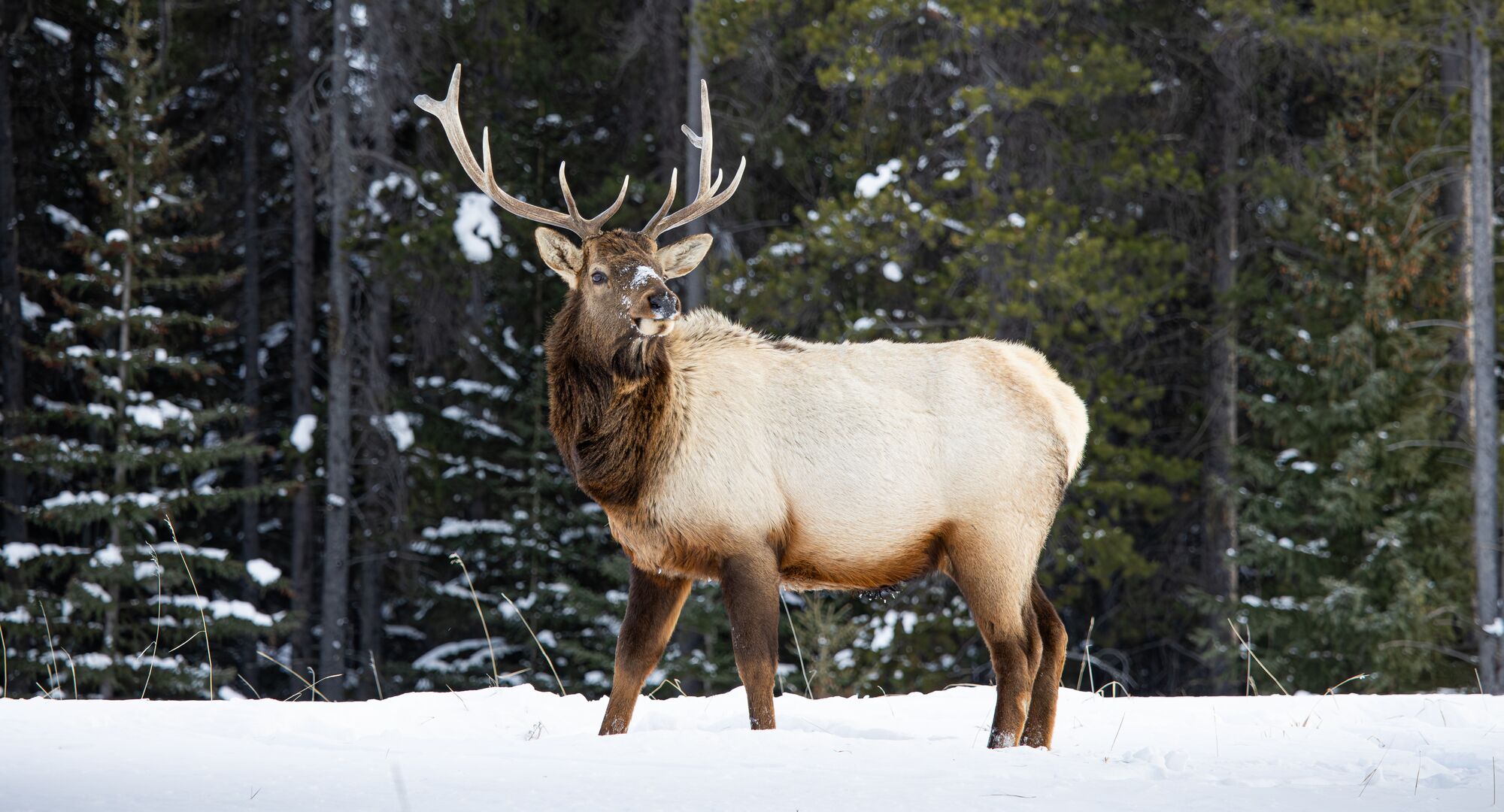
Winter is prime time for wildlife spotting because animals descend to lower elevations where food is accessible. Elk are practically guaranteed in and around Banff town — you’ll likely see them grazing near the Bow River or along Vermilion Lakes without even trying.
For bigger-ticket sightings, drive the Bow Valley Parkway (Highway 1A) early in the morning. Wolves, coyotes, deer, and bighorn sheep are all possible.
Frozen lakes and river edges attract animals seeking water access. Keep your distance — Parks Canada requires at least 30 meters for elk and deer, 100 meters for bears, wolves, and couplings.
Carry bear spray year-round; it works on all large mammals.
Uncover Banff’s History at Cave & Basin National Historic Site
This is where it all started. At the base of Sulphur Mountain, Canadian Pacific Railway workers in 1883 stumbled into a cave containing a steaming, sulfurous hot spring — the discovery that led to the creation of Canada’s very first national park.
The site was once called “Lower Hot Spring” to distinguish it from the Upper Hot Springs further up the mountain.
Today, the restored cave, hot spring pool, and interpretive exhibits tell the full story of how a railroad accident became a national legacy. It’s a compact visit — plan 45 minutes to an hour — and it pairs naturally with a soak at Upper Hot Springs the same day since both sit on the slopes of Sulphur Mountain.
Admission is managed through Parks Canada; check current hours and any seasonal closures before heading over.
Best Scenic Drives & Winter Photography Spots
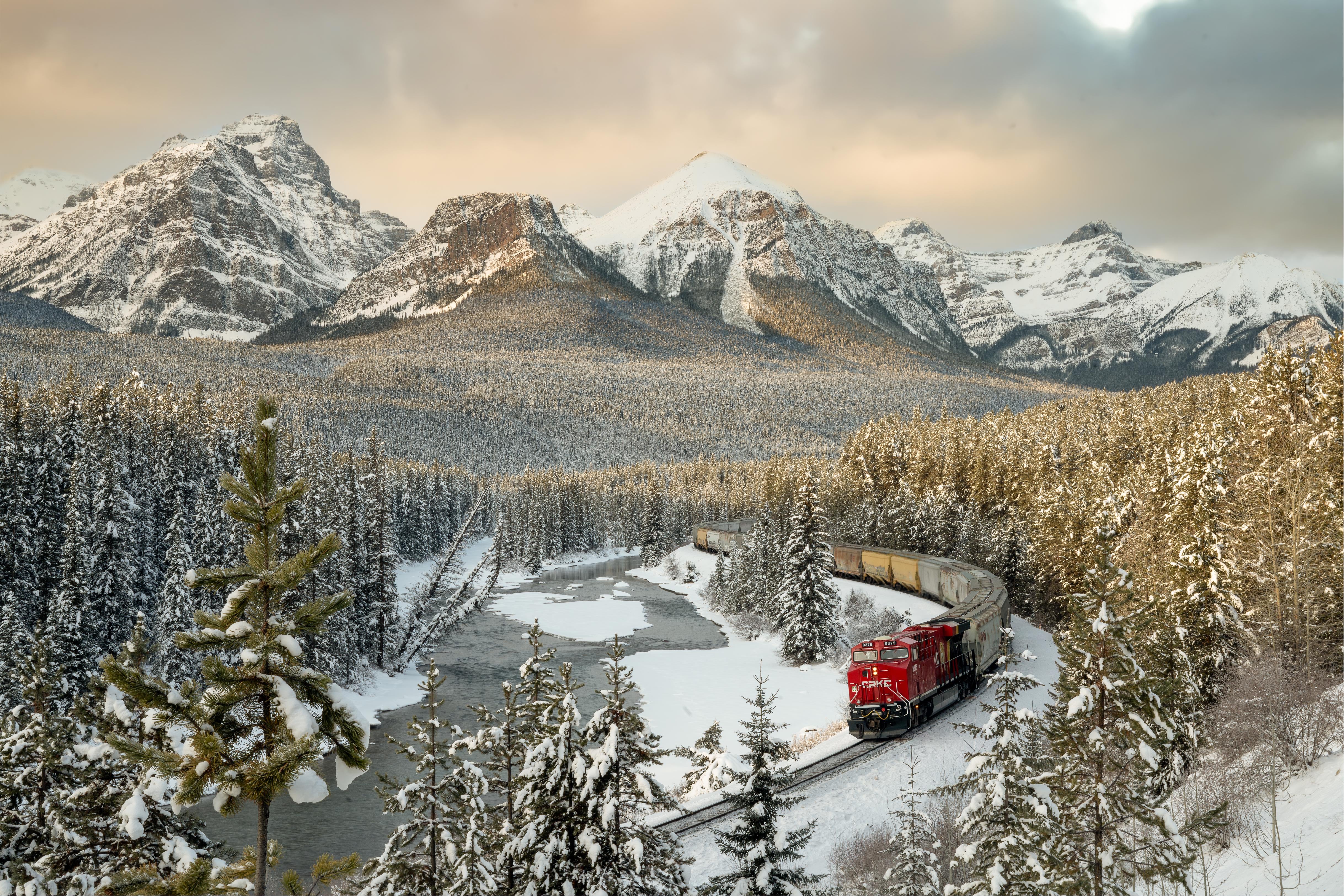
Photographers line the tracks at Morant’s Curve in subzero temperatures, waiting — sometimes an hour or more — for a flash of bright red as the Canadian Pacific train rounds the bend beneath Mount Temple. That single shot is worth the frozen fingers, and it’s just one of four drives and viewpoints that turn Banff into a winter photographer’s paradise.
Here’s the quick breakdown:
| Drive / Spot | Best For | Time from Banff | Key Highlight |
|---|---|---|---|
| Bow Valley Parkway & Morant’s Curve | Train photography, forest road | ~30 min to Morant’s Curve | Red CP train under Mount Temple |
| Icefields Parkway | Glaciers, frozen lakes, big mountains | ~45 min to Bow Lake | Bow Lake, Peyto Lake, Crowfoot Glacier |
| Vermilion Lakes & Surprise Corner | Quick golden-hour shots | 5–10 min | Mount Rundle reflected or illuminated |
| Bow Falls & Frozen Waterfalls | Ice formations, close-ups | Walking distance | Frozen cascades and ice curtains |
Drive the Bow Valley Parkway to Morant’s Curve
The Bow Valley Parkway (Highway 1A) runs parallel to the Trans-Canada between Banff and Lake Louise, and it’s the best winter drive in the park for a simple reason: lower speed, higher scenery density. You’ll pass frozen creek crossings, snow-draped lodgepole pines, and frequent wildlife corridors — all at a pace that lets you actually see them.
Morant’s Curve sits about 30 minutes from Banff. The shot everyone wants: a red CP Rail locomotive curving along the tracks with Mount Temple towering behind.
There’s no public train schedule, so patience is the price of admission. Set up on the highway pullout, bring hand warmers, and dress for standing still in −15°C to −25°C.
Early morning light catches the mountain face best.
Johnston Canyon’s frozen falls are a short detour off this same road — covered in the hiking section — and worth combining into one trip.
Winter driving note: The Bow Valley Parkway can close temporarily for wildlife management, typically from March through June but occasionally in other months. Check Parks Canada’s current road report before heading out.
Drive the Icefields Parkway in Winter: Bow Lake and Peyto Lake
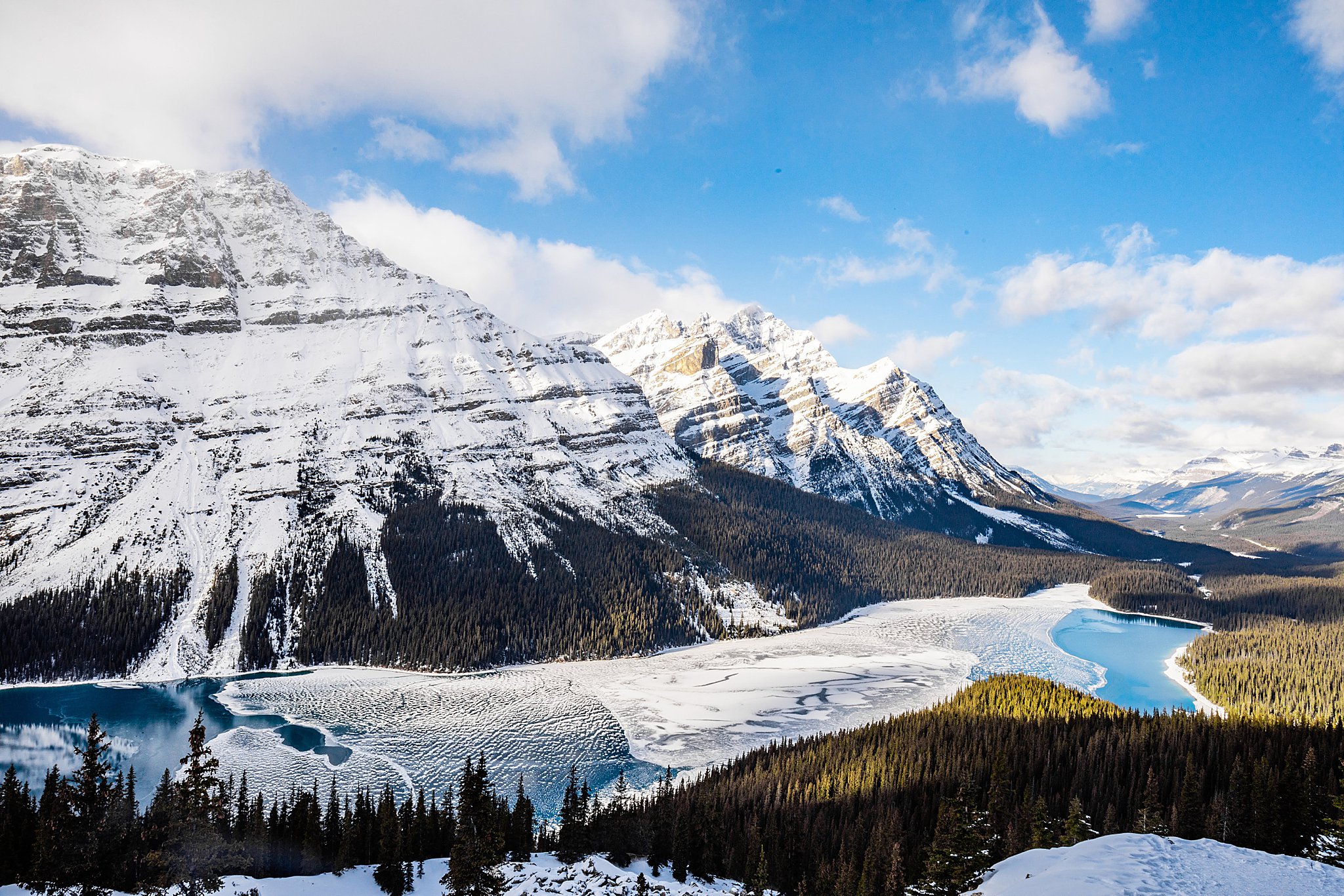
The Icefields Parkway (Highway 93N) in winter is a completely different road than its summer counterpart — quieter, snowier, and far more dramatic. The roughly 45-minute drive from Banff to Bow Lake already feels remote; push on to Peyto Lake and you’re in full big-mountain wilderness with almost no other cars.
Top stops to prioritize:
- Bow Lake: The Num-Ti-Jah Lodge sits right on its shore and makes a good rest stop. The frozen lake, framed by Crowfoot Mountain and the Wapta Icefield, is one of the most photogenic settings in the Canadian Rockies. Arrive early for the best light on the peaks.
- Peyto Lake: The famous overlook trail is short but can be icy — microspikes are a smart carry. In winter the lake is snow-covered so you won’t see the turquoise color, but the sweeping valley panorama and surrounding peaks make it worth the stop.
- Mistaya Canyon: A quick half-kilometer walk leads to a narrow slot canyon with frozen ice formations. Less crowded than Johnston Canyon and arguably more photogenic in deep winter.
- Tangle Creek Falls: Visible right from the highway about 30 minutes past Bow Lake. The frozen cascade makes for an easy pull-over shot.
Essential winter planning: This is a full-day commitment. Services past Saskatchewan River Crossing are closed in winter — no fuel, no food, limited cell service.
Winter tires are mandatory. If you’re not comfortable driving on snowy mountain roads, book a guided sightseeing tour with hotel pickup in Banff — a full-day tour hits Bow Lake, Peyto Lake, and Crowfoot Glacier without the white-knuckle driving.
Base yourself in Banff town for the easiest access. If you want a head start on the parkway, an overnight in Lake Louise cuts 40 minutes off the morning drive.
Mount Rundle Views from Vermilion Lakes and Surprise Corner
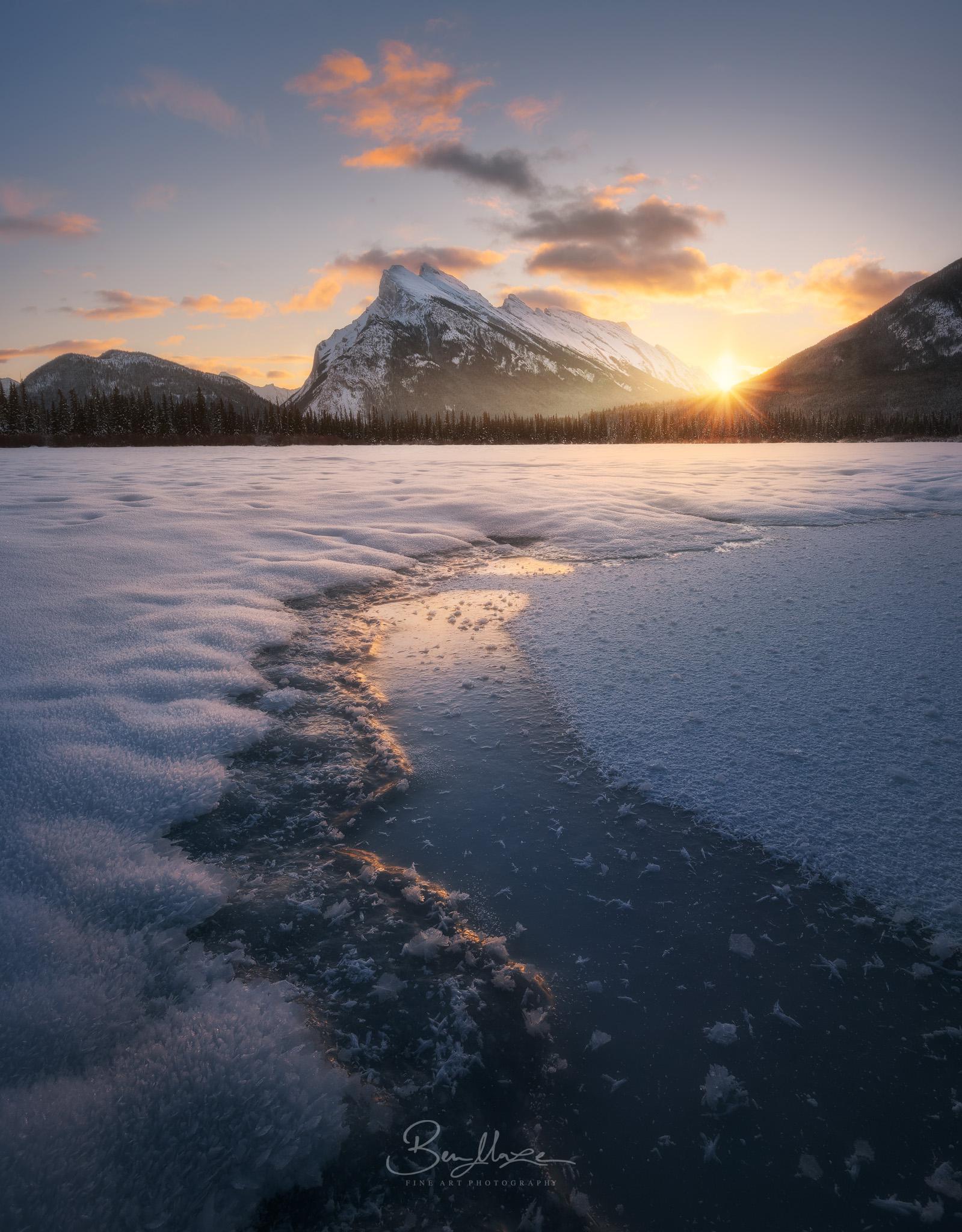
These two spots are the closest thing Banff has to a sure thing for winter photography — both are under 10 minutes from town and deliver the iconic Mount Rundle backdrop with zero hiking required.
- Vermilion Lakes: Three lakes along Vermilion Lakes Road, just off the Trans-Canada. In deep winter the lakes are snow-covered (no reflections), so sunset light painting the mountain face is your better bet over sunrise. The pullouts along the road give you multiple compositions with Rundle, the Sundance Range, and the Canadian Pacific rail line. Note: some locals skate on the frozen lakes when conditions allow — if that interests you, it’s covered in the ice skating section.
- Surprise Corner: On Tunnel Mountain Road, this overlook frames the Fairmont Banff Springs hotel against Mount Rundle. It’s the classic “castle in the Rockies” shot and works any time of day, though late-afternoon light warms the stone facade beautifully.
Both locations require no hiking — you’re shooting from the roadside or a paved pullout. Arrive 30 minutes before sunset for the warmest light on the peaks.
For the best combo, hit Surprise Corner first (it loses light faster), then drive the five minutes to Vermilion Lakes for the afterglow.
Capture Frozen Waterfalls at Bow Falls and Beyond
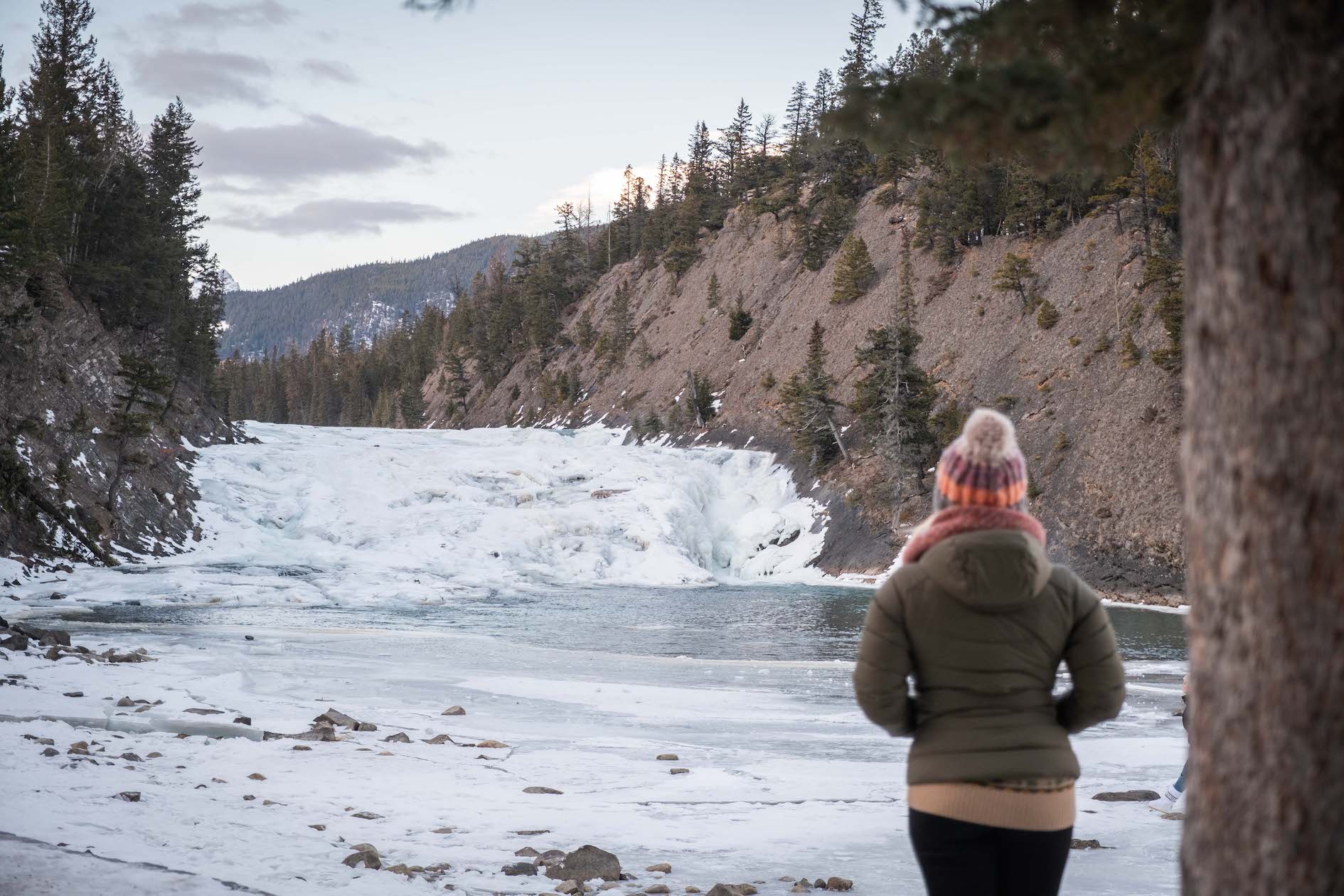
Bow Falls is a five-minute walk from the Fairmont Banff Springs and transforms into an ice sculpture in midwinter — the cascade slows to a curtain of blue-white ice surrounded by snow-laden spruce. It’s the easiest frozen waterfall to reach in the park and requires zero gear beyond warm boots with decent traction.
For more dramatic ice, push further:
- Panther Falls: Visible from a highway pullout along the Icefields Parkway, roughly 90 minutes from Banff. The multi-tiered frozen cascade is one of the most impressive in the park — bring a telephoto lens.
- Frozen falls at the far end of Lake Louise: A roughly 2 km walk from the lakefront brings you to an ice-encased cascade backed by Victoria Glacier. The approach is covered in the snowshoeing section.
Winter Festivals, Christmas Events & Northern Lights in Banff
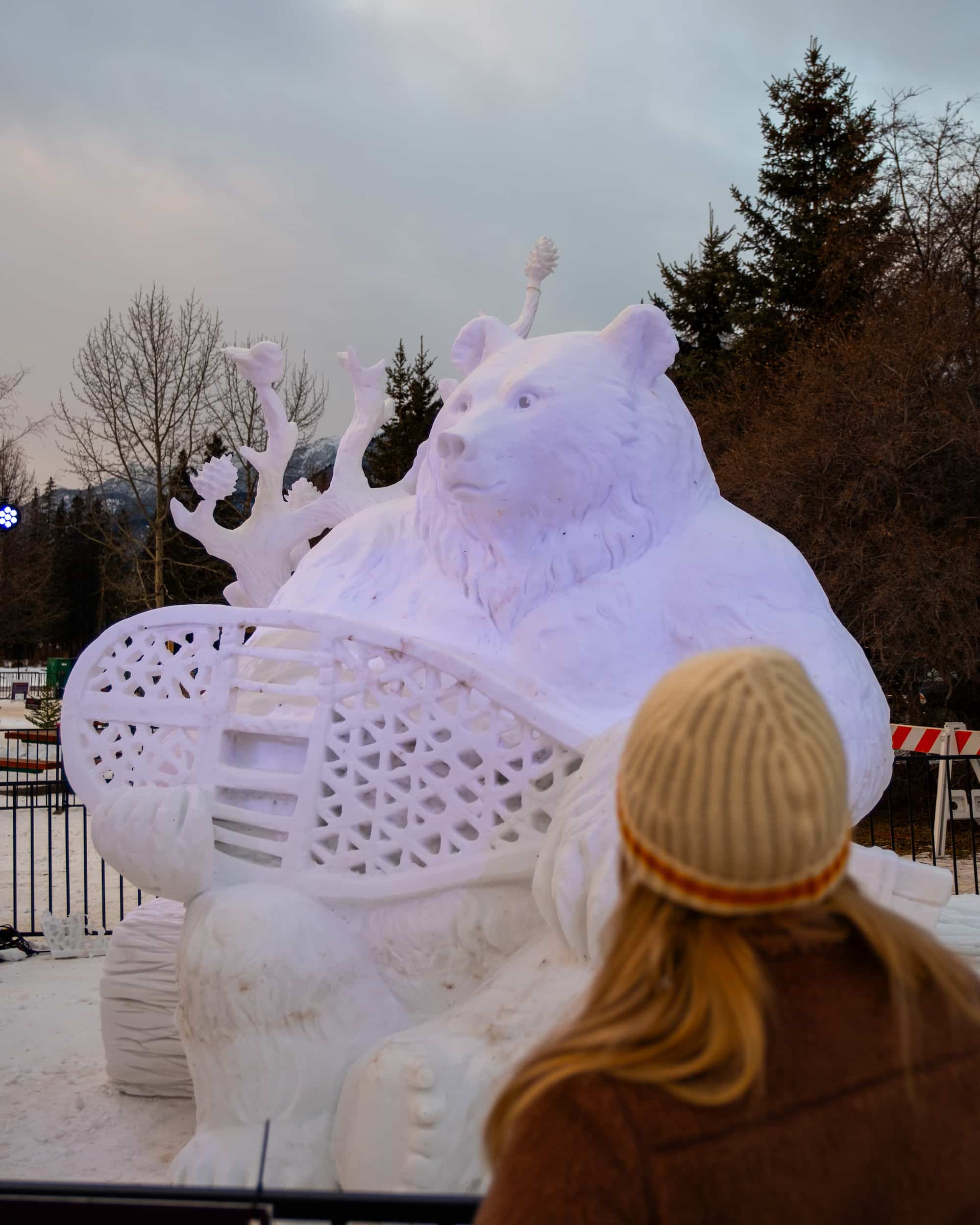
Banff doesn’t just survive winter — it throws a three-month party around it, from November hot chocolate trails to massive ice-carving competitions at Lake Louise. Time your visit right and you’ll catch festival-caliber events that transform the town and its frozen lakes into something far beyond a ski trip.
| Event | When (2026–2027 Season) | Where | Don’t-Miss Detail |
|---|---|---|---|
| Hot Chocolate Trail | Nov 12 – Feb 7 | Banff town + Lake Louise | Self-guided — try every stop over multiple days |
| SnowDays Festival | Jan 21 – Feb 7 | Banff town | Giant snow sculptures on Banff Avenue |
| Ice Magic | Feb 3 – 7 | Lake Louise | Professional ice-carving competition lakeside |
| Northern Lights | All winter (best Dec–Feb) | Lakes & open valleys | Clear, dark nights far from town lights |
Spend Christmas in Banff: Markets, Lights, and Holiday Magic
Banff town goes all-in on holiday decoration — Banff Avenue glows with lights strung between buildings, and the mountain backdrop makes it feel like stepping into a snow globe. Christmas week is one of the busiest periods of the year, so book lodging and dinner reservations weeks in advance.
The upside: ski resorts are actually less crowded on Christmas Day itself, and the days between Christmas and New Year’s bring a lively energy to town without the full crush.
Most shops and restaurants along Banff Avenue stay open through the holidays, though hours shrink on December 25th. For a Christmas dinner out, reserve by early December at the latest — the best tables at places like the Fairmont Banff Springs go fast.
If you’re self-catering, stock up at the IGA in Banff before the 25th since limited hours apply.
- Best for families: The town’s pedestrian-friendly layout means you can wander lights, grab hot chocolate, and soak in the Upper Hot Springs all in one evening — no car needed.
- Best for couples: Book a room at the Fairmont Banff Springs for the full holiday castle experience, or stay in a quieter cabin property along Tunnel Mountain Road for more privacy.
- Timing tip: Arrive by December 22nd if you want to settle in before the peak rush. Leaving December 26th or 27th avoids the worst of the post-Christmas traffic heading back to Calgary.
Banff SnowDays Festival
SnowDays is Banff’s signature winter festival — three weeks where the town installs massive hand-carved snow sculptures along Banff Avenue and runs after-dark programming that gives you a real reason to stay out past dinner. The festival runs January 21 through February 7, 2027, and it’s free to walk the sculpture displays.
The best of SnowDays breaks into several distinct events worth knowing individually:
- Snow Sculptures (Jan 21 – Feb 7): International teams carve towering works from packed snow blocks right on Banff Avenue. These are best viewed in the late afternoon when the low winter light hits the textured surfaces — skip the midday flat-light window.
- SnowNights (Jan 21 – Feb 7): Evening programming with live entertainment and winter activities in town. This is the after-dark energy that makes SnowDays worth timing your trip around.
- SnowDays Play Zone (select days, Jan 21 – Feb 7): Family-friendly snow play area — check the exact dates closer to the festival since they rotate.
- Weekend of Wonder (Jan 29 – 31): The festival’s peak weekend with the most programming concentrated into three days.
- Ice Magic at Lake Louise (Feb 3 – 7): Professional ice-carving competition held right on the frozen lake in front of the Fairmont Chateau Lake Louise. This alone is worth the 45-minute drive from Banff — seeing artists sculpt intricate works with the Victoria Glacier as a backdrop is genuinely stunning.
- Art of Ice Carving Competition (Feb 5 – 7): Runs alongside Ice Magic at Lake Louise.
Insider move: If you can only do one SnowDays weekend, go for the Weekend of Wonder (Jan 29–31) and stay through Ice Magic the following week. The sculptures are at their peak condition early and weather erosion degrades them as days pass.
Banff’s Hot Chocolate Trail
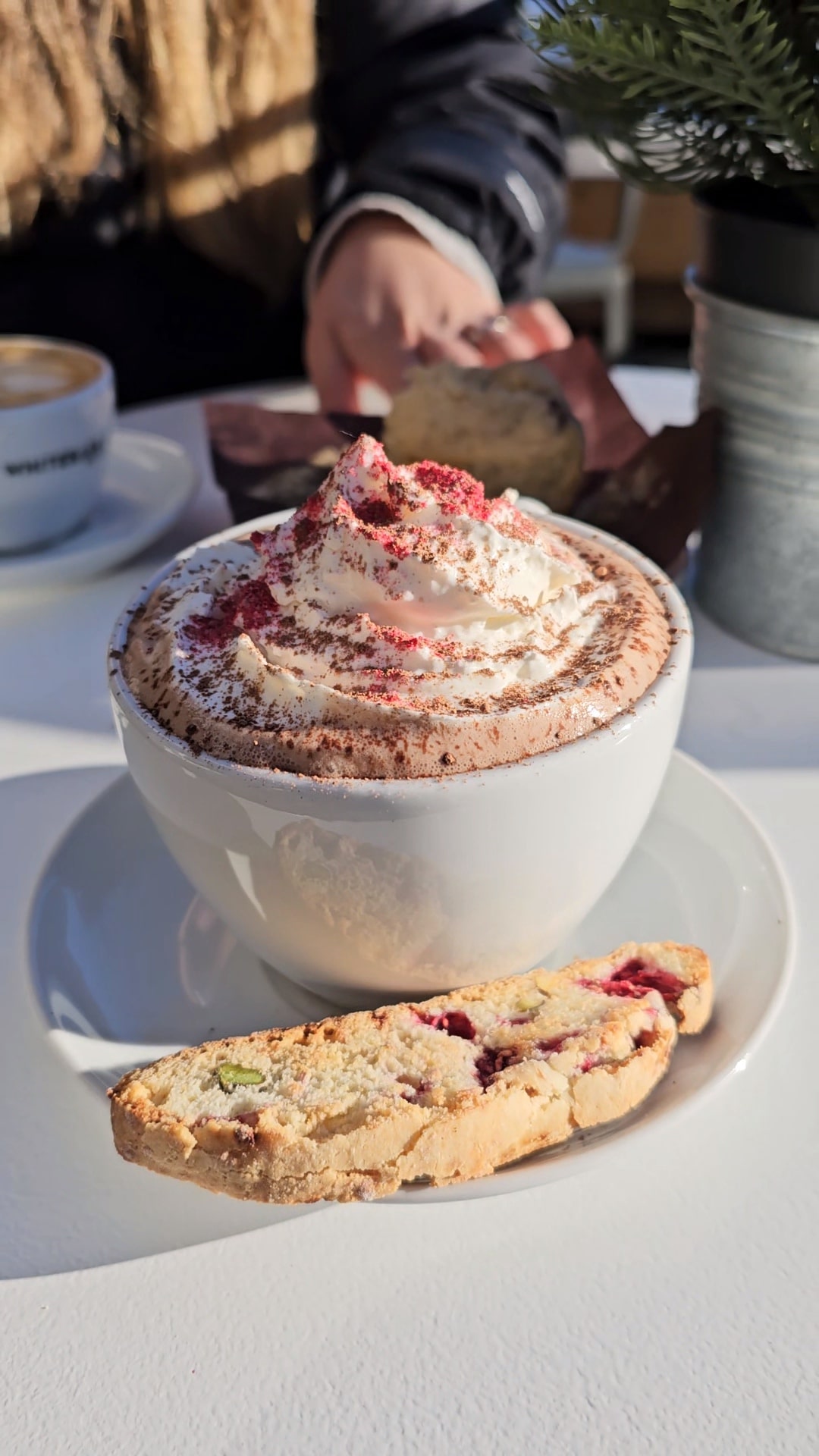
The Hot Chocolate Trail runs November 12, 2026 through February 7, 2027, turning Banff’s cafés and bakeries into a self-guided tasting tour of over-the-top winter drinks. Participating shops create signature hot chocolates you won’t find the rest of the year — think house-made marshmallows, flavored syrups, and Instagram-worthy toppings piled high.
Wild Flour Bakery is a standout stop and a good starting point since it’s on Bear Street near the center of town.
The trail isn’t a literal walking path — it’s a collection of participating spots you hit on your own schedule. If you’re in Banff for three or more days, challenge yourself to try every stop. For a weekend trip, pick two or three and make them count.
The Lake Louise Ice Bar is the wildcard hot chocolate experience most visitors miss. This open-air bar sits on the frozen lake and is built from 20+ blocks of ice, each weighing around 300 pounds.
It typically opens around December 20th and runs into mid-April, though exact dates shift with weather each year. They serve hot chocolate with maple syrup treats for kids, and stronger warming drinks for adults.
The Ice Bar sits right next to the Ice Magic competition site in February, making it easy to combine both.
- Best for kids: The Hot Chocolate Trail in town — walkable, warm, and you can duck into shops between stops.
- Best for the full experience: Combine the Lake Louise Ice Bar with ice skating on the lake for a half-day outing that hits multiple senses.
- Planning note: The Hot Chocolate Trail overlaps with early ski season and late-season SnowDays events, so it works as either a standalone activity or a sweetener between bigger outings.
Spot the Northern Lights in Banff
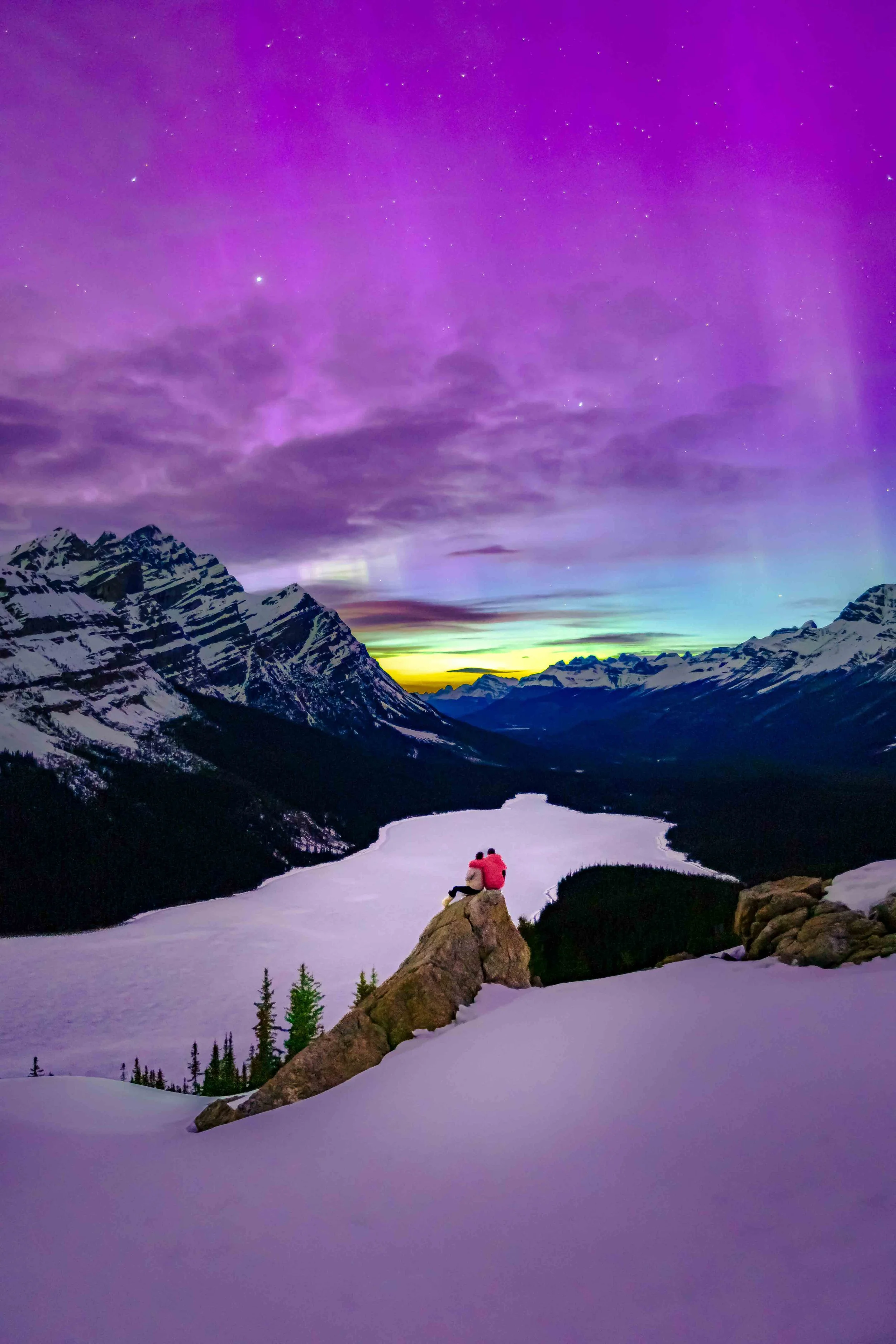
Northern lights are genuinely possible in Banff, especially from December through February when nights stretch past 15 hours and darkness falls by 5 PM. This isn’t Iceland-level reliability — you need the right conditions to align — but when the aurora flares over a frozen Banff lake, it’s the kind of thing you remember for the rest of your life.
Best conditions and locations:
- When to look: Clear, dark nights with high Kp-index readings (check the SpaceWeatherLive app or Aurora Forecast site). New moon periods give you the darkest sky. The best window is usually between 10 PM and 2 AM.
- Vermilion Lakes: The top choice — wide-open western horizon, minimal light pollution, and the frozen lake reflects the aurora. It’s just a few minutes’ drive from Banff town along Vermilion Lakes Road.
- Lake Minnewanka: Another strong option with open sky and less foot traffic than Vermilion Lakes on aurora nights.
- Two Jack Lake: Good sightlines and close to Banff, though more sheltered by trees than Vermilion Lakes.
- Icefields Parkway pull-offs: If you’re willing to drive 30–60 minutes from Banff, the darker skies along the Parkway toward Jasper produce the best displays. The Sunwapta Pass area is particularly dark.
Reality check: Most visitors won’t see the northern lights on a short trip. Don’t plan your entire Banff visit around aurora viewing — plan it around skiing, SnowDays, or the Hot Chocolate Trail, and consider any aurora sighting a spectacular bonus.
Set up an aurora alert on your phone so you can drive to a lake if conditions spike.
Insider detail: Even a faint greenish glow on the horizon counts as a sighting — the bright, photogenic curtains of color you see in photos usually require a Kp 5 or higher event, which happens a handful of times per winter. If the forecast shows Kp 4+, drive to Vermilion Lakes, bring a thermos, and wait.
Give it at least an hour past the forecast time since the aurora often appears later than predicted.
Unique Winter Adventures & Family-Friendly Activities
Beyond the slopes and trails, Banff’s winter scene includes husky-powered sprints through frozen forest, ice bubbles trapped beneath a frozen alpine lake, and a horse-drawn sleigh ride that feels ripped from a Christmas card. These are the experiences that turn a ski trip into a full winter story.
| Activity | Best For | Typical Cost (CAD) | Booking Needed? |
|---|---|---|---|
| Snow Tubing | Families, all ages | $30–$45/person | Walk-up or online |
| Dog Sledding | Couples, families, bucket-listers | $150–$300+/person | Yes — weeks ahead |
| Horse-Drawn Sleigh Ride | Families, romantics | $49–$52/adult | Recommended |
| Ice Climbing | Adventure seekers | $200–$400/person (guided) | Yes — guided only |
| Helicopter Tour | Couples, photographers | $200–$500+/person | Yes — weather-dependent |
| Fat Biking | Active explorers | $40–$70/half-day rental | Walk-up or online |
| Abraham Lake Ice Bubbles | Photographers, road-trippers | Free (drive + walk) | No |
| Dome Dining at Fairmont | Couples, special occasions | $$$ prix fixe | Yes — sells out fast |
Snow Tubing at Mt. Norquay and Lake Louise
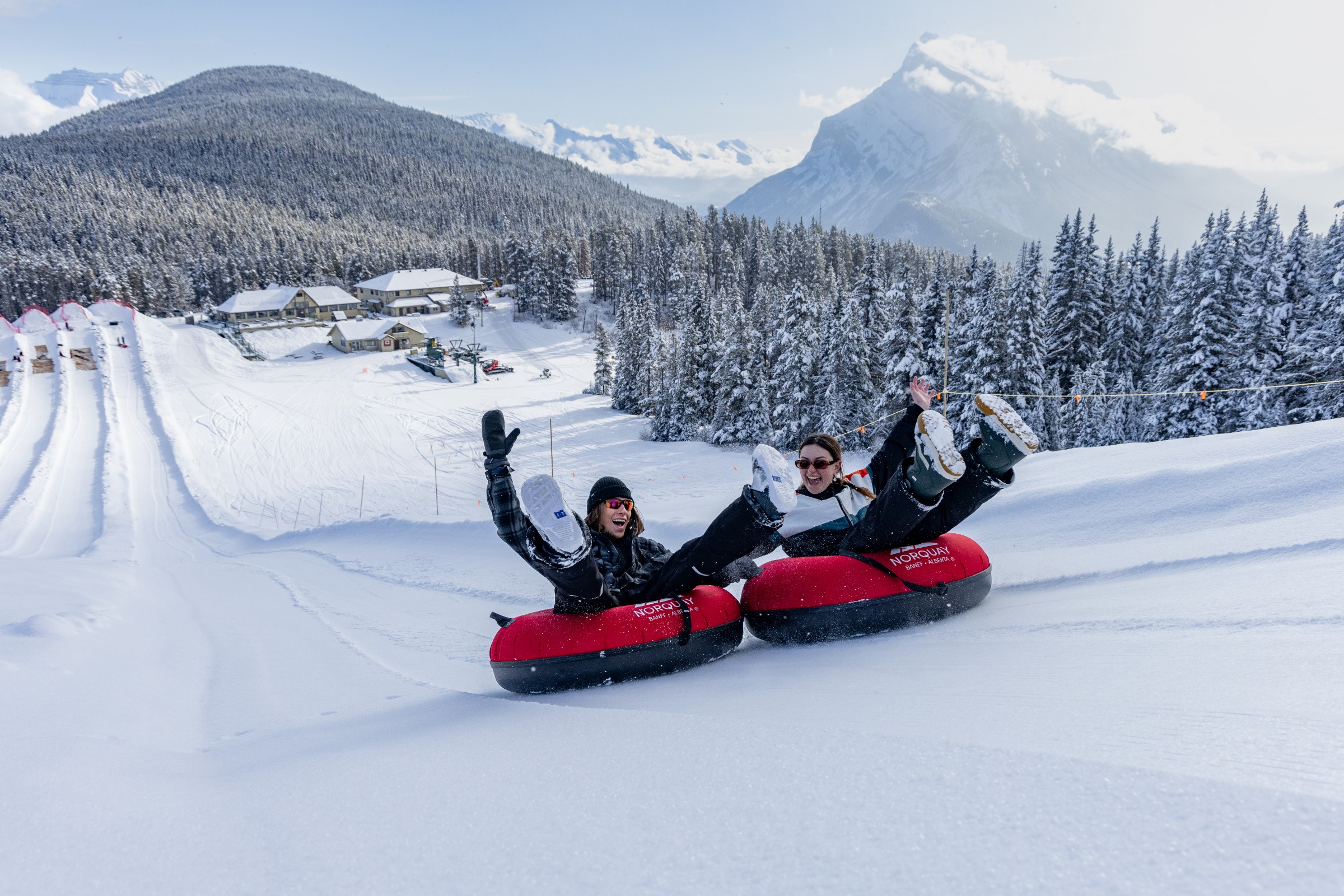
Snow tubing is the single best non-ski activity for families with kids under 10 in Banff — pure downhill fun with zero skill required. Mt.
Norquay runs a dedicated tube park with multiple lanes and a magic carpet lift back to the top, making it easy for small kids to lap all day. Lake Louise also offers tubing as part of its winter activity lineup.
Expect to pay around $30–$45 CAD per person for a session. Both typically operate from December through March, depending on snow conditions.
Mt. Norquay is only a 10-minute drive from Banff town, so it’s the easiest add-on to a half-day.
Go Dog Sledding near Banff
If you book one splurge activity in Banff, make it this. A team of Alaskan huskies pulling you through snow-covered forest along the Icefields Parkway corridor is an experience that stays with you.
Tours run anywhere from 1.5 to 3 hours and typically cost $150–$300+ CAD per person, though prices vary by operator and tour length. Operators like Kingmik Dog Sled Tours run near Lake Louise, while others depart from areas closer to Canmore.
This is a December-through-March activity with peak demand over holidays — book at least two to three weeks ahead, especially for Christmas and February dates. Children under a certain age (usually 4 or 5) are generally not permitted.
Take a Horse-Drawn Sleigh Ride
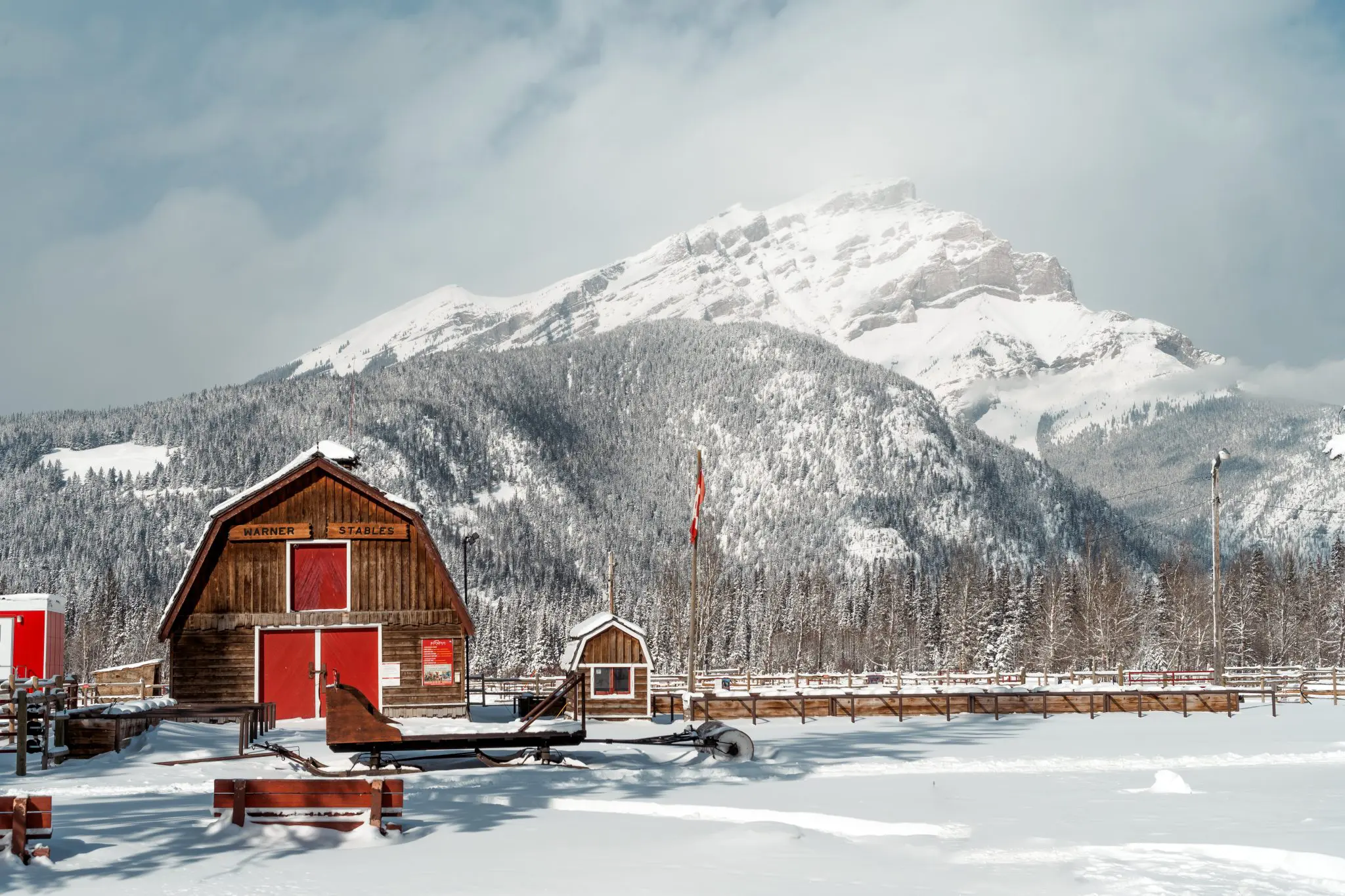
Two strong options here, and the right one depends on your base. The most popular group sleigh ride runs in Banff from mid-December through mid-March, costing $49 CAD per adult and $38 CAD per child aged 4–12 (kids 3 and under ride free).
Tours depart on the hour in late morning and early afternoon through Banff Tours. At Lake Louise, a similar sleigh ride operates from mid-December to early April, priced at $52 CAD for adults and $45 for children — the setting along the frozen lake backed by Victoria Glacier is the clear winner for scenery.
Both are genuinely enjoyable for kids. The Lake Louise ride pairs perfectly with a day of skating or tubing there.
Try Ice Climbing on Frozen Waterfalls
This is the one activity on this list that feels completely otherworldly. Frozen waterfalls throughout the Bow Valley and along the Icefields Parkway become vertical ice walls from roughly January through March.
Guided ice climbing outings with companies like Yamnuska Mountain Adventures or Banff-based outfitters typically run $200–$400 CAD per person for a half-day, including all technical gear — crampons, ice axes, helmets, and harnesses. No prior climbing experience is required for introductory sessions.
Johnston Canyon’s frozen lower falls offer an accessible taster if you want to simply witness the ice without climbing, though the canyon itself is covered in the hiking section.
Book a Helicopter Tour over the Rockies
Seeing the Canadian Rockies from above in winter — jagged peaks draped in untouched snow, frozen rivers threading through valleys — is a perspective ground-level activities simply cannot match. Helicopter tours depart from Canmore (roughly 20 minutes from Banff) and typically cost $200–$500+ CAD per person, varying by flight duration and route.
Short scenic flights run about 12 to 20 minutes; longer tours extend over the Sundance Range or Spray Valley. These are highly weather-dependent — cloud cover and wind can cancel flights with little notice.
Book early in your trip so you have backup days if conditions don’t cooperate. Winter light around midday gives the best photography.
Ride a Fat Bike on Banff’s Winter Trails
Fat biking has become one of the most popular ways to explore Banff’s trail network when snow covers everything. The oversized tires grip packed snow and ice surprisingly well, turning familiar summer paths into an entirely different ride.
Rental shops in Banff town typically charge $40–$70 CAD for a half-day. The Fenland Trail (a flat, easy 2 km loop near town) and the Legacy Trail toward Canmore are the go-to routes for first-timers.
Conditions matter: freshly groomed or well-packed trails ride best; deep powder is a slog. Ask the rental shop for their current trail recommendation — they know what’s riding well that week.
Chase Ice Bubbles at Abraham Lake
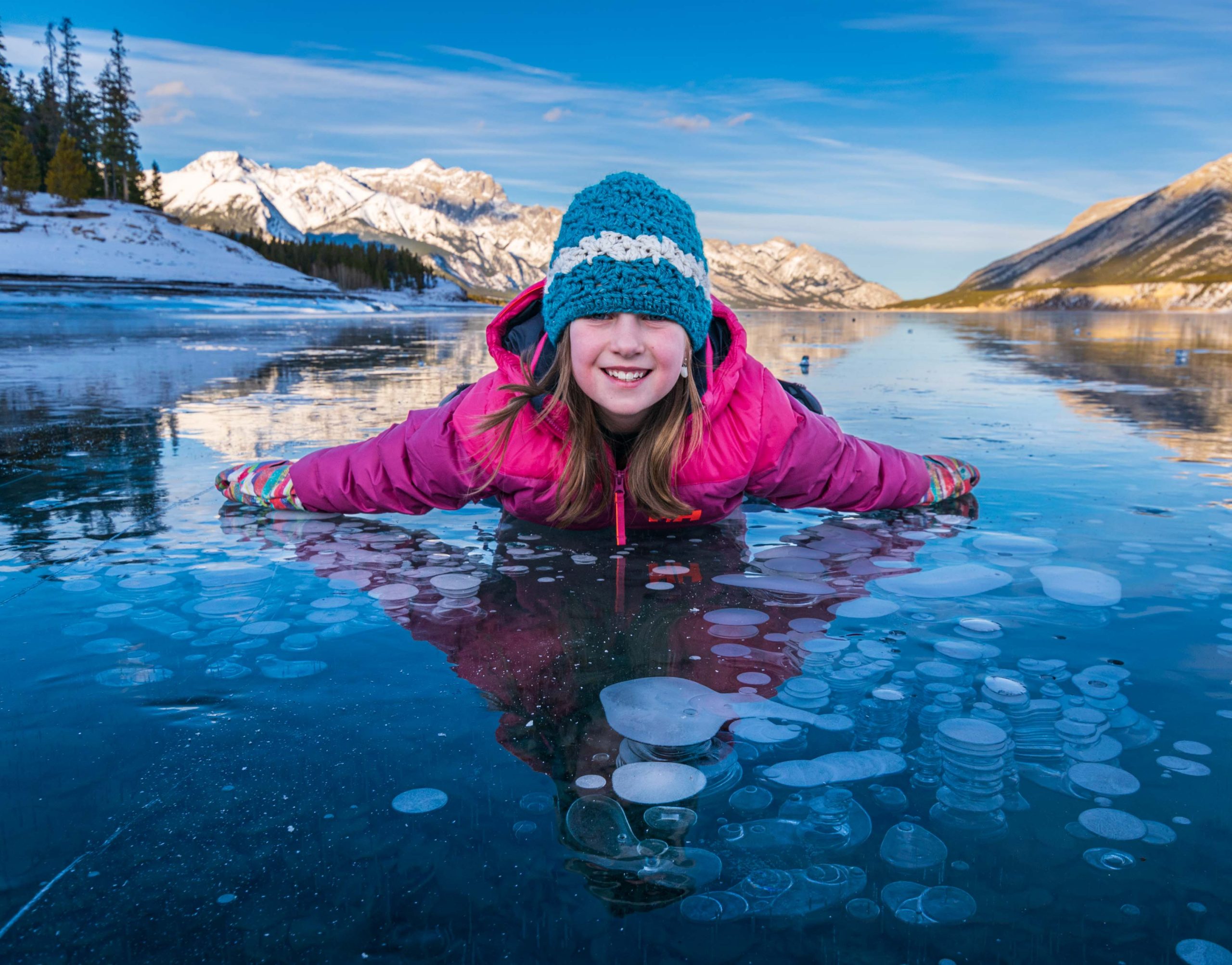
Abraham Lake sits about 2.5 hours south of Banff along the David Thompson Highway (Highway 11), and it produces one of the most photographed winter phenomena in Canada: methane bubbles frozen in stacked layers beneath clear ice. This is free to visit — no park pass required since it’s outside Banff National Park.
The bubbles are visible from roughly mid-December through February, though ice conditions vary year to year. Arrive early morning for the best light and fewer people on the ice.
Safety warning: always check ice conditions locally before walking onto the lake. Strong winds are common here, so dress warmer than you think.
This makes an excellent day trip from Banff or a stop en route to/from the Icefields Parkway, but it requires its own dedicated driving time.
Dine in a Dome at Fairmont Banff Springs
The Fairmont Banff Springs offers private dining domes during winter — heated, transparent geodesic domes set on the hotel grounds with mountain views, serving multi-course meals inside. This is a special-occasion move, not a casual dinner.
Prices are firmly in the $$$ range with prix fixe menus that rotate seasonally. The domes typically run from December through March and sell out well in advance, sometimes weeks ahead for prime weekend and holiday slots.
You do not need to be a hotel guest to book, but reservation timing is everything — check availability as soon as winter dates open, usually in fall. For the full experience, combine it with a visit to the hotel’s grand public spaces, which are decorated elaborately during the holiday season.
Where to Stay & Eat in Banff in Winter
Banff Ave is the social artery, but your perfect winter base depends on whether you want ski-in/out access, mountain seclusion, or downtown walkability. Here’s the straight talk on where to sleep and eat without the regret.
Best Hotels in Banff for Every Budget
Lodging in Banff ranges from iconic luxury to functional comfort. Your choice directly impacts your daily vibe—slopeside convenience versus town energy.
| Category | Top Pick | Why It Wins | Book Ahead |
|---|---|---|---|
| Luxury/Iconic | Fairmont Chateau Lake Louise | The only hotel directly on Lake Louise. Waking up to that frozen landscape is a bucket-list moment, not just a view. | 6+ months for winter peak dates |
| Mid-Range/Ski-Focused | Sunshine Mountain Lodge | True ski-in/ski-out at Banff Sunshine Village. Staying here eliminates the morning commute entirely. | 3-4 months, especially for holiday weeks |
| Budget/Functional | Banff Inn | Reliable, clean, and includes a hot tub and continental breakfast. The free shuttle to the ski bus stop is the real perk. | 2+ months for decent rates |
Cozy Winter Cabin Getaways near Banff
For true mountain romance, skip the town hotels and opt for a cabin along the Bow Valley Parkway. Baker Creek Mountain Resort is the standout choice here—its log cabins feel authentic, not like a theme park, and the on-site bistro serves solid comfort food. The Jacuzzi Suite is the move for couples; the one-bedroom loft works for families.
It’s a 20-minute drive to Lake Louise Ski Resort, offering quiet without total isolation.
Where to Eat: Best Restaurants and Cafés in Banff
Banff’s dining scene punches above its weight for a small mountain town. Focus on these three categories:
- Craft Cocktails & Mountain Grub: Park Distillery distills its own spirits and has the best elk burger in town. The atmosphere is lively without being a zoo.
- Vegetarian & Health-Conscious: Nourish Bistro is entirely plant-based and tastes vibrant, not like an afterthought. The Buddha Bowl is a reliable order.
- Hearty Breakfast: Tooloulou’s serves Cajun-inspired brunch that’s worth the wait. Get the Shrimp & Grits or the pancakes with bourbon syrup.
Craft Breweries and Après-Ski Drinks in Banff
After a day on the slopes, the vibe shifts from adrenaline to camaraderie. Banff Ave Brewing Co. is the local’s default—solid IPAs, a great patio with heaters, and no pretension. For a more unique experience, the Ice Bar at the Fairmont Chateau Lake Louise serves cocktails in a structure made entirely of ice.
It’s a spectacle, but go for a drink, not a full evening. St. James Gate on Banff Ave is the classic Irish pub for Guinness and live music if you want something rowdier.
Is Staying in Canmore a Good Alternative to Banff?
Yes, if your priority is value and space, not central nightlife. Canmore is a 20-minute drive east of the Banff townsite and offers more apartment-style hotels, better grocery stores, and real restaurants without resort-town pricing. The trade-off is you’ll need a car (or the Roam bus) for every ski day and evening in Banff.
Base yourself in Canmore if you want a quieter, more residential feel and plan to explore beyond the ski hills. Base in Banff if you want to walk to dinner and stumble back to your hotel after après-ski.
Get the Banff Winter Basics: Your Last-Minute Questions, Answered
How Cold Does Banff Get in Winter?
Plan for sustained deep cold. From December through February, daytime averages hover around -5°C (23°F), dropping to -14°C (6.8°F) at night.
But these are averages—real cold snaps plummet to -30°C (-22°F), especially with wind chill. The key isn’t the number, it’s the preparation.
Proper layering makes this cold invigorating, not miserable. Ignore the freeze and you’ll have a miserable, shortened trip.
What Should I Pack for a Winter Trip to Banff?
Pack for versatility, not just survival. Your system should be: a moisture-wicking base layer, an insulating mid-layer (fleece or down), and a windproof/waterproof outer shell.
Quality insulated boots rated to -25°C or lower are non-negotiable. Top it off with a warm hat that covers your ears, insulated gloves (not fashion ones), and a neck gaiter or balaclava.
Don’t forget sunglasses—the winter sun glare off snow is brutal.
Is Banff Worth Visiting in Winter?
Absolutely, and the crowd reduction is the main reason. Summer brings millions; winter offers the same epic landscapes with a fraction of the people.
You get frozen waterfalls, ice-skating on iconic lakes, and world-class skiing without fighting for parking or trail space. The trade-off is shorter daylight hours and colder temps, but the magical, snowy atmosphere more than compensates.
It’s the season for those who want the mountains to themselves.
How Do I Get to Banff in Winter?
Fly into Calgary International Airport (YYC), which is the major hub. From there, you have two main options:
- Best for freedom: Rent a vehicle with winter tires (all-season tires are not sufficient and often not legally adequate). The drive to Banff is about 1.5 hours west on the Trans-Canada Highway (Highway 1).
- Best for avoiding driving stress: Book a direct airport shuttle. Services like Brewster Express and Banff Airporter run multiple times daily and will drop you at your Banff hotel.
Are There Free Things to Do in Banff in Winter?
Yes, and some are iconic. You can hike to the frozen waterfalls of Johnston Canyon (a standout free experience), explore the town of Banff and its festive lights, or snowshoe on many public trails (though rentals cost money).
Skating on Lake Louise is also free if you have your own skates. Always check Parks Canada’s website for any temporary closures or trail conditions before you go.
What Is There to Do in Banff in Winter for Non-Skiers?
Plenty. Your best bet is to book a guided experience.
Ice walks through frozen canyons like Johnston Canyon or Grotto Canyon are spectacular. A snowshoe tour in places like Marble Canyon gets you into serene, deep snow.
For pure relaxation, nothing beats the Banff Upper Hot Springs with snow falling around you. You can also ride the Banff Gondola for panoramic views without the ski crowds.
Booking in advance is highly recommended for these activities.
When Is the Best Time to Visit Banff in Winter?
It depends on your priority. Use this table to decide:
| Time Frame | Best For | Key Consideration |
|---|---|---|
| Mid-December to Early January | Festive atmosphere, holiday events, full snow coverage. | Peak crowds and highest prices. Book everything months ahead. |
| January (post-holiday) to February | Best balance: deep snow, cold temps, lower crowds than holidays. | Shortest daylight hours. Plan activities accordingly. |
| March | Longer days, stronger sun, often still excellent snow. | Can have freeze-thaw cycles. Great for spring skiing. |
Insider Detail: The true sweet spot for value and conditions is the first two weeks of February. The holiday rush is over, snowpack is at its deepest, and you can often find better rates on lodging than in December or March.
Start Planning Your Banff Winter Trip
Start by booking the SkiBig3 multi-day pass if you’re skiing — it covers Lake Louise, Sunshine Village, and Mt. Norquay under one ticket and saves you from buying three separate lift passes.
Base yourself in Banff town for maximum flexibility, then build your days around the forecast: frozen waterfalls on clear mornings, hot springs on cold afternoons, and gondola rides when the sky is wide open and blue.
Banff in winter is where the cold actually works in your favor — frozen waterfalls become cathedrals, lakes turn into rinks beneath glaciers, and the crowds vanish, leaving you with mountains that feel entirely your own.
Save this guide to your Pinterest board so every trailhead, restaurant tip, and festival date is ready the moment you sit down to book your trip.
Leave a Reply