
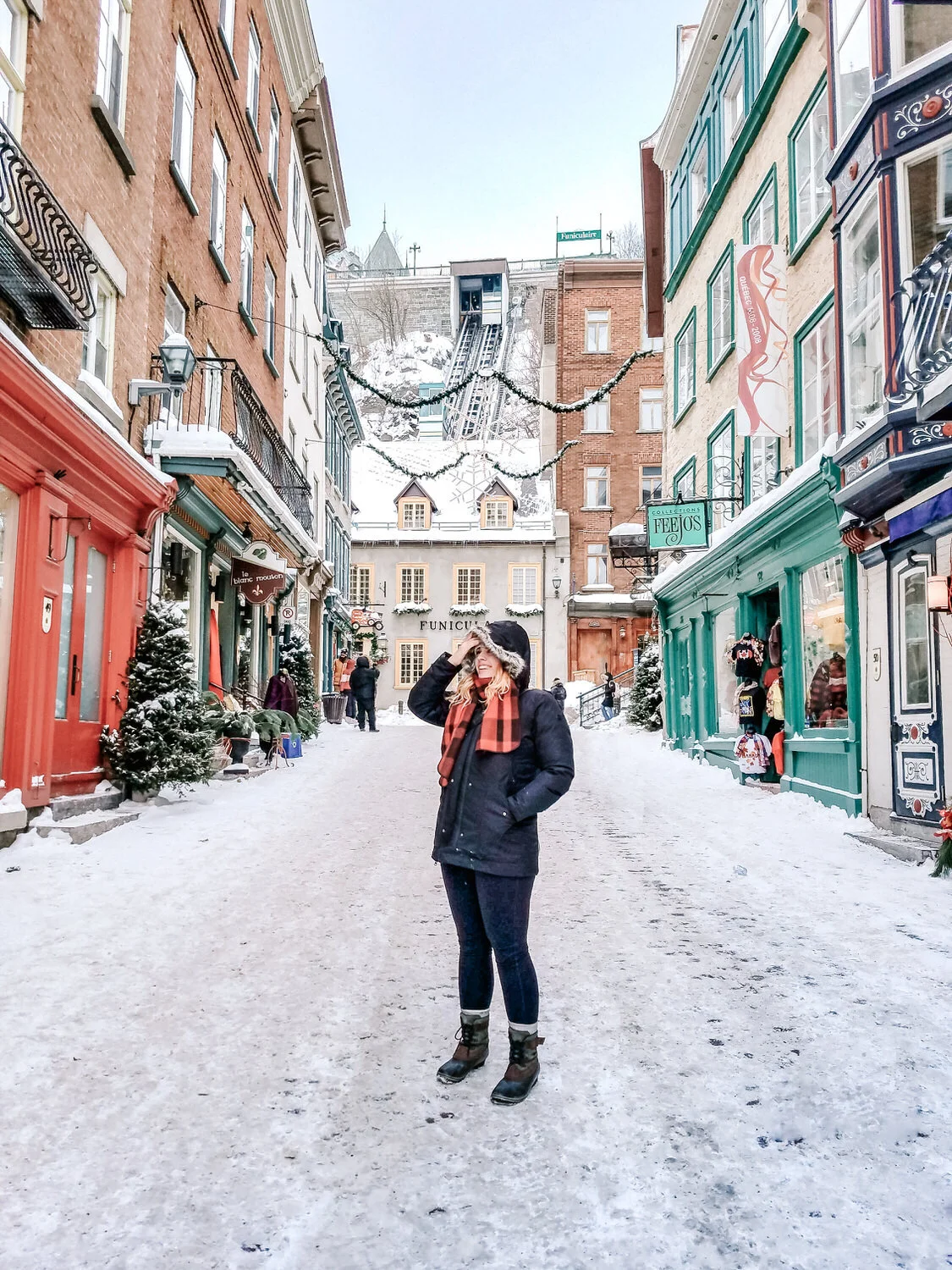
Your boots crunch through overnight snow on Rue du Petit Champlain as garland-strung lampposts cast amber light across 400-year-old stone facades, and the smell of mulled wine drifts from a wooden chalet just ahead.
Québec City is North America’s only walled city, and when winter arrives it transforms into something that feels plucked from a European storybook — except this is Canada, the prices are in Canadian dollars, and you can fly here direct from most major U.S. airports.
It is the only place on Earth where you can ice canoe across the frozen St. Lawrence, ride a toboggan slide that has been running since 1884, and eat maple taffy poured directly onto snow — all before dinner.
This guide gives you exactly what to do, when to go, what to pack, where to eat, and which hotel to book so you do not waste a single freezing afternoon on tourist traps.
Expect roughly $80–$120 CAD per night for a budget-friendly inn or apartment just outside the old walls, $200–$350 for a solid mid-range boutique hotel in Old Québec, and $400–$600 for the splurge-tier Fairmont Château Frontenac.
Your Quick-Pick Guide to Québec City in Winter
Short on time? These six experiences define a winter trip here — each one pulled from the detailed recommendations below.
- Best First Day: Walk Upper Town’s Dufferin Terrace for panoramic river views, then descend to Petit Champlain at dusk when the holiday lights hit their peak
- Best One-of-a-Kind Adventure: Ice Canoeing on the St. Lawrence — Québec City is the only place on Earth offering this to tourists
- Best Easy Thrill: The Dufferin Terrace Toboggan Slide (Au 1884) hits 60 km/h and costs only a few dollars per ride
- Best Day Trip: Montmorency Falls, 15 minutes away, frozen into a massive ice cone taller than Niagara
- Best Cold-Weather Reset: Strøm Nordic Spa — cycle between outdoor hot pools, saunas, and cold plunges along the frozen river
- Best Food Moment: Maple taffy on snow at the German Christmas Market or Carnival, plus classic poutine at La Buche
What to Expect from Québec City’s Winter Weather
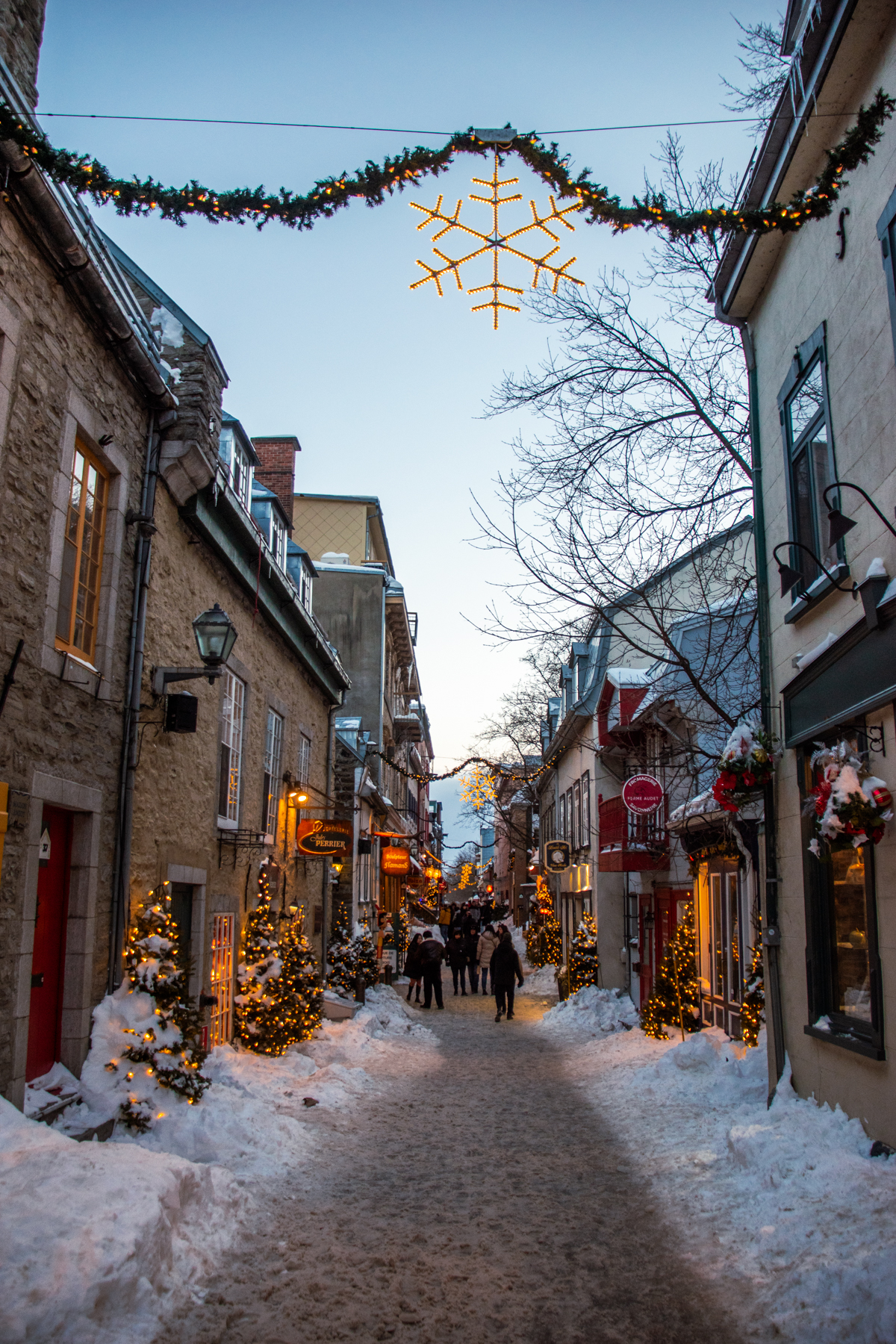
The thermometer in Québec City regularly dips below -4°F (-20°C) in January — and the wind whipping off the St. Lawrence can make it feel 15 degrees colder within seconds. This is genuinely one of the coldest cities in North America.
But locals don’t hide from it, and neither should you. Heated sidewalks run through Old Québec, restaurants stay packed, and the entire historic district glows with holiday lights.
Dress right, and the cold becomes part of the experience rather than a reason to stay inside.
Month-by-Month Temperature Guide: December Through March
These are typical averages — treat them as packing and booking baselines, not guarantees. Wind chill near the waterfront and on exposed terraces will feel significantly colder than these numbers suggest.
| Month | Avg. High | Avg. Low | Snow Status | What to Expect |
|---|---|---|---|---|
| December | 25°F (-4°C) | 10°F (-12°C) | Accumulating | Holiday markets, lights, festive but manageable crowds |
| January | 19°F (-7°C) | 3°F (-16°C) | Deep cover | Coldest month. Fewest tourists mid-week. Carnival prep begins late January |
| February | 22°F (-6°C) | 5°F (-15°C) | Peak | Carnival draws big crowds. Book well ahead. Best winter sports conditions |
| March | 33°F (1°C) | 17°F (-8°C) | Slowly melting | Warming trend, longer days, slush risk on sidewalks |
How to Pack: The 3-Layer Strategy for Extreme Cold
You do not need a massive suitcase for a Québec City winter trip. A proper layering system fits in a carry-on and handles everything from a -20°C walk through Petit Champlain to a heated dinner in Old Québec.
- Base layer (moisture-wicking): Merino wool or synthetic long underwear, top and bottom. Skip cotton entirely — it traps sweat and makes you colder the longer you’re outside.
- Mid layer (insulation): A fleece jacket or lightweight down puffy. This is your warmth core. You’ll peel it off indoors constantly, so choose something packable.
- Outer layer (windproof and waterproof shell): A proper winter parka rated to at least -13°F (-25°C). Look for a hood with a fur or faux-fur ruff — it breaks the wind hitting your face, and every local in Québec wears one for good reason.
Don’t neglect extremities: Insulated waterproof boots with aggressive tread are non-negotiable — the cobblestones in Petit Champlain and Place Royale get dangerously icy. Pack wool socks (minimum two pairs daily rotation), waterproof mittens (warmer than gloves for extended outdoor time), a fleece neck gaiter you can pull over your nose, and a hat that fully covers your ears.
The insider detail no packing list tells you: Buildings throughout Old Québec blast the heat. You will be shedding layers every time you step indoors, so wear a base layer you’re comfortable being seen in at a restaurant.
A fitted merino wool top under your sweater handles the constant indoor-outdoor cycle without making you overheat at the table.
Is Winter the Off-Season in Québec City?
It depends entirely on which weeks you pick. Québec City has three distinct booking windows with very different crowd levels and price points:
- Late November through New Year’s: The German Christmas Market and Québec s’illumine lights draw strong visitor numbers. Hotels in Old Québec fill up — book at least 4–6 weeks ahead. Prices are moderate to high. Crowds exist but rarely feel overwhelming.
- Early January through mid-February: The true low season. Mid-week is especially quiet — you’ll walk into popular restaurants without reservations and have snow-covered streets nearly to yourself. Hotel rates drop noticeably. The trade-off: this is the coldest stretch of the year, with January averaging just 3°F (-16°C) at night.
- Late February during Carnival: Québec Winter Carnival is one of the world’s largest winter festivals and the city’s busiest winter period. Hotels book out well in advance and prices spike. If Carnival is your target, book 2–3 months ahead minimum.
- March after Carnival ends: Crowds thin again. Warming temperatures and longer daylight make it more comfortable, though snow quality declines for winter sports and sidewalks get slushy by afternoon.
For the best balance of cold-weather atmosphere, manageable crowds, and lower hotel rates, target the first two weeks of December or the first three weeks of January. Staying in Upper or Lower Old Québec puts every major sight within a 10–15 minute walk — critical when wind chill hits hard and you want to duck into warmth fast.
Hôtel des Coutellier in Old Québec is a reliable mid-range base with free breakfast and a location that keeps your outdoor exposure short.
Exploring Old Québec’s Winter Wonderland
Old Québec transforms into a living snow globe when winter hits, its 400-year-old stone buildings capped in white and lit by thousands of festive lights. This is the city’s postcard season, where every cobblestone street and steep alleyway feels pulled from a storybook—but only if you know where to walk first.
Upper Town Highlights: Château Frontenac, Dufferin Terrace & the Citadelle
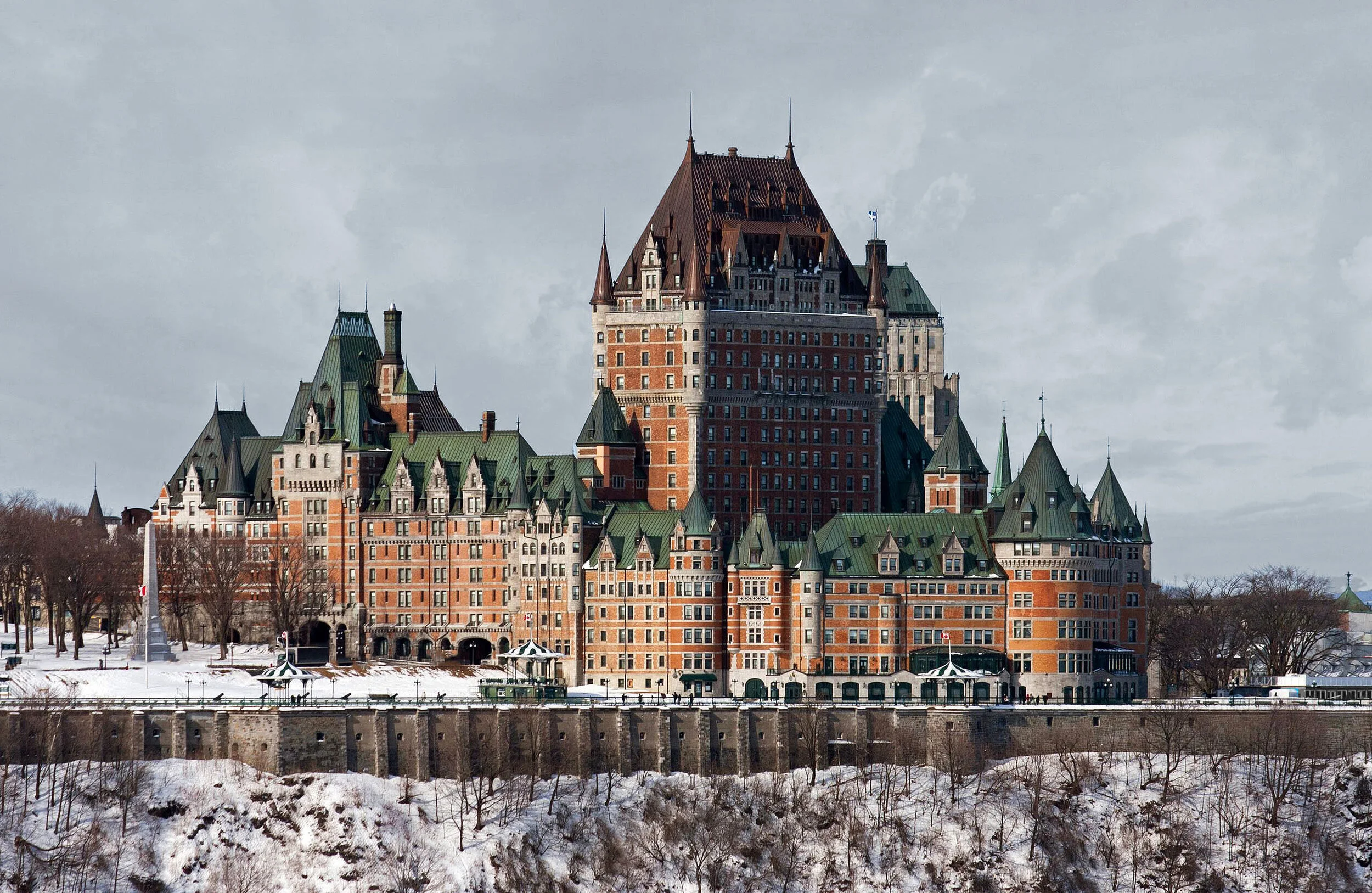
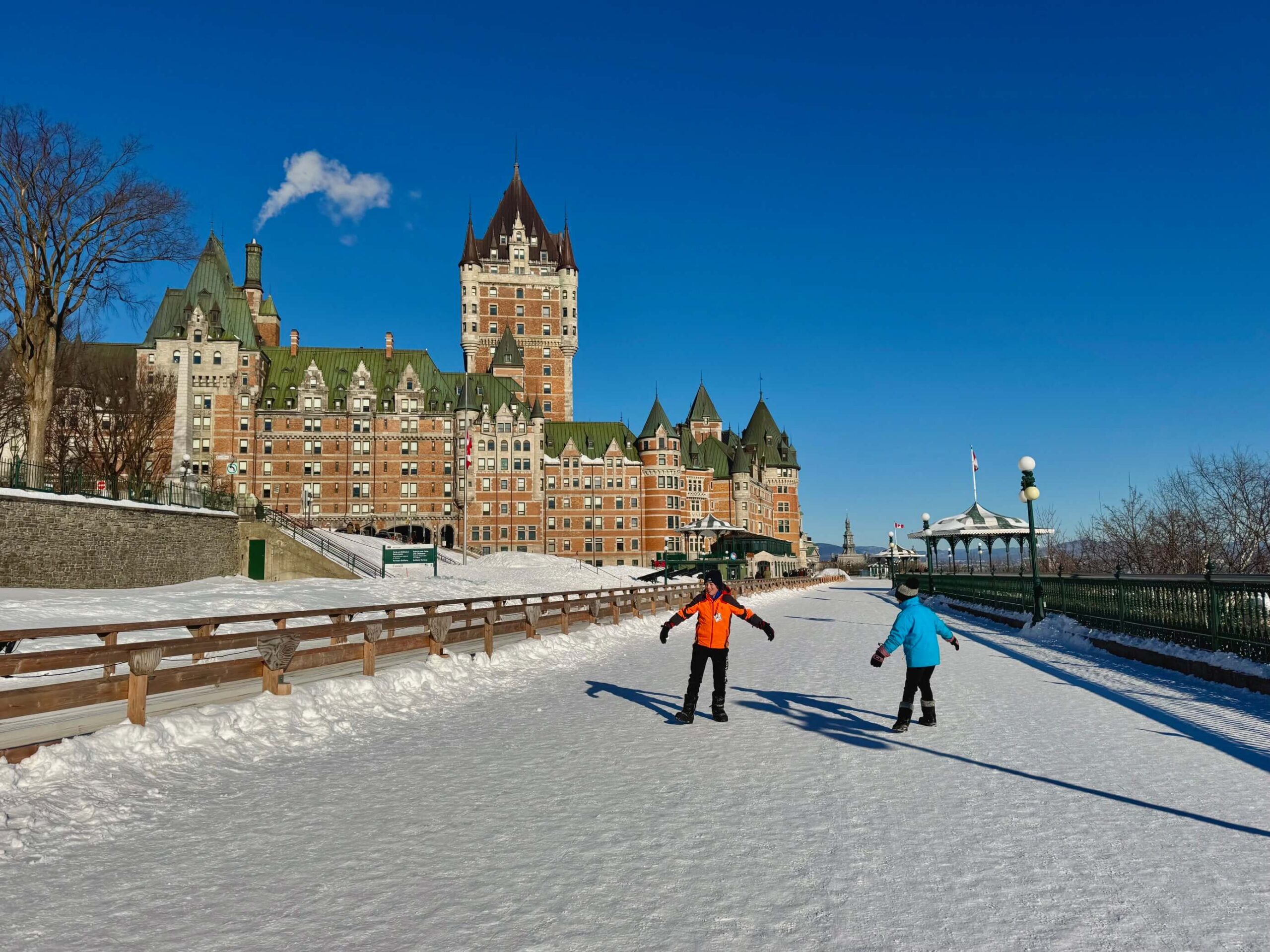
Perched on Cap Diamant, Upper Town is the city’s dramatic headliner. The sheer scale of Fairmont Le Château Frontenac is best appreciated from below, but stepping inside its grand lobby for a drink at Bistro Le Sam is non-negotiable—the views over Dufferin Terrace from the window seats are your reward.
- Château Frontenac: Don’t just photograph it from the outside. The interior tour or a meal at one of its public restaurants justifies the visit.
- Dufferin Terrace: Walk this massive boardwalk for panoramic St. Lawrence River views. In winter, it’s also home to the famous Au 1884 toboggan slide—this activity is covered in detail elsewhere, but know it’s right here.
- The Citadelle: This active military fortress offers tours. In winter, dress for severe wind chill; the exposed ramparts are brutally cold but incredibly dramatic with a snow-covered city below.
Start your Upper Town exploration early morning. The Terrace and views are busiest by mid-day, especially when a cruise ship is in port (rare in winter, but it happens).
Lower Town Highlights: Petit Champlain, Place Royale & the Old Port
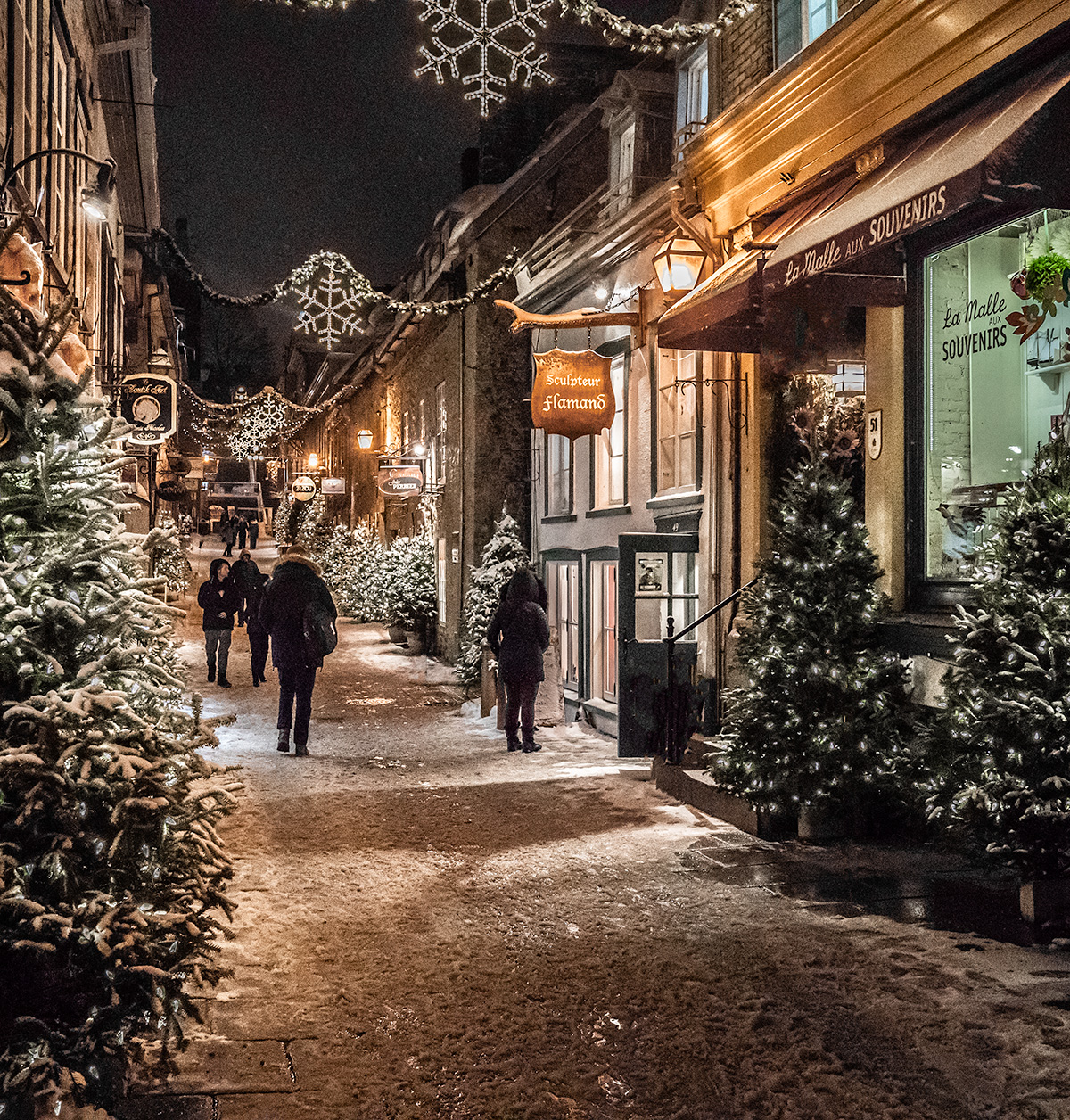
The magic shifts as you descend into Lower Town. This is where the city’s heart truly beats, especially under a fresh snowfall. Enter via the Breakneck Steps (Escalier Casse-Cou)—the steep descent is part of the charm.
- Petit Champlain: North America’s oldest commercial district is your main event. The narrow, pedestrian-only Rue du Petit Champlain is lined with independent boutiques and cafés, all dripping with holiday garlands and lights. It’s crowded on weekends, but utterly magical.
- Place Royale: The birthplace of French North America. Find the Notre-Dame-des-Victoires church (the continent’s oldest stone church) and the impressive Fresque des Québécois mural around the corner. The square itself is quiet and profoundly historic.
- The Old Port (Vieux-Port): More than a marina, it’s your best close-up vantage for St. Lawrence River ice flows and offers access to waterfront restaurants and the ferry terminal for Lévis.
For the best experience, explore Lower Town at dusk when the lights of Petit Champlain are fully on but the dinner crowds haven’t arrived.
The German Christmas Market & Québec s’illumine Holiday Lights
If your visit falls between late November and late December, the holiday markets are the city’s seasonal centerpiece.
- German Christmas Market: Located in Old Québec, it features dozens of wooden chalets selling European crafts, ornaments, and warm food like bratwurst and mulled wine. It’s festive and smells incredible, but it is popular—expect shoulder-to-shoulder crowds on Friday and Saturday evenings.
- Québec s’illumine: This broader city-wide festival decorates streets and buildings with artistic light installations from November through February. It’s free and ongoing, so you can enjoy it on your own schedule while walking between the Upper and Lower Towns.
The German Market is best visited on a weekday afternoon for shorter lines. For a cheaper, less hectic warm drink, seek out a regular café away from the main stalls.
Best Winter Viewpoints for Photos and Sightseeing
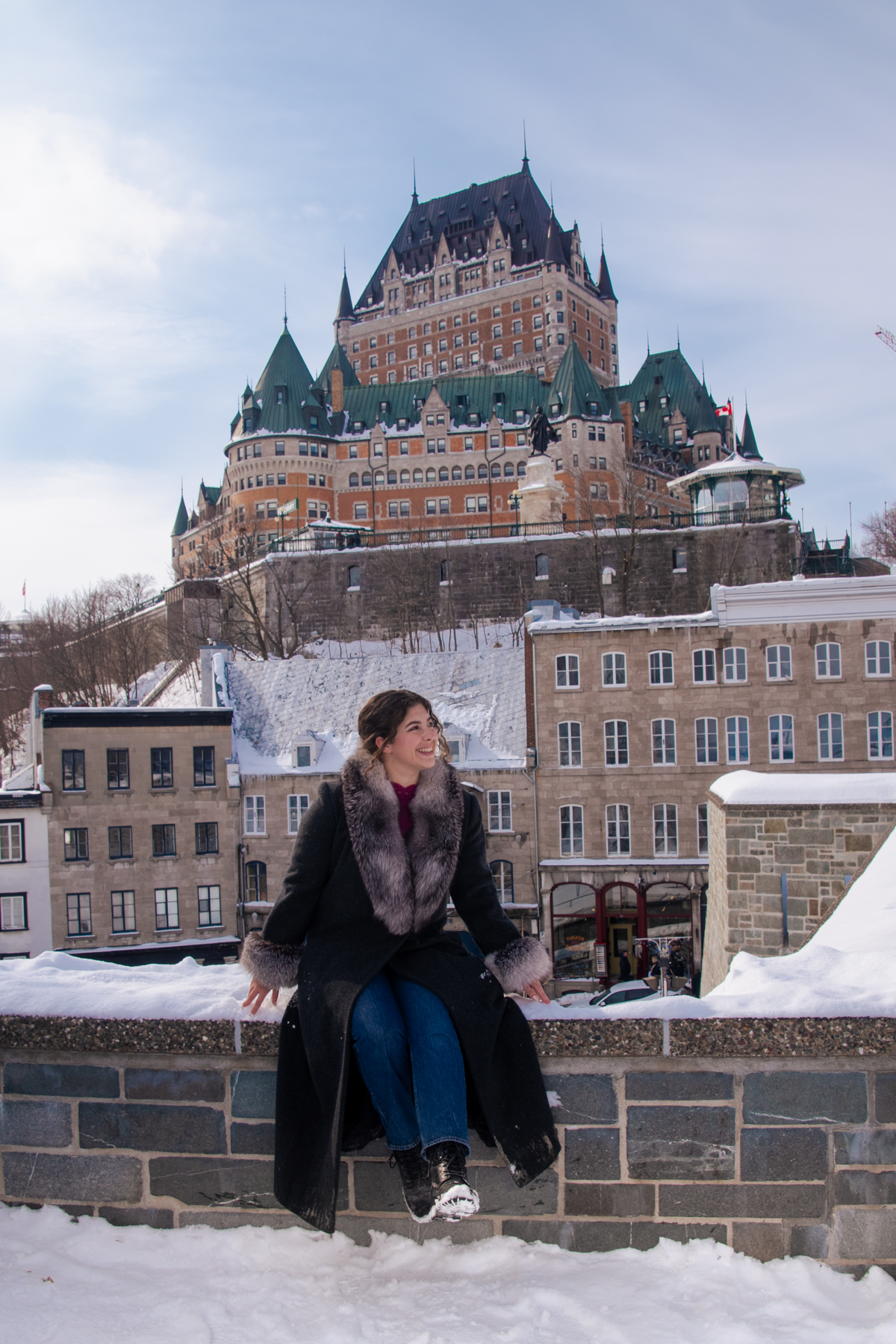
Forget standard observation decks; the best winter views are earned through a short walk or a strategic vantage point.
| Viewpoint | Best For | Insider Tip |
|---|---|---|
| Dufferin Terrace | Grand, classic panorama of Lower Town and the river. | Go at sunrise for photos without crowds and incredible light on the snow. |
| Terrasse Dufferin’s Lower Extension | Unique angle of the Château Frontenac towering above. | Walk past the main boardwalk to the lower viewing platform near the funicular. |
| Breakneck Steps | Looking down the steep, historic stairway into Petit Champlain. | Descend them instead of just looking—capture the tunnel-like perspective from the top. |
| Parc du Bastion-de-la-Reine | Quiet, elevated park view over the Lower Town rooftops. | A local favorite for a quieter moment, just a short walk from the Citadelle. |
The ultimate insider tip: for the most unique, crowd-free shot of the city, take the Lévis ferry across the river and back at dusk. The skyline view of Old Québec illuminated from the water is unbeatable and costs only a few dollars.
Quick Comparison: Upper vs. Lower Town
| Area | Vibe | Best For |
|---|---|---|
| Upper Town | Grand, open, historic fortifications. | Panoramic views, iconic landmarks, the Toboggan Slide. |
| Lower Town | Intimate, cobblestoned, charming. | Shopping, atmospheric walks, the oldest sites, and cozy cafes. |
Must-Try Winter Adventures in Québec City
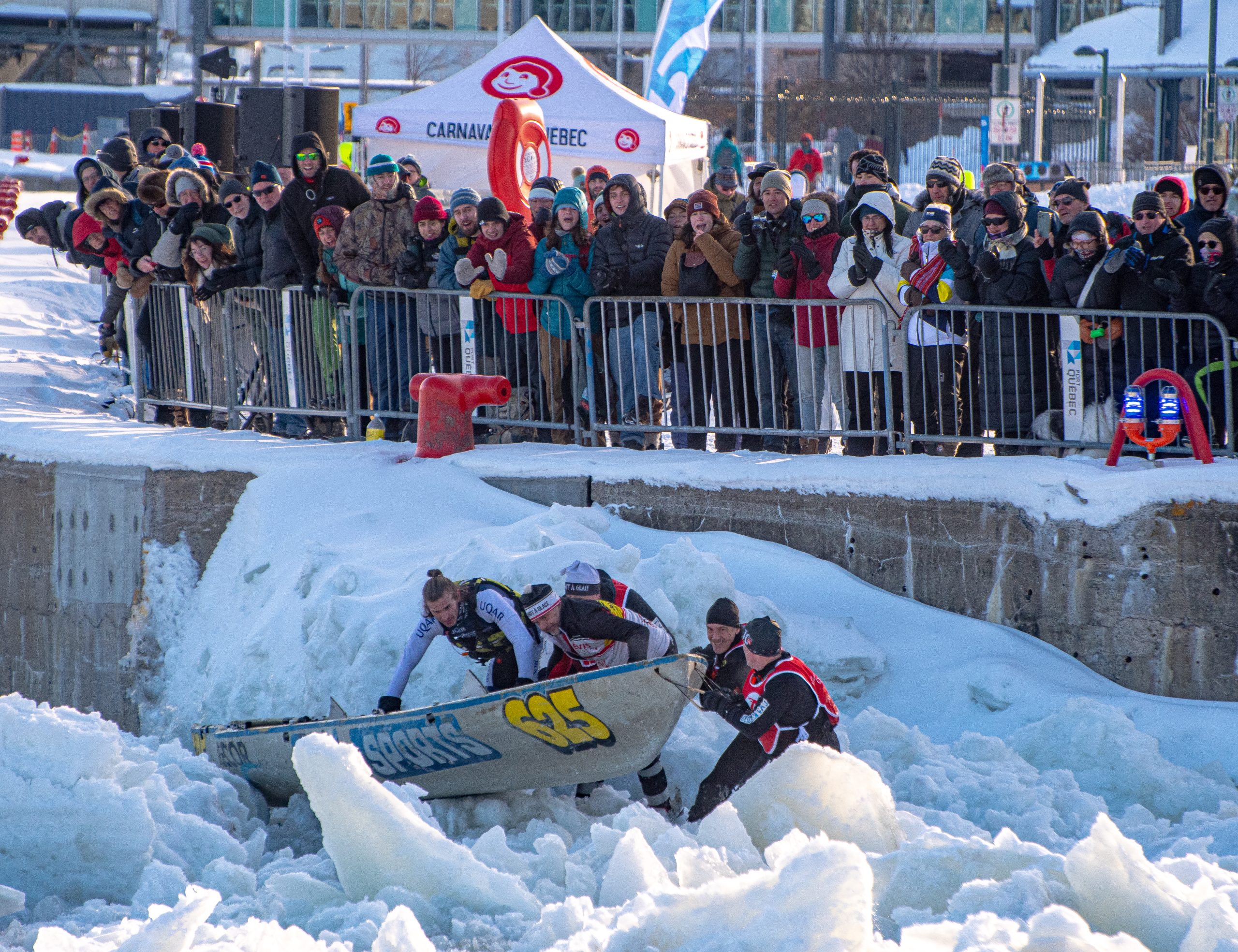
Québec City is the only place on Earth where you can ice canoe as a tourist — paddling a canoe across ice-choked sections of the St. Lawrence River in freezing temperatures. That alone sets the bar for winter adventures here, and the rest of the city clears it easily.
These are the outdoor activities worth building your itinerary around, all accessible without leaving the city limits.
| Adventure | Effort Level | What Makes It Worth It | Typical Time Needed |
|---|---|---|---|
| Ice Canoeing | High — real physical exertion | Only city in the world offering this to tourists | 2–3 hours with outfitter |
| Dufferin Terrace Toboggan | None — sit and slide | Running since 1884, faster than it looks | 10 minutes per ride |
| Ice Skating | Low to moderate | Free rink at Place D’Youville against a fortification wall backdrop | 1–2 hours |
| Plains of Abraham Snowshoeing | Moderate | National park quality terrain steps from Old Québec hotels | 1–3 hours |
| Fat Biking | Moderate to high | Snow-covered trails on oversized tires through historic streets | 2–4 hours |
| Winter Hiking | Low to moderate | Groomed urban trails with zero car required | 1–3 hours |
Ice Canoeing on the St. Lawrence River
Ice canoeing is not a scenic paddle — it is a full-body workout hauling a canoe across ice floes, then rowing through frigid open water, then hauling again. Outfitters run guided excursions that provide all the gear (dry suits, ice cleats, paddles) and handle safety on the river.
Expect to pay roughly $80–$130 CAD per person depending on the operator and group size. Book at least a week ahead in peak season — spots fill fast, especially on weekends.
This is the single most unique winter sport Québec City offers and the one activity here you genuinely cannot do anywhere else.
Insider tip: Morning departures are colder but the ice formations are more dramatic and the river is less disrupted by ferry traffic. Afternoon sessions feel slightly warmer but lose some of the visual drama.
The Historic Dufferin Terrace Toboggan Slide (Au 1884)
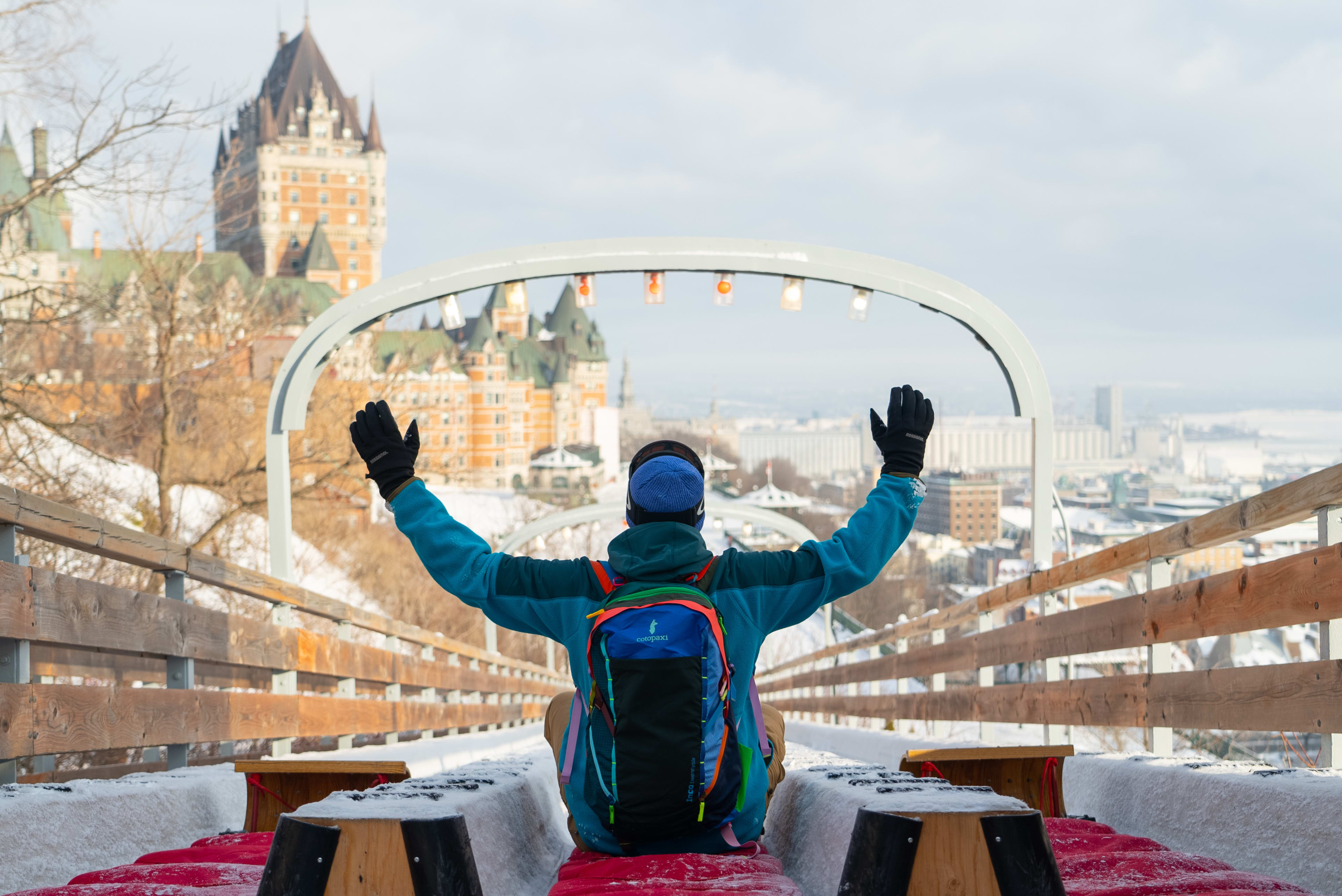
This wooden toboggan run sits directly on Dufferin Terrace, the broad boardwalk below the Château Frontenac, and has been thrilling riders since 1884. You climb a short set of stairs, sit on a wooden toboggan, and rocket down the icy track at speeds that hit around 60–70 km/h — genuinely fast for something that looks like a quaint historical novelty.
Rides cost only a few dollars each, making it one of the cheapest thrills in the city.
It typically operates from mid-December through mid-March, weather dependent. The line is manageable before 11 a.m. on weekdays but can stretch 30–45 minutes on weekend afternoons in January and February. Go early if you want multiple rides without the wait.
Ice Skating at Place D’Youville and Domaine Maizerets
Place D’Youville is the city’s marquee outdoor rink — a wide sheet of ice set against the stone walls of the old fortifications, right at the edge of Old Québec. It typically runs from December through March, weather permitting, and admission is generally free (skate rental available for a small fee if you don’t have your own).
Evening skating here, with the walls lit up, is the version that belongs on your camera roll.
Domaine Maizerets, about 10 minutes from Old Québec by car, offers a quieter alternative with trails winding through a wooded park. It suits families or anyone who wants skating without the downtown crowd.
Both locations are weather-dependent — confirm conditions before heading out.
Snowshoeing and Cross-Country Skiing on the Plains of Abraham
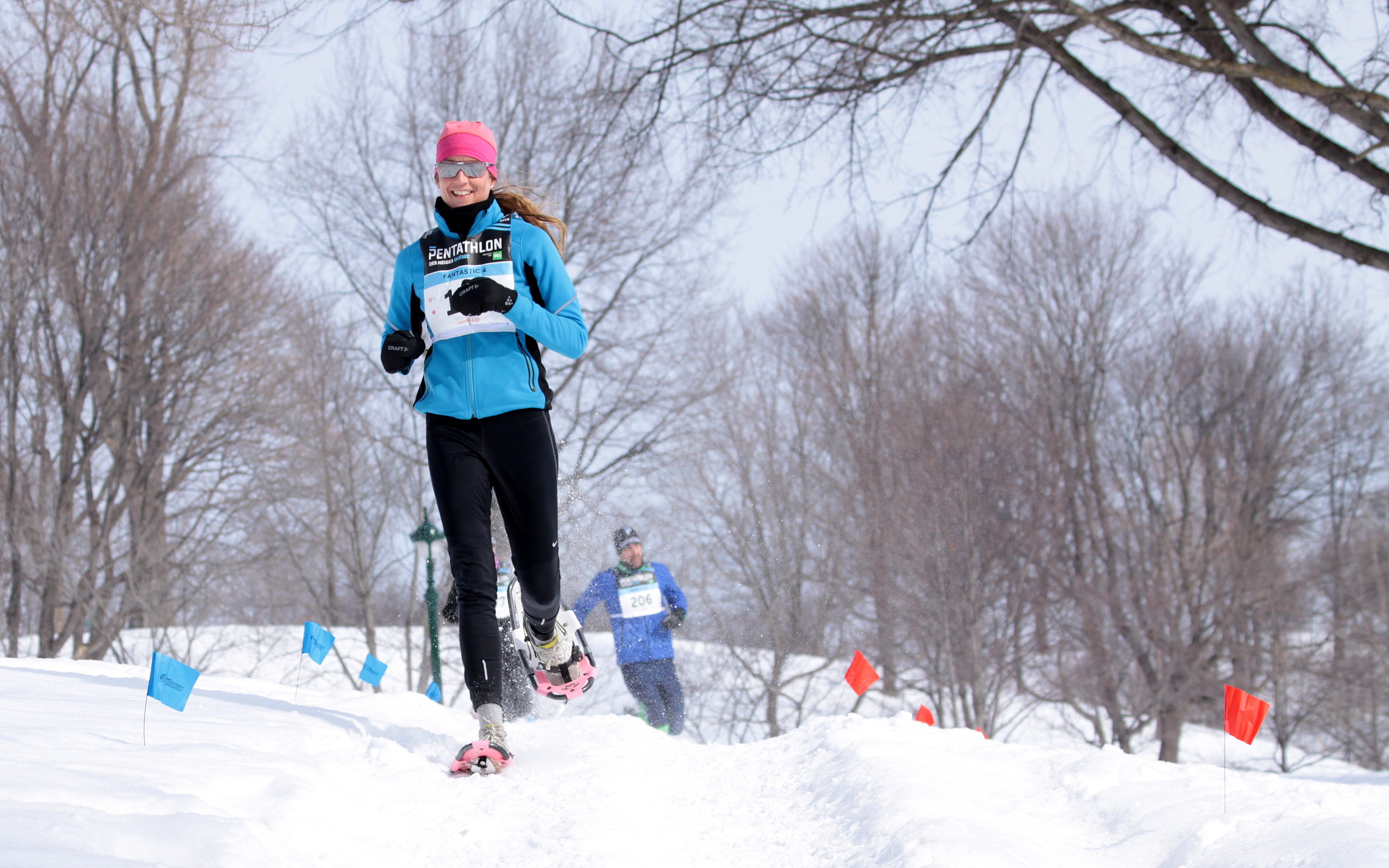
The Plains of Abraham — the sprawling battlefield park inside the city — doubles as a full winter sports zone once the snow settles. Groomed cross-country ski trails and snowshoe paths crisscross the grounds, and you can rent equipment on-site if you did not pack your own.
This is the best option for visitors staying in Old Québec who want an outdoor workout without arranging transportation to a park outside the city. The terrain is rolling but not steep, making it accessible for beginners while still offering enough distance for a solid outing.
Note: Jacques-Cartier National Park, covered in its own section, offers more rugged and remote snowshoeing for those willing to drive 30 minutes north.
Fat Biking Through Old Québec and Beyond
Fat bikes — bicycles with oversized tires designed to grip snow and ice — let you ride through winter conditions that would stop a regular bike cold. Outfitters like tuque & Bicycle rent fat bikes and can point you toward groomed trails and routes through the city.
Expect rental costs in the range of $30–$60 CAD for a half day, depending on the provider and season. The riding is more physically demanding than it looks; snow absorbs momentum, so flat routes still feel like a workout.
Start with a shorter loop before committing to a full-day ride.
Winter Hiking Trails Within the City
Québec City has groomed hiking trails that require no car and no gear beyond warm boots. The Promenade Samuel-De Champlain along the waterfront and the trails through the Plains of Abraham are the most accessible, both reachable on foot from Old Québec hotels.
Shorter loops take under an hour; longer routes can fill a full morning. Trails are typically maintained throughout winter, though conditions vary after heavy snowfall.
This is the low-effort, high-reward option for days when you want fresh air without committing to a guided tour or rental.
Top 7 Winter Day Trips from Québec City
Québec City sits within striking distance of an ice hotel, a frozen waterfall taller than Niagara, and some of eastern Canada’s best skiing — all reachable before lunch if you leave early enough. These seven day trips reward travelers staying four or more nights who want to break out of the old city walls and into the wider Québec winter landscape.
| Day Trip | Drive Time | Best For | Key Cost |
|---|---|---|---|
| Montmorency Falls | 15 min | Everyone — easy add-on | Park entry fee via Sépaq |
| Hôtel de Glace | 20 min | Bucket-list seekers | Tour entry or overnight stay |
| Village Vacances Valcartier | 20 min | Families & groups | Day pass required |
| Jacques-Cartier National Park | 30 min | Snowshoe enthusiasts | Park entry + snowshoe rental |
| Mont-Sainte-Anne | 40 min | Skiers & snowboarders | Lift tickets vary by date |
| Le Massif de Charlevoix | 60 min | Advanced skiers chasing views | Lift tickets vary by date |
| Baie-Saint-Paul | 75 min | Art lovers & foodies | Free to explore |
Frozen Montmorency Falls
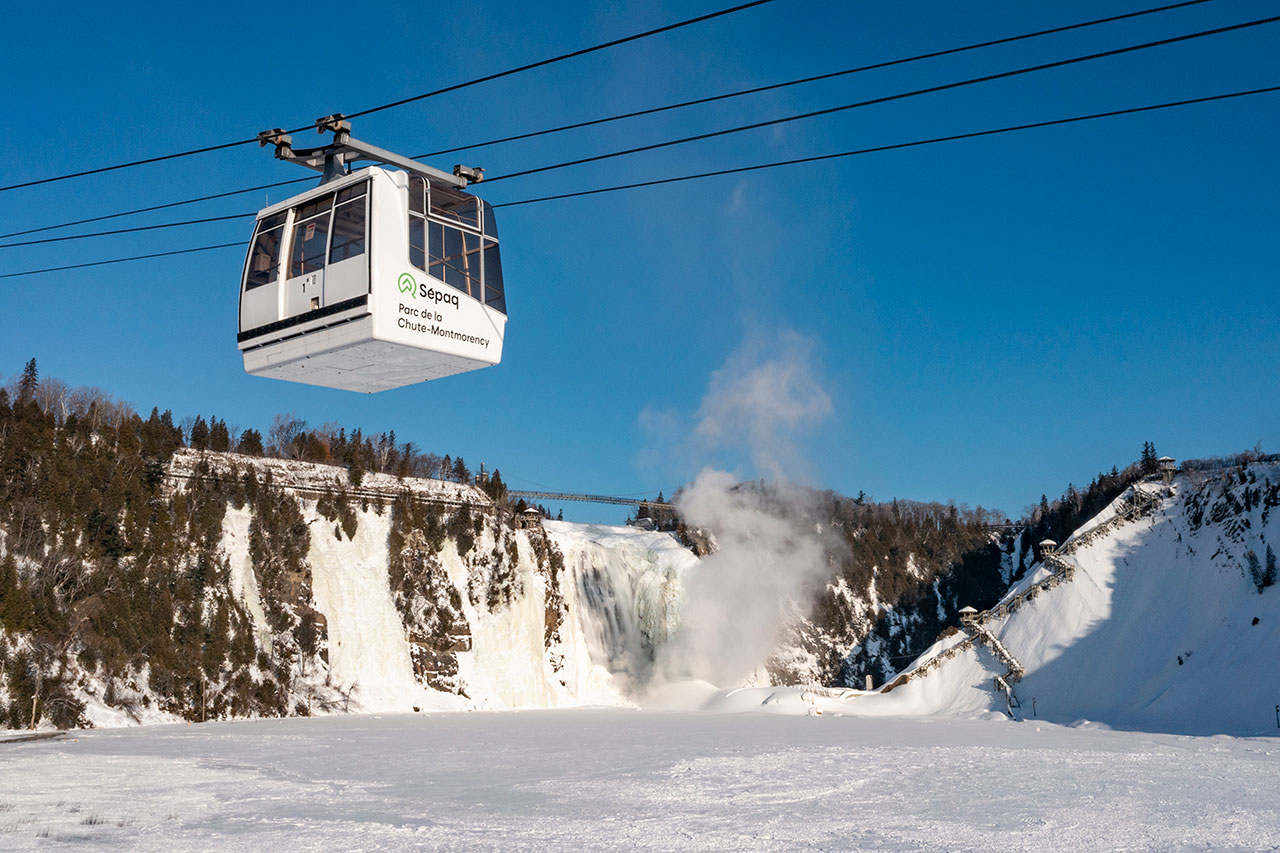
Montmorency Falls drops 83 meters — 30 meters taller than Niagara — and in January and February the cascade freezes into a massive ice cone at the base that looks like something from a fantasy film. This is the easiest day trip on the list: fifteen minutes from Old Québec, no gear required, and stunning year-round regardless of temperature.
Book your park entry through the Sépaq website in advance, especially on weekends when parking fills up by mid-morning. Arrive before 10 a.m. for the best light on the frozen formations and thinner crowds on the suspension bridge.
- Who it’s for: Literally everyone. Families, couples, solo travelers — this should be on every Québec City winter itinerary.
- Insider tip: The staircase on the right side of the falls gives the closest view of the ice cone. Most visitors stop at the top viewpoints and miss it entirely.
- Book ahead: Entry through the Sépaq website or a guided tour that includes admission.
Hôtel de Glace: North America’s Only Ice Hotel
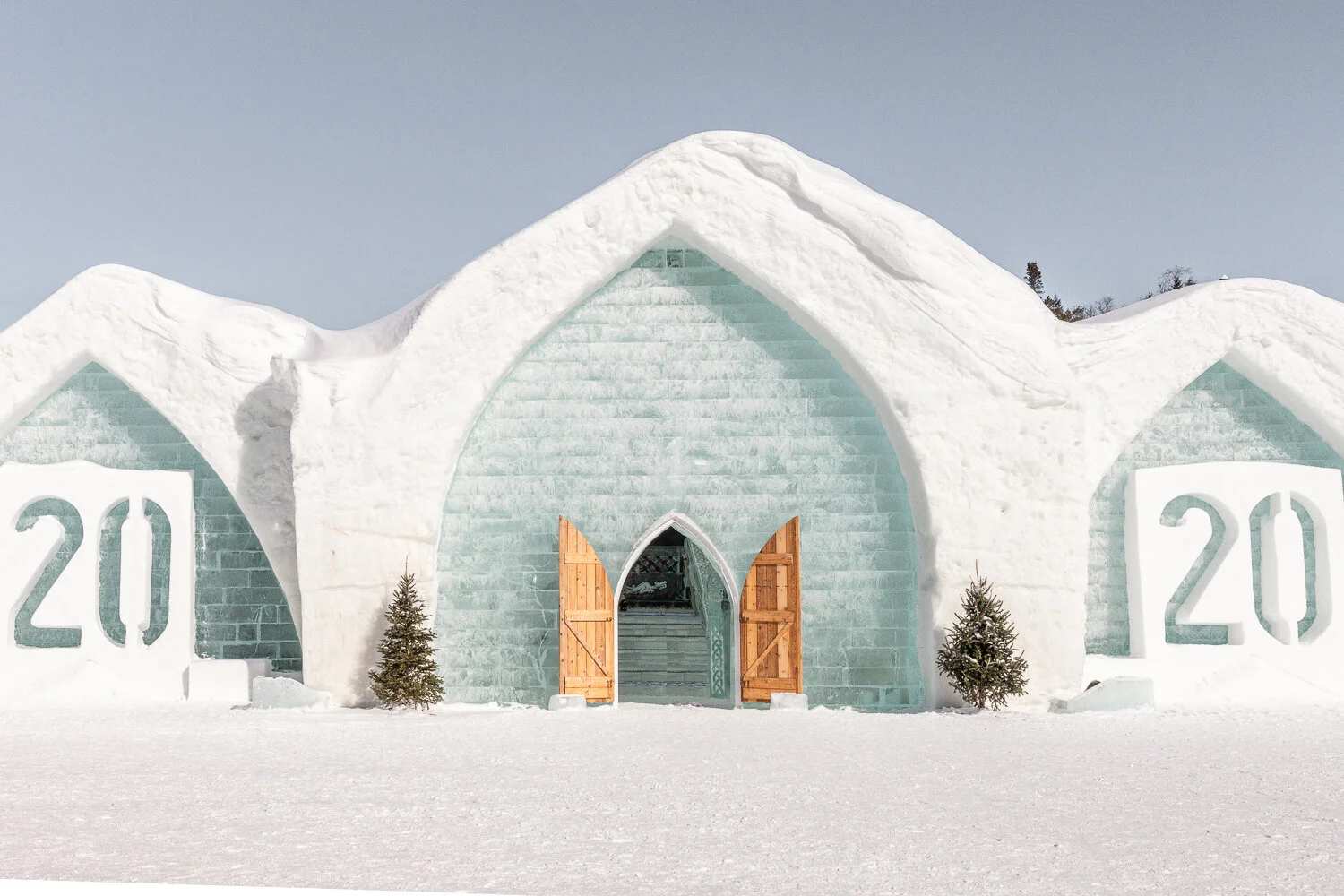
Twenty minutes from downtown, the Hôtel de Glace rebuilds itself from scratch every November using 30,000 tons of snow and 500 tons of ice. It typically opens in early January and runs through mid-March, though exact dates shift each year — confirm on the official site before planning.
You can visit during the day for a guided tour and a cocktail at the ice bar, or book a night in an ice suite if you want the bragging rights. Day visits are the move for most people: you get the full experience of the sculpted rooms, themed suites, and frozen chapel without sleeping on a block of ice.
- Who it’s for: Anyone who wants the single most “only in Québec” experience available within city limits.
- Day visit vs. overnight: Day tours run roughly one hour and cost far less than an overnight stay. The ice bar cocktail alone makes the daytime visit worthwhile.
- Insider tip: Visit on a weekday afternoon if you can. Weekend tour groups make the narrow ice corridors feel like a queue, not an experience.
Snowtubing at Village Vacances Valcartier
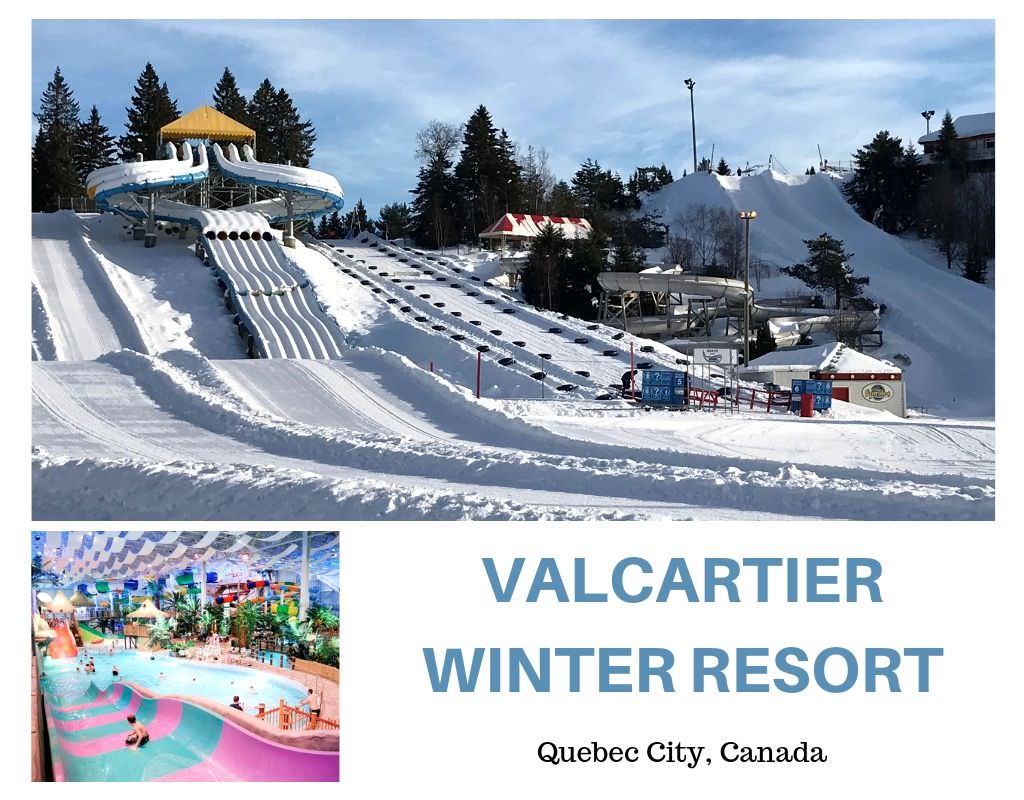
Village Vacances Valcartier runs the largest winter playground in North America, with over 35 snowtube slides of varying heights and speeds — plus an outdoor heated water park called Bora Parc that operates year-round. It sits about 20 minutes from Old Québec, in the same direction as the Hôtel de Glace, so combining both in a single day makes sense.
Families with kids under 12 will get the most value here; adults-only groups are better served by the ski resorts or Jacques-Cartier.
- Who it’s for: Families with children who need to burn energy, especially on a frigid day when outdoor sightseeing feels punishing.
- Combining trips: Pair Valcartier with Hôtel de Glace — they’re in the same corridor and you can do both comfortably between morning and mid-afternoon.
- Insider tip: The steepest tubes at the back of the park rarely have lines because most families cluster near the gentler runs at the front.
Snowshoeing in Jacques-Cartier National Park
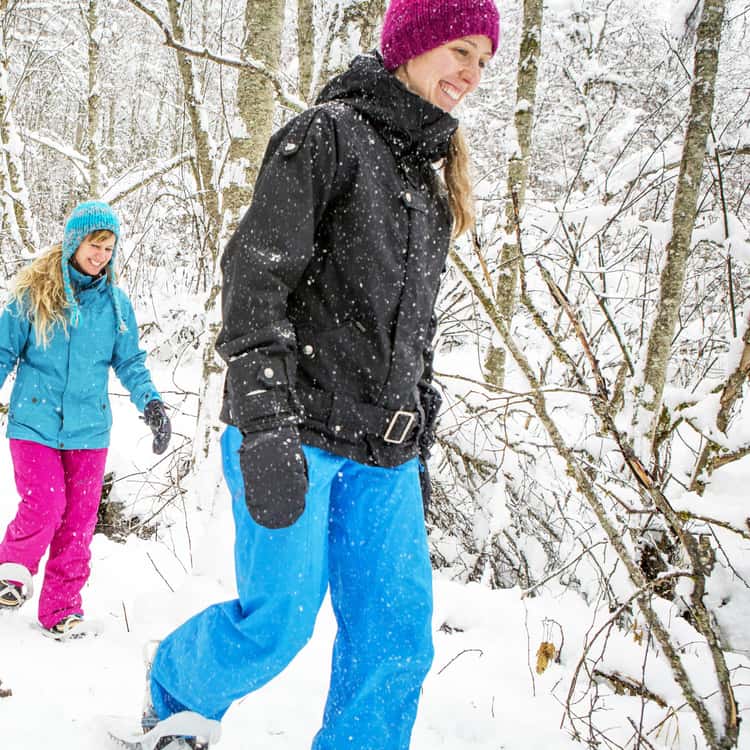
Jacques-Cartier National Park protects a glacial valley just 30 minutes from downtown that transforms into one of the most dramatic winter landscapes near any Canadian city. Twelve marked snowshoe trails wind through the valley and along ridgelines, with snowshoe rentals available on site.
If you’ve never snowshoed before, the guided tour through Viator is worth considering — not for the instruction, but because trail navigation in an all-white valley is genuinely disorienting, and a guide eliminates the guesswork entirely.
- Who it’s for: Anyone who wants real wilderness immersion without a long drive. This is the closest thing to backcountry within 30 minutes of a major city.
- Getting there: You need a car. No public transit reaches the park in winter.
- Insider tip: The Sentier de la Rivière trail gets the morning light on the valley walls and far fewer visitors than the main parking-lot loops. Ask at the welcome center for current trail conditions.
Skiing and Snowboarding at Le Massif de Charlevoix
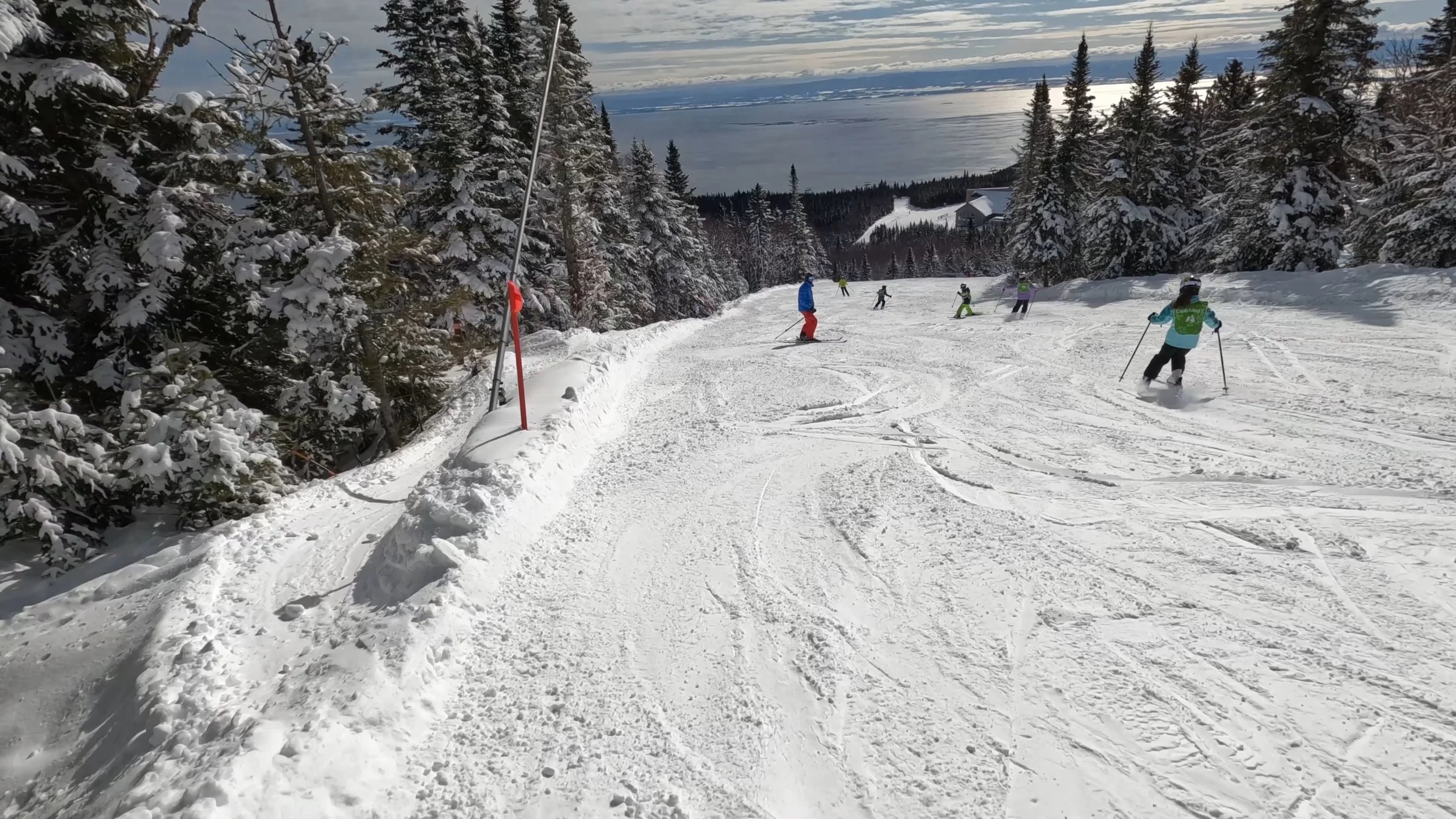
Le Massif de Charlevoix delivers what might be the most visually spectacular skiing in eastern Canada: 727 meters of vertical drop with runs that top out looking straight down the St. Lawrence River. The drive from Québec City takes about an hour along Route 138, and the river views from the summit are worth the trip even if you only ski a few runs.
Le Massif skews toward intermediate and advanced terrain — beginners have limited options here. Base yourself in nearby Baie-Saint-Paul (25 minutes from the summit) if you want to turn this into an overnight.
- Who it’s for: Intermediate-to-advanced skiers who prioritize scenery and vertical over resort amenities. This is not a beginner’s mountain.
- Lift tickets: Prices vary by date and demand — book online in advance for the best rate, especially on holiday weekends.
- Insider tip: The afternoon light on the river from the summit is breathtaking, but the mountain faces north, meaning shadow hits the lower runs early. Start your day from the top down for the best conditions.
Mont-Sainte-Anne Ski Resort
Mont-Sainte-Anne sits roughly 40 minutes from Québec City and offers a more traditional resort experience than Le Massif, with 71 trails, night skiing on select runs, and a gondola with a sightseeing pass for non-skiers who want the summit view without the effort. The terrain is more beginner-friendly than Le Massif, making it the better choice for mixed-ability groups.
Beyond skiing and snowboarding, the resort runs snowshoeing and dogsled excursions.
- Who it’s for: Mixed groups with varying skill levels, families, and anyone who wants night skiing as an option.
- vs. Le Massif: Choose Mont-Sainte-Anne for variety and beginner terrain. Choose Le Massif for raw vertical and river views.
- Insider tip: The gondola sightseeing pass is genuinely worth it for non-skiers — the summit panorama of the St. Lawrence is one of the best in the region, and you’ll get it without a strenuous hike.
Charming Baie-Saint-Paul
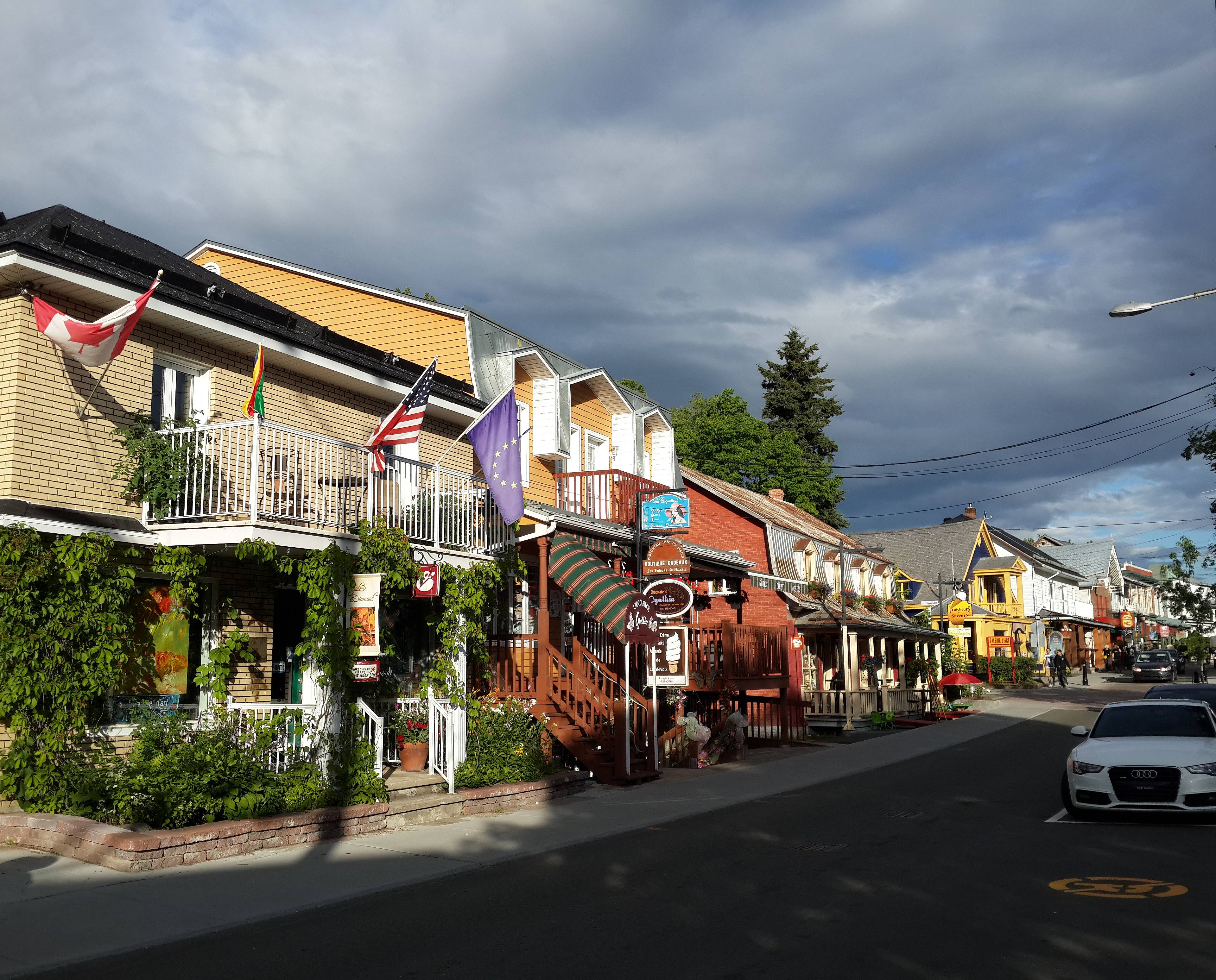
Baie-Saint-Paul is a small town of roughly 7,000 people that punches far above its weight as an arts destination, with galleries, studios, and a main street that looks like it was designed for a holiday postcard. The 75-minute drive from Old Québec follows the scenic Route 362 along the Charlevoix coast, which is one of the prettiest winter drives in the province.
Combine it with a day at Le Massif de Charlevoix — the ski hill sits 25 minutes above town — or make it a standalone half-day of gallery-hopping and café-sitting.
- Who it’s for: Non-skiers, art lovers, and anyone who wants a slower-paced day after a string of high-adrenaline activities.
- Staying overnight: Baie-Saint-Paul has enough boutique inns and restaurants to justify an overnight, especially if you’re pairing it with skiing at Le Massif. The town has a small but strong food scene rooted in local Charlevoix producers.
- Insider tip: Cirque du Soleil was founded here, and the town still has a performing arts culture that punches above its weight. Check for winter performances or pop-up events at local venues before your visit.
Where to Eat and Drink in Québec City in Winter
Québec City’s food scene hits harder in winter than any other season — sub-zero temperatures turn every steaming plate of poutine into an event and every sugar shack visit into a rite of passage. The city punches well above its weight for a place with under 600,000 people, blending French technique with North American appetite and a deep pride in local sourcing that shows up on nearly every menu.
Boreal Cuisine: Restaurants Serving Foraged Northern Flavors
Boreal cuisine — built on ingredients like Labrador tea, wild mushrooms, caribou moss, sea buckthorn, and spruce tips — is Quebec’s most distinctive culinary export, and winter is when these flavors feel most at home on the plate. Restaurant Laurie Raphaël on Rue Dalhousie in the Old Port is the heavyweight here: expect a multi-course tasting menu that layers boreal ingredients into genuinely inventive dishes.
It is not cheap — plan for roughly $120–200 CAD per person with wine pairings — but it earns every cent. Reserve well ahead, especially on weekends.
For a less formal entry point, look for prix fixe menus at mid-range bistros in Petit Champlain and Old Québec that spotlight boreal ingredients in shorter dishes — think spruce-infused cocktails, Labrador tea desserts, or wild mushroom starters. Menus rotate seasonally, so you will find the widest boreal variety from December through March when preservation and foraging traditions are strongest.
Classic Québécois Comfort Foods You Need to Try
These are the dishes locals actually eat in winter — not tourist inventions, but cold-weather fuel perfected over generations:
- Poutine: Hand-cut fries, fresh cheese curds (they must squeak), and hot gravy. Skip anything listed as “loaded” or “gourmet” on first try — the classic version is the benchmark. La Buche in Old Québec does a solid traditional one in a log-cabin setting.
- Tourtière: A spiced meat pie, usually pork or a pork-beef-veal blend, baked in a flaky crust. Densely packed and warming. Best at casual spots like Buffet de l’Antiquaire, a no-frills diner where a slice costs around $10–15 CAD.
- Pouding chômeur: “Poor man’s pudding” — vanilla cake batter drowned in hot maple syrup that sinks to form a caramel pool. Served warm. Order it wherever you see it.
- Soupe aux pois: Yellow split pea soup, often with salt pork. The Québécois answer to every cold day. Restaurants throughout Old Québec serve it as a starter from roughly $8–12 CAD.
- Fèves au lard: Maple-baked beans, slow-cooked until they become almost jammy. A breakfast and lunch staple.
La Buche and Buffet de l’Antiquaire are reliable picks for the full comfort spread without pretension. For the best of both worlds — Québécois tradition with French finesse — Laurie Raphaël and its sibling spots reinterpret these classics at a higher level.
Maple Taffy on Snow and Where to Find It
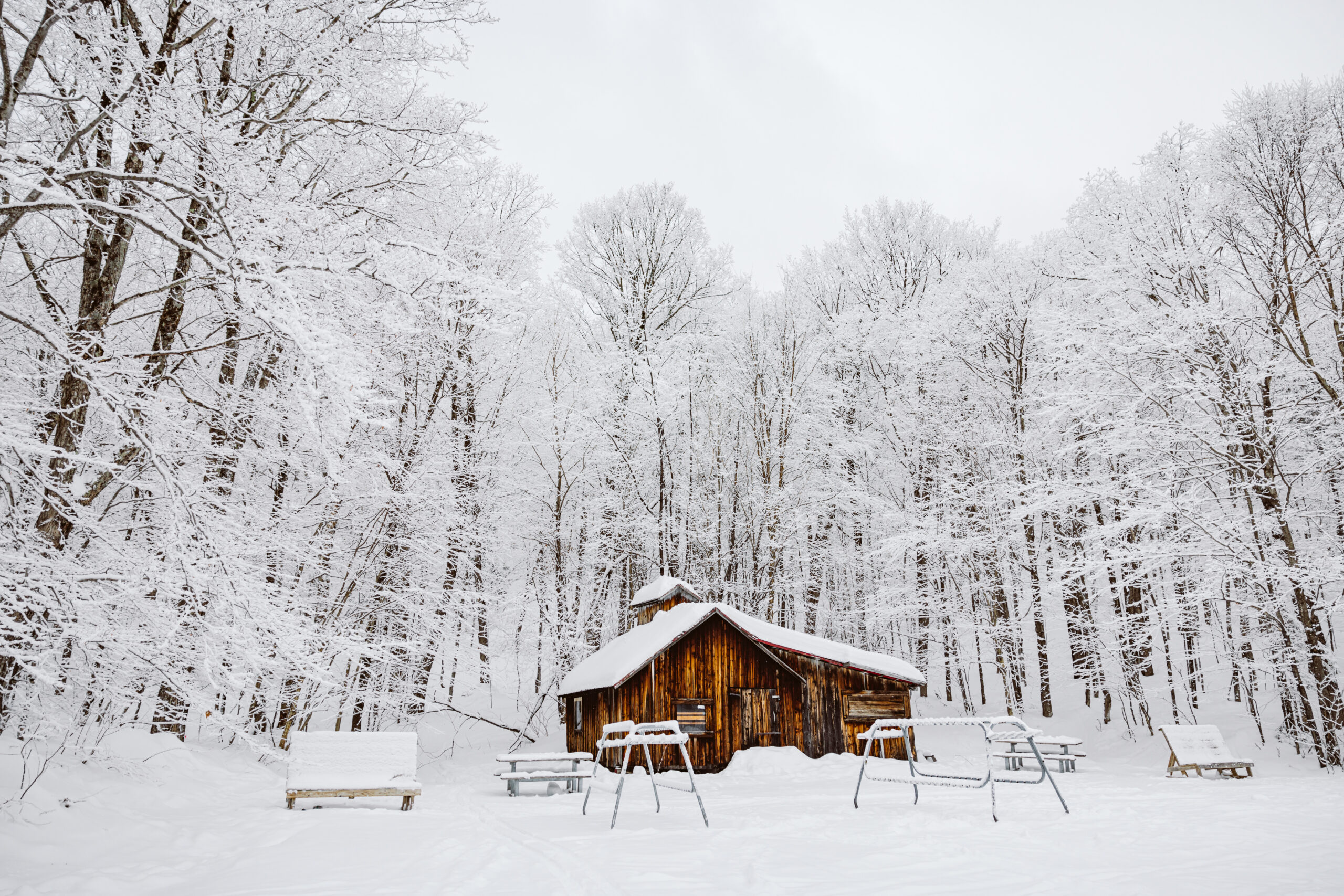
Tire d’érable sur la neige — hot maple syrup poured in ribbons onto packed snow, then rolled onto a popsicle stick as it hardens — is the one winter food experience in Quebec you absolutely cannot skip. The texture lands somewhere between taffy and caramel, and eating it outdoors in freezing air is half the point.
The easiest place to find it is at the German Christmas Market in December (held in Old Québec around Place de l’Hôtel-de-Ville) and during Carnaval de Québec in February, where dedicated kiosks sell it for a few dollars per stick. During these festivals, expect lines — go early in the day or on weekday evenings.
Outside of festival periods, sugar shacks (cabanes à sucre) in the countryside surrounding Québec City often offer taffy on snow alongside their full maple menus, typically from late February through April when sap runs.
Best Food Markets in the City
Marché du Vieux-Port (Old Port Market) is the main food market, located along the waterfront at the base of Old Québec near Rue Saint-Paul. In winter, it operates year-round and stocks local cheese, maple products, charcuterie, ciders, and baked goods.
It is small — you can cover it in 30 minutes — but it is the best place to buy edible souvenirs from producers you can actually trace. Open Tuesday through Sunday; hours are typically 9 a.m. to 5 p.m., though winter schedules may be shorter — check the market’s current hours before going.
For a more local feel, Marché public de Sainte-Foy (in the Sainte-Foy neighborhood, about 15 minutes from Old Québec by car) is where residents shop for produce, meats, and prepared foods. It is less photogenic but more authentic and often cheaper.
Ciel! Bistro-bar: Dining with a 360° Rotating City View
Ciel! Bistro-bar sits atop the Loews Hôtel Le Concorde on Grande Allée and is the only revolving restaurant in Québec City — the floor completes a full rotation roughly every 90 minutes, giving you a panoramic sweep over the St. Lawrence River, the Château Frontenac, and the surrounding snow-covered rooftops without leaving your seat.
The food is solid but not the reason to book — you are here for the view and the cocktails. Dinner mains typically range from $30–55 CAD, which is premium pricing for what is essentially bistro fare.
My honest take: go for an afternoon cocktail or early-evening drinks rather than a full dinner, especially if you are already planning to eat at Laurie Raphaël or another serious kitchen. The bar menu is more relaxed, cheaper, and lets you focus on the panorama.
Reservations are recommended on weekends, and request a window-side table when booking — not every seat rotates equally close to the glass.
Insider detail the website will not tell you: the rotation speed and seat placement vary. Tables near the outer edge move faster and feel more dramatic; seats closer to the center bar rotate more slowly.
If you want the full spinning effect without motion sensitivity, ask for a mid-radius table — staff know exactly what you mean.
| Spot | Best For | Price Range (per person) | Reserve Ahead? |
|---|---|---|---|
| Restaurant Laurie Raphaël | Special-occasion boreal tasting menu | $120–200 CAD | Yes — essential |
| La Buche | Québécois comfort food in a cabin setting | $20–35 CAD | Recommended on weekends |
| Buffet de l’Antiquaire | Classic diner tourtière and poutine | $10–20 CAD | No — walk in |
| Ciel! Bistro-bar | Rotating views and cocktails | $15–55 CAD | Yes — request window table |
| Marché du Vieux-Port | Local food souvenirs and snacking | $5–15 CAD | No — open market |
Base yourself in Upper Town or Lower Town Old Québec if food is a priority — nearly every worthwhile restaurant and market sits within a 15-minute walk of either neighborhood, and you will not want to venture far in February temperatures after a long dinner.
Best Indoor Activities for Cold Winter Days
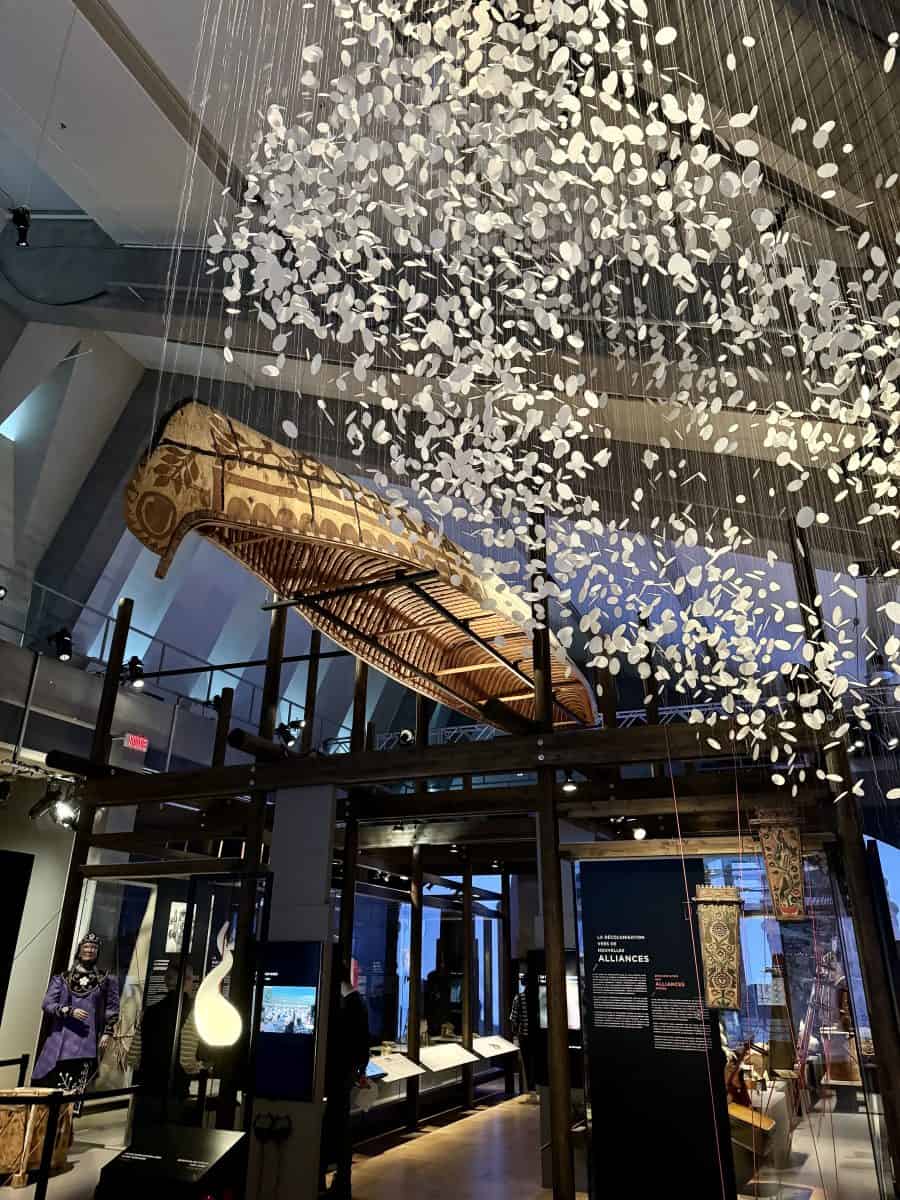
When the wind chill plunges past -20°C and even seasoned locals duck behind heavy wooden doors, Quebec City’s indoor offerings shift from nice-to-have to essential. These three options give you genuine cultural depth — not just a place to warm your hands.
Top Museums to Escape the Cold
Quebec City’s museums punch well above what you’d expect from a city this size, and in winter they’re blissfully uncrowded on weekday mornings. Here’s where to spend a few hours thawing out while actually learning something:
- Musée de la Civilisation: The standout pick in Lower Town. Rotating exhibitions cover everything from Indigenous history to global civilizations, and the permanent Québec exhibition does the best job I’ve seen of explaining how French, British, and Indigenous cultures collided here. Expect roughly $18 CAD for adult admission. The building itself — a striking modern structure tucked behind Place Royale — is worth stepping into on design alone.
- Musée national des beaux-arts du Québec (MNBAQ): Spread across multiple buildings on the Plains of Abraham, this is Quebec’s premier fine art museum. The Pavillon Pierre-Lassonde wing showcases contemporary Quebec artists you won’t find anywhere else in North America. Plan 2–3 hours minimum. It connects to the Plains via heated underground passages — a detail that matters when it’s -15°C outside.
- Musée de l’Amérique francophone: Smaller and more niche, but the best choice if you want to understand why French persists in North America. The ornate 17th-century Séminaire building housing it is half the attraction.
Insider move: Visit museums between 10am and noon on weekdays. Tour groups typically arrive after lunch, and you’ll have galleries nearly to yourself.
Tour the Historic Citadelle de Québec
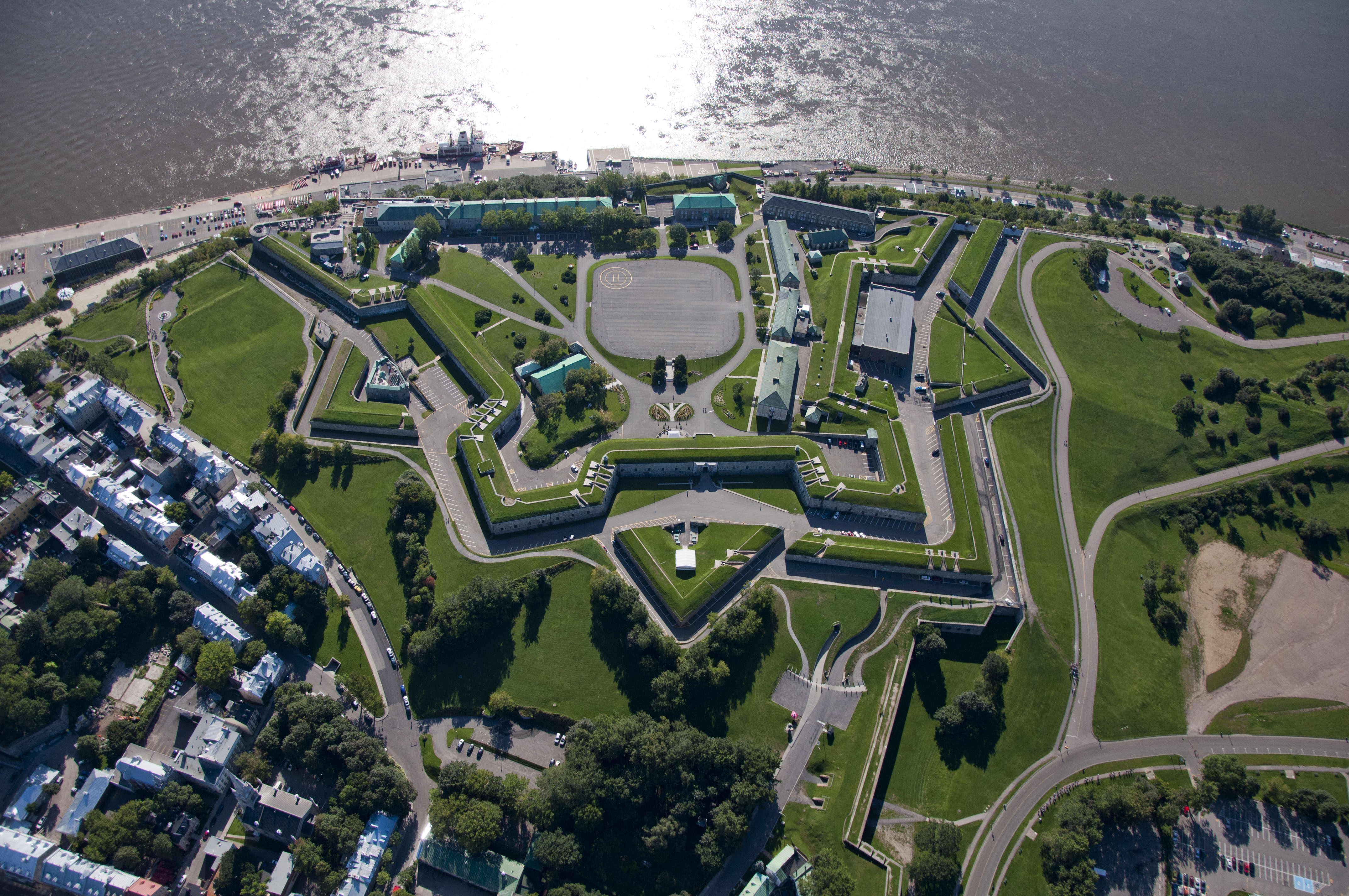
The Citadelle is the largest British-built fortress in North America and still an active military installation — home to the Royal 22e Régiment, Canada’s only French-language infantry regiment. Winter guided tours run daily, though schedules tighten compared to summer; confirm current hours and book ahead through the official Citadelle website or Parks Canada.
Tours typically last about an hour and cover the star-shaped fortifications, the regimental museum, and the changing of the guard history. Adult admission is usually in the $14–18 CAD range, depending on season and tour type.
The fortress sits at the eastern tip of Upper Town, a 10-minute walk uphill from Château Frontenac — dress for the short outdoor walk between heated interior spaces.
The real reason to visit in winter: far fewer visitors than summer, meaning guides have time for actual questions and you’re not craning your neck around crowds in the powder magazine or officers’ quarters.
Relax and Rejuvenate at Strøm Nordic Spa
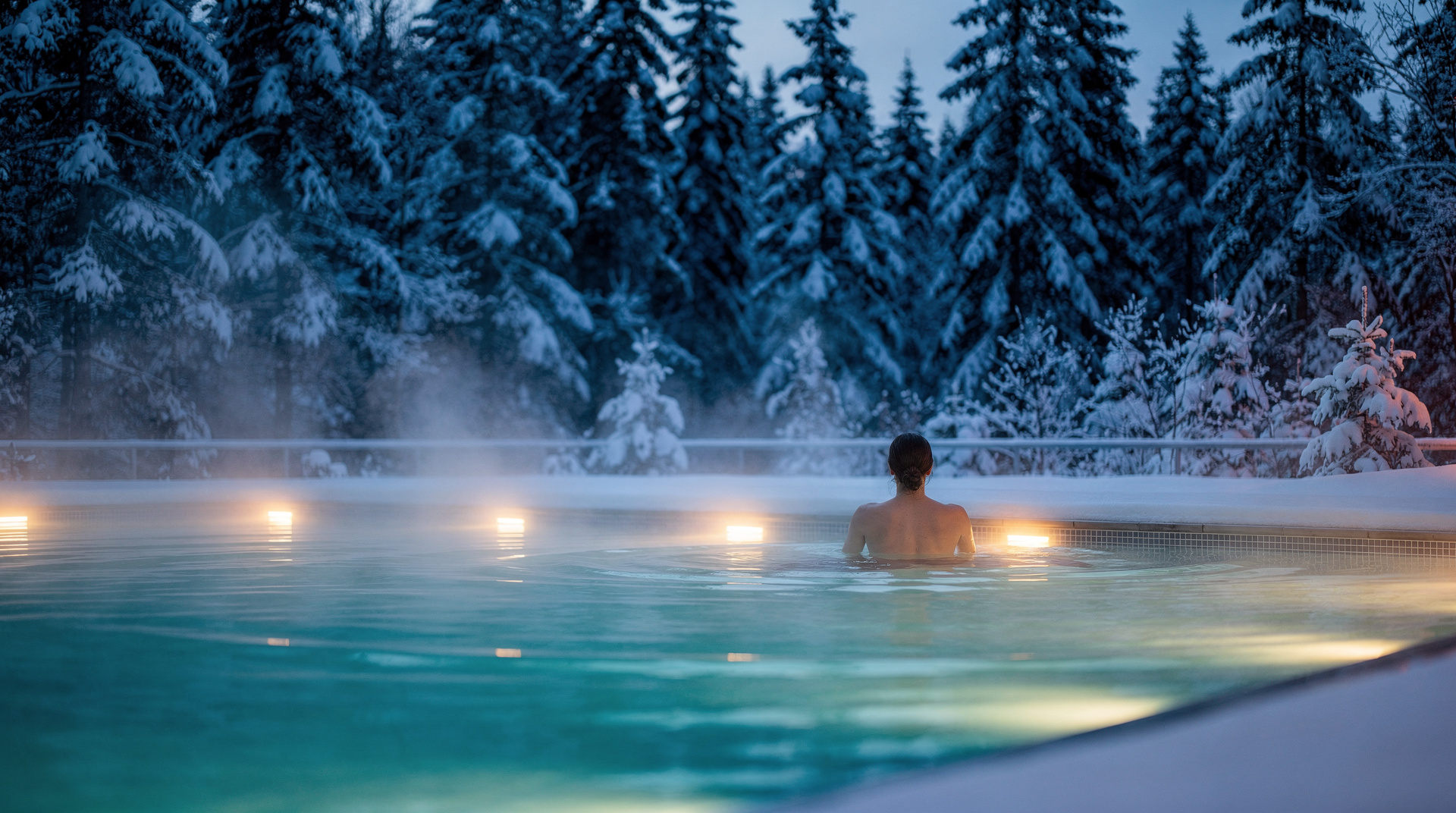
Strøm Nordic Spa is the single best indoor-outdoor reset after days of trudging through snow. The concept is pure Nordic tradition: cycle between hot pools, saunas, and cold plunge basins, then repeat.
The Quebec location sits along the river, and the outdoor thermal pools — steaming against a backdrop of snow-covered banks — are the main draw, even in January.
- Best for: Couples, solo travelers who need a recharge, anyone whose legs are done after three days of cobblestones.
- Budget: Day access runs roughly $55–75 CAD per person depending on the package. Towels and robes are available for rent if you didn’t pack one.
- Timing: Weekday mornings are quietest. Friday and Saturday evenings draw the date-night crowd — still lovely, but expect more people in every pool.
- The cold cycle is non-negotiable: Skipping the cold plunge defeats the purpose. It’s brutal for ten seconds and euphoric for ten minutes after. Do it at least twice.
Insider tip most visitors miss: Bring flip-flops with good grip. The stone paths between outdoor pools ice over, and the spa’s rental pairs are mediocre.
Your own pair keeps the experience comfortable instead of treacherous. Book 1–2 weeks ahead for weekend visits — popular time slots sell out, especially during Carnaval season in February.
Base yourself in Old Québec’s Upper Town for the easiest access to all three activities — the museums and Citadelle are walkable, and Strøm is a short taxi or rideshare away. Hotels like Hôtel des Coutellier or Hôtel Clarendon keep you central without requiring a car for any of these options.
Best Hotels in Québec City for a Winter Getaway
The perfect winter hotel isn’t just a bed—it’s a strategic warm base between snow-dusted adventures. Choosing the right location means less time freezing on sidewalks and more time exploring.
Why Stay in Old Québec
Base yourself in Upper or Lower Town. This isn’t a suggestion; it’s the only choice that makes sense for a short winter trip.
You’ll be steps from the German Christmas Market, the Dufferin Terrace toboggan slide, and every cobblestone lane in Petit Champlain. After a day in the cold, you can be back in your room in minutes, not after a 20-minute taxi ride from a suburban hotel.
The convenience is worth every extra dollar.
Hôtel des Coutellier: Boutique Comfort in the Heart of the City
This is my top recommendation for couples or solo travelers who want value without sacrificing location or charm. It’s a 4-star property that delivers exactly what it promises: a central, walkable base with genuinely comfortable rooms and a free, quality breakfast that’s worth waking up for.
- Location: Sits on the edge of Old Québec, putting you steps from both the Old Port and Upper Town’s core attractions. You avoid the deepest crowds but stay incredibly connected.
- The Win: The combination of included breakfast and high-speed Wi-Fi makes it a standout for planning your day before heading out.
- Insider Tip: Request a room facing the river if available. The winter view over the frozen St. Lawrence, especially at dawn, is a quiet, powerful start to the day.
Fairmont Le Château Frontenac: A Bucket-List Stay
Staying here is an activity in itself. You’re not just booking a room; you’re claiming a piece of Canadian history right on the Dufferin Terrace. This is for travelers prioritizing the iconic experience over pure value.
- The Trade-Off: The price is steep, and the common areas can be crowded with tourists. You pay for the privilege of the location and the name.
- Why Do It Anyway: Waking up inside the world’s most photographed hotel, with the Citadelle and the Lower Town unfolding below your window, is a winter fantasy come true. It’s the ultimate move for a special occasion.
- Pro Move: Even if you don’t stay here, step inside for a drink at one of the bars to absorb the atmosphere without the full cost.
Budget-Friendly Accommodation Options
True budget hotels are scarce within the historic walls. Your best strategy is to look at apartment rentals or small inns just outside the core—in neighborhoods like Saint-Jean-Baptiste or Montcalm—along the main bus routes into Old Québec.
A 15-minute ride is a fair trade for significant savings. Hostels also offer private rooms at lower rates, providing a social atmosphere and kitchen access, which further cuts food costs.
For a quick decision, compare your priorities:
| Hotel | Best For | The Winter Perk |
|---|---|---|
| Hôtel des Coutellier | Value & Convenience | Free breakfast saves morning time & money |
| Fairmont Château Frontenac | The Iconic Experience | Walk straight onto the snowy Terrace from the lobby |
| Budget Apartment/Inn | Extended Stays & Savings | Kitchen for warming up with homemade hot chocolate |
Frequently Asked Questions
Is Québec City worth visiting in winter?
Absolutely, and it’s arguably the city’s most magical season. The UNESCO-listed Old Town transforms into something out of a European fairytale — snow-dusted stone buildings, glowing holiday markets, and the Château Frontenac lit against early darkness.
The tradeoff is genuine cold (expect roughly -10°F to 20°F / -23°C to -6°C depending on month), but the city is built for it: heated sidewalk sections in Old Québec, cozy cafés every few blocks, and winter-only experiences like the Hôtel de Glace and ice canoeing that simply don’t exist any other time of year.
When is the best month for a winter visit to Québec City?
December wins for holiday atmosphere — the German Christmas Market and Québec s’illumine lights typically run through late December. January and February are the coldest months but deliver the thickest snow cover for outdoor adventures like snowshoeing on the Plains of Abraham and fat biking.
For a sweet spot between festive energy and prime snow conditions, aim for late January through mid-February when Carnival de Québec usually takes over the city.
Is 2 days in Québec City enough?
Two full days covers the essentials — Old Québec’s Upper and Lower Towns, the Dufferin Terrace toboggan, Petit Champlain, and one winter activity like ice skating at Place D’Youville. But three to four days is what I’d recommend if you want to include a day trip to Montmorency Falls or the Hôtel de Glace without feeling rushed.
Québec City rewards slow exploration, and winter daylight fades by around 4 PM, so extra time built in makes a real difference.
Do I need a car to get around Québec City?
Not for the city itself. Old Québec is compact and fully walkable — though cobblestones get icy, so proper winter boots with traction are non-negotiable (covered in the packing section).
A car becomes worth renting if you’re planning day trips to Montmorency Falls, the Hôtel de Glace in Valcartier, or snowtubing at Village Vacances Valcartier. If you do rent one, request 4WD or AWD and expect roughly $50–80 CAD per day in winter, though rates vary by provider and how far ahead you book.
Start Planning Your Québec City Winter Getaway
Book your Old Québec hotel in Upper or Lower Town first — Hôtel des Coutellier for smart mid-range value or the Fairmont Château Frontenac for the once-in-a-lifetime splurge — then lock in ice canoeing and any day trips to Montmorency Falls or the Hôtel de Glace, since those fill up weeks ahead in January and February.
Québec City in winter is the rare destination where the cold actually makes everything better: the food tastes warmer, the lights glow brighter, and the snow turns a 400-year-old fortified city into something you genuinely have to see to believe.
Pin this guide now so every recommendation, timing trick, and insider tip is ready the moment you sit down to plan your trip.
Leave a Reply