
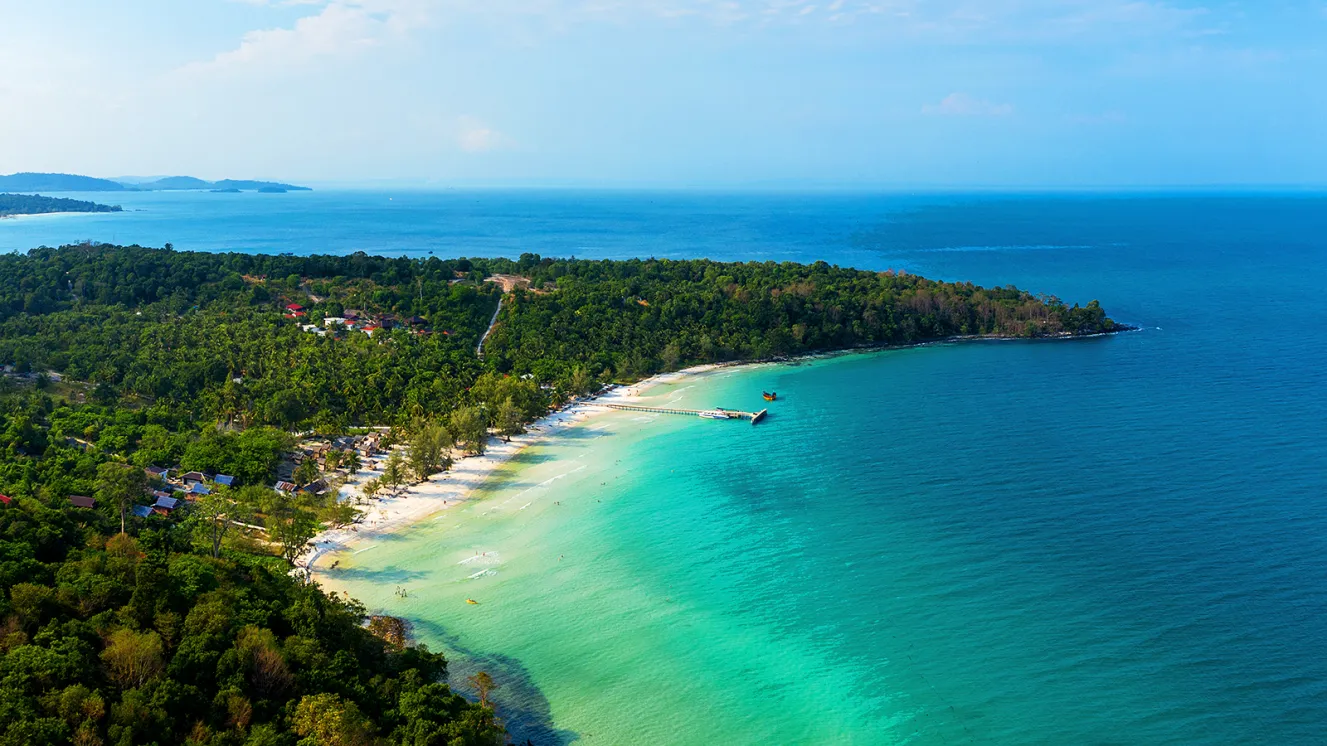
You’re sinking into a poolside lounger in Wailea while humpback spouts rise from the channel below, the salt air warm enough for bare shoulders in November. Down in South Beach, Art Deco pastels glow against an 82°F afternoon and the sand stretches half-empty between weeks of shoulder-season calm.
No passport required, no brutal time-zone shift — and the variety of warm-water coastlines packed into one country is honestly absurd. From whale-watching mornings off Maui to shell-strewn dawn walks on Sanibel, November delivers the kind of beach trip that peak summer crowds usually ruin.
This guide narrows 30-plus resort destinations down to the ones actually worth booking, depending on whether you want luxury, solitude, family space, or adventure.
Budget travelers can land Gulf Coast condos for $100–$180/night, mid-range seekers should target $300–$500 in South Florida or Santa Barbara, and splurge-tier Hawaii and Palm Beach properties range from $700–$1,500+ — all 20–40% below their December-to-March peaks.
Quick Picks: Where to Book Based on What You Want
Thirty destinations is a lot to scroll through — start with the pick that matches your trip and dig deeper from there.
- Warmest water without a passport: Florida Keys — 80°F ocean temps, snorkeling and diving running at full capacity, hurricane season ending
- Whale watching plus luxury resort: Maui (Wailea or Ka’anapali) — humpback season begins mid-month, front-row spouts from your pool chair
- Best value beach resort: Destin or Gulf Shores — sugar-white sand at 40–50% less than comparable Florida or Hawaii properties
- Couples who want quiet and character: Anna Maria Island — no buildings over three stories, beach cottages, free island trolley
- Families with kids who need space: Destin and Emerald Coast — wide beaches, charter fishing, resort pools for cooler days
- Beach plus culture and food scene: St. Petersburg and Tampa — Gulf beaches, Dalí Museum, Ybor City, craft breweries
Best Hawaii Beach Resorts for November
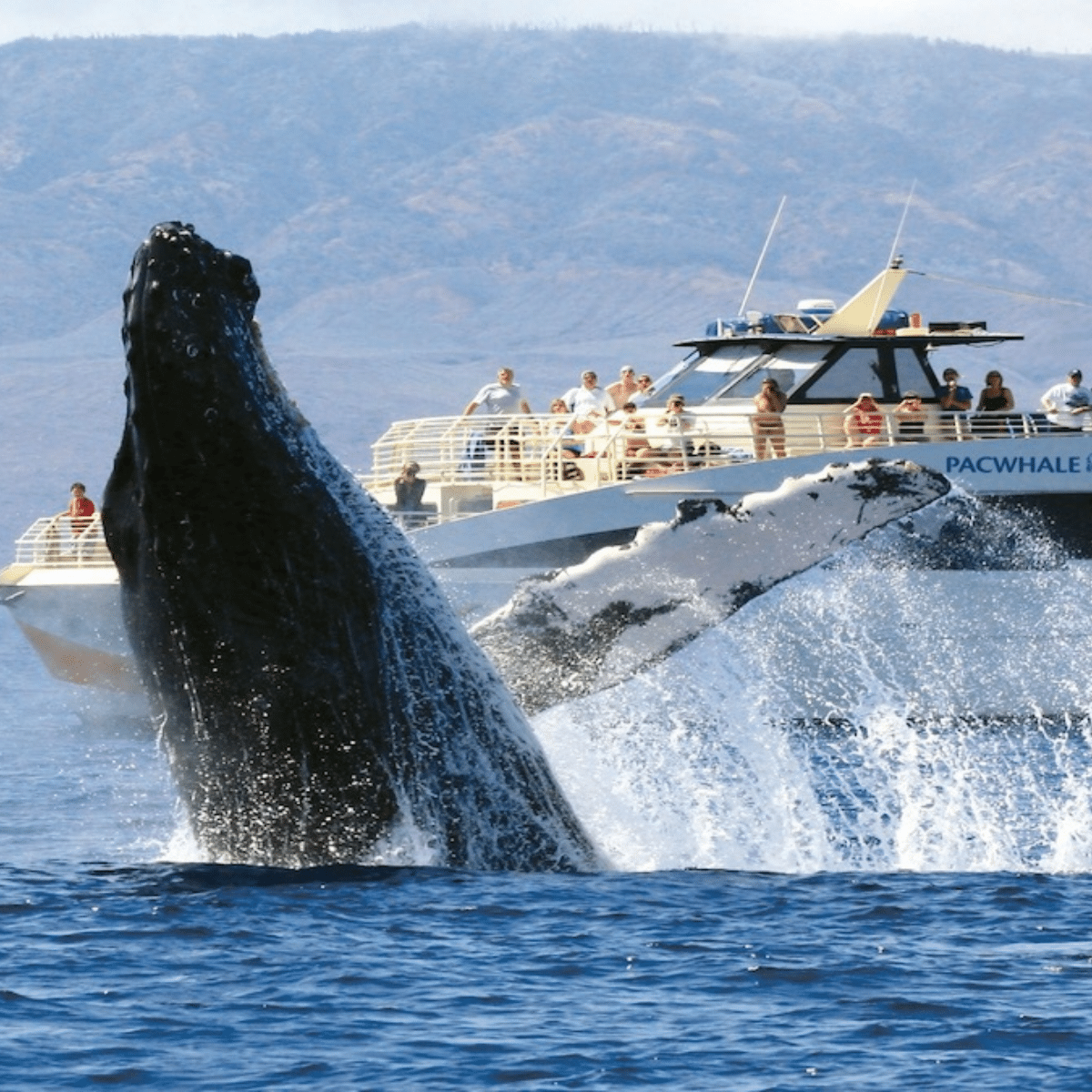
November triggers something no other US beach destination can match: humpback whales begin arriving in the channels between Maui, Lanai, and Molokai, and 30-foot swells start hitting Oahu’s North Shore. Your island pick determines whether your resort mornings involve watching spouts from a lanai or watching pros paddle into walls of water.
| Island | November Edge | Best For | Resort Vibe |
|---|---|---|---|
| Maui | Whale season starts mid-month | Couples, families, first-timers | Polished luxury with range |
| Oahu | North Shore big-wave season opens | Surfers, city lovers, variety seekers | Urban resort energy to quiet luxury |
| Big Island | Volcanic landscapes, calm Kona coast | Adventure-seekers, divers, coffee lovers | Sprawling, nature-forward |
| Kauai | Fewest crowds of the year | Hikers, honeymooners, solitude chasers | Boutique and low-rise |
Maui
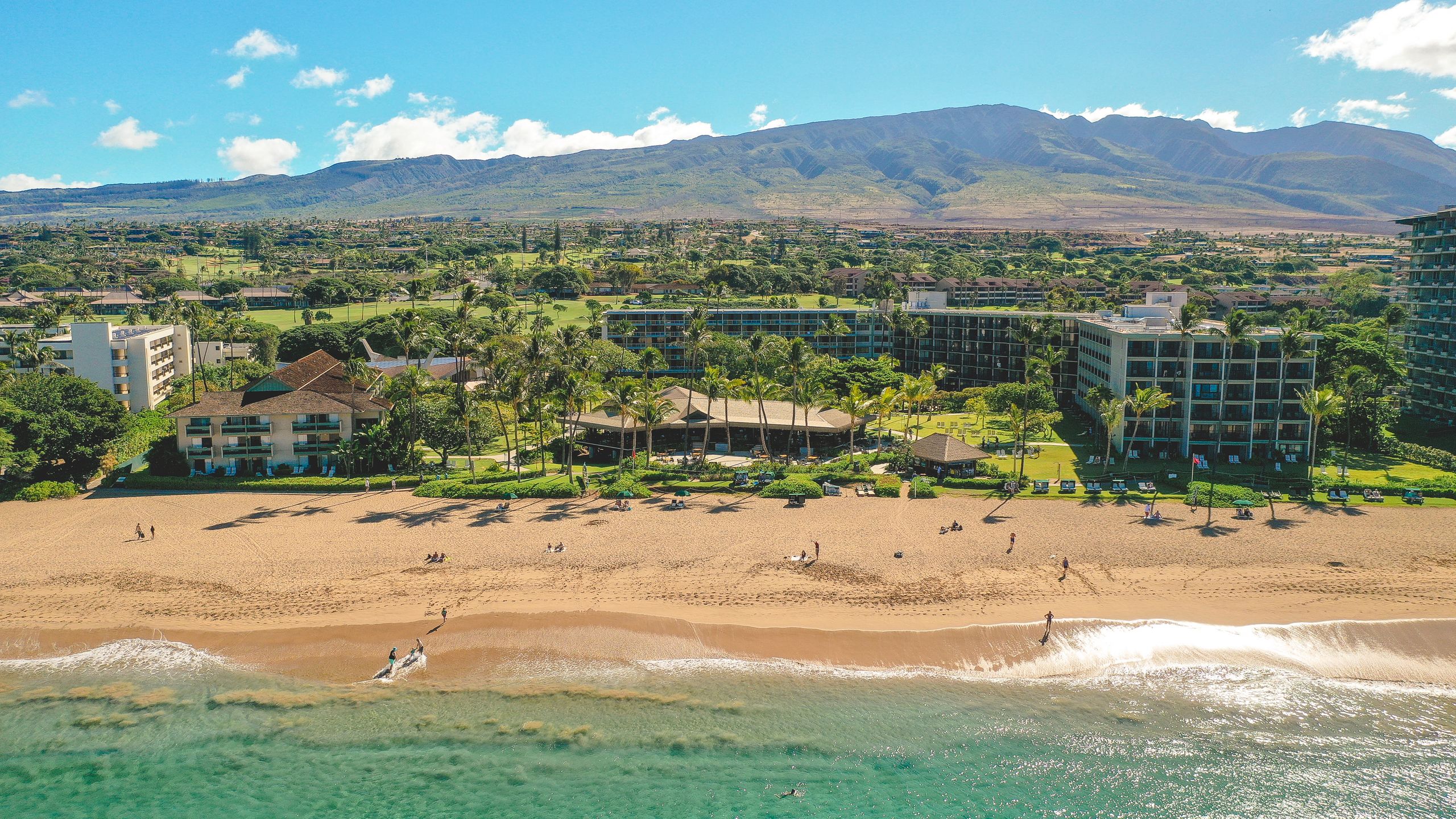
Maui is the default answer for a November Hawaii resort trip, and the reason is specific: humpback whale season typically begins mid-month and runs through March. Book a resort in Wailea or Ka’anapali — both face the Au’au Channel, the exact corridor where whales migrate — and you’ll have front-row spouts from your pool chair.
Where to base yourself:
- Wailea (south shore): The most polished resort corridor on the island. Upscale properties, quieter beaches, excellent snorkeling right at Wailea Beach. Best for couples and anyone who wants their resort to feel like a self-contained destination.
- Ka’anapali (west shore): More walkable, more energy, and a wider range of price points. The beach boardwalk connects multiple properties, and Black Rock’s snorkeling is steps away. Best for families and first-time Maui visitors.
- Kihei (south shore): More condo-style rentals than full-service resorts, but the price gap is significant — often 40–50% less than Wailea. Ideal if you want a kitchen and don’t need a concierge.
November water temperatures hover around 79°F — comfortable for snorkeling without a wetsuit. Molokini Crater boat tours run year-round; morning departures get calmer water.
For Haleakala sunrise, reservations are required and fill quickly — book at recreation.gov the moment your dates are confirmed.
Oahu and Waikiki
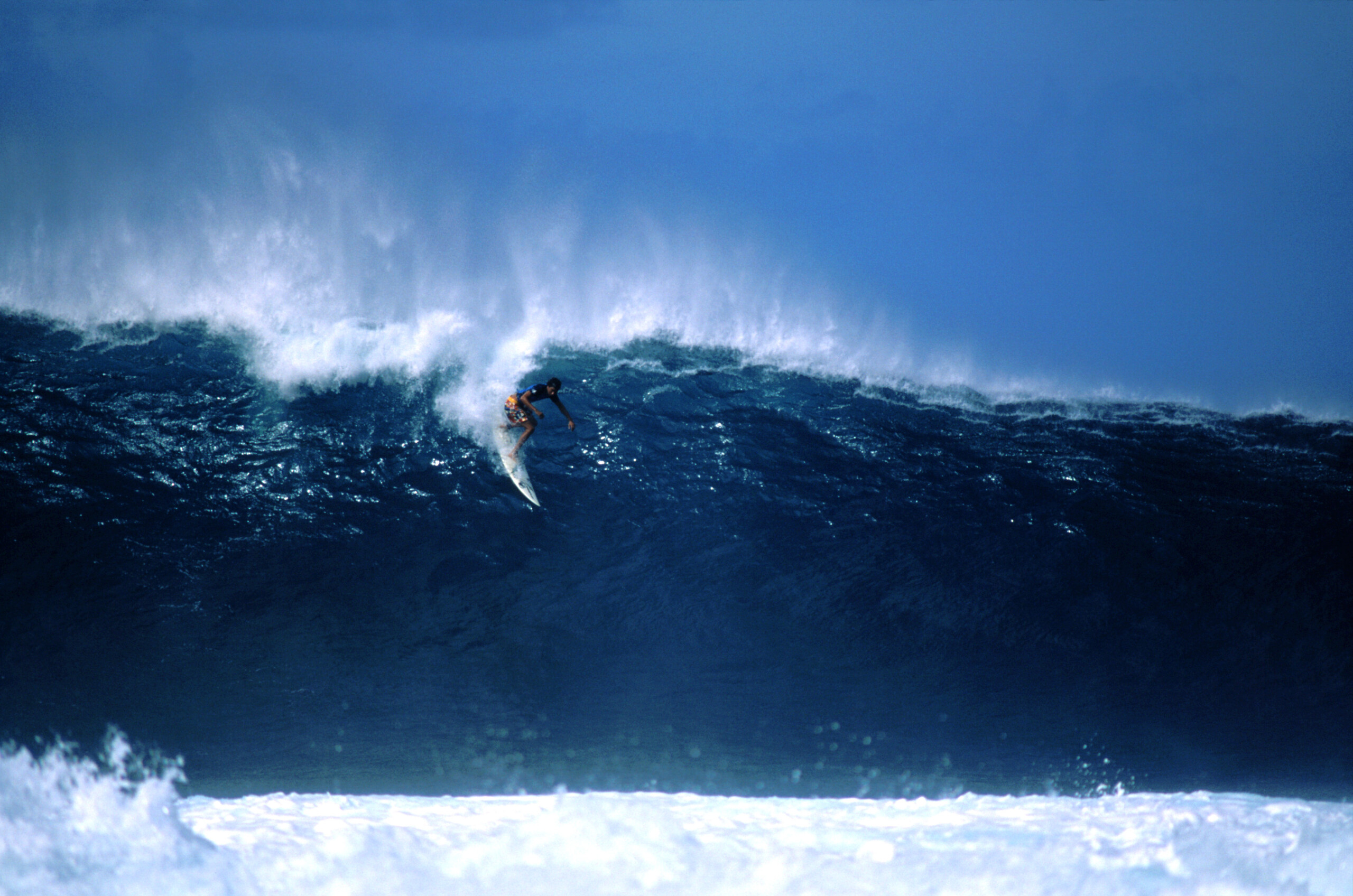
Oahu splits into two completely different November experiences. Waikiki delivers walkable high-rise resorts, international dining, and a protected beach calm enough for beginners.
The North Shore — roughly an hour’s drive north — is where November’s big-wave season draws the world’s best surfers to breaks like Pipeline and Sunset Beach. You can easily do both from one base.
Waikiki stays suit travelers who want everything within walking distance: the beach, restaurants, shopping, and a pool scene. The trade-off is density — Waikiki is crowded, and resort prices reflect demand.
Expect roughly $300–$600/night for a beachfront room at a major property, though mid-week rates dip noticeably.
Ko Olina (west side) is the quieter alternative — a planned resort community about 40 minutes from Honolulu with lagoon beaches, lower-rise properties, and a fraction of Waikiki’s foot traffic. It wins for families with small kids or anyone who’d rather skip the urban buzz entirely.
North Shore lodging in November skews boutique and vacation rental rather than full-service resort. Haleiwa is the hub — surf town, food trucks, shave ice.
Stay here only if you’re comfortable driving to beaches and dining rather than walking out your resort door.
One advantage Oahu has over every other island: you’ll never run out of things to do beyond the beach. Pearl Harbor, the Bishop Museum, Kualoa Ranch, and Chinatown’s food scene fill any rainy afternoon.
Big Island
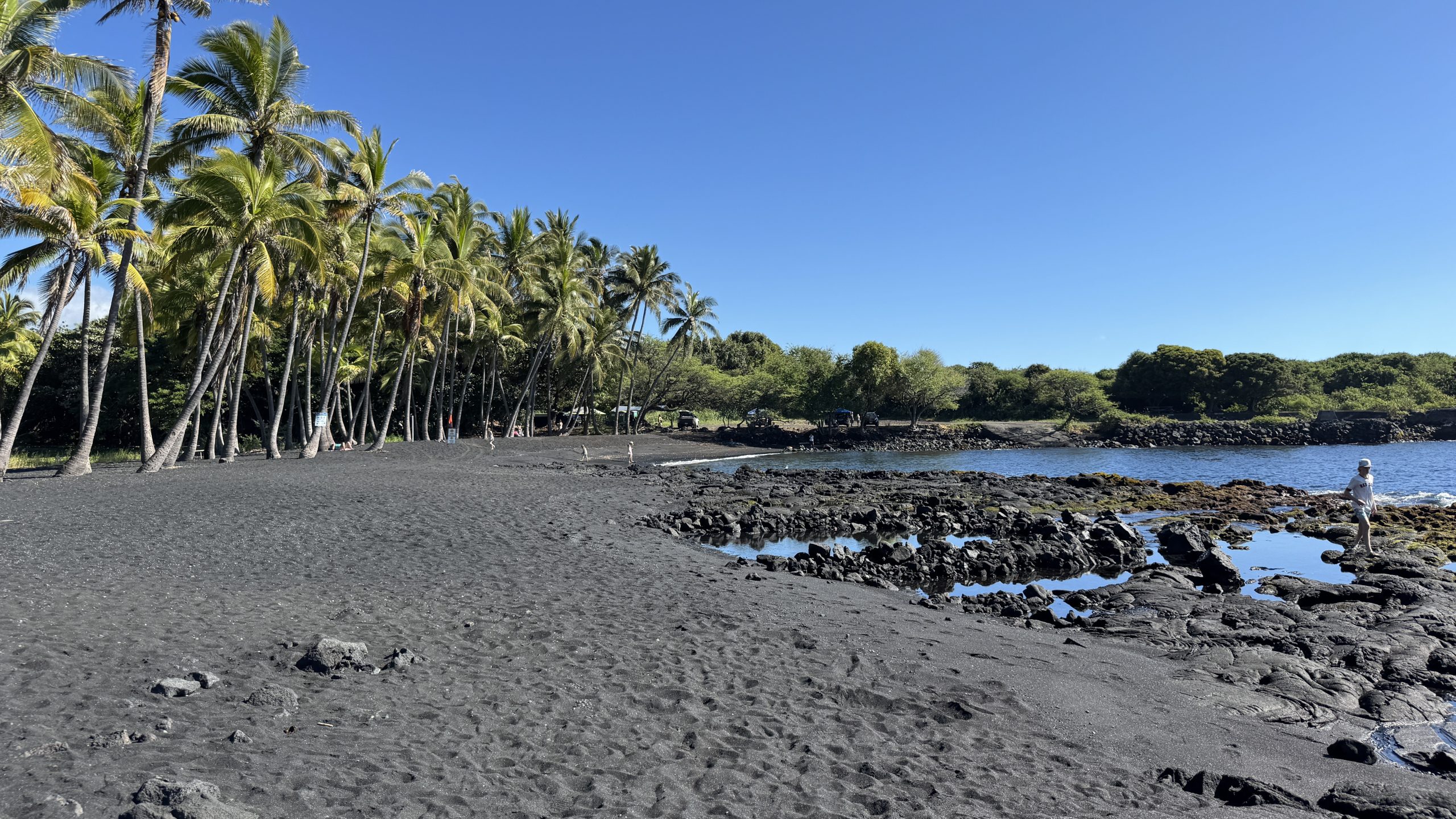
The Big Island is Hawaii’s most geologically dramatic — active lava zones, black-sand beaches, and elevations that shift from sea-level heat to jacket-weather uplands within an hour’s drive. In November, the Kona coast is dry and calm, making it prime time for snorkeling at Kealakekua Bay, where spinner dolphins and dense reef fish crowd crystal-clear water.
The resort geography matters here more than on any other island:
- Kohala Coast (northwest): The island’s major beach resorts cluster here — sprawling pools, golf courses, and lava-rock coastlines with man-made beach coves. Properties are large-format and spread out. You’ll need a rental car regardless of where you stay. Best for resort-purists who want pools, spas, and beach service in a single property.
- Kona coast near town (west): More inns and vacation rentals than mega-resorts. Closer to restaurants, farmers’ markets, Kona coffee farms, and the manta ray night dive departure points. Best for independent travelers who don’t want 30-minute drives to dinner.
- Hilo (east): Rainier, cheaper, and better as a base for Volcanoes National Park than for a beach resort stay. Skip it as a resort destination.
Budget advantage: Big Island resorts typically run 15–25% less than comparable Maui or Oahu properties. A November stay on the Kohala Coast usually lands in the $250–$450/night range — the value pick among the major islands.
Kauai
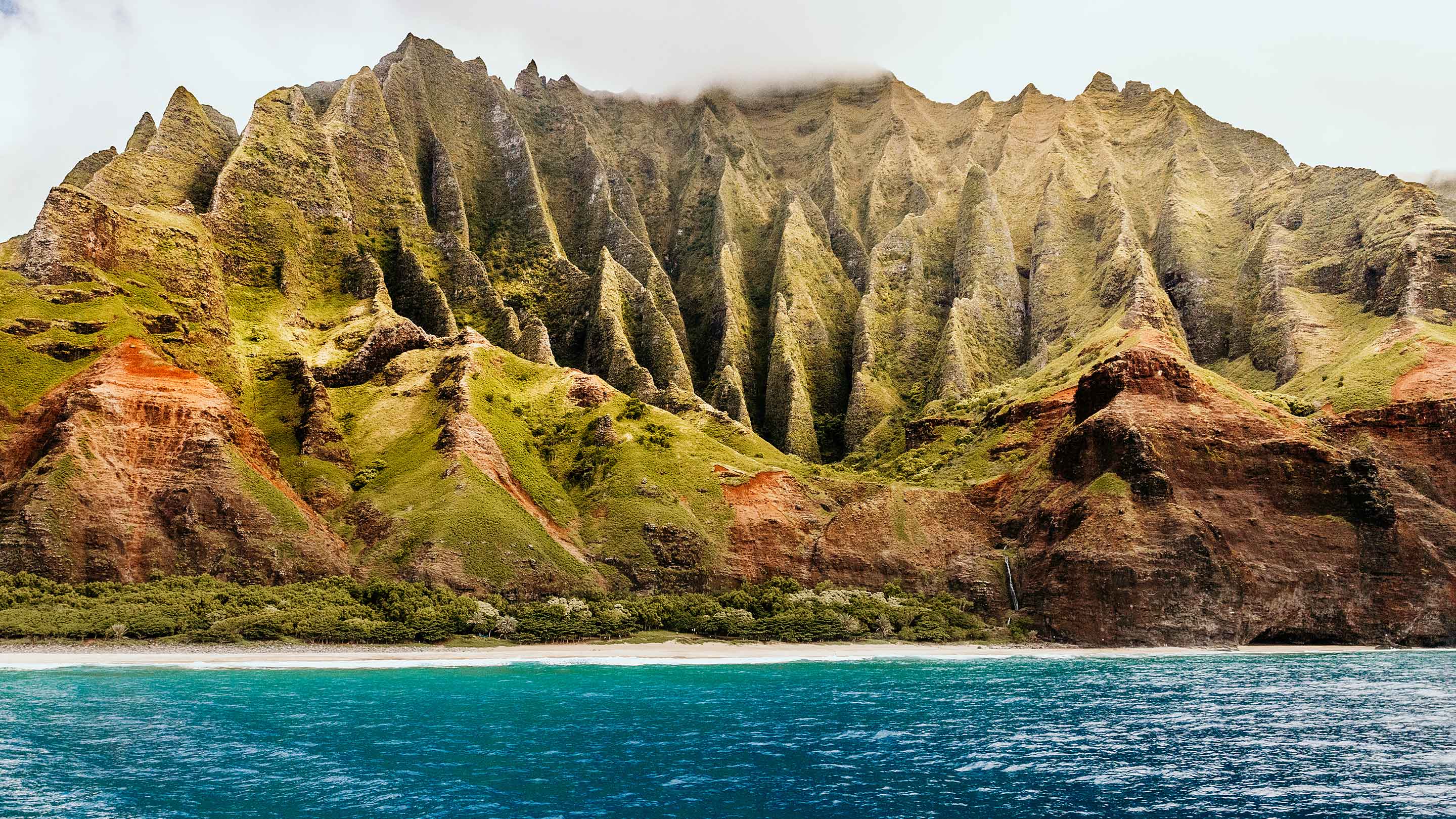
Here’s the honest truth about Kauai in November: it’s the start of the wetter season (dry months run May through September), and the north shore — where Hanalei Bay and the Na Pali Coast trailhead sit — gets significantly more rain than the south. If you’re booking a resort for beach days and sunshine, base yourself in Poipu on the south shore, which stays drier and sunnier even in the wetter months.
That said, Kauai’s appeal isn’t just sunbathing. The Na Pali Coast’s sea cliffs, Waimea Canyon’s red-rock layers, and the impossibly lush interior make it the most visually dramatic island in the chain.
November also means the fewest crowds of the year — trails are emptier, restaurant reservations come easier, and resort rates dip well below the June–August peak.
- Poipu (south shore): The smartest November base. Sunny, snorkel-friendly beaches, a mix of resorts and condos, and a straight shot to Waimea Canyon. This is where rain-dodgers should plant themselves.
- North Shore (Princeville / Hanalei): More beautiful, more dramatic, and more likely to get rained out. Book here only with a flexible itinerary and tolerance for unpredictable weather.
Kauai lacks the mega-resort density of Maui or Oahu — properties tend to be smaller, lower-rise, and more woven into the landscape. That’s either a selling point or a dealbreaker depending on whether you want a sprawling pool complex or a quiet garden path to the sand.
Top Warm Beach Resorts to Visit in November — Florida and the Gulf Coast
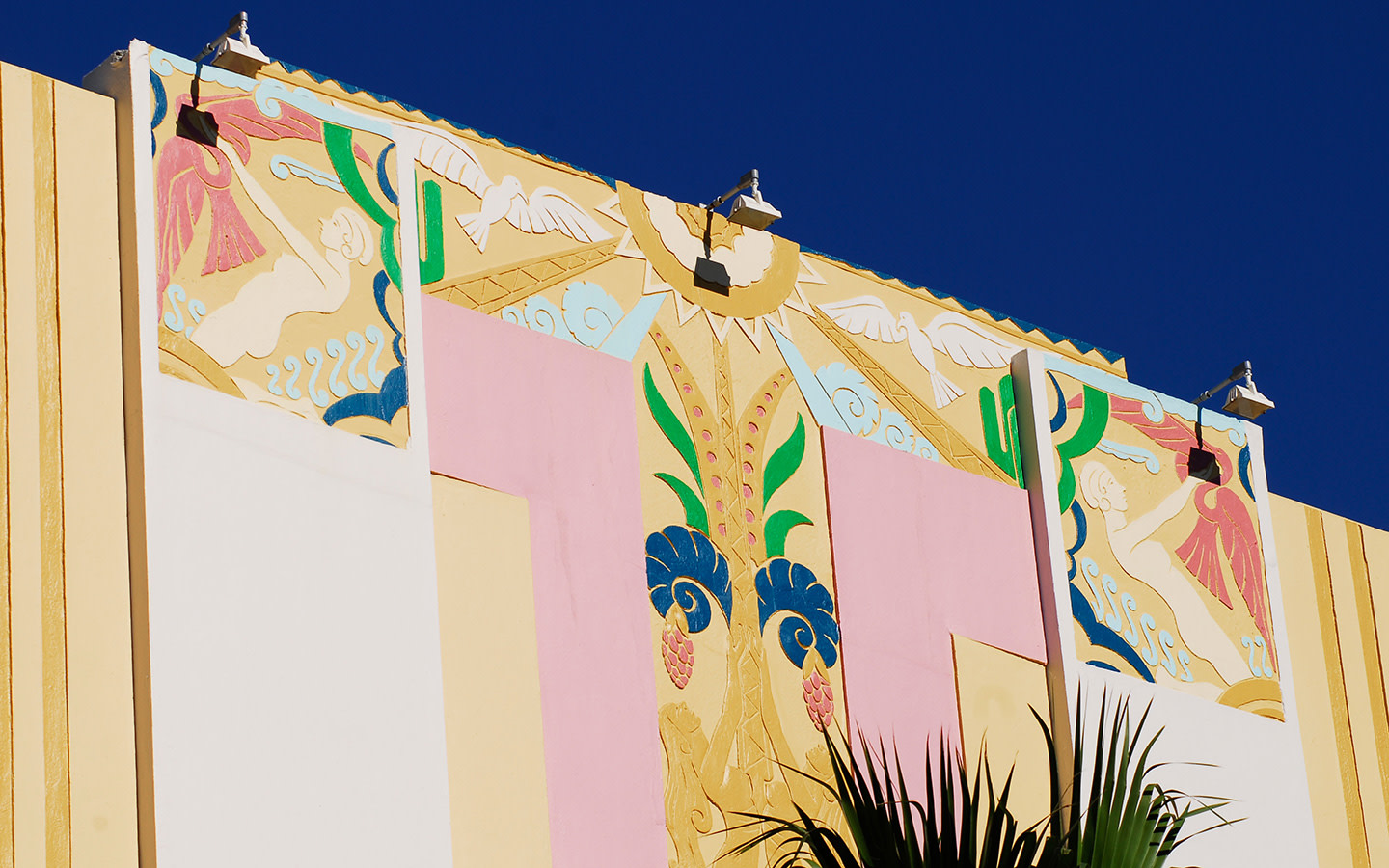
November in Florida means 75–85°F water, hurricane season wrapping up by the 30th, and resorts dropping rates before the December snowbird surge. The sweet spot is early-to-mid November — you get emptier beaches and shoulder-season pricing without the holiday markup.
Here’s a fast comparison of all 14 areas before you dive into the details:
| Area | Nov Temp | Water Type | Vibe | Best For |
|---|---|---|---|---|
| Miami / South Beach | High 70s–low 80s | Atlantic, warm | Scene-heavy, nightlife | Couples, nightlife seekers |
| Fort Lauderdale | High 70s–low 80s | Atlantic, warm | Relaxed upscale | Beach + Everglades day trips |
| Palm Beach | Low 80s | Atlantic, warm | Quiet luxury | Upscale couples, culture lovers |
| Destin / Emerald Coast | Mid 60s–70s | Gulf, cool | Family resort | Families, golf, fishing |
| Gulf Shores | Low 60s–70s | Gulf, cool | Low-key coastal | Budget families, nature lovers |
| Anna Maria Island | Low 80s | Gulf, warm | No high-rises, mellow | Couples, slow-paced trips |
| Sanibel Island | Low 80s | Gulf, warm | Nature-focused | Shellers, birders, quiet seekers |
| Florida Keys | Low 80s | Atlantic/Gulf, warm | Laid-back island | Divers, snorkelers, road trippers |
| Cocoa Beach | Mid 70s | Atlantic, warm-ish | Casual surf town | Surfers, space fans, families |
| St. Pete / Tampa | Low 80s | Gulf, warm | Culture + beach | Foodies, museum lovers, beaches |
| Amelia Island | Low 70s | Atlantic, cool | Historic, quiet | Golfers, history buffs, couples |
| Jekyll Island | Low 70s | Atlantic, cool | Preserved, natural | Wildlife watchers, families |
| Panama City Beach | Mid 60s–70s | Gulf, cool | Family-friendly | Families, fishing, state parks |
| Corpus Christi / Padre Island | Low 70s | Gulf, cool | Wide-open, uncrowded | Birders, anglers, solitude seekers |
Miami and South Beach
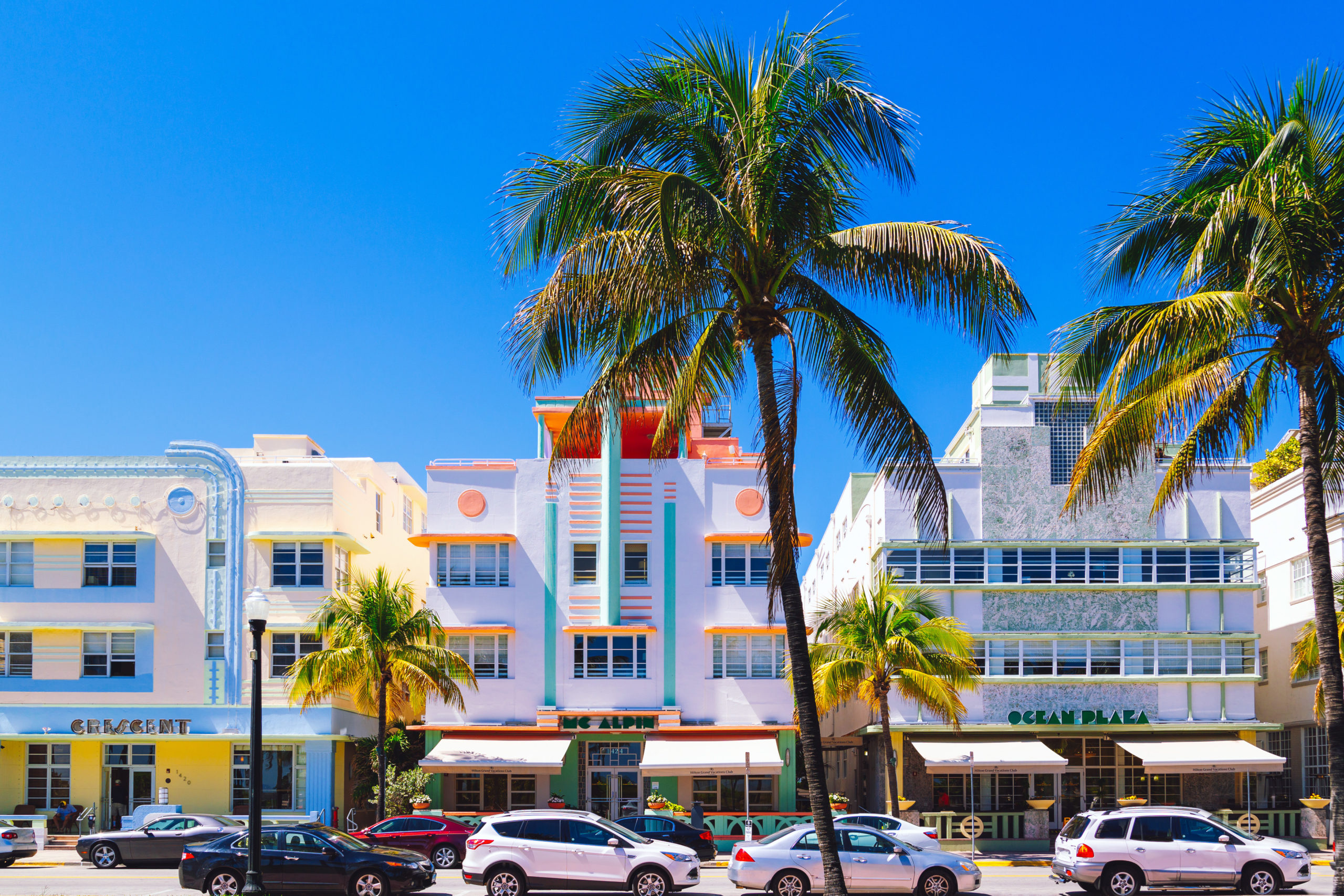
South Beach in November is peak shoulder season — Art Basel hits in early December, so the month before is when you get the scene at half the crowd and 30–40% lower rates. Average highs hover around 82°F with water temps near 79°F, making it one of the warmest beach options on the mainland.
Where to stay: Ocean Drive hotels put you in the Art Deco action but get noise. Collins Avenue one block back is the better call for actual sleep.
Brickell and Mid-Beach (around 41st Street) offer a quieter pace while still being 10 minutes from South Beach nightlife.
- Best for: Couples and friend groups who want beach by day and real nightlife after dark — this isn’t a quiet escape.
- Skip if: You want serene Gulf-coast calm. Miami is loud, fast, and full-on.
- Insider tip: Book hotels that include beach chair and umbrella service — South Beach public sand gets packed, but resort chair setups carve out your own zone even on busy days.
Fort Lauderdale
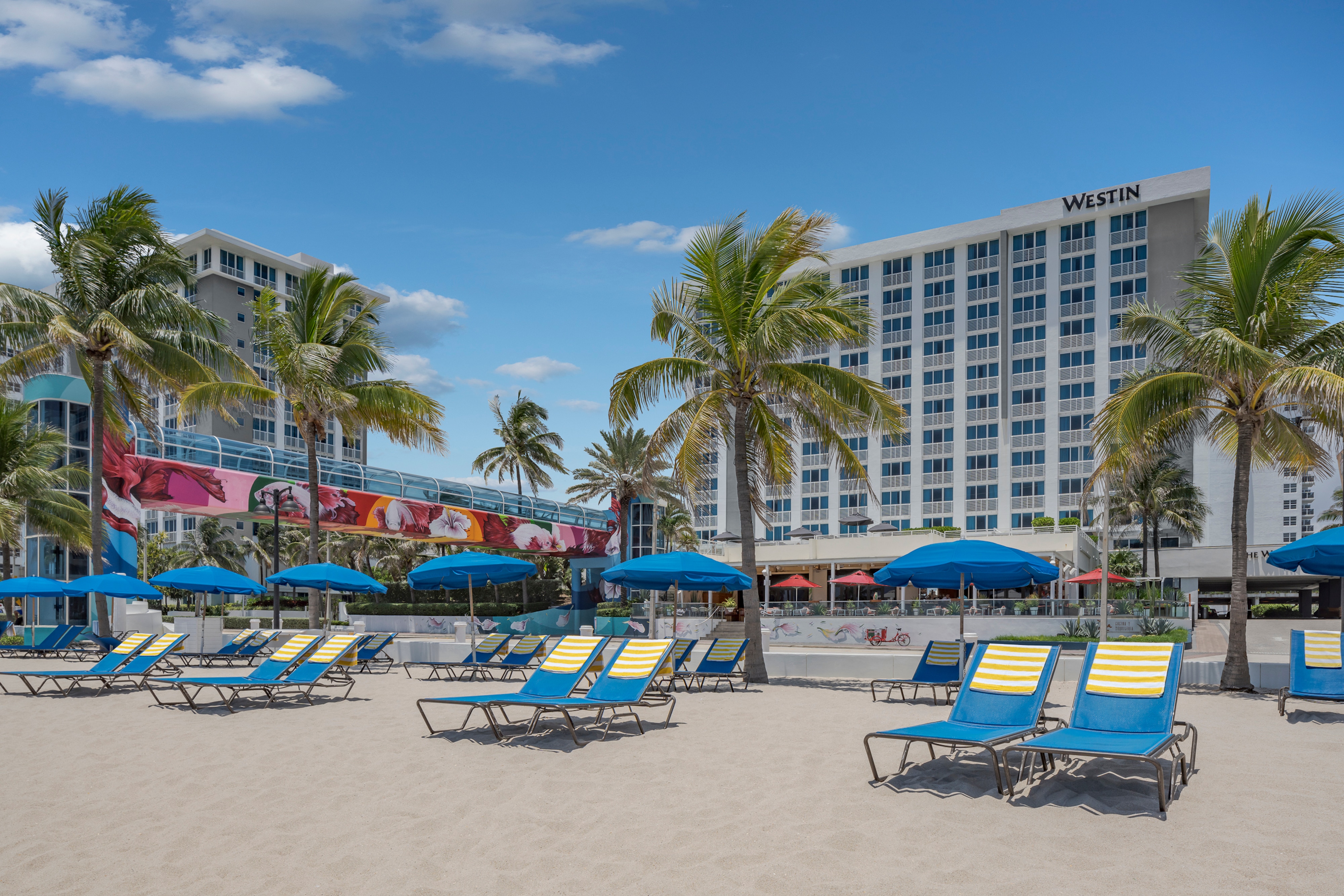
Fort Lauderdale in November averages highs in the upper 70s to low 80s with water temps around 78°F — warm enough for full beach days without the Miami intensity. Las Olas Boulevard has the best concentration of waterfront dining, and the Intracoastal Waterway makes even a simple walk scenic.
Where to stay: The beachfront strip along A1A north of Las Olas is the prime resort zone. Harbor Beach area is quieter and more upscale. Downtown Las Olas works if you want walkable restaurants over direct beach access.
- Best for: Travelers who want an upscale beach base with easy day trips to the Everglades — airboat tours run with fewer crowds in November.
- Skip if: You want a party scene — Miami is 30 minutes south for that.
- Insider tip: Fort Lauderdale’s water taxi doubles as a cheap sightseeing cruise along the Intracoastal mansions — skip the overpriced boat tours and hop on this instead.
Palm Beach and West Palm Beach
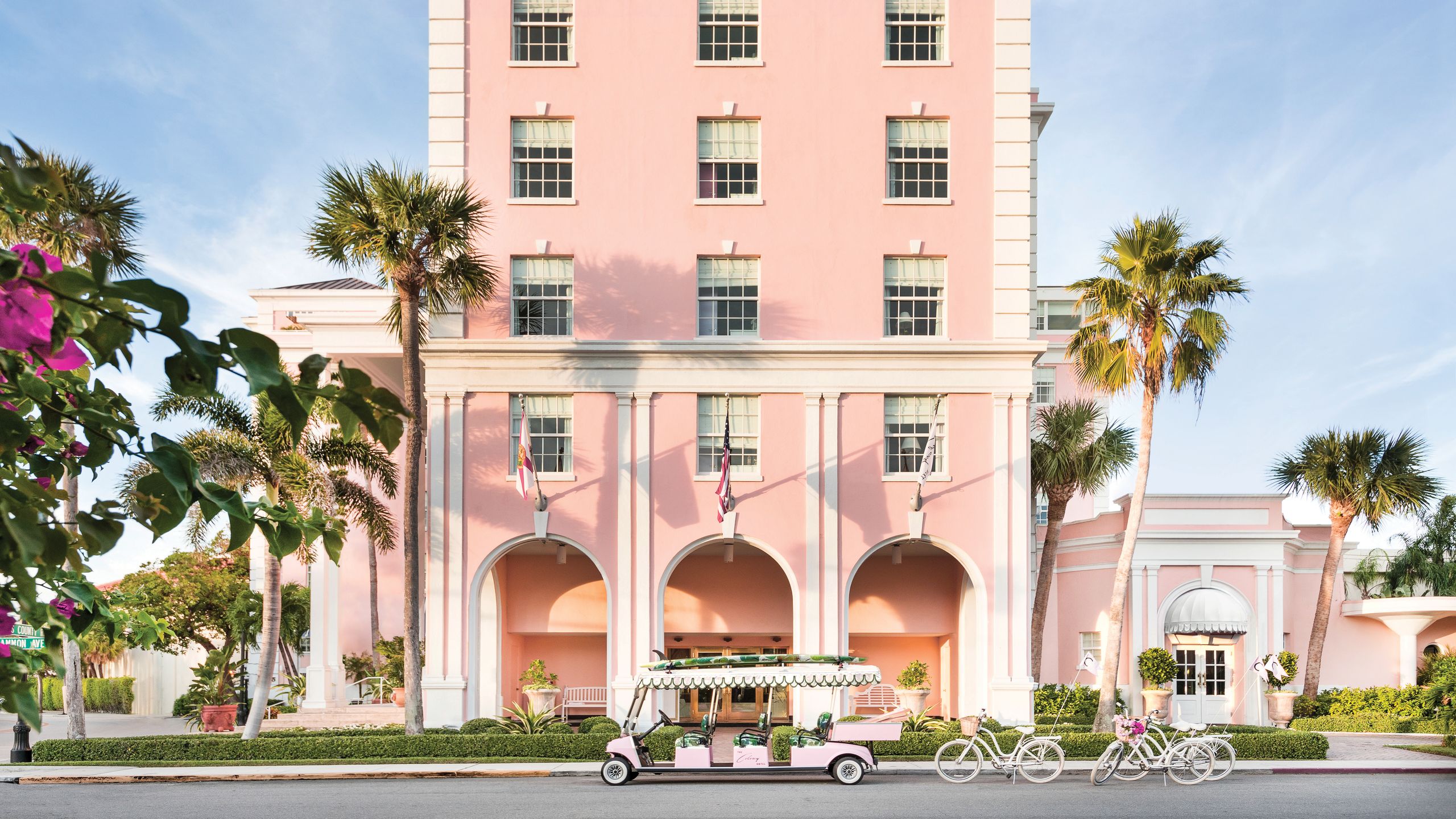
West Palm Beach averages 82°F in November with water temps near 79°F, and typical resort rates around $229/night make it more accessible than its reputation suggests. Clematis Street delivers the best walkable dining and nightlife strip, while the Norton Museum of Art is a legitimately world-class collection worth an afternoon.
Where to stay: Palm Beach island has the flagship resorts (The Breakers is the icon, Eau Palm Beach the modern alternative). West Palm Beach across the bridge offers better value hotels with a 10-minute ride to the sand.
- Best for: Couples who want polished resort life without the South Beach chaos — think quiet mornings, proper dinners, and uncrowded November beaches.
- Skip if: You want a youthful, energetic atmosphere. Palm Beach skews older and formal.
- Insider tip: The Lake Trail on Palm Beach island is a paved path running along the Intracoastal behind the mansions — perfect for a morning walk or bike ride most tourists never find.
Destin and Emerald Coast
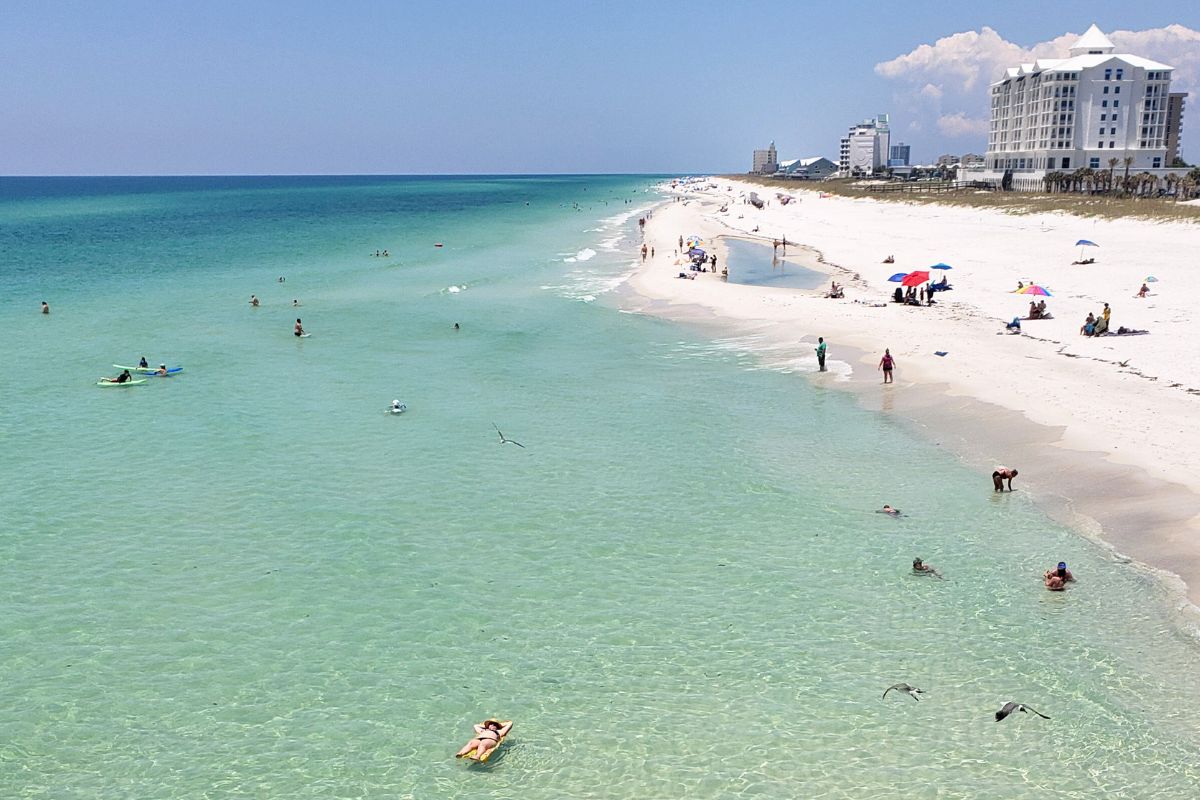
Destin’s sugar-white sand and emerald-green water are stunning year-round, but November temps drop to the mid 60s–70s with water temps around 68°F — swimming is possible on warm days but not guaranteed. This is solidly a “beach walk and golf” month rather than a “lounge in the surf” month.
Where to stay: Miramar Beach and Crystal Beach have the best resort density. Destin Harbor is the dining and entertainment hub. Henderson Beach State Park offers the prettiest stretch of undeveloped sand in the area.
- Best for: Families and golfers who want gorgeous beaches even without swimming — the scenery alone justifies the trip.
- Skip if: Warm-water beach time is non-negotiable. Head to South Florida or the Keys instead.
- Insider tip: November is prime charter fishing season in Destin — red snapper may be closed, but amberjack, triggerfish, and king mackerel are running, and boat availability is wide open.
Gulf Shores
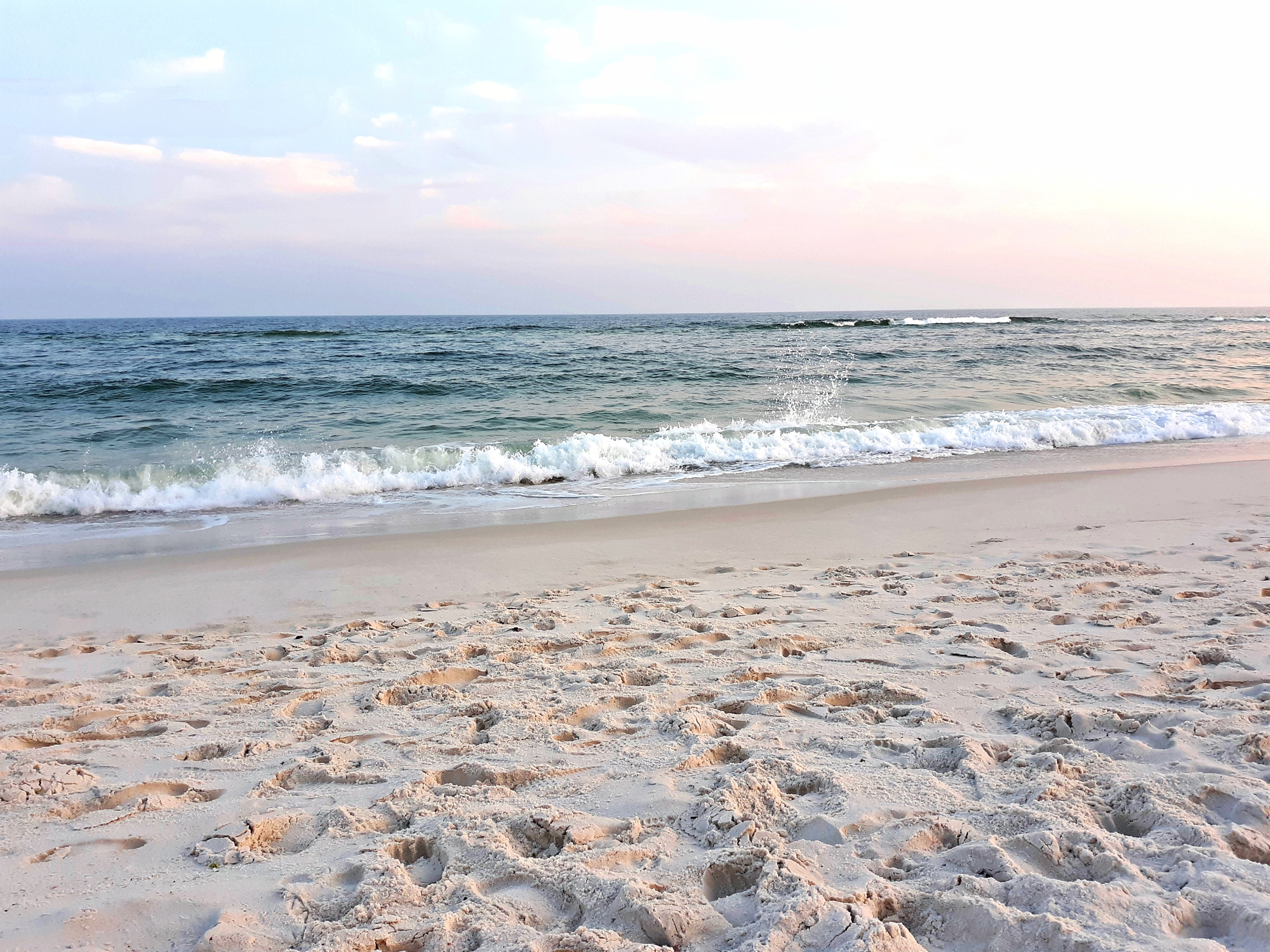
Gulf Shores, Alabama sits just across the Florida state line and offers the same sugar-white Gulf sand at noticeably lower prices than the Florida panhandle. November highs reach the low 60s–70s with water temps around 65°F — too cool for most swimmers, but perfect for beach walks, kayaking, and the bird migration passing through.
Where to stay: Beach Boulevard runs along the main strip with most resort and condo rentals. For quieter stays, head west toward Fort Morgan where rentals sit on more secluded stretches of sand.
- Best for: Budget-conscious families — November condo rates can run 40–50% less than peak summer, and you’ll practically have the beach to yourself.
- Skip if: You need warm water for swimming. This is a shoulder-season destination in every sense.
Anna Maria Island
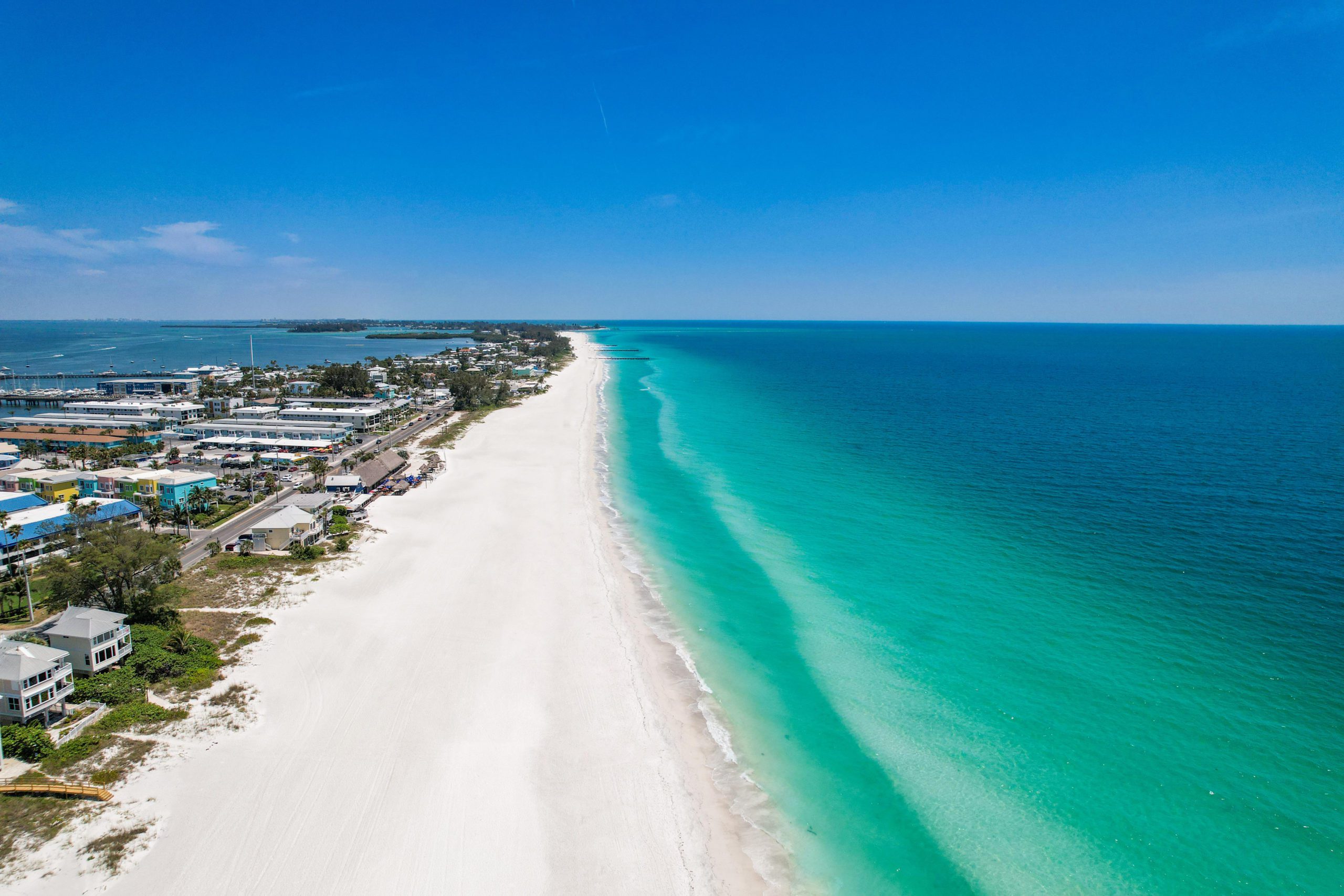
Anna Maria Island is Florida’s antidote to high-rise resort overload. No building tops three stories, the sand is powder-white, and the Gulf runs warm at around 79°F in November.
This is a place where you rent a beach cottage or small inn, not a tower resort — and that’s entirely the point.
Where to stay: Holmes Beach in the center has the most rental options. Anna Maria at the north end is the quietest. Bradenton Beach at the south has the most walkable restaurant concentration along Bridge Street.
- Best for: Couples and anyone burned out on mega-resorts — this is flip-flops, seafood shacks, and sunset kayaking territory.
- Skip if: You want resort pools, spas, and organized activities. The island’s charm is its lack of all that.
- Insider tip: Rent a golf cart — it’s the island’s primary transport, parking is brutal, and everything is within cart distance. Book one when you book your lodging or they sell out.
Sanibel Island
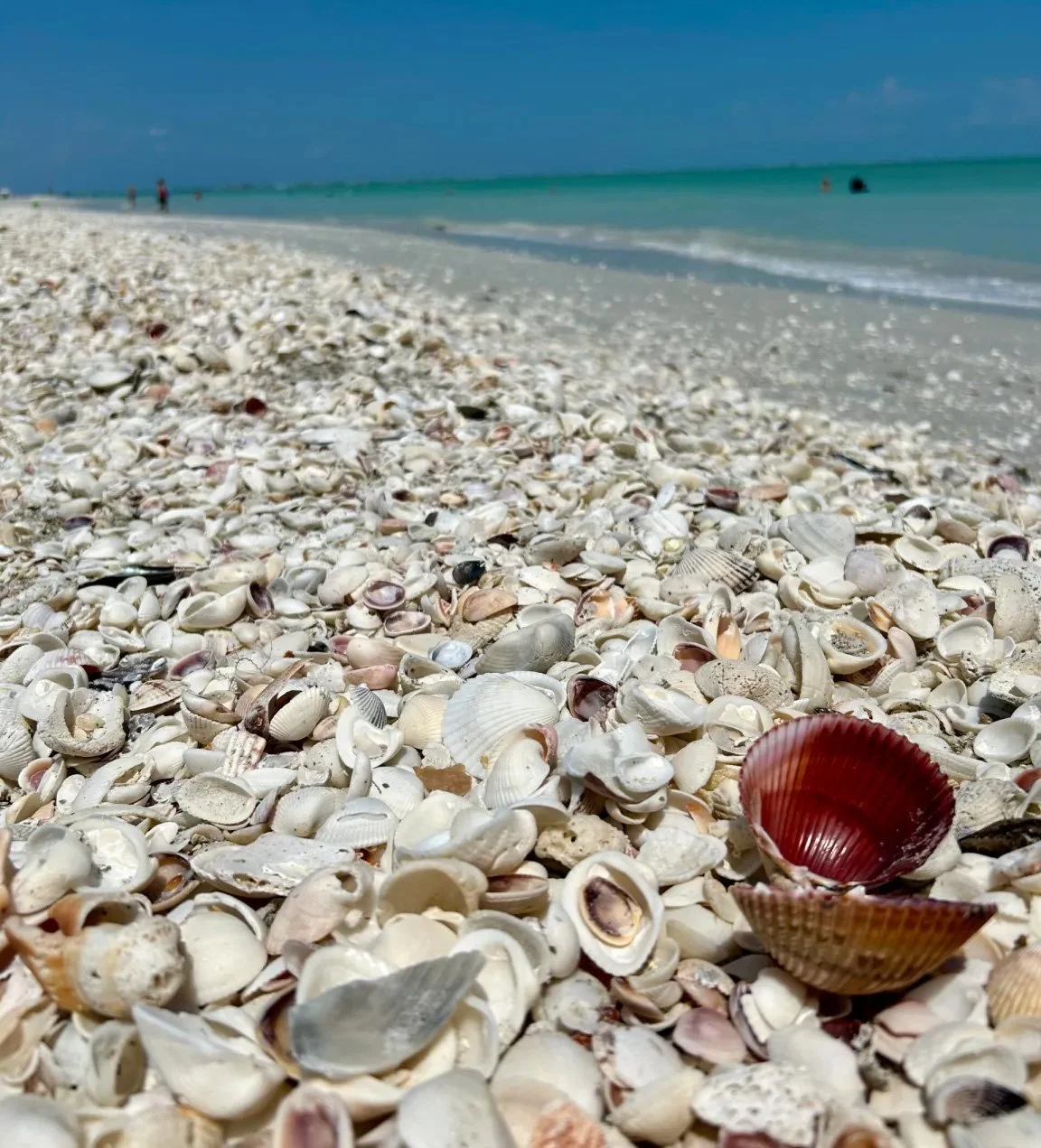
Sanibel is the shelling capital of the U.S., and November brings the first wave of winter shell arrivals plus migratory bird activity at J.N. “Ding” Darling National Wildlife Refuge.
Water temps sit around 79°F and air temps in the low 80s — prime beach conditions without summer’s humidity.
Where to stay: Periwinkle Way is the main drag with most resorts and hotels within a short bike ride of the beaches. Captiva Island next door has a few higher-end options with a more secluded feel.
- Best for: Nature lovers and anyone who finds actual peace in walking barefoot on a shell-strewn beach at dawn.
- Skip if: You want nightlife or dining variety — Sanibel closes early and the restaurant scene is limited.
Florida Keys
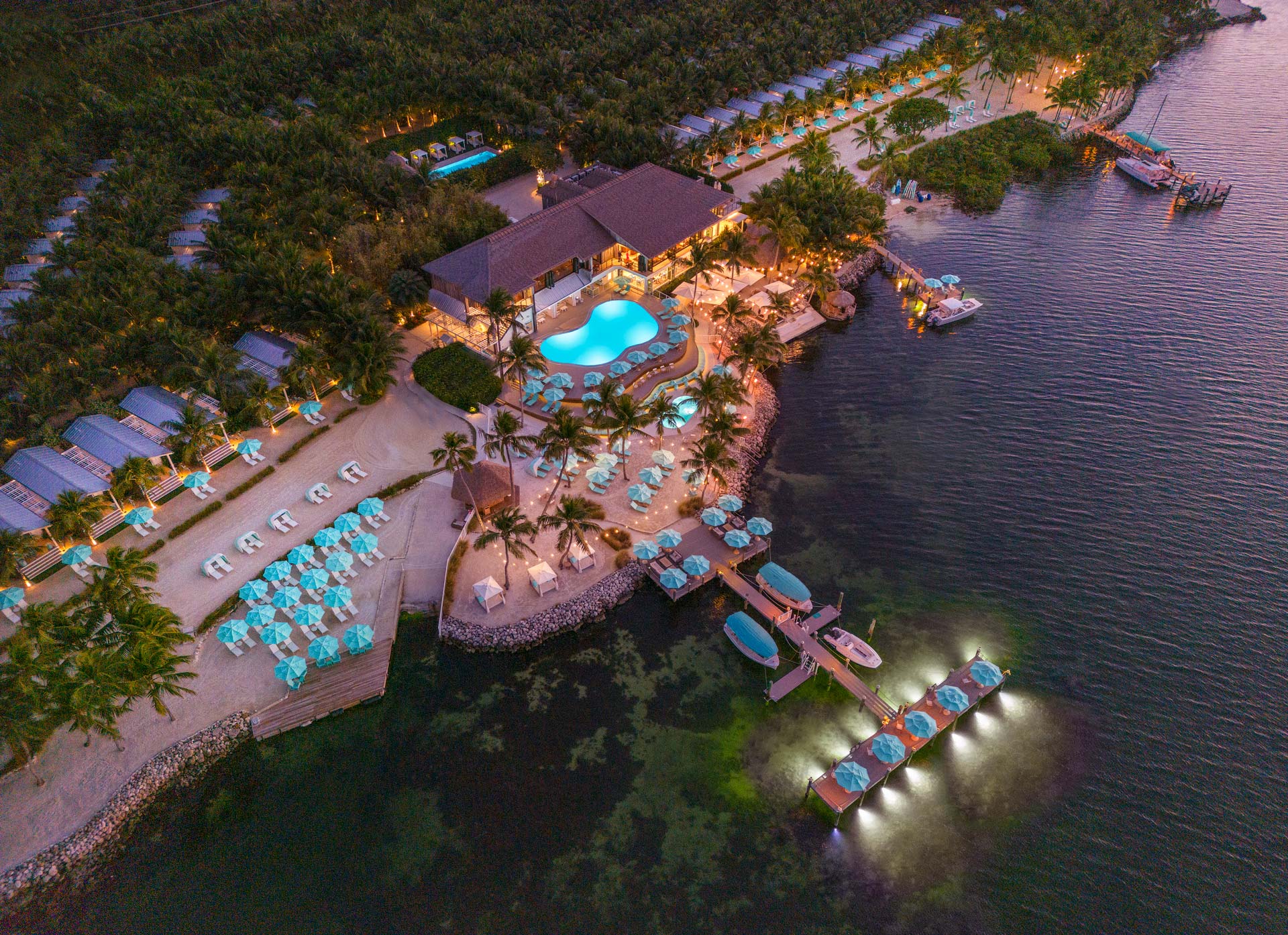
The Keys in November average 82°F with water temps near 80°F — among the warmest beach water in the continental U.S. this month. Hurricane season officially ends November 30, and by mid-month, resorts are pricing below their winter peaks while the fishing, snorkeling, and diving are running at full capacity.
Where to stay: Key West has the most resort density and the only real nightlife. Islamorada is the sweet spot for fishing lodges and quieter waterfront resorts.
Marathon offers mid-Keys value. Key Largo is closest to the mainland and best for divers hitting the reef.
- Best for: Anyone who wants warm ocean water guaranteed — the Keys deliver this better than anywhere else in November.
- Skip if: You want wide, sandy beaches. The Keys are coral rock and man-made beach patches — real sand beaches are rare.
- Insider tip: Book your Islamorada or Key West resort by early October for November dates — the post-hurricane-season booking rush is real, and the best waterfront rooms go fast.
Cocoa Beach
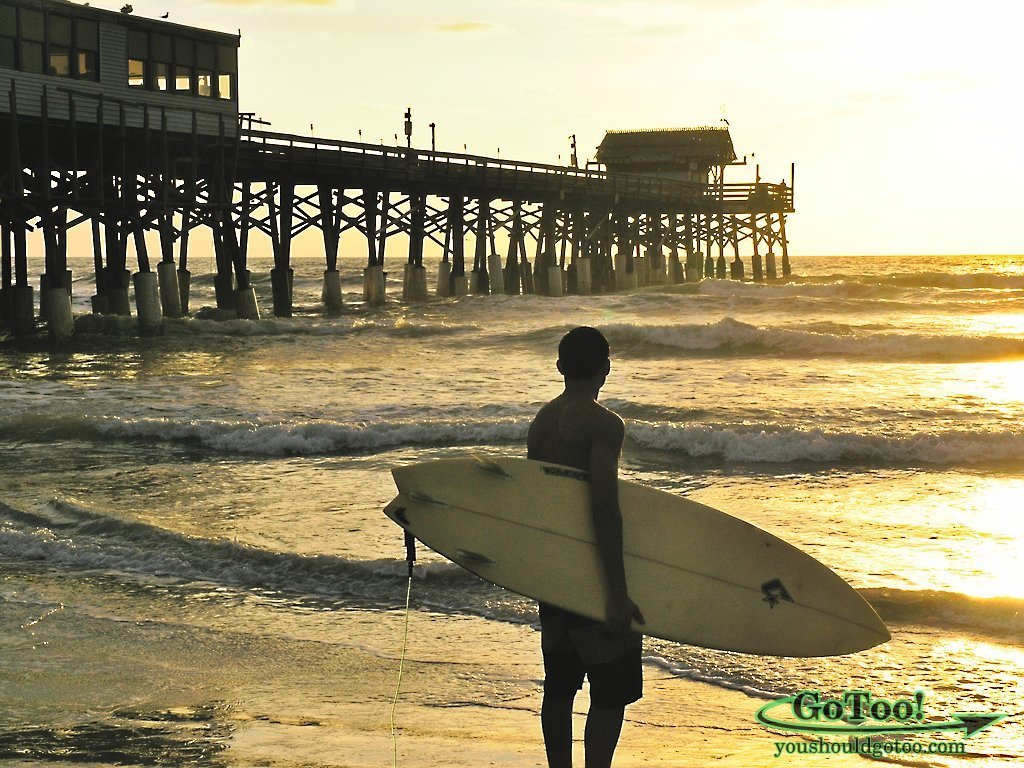
Cocoa Beach offers something no other Florida beach town does: surf culture on the Atlantic plus proximity to Kennedy Space Center. November water temps hover around 76°F with air temps in the mid 70s — comfortable, though not tropical.
Where to stay: The hotels and condo rentals along A1A near the Cocoa Beach Pier are the standard base. For something quieter, head south toward Satellite Beach where the crowd thins out significantly.
- Best for: Families combining a beach trip with a Space Center visit — you can watch a rocket launch from the sand if the timing lines up.
- Skip if: You want upscale resort amenities. Cocoa Beach is casual, surfy, and unpolished by design.
St. Petersburg and Tampa Area
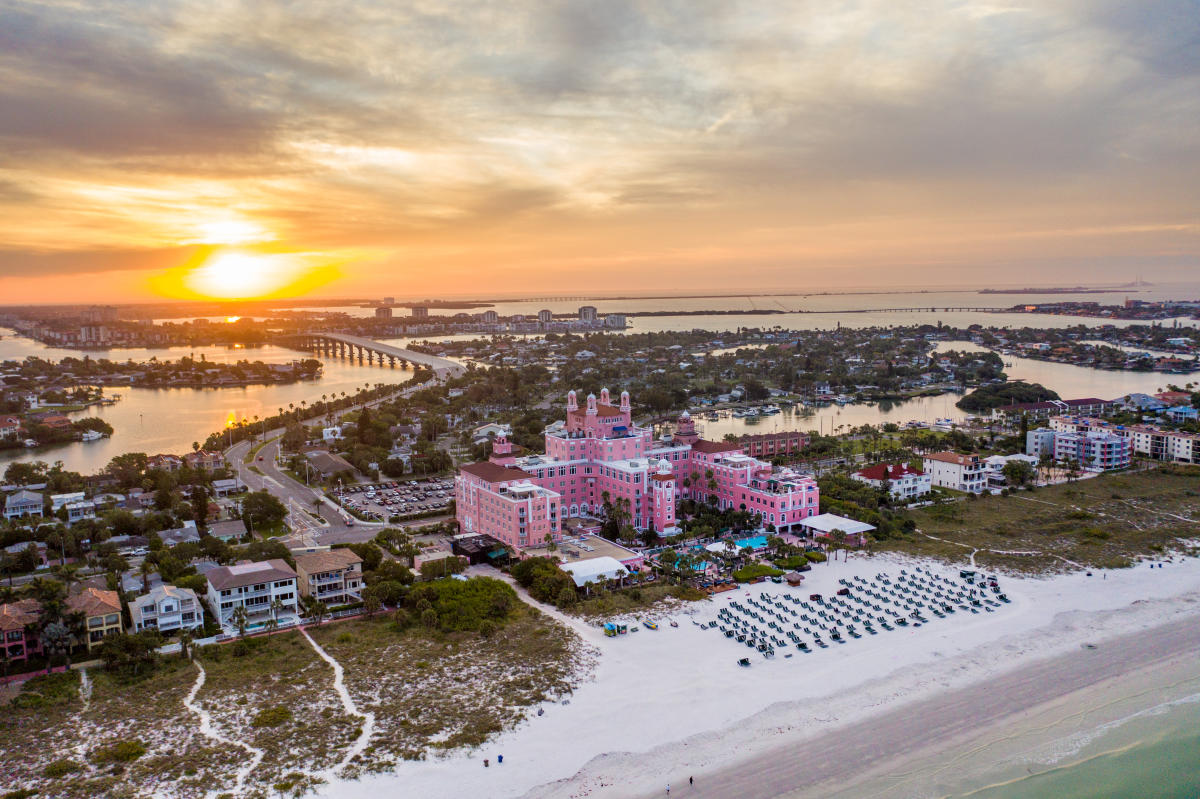
St. Pete and Tampa deliver warm, sunny fall weather with November highs in the low 80s — the research describes it as one of the best warm places to visit in November. St. Pete Beach consistently ranks among the top-rated beaches in the U.S., while Ybor City in Tampa provides the cultural counterbalance with Cuban coffee, cigar shops, and live music.
Where to stay: St. Pete Beach for classic Gulf beachfront resorts. Pass-a-Grille at the south end of St. Pete Beach is quieter and more walkable.
Downtown St. Petersburg for the Dalí Museum, craft breweries, and a 15-minute ride to the sand. Tampa’s waterfront hotels work if you want city energy over beachfront quiet.
- Best for: Travelers who want beach days plus real urban culture — St. Pete’s arts and food scene rivals cities twice its size.
- Skip if: You want remote or undeveloped beaches. This area is built-up and busy even in November.
- Insider tip: The Dalí Museum is worth the visit even if you’re lukewarm on surrealism — the building itself is architecturally stunning, and weekday mornings in November are nearly empty.
Amelia Island
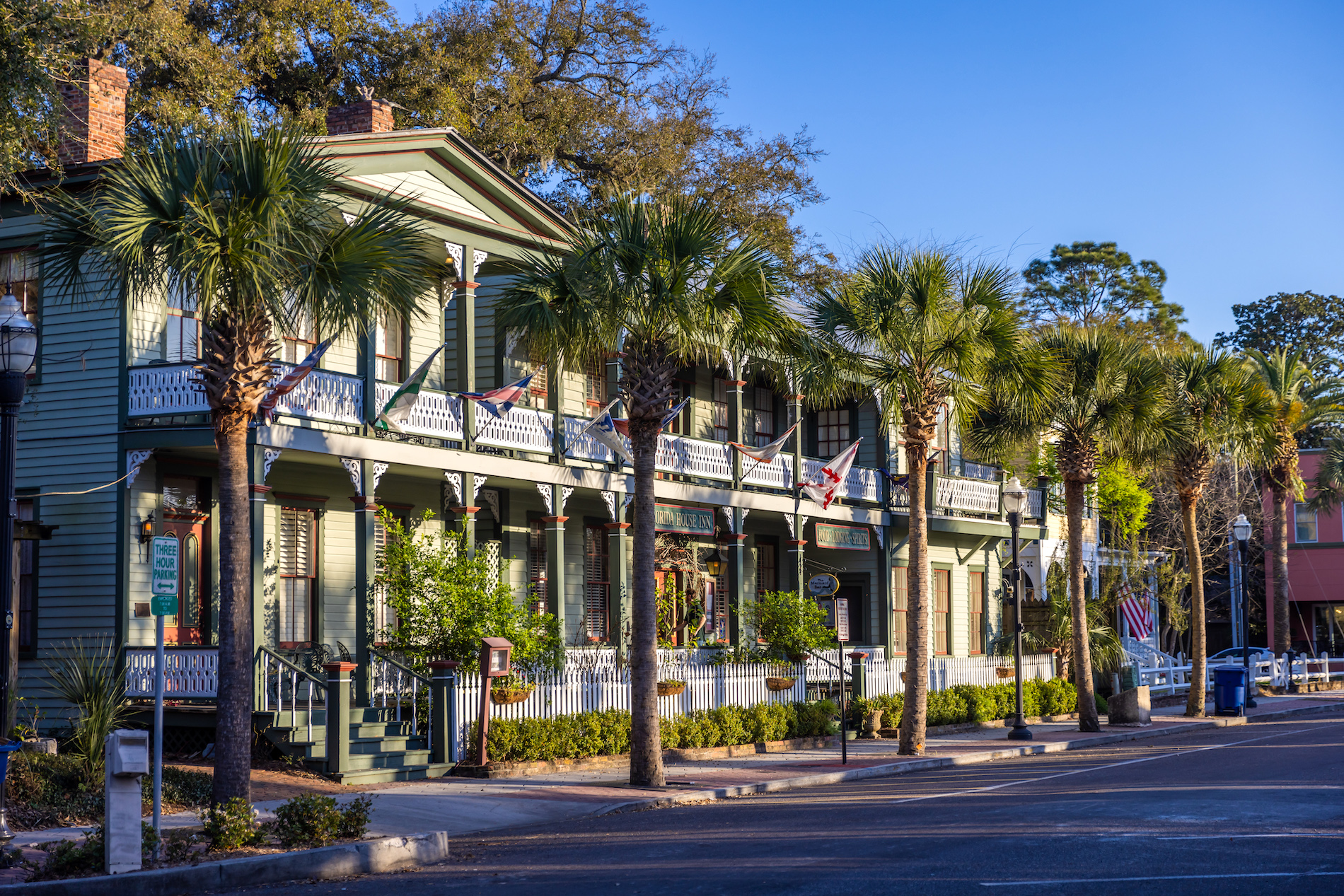
Amelia Island sits at Florida’s northeast tip, offering 13 miles of beach with November highs in the low 70s and water temps around 68°F — cooler than the Gulf or South Florida, but the island’s historic charm and excellent golf courses more than compensate. Fernandina Beach, the main town, has a walkable Victorian-era downtown with real character.
Where to stay: The Ritz-Carlton and Omni Amelia Island Resort anchor the south end with full resort amenities. Downtown Fernandina Beach has boutique inns and B&Bs with walkable access to restaurants.
- Best for: Golfers and couples who value history and quiet over warm-water swimming.
- Skip if: You need 80°F beach days. This is North Florida — pleasant, not hot.
Jekyll Island
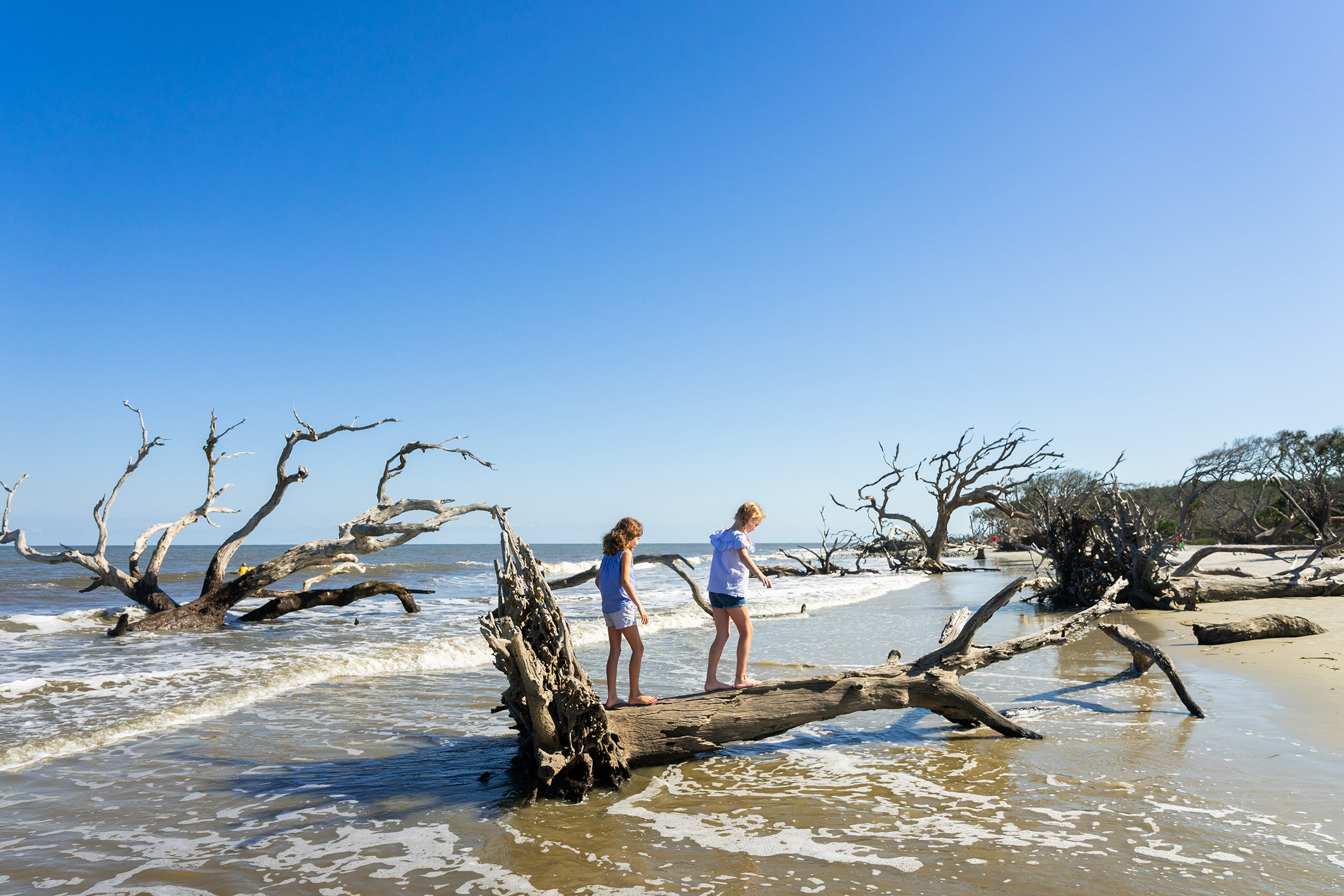
Jekyll Island is technically Georgia, not Florida, but it sits just north of Amelia Island and fits perfectly in a northeast-Florida beach plan. November highs reach the low 70s, and the island’s state-park status means 65% of it stays undeveloped — you get wide, empty beaches, live oak canopies, and the famous Driftwood Beach for photography.
Where to stay: Jekyll Island Club Resort is the historic landmark property. The Beachview Club Hotel offers a more intimate option. Rental cottages near the Beach Village provide self-catering flexibility.
- Best for: Wildlife watchers and families who want nature over nightlife — sea turtle season ends, but migratory bird activity peaks.
- Skip if: You want warm water or a lively dining scene. The island has a handful of restaurants and that’s it.
Panama City Beach
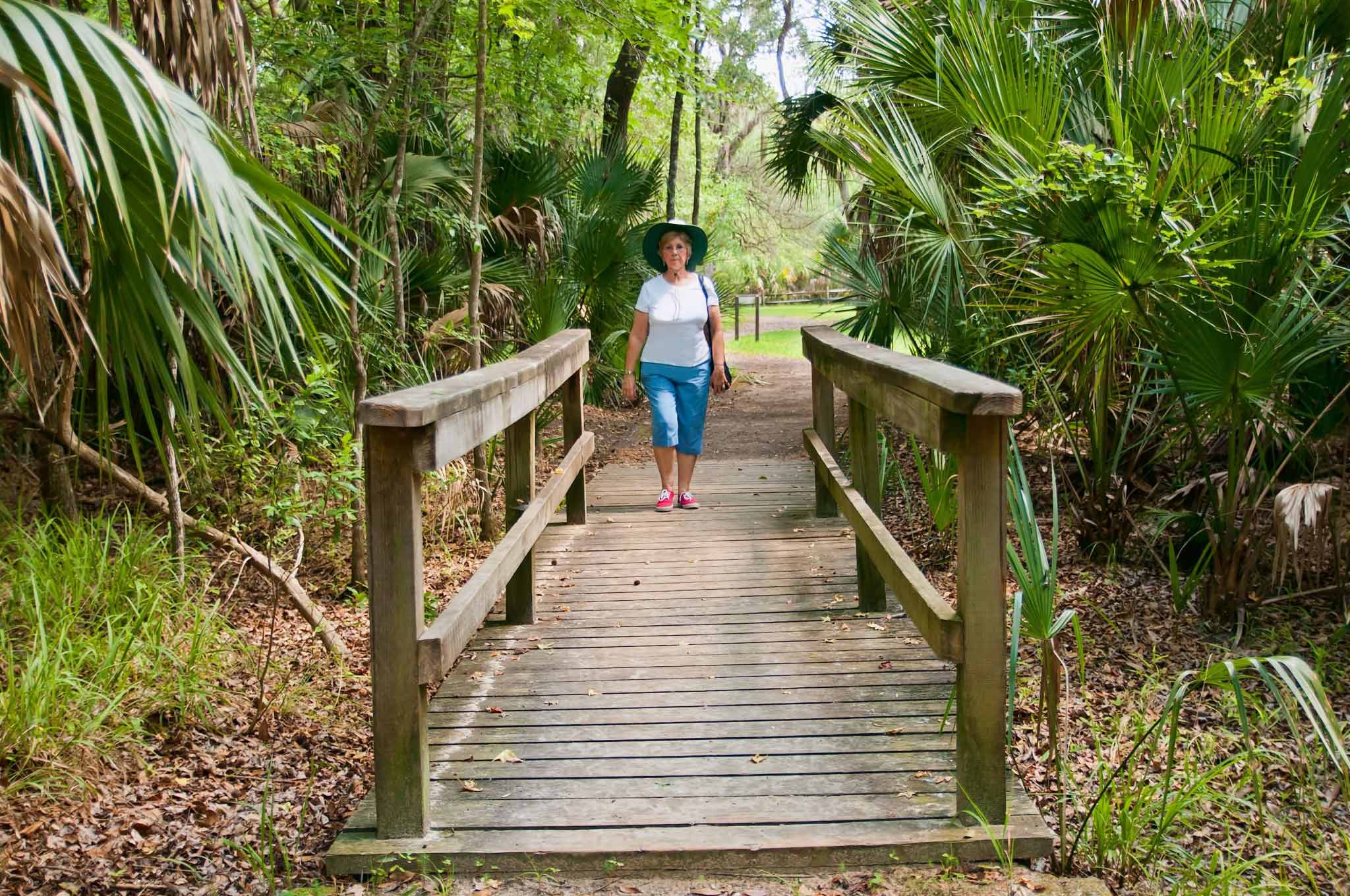
Panama City Beach runs 27 miles of white-sand Gulf coast with St. Andrews State Park anchoring the east end — November brings mid 60s–70s air temps and water temps around 67°F, solidly in the “cool but beautiful” category. The spring-break crowds are a distant memory, and resort rates drop accordingly.
Where to stay: Front Beach Road has the highest concentration of resorts and condo towers. For a nature-focused stay, cabins inside St. Andrews State Park put you on the best beach in the area — book through ReserveAmerica, typically opening 11 months ahead.
- Best for: Families looking for affordable Gulf beach time with actual nature nearby — St. Andrews offers snorkeling, kayaking, and birding that the condo strip doesn’t.
- Skip if: You want warm swimming water in November. This is a walk-the-beach-and-golf destination this time of year.
Corpus Christi and Padre Island
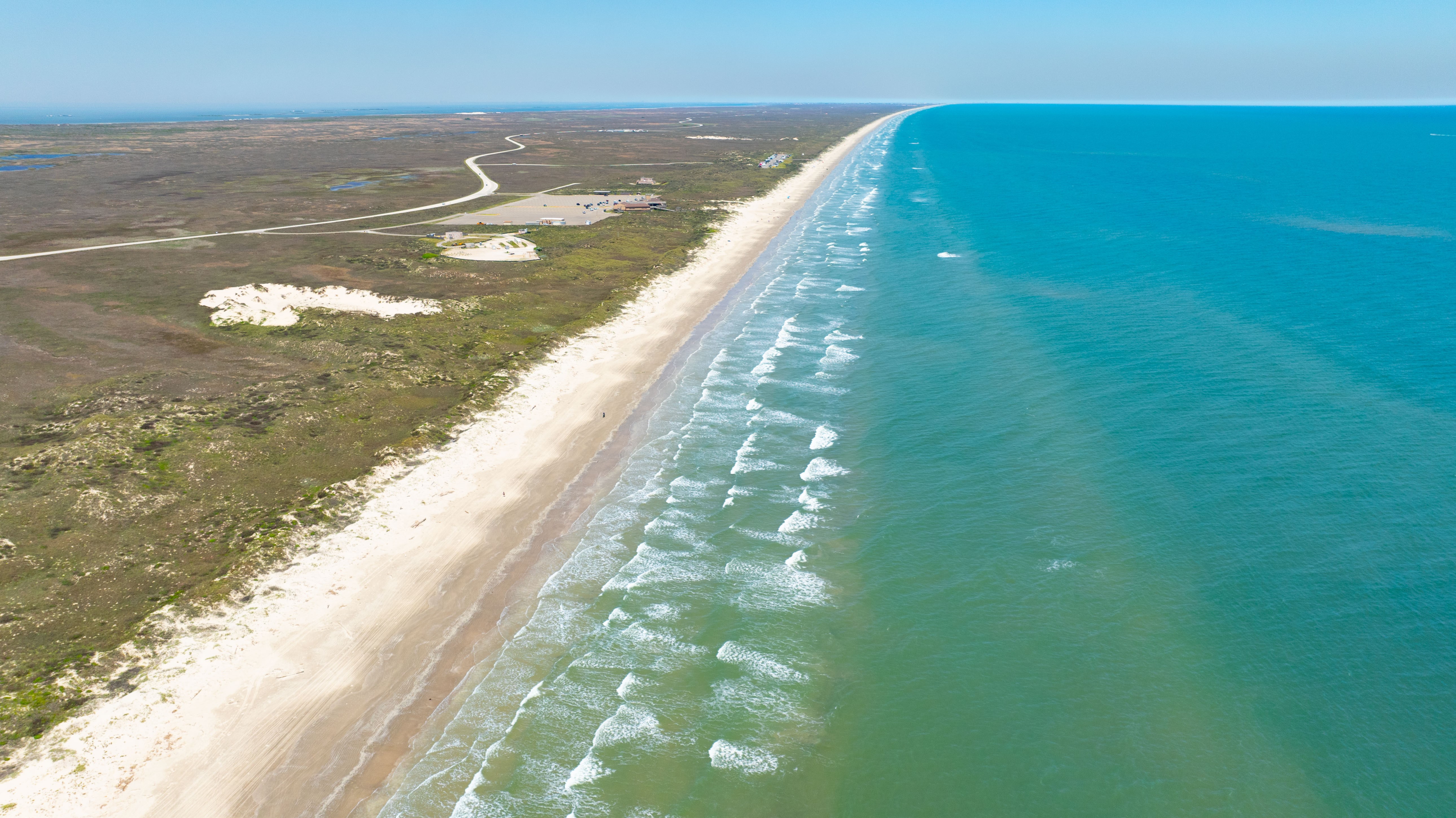
Corpus Christi and Padre Island offer the widest, emptiest stretches of sand on this list — Padre Island National Seashore runs 60 miles of undeveloped barrier island beach, and in November you might see more pelicans than people. Air temps sit in the low 70s with water temps around 68°F.
Where to stay: Corpus Christi’s bayfront hotels put you near the Texas State Aquarium and the USS Lexington. North Padre Island has beachfront condo rentals.
South Padre Island (about 2.5 hours south) is the true resort beach destination with more development and warmer water.
- Best for: Anglers and birders — Corpus Christi sits on the Central Flyway, and November migration brings hundreds of species through. Fishing for redfish and speckled trout peaks this month.
- Skip if: You want resort polish. This area is functional, not glamorous — bring your own beach umbrella and cooler mentality.
- Insider tip: If you want the full resort experience with this wide-open Gulf setting, drive the extra hours to South Padre Island — it has the amenities Corpus Christi lacks, though it’s a different trip entirely.
California Beach Resorts Worth Visiting in November
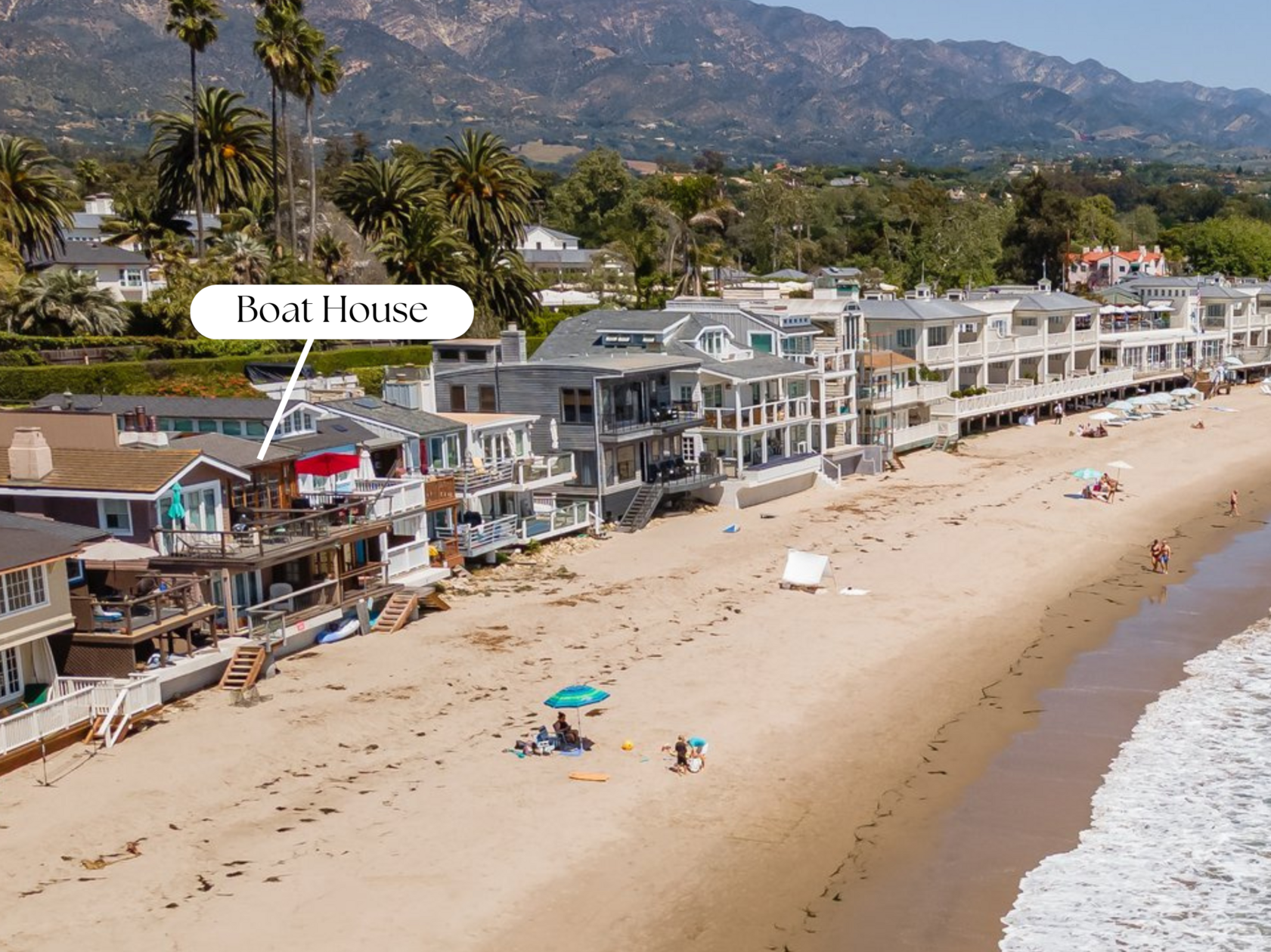
November on the California coast delivers what summer promises but rarely delivers: 65–70°F days, empty beaches, and hotel rates that typically drop 20–30% from July peaks. The Pacific Coast Highway between Santa Barbara and Los Angeles runs clear, whales migrate just offshore, and restaurants that require reservations in August suddenly have walk-in availability.
If you’re choosing between these two stretches of coast, here’s the honest breakdown.
| Base Area | Vibe | Best For | November Avg High |
|---|---|---|---|
| Santa Barbara | Quiet luxury, wine country access | Couples, foodies, slow-paced weekends | ~68°F |
| Santa Monica / LA Beaches | Urban energy meets shoreline | Anyone wanting beach days plus city nightlife, dining, and culture | ~68–72°F |
Santa Barbara
Santa Barbara earns its “American Riviera” nickname honestly — red-tile roofs spill down to wide, uncrowded beaches backed by the Santa Ynez Mountains, and in November the entire town exhales after summer. Expect roughly $250–$400/night at mid-range oceanfront properties, though prices swing significantly by weekend and specific location.
The sweet spot for lodging is along Cabrillo Boulevard, where you’re steps from East Beach and a flat, walkable stroll to Stearns Wharf and State Street’s restaurant corridor.
Two distinct stay approaches work here, and picking wrong is the most common mistake:
- Beachfront on Cabrillo Boulevard: This is the move if you want morning sand walks and sunset views without driving. Hotels along this strip range from upscale resorts to smaller inns — book an ocean-view room facing south toward the harbor rather than the parking-lot side. The payoff is real: you’ll watch pelicans dive while drinking coffee on your balcony.
- Downtown / Funk Zone base: Better for food-focused trips. You’re walking distance to wine tasting rooms, craft breweries, and the best restaurant density in town. Trade ocean views for the ability to stumble back from dinner without a rideshare. This area books up faster on weekends, even in November — lock in Thursday or Friday arrivals for better availability.
The real insider move: Butterfly Beach in Montecito faces south and west, making it the best late-afternoon beach in town — but parking is limited to a small lot and residential streets. Arrive before 3 p.m. on weekends.
For a full-day beach outing with more space, East Beach near Stearns Wharf has ample parking, volleyball nets, and wide sand that stays quiet through November. Day-trip into the Santa Ynez Valley for wine tasting (roughly 40 minutes inland), where November’s harvest crowds have thinned and tasting rooms are relaxed.
Santa Monica and Los Angeles Beaches
Santa Monica is where urban California meets the Pacific — the pier’s Ferris wheel lights up at dusk, the Third Street Promenade runs three blocks of shops and restaurants inland, and the beach stretches wide enough for actual solitude if you know where to go. In November, highs sit in the upper 60s to low 70s, morning marine layer typically burns off by 10 a.m., and the summer tourist crush is genuinely gone.
Lodging choices here split into three distinct experiences:
- Santa Monica proper (Ocean Avenue / Pico Boulevard): The premium pick. Ocean Avenue hotels sit on the bluffs above the beach with direct stair access to the sand. You’re walking distance to the pier, the Promenade, and some of LA’s best restaurants. Expect $300–$500/night at well-reviewed properties in November, less than half what July commands. This is the right base if you want beach town charm without a car.
- Venice Beach: Grittier, more eclectic, and significantly cheaper than Santa Monica. The boardwalk scene — street performers, murals, Muscle Beach — is a love-it-or-leave-it proposition. Stay here if you want bohemian energy and don’t mind some rough edges. The canals and Abbot Kinney Boulevard’s boutiques and restaurants are the polished counterbalance.
- North toward Malibu (Pacific Coast Highway corridor): Worth considering as a day trip or a night’s stay if you want dramatic coastline and hiking. November is prime for Solstice Canyon trails without summer heat, and the Getty Villa in Pacific Palisades requires a timed reservation but rarely fills up this month. Malibu’s beachfront hotels are pricier and more isolated — better for a splurge night than a full week’s base.
The local’s beach tip: skip the sand directly around the Santa Monica Pier — it’s the most crowded stretch year-round. Walk or bike south toward the Venice border or north toward Will Rogers State Beach for dramatically thinner crowds and the same wide, clean sand.
Rent bikes from any of the stands along the beach path; the ride from Santa Monica to Manhattan Beach and back is roughly 20 miles of flat, paved oceanfront path and one of the best November activities in LA.
For dining, the Farmers Market at the corner of Third Street and Arizona runs Wednesday and Saturday — grab seasonal produce and prepared food for a beach picnic rather than overpaying at a pier-side restaurant. Santa Monica’s farm-to-table dining scene is legitimately excellent in November when California’s fall harvest peaks, so book at least one serious dinner downtown.
How Much Does a November Trip to US Beach Resorts Cost?
November splits neatly into two pricing windows: the first three weeks are the sweet spot where shoulder-season rates meet warm weather, while Thanksgiving week can jump 30–50% at nearly every beach resort in the country. Book around that holiday and you’re paying peak-season prices for shoulder-season crowds — which is exactly the wrong trade.
Typical November Nightly Rates by Destination Tier
| Destination Type | Budget (3-star) | Mid-Range (4-star) | Luxury (5-star) | November Savings vs. Peak |
|---|---|---|---|---|
| Hawaii (Maui, Oahu, Kauai, Big Island) | $180–280 | $350–550 | $700–1,500+ | 20–35% below Dec–Mar rates |
| South Florida (Miami, Fort Lauderdale, Palm Beach) | $150–250 | $280–450 | $500–1,200+ | 15–25% below Dec–Feb rates |
| Gulf Coast (Destin, Gulf Shores, St. Pete) | $100–180 | $200–350 | $400–800 | 20–40% below summer peak |
| Georgia & Northeast Florida (Jekyll Island, Amelia Island) | $100–160 | $200–320 | $350–650 | 15–30% below summer/holiday |
| Southern California (San Diego) | $160–250 | $300–480 | $550–1,000+ | 10–20% below summer peak |
| South Carolina (Kiawah Island, Charleston area) | $120–200 | $250–400 | $450–800 | 25–40% below summer peak |
These are planning baselines for early-to-mid November. Prices vary by provider, booking window, and room category — always confirm before committing.
Where Your Dollar Goes Furthest
The Gulf Coast is the clear value play. Destin, Gulf Shores, and the St. Petersburg/Tampa area offer resort-style properties at roughly half what you’d pay for a comparable room in Maui or Miami.
Early November beach weather along the Emerald Coast averages highs in the low 70s — not blazing, but plenty warm for a long morning walk and an afternoon by the heated pool.
Georgia’s Golden Isles (Jekyll Island) and Amelia Island sit in a similar budget lane with even thinner crowds. Expect waterfront properties with kitchens for $200–350/night — a strong pick for families who want to cook some meals and stretch the budget further.
Where You’ll Spend More — And Why It’s Worth It
Hawaii commands the highest nightly rates even in its off-peak November window, but you’re also getting whale season on Maui, big-wave surf on Oahu’s North Shore, and the kind of warm-water snorkeling that mainland beaches can’t match. Early November is genuinely the cheapest time to visit Hawaii all year, making it the moment to lock in a resort you’d otherwise skip on price alone.
Palm Beach and Miami sit in the upper tier, but November pricing is meaningfully lighter than the December-through-March surge. South Beach boutique hotels that command $500+ in January often sit in the $300–400 range the first two weeks of November.
The Thanksgiving Trap
Late November (Thanksgiving week) rewrites every price above. Resort rates jump 30–50%, flight costs spike, and availability tightens — especially in Hawaii and South Florida.
If your dates are flexible, arriving the first or second week of November gives you better weather-per-dollar than almost any other window in the year.
Beyond the Room: Real Trip Costs
- Flights: Round-trip fares to Hawaii from the West Coast typically run $350–600 in early November. East Coast flights to South Florida hover around $150–300. Gulf Coast airports (Destin/Fort Walton, Pensacola) often beat Miami pricing by $50–100.
- Car rental: Essential on the Gulf Coast, Georgia isles, and Hawaii’s outer islands ($40–80/day). Optional in Miami, Fort Lauderdale, and San Diego if you stay walkable.
- Dining: Budget $50–80/person/day at mid-range restaurants along Florida and Gulf Coast resorts. Hawaii and Palm Beach skew higher — plan $80–120/person/day if you’re eating at resort restaurants.
- Activities: Whale-watching tours in Maui run $40–60/person. Airboat Everglades tours from Fort Lauderdale start around $30. Golf on Kiawah’s Ocean Course runs $300+; municipal courses nearby start at $50.
Insider Booking Strategy
Book direct with the resort for November stays, not through a third-party site. Many beach properties offer a “fall escape” or “shoulder season” package on their own website that includes resort credits, complimentary upgrades, or waived parking — perks you won’t see aggregated on booking platforms.
Call the property and ask specifically about November rate specials; front-desk staff often have discretion on unpublished deals during the first three weeks of the month.
Quick Budget Snapshot: 5-Night November Trip for Two
| Scenario | Lodging | Flights | Food & Activities | Total Estimate |
|---|---|---|---|---|
| Budget Gulf Coast (Destin) | $600–900 | $300–500 | $500–700 | $1,400–2,100 |
| Mid-Range South Florida (Fort Lauderdale) | $1,400–2,200 | $300–600 | $600–900 | $2,300–3,700 |
| Luxury Hawaii (Maui) | $3,500–7,500 | $700–1,200 | $1,000–1,500 | $5,200–10,200 |
| Mid-Range Lowcountry (Jekyll Island) | $1,000–1,600 | $250–450 | $500–750 | $1,750–2,800 |
The bottom line: November rewards the early planner. Book your resort by September, fly the first two weeks of the month, and you’re looking at the best warm-weather value of the entire year — before holiday pricing kicks in and the calendar fills up.
Is November the Best Time to Visit Warm US Beaches?
November is the single best-kept-secret month for a US beach trip. Summer tourists are gone, holiday travelers haven’t arrived yet, and the southern coastline still delivers water and air temps that let you swim, surf, and eat outside in a T-shirt — without sweating through it.
That shoulder-season sweet spot matters more than most people realize. Here’s what actually changes in November compared to every other month on the calendar:
Weather: What You’re Really Getting
Don’t expect Caribbean blast-furnace heat. What you get instead is genuinely pleasant beach weather — warm enough to swim, cool enough that a long walk on the sand doesn’t drain you.
- Gulf Coast (Destin through Gulf Shores): Air temps usually hover in the low-to-mid 70s. Water stays swimmable in the upper 60s to low 70s. Still comfortable for wading, kayaking, and sunset dining on a patio.
- South Florida and the Keys: Highs consistently sit in the upper 70s to low 80s. Ocean water runs warm. This is the closest thing to a guaranteed beach day without leaving the continental US.
- Southern California (San Diego, Malibu): Highs in the mid-60s to low 70s. Water drops to around 62-64°F — wetsuit territory for surfers, but perfect for coastal hikes, tide pools, and brewery patios.
- Hawaii (all islands): Highs in the low-to-mid 80s, water around 79-80°F. Full swimming conditions with no compromise.
- Georgia and South Carolina coast (Jekyll Island, Kiawah): Highs in the mid-60s to low 70s. Beach walks and biking are ideal; swimming is for the hardy.
Crowds: The Real Draw
Families wait for Thanksgiving week or winter break. Spring breakers are months away.
November weekdays at most US beaches feel almost empty compared to June or July — and even Thanksgiving week is calmer than peak summer at most Gulf and Atlantic destinations.
The exception: Thanksgiving week itself drives a brief spike at popular Florida resorts and Hawaii. If you want maximum quiet, aim for the first three weeks of November.
Book Thanksgiving week only if you’re fine sharing the beach with holiday crowds — rates jump 20-40% at many properties during that window.
Pricing: Where the Savings Actually Are
November pricing breaks into two tiers, and knowing the difference saves real money:
- Best value (early to mid-November): Shoulder rates apply across nearly every US beach market. Hawaii flights and resorts typically drop 15-25% compared to December-February pricing. Gulf Coast and Florida rentals often list at their lowest non-summer rates.
- Thanksgiving premium (late November): Prices climb sharply for the holiday week, especially in South Florida, the Keys, and Hawaii. Book by September if you’re targeting Thanksgiving travel — the best beachfront properties sell out early and rarely discount.
What November Does Better Than Any Other Month
Three things stand out:
- Whale watching begins. Pacific coast destinations like Malibu and San Diego see the first migrating gray whales in late November. Boat tours typically run through operators in Dana Point and Ventura — expect around $30-50 per person, though prices vary by provider.
- Golf hits peak playability. Courses at destinations like Kiawah Island and Palm Beach open up tee times that are impossible to book in peak winter. November is the sweet spot: comfortable temps, dry fairways, no backlog.
- Migratory birds fill the Gulf Coast. Nature lovers hitting Gulf Shores, the Emerald Coast, or Padre Island in November catch fall bird migration in full swing — a side benefit beach-only travelers miss entirely.
Where November Disappoints
Be honest about what November can’t do:
- Swimming north of South Carolina. Water temps from the Carolinas northward drop below comfortable for most people. Virginia Beach, the Outer Banks, and anywhere up the Atlantic coast are walk-on-the-beach destinations in November, not swim-in-the-ocean ones.
- Predictable weather in California. November kicks off the Pacific storm season. Expect stretches of gorgeous 70°F days punctuated by rain. Southern California is still your best bet, but pack a light jacket and check forecasts before committing to specific dates.
- Long beach days. Sunset comes early — around 5:15-5:30 PM across most of the southern US in November. Plan your beach time for the afternoon and save evenings for dining, live music, or waterfront strolls.
The Bottom Line
November is the best month for warm US beaches if you value fewer people, lower prices, and comfortable-but-not-scorching weather over peak summer energy and guaranteed warm ocean water. It’s the right choice for couples, solo travelers, and anyone with schedule flexibility outside school holidays.
Families locked into Thanksgiving week will still find great conditions — just book early and expect to pay closer to winter rates.
Which Warm Beach Resort Fits Your Travel Style?
November splits neatly into two beach moods: the polished, see-and-be-seen energy of South Florida, and the unhurried, barefoot calm of the Gulf Coast and barrier islands. Knowing which mood you want is the single biggest decision you’ll make — everything else falls into place after that.
Best for Couples: Intimate and Underrated
Amelia Island and Jekyll Island both deliver what overbuilt resort towns can’t — quiet mornings, walkable historic districts, and restaurants where you can actually hear each other talk. Amelia Island’s Fernandina Beach has preserved Victorian architecture and a working shrimping harbor that keeps the dining scene honest.
Jekyll Island’s Driftwood Beach at low tide is one of the most photogenic stretches on the entire East Coast, and the island’s bike-friendly loop trails mean you can skip the car entirely.
For couples who want nightlife alongside their beach time, Miami’s South Beach and Fort Lauderdale’s Las Olas corridor are the picks — just know that November is the start of high season, so rates climb fast after Thanksgiving.
Best for Families: Space, Sand, and Sanity
Anna Maria Island wins this category outright. No high-rises, no chain restaurants, and a free island trolley that connects the three towns — Holmes Beach, Bradenton Beach, and the city of Anna Maria.
The beaches are wide, the water is shallow, and the vibe is 1970s Florida in the best way. Book a beach rental with a kitchen; the island’s seafood markets make cooking in part of the fun.
Destin and the Emerald Coast are the runner-up for families who want more activity — think charter fishing, harbor boardwalks, and the Gulfarium Marine Adventure Park. The sugar-white sand here genuinely ranks among the best in the country, and November rates drop significantly from the summer peak.
Gulf Shores, Alabama, is the budget-friendly family alternative. The state park beach is less crowded than the main public beaches, and the small-town atmosphere means lower prices on everything from condo rentals to seafood dinners.
Best for Luxury Without the Fuss
Palm Beach is the clear leader if your idea of a beach resort involves Worth Avenue shopping, a world-class art museum, and stone crab claws at dinner. The island runs on a refined schedule — high season kicks in around November, and the social calendar fills quickly.
Book dining reservations before you arrive.
For a more resort-centric luxury experience, the Florida Keys and Cocoa Beach offer waterfront properties where the focus stays on the water — sailing, paddleboarding, and sunset cocktails with no dress code.
Best for Adventure and Active Travelers
Maui’s whale-watching season begins in November, and Oahu’s North Shore fires up with big-wave swells that draw the world’s best surfers. Big Island offers snorkeling in Kealakekua Bay and hikes through Hawai’i Volcanoes National Park — all with fewer crowds than peak winter.
On the mainland, Sanibel Island is a world-class shelling destination (low tide at Blind Pass is the move), and Corpus Christi’s Padre Island National Seashore gives you 60 miles of undeveloped beach — the longest stretch in the country. Bring your own supplies; there’s nothing out there, which is the entire point.
Best for Culture and Food
Miami’s Little Havana and the Art Deco district give you Caribbean and Latin American culture steps from the beach. St. Petersburg and Tampa pair waterfront relaxation with a genuine arts scene — the Dalí Museum and the murals of the Central Arts District are worth a full afternoon.
Tampa’s Ybor City, a historic Cuban neighborhood, anchors the city’s most culturally rich quarter.
Quick-Decision Comparison
| Travel Style | Top Pick | Runner-Up | November Sweet Spot |
|---|---|---|---|
| Couples | Amelia Island | Jekyll Island | Quiet beaches, historic charm, lower rates than winter peak |
| Families | Anna Maria Island | Destin / Emerald Coast | Free trolley, no high-rises, wide shallow beaches |
| Luxury | Palm Beach | Florida Keys | High season begins — book dining and spa early |
| Adventure | Maui | Padre Island (Corpus Christi) | Whale season starts, big-wave surf, undeveloped coastline |
| Culture & Food | Miami | St. Petersburg / Tampa | Warm dry weather, event season ramps up |
| Budget | Gulf Shores | Cocoa Beach | Post-summer rates, fewer crowds, still warm |
The Insider Detail Most Travelers Miss
Across every destination listed here, the best November booking window is the first two weeks of the month. Rates jump 30 to 50 percent once Thanksgiving week arrives, and availability at the top properties — especially in Palm Beach, Maui, and the Florida Keys — drops sharply.
Book by mid-October for the best selection, and look for properties offering shoulder-season packages that include breakfast, parking, or resort credits. These deals disappear by mid-November and don’t return until after New Year’s.
Frequently Asked Questions
What is the warmest beach in the US in November?
Hawaii and South Florida win outright. Expect average highs of 80–85°F on Oahu, Maui, and the Big Island, with ocean water temperatures around 78–80°F — genuinely warm for swimming without a wetsuit.
In Florida, the southernmost destinations hold the most heat: Miami, the Florida Keys, and Fort Lauderdale consistently hit the mid-80s during the day. Fort Lauderdale’s average highs sit in the 70s and 80s, which makes it reliably warm without the oppressive humidity of summer.
The Keys offer the warmest ocean water on the mainland US coast, usually mid-to-upper 70s.
If you’re choosing between the two coasts, Hawaii delivers warmer water and more consistent swimming conditions. South Florida delivers warmer air and easier access from the East Coast — a shorter flight and no time-zone shock.
Is November too early for whale watching or big-wave surfing?
No — November is actually when these seasons begin. Humpback whale-watching season on Maui typically starts mid-to-late November, with sightings increasing through the month as migrating pods move into Hawaiian waters.
Book a morning boat tour out of Ma’alaea or Lahaina Harbor for the calmest seas. On Oahu’s North Shore, big-wave season kicks off in November with the opening events of the surfing competition season — expect massive swells at Pipeline, Sunset Beach, and Waimea Bay.
Watching from the beach is free and spectacular.
In Florida, manatee season ramps up in November as these gentle giants move into warmer spring-fed rivers and canals — Crystal River and the Homosassa River are the best mainland viewing spots, roughly 90 minutes north of Tampa.
Are November beach resort prices really lower?
Significantly. November falls in the shoulder season for nearly every US beach destination, which means rates 25–45% below peak winter pricing at most resorts.
Hawaii sees some of its lowest hotel rates of the year in early-to-mid November, before Thanksgiving week drives prices back up. Florida follows the same pattern: Miami Beach, Fort Lauderdale, and Palm Beach resorts drop to their friendliest rates in the first three weeks of the month, then spike around Thanksgiving.
The smartest move is booking your trip for the first or second week of November. You’ll get the best rates, the thinnest crowds, and — in most destinations — nearly identical weather to what you’d find in December or January.
Thanksgiving week is the exception: prices surge, availability tightens, and beaches fill with holiday travelers.
Can you actually swim at the beach in November in the US?
Yes, but where matters. Hawaii and the Florida Keys are the safest bets — ocean temperatures remain in the mid-to-upper 70s, comfortable for extended swimming without a wetsuit.
South Florida’s Atlantic beaches (Miami, Fort Lauderdale, Palm Beach) run slightly cooler, usually low-to-mid 70s, which is swimmable but brisk for some. North Florida beaches like Amelia Island and Jekyll Island dip into the upper 60s — fine for wading and beach walks, but most people won’t linger in the water.
On the Gulf side, Destin and Panama City Beach hover around 68–72°F in November, warm enough for a dip on a sunny afternoon. Gulf Shores and the Alabama coast sit in a similar range.
Corpus Christi and South Padre Island hold water temps in the low 70s. If swimming is your priority and you’re staying on the mainland, stick with South Florida or South Texas — everywhere else, pack a wetsuit or plan on beach time over water time.
Book Your November Beach Trip Now
Pick your coast first — Maui and the Keys for guaranteed warm water, the Gulf Coast for the best value, or Anna Maria and Jekyll Island for the quiet you cannot find in peak season. Then lock in the first or second week of November before Thanksgiving pricing kicks in and the best waterfront rooms disappear.
November is the only month where empty beaches, shoulder-season rates, and warm enough water to actually swim all line up at once — without ever leaving the country.
Start with your resort now, book by mid-October, and let the countdown to your warmest, quietest beach week of the year begin.
Leave a Reply