Imagine crunching across a frozen boardwalk while Old Faithful erupts into sub-zero air, steam billowing so thick it swallows the sky. Or picture your boots sinking into warm desert sand at 282 feet below sea level while everyone back home scrapes ice off their windshield.
Winter splits America’s national parks into two wildly different experiences: snow-draped masterpieces you share with almost nobody, and sun-baked escapes where the temperature finally lets you hike without melting.
This guide helps you pick the right camp for your trip style, gear level, and tolerance for cold — then shows you exactly how to plan it.
Budget travelers can road-trip to desert parks like Death Valley or Saguaro for under $150 a night in gateway motels. Mid-range visitors should expect $200–350 for in-park lodges at Bryce Canyon or Yosemite.
Splurge-level trips to Yellowstone’s interior by snowcoach or a Hawaiian park hop can easily run $400–600 per day including guided access and island lodging.
Best Winter National Parks at a Glance
Forty-two degrees and sunshine at the lowest point in North America while your hometown shovels snow — that is why Death Valley tops this list, and why every park below earned its spot. Winter splits America’s national parks into two distinct camps: those that hand you a snowy playground and those that hand you an escape from winter entirely.
Knowing which camp you want is the only decision you need to make before diving into the individual park guides that follow.
| Park | Winter Temp Range | Why Go Now | Skip If… |
|---|---|---|---|
| Death Valley, CA | Highs 60–65°F | Perfect hiking weather on surreal desert terrain; all roads open including Badwater Basin | You want snow or lush scenery |
| Big Bend, TX | Highs 55–65°F | Desert canyons, hot springs, and dark skies without triple-digit heat | You need easy logistics — it is extremely remote |
| Joshua Tree, CA | Highs 55–60°F | Boulder scrambling and bizarro trees without the summer furnace | You want long daylight hours for big hikes |
| Saguaro, AZ | Highs mid-60s°F | Iconic cactus forests, Tucson is right there for food and lodging, stunning sunsets | You want dramatic elevation or alpine scenery |
| Arches & Canyonlands, UT | Highs 30–45°F | Moab’s two parks without the gridlock; rare solitude at Delicate Arch | You need warmth — it is cold, especially mornings |
| Zion, UT | Highs 40–50°F | Dramatically fewer crowds in the canyon; shuttle is not mandatory in winter | You want guaranteed dry trails — ice and snow are possible at elevation |
| Everglades, FL | Highs 75–80°F | Dry season means fewer mosquitoes and peak birding | You want dramatic landscapes over wildlife viewing |
| Virgin Islands, USVI | Highs low 80s°F | Beaches, snorkeling, and sea turtles — no passport needed | You are on a tight budget — island prices sting |
| Hawaii Volcanoes, HI | Highs 70s–80s°F coastal | Green, mild, and open year-round; Kilauea Iki Trail is unforgettable | You want a short, cheap flight |
| Grand Canyon South Rim, AZ | Highs 30–40°F | Snow-dusted rim with far fewer visitors; El Tovar feels like your own lodge | You want to hike to the river — winter conditions are serious |
| Olympic, WA | Varies wildly by zone | Snowshoe Hurricane Ridge in the morning, walk a mossy rainforest in the afternoon | You need reliable access — Hurricane Ridge Road runs limited days |
| Rocky Mountain, CO | Highs 30s–40s°F lower elevations | No timed-entry reservations; elk descend to lower meadows; Bear Lake Road stays open | You want to drive Trail Ridge Road — it is closed all winter |
| Yosemite, CA | Highs 40s°F valley floor | Waterfalls at full flow, Half Dome in snow, Valley is still accessible by car | You want to reach Glacier Point or Tuolumne — roads closed |
| Bryce Canyon, UT | Highs 30s°F | Snow on orange hoodoos is the single most photogenic winter scene in the system | You will not drive in snowy conditions |
| Crater Lake, OR | Highs 20s–30s°F | The deepest lake in the U.S. surrounded by heavy snow; ranger-led snowshoe walks | You want easy road access — expect chain requirements and closures |
| Grand Teton, WY | Highs teens–20s°F | Silent, snow-covered Teton Range with almost no one around | You want full facilities — most are closed |
| Mount Rainier, WA | Highs 30s–40s°F lower | Paradise area for snowshoeing with the volcano looming overhead | You want a long day — daylight is short and roads are weather-dependent |
| Sequoia, CA | Highs 40s–50s°F foothills | Walk among the world’s largest trees in peaceful solitude | You need reliable access to Giant Forest — chains may be required |
| Yellowstone, WY/MT | Highs teens–20s°F | Geysers erupting through steam and frost; bison herds on empty roads | You want casual access — interior roads are closed to cars; snowcoach or snowmobile only, and it is not cheap |
| Haleakala, HI | Summit 30s–40s°F; coast 75–80°F | Sunrise above the clouds at 10,000 feet, then warm beach recovery | You hate early mornings — sunrise reservations fill fast |
Parks to skip in winter: Glacier closes Going-to-the-Sun Road entirely, locking you out of the park’s best scenery. The Grand Canyon’s North Rim is shut until spring.
If the park you want is not on this table, check the NPS road status page before you commit — winter closures are real and change without much warning.
One insider detail worth knowing before you pick: the parks in the “mild weather” column are where you get the most park for the least effort in winter — short days and cold mornings in the Rockies and Cascades are beautiful but demand real gear and planning. If this is your first winter national park trip, Death Valley or Saguaro is the easy win.
Top Winter National Parks for Snowy Adventures
Snow draped over orange hoodoos, steam billowing from geysers into sub-zero air, a cobalt lake framed by a thousand feet of white — these parks only look like this for a few months a year. The cost of admission is cold, closed roads, and proper gear.
The payoff is landscapes so stark and empty they barely register as the same places you saw on that summer road trip.
Here’s how all ten compare on what matters most when snow is part of the deal:
| Park | State | Signature Winter Payoff | Daytime Temps | Access |
|---|---|---|---|---|
| Yellowstone | WY / MT | Steaming geysers, wolf sightings | Teens–30s°F | High — interior by snowcoach or snowmobile only |
| Bryce Canyon | UT | White powder on orange hoodoos | 30s–40s°F | Easy — main road and overlooks plowed |
| Yosemite | CA | February firefall, empty valley | 40s–50s°F (valley) | Easy — valley open; high country closed |
| Crater Lake | OR | Deep blue lake ringed in white | 20s–30s°F | Moderate — rim road closed, snowshoe in |
| Grand Teton | WY | Teton panoramas, moose and elk | Teens–30s°F | Moderate |
| Mount Rainier | WA | Deepest snow in the Lower 48 | 20s–30s°F | Moderate — road plowed to Paradise |
| Rocky Mountain | CO | No timed entry, Bear Lake open | 30s–40s°F | Easy |
| Sequoia | CA | Giant trees blanketed in snow | 30s–40s°F | Moderate — chains often required |
| Olympic | WA | Hurricane Ridge snowplay | 30s–40s°F | Moderate — road open select days only |
| Grand Canyon (South Rim) | AZ | Snow on red rock, empty trails | Low 40s°F | Easy — open year-round |
Yellowstone National Park (Wyoming/Montana)
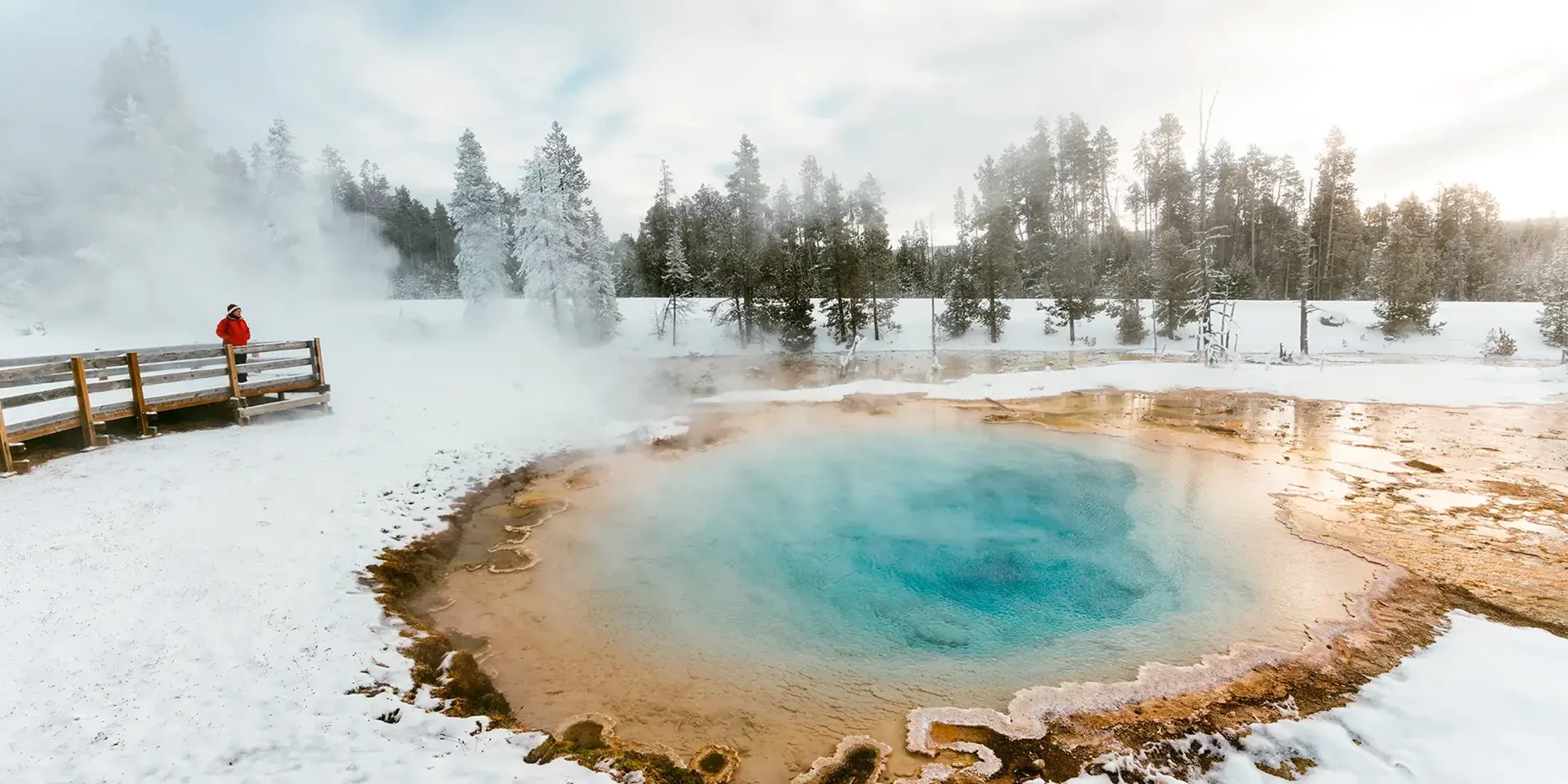
Yellowstone in winter is a different park entirely. Most interior roads close to regular vehicles by early November, and the only way to reach Old Faithful or the Grand Canyon of the Yellowstone from December through mid-March is by guided snowcoach or permitted snowmobile.
That barrier is exactly the point — you’ll share geyser basins with a handful of people instead of thousands, and bison, wolves, and elk are far more visible against the snow. West Yellowstone, Montana, is the most common base, with operators running daily snowcoach tours into the park.
Mammoth Hot Springs, at the north end, stays accessible by car from Gardiner, Montana, year-round — this is your fallback if you want a winter visit without booking a guided trip.
The catch: Interior lodging is limited and expensive. The Old Faithful Snow Lodge is the only overnight option inside the park in winter, and it books months ahead — budget roughly $200–350 per night.
Day trips from West Yellowstone are the more flexible (and cheaper) move.
Bryce Canyon National Park (Utah)
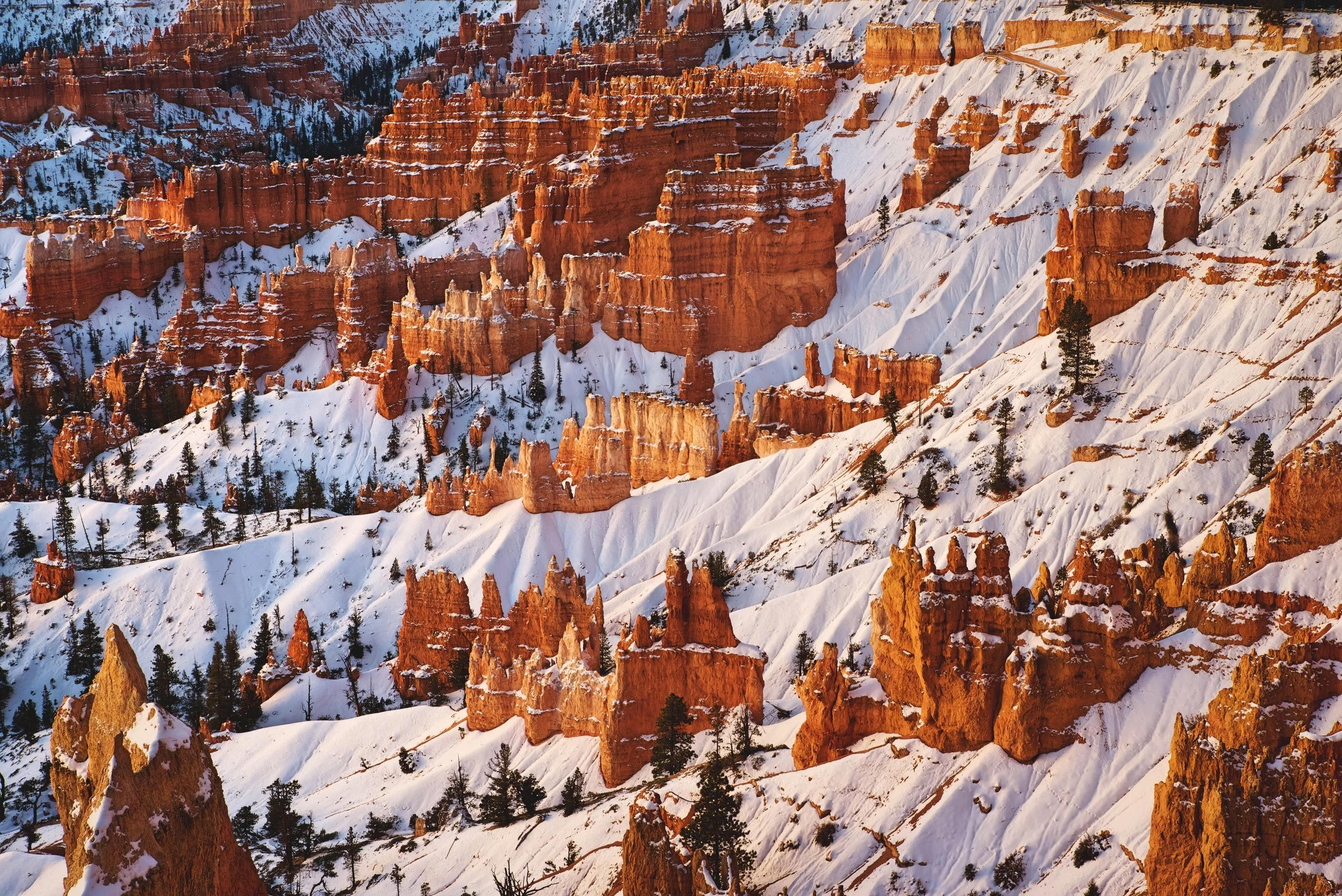
Bryce in winter is the prettiest park on this list. At 8,000–9,000 feet it gets real snow, and white powder draped over the orange hoodoos is a sight that stops people cold.
Highs hover in the 30s–40s with sub-freezing nights. The main road and most overlooks stay plowed and open, so you can drive the rim and pull off at every viewpoint with minimal effort.
The real magic happens below the rim — the Queen’s Garden and Navajo Loop combination is the must-do — but those trails turn to packed snow and ice. Bring microspikes at minimum; snowshoes are better after fresh snowfall.
Base yourself at: Ruby’s Inn, right at the park entrance, stays open year-round and rents snowshoes. Expect winter lodge rooms around $100–180/night, well below summer rates.
Dining options in Bryce Canyon City are limited but adequate — don’t expect variety.
Yosemite National Park (California)
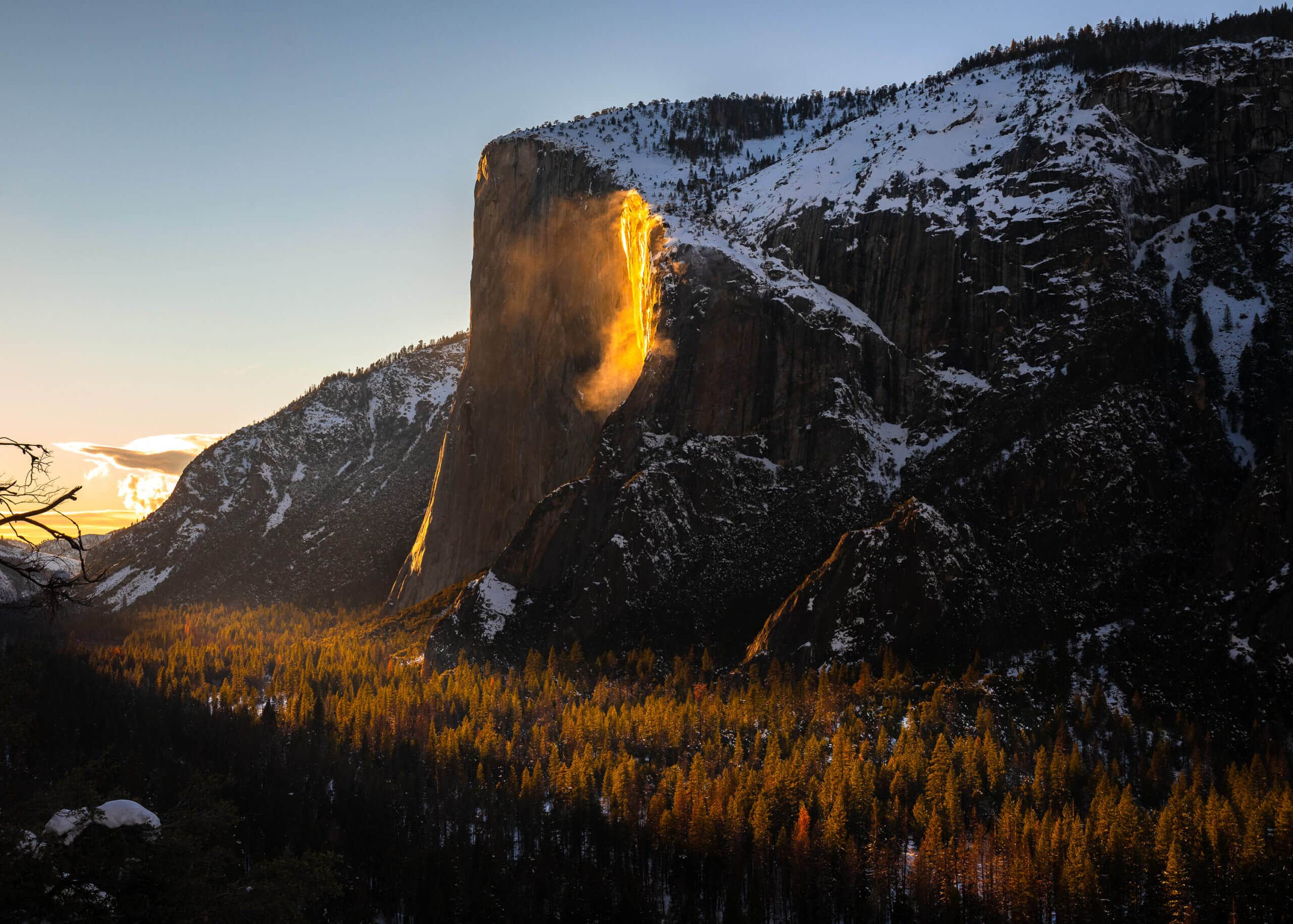
Most of Yosemite’s high country — Tioga Road, Glacier Point Road — is snowed shut in winter, but Yosemite Valley stays open year-round and delivers a genuinely special February event: the firefall. For roughly two weeks in mid-to-late February, the setting sun lights up Horsetail Fall so it glows like molten lava.
The strong window in 2026 runs approximately February 19–23, with February 21 expected to be peak — but it needs water flowing and a clear western sky, so it’s never guaranteed.
Outside firefall season, winter in the valley is still worth it: the meadows are empty, Yosemite Falls runs heavy during snowmelt periods, and you can photograph Half Dome without competing for a tripod spot. Yosemite Valley Lodge and The Ahwahnee are both open year-round; expect roughly $200–400/night depending on dates and room type.
The gateway towns of El Portal and Mariposa offer cheaper alternatives 30–45 minutes from the valley floor.
Crater Lake National Park (Oregon)
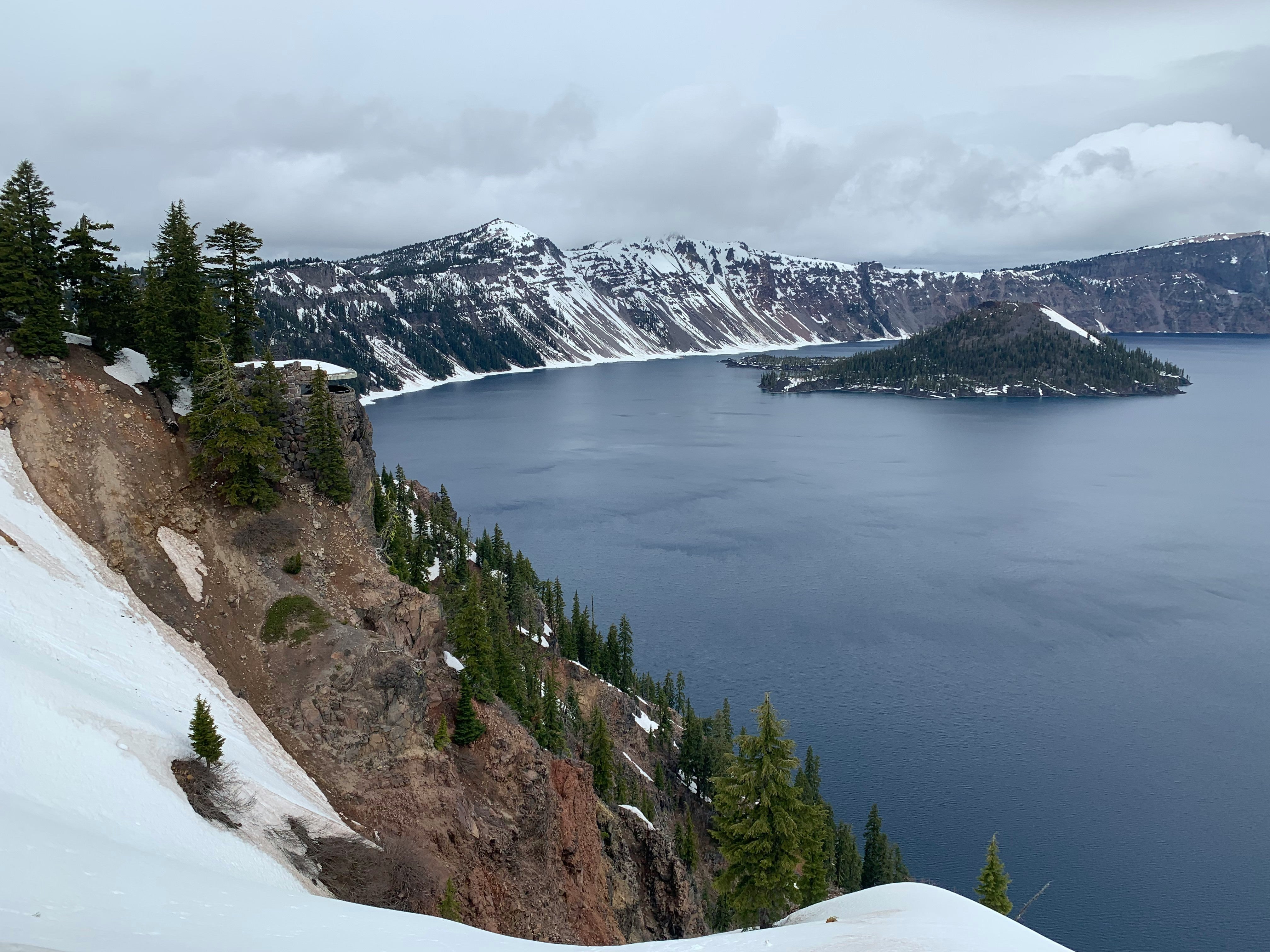
Crater Lake gets buried. The park averages 43 feet of snow annually — among the highest in the country — and the rim drive closes to cars entirely in winter.
Reaching the overlook requires snowshoeing or cross-country skiing about a mile from the Rim Village parking area, which the park keeps plowed. The reward: one of the deepest, bluest lakes on earth framed by a near-perfect ring of white, with virtually no one else around.
Plan for: The Rim Village area has a visitor center, but the Crater Lake Lodge closes for winter — confirm seasonal dates before building a trip around it. The nearest full-service base is Klamath Falls, about 60 miles south.
Winter visits are weather-dependent; heavy storms can temporarily close even the access road to Rim Village, so have a flexible itinerary.
Grand Teton National Park (Wyoming)
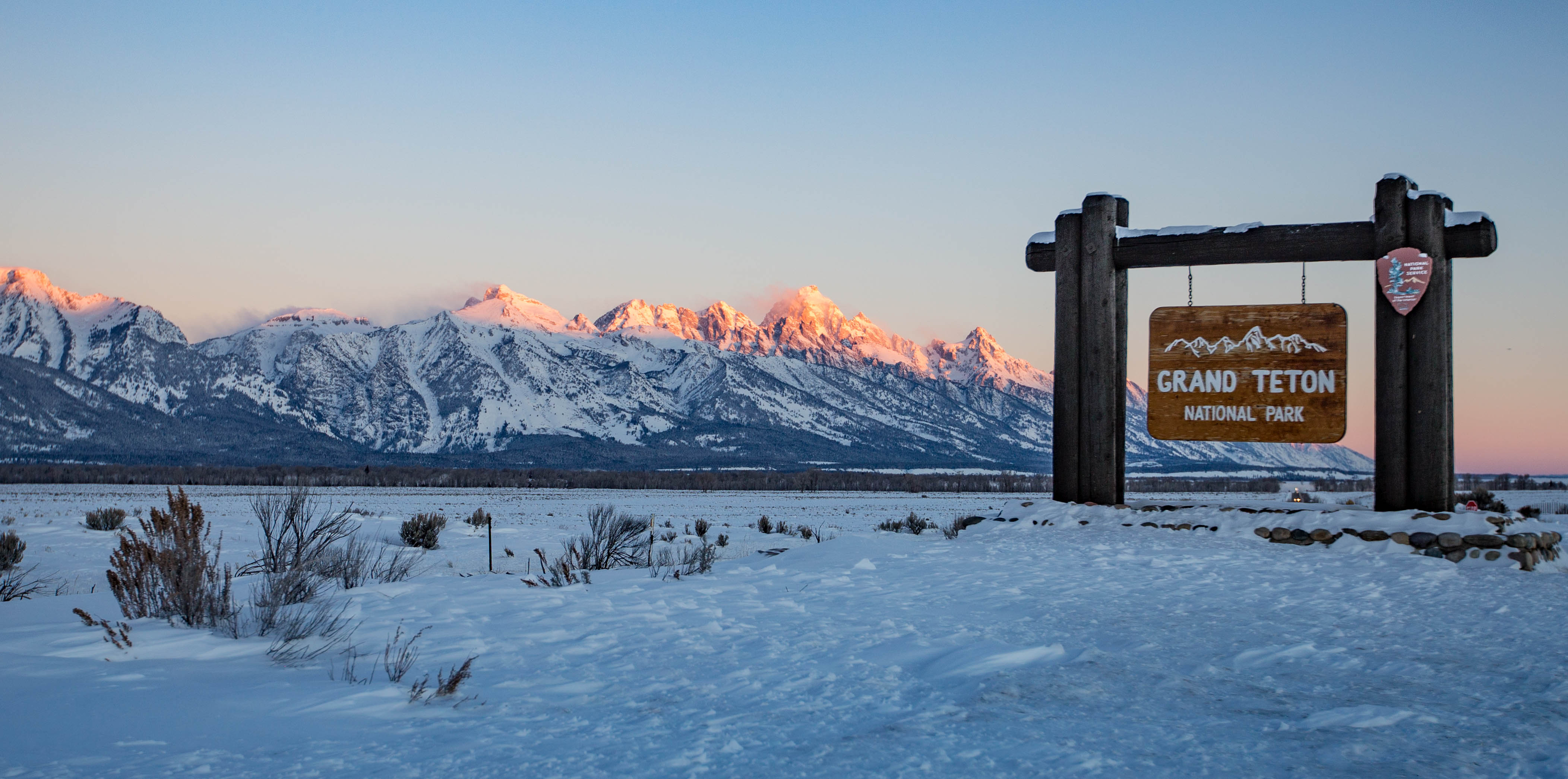
Grand Teton in winter is about two things: the Teton Range in full snow regalia, and wildlife that crowds the valley floor. Moose, elk, bison, and coyotes all move to lower elevations, and the absence of summer traffic makes the park feel genuinely wild.
Teton Park Road closes to vehicles past the Taggart Lake trailhead in winter, but plowed turnouts along US-26/89/191 give you direct mountain views without leaving your car.
Base yourself in Jackson: The town sits 15 minutes from the park’s main entrance and stays fully operational in winter thanks to the Jackson Hole ski resort economy. Lodging runs roughly $150–350/night depending on proximity to the town square.
For Nordic skiing and snowshoeing, the park’s unplowed roads and the trails around Taggart and Phelps Lakes are the go-to — bring your own gear or rent in Jackson.
Mount Rainier National Park (Washington)
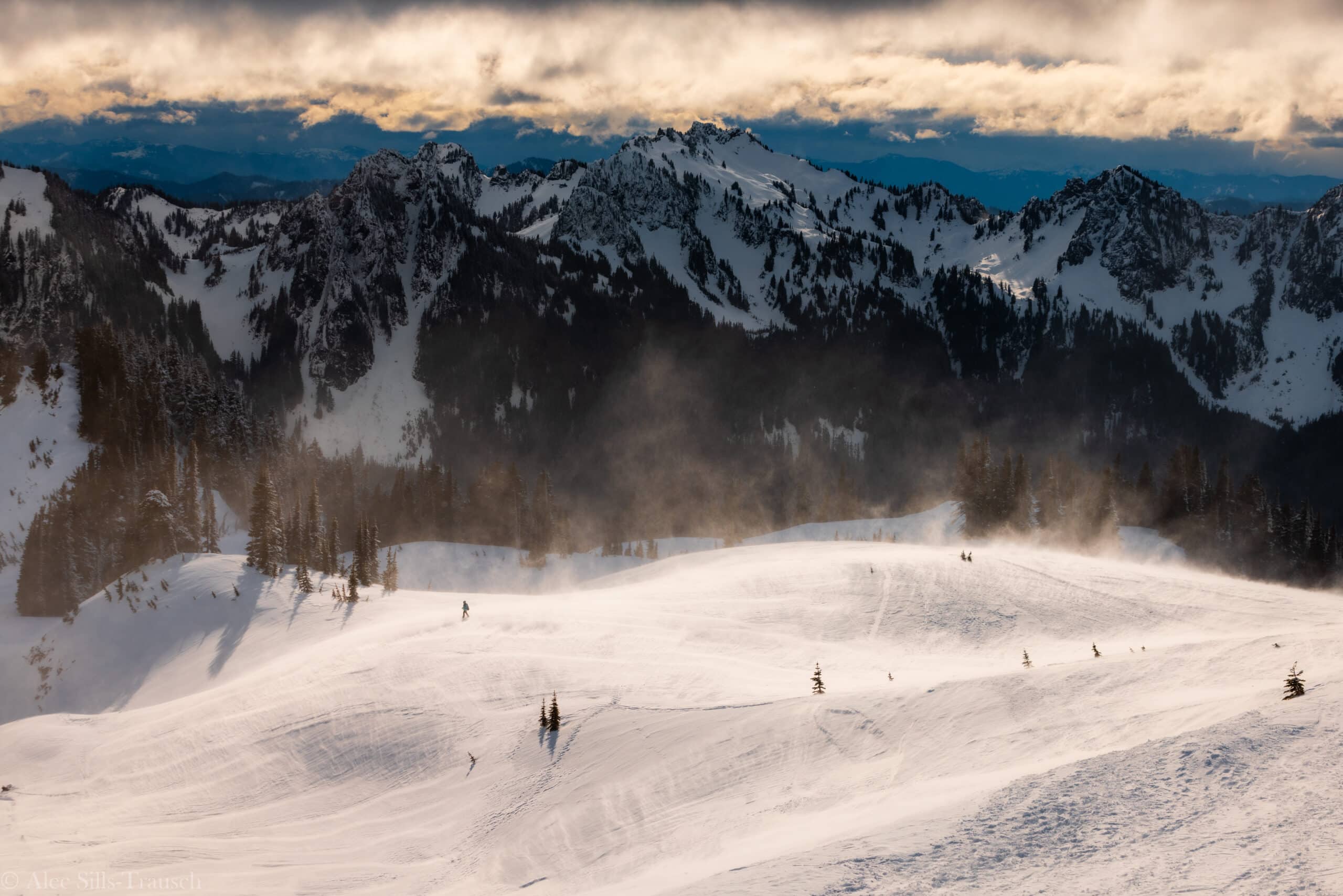
Mount Rainier catches some of the deepest snowfall in the contiguous United States, and the Paradise area at 5,400 feet is built for it. The road from the Nisqually entrance up to Paradise is plowed all winter, opening the door to snowshoeing, sledding, and backcountry skiing beneath the volcano.
On clear nights it’s one of the best stargazing spots in the Pacific Northwest — the elevation and lack of light pollution make the Milky Way visible to the naked eye.
Insider detail: Arrive early. Paradise parking fills by mid-morning on weekends, and the park occasionally turns cars away at the gate.
Weekdays are dramatically easier. Ashford, just outside the Nisqually entrance, has the closest lodging — mostly cabins and small inns, typically $100–200/night.
Packwood, on the park’s east side, is another option but involves a longer drive to Paradise.
Rocky Mountain National Park (Colorado)
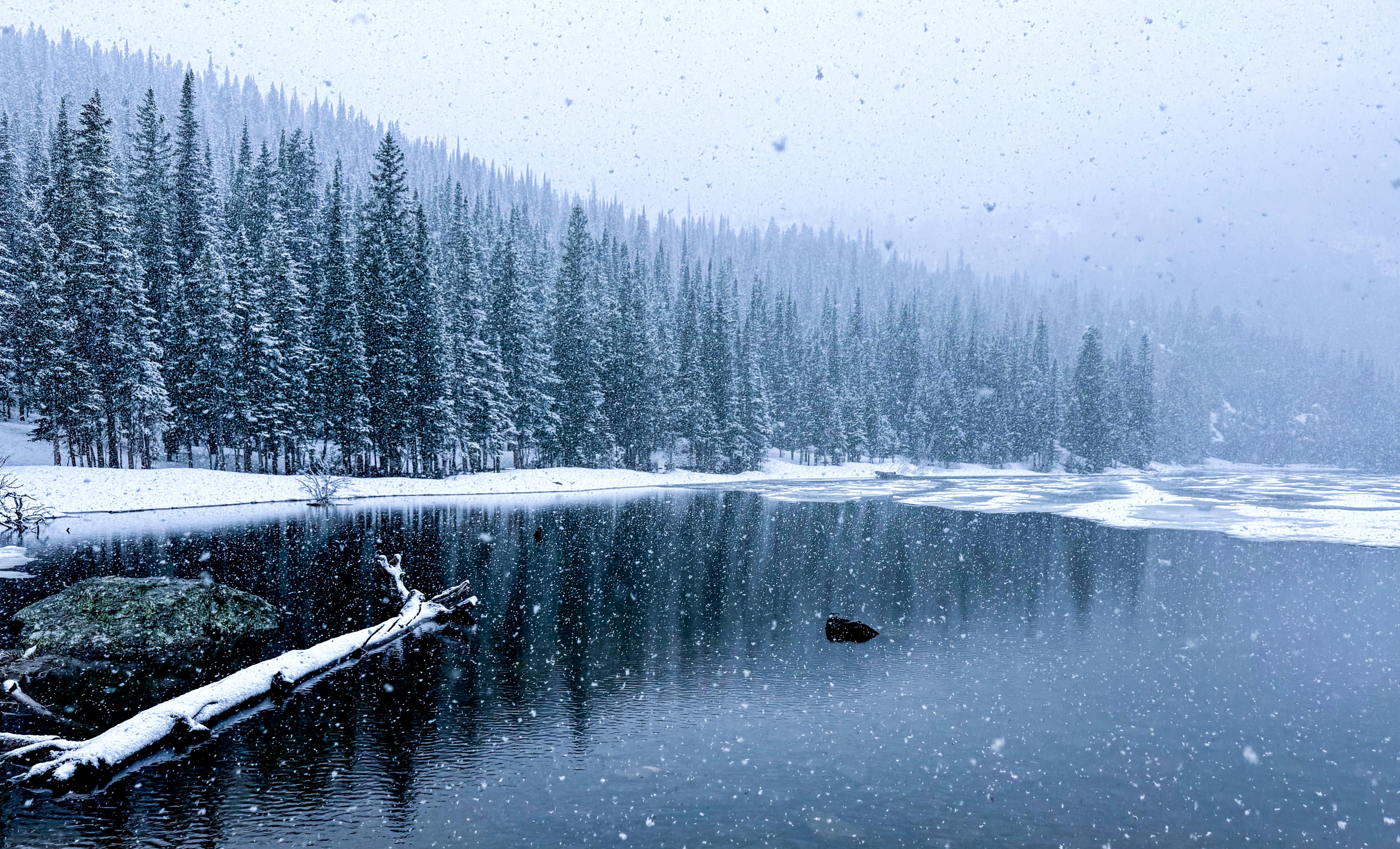
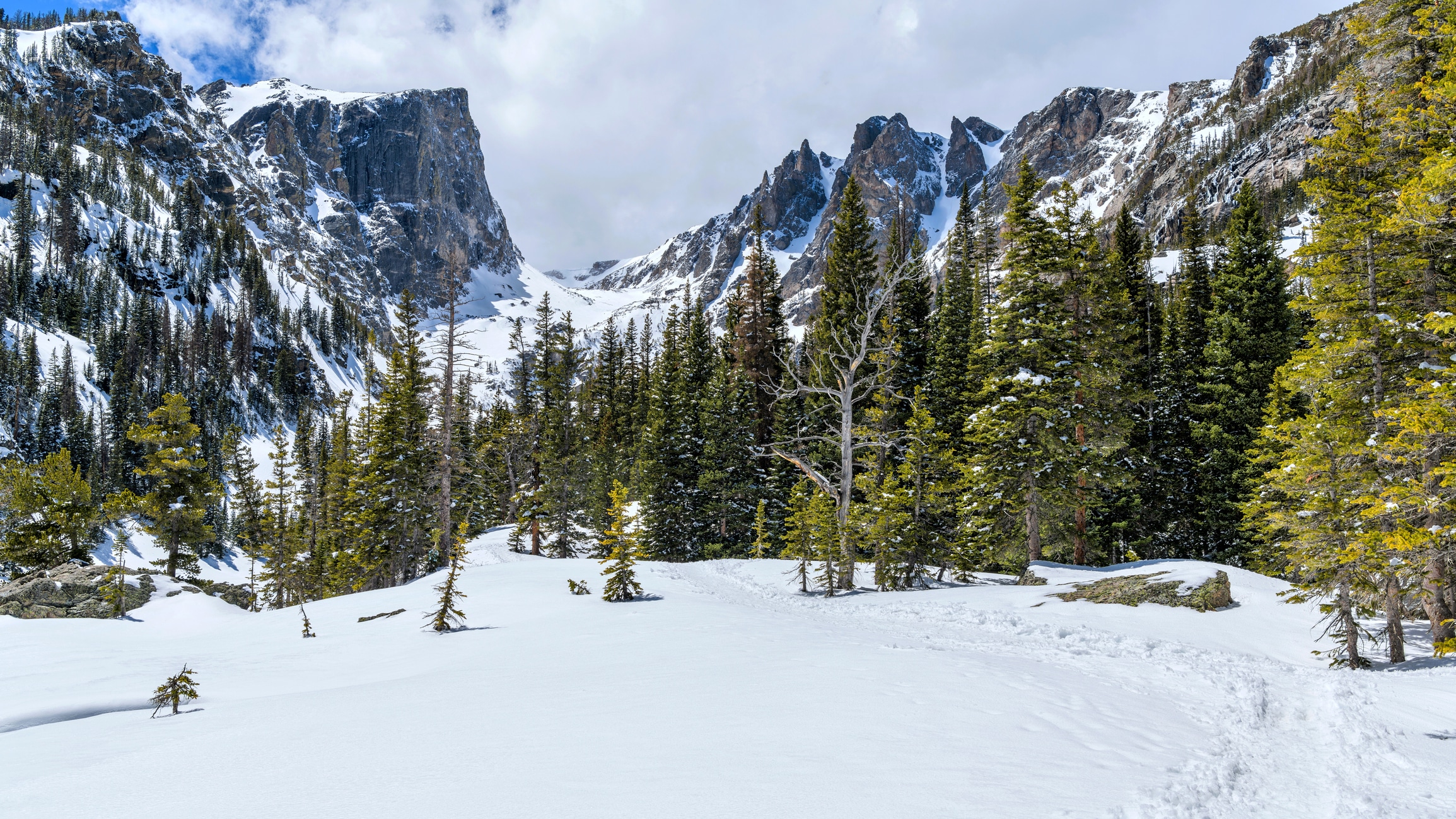
Here’s the winter perk most people miss: Rocky Mountain’s summer timed-entry reservation system does not run in winter, so you can come and go freely. Trail Ridge Road closes at Rainbow Curve, but Bear Lake Road stays open and plowed, putting alpine lakes and snowshoe trails within easy reach.
The elk move down to lower meadows — Horseshoe Park and Moraine Park are prime viewing — and the park is dramatically quieter than its summer self.
Base yourself in Estes Park: It’s the only real gateway town, just minutes from the Beaver Meadows entrance. Winter lodging drops well below summer peak rates — expect $80–200/night for cabins, motels, and lodges.
Estes Park itself has enough restaurants and shops to fill an evening, though some businesses close seasonally.
Sequoia National Park (California)
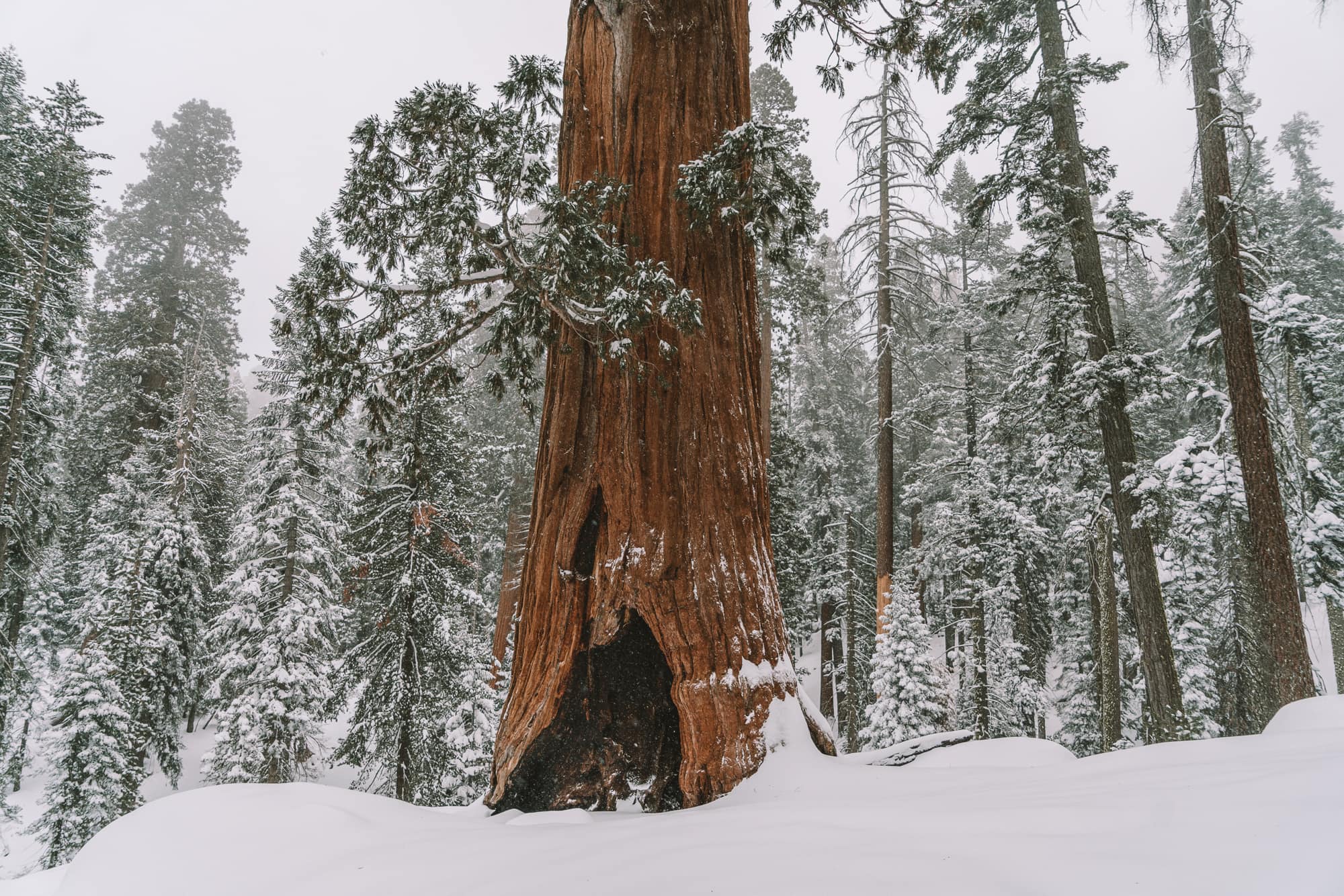
Giant sequoias under snow are one of those images that looks photoshopped until you see it in person. The General Sherman Tree and the Giant Forest area remain accessible in winter, though Generals Highway requires chains or four-wheel drive more often than not — the park sits at 5,000–7,000 feet and gets regular snow.
The payoff: you might have the world’s largest tree almost to yourself.
Practical note: Sequoia shares a border and entrance with Kings Canyon National Park, but Kings Canyon’s scenic highway past Giant Forest closes in winter. Stick to the Sequoia side.
The gateway town of Three Rivers sits at lower elevation and stays snow-free; Visalia, about 45 minutes further west, has the widest range of hotels and restaurants.
Olympic National Park (Washington)
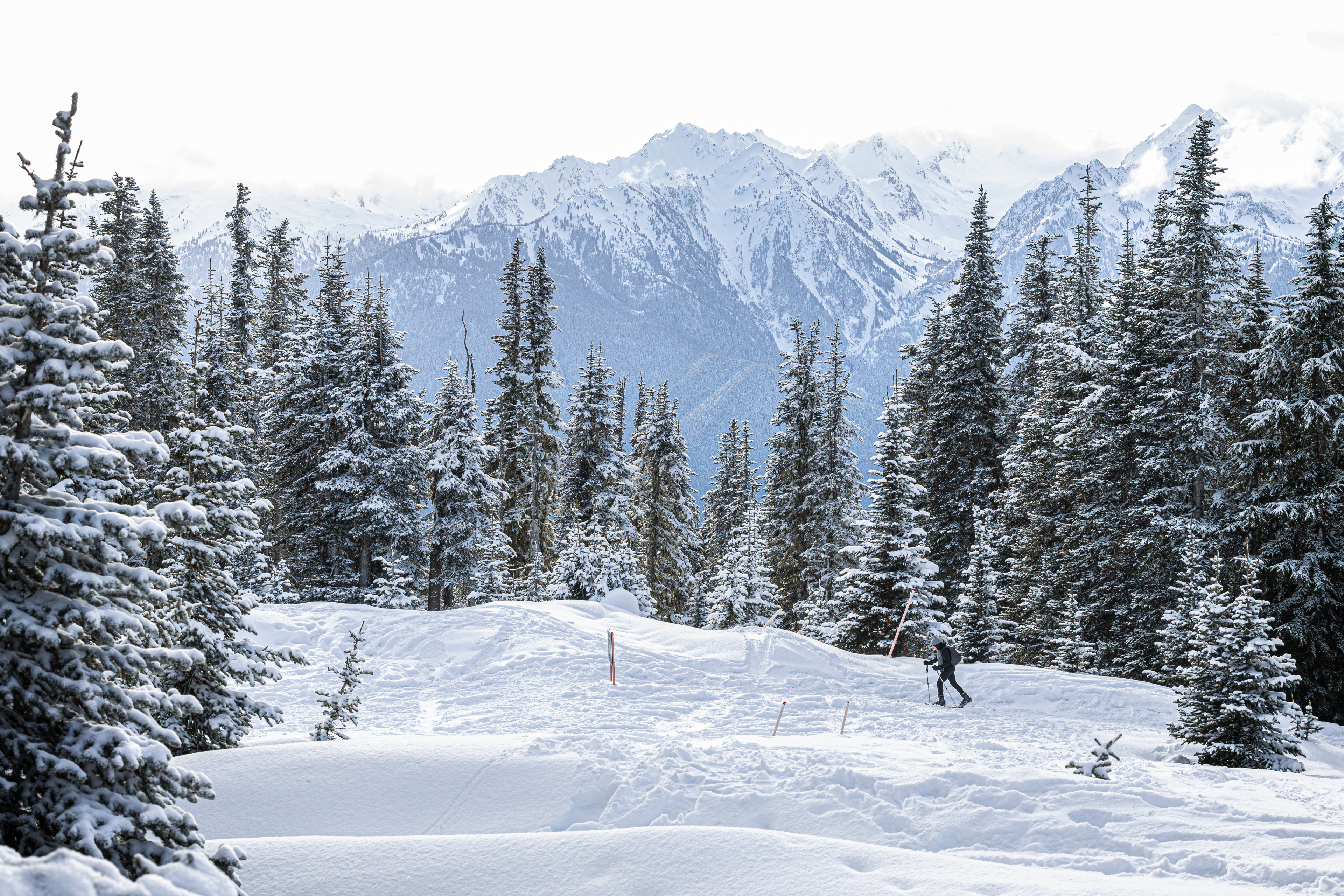
Olympic is three parks in one — temperate rainforest, rugged coast, and alpine peaks — but winter revolves around one area: Hurricane Ridge. The road up from Port Angeles opens Fridays through Sundays and holiday Mondays, weather permitting, giving access to snowshoeing, cross-country skiing, and a small snowplay area for families.
On clear days the ridge delivers panoramic views of the Strait of Juan de Fuca and Vancouver Island.
Best Winter National Parks for Mild Weather and Fewer Crowds
When northern parks are buried under snow and the summer hordes have long gone home, these parks are sitting in the 60s and 70s with wide-open roads and trailheads you can actually park at. Winter is not the shoulder season here — it is peak season for comfort, and you should plan accordingly.
| Park | Winter Highs | Best For | Crowd Factor |
|---|---|---|---|
| Death Valley, CA | 60–65°F | Hiking, photography, solitude | Moderate — spread across a massive park |
| Big Bend, TX | Mid-60s to low 70s | Remote desert hiking, hot springs | Low — genuinely empty |
| Joshua Tree, CA | 60s days, freezing nights | Rock climbing, bouldering, stargazing | Moderate on weekends |
| Saguaro, AZ | Mid-60s | Sunset hikes, iconic cactus scenery | Low to moderate |
| Zion / Arches / Canyonlands, UT | 40s–50s | Dramatic red rock without summer mobs | Moderate — far less than summer |
| Everglades / Dry Tortugas / Biscayne, FL | 70s–80s | Wildlife, kayaking, snorkeling | Low to moderate |
| Hawaii Volcanoes / Haleakala, HI | Varies by elevation | Volcanic landscapes, sunrise above the clouds | Moderate |
| Virgin Islands, USVI | Low 80s | Beach hiking, snorkeling, tropical escape | Moderate during cruise-ship hours |
Death Valley National Park (California)
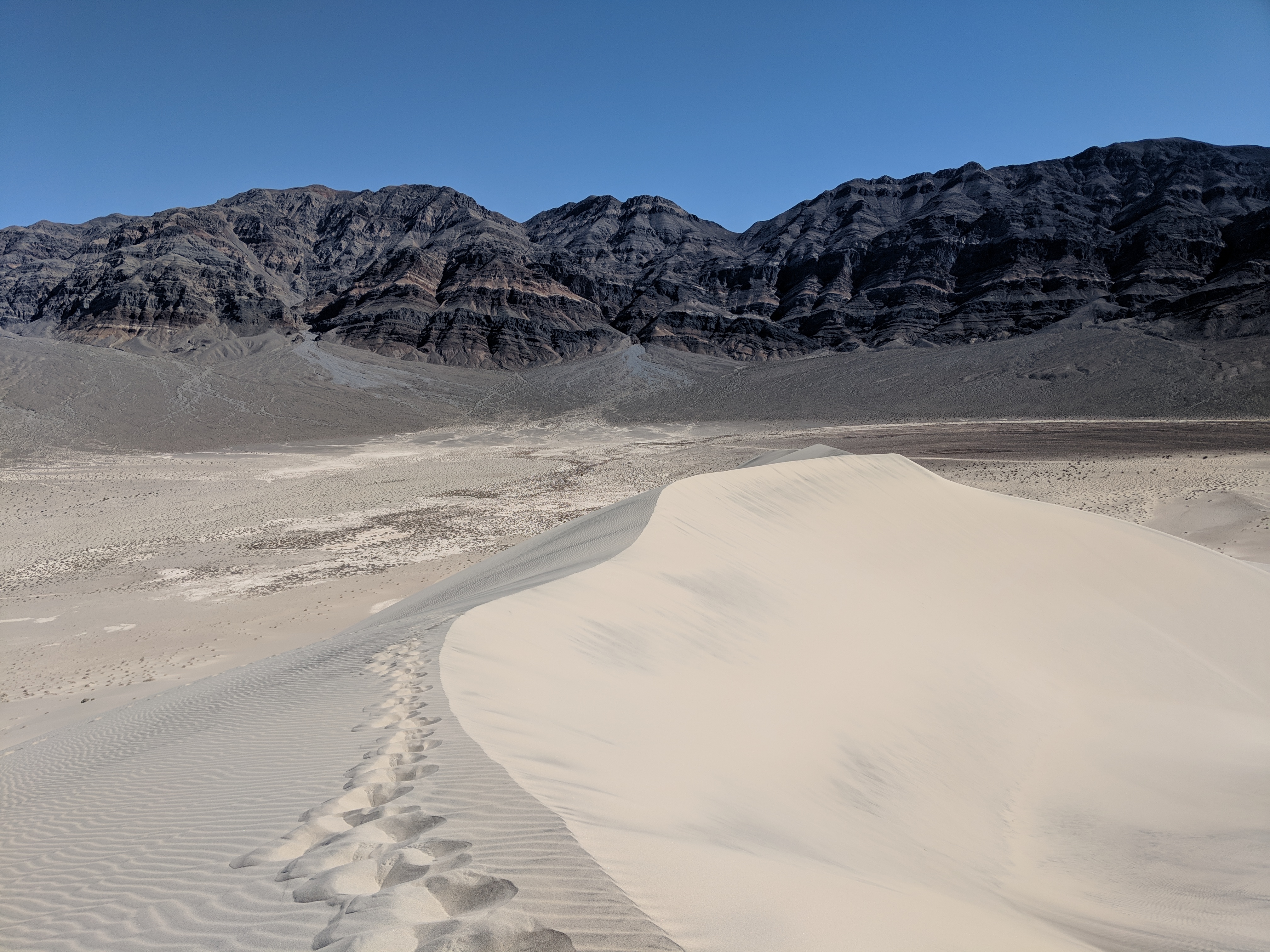
Death Valley is the single best winter park in the entire system. The place that kills hikers at 120°F in July sits at average highs around 60–65°F in December and January, with crisp lows in the upper 30s to low 40s.
That is perfect hiking weather on the lowest, hottest land in North America.
- Roads: All paved routes are open, including the drive to Badwater Basin at 282 feet below sea level.
- Skies: Usually crystal clear — the light at golden hour across the Mesquite Flat Sand Dunes is reason enough to come.
- Crowds: The park is over 3 million acres, so even on holiday weekends you find empty trails.
- Base yourself: Stovepipe Wells Village or the Ranch at Death Valley for in-park lodging, or Beatty, Nevada (about 40 minutes east) for cheaper motels and gas.
Big Bend National Park (Texas)
Big Bend is enormous, remote, and gloriously empty in winter. December and January bring desert-floor highs in the mid-60s with overnight lows in the mid-30s, climbing into the 70s by late February.
The Chisos Mountains can receive snow while the desert floor stays mild, so you pick your climate by elevation.
All three districts — Chisos Basin, the Ross Maxwell desert corridor, and the Rio Grande Village — are open, and the spring-break crowds are still months away. This is one of the least-visited parks in the lower 48, and winter is when it feels most alive: clear skies, cool temps, and the kind of silence you cannot manufacture anywhere closer to a city.
Base yourself: The Chisos Mountains Lodge is the only in-park option and books months ahead in winter — reserve early. Terlingua and Study Butte are the closest gateway towns, roughly 30 minutes from the park’s western entrance, with a handful of desert rentals and a surprisingly good food scene for a ghost town.
Joshua Tree National Park (California)
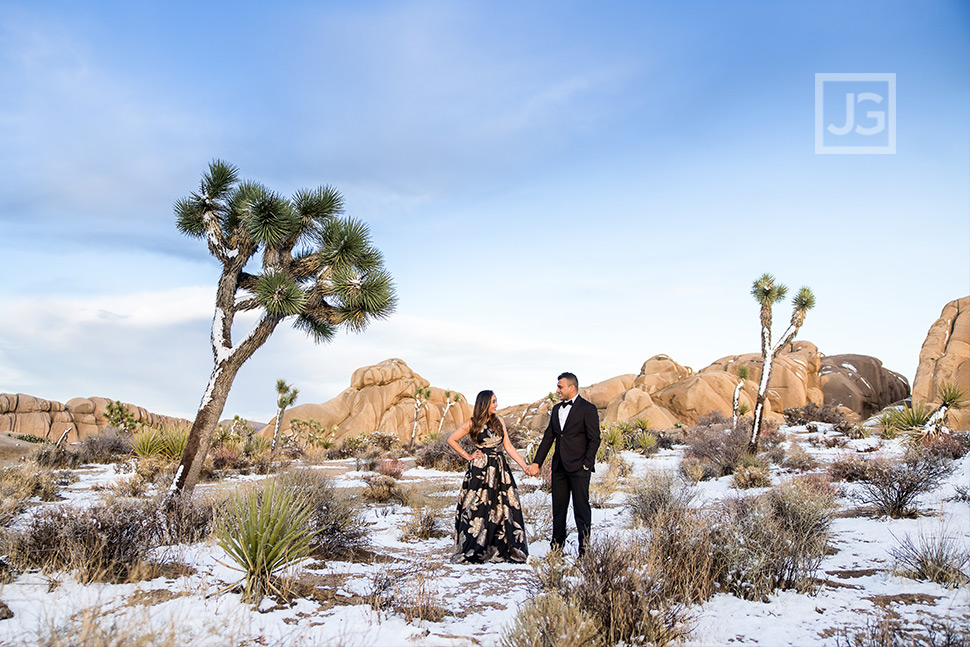
Joshua Tree in winter means sunny days in the 60s and freezing nights, with the occasional dusting of snow on the twisted Joshua trees — which is pure magic if you catch it. The high desert sits at around 4,000 feet, making it far more comfortable than the blazing low-desert sections just south.
- Best for: Rock climbers and boulderers love this season because the granite is finally touchable without burning skin.
- Stargazing: Winter skies deliver some of the clearest nights of the year — the park’s dark-sky status shines here.
- Roads: All open, but carry extra water even when it is cold. The dry air dehydrates you faster than you expect.
- Base yourself: Joshua Tree or Twentynine Palms for the closest access. Palm Springs is about 45 minutes away if you want a pool and restaurant scene to pair with your desert days.
Saguaro National Park (Arizona)
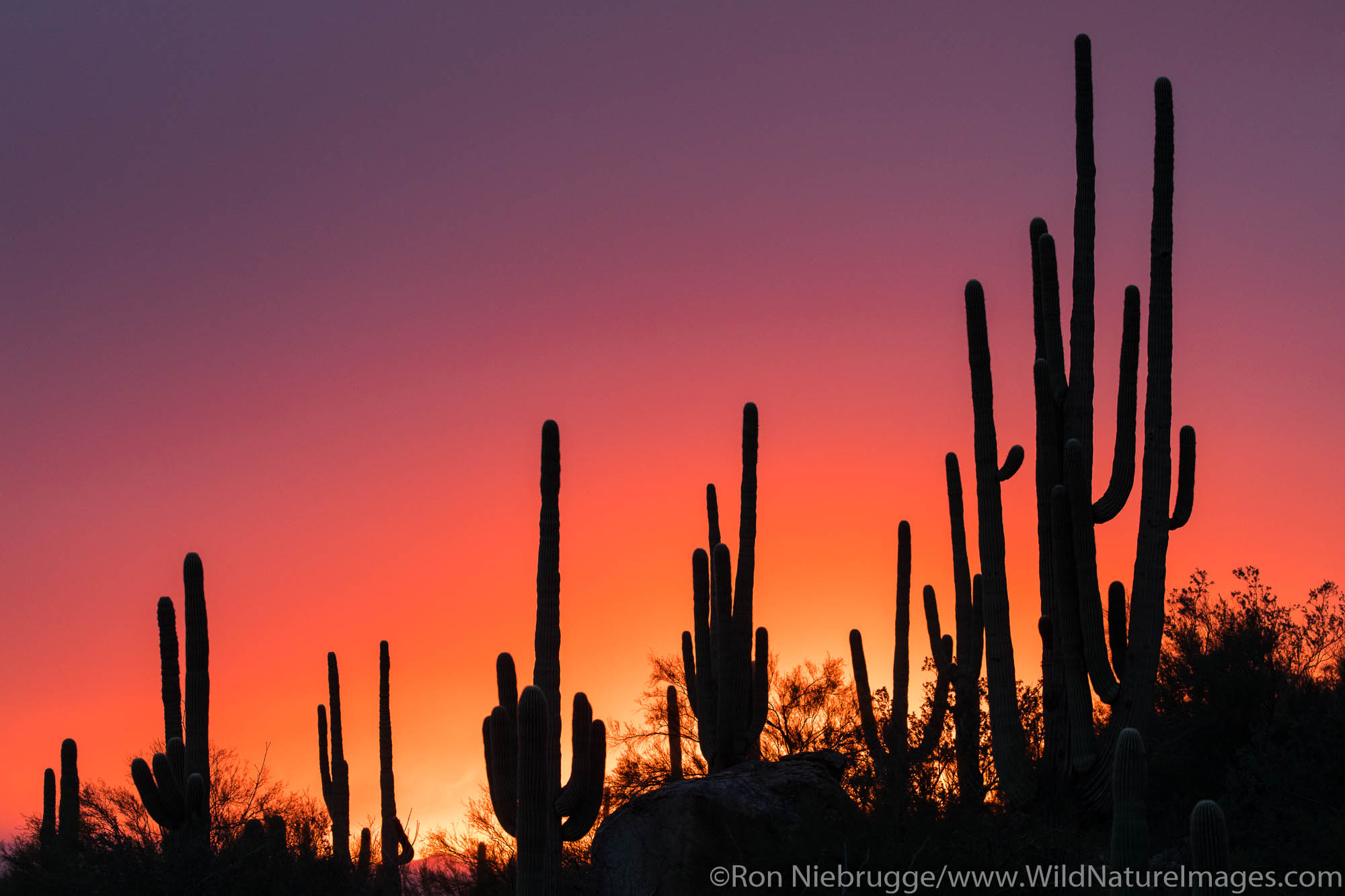
Saguaro sits just outside Tucson, and winter is the time to visit. Expect mid-60s highs, abundant sunshine, and forests of the giant saguaro cactus found nowhere else on Earth.
The long desert sunsets here justify the trip alone — plan to be on a west-facing trail at golden hour.
The park splits into two districts flanking Tucson: the Rincon Mountain District (east) is more remote with backcountry trails, while the Tucson Mountain District (west) has the densest saguaro groves and the iconic Cactus Forest Drive. Start in the west if you have only one day.
Base yourself: Stay in central Tucson — you are 20–30 minutes from either district, and the city has solid dining and lodging at every price point.
Zion, Arches & Canyonlands National Parks (Utah)
These three parks drop from some of the most-visited in America during summer to genuinely pleasant in winter. Expect highs in the 40s and 50s with occasional snow dusting the red rock — cold by desert standards, but a fraction of the summer traffic.
- Zion: The Narrows is typically closed to through-hiking due to water temperature and flow, but Angels Landing (with its year-round permit system) and the Emerald Pools trails are open and far less crowded.
- Arches: Delicate Arch with fewer than a dozen people at sunset — that alone justifies a winter trip.
- Canyonlands: The Island in the Sky district is accessible year-round, though the Shafer Trail road can close with snow or ice. Check conditions before attempting the descent.
Base yourself: Moab, Utah, puts you between Arches and Canyonlands (both within 30 minutes). Springdale sits right at Zion’s entrance and is walkable to the park gate.
Everglades, Dry Tortugas & Biscayne National Parks (Florida)
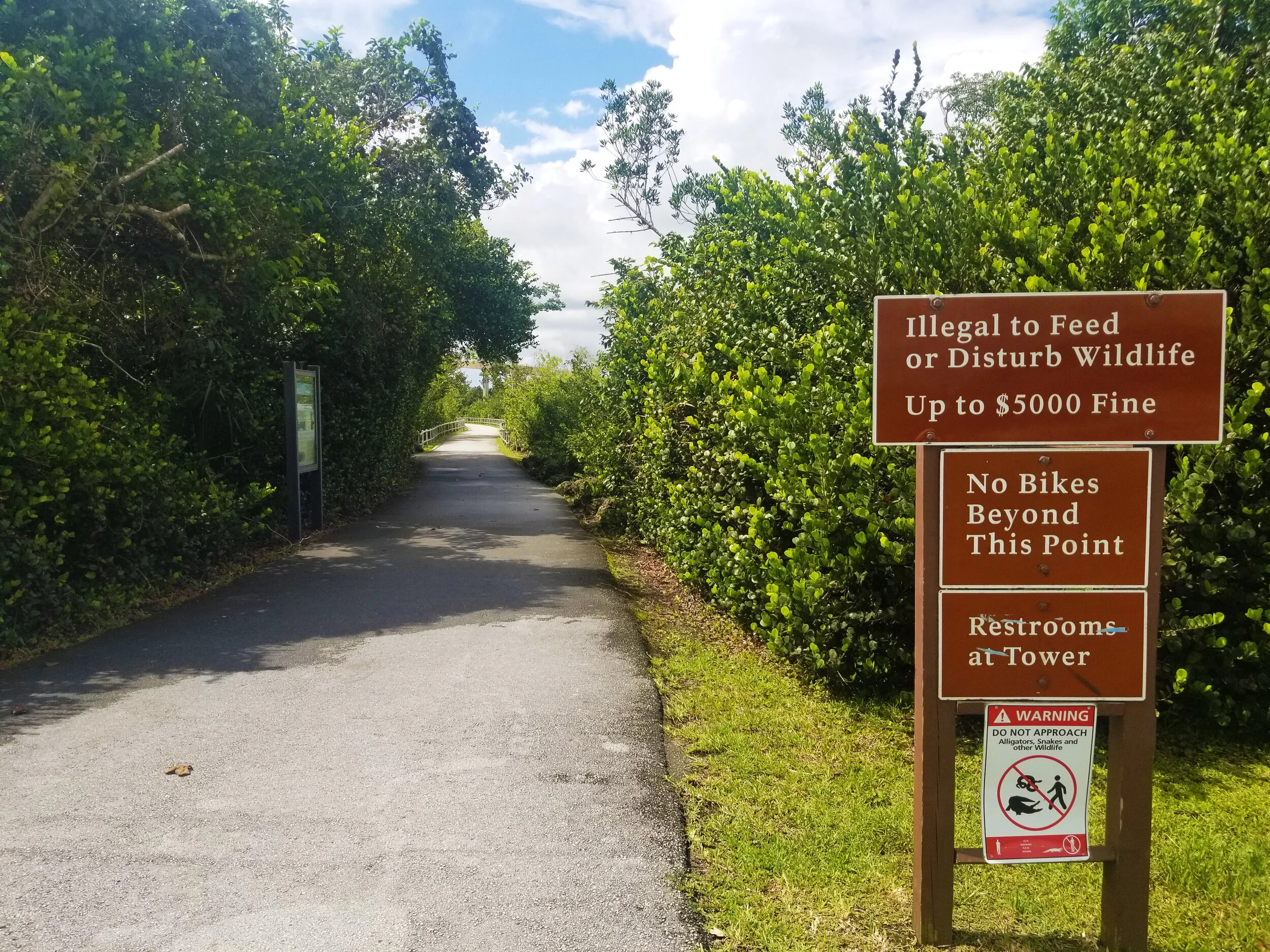
Winter is the dry season in South Florida, and that changes everything. Temperatures settle in the 70s to low 80s, humidity drops, mosquitoes back off, and wildlife concentrates around shrinking water sources — making this hands-down the best time for wildlife viewing in any of these three parks.
- Everglades: The Shark Valley tram and Anhinga Trail are prime for alligators, wading birds, and turtles. Winter is the only season most visitors can comfortably walk the full loop trails.
- Dry Tortugas: Reached by ferry (usually around 2 hours 15 minutes from Key West) or seaplane. Fort Jefferson and the surrounding reef are spectacular in clear winter water. Ferry seats book out weeks ahead — reserve as early as possible, typically around $200 per adult round-trip, though confirm current pricing with the ferry operator.
- Biscayne: Snorkeling the Maritime Heritage Trail and exploring mangrove channels by kayak is best when summer storms have passed. Access is primarily by boat from Convoy Point, near Homestead.
Base yourself: Homestead or Florida City for Everglades and Biscayne access. Key West for Dry Tortugas, where the restaurant and nightlife scene is a bonus after a day on the water.
Hawaii Volcanoes & Haleakala National Parks (Hawaii)
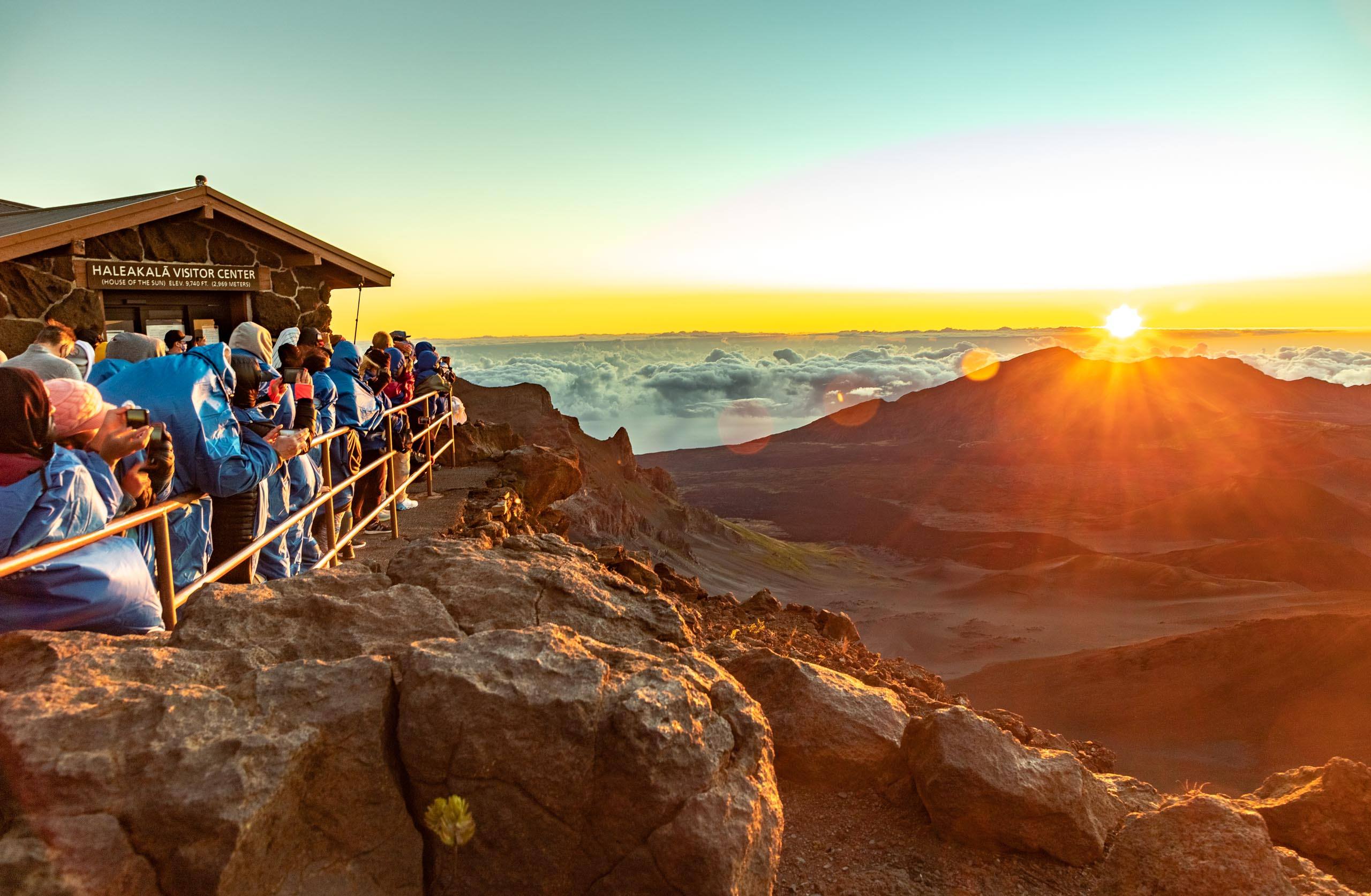
Hawaii’s two national parks deliver winter weather that no mainland park can match — and elevations that let you experience multiple climates in a single day.
Haleakala (Maui) runs from a 10,000-foot volcanic summit — one of the great sunrise viewpoints anywhere — down to the lush Kipahulu coast with its waterfalls and freshwater pools. Winter is the dry, comfortable season on Maui, making this the best time to visit both the summit and coastal section in the same trip.
Sunrise reservations at the summit are required year-round — book at recreation.gov up to 60 days in advance, and slots fill fast.
Hawaii Volcanoes (Big Island) delivers active volcanic landscapes, lava tubes, and rainforest trails. Winter brings slightly more rain on the windward side, but the Kilauea summit area and Chain of Craters Road are accessible in all but the heaviest storms.
The park is open 24 hours, and viewing the Halemaʻumaʻu crater glow after dark is a singular experience.
Base yourself: Hilo for Hawaii Volcanoes (about 30 minutes from the entrance), with its farmers market and affordable lodging options. For Haleakala, Paia or Kīhei put you within an hour of the summit road; Kahului works if you want more hotel variety.
Virgin Islands National Park (U.S. Virgin Islands)
If you want winter national park hiking that ends on a white-sand beach with a rum drink, this is the only park in the system that delivers. Virgin Islands National Park covers most of St. John, with over 20 trails winding through tropical forest to hidden beaches like Reef Bay and Solomon.
Winter highs hover in the low 80s, trade winds keep things comfortable, and hurricane season is over. The park has no entrance fee for trails and beaches, though Trunk Bay charges a small amenity fee (typically around $5 — confirm with the park).
Crowds peak mid-morning when cruise ship passengers ferry over from St. Thomas for a few hours. Arrive before 9 a.m. or stay after 3 p.m. to have the trails largely to yourself.
Base yourself: Cruz Bay has the most lodging and dining on St. John. Ferries run regularly from Red Hook, St. Thomas (about 20 minutes), and less frequently from Charlotte Amalie.
Staying on St. John itself avoids the daily commute and lets you experience the island after the day-trippers leave — which is when St. John is at its best.
Which Winter National Park Is Right for You?
The park that’s a summer nightmare can be an empty masterpiece in January — but only if you match the right destination to your actual trip style. Here’s how to choose.
| Trip Style | Top Pick | Why It Wins |
|---|---|---|
| Families with Kids | Death Valley | Mild temps, paved drives, no special gear |
| Solitude & Photography | Canyonlands | Nearly empty even at iconic viewpoints |
| Wildlife Viewing | Rocky Mountain | Elk herds drop into easy-access low meadows |
| Skiing & Snowshoeing | Mount Rainier | Deepest snow in the Lower 48, plowed road to Paradise |
Best Winter National Parks for Families with Kids
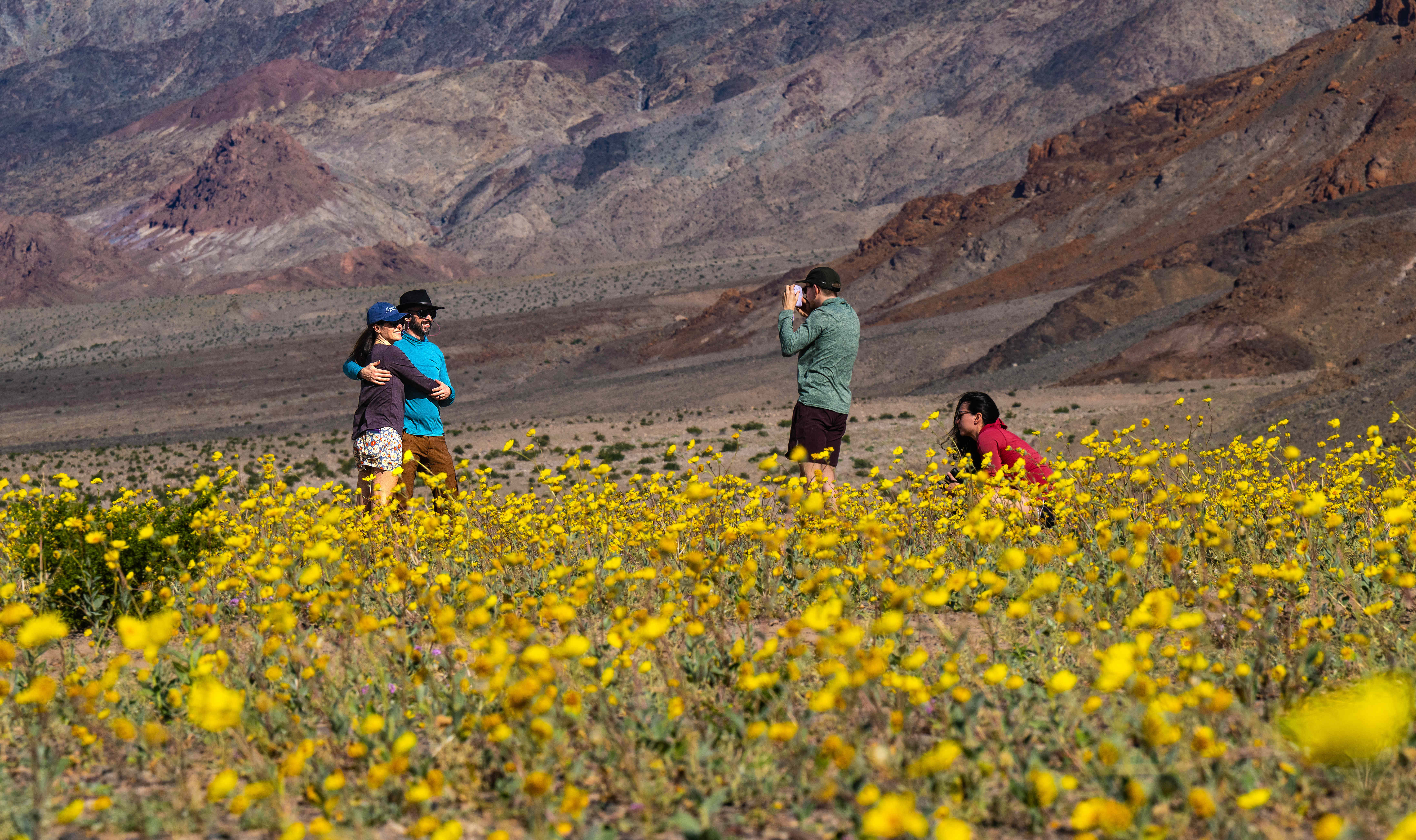
Death Valley is the clear winner here. Winter highs hover around 60–65°F — no heat stroke risk, no whining about being cold.
Badwater Basin is a paved drive from the parking lot, the Mesquite Flat Sand Dunes are a natural playground, and the short loop at Golden Canyon keeps short legs engaged. The gateway town of Furnace Creek has lodging, a gas station, and the Borax Museum, which is free and takes 15 minutes.
- Runner-up — Everglades: Dry season means fewer mosquitoes, easier paddling, and wading birds everywhere. The Anhinga Trail boardwalk is stroller-friendly and delivers alligator sightings within minutes. Base in Homestead or Florida City for affordable lodging near the Ernest Coe entrance.
- Runner-up — Saguaro: The Tucson Mountain District’s short desert loops are flat, warm, and kid-friendly. Saguaro doesn’t require backcountry permits or long drives — you’re in the cactus forest right from the road.
- Skip — Yellowstone: Interior roads close to regular cars in winter. Reaching Old Faithful by snowcoach typically runs $150+ per person round-trip, and full-day commitments don’t mix well with small kids.
Best Winter National Parks for Solitude and Photography
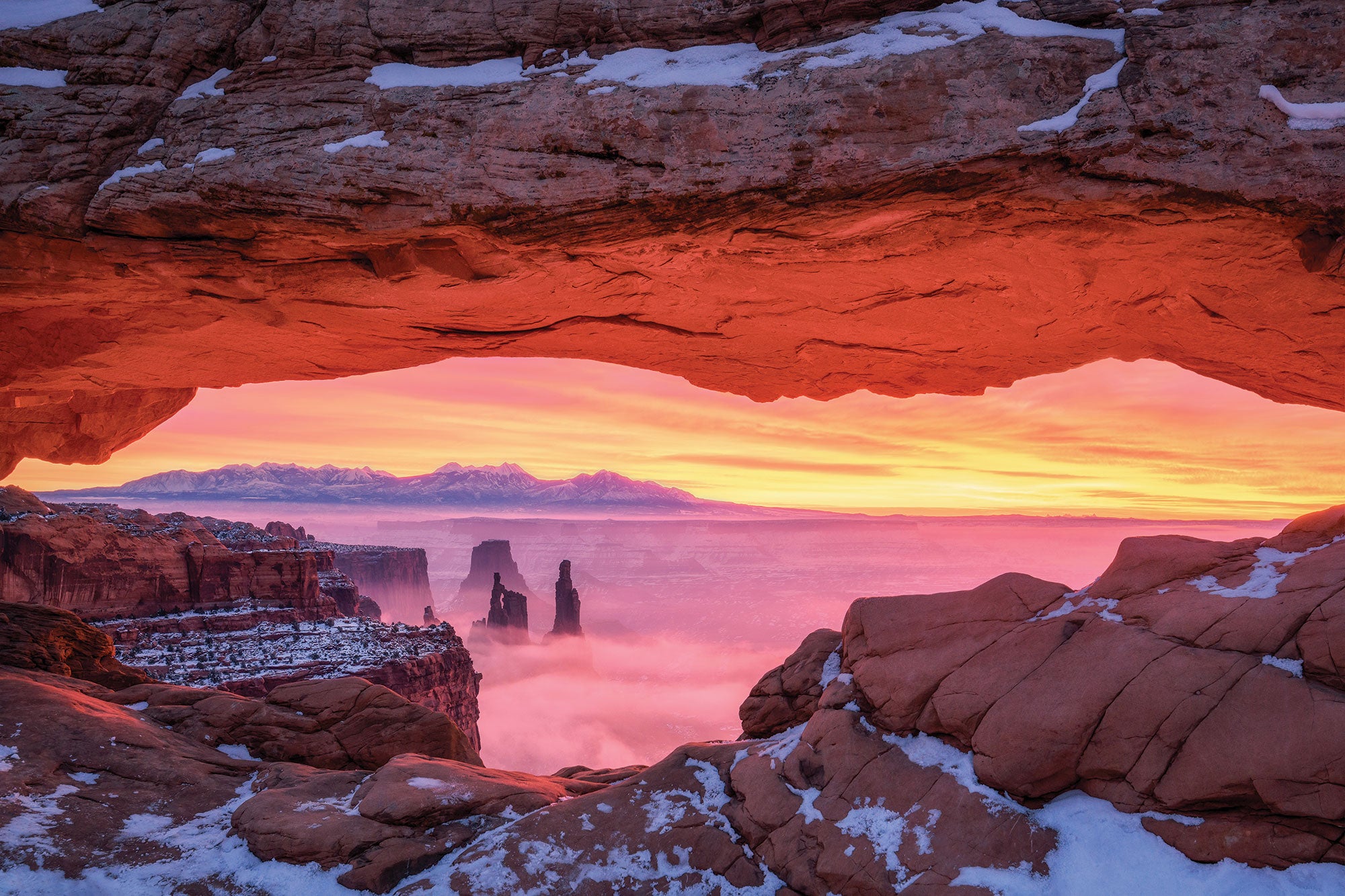
Canyonlands in winter might be the closest you’ll get to having a national park to yourself. The Island in the Sky district — a 30-minute drive from Moab — sees a fraction of its summer traffic between December and February.
Arrive at Mesa Arch before 8 a.m. and you may be the only photographer at one of the most shot locations in the Southwest. The low winter sun creates long shadows across the canyon that summer visitors never see.
- Grand Canyon South Rim: Snow on red rock against the canyon’s depth is the image most tourists miss entirely. Rim highs sit in the low 40s with clear air. The North Rim is closed entirely until mid-May, so plan for the South Rim only — El Tovar and Bright Angel Lodge sit right on the rim and offer winter rates well below peak season.
- Death Valley: The winter light here is genuinely otherworldly. Late-afternoon shadows across the salt flats at Badwater Basin, golden hour on the Mesquite Dunes, and star-filled skies with virtually no light pollution. December and January offer the clearest, driest air of the year.
- Bryce Canyon: Snow-dusted hoodoos against red rock are Bryce’s most iconic winter image. The park’s high elevation (8,000+ feet) guarantees cold, but Sunrise and Sunset Points are reachable by car and deliver compositions you can’t get in summer.
Best Winter National Parks for Wildlife Viewing
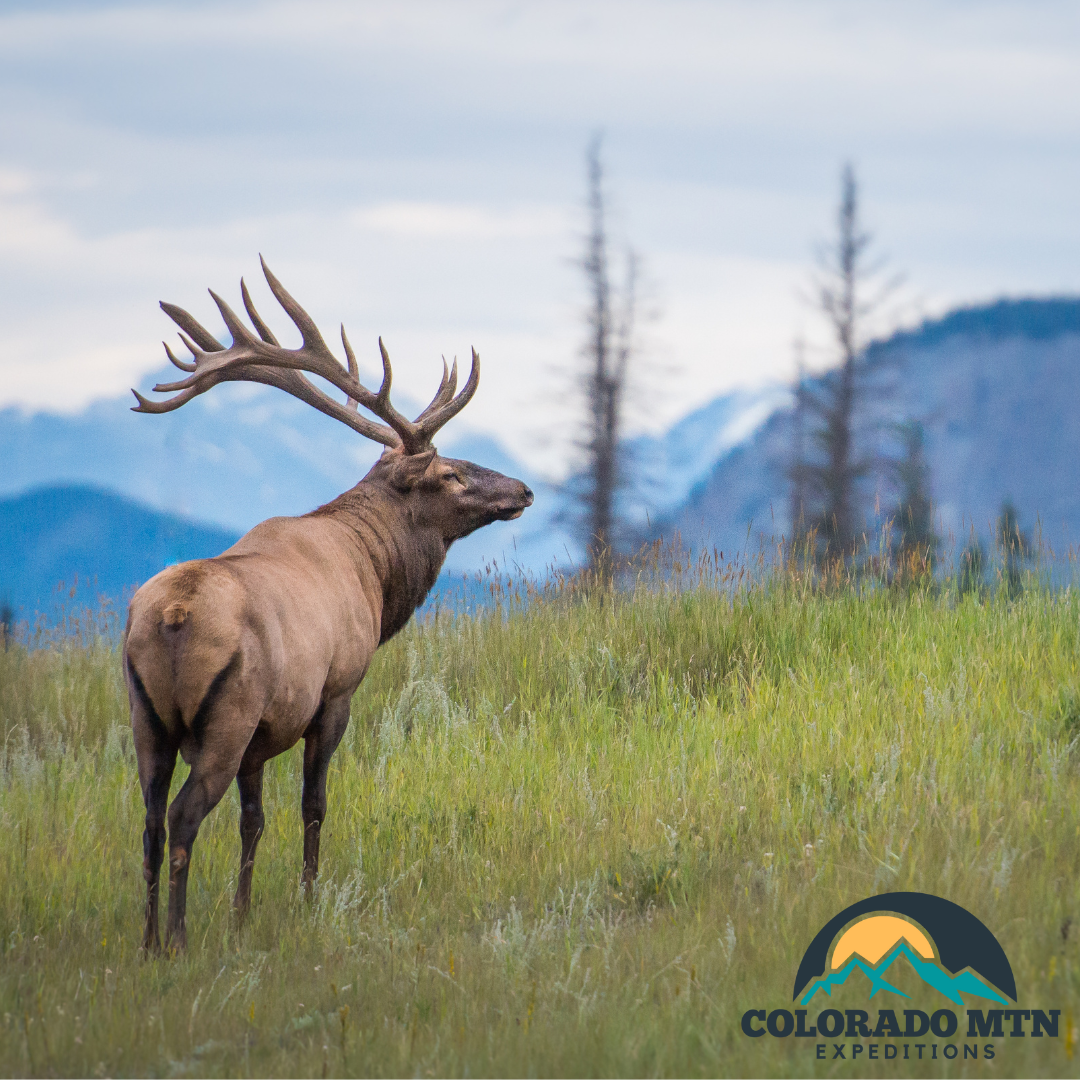
Rocky Mountain is the sleeper pick for winter wildlife. The elk herds move down from high meadows to Moraine Park and Horseshoe Park — both visible from your car along Bear Lake Road, which stays plowed all winter.
Summer’s timed-entry reservation system does not run in winter, so access is unrestricted. Coyotes, mule deer, and even the occasional moose show up in the same low-elevation corridors.
- Everglades: Dry season (November through April) concentrates wading birds — roseate spoonbills, great blue herons, anhingas — into shrinking water sources. The Shark Valley tram road is the best way to see large alligators and bird rookeries without paddling.
- Yellowstone: Winter is prime time for wolf watching in the Lamar Valley, and bison herds against the snow are unforgettable. But access requires a snowcoach or guided snowmobile trip, and those run $150–$250+ per person. Worth it for serious wildlife enthusiasts; too expensive and time-consuming for casual visitors.
- Big Bend: Mild desert temperatures push roadrunners, javelinas, and mule deer into the Chihuahuan Desert lowlands where they’re easier to spot. Santa Elena Canyon trail is calm and cool in winter.
Best Winter National Parks for Skiing, Snowshoeing, and Other Cold-Weather Adventures
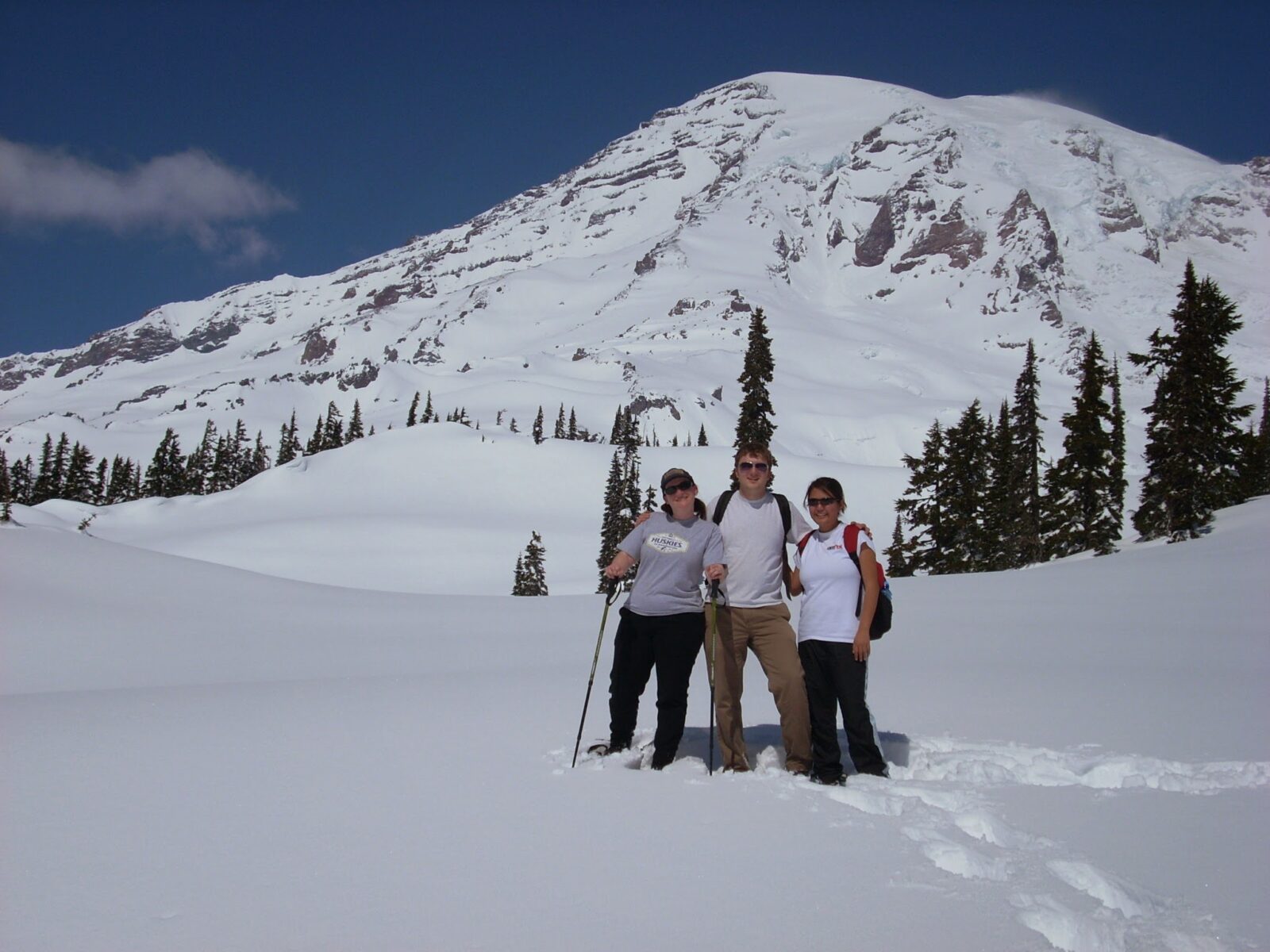
On clear nights, the stargazing ranks among the best in the Pacific Northwest. The free ranger-led snowshoe walks typically run on weekends from late December through March — check with the Longmire visitor center for current schedules.
- Olympic — Hurricane Ridge: This park delivers two completely different winter experiences: mild, green rainforest at low elevation and full alpine winter up at Hurricane Ridge, where a small ski area, sledding hill, and snowshoe trails operate. The catch is access — Hurricane Ridge Road runs on limited days through winter, sometimes only weekends. Always call the park’s road and weather hotline before driving up from Port Angeles.
- Rocky Mountain — Bear Lake area: Bear Lake Road stays open when Trail Ridge Road closes for winter, putting snowshoe trails to Dream Lake and Nymph Lake within easy reach. Carry traction devices for icy sections above the lake.
- Yosemite: The valley floor stays accessible, and Badger Pass ski area operates with groomed runs and cross-country trails. Glacier Point Road typically closes beyond Badger Pass, but the valley’s winter snowshoe routes and frozen Horsetail Fall (the “firefall” phenomenon in February) make it worth the trip.
- Crater Lake: Rim Drive closes, but the park offers ranger-guided snowshoe walks on weekends. The caldera rim is reachable by snowshoe or cross-country ski, and the sight of the deepest lake in the U.S. ringed in snow is something summer visitors cannot replicate.
How to Plan a Winter National Park Trip
A winter park trip lives or dies on one factor: knowing if you can actually get there. Unlike summer, a single snowfall can turn a scenic drive into a closed gate, so your pre-trip homework isn’t optional—it’s everything.
How to Check Road Closures and Winter Conditions Before You Go
The official NPS website for each park is your most reliable source. Never trust a travel blog for current road status. On each park’s homepage, look for the “Current Conditions” or “Alerts” section, which is updated by rangers in real-time.
- Best Practice: Check the status 72 hours before departure and again the morning you leave. Winter weather changes fast.
- Key Example: Olympic’s Hurricane Ridge Road operates on limited days; the park’s official recorded hotline is more accurate than the website for daily openings.
- Reality Check: Mountain roads like Trail Ridge (Rocky Mountain) and Going-to-the-Sun (Glacier) are guaranteed closed to regular vehicles. Don’t plan your trip around accessing them.
Do You Need Reservations or Timed Entry in Winter?
Most parks drop their summer reservation systems in winter, making spontaneous visits easier. This is a major winter perk. However, a few exceptions and nuances remain.
- Rocky Mountain: Confirmed. The summer timed-entry system does not run in winter, allowing free access via the open Bear Lake Road corridor.
- Yosemite: Typically does not require reservations in winter, but always confirm for holiday periods like Christmas/New Year’s week when the valley can get busy.
- Yellowstone & Glacier: Not a reservation issue, but an access one. These parks require specialized transport (snowcoach/snowmobile) for interior access, which must be booked months in advance with authorized concessionaires.
The short list: Check the park’s “Fees & Passes” and “Plan Your Visit” sections for the current winter season. Assume you’re free unless you see otherwise.
How to Get to Remote National Parks in Winter
For snow-covered parks, your personal vehicle might not be enough. Be realistic about what “getting there” means.
- For Parks like Yellowstone: You drive to a gateway town (e.g., West Yellowstone, MT), park your car, and board a scheduled snowcoach or guided snowmobile group. Expect roughly $100-$300 per person for a day trip, depending on the provider and route.
- For Parks with Plowed Roads (e.g., Death Valley, Saguaro): A standard rental car is fine. Just ensure it has adequate tire tread. Carry extra water, a blanket, and snacks—services are minimal, and cell service is nonexistent in many areas.
- For Mountain Parks with Partial Access (e.g., Rocky Mountain’s Bear Lake): A vehicle with all-wheel drive or four-wheel drive and good winter tires is strongly recommended, not just for snow but for ice on shaded, north-facing slopes. Carrying tire chains is legally required on some Colorado roads and smart everywhere.
Insider Tip: The most reliable winter parks are the low-desert ones—Death Valley, Saguaro, Joshua Tree, Big Bend. Their access is rarely compromised, and the weather is the main draw.
If this is your first winter park trip, start there for a guaranteed win.
What to Pack for a Winter National Park Visit
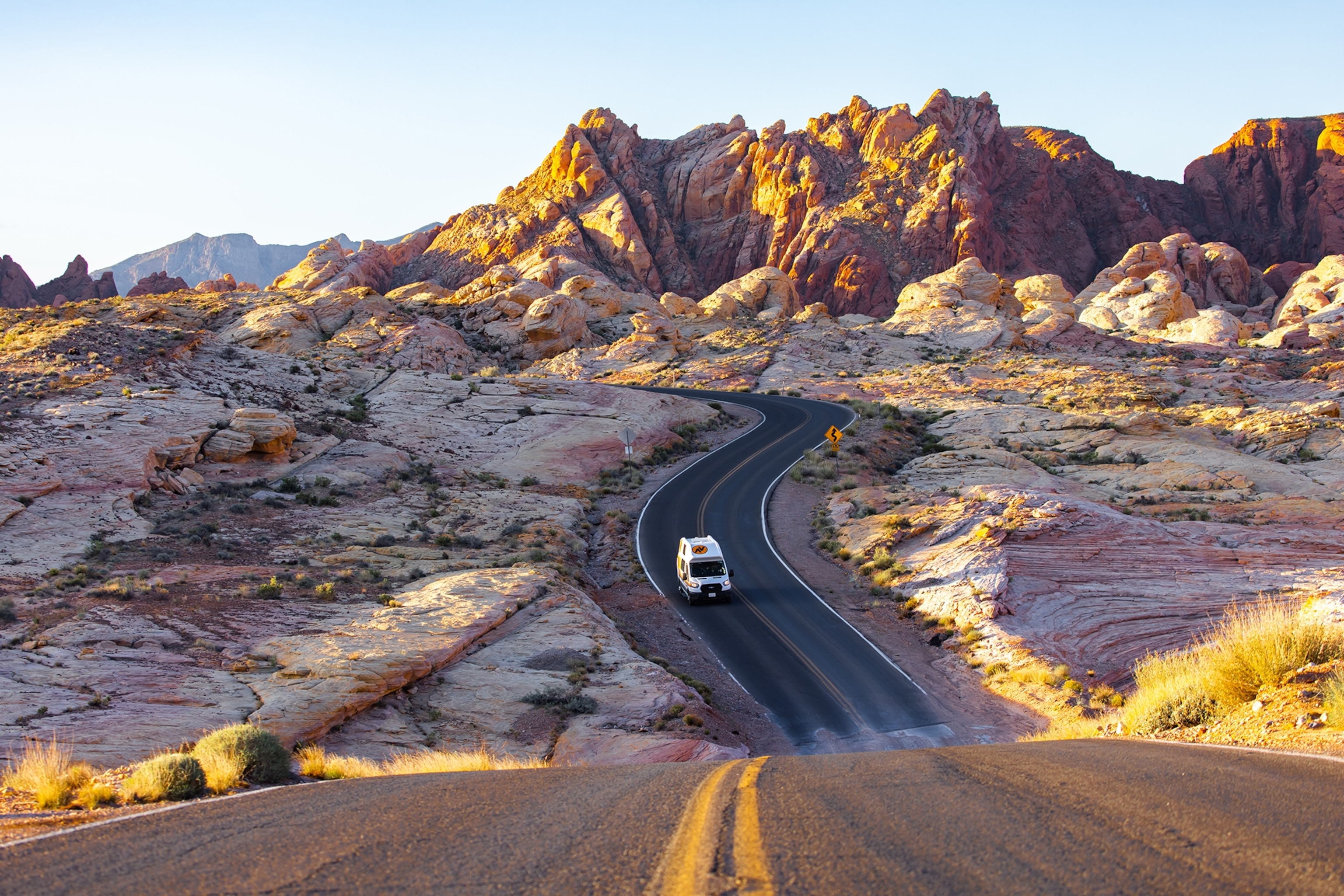
Your packed car is your lifeline in winter parks. The difference between a magical, accessible trip and a cold, miserable, or dangerous one comes down to gear that matches the specific environment you’re entering.
This isn’t about overpacking; it’s about packing right.
Essential Gear for Snowy and Cold-Weather Parks
Think layers, traction, and emergency supplies. Conditions at parks like the Grand Canyon’s South Rim (lows in the teens), Rocky Mountain, and Olympic’s Hurricane Ridge demand respect.
Your summer hiking setup won’t cut it on icy trails or in sudden snow squalls.
- Layering System: A moisture-wicking base layer, an insulating mid-layer (fleece or down), and a waterproof, windproof outer shell are non-negotiable. Avoid cotton—it traps moisture and makes you colder.
- Footwear & Traction: Waterproof, insulated hiking boots are essential. Always carry microspikes or traction devices (like Yaktrax) in your car; even popular trails at the Grand Canyon’s rim or Rocky Mountain’s Bear Lake can be sheet ice.
- Winter-Specific Items: For snowshoeing at parks like Yellowstone or Rocky Mountain, you can rent snowshoes at gateway towns like Estes Park or Jackson. Bring insulated, waterproof gloves, a warm hat that covers your ears, and a neck gaiter or balaclava.
- Safety & Navigation: Pack hand and toe warmers. A headlamp with extra batteries is critical as daylight is short. Always tell someone your route and expected return time.
Essential Gear for Desert and Tropical Parks
For parks like Death Valley, Joshua Tree, Saguaro, and the Florida Everglades, winter is prime time, but the environment brings unique challenges. The sun is still intense, hydration is critical, and temperatures swing wildly between day and night.
- Sun & Hydration: A wide-brimmed hat and quality sunglasses are your first line of defense. Pack more water than you think you need—at least one gallon per person, per day, carried in the car. In parks like Joshua Tree, the dry air dehydrates you fast even when it’s cold.
- Versatile Layers: Desert parks like Big Bend can see 70°F days and 30°F nights. Pack a light base layer, a warm fleece or puffy jacket for evenings and mornings, and a windbreaker. For Florida’s humidity, moisture-wicking fabrics are key.
- Footwear & Protection: Sturdy, closed-toe hiking shoes are necessary for rocky terrain and cactus spines. For Florida’s mangrove trails or beach walks, a lightweight, quick-dry shoe you don’t mind getting wet is better.
- Insider Detail: In tropical parks like the Everglades, bug spray is still a good idea in winter, especially in shaded, humid areas near water.
| Park Environment | Top 3 Gear Must-Haves | Common Mistake to Avoid |
|---|---|---|
| Snowy & Cold (RMNP, Canyon, Yellowstone) | Microspikes, Layering System, Headlamp | Relying on cotton clothing; assuming trails are snow-free. |
| Desert & Tropical (Death Valley, Saguaro, Everglades) | Gallon Water Jug, Wide-Brim Hat, Insulating Layer for Night | Underestimating sun intensity and dehydration because it’s “winter.” |
Should You Skip These National Parks in Winter?
Three parks that look spectacular in summer become logistical dead ends once the snow flies — and the National Park Service doesn’t bury this fact on its website, but plenty of road-trip planners miss it until they’re already parked at a locked gate.
| Park | What Shuts Down | Winter Alternative |
|---|---|---|
| Glacier (MT) | Going-to-the-Sun Road; most of the park interior | None that replicate the experience |
| Grand Canyon North Rim (AZ) | Entire North Rim — all roads, lodging, services | South Rim (covered earlier in this article) |
| Denali (AK) | Park road beyond first miles; most facilities | Visit June–September instead |
Glacier National Park (Montana)
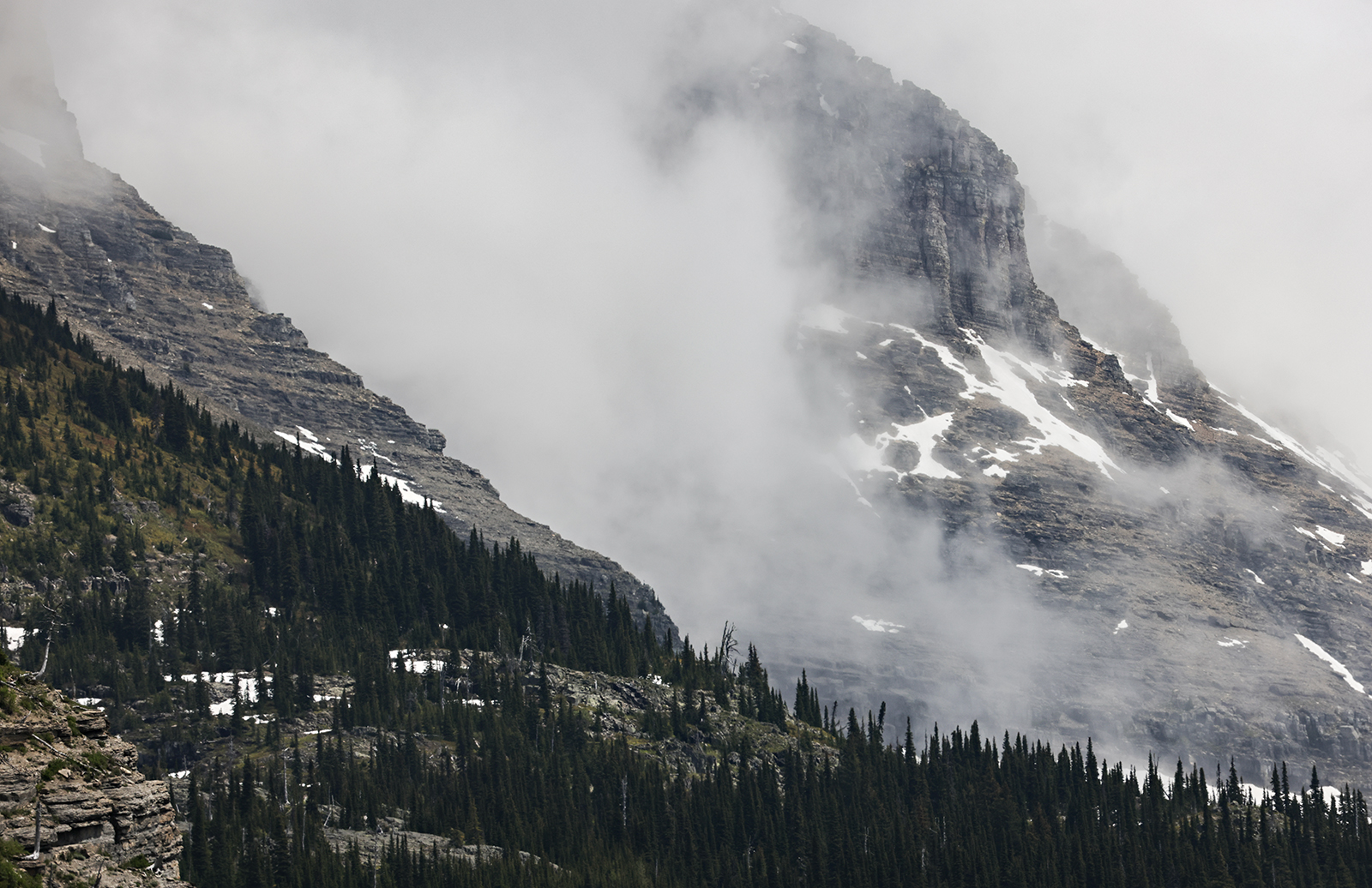
Going-to-the-Sun Road — the reason most people visit Glacier — closes for the season once snow makes the alpine section impassable, typically from late October through late May or even mid-June depending on snowpack. Without it, you lose access to Logan Pass, the Highline Trail, and the views that make Glacier iconic.
What remains open in winter is limited to the western entrance area around Apgar Village and a short stretch of road along Lake McDonald. You can snowshoe or cross-country ski on unplowed road sections, and the park does not charge an entrance fee when services are reduced — but this is a fraction of the summer experience.
- Bottom line: Skip it. Glacier without Going-to-the-Sun is a different park entirely, and your winter days are better spent somewhere that’s actually open for business.
- If you go anyway: Base in Whitefish or West Glacier. Apgar’s lodging options are extremely limited in winter, and Whitefish gives you restaurants, ski resort access, and a 30-minute drive to the park entrance.
- Check before you drive: Road status changes with snowfall. Call the park’s road information line or check the NPS Glacier road status page the morning of your visit.
The Grand Canyon’s North Rim (Arizona)
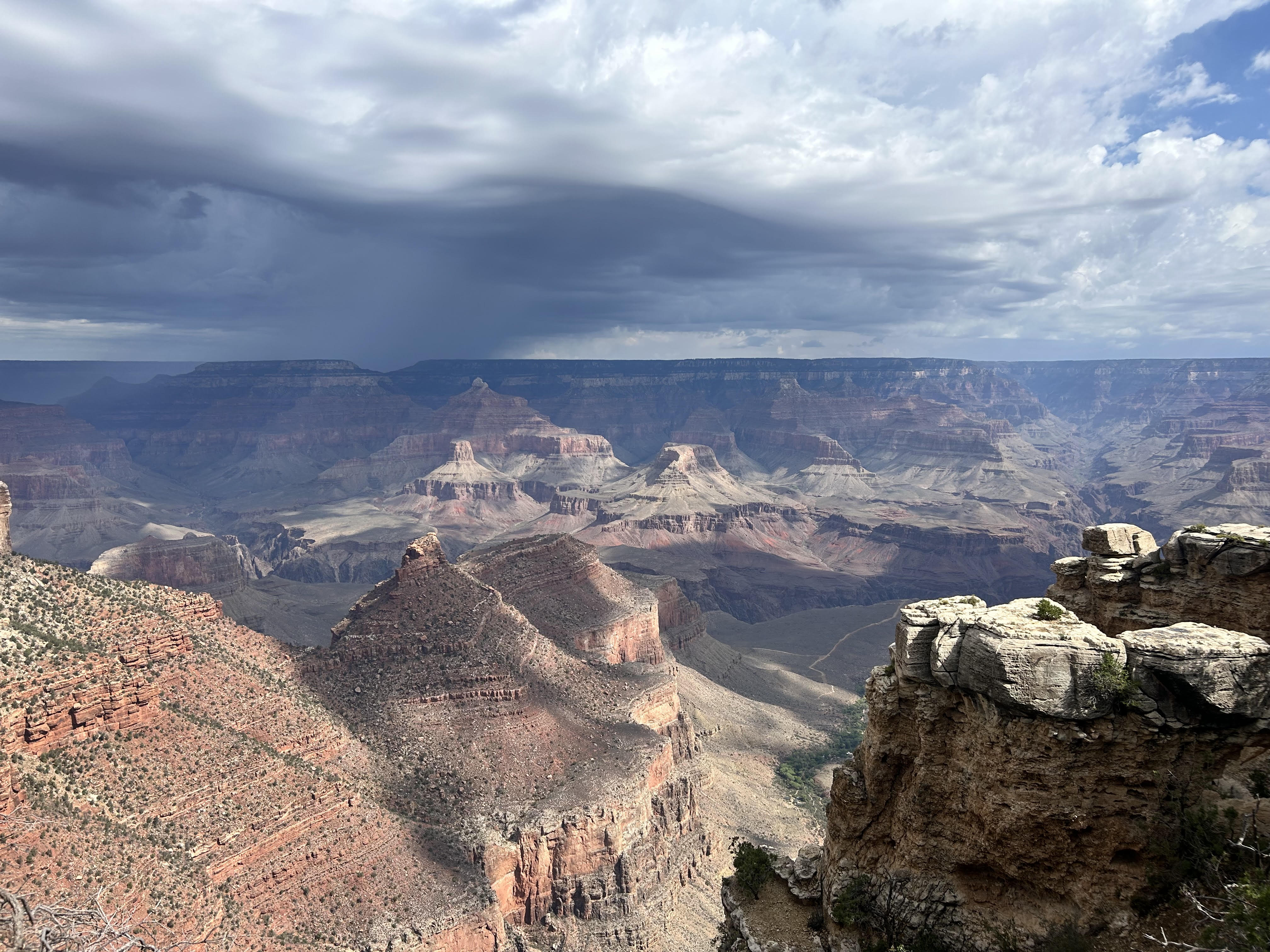
The North Rim closes entirely from mid-October through mid-May — not partially, not with reduced hours, but completely. Highway 67 from Jacob Lake to the North Rim shuts down once snow makes it impassable, and there is no alternative road in.
Every lodge, campground, restaurant, and visitor center locks up for the season.
Why does this matter? The North Rim sits about 1,000 feet higher than the South Rim (roughly 8,200 feet versus 7,000 feet), which delivers those famous meadow-to-canyon viewpoints in summer but guarantees deep snow and road closure in winter.
- Bottom line: Don’t plan a winter North Rim trip under any circumstances — it simply does not exist from November through April.
- The real move: The South Rim stays open all winter and is genuinely magical this time of year. Snow on red rock, a fraction of the summer crowds, and highs in the low 40s make for excellent hiking conditions. Carry traction devices for icy rim trails. The earlier section on Grand Canyon South Rim has full planning details.
Denali National Park (Alaska)
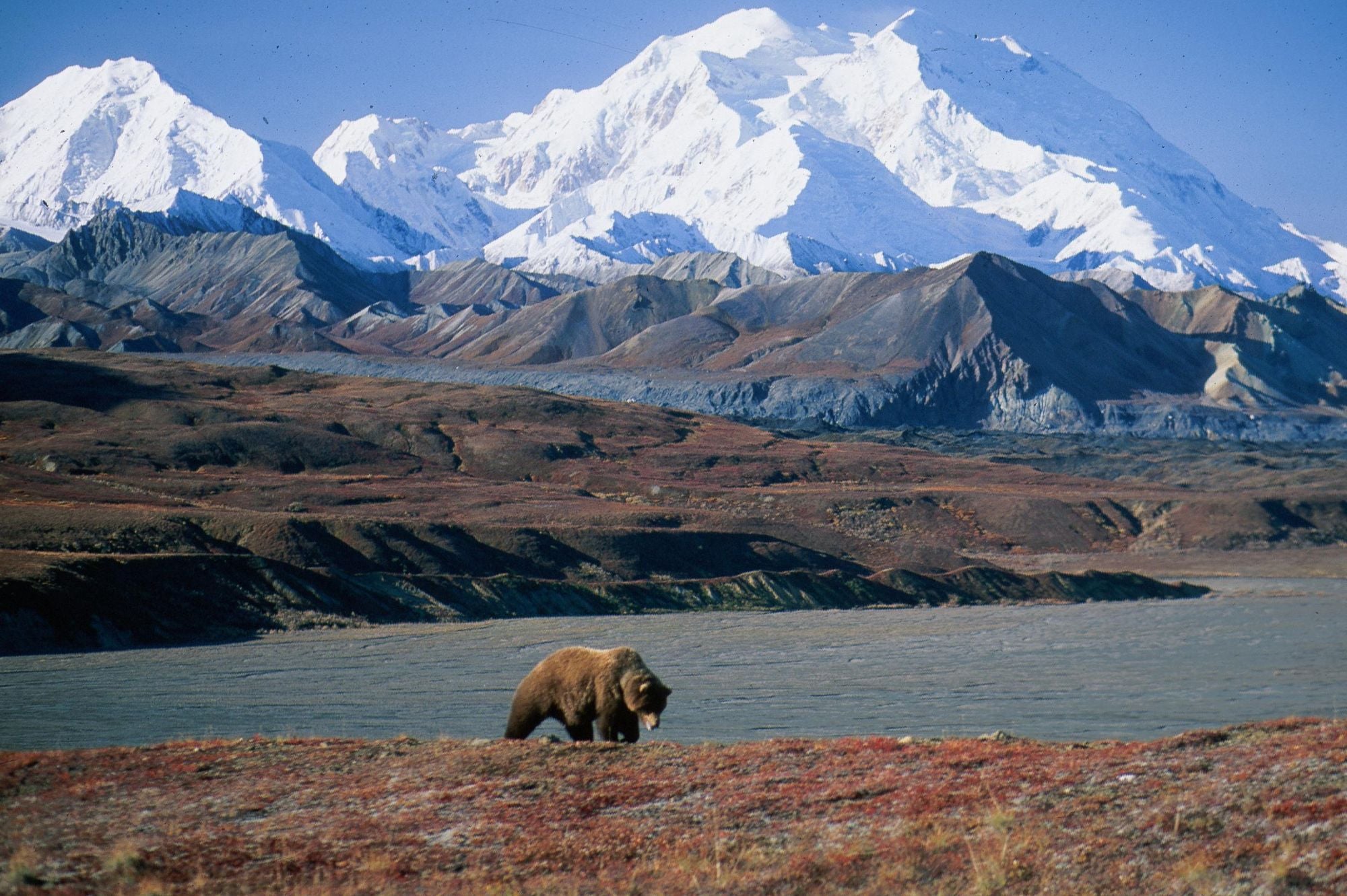
Denali in winter is technically accessible but practically brutal. The park road — the 92-mile artery that delivers you to the heart of the Alaska Range — is closed to private vehicles beyond the initial miles near the entrance area.
Most lodges, tour operators, and the main visitor center shut down after September.
What you’re left with is sub-arctic conditions: temperatures that regularly drop well below zero, daylight that shrinks to roughly five to six hours around the winter solstice, and a landscape that’s magnificent but demanding. The few hardy visitors who come in winter typically dog-sled or snowshoe near the park entrance.
- Bottom line: Unless you’re specifically seeking an extreme cold-weather expedition and have the gear and experience for it, save Denali for summer. The wildlife viewing, bus access into the park interior, and clear views of the mountain all depend on the June-through-September window.
- If you’re determined: Healy and the small cluster of businesses near the park entrance operate on skeleton winter schedules. Book lodging well in advance and confirm availability directly — most properties close entirely from October through April.
The winter rule of thumb for national parks is simple: go south, go low, and always check NPS road status before you drive. The parks in this section are worth every mile of their summer visits — they’re just not worth the detour when half their infrastructure is buried under snow.
Frequently Asked Questions
Which national parks are actually worth visiting in winter versus which should I skip?
The best winter parks fall into two camps: the snow-lovers and the sun-seekers. For cold-weather adventure, Bryce Canyon, Yosemite, and Sequoia are at their most photogenic under snow, with accessible trails and lodges with fireplaces. Rocky Mountain is a top pick for snowshoeing since the timed-entry system is suspended and Bear Lake Road stays open.
For escaping the cold entirely, Death Valley is unbeatable—perfect hiking temperatures around 60-65°F replace the deadly summer heat.
Skip these: Glacier National Park (Going-to-the-Sun Road is closed), Yellowstone (interior roads are closed to regular cars; access requires a snowcoach), and the Grand Canyon’s North Rim (closed entirely until spring). Don’t plan a casual winter trip to these.
Will the roads be open? What about accessibility?
This is the critical winter planning question. Always check the NPS road status page for your park the week of your trip. Key openings: The South Rim of the Grand Canyon and all major roads in Death Valley are typically open. Yosemite Valley and the road to Bryce Canyon’s main viewpoints are plowed and accessible. Major closures: Trail Ridge Road in Rocky Mountain, the road to Hurricane Ridge in Olympic (check their hotline for limited open days), and all of Yellowstone’s interior roads are closed to regular vehicles.
Are there fewer crowds, and is that the main reason to go?
Dramatically fewer crowds are a guaranteed perk, but it’s not the only reason. You trade summer’s traffic and parking nightmares for solitude and a completely different atmosphere—snow on hoodoos, steaming geysers, and frozen waterfalls. Arches and Canyonlands in Moab, Utah, which are intensely crowded in summer, offer a rare chance for near-solitude in winter.
The main trade-off is shorter daylight hours and some services or campgrounds being closed, so book lodging and check operating hours in advance.
What’s a unique winter activity I shouldn’t miss?
Look for the parks that offer special winter-only access or events. The most famous is Yosemite’s “Firefall” in February, when Horsetail Fall glows orange at sunset—a phenomenon that requires clear skies and is best viewed from specific spots.
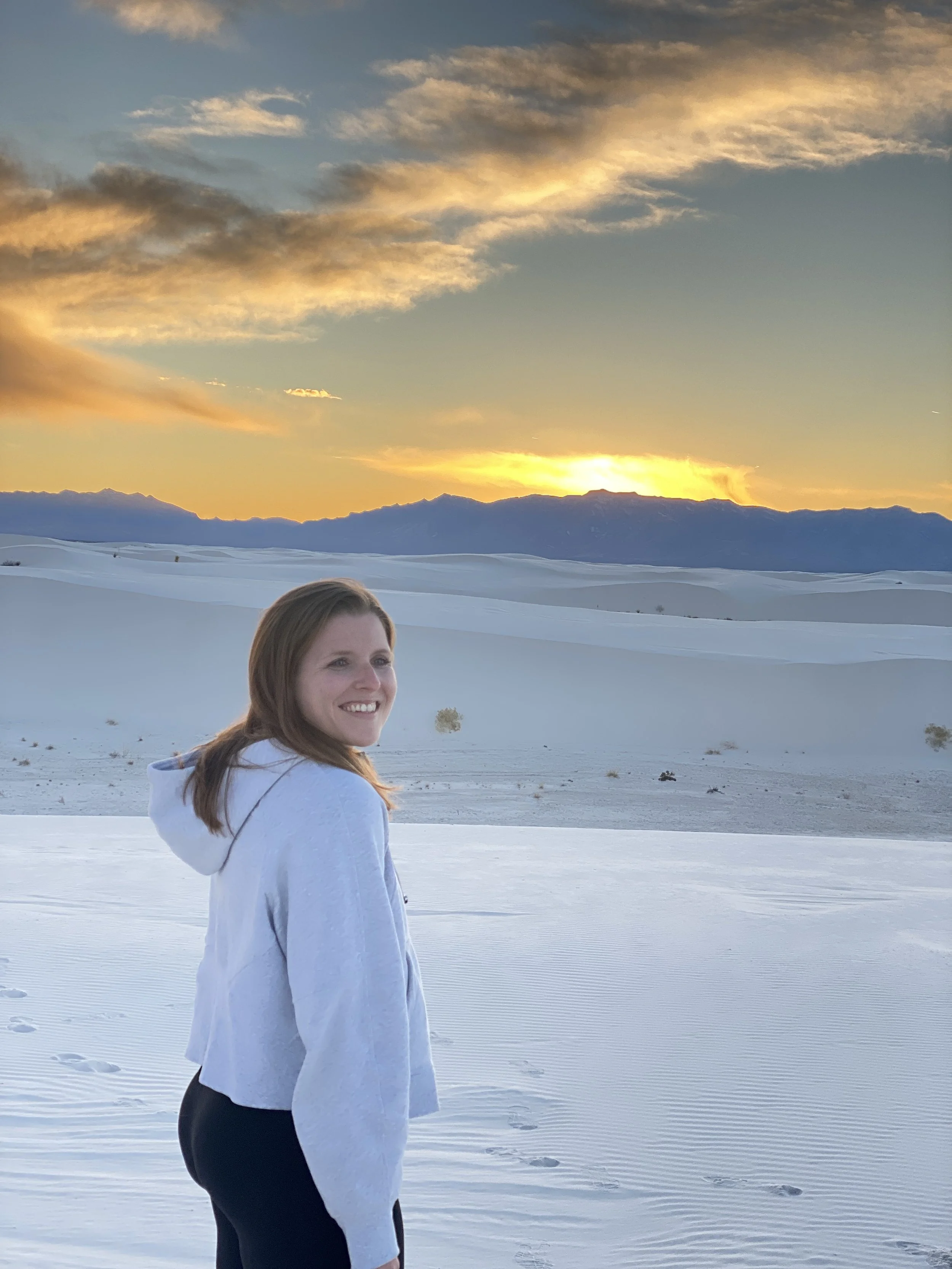
For a unique landscape, visit White Sands National Park in New Mexico; the dunes are open for hiking and sledding in cooler, more comfortable winter temperatures. In Olympic National Park, you can experience a rare two-for-one: rainforest hiking on the coast and snowshoeing or skiing at Hurricane Ridge, provided the road is open that day.
Pick Your Park and Book It Now
Choose the camp you want — snowy adventure or warm-weather escape — then check the NPS road status page for your park this week. Gateway-town lodging at places like Estes Park, Springdale, or Three Rivers fills slower in winter but still books up on holiday weekends.
Winter turns these places into the versions the summer crowds never see: silent canyons, empty trails, and landscapes so stark they barely look like the same parks on the postcards.
Pull up the park you want, book your first night’s lodging today, and start a packing list for the specific conditions you will face.
Leave a Reply