Steam rolls off Széchenyi’s outdoor pools while snow settles on the Neo-Baroque rooftops around you, and nobody is charging you Alpine money to sit in it.
In Krakow’s Rynek Główny, grilled oscypek and a cup of mulled wine cost less than a coffee back home, and across the river in Budapest the Chain Bridge lamps ripple on black water while you walk for free.
What makes this region different in winter is what fits inside a small daily budget: full sit-down dinners with drinks, real thermal bathing, and genuine ski days are ordinary weeknight activities here.
You also sleep in the historic core, not out by a bus stop — the cheap rooms in Eastern Europe are the central ones.
This guide helps you decide which city, mountain, or Baltic stop deserves your week and which one to skip.
Plan on about €50 a day at the budget end, roughly €70 if you want private rooms and a second bath day, and €90-ish when you add a splurge dinner or a cable car.
Treat those as planning baselines only, since exchange rates and weekend surges move the numbers.
Short on Time? Here’s Where Each Trip Wins
- Thermal water without spa-town prices — Budapest. A full day at Széchenyi runs about €25, private hostel rooms start at €25, and a €5.50 transport pass covers the city.
- The cheapest complete ski week — Brasov and Poiana Brasov. Lift passes from €35 a day, €20–€30 old-town guesthouses, and dinner with drinks around €12.
- Markets, castles, and cut-price culture — Krakow. Market-stall meals at €5–€8, Wawel Castle at roughly €5, and hostel beds from €15.
- Lowest overall spend, easiest first trip — Vilnius. Old Town rooms from about $30, a family feed for roughly €25, and free registered bikes.
- Olympic slopes above an old bazaar — Sarajevo. Ski Jahorina for gentle terrain or Bjelašnica for steeper descents, then eat ćevapi in Baščaršija.
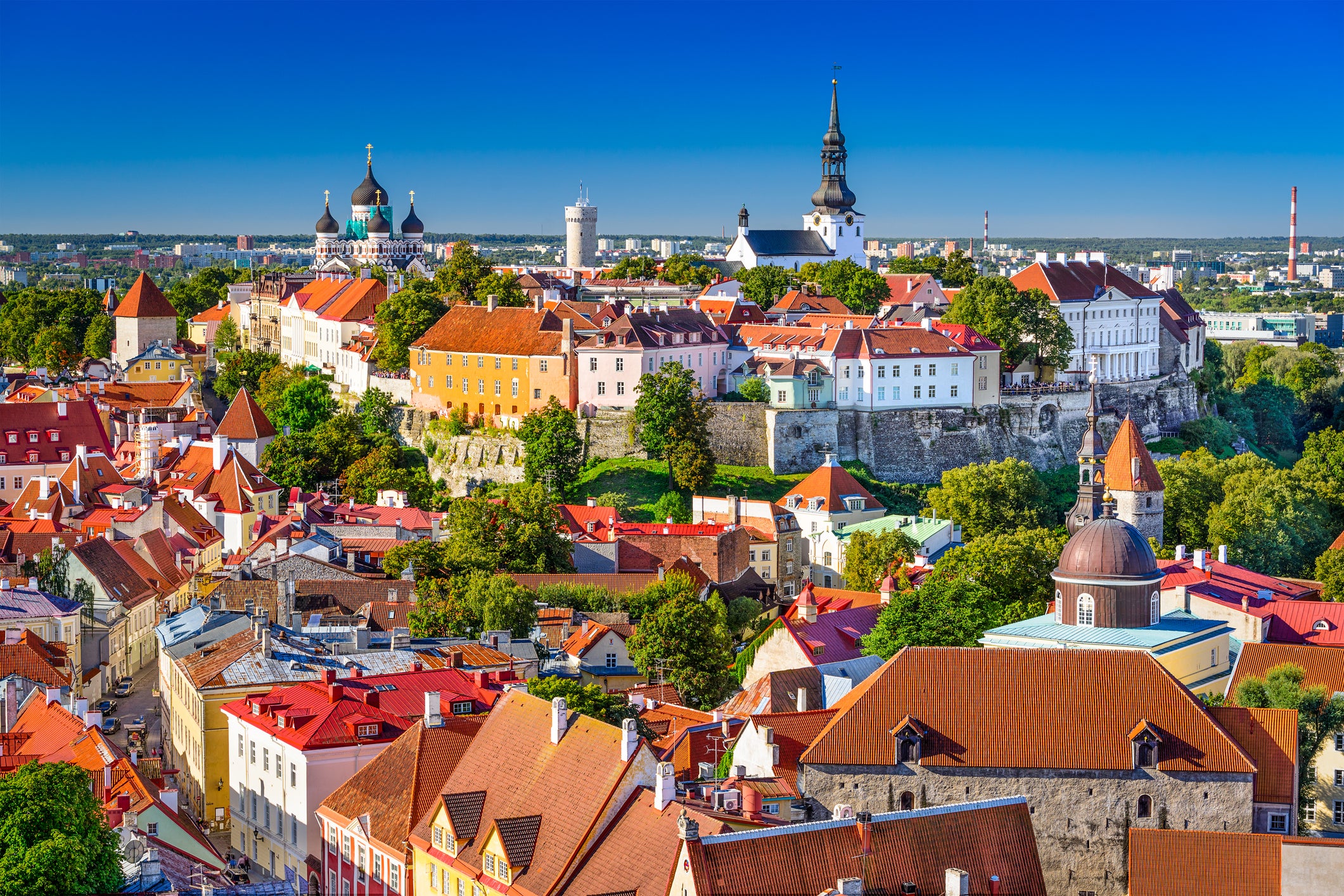
- Fairy-tale square, zero entry fee — Tallinn. Guesthouses at €20–€40, a free Christmas market, and Kumu Art Museum at €6.
How Much Does a Winter Week in Eastern Europe Cost?
Plan on roughly €50–€70 per person per day across Eastern Europe in winter, and a seven-day trip lands comfortably under what a long weekend in the Western Alps costs. That figure is the whole argument for going east: the same week of snow, thermal water, and old-town atmosphere runs a multiple of this in Austria, France, or Switzerland.
The Everyday Budget: Beds, Food, and Sights
Stretch the €50–€70 baseline by knowing where the money actually goes. My read on the split, in order of what drains a wallet fastest:
- Accommodation is the swing factor. This is where a €20 nightly difference decides whether your week fits the low or high end of the range. Exact room rates for each city are covered in their own sections — pick the city first, then the room.
- Food is the easiest place to win. Hearty sit-down meals with a drink are the norm here, not the exception. Eat your main meal at lunch, where locals do, and dinner becomes a small affair.
- Sights rarely break the budget. Walking the old towns, river embankments, and market squares is free and is most of what you came for. Paid entries are the garnish, not the meal.
- Local transport rounds out the number. Day passes and short intercity hops keep the daily total predictable — the cost-control tactics for that live in the final section of this guide.
Why Winter Is the Cheapest Time to Arrive
January and February are the value window, and I would book there over December without hesitation. Demand collapses once the festive season ends, which is exactly when the price drops land on flights, rooms, and meals at the same time.
December is the trap. The Christmas market season is beautiful and expensive — flights tighten, central rooms fill, and you pay peak rates for the same food you would eat in January.
If the markets are your reason for going, accept the premium and book early. If your reason is snow, thermal water, and empty streets, come after New Year and keep the difference.
What “Budget Friendly” Really Buys You Here
Not a stripped-down version of the trip. That is the point most travelers get wrong about Eastern Europe in winter.
- Full meals, not snacks. Sit-down dinners with drinks are inside the daily budget, not a splurge you skip.
- Real thermal bathing and real ski days. The spa and slope experiences that cost a fortune in the Alps are ordinary weeknight activities here.
- Central locations. You are not exiled to the suburbs to hit the number — the historic core is where the budget rooms are.
- Room to be spontaneous. A €50–€70 daily average leaves slack for a cable car, a museum, or a second dinner without recutting the plan.
The honest caveat: budget friendly is not the same as fixed. Exchange rates, energy costs, and weekend surges move these numbers. Treat €50–€70 as the planning baseline and confirm live prices before you commit.
Poland in Winter: Krakow, Warsaw, and the Tatra Foothills
Poland is where your money goes furthest in Eastern Europe in winter: a dorm bed in Krakow from €15 a night, a plate of pierogi for the price of a coffee in Vienna, and castle entry that costs less than a museum ticket almost anywhere else on the continent. Run Krakow and Warsaw as city stops, then finish in the Tatras for snow — this is the one country on this list that delivers culture, food, and real mountains without switching currencies or blowing the budget.
Krakow: Old Town Markets and Cut-Price Culture
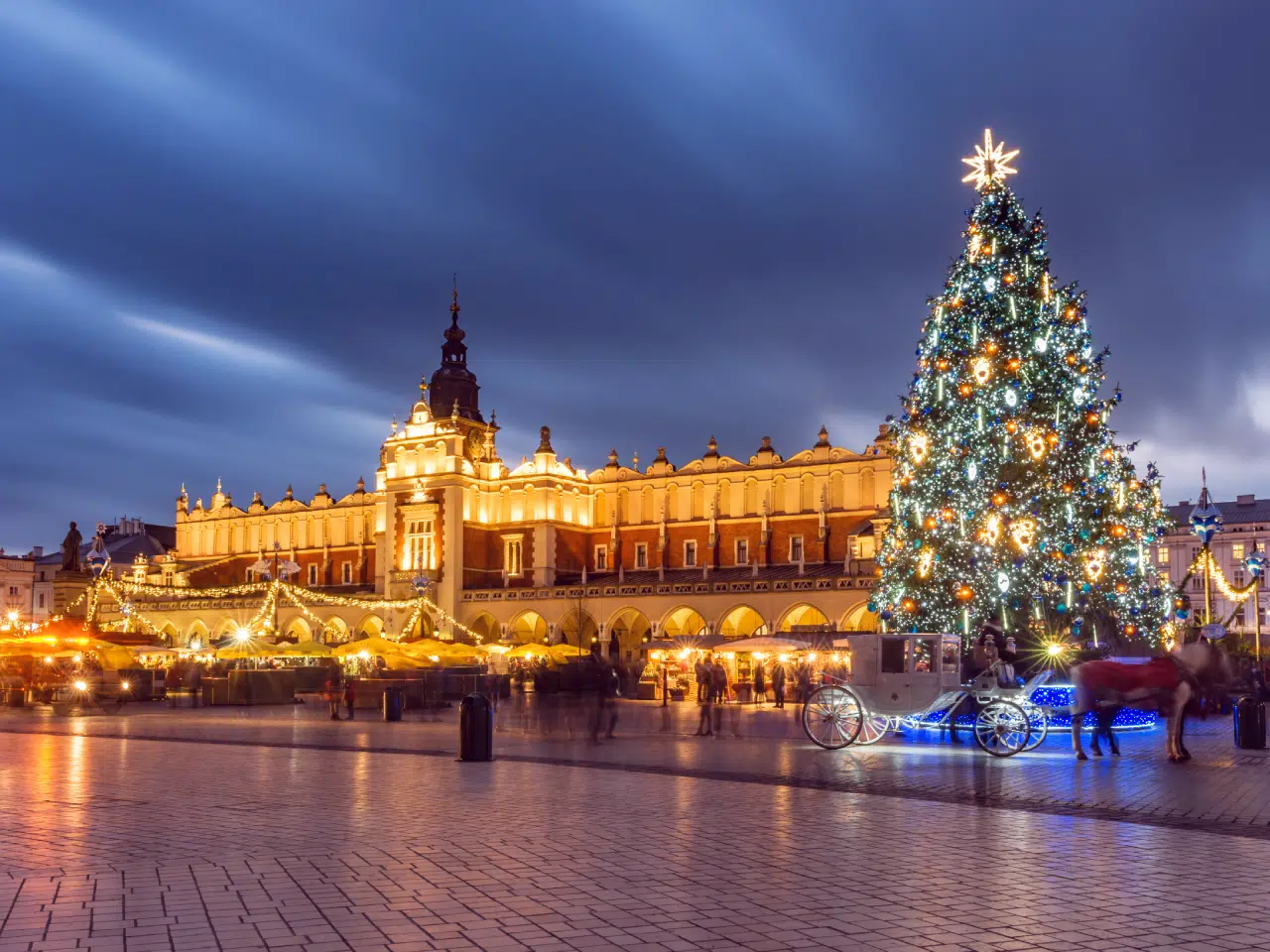
The Rynek Główny Christmas Market, one of Europe’s largest medieval squares, fills with wooden stalls from late November, and it is the reason to come before the new year rather than after. Order pierogi and a cup of mulled wine at the stalls, browse the handmade toys and gingerbread, and let the horse-and-carriage drivers talk you into a loop through the Old Town — in the cold and dark, with the square lit up, it earns its fare.
- Eat here: Market-stall meals run about €5–€8, which is the single best value in the city. Grilled oscypek cheese and hot beer are the winter-only orders worth trying.
- Sleep here: Hostel beds start around €15 a night, and mid-range hotels typically land at €35–€50 — book the Old Town or Kazimierz and you will walk everywhere.
- Do this: Wawel Castle entry costs roughly €5, so there is no excuse to skip it. Go for the state rooms and the dragon, not the grounds.
- Day trip: The Wieliczka Salt Mines run a guided tour of about three hours with no early exit, and strollers are not permitted — leave them at the hotel and bring a carrier for small children.
Insider move: Eat your main meal at the market stalls around 4pm rather than in a sit-down Old Town restaurant at 8pm. You pay a fraction of the price, you avoid the dinner rush entirely, and you still get the market at full lighting.
Warsaw: Ice Skating in the Old Town and a Palace Full of Escape Routes
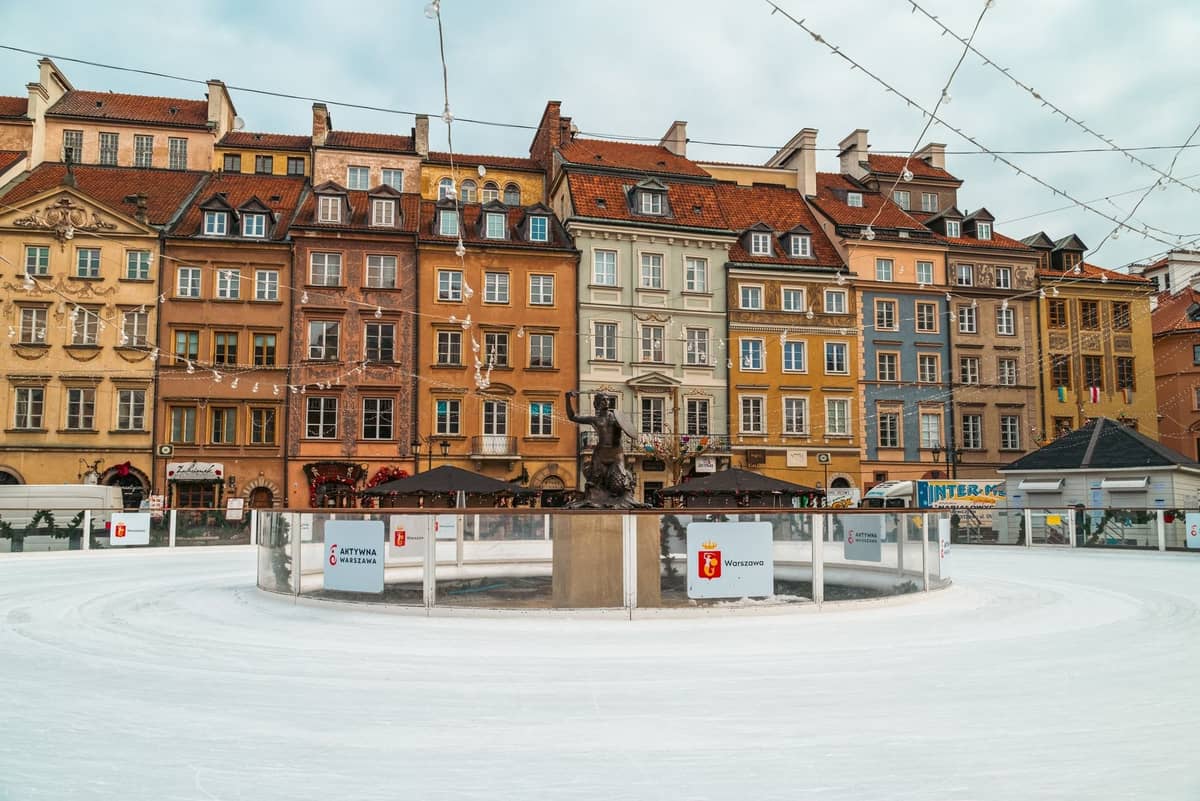
Warsaw’s Old Town Market Square puts an ice rink in the middle of the square in winter, with skate rentals nearby for a fee and mulled wine within stumbling distance — go in the evening for the lights, or mid-morning if you want room to actually skate. The surrounding Old Town also runs a market with a Ferris wheel, which is worth it purely for the view back over the rooftops.
The Palace of Culture and Science, finished in 1955 and still Poland’s tallest building, is the city’s strangest bargain: the same building holds cinemas, two museums, and a swimming pool. Treat it as a bad-weather insurance policy — when the cold turns genuinely unpleasant, you can spend half a day inside without leaving the block.
- Skate: Evening sessions at the Old Town rink are the atmospheric choice; daytime is the practical one for families.
- Look up: The Palace of Culture observation deck gives you the whole city laid out under snow, and it is the cheapest skyline view in town.
- Bundle it: Rink, market, Ferris wheel, and the Palace all sit within a compact central area, so you can do the lot on foot in a single cold day.
Zakopane: Skiing and Snow at the Foot of the Tatras
Zakopane sits at the foot of the Tatras and gives you snow without lift-pass gouging — and for anyone not skiing at all, the cable cars alone justify the trip. Gubalowka is the easy one, climbing straight above town for the postcard panorama; Kasprowy Wierch goes higher, into proper alpine terrain, and is the one to pick if you want real mountain air rather than a viewpoint.
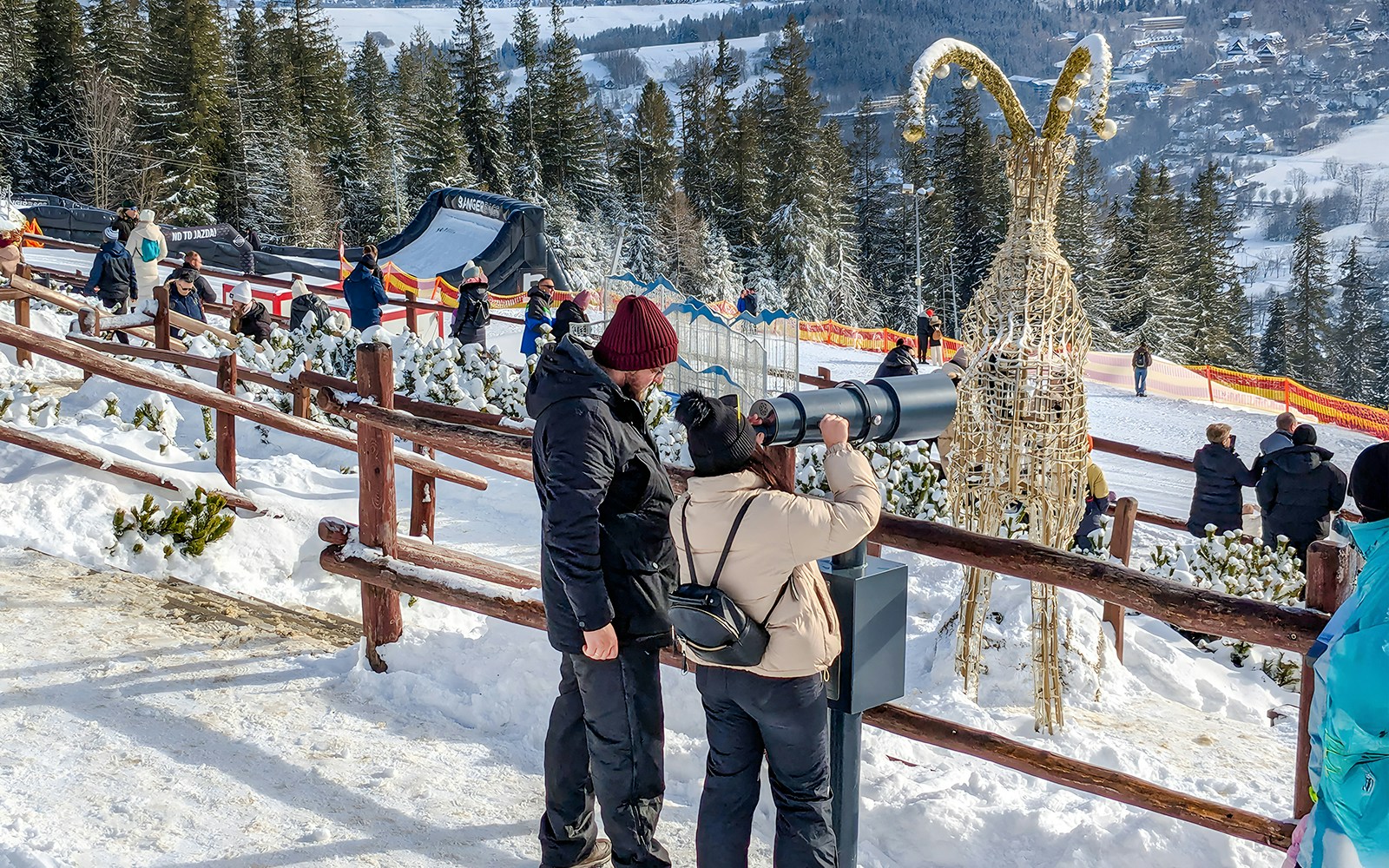
- Viewpoint first: Ride Gubalowka before you decide on Kasprowy Wierch. If the cloud is sitting on the peaks, save the higher car for a clearer day.
- Bad-weather day: The aqua park is the move when visibility drops — warm water and slides beat huddling in a café.
- For kids: The Upside Down House is the easy win for families who need one novelty stop between the snow activities.
My read: Zakopane works best as the closing chapter of this route. You have already had two cities of markets and museums; give the snow three days here and you will not feel shortchanged on a single one.
Budapest: Thermal Baths Without Alpine Spa Prices
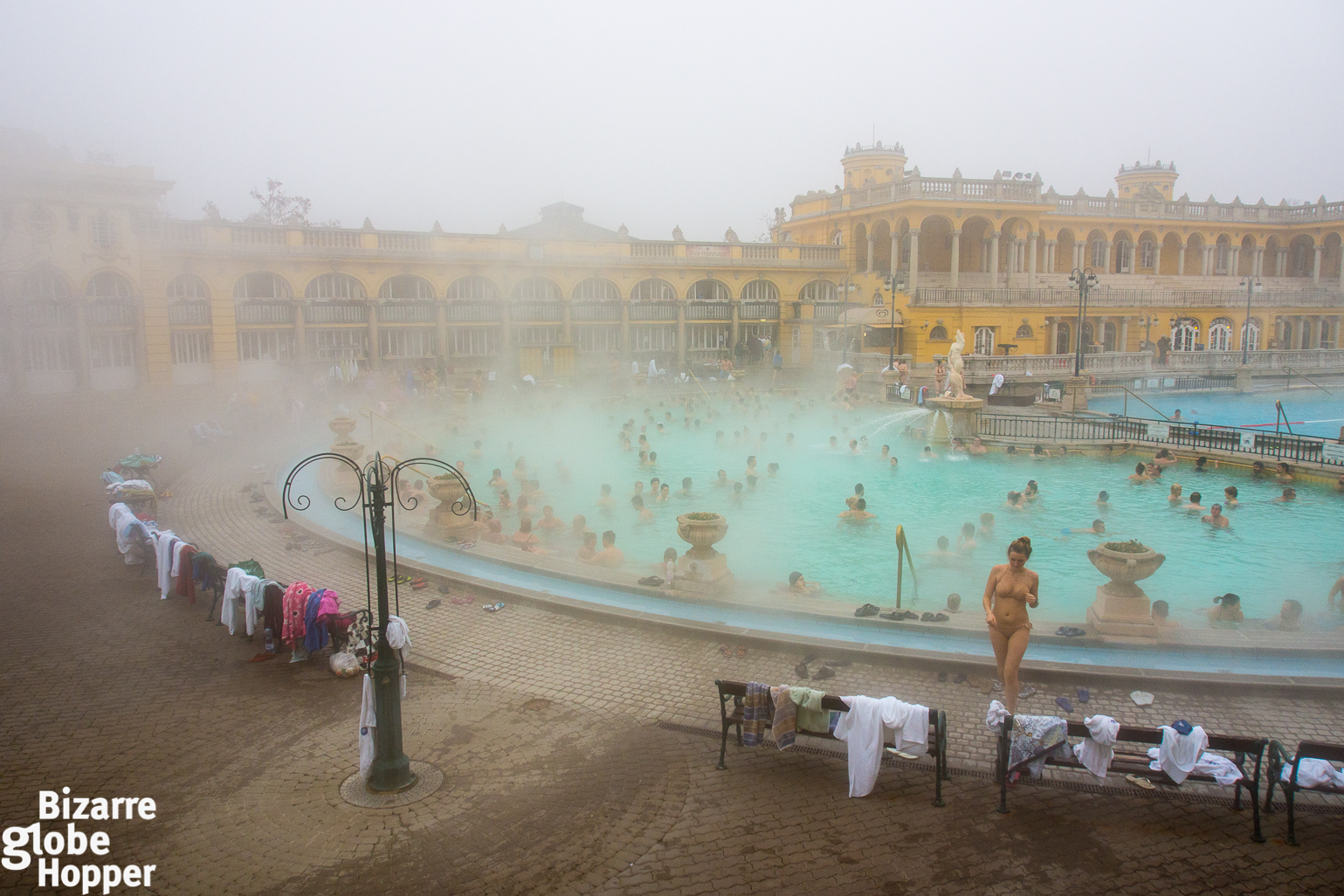
Steam rising off outdoor pools while snow settles on the Neo-Baroque rooftops around you — Budapest’s thermal baths are the winter ritual the Alpine spa towns charge three times for, and a full day at Széchenyi runs about €25. Pair that with a €5.50 transport pass and a €25 private hostel room and Budapest becomes the strongest value base in this entire guide.
Széchenyi and Gellért: The Main Winter Ritual
Széchenyi is the headline act and the one I’d book: the vast outdoor pools in City Park stay open through winter, and moving between the steaming water and the cold air is the entire point. Budget roughly €25 for a day ticket as a planning baseline, and confirm current pricing before you go since bath tariffs move.
- Go early or go late: Midday draws tour groups. The first morning slots and the last two hours before closing give you the pools nearly to yourself.
- Gellért as the alternative: Smaller, more ornate, and better if you want atmosphere over scale. I’d pick Gellért for a single romantic soak and Széchenyi for a full lazy afternoon.
- Bring your own towel and flip-flops: On-site rental adds a few euros per item, which quietly erodes the value of a €25 ticket.
Transport and Cards That Shrink the Daily Spend
Budapest’s metro, trams, and buses are cheap enough that taxis are a mistake. A 24-hour public transport pass costs about €5.50 and covers the airport bus corridor and cross-city hops without a second thought.
- Three-day Budapest Card: The smart buy if you’re stacking baths, museums, and transport into one trip. It bundles transit with attraction discounts, so do the math on your own itinerary — if you’re visiting two or three paid sights beyond the baths, it usually pays for itself.
- Private hostel rooms from €25/night: The sweet spot for couples and solo travelers who want privacy without a hotel bill. Book the private room, not the dorm bed — in January and February the price gap is small.
- Hotels at €40–€70/night: Worth it for anyone wanting a proper room and central address. I’d aim for the lower half of that range and spend the difference on a second bath day.
The Free Winter Walk Along the Danube
Every euro saved on the Chain Bridge crossing is a euro spent later on mulled wine — because this walk costs nothing and delivers the postcard.
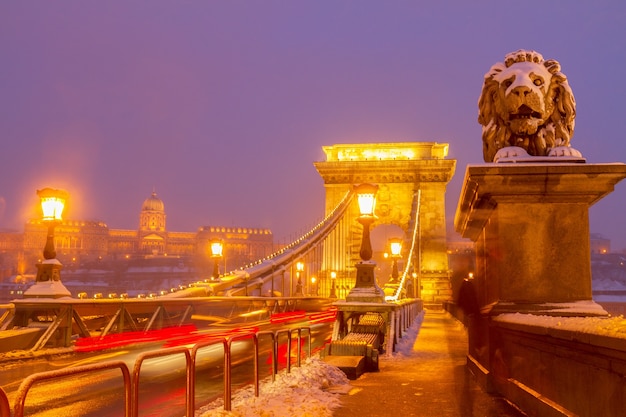
Cross the Chain Bridge on foot between the Pest and Buda riverbanks. In winter the crowds thin, the bridge lamps reflect off the dark Danube, and the whole Parliament-and-castle panorama stacks up behind you for free.
Do it at dusk in both directions — once heading toward Buda for the view back at the lit-up Pest embankment, and once returning when the bridge strings are fully lit. This is the single best free hour in the city, and no ticketed viewpoint beats it.
Where Can You Ski in Eastern Europe Without Paying Alpine Prices?
A day on Carpathian snow at Poiana Brasov costs about what a single Alpine lunch runs elsewhere — lift passes start from €35/day, and dinner with drinks afterward lands near €12. Add €20–€30/night old-town guesthouses in Brasov and this is the cheapest complete ski package on the continent.
Poiana Brasov: Carpathian Slopes at a Fraction of the Cost
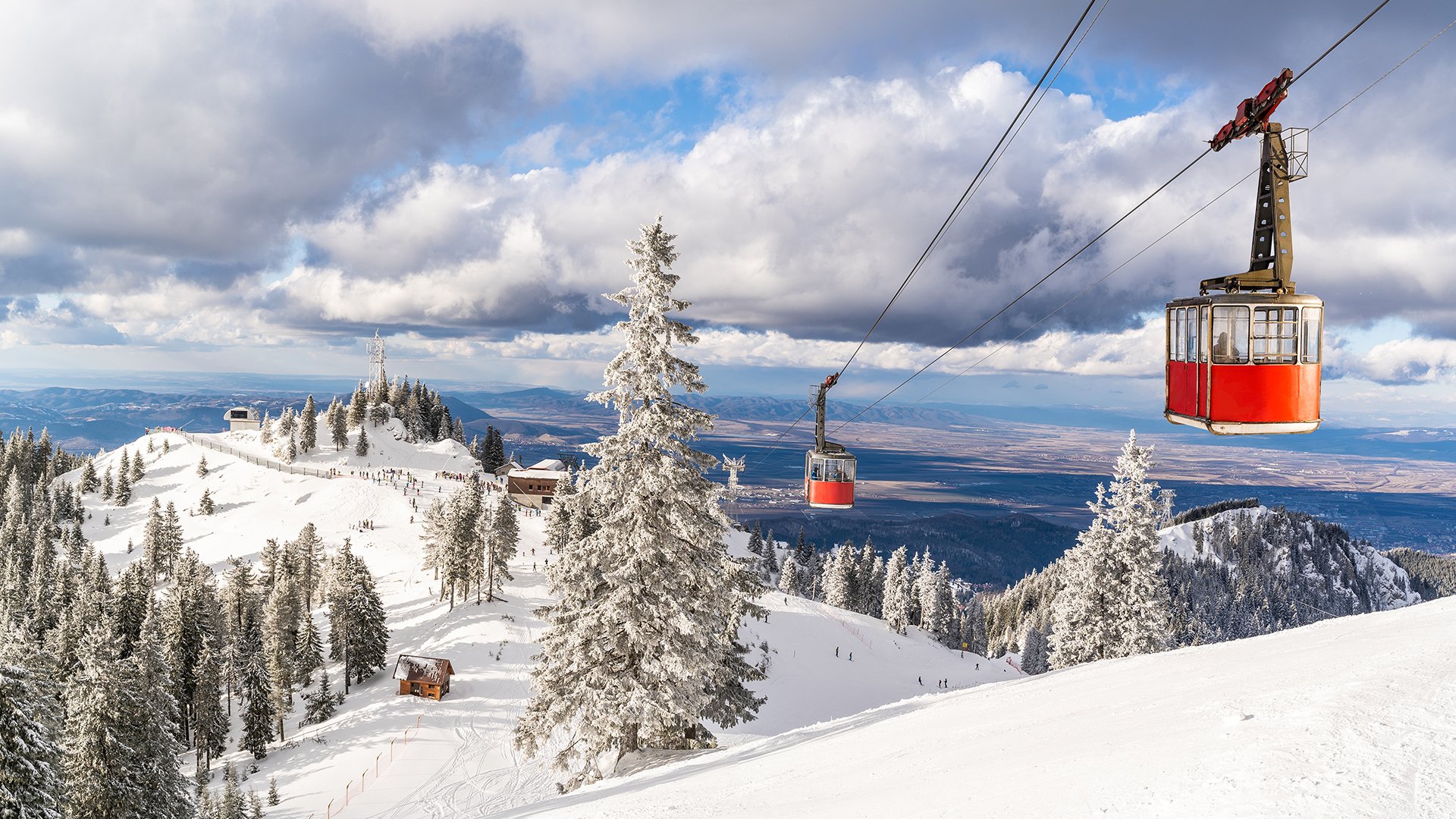
Poiana Brasov is the move for skiers who want groomed runs and a real resort atmosphere without surrendering a week’s budget to a lift company. Expect roughly €35/day for a lift pass, though prices vary by season and provider — confirm current rates before you go.
- Best base: Stay in Brasov’s old town, not up the mountain. Guesthouses run €20–€30/night, the restaurants are better, and the après-ski is the town itself.
- Eat in town: A filling meal with drinks at a local restaurant is about €12 — resort-mountain markup is where budgets die, so fuel up before the bus back down.
- Who it’s for: Beginners and intermediates who want a full ski day at lunch-money prices. Experts chasing serious vertical should look elsewhere.
- Insider: Weekends fill with day-trippers from Bucharest. Slopes are noticeably quieter midweek, and that is when the cheap pass actually buys you space.
Bran Castle: A Snowy Day Trip from Brasov
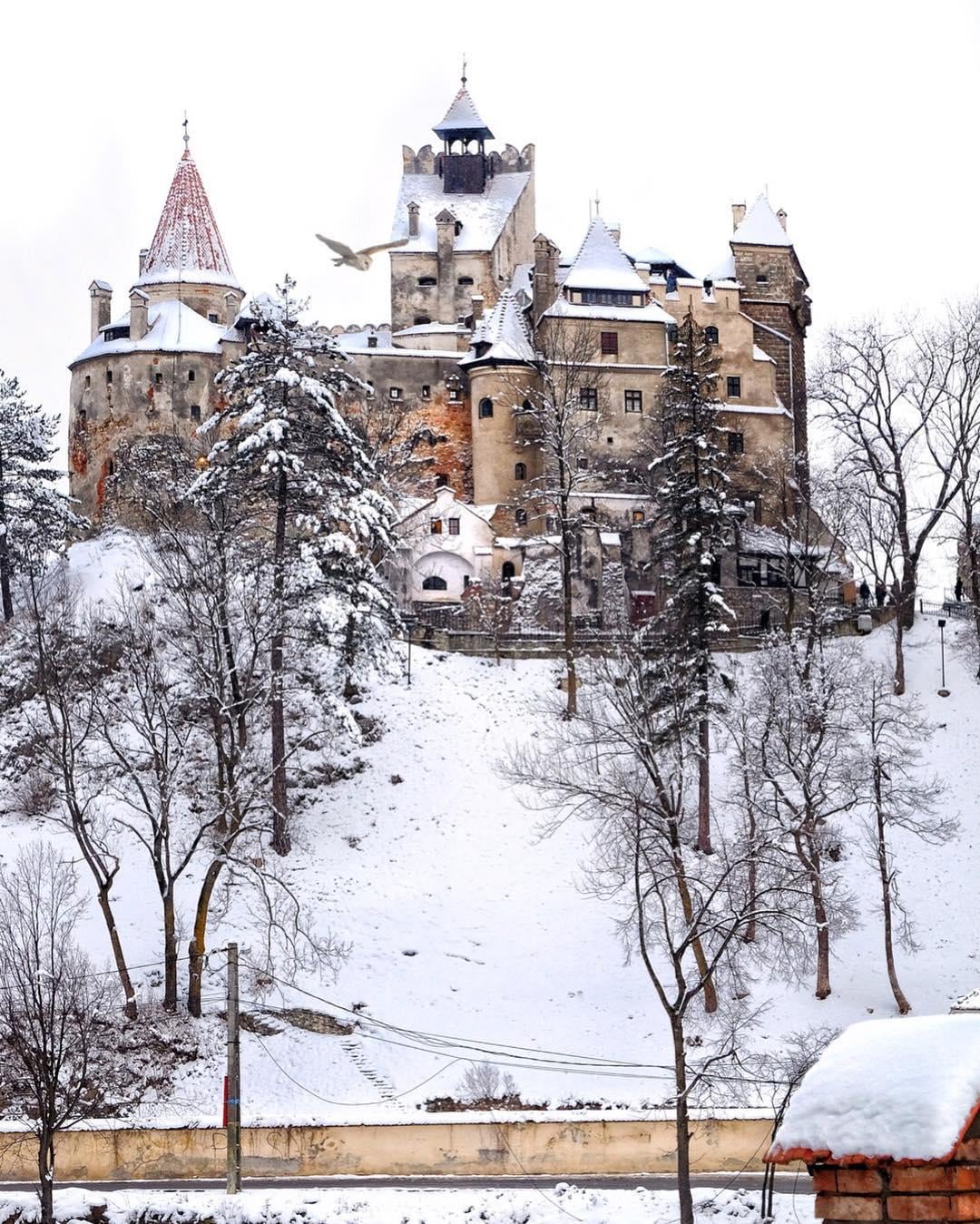
Bran Castle is the non-ski day that makes this trip more than a lift ticket — a cliff-top fortress in Transylvania, permanently branded as Dracula’s castle by a marketing machine Bram Stoker never visited. Go for the castle and the snowy mountain setting, not for vampires.
My read: it’s a genuinely atmospheric medieval fortress wrapped in vampire kitsch. The Dracula association is mostly invention — Stoker never came here — but the turrets, courtyards, and snow-blanketed valley deliver exactly the winter image you came for.
Pair it with the drive through the Carpathian foothills and it earns its day away from the slopes.
Kranjska Gora and Lake Bled: The Cross-Border Alternative
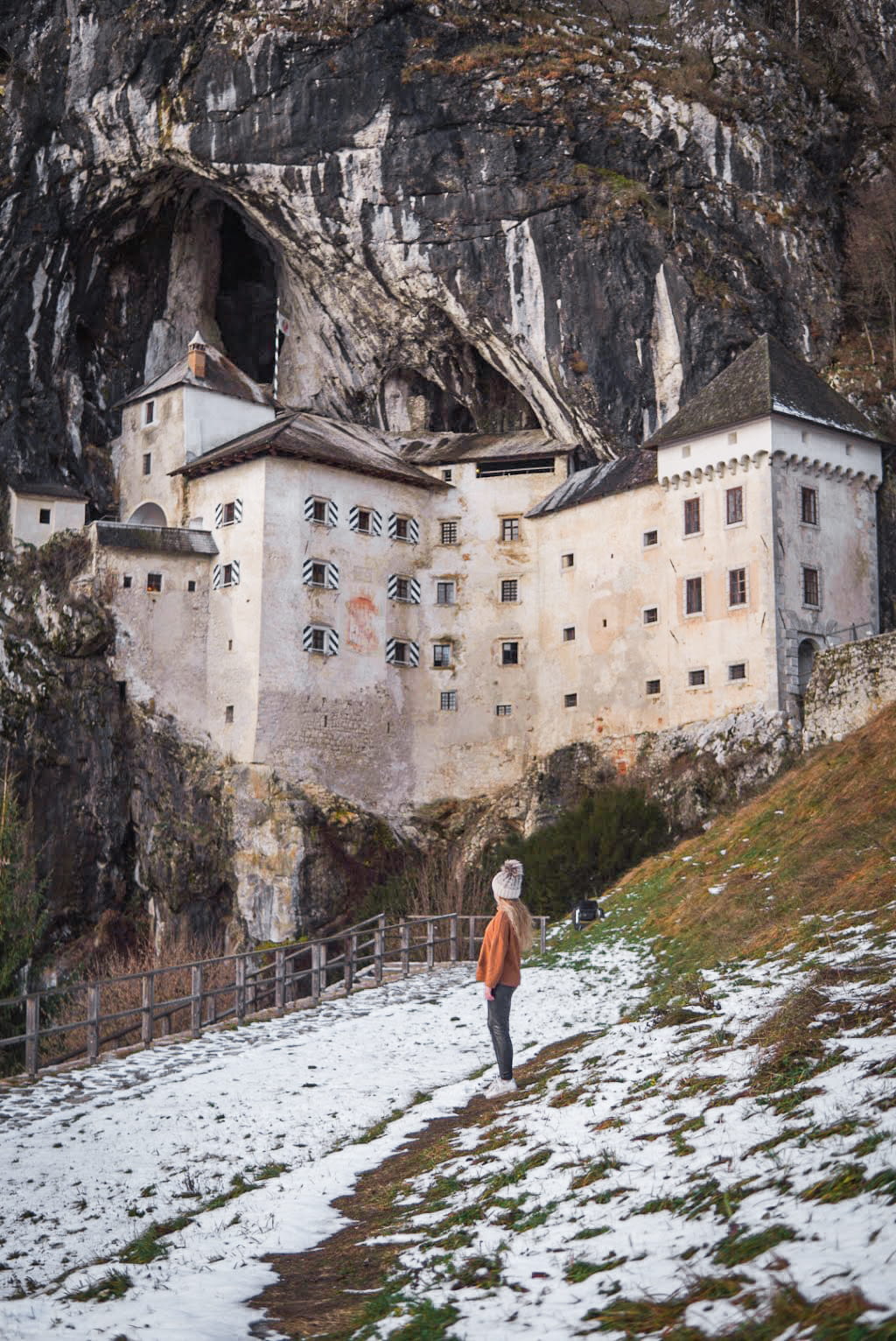
Over the border in Slovenia, Kranjska Gora matches Poiana Brasov’s headline number — lift passes from €35/day, again with pricing that varies by season and provider — but the surrounding trip is a different animal.
- Choose Kranjska Gora if your priority is the ski day itself. Same €35/day baseline, and Slovenia’s Julian Alps scenery is sharper than anything at this price.
- Choose Lake Bled if you want the trip to photograph like a postcard. B&Bs run about €40–€60/night — more than Brasov, still a fraction of the Alps.
- Eat well for less: A traditional Slovenian meal comes in around €10–€15, so the food budget stays modest even at Bled’s higher bed rate.
My verdict: Brasov wins on pure cost and on a non-ski day worth taking. Slovenia wins if you want lake views and a shorter, prettier hop between mountain and village.
Whichever you pick, book the bed first — the good-value guesthouses and B&Bs are the inventory that disappears.
The Baltics: Vilnius and Tallinn on a Shoestring
Vilnius and Tallinn are the two cities in this guide where a family of four can eat a full winter meal for €25 and sleep inside the Old Town for less than the price of a single Alpine lift pass. Pick both if your route allows — they pair naturally with the bus and ferry legs north — and budget roughly three nights each.
Vilnius, Lithuania: Frozen Lakes and Free Bikes
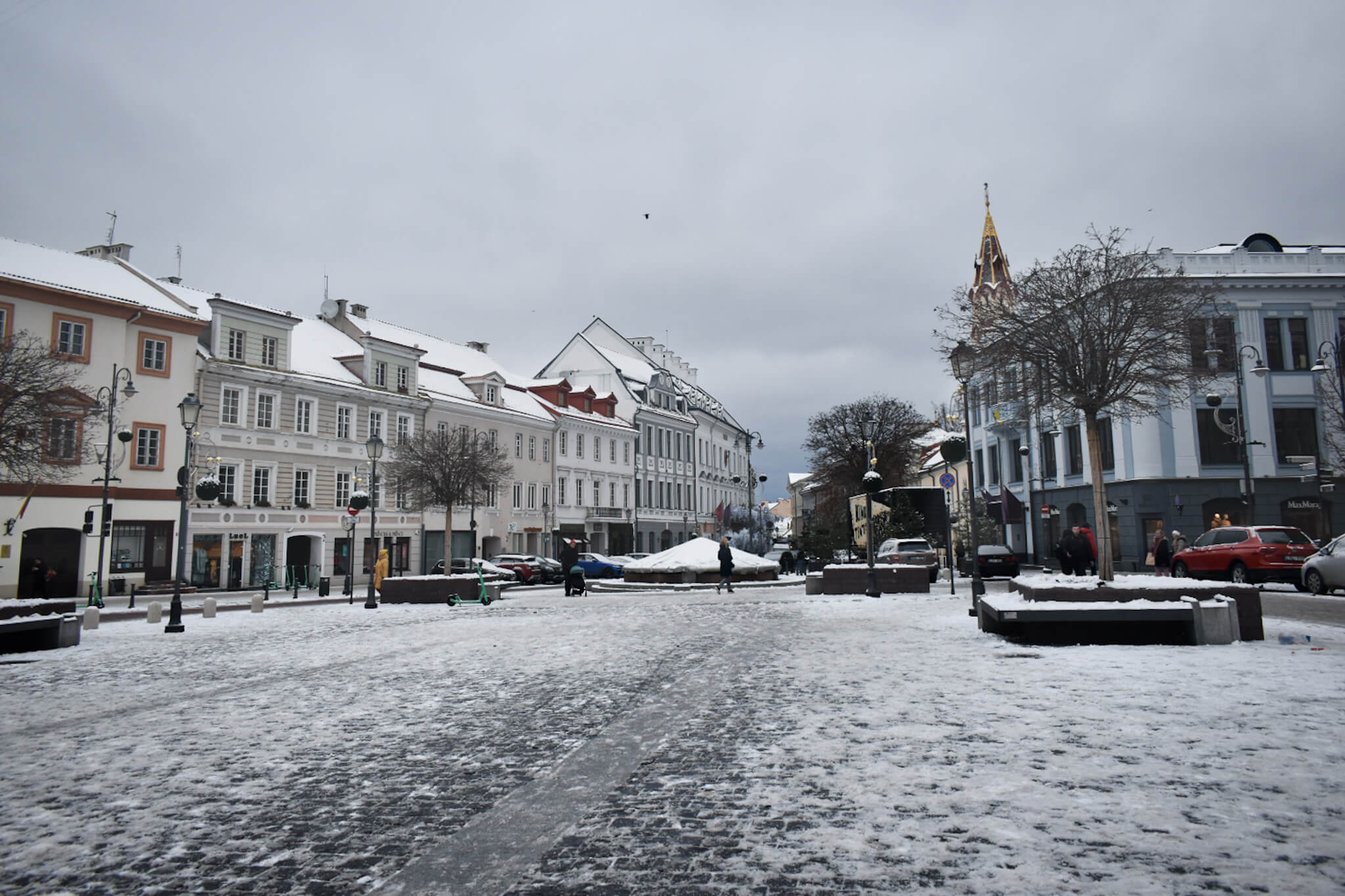
Private rooms in the Old Town start around $30 a night, and that price puts you in the middle of the action rather than out near a bus stop. Getting around costs almost nothing: a single bus ride is €1, and the city’s registered bike scheme is free to use.
This is the cheapest base in the Baltics, and I’d choose it over anywhere else in the region for a first winter trip.
The eating is where Lithuania quietly wins. Around €25 buys winter food for a family of four — think hot soups, potato dishes, and dumplings that actually fill you up after a day in the cold.
Order the hot soup and a plate of cepelinai first; that combination covers you better than any café lunch in the tourist core.
- Viewpoint to hit: The hilltop Old Town tower for the winter city panorama, with a bike station sitting right at its base — ride up, lock, climb, ride back.
- Day trip worth the bus fare: Trakai Castle, the island fortress set on a lake that freezes solid in cold spells.
- Only do this when staff say yes: Walking across the frozen lake at Trakai is spectacular but ice-dependent. Go only when local staff declare the ice safe — never on your own judgment.
Winter road and ice conditions at Trakai change year to year, so treat the frozen-lake walk as a bonus rather than a fixed plan.
Tallinn, Estonia: Cheap Beds and a Free Christmas Market
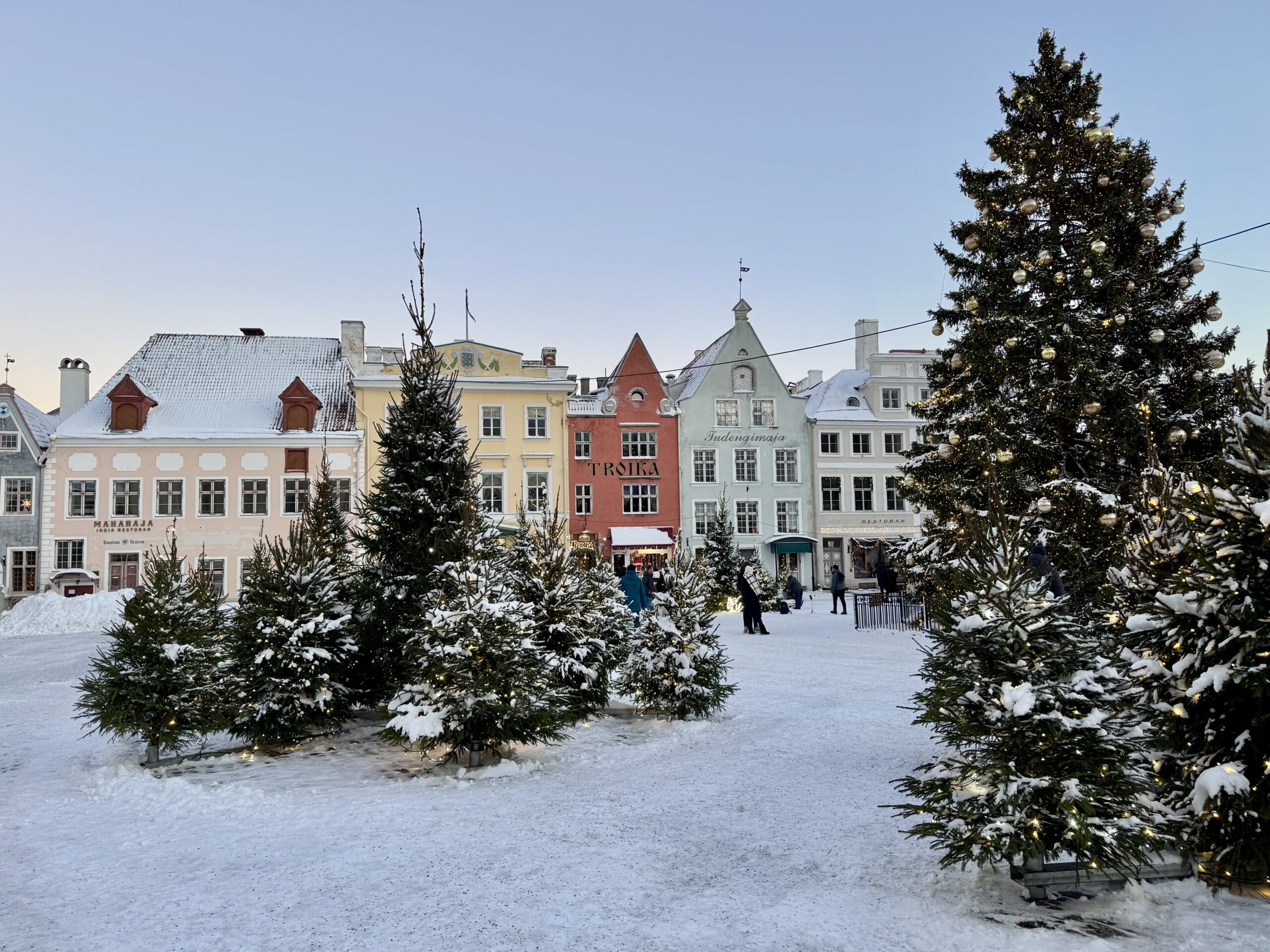
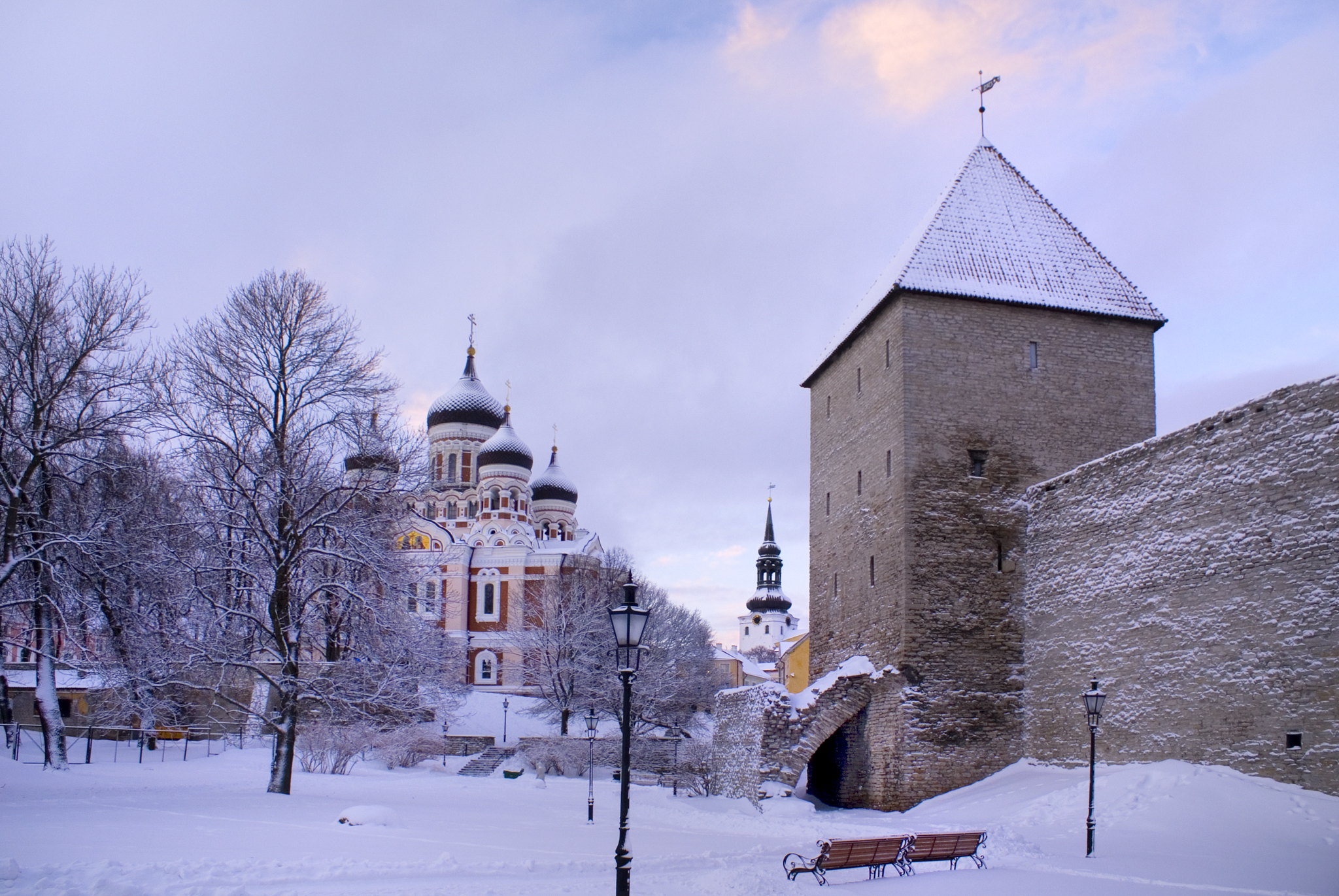
Tallinn guesthouses run €20–€40 a night even in the city centre, and the Old Town Christmas Market charges no entry fee at all — you can wander the stalls and the fairy-tale square for nothing, which is rare for a European Christmas market of this quality.
Meals sit around €8–€10 for a traditional Estonian dinner: black bread, pork, cabbage, and potatoes built for the cold. That’s the best value on the Estonian table, and I’d eat it in a proper tavern rather than chasing anything modern.
- Culture on the cheap: Kumu Art Museum costs €6 and is the strongest museum value in the city — go when the weather turns brutal.
- Free vs. paid: The Christmas market and Old Town wandering cost nothing; save the €6 for Kumu and one tavern dinner instead of buying market trinkets.
Book guesthouses outside the Christmas market dates if you can — the festive weeks push Tallinn prices toward the top of that €20–€40 band, while early January usually lands at the low end. Prices vary by season and provider, so confirm before booking.
The Balkans: Sarajevo and Belgrade in the Cold Months
Two cities where winter is the season to be there, not the season you tolerate: Sarajevo throws Ottoman minarets and Austro-Hungarian facades together along the same river, and Belgrade answers with kafanas that fill up before the sun goes down at three in the afternoon. Both run on Balkan accommodation pricing that starts around €20 a night — the lowest lodging floor anywhere in this article.
Sarajevo: Olympic Slopes and Old Bazaars
Sarajevo wears its 1984 Winter Olympics heritage where you can still use it. The ski hills above the city — Bjelašnica and Jahorina, both Olympic competition venues — remain active winter sports mountains, which means you can ski a genuine Olympic run in the morning and be back in Baščaršija for lunch.
That combination is the entire reason to come in the cold months.
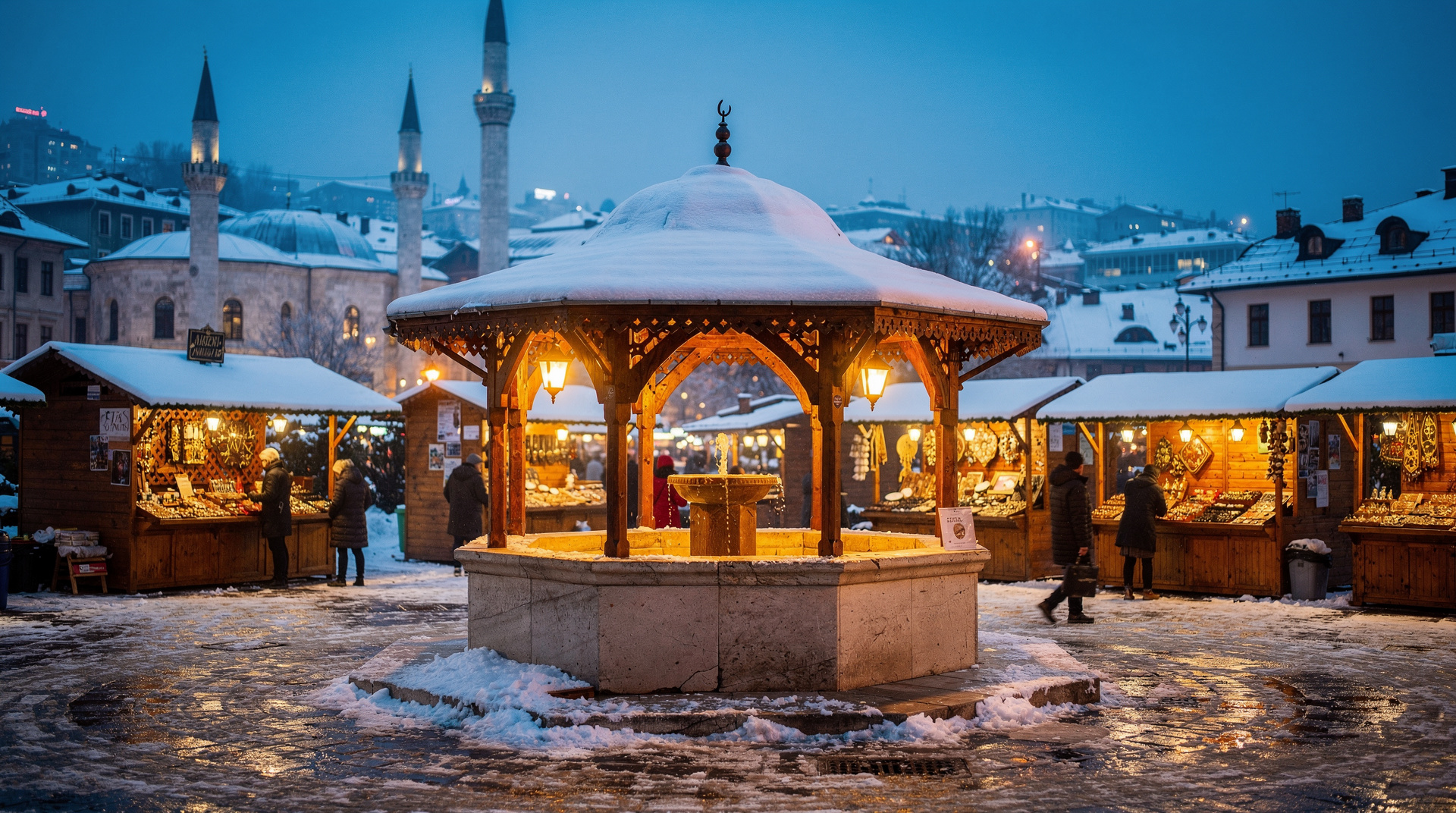
Between the hills, the city itself is the payoff. Ottoman-era Baščaršija — coppersmiths, Sebilj fountain, narrow lanes of grills and coffee houses — sits a short walk from the Austro-Hungarian quarter that took over after 1878: pseudo-Moorish government buildings, Catholic and Orthodox cathedrals, and tram lines that have run since 1885.
The whole walk is flat, compact, and free.
- Ski the Olympic hills: Jahorina and Bjelašnica both run lifts through the season. Pick Jahorina for longer, gentler terrain and Bjelašnica for steeper, more serious descents.
- Eat at the source: In Baščaršija, order ćevapi in somun at one of the grilled-meat houses clustered near Sebilj — the cluster is where the argument over which one is best has been going on for decades.
- Best free hour: Climb the streets above Baščaršija toward the Yellow Fortress for the valley view. Go at sunset and the minarets light up below you.
Belgrade: Warming Up Over Kafana Food
Belgrade does not shut down for winter the way Adriatic towns do. The city runs year-round on a rotation of live music, all-night kafanas, and a café culture that does not care what the thermometer says — which is exactly what you want when the days are short and the wind comes off the Danube.
The kafana is the main event. These are not restaurants with waiters and a wine list; they are rooms built around grilled meat, slow-cooked stews, and rakija, and they are where Belgrade actually socializes from November through February.
What I would order first, and in this order:
- Ćevapi and kajmak: The baseline. If a kafana can’t do this right, leave.
- Sarma: Cabbage leaves stuffed with meat and rice, braised for hours. This is the definitive Balkan winter dish and the reason to come in January.
- Pljeskavica: The oversized grilled patty, usually served with raw onion and urnebes, a spicy cheese spread.
- Rakija to finish: Fruit brandy, served neat and small. House-made is standard — ask for what the house makes rather than the branded bottle.
Insider move: Skip the restaurants that advertise in English near Knez Mihailova and walk into any kafana with a hand-written daily special chalked outside the door. That board is the menu that changes with the weather, and it is where the price and the quality both live.
Stay across the river in Zemun if you want quiet cobbled streets and riverside fish restaurants; stay in Dorćol if you want to walk to everything and stay out late. Both sit comfortably inside that €20-a-night Balkan floor for hostels and simple guesthouses.
Beyond Prague: Rožnov and the Wallachian Hills
Four hours east of Prague, Rožnov pod Radhoštěm trades tour buses for timbered houses and a genuinely local winter rhythm — this is the detour I recommend to anyone who has already done the capital and wants the Czech Republic without the crowds. The town sits in the Wallachian hills at the foot of Radhoštěm, and in winter the whole valley reads like a folk tale that happens to have functioning cable cars.
Rožnov pod Radhoštěm: Beer Spas and Folk Villages
The Wallachian Open Air Museum, founded in 1925, is the reason Rožnov punches above its weight: it is one of the oldest open-air museums in Europe, a village of original timber buildings relocated from across the Wallachian region and arranged so you walk through them rather than stare at them. In winter the crowds thin out completely and the snow on the shingle roofs is the photograph you came for.
- Go for the atmosphere: Snow-covered timbered farmsteads beat any summer visit for looks, and you will have the lanes nearly to yourself.
- Pair it with the beer spa: The town’s beer spa sits inside a working microbrewery, with beer-based treatments in the same building where the beer is brewed — book the slot that includes the unlimited pour, and go after the museum rather than before.
- Skip it if: You want nightlife or English-language programming everywhere. Rožnov is small, seasonal and proudly unpolished — that is the point.
Pustevny and Radhoštěm: Snow Walks Above the Town
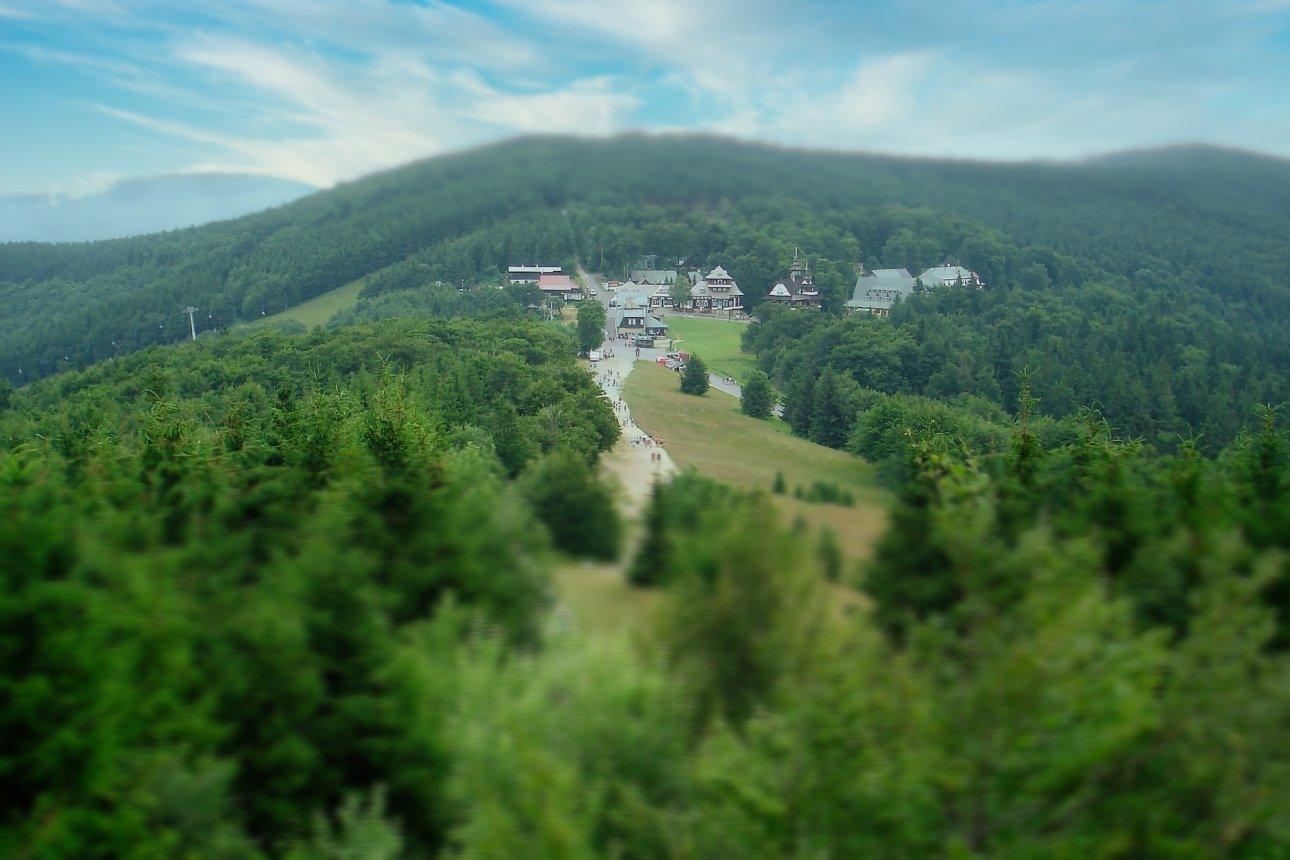
Drive fifteen minutes from Rožnov to Trojanovice and take the cable car up to Pustevny, a mountain station of painted timber buildings perched at over a thousand metres — the ride itself is worth the trip, and it spares you a long cold ascent with kids or grandparents.
- Walk the ridge: Pustevny is the base for snow walks along the ridgeline toward Radhoštěm, and the marked trail is the day’s main event.
- Take the chair lift: A chair lift carries you up to the Radegast statue on Radhoštěm, the Slavic god of hospitality whose monument has watched over these hills for generations.
- Time it right: Do the cable car up in the morning and the beer spa back in town in the afternoon — mountain weather closes visibility fast in winter, and the early slot gives you the best chance of the long view.
How Do You Keep Costs Down Once You’ve Picked a City?
Most budget leaks in an Eastern European winter trip happen in four places — the lift-ticket window, the room rate, the bank card, and the resort shop — and all four are cheaper dealt with before departure than on the day. Do the fixes below in that order.
Book the Big-Ticket Items Early
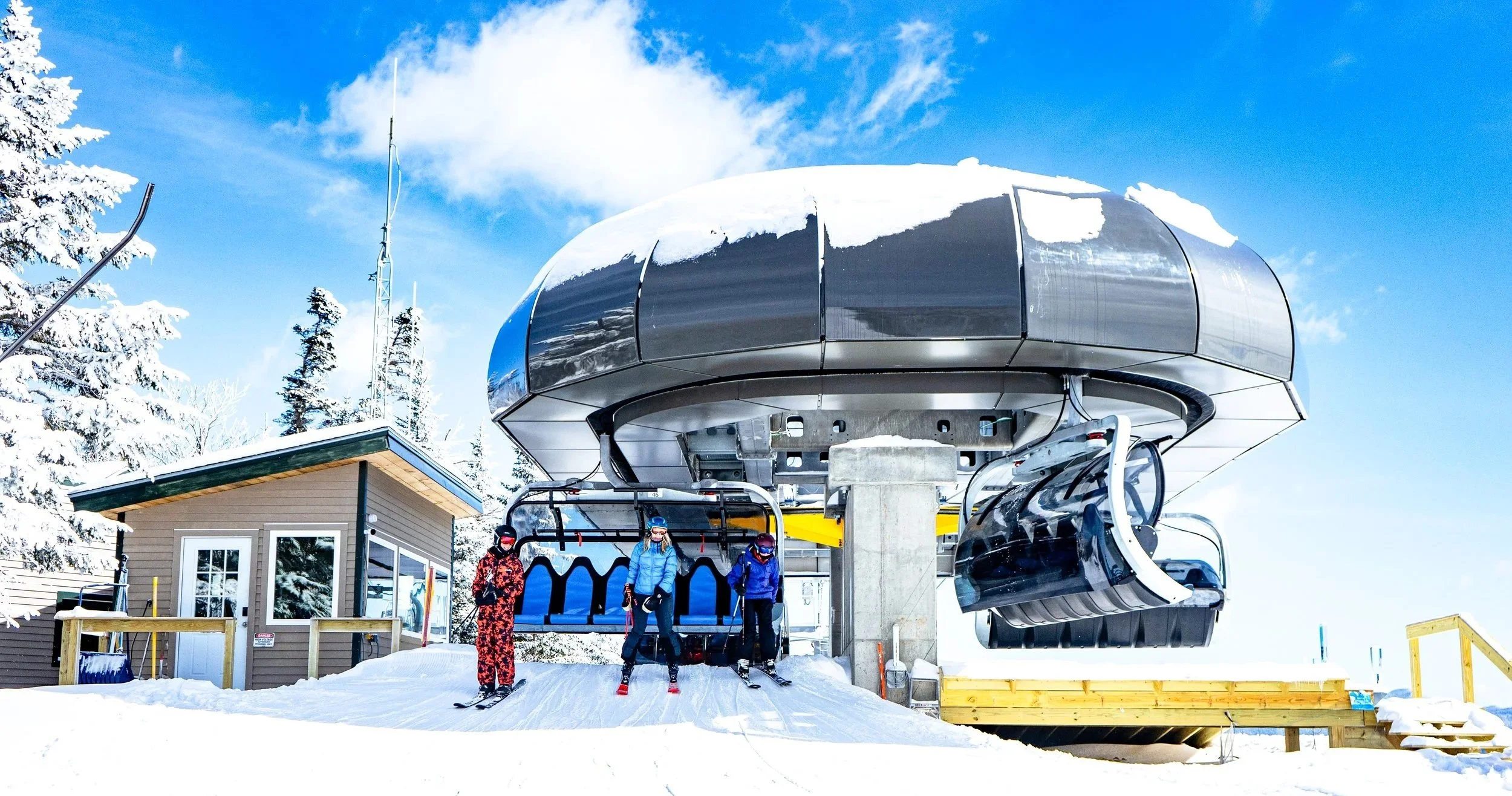
Lift passes and equipment rental are the two items where booking online genuinely pays: advance purchase through resort or multi-resort booking sites typically undercuts the window price by up to roughly 20%, with the deepest discount on multi-day tickets. Treat that as a planning baseline rather than a guarantee — exact savings and validity dates change by resort and season, so compare the resort’s own site against the aggregators before you commit.
- Rent gear with the same booking, not on arrival: online rental packages are usually cheaper than walk-in rates and let you lock in your boot size before the shop sells out of popular sizes.
- Collect equipment the evening before your first ski day: this is the trick that saves the most stress — the morning queue at a resort rental shop is the longest line of the trip, and evening pickup is normally free and fast.
- Book multi-day passes, never single days: the per-day price drops as the ticket lengthens, so skipping a rest day to “save” a lift pass usually costs more than it saves.
Stay, Pay, and Pack Like a Local
Once the big-ticket items are fixed, the rest of the savings come from behaving like someone who lives there. Each of these is small on its own; together they cover a meaningful share of a day’s budget.
- Sleep outside the centre: guesthouses and apartments in residential neighbourhoods — one or two transit stops from the Old Town — are consistently cheaper than central addresses, and they more often include breakfast and a kitchen. I only book out-of-centre if it sits on a direct transit line; a cheap room with two changes and a 25-minute walk is not cheap.
- Buy a public transport day pass: unlimited travel on buses, trams and metro turns every out-of-centre saving into real money, and it removes the temptation to hail taxis in the cold. This is what makes an out-of-centre room work at all.
- Move money with a low-cost transfer service: high-street banks usually charge a per-transfer fee on top of an unfavourable exchange rate, and that markup repeats on every withdrawal. Low-cost transfer services and multi-currency cards are the better default; if you must use an ATM abroad, always decline the machine’s conversion and pay in the local currency.
- Pack layers instead of buying gear there: a thermal base layer, a fleece or wool mid-layer, a waterproof shell, plus a hat and gloves from home covers almost any Eastern European winter day. Resort and Old Town shops sell these at tourist prices, and the emergency purchase of a forgotten pair of gloves costs more than the whole packing list would have.
Frequently Asked Questions
How do I get between these cities?
Buses and trains cover the intercity legs comfortably, and the Baltics pair naturally with bus and ferry hops north.
Short intercity hops are cheap enough that I build the route around them rather than around flights.
Will I get by in English?
In the cities on this list, yes — hotels, bath ticket desks, and resort rental shops all handle English daily.
Smaller stops like Rožnov pod Radhoštěm are more proudly unpolished, so a translation app and patience cover the gaps.
What happens if the weather turns genuinely bad?
Every destination here has a covered fallback, and I plan one per city before I arrive.
Warsaw’s Palace of Culture, Tallinn’s Kumu, Zakopane’s aqua park, and Rožnov’s beer spa are the ones I actually use.
Is this a good winter trip for families with kids?
Very much so — Warsaw’s Old Town rink, Zakopane’s Upside Down House, and the Trakai day trip all work at child pace.
One warning: the Wieliczka Salt Mines guided tour has no early exit and does not permit strollers, so bring a carrier for small children.
Pick One Base and Book the Bed First
Choose a single base rather than three: Budapest if you want the thermal ritual, Krakow if the Christmas markets are your reason to go, and Brasov or Sarajevo if the ski day is the point.
Lock the guesthouse or private hostel room for January or February first, then let lift passes, bath tickets, and day trips fall in behind it.
This is a week of snow, steam, and old-town evenings that costs less than a rushed long weekend in the Alps.
Save your chosen city to your winter travel board tonight and secure that room before the good-value guesthouses go.
Leave a Reply