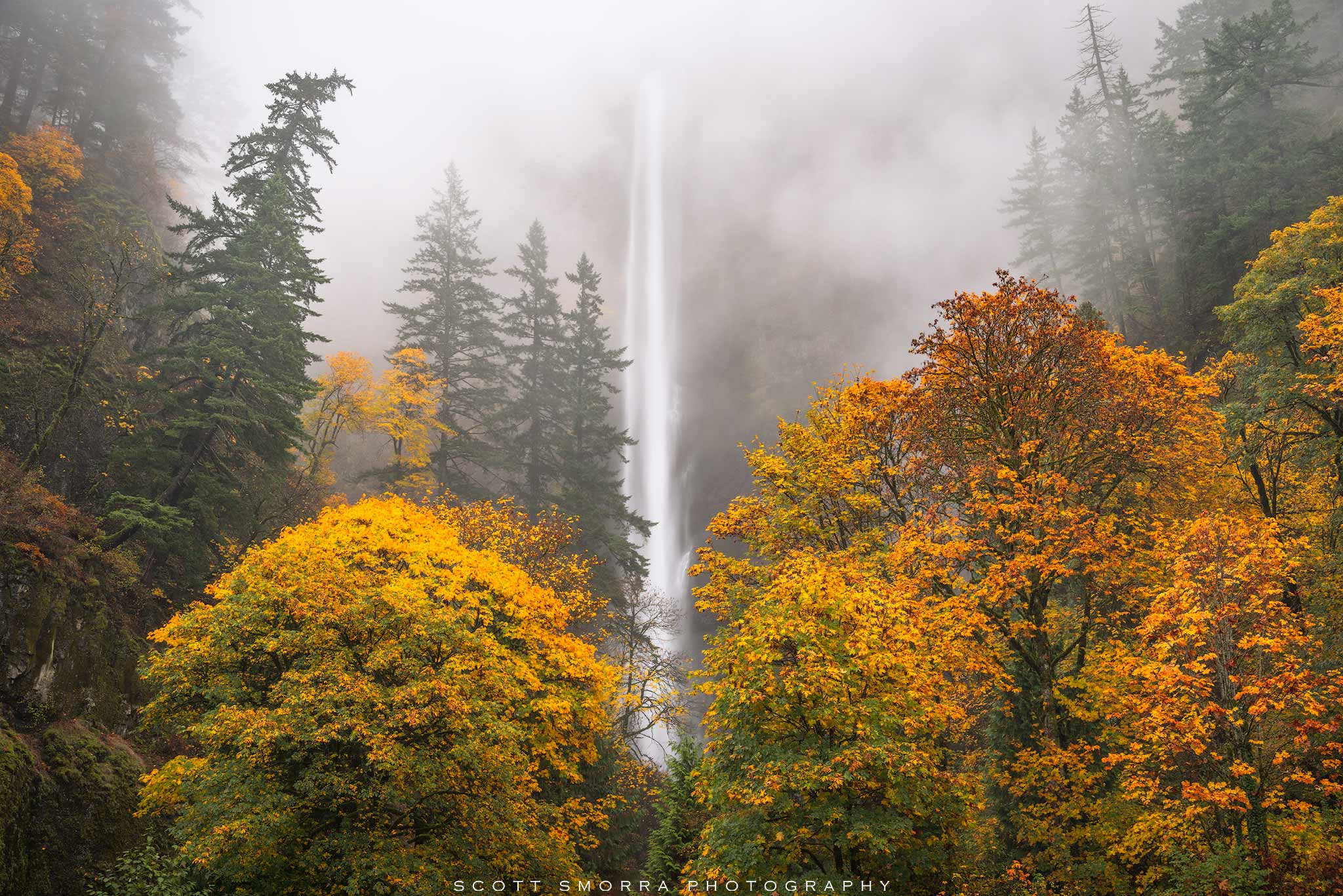
Crimson vine maples cling to basalt cliffs while waterfalls roar back to life after summer’s thin trickle. October air carries wet earth and cedar, and valley fog drifts through a 90-mile canyon that glows gold from rim to river.
What makes a fall gorge trip genuinely different from summer isn’t just the foliage — it’s the total absence of the reservation system that bottlenecks Multnomah Falls from May through September.
I’ve mapped out the exact week to aim for, the six waterfalls worth your time in fall light, and the two towns that make the smartest bases.
Budget roughly $80–$150 per night for a mid-range stay in Hood River or Cascade Locks, or splurge on a secluded cabin with gorge views starting around $200. Day-trippers from Portland can cover the full waterfall corridor for under $50 in gas and a packed lunch.
Your Fall Gorge Trip at a Glance
| Decision | The Move |
|---|---|
| When to go | Mid-October for peak color; late September for early color with thinner crowds |
| Must-see waterfall | Latourell Falls for best bang-for-effort; Multnomah Falls for the iconic postcard shot |
| Quietest falls | Ponytail Falls and Horsetail Falls — most visitors never drive past Multnomah |
| Where to sleep | Hood River for walkable dining and nightlife; Cascade Locks for value and central waterfall access |
| Going car-free | Book a guided waterfall tour ($75–$130/person) or ride-share to Wahkeena Falls trailhead and hike between falls |
| Crowd strategy | Arrive before 9 AM on weekdays; skip Multnomah’s lot and hit Wahkeena or Bridal Veil instead |
Is Columbia River Gorge Worth Visiting in Fall?
Yes — and here’s the part most travel articles bury: fall is the only season you can drive up to Multnomah Falls without a timed-use parking reservation. The reservation system runs May 24 through early September.
Arrive in October, and you just park and walk. That alone makes autumn the smarter move for a gorge trip.
Fall turns a 90-mile canyon into a wall-to-wall color show that summer visitors never see. Bigleaf vine maples blaze red and orange along every basalt cliff face, and the waterfalls — which can thin out by late August — pick back up with the first autumn rains, typically by mid-October.
Here’s why fall wins over every other season in the gorge:
- No reservation headaches: Summer’s timed-use parking at Multnomah Falls ends in early September. Fall visitors park freely.
- Peak foliage windows: Late September through early November, with mid-October typically the sweetest stretch — detailed breakdowns are covered in a later section.
- Thinner crowds: Weekdays in October feel almost empty compared to July and August, when trailhead parking fills by 8 a.m.
- Waterfalls at their best: Fall rains refill the cascades. Horsetail Falls, Latourell Falls, and Wahkeena Falls all look fuller than their late-summer trickles.
- Wine harvest season: Gorge wineries are pouring new releases and hosting harvest events — Hood River tasting rooms are a 40-minute drive from the waterfall corridor.
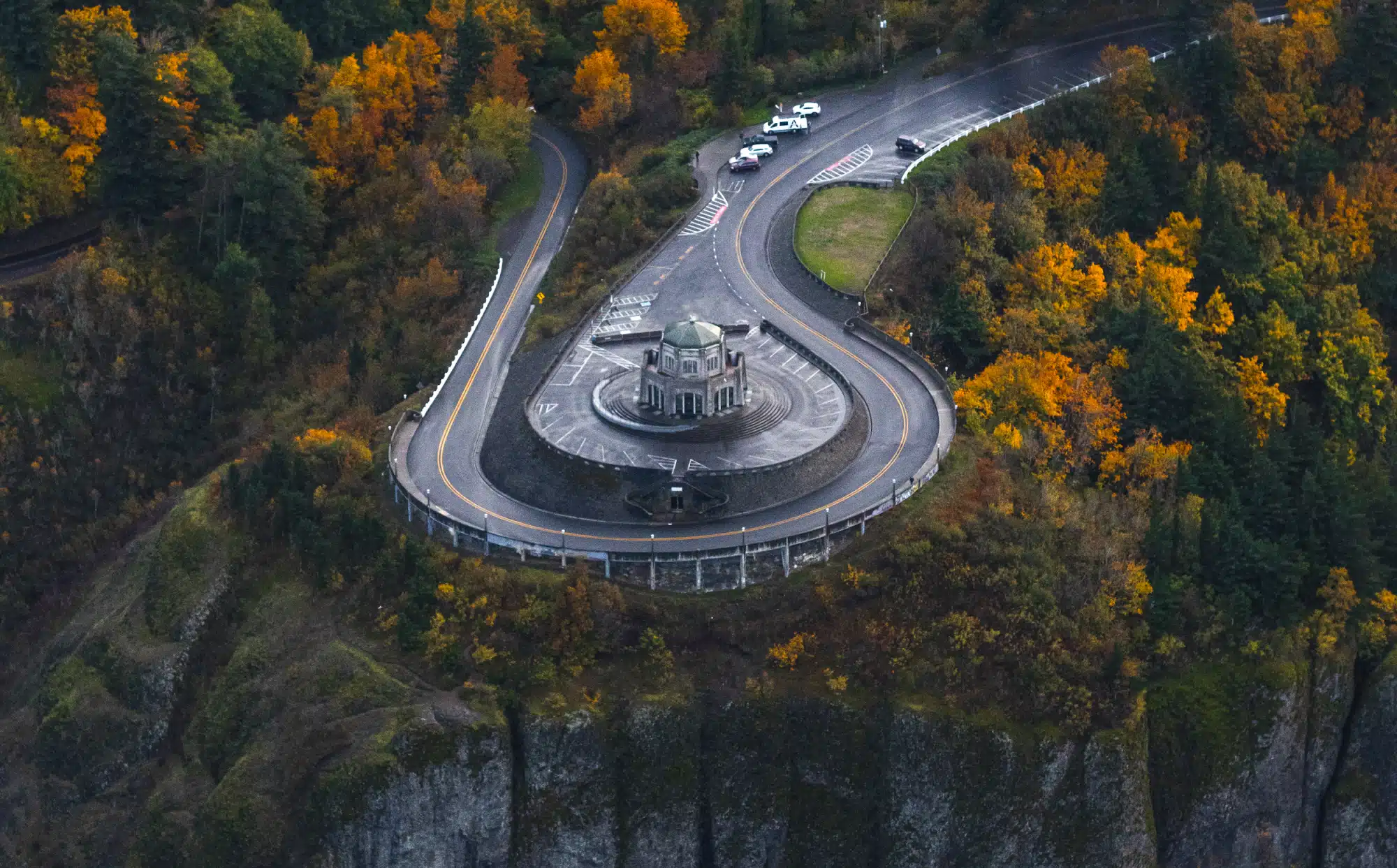
- Accessible viewpoints hold up: Vista House at Crown Point — the most iconic overlook on the Historic Columbia River Highway — requires zero hiking. Drive up, walk out, and see fall color draped across the entire gorge.
The tradeoff is real, though. Daylight shrinks fast by late October — expect sunset before 6:15 p.m. — and rain is the norm, not the exception.
Trails get slick, especially the unpaved ones to Ponytail Falls and the upper Latourell Falls loop. Pack layers, waterproof footwear, and a willingness to get damp.
The bottom line: If you want waterfalls without the summer circus, fall foliage without New England prices, and a national scenic area that’s a 30-minute drive from Portland — this is the season. Budget a full day minimum; two days lets you pair the waterfall corridor with Hood River’s food and wine scene without rushing.
When Is Peak Fall Foliage in the Columbia River Gorge?
Mid-October is the week most people are aiming for, and they’re right — but the Gorge’s color actually unfolds across a three-phase window from late September to early November, and picking the wrong one means either bare trees or leaf litter where the canopy used to be.
The Fall Color Timeline
| Phase | Typical Window | What’s Turning | Best For |
|---|---|---|---|
| Early Color | Late September – early October | Vine maples and huckleberry bushes at higher elevations (above 1,500 ft) | Hikers willing to climb for color most visitors never see |
| Peak Color | Mid-October | Bigleaf maples, cottonwoods, and Oregon ash along the Historic Columbia River Highway and waterfall trails | Most visitors — this is the sweet spot for driving, waterfall-hopping, and photography |
| Late Color | Late October – early November | Lingering gold on cottonwoods and tamaracks near the river; most canopy color fading | Fewer crowds and moody, atmospheric shots with bare branches |
What Pushes Peak Earlier or Later
- September heat waves delay color by a week or more; an early cold snap in late September pulls it forward.
- Heavy rain and wind storms strip leaves fast — a single October wind event can wipe out peak canopy overnight.
- Elevation changes matter here. The Gorge runs from near sea level at the river to over 4,000 feet on surrounding ridges. Color descends over roughly three to four weeks, so you can chase it upslope or downslope depending on your dates.
How to Time Your Visit Right
Track Oregon fall color reports from Travel Oregon or the Oregon Department of Forestry in late September — they update regional color maps weekly. If mid-October arrives and the map still shows “turning” rather than “near peak” on the Gorge corridor, you have a buffer week.
If it already says “peak,” drop everything and go.
Insider detail: The stretch of Historic Columbia River Highway between Crown Point and Ainsworth State Park concentrates the densest canopy color in the shortest driving distance. On mid-October weekends, arrive before 9 AM — valley fog typically burns off by 10:30, which means golden-hour light on saturated leaves with fog still clinging to the canyon walls.
That window produces the shots everyone actually wants.
Base yourself in Hood River or Cascade Locks for the fastest access to the waterfall corridor and the eastern Gorge’s orchards and vineyards, which add their own fall palette. Weekend lodging books out 4–6 weeks ahead during peak color — expect rates to run above summer highs.
See the Where to Stay section for specific recommendations.
Best Waterfalls for Columbia River Gorge Fall Foliage
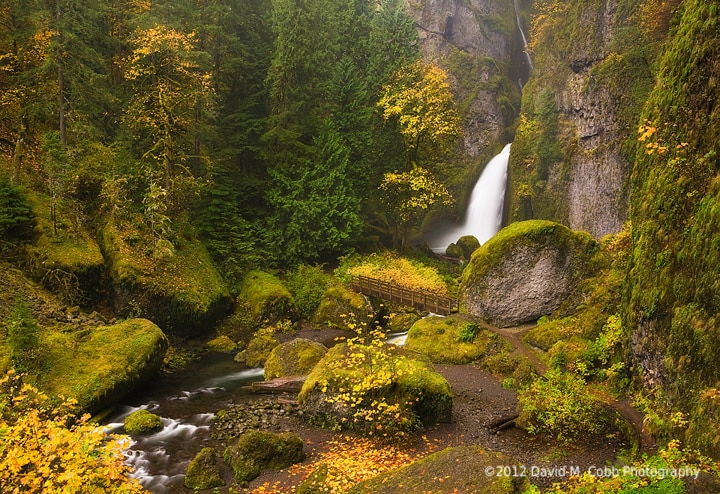
Maple and vine maple trees frame nearly every waterfall along the Historic Columbia River Highway, turning gold and crimson from mid-October into early November — and some viewpoints hit harder than others. These six falls run west to east, forming a natural day-drive route where each stop delivers a different angle on the gorge’s fall color.
Start at Latourell and work your way east to avoid doubling back.
| Waterfall | Crowds | Effort | Fall Color Edge |
|---|---|---|---|
| Latourell Falls | Moderate | Easy — short paved climb | Yellow-orange canopy frames the falls from the overlook |
| Bridal Veil Falls | Low | Easy to moderate | River valley views with layered foliage on the approach |
| Multnomah Falls | Heavy | Easy to viewpoint, strenuous to top | Iconic bridge shot surrounded by turning bigleaf maples |
| Wahkeena Falls | Low | Moderate — steep paved trail | Switchback trail cuts through dense, colorful canopy |
| Horsetail Falls | Low | Minimal — roadside | Fall leaves pool at the base; the quietest major falls |
| Ponytail Falls | Very low | Moderate — short hike from Horsetail | Walk behind the curtain of water surrounded by reds and golds |
Latourell Falls
Latourell is the first major waterfall off the Historic Columbia River Highway heading east from Portland, and the overlook hits immediately — a short, steep set of paved stairs from the parking lot delivers a postcard view of the 249-foot plunge framed by bigleaf maples blazing yellow and orange in mid-to-late October. You barely break a sweat, making this the best bang-for-effort stop on the route.
Arrive before 9 a.m. on weekends to beat the parking lot bottleneck.
Bridal Veil Falls
Six minutes east of Latourell, Bridal Veil sits in a quieter pocket with a paved trail splitting into two options: a half-mile walk to scenic overlooks of the Columbia River with layered fall color spreading across the valley, or a two-thirds-mile extension down to the base of the falls itself. The lower trail gets steep and can be slick with wet leaves — wear shoes with grip.
This is a smart mid-morning stop when Latourell’s lot starts filling.
Multnomah Falls
Oregon’s tallest waterfall at 620 feet draws massive crowds year-round, and fall weekends are no exception — the parking lot regularly fills by mid-morning. The reservation system in effect during summer (typically late May through early September, 9 a.m.–6 p.m.) does not usually apply in fall, but expect to circle for parking or take the shuttle from the Gateway to the Gorge Transit Center if you arrive after 10 a.m. on a peak-color weekend.
The iconic Benson Bridge viewpoint, surrounded by turning maples, is worth the short paved walk from the lodge — it’s the single most photographed fall scene in the gorge for a reason. If you only have time for one postcard shot, this is it.
Wahkeena Falls
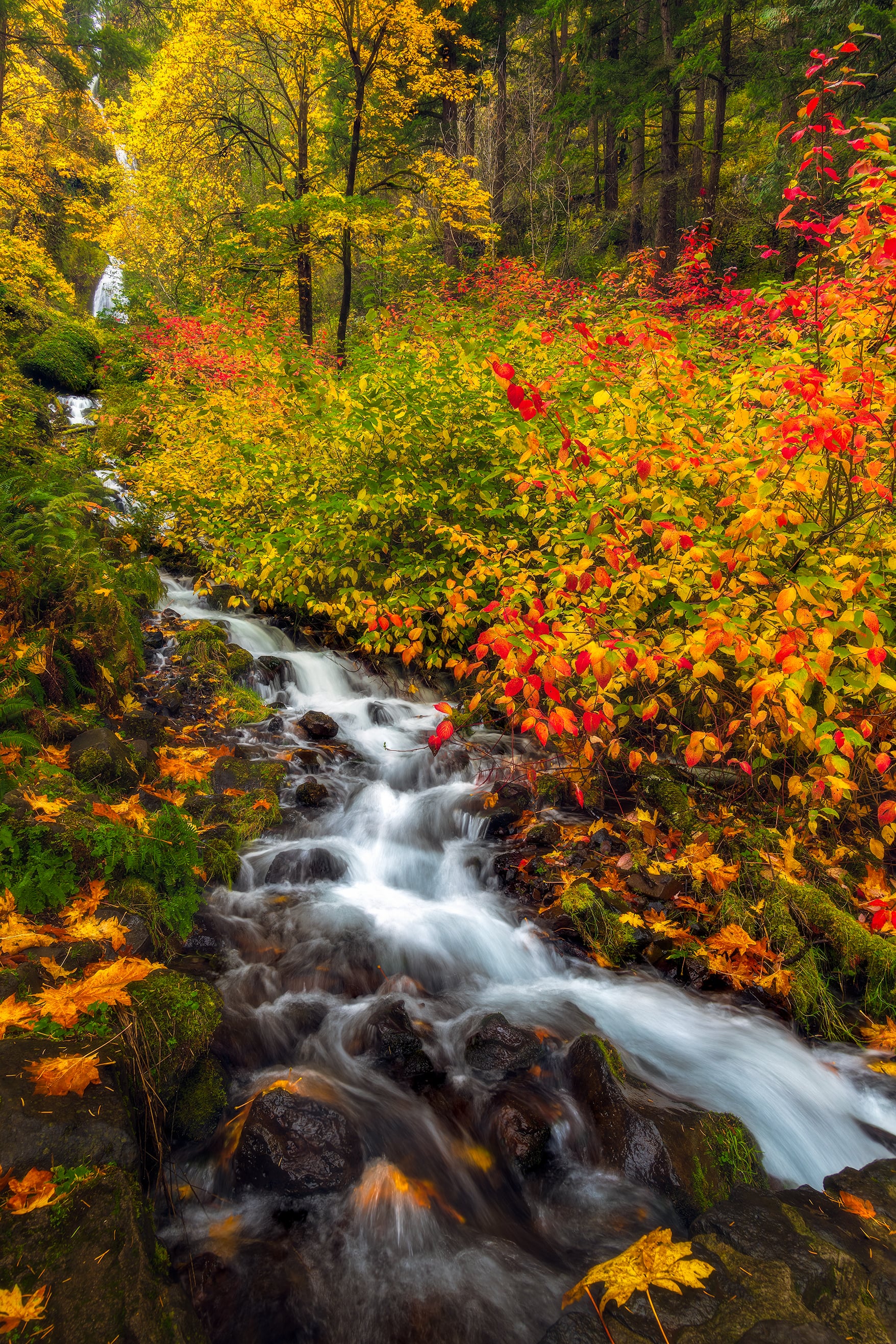
Wahkeena sits less than a mile west of Multnomah and connects via trail, but driving between them takes about two minutes. The paved switchback trail climbs through a dense canopy that turns into a tunnel of red and gold in late October — this is where the hike is the fall foliage experience, not just the waterfall at the end.
It’s steeper than most gorge trails, so budget 30 to 45 minutes for the round trip to the main viewpoint. The payoff: almost no one compared to Multnomah, despite being close enough to hear its crowd.
Horsetail Falls
About 15 minutes east of Bridal Veil by car, Horsetail Falls drops 176 feet right next to the road — you can see it from your windshield. Fall leaves gather at the base pool in a way that makes even a quick pull-off feel cinematic.
This is the stop for anyone who wants gorge waterfall beauty without a hike, and the reason it stays uncrowded is simple: most visitors don’t drive past Multnomah. Their loss.
Ponytail Falls
From the Horsetail Falls parking area, a moderate half-mile trail climbs to Ponytail Falls — a short cascade you can walk directly behind. In fall, the overhang frames a curtain of water with vine maple branches heavy in red and gold on either side.
It’s the most immersive fall-foliage waterfall moment in the gorge. The trail can be muddy through late October, so this is one to save for a dry day.
Combine it with Horsetail Falls as a single stop — they share the same lot and the whole loop takes under an hour.
How to Visit Columbia River Gorge Waterfalls Without a Car in Fall
The Columbia Gorge Express — the seasonal bus that runs from Portland directly to Multnomah Falls and other stops — typically shuts down in late September, just as fall color peaks in October. That gap is the single biggest obstacle for car-free visitors.
Here’s how to work around it.
Option 1: Book a Guided Waterfall Tour
This is the most reliable car-free approach once the Express stops running. Multiple operators run half-day and full-day outings from downtown Portland, bundling Multnomah Falls, Wahkeena Falls, Horsetail Falls, and other stops along the Historic Columbia River Highway.
Expect roughly $75–$130 per person for a half-day, depending on group size and operator. Book at least a week ahead during peak foliage weekends — small-group tours sell out fast.
What to look for: any tour that includes a Vista House stop (fully accessible, no hiking required) and at least three waterfall pull-offs. Skip anything that only guarantees Multnomah Falls — you can reach that one independently, and a single-stop tour is not worth the money.
Option 2: Ride-Share to a Trailhead, Then Walk Between Falls
The Historic Columbia River Highway State Trail is a paved, multi-use path linking multiple waterfalls through forest that erupts in red and gold vine maples each October. If you can get a ride-share or taxi to one trailhead, you can walk between several falls without touching a car again.
The most efficient loop connects Wahkeena Falls and Multnomah Falls — roughly 2.4 miles round-trip through dense canopy. From there, the trail continues east toward Horsetail Falls and Ponytail Falls.
- Best starting point: Have your driver drop you at the Wahkeena Falls trailhead rather than Multnomah Falls. You’ll start on the quieter side and finish with the iconic Multnomah viewpoint — the crescendo approach beats the reverse, especially in fall light.
- Insider detail: Ride-share drivers sometimes balk at the Gorge exits off I-84. Drop a pin on the Wahkeena Falls parking area (Exit 28) and text the destination before pickup. Fallback plan: Rooster Rock State Park (Exit 25) has reliable cell service and a paved path connecting westward to the trail network.
Option 3: Base Yourself in Hood River and Explore Locally
Staying in Hood River puts you within a short taxi or shuttle ride of eastern Gorge waterfalls and inside a walkable town with restaurants, tasting rooms, and lodging that often coordinates local transport for guests. Some outfitters based there run seasonal waterfall shuttles or can arrange custom drop-offs.
Ask your accommodation directly — this is the kind of service that does not show up on booking sites.
For full details on where to stay, see the lodging section above.
Quick Comparison
| Option | Best For | Typical Cost | Waterfalls Covered |
|---|---|---|---|
| Guided tour | Maximum coverage with zero logistics | $75–$130/person | 4–6 stops in one day |
| Ride-share + trail hike | Independent travelers comfortable with a moderate walk | $20–$40 each way for the ride | 2–4 falls via trail |
| Hood River base | Multi-day visitors wanting a town base | Varies by lodging | Eastern Gorge access |
One last note: every waterfall in the Gorge is free to visit — no entry fees, no parking charges outside the peak-season reservation window that ends in early September. Your only real cost is getting there.
How to Avoid Crowds at Columbia River Gorge During Fall
The single biggest crowd shift happens after Labor Day: the mandatory timed-use parking reservation at Multnomah Falls ends for the year, typically on the day after the holiday. This makes fall fundamentally different from summer.
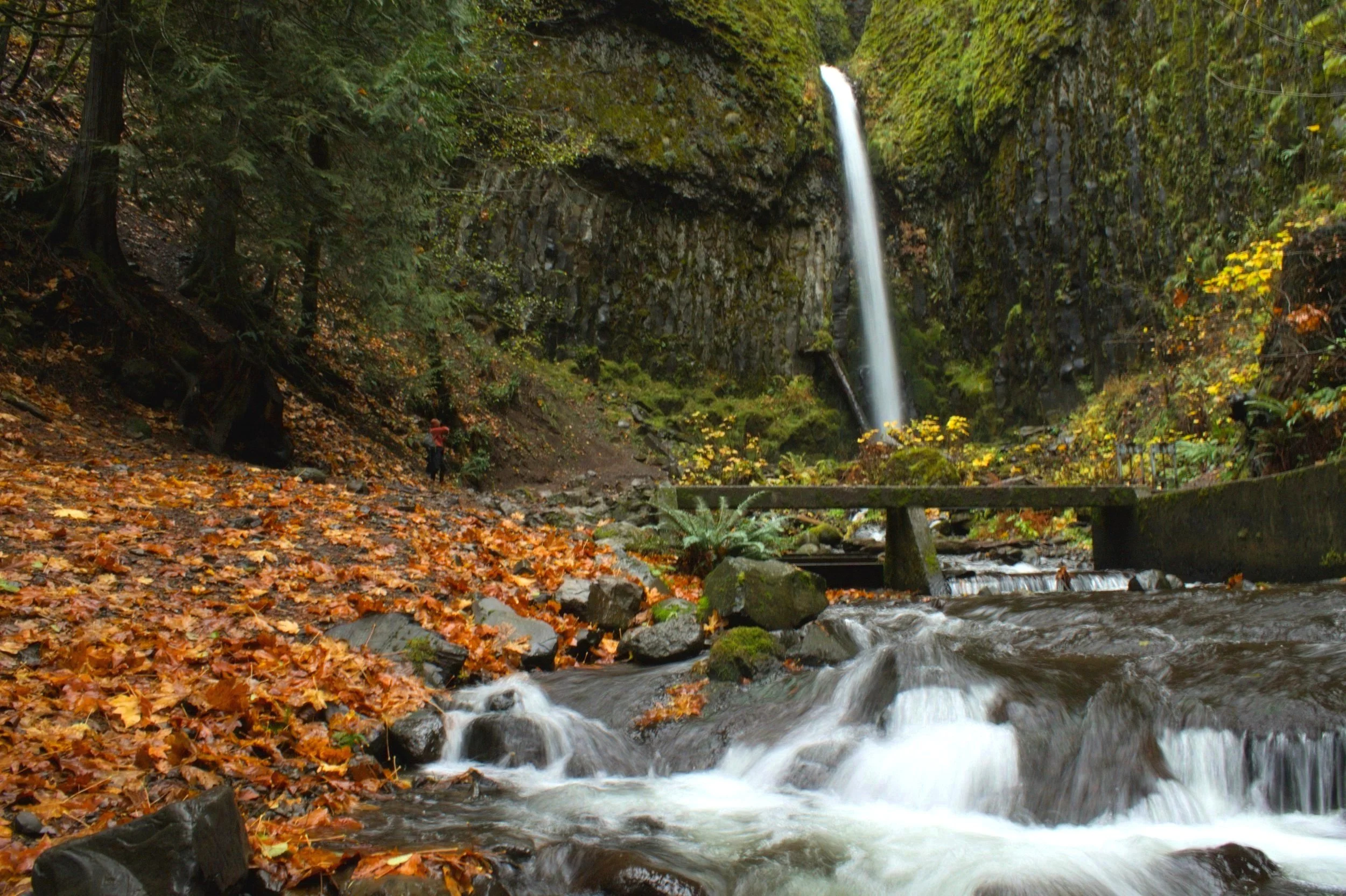
Forget the summer strategy of just showing up. Fall requires its own playbook because leaf-peeping weekends can still draw heavy traffic to the most famous waterfalls. Your goal is to leverage timing and location.
Timing Your Visit: When You Go Matters More Than Where
Weekends in October are the peak of leaf-peeping crowds, especially if the weather is sunny. For the quietest experience, target midweek days (Tuesday-Thursday).
Arriving before 9 AM is non-negotiable for snagging a parking spot at popular trailheads like Wahkeena or Horsetail Falls. By midday, even on weekdays, these lots fill completely.
Strategy Shift: Skip the “Waterfall Row” Corridor
Most visitors fixate on the five-mile stretch between Bridal Veil and Ainsworth State Park. You have better options.
- Go West First: Start your day at Latourell Falls, west of the main congestion. It’s spectacular, has a large parking area, and you can often enjoy it peacefully before moving east later.
- Drive the Historic Highway Fully: Continue east past Ainsworth to Horsetail Falls and the trail to Ponytail Falls. Many drivers turn around at Multnomah, so these eastern spots are less pressured.
- Explore the Washington Side: Cross the Bridge of the Gods to Beacon Rock State Park or hike to Panther Creek Falls. The fall colors are equally stunning, and you’ll share the trail with a fraction of the people.
Use the Free Shuttle
The Columbia Gorge Express shuttle runs from Portland’s Gateway Transit Center. In fall, its schedule is reduced—usually operating on weekends and holidays through the end of October.
Confirm the exact current season dates with the operator. Using the shuttle eliminates parking stress entirely at Multnomah, Wahkeena, and Rooster Rock, which is a major win.
Insider Timing Tip
Late afternoon (after 3 PM) sees crowds thin out as day-trippers from Portland begin the drive back. However, this doesn’t apply to sunset chasers, who create a secondary rush at viewpoints. For photos without people, the 8-10 AM window is golden.
For a crowd-adverse base, consider staying in Hood River rather than the Gorge hotels. It’s a 30-minute drive east but puts you in a vibrant town with excellent dining, and you can approach the waterfall corridor from the less-congested eastern end each morning.
Where to Stay for a Columbia River Gorge Fall Trip

Basing yourself inside the Gorge, rather than commuting from Portland, turns a good trip into a great one. You’ll catch sunrise mist on the river and beat every tour bus to the trailheads.
The core decision is choosing between the activity hub of Hood River and the quieter, centrally located village of Cascade Locks.
| Base Area | Best For | Vibe | Walkable Dinner? |
|---|---|---|---|
| Hood River | Food, drinks, and lively downtown | Bustling adventure town | Yes, excellent options |
| Cascade Locks | Peace, value, and waterfall proximity | Quiet, riverfront village | Limited but adequate |
| Portland (East Side) | Urban amenities and day-tripping | City commute | Endless, but a drive away |
Hood River: The Food & Activity Hub
This is the move if you want excellent restaurants, craft breweries, and boutique shopping after your hike. It’s the Gorge’s most vibrant town, making it ideal for couples or groups who value a social scene.
It’s also the best base for exploring the wineries on the Washington side of the river.
- Best for: Travelers who want to hike, windsurf, and dine without driving again after 5 PM.
- Expect: A premium. Fall weekends book out fast; lodging prices here are the highest in the Gorge.
- Insider pick: Look for a rental with a river view on the east side of town for quieter mornings, but still a short walk to the core.
Cascade Locks: The Quiet & Central Choice
Stay here if your priority is easy access to the I-84 waterfall corridor without the Hood River prices or bustle. It’s a tiny town with a stunning backdrop.
The historic Columbia Gorge Hotel is a landmark, but the real value is in the smaller motels and vacation rentals that put you minutes from Multnomah Falls and other key spots.
- Best for: Families and waterfall-focused visitors who want a peaceful home base and don’t need a nightlife scene.
- Key advantage: You are perfectly positioned between the western waterfalls and the eastern wineries around Hood River.
- Planning tip: Book the highly-rated Sterling Inn or similar properties by mid-summer for October dates; they fill up fast.
Portland: The Urban Day-Tripper Option
Only choose this if you have a tight budget or absolutely need a specific city amenity. You’re committing to a 30-45 minute drive each way, every day, and will hit I-84 traffic on busy fall weekends.
The trade-off is access to Portland’s entire food and hotel inventory.
- Best for: Travelers on a strict budget or those combining the Gorge with other Portland-area activities.
- Reality check: You’ll likely miss the best morning light and late-day colors on the waterfalls due to commute timing.
Cabins & Lodges: The Cozy Fall Experience
For the ultimate fall vibe, skip the hotels and rent a cabin. Scattered through the hills on both sides of the river, these range from rustic to luxe. The best ones feature decks with gorge views, wood-burning stoves, and profound quiet.
- Search in: The hills above Hood River (OR), Carson (WA), or along the Old Columbia River Highway for secluded options.
- Book early: Prime fall foliage cabins are often reserved 6-9 months in advance. For a last-minute plan, search for cancellations at lodges like the Society Hotel in Bingen, WA.
- What to verify: Road access. Some forest cabins require steep gravel roads; confirm conditions with the host before booking a standard sedan.
The bottom line: Hood River wins for convenience and culture. Cascade Locks wins for value and central waterfall access. A cabin rental wins on atmosphere if you’re willing to drive for your dinners.
Frequently Asked Questions
Is the Columbia River Gorge still accessible in fall?
Yes, but expect reduced access to some trails and facilities. The Historic Columbia River Highway and most waterfall viewpoints remain open, while certain trails (like the Multnomah-Wahkeena Loop section) may close for seasonal maintenance or hazard reduction.
Always check the USFS Columbia River Gorge National Scenic Area website for current alerts the week of your visit.
Do I need a reservation for waterfalls in the fall?
You need a timed-use permit only for the Multnomah Falls parking lot during the summer peak season (typically late May through early September). Outside this period, including all of fall, no reservation is required. However, the lot fills quickly on October weekends. Arrive before 9 AM or after 4 PM for the best chance at a spot.
Other waterfall lots, like Latourell or Bridal Veil, do not have reservation systems.
Which fall waterfalls are the best and least crowded?
For a perfect blend of autumn color and relative solitude, prioritize Wahkeena Falls and Bridal Veil Falls. You’ll get the iconic waterfall experience without the Multnomah crowds.
Latourell Falls is another excellent pick, especially if you tackle the 2-mile loop for a top-down view. Skip Ponytail Falls if you’re wary of steep, potentially muddy trails in wet weather.
What’s the one insider tip for visiting in fall?
Drive the Crown Point Vista House loop at sunrise. The morning light hits the Gorge and the fall colors in a way that disappears by mid-morning, often burned off by afternoon haze or fog. You’ll likely have the viewpoint nearly to yourself, and it’s the single best photo opportunity of the season.
Start Planning Your Fall Gorge Escape
Pick a mid-October weekday first, then immediately book lodging in Hood River or Cascade Locks — both fill four to six weeks out during peak color weekends.
Fall in the gorge delivers a combination no other Pacific Northwest destination matches: world-class waterfalls wrapped in peak foliage, free parking at every stop, and crowds that vanish the moment you leave the Multnomah lot.
Pull up the Travel Oregon fall color report today, check where the Gorge corridor stands, and lock in your dates before the window closes.
Leave a Reply