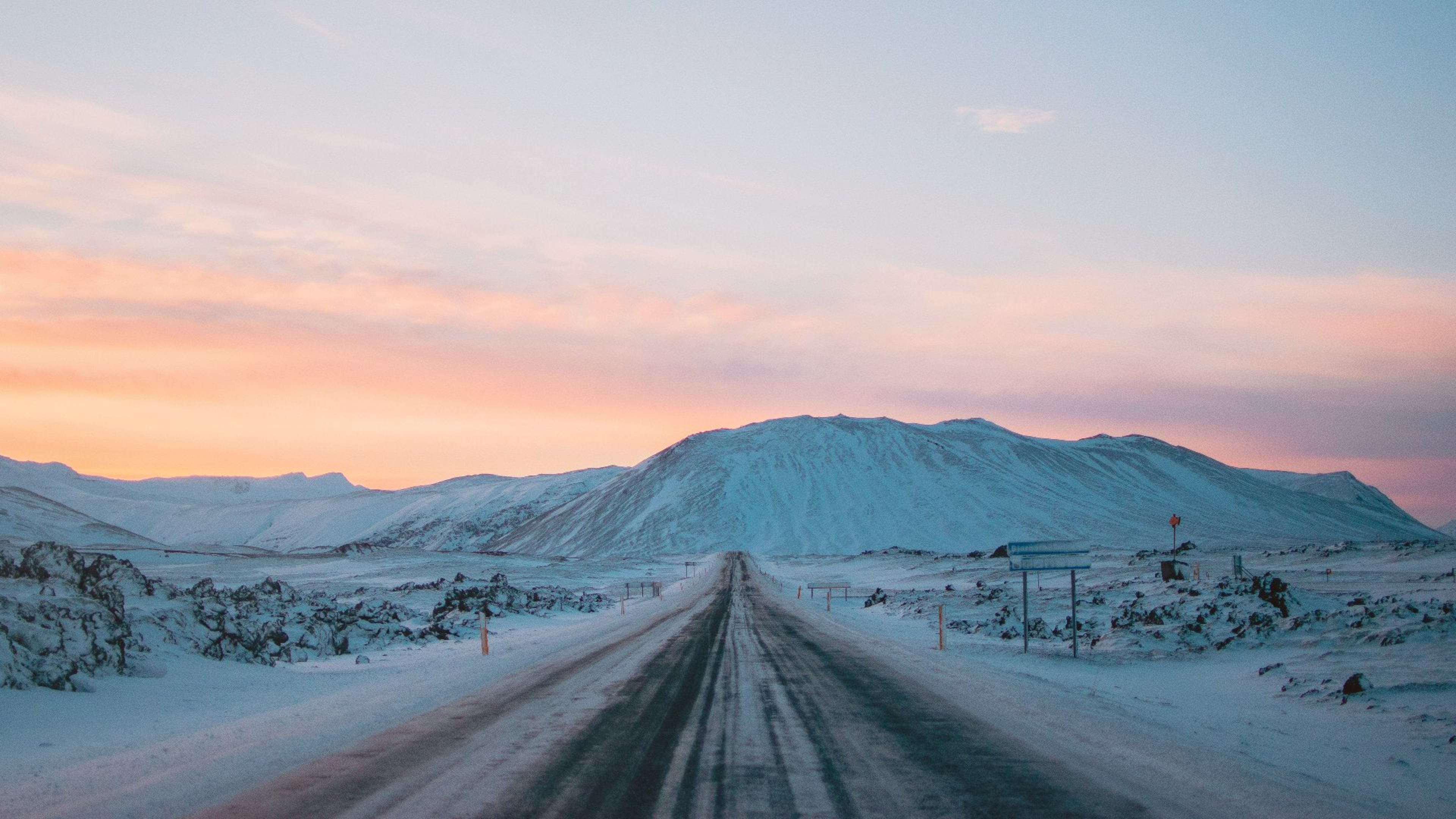
The sun sits two fingers above the horizon at noon, throwing orange light across snow polished black by wind, and the only sound outside the car is the gust that shoves the door back against your forearm. Headlights stay on all day here — not because it is dark exactly, but because the light never climbs high enough to trust.
Nowhere else on earth is a full island circuit both this exposed to winter weather and this thoroughly maintained, because Route 1 gets ploughed and salted as a national priority while the Atlantic tries to undo it daily. That mix of real infrastructure and real exposure is why a winter self-drive here is genuinely doable and genuinely unforgiving in the same afternoon.
This guide helps you decide whether a winter self-drive suits you, what to book, and where to build slack so a storm costs you one extra night instead of the whole trip.
Budget travellers can run the loop on roughly $150–220 per person per day with a compact AWD, guesthouses and groceries.
Mid-range sits around $250–400 a day with hotels, sit-down meals and the insurance add-ons I actually recommend, while splurge trips land north of $500 daily with a large 4×4 and the kind of lodges you book for the soaking tub.
Winter Ring Road Cheat Sheet: The Calls That Matter Most
- Best month to go: March, with 10–12 hours of light, deep snow still on the ground and no summer crowds. Mid-February is the backup if dates are fixed, since the light grows fast across the trip.
- Car to book: a compact AWD crossover such as the Dacia Duster or Suzuki Vitara. Step up to a mid-size 4×4 like the Kia Sportage if your route includes gravel turn-offs to waterfalls or pools.
- Tyres to confirm in writing: studded winter tyres fitted to your exact vehicle, requested by email before you fly. Snow chains are pointless in Iceland — skip them entirely.
- Distance to plan: 150–200 km per day, 2–4 hours behind the wheel, and one flexible day held in the middle of the circuit.
- Sections that need slack: the exposed coast around Höfn and the inland climb between Akureyri and Egilsstaðir. Book refundable stays near both, and skip the Öxi shortcut in the east.
- Cover to add at the counter: Super CDW and Gravel Protection, plus the Liability Waiver for wind-torn doors and tyre damage.
Is Driving Iceland’s Ring Road in Winter Actually Safe?
All 1,332 km of Route 1 circle the island on paved road, and it stays paved and ploughed from November through March — that is the single fact that makes a winter self-drive trip realistic at all. Vegagerðin, the road authority, salts and ploughs the Ring Road as a priority route, and Icelanders drive it daily through the season.
My read: the question is never “is it safe,” it is “how much slack does your plan have.”
Because what winter changes is your margin for error. In February, lowland temperatures typically sit between -3°C and +3°C (26–34°F) — hovering right at the freeze-thaw line, which means a wet road at midday can be a different surface by late afternoon.
Add wind, and the room between “fine” and “pay attention” is thinner than in summer. That is manageable.
It is not nothing.
The honest framing: this is an adventure, not a carefree cruise. Plan for it as one.
Who this trip suits
- Flexible planners: If a closed stretch means an extra night in a small town and you’re fine with that, you’ll thrive.
- Cautious, confident drivers: You don’t need special skills — you need the habit of slowing down on unfamiliar surfaces and checking conditions every morning.
- Scenery-first travellers: Waterfalls, glaciers and lava fields in winter light with a fraction of the summer crowds is the reward for all of the above.
- Repeat visitors to Iceland: Winter is a genuinely different country from the summer version — worth the trade-offs if you already know the summer one.
Who should skip it
- Schedule-rigid travellers: If an extra weather day would ruin the trip rather than shift it, book summer instead.
- Nervous drivers on ice: There is no shame in a Reykjavík-based trip with guided day tours — you still see the good stuff.
- Anyone chasing maximum coverage: Winter is a slower loop by design. Trying to see everything means seeing it through a windscreen at dusk.
- Highland dreamers: The interior is shut for the season; if that’s the trip you actually want, come back in summer.
My verdict: book it. Winter self-drive Iceland is not a compromise version of the summer trip — it is the better one, provided you accept that weather, not your itinerary, has final say.
Road Conditions and Closures Along Route 1
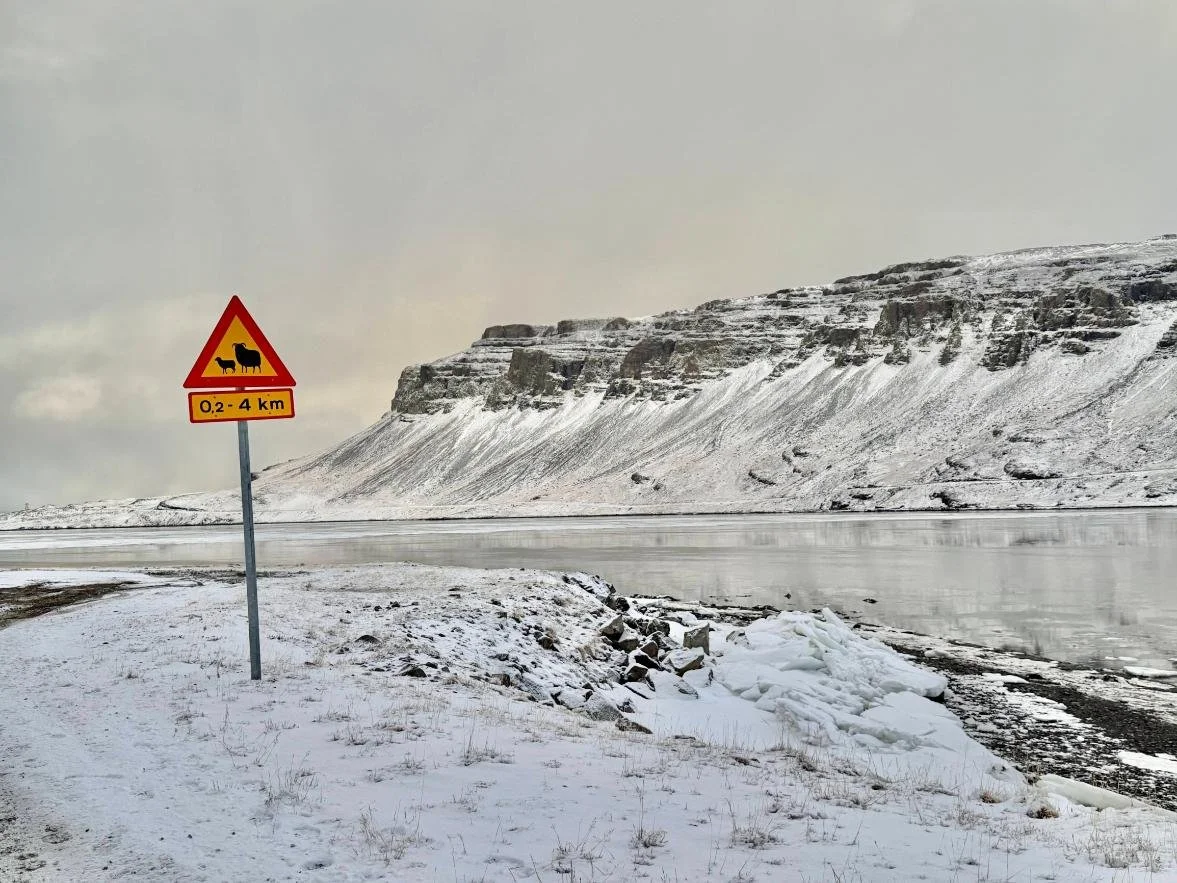
The stretch of Route 1 crawling along the coast just west of Höfn is the one that strands people: open Atlantic exposure, wind-driven snow, and a road with nowhere to hide. Build your itinerary so a closure there costs you a night, not the whole trip.
Which Sections of the Ring Road Close Without Warning
Route 1 is maintained in winter, but “maintained” is not “always open.” Wind, drifting snow, and ice can shut a stretch for hours at a time, usually with little lead time. These are the places to plan slack around:
- Southeast, around Höfn: The most closure-prone section on the circuit. Coastal wind and drifting snow pile up fast here. If the map is showing trouble, stop in Höfn for the night rather than trying to push through before dark.
- North, between Akureyri and Egilsstaðir: The inland route climbs over higher ground where snow and ice linger and whiteouts are common. This is the segment I would most want a spare day after.
- The Öxi shortcut in the east: A steep mountain pass that is faster on paper and harsher in practice. Skip it in winter and take the longer coastal Route 1 — the extra time is cheaper than an incident on a climb.
Expect any of these to close and reopen the same day. The practical fix is not luck; it is booking refundable or flexible stays near these stretches so a storm means one extra breakfast, not a ruined itinerary.
Check the road-status map covered in the alerts section before you pull out of the car park each morning.
Why the Highland F-Roads Are Off the Table
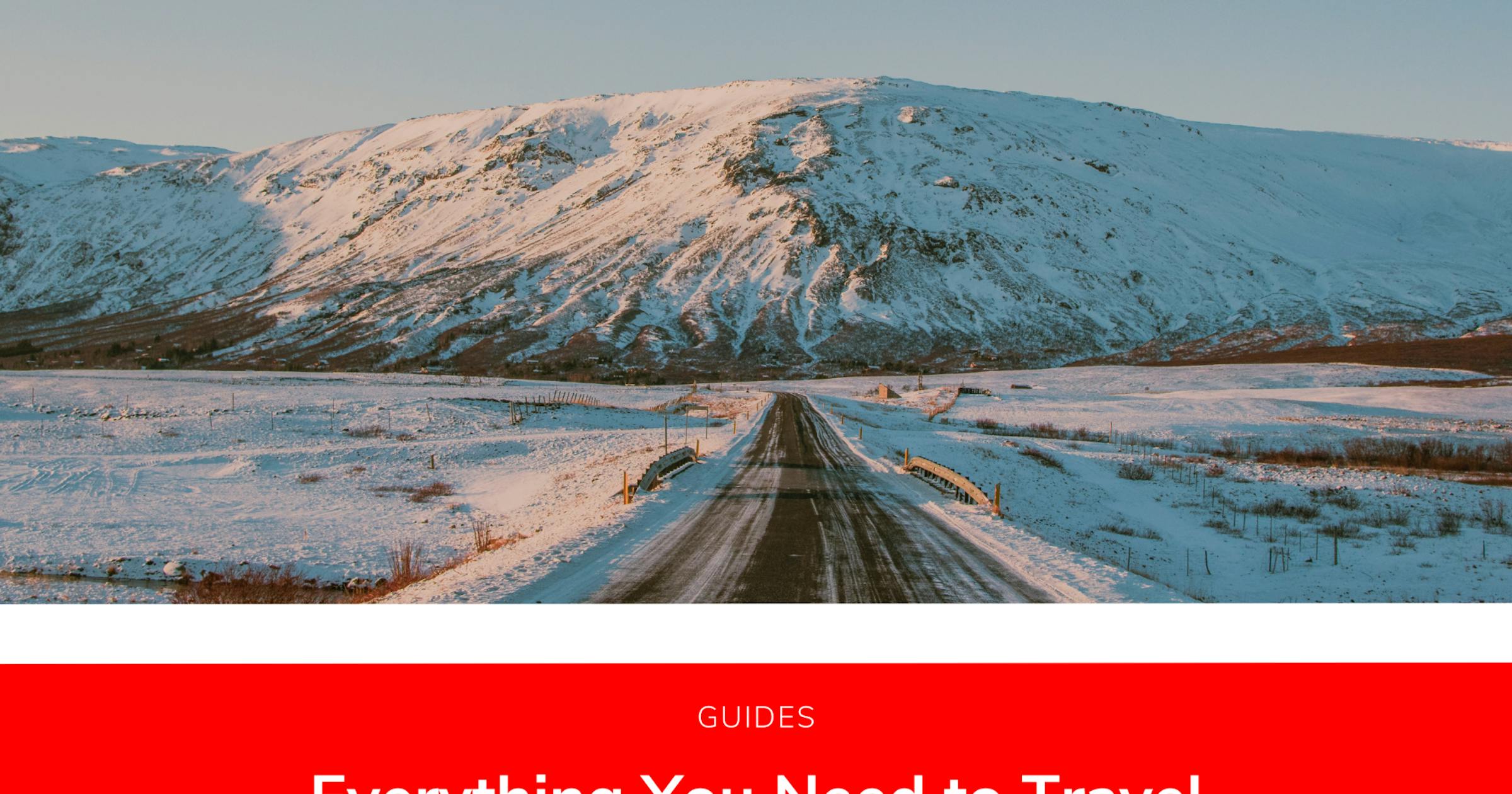
Every highland F-road is shut for winter — the gates are physically closed, the roads are unmaintained, and the terrain behind them includes unbridged rivers and exposed plateaus that no one can plough. This is not a vehicle question. A 4×4 changes nothing.
- F35 (Kjölur): One of the first highland routes to reopen — but that is usually late spring, sometimes not until June, depending on the melt.
- F208 (Landmannalaugar): Same story, and its river crossings are exactly why it stays shut.
- F26 (Sprengisandur): Typically among the last to open; count on summer only.
Reopening dates shift year to year and are published once conditions are known — confirm the current status with the operator or road authority before planning anything around it. Never drive around a closure barrier; the barrier is the warning that no rescue is coming quickly.
Secondary and Gravel Roads: When to Say No
Three-digit roads and gravel tracks off Route 1 are where winter trips go wrong, because they look short and optional and then cost you an afternoon.
- Three-digit secondary roads: Hit or miss. Cleared after the main routes, sometimes not at all. Go only if the road-status map shows it open and the forecast is calm.
- Gravel access tracks to viewpoints: Treat every one as optional. If the viewpoint needs a snow-covered track, the viewpoint is closed for you today.
- Westfjords fjord roads: Steep, exposed, heavily snowed — not recommended for a winter Ring Road trip at all. Save them for summer.
- The turn-back rule: If snow ahead is unbroken by tyre tracks, reverse. Deep snow and no tracks means the last driver made the right call.
The Hazards That Actually Cause Incidents

Most winter incidents in Iceland come down to three things, not driving skill: wind that moves the car, ice you never see, and visibility that vanishes in minutes. Know where each one lives on the route and you’ve removed most of the risk before you turn the key.
Wind: The Hazard Visitors Underestimate
Gusts exceeding 100 km/h hit open landscapes and headlands in winter, and they are strong enough to rip a car door from your hand or push a tall vehicle sideways. Expect the worst of it across Reykjanes — the peninsula you drive between Keflavík airport and Reykjavík — and along the exposed south coast.
I treat those two stretches as full-attention driving, not scenery time.
- Reykjanes: Your first hour in the country is also its windiest. Get comfortable with the car here before you hit remote road.
- South coast: Long, flat, and unsheltered — the classic place for a crosswind to arrive with no warning.
- Door damage: The single most common winter rental claim drivers cause themselves. Budget for it mentally before parking anywhere exposed.
Black Ice: Where and When It Forms
Black ice is a thin, near-invisible layer, and it forms in predictable places: bridges (cold air passes above and below the deck), shaded valleys that never see winter sun, and anywhere a brief thaw has refrozen after sunset. The critical habit is slowing down before you reach those spots — once you see the ice, it is already too late to decide anything.
- Bridges: Ease off well before the deck, not on it.
- Shaded valleys: Assume ice in every shadow, even when the road ahead looks dry.
- Thaw-refreeze: The afternoon melt that looks harmless becomes glare ice overnight. Dusk and early morning are peak risk.
Whiteouts and Drifting Snow
On open plains and mountain passes, conditions can swing from clear to near-zero visibility within minutes. The real danger is not snow falling from the sky but wind-lifted snow that erases the road edge and fills the air horizontally.
Where snowdrifts bank against fences and cuts, they act as soft walls: strike one and you stop abruptly, with no shoulder to recover onto.
- Open plains: The horizon disappears first. Drop speed the moment contrast fades, not after the road does.
- Mountain passes: Blowing snow arrives faster here and lingers. If visibility collapses, that is a reason to stop, not to creep.
- Short daylight: It is a hazard multiplier rather than one of its own — every one of these risks is harder to read and harder to escape when the light runs out early.
Daylight, Pacing and How Far to Drive Each Day
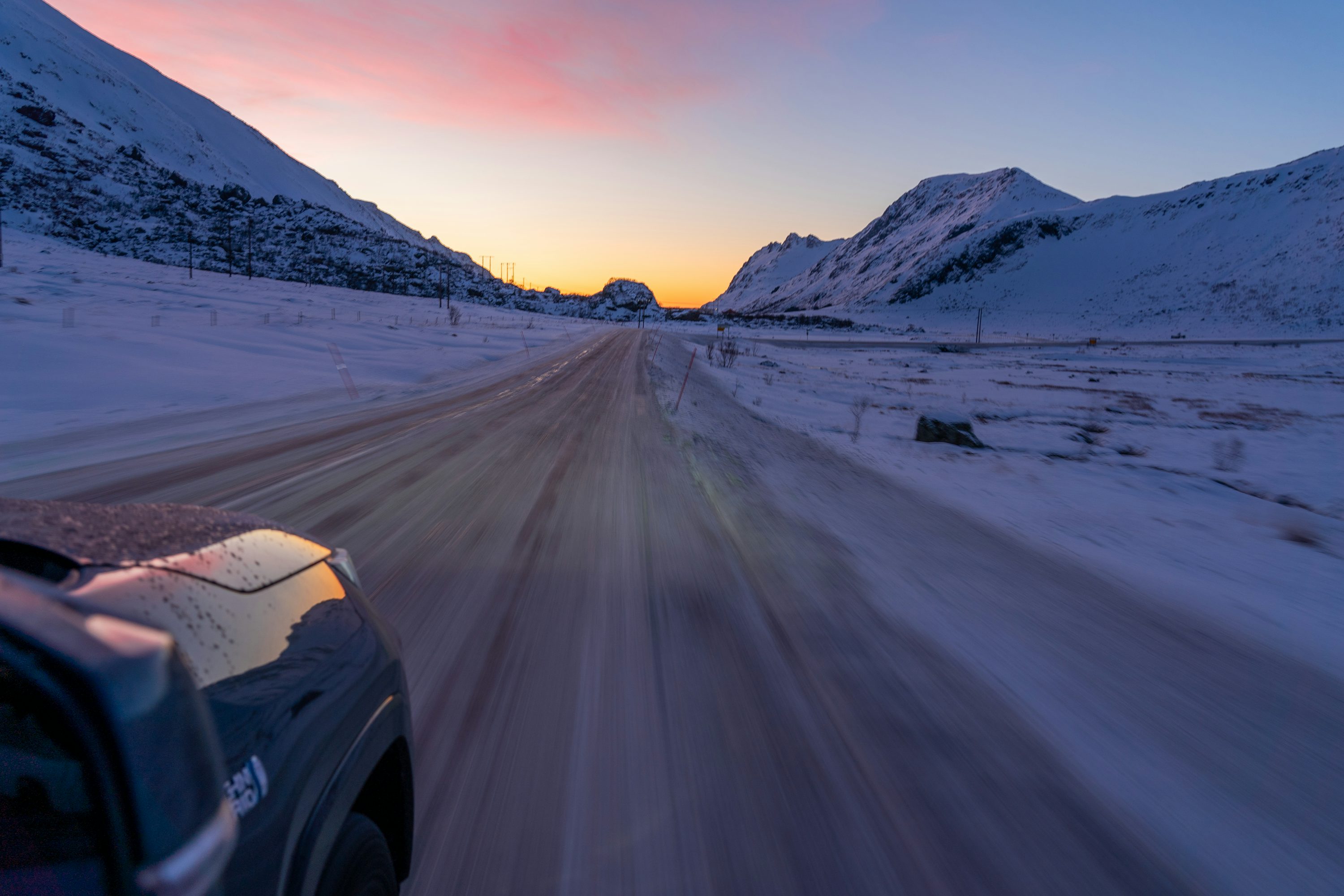
December hands you roughly four hours of usable light — enough for one long driving leg or a slow morning of sightseeing, not both. Winter trips fall apart on pacing, not pavement: people schedule summer distances, then spend the last hour of every day on icy roads in the dark.
Fix the plan before you book the car.
Daylight by Month on the Ring Road
Build every day’s itinerary around this table first. It decides how far you can go, when you stop, and whether you see the landscape you came for.
| Month | Daylight | What it means for your plan |
|---|---|---|
| November | 5–7 hours | Short but generous compared to December; light mid-morning, gone by late afternoon. |
| December | 4–5 hours | The tightest month. Midday is your entire driving day — treat it as sacred. |
| January | 5–7 hours | A modest improvement over December; still a midday-only window. |
| February | 7–9 hours | The fastest gain: about 7 hours on February 1, close to 10 by February 28. |
| March | 10–12 hours | A real driving day returns, with full winter scenery intact. |
February’s growth is the single biggest upgrade in the Icelandic winter calendar. Book a mid-February trip and the light you start with is not the light you finish with.
How Many Days and How Many Kilometres per Day
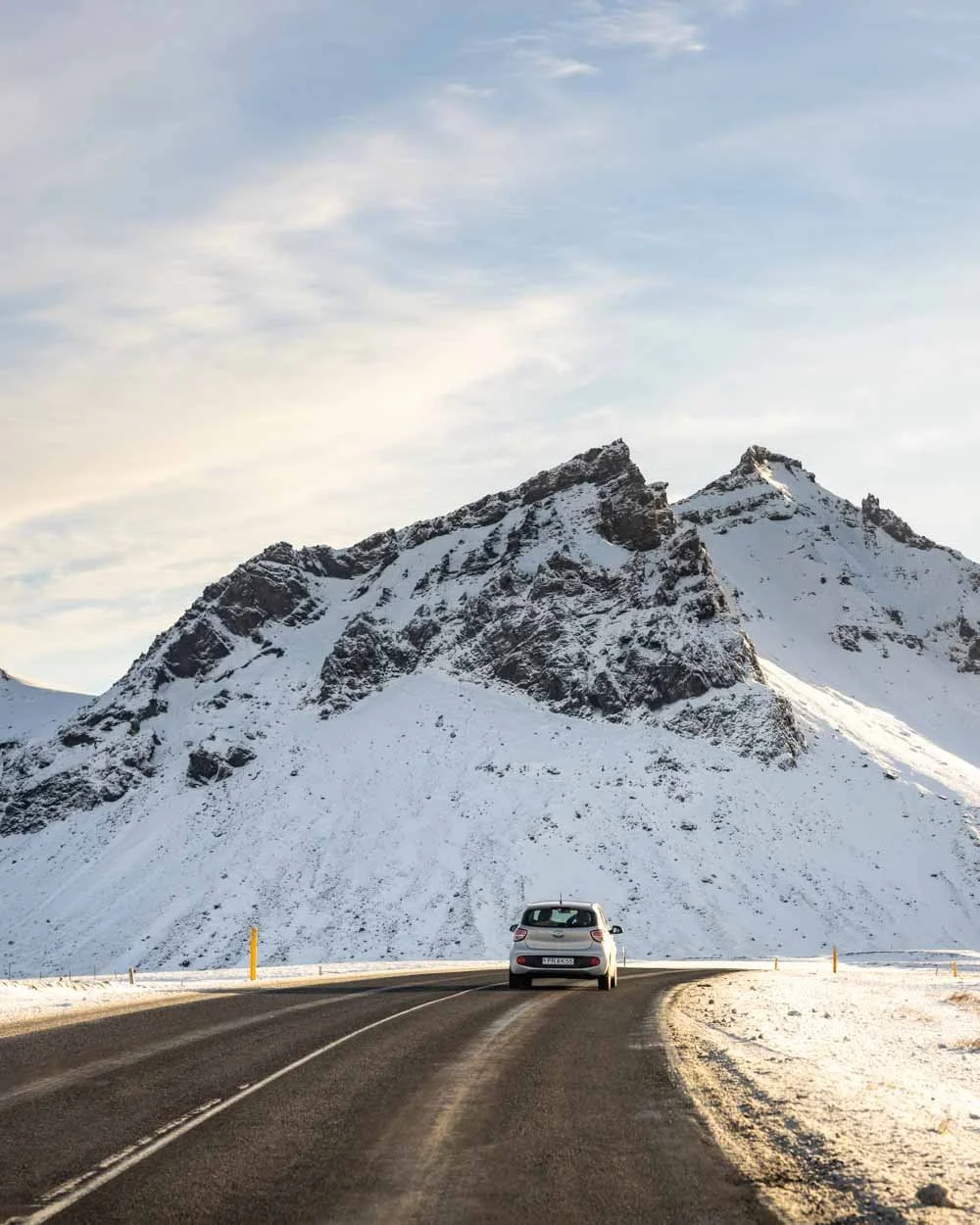
Eight to ten days is the minimum for a full winter circuit, and that assumes you accept shorter legs. Here is the arithmetic I would plan around:
- Daily distance: 150–200 km in winter, versus 300 km in summer. Anything more puts you on the road after dark.
- Time behind the wheel: 2–4 hours per driving day. That is deliberate, not slow — icy sections and cautious speeds eat the clock.
- One flexible day: hold a spare day somewhere in the middle of the route so a storm costs you a detour, not a missed flight.
- Non-driving days: schedule them where the weather is most likely to strand you anyway, so a lost day costs nothing.
Under eight days and you are racing the light. Over ten and you can actually stop when the scenery deserves it.
Driving in December and January Versus February and March
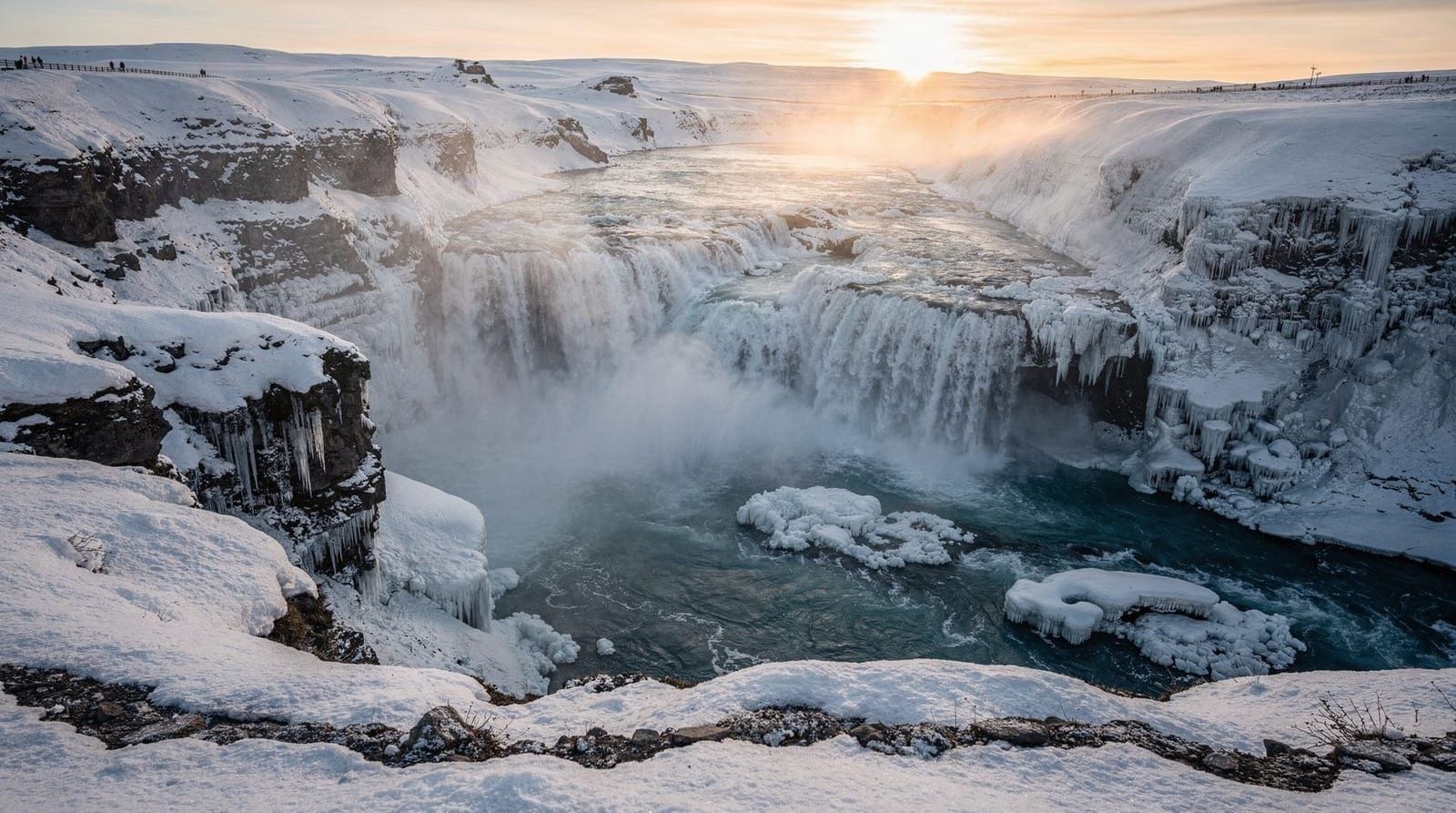
December and January compress the trip into a midday sliver; February and March hand it back. My read:
- March is the sweet spot: 10–12 hours of light, deep snow still on the ground, and no summer crowds. Choose it if dates are flexible.
- December and January suit short trips: if you only have a long weekend near Reykjavík, the short days matter far less than on a full circuit.
- Low-sun glare is real: the sun sits near the horizon all day and blazes off snow and ice. Keep sunglasses within the driver’s reach, not in the boot.
- Aurora stops: pull over only in designated parking areas and lay-bys. The shoulder of the ring road is not a viewing platform, however good the sky looks.
Choosing the Right Car and Tyres
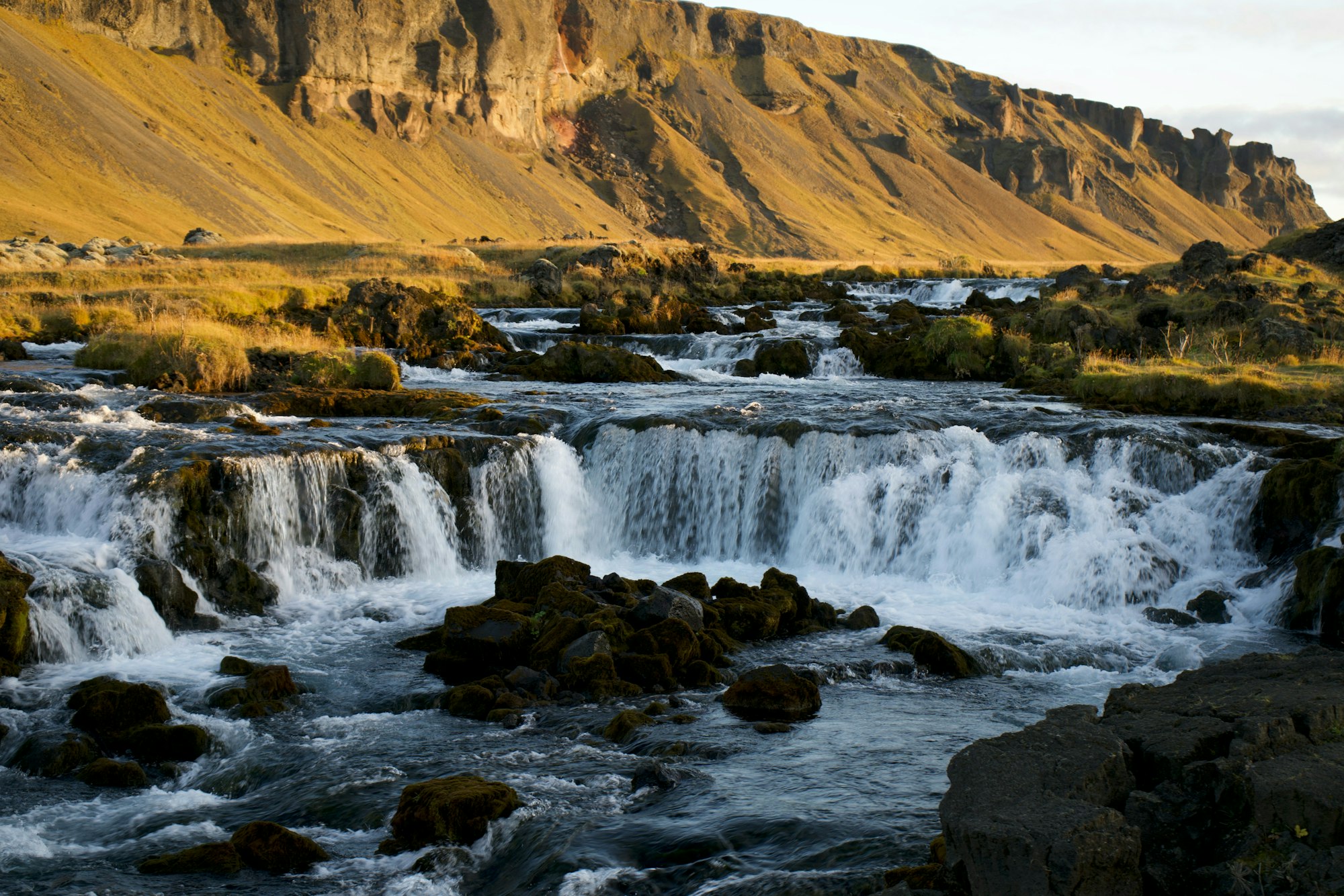
The booking decision that actually matters is not horsepower or brand — it is what happens when you turn off Route 1 into a hotel car park or a viewpoint pull-in that nobody has ploughed since the last snowfall. That is where ground clearance earns its money, and where a cheap economy hire quietly ruins a morning.
2WD, AWD or Full 4×4: What Each Actually Handles
A 2WD hire is legal on the Ring Road, and I want that on the record before anyone tells you otherwise. I also think it is the wrong call for a winter circuit. Four classes of vehicle, four very different promises:
| Vehicle class | On Route 1 in winter | Snow-covered car parks and access tracks | My read |
|---|---|---|---|
| Small 2WD (economy hatchback) | Only in mild, settled weather | Will struggle or strand you | Book it for Reykjavík and clear-weather day trips, nothing more |
| Compact AWD crossover (Dacia Duster, Suzuki Vitara) | Comfortable and confident | Good enough for almost every viewpoint | This is the sweet spot for most Ring Road travellers |
| Mid-size 4×4 (Kia Sportage, Kia Sorento) | Confident, with slack for plan changes | Handles most winter access tracks | Worth the upgrade for couples and small families who want comfort and side-road access |
| Large 4×4 (Toyota Land Cruiser) | Excellent, honestly more than Route 1 needs | Very capable | Pay for it only if you need the seats or genuinely remote access |
My blunt recommendation: compact AWD crossover for two to four people doing the standard circuit. It costs meaningfully less than a full 4×4 and gives up little on ploughed tarmac.
Step up to the mid-size 4×4 if your itinerary includes gravel turn-offs to waterfalls, turf farms or pools, because higher clearance turns a nervous scrape into a non-event. A large 4×4 is a comfort and space purchase, not a safety purchase, and I would not pay for it on a two-person trip.
One thing to confirm before you fly: email the rental company and ask them to state in writing that studded winter tyres are fitted to your exact vehicle. Plenty of budget fleets run non-studded winter tyres on their cheapest classes, and you do not want to discover which one you got at the Keflavík counter with the light already fading.
The Icelandic Tyre Rules You Must Know
Icelandic equipment law is short, strict and worth reading once:
- Tread depth: a minimum of 3 mm is mandatory from 1 November to 14 April. Anything less is illegal, not merely inadvisable.
- Studded tyres: permitted within that same 1 November–14 April window, and reputable rental firms supply them as standard in winter. Outside the window, studs are restricted.
- Headlights: headlights must be on 24 hours a day, at all times of year. That is an equipment rule, not a weather suggestion.
- Advisory signs: roadside signs marked with a 4×4 or snow-tyre symbol are traction advisories. Treat them as binding in practice — they mark stretches where ordinary tyres regularly fail.
Winter tyres versus studded tyres: both are legal and both work. Studded tyres give the edge on polished ice, black ice and hard-packed snow, which is most of what you will meet in January and February.
Non-studded winter tyres are quieter and perfectly competent on ploughed tarmac. If the choice is offered at the same price, take the studs.
Snow Chains: You Don’t Need Them
Snow chains are not part of a standard Icelandic rental kit, and you should not go shopping for them. They are rarely used in Iceland, they are unnecessary on tarmac, and fitting them on a ploughed Route 1 shoulder in a crosswind is a worse hazard than the snow they are meant to beat.
The traction aids that matter here are the tyres already on the car — spend your preparation budget on confirming those instead.
How to Drive on Ice and in Wind
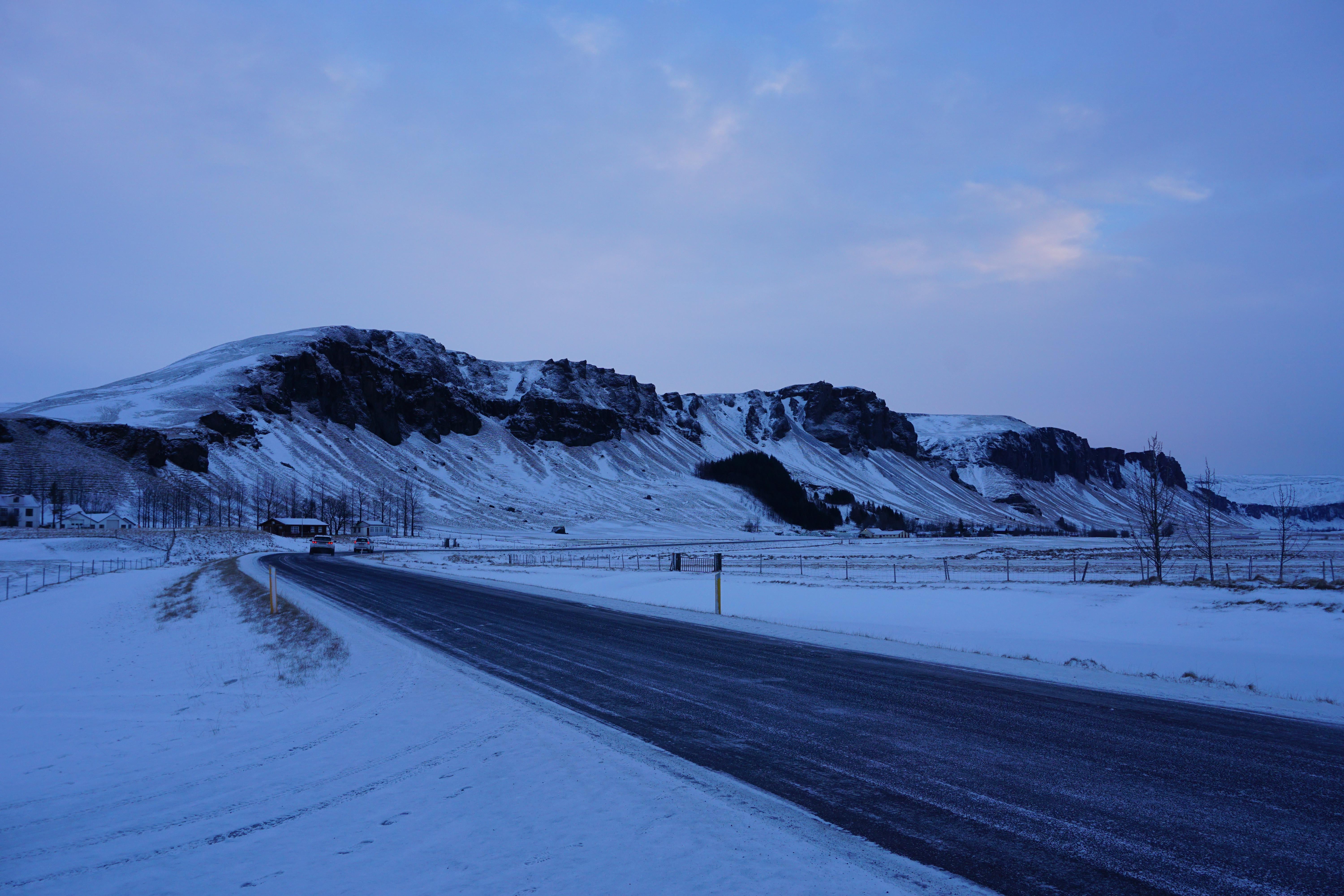
Picture a full, open cup of hot coffee sitting loose on the dashboard. That is the speed you carry into every curve, junction and braking zone on a winter Ring Road trip — slow enough that not a drop spills.
It costs nothing but patience, and it prevents more incidents on this road than any piece of equipment you can rent.
Brake Before the Hazard, Not In It
Every winter driving mistake in Iceland comes down to doing things late. All your slowing happens on the approach, while the car is still travelling straight; then you turn or brake on the speed you have already shed.
Braking hard on a cold surface after you have started to turn is how a routine corner becomes a slide.
- Following distance: hold five to six seconds behind the car in front. That feels absurdly far at first and is exactly right.
- Before a turn: get your speed down on the straight, then roll through the corner. Do not touch the brakes mid-bend.
- Bridges and mountain passes: lift off the accelerator before you reach them, not on them. These are the two places where the surface under you changes character fastest, so arrive slow and let the car settle.
When the Wheels Break Loose
A skid is startling but takes about two seconds to correct if you stay off the pedals. Ease off the accelerator and steer into the skid — turn the wheel the direction the rear of the car is sliding — and wait for the tyres to bite again.
Do not slam the brakes; that is the one response that guarantees you keep sliding, and it hands control to momentum instead of the steering.
Wind, Passing and Knowing When to Stop
Gusts on open stretches feel manageable at speed right up until the steering goes light under your hands. I would drive every exposed section of the Ring Road as if the wind is about to change, because it does.
- Steering: two hands on the wheel on any open, exposed stretch, even at modest speed. One-handed driving gives you no reserve when a gust arrives.
- Car doors: keep a firm grip on the door when you open it and open it slowly. A door caught by wind is one of the fastest ways to damage a rental car before you have even left the car park.
- Let locals past: if a car is queuing behind you, pull into the next lay-by and wave them through. They know the road and the grip limits better than you do, and fighting for position earns you nothing.
- Tiredness: stop when you notice it. Cold air and constant concentration drain you far faster than summer driving, and fatigue shows up first as sloppy speed management — the exact habit that keeps you safe.
The Apps and Alerts to Check Before Every Drive
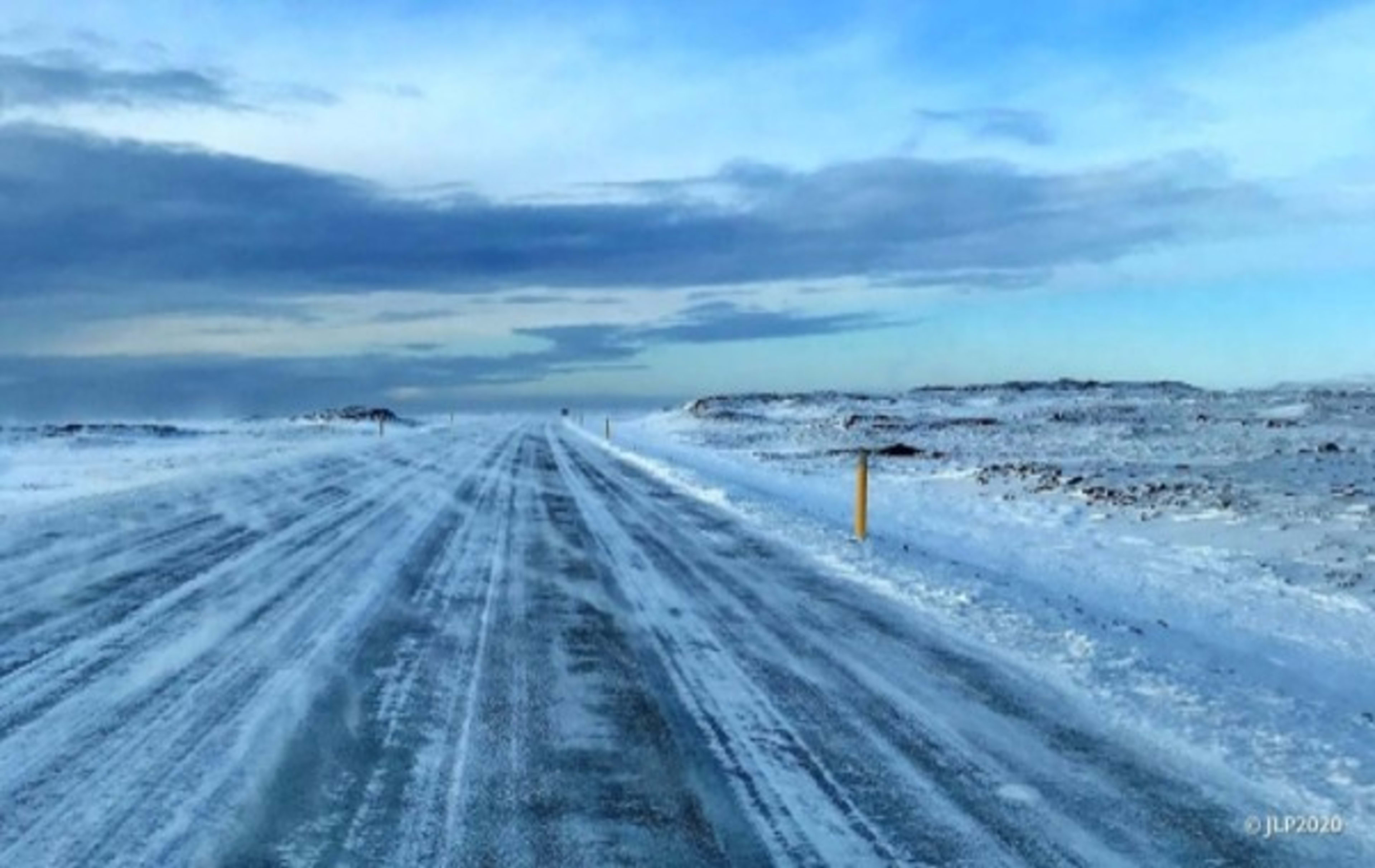
One webcam feed on umferdin.is can save you a wasted morning: before you leave the hotel, look at the live camera for the stretch you’re about to drive, because a road that is technically “open” on the map can still be a wall of blowing snow on screen. Iceland’s official safety tools are free, fast, and better than anything a rental company will text you — but only if you actually check them before each departure, not the night before.
| Source | What it tells you | When to check |
|---|---|---|
| umferdin.is / road.is | Real-time road status, colour-coded by condition and closure, plus live webcams along Route 1 | Every morning before you start, and again before any mountain pass |
| vedur.is | Forecasts and official weather warnings, rated yellow, orange and red and broken down by region | The night before, to decide tomorrow’s distance, and at breakfast |
| safetravel.is | Travel alerts that combine road and weather data, plus text message notifications | Sign up before the trip so alerts reach you without hunting for them |
| 112 Iceland app | Emergency button that sends your exact location, plus a check-in feature | Install and test before you leave home; use check-in on remote legs |
Two habits do more for your safety than any gadget. First, register a travel plan on safetravel.is before the trip — it tells rescuers where you intended to be if something goes wrong and you can’t call.
Second, ask the hotel staff each evening about the roads ahead. Icelanders hear about closures on local radio before the websites update, and reception will happily tell you whether the pass you’re eyeing is worth attempting.
That five-minute conversation is the insider edge no app gives you.
My rule: if umferdin.is and the webcam disagree with your plan, the webcam wins. Photos don’t lie about snow.
What Insurance Cover Matters in Winter
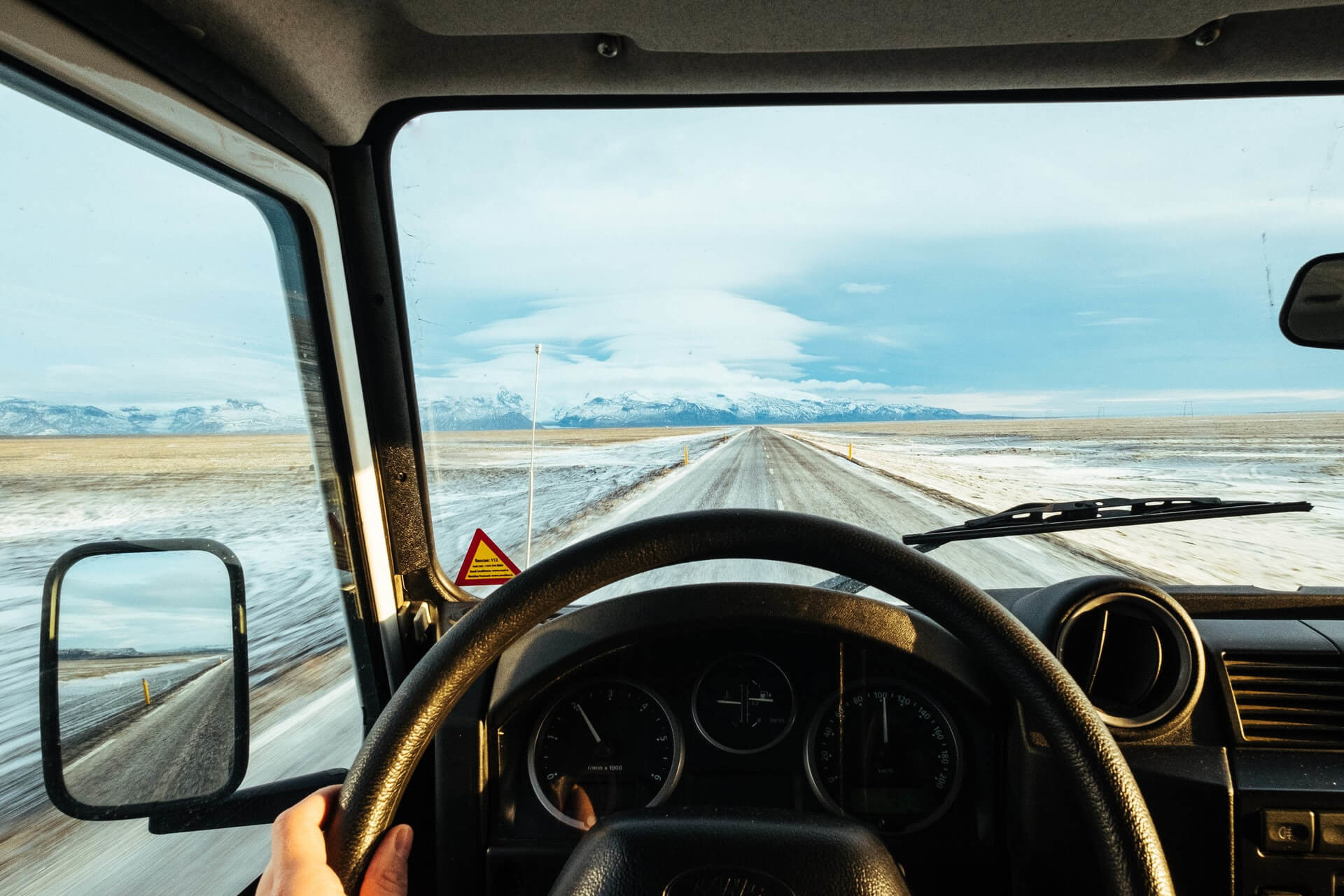
A windscreen in Iceland costs $600 or more to replace, and windblown grit plus freeze-thaw are what crack it — which is why winter renters who skip Gravel Protection pay out of pocket more often than anyone who slides into a snowbank. CDW is already in your quote because Icelandic law requires it; the deductible is where your money actually lives.
The add-ons worth paying for
Basic CDW typically leaves you liable for $2,000–3,000 per incident. Everything below sits on top of that. Treat these as planning baselines and confirm current rates with your agency — pricing varies by vehicle class and provider.
| Add-on | What it covers | My verdict |
|---|---|---|
| Super CDW (SCDW) | Cuts the CDW deductible — one typical example reduces exposure from about €2,700 to roughly €600. | Buy it. Highest-value line on any winter quote. |
| Gravel Protection | Windscreen, headlights and paint from flying grit. | Buy it in winter. One stone pays for it. |
| Liability Waiver | Tyre damage and wind-torn doors — usually excluded from base cover. | The one people skip and regret. This is winter’s signature claim. |
| Sand and Ash Protection | Abrasive wind-blown sand and ash scouring paint and glass. | Worth it even in a dry winter; wind is the hazard, not rainfall. |
| Roadside Assistance Waiver | Waives call-out fees, typically around 1,300 ISK per day. | Cheap. One recovery bill dwarfs the whole waiver. |
What nothing covers
Illegal river crossings and off-road damage are voided by every policy, from every provider, including your credit card. There is no add-on that rescues you there — the only protection is not doing it.
Do not assume your US credit card rental coverage saves you here. Many cards exclude Iceland specifically, and most reimburse only after you have paid the rental company’s deductible and filed a claim.
Personal travel insurance likewise rarely covers mechanical or collision damage to a rental. Get the SCDW and Gravel Protection at the counter and use your card only as a backstop.
One thing to watch for: if your quote lists CDW as a paid line item, the agency is double-billing you — it is mandatory and belongs in the base rate. Push back before you sign.
If You Get Stuck or Caught in a Storm
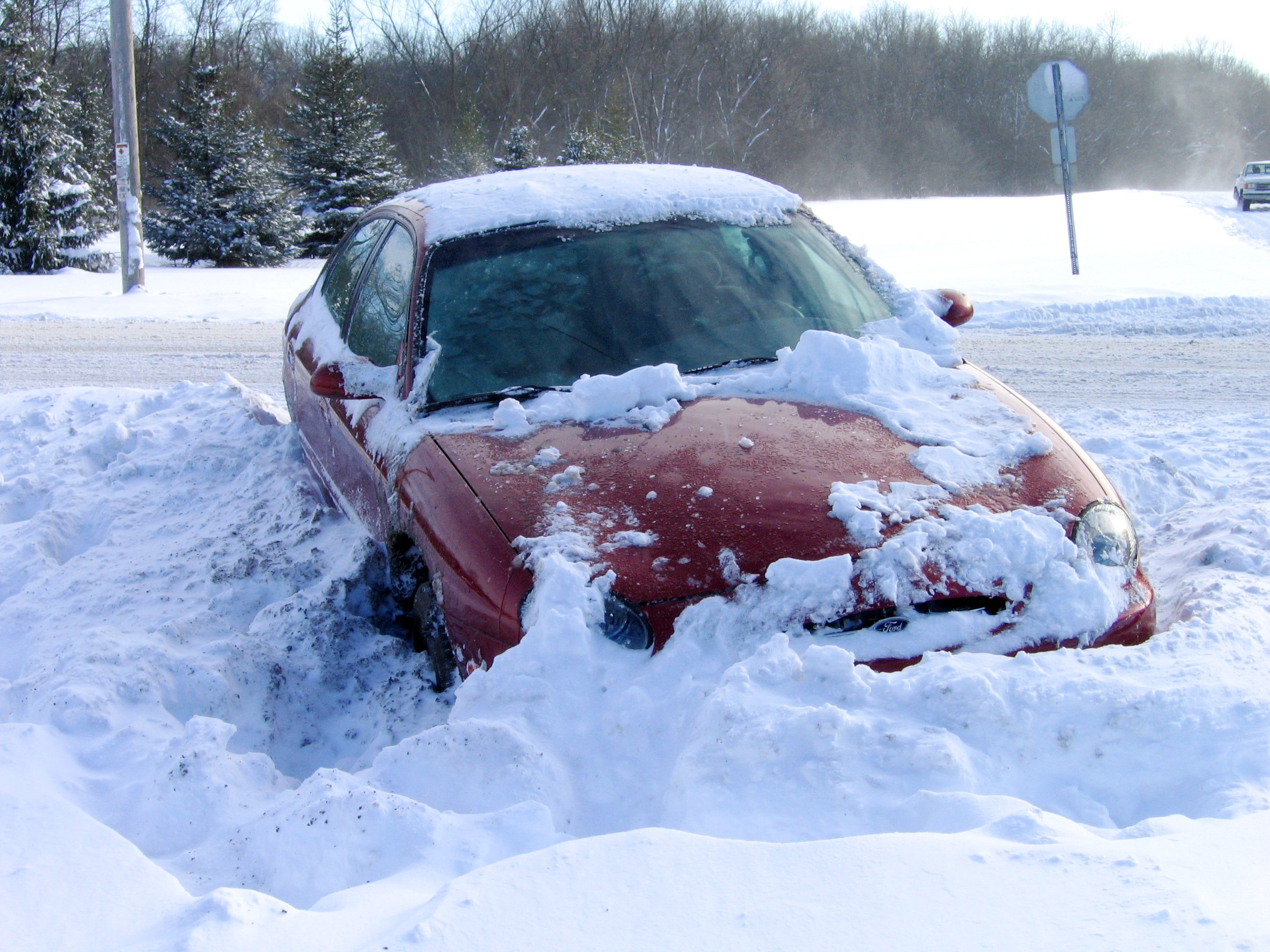
The single most common winter mistake on Route 1 is spinning the wheels — it digs the car in and turns a ten-minute problem into a wait for a tow. Here is what to do instead, and how to sit out a closure without panicking.
If the car stops moving
- Stop spinning: Ease off the accelerator the moment traction goes. Revving digs the tyres down to ice or bare gravel.
- Rock it gently: Engage 4×4, select a low gear, and ease forward and back in short, gentle movements. Momentum, not power, is what frees the car.
- Stay with the vehicle: A car is visible, sheltered, and warm. Walking out in winter conditions is how roadside incidents become rescues.
- Keep hazard lights on: Ploughs and passing traffic need to see you well before they reach you.
- Run the engine periodically, not constantly: It keeps the heater and battery alive. But check that the exhaust pipe stays clear of snow — a blocked exhaust fills the cabin with fumes.
If the road closes under you
An orange or red risk rating on the road you are driving means stop and wait — not “drive slowly.” Most storm closures on the Ring Road are cleared within about two hours, so the smartest move is usually a café, a hot pool, or the next town’s car park rather than a detour onto unknown roads.
Call in this order: your rental company’s 24/7 roadside line first, then 112 if anyone is in genuine danger. The rental line will tell you whether a tow, a wait, or a change of route is the correct move — and they track which of their cars are where.
What stays in the car all trip
- Fuel: Keep the tank at least half full. Distances between stations stretch in bad weather.
- Warmth: Insulating layers, a blanket, and gloves — you may be stationary for hours.
- Recovery: A shovel, plus the phone charger and a power bank that lives in the car, not your day bag.
- Food: Snacks that do not freeze or need cooking.
Frequently Asked Questions
What should I do with my first hours after landing at Keflavík?
Use the Reykjanes stretch to get comfortable with the car in the country’s windiest conditions instead of starting the loop at speed. If you land late, settle near the airport or Reykjavík and begin the circuit in morning light.
Should I drive the Ring Road clockwise or counterclockwise in winter?
Direction matters far less than where you place your flexible day, because the closure-prone stretches around Höfn and between Akureyri and Egilsstaðir need slack either way. Whichever way you go, put the spare day after the section most likely to shut, not before it.
How does travelling with kids change the plan?
Book the mid-size 4×4 — a Kia Sportage or Kia Sorento is the upgrade I would make for a small family that wants comfort and side-road access. Keep every leg inside the 150–200 km range so nobody is strapped into a car seat after dark.
Book the Car, Then Let the Weather Decide the Rest
Reserve the compact AWD crossover and email the rental company to confirm studded winter tyres on that exact vehicle, then add Super CDW and Gravel Protection when you collect it.
Build the route around 150–200 km days with one flexible day near Höfn or the Akureyri–Egilsstaðir stretch, and register your travel plan on safetravel.is before you leave home.
Winter is when Iceland hands you glaciers, black sand and low gold light with a fraction of the summer crowds, and that trade is worth every slow kilometer.
Pin this safety guide to your Iceland board and lock your dates around mid-February or March before you price anything else.
Leave a Reply