Fairytale Places to Visit in Europe Beyond the Crowds
fairytale places to visit in europe
You’re standing in a narrow cobblestone street where pastel-painted houses lean against each other like they’re whispering secrets, and the only sound is your footsteps echoing off 500-year-old stone walls. This is what fairytale Europe actually feels like when you find the right moment—not the Instagram-packed squares at noon, but the quiet magic that happens when you arrive early or stay late.
Europe’s storybook destinations aren’t confined to one type of landscape: some hide in Alpine lakes where mountains meet water, others cling to cliffsides above turquoise seas, and a few sit so perfectly preserved in medieval time that you question whether the place is real. What makes these fairytale towns genuinely different from anywhere else is the combination of intact architecture, walkable geography, and the fact that locals still actually live here—this isn’t a museum, it’s a functioning village where someone’s laundry hangs from a Renaissance window.
This guide cuts through the hype and shows you which towns are worth the trip, which ones to skip during peak season, and exactly how to experience them without fighting crowds or making logistical mistakes that waste your time.
Budget ranges: lakeside and coastal villages run €80–150/night for mid-range hotels; medieval walled towns €70–140/night; castle towns €90–180/night depending on location and season. Shoulder season (April–May, September–October) cuts these costs by 20–30% and dramatically reduces crowds.
The Fairytale Towns That Actually Deliver
Lakeside & Coastal Magic: Hallstatt, Austria (the most photogenic Alpine lake town), Lake Bled, Slovenia (island church in emerald water), Reine, Norway (dramatic Arctic fishing hamlet), Positano, Italy (colorful cliffside jewel), and Riomaggiore, Italy (Cinque Terre gateway with authentic charm).
Medieval Walled Towns: Rothenburg ob der Tauber, Germany (quintessential Bavarian time capsule), Colmar, France (pastel-hued Alsatian canals), Cesky Krumlov, Czech Republic (best visited in winter for solitude), Sighisoara, Romania (Dracula’s birthplace with genuine history), York, England (authentic medieval streets), Gent, Belgium (Bruges without the crowds), and Dubrovnik, Croatia (Adriatic fortress with dramatic walls).
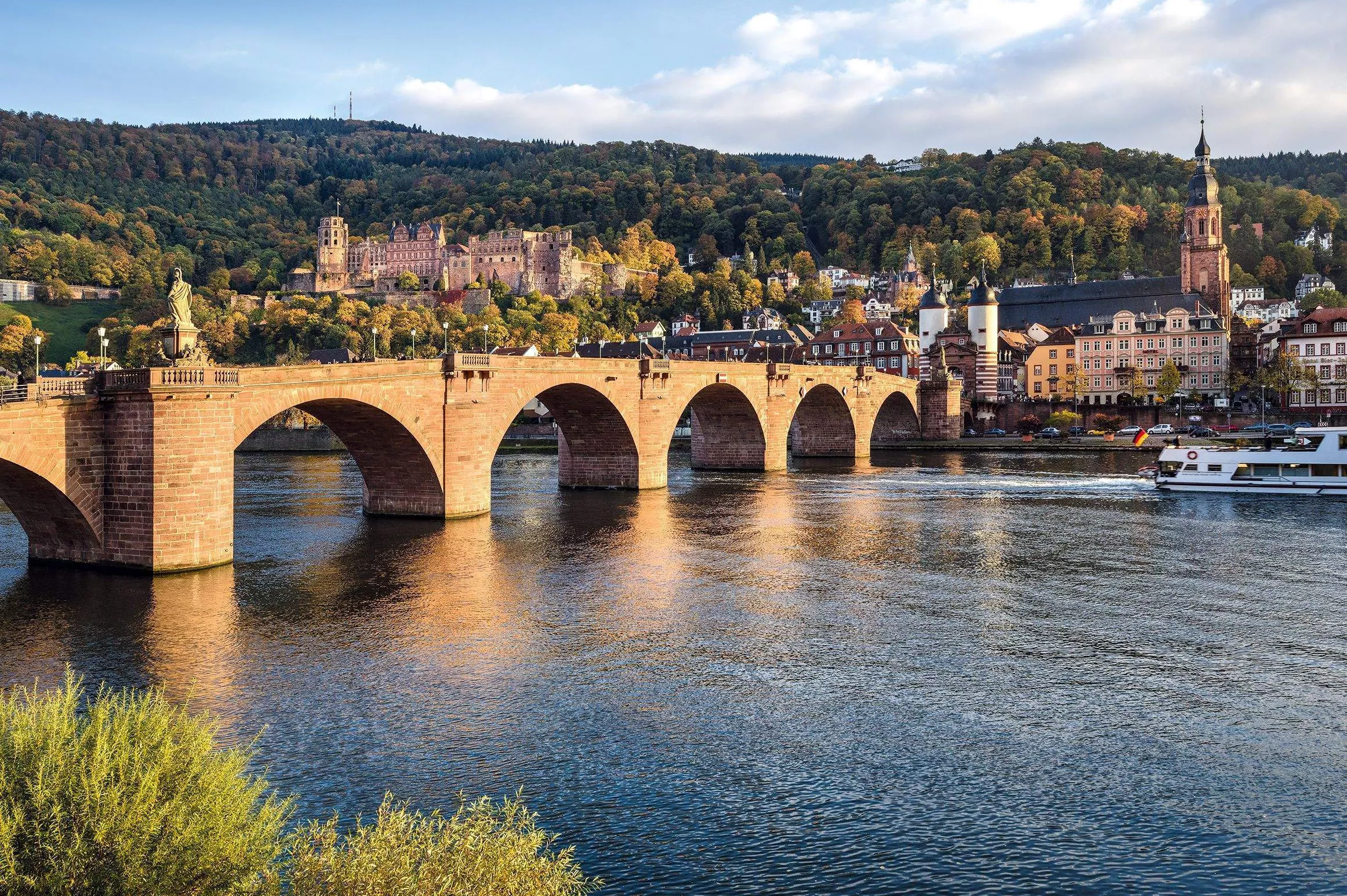
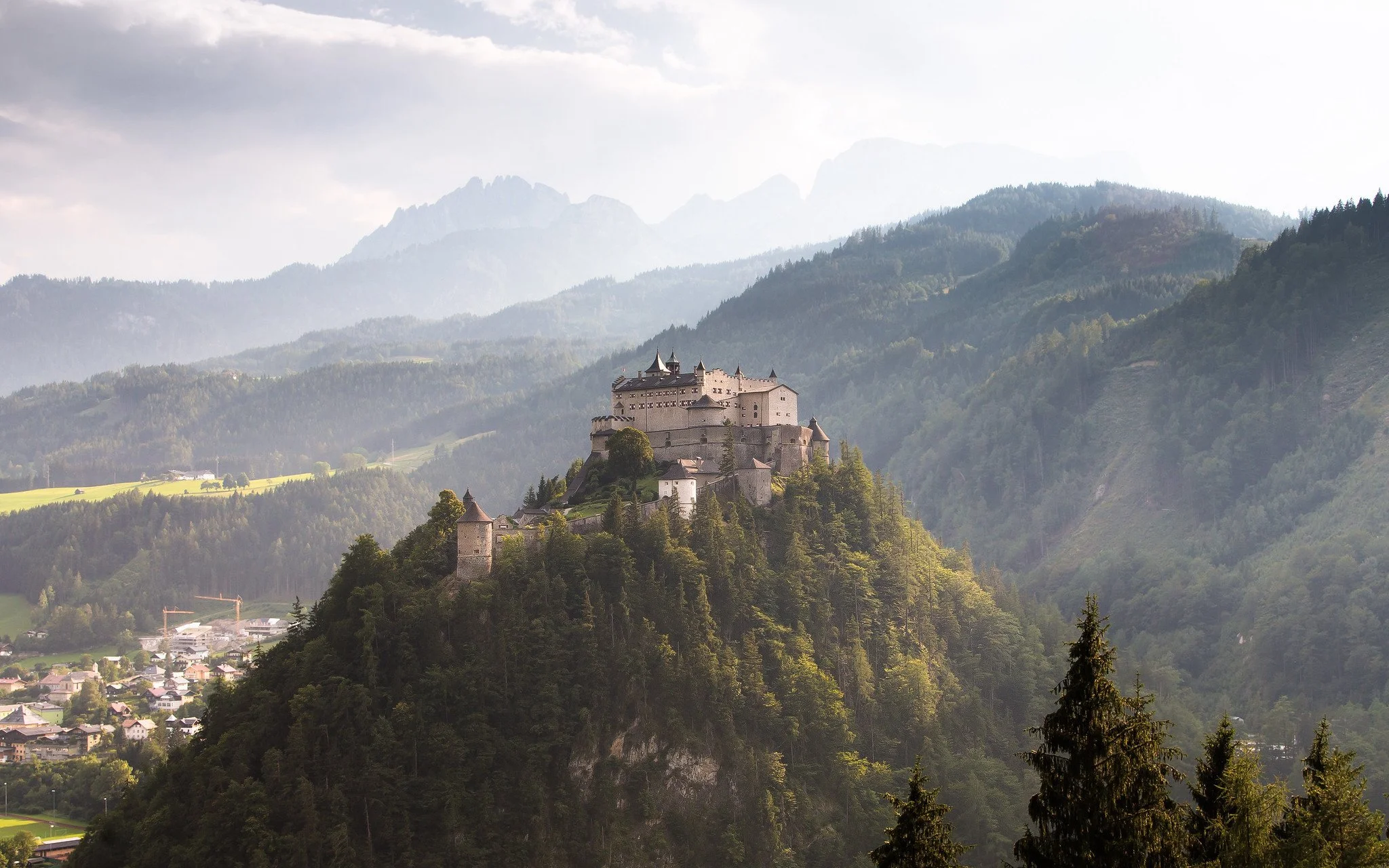
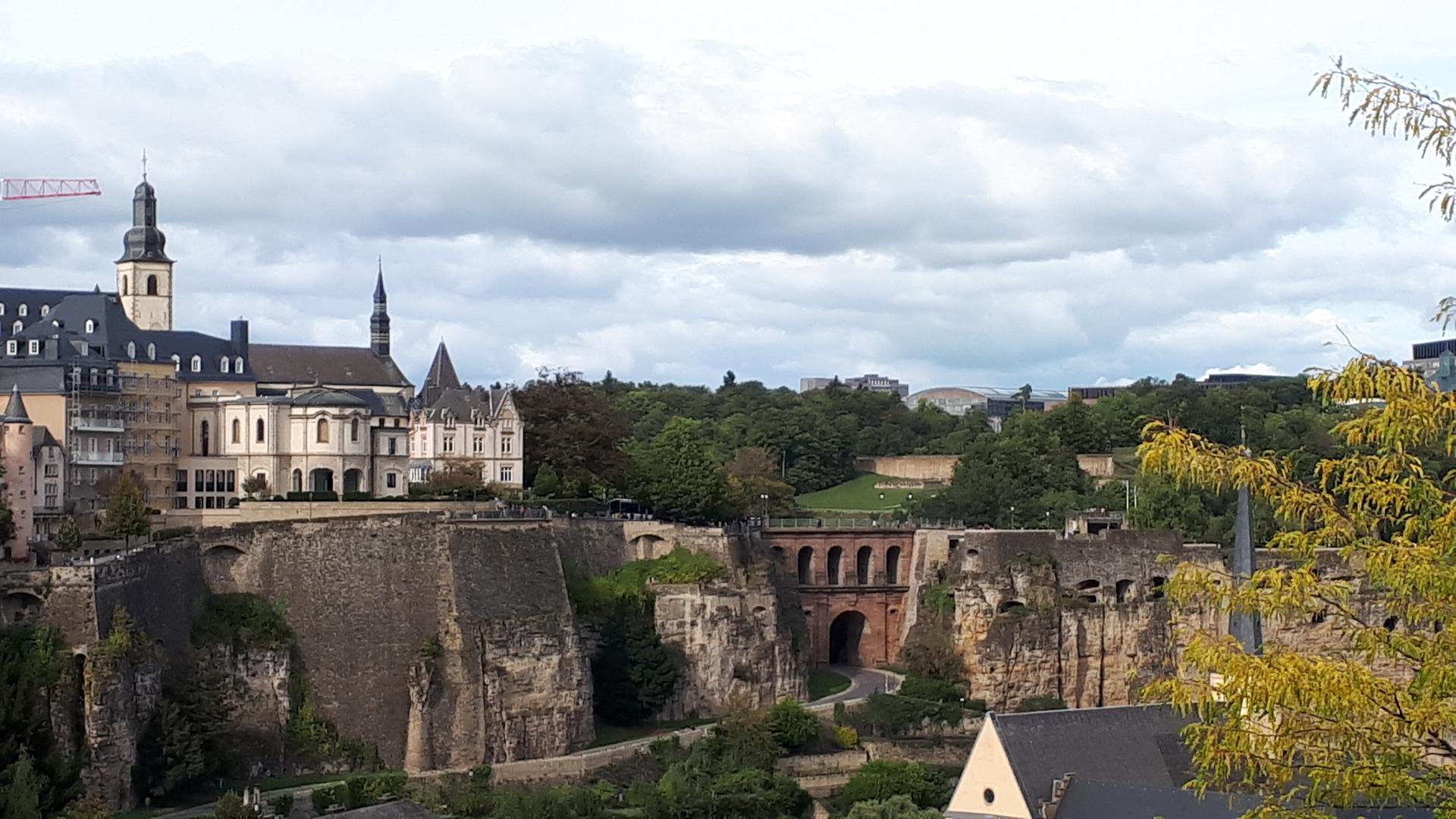
Castle Towns & Royal Estates: Sintra, Portugal (multiple palaces within day-trip distance of Lisbon), Heidelberg, Germany (romantic ruins overlooking the Neckar River), Werfen, Austria (Alpine fortress without Salzburg crowds), and Grund, Luxembourg (secret gorge valley that most travelers skip).
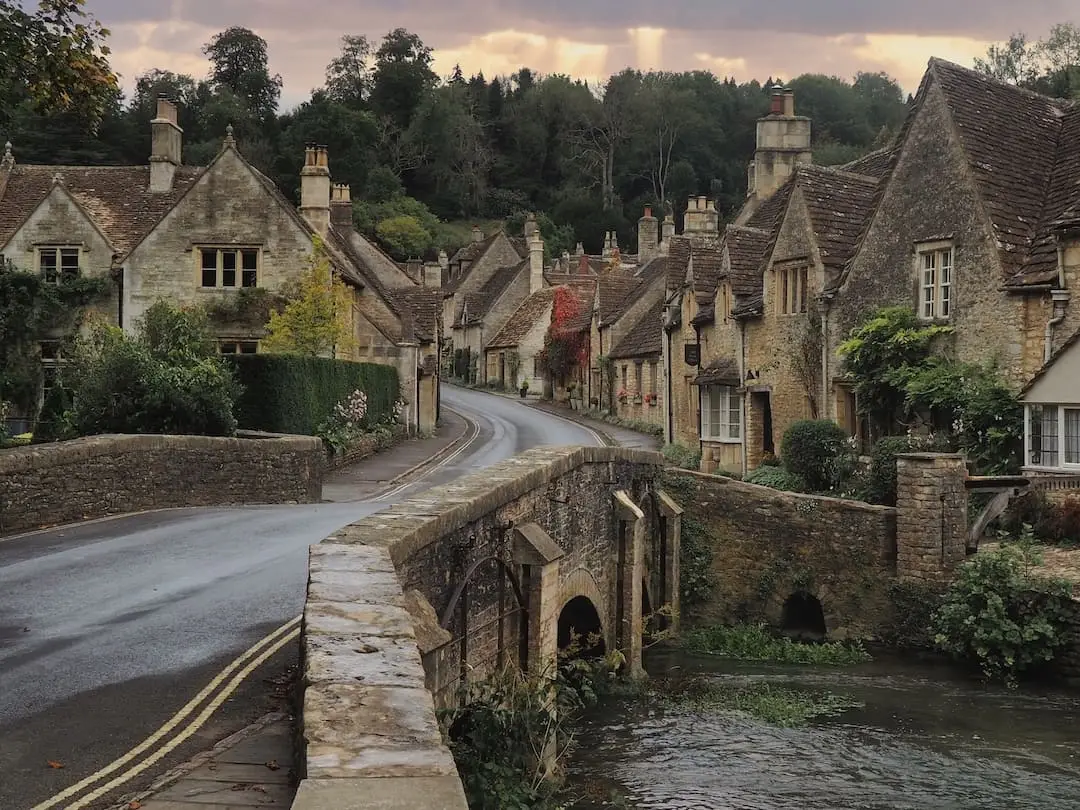
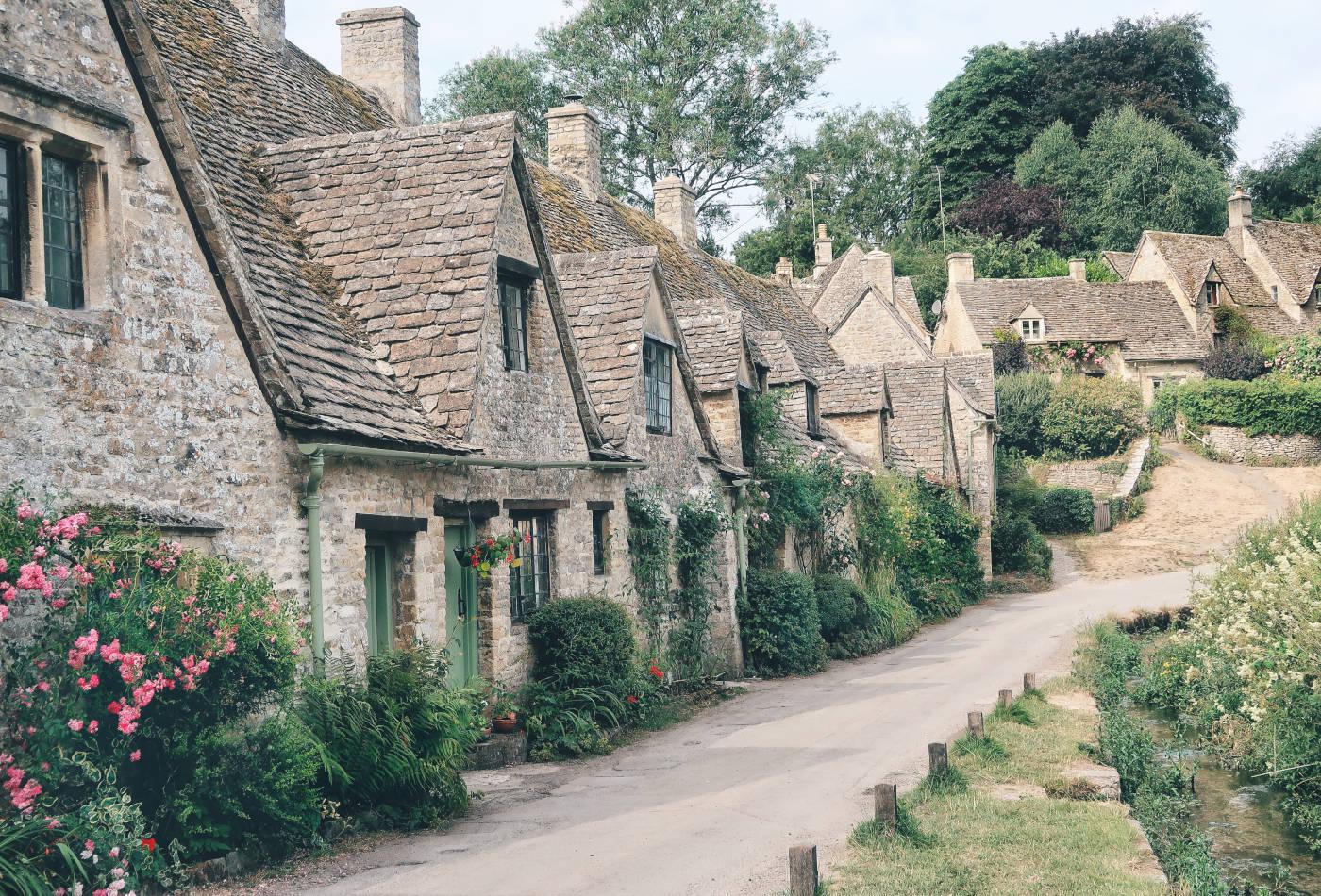
Stone Cottage Escapes: Castle Combe, England (single storybook street in the Cotswolds), Bibury, England (thatched cottages and riverside charm), Cong, Ireland (woodlands and silence), and Mallaig, Scotland (working fishing village gateway to the Highlands).
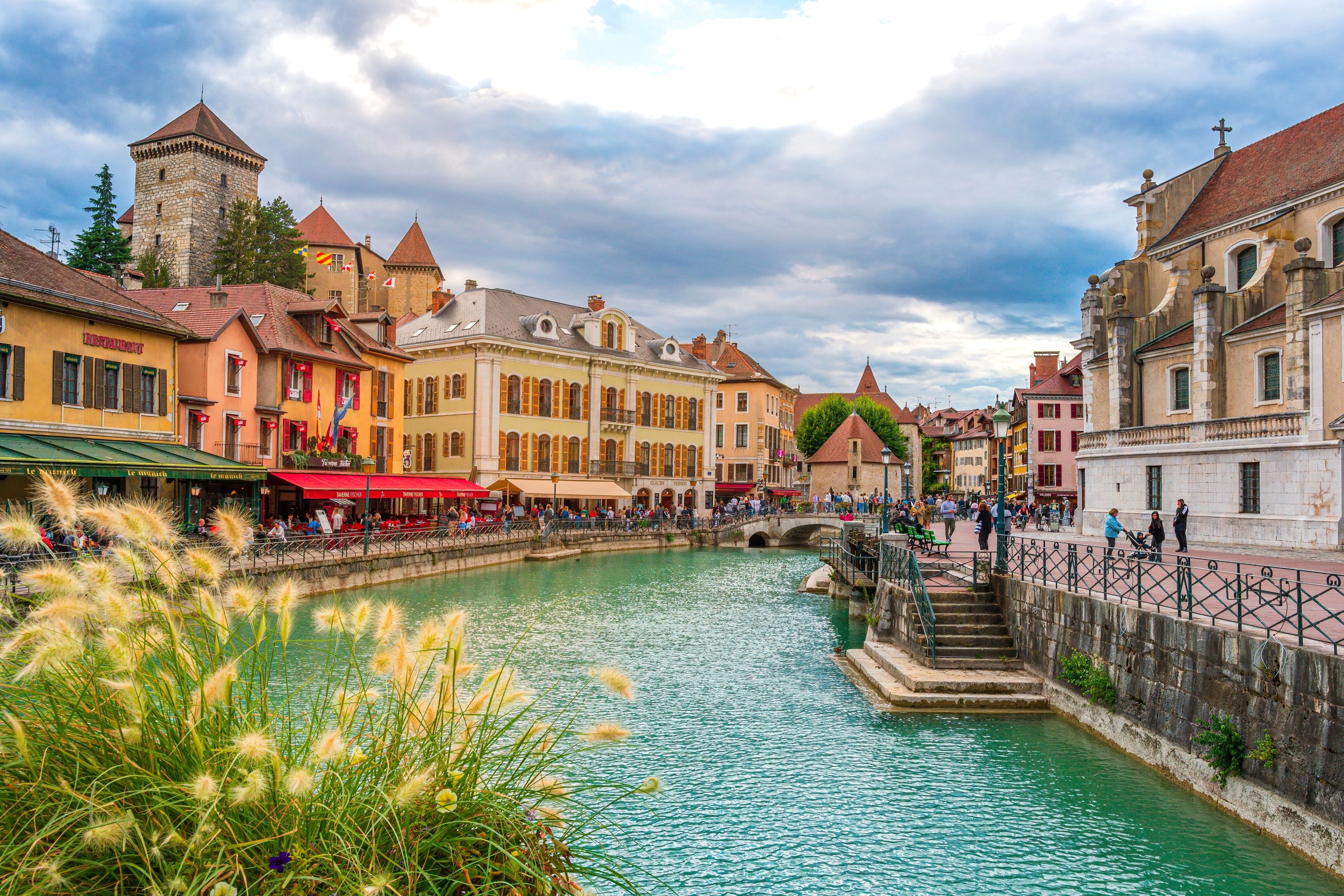
Hidden Gems Off the Radar: Mostar, Bosnia (emerald river and 16th-century bridge), Veliko Tarnovo, Bulgaria (dramatic horseshoe bend fortress), Alberobello, Italy (1,500+ conical trulli huts), Annecy, France (Venice relocated to the Alps), and Ljubljana, Slovenia (Europe’s most relaxed capital).
Timing Strategy: Visit May–June or September–October to dodge summer crowds and enjoy better light for photography. Arrive at famous towns (Hallstatt, Dubrovnik, Rothenburg) by 7:00 a.m. or after 5:00 p.m. to photograph without tour groups in frame.
Stay overnight in the town itself—this single decision eliminates 80% of the crowd problem.
5 Romantic Lakeside & Coastal Fairytale Places to Visit in Europe
These five destinations prove that fairytale Europe isn’t confined to walled towns—some of the most storybook-worthy moments happen where mountains meet water, where pastel villages cling to cliffs, or where a single island church rises from an emerald lake. Each offers a completely different flavor of romance: Alpine serenity, dramatic Nordic landscapes, sun-soaked Italian color, and the kind of postcard perfection that makes you question whether the place is real.
The best time to visit most of these is May through September, though shoulder seasons (April and October) deliver fewer crowds and softer light for photography.
Hallstatt, Austria: The Ultimate Lakeside Storybook Town
hallstatt austria lake village
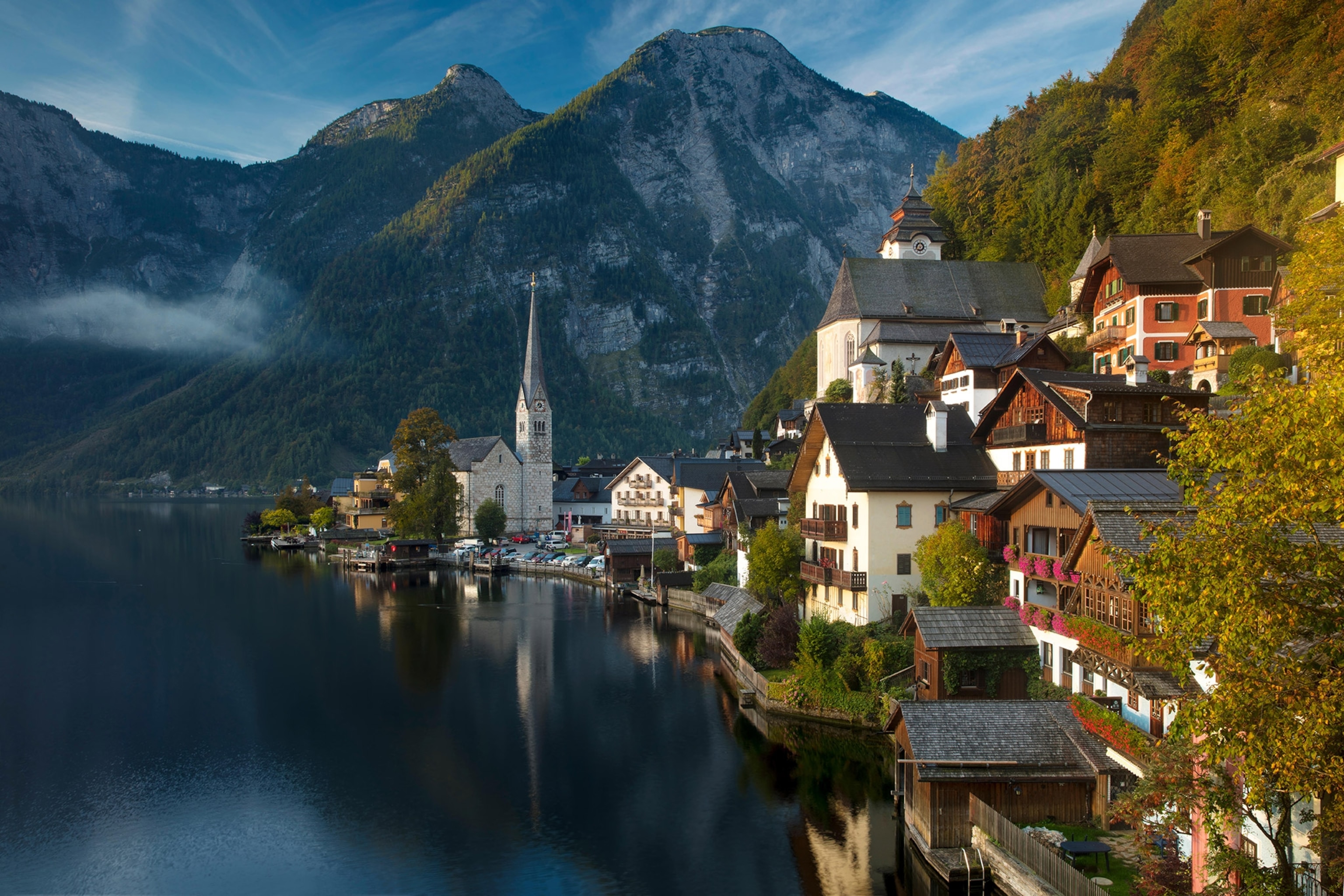
Hallstatt sits wedged between a mountain and a pristine alpine lake about an hour’s drive east of Salzburg, and the sheer density of fairytale elements—narrow winding streets, colorful lakeside houses, resident ducks and swans, and jagged peaks reflected in still water—makes it the most photogenic lakeside village in Europe. This is best for couples and solo travelers willing to arrive early (before 9 a.m.) or late afternoon (after 4 p.m.) to avoid the tour-bus crowds that peak midday; the village genuinely transforms when quiet returns.
The single reason it wins: no other European lake town packs this much storybook charm into such a compact, walkable footprint.
Plan to spend a full day here. Walk the lakeside pathway, feed the waterfowl, and climb the narrow streets to discover hidden courtyards and flower-draped balconies.
The salt mines (Hallein Salt Mine, just across the border in Germany) are a popular half-day excursion if you want to extend your stay. Base yourself in Hallstatt village itself for waterfront access and evening atmosphere—the lake quiets dramatically after day-trippers leave.
Hiking trails branch from the village; Mala Osojnica offers high views over the lake and requires sturdy shoes.
Lake Bled, Slovenia: A Magical Island Church in an Emerald Lake
lake bled slovenia island church
Lake Bled’s defining image—a tiny church on an island in the center of an impossibly green lake, ringed by forested cliffs and a medieval castle perched above—is not Photoshopped; it’s real, and it justifies every pixel of hype. This is best for travelers who want accessible fairytale magic without the crowds of Hallstatt; Bled draws fewer day-trippers and rewards a 24-hour stay with early-morning mist and evening solitude.
The single reason it wins: the island church is genuinely unique in Europe, and you can reach it by rowboat, pletna boat (traditional wooden gondola), or even swim to it.
Reach Bled easily from Ljubljana via train (roughly 1 hour) to Lesce-Bled or Bled Jezero station, then a 5-minute bus ride to the lake. Stock up on food at Bakery Evropa Lesce before heading to the lake.
A 6-kilometer pathway circles the lake and offers constantly shifting views; allow 90 minutes for a full loop with photo stops. Water activities include rowing boats (hourly rental), pletna boat rides to the island, swimming, and paddleboarding.
For elevated views without the hike, take the chairlift at Straza Bled (roughly €11 for the lift and one toboggan ride down). Visit Castle Bled for panoramic views and entry fees apply; confirm current prices with the castle directly, as they change seasonally.
Reine, Norway: The Dramatic Arctic Fishing Hamlet
reine norway lofoten islands fishing village
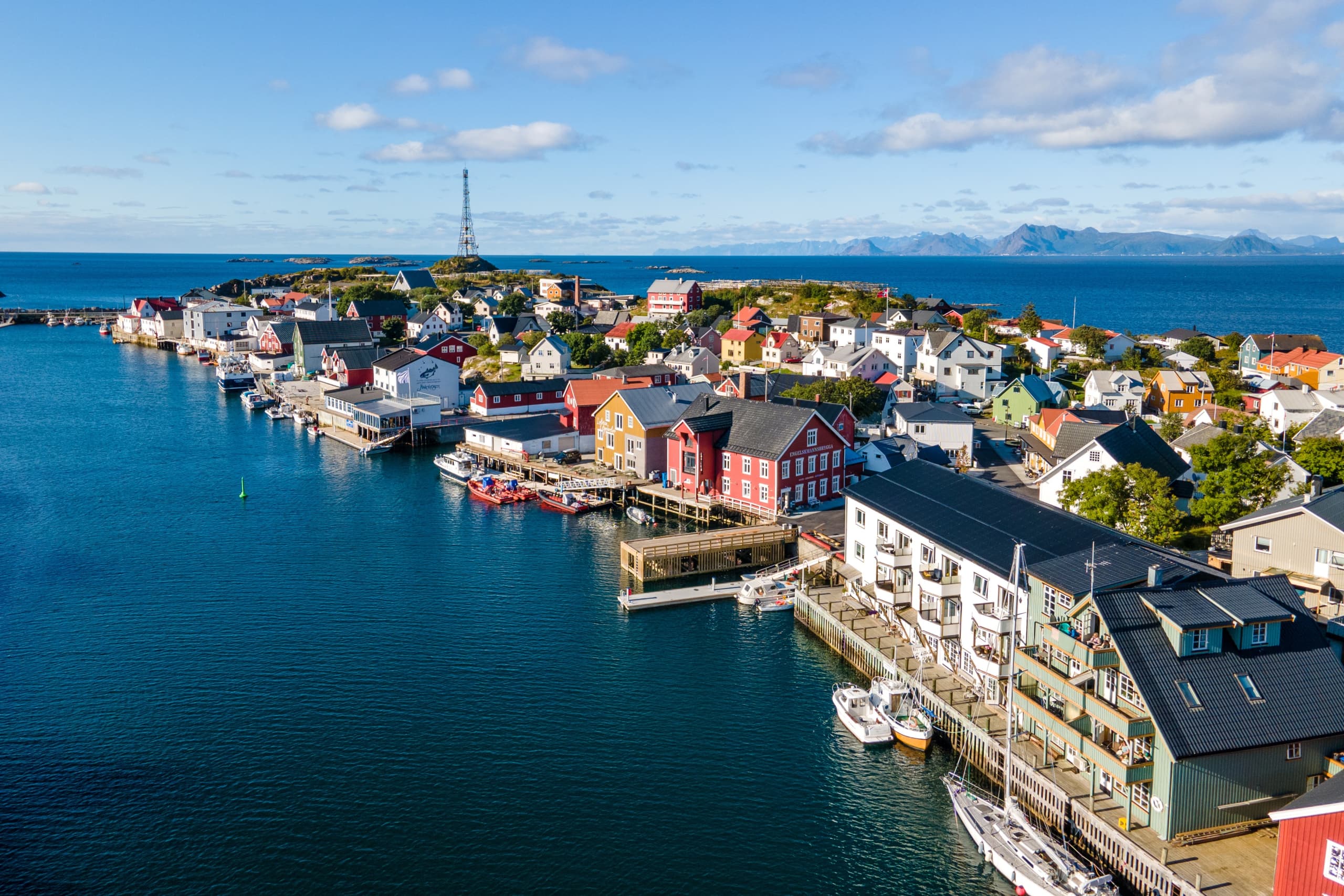
Reine is a working fishing village in the Lofoten Islands where jagged granite peaks plunge directly into the sea, red-and-yellow wooden cabins cluster on stilts above the water, and the landscape feels genuinely untamed—this is fairytale with an edge of wildness that softer European villages lack. This is best for travelers seeking drama over comfort and willing to travel north for extreme natural beauty; Reine has minimal tourist infrastructure and that’s precisely the point.
The single reason it wins: no other fairytale destination in Europe delivers this level of raw Nordic landscape combined with authentic fishing-village charm.
Reine sits on the Lofoten Islands, accessible by car via the E6 highway and a scenic drive through the archipelago (total journey from Tromsø is roughly 5–6 hours; from Alta, roughly 3–4 hours). The village itself is car-free and walkable.
Stay in one of the traditional red fishermen’s cabins (rorbuer) built over the water—these are the iconic Lofoten accommodation and book months ahead in summer. Visit between May and August for the midnight sun and warmest weather; September brings dramatic storm light and fewer visitors.
Hike to Reinebringen for views over the village and surrounding peaks (steep, 30 minutes up). Fish for Arctic char and cod, or book a boat tour to explore the surrounding islands and fjords.
Positano, Italy: The Colorful Cliffside Jewel of the Amalfi Coast
positano italy amalfi coast colorful houses
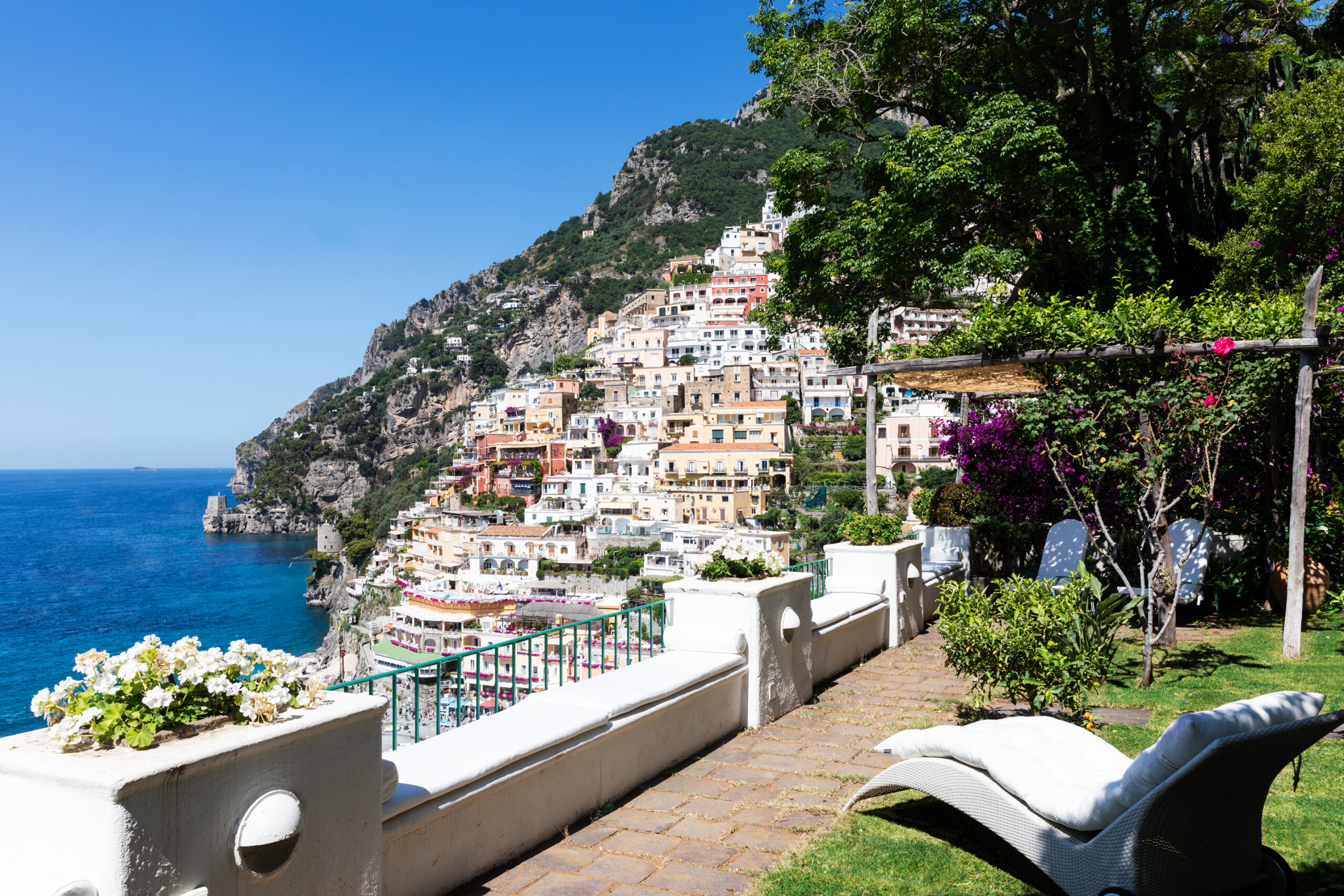
Positano is a vertical village of pastel-painted houses stacked impossibly down a clifside to a pebble beach, where the Tyrrhenian Sea glows turquoise and the scent of lemon blossoms drifts through narrow alleys—it’s the most photogenic town on the Amalfi Coast, though not the best base for actually experiencing local life. This is best for travelers prioritizing Instagram-worthy aesthetics and romantic dinners over authentic interaction; Positano is unapologetically a tourist haven where you’ll meet other travelers but rarely locals.
The single reason it wins: the sheer visual drama of the setting and the quality of beachfront dining make it unbeatable for a special evening or a 1–2 night splurge.
Positano works best as a day visit or overnight stop rather than a multi-day base. Arrive by car via the Amalfi Drive (one of Europe’s most scenic coastal roads, roughly 1.5 hours from Naples) or by SITA bus from Salerno or Amalfi town.
Parking is scarce and expensive; use the paid lot on the main road and walk down, or take the bus. The village is entirely pedestrian once you arrive—stairs and alleys only.
Swim at Spiaggia Grande (the main beach) or book a boat tour to hidden coves. For a more grounded Amalfi Coast experience with better local restaurants and easier access to other towns, base yourself in Sorrento (roughly 30 minutes away by bus or car) and day-trip to Positano.
Expect prices to be 30–50% higher in Positano than surrounding towns.
Riomaggiore, Italy: The Vibrant Heart of the Cinque Terre
riomaggiore cinque terre italy colorful village
Riomaggiore is the southernmost village of Cinque Terre, where pastel-colored houses rise directly from the sea, fishing boats bob in a tiny harbor, and the entire village feels like it’s been painted onto a cliff face—it’s one of Italy’s most sought-after coastal destinations and the most accessible entry point to the Cinque Terre. This is best for travelers who want fairytale charm combined with hiking, local food, and the ability to explore five villages in one trip; Riomaggiore’s position makes it the logical base for exploring the entire Cinque Terre network.
The single reason it wins: it offers the perfect balance of postcard beauty, authentic village life, and practical access to the wider region.
Reach Riomaggiore by train from La Spezia (roughly 10 minutes) or Genoa (roughly 2 hours). The village is car-free; park in La Spezia and take the train.
Stay in Riomaggiore itself for waterfront access and evening atmosphere, or split time across two villages to experience different vibes. The famous hiking trails connecting Cinque Terre villages run directly from Riomaggiore; the path to Manarola (the next village north) is roughly 30 minutes and offers stunning coastal views.
Swimming is possible at the small harbor beach, though it’s rocky. Book a boat tour to explore sea caves and hidden beaches.
Visit May through September for warm weather and full village energy; October and April offer fewer crowds and pleasant temperatures. The Cinque Terre Card (roughly €16–20 per day) includes train travel between villages and hiking trail access; purchase it upon arrival or online before you go.
7 Medieval Walled Towns & Half-Timbered Fairytale Places to Visit in Europe
These towns survived centuries by staying behind stone walls — and they’ve stayed frozen in time because tourism dollars now protect what warfare once threatened. Unlike the lakeside and coastal villages in other sections, these are inland fortresses where narrow cobblestone streets, half-timbered facades, and intact medieval architecture are the entire point.
Base yourself in one town for 2–3 nights to actually absorb the atmosphere instead of rushing through; day-tripping from a larger city means missing the magic that happens after the tour groups leave at dusk.
Rothenburg ob der Tauber, Germany: The Quintessential Bavarian Time Capsule
Rothenburg ob der Tauber Germany medieval town
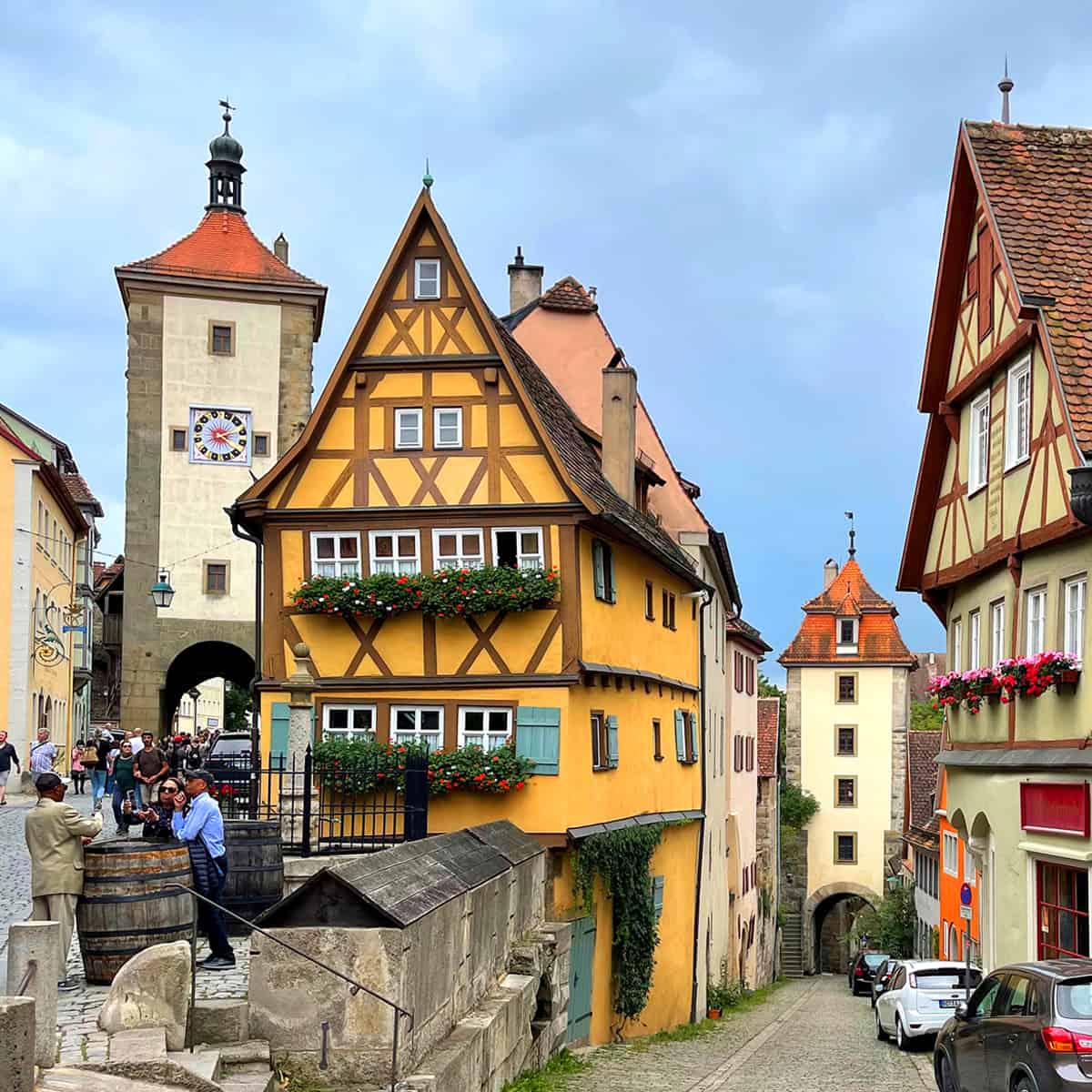
Rothenburg’s complete medieval wall walk — all 2 kilometers of it — is the single best way to see the entire town layout and escape the crowded main squares where tour buses dump their passengers between 10 a.m. and 3 p.m. The town is genuinely stunning: half-timbered houses in jewel tones, flower boxes on every window, and cobblestone streets that feel lifted from a storybook. This is best for travelers who want the archetypal “fairytale Germany” without apology, and it wins because the wall circuit lets you see everything without fighting crowds on street level.
Visit in early morning (before 8 a.m.) or late afternoon (after 5 p.m.) to photograph Das Plönlein, the Castle Gate, and the Marketplatz without dozens of people in your frame. The town is small enough to cover thoroughly in 4–5 hours, making it ideal as a stop on the Romantic Road route through Bavaria.
Stay in the Old Town itself — the medieval center is entirely walkable and car-free, so you’ll be living inside the fairytale rather than commuting into it.
Colmar, France: A Pastel-Hued Alsatian Wonderland
Colmar France Petite Venise colorful houses
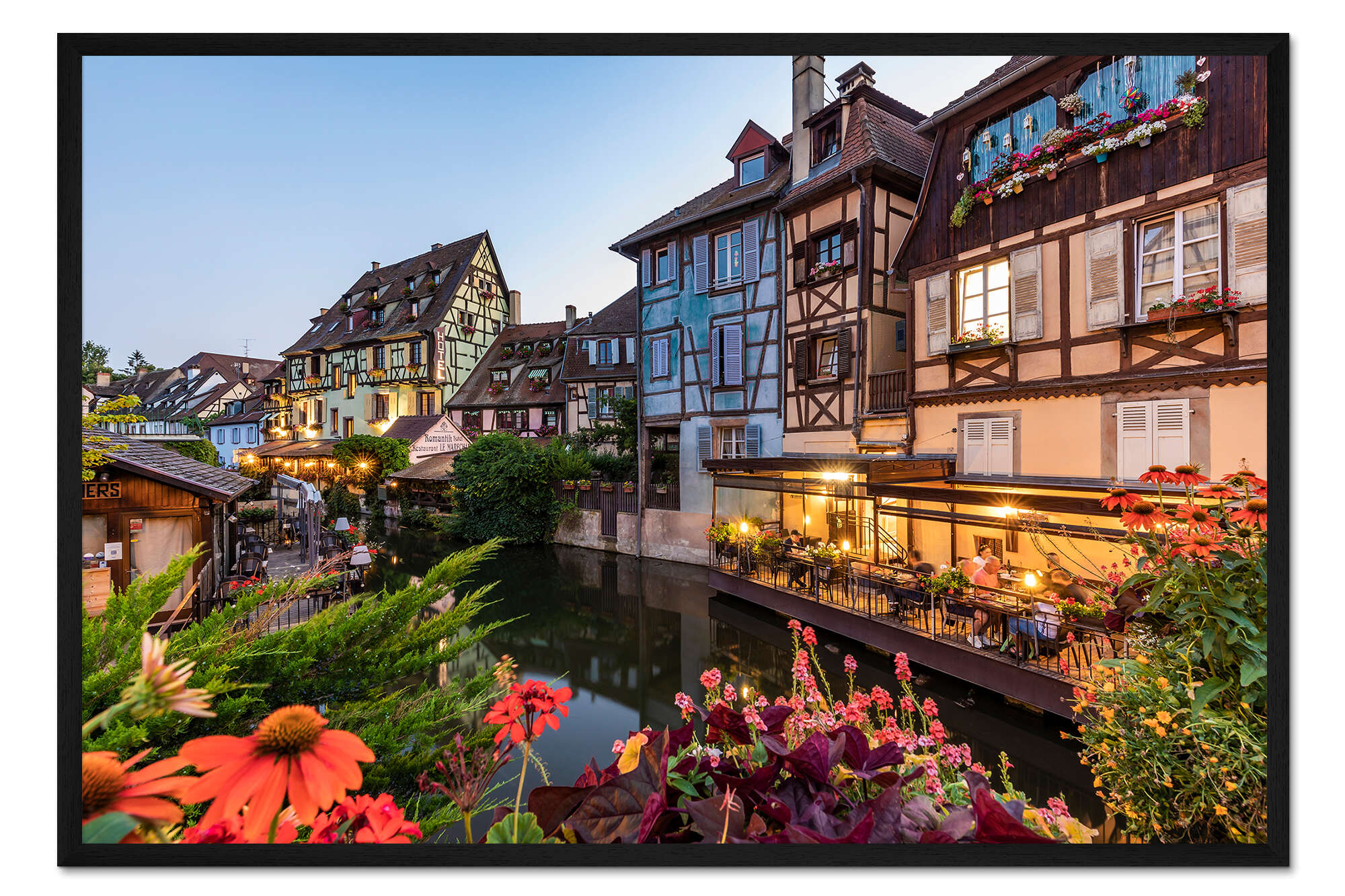
Colmar’s Petite Venise (Little Venice) district is the only place in Europe where you can photograph half-timbered houses reflected in actual canal water — and the pastel Renaissance facades are so perfectly preserved that the entire quarter looks hand-painted. This wins for anyone seeking romance without the Parisian crowds, because the Alsatian wine-country setting feels genuinely French rather than tourist-engineered.
The town sits on the Alsace wine route near the German border, so plan to spend at least one full day wandering the narrow streets, browsing flower-lined bridges, and sampling local wine bars. Colmar is best visited in spring (April–May) or fall (September–October) when the weather is mild and the crowds are lighter than summer.
Stay in the Old Town near Place de l’Ancienne Douane to be steps from Petite Venise and the main attractions; the entire historic center is walkable and compact enough that you won’t need a car once you arrive.
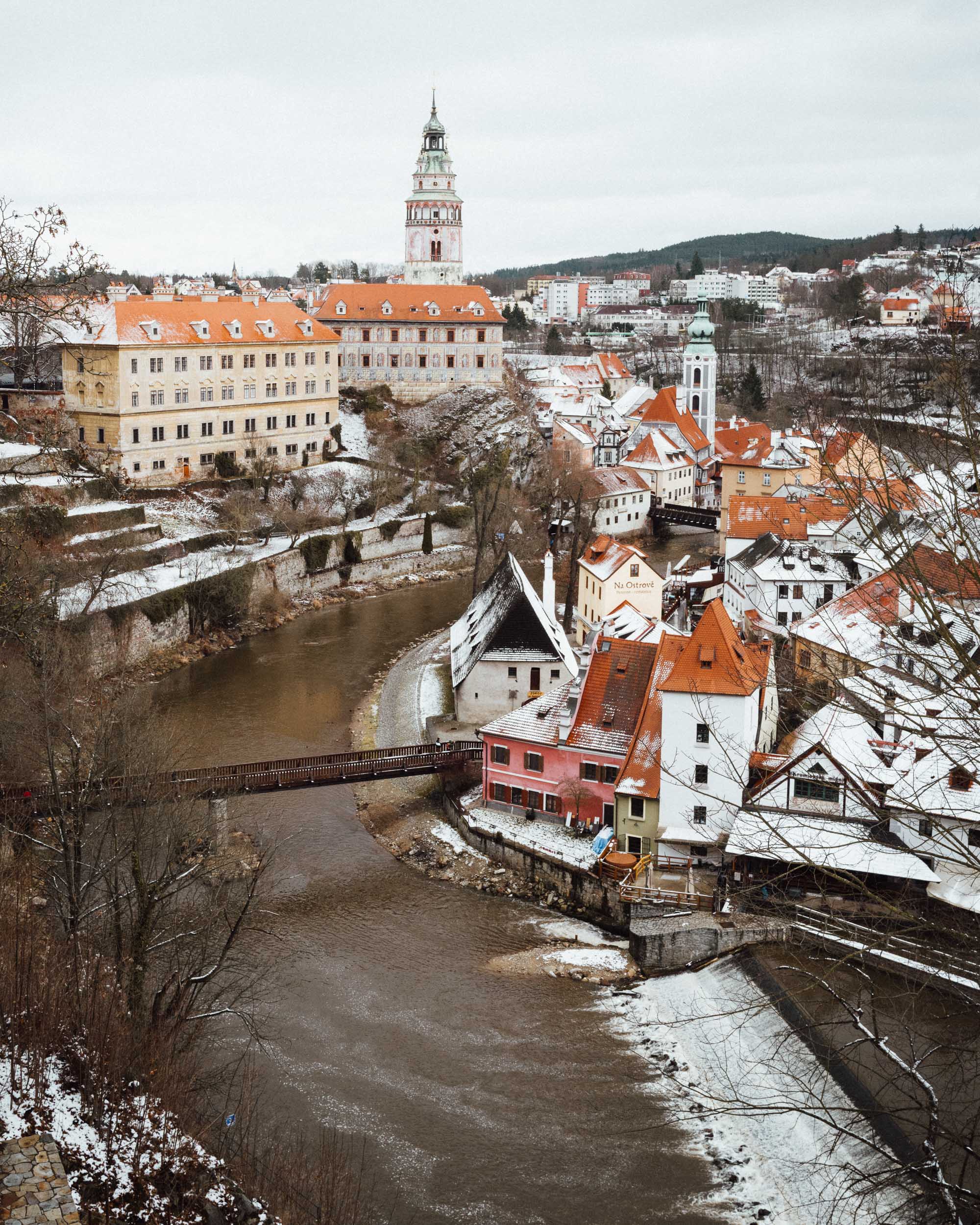
Cesky Krumlov’s castle towers over a horseshoe bend in the Vltava River, and the Old Town below is so perfectly preserved that it feels like you’ve stepped into a medieval painting — except the crowds have discovered it, and summer daylight hours are now thick with tour groups. The real move is visiting in winter (December–February) when snow blankets the red roofs and the streets empty out; you’ll have the fairytale almost entirely to yourself.
The town is best for travelers who prioritize solitude and authentic atmosphere over convenience, because winter travel means shorter daylight hours, some restaurants with reduced schedules, and colder temperatures. But the trade-off is worth it: you’ll experience the town as it actually feels, not as a backdrop for selfies.
Base yourself in the Old Town center near the main square; everything is within a 10-minute walk, and staying overnight lets you explore after the day-trippers leave on their afternoon buses.
Sighisoara, Romania: The Mythical Birthplace of Dracula
Sighisoara is Romania’s only fully preserved fortified city, and it’s the actual birthplace of Vlad Tepes — the historical figure who inspired Bram Stoker’s Dracula — which means the medieval atmosphere here carries genuine historical weight rather than just aesthetic charm. The Clock Tower dominates the skyline, and climbing to the top gives you a panoramic view of the entire fortress and the Carpathian foothills beyond.
This is best for travelers who want history and legend woven into their fairytale, not just pretty buildings.
Visit during the Medieval Festival (usually held in July) when the cobblestone streets fill with knights, minstrels, and period performances — it’s the only time the town fully embodies its own mythology. Outside festival season, Sighisoara is quieter and more atmospheric, especially in shoulder seasons (May–June or September–October).
The Old Town is compact and entirely walkable; stay within the fortress walls to experience the full medieval immersion, though accommodations are more limited than in larger European towns.
York, England: Walking the Medieval Shambles
York England The Shambles medieval street
The Shambles is one of Europe’s best-preserved medieval streets, with timber-framed buildings leaning so close together that you can almost touch both sides of the alley at once — and unlike many “preserved” medieval quarters, this one actually feels lived-in rather than museumified. York’s city walls are also completely walkable (about 2 miles around the entire circuit), offering views of the cathedral and the River Ouse below.
This wins for anyone who wants authentic medieval atmosphere plus real English charm: afternoon tea at Bettys Cafe Tea Rooms, proper pubs, and the York Minster cathedral all within walking distance.
The city is best visited in shoulder seasons (April–May or September–October) when the weather is pleasant and the crowds are lighter than summer. Stay in the city center near the Shambles or the Minster; York is compact enough that you can explore the entire medieval quarter on foot in a day, but staying overnight lets you experience the quieter early morning and evening hours when the streets feel genuinely historic.
Gent, Belgium: Flanders’ Under-the-Radar Canal City
Gent is overshadowed by its more famous neighbor Bruges, which means you get the same medieval canal-side beauty — guild houses reflected in water, narrow bridges, cobblestone streets — without the overwhelming tourist saturation. The city is genuinely under-visited for its quality, making it the move for travelers who want authentic Flemish atmosphere without fighting crowds.
Walk along the waterfront at dusk when the guild houses light up and the crowds thin out; this is when Gent reveals why locals prefer it to Bruges.
The city is compact and entirely walkable, with the medieval center concentrated around the canals. Stay near Sint-Baafskathedraal or along the Graslei waterfront to be in the heart of the action; you can explore the entire historic quarter in 4–6 hours, but staying overnight gives you access to the city’s excellent restaurants and bars that come alive after the day-trippers leave.
Gent is easily reached by train from Brussels (30 minutes) or Bruges (30 minutes), making it a natural stop on a Flanders itinerary.
Dubrovnik, Croatia: The Majestic Stone Fortress on the Adriatic
Dubrovnik’s Old Town walls enclose a Renaissance-era city of limestone streets and terracotta roofs that drop directly to the Adriatic Sea — and walking the complete wall circuit (about 2 kilometers) gives you views that justify the crowds. The city has become a major cruise-ship destination, which means it’s packed during peak season (June–August) but genuinely magical in shoulder seasons (April–May or September–October) when the light is golden and the streets are navigable.
This wins for anyone seeking dramatic coastal scenery combined with intact medieval architecture, though you’ll need to time your visit carefully to avoid the worst of the summer tourism.
Stay within the Old Town walls if your budget allows, or in the nearby Lapad neighborhood for a quieter base with beach access. The Old Town itself is car-free and entirely walkable; plan at least 2 days to explore the walls, the main Stradun street, and the surrounding neighborhoods.
Visit early morning (before 8 a.m.) or late evening (after 6 p.m.) to experience the town with fewer people and better light for photography. The city is accessible by bus, ferry, or car; if you’re driving the Dalmatian coast, Dubrovnik is the natural endpoint.
Quick Comparison: Medieval Towns by Travel Style
Town
Best For
Crowd Factor
Ideal Season
Rothenburg ob der Tauber
Classic fairytale aesthetic, Romantic Road route
High (mitigate with early morning/evening visits)
April–May, September–October
Colmar
Romance, wine country, canal photography
Moderate–High
April–May, September–October
Cesky Krumlov
Solitude, authentic atmosphere, winter magic
Very High in summer; Low in winter
December–February (winter); May–June (shoulder)
Sighisoara
History, legend, Dracula connection
Low–Moderate
July (Medieval Festival); May–June or September–October
York
English charm, cathedral, authentic medieval streets
Moderate
April–May, September–October
Gent
Canal beauty without Bruges crowds, local atmosphere
Low–Moderate
April–May, September–October
Dubrovnik
Coastal drama, walls, Adriatic views
Very High (June–August); Moderate (shoulder seasons)
April–May, September–October
Insider Tip: The Wall Walk Advantage
Rothenburg, York, and Dubrovnik all have complete or near-complete medieval wall circuits that are walkable in 45 minutes to 2 hours. These aren’t optional sightseeing — they’re the single best way to see the entire town layout, escape street-level crowds, and photograph the skyline without people in your frame.
Do the wall walk first, before exploring the streets below; it orients you and shows you which neighborhoods are worth returning to. In Rothenburg and York, the walls are free or included with a city card; in Dubrovnik, there’s a fee (typically €30–35), but it’s worth every euro for the Adriatic views alone.
4 Magical Castle Towns & Royal Estates in Europe
Castle towns demand a different kind of fairytale visit than lakeside villages or medieval walled towns: you’re not just walking cobblestones, you’re climbing into actual royal history, exploring palace grounds that sprawl across hillsides, and standing in rooms where decisions shaped nations. These four destinations pair dramatic fortress architecture with the kind of romantic, slightly-off-the-beaten-path charm that makes you feel like you’ve stepped into a storybook — without the overwhelming crowds of Neuschwanstein or Prague.
The comparison below shows what each town delivers and who should prioritize it:
Destination
Main Draw
Best For
Key Advantage
Sintra, Portugal
Multiple palaces, lush grounds, grottos
Day-trippers from Lisbon; palace explorers
Closest to a major city; most palace variety
Heidelberg, Germany
Castle ruins overlooking baroque city
Romantic river walks; literary pilgrims
Walkable old town + castle in one base
Werfen, Austria
Alpine fortress, quiet mountain setting
Travelers avoiding crowded Salzburg
Least touristy; dramatic mountain backdrop
Grund, Luxembourg
Gorge fortifications, hidden valley charm
Off-the-map explorers; castle collectors
Smallest, most overlooked; genuine quiet
Sintra, Portugal: The Romanticist Palace Playground of Kings
Sintra Portugal palaces
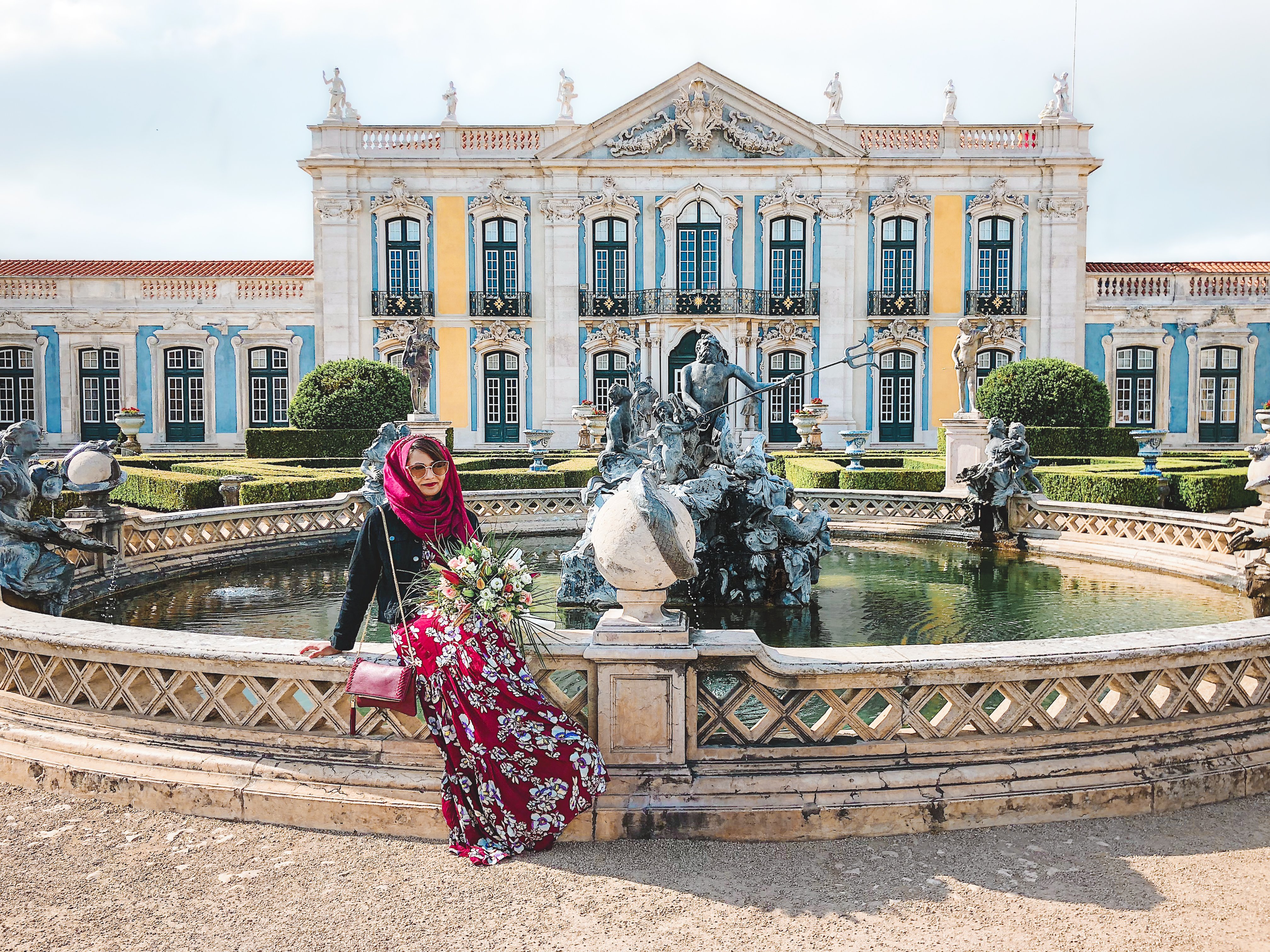
Sintra sits just 25 kilometers (40 minutes) from Lisbon, making it the perfect half-day or full-day escape — and it’s packed with enough palace grounds to justify either. The town itself climbs a misty hillside with colorful buildings and lush vegetation that feels more enchanted garden than typical European town.
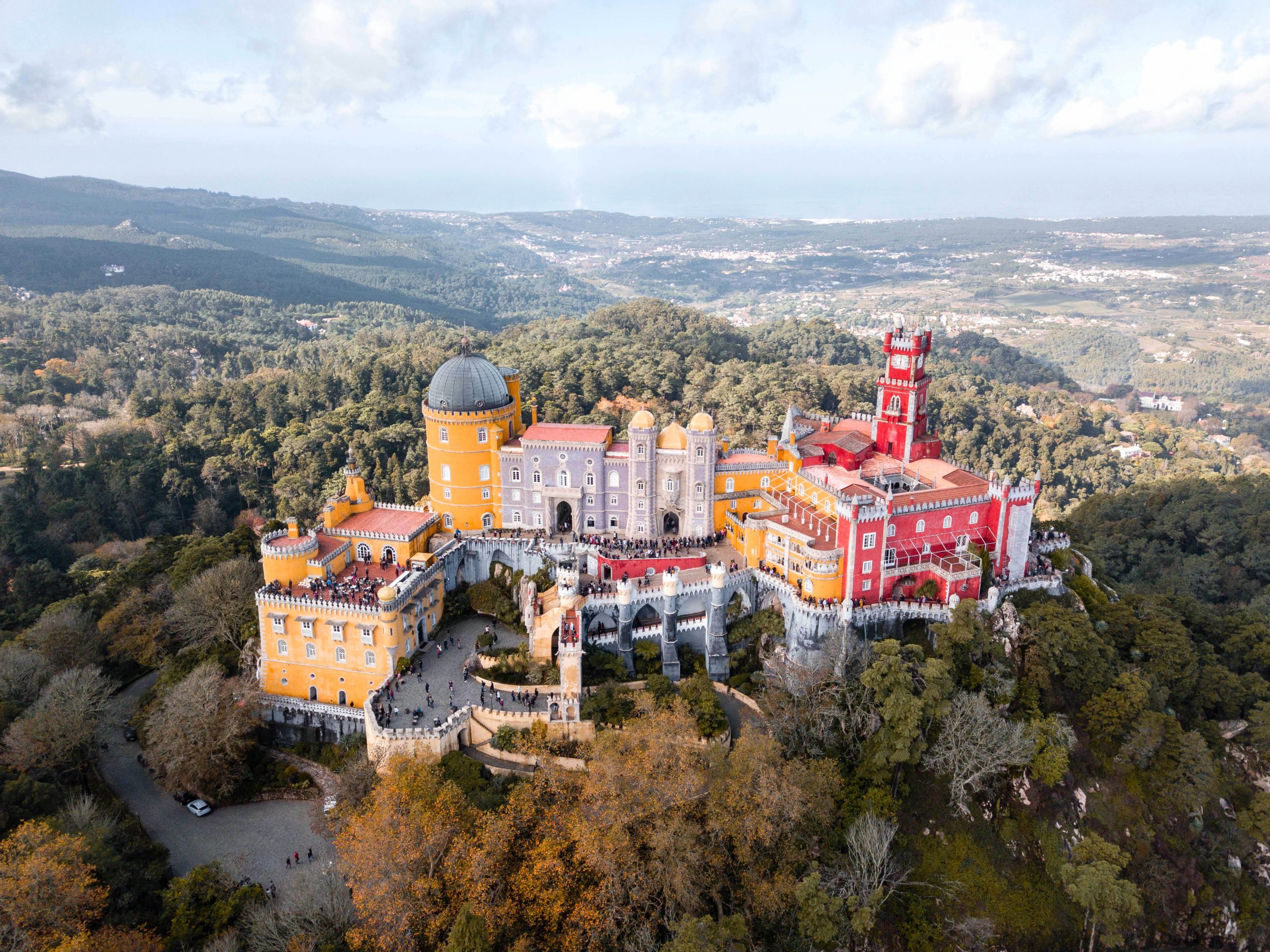
What sets Sintra apart from other castle destinations is the sheer number of explorable estates: Quinta da Regaleira (the standout, with towers, lakes, grottoes, fountains, and gargoyles scattered across grounds you could wander for hours), Pena Palace (the iconic pink-and-yellow hilltop fortress), and Monserrate Palace (a Moorish fantasy hidden in the forest).
Book Quinta da Regaleira as your anchor activity — the palace and grounds are where you’ll spend 2–3 hours getting genuinely lost in towers and secret passages, which is exactly the point. Pena Palace delivers the postcard view but draws crowds; visit early morning (gates open around 9:30 a.m., typically) or skip it if you’re short on time and prioritize Quinta da Regaleira instead.
Entrance fees typically run roughly €10–15 per palace, though prices vary by season.
Stay in Sintra’s old town center or base yourself in Lisbon and day-trip — the train from Lisbon’s Rossio Station takes about 40 minutes and costs roughly €3–5 return. If you stay overnight in Sintra, the walkable town center keeps you close to both palaces and local cafés.
The insider move: arrive at Quinta da Regaleira right when it opens to beat the afternoon tour groups, and wear comfortable shoes — the grounds are steep and muddy after rain.
Heidelberg, Germany: The Romantic Ruins of the Neckar Valley
Heidelberg Castle Germany
Heidelberg Castle has perched on a forested hill above this baroque city since the 14th century, and the combination of romantic ruins, medieval streets, and a river walk makes it the only German castle town where you don’t need to choose between fortress exploration and walkable town charm — you get both in one base. Mark Twain and Goethe both called Heidelberg “the most romantic city in Germany,” and the reason is obvious: the castle overlooks terracotta rooftops and the Neckar River, the old town is genuinely medieval without feeling theme-parked, and the setting feels like a painting.
The castle itself is partially ruined (destroyed in the 17th century, then left beautifully broken), which actually works in your favor — you can explore the courtyards, towers, and dungeons without the stuffiness of a fully-restored palace. Entrance to the castle grounds typically costs roughly €8–10, and a funicular railway runs from the old town up to the castle (included with some combo tickets or roughly €5 return).
Plan 2–3 hours for the castle, then spend the rest of your day walking the medieval Hauptstrasse (main street) and the riverside paths.
Base yourself in Heidelberg’s old town — the walkable center puts you within steps of the castle funicular, restaurants, and the river. Heidelberg is on the main train line from Frankfurt (roughly 1.5 hours) and Munich (roughly 3.5 hours), making it an easy stop on a larger Germany itinerary.
The insider detail: climb the castle at late afternoon when most tour groups have left, and the light hits the ruins and river valley at its best for photography.
Werfen, Austria: Alpine Meadows and Majestic Fortress Heights
Werfen Austria castle mountains
Werfen is the castle town for travelers who want drama without the Salzburg crowds — it’s quiet, colorful, and backed by actual mountains that make the fortress feel genuinely alpine rather than merely picturesque. Hohenwerfen Castle dominates the skyline from a steep rocky outcrop, and the town below is small enough that you can walk the entire center in 30 minutes, yet charming enough that you’ll want to linger in the main square and local cafés.
The castle itself is the main draw: a working fortress (not a ruin) with intact rooms, courtyards, and a falconry demonstration that happens daily (typically around midday — confirm times locally, as schedules change seasonally). Entrance typically costs roughly €12–15, and the steep walk up takes 15–20 minutes.
The views from the top sweep across the Salzach Valley and toward the Alps, which alone justify the climb. Spend 2–3 hours on the castle, then explore the town’s quiet streets and grab lunch in a local gasthaus.
Werfen is roughly 30 kilometers southeast of Salzburg (about 30–40 minutes by car or train), making it a perfect day trip or overnight stop if you’re road-tripping through Austria. Stay in Werfen’s town center for walkable access to restaurants and the castle base.
The town is genuinely less touristy than Salzburg or Hallstatt, which means fewer English menus and more authentic Austrian experience — a win if you’re avoiding the Instagram-famous crowds.
Grund, Luxembourg: The Secret Gorges and Fortifications of the Alzette
Grund Luxembourg gorge castle
Grund is Luxembourg’s best-kept secret: a hidden valley town carved into a gorge by the Alzette River, surrounded by fortifications and castle ruins that feel genuinely undiscovered because most travelers skip Luxembourg entirely. The town itself is tiny — you can walk the main streets in under an hour — but the setting is dramatic: colorful houses cluster along the river, old stone bridges cross the water, and medieval fortifications cling to the gorge walls above.
This is the kind of place where you stumble onto a centuries-old tower or a hidden chapel without expecting it.
Grund is best explored as part of a Luxembourg City day trip or overnight: the capital sits roughly 5 kilometers north (about 10–15 minutes by bus or car), and the contrast between the two is exactly the point. Grund feels like a secret village; Luxembourg City is compact and walkable but more obviously a capital.
Spend 2–3 hours wandering Grund’s streets, crossing bridges, and exploring the lower town, then head up to the Chemin de la Corniche (a scenic walking path) for views over the gorge.
There are no major paid attractions in Grund itself — the appeal is pure exploration and atmosphere. Stay in Luxembourg City and day-trip, or book a small guesthouse in Grund if you want to experience the town at dusk and early morning when it’s genuinely quiet.
The insider move: visit on a weekday if possible; weekends bring more foot traffic from Luxembourg City day-trippers, and the magic of Grund is its emptiness. Luxembourg is one of Europe’s smallest countries and genuinely overlooked as a destination, which means Grund remains one of the few fairytale towns in Western Europe where you might have entire streets to yourself.
4 Charming Stone Cottage & Countryside Escapes
These four villages trade crowds for quiet—each one is a working countryside town, not a museum piece. You’ll find actual residents, real pubs, and the kind of stone cottages that make you understand why fairytale illustrations exist. The Cotswolds pair (Castle Combe and Bibury) demand an overnight stay to avoid day-tripper chaos; Cong and Mallaig reward slow exploration and are best visited by car or train, not rushed tours.
All four are small enough that you can walk them in 2–3 hours, but worth staying 24 hours to actually absorb them.
Castle Combe, United Kingdom: The Prettiest Village in the Cotswolds
castle combe cotswolds stone cottages
Castle Combe is barely more than a single street—but that street is a 17th-century storybook brought to life, with a stone bridge crossing The ByBrook and a row of honey-colored cottages reflected in the water below. The best photo spot is Water Lane, the row of houses overlooking the bridge; arrive before 9 a.m. or after 4 p.m. to shoot without tour groups in frame.
This village wins for couples seeking the most Instagram-perfect Cotswolds moment without the tourist infrastructure of larger towns.
Getting there and staying overnight: Take the train from Bath to Chippenham, then catch Bus 95 toward Burton and get off at Castle Combe—but plan ahead because only 3 buses run on weekdays. The Manor House Hotel is the only real overnight option worth considering: a 14th-century building set on 365 acres of private parkland you can explore exclusively as a guest.
Staying here means you own the village at sunrise and sunset when day-trippers are gone.
Insider tip: The village has no shops or cafes—bring snacks or eat at the Manor House. This isolation is precisely why it feels untouched, but it also means you cannot linger over lunch.
Plan a 2–3 hour visit maximum, or stay overnight to justify the travel time from Bath.
Bibury, England: Timeless Thatched Magic in the Cotswolds
bibury england thatched cottages row
Bibury’s Arlington Row—a line of 17th-century thatched cottages with dormer windows—is the most photographed street in the Cotswolds, and for good reason: the honey-stone walls, the River Coln running alongside, and the complete absence of modern intrusion make it feel like stepping backward 300 years. This village wins for anyone who wants the quintessential English countryside postcard without the medieval fortress vibe of other fairytale towns.
Getting there and staying: Bibury is a 15-minute drive from Cirencester or accessible by local bus from larger Cotswolds towns. Unlike Castle Combe, Bibury has actual amenities—a pub, a tea room, and a few small hotels and B&Bs scattered through the village.
Base yourself here for a night if you’re doing a Cotswolds loop; it’s more walkable and less isolated than Castle Combe, but still quiet enough to feel like an escape.
Insider tip: The cottages are private homes—do not knock or peer through windows. Respect the residents, and shoot from the road or the bridge. The best light hits Arlington Row in late afternoon; morning light is flat and harsh here.
Cong, Ireland: Majestic Woodlands and Quiet Village Charm
cong ireland village woodlands
Cong sits on a narrow isthmus between two lakes in County Mayo, surrounded by dense woodlands and the kind of silence that makes you forget the outside world exists. Stone cottages cluster around a quiet main street, and the village has the feel of a place where time genuinely stopped.
This village wins for solo travelers or couples seeking solitude and natural beauty over architectural showmanship—the charm here is atmospheric, not Instagram-engineered.
Getting there and staying: Rent a car in Dublin or Galway and drive west; Cong is roughly 2.5 hours from Galway and worth an overnight stay. Small hotels and guesthouses operate in the village; staying overnight lets you walk the surrounding woodland trails and experience the village at dusk when it becomes even quieter.
The drive through rural Ireland to reach Cong is part of the experience—do not rush it.
Insider tip: Cong has minimal tourist infrastructure compared to the Cotswolds villages—no chain cafes, limited restaurant hours, and spotty wifi. This is a feature, not a bug, if you want genuine countryside escape.
Bring cash and do not expect to find much open after 6 p.m.
Mallaig, Scotland: Gateway to the Wild Highlands
Mallaig is a working fishing village on Scotland’s west coast, not a manicured tourist attraction—weathered stone buildings, fishing boats in the harbor, and mountains rising directly behind the village create a raw, dramatic fairytale mood that feels earned rather than designed. This village wins for travelers who prefer authentic grit and Highland wilderness over polished charm, and for anyone planning to explore the Isle of Skye or the Outer Hebrides.
Getting there and staying: The West Highland Line train from Glasgow to Mallaig is one of Scotland’s most scenic rail journeys (roughly 5–6 hours depending on connections); arriving by train adds to the adventure. Mallaig itself has a handful of small hotels and guesthouses; stay one night to catch the harbor at dawn and explore the surrounding Highlands on foot.
The village is a gateway, not a destination—use it as a base for day trips to Skye or the Small Isles, or as an overnight stop on a Highland road trip.
Insider tip: May weather in the Highlands is notoriously unpredictable—expect rain, wind, and dramatic cloud cover. Pack layers and waterproof gear; the moody weather is part of Mallaig’s appeal, not a reason to skip it.
The village is quieter and less touristy in shoulder seasons (May, September) than in peak summer.
Comparison Overview: Which Cottage Village Fits Your Trip?
9 Hidden Gem Fairytale Places to Visit in Europe Off the Beaten Path
These nine destinations deliver the storybook magic of Europe’s famous towns—cobblestone streets, ancient stone bridges, pastel facades, and zero cruise-ship crowds—without the Instagram-saturated tourism that makes Hallstatt and Colmar feel like theme parks. Most require slightly more effort to reach (bus transport, smaller train stations, fewer English-language signs), but that friction is exactly what keeps them genuine.
Base yourself in the larger gateway cities listed below and take day trips or overnight stays to explore; the payoff is towns that still feel like they belong to locals, not tour operators.
Mostar Bosnia stone bridge river
Mostar, Bosnia & Herzegovina: The Iconic Stone Bridge of the Balkans
Mostar’s emerald-green Nerevta River and the 16th-century Stari Most (Old Bridge) create a landscape so perfectly composed it reads as fantasy rather than reality—narrow stone-cobbled streets funnel toward the arched bridge, and the water below is so vivid it looks digitally enhanced. The town’s charm lies in its unpolished authenticity: locals still live in the old quarter, cafés serve strong coffee in tiny cups, and the tradition of young men diving from the bridge into the icy river below persists as it has for centuries.
This is best for travelers seeking raw, unmanicured history and willing to navigate with less English signage than Western Europe offers. The single reason it wins: no other European town delivers this level of architectural drama and cultural continuity without feeling curated for tourists.
Getting there and staying: Mostar is reachable by bus from Sarajevo (roughly 2 hours) or Dubrovnik (roughly 3.5 hours); bus transport is the standard way to move through Bosnia. Base yourself in the Old Town for walkability to the bridge, cafés, and riverside views.
Tourism infrastructure is still developing, so book accommodations in advance during summer months (June–September).
Počitelj, Bosnia & Herzegovina: A Medieval Stone Amphitheater
Perched on a hillside above the Nerevta River, Počitelj is a 15th-century fortified village where stone houses cascade down the slope like an amphitheater carved from a single cliff face—there are no flat streets here, only steep staircases connecting layers of dwellings. The village is tiny (fewer than 50 residents), largely car-free, and feels suspended in time; you navigate by foot through narrow passages, past crumbling Ottoman-era walls, and up to a fortress ruin with panoramic river views.
This is best for travelers who want solitude and are comfortable with minimal tourism infrastructure (no restaurants, one small shop, no English speakers). The single reason it wins: it’s one of Europe’s most visually dramatic hilltop settlements and remains virtually unknown outside the Balkans.
Getting there and staying: Počitelj sits between Mostar and Sarajevo on the main bus route; ask the driver to stop (it’s a small settlement, so confirm in advance). Day-trip from Mostar (roughly 30 minutes by bus) or stay overnight in nearby Konjic.
Bring water and snacks—there are no facilities in the village itself.
Veliko Tarnovo, Bulgaria: The Majestic City of the Tsars
Bulgaria’s second-century capital clings to a dramatic horseshoe bend in the Yantra River, with three-story houses stacked vertically on near-vertical hillsides and a 12th-century fortress (Tsarevets) crowning the ridge above. The old town’s narrow streets and subtle architectural details—wooden shutters, stone facades, tiny balconies—create the feeling of stepping backward through five millennia of history without the polish of Western European restoration.
Sunset here is exceptional: the fortress lights up, the river glows amber, and the town’s silhouette becomes almost theatrical. This is best for history lovers and photographers willing to climb steep streets for views; it’s also significantly cheaper than comparable towns in Austria or Germany.
The single reason it wins: it delivers authentic medieval atmosphere and dramatic geography at a fraction of the cost and crowds of Western Europe.
Getting there and staying: Veliko Tarnovo is Bulgaria’s cultural hub and is well-served by buses and trains from Sofia (roughly 3–4 hours). Stay in the Old Town for proximity to the fortress and riverside cafés; the steep terrain means you’ll be climbing regardless, so choose a location near the main square (Samovodska Charshiya) for easier navigation.
Alberobello, Italy: The Whimsical “Trulli” Beehive Dwellings of Apulia
Over 1,500 whitewashed conical limestone huts with pointy roofs—called trulli—blanket the Zona dei Trulli on Alberobello’s western hill, creating a landscape that looks like a child’s drawing of a fairytale village. These 18th- and 19th-century structures were common throughout Apulia’s Itria Valley, but Alberobello holds the world’s largest concentration, now a UNESCO World Heritage Site.
The narrow streets wind between the huts, and the overall effect is genuinely disorienting in the best way: you feel like you’ve stepped into another reality. This is best for travelers seeking unique architecture and don’t mind moderate crowds (it’s more touristy than the Balkans destinations, but far less crowded than Positano or Cinque Terre).
The single reason it wins: there is nowhere else in Europe that looks like this—the trulli are architecturally singular and the density of them in one town is unmatched.
Getting there and staying: Alberobello is in Apulia (Puglia), southern Italy, and is reachable by train from Bari (roughly 1.5 hours) or by car via the Amalfi Coast region. Stay in or near the Zona dei Trulli for the full immersion; some trulli have been converted into small hotels and guesthouses.
Visit early morning (before 9 a.m.) or late afternoon (after 5 p.m.) to avoid day-trippers from the coast.
Senlis, France: A Picturesque Roman-Rooted Sanctuary Near Paris
Senlis is a walled medieval town 30 miles north of Paris that feels like a secret escape hatch from the capital—narrow cobblestone streets spiral around a 12th-century cathedral, half-timbered houses lean against each other, and the town walls still partially stand. The pace is genuinely slow; locals outnumber tourists, and cafés are filled with people reading newspapers rather than checking phones.
The town’s Roman roots (it was a significant settlement under Caesar) add layers of history without the overwhelming grandeur of bigger French cities. This is best for travelers based in Paris who want a day trip or overnight stay that feels like stepping into a different era without the exhaustion of major sightseeing.
The single reason it wins: it’s accessible by train from Paris (roughly 45 minutes), yet feels completely separate from the capital’s energy and crowds.
Getting there and staying: Take the SNCF train from Paris Gare du Nord to Senlis (roughly 45 minutes). The town is entirely walkable and compact; stay near the cathedral or in the old town for maximum atmosphere and proximity to restaurants and cafés.
Le Mans, France: Gothic Splendor and Quiet Medieval Streets
Le Mans is known globally for its 24-hour car race, but the old town—a perfectly preserved medieval quarter with Gothic architecture, half-timbered houses, and intact ramparts—is a far more compelling reason to visit. The cathedral (Cathédrale Saint-Julien) is one of France’s finest Gothic structures, and the surrounding streets are quiet enough that you can hear your footsteps on the cobblestones.
Unlike Senlis, Le Mans has more architectural grandeur and a larger old town to explore, making it worth a full day or overnight stay rather than a quick afternoon trip. This is best for travelers who want Gothic architecture and medieval streets without the tourist machinery of Chartres or Reims.
The single reason it wins: the combination of architectural sophistication, intact medieval layout, and genuine local life makes it feel like a major French city that somehow escaped the guidebook circuit.
Getting there and staying: Le Mans is reachable by train from Paris Montparnasse (roughly 1 hour) or is a logical stop on a road trip through the Loire Valley. Stay in or near the old town (Cité Plantagenêt) for walkable access to the cathedral, restaurants, and rampart walks.
Cartagena, Spain: Roman Ruins and Coastal Splendor
Cartagena is a Mediterranean port city on Spain’s southeastern coast where ancient Roman ruins sit alongside restored palaces and pastel-colored buildings stacked on hillsides overlooking the harbor. The restored Roman Theatre at the city’s heart is a standout attraction—it’s one of Spain’s most significant archaeological sites and far less crowded than comparable ruins elsewhere.
The main street (Calle Mayor) is lined with shops and restaurants, and the waterfront offers both working-port authenticity and scenic evening walks. This is best for travelers combining coastal scenery with history and wanting to avoid the Amalfi Coast’s crowds and prices.
The single reason it wins: it delivers Roman archaeology, Mediterranean views, and a functioning Spanish port town without the tourist saturation of more famous coastal destinations.
Getting there and staying: Cartagena is reachable by train from Madrid (roughly 4.5 hours) or Alicante (roughly 1 hour). Stay near the waterfront or in the historic center for proximity to the Roman Theatre, Palacio Consistorial, and harbor-side dining.
Annecy, France: The “Venice of the Alps”
Annecy France Venice Alps canal
Annecy sits at the edge of a pristine alpine lake with canals threading through the old town, pastel-colored buildings reflecting in still water, and the French Alps rising dramatically in the background—it’s essentially Venice relocated to the mountains with better weather and fewer crowds. The Vieille Ville (old town) is compact and entirely walkable, with cafés spilling onto narrow streets and locals actually living in the historic quarters rather than renting to tourists.
The lake itself is swimmable in summer and offers kayaking, paddleboarding, and waterfront walks. This is best for travelers seeking alpine scenery combined with a charming historic town and outdoor water activities; it’s also a logical base for exploring the French Alps.
The single reason it wins: it combines the architectural romance of Venice with mountain scenery and genuine local life in a town that remains far less touristy than comparable Alpine destinations.
Getting there and staying: Annecy is reachable by train from Lyon (roughly 2 hours) or Geneva (roughly 1 hour). Stay in the old town near the canals for walkability to restaurants, shops, and lake access; the town is small enough that any old-town location puts you within a 10-minute walk of everything.
Summer (June–August) brings crowds and higher prices; shoulder seasons (May, September) offer better value and fewer tourists.
Ljubljana, Slovenia: Europe’s Greenest and Most Relaxed Capital
Ljubljana is a capital city that feels like a small town—tree-lined streets, a compact old town with Baroque and Art Nouveau architecture, a functioning castle on the hill above, and a genuine café culture where people linger for hours over coffee. The Ljubljanica River winds through the city, and parks and green spaces are woven throughout rather than cordoned off.
The pace is notably slower than other European capitals; there’s no sense of rushing or performing for tourists. This is best for travelers seeking a capital city with character, walkability, and access to both Alpine and Mediterranean regions (Lake Bled is 1 hour by train; the Croatian coast is 2 hours away).
The single reason it wins: it’s one of Europe’s few capitals that hasn’t sacrificed authenticity for tourism, and it serves as an ideal base for exploring Slovenia and the broader Balkans.
Getting there and staying: Ljubljana is well-connected by train and bus to Vienna, Venice, Zagreb, and other Central European cities. Stay in the old town (Stari Trg) or near the central market (Centralna Tržnica) for walkability to restaurants, galleries, and the castle.
The city is compact and easily navigable on foot; many travelers use Ljubljana as a base for day trips to Lake Bled, Postojna Cave, and the Adriatic coast.
Comparison Overview: Hidden Gem Fairytale Towns
Town
Country
Best For
Key Feature
Crowds
Cost Level
Mostar
Bosnia & Herzegovina
River views, bridge tradition, unpolished history
Stari Most (16th-century bridge)
Low
Budget
Počitelj
Bosnia & Herzegovina
Solitude, hilltop drama, no infrastructure
Stone amphitheater village on river
Very Low
Budget
Veliko Tarnovo
Bulgaria
History, dramatic geography, value
Tsarevets Fortress, riverside setting
Low
Budget
Alberobello
Italy
Unique architecture, UNESCO site
1,500+ trulli (conical huts)
Moderate
Mid-Range
Senlis
France
Paris day trip, medieval escape
12th-century cathedral, walled town
Low
Mid-Range
Le Mans
France
Gothic architecture, Loire Valley base
Cathedral, intact medieval quarter
Low
Mid-Range
Cartagena
Spain
Roman ruins, Mediterranean coast
Roman Theatre, harbor views
Low-Moderate
Mid-Range
Annecy
France
Alpine scenery, lake activities, base for Alps
Canals, lake, mountain backdrop
Moderate
Mid-Range
Ljubljana
Slovenia
Capital with character, regional base
Compact old town, castle, green spaces
Low-Moderate
Budget-Mid-Range
Insider tip: The Balkans towns (Mostar, Počitelj, Veliko Tarnovo) are significantly cheaper and less crowded than Western European equivalents, but require more planning—bus schedules are less frequent, English signage is minimal, and accommodations are simpler. If you’re comfortable with that trade-off, the payoff is towns that feel genuinely undiscovered.
The French towns (Senlis, Le Mans, Annecy) are easiest to access from Paris and require zero logistical friction, but draw more tourists as a result. Alberobello and Cartagena split the difference: they’re accessible by train, moderately touristed, and offer specific architectural or historical draws that justify the visit.
How to Plan Your Trip to Fairytale Places to Visit in Europe
The single biggest mistake travelers make is treating these towns as isolated day trips instead of threading them into a logical route—which means you’ll waste half your time backtracking and miss the quietest hours when these places actually feel magical. This section cuts through the planning noise and gives you the exact framework: when to go, how to move between towns without a car, whether solo travel is safe here, and how to dodge the Instagram crowds that have turned some of these gems into theme parks.
What is the Best Time of Year to Visit Europe’s Fairytale Towns?
May through early June and September through October are your sweet spots—warm enough to walk all day, early enough or late enough to miss the peak summer crush, and the light is genuinely better for photography. Summer (July–August) floods these towns with tour groups; winter (November–February) closes half the attractions and cuts daylight to nothing.
Spring brings unpredictable rain in some regions; fall is drier and the light turns golden.
If you must go in summer, arrive at major towns like Rothenburg ob der Tauber and Dubrovnik by 7:00 a.m. or after 5:00 p.m.—the midday crowds are genuinely suffocating. Easter and Christmas weeks see secondary surges of tourists, so avoid those unless you’re specifically after holiday markets.
Shoulder season (April and October) offers the best balance: fewer people, reliable weather, and everything is open.
How to Travel Between These Historic Towns Without a Car?
You do not need a car—in fact, a car often slows you down in these compact, pedestrian-only old towns. Train networks connect nearly every destination in this article, and regional buses fill the gaps for smaller villages.
Train is your primary tool. Eurail passes make sense only if you’re doing 5+ long journeys in 2 weeks; otherwise, book point-to-point tickets on national rail sites (Deutsche Bahn for Germany, ÖBB for Austria, SNCF for France, etc.) or use Omio, which aggregates trains and buses across Europe. Journey times between major towns typically run 2–5 hours; book a day or two ahead for the best fares.
Night trains connect distant pairs (e.g., Munich to Vienna) and save a hotel night, though comfort varies wildly.
Regional buses reach villages that trains skip—Reine, Norway and smaller Slovenian towns rely on bus networks. FlixBus is the budget option across Europe, though journeys are slower and less comfortable than trains.
For Alpine regions (Austria, Switzerland, parts of Germany), local bus passes offer unlimited travel within a region for 3–7 days and often include cable cars and ferries, which is genuinely useful if you’re island-hopping or doing mountain towns.
Ferries matter for coastal and island routes. Lake Bled and Hallstatt require no ferry, but reaching Reine in Norway involves a coastal ferry; Positano and Riomaggiore on the Amalfi Coast and Cinque Terre are accessible by boat or train. Book ferries 1–2 weeks ahead in summer; they fill fast and schedules change seasonally.
Walking is underrated. Many of these towns are within 10–20 km of each other; hiking between them (especially in Slovenia and Austria) adds a layer of magic that buses and trains skip entirely. Cesky Krumlov to nearby villages, or the Cinque Terre coastal trail between Riomaggiore and other villages, are doable day walks.
Base yourself strategically. Instead of moving every night, stay 2–3 nights in a central town and take day trips outward. For the Bavarian cluster (Rothenburg, Heidelberg, smaller villages), base in Munich or a mid-sized town and use regional trains.
For the Amalfi Coast (Positano, Riomaggiore), stay in a larger town like Salerno or Cinque Terre’s main hub and take local trains or ferries. For the Balkans (Dubrovnik, Sighisoara), overnight buses and trains are common and save hotel costs, though comfort is basic.
Are These Fairy Tale Destinations Safe for Solo Travelers?
Yes—these towns are among the safest places in Europe for solo travelers, especially women. They’re small, well-lit, heavily touristed, and policed accordingly.
Petty theft (bag snatching, pickpocketing) happens in crowded squares and on public transport, not in the towns themselves; use the same street smarts you’d use in any European city (don’t flash valuables, keep bags in front on trains, avoid empty train cars at night).
Solo-specific advantages: These towns are walkable and compact, so you’re never truly lost or isolated. Hostels and guesthouses are abundant, making it easy to meet other travelers if you want company.
English is widely spoken in tourist areas. Local police presence is visible, especially in high-season towns.
The biggest risk is boredom if you’re the type who needs nightlife—some of these places (Hallstatt, Reine, Cesky Krumlov) are quiet after 9:00 p.m.
Practical solo tips: Book accommodations with good reviews mentioning solo travelers or group atmospheres if you want social connection. Larger towns like Dubrovnik, Colmar, and Ljubljana have more evening activity and restaurant scenes.
Smaller villages are safest but can feel isolating alone; balance your itinerary. Inform someone of your rough itinerary, especially if you’re hiking between towns.
Train stations in larger cities (Munich, Vienna, Prague) have more petty crime than the fairy tale towns themselves—stay alert there, not in the old towns.
How to Avoid the Crowds in Europe’s Most Popular Storybook Spots?
The harsh truth: Hallstatt, Dubrovnik, Rothenburg, and Positano are now victims of their own beauty—they’re overrun with tour groups, Instagram photographers, and cruise-ship day-trippers. You cannot avoid crowds entirely in these places during peak season, but you can minimize them with timing and strategy.
Timing beats everything. Arrive at major attractions by 7:00–8:00 a.m., before organized tours depart from larger cities. Leave by 4:00 p.m. or stay until after 7:00 p.m., when day-trippers clear out.
Midday (11:00 a.m.–3:00 p.m.) is peak chaos. Weekdays are quieter than weekends, especially Tuesday–Thursday.
If you’re visiting in July or August, shift your schedule entirely: wake at 6:00 a.m., do main sights by 10:00 a.m., rest during midday heat, then explore again at 5:00 p.m.
Choose less-famous towns in the same region. Instead of Hallstatt (now a zoo), explore the quieter Austrian lake towns nearby—Grundlsee or Altaussee offer similar Alpine-lake beauty without the crowds. Instead of Positano, base in quieter villages along the Amalfi Coast like Praiano.
Instead of Rothenburg, visit smaller Bavarian walled towns like Dinkelsbühl or Nördlingen—same medieval charm, 80% fewer tourists. Gent and Ljubljana are explicitly less crowded alternatives to their famous neighbors (Bruges and Prague).
Reine in Norway, Riomaggiore in Cinque Terre, and Sighisoara in Romania still feel genuinely undiscovered compared to their hyped counterparts.
Skip the main squares and tourist loops. In Rothenburg, the Castle Gate and Das Plönlein are packed; wander the quieter sections of the Stadtmauer (town wall) and smaller side streets instead. In Dubrovnik, skip the main Stradun street during peak hours and explore the quieter neighborhoods uphill or along the quieter harbor areas.
In Colmar, the central canal is Instagram-famous; the streets one block over are peaceful. Get lost intentionally—the best moments happen when you turn down a random cobbled street and find an empty café or a hidden viewpoint.
Use off-season strategically. September and early October, or late April and May, cut crowds by 60–70% while keeping weather reliable. Winter (November–February) is genuinely quiet but closes many attractions and shortens daylight; only choose this if you’re after solitude and don’t mind limited activities.
Easter and Christmas weeks are secondary peak times—avoid them.
Stay overnight in the town itself. Day-trippers leave by evening; if you’re sleeping there, you get the town to yourself from 7:00 p.m. onward. This is the single most effective crowd-avoidance tactic.
Stay in old-town hotels or guesthouses (not the outskirts), so you can step outside your door and explore at 6:00 a.m. or 8:00 p.m. when the streets are yours.
Avoid organized tours during peak hours. If you book a tour (like the Romantic Road bus from Munich to Rothenburg), you’re arriving with 50 other people at the same time. Self-guided exploration or hiring a private guide gives you flexibility to visit at off-peak times.
Embrace lesser-known towns entirely. Ljubljana, Gent, Cesky Krumlov, and Sighisoara have all the fairy-tale architecture and charm of famous neighbors but without the suffocating crowds. You’ll spend less money, see more authentic local life, and actually enjoy yourself instead of fighting for photos.