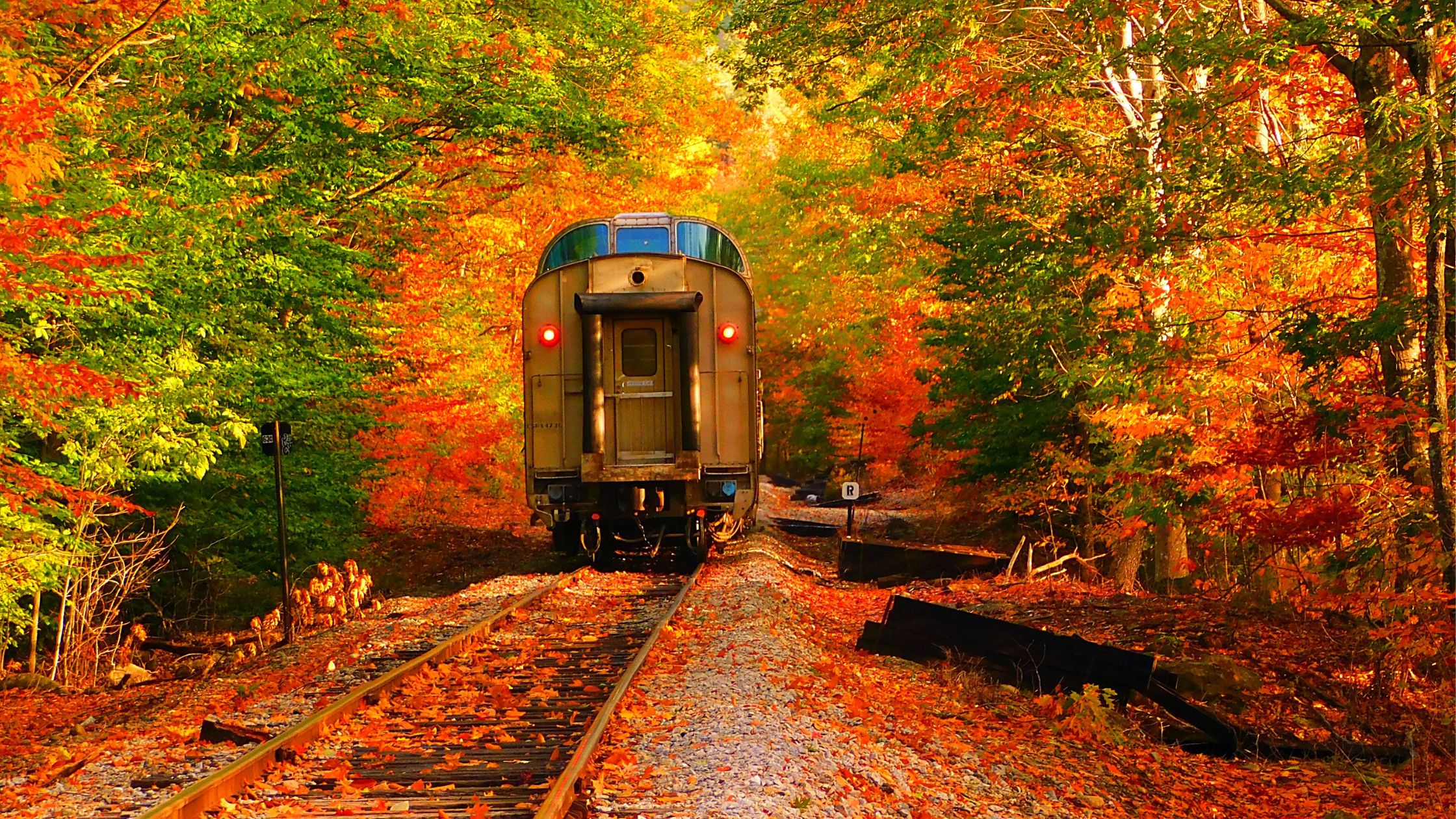
The whistle cuts through cold morning air as your train crests a ridge, and suddenly every valley below is on fire — crimson maples, amber birches, burnished oaks rolling to the horizon like a painting you can’t stop staring at. Your coffee trembles in its paper cup as the wheels click rhythmically beneath you, and you realize you haven’t checked your phone in an hour.
America does fall foliage trains differently than anywhere else because you’re choosing between entire ecosystems — New England villages with covered bridges, Great Lakes shoreline that stretches forever, and Colorado aspens glowing gold against snow-capped fourteeners. No single country offers this much variety from a window seat.
This guide walks you through timing, cost, booking strategies, and the actual routes worth your money so you can stop scrolling and start reserving. Expect to spend $25 to $60 for a short heritage railway ride, $80 to $200 for a full-day excursion with meals, and $150 to $300 or more for luxury dome car experiences where the glass ceiling becomes your personal IMAX.
Your Quick-Pick Guide to Fall Foliage Train Rides
| Your Style | Top Pick | Peak Window | Why This One |
|---|---|---|---|
| Classic postcard fall | Mount Washington Cog Railway, NH | Late Sept – early Oct | Panoramic White Mountain views from the Northeast’s highest peak |
| Flexible day trip | Cuyahoga Valley Scenic Railroad, OH | Early – mid-Oct | Hop-on, hop-off access to national park trails and towpath biking |
| No-car immersion | Amtrak Adirondack, NY to Montreal | Early – mid-Oct | Hours of uninterrupted Hudson Valley and Adirondack color |
| Water + foliage drama | North Shore Scenic Railroad, MN | Late Sept – mid-Oct | Lake Superior’s blue water framed by blazing maples |
| High-mountain spectacle | Durango & Silverton Railroad, CO | Mid-Sept – early Oct | Steam engine through golden aspen groves in the San Juans |
| Gorge scenery | Great Smoky Mountains Railroad, NC | Mid-Oct – early Nov | Nantahala Gorge views with the longest usable fall season |
Budget sweet spot: A 2 to 4-hour coach ride on a less-hyped route typically costs under $75 and delivers the core scenery without the all-day commitment. Book by late summer for any October departure — waiting for foliage forecasts guarantees sold-out seats.
When Is the Best Time for Fall Foliage Train Rides in the USA?
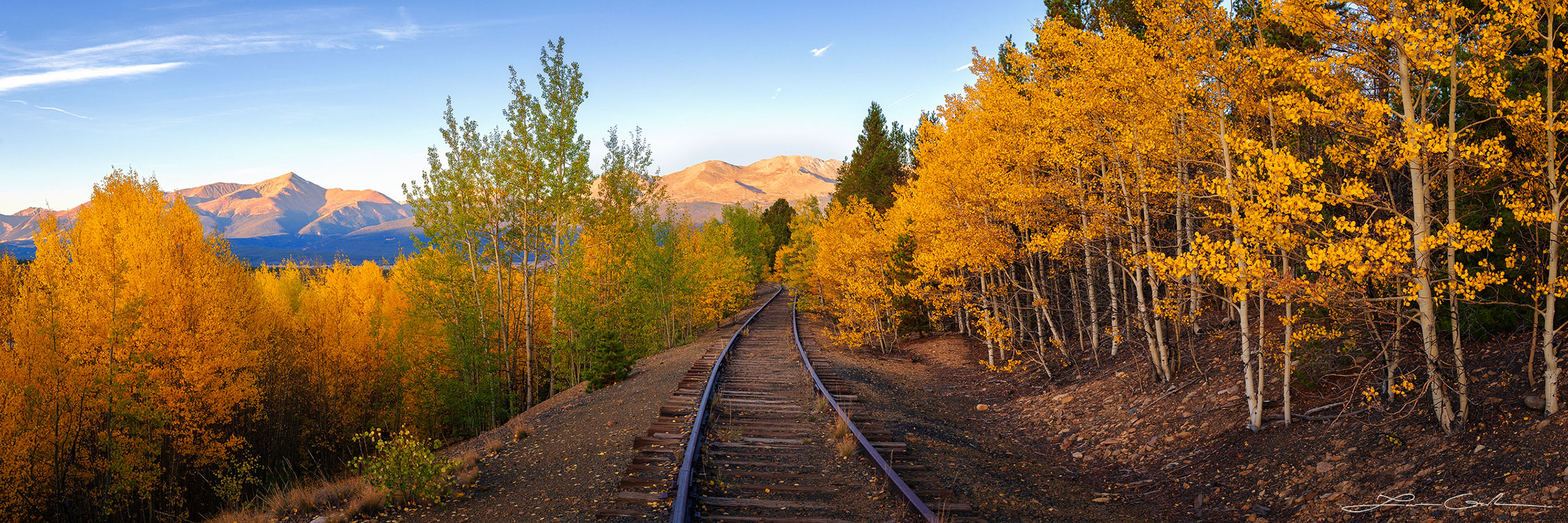
Peak color in the northernmost routes — Vermont, New Hampshire, northern Michigan — can arrive and vanish within a single two-week window in late September. Miss it, and you’re riding through bare branches.
Nail the timing, and every mile out your window looks hand-painted.
Fall color moves south like a slow-motion wave. Timing your ride to hit that peak window is the single biggest factor between a jaw-dropping trip and a letdown.
Here’s what to expect by region, with the understanding that exact dates shift every year depending on weather patterns — always confirm with your operator before booking.
Regional Peak Timing at a Glance
| Region | Typical Peak Window | Best For |
|---|---|---|
| Northern New England (VT, NH, ME) | Late Sept – mid-Oct | The gold standard — maples, birches, covered bridges |
| Mid-Atlantic (NY, PA, NJ) | Early – mid-Oct | Easier access from NYC and Philly with solid color |
| Southern Appalachia (NC, TN) | Mid-Oct – early Nov | Extended season; lower elevations peak later |
| Upper Midwest (MI, WI, MN) | Late Sept – mid-Oct | Water + foliage combos along Great Lakes routes |
| Rocky Mountain West (CO) | Mid-Sept – early Oct | Golden aspens against evergreens — peaks earliest |
| Pacific Northwest (OR, WA) | Early – late Oct | Mix of deciduous and evergreens; softer palette |
The Northeast: When to Lock In Your Seat
Mid-September through mid-October is the money window. Vermont and New Hampshire peak first, usually the last week of September through the first week of October.
The further north you go — Stowe, the White Mountains — the earlier color arrives. Pennsylvania’s Lehigh Valley and New York’s Catskills typically hold strong through mid-October.
This is also the most competitive region for bookings. Expect to reserve six to ten weeks ahead for weekend departures on popular lines. Weekday rides are easier to snag and often less crowded — my recommendation if you have flexibility.
The Midwest and Great Lakes
Upper Michigan and northern Wisconsin hit peak around late September to the first week of October. The colors shift south through the state over the following weeks.
Lake-effect weather can accelerate or delay leaf drop by a full week in either direction, so build buffer days into your trip if possible.
The Southern Appalachians
This region offers the longest usable season. High-elevation routes in the Smokies and Blue Ridge peak mid-October, while lower-elevation valleys hold color into early November.
If you’re a late planner who missed the northern window, these rides are your best backup — and some argue the mix of reds, oranges, and lingering green is even more photogenic.
The Western Routes
Colorado’s aspen groves peak earliest — sometimes as early as mid-September at higher elevations. By the first week of October, the gold has mostly faded above 9,000 feet.
Oregon and Washington peak later, roughly early to late October, with a more subdued color palette compared to the East Coast’s fireworks display.
Insider Timing Tip
Most foliage trackers and state tourism sites report color based on road elevations. Trains often run at different elevations or through valleys where color arrives days later.
Call the train operator directly and ask what their onboard staff observed the previous week — that real-time intel beats any online foliage map.
Book Early or Wait for Last-Minute Openings?
For Northeast and peak-season Midwest routes, book early — six to eight weeks out minimum for October weekends. Western and Southern Appalachian routes typically have more availability closer to departure.
If you’re flexible on dates, operators sometimes release returned tickets one to two weeks before departure; check websites directly rather than third-party aggregators.
One hard rule: never wait for the foliage forecast to confirm before booking. By the time peak color is announced, the best seats are gone. Book for the historical average window, then adjust your exact travel day once color reports start rolling in.
How Much Do Fall Foliage Train Rides Cost?
A standard two-hour scenic train ticket can cost the same as a nice dinner for two, while a full-day luxury excursion with meals can rival a flight to Europe. Budgeting correctly means understanding what drives the price.
Costs aren’t just about the ticket. Factor in these key variables when comparing options across different regions and operators.
- Ride Duration & Inclusions: A short 1-2 hour heritage railway trip typically runs $25-$60 per adult. All-day excursions (4-8 hours) with guides, meals, or special events like wine tastings can jump to $80-$200+. The price jumps for included meals and premium seating classes.
- Car Class & Comfort: Expect a 20-40% premium for upgraded classes. Standard coach is the value pick. Dome cars and first-class parlor cars with larger windows, more legroom, and complimentary drinks command higher fares but often provide the best photo opportunities.
- Route Popularity & Season: Iconic routes in peak color (usually mid-October in the Northeast) book out months ahead and hold firm on pricing. Lesser-known Midwest routes may offer better value with similar scenery.
- Group Size & Age: Most operators offer reduced fares for children (ages 2-12) and seniors (65+). Group discounts are less common on popular tourist trains but always worth asking about if booking for 10 or more.
For a quick comparison, here’s what to expect across common ride types:
| Ride Type | Typical Cost (Adult) | Best For |
|---|---|---|
| Short Heritage Railway (2-3 hrs) | $25 – $60 | Families, casual viewers, a quick scenic fix. |
| Full-Day Scenic Excursion (6-8 hrs) | $100 – $180 | Enthusiasts wanting immersive, narrated journeys with meals. |
| Luxury/Dome Car Excursion | $150 – $300+ | Celebrations, photographers, those prioritizing comfort and views. |
The real cost-saving move: Book as soon as fall schedules are released, often in early summer. Prime weekend trains sell out, and last-minute tickets for popular routes rarely exist or come at a premium.
For the Northeast Corridor, book at least 3-4 months in advance for October dates.
Insider tip: Many historic railroads are non-profits. Check their websites for “member” fares or reciprocal discounts with other rail museums—they often save 10-15% and aren’t advertised on third-party ticket sites.
Bottom line: For a satisfying fall foliage train experience without overspending, target a 2-4 hour ride in coach class on a less-hyped route. This sweet spot usually costs under $75 and delivers the core scenery without the all-day commitment or luxury markup.
For specific route pricing and booking windows, see the route breakdowns in the Northeast, Midwest, and Western sections.
How to Book Fall Foliage Train Rides Without a Car?
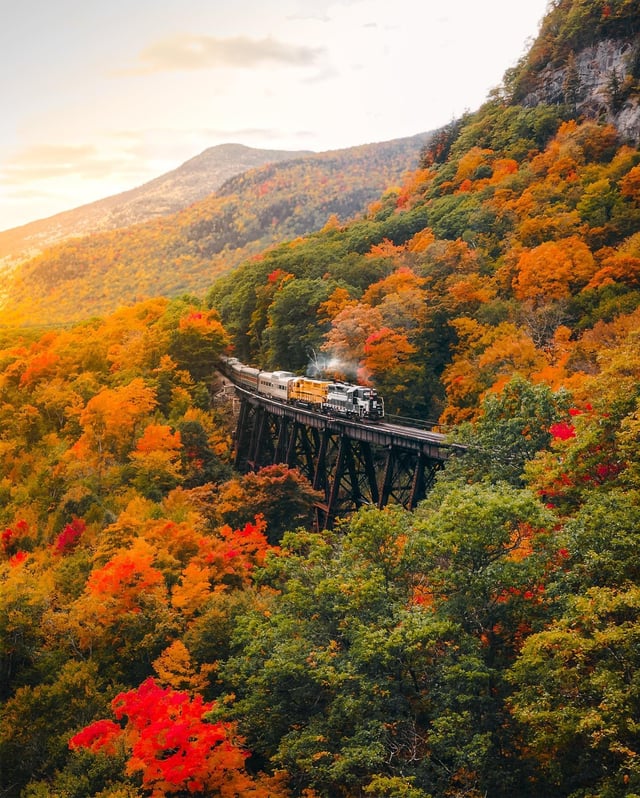
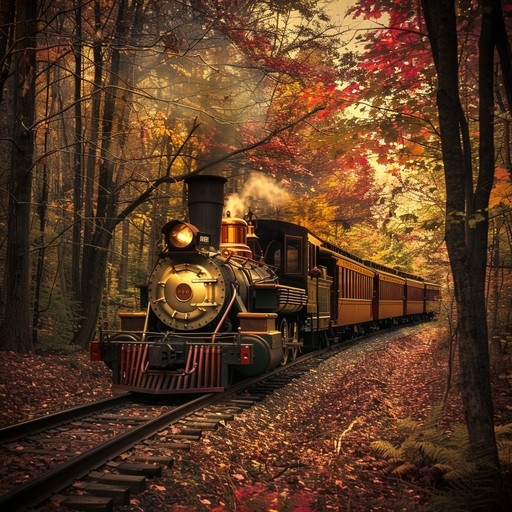
The iconic American fall road trip doesn’t have to mean white-knuckle driving on crowded mountain passes. The country’s best foliage corridors are, in fact, navigated by train, placing you directly inside the spectacle with zero driving stress.
Your strategy hinges on two approaches: booking a classic scenic railroad day trip or planning a multi-day journey on an Amtrak long-distance route. The former is simpler and more focused; the latter requires more planning but delivers an epic, uninterrupted view.
The No-Car, No-Hassle Options: Scenic Day Trains
These are standalone experiences that depart from and return to the same station, perfect for adding to a larger trip without a vehicle.
- The Conway Scenic Railroad (New Hampshire): The Notch Train is the move for a classic White Mountains immersion. It’s the only train that runs through Crawford Notch itself. Book the First Class Parlor Car for the best views and comfortable seating. North Conway is a walkable base with hotels and restaurants right at the station.
- The Cuyahoga Valley Scenic Railroad (Ohio): This is the winner for a flexible, hop-on-hop-off foliage experience. You can ride the full 2-hour loop or use it as a shuttle between trailheads in Cuyahoga Valley National Park. Board at the Peninsula depot for the most central access.
- The Great Smoky Mountains Railroad (North Carolina): The Nantahala Gorge Excursion is the more scenic choice over the river route. It’s a full-day commitment, but the gorge views are worth it. Bryson City is the departure point, a small town with lodging and dining a short walk from the station.
The Multi-Day Journey: Amtrak’s Leaf-Peeping Corridors
For a truly hands-off journey, Amtrak’s long-distance trains are your moving hotel through the most vibrant foliage zones. Book a private roomette for a bed and included meals, or ride coach for a budget-friendly seat.
- The Adirondack (New York to Montreal): This is the top pick for Hudson Valley and Adirondack views. The stretch from Albany to Montreal is pure gold in October. The train is often sold out in peak season; book as soon as the schedule opens (typically 11 months in advance).
- The Downeaster (Boston to Brunswick, Maine): Perfect for a shorter, coastal foliage fix. It connects Boston’s North Station with Maine’s charming towns like Freeport and Portland. Easy to combine with a weekend trip.
- The Empire Builder (Chicago to Seattle/Portland): For the grand, western foliage experience. The segment through Glacier National Park is breathtaking, but fall weather can cause delays. This is a commitment—think 46 hours minimum.
Comparison: Which No-Car Train Fits Your Style?
| Route | Best For | Booking Window | Pro Tip |
|---|---|---|---|
| Conway Scenic (NH) | Classic Northeast scenery, easy day trip | Opens in spring; book by August for peak weekends | Sit on the left side going north for the best gorge views. |
| Cuyahoga Valley (OH) | Flexibility, park exploration | Walk-up tickets often available, but reserved seats recommended | Use the train as a shuttle to bike the Ohio & Erie Canal Towpath trail. |
| Amtrak Adirondack | Immersion, a journey not just a ride | 11 months in advance; peak weekends sell out fast | A roomette is worth it for the privacy and meals; coach is fine for a day trip. |
The single biggest insider detail: for all these trains, a mid-week ticket is far easier to get and often cheaper. Weekends, especially in October, sell out months ahead. Your backup plan should always be a Tuesday or Wednesday departure.
Is It Safe to Take Fall Foliage Train Rides?
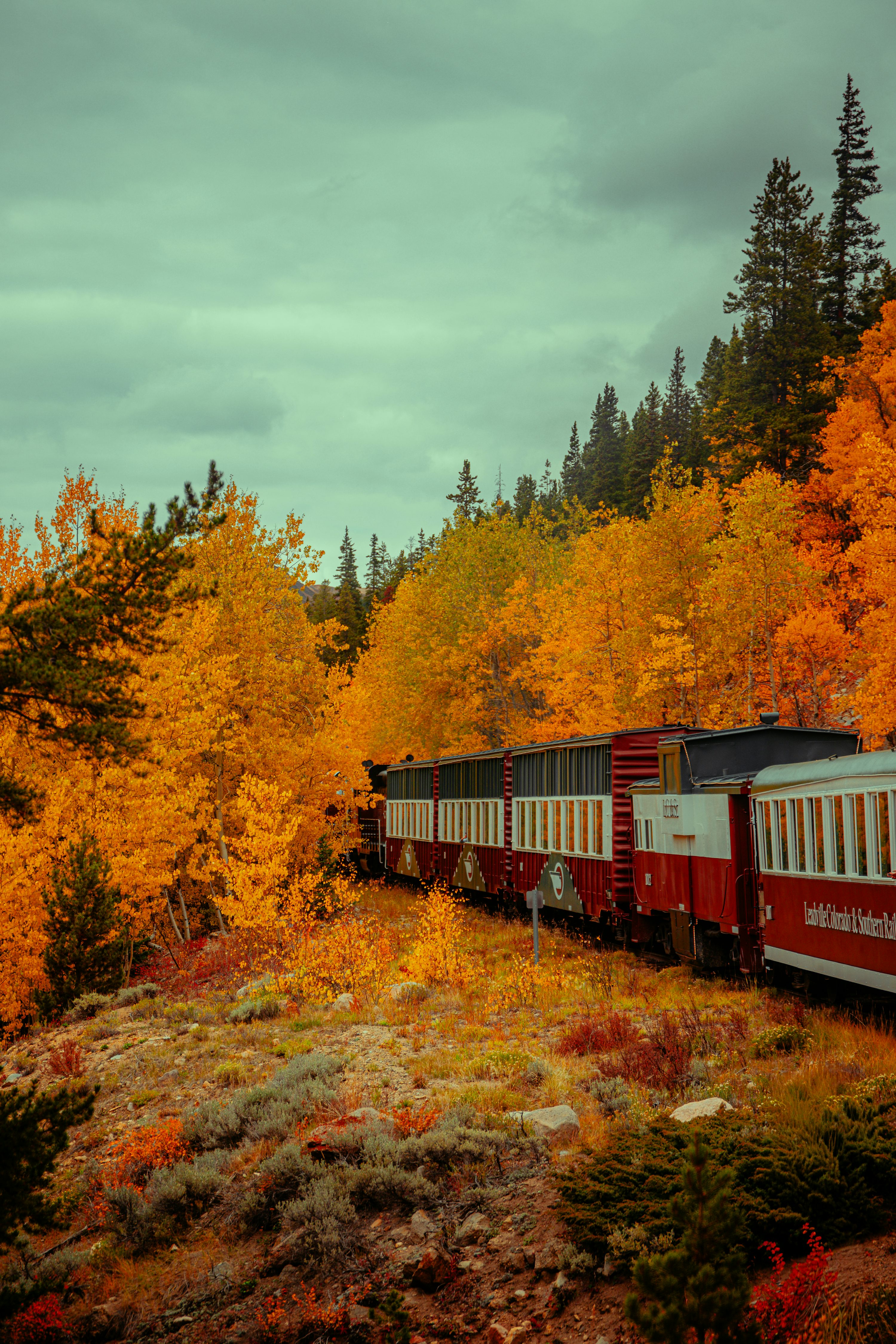
The tracks are among the safest ways to see fall color, thanks to heavy federal oversight of U.S. passenger rail.
Booking & Operator Safety
Your biggest safety factor is choosing a reputable operator. Legitimate scenic railways are either Amtrak services or private companies that must comply with Federal Railroad Administration (FRA) safety standards for equipment and operations.
- Book direct. Always use the operator’s official website or Amtrak.com. Third-party ticket resellers are unnecessary for this niche travel and can complicate customer service if plans change.
- Check credentials. For heritage or private railways, a quick search for the operator’s name plus “FRA safety” or recent news will surface any major issues. Established, long-running operations (like those in the Northeast or Great Smoky Mountains) have sterling safety records.
- Read recent reviews. Focus on reviews from the past six months for insights on current staff attentiveness, cleanliness, and any operational changes post-2020.
Onboard & Weather-Related Safety
Once aboard, the environment is controlled, but your comfort and safety still require a bit of planning.
- Motion sickness is possible. These are slow-moving scenic trains, not high-speed rail. However, winding mountain routes can still bother sensitive passengers. Sit forward-facing and toward the center of the car for the smoothest ride. Over-the-counter remedies work if needed.
- Dress for the platform and the train. The climate inside the vintage coaches is often unpredictable. One insider detail: dress in layers with a breathable mid-layer. Steam-heated cars can become stuffy, while modern coaches might have powerful air conditioning. A light jacket or sweater lets you adapt without missing the views from your seat.
- Secure your belongings. Use overhead racks or under-seat storage for bags. While crime on these tourist-focused trains is rare, standard travel vigilance applies—keep valuables on your person, especially on open-air excursion cars.
- Follow crew instructions. Especially on open-air gondola or dome cars, where you may be asked to remain seated while the train is moving. The views are just as good from a seated position.
Accessibility & Special Considerations
Accessibility varies wildly between modern Amtrak trains and century-old heritage railways.
- Amtrak routes (like the Adirondack or Empire Builder) are fully ADA compliant with accessible seating, restrooms, and boarding assistance. Book accessible space directly through Amtrak’s dedicated line: 1-800-USA-RAIL.
- Heritage railways are often more challenging. Many use restored vintage coaches with narrow doors, steep steps, and no wheelchair lifts. If mobility is a concern, call the operator directly well in advance to discuss realistic accommodations. Don’t assume—get specifics.
- Families with small children should request seating with a table. It provides a contained space for snacks and activities on rides that can last 2-4 hours.
Which Fall Foliage Train Rides Should You Choose?
Forget generic “leaf-peeping” — the real choice is between fiery New England villages, vast Midwestern forests, or high-altitude Western drama. Your route defines the entire experience.
Northeast Routes
This is the classic for a reason. You get the densest concentration of sugar maples turning brilliant red and orange, plus historic towns and covered bridges right from the platform. It’s the most photogenic, quintessential autumn scene in America.
- Top Pick: Mount Washington Cog Railway (New Hampshire). The climb up the Northeast’s highest peak is a gravity-defying feat with panoramic views of the White Mountains’ color explosion. It’s the most dramatic single vista you can get from a train.
- Best For: Families and first-timers wanting the postcard-perfect fall experience.
- Insider Tip: The Cuyahoga Valley Scenic Railroad in Ohio lets you hop on and off along the Towpath Trail for hiking, creating your own custom fall day trip through a national park.
- Planning Note: These routes sell out weeks, sometimes months, in advance for peak October weekends. Book as soon as schedules open, typically in spring.
Midwest and Great Lakes Routes
Think expansive forest canopies, not tiny villages. Here, the foliage rolls across vast landscapes of birch, oak, and aspen, often alongside massive lakes that create a stunning blue-and-gold contrast you won’t find in the East.
- Top Pick: North Shore Scenic Railroad (Minnesota). The route from Duluth hugs Lake Superior, pairing blazing maples with the world’s largest freshwater lake. The sheer scale is what makes it special.
- Best For: Photographers and travelers who prefer solitude and dramatic water vistas over crowded villages.
- Don’t Overlook: The Great Smoky Mountains Railroad (North Carolina) offers a powerful mix of fall color through river gorges and the Nantahala National Forest, with the option for a scenic layover lunch.
Western and Mountain Routes
Fall foliage here isn’t just red and orange—it’s golden aspens set against evergreen pines and jagged, snow-dusted peaks. The colors are often spread across immense valleys and mountainsides, making for a completely different kind of epic scale.
- Top Pick: Durango & Silverton Narrow Gauge Railroad (Colorado). A vintage steam engine chugging through the San Juan Mountains with exploding yellow aspen groves is an unforgettable, high-country spectacle.
- Best For: Adventure seekers and anyone combining a foliage trip with other outdoor activities like hiking or visiting national parks.
- Important: Western foliage typically peaks earlier than the East—late September to early October is the prime window for high elevations.
- Lodging Context: Base yourself in gateway towns like Durango, CO, or Whitefish, MT, for easy access and a charming town to explore after your ride.
The Verdict: For the purest, most concentrated fall color, the Northeast wins. For breathtaking water-forest contrasts and space, choose the Great Lakes.
For high-mountain drama and golden aspens, go Western.
Frequently Asked Questions
What should I wear on a fall foliage train ride?
Dress in layers—the biggest mistake is assuming the vintage train cars are heated like your car. A warm jacket, beanie, and gloves are smart from late September onward, even for midday departures.
Comfortable shoes are a must, as platforms and stations often have gravel or uneven pavement. The key is to prepare for the crisp air without overheating once you’re settled inside.
How far in advance do I need to book a popular fall foliage train?
For the most coveted routes—think the Cumbres & Toltec or Durango & Silverton—booking windows open in early summer and sell out by August. For others, a 4-6 week lead time during peak October weekends is safe.
Last-minute availability is rare for the scenic journeys, but some shorter, regional lines release tickets later. If your dates are fixed, book the moment tickets are released; if you’re flexible, check back weekly as cancellations happen.
Are fall foliage train rides wheelchair accessible?
It varies dramatically, and you must check with the specific railroad. Many historic railways operate restored vintage coaches that are not accessible.
Some offer accessible cars or platforms on select departures—like the Adirondack Scenic Railroad’s Utica station—but this is the exception, not the rule. Always call the company directly before purchasing to confirm the exact level of accessibility for your needs.
What if the ride I want is already sold out?
Don’t give up immediately. Three strategies work: First, call the railroad directly—phone operators sometimes have inventory not shown online.
Second, explore their secondary routes; a less-hyped “express” or a midweek departure might be available. Third, check the gateway towns for independent tour operators who may hold blocks of tickets.
As a last resort, showing up at the station the morning of can sometimes yield a single cancellation ticket, but it’s a gamble.
Pick Your Track and Don’t Look Back
Start by choosing your region based on when you can travel — Colorado peaks in mid-September, New England runs late September through mid-October, and the Southern Appalachians hold color into early November. Then go straight to that operator’s website and lock in a mid-week departure, which is easier to snag and less crowded than weekends.
A fall foliage train ride puts you inside the spectacle instead of watching it through a windshield, and the slow pace forces you to actually see the color instead of just passing through it. That kind of forced stillness is rare in American travel.
Open a second browser tab right now, pull up the schedule for the route that caught your eye, and grab your dates before someone else does.
Leave a Reply