
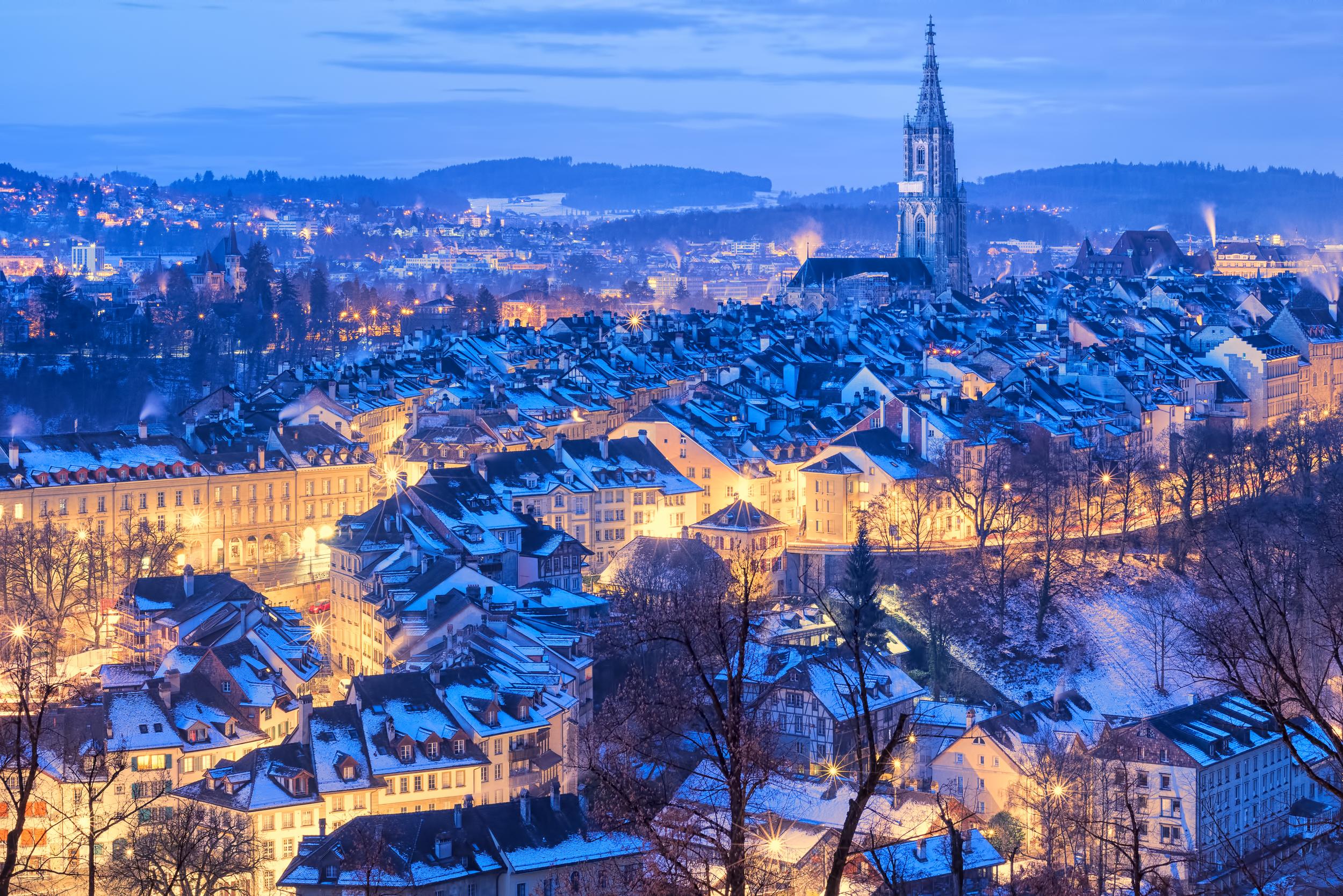
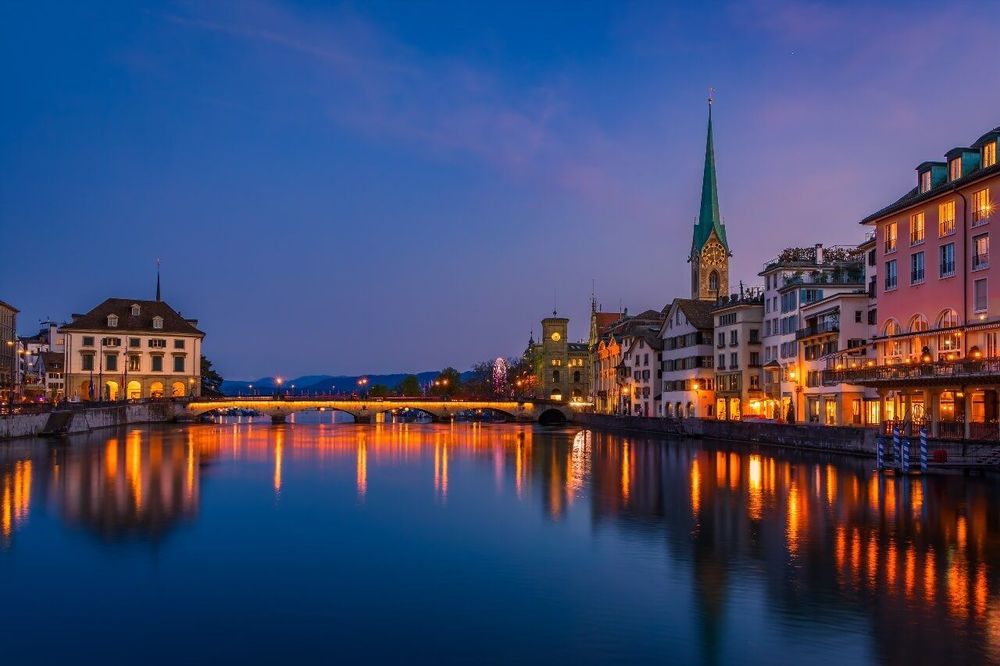
Blue hour drops over the Limmat around 4:30pm, the streetlights blink on against a deep cobalt sky, and suddenly every wet cobblestone in the Old Town is throwing light back at you.
Fresh snow dusts the medieval slate rooftops while fog drifts through lanes hung with carved wooden bay windows, and none of it costs a franc to photograph.
What separates a Zurich winter shoot from any other European city break is the density: within forty minutes of walking you get bridges, elevated river panoramas, pastel lanes, Gothic cloisters and a Christmas market, all free and all framed by the Alps on a clear day.
This guide helps you decide exactly where to point your camera at each hour of the day so you never waste good light.
Budget-wise, the entire photo walk runs about CHF 0, a café warm-up with coffee and a pastry lands in the mid-range CHF 10–20 zone, and the only splurge worth weighing is roughly CHF 5 for a church interior or tower climb.
The Fast Version: Where to Point Your Camera First
If you only read one part of this article, make it this one.
- Best overall vantage: Münsterbrücke — the only spot where the Fraumünster, Grossmünster and river reflections fit in one frame.
- Best free elevated view: Lindenhof — arrive before 9am and the stone parapet and chess tables give you the classic rooftop panorama with zero climb.
- Most iconic lane: Augustinergasse — shoot the pastel facades and stacked bay windows before 8am or accept a crowd scene.
- Most underrated frame: Fraumünster cloister courtyard — Gothic arches and open sky, shot backlit in low winter sun.
- Best evening add-on: Werdmühleplatz market plus the Lucy lights on Bahnhofstrasse — one evening covers both in under ten minutes of walking.
- Money hour: Roughly 4:30pm to sunset — pick your composition in daylight and be standing there before the light balance starts.
When Does Zurich’s Old Town Look Its Best in Winter?
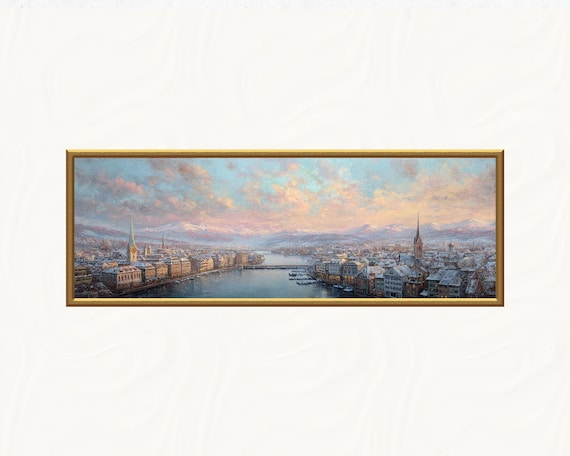
December blue hour arrives around 4:30pm in Zurich’s Old Town — early enough that a full afternoon of shooting ends in dramatic light before dinner, which is the single biggest reason to visit this city in winter rather than summer. My advice: build your day backwards from that hour, and treat everything before it as warm-up.
Winter Light and the Early Blue Hour
The Old Town’s light calendar is unusually generous to photographers on a short trip. Darkness falls early, so the good light isn’t compressed into a thin sunrise and sunset window you have to race for. Plan for these three phases:
- Late morning to early afternoon: Low winter sun rakes across facades and cobbles at a shallow angle. This is when carved bay windows and stonework get their best texture — shoot close, not wide.
- Mid-afternoon: The light goes flat and cold fast. Use this stretch for scouting angles, color work in the pastel lanes, and warming up, not for hero shots.
- From roughly 4:30pm: Blue hour takes over and the streetlights come up against a deep blue sky. This is the money hour — be in position at the river or a square before it starts, not walking toward it.
Overcast winter skies are the one thing that will disappoint you. Cloud cover flattens architectural light and turns wide facades into gray mush.
My fix: on a cloudy day, shoot tight details and lane compressions instead of sweeping views, and be ready to sprint for a wide shot the moment the cloud breaks.
Snow, Fog, and the Mood They Create
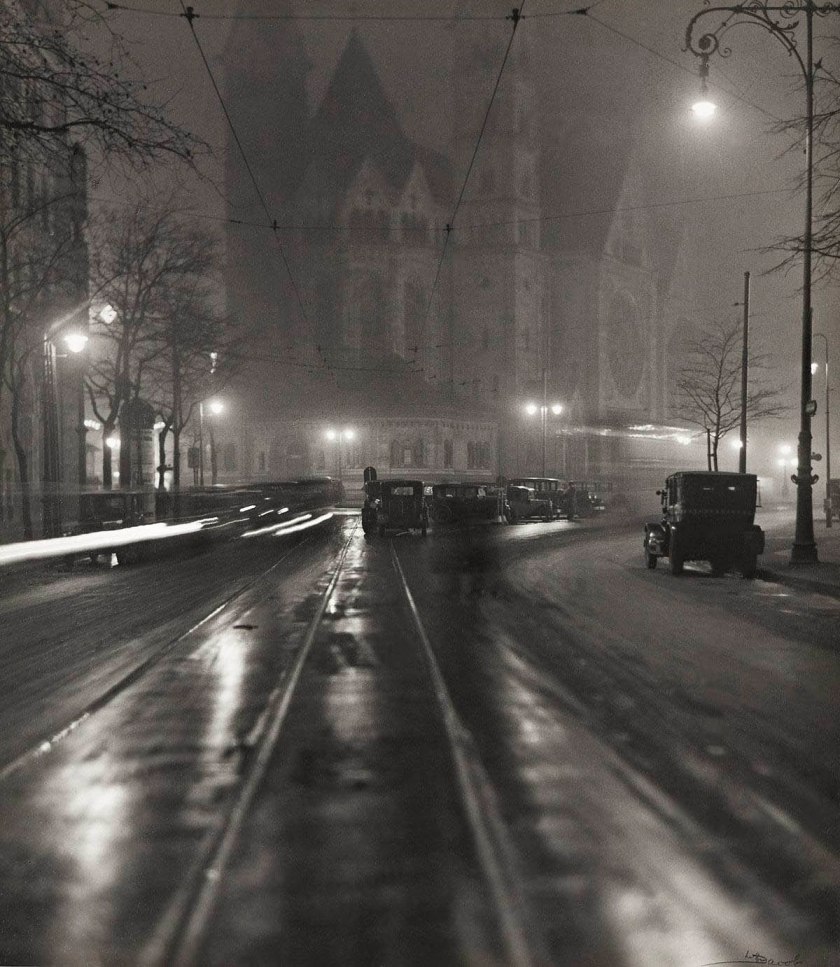
Snow settles on the medieval rooftops and instantly upgrades every skyline and rooftop composition — the Old Town reads as genuinely old when the slate and tile is dusted white. It is not guaranteed in a mild Swiss winter, so treat any snow day as a gift and shoot the rooftops first before it melts or gets shoveled.
Fog is the more reliable mood-maker. It sits in the lanes until mid-morning, which is the useful part: unlike most European cities, Zurich gives you soft, atmospheric light long after the early birds have gone home.
Roll out at 9 or 10am and the narrow lanes will still be glowing with diffused light and haze — my favorite window for moody, cinematic frames that look nothing like the sunny postcards.
The Best Free Photo Spots Along the Limmat
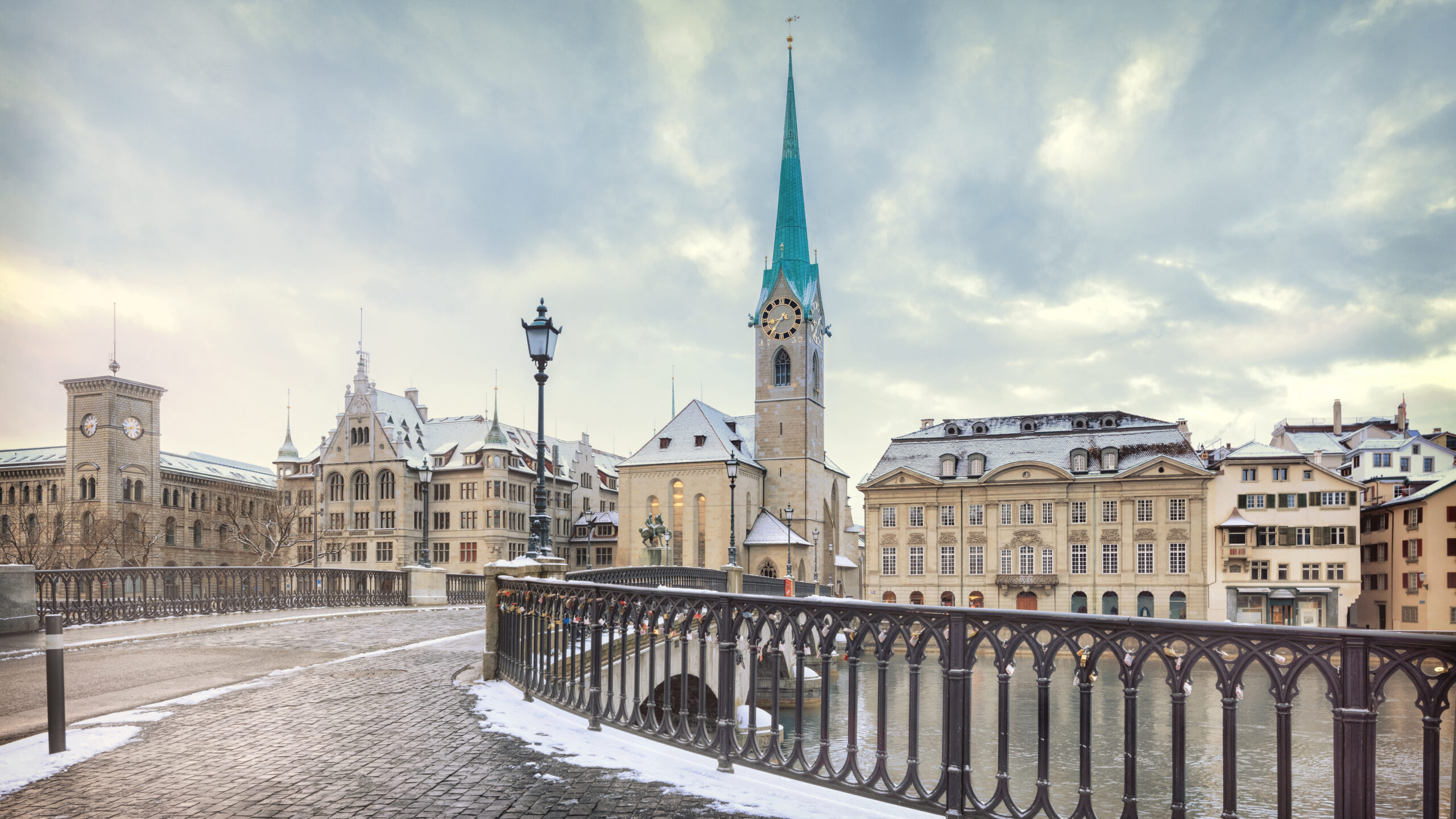
The Münsterbrücke is a stone bridge roughly 180 years old, and it is the only spot in the Old Town where you can stand still and photograph almost the entire historic district in one frame. If you shoot one location on the river this winter, make it this one — everything else on this list is a variation on it.
Münsterbrücke
This is the anchor of any Limmat shoot. The bridge sits in the heart of the Old Town, the Fraumünster on one side and the Grossmünster on the other, and the water below gives you reflections that no sidewalk viewpoint can match.
On a clear day the snow-capped Alps line up behind the guild house facades as you cross — rare, and worth waiting for.
- Best angle: Shoot from the bridge deck looking north toward the Grossmünster with the river reflecting the lit buildings.
- Why it beats the quays: You are elevated over the water, so nothing blocks the church silhouettes.
- Best use of time: Arrive before the evening crowds fill the span and you can work the same vantage from both parapets.
Rathausbrücke
Choose Rathausbrücke when you want the landmark sightlines with nothing in the way — the bridge gives you clean, unobstructed views of the Old Town’s waterfront towers and rooftops without the traffic of pedestrians who stop for the Grossmünster. It is the smarter bridge for anyone shooting on a phone who needs distance and a straight horizon.
- Pick this over Münsterbrücke if: You want space to set up and no one walking through your frame.
- Trade-off: The Grossmünster reads smaller here — this is a wide-architecture shot, not a tower portrait.
Limmatquai and St. Peter’s Clock Face
St. Peter’s church carries the largest tower clock face in Europe, and from Limmatquai you get it head-on without climbing anything. That single detail turns a generic riverside church photo into an image that is unmistakably Zurich.
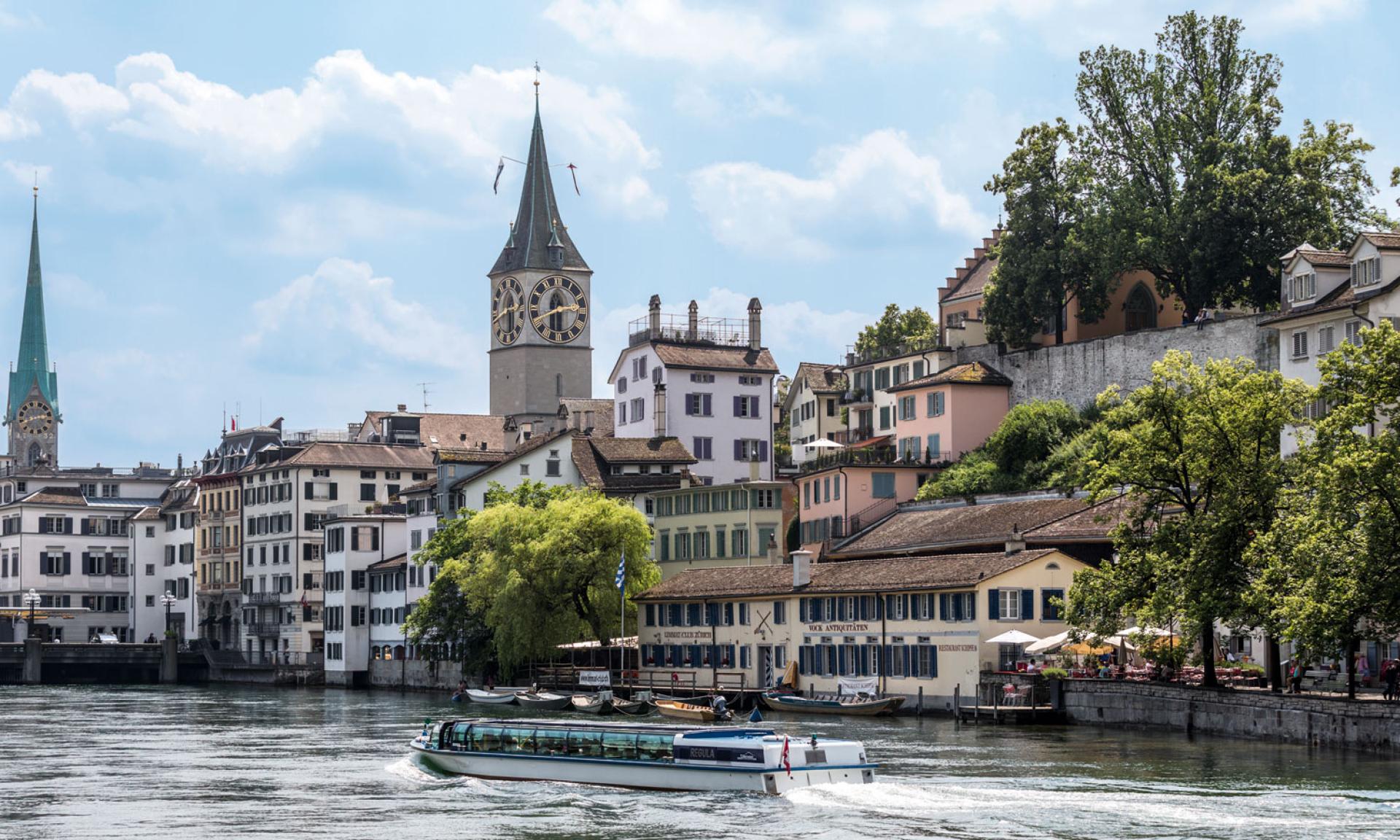
- Frame it: Include the quay’s lamps and facades below the tower to give the clock face scale.
- What disappoints: The tower is far and dark in flat winter light. Shoot it when the face is lit or when the sky is doing something interesting.
Wühre
The Wühre runs along the left bank of the Limmat as a narrow cobblestone lane between timber-framed houses and the river, and in a few places stone archways open onto the water. Those archways are the shot — they frame the river like a doorway and give you foreground depth that none of the bridges offer.
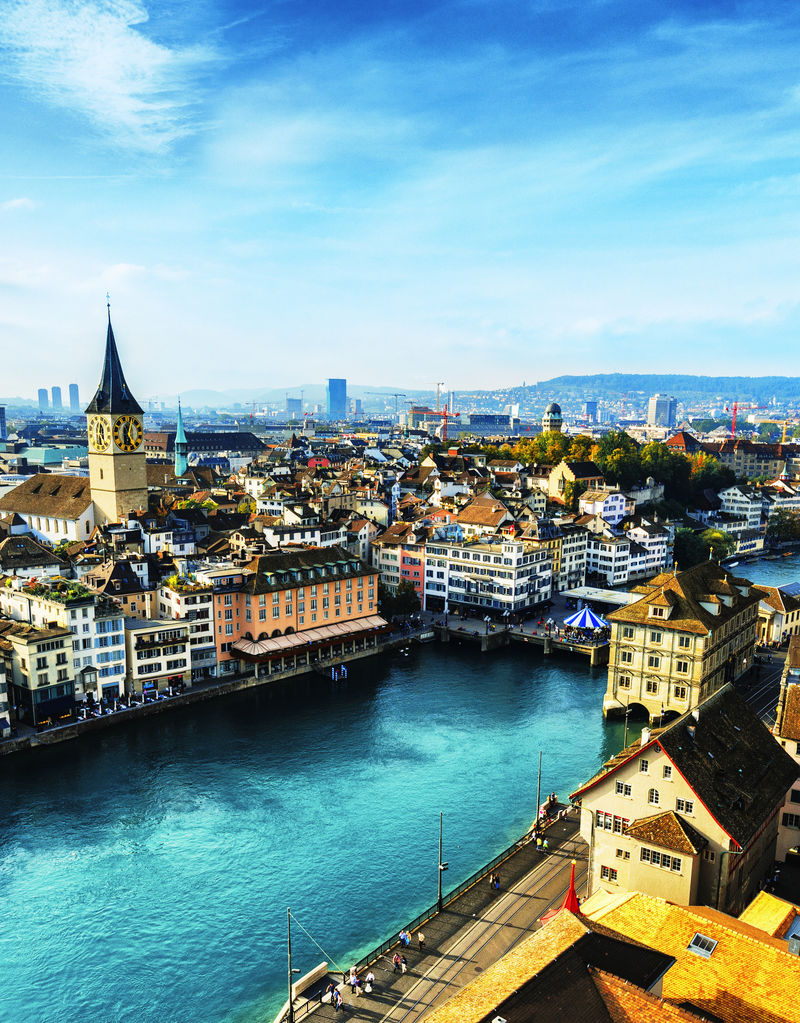
- Best stretch: The section close to the Münsterbrücke, where the archways and river sit closest together.
- Timing matters: The lane gets crowded, so work it when the quay is empty rather than mid-afternoon.
Ulrich Zwingli Monument
The Zwingli monument does double duty: it is the easiest landmark to use as a rendezvous point, and it anchors a genuinely good view. Stand at the monument and shoot toward the left bank — the river, the guild houses and the Wühre facades stack up in one composition.
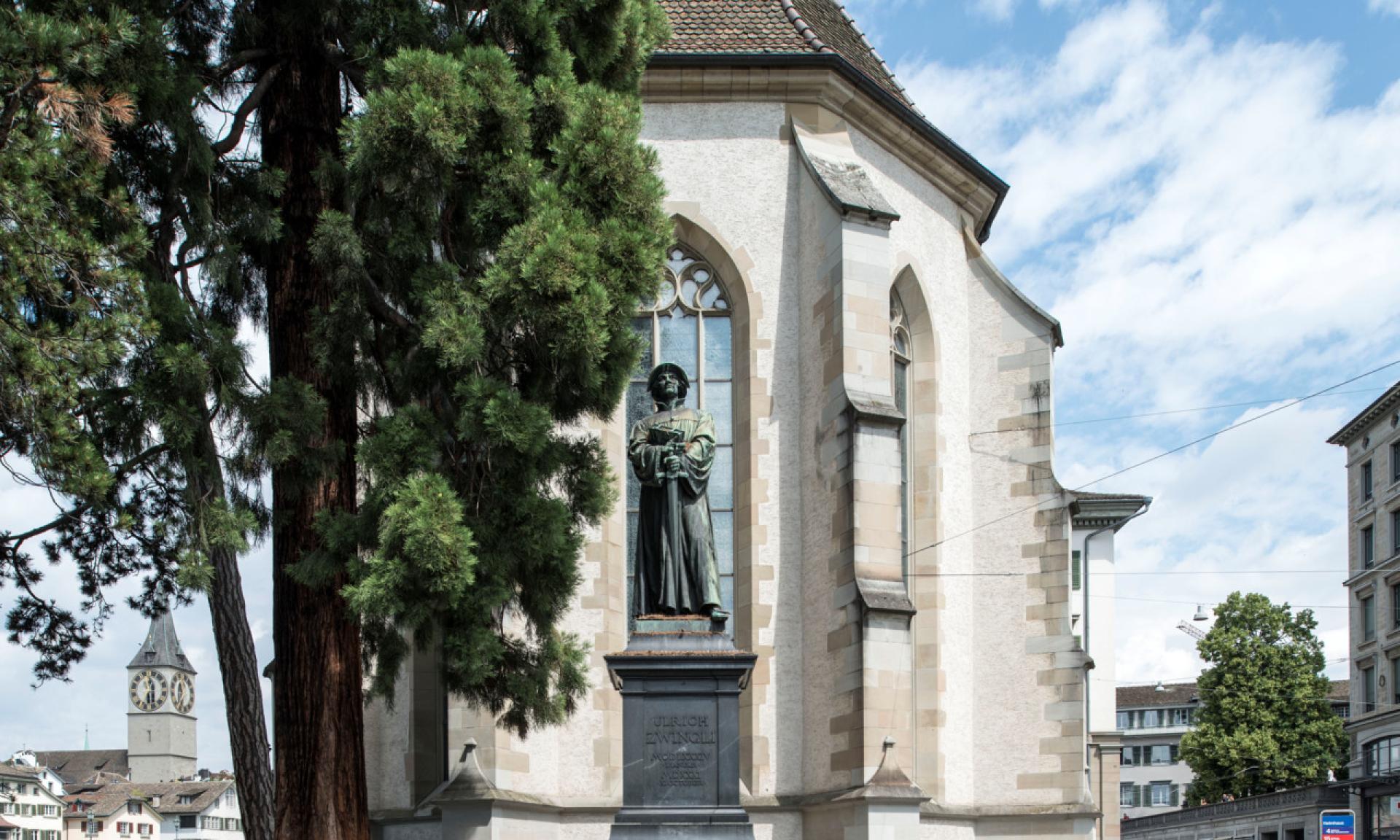
- My recommendation: Use it as your meeting spot, then shoot the left-bank view before moving on — it costs you nothing in detour.
- Skip it if: You already worked the Wühre from the water side; you would be photographing the same buildings twice.
Squares and Elevated Viewpoints Above the River
The strongest free skyline frame in the Old Town sits directly on the ground where Zurich’s Roman fort and imperial palace once stood, and before 9am you will share the terrace with a few locals and their chess boards instead of a crowd. These three squares give you the wide, elevated, architectural shots that the narrow lanes cannot.
Lindenhof
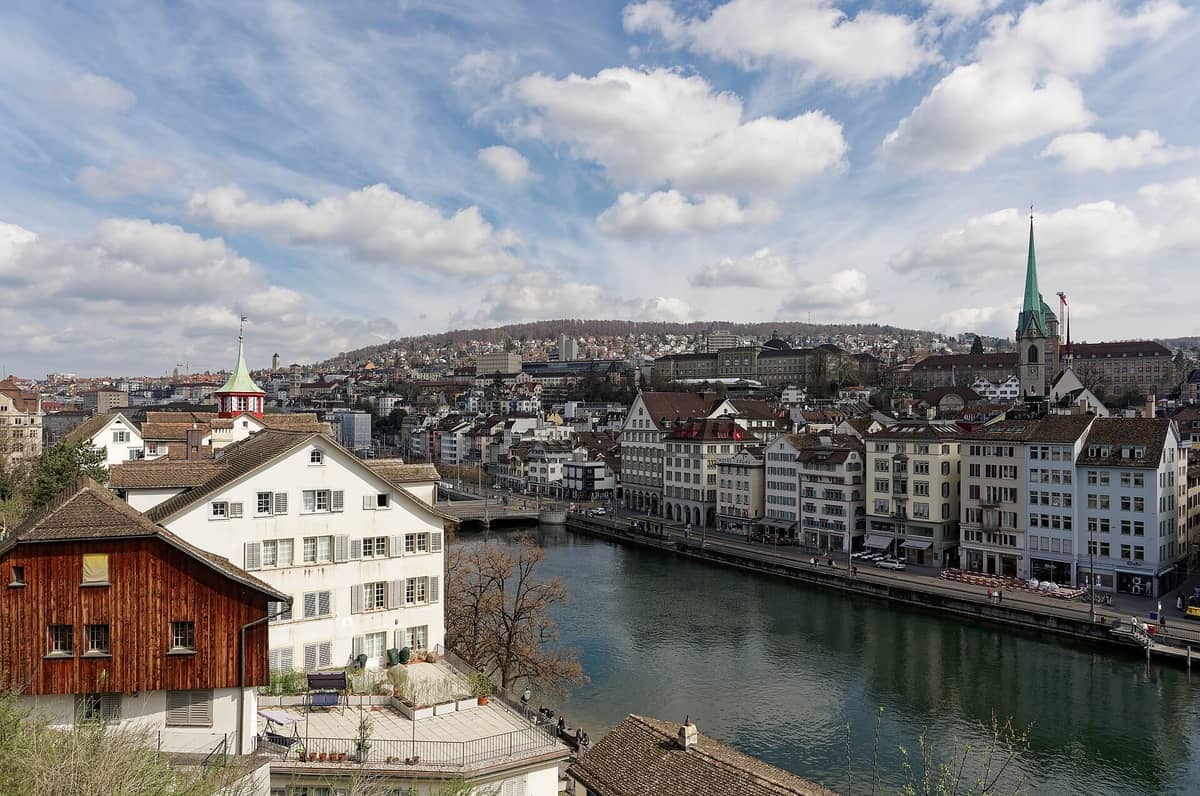
This is the one elevated viewpoint in the Old Town that requires no climb, no ticket and no tower. Lindenhof is a quiet public park on a low hill on the left bank, planted with the lime trees that give it its name and lined by a stone parapet that does the framing for you.
- Best angle: Stand at the parapet and shoot across the river to the right bank, where the medieval rooftops step up toward the university and ETH buildings on the hillside beyond.
- Best timing: Get there before 9am. After that the terrace picks up visitors and your clean, empty-street compositions are gone.
- Best foreground: Use the stone chess tables or the lime trunks as a dark frame along the edge of the shot. They give the wide river view depth that a bare railing will not.
- Who it suits: Anyone who wants one unmistakable Zurich image without paying for a tower climb. In my view this beats every paid viewpoint in the city for the price.
Münsterhof
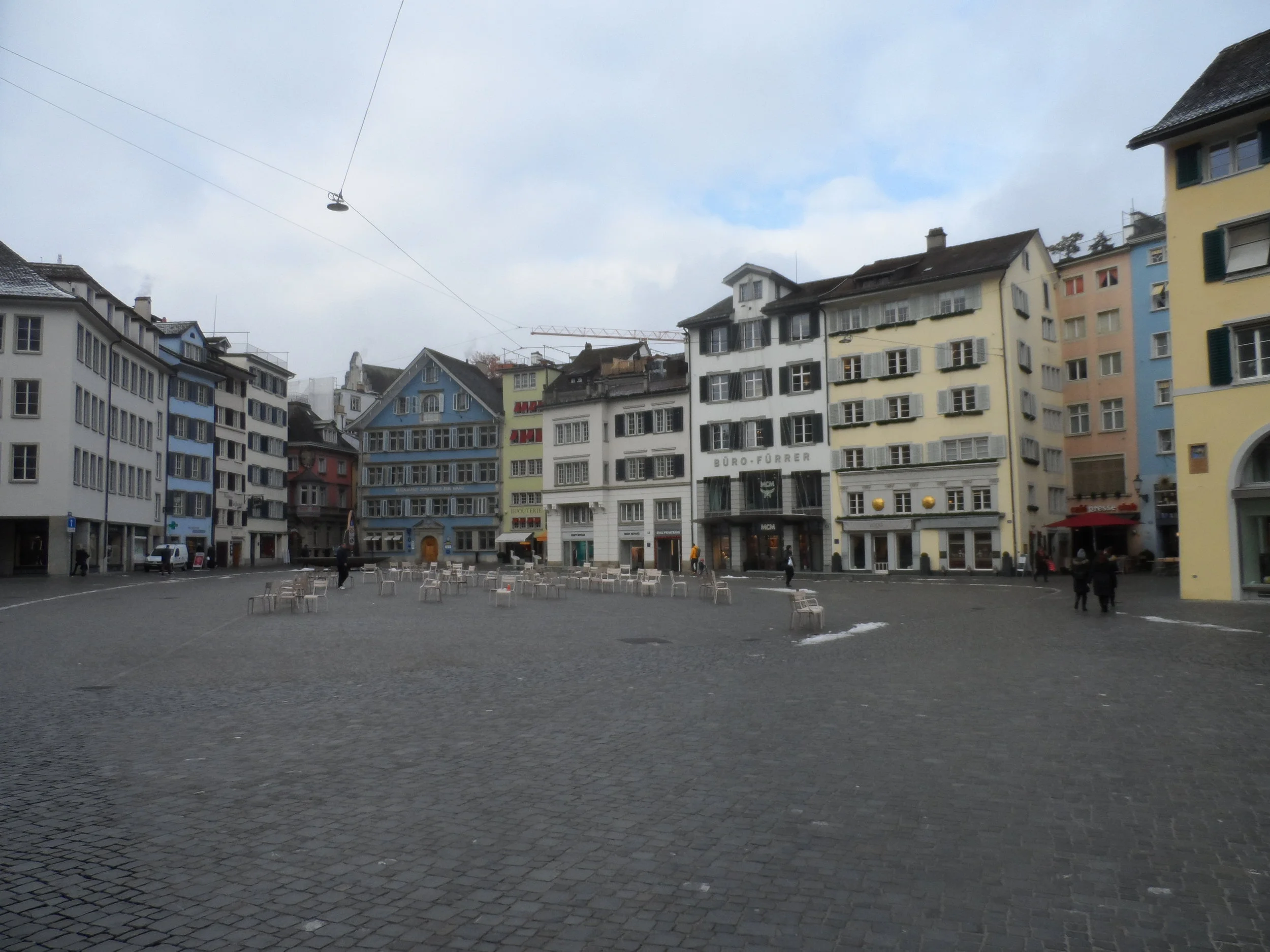
Münsterhof is the Old Town’s most formal square — a broad, paved parade ground closed in by a ring of baroque guild house facades. Its architecture is heavier and more symmetrical than anything in the surrounding lanes, which is exactly why it photographs so well on an overcast winter day when flat light kills smaller details.
The building worth walking the square for is the rococo Zunfthaus zur Meisen: its curved gable and ornamented stonework are the single richest piece of decoration in the whole square. My advice is to shoot it from the opposite side of the square rather than from close range.
Münsterhof is wide enough to back off and keep the full facade in frame with the neighbouring baroque buildings still in shot, and that ring effect is what makes the image look like a set rather than a random wall.
Grossmünsterplatz
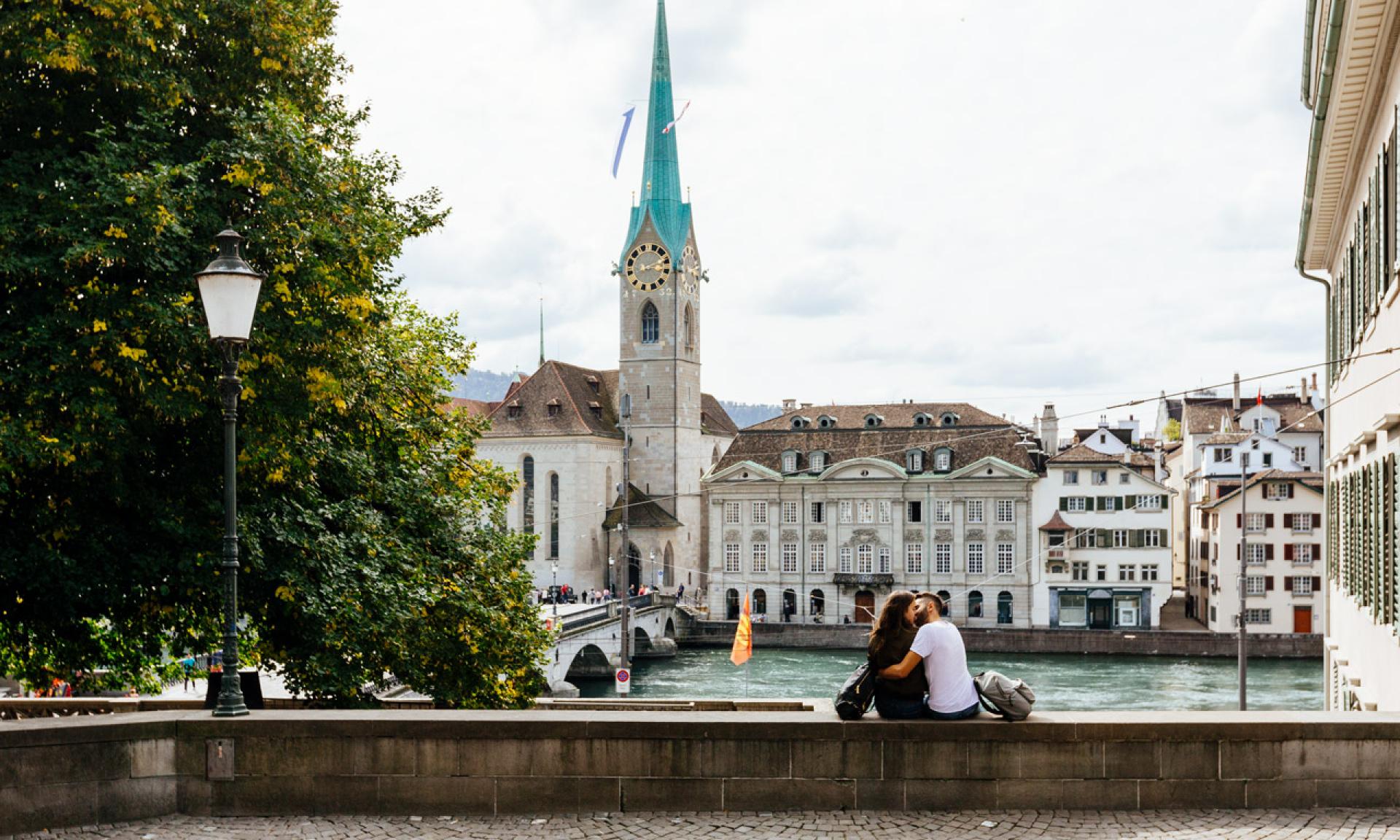
Grossmünsterplatz is where you get the postcard composition: an open cobbled square on the right bank with the river running away in front of you. Unlike the lanes around it, the square has room to step back, which is what makes it the Old Town’s most reliable place for a wide, symmetrical river shot.
- Shoot toward the water: Line up the square’s open space with the Limmat and the opposite bank’s buildings stacked behind it.
- Use the cobbles: Wet or frosted paving in the lower third of the frame gives the composition texture when the sky is plain.
- Order of the walk: Finish here. Start high and quiet at Lindenhof, take the enclosed architecture at Münsterhof, then end at the square that opens back out onto the river.
The Lanes and Facades That Make the Old Town Aesthetic
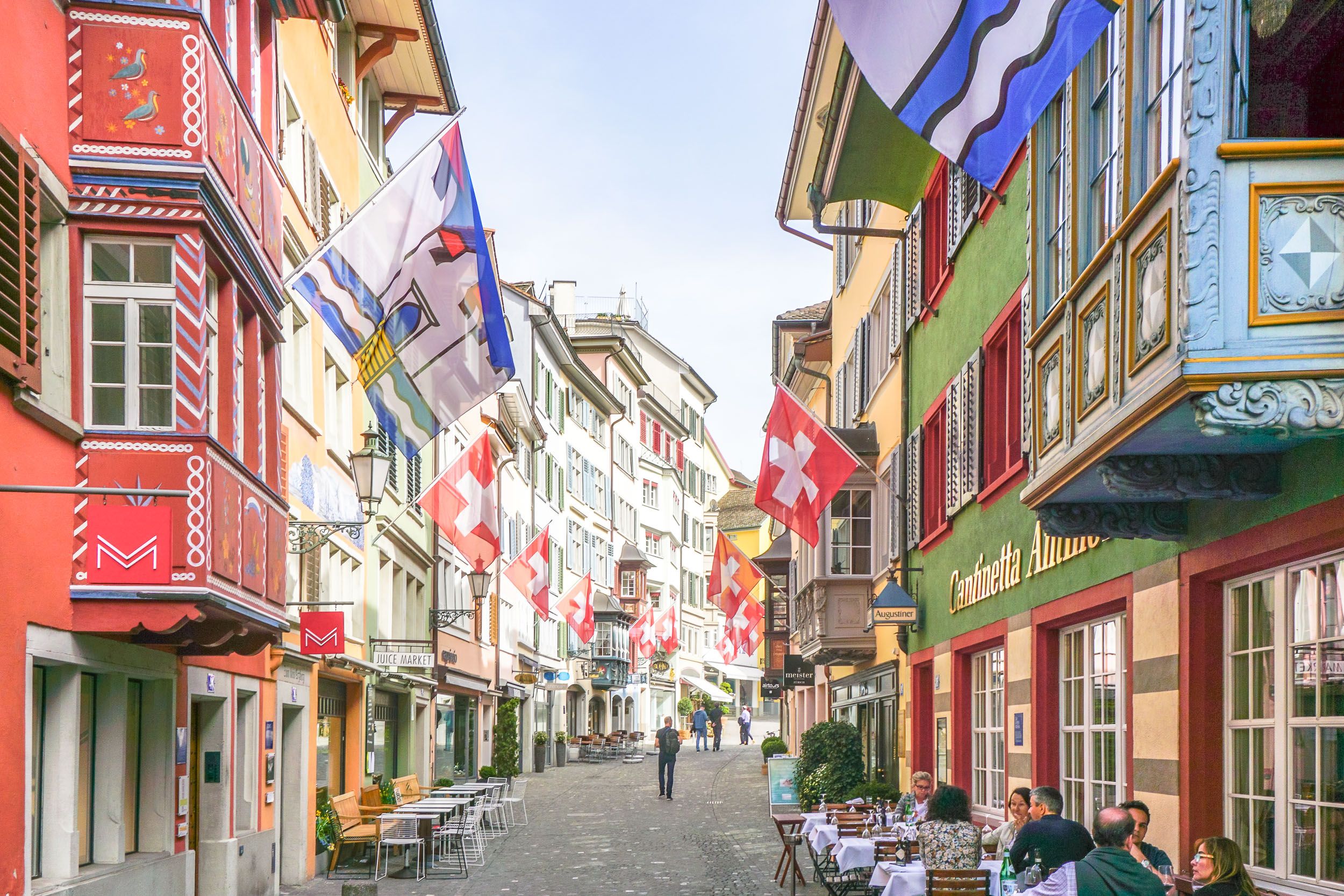
Augustinergasse is the shot everyone comes home with — a narrow, gently curving lane of faded cream, sage and dusty pink facades, hung with hand-carved wooden bay windows that have barely changed in centuries. It is also the shot most people blow, because they arrive after the tour groups do.
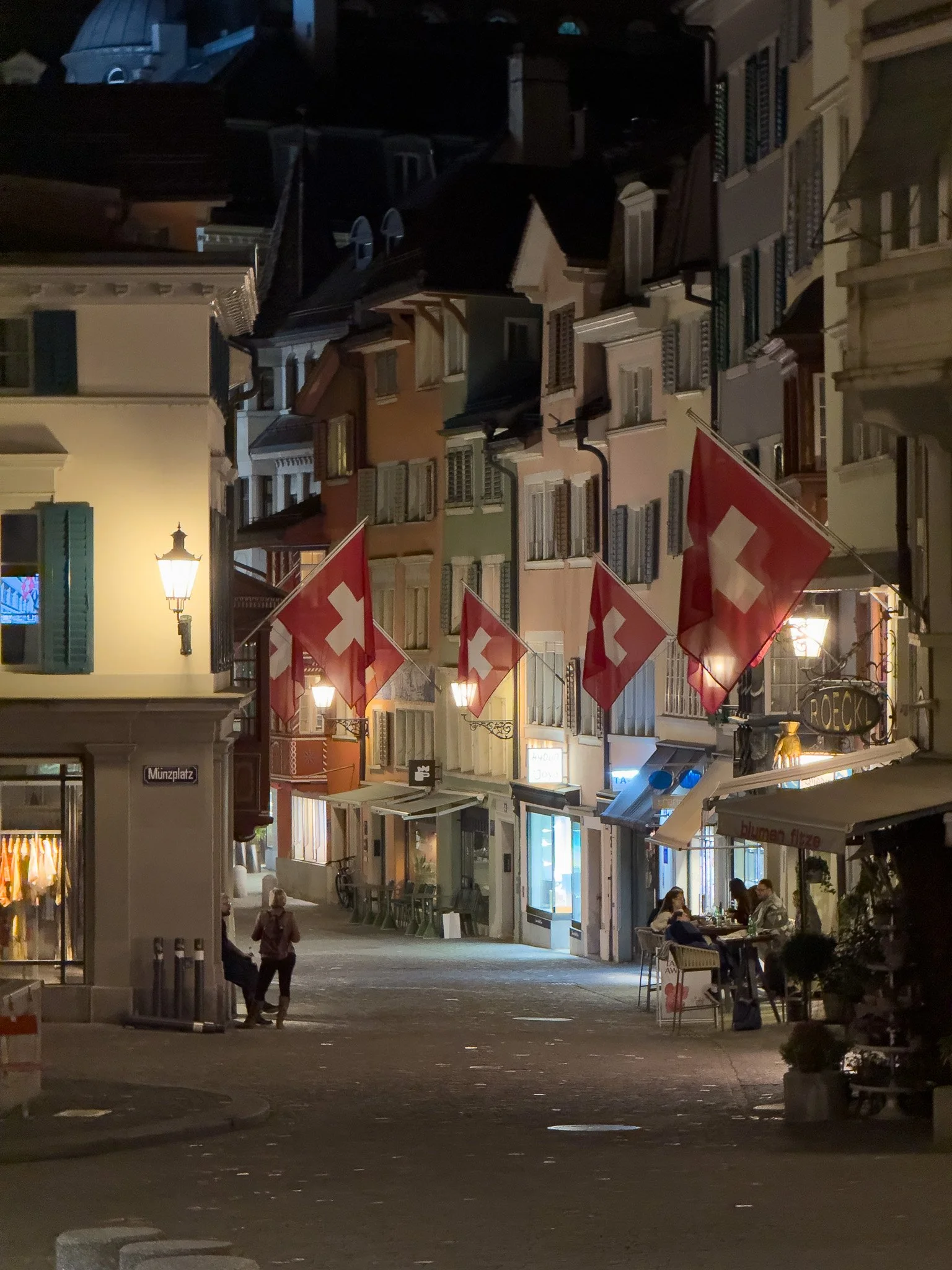
Augustinergasse
Shooting this lane is a timing problem, not a technique problem. Before 8am you own it; later in the morning it fills with walking tours and your clean, uncluttered composition becomes a crowd scene.
I would put Augustinergasse first on any winter morning, ahead of anything else in the Old Town.
- Best subject: The pastel palette — faded cream, sage, dusty pink — reads beautifully in flat winter light, which suits muted color far better than harsh sun does.
- Composition I would shoot: Stand at the lower end and shoot up the curve so the bay windows stack and recede. A straight-on shot loses the depth that makes this lane special.
- What to skip: Detail shots of a single window. The lane works as a whole; the individual balconies are less interesting in isolation.
Kirchgasse
Kirchgasse is the one Old Town street with actual drama in the ground: a reasonably steep cobblestone descent from the old Lindentor city gate, lined with elegant bourgeois houses that feel far grander than anything in the tourist core.
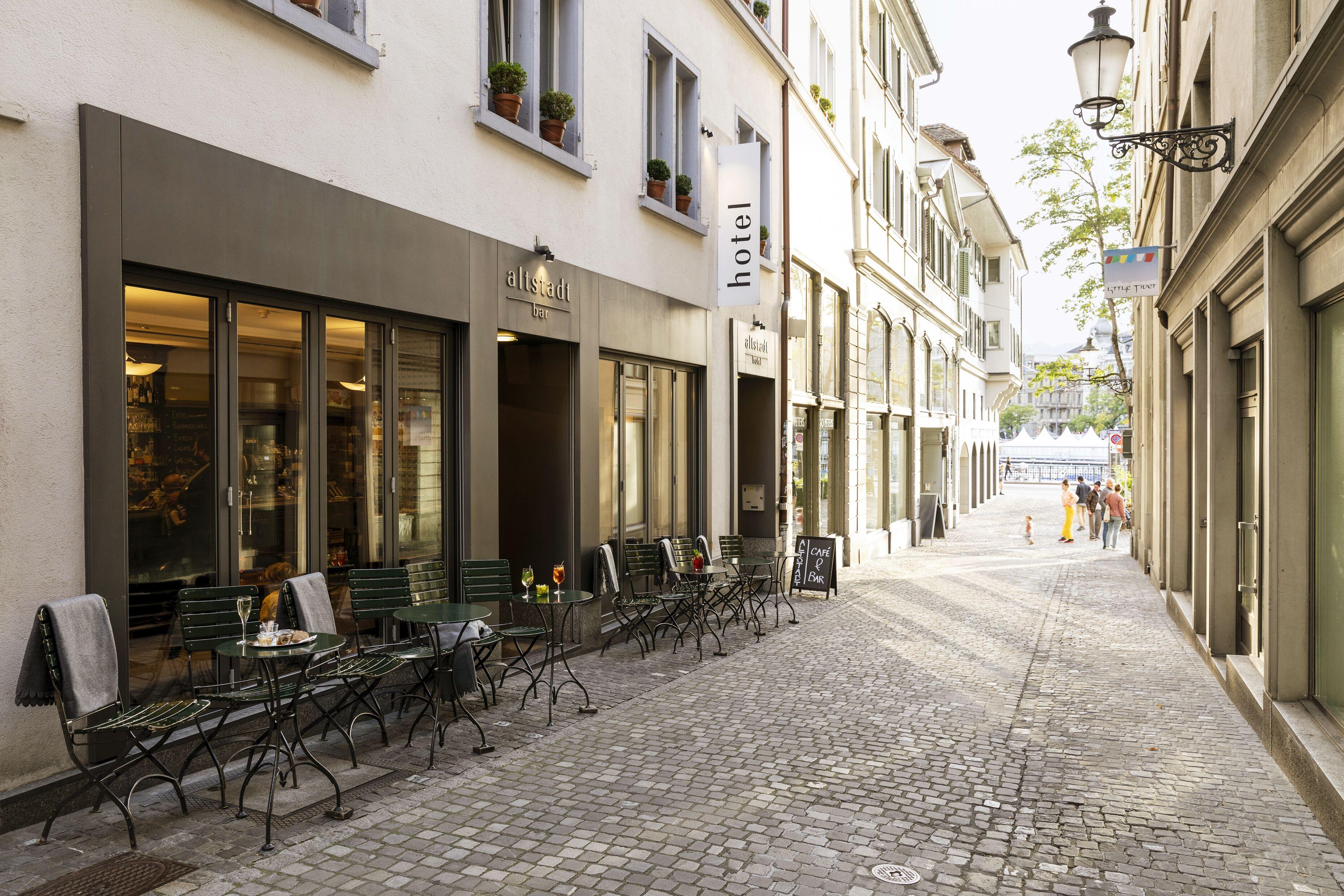
Walk it downhill from the Lindentor side rather than climbing from below. Shooting toward the Grossmünster as you descend, its belfry peeks out between the rooftops and houses — that layered framing is the reason to come here, and it looks like a different century when the lane is empty.
- Best subject: The steep cobbles in the foreground with the church tower rising behind the houses.
- Who it beats: Kirchgasse wins over the busier Old Town lanes for anyone who wants architecture with depth and no crowds. Niederdorf only wins if you want atmosphere and café life.
- Watch your footing: Polished cobbles and cold air make this descent genuinely slippery. Shoot from the top first, then walk down.
Niederdorf Side Lanes
The Niederdorf is a tangle of narrow lanes rather than a single street, which makes it the right place to wander without a plan — and the wrong place to expect one clean hero shot.
My read: use Niederdorf for texture and detail rather than postcard views. Intersecting lanes, iron signs, worn thresholds and slivers of sky between eaves are where this district pays off.
Any side lane works; the further you get from the main drag, the better the emptiness.
- Best subject: Looking down a lane toward a lit window or shopfront for a warm-versus-cool contrast.
- Order of play: Augustinergasse first and early, Kirchgasse second, Niederdorf last — it fills up slowest and forgives a later start.
Church Exteriors Worth Shooting Without Paying to Go In
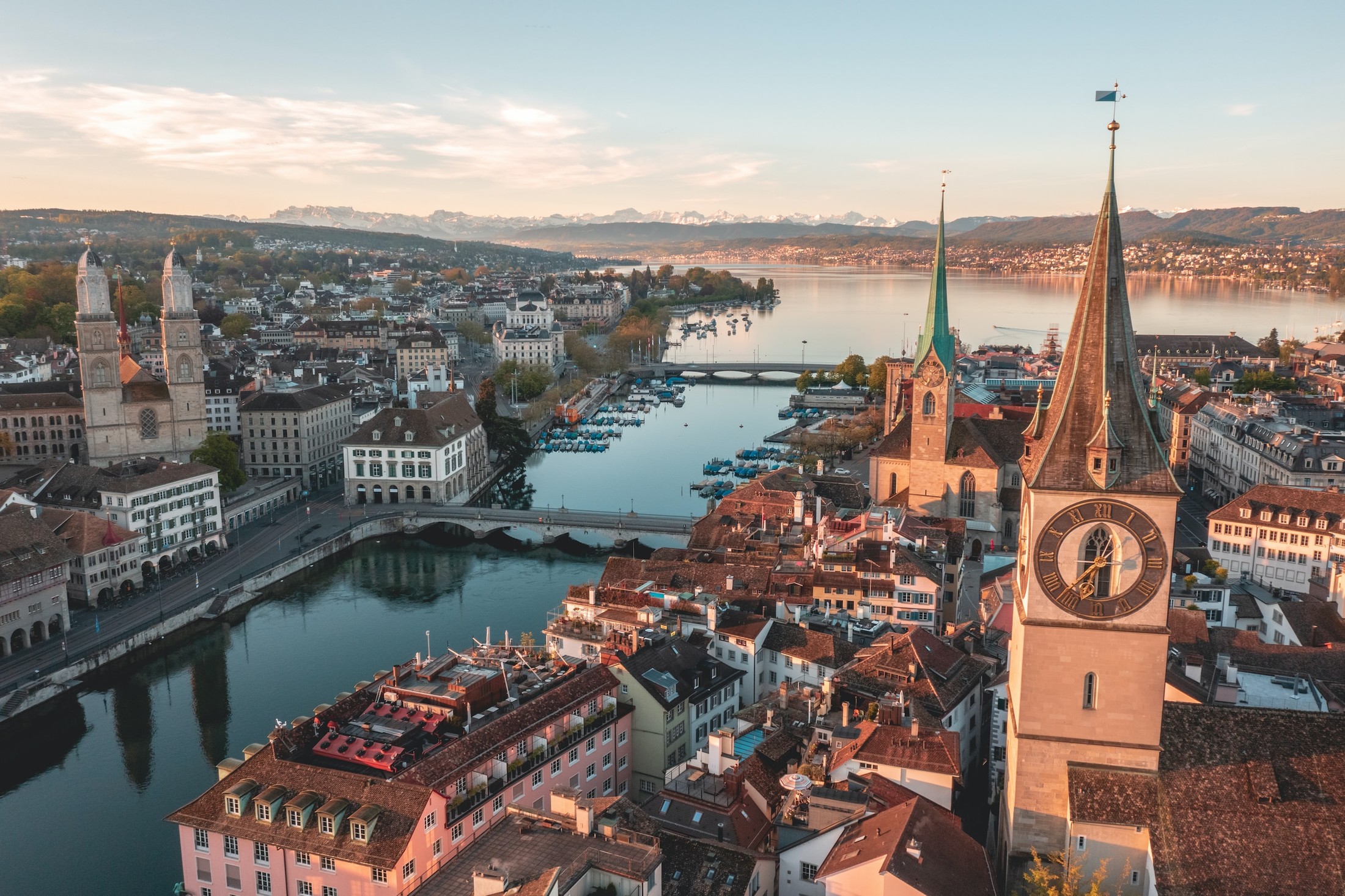
Two churches anchor almost every Zurich Old Town skyline shot, and the best of both is visible from the street — the Grossmünster’s twin Romanesque towers and the rose window above its west portal, and the Fraumünster’s green spire lifting off the opposite bank. Shoot the exteriors first; the paid interiors are optional.
Grossmünster Exterior
The Grossmünster dates to the 12th century and still carries the Charlemagne founding legend that gives the building its name and its mythology. The towers are the icon of the city, but I would not spend the whole visit on them — the west portal’s rose window is the shot most people walk past without noticing.
- Worth your time: The twin Romanesque towers from any right-bank square — this is the frame that says Zurich.
- Missed by most: The rose window above the west portal. Stand back far enough to keep the portal arch in frame and let the window sit at the top third.
- My call: Give the exterior a full pass before considering the tower climb, because the towers photograph better from outside than they shoot from.
Fraumünster Exterior and Cloister
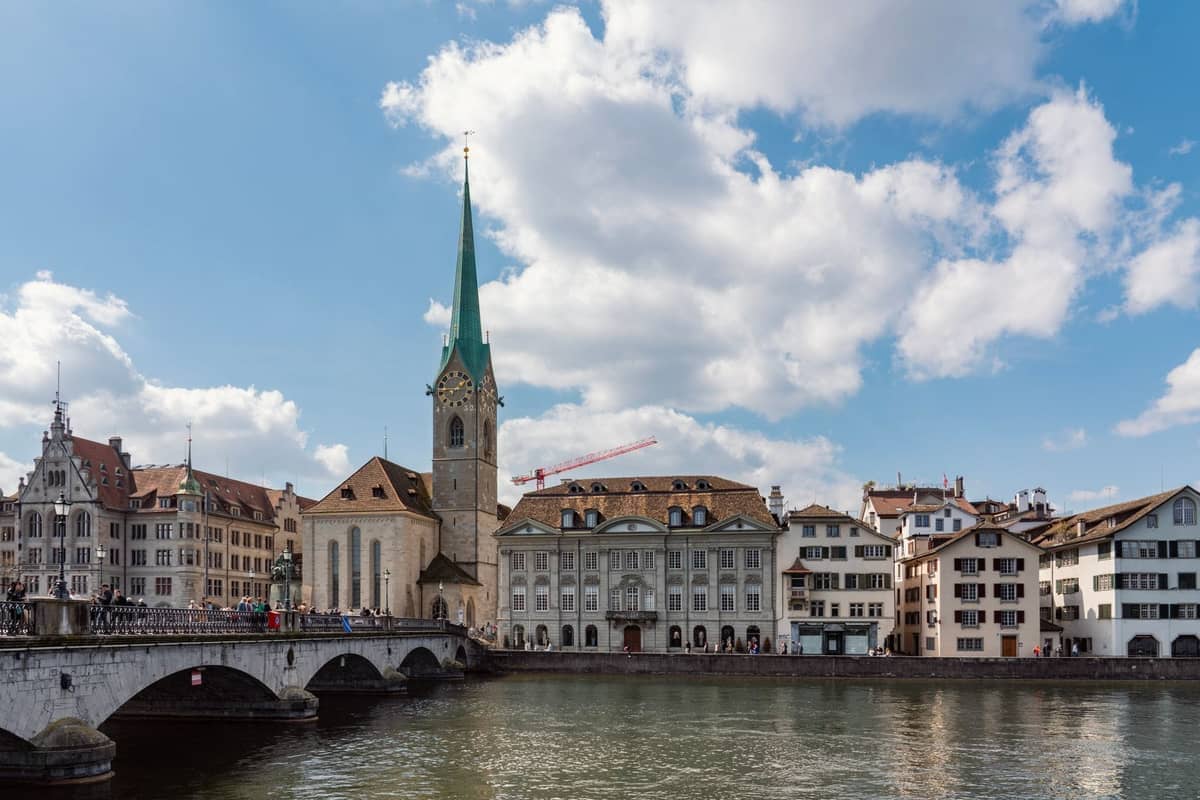
Founded in the 9th century as a Benedictine women’s abbey, the Fraumünster is the more elegant of the two churches and the one that rewards patience. Its slender green spire is the detail that makes a Zurich skyline recognizable, and the adjoining cloister courtyard is the single most underrated free frame in the Old Town.
- Best frame: The cloister courtyard — intricate Gothic architectural detail with enough open sky to shoot upward without clutter.
- Shoot it backlit: The courtyard works best against low winter sun, when the arches go silhouetted and the stonework keeps its edge.
- Know before you go: The famous Chagall windows sit inside the paid interior, so they are not part of a free exterior walk. Decide separately whether the entry is worth it.
Between the two, the Grossmünster wins for drama and skyline scale; the Fraumünster wins for detail and quiet. If time is short, shoot the Grossmünster towers from across the water, then walk the short distance to the Fraumünster cloister for the close-up work the larger church cannot give you.
Christmas Lights and Markets in the Old Town
The Christmas markets run from November to December, and for a free winter photo shoot they change the Old Town more than any other single event on this list. Stalls, strings of light and steaming Glühwein occupy the squares and lanes that are plain daylight geometry the rest of the year.
If your dates are flexible, pick the market window — it is the one season when the medieval backdrop gets dressed up for you at no cost.
Expect the markets to run from late November through December, but confirm the exact opening dates each year because Zurich shifts them annually.
Werdmühleplatz Market
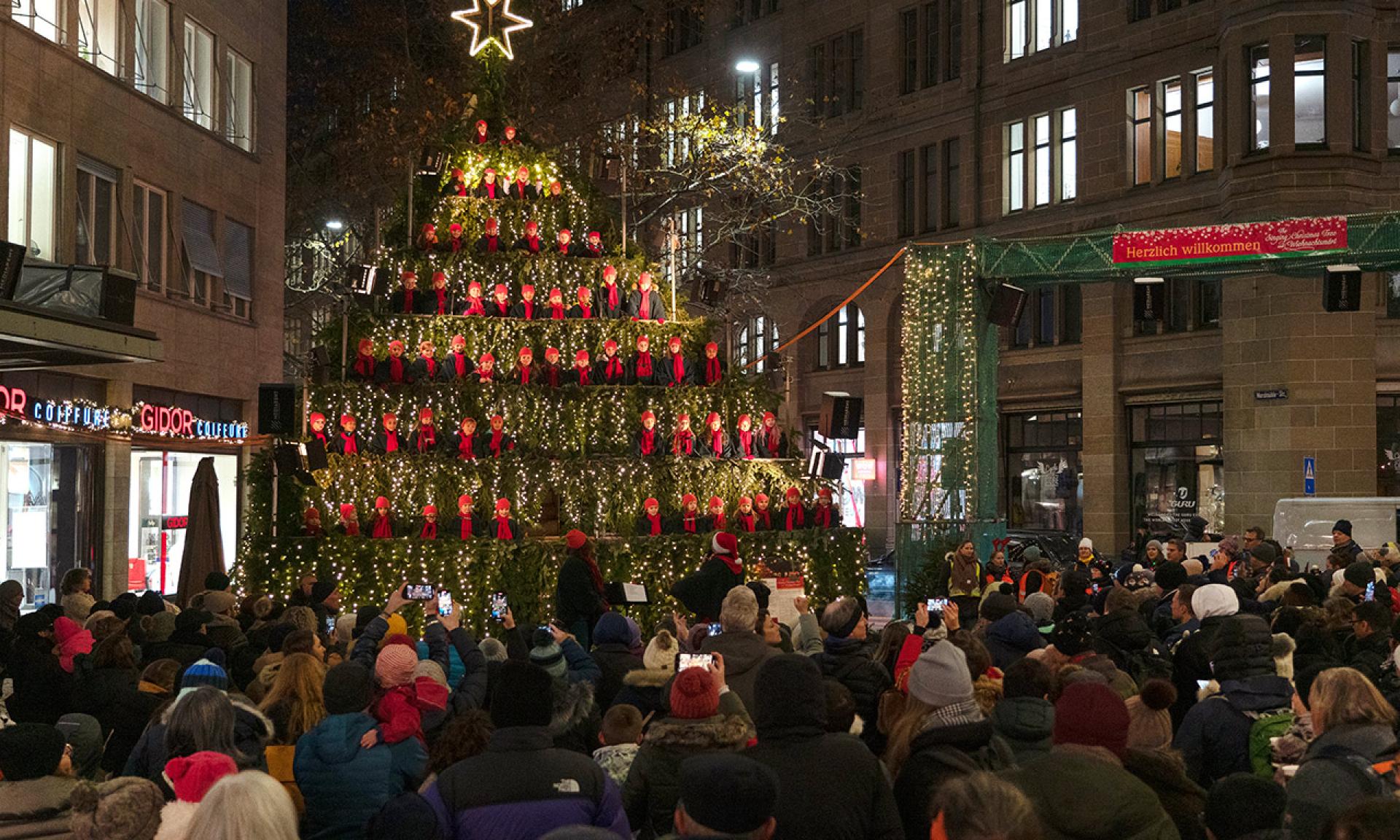
Werdmühleplatz is the market I would shoot first. The wooden stalls are clustered tight enough to fill a frame completely, and the Glühwein stands keep the whole square glowing in warm orange — the most flattering light in the Old Town on a cold, dark evening.
The adjoining streets carry the atmosphere outward, so you can pull back into a lane and shoot the market as a pool of light rather than fighting the crowd head-on.
- Best angle: Shoot into the stall glow with the lane behind you, then turn around for the market spilling light onto wet cobbles.
- What to include: Glühwein mugs and ornament stalls give the shot human scale — the square alone reads as a generic European market.
- Honest verdict: It is small and busy at peak hours. That is the trade-off for a market contained in one shootable square.
The Lucy Lights on Bahnhofstrasse
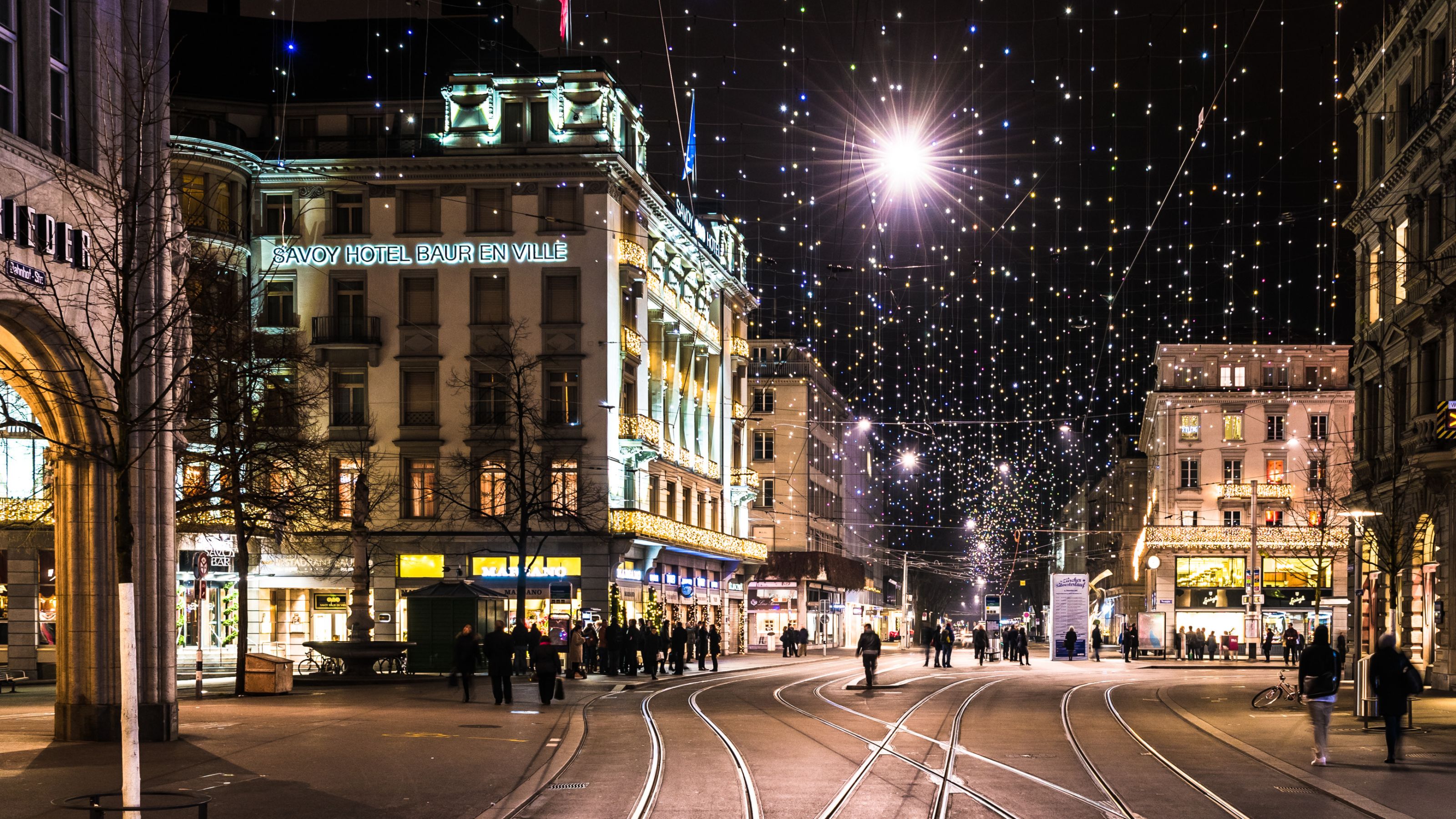
The Lucy lights installation on Bahnhofstrasse turns the street into a tunnel of warm light, and it is the single strongest free image in Zurich in winter. Walk the length of it rather than shooting from one spot — the tunnel effect only reads when the lights converge down the avenue ahead of you.
Positioned at the Old Town end of the street, it is an easy add-on to a Werdmühleplatz shoot without a tram ride or a detour.
- Why it wins: The lights do the exposure work for you, so phone shots come out well without any technique.
- When to shoot it: After the market, once the sky has gone fully dark — the tunnel is the subject and the sky does not matter here.
Shooting the Markets After Dark
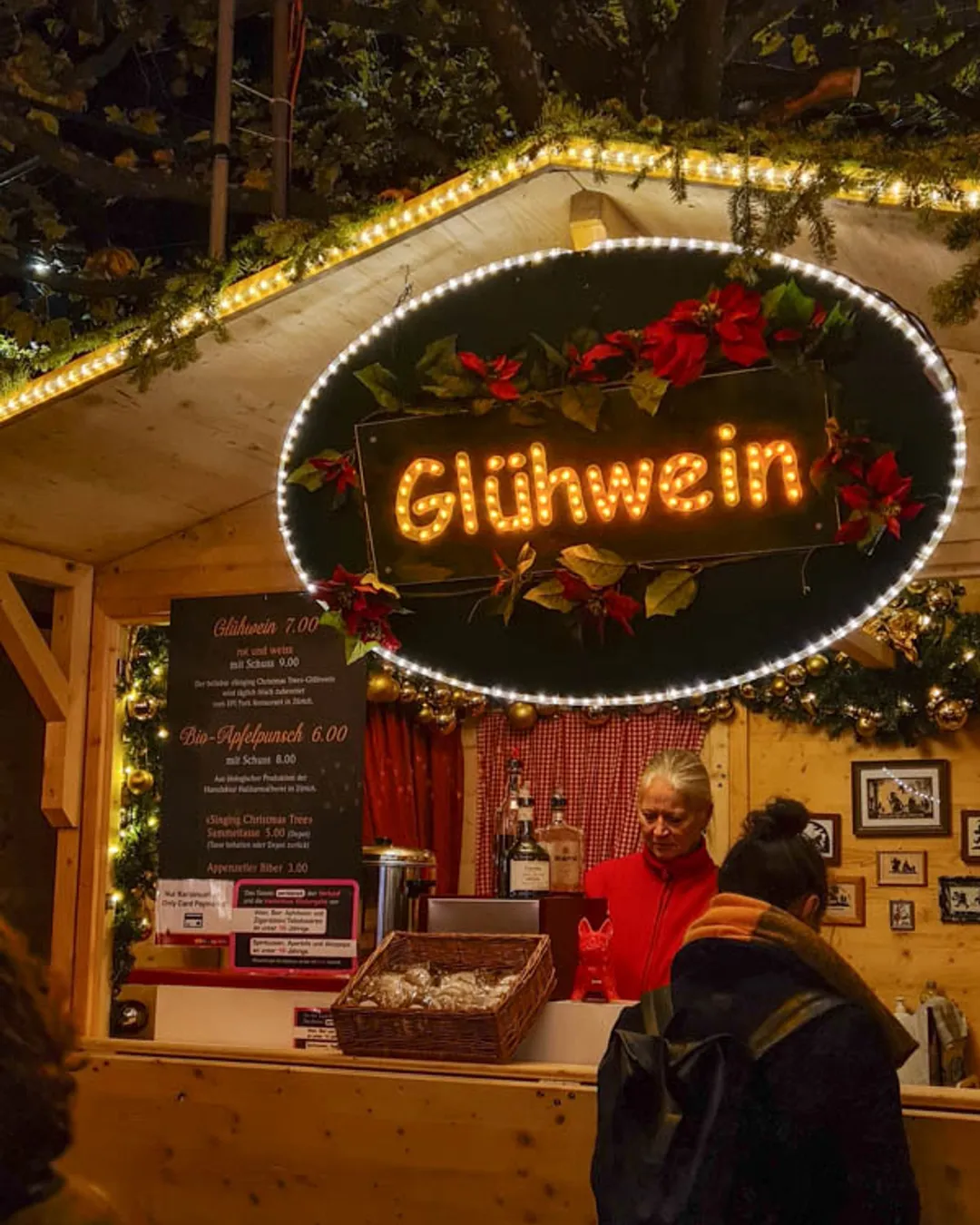
Markets reward patience over gear. Work the edges of Werdmühleplatz first, where the crowd thins and the stall light reaches the surrounding facades, then move closer once you have your wide establishing shot.
The lights that make these squares beautiful also make them forgiving: warm tungsten tones dominate, and the busy stalls hide the modern details that weaken daytime frames.
- Move with the crowd: The market atmosphere spills into the adjoining Old Town streets, so gaps between groups give you clean lane shots just a few steps away.
- Keep it free: Everything here is shot from the square and street — no stall purchase or market entry is required.
- Sequence it: Werdmühleplatz for the stalls and Glühwein glow, Bahnhofstrasse for the Lucy lights. One evening covers both.
A One-Day Winter Photo Walk Through the Old Town
This loop is only about forty minutes of actual walking end to end, and that is exactly why it beats a scattergun list of locations: the Old Town’s light shifts several times before dinner, so the smart move is to walk the same compact route in stages and shoot each stretch under the light it was made for.
Do it in the order below and you never retrace a step until the deliberate return to the river after dark.
Morning: Lanes and Elevated Views
Start at Augustinergasse before 7am and take the uphill legs first — you want your hands warm and your patience intact while you frame the facades and climb.
- Augustinergasse to Lindenhof — roughly 4 minutes uphill over cobbles, so wear real soles rather than fashion boots.
- Lindenhof down through the Kirchgasse descent — roughly 10 minutes toward the twin towers, the longest leg of the morning.
- Kirchgasse to the Niederdorf lanes — roughly 5 minutes, and the point where the walk flattens out.
Morning is the only slot where the elevated viewpoint and the lanes reward patience. Everything else in the Old Town is an afternoon problem.
Midday and Afternoon: River and Squares
Midday belongs to the squares and the bridges, because those are the compositions that only get better after dark — shoot them now for geometry, then come back tonight for mood.
- Niederdorf to Grossmünsterplatz — about 3 minutes to the postcard square.
- Grossmünsterplatz to Münsterbrücke — about 2 minutes; nothing in the Old Town is far from the river.
- Münsterbrücke to Münsterhof — about 4 minutes across the water and into the square.
- Münsterhof to Werdmühleplatz — about 8 minutes north toward the station end.
If you are paying to step inside a church, do it in this middle stretch — it is the least photogenic light of the day, so spend it somewhere the sky is irrelevant.
Blue Hour and Night
Blue hour is the reason to build the entire day backwards: be in position 15 to 30 minutes after sunset, the window where the sky still holds colour and the streetlights have risen to roughly match it.
- Werdmühleplatz back to the river — about 9 minutes, the only backtrack on the route, and worth it.
- Bridge to the sheltered river quays — about 3 minutes once the wind picks up on the span.
Here is the tip that saves the shot: pick your exact blue-hour composition in daylight and stand where you will stand. That balance between sky and streetlight lasts roughly twenty minutes, and you will burn half of it looking for the right vantage point.
Is Everything Really Free?
Switzerland has a reputation for emptying wallets fast, but the Old Town photo walk is the exception: every square, bridge, lane and riverbank on this list costs nothing to shoot. Your only real spending decisions are whether to pay for two church interiors — and my answer for a winter photography trip is no, save the money.
Everything on This List
Street and square photography in Zurich is unrestricted and free of charge, so the entire walk — river views, facades, cobbled lanes, market squares, church exteriors — runs at zero cost. That matters in winter, when you want the freedom to duck into a café and wait out flat light rather than feel committed to a paid ticket.
- Budget win: Treat the day as a CHF 0 shoot and spend what you save on dinner in Niederdorf.
- Best value moment: The exteriors are the story in winter — snow, spires and warm windows photograph better than any interior on a short visit.
- Payment habit: Carry some Swiss francs anyway; small Old Town cafés and market stalls are easier with cash.
The Two Exceptions
Two Old Town churches charge admission to go inside, and both charge to climb high. Expect roughly CHF 5 for Fraumünster admission and CHF 5 to climb the Grossmünster towers, though fees change — confirm on the churches’ official sites before you go.
- Skip Fraumünster: The green spire and exterior are free and stronger subjects; pay only if the stained-glass interior is a personal priority.
- Worth CHF 5 once: The Grossmünster tower climb earns its money for anyone who wants an elevated frame of the river and rooftops without waiting for clear weather elsewhere.
My rule: photograph both churches from outside first, then decide. In practice, most visitors regret the interior ticket and wish they had spent that hour shooting the lanes instead.
Shooting Aesthetic Winter Photos: Camera and Phone Tips

Zurich’s winter cold is not harsh by Alpine standards, but it is relentless on batteries — a phone that lasts a full day in September will die before blue hour ends in December. Treat power and white balance as the two things you settle before you leave the hotel, and the Old Town’s low light becomes an asset instead of a problem.
Battery Life in the Cold
Below roughly 5°C, lithium-ion capacity drops noticeably, and the drain accelerates every time you open the camera app or use the screen at full brightness. Plan for your phone to lose its charge far faster than the specifications suggest, and carry a slim power bank in an inside pocket where your body heat keeps the cells warm.
- Insulate, don’t just carry: a pocket beats a backpack. Batteries held at body temperature hold their charge substantially longer than ones sitting in an outer bag.
- Charge to full before dusk: the entire photo walk happens in the late afternoon and evening, so a lunchtime top-up is worth more than an overnight one.
- Swap the strategy on a camera body: keep a spare battery warm and rotate it in when the first one drops — a cold battery that reads empty often recovers once warmed.
- Reduce the drains you can: drop screen brightness, kill background apps, and avoid reviewing every frame on the LCD.
Phone Settings for Snow and Night
Snow and warm streetlight are the two exposures that break automatic settings, and the Old Town gives you both in the same frame.
- Lock exposure up for snow: phone meters want to turn white snow grey. Tap the snow, then drag the brightness slider up a notch or two before shooting.
- Use Night Mode deliberately: hold the phone steady for the full capture window rather than tapping and moving.
- Brace against stonework: low walls, parapets and stone railings around the squares act as free tripods — rest the phone flat, use the self-timer, and let the stabilisation do nothing.
- Let white balance stay warm: the amber cast of the streetlight is the mood of winter Zurich. Auto white balance will try to neutralise it and flatten the image.
- Shoot RAW if your phone offers it: mixed snow-and-lamp contrast is exactly where a RAW file saves a frame in editing.
Camera Settings Worth Changing
A wide lens and a normal lens cover the whole Old Town — anything longer is dead weight in lanes where you cannot step back.
- Tram light trails: set a shutter somewhere in the two-to-eight-second range and let the trams paint the street.
- Stabilise hard: those multi-second exposures need a solid surface, since a rail or wall beats handheld at this shutter speed.
- White balance: fix it on a warm preset or shoot RAW and correct later; snow under lamps swings badly toward blue or orange on auto.
- Weather sealing matters: wet snow finds unsealed bodies and lenses, so protect the mount when switching glass.
Frequently Asked Questions
What time should I start shooting in winter?
Start at Augustinergasse before 7 or 8am for clean lanes, use late morning for raking light on stone detail, and be in position for blue hour about 15 to 30 minutes after sunset.
The full timing breakdown is in the one-day photo walk section.
Do I need a tripod for the Old Town?
No — the stone parapets, low walls and railings around the squares work as free tripods if you brace the phone or camera flat and use the self-timer.
For multi-second tram light trails on Bahnhofstrasse, though, a solid surface is essential.
Is it worth paying to go inside the churches?
My rule is to photograph both exteriors first and then decide, because the green spire, cloister and rose window are free and photograph better than the interiors on a short visit.
The exceptions and approximate fees are covered in the section on what is really free.
What happens if it is cloudy all day?
Shoot tight details and compressed lane shots instead of wide facades, since overcast skies turn architectural views to gray mush, and use flat light for Münsterhof’s symmetrical baroque facades.
Be ready to sprint for a wide shot the moment the cloud breaks.
Where should I go for photos after dark?
Werdmühleplatz gives you warm stall glow and Glühwein mugs for human scale, and the Lucy lights on Bahnhofstrasse create a tunnel effect that works even on a phone.
Both sit within a few minutes of the Old Town and require no purchase to shoot.
Go Get Your Blue Hour Shot
Start tomorrow morning at Augustinergasse before 8am, walk uphill to Lindenhof, then work your way down Kirchgasse to the river and save the bridges for the light after 4:30pm.
Pick your exact blue-hour vantage point at Münsterbrücke while it is still daylight so you are standing still when the twenty-minute balance between sky and streetlight begins.
This is the rare city where the best winter images cost nothing but an early alarm and a warm coat, so charge the power bank tonight and go earn the shot.
Leave a Reply