

Three hundred pastel cottages press shoulder-to-shoulder along dirt lanes barely wide enough for two people, their rooftops dripping with scrollwork that looks exactly like piped royal icing on a cake. Flower boxes overflow in watermelon pink and butter yellow, and the whole neighborhood smells faintly of salt air and garden soil rather than gingerbread spice.
This is real architecture — actual Carpenter Gothic homes built over 150 years ago — not a holiday display made of flour and candy. America’s so-called gingerbread house towns exist year-round, permanently rooted in walkable neighborhoods from Martha’s Vineyard to Northern California, and they photograph like nowhere else on earth.
This guide helps you decide which type of gingerbread experience to build a trip around: storybook architectural towns or seasonal edible displays — and which specific destination deserves your limited vacation days.
For the architectural towns, expect to spend roughly $150–$300 per night at a mid-range inn in shoulder season, $400–$600+ during peak summer on Martha’s Vineyard, or as little as a day-trip budget of gas and ferry fare if you’re already on Cape Cod.
Quick-Pick Guide: Which Gingerbread Town Fits Your Trip
Not every gingerbread town delivers the same experience, so scan this snapshot before you commit to a destination. Each row pairs a specific vibe with the town that nails it best.
| If You Want This Vibe | Go Here | When |
|---|---|---|
| The ultimate concentration — 318 tiny cottages on car-free lanes | Oak Bluffs, Martha’s Vineyard | June–August; Grand Illumination Night in mid-August |
| Polished beach resort meets 600+ Victorian homes | Cape May, New Jersey | May–June or September–October for thin crowds |
| Jaw-dropping Queen Anne mansion on a redwoods road trip | Eureka, California | Year-round; pair with Avenue of the Giants |
| Instantly iconic Painted Ladies plus 48,000 hidden Victorians | San Francisco, California | Year-round; spring for lightest tourist traffic |
| Midwest charm, brick Main Street, zero coastal crowds | Galena, Illinois | October for foliage or December for candlelit home tours |
| Spanish moss, iron-lace balconies, slow Southern pace | Savannah, Georgia | March–May or October–November |
If you want edible gingerbread spectacles instead of real architecture, target major hotel lobbies and community contests from late November through early January — those are an entirely separate trip.
What Exactly Are “Gingerbread House Towns”? The Two Types Explained
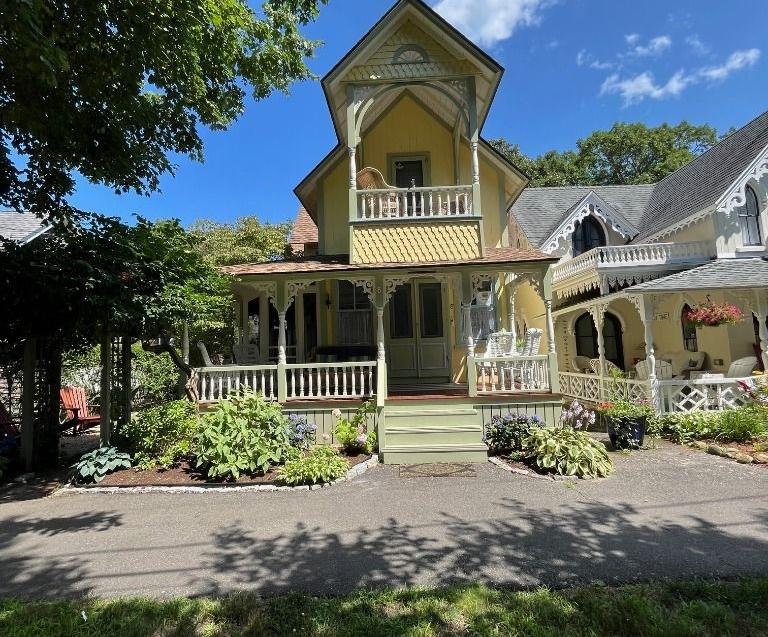
That Pinterest image that pulled you in — the candy-colored cottages with scalloped trim and overflowing flower boxes — is almost certainly real architecture, not confection. But “gingerbread house” means two completely different things in American travel, and confusing them will send you to the wrong state at the wrong time of year.
Type 1: Real Houses With “Gingerbread” Architecture
These are actual buildings — homes, churches, cottages — covered in ornate Victorian-era wood trim that bakers and travelers started calling “gingerbread” because the scrollwork, cut-out fretwork, and scalloped bargeboards resemble piped icing. The most famous concentration in the country is the Martha’s Vineyard Camp Meeting Association campground in Oak Bluffs, where roughly 300 Carpenter Gothic cottages sit on winding pedestrian-only lanes, each painted a different pastel and dripping with decorative trim.
Other towns with strong gingerbread-architecture neighborhoods include:
- Cape May, New Jersey — the largest collection of Victorian painted homes on the East Coast, packed into a walkable 19th-century seaside grid.
- Eureka, California — a Northern California lumber town with ornate Victorian mansions, including the famously elaborate Carson Mansion.
- Galena, Illinois — a Mississippi River hill town where 85% of the buildings sit in a National Register Historic District.
- Savannah, Georgia — Greek Revival and Victorian homes draped in live oaks and iron lace across 22 park-like squares.
- San Francisco’s Painted Ladies — the pastel row houses along Steiner Street facing Alamo Square, instantly recognizable from every TV show set in the city.
These places exist year-round. You visit them on foot, in any season. You can photograph them, walk past them, and in some cases tour the interiors. They are the real deal — actual neighborhoods where people live.
Type 2: Edible Gingerbread Houses — Displays, Competitions, and Record-Breakers
The second type is literal gingerbread: flour, sugar, icing, and candy assembled into temporary structures for holiday display. Hotels, museums, and communities across the U.S. build these every November and December, sometimes competing for world records.
The scale ranges from tabletop kits for kids to engineering feats — like the 39,201-cubic-foot gingerbread house built in Bryan, Texas, by the Texas A&M Traditions Club, which used 7,200 pounds of flour and over 22,000 pieces of candy.
High-profile displays pop up at luxury hotels and historic estates nationwide during the holiday season, typically from mid-November through early January. These are seasonal — miss the window and you miss the display entirely.
Which Type Should You Prioritize?
| Factor | Architectural Towns (Type 1) | Edible Displays (Type 2) |
|---|---|---|
| When to visit | Year-round; peak charm May–October | Mid-November through early January only |
| What you get | Walkable real neighborhoods, history, photography | Temporary seasonal spectacles, often free |
| Best for | Architecture lovers, photographers, anyone who wants a full-town experience | Families with kids, holiday travelers, Instagram hunters |
| Staying power | Permanent — plan a weekend around them | Fleeting — check dates before booking travel |
If that Pinterest photo had you imagining a weekend wandering past storybook cottages with a coffee in hand, you want Type 1. If you’re planning a December trip and want to see jaw-dropping sugar structures, you want Type 2.
This article covers both — but the towns with real gingerbread architecture are the ones worth building a trip around.
Oak Bluffs, Martha’s Vineyard: America’s Most Enchanting Gingerbread House Town
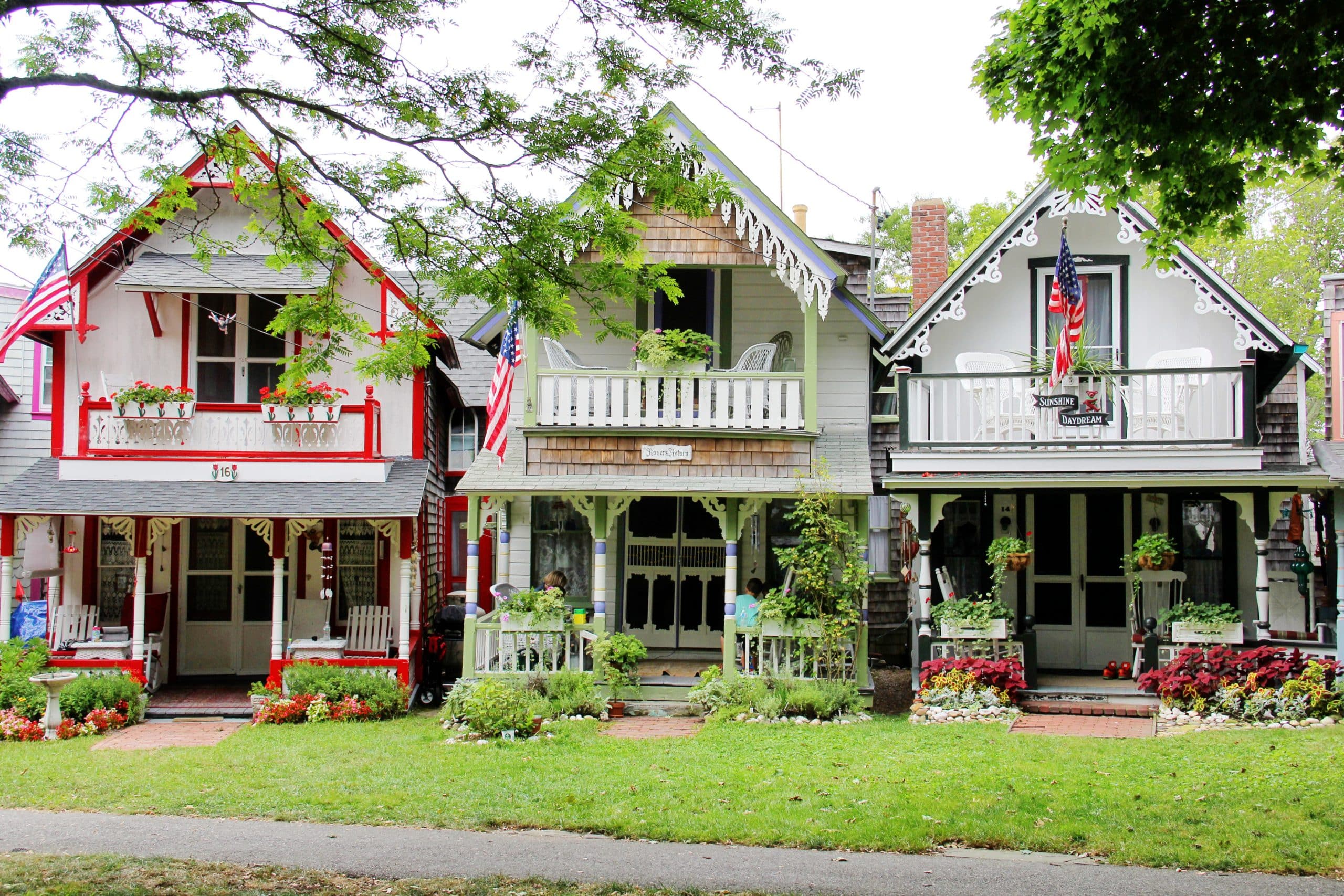
Three hundred and eighteen tiny cottages — painted in watermelon pink, butter yellow, and periwinkle blue — sit packed shoulder-to-shoulder along dirt lanes no wider than a garden path. This is the Martha’s Vineyard Camp Meeting Association (MVCMA) Campground in Oak Bluffs, and nothing in the continental United States looks quite like it.
The neighborhood sits just a few blocks from the Oak Bluffs ferry terminal and Circuit Avenue, yet feels like it belongs in a different century entirely.
From Tent Revivals to Fairy-Tale Cottages: The History of the MVCMA Campground
The Campground began in 1835 as a Methodist camp meeting ground — a place where families pitched canvas tents for week-long religious revivals each summer. By the 1600s-style standards of New England that was nothing unusual, but what happened next was.
Families started replacing their tents with permanent wooden structures, each one barely larger than the tent it replaced. They built porches, added scrollwork, painted them in bright colors, and a neighborhood unlike any other in America took shape.
The MVCMA was incorporated in 1864, and the cottages you walk past today are the direct descendants of those original revival tents. Roughly 318 remain, most measuring between 300 and 700 square feet.
The entire Campground is listed as a National Historic Landmark — one of the earliest such designations in the country.
The Carpenter Gothic Architecture That Defines the Gingerbread Style
The architectural term is Carpenter Gothic — a mid-19th-century style that adapted Gothic Revival motifs (pointed arches, steep gables, ornamental tracery) to lightweight wood construction. In Oak Bluffs, that means board-and-batten vertical siding, steeply pitched rooflines, and the detail that gives the neighborhood its nickname: elaborate scrollwork bargeboards that trace the roof edges like piped icing on a cake.
Each cottage is essentially a folk-art canvas. Owners have customized their homes with Victorian-era ornamentation for over 150 years — carved brackets, turned porch posts, jig-sawn trim in patterns you will not find repeated anywhere else on the island.
If the architecture interests you beyond the Instagram shot, pick up Storybook Cottages: America’s Carpenter Gothic Style, which devotes significant pages to the Oak Bluffs examples alongside nationwide comparisons.
How to Find and Navigate the Campground’s Winding Lanes
First-time visitors routinely walk right past the entrance. The Campground sits behind a modest boundary of hedges and fencing — look for the MVCMA signs on Circuit Avenue or approach via Waban Park.
Once inside, you will find a network of narrow, unpaved lanes organized in a radial pattern around the central Tabernacle.
A few navigation notes worth knowing before you go:
- Walking only: The lanes are pedestrian-scale. Leave the car at your Oak Bluffs lodging or the town parking areas near the harbor.
- Thirty minutes is enough for a casual walkthrough of the main loop. An hour lets you appreciate the details, photograph individual facades, and sit on the Tabernacle green.
- Respect private property: These are real homes, many with small plaques naming the cottage and original owner. Walk the lanes and look, but do not step onto porches or peer into windows.
- Morning light wins: East-facing facades catch the best light before 10 a.m. The lanes are also least crowded at that hour — midday in July and August, you will share them with tour groups.
The Tabernacle: A Wrought-Iron Marvel at the Heart of the Campground
At the geographic and spiritual center of the Campground stands the Tabernacle, a soaring wrought-iron and steel structure completed in 1879. Designed by John B.
Maybury, it seats roughly 2,000 people beneath a cathedral-like canopy of open ironwork. The building replaced an earlier wooden pavilion and remains one of the earliest large-scale iron-frame structures in the United States.
The Tabernacle is open to visitors during daylight hours in season and hosts community events, concerts, and the famous Grand Illumination ceremony. Even if you have no interest in the religious history, stand inside and look up — the iron tracery is genuinely remarkable engineering for its era.
Grand Illumination Night and Other Campground Traditions You Can Experience
The single best reason to time your Oak Bluffs visit for mid-August is Grand Illumination Night, held on the third Wednesday of August each year (confirm exact date with mvcma.org as schedules can shift). Here is what happens: every one of the 318 gingerbread cottages hangs Japanese lanterns — dozens per house, in every color imaginable.
All lanterns stay dark through a community sing held at the Tabernacle, then a ceremonial first lantern is lit and the rest follow in a cascade across the entire neighborhood.
It is one of the most photogenic and genuinely moving community events anywhere in New England. Arrive early — the lanes fill with visitors, and the best vantage points near the Tabernacle go fast.
Other Campground traditions worth noting:
- Illumination Night tickets: Typically free, but the MVCMA requests a small donation. Check the website for current details.
- Community Sings: Held at the Tabernacle on select evenings throughout the summer season — a tradition stretching back to the 1800s.
- Cottage tours: The MVCMA occasionally organizes interior tours of select cottages. These sell out fast and are announced on the MVCMA website and social channels.
If your schedule does not align with Grand Illumination, the Campground is open for self-guided walking visits daily during the warmer months. It is enchanting in any weather — but a clear August evening with lanterns glowing is the version that will make you book a return trip before you leave the island.
Other US Towns Famous for Gingerbread Architecture You Should Visit

Oak Bluffs gets the fame, but five other American towns deliver that same dollhouse-on-steroids feeling — ornate scrollwork, candy-colored paint, and porches dripping with gingerbread trim. The difference is scale: these are full-size houses, not cottage-scale, and each town pairs the architecture with a completely different trip experience.
| Town | Vibe | Best For |
|---|---|---|
| Cape May | Polished beach resort meets Victorian time capsule | Couples, architecture lovers, shoulder-season escapes |
| Eureka | Foggy Northern California port town with jaw-dropping Queen Annes | Road-trippers, photography buffs, offbeat seekers |
| San Francisco | Iconic painted ladies against a modern skyline | First-timers, quick photo stops, urban explorers |
| Galena | Midwest charm, brick-lined Main Street, rolling hills | Families, weekenders from Chicago, antique shoppers |
| Savannah | Spanish moss, iron-lace balconies, slow Southern pace | History buffs, food lovers, multi-day stays |
Cape May, New Jersey
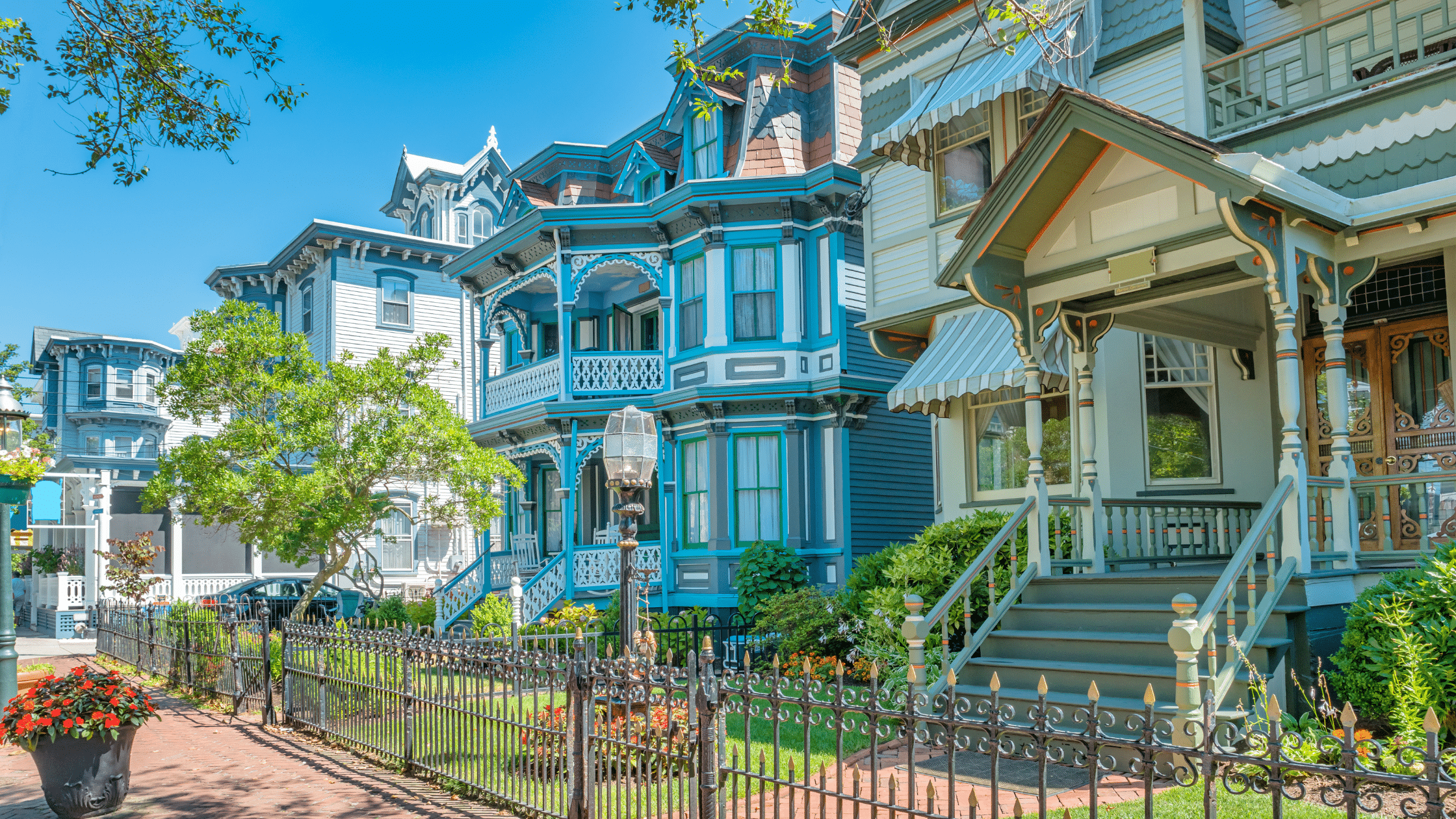
Cape May holds the largest collection of Victorian-era structures in the United States — the entire city is a National Historic Landmark, one of only a handful with that designation. Over 600 Victorian buildings crowd the roughly two-mile peninsula at New Jersey’s southern tip, many with the intricate jigsaw-cut gingerbread trim, fish-scale shingles, and turrets that define the style.
Walk the blocks between Washington Street and the beach and you’ll pass through every Victorian sub-style — Gothic Revival, Italianate, Second Empire, Queen Anne — often on the same block. The Emlen Physick Estate, an 1879 Stick-style mansion, is the anchor for guided walking tours run by Cape May MAC (Mid-Atlantic Center for Arts & Humanities).
Their “Historic District Walking Tour” runs seasonally and is the fastest way to learn what you’re looking at rather than just snapping photos.
When to go: Cape May shines in shoulder season — May, early June, September, and October — when rates drop and the town isn’t packed with summer beach traffic. December’s “Physick Estate Christmas Tours” turn interiors into Victorian holiday showcases, which pairs perfectly with a gingerbread-house hunt.
Where to stay: Base yourself within walking distance of Washington Street and the pedestrian mall. The town is small enough that anything labeled “Historic District” puts you steps from the architecture.
Expect roughly $200–$450/night in peak summer for a Victorian-era B&B, dropping to $120–$250 in shoulder season.
Insider detail: Skip the crowds at the Washington Street Mall and walk Columbia Avenue and Ocean Street instead — the gingerbread detail on the private homes there is equal to or better than the commercial properties, and you’ll have the sidewalks to yourself.
Eureka, California
The Carson Mansion dominates Eureka’s reputation — this 1886 Queen Anne monstrosity is arguably the most ornate Victorian house in America, a riot of turrets, gables, gingerbread scrollwork, and colored glass that photographs well from every angle. Directly across the street sits its pastel companion, the Pink Lady, creating a photo pairing that’s hard to beat.
But Eureka’s gingerbread story goes well beyond one block. The Old Town Historic District is a National Historic Landmark packed with commercial Victorian buildings from the 1860s–1900s timber boom.
Walk Second and Third Streets between C and M Streets and you’ll find restaurants, galleries, and shops inside buildings with original pressed-tin ceilings, ornamental cornices, and gingerbread-laced porches.
Getting there: Eureka sits on US-101, roughly 280 miles north of San Francisco — about a 4.5-hour drive through redwood country. Fly into ACV (Arcata-Eureka Airport) for a faster arrival, though rental car options are limited; book ahead.
Best pairing: Make Eureka a stop on a redwoods road trip rather than a standalone destination. It slots perfectly between the Avenue of the Giants to the south and Redwood National Park to the north.
Insider detail: The Carson Mansion is now the private Ingomar Club — you cannot go inside. But the best vantage point for a photo without parked cars blocking the facade is the south side of 2nd Street, early morning before the downtown traffic picks up.
San Francisco, California
You already know the image: the row of pastel Victorian homes — the “Painted Ladies” or “Seven Sisters” — with the modern skyline rising behind them at Alamo Square. It’s one of the most photographed scenes in America, and yes, it’s worth the visit in person.
The houses at 710–720 Steiner Street were built between 1892 and 1896 in the Edwardian style and painted in the earth tones that survived the 1906 earthquake.
But the Painted Ladies are just seven houses. San Francisco has over 48,000 Victorian and Edwardian homes citywide — the real gingerbread treasure hunt is in neighborhoods most tourists skip.
- Haight-Ashbury: The grandest painted ladies with the most elaborate gingerbread trim line Waller, Page, and Frederick Streets. These are private homes, so respect the porches and stay on the sidewalk.
- Castro District: The 600 block of Castro Street and surrounding blocks hold some of the most carefully restored Queen Annes in the city.
- NoPa (North of Panhandle): Divisadero and Hayes Streets have a high concentration of Victorian homes that haven’t been stripped of their trim — real gingerbread lovers will appreciate the craftsmanship here.
Getting there: Muni’s 5-Fulton bus stops at Alamo Square, or it’s a 15-minute rideshare from downtown. Street parking exists but is tight and time-limited.
Insider detail: Visit Alamo Square at sunrise if you want the Painted Ladies photo without scaffolding, parked RVs, or selfie crowds. By 10 a.m., the park edge is packed.
The view with the skyline behind the houses is facing east, which means morning light is ideal anyway.
Galena, Illinois
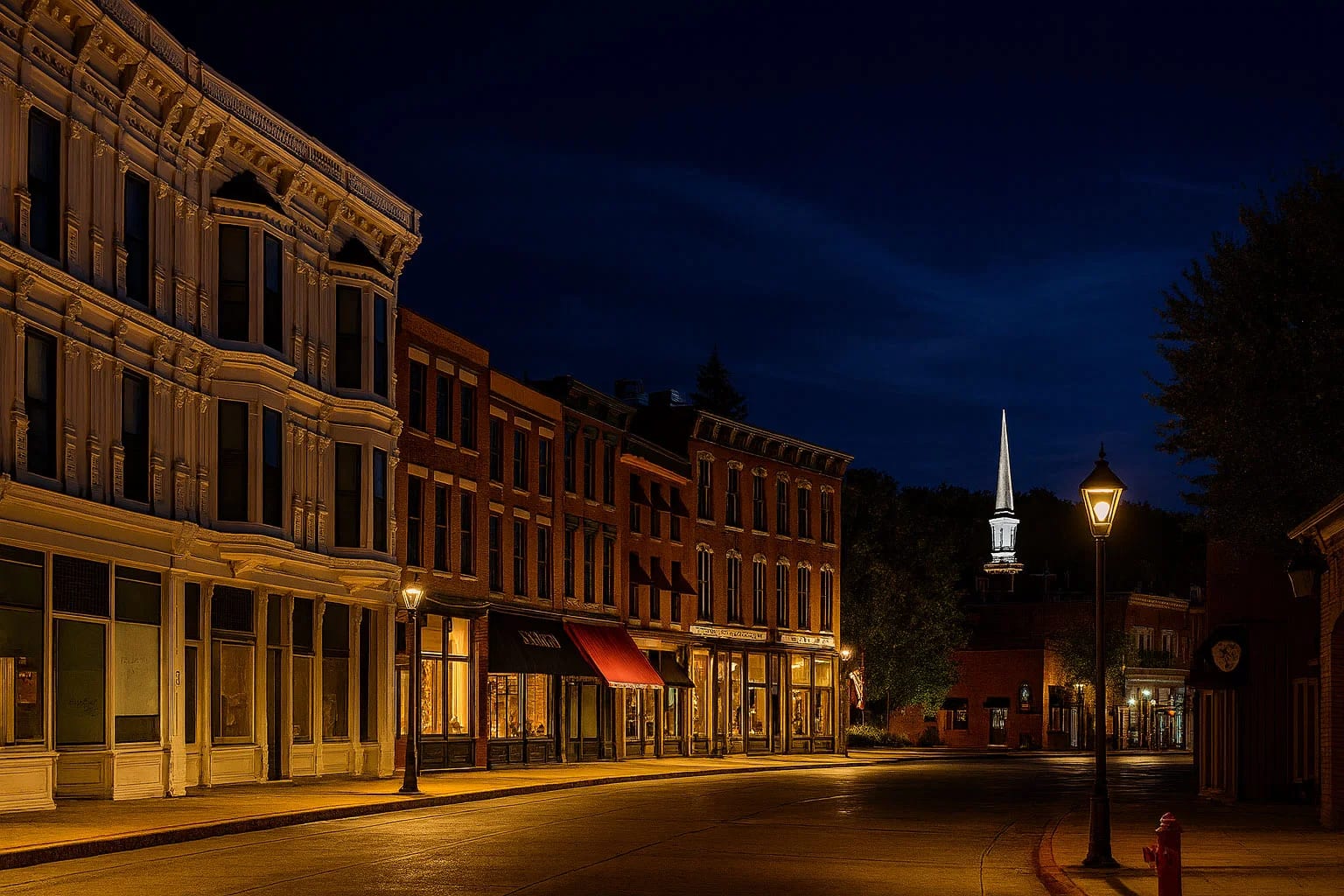
Galena’s Main Street is what happens when a 19th-century river town never needed to modernize — 85% of the town’s buildings are listed on the National Register of Historic Places. The steep, curving brick street is lined with Italianate, Greek Revival, and Victorian commercial buildings that now house boutiques, wine-tasting rooms, and restaurants.
It’s the best-preserved Main Street in the Midwest, and it delivers a gingerbread jolt without the coastal crowds.
The town sits in the rolling hills of northwest Illinois, roughly three hours west of Chicago — close enough for a weekend trip but far enough to feel like a different era. The Ulysses S.
Grant Home, an 1860 brick Italianate donated to the future president by local citizens, is a quick tour worth taking to round out the architecture story beyond Victorian gingerbread.
When to go: October for fall foliage wrapping the bluffs, or December when the town stages “Taste of Christmas” with candlelit tours of private historic homes. Summers are pleasant but bring the biggest crowds, especially on weekends.
Where to stay: Book a room in one of the historic inns or B&Bs along Main Street or Bench Street — both put you within walking distance of everything. Expect roughly $150–$300/night for a downtown historic property.
Insider detail: Drive or walk up to Horseshoe Mound Preserve for a panoramic view of the town’s rooftops and steeples nestled in the valley below — it’s the single best angle to appreciate how much Victorian-era architecture Galena actually has.
Savannah, Georgia
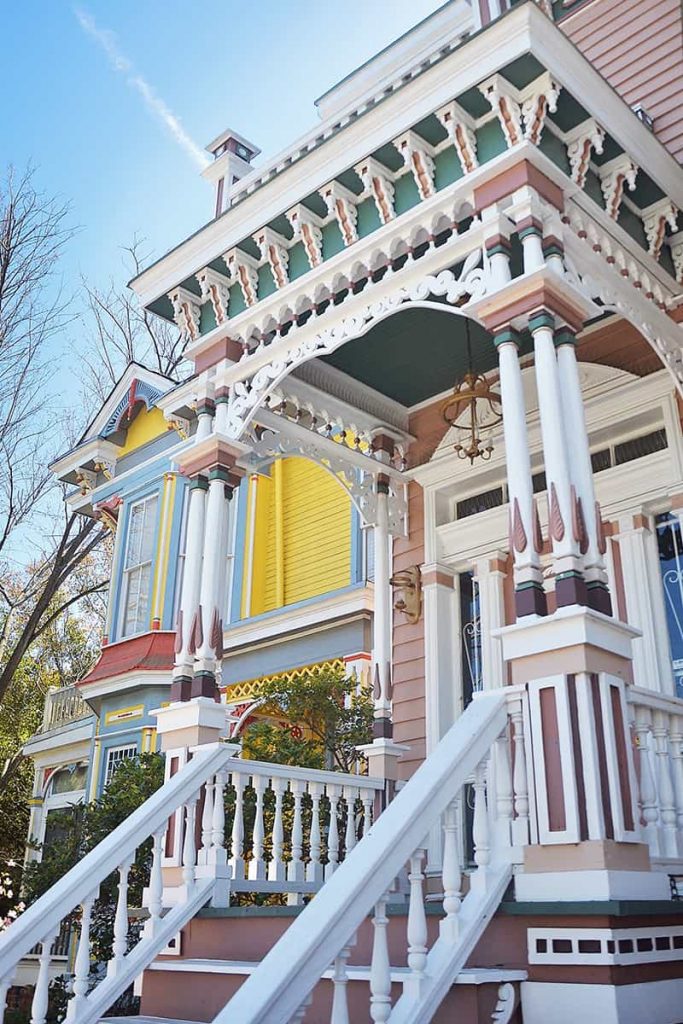
Savannah’s gingerbread reputation rests in its Victorian District, the 50-block neighborhood south of Forsyth Park that the National Register of Historic Places recognized as a distinct district in 1974. This is where the ornate Queen Anne and Italianate homes sit under canopies of Spanish moss — gingerbread trim, fish-scale shingles, wraparound porches, and iron-lace balconies are standard on block after block.
It’s less manicured than Cape May and more lived-in, which is part of the appeal.
The 22 historic squares throughout downtown each anchor a slightly different architectural era, but Monterey Square and its surrounding blocks deliver the highest concentration of gingerbread-detail facades. Walk Bull Street south from the squares into the Victorian District proper and the style shifts from Federal and Greek Revival to full-blown Victorian ornamentation.
Getting oriented: Savannah is a walking city. Start at Forsyth Park, walk south into the Victorian District, then loop back through the squares. The entire route is flat and manageable in two to three hours at a stroll.
Where to stay: The Victorian District itself has vacation rentals in restored homes that let you wake up inside the architecture. For hotels, stay within the Historic District north of Forsyth Park for walkable access to restaurants and the squares.
Insider detail: Most visitors stick to the squares and River Street. Walk the residential blocks of the Victorian District early on a weekday morning and you’ll find homeowners tending gardens, open front doors, and the kind of gingerbread detail — original stained glass, hand-turned porch spindles — that tourist-heavy blocks have lost to renovation.

Holiday Gingerbread House Displays and Competitions Across the USA
Forget tabletop kits — the gingerbread displays worth traveling for in America involve 7,200 pounds of flour, 600 hours of construction, and structures taller than most apartments. These edible spectacles pop up every holiday season in hotels, museums, and small-town community centers from coast to coast.
This is a completely different animal from the architectural “gingerbread” cottages covered elsewhere in this guide. These displays are made of actual gingerbread, they’re temporary, and the best ones are fiercely competitive.
If you’re building a holiday trip around them, here’s what’s worth seeing and how to plan around it.
Record-Breaking Confectionery Creations Worth a Detour
The Guinness World Record for the largest gingerbread house was set in December 2013 in Bryan, Texas, by the Texas A&M Traditions Club. The structure measured 39,201 cubic feet — roughly the footprint of a tennis court — and required 7,200 pounds of flour, 7,200 eggs, 3,000 pounds of brown sugar, and 22,304 pieces of candy to decorate.
It raised funds for the St. Joseph Hospital Foundation and drew national press, putting Bryan squarely on the holiday map that year.
Record-breaking builds like this are one-off charity projects rather than recurring annual attractions, so chasing them requires staying alert to announcements. Local news outlets and community tourism boards typically confirm public viewing dates and locations several weeks before the holiday season begins.
If a record attempt is underway near your travel route, it’s worth a detour — you’ll likely never see anything that scale again in the same town.
Lavish Hotel and Museum Gingerbread Displays
Luxury hotels have turned gingerbread into a full-blown arms race of confectionery ambition. The Sheraton Princess Ka’iulani Hotel in Honolulu once commissioned a gingerbread village measuring 24 feet wide and 14 feet tall — complete with churches, a palace, a carousel, and a train station, all blanketed in 200 gallons of icing.
The build took executive chef Ralf Bauer and his team over 660 hours. While that specific display was a one-season creation, the scale is typical of what major hotels and resorts attempt each year.
Large hotel chains and resort properties regularly install elaborate gingerbread constructions in their lobbies from late November through early January. These are almost always free to view, even for non-guests — just walk into the lobby.
The displays change annually in theme and scope, so what you see on a blog from three years ago is likely already dismantled. Call the property directly before visiting to confirm dates and any public access restrictions, especially at smaller boutique hotels that may limit viewing to registered guests during peak weekends.
Insider tip: Visit hotel gingerbread displays on weekday mornings. Weekend afternoons in December bring holiday crowds that make photography nearly impossible, and some hotels rope off displays during private events.
A Tuesday at 10 a.m. often means you’ll have the entire installation to yourself.
Family-Friendly Gingerbread Building Events and Contests
The Portsmouth Historical Society in New Hampshire runs an annual gingerbread house contest that actually welcomes first-time entrants — a genuine rarity in a competition circuit that skews heavily toward repeat professionals. Categories typically include youth, adult, and family divisions, and entries go on public display throughout the holiday season.
If you’re near the Seacoast region, this is the kind of small-town holiday event that justifies a half-day visit, paired with Portsmouth’s downtown shops and restaurants.
Communities across the country host similar contests and hands-on workshops from late November through mid-December. For families traveling with kids, these hit the sweet spot: entry fees are usually modest (often under $25), the events are local enough that you won’t need hotel planning beyond your nearest town, and children actually participate rather than just stare at cordoned-off displays.
The most reliable places to find these events aren’t travel sites — check local libraries, community recreation centers, and historical societies. They announce details on social media and community bulletin boards weeks before anything shows up in a Google search.
Book any associated workshops early; family sessions fill up by the first week of November in most markets.
Best Time of Year to Visit Gingerbread House Towns in the USA
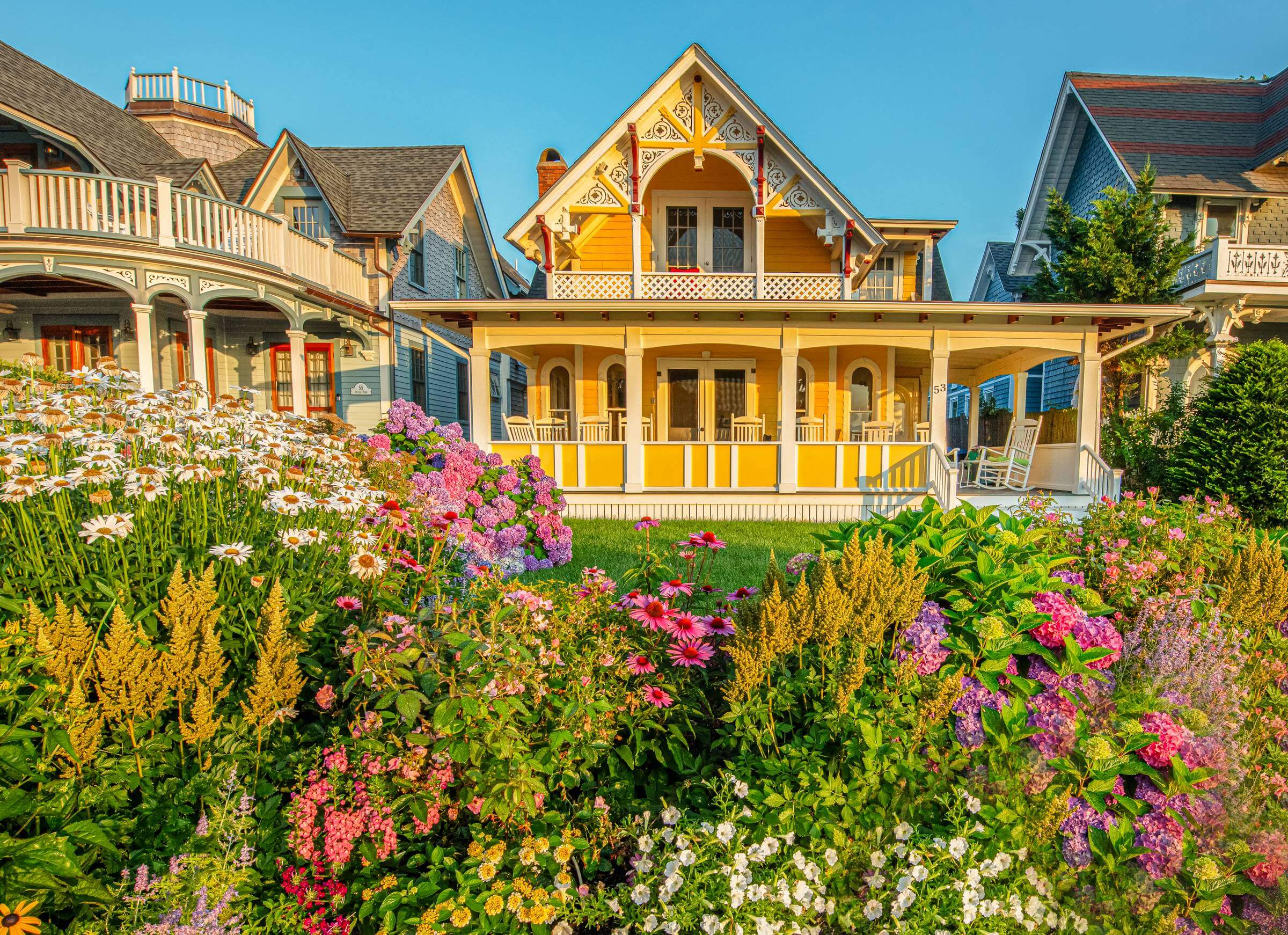
The third Wednesday of August transforms the Martha’s Vineyard Campground into a lantern-lit wonderland — and it’s the single most magical night to see any gingerbread town in America. But peak seasonality depends entirely on which type of gingerbread experience you’re after: real architectural towns or holiday confectionery displays.
They peak months apart.
Summer (June–August): The Sweet Spot for Architectural Towns
Summer is the undisputed best window for visiting actual gingerbread-house towns. Oak Bluffs’ cottages burst with overflowing window boxes and hanging flowers, the Campground buzzes with community life, and towns like Cape May, Eureka, and Galena put their Victorian details on full display in warm, walkable weather.
Expect the most crowds and highest lodging prices from mid-June through Labor Day, especially on Martha’s Vineyard. Book ferries and accommodations months in advance for that window.
The tradeoff is worth it — the towns are alive in a way shoulder seasons simply cannot match.
- Best for: Oak Bluffs, Cape May, Eureka, Galena, Savannah — the architectural towns that define this category.
- Peak moment: Grand Illumination Night, typically the third Wednesday in August at the MVCMA Campground. Confirm the exact date with the MVCMA before booking, as it can shift slightly year to year.
- Budget move: Early June or late August catches peak foliage and flowers with slightly thinner crowds and marginally better rates.
Fall (September–October): Best Weather, Thinnest Crowds
This is the sleeper season for gingerbread-town hopping. Temperatures are comfortable, summer tourists have cleared out, and towns like Galena and Cape May look stunning against autumn color.
You won’t get the Campground’s summer energy in Oak Bluffs — many seasonal businesses begin closing after Labor Day — but you’ll have the gingerbread cottages largely to yourself.
- Best for: Galena, Cape May, and Savannah — mainland towns with year-round infrastructure that don’t depend on a summer season.
- Skip for Martha’s Vineyard: Ferry schedules reduce significantly in fall, and many Oak Bluffs restaurants and shops close by mid-October.
Holiday Season (Late November–December): For Displays and Competitions Only
Hotel gingerbread displays, museum installations, and community competitions typically run from the week before Thanksgiving through late December or early January. Lavish hotel builds and record-breaking confectionery creations are the draw here — not the architectural towns, which go dormant or look bare without their gardens.
- Best for: Holiday gingerbread displays at major hotels, museum exhibitions, and family-friendly building events covered in the holiday displays section of this guide.
- Timing tip: Most hotel displays are unveiled in late November and stay up through New Year’s. Arrive the first week of December for the best balance of fresh displays and manageable holiday crowds.
Winter and Spring (January–May): Off-Season, With One Exception
There is little reason to visit gingerbread architectural towns in deep winter or early spring. Gardens are bare, ferry service to islands is limited, and many seasonal towns are shuttered.
The one exception: San Francisco’s Painted Ladies and gingerbread-adjacent Victorians are viewable year-round, and spring brings mild weather and thinner tourist traffic.
If you must choose one season, choose summer for the towns and early December for the displays. They are fundamentally different trips — plan accordingly.
How to Plan Your Trip to the Gingerbread Cottages of Martha’s Vineyard
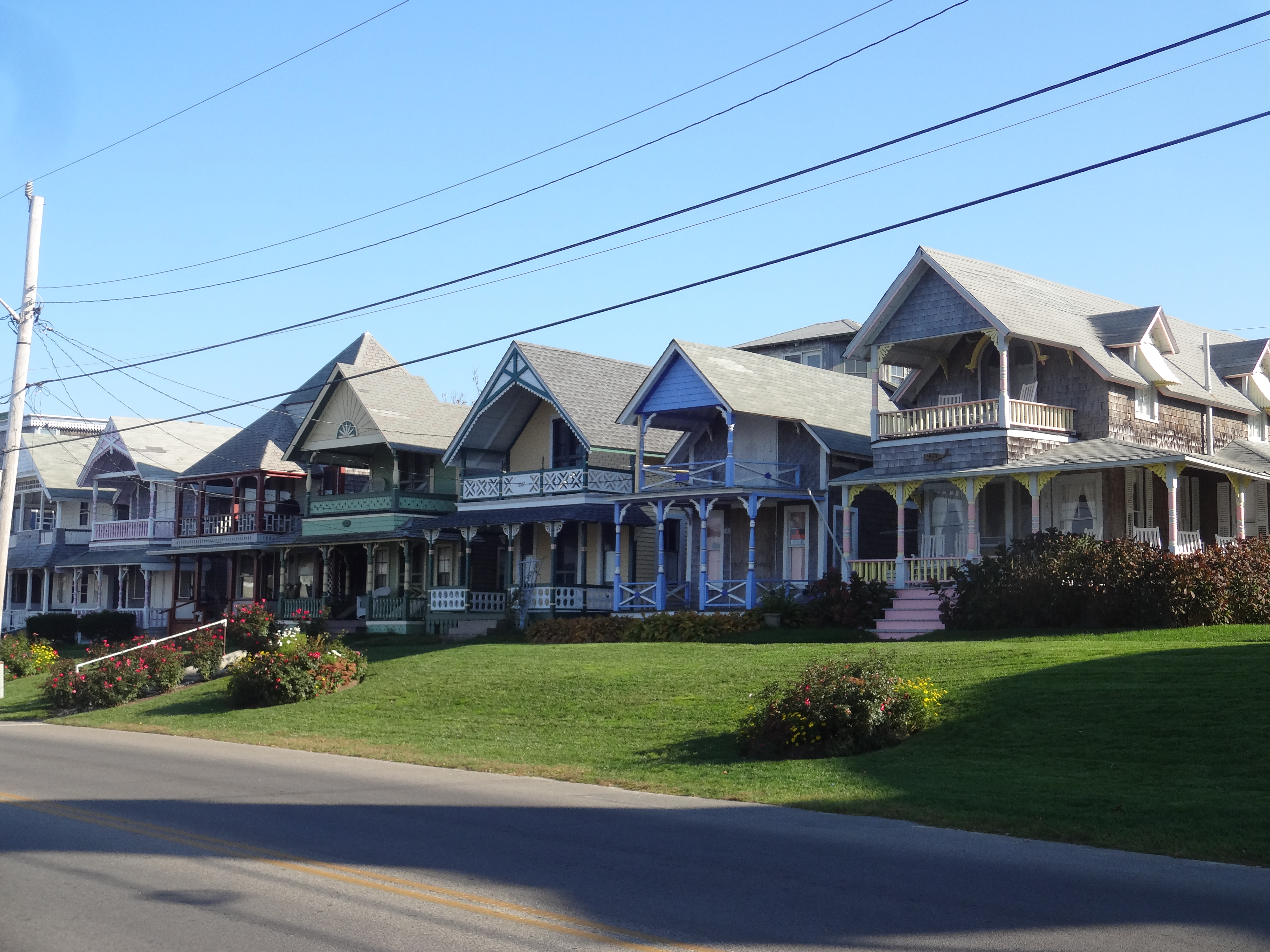
Planning a trip to the Campground’s gingerbread cottages starts with one critical decision: how you’re getting to the island, because your answer shapes everything from your budget to your packing list.
Ferry Options and Getting to Oak Bluffs Without a Car
You do not need a car to visit the Campground — and in peak summer, you probably shouldn’t bring one. The Steamship Authority runs the only year-round ferry service between Woods Hole on Cape Cod and Martha’s Vineyard, landing at either Vineyard Haven (year-round) or Oak Bluffs (typically mid-May through mid-October).
Foot passenger tickets run roughly $9–19 each way depending on season, and no reservation is needed for walk-on passengers. The crossing takes about 45 minutes.
Bringing a vehicle is a different story. Car reservations on the Steamship Authority fill up months in advance for summer — book as soon as the reservation window opens, usually in January for the upcoming season.
Expect to pay roughly $90–190+ round trip for a standard vehicle depending on length of stay and season. If you’re visiting just for a day or a single night, skip the car entirely.
The Campground is a five-minute walk from the Oak Bluffs ferry terminal.
Two additional ferry options serve Oak Bluffs seasonally:
- Hy-Line Cruises from Hyannis: A roughly 55-minute high-speed catamaran running spring through fall. Convenient if you’re coming from the Cape Cod side. Typically costs more than the Steamship Authority for foot passengers — confirm current fares with the operator.
- Seastreak from New York City: A seasonal high-speed ferry (usually summer only) running from Manhattan’s East 35th Street terminal directly to Oak Bluffs. The ride is roughly 5.5 hours. It’s a premium option price-wise, but it eliminates the drive to Cape Cod entirely.
Once on the island without a car, the VTA (Vineyard Transit Authority) bus system connects Oak Bluffs to every major town. Fares are typically $2–5 per ride depending on route. In summer, buses run frequently enough that you won’t feel stranded.
Where to Stay Near the Campground
Oak Bluffs is the right base for anyone prioritizing the gingerbread cottages and the town’s boardwalk energy over the quieter, more upscale vibe of Edgartown or Vineyard Haven. You’ll be within walking distance of the Campground, the beach, restaurants, and the ferry — the most car-free-friendly setup on the island.
Lodging considerations in Oak Bluffs:
- Boutique inns and hotels: Several small hotels sit within blocks of both the Campground and Ocean Park. Summercamp Hotel, recently renovated, is the closest major option to the gingerbread cottages. The Pequot Hotel and the Dockside Inn are other Oak Bluffs standbys — both walkable to everything. Expect summer rates in the $250–$600+ per night range for any Oak Bluffs hotel, with July and August commanding peak pricing.
- Vacation rentals: This is how most Vineyard visitors actually stay. Cottages and houses near the Campground or along the Oak Bluffs harbor are listed on VRBO and Airbnb, though inventory books out early for summer. A two-bedroom rental near Ocean Park typically runs $2,500–$5,000+ per week in peak season.
- Vineyard Haven alternative: If Oak Bluffs feels too buzzy or fully booked, Vineyard Haven is a 10-minute drive (or short VTA bus ride) north. It has a quieter, year-round-town feel with solid restaurants and its own ferry terminal.
Insider timing note: Book lodging for midweek stays in June or September if you want to see the cottages without shoulder-to-shoulder crowds. The cottages are privately owned — you can walk the lanes any time — but midweek mornings offer the best light for photography and the thinnest foot traffic.
What Else to Do in Oak Bluffs: Circuit Avenue, Ocean Park, and Beyond
The Campground will likely take an hour or two of your visit, so you’ll want a plan for the rest of your day — or days. Oak Bluffs packs a surprising amount into a small footprint.
- Circuit Avenue: The town’s main commercial strip, running parallel to the harbor. This is where you’ll find ice cream (Back Door Donuts has a cult following for its warm apple fritters sold late night), casual restaurants, souvenir shops, and the town’s social scene. It’s lively, occasionally crowded, and unmistakably a summer-boardwalk energy.
- Ocean Park: The wide, grassy oval flanked by large Victorian homes that you’ll spot from the ferry as you pull into Oak Bluffs. These are the grander Victorian houses — distinct from the miniature gingerbread cottages in the Campground. Ocean Park is the best spot for a picnic with a harbor view.
- Flying Horses Carousel: The oldest operating platform carousel in the country, dating to 1876. Rides are typically $3–4 per spin. It’s small and charming and takes about ten minutes — worth it with kids or as a quick nostalgia stop.
- Inkwell Beach and State Beach: Inkwell Beach is the closest walkable beach, right at the edge of town — small, popular, and social. State Beach stretches toward Edgartown and is wider with more space. Both are free to access.
- The Campground’s own events: If your visit overlaps with Grand Illumination Night or other MVCMA traditions, plan around them — these are the most memorable moments at the Campground. See the dedicated section on campground traditions for dates and details.
A solid Oak Bluffs day looks like this: morning walking the gingerbread lanes while the light is soft and the crowds are thin, late morning coffee on Circuit Avenue, midday at Inkwell Beach, afternoon exploring Ocean Park and the carousel, and dinner on the harbor before catching the evening ferry back — or staying put and watching the sunset from the Campground’s Tabernacle.
Insider Tips for Visiting and Photographing Gingerbread Houses
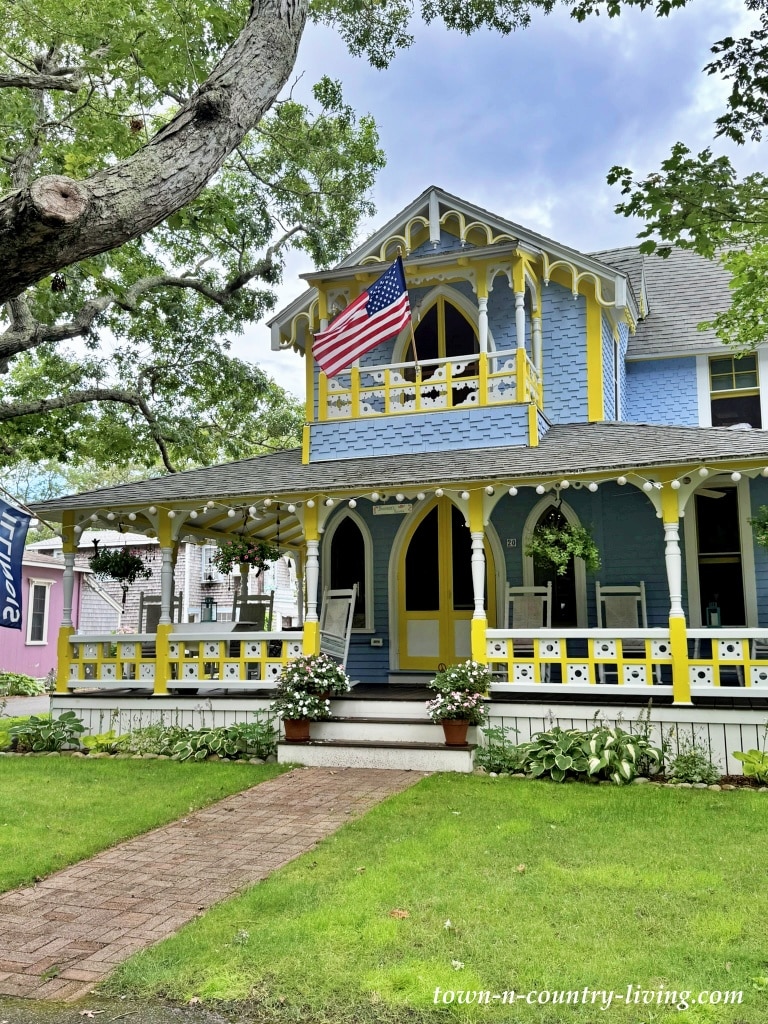
The winding lanes of the MVCMA Campground are car-free, which means you can stand in the middle of the road for that perfect shot without dodging traffic — but you’re photographing people’s actual homes, and the residents notice when you don’t respect that boundary.
Photography: What Actually Gets the Shot
Morning light between 8 and 10 a.m. hits the eastern-facing porches with a soft, warm glow that makes the pastel paint colors sing. By midday, the overhead sun washes out the intricate trim details and blows highlights on white-painted gingerbread scrollwork.
Late afternoon works on the western lanes but creates harsh shadows on the opposite side. Plan your route to match the sun’s position — walk the east-side lanes first thing, then loop west after lunch.
- Shoot low and wide: Crouch or kneel to capture the full height of a cottage with a tilted roofline against the sky. This angle exaggerates the whimsical proportions that make these houses so photogenic.
- Zoom into details, not just facades: The scalloped trim, turned porch brackets, and tiny window shutters are where the Carpenter Gothic magic lives. A 50mm or portrait lens isolates these elements without the distortion of a wide angle.
- Include the window boxes: The overflowing flower boxes and hanging plants are not decoration — they’re half the composition. Frame a close-up of trailing geraniums against the candy-colored clapboard.
- Skip the flash entirely: Natural light only. Flash flattens the dimensional trim work and kills the shadows that give the cottages their depth.
Grand Illumination Night: A Photographer’s Brief
If you’re specifically visiting for the third Wednesday of August lantern lighting, bring a tripod and a lens that handles low light well — the moment after the ceremonial first lantern is lit and the rest follow is spectacular, but it happens fast and in near-darkness. Arrive at least 90 minutes early to secure a position near the Tabernacle; the lanes fill quickly and tall hedges block sightlines from most angles.
A monopod is the minimum stabilization you need — handheld shots at that hour will be blurry unless your camera handles ISO 3200+ cleanly.
Etiquette That Keeps the Campground Welcoming
The MVCMA residents tolerate and even welcome visitors, but the goodwill has limits. Stay on the paths and porches are private — do not climb steps, peer through windows, or touch the trim work no matter how ornamental it looks.
Dogs must be leashed. The Campground is a neighborhood, not a museum, and the families who live here are the reason these cottages survive.
- Best visiting window without crowds: Weekday mornings in June or September. July and August weekends are packed, and finding an uncrowded lane for photography becomes frustrating.
- No cars, no bikes: Walk only. This is strictly enforced and makes for better photos anyway.
- Budget 60 to 90 minutes for a thorough walk-through with stops for photos. The Campground is compact — roughly two dozen narrow lanes — but the density of visual detail will slow you down more than you expect.
Applying These Tips to Other Gingerbread Towns
The same photography principles carry to Cape May’s painted Victorian streets and Eureka’s Carson Mansion block — shoot in golden hour, isolate ornamental details with a longer focal length, and respect that most of these are occupied residences or active businesses. In Cape May specifically, the trolley tours give you a routing overview but move too fast for serious photography; walk the side streets between the main avenues instead.
In Eureka, the Old Town district between C and M Streets has the densest concentration of Victorian and Carpenter Gothic details, and the parking is free on most side streets — use that as your base rather than circling the main drag.
Frequently Asked Questions
Can I visit these gingerbread towns year-round?
It depends on the town. The architectural treasures in places like Oak Bluffs on Martha’s Vineyard, Cape May, or Galena are permanent and viewable any time of year.
The magic is most palpable when the cottages are adorned with flowers and the campgrounds are active, typically from late spring through early fall. Lavish holiday gingerbread displays, however, are strictly seasonal, usually from November through early January.
Always confirm specific display dates with the venue, as they shift annually.
How much does it cost to visit?
Walking through the neighborhoods in Oak Bluffs’ MVCMA Campground or the historic districts of other gingerbread towns is completely free. Your main costs will be getting there—such as the Martha’s Vineyard ferry, which typically runs $20-$50 per person round-trip depending on the season and line—and any food, souvenirs, or lodging.
Special events like Grand Illumination Night are also free to attend. Holiday displays at hotels or museums may have a separate admission fee, often in the $10-$25 range for adults.
Is it possible to stay in a gingerbread house?
Not in the original, historic cottages—the vast majority are private residences or seasonal vacation rentals that book far in advance. In Oak Bluffs, the MVCMA has strict rules against turning the cottages into hotels.
Your best bet is to search for a vacation rental on the island well ahead of time. For the holiday display experience, some hotels that host massive gingerbread constructions do offer special room packages, but these are premium and sell out quickly.
What’s the most important thing to know before visiting Oak Bluffs’ Campground?
No cars are allowed on the narrow, winding lanes of the MVCMA Campground. You must walk in.
The most useful insider detail: the cottage clusters are numbered (like a neighborhood), not on a traditional grid. Grab a map from the Cottage Museum or Tabernacle upon arrival—GPS won’t help you navigate the labyrinth of paths.
The floral displays overflowing from every window box and porch are maintained by the cottage owners themselves, making the grounds a living, breathing garden.
Pick Your Town and Start Planning
Book your ferry to Oak Bluffs for a midweek stay in June or September if the architectural towns called to you — that window gives you the best light for photography, the thinnest foot traffic on the Campground’s lanes, and the most breathing room on lodging rates. If December is your window instead, choose one major hotel display in a city you are already visiting and arrive on a weekday morning before the holiday crowds flood the lobby.
These neighborhoods are worth the trip because the hand-carved scrollwork and folk-art paint schemes are genuinely irreplaceable — each year, renovations strip a few more original details, making the untouched examples rarer and more remarkable.
Head to mvcma.org right now to check Grand Illumination Night dates and ferry logistics, then build your trip backward from there.
Leave a Reply