Maple leaves the color of campfire embers line a ridgeline road above Lake Superior, and the only sound is your tires on pavement and wind rushing through a cracked window. A ferry carries you across dark water toward a car-free island where hoofbeats replace engines and the air smells like leather and wet leaves.
This isn’t New England—no tour buses clogging covered bridges, no $30 parking at a single overlook. The Great Lakes loop delivers seven dramatically different fall landscapes in ten days, from 450-foot sand dunes dropping into turquoise water to vineyards blazing gold along the 45th parallel.
I built this itinerary so you can stop second-guessing your start date, route direction, and which lodgings to book before they vanish. Expect roughly $100–160 per night at budget motels, $200–350+ at the splurge tier, and about $150–220 per person in unavoidable activity fees across the full trip.
Your Great Lakes Fall Road Trip at a Glance
If you only have five minutes, here’s exactly what to lock down before booking anything else.
- Best window: First two weeks of October — start north in the Upper Peninsula for peak color, then chase it south toward Traverse City as you loop back.
- Can’t-miss stops: Pictured Rocks boat cruise out of Munising, Brockway Mountain Drive in the Keweenaw, and the Lake of the Clouds overlook in the Porcupine Mountains deliver the three most photographed fall scenes on this route.
- Book first: Mackinac Island lodging fills 4–8 months out with tiny inventory — nail that reservation, then build every other night around it.
- Best multi-night base: Traverse City gives you two to three nights of access to Leelanau wineries, Old Mission Peninsula, and Sleeping Bear Dunes without repacking the car.
- Total budget for two: Roughly $2,500–5,500 for ten days depending on your lodging tier and how aggressively you book ahead.
- Smartest money move: Buy the non-resident Michigan Recreation Passport ($34) at your first state park gate — it covers every other state park stop and saves you $11 per visit.
Best Time to Visit for Peak Fall Colors
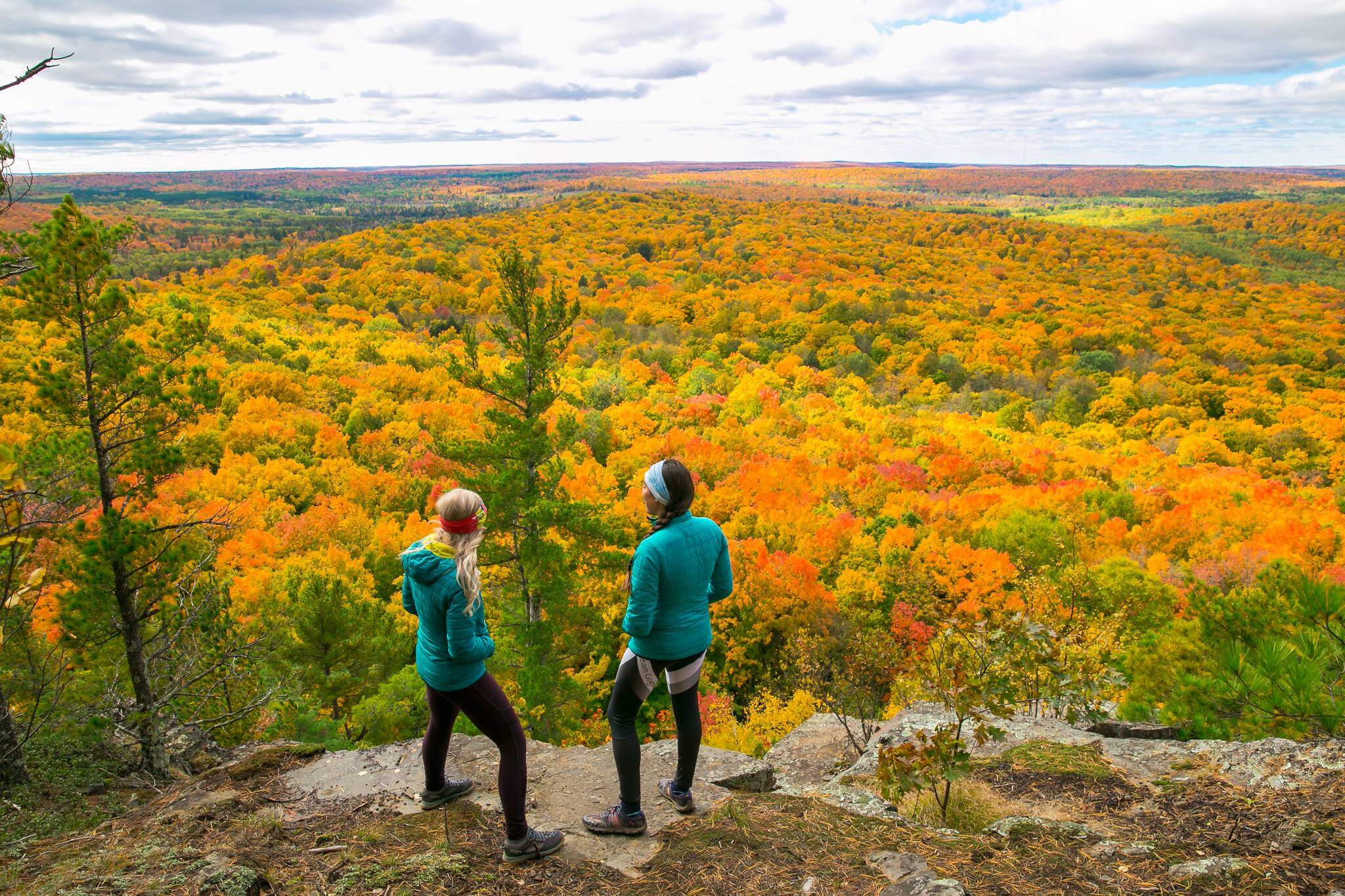
Peak color in the Upper Peninsula’s Keweenaw Peninsula can arrive as early as the last week of September, a full two weeks before the southern Lower Peninsula hits its stride—your entire itinerary hinges on this staggered timeline.
How to Time Your Trip Using Fall Color Reports
Forget guesswork. The single best way to plan is to monitor past-year reports alongside long-term forecasts. Two specific resources are worth bookmarking:
- Fall Foliage Prediction Map (SmokyMountains.com): Use this as a national baseline, but understand it’s a prediction, not a promise. Colors don’t vanish the day the map says—treat it as a window.
- Fun in the UP Fall Color Report: This is your key tool for the Upper Peninsula. They provide detailed, region-specific reports from previous years, giving you a reliable historical pattern for peak timing in areas like Porcupine Mountains and Keweenaw.
Check these in the weeks leading up to your trip. The “peak” is a gradual process, so your goal is to hit regions within a 3-5 day window of their predicted best.
Early October vs Mid-October Foliage Differences
Choosing your week decides which landscapes you see at their most brilliant. This is the critical trade-off:
| Timeframe | Winning Regions (Peak Color) | What You’ll Miss |
|---|---|---|
| First week of October | Keweenaw Peninsula, Porcupine Mountains, Tahquamenon Falls, Mackinac Island. | Color will be past-peak or just starting in Traverse City wine country and Sleeping Bear Dunes. |
| Second week of October | Peak moves south: Munising (Pictured Rocks), Traverse City, Leelanau Peninsula, Sleeping Bear Dunes. | Upper Peninsula colors may be fading, though past-peak at Lake of the Clouds is still stunning. |
| Late October (after the 15th) | Ludington, Lake Michigan shoreline towns. | Best for late starters; most inland and northern areas will be post-peak. |
My verdict: For a comprehensive loop starting in Detroit, the first two weeks of October offer the best compromise. Start your loop north to hit the U.P. near its peak, then chase the color southward as you return.
Don’t plan to see the Keweenaw and Traverse City at their absolute best in the same trip—you have to pick your priority. Book lodging in popular hubs like Traverse City or Mackinaw City well in advance for either period, as they fill up fast with leaf-peepers.
How to Plan a 10-Day Great Lakes Fall Road Trip Itinerary
The single biggest planning mistake: heading to the Upper Peninsula in late October expecting fiery color, only to find bare branches and mud. This counterclockwise loop is structured to chase peak foliage from north to south — but nailing your start date matters more than any individual stop.
Starting Point Options from Detroit
Detroit Metro Airport (DTW) is the obvious fly-in hub — it handles the most direct flights from across the country and has the best rental car selection. Two ways to handle Day 1:
- Start in Detroit: If you’ve never been, tack on two or three extra days before the road trip. Coney dogs at Lafayette or American Coney Island and Detroit-style square pizza are required eating — the city’s pizza pass is the cheapest way to sample multiple spots. Otherwise, grab your rental and get moving.
- Start from Ann Arbor: Just 45 minutes west of DTW, this college town is the smarter pick for a late-night arrival. Solid dinner options, zero airport-strip vibes, and no added distance to your northbound drive the next morning.
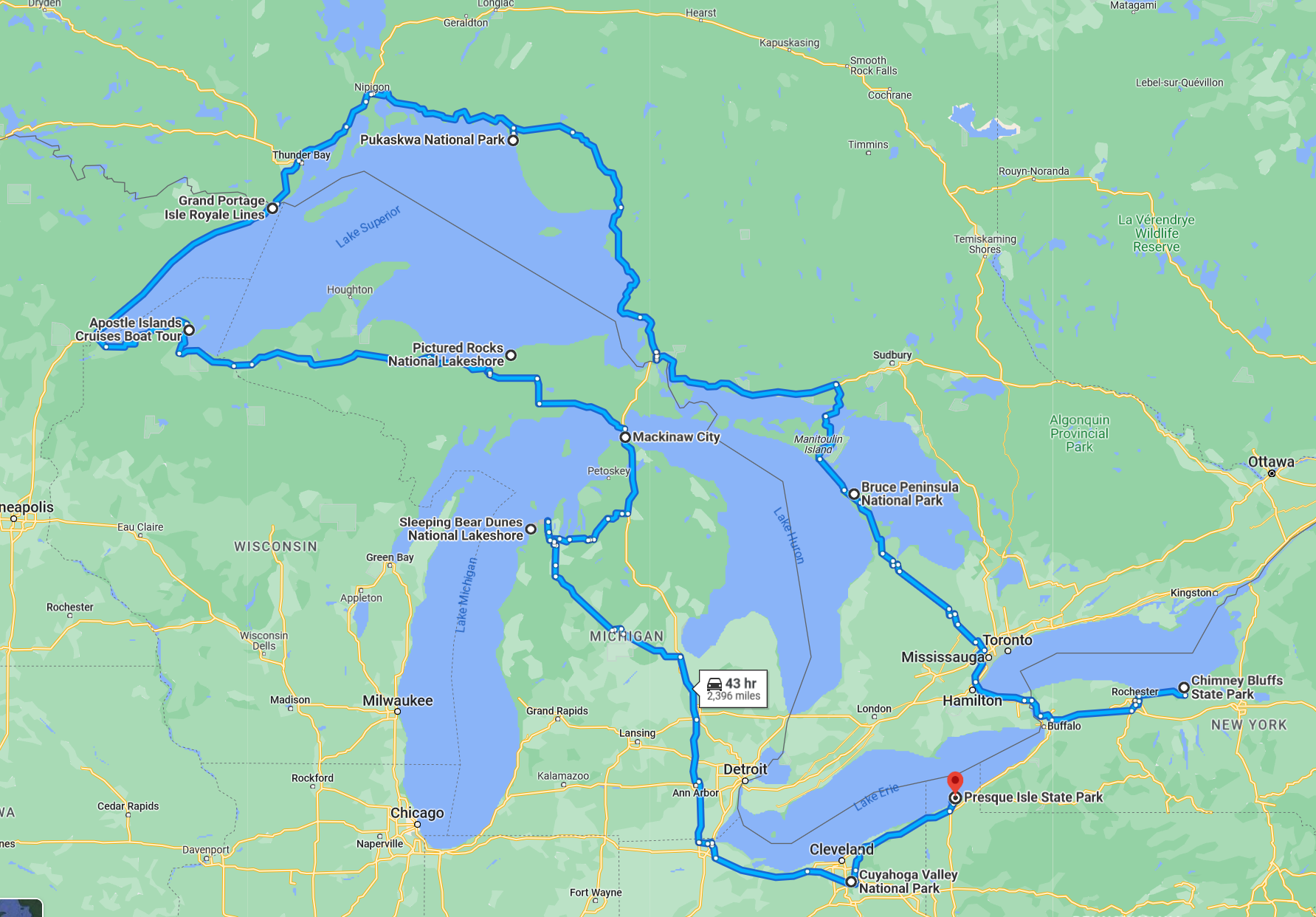
Either way, you’re launching a counterclockwise loop: north up the Lake Huron side, west across the Upper Peninsula, then south down the Lake Michigan coast back to Detroit.
Total Mileage and Driving Time Breakdown
Plan on roughly 1,800–2,000 miles total, depending on detours. The goal is keeping most days under three hours of windshield time so you’re actually at the stops, not just passing them at 70 mph.
| Day | Route Segment | Drive Time | Overnight Base |
|---|---|---|---|
| 1 | Arrive Detroit / Ann Arbor | — | Detroit or Ann Arbor |
| 2 | Detroit → Mackinaw City (I-75 North) | ~4.5 hrs | Mackinaw City |
| 3 | Mackinac Island day trip via ferry | — | Mackinaw City |
| 4 | Mackinaw City → Munising (via Whitefish Point & Tahquamenon Falls) | ~4 hrs | Munising |
| 5 | Pictured Rocks cruise + Kitch-iti-kipi | ~1.5 hrs between sites | Munising |
| 6 | Munising → Houghton (via Marquette & Keweenaw) | ~3 hrs | Houghton |
| 7 | Keweenaw Peninsula scenic drives + Porcupine Mountains | 1–2 hrs | Houghton |
| 8 | Houghton → Ludington or Manistee | ~5.5 hrs | Ludington or Manistee |
| 9 | Sleeping Bear Dunes + Leelanau & Old Mission Peninsulas | ~2 hrs | Traverse City area |
| 10 | Traverse City → Detroit (US-31 South to I-75) | ~4.5 hrs | Depart from Detroit |
Day 8 is the unavoidable long haul — the UP’s western edge doesn’t connect directly to the Lake Michigan coast. Break it up with a stop at Lakenenland, a free scrap-metal sculpture park outside Marquette that’s weird enough to reset the whole car’s mood.
You can also split this drive with an overnight in Escanaba if you’d rather not push through.
The rest of the itinerary stays under four hours of daily driving, and several days — Mackinac Island, Pictured Rocks, Sleeping Bear — involve almost none. The route eliminates backtracking entirely; you never retrace a road you’ve already driven.
For the Mackinac Island leg on Day 3, first ferry departures from Mackinaw City are typically around 8:00 AM in early October — confirm with Shepler’s or Star Line, as schedules shrink after peak summer. See the Ferry Options to Mackinac Island section for details.
Balancing Peak Color Across Regions
Top Stops for Fall Foliage on the Route
Michigan’s Upper Peninsula explodes with color in October — and the seven stops below deliver the best of it, ordered by driving flow so you never backtrack. Each one earns its slot on your itinerary; none are filler.
| Stop | Why It’s Worth Your Time | Minimum Time Needed |
|---|---|---|
| Mackinac Island | No cars, Victorian charm, island-wide color | Half day to full day |
| Tahquamenon Falls State Park | Upper Peninsula’s most dramatic waterfall framed by maples | 2–3 hours |
| Pictured Rocks National Lakeshore | Rainbow sandstone cliffs from the water — the UP’s non-negotiable | Half day |
| Porcupine Mountains | Old-growth forest overlooks at peak color | Half day to full day |
| Keweenaw Peninsula | Brockway Mountain Drive — the single best fall overlook in the Midwest | Half day |
| Sleeping Bear Dunes | 450-foot dunes meeting Lake Michigan’s blue | Half day |
| Leelanau & Old Mission Peninsula | Wineries, vineyard color, and cherry country at its quietest | Half day to full day |
Mackinac Island Highlights
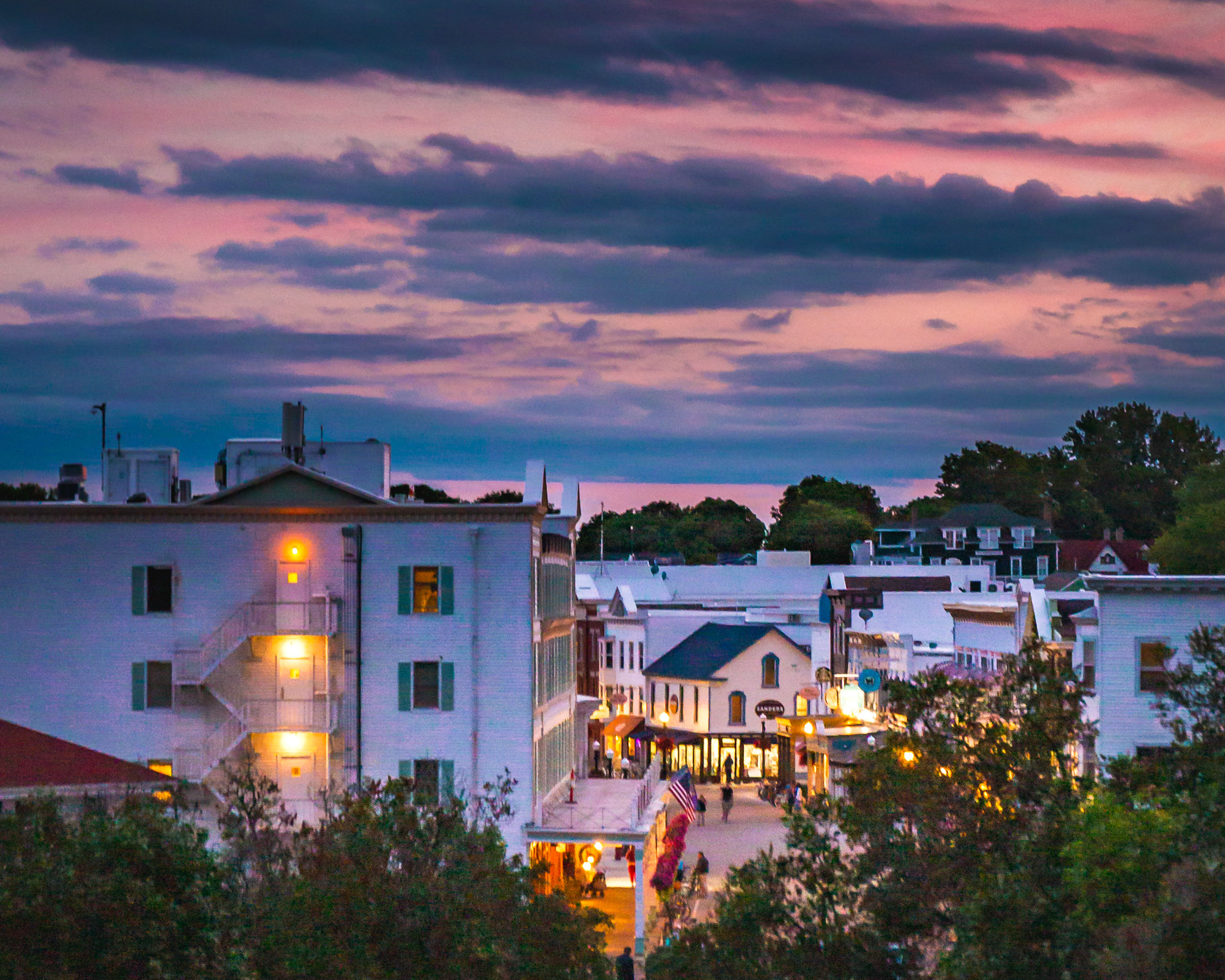
Mackinac Island fall foliage waterfront
A car-free island where the only sounds are hoofbeats and wind through turning maples — that’s Mackinac in October. The ferry ride alone is worth it, but staying a few hours (or overnight) lets you bike the 8-mile perimeter loop past bluffs blazing with red and gold.
Rent a bike right at the ferry dock; most visitors don’t realize you can circle the entire island in under two hours at a casual pace.
- Must-do: The Arch Rock overlook on the eastern shore — the fall canopy frames the limestone arch perfectly.
- Insider timing: Book the morning ferry (Shepler’s or Star Line) and you’ll beat the midday crowd that arrives on day-trip buses from Mackinaw City.
- Don’t waste time on: Grand Hotel admission ($12+) unless you specifically want to see the porch. The real island experience is outside it.
- Where to stay: Overnight guests get the island to themselves after the last ferry. Check the Mackinac Island hotel section for specific picks.
Tahquamenon Falls State Park
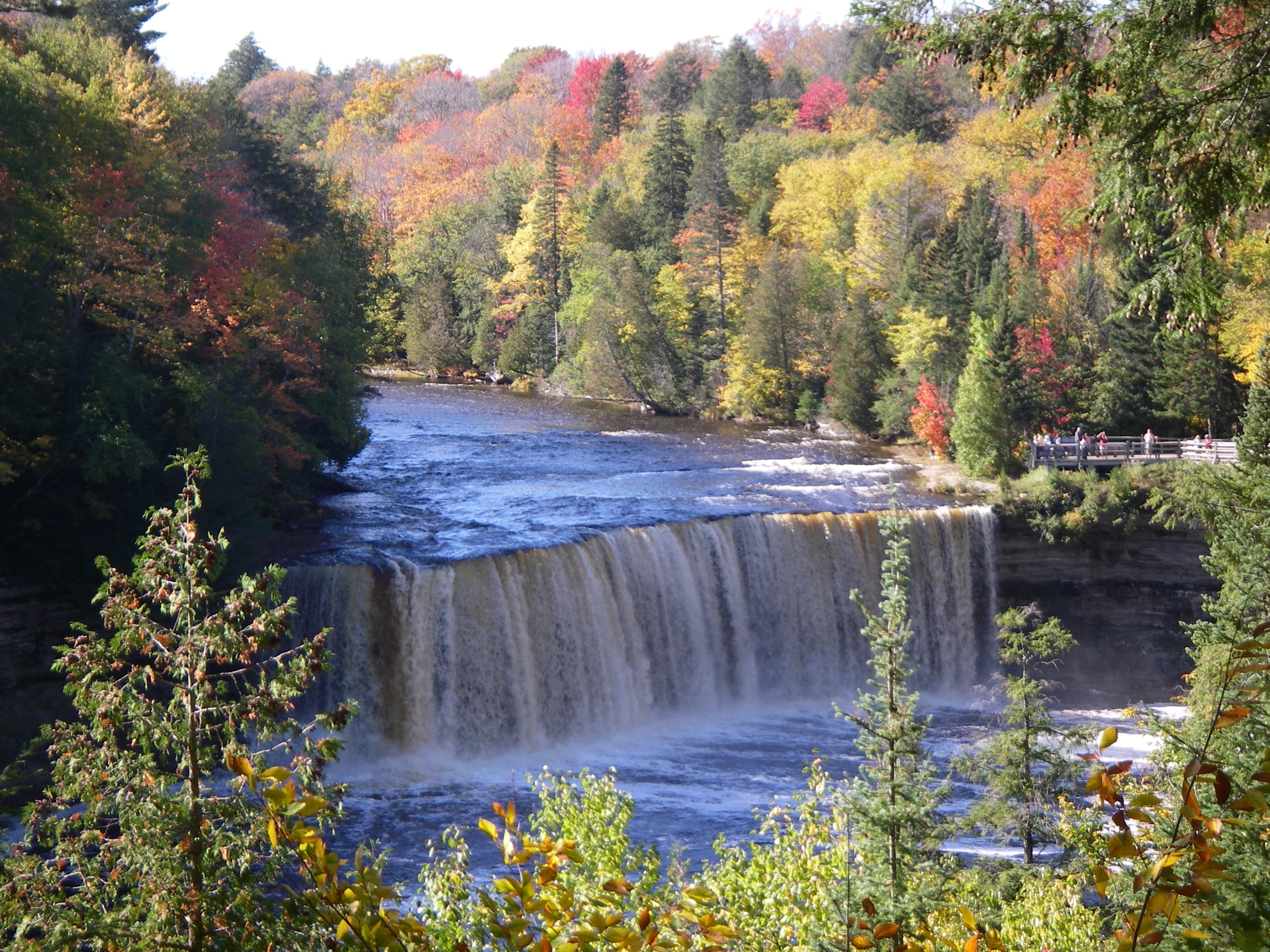
The Upper Falls here span 200 feet across — wider than Niagara — and the tannin-stained water turns an amber-copper color that pairs perfectly with October’s sugar maples lining the gorge. This stop is a natural pairing with Mackinac Island since it’s roughly 90 minutes from St. Ignace.
- Upper Falls first: This is the main event — multiple viewing platforms along the riverbank give you different angles. Budget at least an hour here.
- Lower Falls second: About 4 miles downstream, these are smaller but you can rent a rowboat to reach an island in the middle of the falls. Worth 30–45 minutes if you’re not in a rush.
- Cost: Expect roughly $11 for an out-of-state day pass (or use a Michigan Recreation Passport if you bought one).
- Pair it with: Whitefish Point, about an hour north, if you want the Shipwreck Museum on Lake Superior ($15/adult). The drive between them passes through continuous UP forest color.
Pictured Rocks National Lakeshore
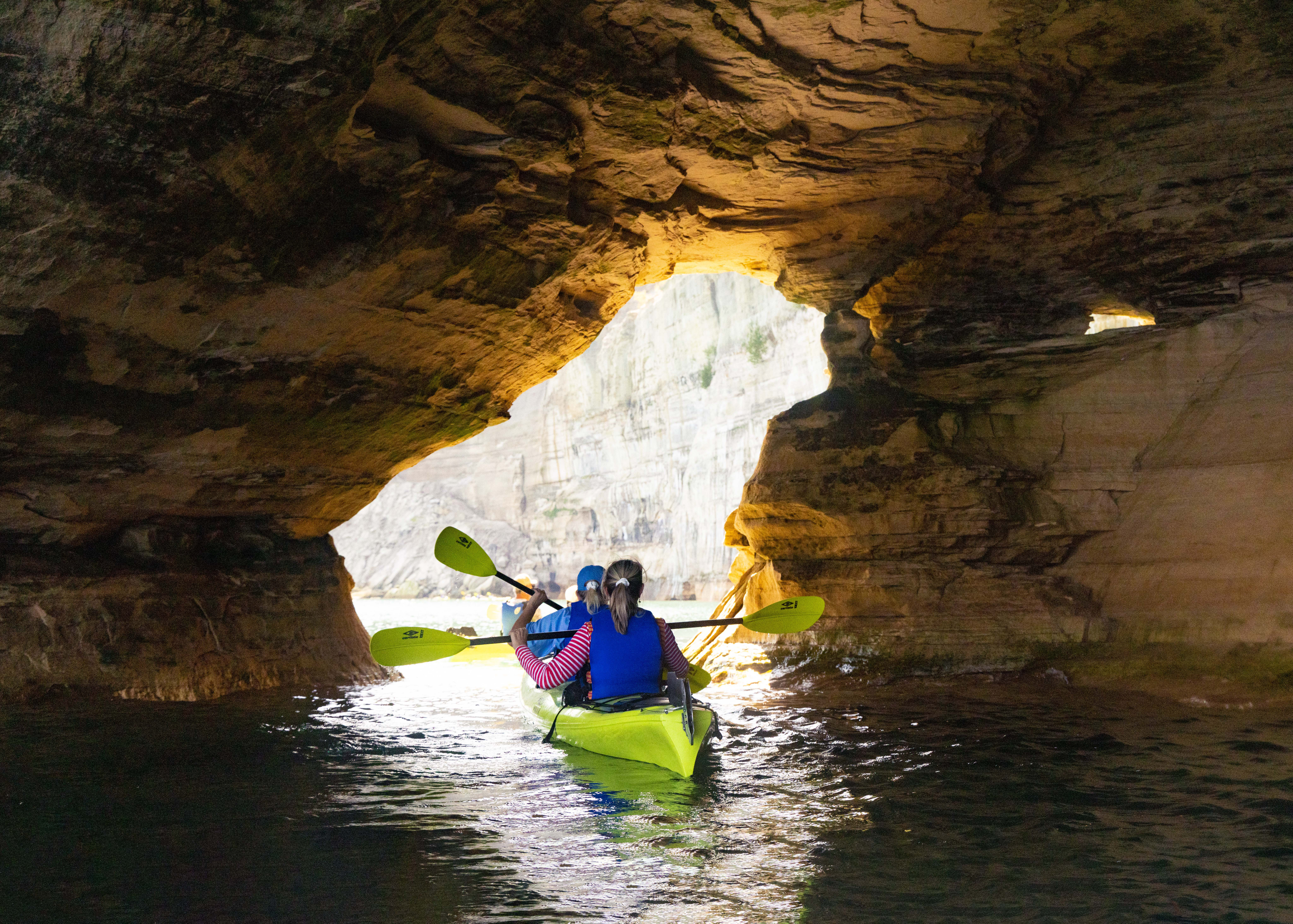
The sandstone cliffs are the headline — streaked red, orange, and green from mineral deposits — but most people underestimate how good the fall foliage is around them. Base yourself in Munising, which sits right at the western gateway and has easy access to boat cruises, hiking trails, and waterfall chasing.
- Do this first: Book a Pictured Rocks boat cruise (picturedrocks.com). The classic cruise usually runs through mid-October depending on weather — roughly $40–45/adult. The late-afternoon departure (one before the sunset cruise) gives you the best light on the cliffs heading both directions.
- Hike second: Chapel Loop trail to Chapel Rock and Chapel Falls is the standout land-based option — the trail threads through forest canopy above the cliffs.
- Don’t skip: Miners Castle overlook is the easiest cliff viewpoint if you’re short on time — paved path, minutes from the parking lot.
- Nearby detour: Kitch-iti-kipi at Palms Book State Park (under an hour east) is Michigan’s largest natural spring — a rope-pulled raft over impossibly clear 40-foot water. Leave Munising early; lines build after lunch.
- Lodging: Munising has your closest base options — see the Munising lodging section for details.
Porcupine Mountains Wilderness State Park
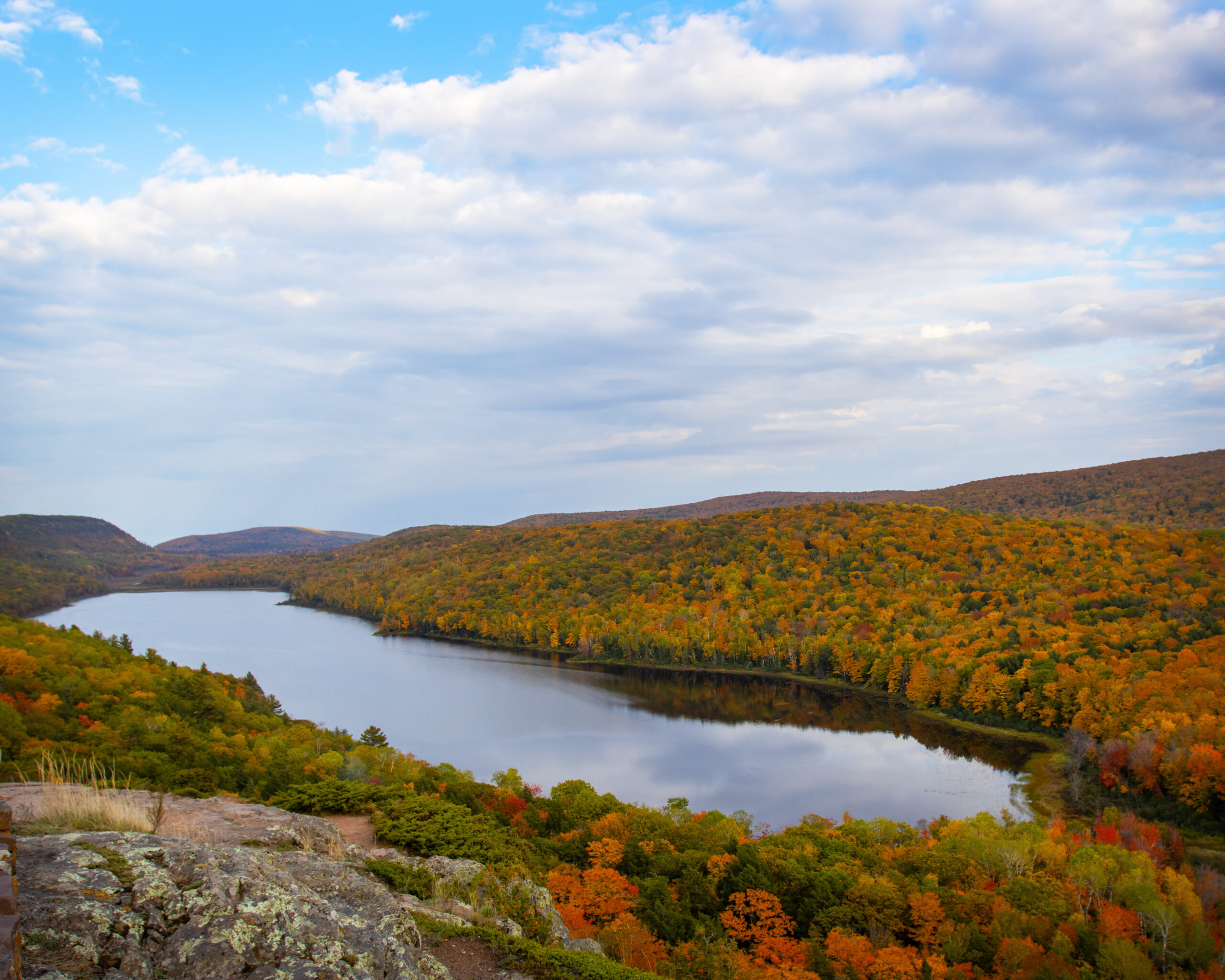
This is the Upper Peninsula’s wild card — 60,000 acres of old-growth hardwood forest that reaches peak color mid-October. The payoff is the Lake of the Clouds overlook: a ridgeline viewpoint where a pristine lake sits in a valley carpeted with red and gold hardwoods stretching to the horizon.
It’s the single most photographed fall scene in Michigan, and for good reason.
- Must-do: Lake of the Clouds Overlook at the end of CR-107. Short walk from the parking lot — no hiking required for this view.
- For hikers: The Escarpment Trail along the ridge above the lake delivers even more dramatic angles. Expect 4 miles round trip with moderate elevation.
- Cost: Michigan state park day pass required (roughly $11 out-of-state, or covered by the Recreation Passport).
- Planning note: The Porkies are remote — the nearest town with real services is Ontonagon, about 20 minutes away. Cell signal is spotty. Download your maps before arriving.
Keweenaw Peninsula Scenic Drives
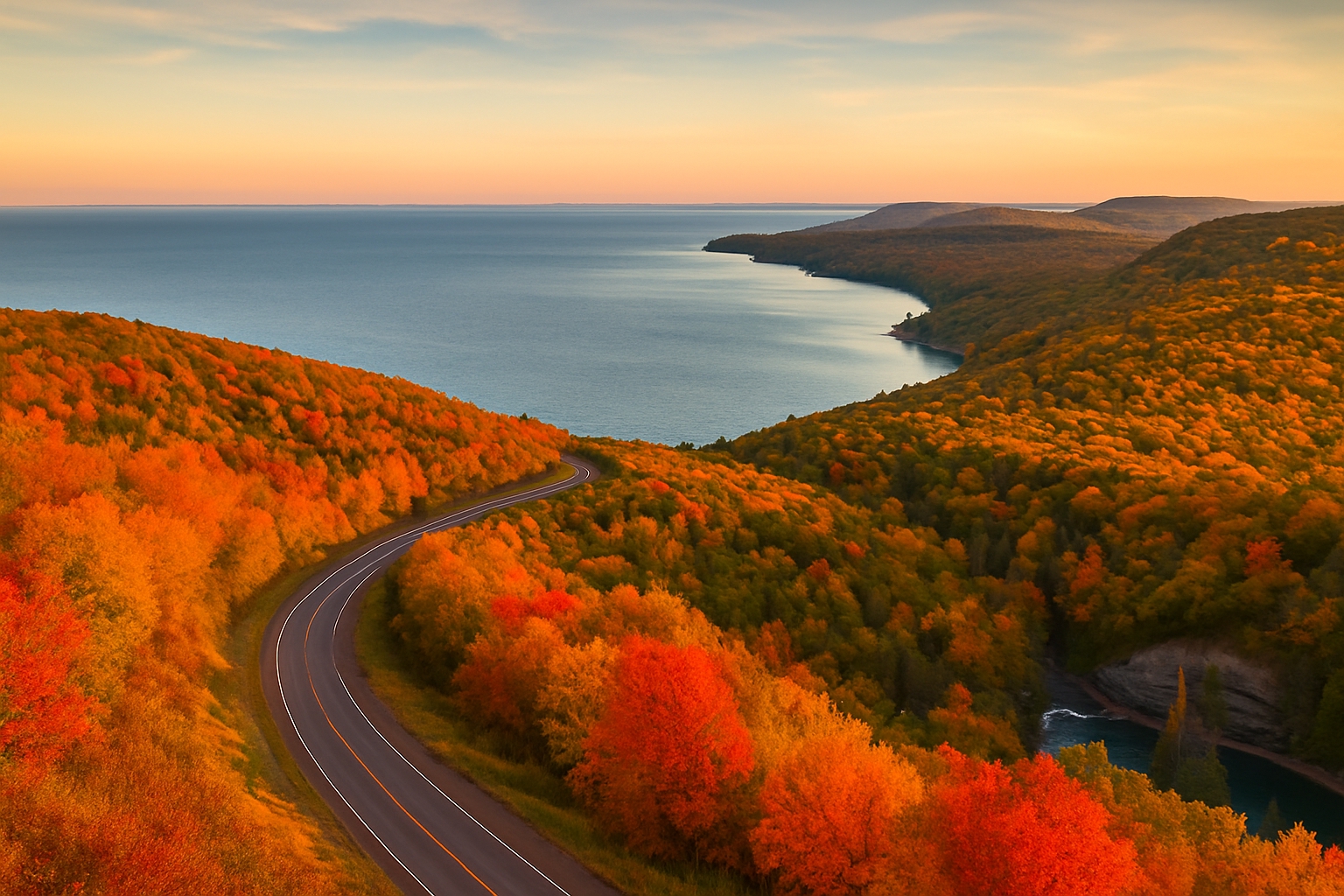
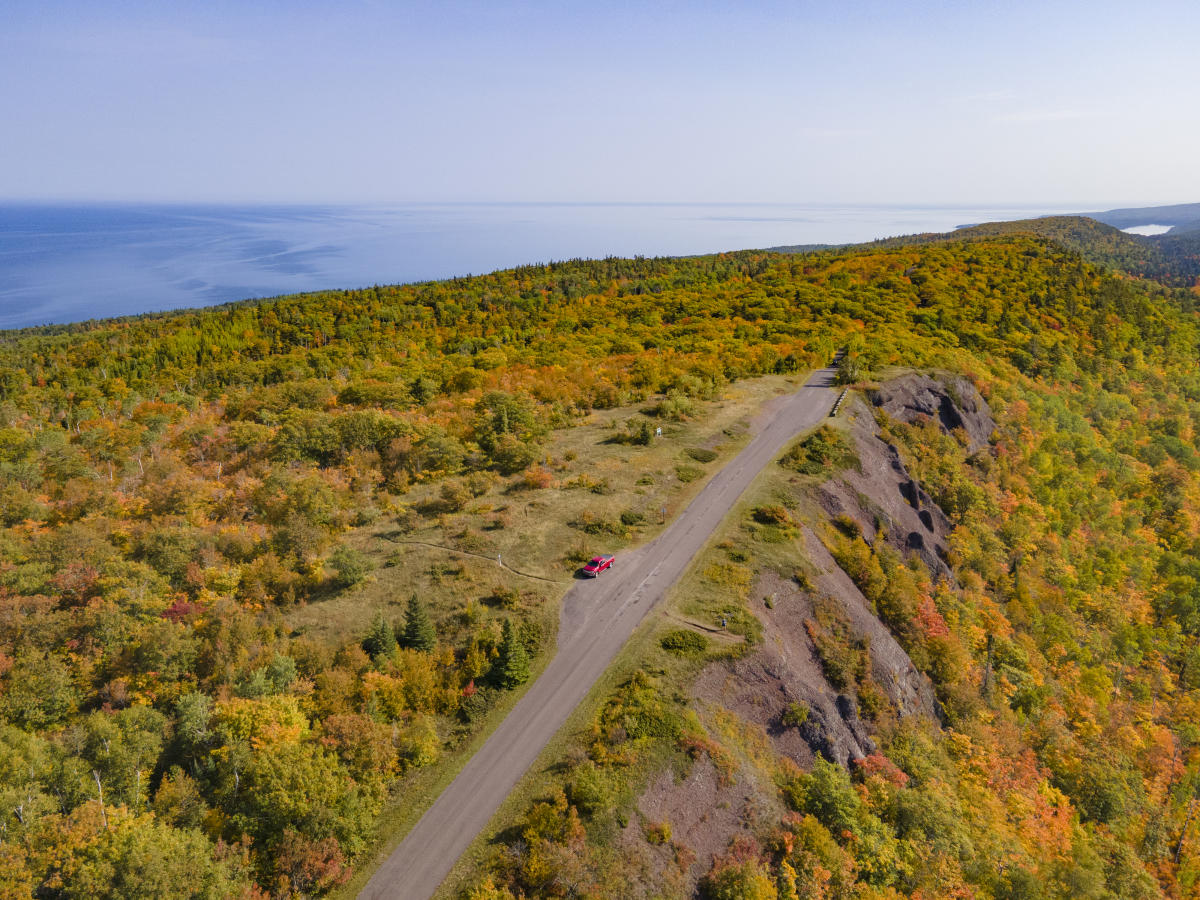
Brockway Mountain Drive is the reason you push this far up the peninsula — a ridgeline road that climbs to 1,328 feet with unobstructed panoramic views over Lake Superior and the surrounding forest. On a clear October day, the color stretches in every direction for miles.
This is arguably the best fall overlook in the entire Midwest.
- Route detail: Brockway Mountain Drive runs about 9 miles along the ridgeline between Copper Harbor and Eagle Harbor on M-26. Drive it westbound in the morning for the best light.
- Base town: Houghton is your best bet for lodging and restaurants — it’s a college town with more options than tiny Copper Harbor. See the Houghton stays section for recommendations.
- Don’t rush through: The entire Keweenaw has small-town charm — Copper Harbor, Eagle Harbor, and Eagle River are worth short stops for their harbor views and quiet feel.
- Driving note: The Keweenaw adds roughly 2.5 hours of driving round-trip from Houghton to Copper Harbor and back, so plan a half-day minimum for this detour.
Sleeping Bear Dunes National Lakeshore
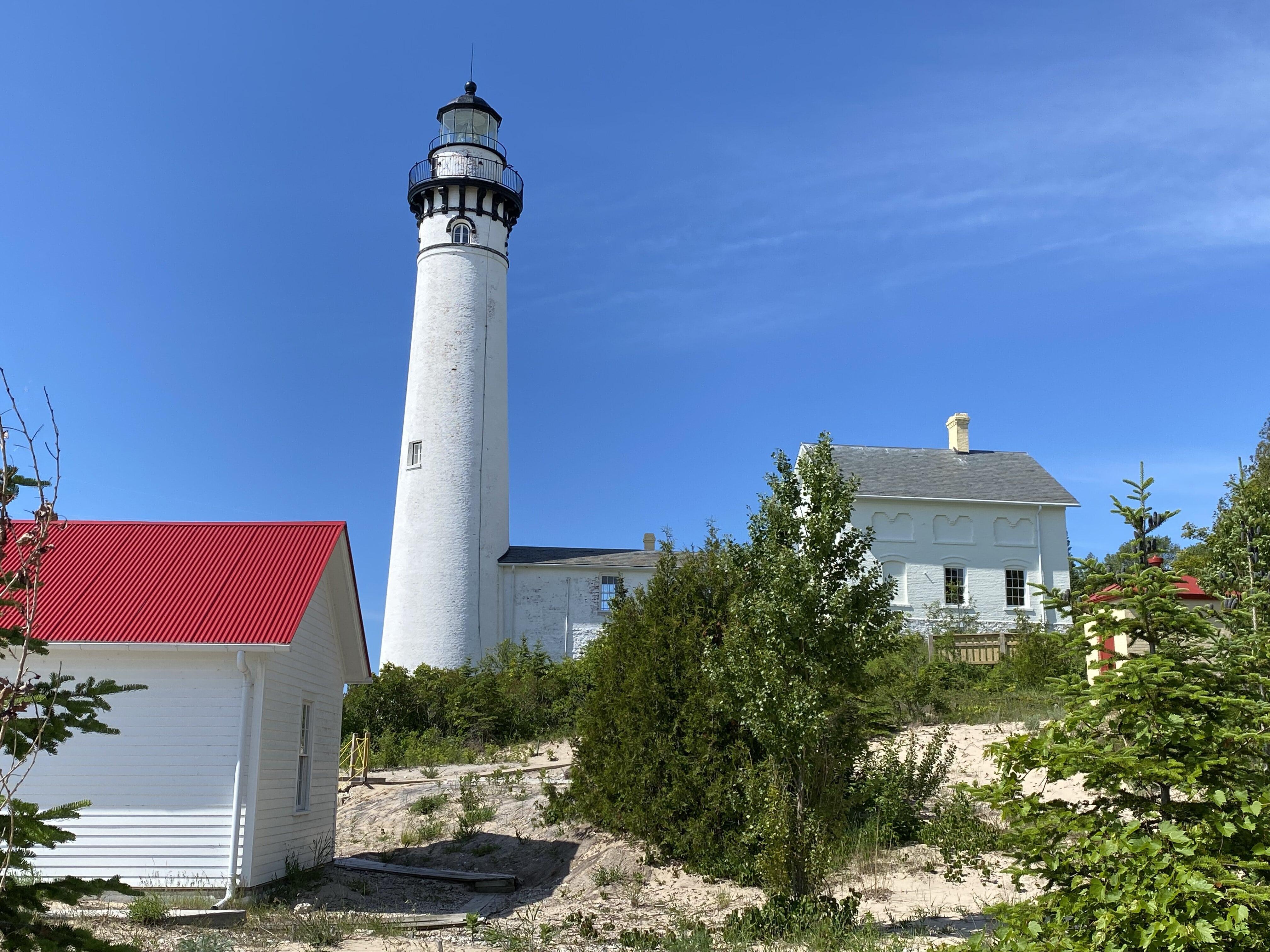
450-foot sand dunes dropping into Lake Michigan’s turquoise water — this is the stop that makes people swear they’re not in the Midwest anymore. Fall is the sweet spot: summer crowds are gone, the surrounding forest is on fire with color, and the light turns golden by late afternoon.
- Do this: The Dune Climb is the main attraction. Fair warning — climbing loose sand at steep angles is far harder than it looks. What takes 15 minutes to descend can take over an hour going up. Rescue fees run upwards of $3,000, so gauge your fitness honestly.
- Scenic drive: Pierce Stocking Scenic Drive is a 7.5-mile loop road with 12 stops, including a dune overlook that will ruin you for every other viewpoint. Check if it’s open — it typically closes in November, but fall dates vary.
- Entry: $25 per vehicle, or included with a National Parks Pass (buy one if you don’t have it — it pays for itself on this trip).
- Base yourself: The Traverse City area puts you within 30–40 minutes of the dunes and gives you access to restaurants and wineries. Sleeping Bear Dunes has no lodging inside the park itself.
Leelanau Peninsula Wineries
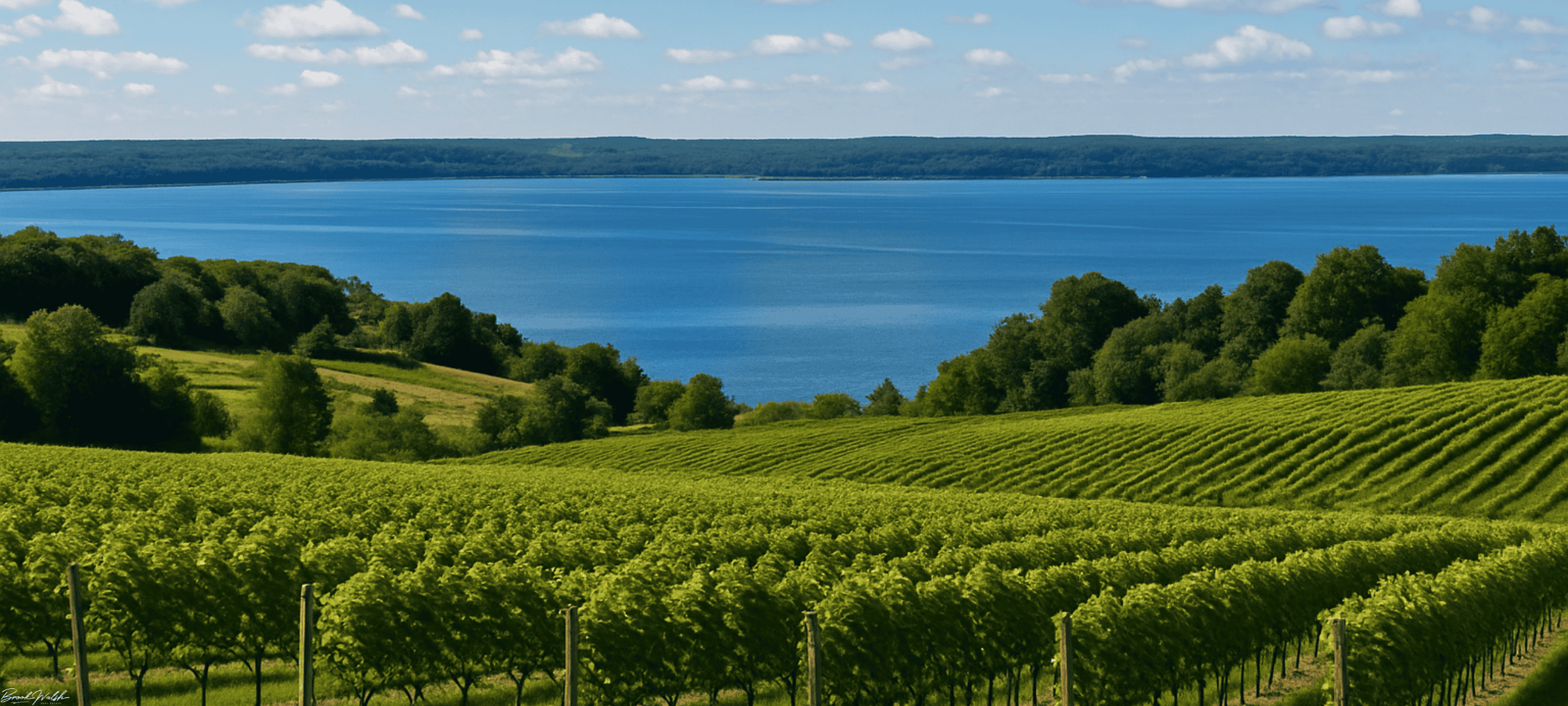
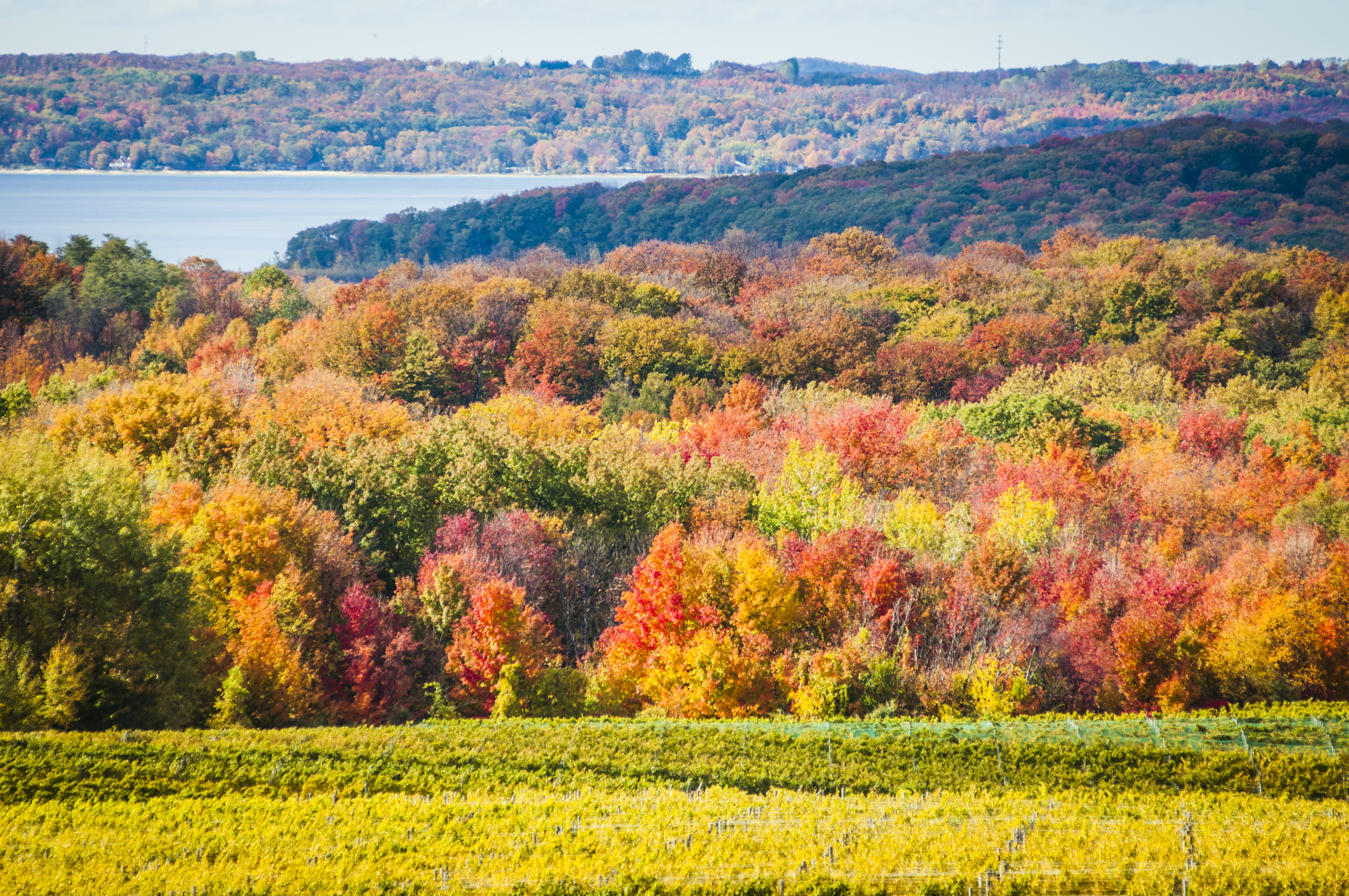
Michigan’s wine country sits on the 45th parallel — the same latitude as Bordeaux — and October brings harvest season, vineyard color, and zero summer crowds. The Leelanau Peninsula Wine Trail loops through 20+ wineries across rolling hills that look more like Tuscany than the Upper Midwest.
This is the recovery day after dune climbing.
- Don’t try to visit them all: Pick 3–4 wineries max. Tastings typically run $10–15 and you’ll want to actually enjoy them, not rush.
- Standouts: The peninsula is known for Rieslings, Gewürztraminers, and Pinot Noirs that actually hold up. Ask for estate-grown pours — the soil and microclimate here are the real story.
- Logistics: You’ll need a designated driver or should book a wine tour shuttle. Several operate seasonally from Traverse City — confirm availability since fall schedules differ from summer.
- Extend it: Leland’s Fishtown — a working fishing village with weathered shanties turned into shops — is worth a 30-minute stop along the coast.
Old Mission Peninsula
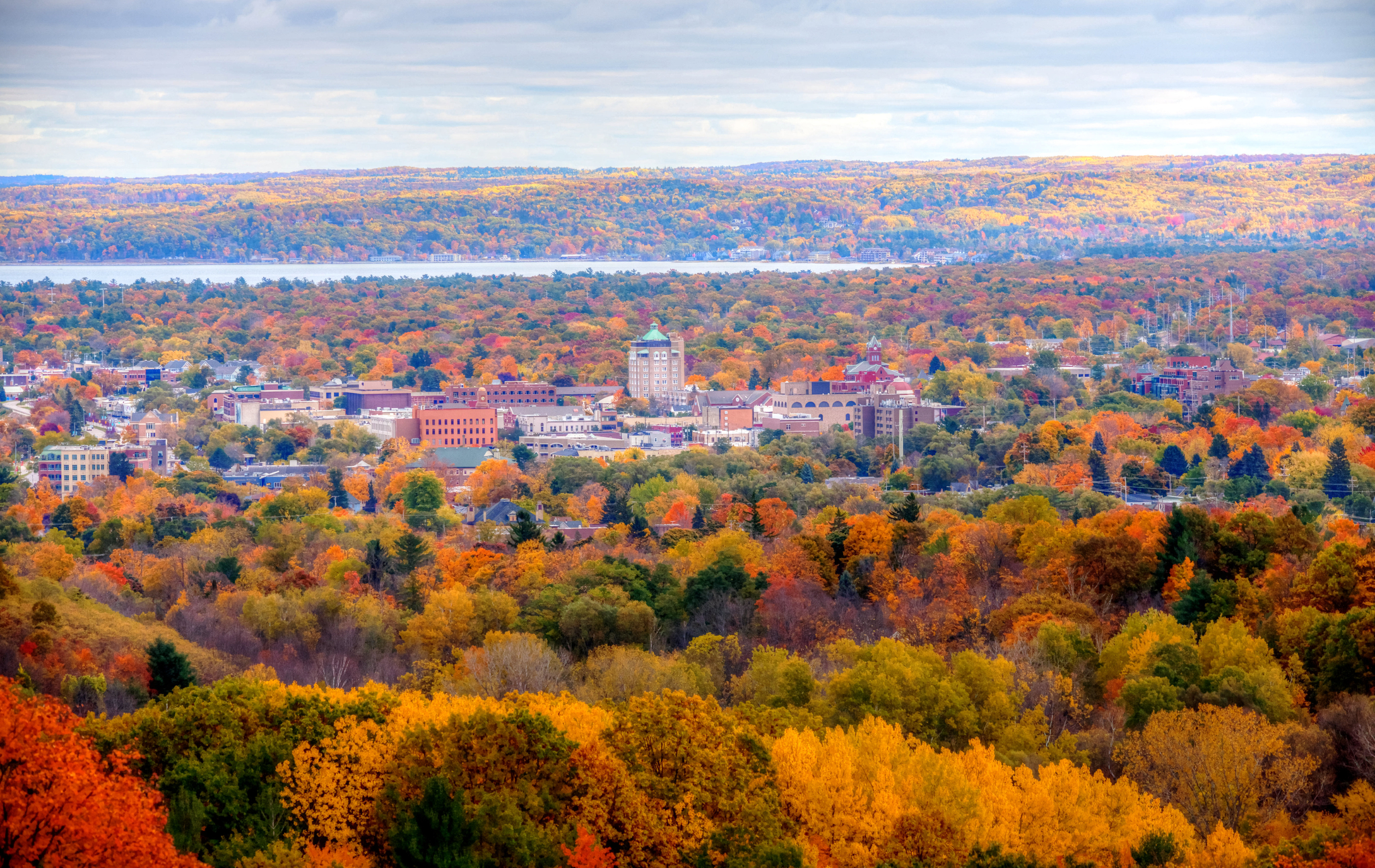
A slim finger of land jutting into Grand Traverse Bay, Old Mission is smaller and quieter than Leelanau — fewer wineries, but an equally stunning setting with vineyard rows running right to the water’s edge. The peninsula is only about 18 miles long, so you can cover it in a relaxed half-day.
- The drive itself: M-37 runs straight up the spine of the peninsula with vineyards and orchards on both sides. It’s gorgeous in mid-October without trying.
- Wineries: Chateau Grand Traverse and Brys Estate are the anchors — both have tasting rooms with bay views. Fewer than 10 wineries total, so you can hit the highlights without a strict plan.
- Lighthouse: The Grand Traverse Lighthouse sits at the tip of the peninsula inside a state park. Admission is roughly $8 on top of the state park entry. Worth it for the Lake Michigan panorama from the tower.
- Eat here: Old Mission has fewer dining options than Traverse City proper, so plan your meals accordingly — grab lunch in the village or head back to town.
Where to Stay Along the Great Lakes Fall Road Trip
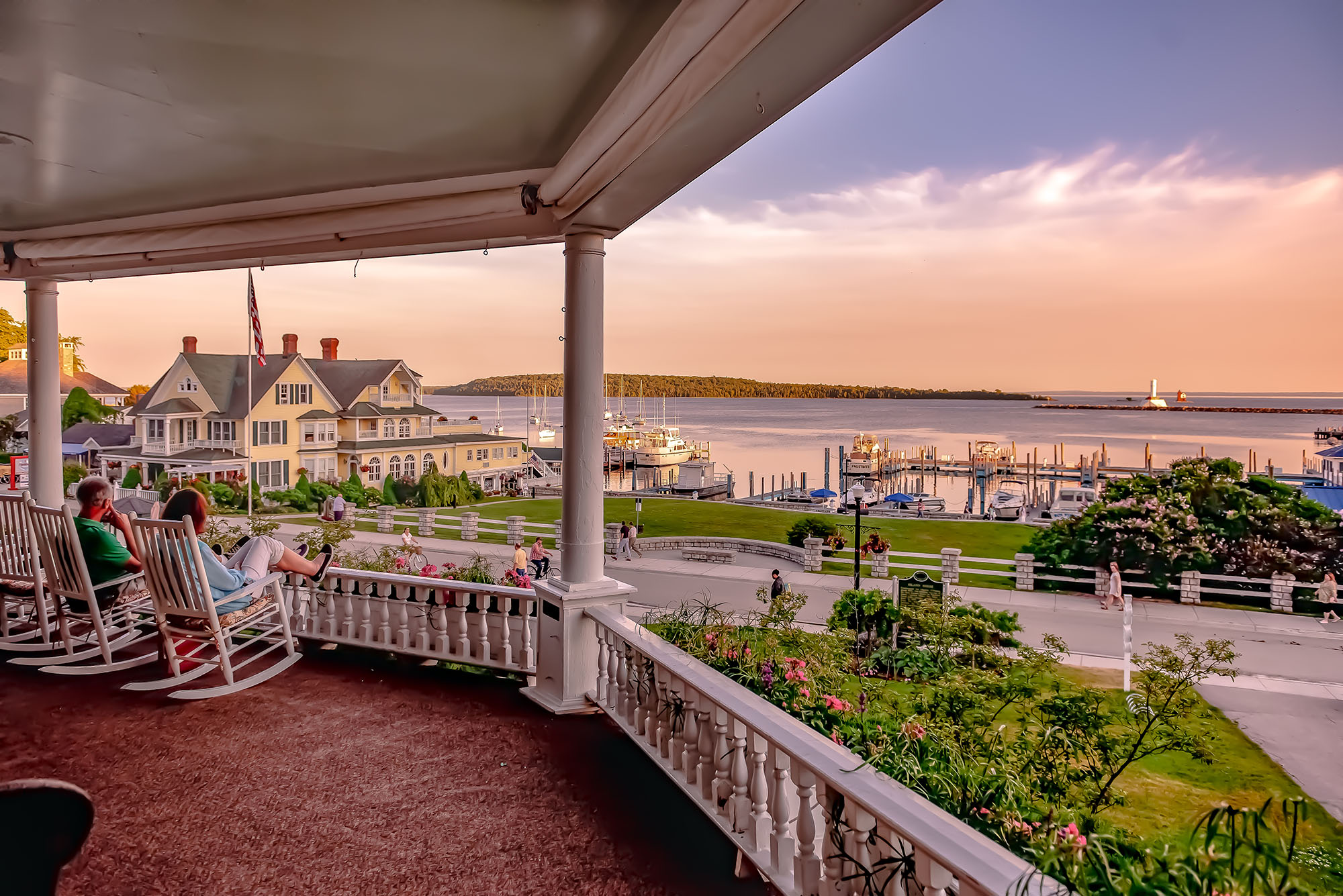
Mackinac Island lodging books out months ahead — even eight months out, one-night availability can be scarce during fall weekends. Start locking in accommodations as soon as your dates are firm, especially for the island and any Upper Peninsula stops where options are limited and spread thin.
| Base Stop | Nights | Best For | Book How Far Ahead | Expect Per Night |
|---|---|---|---|---|
| Mackinac Island | 1–2 | Historic charm, car-free experience | 4–8 months | $200–400+ |
| Mackinaw City | 1 | Ferry staging, budget-friendly base | 1–3 months | $100–200 |
| Munising | 1–2 | Pictured Rocks access, waterfall chasing | 1–3 months | $100–250 |
| Houghton | 1–2 | Keweenaw Peninsula exploration | 1–2 months | $90–200 |
| Traverse City | 2–3 | Wine country, dining, Sleeping Bear Dunes base | 2–4 months | $150–350 |
Mackinac Island Hotel Options
Staying overnight on Mackinac Island is non-negotiable if you want the place to yourself — day-trippers clear out by late afternoon, and the quiet evenings are the real reward.
- Pontiac Lodge: The standout for most travelers. Right in the heart of town, walking distance to restaurants and shops, and genuinely well-run. This is the move if you’re booking two nights and want comfort without Grand Hotel prices.
- Mission Point Resort: On the outskirts of town with a range of room sizes and a calmer setting. Less formal than The Grand Hotel but still not cheap — check rates before committing, because fall pricing can be unpredictable.
- Sunset Condominiums: Skip it unless you’re desperate for availability. No AC, paper-thin walls, tired furnishings, and the price doesn’t justify the experience. The only reason anyone ends up here is last-minute single-night availability.
Insider tip: Book well before summer even if you’re visiting in October. Mackinac Island has a small fixed inventory with no new development, so fall weekends with good weather fill up fast.
If your preferred spot is sold out, call directly — cancellations happen, and phone reservations sometimes access rooms not listed online.
Mackinaw City Overnight Picks
Mackinaw City is where most road trippers stage before or after Mackinac Island — it’s the practical play with ferry access, chain hotels, and significantly lower rates than the island itself.
Stay here the night before your Mackinac Island visit so you can catch an early ferry and maximize your island day, or use it as a landing pad the night you return. Most hotels sit within a few minutes of the ferry docks, and fall availability is far easier to secure than on the island.
Expect standard chain options in the $100–200 range. Parking is generally included, which matters since your car stays on the mainland while you’re on Mackinac.
Munising Lodging Choices
Munising is the essential gateway for Pictured Rocks National Lakeshore and Tahquamenon Falls State Park, and fall lodging here punches above its weight for scenery.
Accommodation options are a mix of small motels, cabin rentals, and a handful of modest hotels — this isn’t a market with luxury inventory, so set expectations accordingly. Book one to three months ahead for October dates.
Vacation rentals with kitchen access are worth prioritizing since dining options in Munising are limited and close early in shoulder season. If you want to catch a Pictured Rocks boat cruise at first light, staying in Munising proper rather than a remote cabin saves you a 30-minute drive in the dark.
Houghton Boutique and Budget Stays
Houghton makes a strong base for the Keweenaw Peninsula’s Brockway Mountain Drive and Copper Harbor area — it’s the largest town in the region with actual restaurants and a walkable downtown straddling the Portage Canal.
Expect a small collection of locally owned inns, a few budget motels, and some vacation rentals. This area doesn’t see the booking pressure of Traverse City or Mackinac Island, so one to two months of lead time is usually sufficient.
The Michigan Technological University campus means occasional event weekends spike demand — check the university calendar before finalizing dates. For couples, look for boutique options on the Houghton side of the canal for walkable dinner access; budget travelers will find more motel inventory in neighboring Hancock.
Traverse City Area Accommodations
Traverse City is the one stop on this route where you could easily justify three nights — between Sleeping Bear Dunes, Leelanau Peninsula wineries, and Old Mission Peninsula, a single overnight leaves too much on the table.
- Cambria Hotel Traverse City: The highest-rated chain option in town with modern rooms and solid amenities. Good for anyone who wants reliable quality without the gamble of a lesser-known property.
- Cherry Tree Inn and Suites: Slightly outside the city center but popular for a reason — more space, a quieter setting, and strong value for families or couples wanting room to spread out.
- Vacation rentals: This is where the Traverse City area shines for fall visitors. A historic downtown condo puts you within walking distance of restaurants and the waterfront. A cottage near an inland lake gives you morning coffee with foliage views no hotel can match. The tradeoff is a typical one-week minimum during peak summer, but fall stays often allow shorter bookings — confirm directly with hosts.
Insider tip: Traverse City fills with wine tourists on October weekends. If your itinerary allows a midweek stay, you’ll get better rates and easier dinner reservations at the restaurants that matter.
Downtown properties also mean you can skip driving entirely after a day of wine tasting on the peninsula.
How to Get Around Without Missing Fall Views
Leaving your car behind is mandatory on Mackinac Island, but the best fall views often require strategic stops along specific, sometimes narrow, routes that demand your full attention. Here’s how to navigate without sacrificing the scenery.
Ferry Options to Mackinac Island
You don’t drive onto Mackinac Island. Park your car in St. Ignace or Mackinac City and take a ferry.
Shepler’s and Star Line are the main operators, with frequent departures from both sides. The crossing takes about 15-20 minutes.
Book your ticket in advance during peak fall color weekends—it guarantees your spot and saves time at the dock.
- Shepler’s Ferry: Often the best for a fast, efficient crossing. They also offer a direct service to the island’s downtown dock, which saves a walk.
- Star Line Ferry: Known for its hydro-jet ferries that create a fun rooster tail. Their main dock is also centrally located.
- Parking Strategy: Leave your car in St. Ignace if you’re coming from the Upper Peninsula; it’s less chaotic. Overnight parking lots are right by the docks, costing around $20-$25 per day. Confirm rates with the ferry company or lot operator.
Best Scenic Drives Like Tunnel of Trees and Brockway Mountain
The Tunnel of Trees (M-119) and Brockway Mountain Drive are non-negotiable detours for leaf-peepers, but they offer different experiences and peak at slightly different times.
| Drive | Best For | Insider Tip |
|---|---|---|
| Brockway Mountain Drive (Keweenaw Peninsula) | Aerial, panoramic views of Lake Superior and blazing ridgelines. Arguably the most dramatic overlook on the entire trip. | Colors peak here later, often mid-October, due to the lake’s moderating effect. Drive from Copper Harbor toward Eagle Harbor for the best sightline. Stop at the obvious pull-offs; the Brockway Mountain Lookout is the crown jewel. |
| Tunnel of Trees (M-119) | An intimate, canopy-covered drive that feels like you’re inside the foliage. Best for early-to-mid October color. | Start from Harbor Springs and drive north. The road is narrow and winding with no shoulders—go slow. Stop at Cross Village to see the iconic Legs Inn (book a table well ahead if you want to eat). This is a popular weekend route; go on a weekday morning to avoid crowds. |
| Pierce Stocking Scenic Drive (Sleeping Bear Dunes) | Big dunes meeting the aquamarine Lake Michigan, with stunning color contrasts. | This is a short, one-way loop road that delivers massive views without a long hike. It’s a perfect morning activity before exploring the dunes. A recreation passport or day pass is required for entry. |
State Park Pass Savings Tips
If your itinerary includes Tahquamenon Falls, Porcupine Mountains, or a stop at Kitch-iti-kipi, buying a pass upfront will save you money and hassle. Michigan’s Recreation Passport is the key.
- Buy it early: You can purchase the Michigan Recreation Passport when you register your vehicle or at a park entrance. It costs $17 for a standard annual pass (or $34 for a non-resident pass) and covers vehicle entry to all state parks and recreation areas.
- Where it pays off: A single day-use vehicle entry fee at a state park is typically $11-$17. If you plan to visit two or more parks on this trip, the passport is cheaper and far more convenient than paying each time.
- Don’t forget federal lands: Pictured Rocks and Sleeping Bear Dunes are National Park Service units. They have their own separate entrance fees (typically $20-$30 per vehicle, valid for 7 days) unless you have an America the Beautiful Pass.
- The optimal combo: For this specific road trip, the best value is likely a Michigan Recreation Passport for the state parks plus paying the per-vehicle fee for one federal park (whichever you visit more thoroughly). Do the math based on your final stops.
Budgeting and Sample Costs for the Trip
Four state parks, a Mackinac Island ferry, a bridge toll, and at least one wine tasting — the “mandatory” costs on this route add up to roughly $150–220 per person in fees alone, before lodging. That’s manageable, but only if you plan for every gate, dock, and tasting room in advance.
Here’s exactly what to expect.
Ferry, Bridge, and Park Fees
These costs are non-negotiable — they’re baked into the route. Skip none of them, but know the numbers before you hit the road.
| Fee | Typical Cost | Planning Notes |
|---|---|---|
| Mackinac Island Ferry (round trip) | $27–32 per adult | Shepler’s or Star Line; book online for small discounts. Children under 5 typically ride free. |
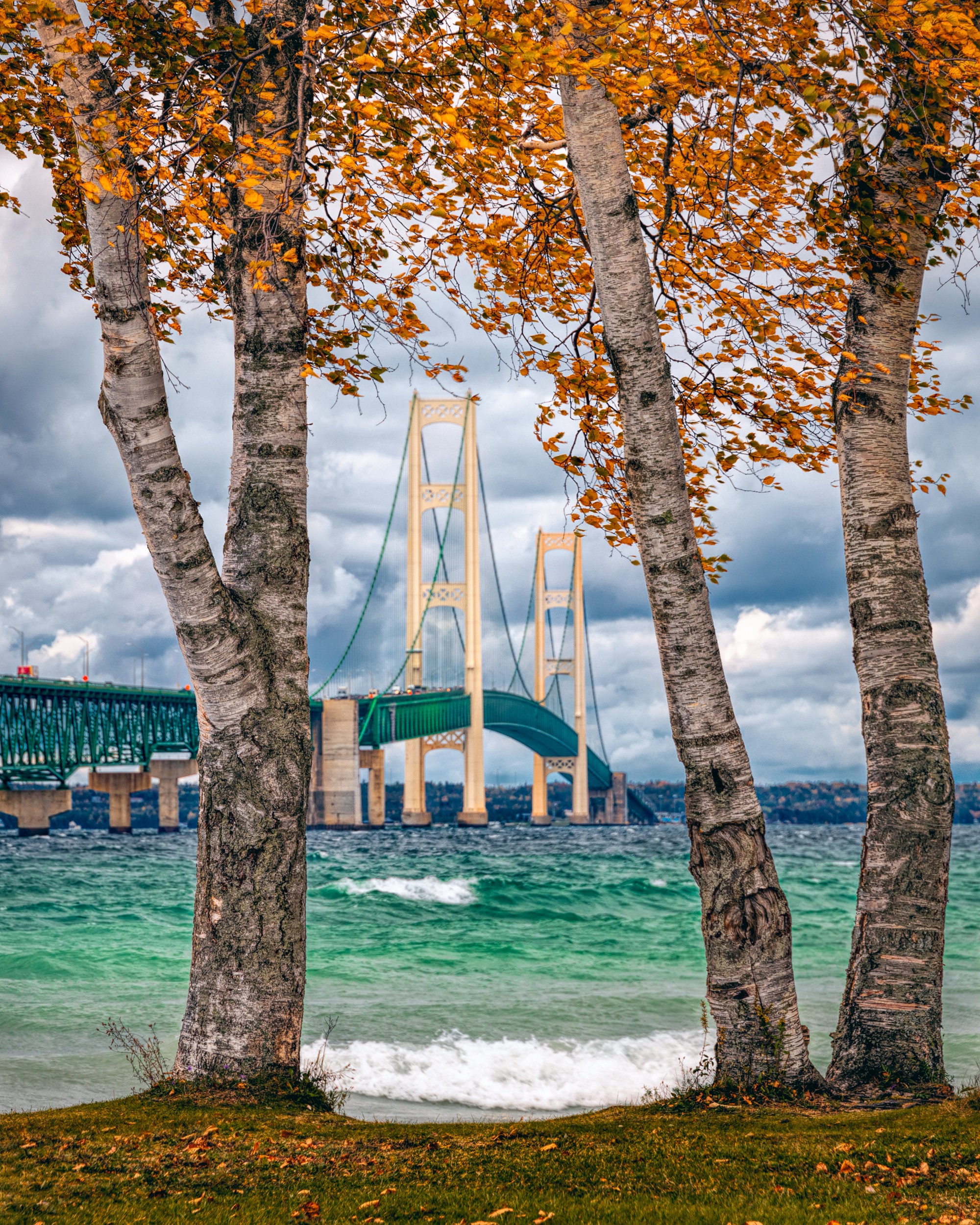
| Mackinac Bridge Toll | $4 per passenger car | Cash or credit accepted at the toll plaza. One-way southbound only. |
| Michigan State Park Entry (daily, out-of-state) | $11 per vehicle | Applies at Porkies, Ludington, Kitch-iti-kipi, and any other state park stop. |
| Sleeping Bear Dunes entry | $25 per vehicle (7-day pass) | National Lakeshore fee — valid for a full week if you visit twice. |
| Pictured Rocks Boat Cruise | $38–46 per adult | Book at least a week ahead in October; weather cancellations are common late season. |
| Quincy Mine Tour | $35 per adult | Full underground tour in Houghton; worth the splurge for the history. |
Money-saving move: If you’re hitting three or more Michigan state parks, ask about the non-resident Recreation Passport at the first park entrance. At roughly $34, it covers every state park for the calendar year — a clear win over paying $11 at each gate.
Michigan residents pay $17 when renewing vehicle registration.
Winery Tastings and Cruise Prices
Northern Michigan wineries charge $8–15 per tasting flight — a fraction of what you’d pay in Napa or Sonoma. Tasting rooms on Leelanau and Old Mission Peninsula don’t typically require reservations in fall, though weekend afternoons at popular spots like Chateau Grand Traverse can mean a short wait.
Budget $25–45 per person if you plan to visit two or three wineries.
Pictured Rocks boat cruises are the single biggest-ticket activity on the route at $38–46 per adult. Sunset cruises and spray-free enclosed options cost a few dollars more but are worth every cent when Lake Superior kicks up in October.
These sell out fast once fall color peaks — reserve as soon as your dates are firm.
Hotel Splurge vs Budget Breakdown
Fall pricing drops sharply from summer across the Upper Peninsula, but Mackinac Island and the Sleeping Bear Dunes corridor stay elevated year-round. Expect to average $100–160 per night at budget properties and $200–350+ at the splurge tier — meaning lodging is where the biggest cost swing lives on this trip.
| Overnight Stop | Splurge Pick | Budget Pick |
|---|---|---|
| Mackinaw City | Limited options; most visitors choose budget here | Clearwater Lakeshore Motel — lakefront, fire pits, balconies ($100–160/night) |
| Mackinac Island | Mission Point Resort ($300–500+/night) | Pontiac Lodge — central, walkable ($180–280/night) |
| Munising | Holiday Inn Express Lakeview — Pictured Rocks views from balcony rooms ($150–220/night) | Roam Inn — in-town, above Tracey’s restaurant ($110–170/night) |
| Houghton / Keweenaw | The Vault Hotel — boutique, former bank building ($180–280/night) | Country Inn & Suites ($100–160/night) |
| Ludington | Lamplighter Bed & Breakfast ($150–200/night) | Summer’s Inn — adults-only, mid-century charm ($90–140/night) |
All prices reflect typical fall ranges and will shift based on exact dates, room type, and how far ahead you book. Mackinac Island is the outlier — even “budget” rooms there run well above mainland pricing, and one-night stays are harder to secure.
Book that stop first, then fill in the rest of the route.
Full-trip ballpark: A couple driving this 10-day route should expect to spend roughly $1,200–2,000 on lodging at the budget tier or $2,200–3,800 at the splurge tier, plus $300–440 in combined activity fees, meals, and fuel. Total trip cost lands somewhere between $2,500 and $5,500 for two depending on how many nights you spend on Mackinac Island and how aggressively you book ahead.
Frequently Asked Questions
What’s the best starting point for a Great Lakes fall road trip?
Detroit is the conventional hub with the region’s largest airport (DTW), making arrival logistics simplest. For a more immediate nature-focused start, consider flying into Traverse City (TVC) or the Gerald R.
Ford International Airport in Grand Rapids (GRR) and beginning the loop from the west side of the state. Detroit works best if you want to add 2-3 days for urban exploration before hitting the road.
How many days do I really need for this road trip?
A week is the absolute minimum to cover the core Michigan highlights without feeling rushed. For the full Great Lakes experience—including the Upper Peninsula’s Tahquamenon Falls, Pictured Rocks, and the Keweenaw Peninsula—plan for 10 to 14 days.
This allows for 2-3 nights on Mackinac Island and built-in weather delays, especially if you’re including a day trip to Isle Royale National Park, which requires significant transit time.
What’s one stop most people underestimate?
Isle Royale National Park. It’s not a casual add-on.
Access is exclusively by ferry from Copper Harbor (which takes several hours) or by seaplane, and services are extremely limited. Weather can cancel transit, so you must pack emergency overnight gear even for a day trip.
It’s a magnificent, remote destination for serious hikers and nature lovers, but it requires its own dedicated day and a flexible backup plan.
Can I do this trip with a regular car?
Yes, a standard sedan will handle all paved routes and main park roads. The only place a 4WD/AWD might add peace of mind is on some of the more rugged seasonal forest roads in the Upper Peninsula, like those accessing more remote waterfalls or trailheads.
For the main itinerary—Sleeping Bear Dunes, Mackinac Island (where you’ll park), Pictured Rocks, and the Keweenaw Peninsula—your regular car is perfectly adequate. Just book your Mackinac Island ferry parking in advance.
Book This Road Trip Before the Color Peaks
Lock in your Mackinac Island hotel and your Pictured Rocks boat cruise first — those two reservations alone determine whether your dates actually work. Everything else on this route has enough inventory that you can fill in the gaps within a week of deciding.
Fall in the Great Lakes is the rare trip where the scenery rivals anything on either coast, but without the crowds, the sticker shock, or the mobs ruining every overlook. You’ll drive 1,800 miles through seven completely different landscapes and never once feel like you’re on the same road twice.
Pull up the fall foliage prediction map right now, pick your two-week window, and start booking lodging from the island outward — the color won’t wait and neither will the best rooms.
Leave a Reply