
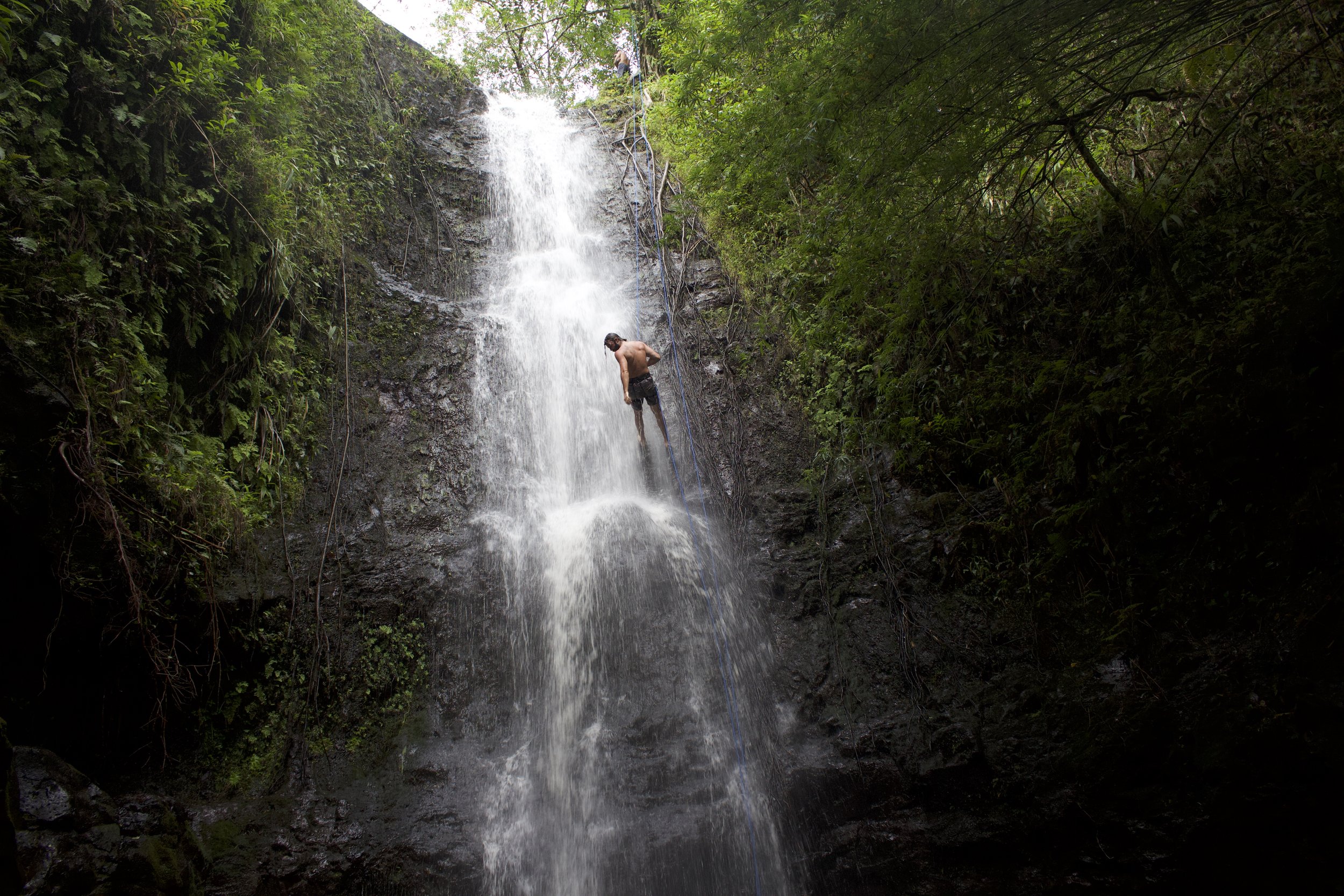
The scent of damp eucalyptus and crushed wild ginger fills the humid air as red clay mud squishes beneath your boots. A cool, heavy mist drifts through the canopy, kissing your skin long before you even see the roaring cascade ahead.
Hawaii waterfall hikes are unlike any other treks on earth because of how abruptly the volcanic ridges drop into deep, emerald-green plunge pools. You are not just walking through a forest; you are stepping directly into a living, breathing jungle ecosystem.
This guide will help you cut through the noise to find the exact trail that matches your adventure style and fitness level. Whether you want a quick, paved stroll with the kids or a rugged, off-grid scramble, I have got you covered.
For your budget, expect to pay nothing but a $5 to $10 parking fee for public trails, while fully managed botanical valley parks cost around $25 per person. If you want to splurge, pairing these hikes with a luxury resort stay nearby will elevate your tropical escape.
The Quick-and-Dirty Guide to Oahu’s Best Falls
Short on time and need to make a decision right now? Here is my cheat sheet of the absolute best waterfall trails on the island, categorized by what you actually care about.
- Best Paved & Family-Friendly: Waimea Falls (zero mud, gorgeous botanical gardens, and fully accessible).
- Best Classic Jungle Vibe: Mānoa Falls (a towering 150-foot drop through a lush, prehistoric rainforest).
- Best for Seclusion: Likeke Falls or Kapena Falls (short, sweet, and far fewer tourists).
- Best for Thrill-Seekers: Waimano Falls (cliff jumping) or Kaʻau Crater (extreme multi-waterfall climb).
- Best Hidden Side-Trails: ʻAihualama Falls (inside Lyon Arboretum) or Luaʻalaea Falls (rugged and unmaintained).
If you want a reliable flow even in the dry season, prioritize spring-fed trails like Likeke or Lulumahu. For the classic, roaring experience, tackle Mānoa after a fresh morning rain.
Which Easy Oahu Waterfall Hikes Are Best for Families and Beginners?
If you are looking for the quintessential Hawaiian rainforest experience without the need for advanced navigation skills or specialized gear, Oahu’s accessible waterfall trails deliver the lush, Jurassic-era aesthetic with significantly less physical strain. These four trails serve as the perfect introduction to the island’s interior, offering well-defined paths that prioritize safety and scenery over technical climbing.
| Trail | Best For | Key Feature | Difficulty |
|---|---|---|---|
| Mānoa Falls | Rainforest immersion | 150-ft. waterfall | Easy/Moderate |
| Waimea Falls | Families | Paved, botanical setting | Very Easy |
| Likeke Falls | Quiet seekers | Two-tiered cascade | Easy |
| Kapena Falls | Quick photo ops | Dangling vines/boulders | Easy |
1. Mānoa Falls Trail (The Most Popular Rain-Forest Hike)
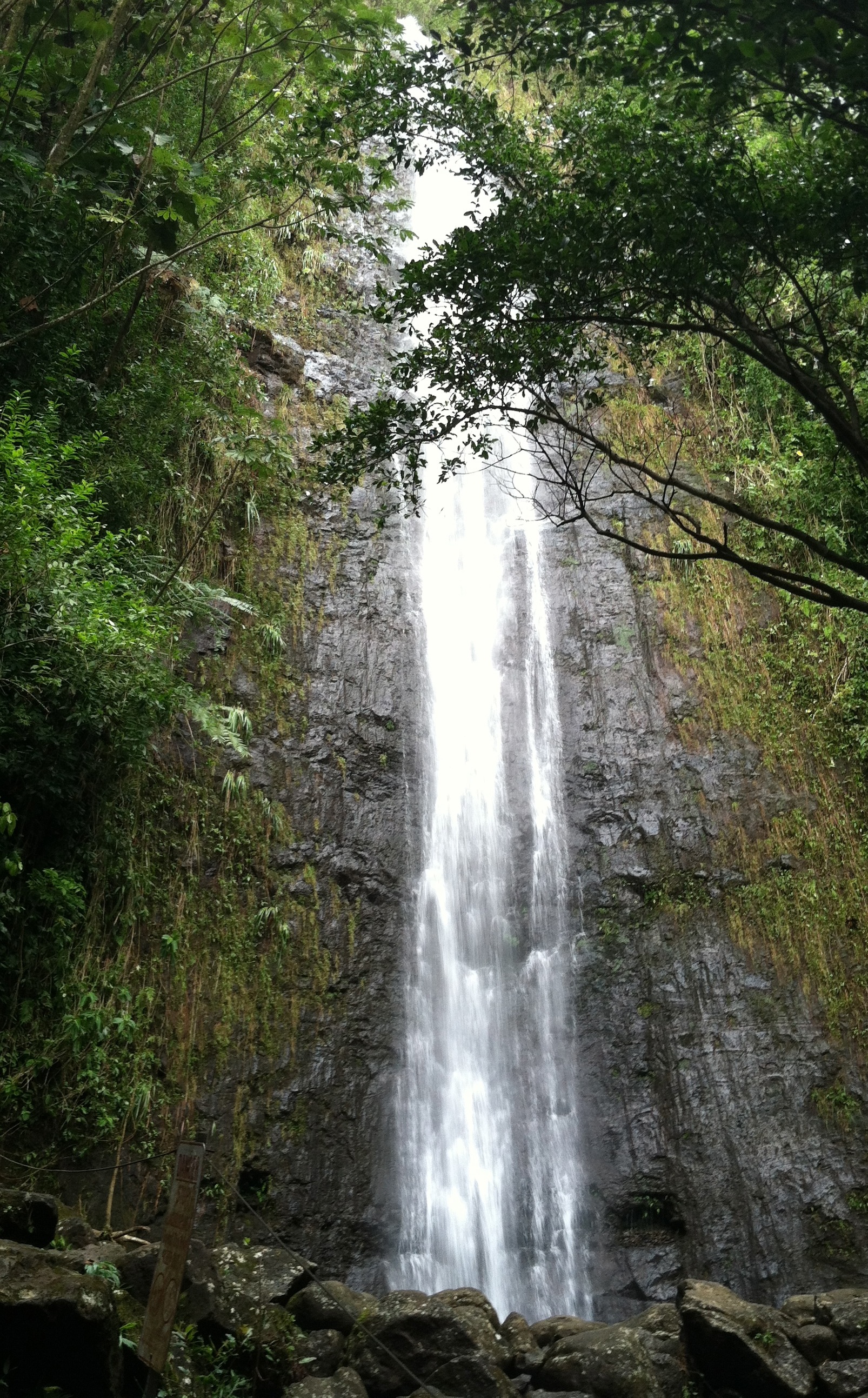
Located just a short drive from the hotels in Waikiki, this 1.7-mile (2.7 km) round-trip trail is the gold standard for beginners wanting to see a towering, 150-foot waterfall. You will navigate through a dense, humid rainforest filled with eucalyptus and banyan trees. My recommendation: Always anticipate rain.
The valley is notoriously wet, which keeps the falls flowing but makes the trail extremely muddy. Wear shoes with aggressive tread and leave the flip-flops at your hotel.
At the trail split, ensure you head left to stay on the main path toward the falls.
2. Waimea Falls (Paved Trail & Botanical Gardens)
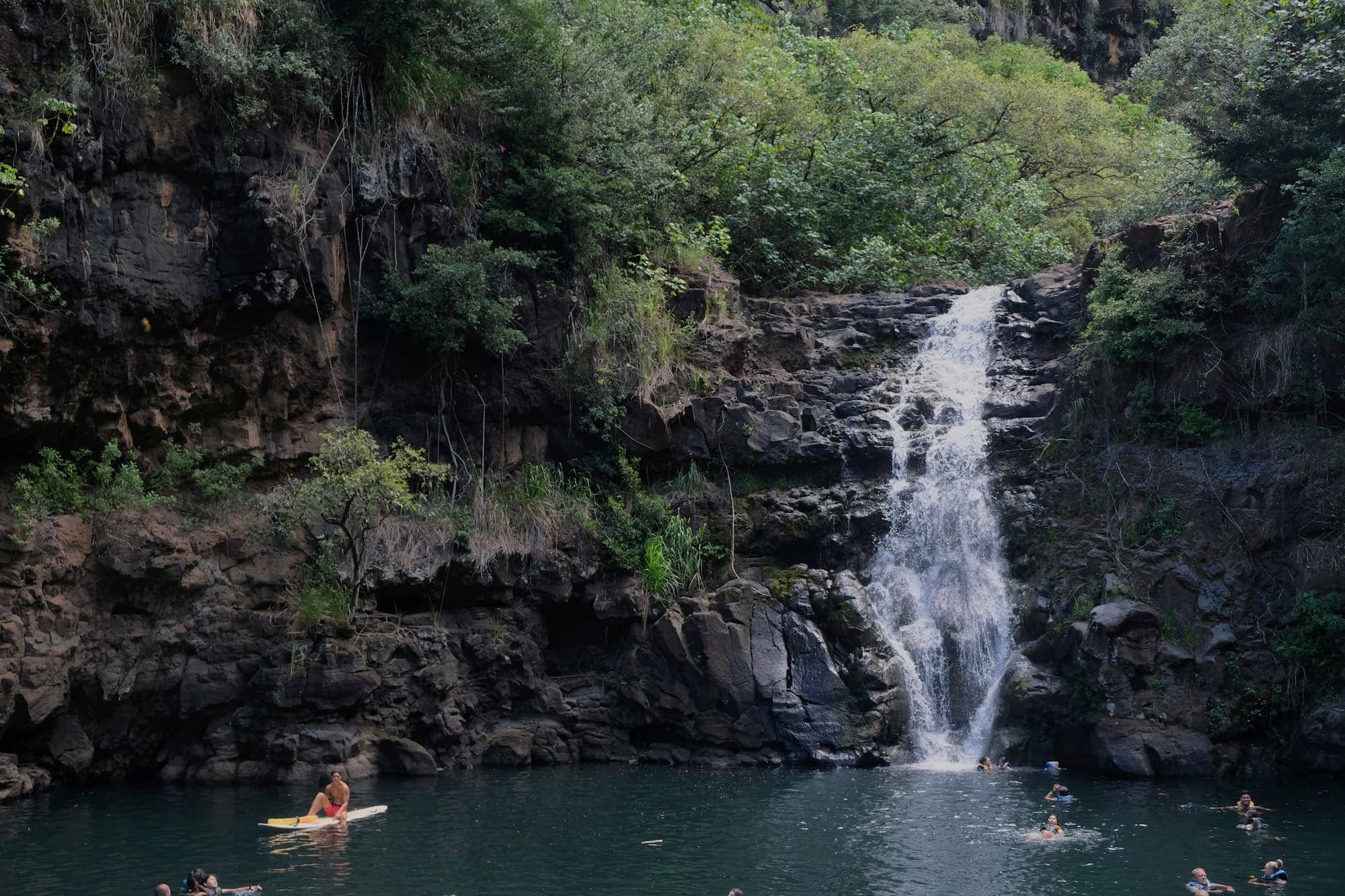
If you have young children or mobility concerns, Waimea Falls is the move. Situated on the North Shore, this walk is entirely paved, winding through world-class botanical gardens and historic sites.
Because it is managed within the Waimea Valley park system, it is the most controlled and predictable waterfall experience on the island. Insider tip: Plan your visit for a weekday morning to avoid the weekend crowds. Since you are already on the North Shore, combine this with a swim at Waimea Bay Beach Park, located just across the street.
3. Likeke Falls (A Short, Two-Tiered Hidden Gem)
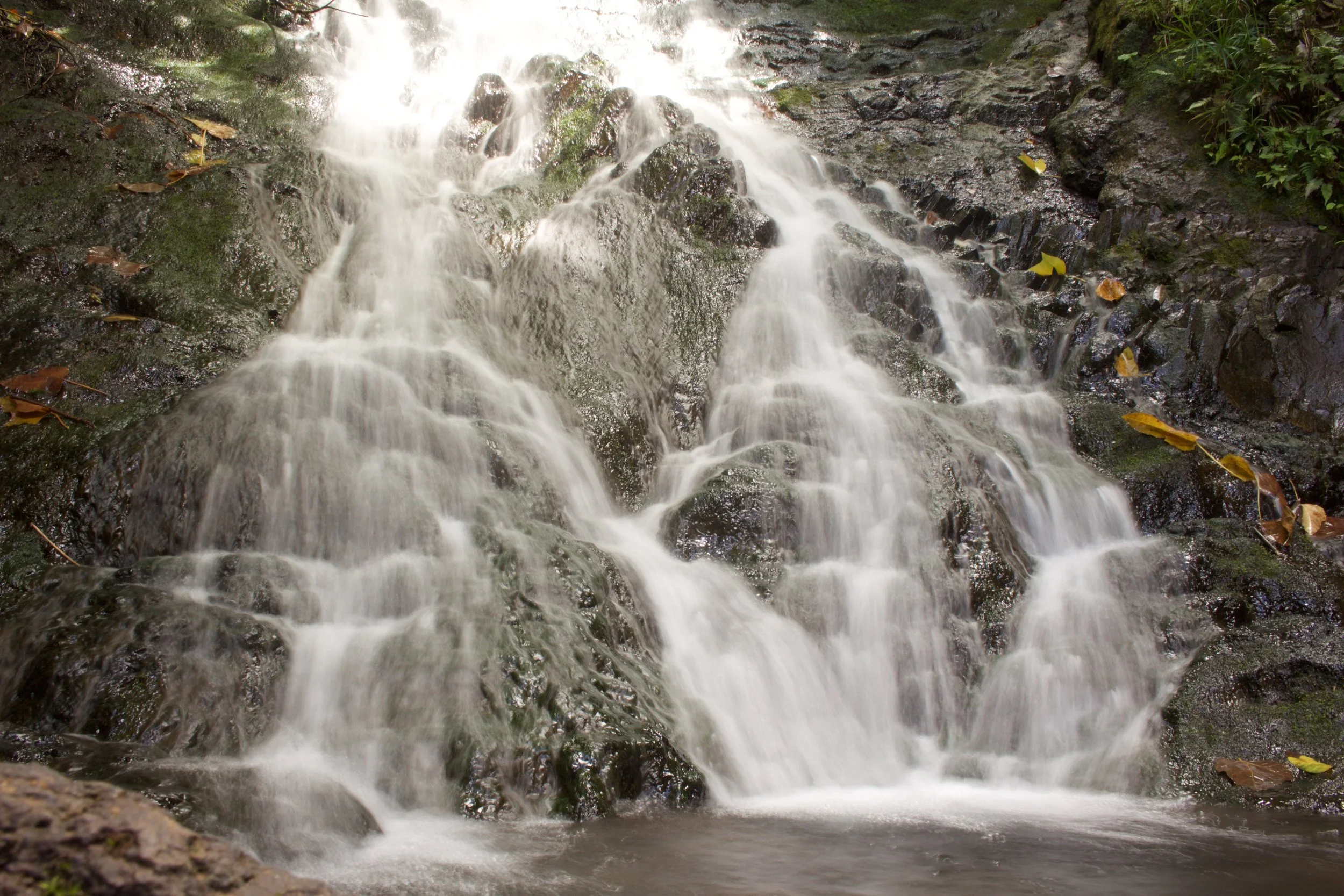
Skip the crowds of the more famous trails and head to Likeke Falls if you want a tranquil, two-tiered cascade. This is a short trek through a lush forest that feels significantly more secluded than the major tourist hubs.
It is the best choice for travelers who want a “hidden” feel without the danger of off-trail hiking. I prefer this route for a quick morning adventure before heading to the windward side beaches.
4. Kapena Falls and Alapena Pool (Short Walk with Jurassic Park Vibes)
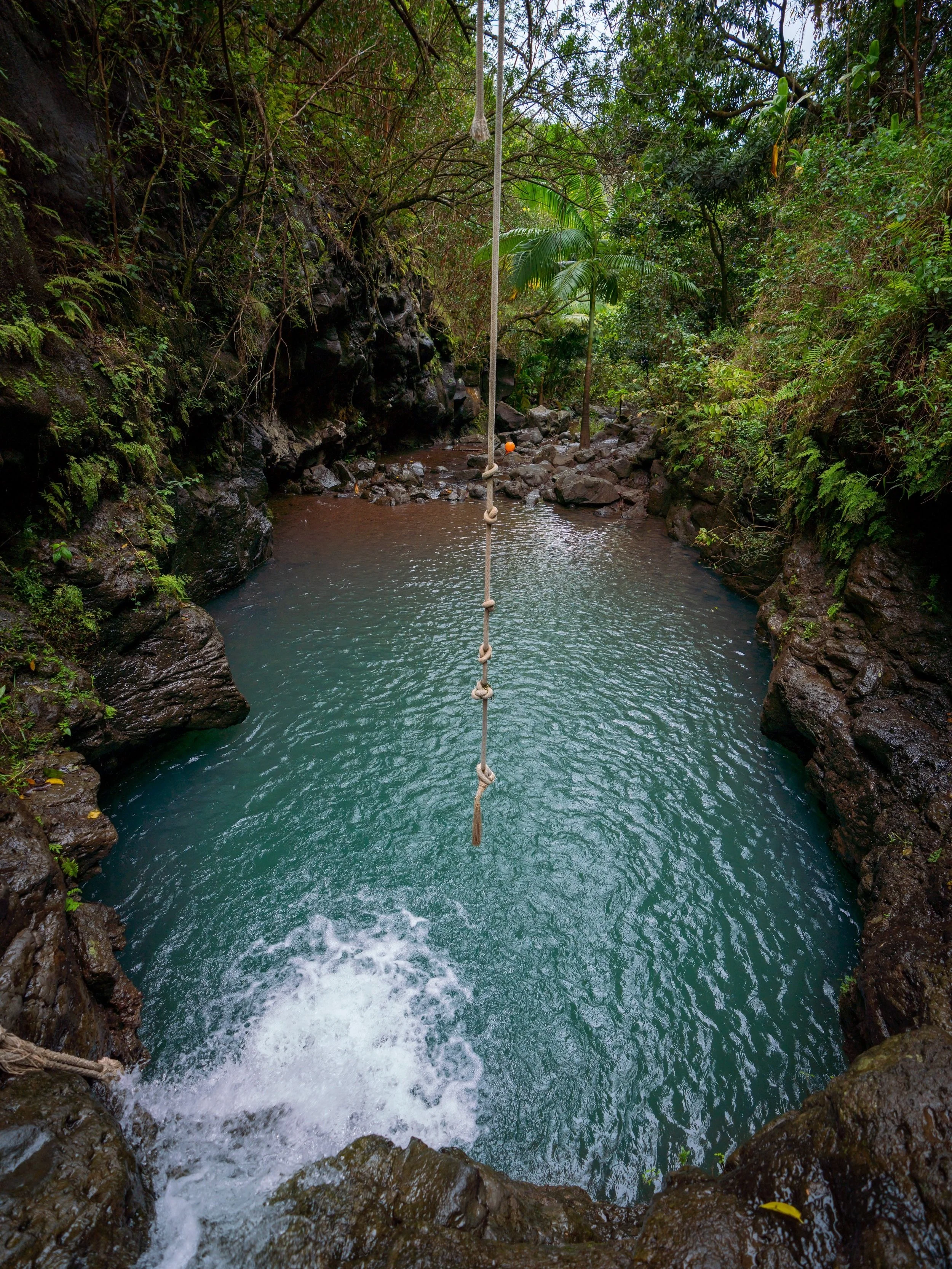
For those short on time, this 0.5 km walk packs a punch with its dense, prehistoric atmosphere. You will find massive boulders, hanging vines, and lush vegetation that feels straight out of a film set.
While it is not the largest waterfall on the island, the surrounding pool provides a serene spot to relax. It is best for travelers who want a high-reward, low-effort hike that can be completed in under 30 minutes. Practical action: Because this trail is short, it is easy to overlook, so keep an eye out for the trailhead markers near the highway.
Summary for Decision Makers: Choose Waimea Falls if you need accessibility and amenities. Choose Mānoa Falls if you want the classic, deep-jungle experience and don’t mind mud.
Choose Likeke Falls or Kapena Falls if you want to escape the crowds and prefer a shorter, more intimate walk.
Which Challenging Hawaii Waterfall Hikes Offer the Best Adventure?
If you are tired of the crowds at paved tourist trails and want to test your endurance, these six hikes offer the raw, muddy, and vertical terrain that defines true Hawaiian adventure. These routes are not for casual strollers; they require sturdy footwear, a high tolerance for mud, and the ability to navigate unmaintained forest paths.
For those basing themselves on the island, I recommend staying in Waikiki for central access to the southern trails, or opting for North Shore vacation rentals if you want to be within striking distance of the more remote, rugged treks.
| Hike | Difficulty | Main Draw |
|---|---|---|
| Lulumahu Falls | Moderate | Hidden forest scenery |
| Maunawili Falls | Moderate | Swimming pools |
| Kaʻau Crater | Extreme | Summit & multi-falls |
| Waimano Falls | Moderate | Cliff jumping |
| Laie Falls | Difficult | Solitude |
| Waipuhia Falls | Moderate | Upside-down effect |
5. Lulumahu Falls (A Moderate Trek Through Nuʻuanu Valley)

Lulumahu is the move if you want a spring-fed waterfall that flows consistently even when the rain stops. It is a hidden treasure in the Nuʻuanu Valley that requires stream crossings and navigating through dense, muddy forest.
It is best for hikers who are comfortable with unmaintained trails. Skip this if you are looking for a clear, marked path, as the route can be tricky to follow.
6. Maunawili Falls (Muddy Jungle Trail with Swimming Pools)
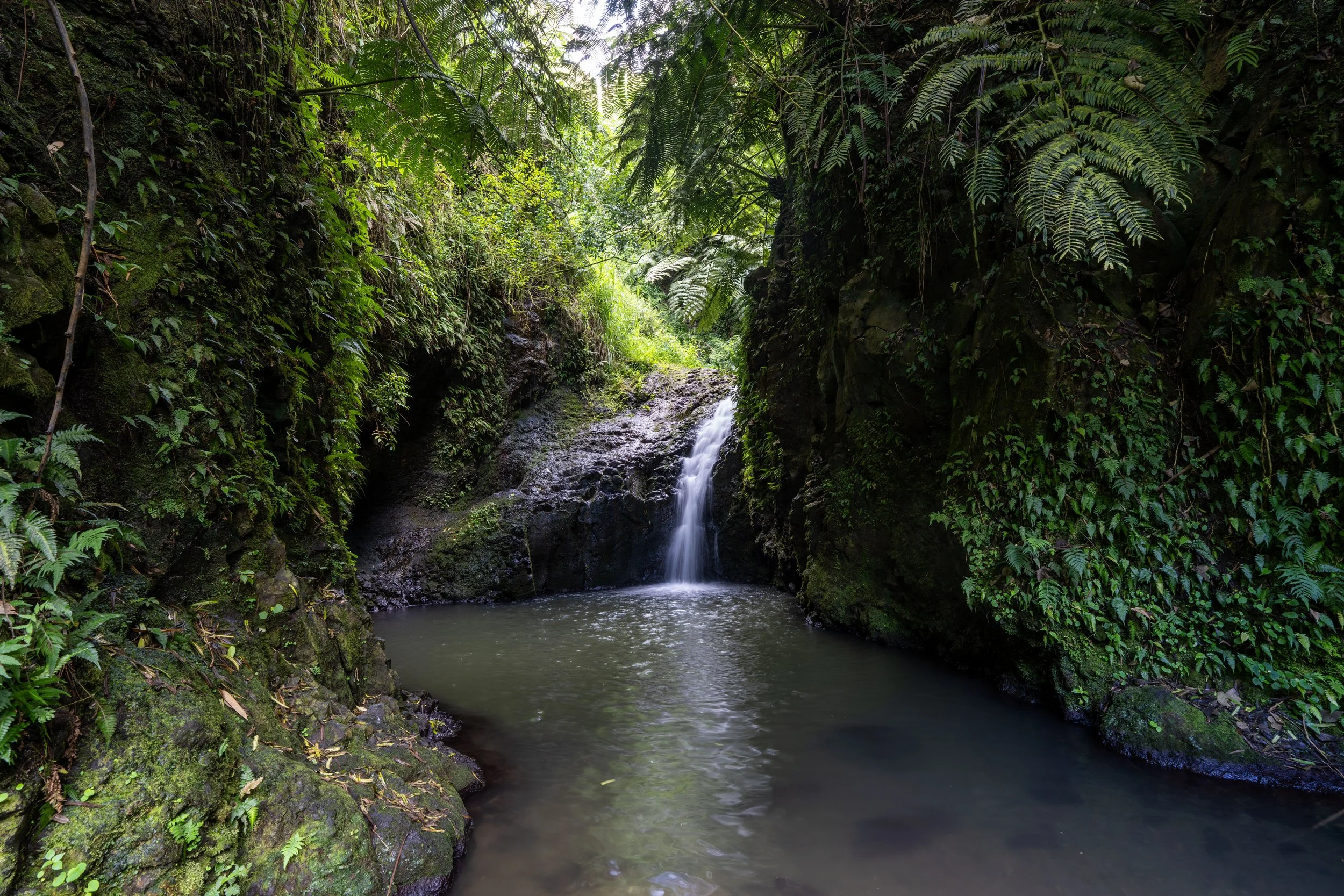
This trail is a classic for a reason: it ends in a beautiful pool perfect for a post-hike swim. It is best for those who prioritize a refreshing dip over a dry hike, as the trail is notoriously muddy.
Always pack a swimsuit and expect to get dirty. I recommend starting early to beat the midday humidity.
7. Kaʻau Crater Hike (Extreme Multi-Waterfall Climb & Summit Views)
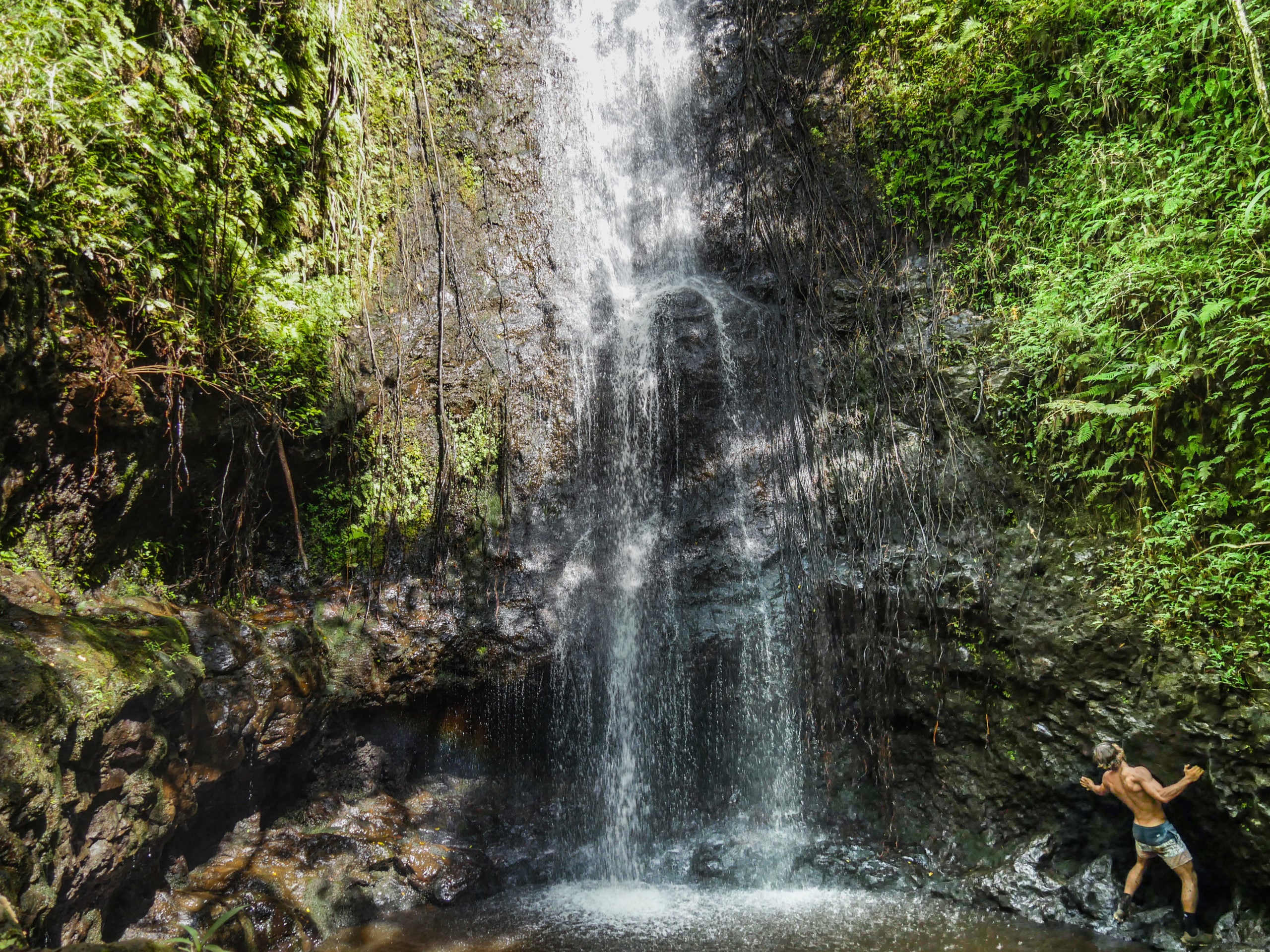
This is the ultimate test for experienced hikers who want a little bit of everything. You will climb past multiple waterfalls before ascending to the crater rim for incredible summit views.
This is for experts only; the terrain is steep, vertical, and physically demanding. If you are not an experienced climber, do not attempt this.
8. Waimano Falls (Forest Canopy Hike with Cliff Jumping)
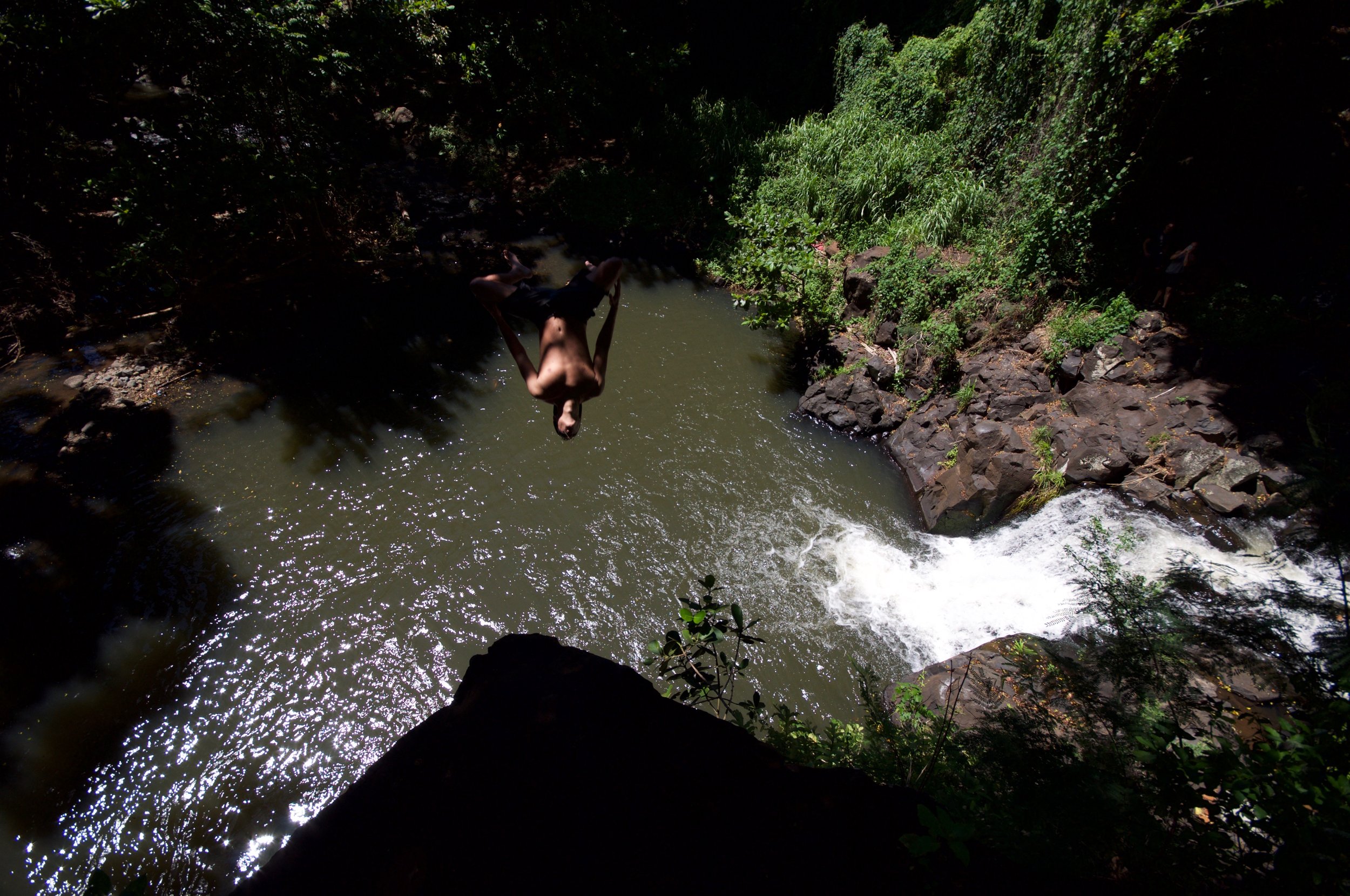
Waimano Falls is my pick for thrill-seekers who want to combine a forest hike with 15-20 foot cliff jumps. It is a great spot, but always check the pool depth and look for submerged rocks before jumping, as conditions change daily.
It is best for athletic groups who want an active afternoon.
9. Laie Falls (Long, Off-the-Beaten-Path North Shore Trek)
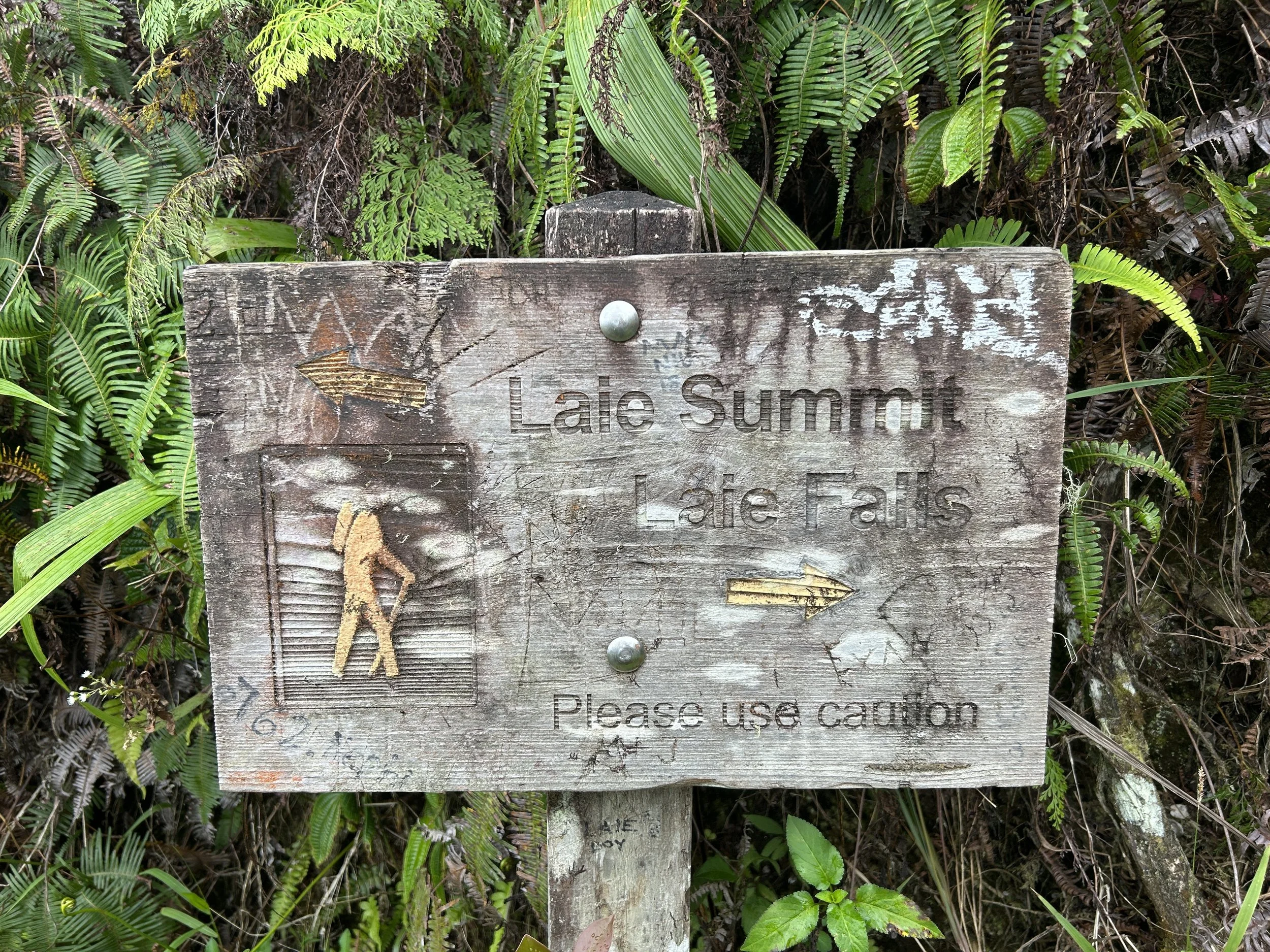
If you crave silence and solitude, this is your best bet. It is a long, 6-mile round-trip trek on the North Shore that sees far fewer visitors than the southern trails.
It is best for committed adventurers who have 4-5 hours to spare. Skip it if you are short on time or prefer social hiking trails.
10. Waipuhia Falls (The Famous ‘Upside-Down’ Waterfall)
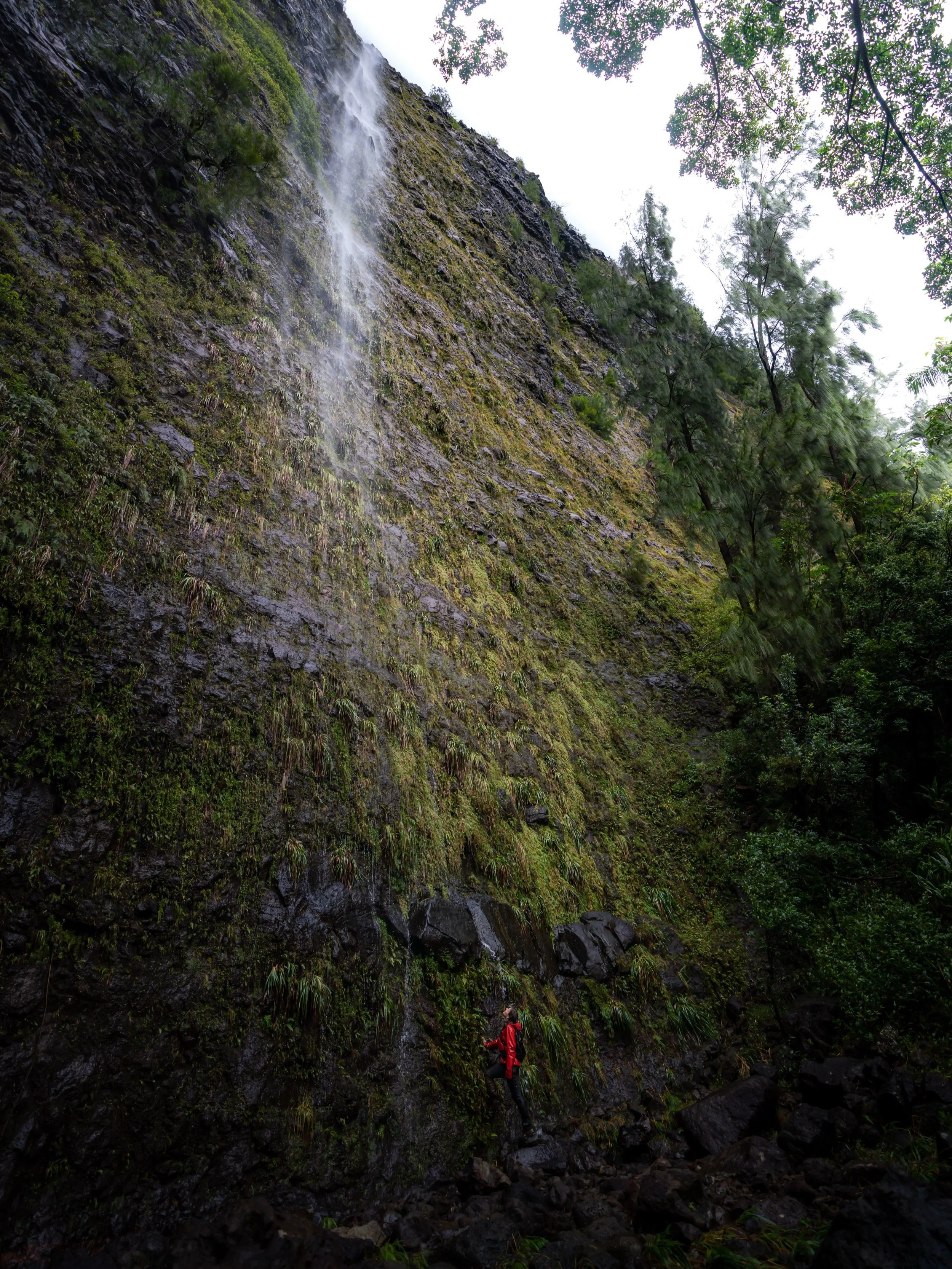
Known for the unique phenomenon where strong winds blow the water upward, Waipuhia is a spectacle when the conditions are right. It is best for photographers looking for a unique shot.
Because it is highly dependent on wind and rainfall, check the weather reports carefully before heading out.
Editor’s Tip: For any of these challenging hikes, always pack a dry bag for your electronics and wear shoes with aggressive tread. The mud here is relentless, and your standard sneakers will likely fail you.
If you are staying in the Ko ʻOlina Resorts area, plan for a longer drive to the trailhead and start your day at sunrise to maximize your time on the trail.
What Are the Best Hidden Side-Trail Waterfalls in Mānoa Valley?
While most visitors stick to the main path toward Mānoa Falls, those willing to step off the beaten track will find a series of rugged, lesser-known cascades tucked into the deep folds of the valley. These side trails are not maintained by park staff and require a higher level of situational awareness, but they reward the adventurous with the kind of solitude that is increasingly rare in Oahu’s most popular rainforest.
| Waterfall | Difficulty | Best For | Key Characteristic |
|---|---|---|---|
| ʻAihualama Falls | Moderate | Botanical enthusiasts | Located within a protected arboretum |
| Luaʻalaea Falls | Hard | Experienced hikers | Unmaintained, rugged terrain |
| Kahuwaiʻiki Falls | Expert | Off-trail navigators | Deep gulch seclusion |
11. ʻAihualama Falls (Located Inside the Lyon Arboretum)
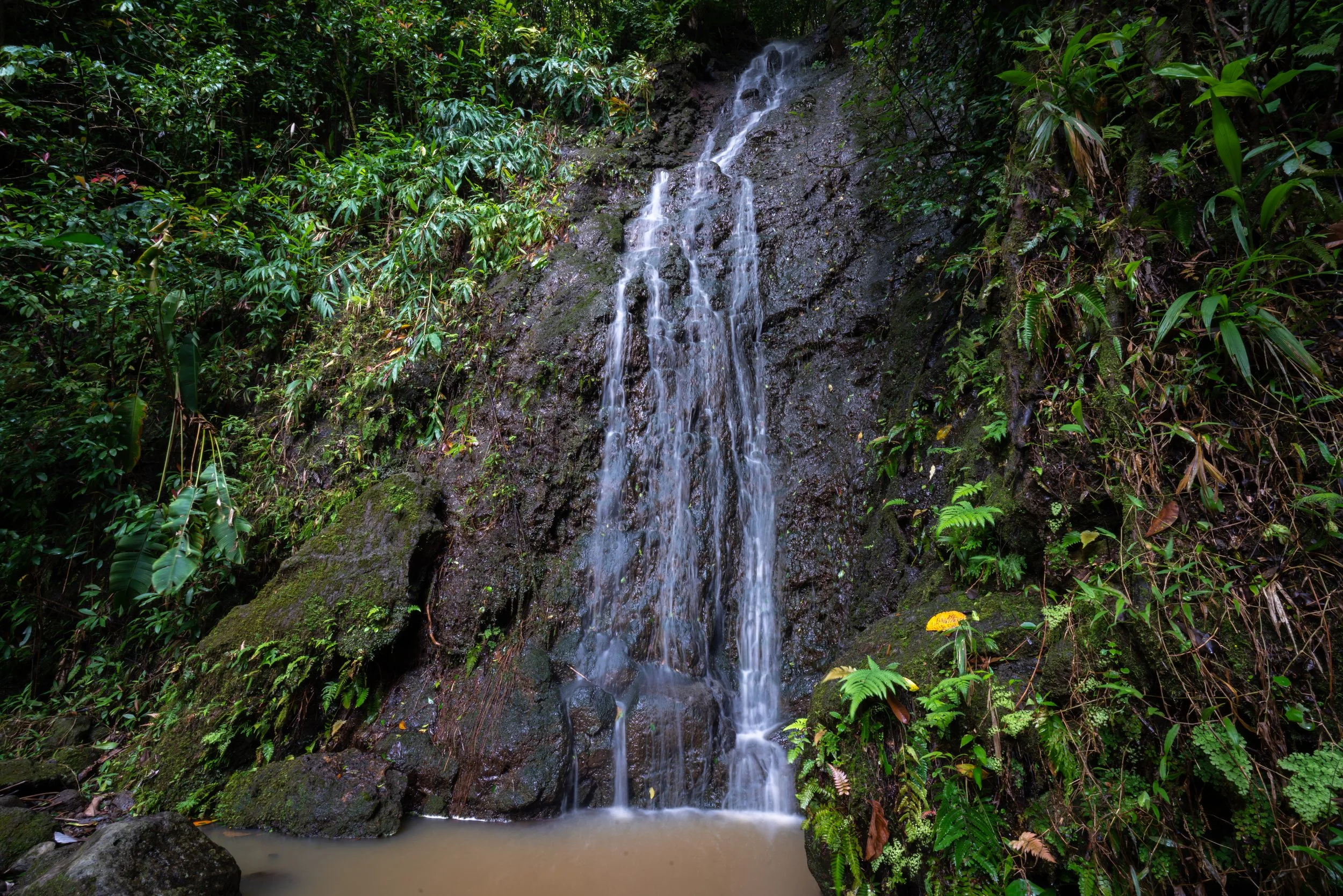
This waterfall is the most accessible of the “hidden” group because it sits within the Lyon Arboretum. I recommend this for travelers who want to combine a botanical garden tour with a rainforest trek.
Because it is managed by the University of Hawaii, you must check in at the visitor center before heading out. It is a lush, quiet alternative to the main valley trail, but skip it if you are looking for a wild, unmanaged bushwhack; this is a protected research area.
12. Luaʻalaea Falls (An Unmaintained, Rugged Side Adventure)
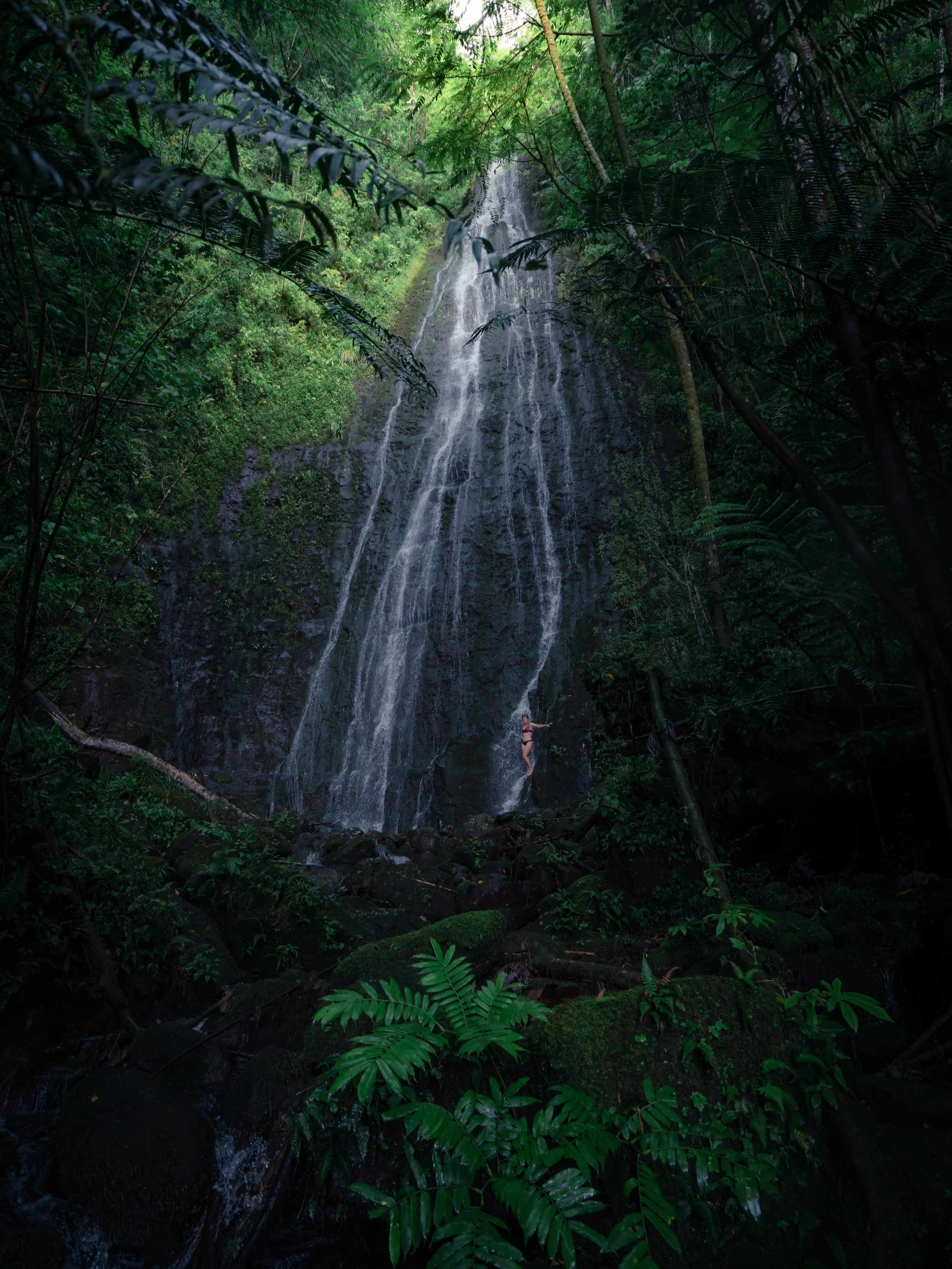
You will find the turn-off for this route near the bridge crossing on the main Mānoa Falls trail. Luaʻalaea is one of six distinct waterfalls tucked into the back of the valley.
This is strictly for those with sturdy, high-traction footwear who are comfortable navigating muddy, unmaintained slopes. I prefer this spot for early-morning hikers who want to beat the crowds, but avoid it entirely if there has been heavy rain in the previous 24 hours, as the trail becomes a slick, dangerous slide.
13. Kahuwaiʻiki Falls (An Off-Trail Gulch Route for Experts Only)
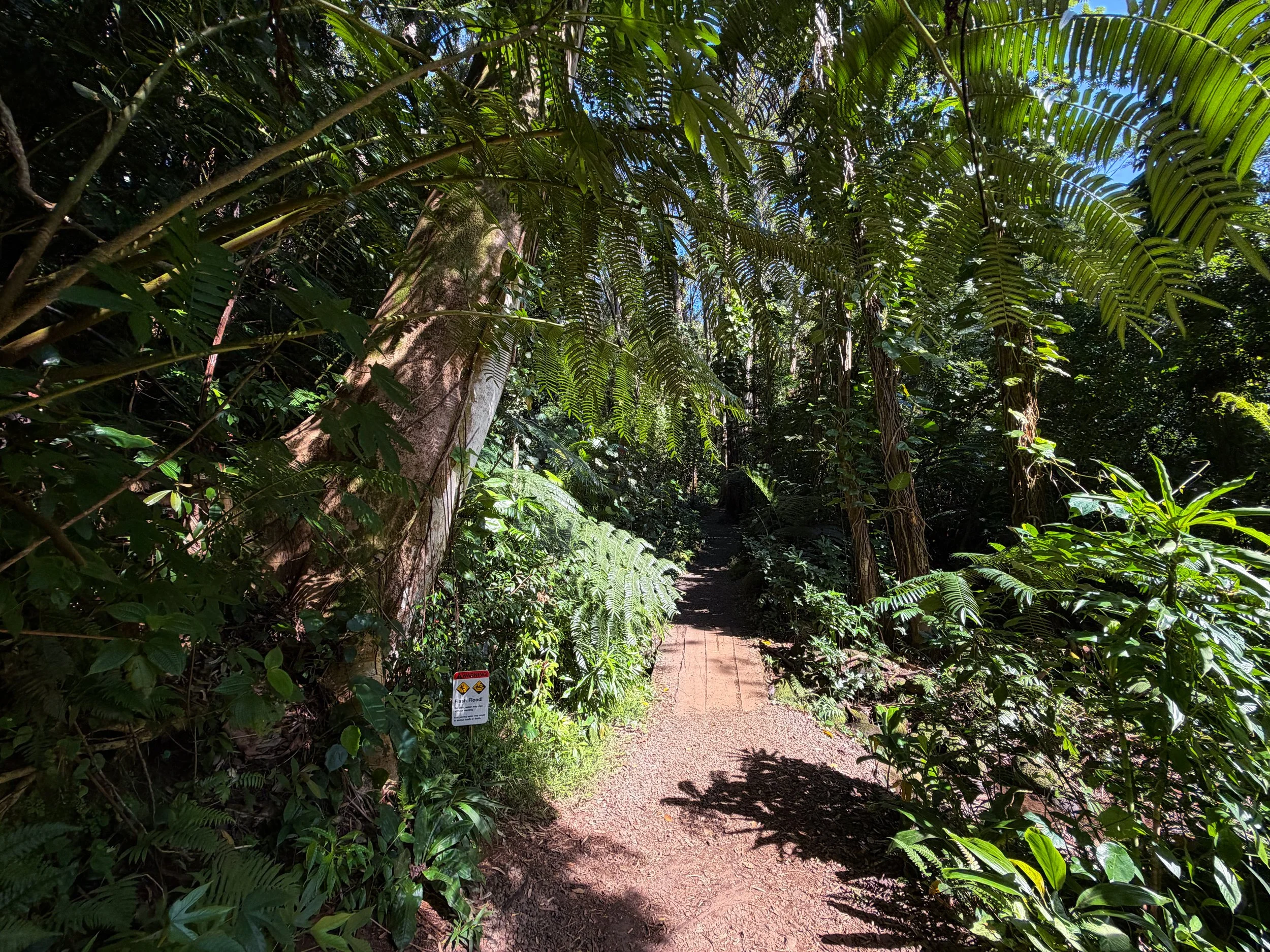
Branching off roughly 0.6 miles into the Mānoa Falls trail, this route is not a marked path but a challenging scramble through a dense, overgrown gulch. This is the move for hikers who have already done every major trail on the island and want to test their navigation skills.
If you are not comfortable reading a map or moving through thick vegetation, skip this; it is easy to lose your bearings here. For those who go, expect a steep, rewarding climb to one of the most private cascades in the valley.
Pro-Tip for Your Stay: If you are planning to tackle these side trails, base yourself in a Mānoa Valley boutique vacation rental. Staying in the valley allows for a pre-dawn start, which is essential for these unmaintained routes before the afternoon heat and potential flash flood risks set in.
You will be within minutes of the trailhead, giving you a massive advantage over those driving in from Waikiki.
Final Decision Factor: Choose ʻAihualama if you want a managed, educational experience; choose Luaʻalaea for a rugged, intermediate challenge; and save Kahuwaiʻiki only for when you are prepared for a true, off-trail wilderness navigation.
How to Safely Hike Hawaii Waterfall Trails?
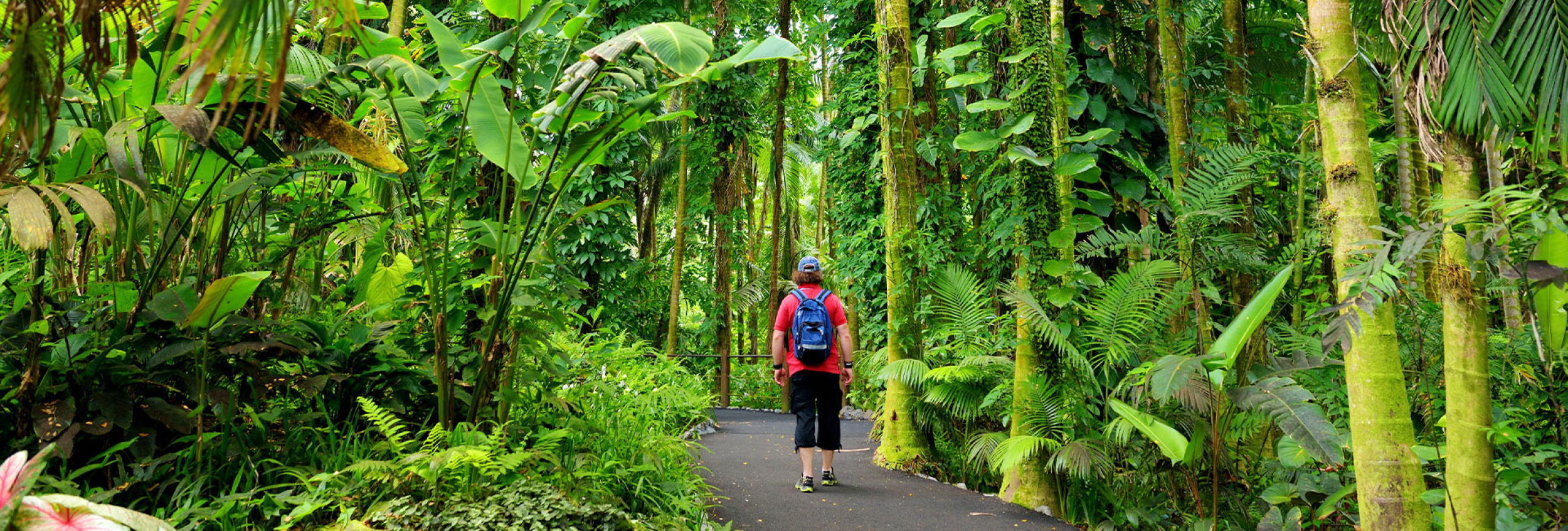
The difference between a postcard-perfect waterfall and a dangerous situation on Oʻahu often comes down to understanding the island’s unique hydrology before you lace up your boots. Because many of these trails traverse steep, volcanic terrain and dense rainforests, your safety depends on respecting the environment and coming prepared for rapid changes in conditions.
Understanding Rain-Fed vs. Spring-Fed Waterfalls
Knowing the source of your waterfall is the best way to manage your expectations for the day. Rain-fed waterfalls, such as Mānoa Falls, are entirely dependent on recent precipitation.
If the island has experienced a dry spell—which is most common during the summer months—these falls can dwindle to a mere trickle or disappear entirely. Conversely, during heavy storms, these same trails can become hazardous due to mud and flash flood risks.
Spring-fed waterfalls, including Likeke Falls and Lulumahu Falls, are far more reliable. Because they are fed by consistent groundwater sources, they maintain a steady flow regardless of short-term weather fluctuations.
If you are planning your trip during a drier season, I recommend prioritizing spring-fed trails to ensure you actually see a waterfall at the end of your trek.
Essential Gear: What to Pack for Muddy Trails and Water Crossings
Oʻahu’s waterfall trails are rarely dry, and you should expect mud regardless of the forecast. Proper footwear is non-negotiable; leave the white sneakers at your hotel.
I recommend wearing trail runners or hiking boots with aggressive tread to handle slick, clay-heavy paths. For those venturing into stream-heavy hikes, consider water shoes with good grip, but avoid flimsy flip-flops, which offer zero ankle support on uneven roots and rocks.
- Footwear: Trail shoes with deep lugs are essential for traction on slippery, muddy inclines.
- Clothing: Wear moisture-wicking synthetic fabrics. Cotton stays wet and heavy, which will only make you colder and more uncomfortable in the damp valley air.
- Navigation: Download offline maps before leaving your accommodation, as cell service is notoriously spotty in the deep valleys.
- Protection: Pack a lightweight, breathable rain shell. Even on sunny days, the microclimate near the waterfalls can shift to a downpour in minutes.
Safety Rules: Flash Floods, Leptospirosis, and Slippery Cliffs
The most critical rule for hiking in Hawaii is to never enter a stream or canyon if rain is falling in the mountains, even if the sky is clear where you are standing. Flash floods can surge through narrow gulches with little warning, turning a gentle stream into a dangerous torrent.
If you see the water turning brown or hear a roaring sound upstream, move to higher ground immediately.
Beyond flood risks, be aware of Leptospirosis, a bacterial disease found in stagnant or slow-moving freshwater in Hawaii. It enters the body through open cuts or mucous membranes.
My rule is simple: never submerge your head in waterfall pools, and cover any open wounds with waterproof bandages before starting your hike. Finally, stay on marked paths.
The cliffs surrounding these waterfalls are often composed of loose, volcanic rock that can give way underfoot; attempting to climb or “scramble” near the top of a waterfall is a common cause of serious injury and should always be avoided.
Pro Tip: For the best experience, base yourself in a town like Kailua or Waikiki to allow for early-morning starts. Getting to the trailhead by 7:00 or 8:00 AM not only beats the heat and the crowds but also gives you a better window of time to complete your hike before the typical afternoon rain showers roll into the valleys.
Frequently Asked Questions
Is swimming allowed at Mānoa Falls?
No, swimming is strictly prohibited at Mānoa Falls. Beyond the safety risks posed by falling rocks and flash floods, the area is closed to swimmers to protect the water quality and preserve the fragile ecosystem of the surrounding rainforest.
I recommend respecting these signs; the site is monitored, and the water is often stagnant, which can harbor bacteria.
Do you need a permit to hike Lulumahu Falls?
Yes, you must secure a permit to hike the Lulumahu Falls trail. This route crosses private land owned by the Honolulu Board of Water Supply, and unauthorized access is considered trespassing.
You can typically apply for and print your permit online through the official state portal before you head out. Always have a digital or physical copy ready, as enforcement officers occasionally patrol the trailhead.
Is there a fee to park or hike at Hawaii’s waterfall trails?
Fees vary significantly depending on the location, so check the specific trailhead status before you drive. Popular spots like the Mānoa Falls Trail often utilize a paid parking system, which typically costs around $5–$10 for non-residents.
Conversely, many rugged or “hidden” trails are free to access but may require a permit or lack formal parking infrastructure. I suggest keeping a few small bills and a credit card handy, as parking kiosks at popular trailheads are rarely cash-only but can occasionally malfunction.
When is the best time of year to see Hawaii waterfalls flowing?
While Hawaii’s tropical climate keeps the islands lush year-round, your best chance to see waterfalls at peak volume is during the wetter winter months, typically from November through March. During the drier summer season, some smaller falls can slow to a mere trickle or dry up entirely.
I prefer visiting in the shoulder months of April or October; you get a higher probability of consistent flow without the intense rainfall that can make trails dangerously muddy or prone to flash flooding.
How to Start Your Oahu Waterfall Adventure Today
Your next step is to grab a pair of sturdy trail runners and download offline maps for Mānoa Valley or the North Shore. I highly recommend booking a permit online for Lulumahu Falls if you want that rugged, semi-private valley adventure.
There is nothing quite like the feeling of standing at the base of a roaring Hawaiian cascade, surrounded by towering volcanic cliffs and ancient green canopy. It is the absolute best way to experience the raw, wild heart of Oahu far away from the concrete of Waikiki.
Pick your trail, pack a dry bag for your gear, and hit the trailhead at sunrise before the afternoon rains roll in.
Leave a Reply