
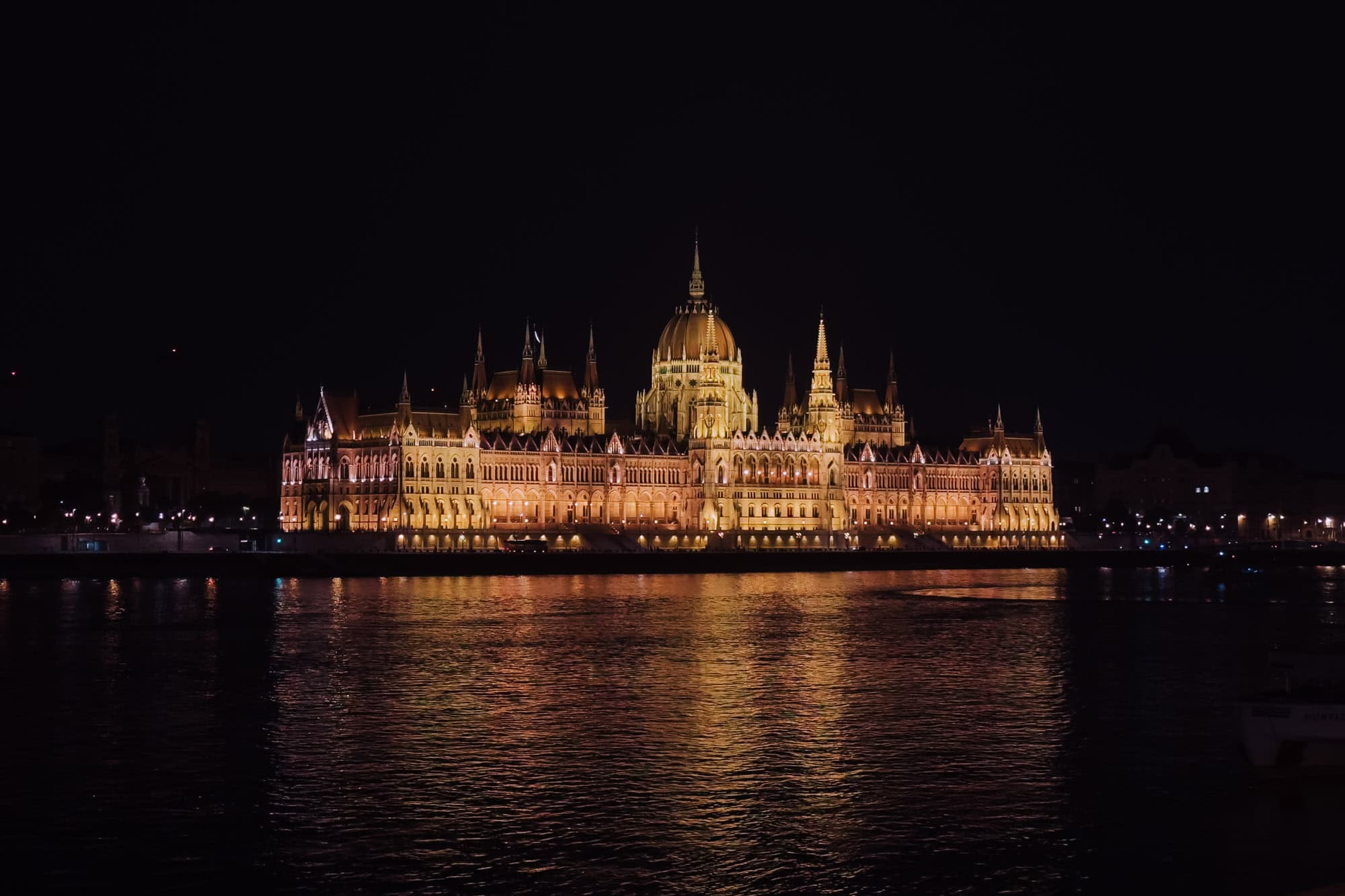
The yellow Tram 2 slides past the lit Parliament while the Danube throws every floodlit window back at you doubled. Down in the 7th district, string lights sag over a courtyard where an old Trabant serves as a sofa and nobody is lining up for anything.
Budapest gives you two cities in one night: a monumental, water-level skyline nobody photographs properly after dark, and a ruin-bar underlayer of unmarked doors and staircases that most itineraries never touch.
This guide helps you decide exactly where to point your camera first, and which spots to skip entirely when your evening is short.
Budget nights run about $20–35, covering tram fares, a $13 ferris wheel ride and a bottle of wine on a hilltop bench. Mid-range sits near $60–120 with rooftop drinks and a bath slot, while a splurge runs $150 and up for High Note Skybar cocktails and the full Rudas late-night experience.
Your Fast Pick Guide to Budapest After Dark
If you only scan one thing tonight, scan this. These are the calls that actually change your photos.
- Best free panorama: The benches and white staircase below the Citadel on Gellért Hill — skip the crowded parapet and bring your own wine.
- Best rooftop for one frame of everything: Intermezzo Roof Terrace on the Hotel President roof, where the Parliament dome and Buda hills sit in the same shot.
- Best for couples and a single perfect drink: High Note Skybar, seating level with the spires of St. Stephen’s Basilica.
- Best empty landmark: The Castle District free walls and terraces between roughly 11pm and when the floodlights drop — confirm the current light schedule locally.
- Best interior shot: Rudas Baths, the Ottoman dome with beams through the clear tiles and the octagonal rooftop pool, mixed-gender on Friday and Saturday nights from 10pm to 4am.
- Best cheap night frame: Tram Line 2 from the Grand Market Hall to Margaret Bridge, window seat on the left, roughly $1.15 a ride.
How to Time Your Hidden Budapest Night Shoot
Roughly half an hour after sunset, Budapest’s floodlit limestone still has a deep cobalt sky behind it — and on a calm weeknight the Danube doubles every lit window in its reflection. That window is the entire game.
Arrive too early and you get flat daylight; too late and you get a black sky with blown-out bulbs.
What Is Blue Hour and Why Budapest Shoots Best in It
Blue hour is the stretch of soft, even illumination just after the sun drops below the horizon, when the sky holds color instead of going black and artificial lights finally balance with it. The same effect happens before sunrise, but the evening version is the one worth planning around — you can shoot a full itinerary without waking at dawn.
Budapest is unusually kind to it because the city is built of pale stone standing directly over still water. Warm floodlight on limestone against a cool blue sky is the classic complementary-color shot, and the river multiplies it.
The bridges and embankment buildings are lit as a set, so a wide frame reads as one composition rather than scattered points of light.
- Arrive-before-full-dark rule: Be in position at least 20 minutes before the sky loses its blue. Mixed architecture-and-sky frames die the moment the sky goes black, and no editing recovers a dead sky.
- Shoot the sky first: Once the blue fades, switch to tighter architectural crops and reflections. Trying to re-shoot a wide skyline at full dark is the most common mistake here.
- Insider setting: Lock white balance around 3800–4200K and underexpose slightly. Auto white balance in Budapest at night turns the warm floodlight muddy and kills the blue-cyan contrast that makes these frames work.
Weeknight or Weekend: When Are These Spots Actually Empty?
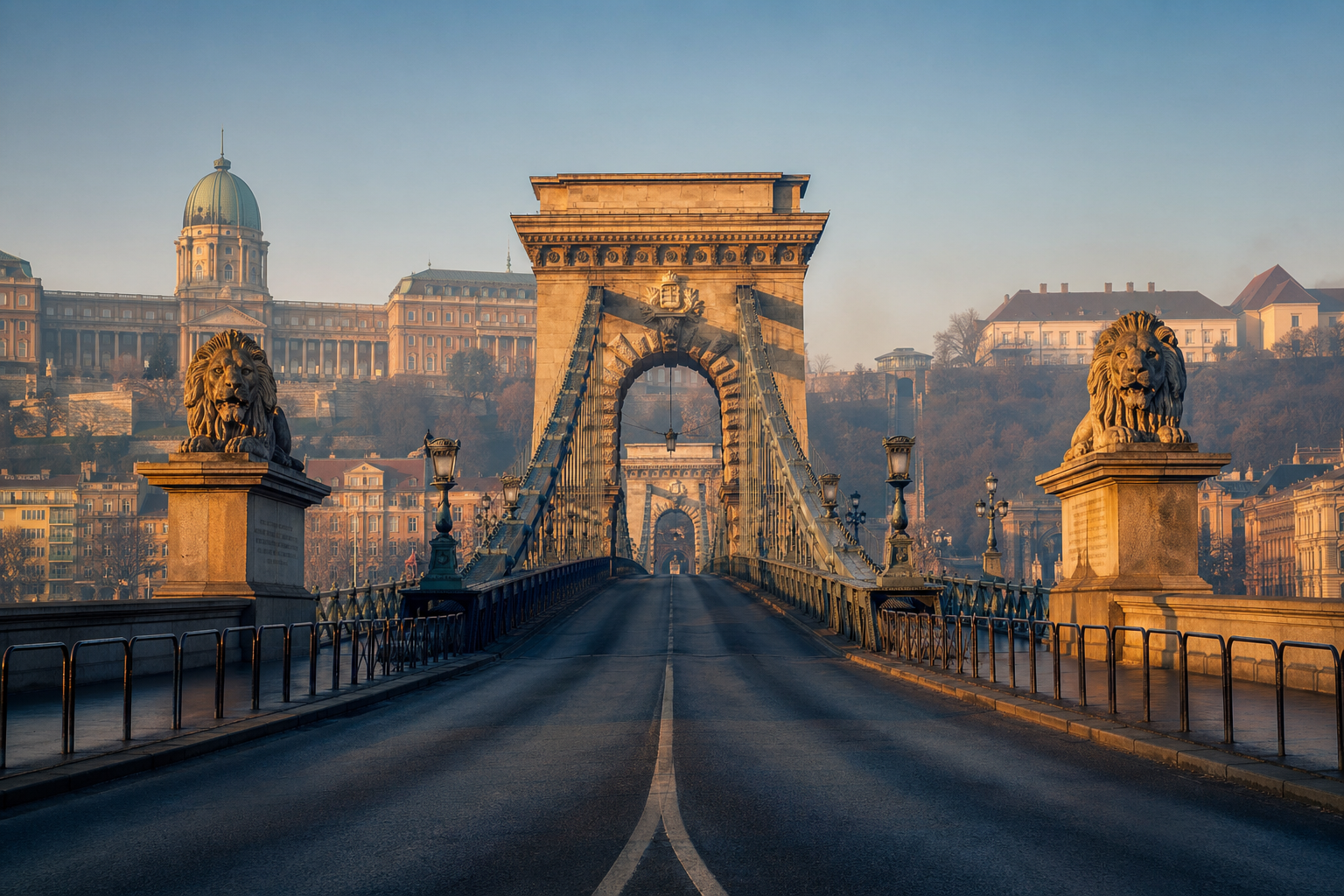
Weeknights win, and it isn’t close. Sunday through Thursday, the central districts thin out early and you can frame a landmark without a stranger’s shoulder in the corner.
Friday and Saturday bring stag and hen groups, long dinner queues and a spill-over crowd that lingers around the nightlife streets well past midnight.
- Build the itinerary Sun–Thu: Save every quiet, wide, tripod-dependent shot for a weeknight. This is the single biggest upgrade you can make to the whole trip.
- Reserve Fri–Sat for energy: Crowded bars and lit interiors actually photograph better with people in them. Plan the social shots for the weekend and the empty ones for the weeknights.
- Rain is a gift: A wet pavement after dark turns ordinary streets into reflectors and clears the crowds at the same time. Do not cancel a shoot for drizzle.
Is Budapest Safe to Wander After Dark with a Camera?
Yes. Budapest is one of the easier European capitals to walk late with gear, and I’d send a solo shooter out here without hesitation. The central districts stay lit, patrolled and busy well past midnight, and violent crime against visitors is rare.
- Keep the strap on: Basic big-city discipline — camera around the neck or cross-body, bag zipped, no phone loose on a café table.
- Watch the curb, not the crowd: Unlicensed drivers touting for fares near nightlife streets are the likeliest hassle you’ll face. Walk a block and flag a licensed cab or use a ride app.
- Tripod etiquette: On narrow sidewalks, step fully off the pedestrian flow. Locals are tolerant of photographers; they are not tolerant of blocked pavements.
Hidden High Vantage Points Above the City Lights
A worn bench on Gellért Hill, a bottle of local wine bought on the way up, and the Danube switching on below you — that is the Budapest rooftop night I would build the whole evening around, and it costs almost nothing.
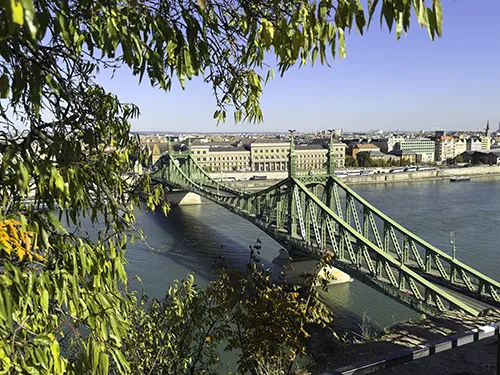
Start at Gellért Hill for the Free Overlook Everyone Walks Past
Most visitors climb straight to the Citadel and shoot from the crowded parapet. Keep walking.
The white concrete staircase leading up to the Victory Statue and the stretches of hilltop seating just below the walls are where people who live here drink at dusk — the benches are beat up and nobody cares, because the view of the Danube and the lit Pest skyline is the best free one in the city.
- My pick: Bring your own wine. This is a tradition here, not a loophole, and the nearest terraces charge for a fraction of the view.
- Shoot from the stairs: The white concrete steps leading to the Victory Statue read as pure graphic geometry in low light and are far less photographed than the main viewpoint.
- Best for: Anyone happy to trade drink service and warmth for silence and an unobstructed panorama.
Intermezzo Roof Terrace: The Quiet Terrace Above the Inner City
On the roof of the Hotel President, you walk straight through the reception hall to the lift — no reservation desk, no guest-list theater — and step out onto a terrace that lines up the Hungarian Parliament, Buda Castle, Fisherman’s Bastion, St. Stephen’s Basilica and the ferris wheel on Erzsébet Square in a single sweep.
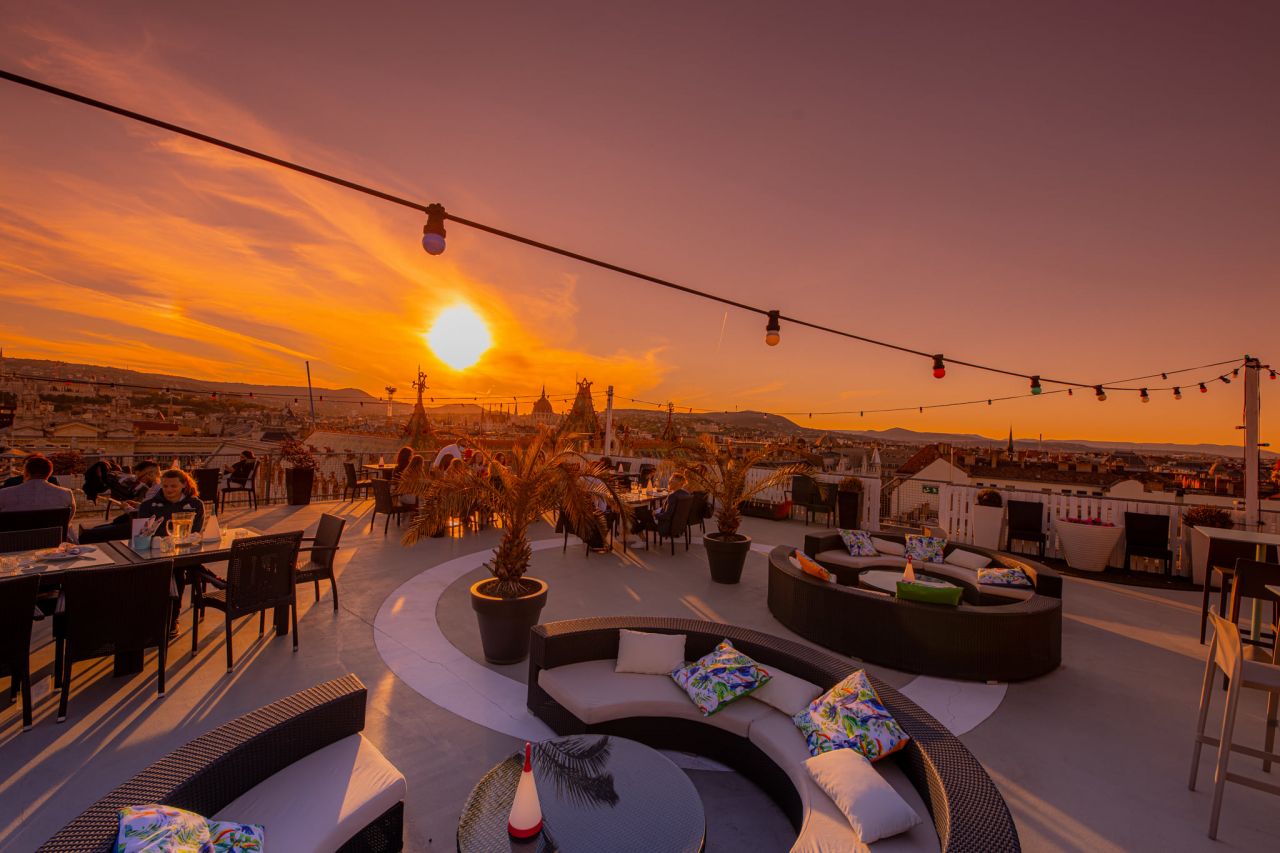
This is the move for a first drink of the night: central, calm, and close enough to the river that the landmark cluster reads as one composition instead of five separate shots.
- Why it wins: It is the only rooftop here that puts the Parliament dome and the Buda hills in the same frame without a long walk.
- Winter bonus: A small ice rink operates on-site in the cold months — a genuinely rare rooftop detail worth checking when you arrive.
- Who should skip it: Anyone chasing cocktails over a quiet terrace. Go to 360 or High Note for that.
360 Bar on Andrássy: The Full-Circle Night View
Set on the roof of the building at Andrássy út near the Opera House, 360 Bar delivers the unbroken panorama its name promises, and it is open daily from 2pm to midnight — which makes it the most reliable of the rooftop options if your schedule is loose.
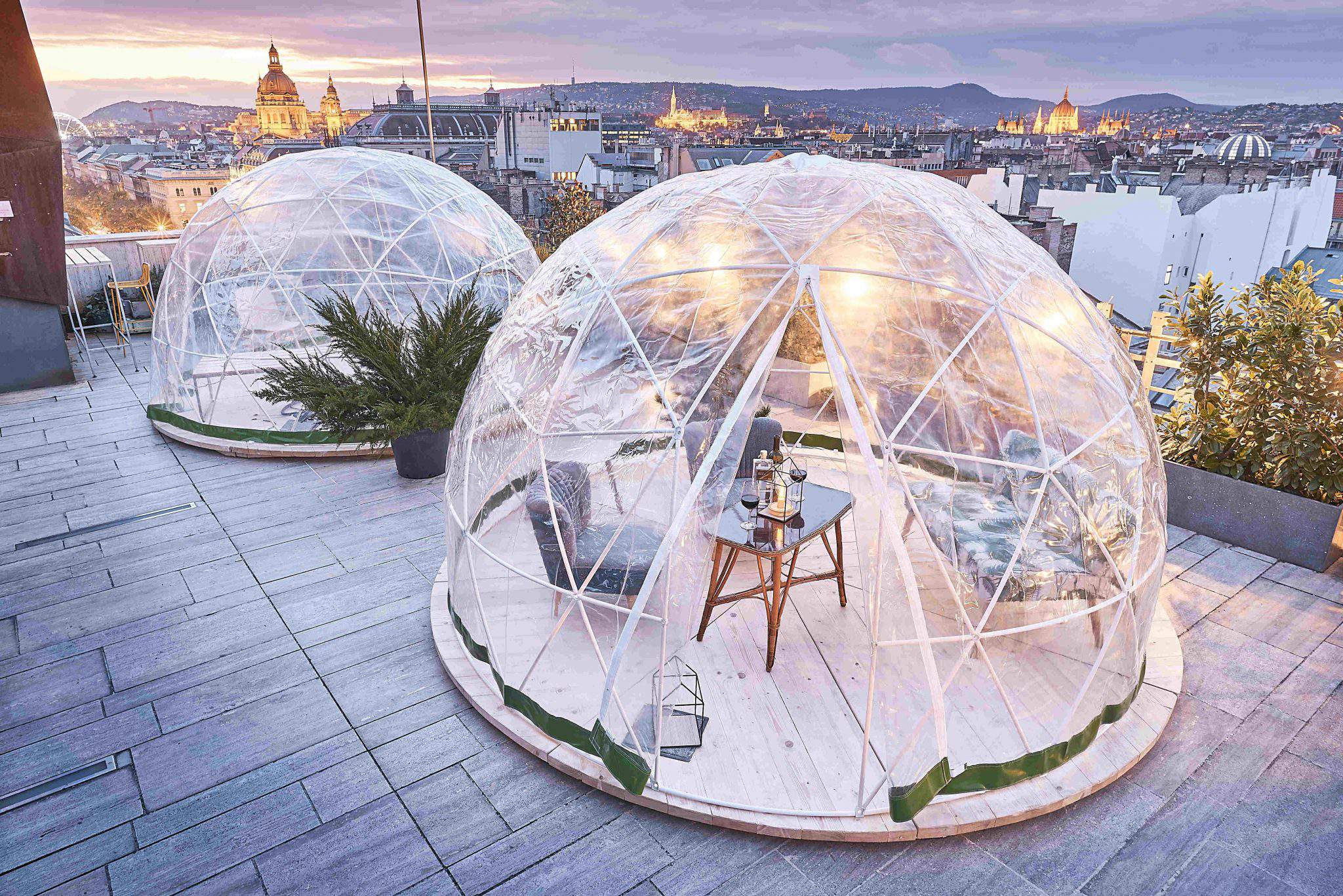
I would choose this over High Note for a group night out. The format is social, the views wrap the whole inner city, and in winter they set up transparent igloos on the terrace, so you can sit outside in January and still see the skyline.
- Insider move: The igloos are the draw in the cold season and they go early — arrive close to opening rather than at peak evening.
- Practical edge: The daily 2pm-to-midnight window is the widest of any rooftop here, so it fits both a late-afternoon drink and a proper night session.
High Note Skybar: Level with the Spires, Named by Condé Nast
High Note Skybar sits on the roof of the Aria Hotel and got a 2016 Condé Nast ranking among the world’s best rooftop bars — and the reason is the seating is effectively level with the dome and spires of St. Stephen’s Basilica next door.
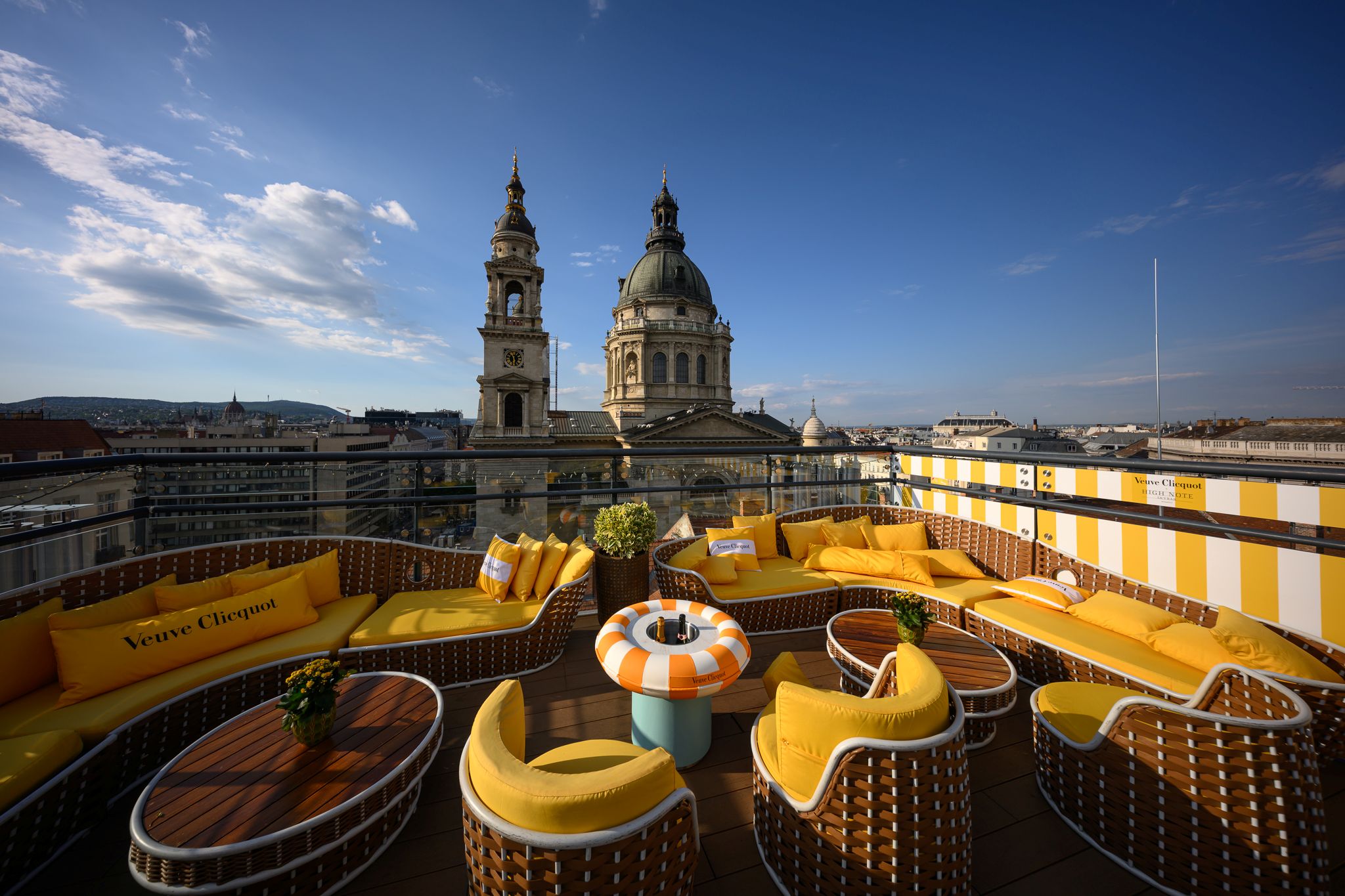
Go here when you want one excellent, expensive drink and a photo that looks like the city is at eye level. Expect premium cocktail prices to match the setting; that is the trade for a rooftop with this level of design and a landmark this close.
It is the choice for couples and anyone treating the view as the event rather than the backdrop.
The Ferris Wheel at Erzsébet Square After Sunset
The Budapest Eye ferris wheel towers above almost every building in the heart of the city, and it is the viewpoint most itineraries cut — which is exactly why it stays usable.
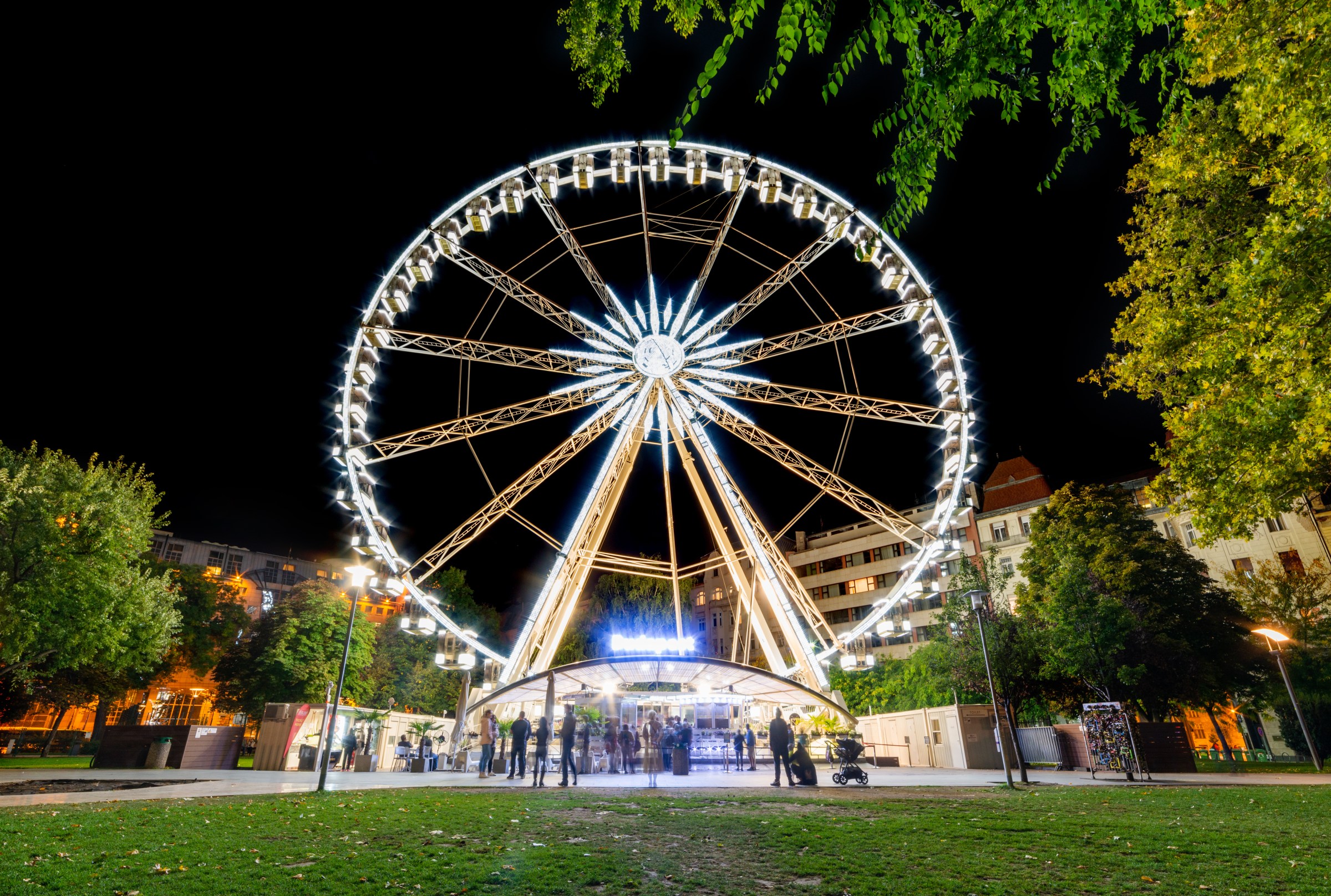
A single ride runs roughly $13, though prices vary by season and operator — confirm on the day. From the top cabin you look down on St. Stephen’s Basilica, across the Danube to Gellért Hill and the Buda side, and north toward the Parliament dome.
- When to ride: Sunset is the payoff — the sky colors the river while the streetlights come up beneath you.
- Worth it? Yes for the price and the framing. Skip it only if you have already done the free overlook on Gellért Hill and want to save the money for a cocktail at 360.
Which Illuminated Landmarks Can You Have Almost to Yourself?
Budapest’s floodlit monuments are emptiest between roughly 11pm and the moment the Castle District lights drop — and that gap is where the best night frames of this city live. Skip the Chain Bridge crush and work these four spots instead; each one is free to reach, well lit, and quiet enough to shoot without a stranger’s elbow in your frame.
The Castle District After Dark: Free, Floodlit and Empty
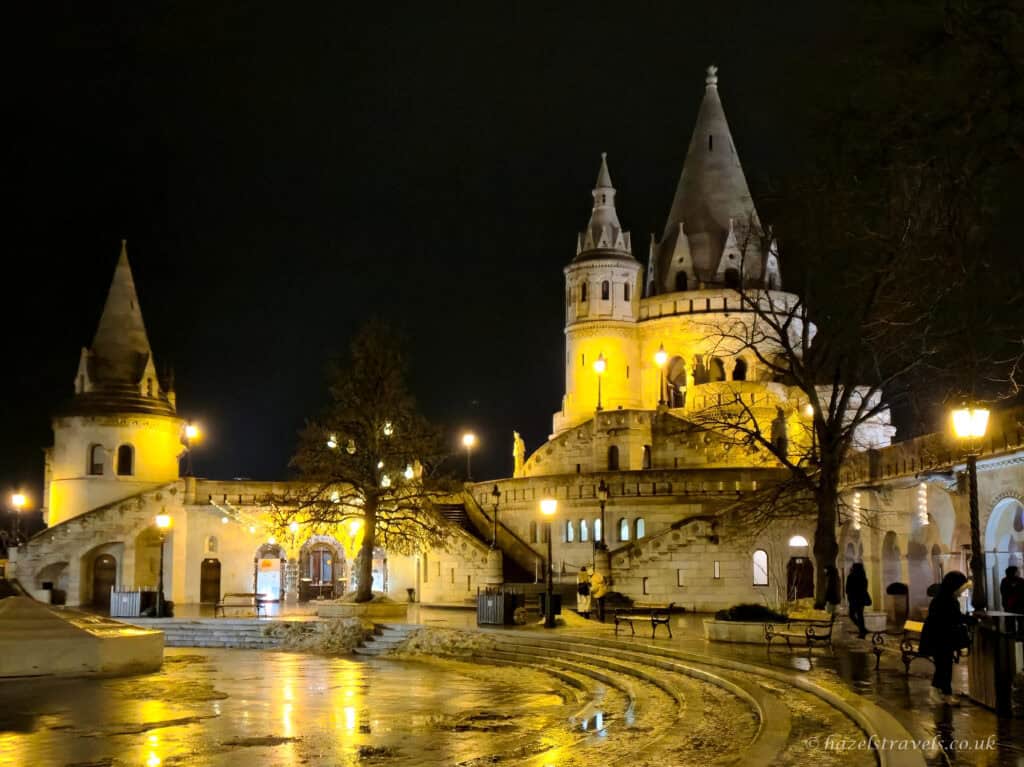
The Castle District after dark is the single best argument for staying out late in Budapest. By day it’s a slow-moving queue of tour groups; by night the terraces, walls and lanes belong to whoever is willing to climb up there, and the whole hillside reads as one uninterrupted sea of lights over the Danube.
Go for the free public walls and terraces rather than the ticketed lookout decks — the floodlit stonework and the panorama cost nothing, and honestly the open vantage is the more photogenic of the two. The mood up here is genuinely reverent once the crowds thin: quiet streets, glowing façades, and cold air that keeps most casual visitors at street level.
- Arrive first, shoot later: get up the hill while the floodlights are still fully on, then work the walls as the district empties.
- Watch the clock on the lights: the floodlights typically switch off in the midnight-to-1am window, so treat that as your hard shooting deadline — confirm the current schedule locally because municipal lighting times do change.
- Worth the climb: the walk up is the price of admission, and it’s the reason the place is empty at the exact hour the city looks its best.
Shoes on the Danube Bank Under Night Lighting
Sixty pairs of iron shoes sit bolted to the stone where the Danube’s bank meets the promenade, and at night the low floodlighting turns them into the most quietly devastating image in the city. This is a memorial, not a backdrop: between Széchenyi István Square and the Parliament stretch, it marks where militiamen ordered people to remove their shoes before shooting them into the river.
The history is stark. Around 3,500 people were shot into the Danube in the final months of the Second World War, roughly 800 of them Jews, and the shoes — men’s work boots, women’s heels, tiny children’s clogs — were the only thing left behind.
It’s easy to walk straight past the memorial if you don’t know it’s there; look for the shoes at foot level on the river-facing edge of the promenade.
- Shoot low and close: the detail is in the individual shoes against the lit water, not in a wide river shot.
- Keep it respectful: no standing in the shoes, no props, no posed photos. This is a grave site in everything but name.
- Best combined with: the Parliament façade further along the same walk, so you get the memorial while the stretch is still lit and still empty.
Heroes’ Square and Vajdahunyad Castle After Hours
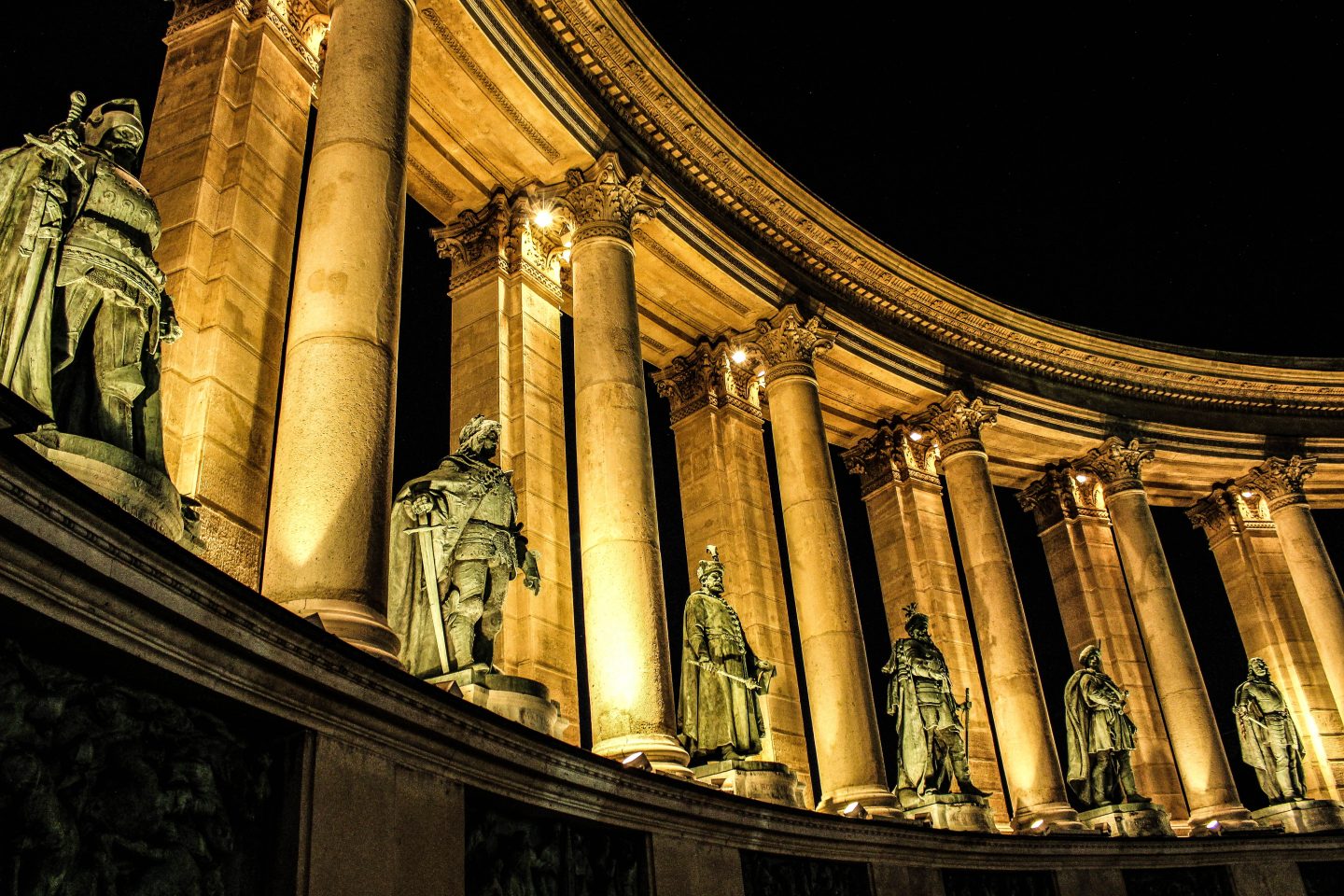
Heroes’ Square was built for the 1896 millennium celebrations of the Hungarian conquest of the Carpathian Basin, and its semicircular colonnade — now part of a UNESCO-listed avenue — is at its most cinematic when there’s nobody in it. Late at night you can stand on the exact centre line of the square and shoot straight down the colonnade’s arc without a single photobomber.
Directly behind it, Vajdahunyad Castle is the smarter play after dark. Its main courtyard stays free to enter even when the ticketed interiors are shut, and the fairy-tale mix of medieval, Renaissance and Baroque copywork glows against the dark park around it.
- Free at night: the castle courtyard costs nothing to walk into and is usually near-deserted after the museums close.
- Museum entry: expect roughly 1,600 HUF if you want the interiors by day — confirm current pricing with the museum, as fees change.
- Winter bonus: the courtyard transforms into one of the city’s outdoor ice rinks in the cold months, which is a genuinely different night photograph.
- My take: skip the castle interiors entirely for a night shoot. The courtyard and the Heroes’ Square colonnade are the images worth your time.
Liberty Bridge and Margaret Bridge: The Two Quieter Crossings
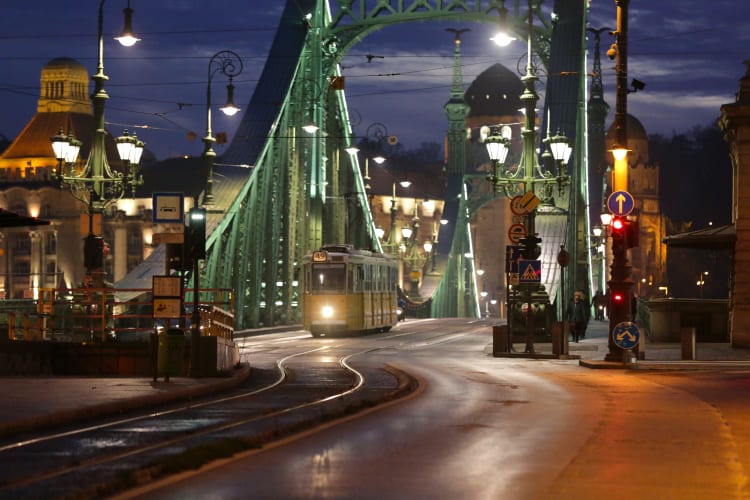
Liberty Bridge’s green steel latticework is the most handsome bridge surface in Budapest, and it’s the crossing almost nobody queues for. Built as the Francis Joseph Bridge and destroyed with every other Danube bridge in the Second World War, it was rebuilt in the same ornate form — and the riveted green iron now frames both the Gellért Hill Cave entrance at its Buda foot and a long, unobstructed view downriver.
Stand mid-span and shoot along the tram tracks toward the illuminated riverbanks; the bridge’s own lamps give you usable light without a tripod. The Gellért Hill Cave entrance sits right at the Buda end, worth a quick frame before you cross back.
Margaret Bridge is the opposite kind of shot. Its angle onto the Danube opens up Parliament and the Castle District in a single wide frame, which makes it the best panorama bridge in the city — and far less trafficked at night than the Chain Bridge it replaces in most itineraries.
- Liberty Bridge for detail: green steel, ornate pillars, tram tracks, and the Buda-side cave entrance.
- Margaret Bridge for panorama: the open Danube vista with both landmark banks in the background.
- Detour worth making: Margaret Bridge is the gateway onto Margaret Island, a green retreat in mid-river that’s peaceful and lit for evening walking.
- Route it this way: Shoes on the Danube → Parliament → Margaret Bridge, then a separate loop for Liberty Bridge and the Castle District. Trying to do both bridges and the hill in one sweep means backtracking.
The Gozsdu Passage is the one address in Budapest where the shot changes completely between lunch and midnight — a covered corridor of restaurants, bars, nightclubs and a gaming arcade strung between Király and Dob Streets in the old Jewish quarter, packed shoulder-to-shoulder with a young crowd that keeps the party running late. Shoot the passage itself, not the storefronts: the repeating arches and warm overhead string lighting give you depth and leading lines that a street facade never will.
Gozsdu Passage: The Corridor That Only Works at Night
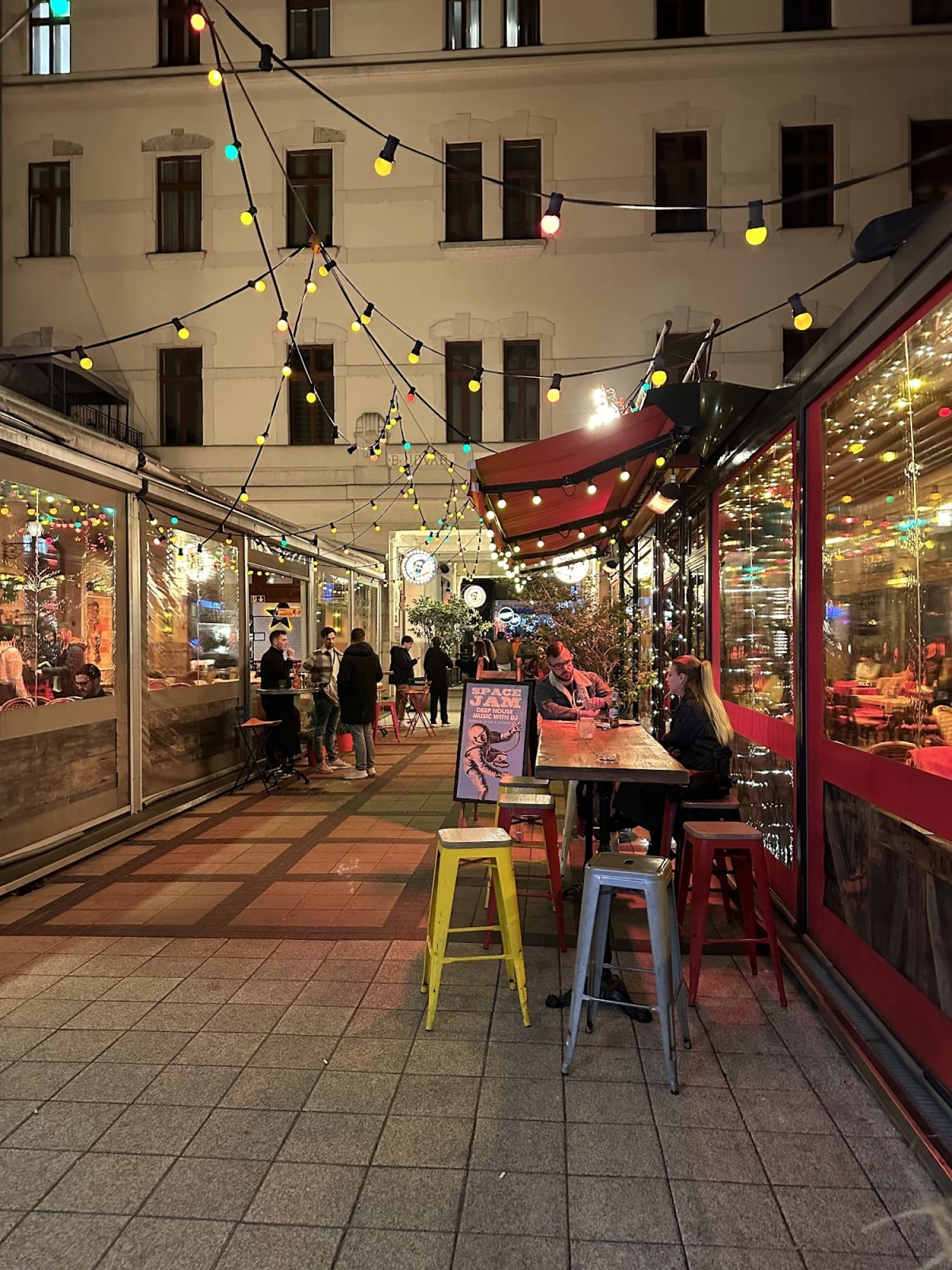
Weekdays deliver the cleaner frame — the crowd is thinner and you can hold a composition without someone stepping into it. If you come on a Saturday or Sunday morning instead, the corridor flips into a flea-and-craft market, which is a completely different, more tactile set of images.
My read: shoot it after dark for atmosphere, and let the market be a separate daytime mission rather than trying to do both in one visit.
- Best angle: Stand at one end and shoot straight down the corridor — the arcade’s gaming machines throw colored light that reads well on a long exposure.
- Where to eat: The passage is dense with options, so choose by terrace placement rather than reviews; front-row seats put you closest to the moving crowd.
- What to avoid: Friday and Saturday around peak dinner time, when the walkway becomes a queue and every frame has strangers in it.
Szimpla Kert and the Unmarked Bars You Have to Find Yourself
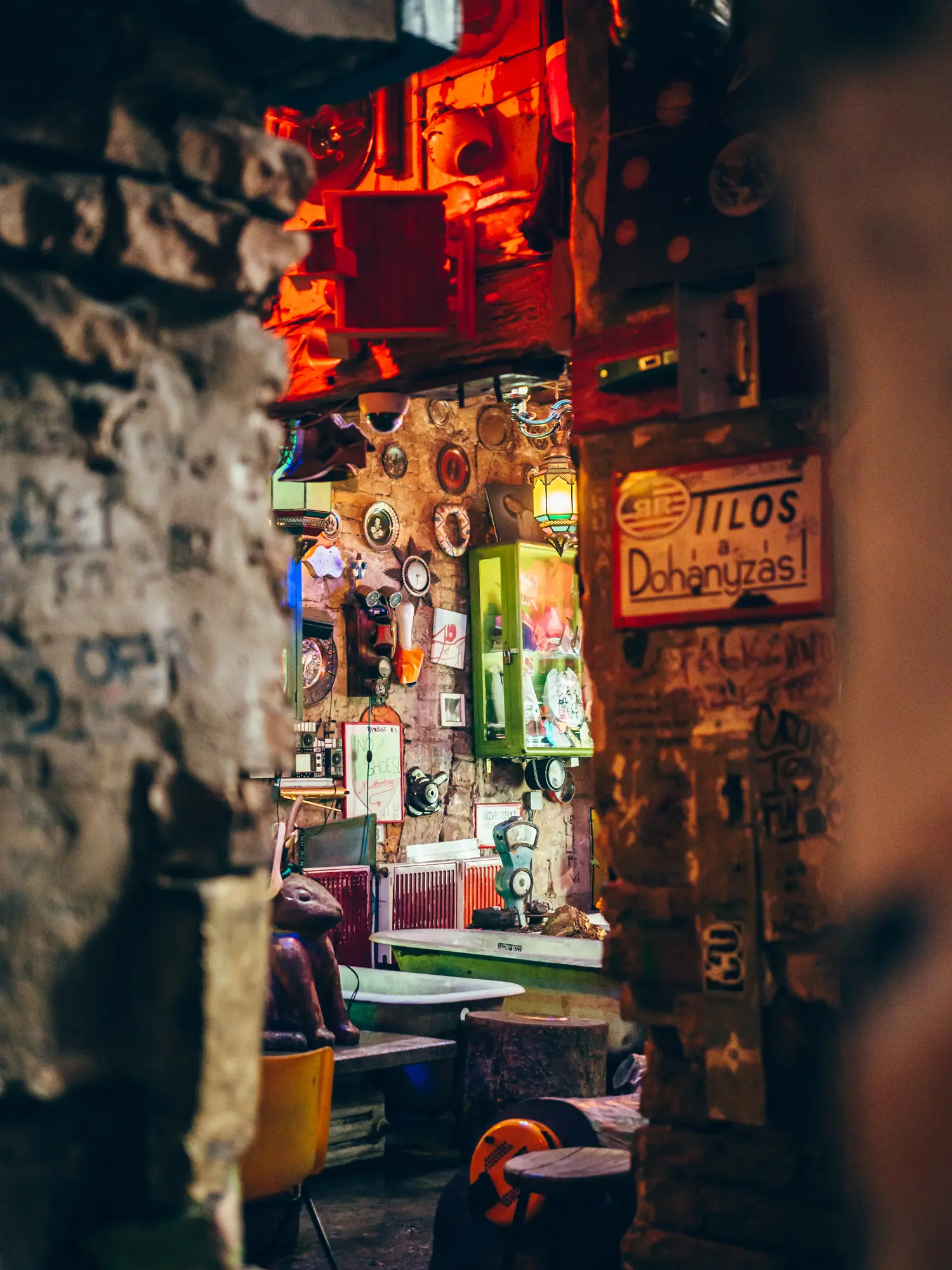
Szimpla Kert was the first ruin pub of the early 2000s, and it still occupies the shell of a former stove factory in the 7th district — which is exactly why the interior photographs so well: Trabant-car seating, mismatched furniture and absurd art installations in rooms that were never meant to be a bar. It is loud, chaotic and crowded, so the images you get here are of energy and texture rather than architecture.
The real payoff in this district is the bars you find without a name on the door. The pattern is almost always the same: an unmarked entrance, a staircase down, a hallway, and then something remarkable at the end of it.
I would not skip Szimpla, but I would treat it as the warm-up and go hunting afterward.
- Insider detail: Ask the bartender at Szimpla where they drink after their shift ends — that is the single most reliable way to find a bar with no sign, no listing and no tourists.
- Photo strategy: Shoot the Trabant and the courtyard early in the evening before the crowd fills in, then switch to handheld and embrace the motion blur.
Paris Courtyard: Free to Enter, No Tripods Allowed
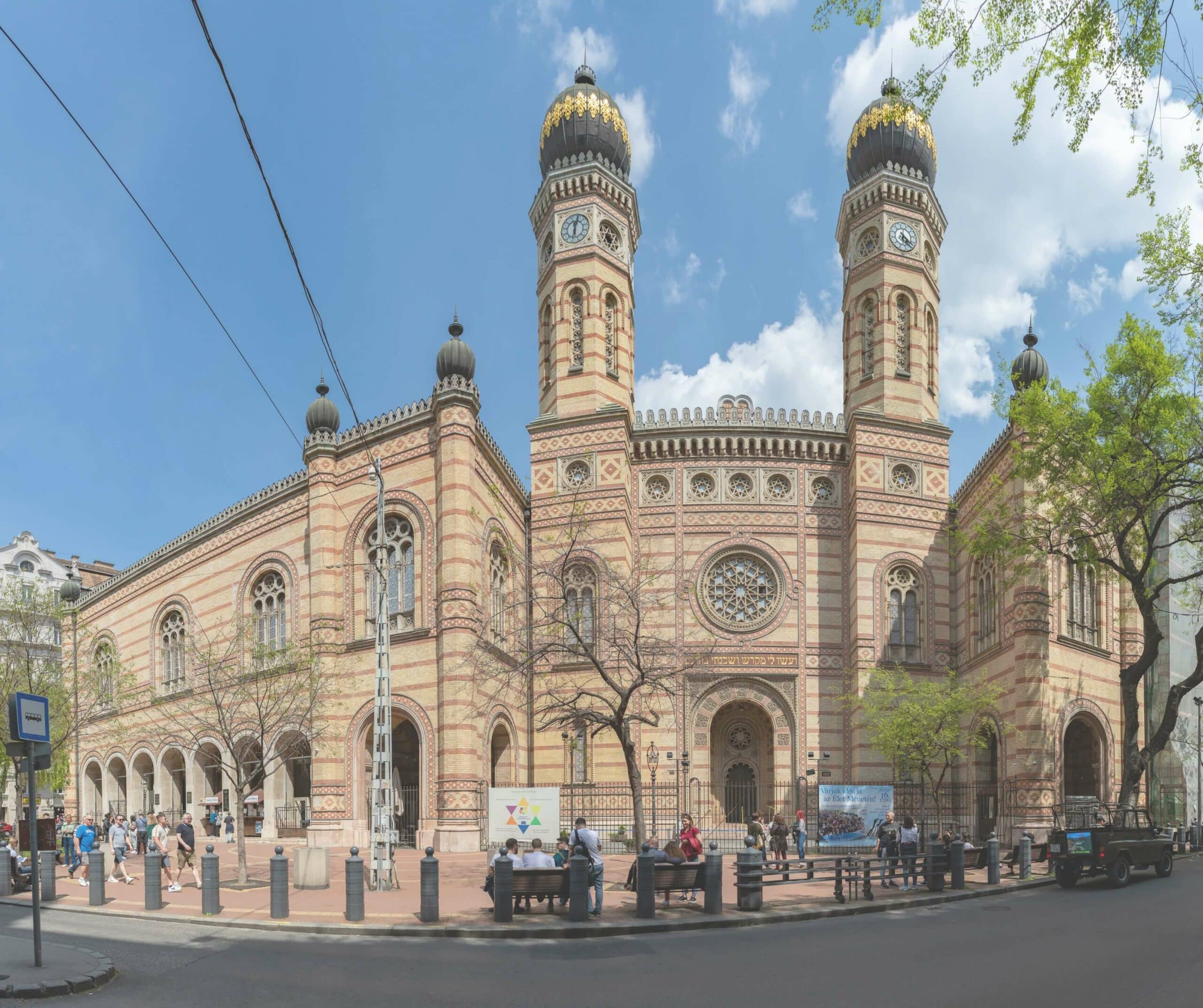
Paris Courtyard is the most ornate interior you can photograph in Budapest without spending a forint — a former 1912 Downtown Savings Bank on Károlyi Street that reopened as a luxury hotel in 2019 and still lets the public walk into its central courtyard. The mix of Moorish motifs with Neo-Gothic, Eclectic and Art Nouveau detailing is genuinely unusual, and the tiered balconies give you vertical composition options that most courtyards cannot.
Two hard rules shape how you shoot here:
- Tripods are banned — plan for handheld with a fast lens and lean on the balcony railings for stability.
- No photo shoots — casual photography is welcome, but staging outfits, lighting kits or model sessions will get you stopped.
- Getting there: Ferenciek Square on the M3 metro line drops you a short walk away.
This is a stop to build into the walk between Szimpla and dinner rather than a destination on its own — the courtyard takes fifteen minutes and the restriction on tripods means you cannot overstay productively.
Twentysix° on Király Utca: A Photogenic Urban Jungle for Dinner
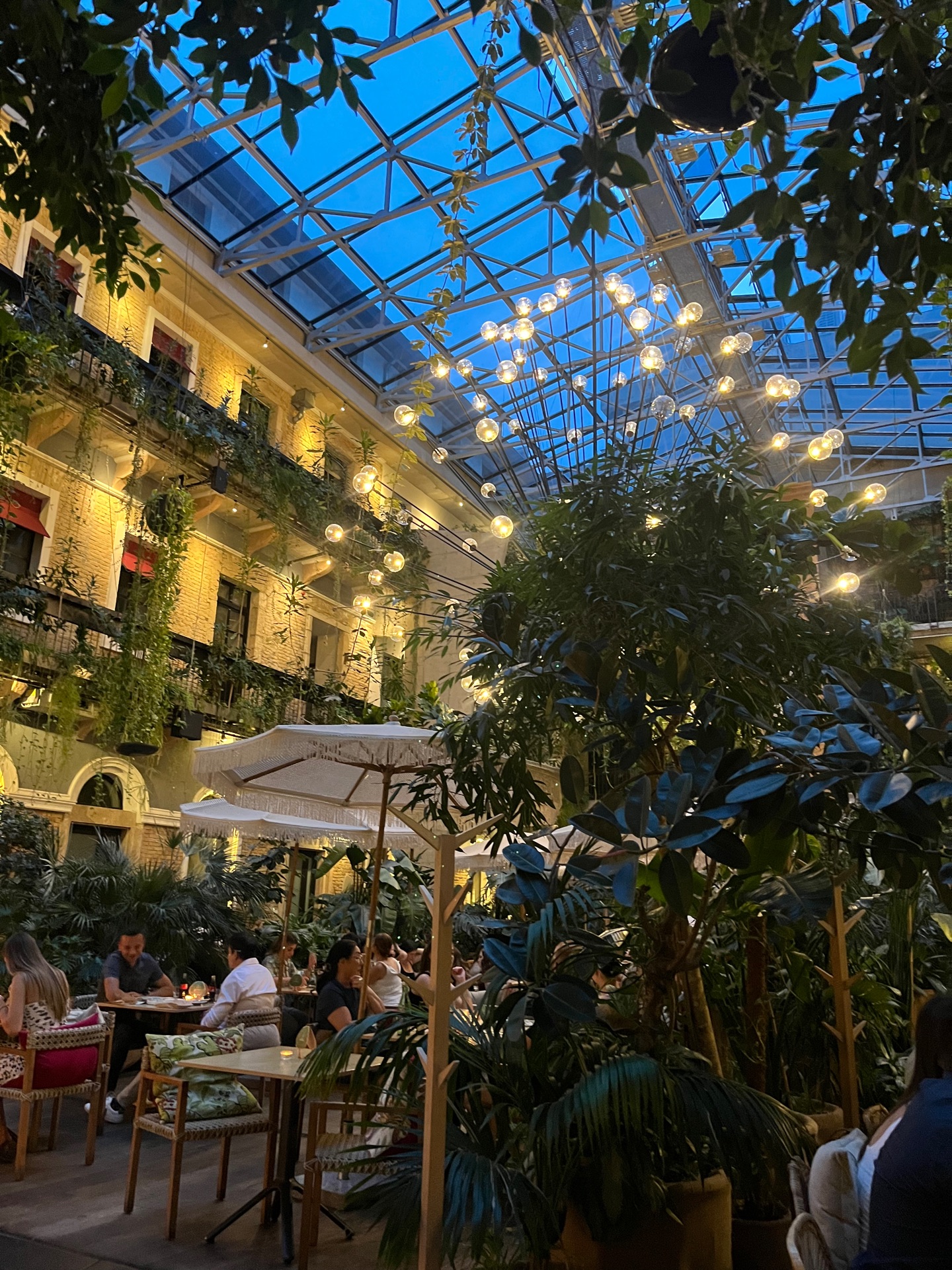
Twentysix° sits on Király Utca and reads like a greenhouse that happens to serve food — greenery hangs from every direction and the décor runs almost entirely on natural materials, rattan, stone and warm wood. It is the strongest dinner choice in this section for anyone whose goal is a photogenic table rather than a traditional Hungarian menu.
The kitchen leans on oriental mezze, which is the smarter order here: shared small plates give you more surfaces, more color and more frames than a single main would. Book before you go — reservations are mandatory, and walk-ins are not a plan.
- Book now: Reserve a table online before your trip; this is not a place to leave to chance.
- Where to sit: Ask for a table deep in the greenery rather than near the entrance — the density of plants behind you is what makes the photo work.
- Order: The mezze spread beats any single dish for both flavor and the shot.
Run the evening in this order and the geography holds: Gozsdu for the corridor at night, Szimpla and the unmarked bars after, Paris Courtyard early in the evening while it is still light inside, and Twentysix° as the sit-down finish on the walk back toward the river.
Can You Really Photograph Budapest’s Baths at Night?
Rudas is the only Budapest bath where the photography problem is solved after midnight: a 16th-century Turkish dome overhead, shafts of light dropping through the handful of clear tiles set into it, and a rooftop hot pool that looks straight down the Danube while the city glows on both banks.
My verdict is blunt — skip the grand palace baths for this trip if night photography is the goal. Széchenyi and Gellért are gorgeous, but they are 19th-century palace architecture: bright, symmetrical, built for spectacle.
Rudas is a genuine Ottoman bathhouse, which means centuries-older geometry, low light, and an atmosphere you cannot fake with editing.
Inside the Ottoman Dome: Rays Through the Clear Tiles
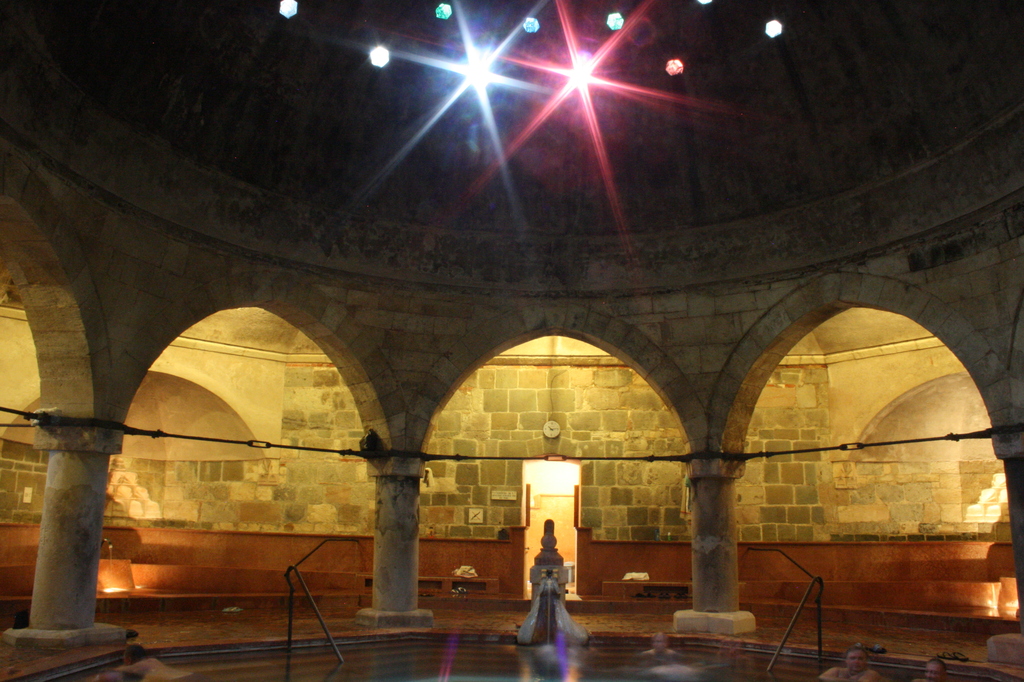
The dome is the shot. It is large, dark, and deliberately starved of light — the Ottomans built these pools as places of quiet, not display.
What makes it photographable is the handful of clear tiles worked into the roof: daylight and streetlight punch through them as narrow beams, and the contrast between the black ceiling and those blades of light is the whole reason to come.
- Best frame: Stand at the pool edge and shoot upward along the beams rather than straight at the ceiling — the dome reads as a circle either way, but the diagonal rays give the image depth.
- My timing rule: Work the dome in the first hour of your slot. Steam from the hot water thickens as the room fills, and it softens those beams into haze fast.
- What wins: High-contrast monochrome. The room is dim and warm-toned, and most phone shots come out muddy — desaturating is the honest fix.
The Octagonal Rooftop Pool Over the Danube
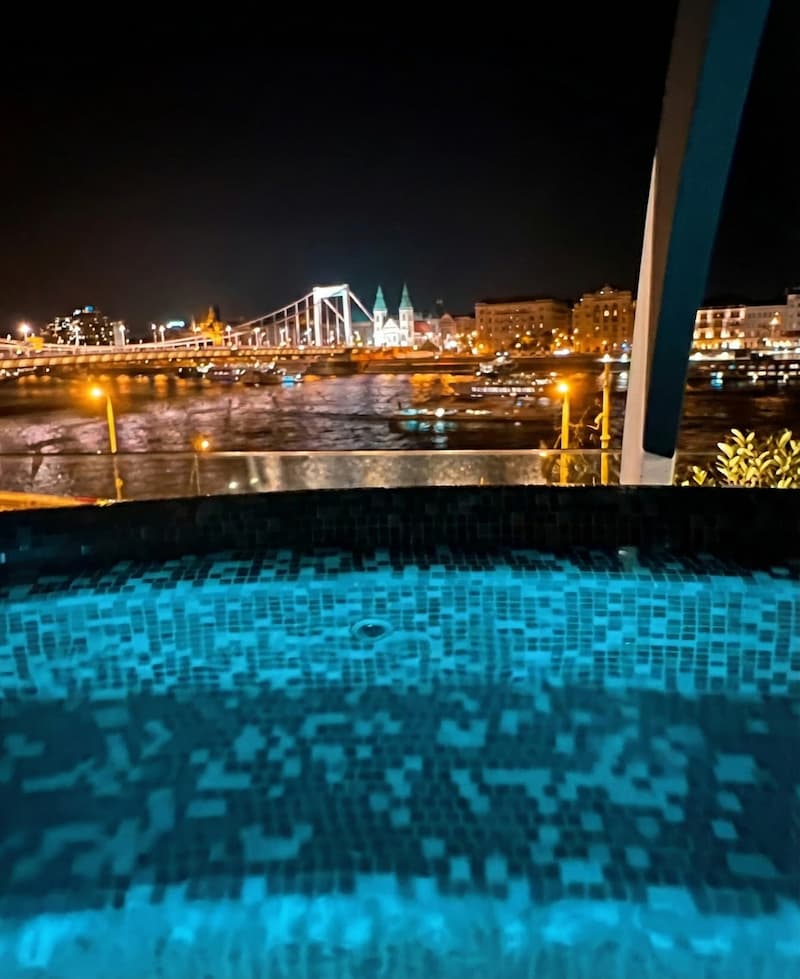
The outdoor thermal pool on the terrace is an octagon perched above the Buda riverbank, and its edge delivers a 360-degree view: the Danube, the illuminated Pest embankment, and the hills behind you. At night, with steam rolling off the water and the city lit across the river, this is the single strongest bath image in Budapest.
- Why it beats the interiors: You get water, steam, and skyline in one frame — no other Budapest bath combines them.
- Where to stand: In the water at the river-facing side of the octagon, camera held low so the pool rim cuts the bottom of the frame and the skyline sits above the steam.
- Expect: Crowding at the rim on the late slots, and reflections off wet tile. Both are easier to manage than they sound.
When Genders Mix: The Late-Night Friday and Saturday Slots
Here is the planning detail most visitors discover too late: Rudas runs mixed-gender sessions on Friday and Saturday nights, from 10pm to 4am. Those are the slots you want for photography, because the dome and the rooftop pool are both open to everyone and the light conditions are at their most dramatic.
Read the schedule before you book. Outside those mixed windows, Rudas operates single-gender sessions — turn up on the wrong day and half the facility, including the pool you came for, may simply not be available to you. Confirm the current timetable with the bath directly, because session days and times change.
- Book ahead: The late mixed slots are popular and capacity-controlled. Reserve in advance rather than walking up.
- What to bring: A waterproof phone pouch beats any camera here. There is no dry, tripod-friendly vantage point in either the dome or the rooftop pool.
- My honest caution: This is a working thermal bath, not a set. Shoot quickly, keep the phone low and out of other bathers’ lines, and put it away.
Night Transit and Street Scenes Worth the Detour
Budapest’s best night frame might cost you less than a coffee: the bright yellow cars of Tram Line 2 grinding along the Danube embankment while the floodlit Parliament slides past the glass. These three stops are cheap, walkable, and almost never crowded after dark — which is exactly why they belong on a hidden-spots hunt.
Tram Line 2 Along the Floodlit Danube
Take Tram Line 2 on the stretch from the Grand Market Hall to Margaret Bridge. That run puts the Danube, Buda Castle, Fisherman’s Bastion, and the Hungarian Parliament in a single continuous panorama, and National Geographic once named it the most beautiful tram line in Europe.
I’d ride it before I’d pay for any river cruise — you get the same landmarks, and the tram’s yellow livery makes every shot read as “Budapest” instantly.
- Sit on the left side. The riverside landmarks sit on the left between the Grand Market Hall and Margaret Bridge; the right side faces buildings and traffic.
- Fare: a single ticket runs roughly $1.15, and a multi-ride pass beats paying per trip if you’re hopping on and off to re-shoot.
- Shoot from the window seat, not the aisle. Night motion blur is your friend here — brace the lens against the glass and let the floodlights streak.
The honest catch: Line 2 is popular, so the tram itself can be packed. Ride late on a weeknight and you’ll get near-empty cars; the window reflections disappear too.
Metro Line 1: The 1896 Tiles Before Service Ends
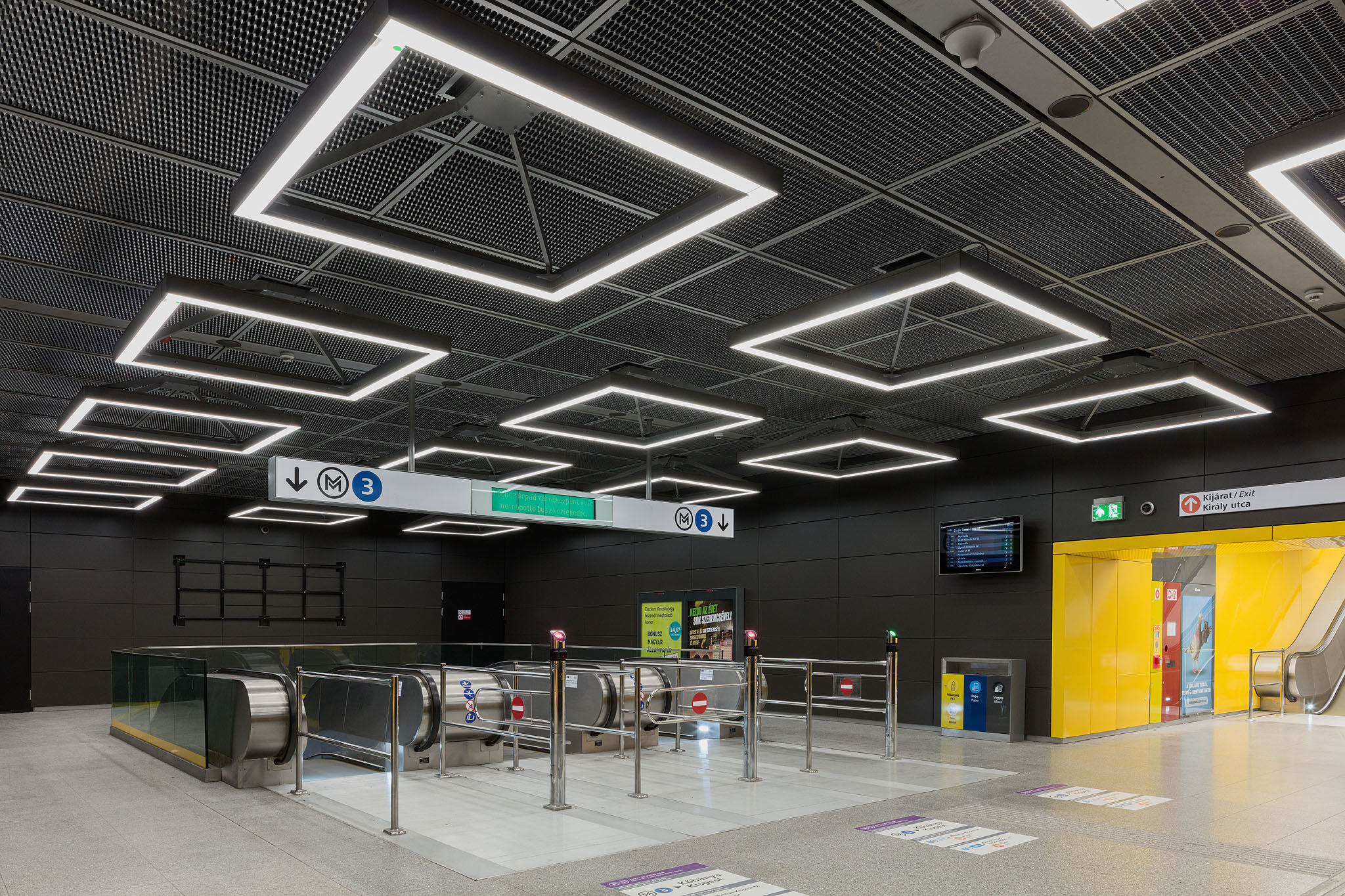
Metro Line 1 opened in 1896 and holds the title of the oldest metro line in continental Europe — and unlike most historic transit, it’s still a working commuter line, not a museum piece. The decorative tile work on the platform walls and the small period railcars make it look like a preserved set, which is why I’d prioritize it over the modern Line 4 for night photography.
- Why it wins: the tile panels are lit warmly and evenly, so you can shoot handheld at night without wrestling with harsh station lighting.
- What to frame: the wall tiles against the small railcars — the scale contrast is the shot.
- Timing: go once the evening rush thins out, and remember service ends like any commuter line, so don’t leave this for the very end of the night.
Pest Riverbank Promenade on Traffic-Free Nights
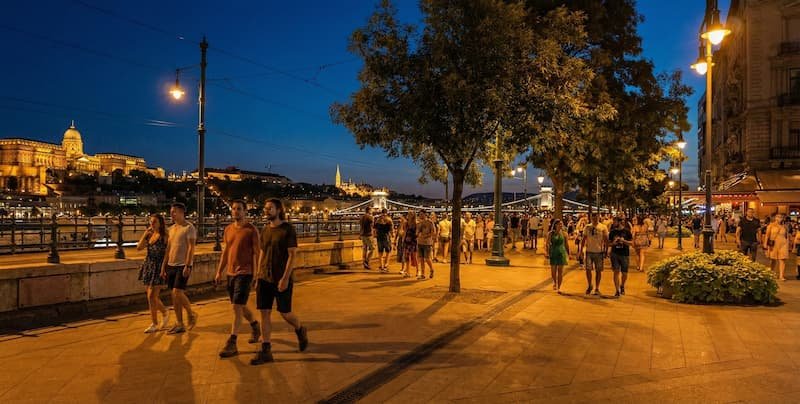
The Pest-side riverbank promenade closes to cars on weekends, turning the road into a genuine pedestrian stretch with the lit Buda skyline directly across the water. That’s the walk I’d build an entire night around: no traffic noise, no headlights cutting through your frame, and room to stand still and shoot.
- Best use of it: a slow traffic-free night stroll from the tram stops toward the bridges, shooting reflections in the still river.
- Pair it smart: ride Line 2 first, then walk the promenade back — you see the skyline from both sides without backtracking.
- Bring a small tripod or rest the camera on the parapet. The promenade is dark enough that stabilization matters more than fast glass.
Weekends are the payoff here. If your visit falls midweek, you still get the river views — you just share them with traffic.
Frequently Asked Questions
How many nights should I plan for these hidden spots?
Two nights is the sweet spot: one for the river-side landmarks and bridges, one for the 7th district and a bath or rooftop. Trying to compress everything into a single evening means backtracking and losing the empty-window hours.
Should I hire a photo guide or shoot on my own?
Go on your own. The central districts are lit and busy enough that a solo shooter with gear is fine, and the best moments here depend on moving slowly and waiting for crowds to thin. A guide adds cost without unlocking anything you cannot walk to yourself.
Is winter a bad time for these night shots?
No, and in some ways it is better. You get transparent igloos on the terrace at 360 Bar, an ice rink in the Vajdahunyad Castle courtyard, and steam rolling off the Rudas rooftop pool into cold air.
What if I only have one night in Budapest?
Run the tram ride along the Danube first, walk the Shoes on the Danube Bank while the stretch is still lit, then finish on Gellért Hill. That route gives you water, memorial and panorama in one continuous loop with no backtracking.
Where do I find the unmarked bars?
Start at Szimpla Kert and ask the bartender where they drink after their shift ends. The pattern is almost always an unmarked entrance, a staircase down, and something remarkable at the end of the hallway.
Go Take the Shot Only You Will Have
Pick a weeknight, get to Gellért Hill with a bottle of wine before the sky loses its blue, then let the evening carry you toward the Castle District while the floodlights are still up. Save the 7th district and Rudas for the next night, in that order.
Budapest after dark is one of the few cities where the empty, cinematic version of it is still available to anyone willing to stay out late.
Save this guide to your Budapest board now, and build your two-night route from the fast pick list above.
Leave a Reply