The air smells of woodsmoke and damp earth as a cascade of gold and scarlet leaves skitters across the empty road ahead. You’re driving slower than you ever would, because stopping every half-mile for another photo feels absolutely mandatory.
This isn’t just any autumn drive; it’s a rolling national phenomenon, where peak color sweeps from the northern Rockies to the southern Appalachians over eight weeks. A great foliage road trip is about chasing that wave, not just hoping you hit it right.
This guide decides for you where and when to go, which routes are non-negotiable, and how to build a trip that’s flexible enough to find the perfect light. Expect to spend from $250 to $500 a day for two people, depending on lodging and dining choices.
When Is Peak Foliage Season Across the USA?
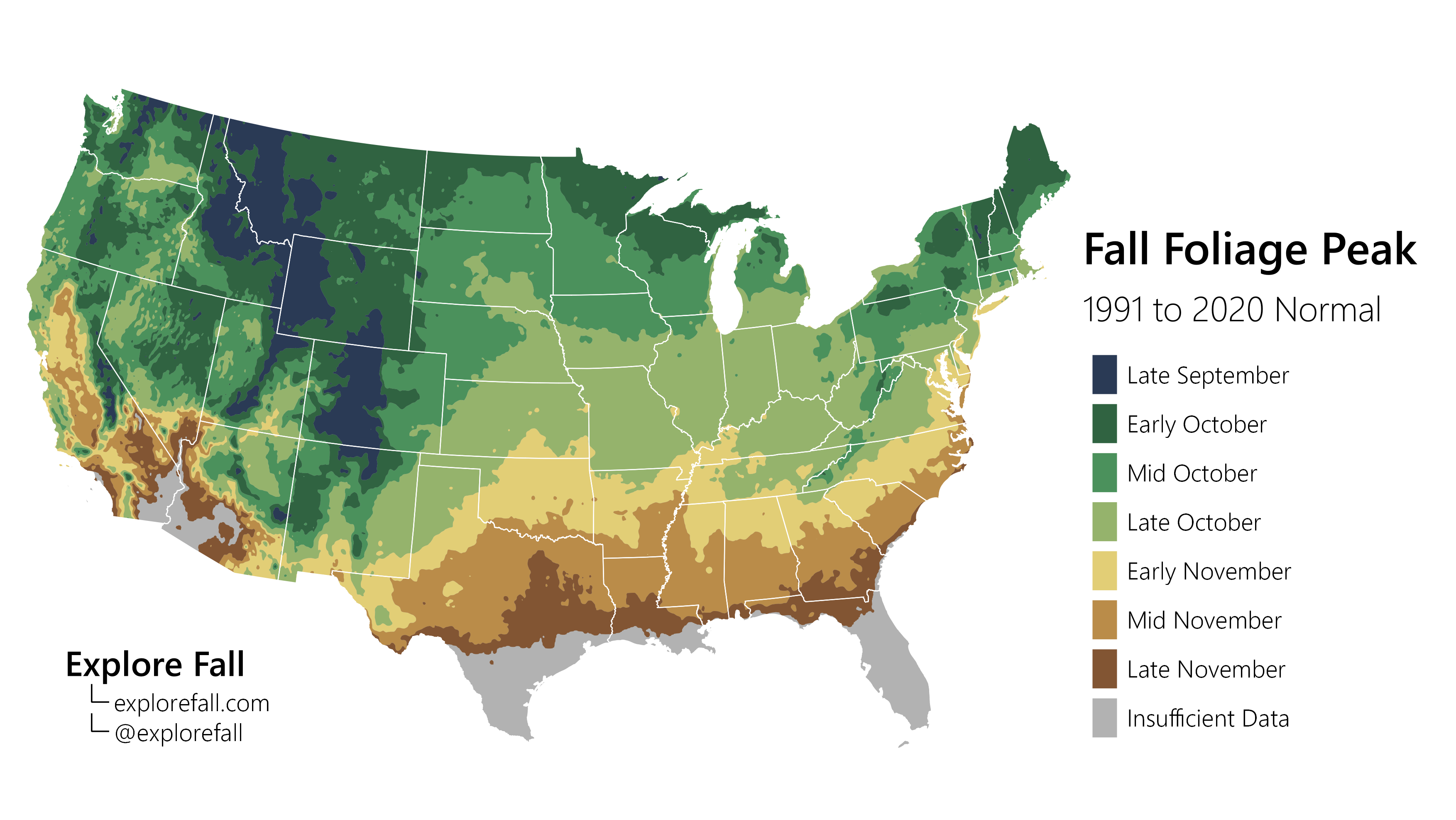
Peak color hits the U.S. in a rolling wave from north to south, meaning a well-timed trip can chase the best displays across state lines — but a miscalculation of even one week leaves you staring at bare branches or still-green canopy.
| Region | Typical Peak Window | Planning Tip |
|---|---|---|
| New England (VT, NH, ME) | Late Sept – early Oct | Book lodging 3–6 months out; this is the most competitive window in the country. |
| Michigan Upper Peninsula | Late Sept – early Oct | Matches New England timing; fewer crowds, shorter booking window needed. |
| Colorado Rockies | Late September | Aspen gold peaks first and fades fast — plan for the last week of Sept. |
| New York (Catskills, Hudson Valley) | Early – mid Oct | Sweet spot for a weekend trip from NYC without the New England drive. |
| Blue Ridge / Shenandoah | Mid – late Oct | Elevation matters: higher overlooks peak a week or two before valley towns. |
| North Carolina / Smokies | Late October | Last major peak window in the eastern U.S. — extend your season here. |
Late September to Early October in Northern States
Northern New England, Michigan’s Upper Peninsula, and the Colorado Rockies all hit peak color in this window. If the Kancamagus Highway or Vermont’s Green Mountains is your priority, aim for the last week of September through the first week of October — this is when sugar maples fire up in reds and oranges that don’t exist anywhere else on the continent.
Colorado’s aspen groves peak on a tighter timeline, usually wrapping by the first few days of October. Miss it by a week and you get golden-brown rather than electric yellow.
The upside: Colorado’s dry climate means blue skies almost daily, unlike the Northeast where overcast stretches can dull the display.
- Best for: Travelers who want the most saturated, photographable color and are willing to book early and pay peak-season rates.
- Biggest risk: An early frost or heavy windstorm can strip leaves before you arrive — build two to three flexible days into your itinerary.
- Insider detail: Northern peaks tend to hold color for roughly 10–14 days once they hit, but that window shrinks to about five days after a hard rain or wind event. Watch the 10-day forecast starting in mid-September and be ready to shift dates.
Lodging in Stowe, Montpelier, and Manchester fills months in advance during this window — if you haven’t booked by July, look at smaller towns along the same routes instead. The other sections on New England and New York itineraries cover specific bases and overnight stops.
Mid to Late October in Southern and Appalachian Regions
Peak color marches south through October, hitting the Blue Ridge Parkway, Shenandoah National Park, and Great Smoky Mountains from mid-month through late October. This is the move for anyone who missed the northern window or wants a second act after a New England trip earlier in the month.
Elevation drives the timeline here more than latitude. On the Blue Ridge Parkway, overlooks above 4,000 feet typically peak two weeks before the valleys below — so a single drive can catch both early and peak color if you time it for mid-October.
- Best for: Flexible travelers who can plan around weather; southern foliage is more temperature-dependent and shifts year to year.
- Biggest advantage: Shorter booking windows and lower prices compared to New England. You can often find solid lodging two to four weeks out.
- Insider detail: The Smokies publish a fall foliage map updated weekly through October — check it before locking in your dates, because the park’s massive elevation range (875 to 6,643 feet) means color can differ dramatically within a 30-minute drive.
No matter which window you target, build flexibility into your plan. Weather shifts every year, and the best foliage trips are the ones where you can move your route by a day or two to follow the color — which is exactly why renting a car and leaving your itinerary open-ended beats any rigid schedule.
Details on rental strategies and scenic byway routing are covered in later sections.
How Do You Track and Predict Fall Colors?
Predicting peak foliage is part art, part science — and the official maps are just the starting point. You need a layered tracking strategy because colors can shift dramatically based on the entire year’s weather; a particularly dry summer, for example, can trigger more saturated reds.
Using National Foliage Maps and Reports
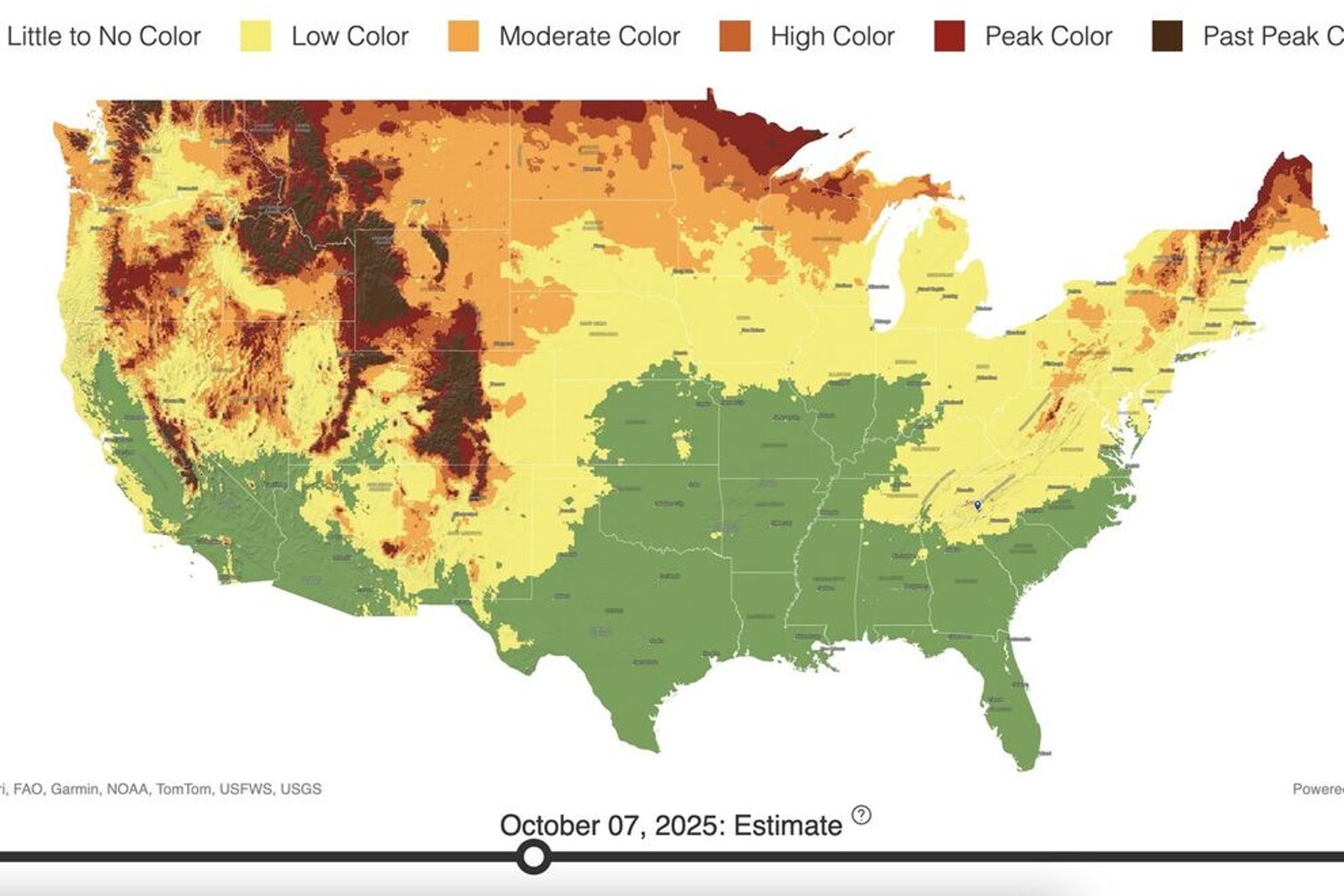
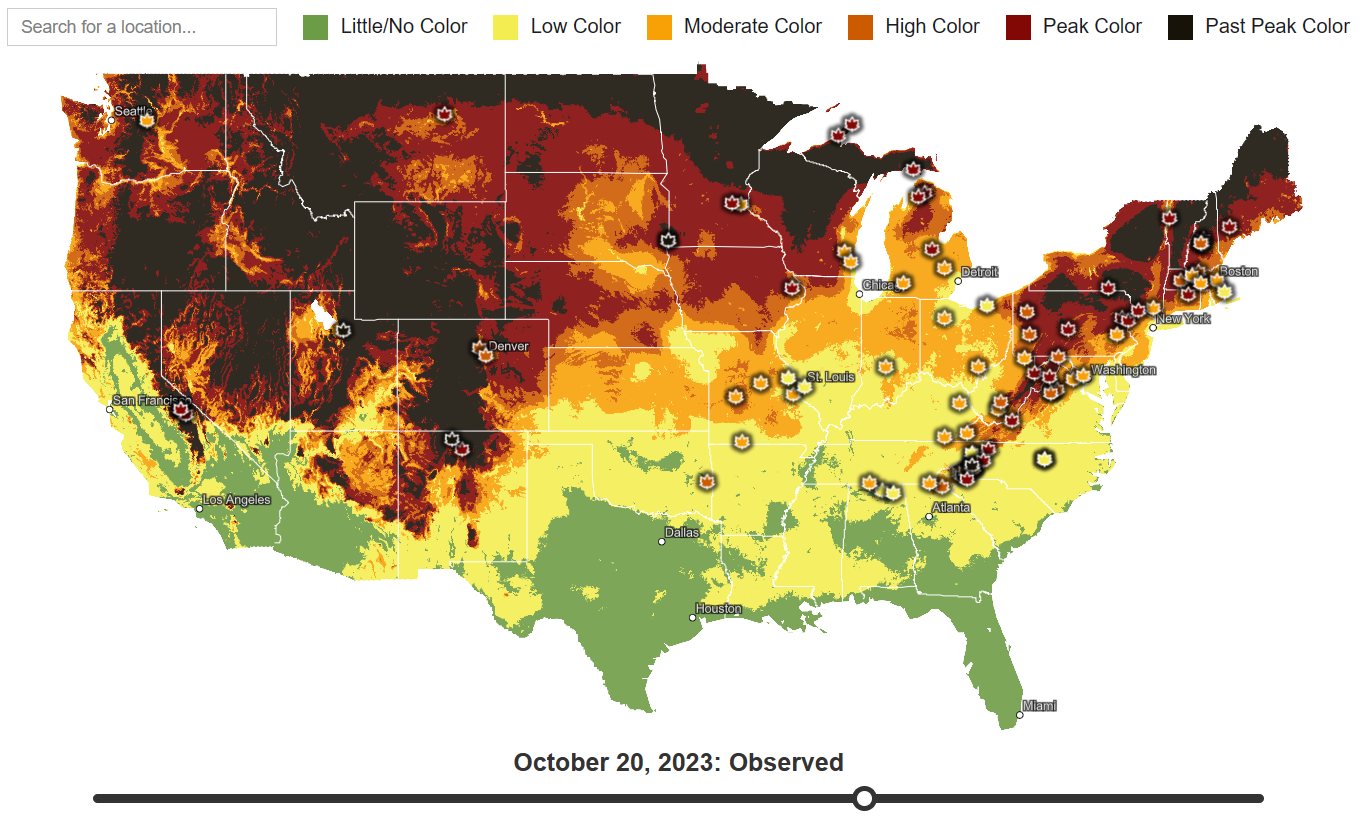
The widely-shared Smoky Mountains foliage map is a good baseline for seeing the general progression across the country, usually available from early September. Treat it as a rough guide, not a guarantee — many experienced leaf-peepers find it inaccurate for hyper-local timing.
For planning, combine that national view with official state resources. New York, for instance, publishes a detailed regional foliage report that is more reliable for specific routes like the Hudson Valley or Catskills.
Checking Tourism Sites and National Park Updates
Once you’ve picked a region, switch to official local sources. State tourism websites (like Explore Fall for New England) and specific national park pages (for Shenandoah, Acadia, etc.) provide foliage updates written by rangers and local experts.
These updates often describe color percentages and recommend which specific roads, overlooks, or trails are showing the best views right now. Bookmark these pages; they are updated weekly during the season.
Monitoring Social Media and Local News for Real-Time Changes
This is your most current source. The moment you’re a few weeks out from your trip, start monitoring.
- Social Media: Search location-specific hashtags (e.g., #CatskillsFall, #BlueRidgeFoliage) on Instagram. Look at tagged posts, not just the popular ones, for real-time reports from the last 48 hours.
- Local News: Use the News tab in Google or your preferred search engine. Search for “[Your Destination] fall colors [Current Year]”. Local TV weather stations and newspapers often publish excellent weekly foliage trackers with percentage estimates and maps.
This combination is how you pivot if peak color arrives early or late. If your social feed suddenly fills with bare trees in your target area, you’ll know to shift your route south or wait another week.
The Insider Bottom Line: No single source is right. The national map tells you where color should be.
The state report tells you where it is. Social media shows you what it actually looks like today.
Use all three to avoid a “wrong week” trip.
Which Routes and Destinations Should You Prioritize?
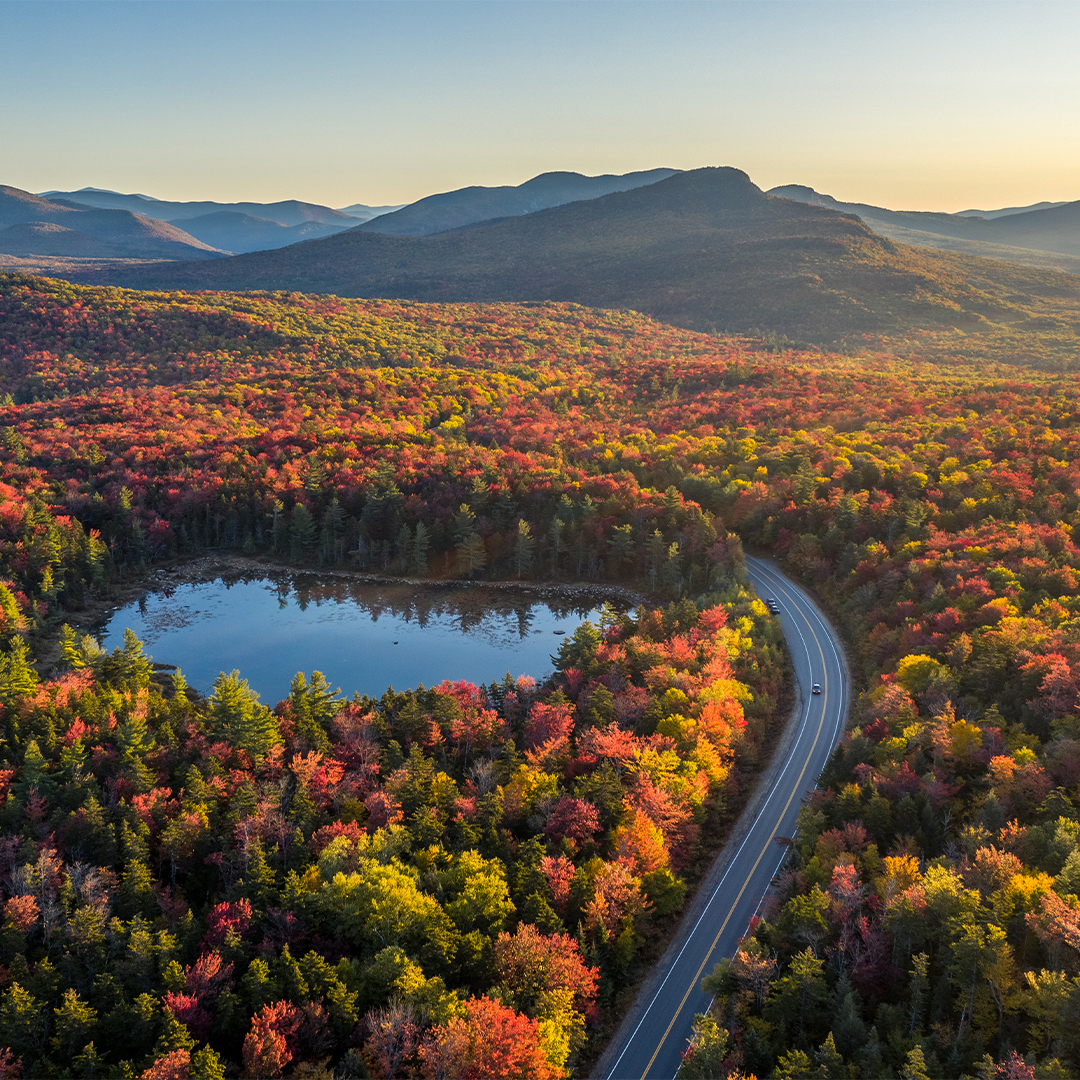
The Kancamagus Highway cuts through 34.5 miles of White Mountain National Forest with zero gas stations and zero cell service — meaning you’re forced to actually look at the trees instead of your phone. That kind of unplugged immersion is what the best fall foliage routes deliver, and this section breaks down which ones earn your limited vacation days.
Five major regions dominate the fall foliage road trip conversation, each with a distinct character and time commitment:
| Route | Best For | Minimum Trip Length | Peak Window | Character |
|---|---|---|---|---|
| New England (White Mountains, Kancamagus, Vermont) | Classic foliage seekers; photographers | 7–10 days | Late Sept – mid-Oct | Mountain passes, covered bridges, small towns |
| New York (Bear Mountain, Catskills, Finger Lakes) | NYC-based travelers; shorter vacations | 3–5 days | Early–late Oct | Hudson Valley, waterfalls, farm stands |
| Midwest/Great Lakes (Traverse City, Door County, Mackinac) | Families; budget-conscious travelers | 4–6 days | Early–mid Oct | Lakefront color, orchards, no crowds |
| Appalachian/Southern (Blue Ridge Parkway, Shenandoah) | Multi-day driving enthusiasts | 5–7 days | Early Oct – early Nov | Epic overlooks, elevation-based color zones |
| Shorter Midwest (Galena, Chicago suburbs) | Weekend warriors; flight-based travelers | 2–3 days | Mid-Oct | Historic towns, lakefront, city parks |
New England Itineraries Including White Mountains and Kancamagus Highway
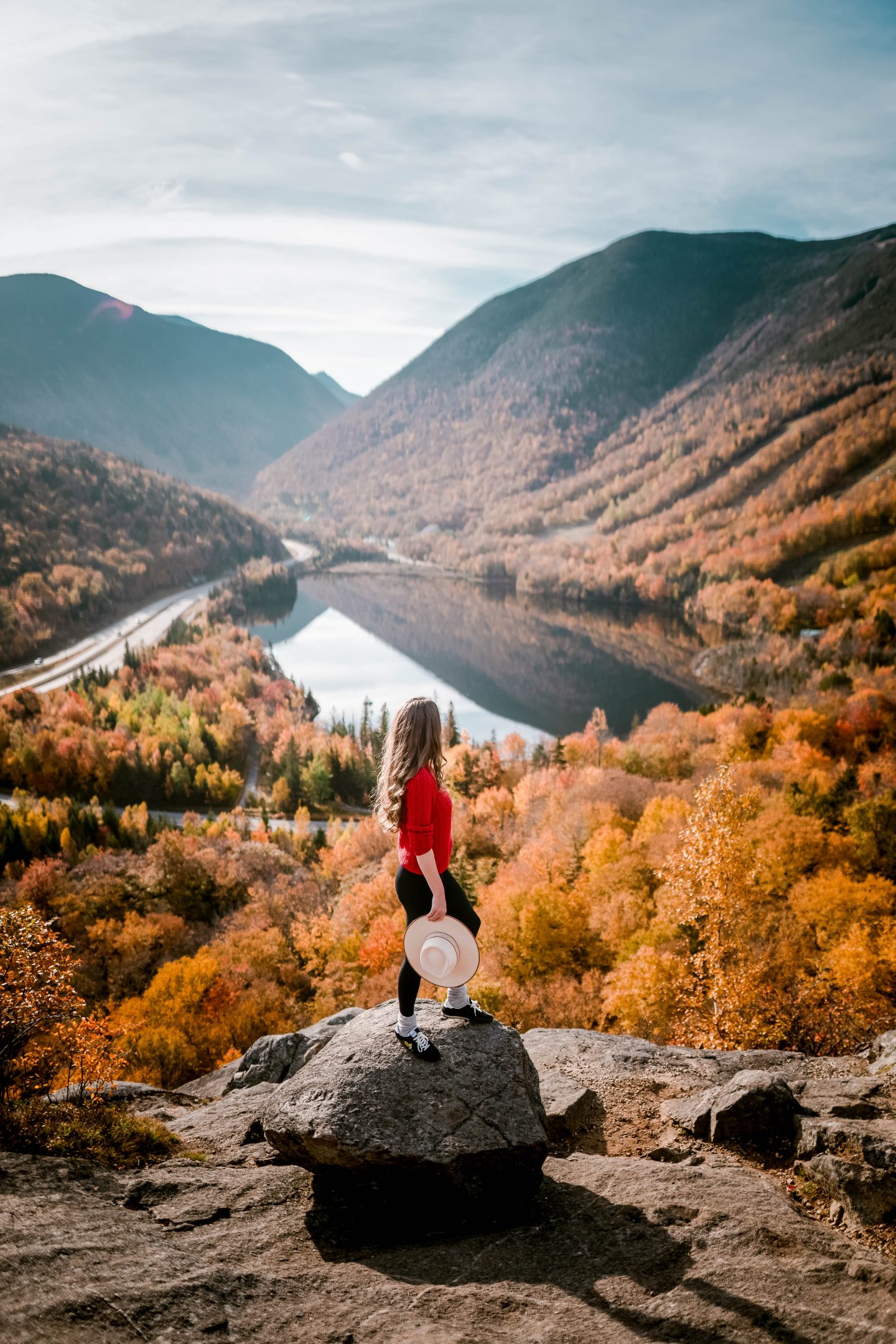
New England is the undisputed heavyweight of American fall color, and it’s not close. Plan seven to ten days minimum — anything less and you’ll be rushing past the best parts.
Start in Boston and drive north into New Hampshire’s White Mountain National Forest. Day one, take Route 112 — the Kancamagus Highway — a 34.5-mile stretch with no commercial development, no gas stations, and overlooks every few miles.
Fill your tank in Conway or Lincoln before you start; there is nothing once you’re on it. Covered bridges and trailheads along the way make it easy to stretch a two-hour drive into a full day of exploring.
From there, work through Franconia Notch State Park and Flume Gorge, then cross into Vermont. Smuggler’s Notch (Route 108) between Stowe and Jeffersonville is a narrow, winding mountain pass that closes in winter — in fall, it’s one of the most dramatic color corridors in the state.
Stowe and Woodstock both make excellent overnight bases with enough restaurants and shops to fill an evening.
If you have ten days or more, push northeast into Maine for Acadia National Park and Bar Harbor, then loop back through Portland and Salem, Massachusetts. The longer window pays off: peak color ripples north to south across the region over several weeks, so a flexible itinerary means better odds of hitting it right.
Insider detail: The Conway Scenic Railroad runs a vintage train through Crawford Notch that books out weeks in advance during October. Reserve as soon as the schedule drops, usually mid-summer, or you’ll miss it.
New York Road Trips Through Bear Mountain, Catskills, and Finger Lakes
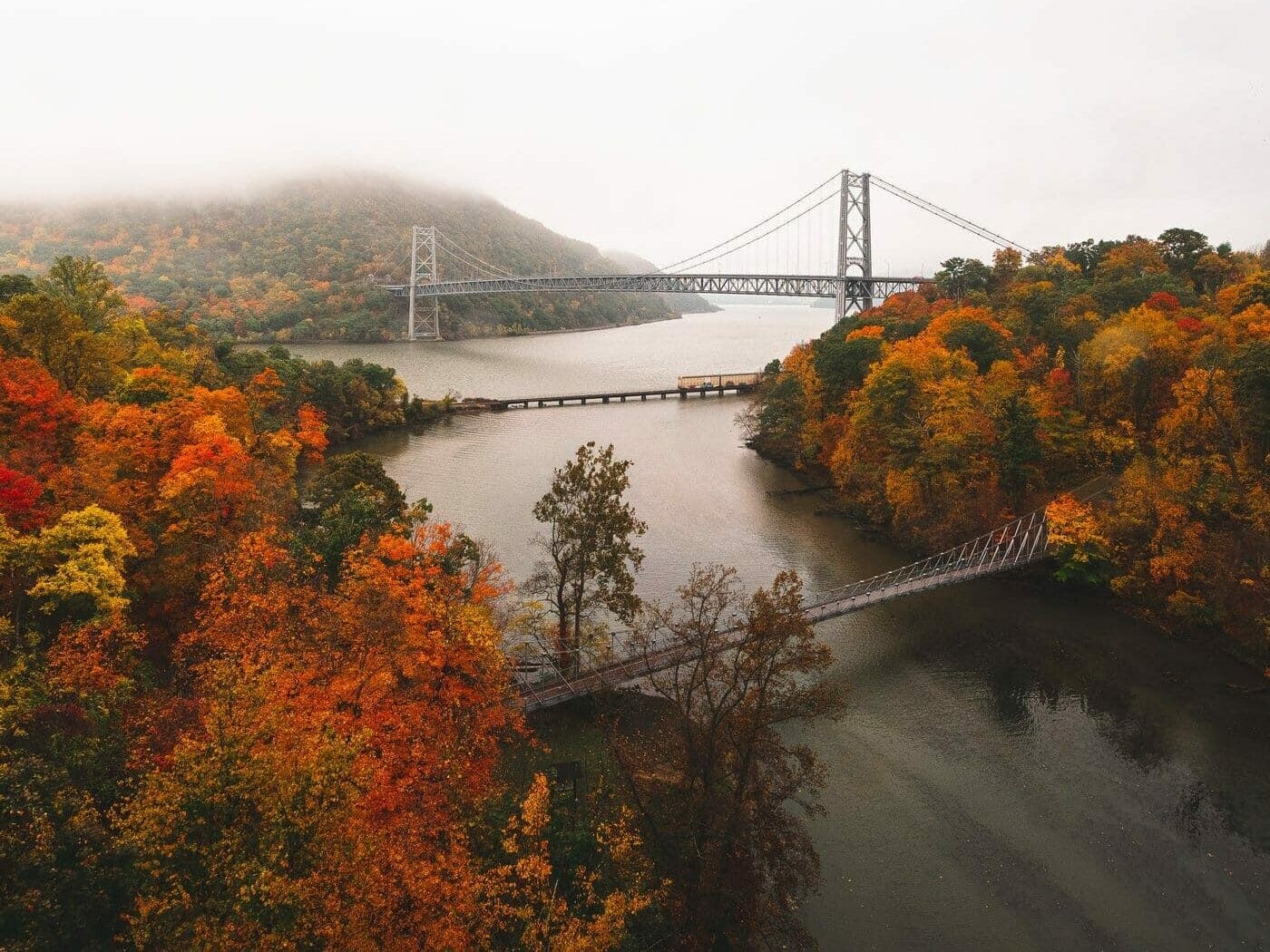
New York State is the move for anyone who can’t commit to a full New England loop — serious color sits within two to three hours of Manhattan, no flight required.
Bear Mountain State Park, about 50 miles north of NYC on the Palisades Parkway, delivers the quickest payoff. Perkins Memorial Tower at the summit gives you a 360-degree view of the Hudson Valley in full flame.
From there, drive north along Route 9W to the Walkway Over the Hudson in Poughkeepsie — a former railroad bridge turned pedestrian path, 212 feet above the river. The round-trip walk takes about an hour.
Push west into the Catskills via Route 32 through New Paltz, Kingston, and Woodstock. These towns go all-in on autumn: pumpkins on every windowsill, hay bales at every storefront, seasonal specials on every menu.
Stop at farm stands along the road for apples, cider, and local honey. Kaaterskill Falls — a two-tiered, 260-foot waterfall accessible by a moderate trail — is the Catskills’ signature payoff.
The trail gets muddy in fall, so wear proper shoes.
The Finger Lakes are a different game entirely: quieter roads, rolling vineyards, and lake reflections instead of mountain drama. It’s better suited to travelers who want to build their own route without crowds.
The roads between Seneca and Cayuga Lakes aren’t busy, and there are plenty of safe spots to pull over for photos. Wine tasting along the way pairs perfectly with the drive.
Lodging context: Bear Mountain and Woodstock have cozy cabins and B&Bs; Kingston and Poughkeepsie offer more budget-friendly options. Continue to the lodging section for specific recommendations on stays near each of these stops.
Midwest and Great Lakes Drives in Traverse City, Door County, and Mackinac Island
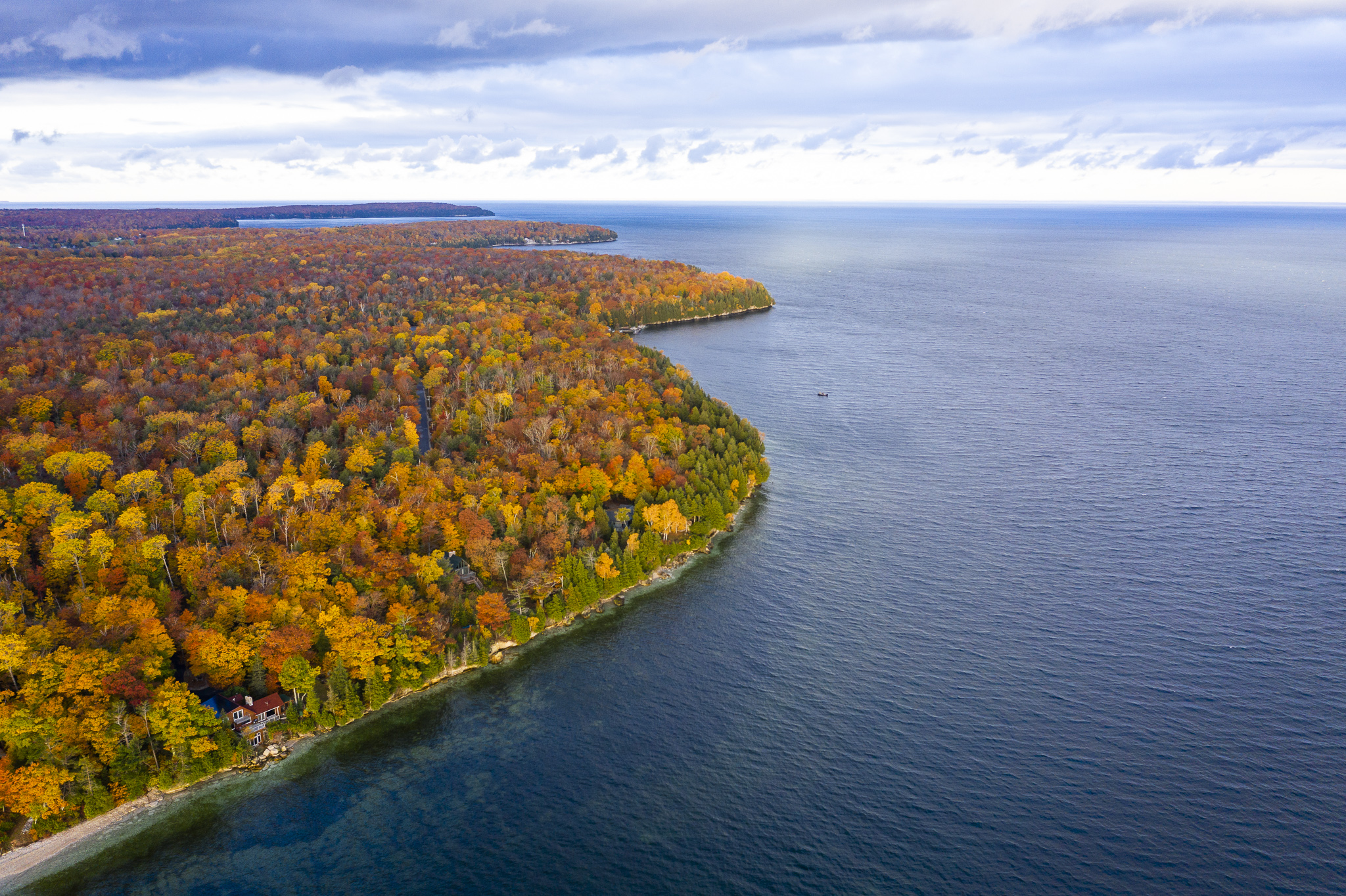
The Midwest gets overlooked in the foliage conversation, which is exactly why it’s worth considering — fewer cars, cheaper lodging, and colors that peak in early to mid-October when the coasts are still green.
Traverse City, Michigan, sits on Grand Traverse Bay and serves as a base for driving the Old Mission and Leelanau Peninsulas. Vineyards and cherry orchards turn gold and crimson against the blue water, and the tasting rooms stay open through fall harvest.
Door County, Wisconsin — a 75-mile peninsula jutting into Lake Michigan — delivers a similar water-meets-color combo with lighthouses, orchards, and small towns that feel genuinely untouched. It’s an easy weekend trip from Milwaukee or Chicago.
Mackinac Island is the wildcard: no cars allowed, so you experience fall color by bike, horse-drawn carriage, or on foot. Ferries from Mackinaw City typically take about 15 to 20 minutes.
The island shuts down significantly after mid-October, so time your visit carefully and confirm ferry schedules before booking.
Best for: Families and couples who want foliage without the New England price tag or traffic — the lodging and dining costs are noticeably lower across all three destinations.
Appalachian and Southern Drives Along Blue Ridge Parkway and Shenandoah National Park
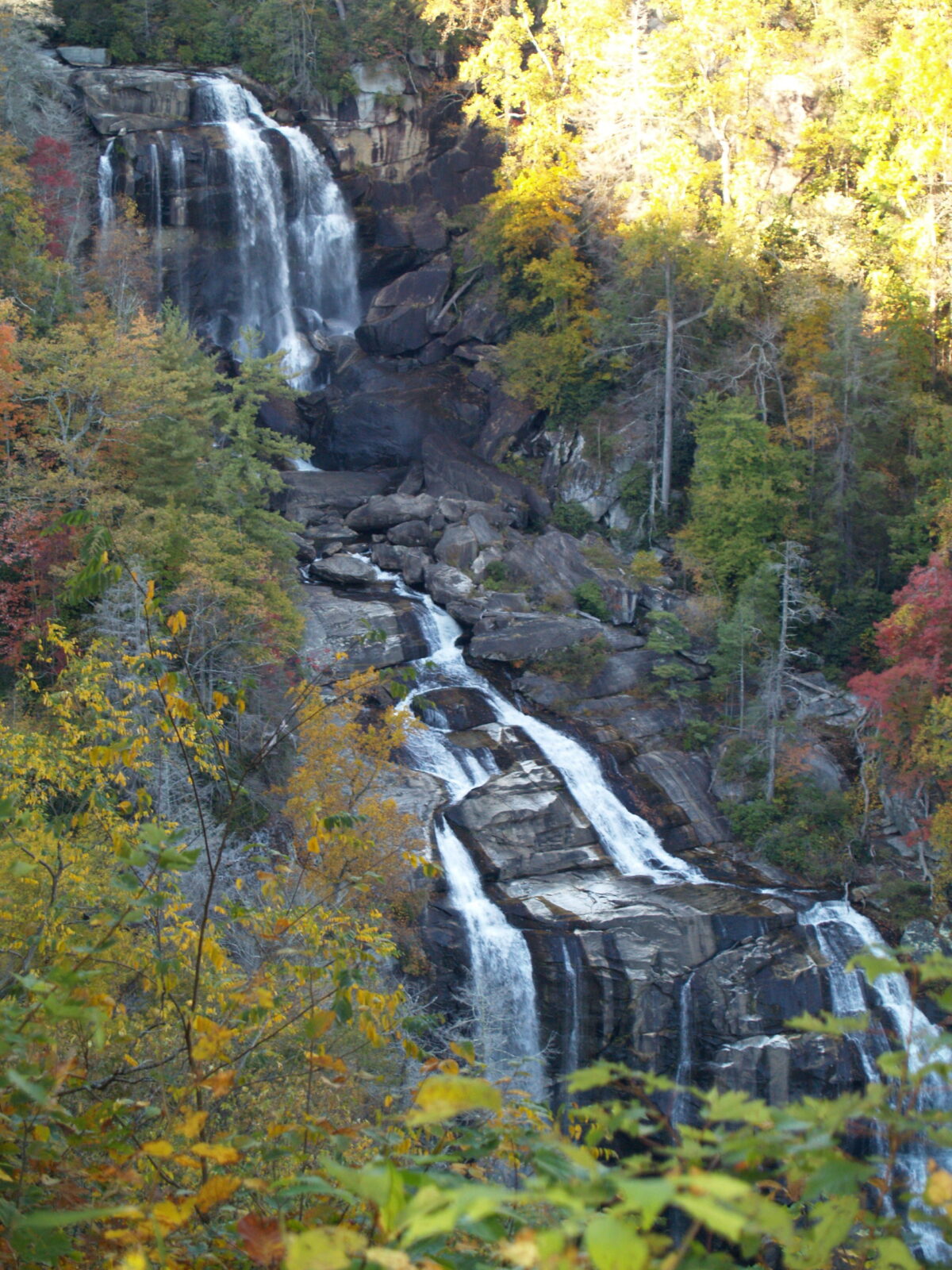
Shenandoah’s Skyline Drive runs 105 miles along the crest of Virginia’s Blue Ridge Mountains with 75 overlooks — expect to average half the posted speed limit because you’ll be pulling over constantly.
The entrance fee is typically $30 per vehicle for a seven-day pass. Skyline Drive connects directly to the Blue Ridge Parkway at its southern end, and the Parkway continues for 469 miles through North Carolina — it’s free to drive, no entrance fee, and routinely voted one of the most scenic routes in America.
The elevation changes mean you’ll pass through multiple color zones in a single afternoon, which keeps the drive from getting monotonous even over multiple days.
Base yourself in Asheville, North Carolina, if you’re driving the southern half. Asheville is a real city with excellent food, breweries, and nightlife — a genuine upgrade over the smaller, more tourist-heavy gateway towns near Gatlinburg.
The Great Smoky Mountains sit within easy reach of the Parkway’s southern terminus, and combining those two drives is arguably the best multi-day foliage experience in the eastern U.S.
Timing note: Color works top-down here — highest elevations peak in early October, valleys hold color into early November. Check the National Park Service foliage reports before finalizing your dates.
Shorter Midwest Options in Galena and Chicago
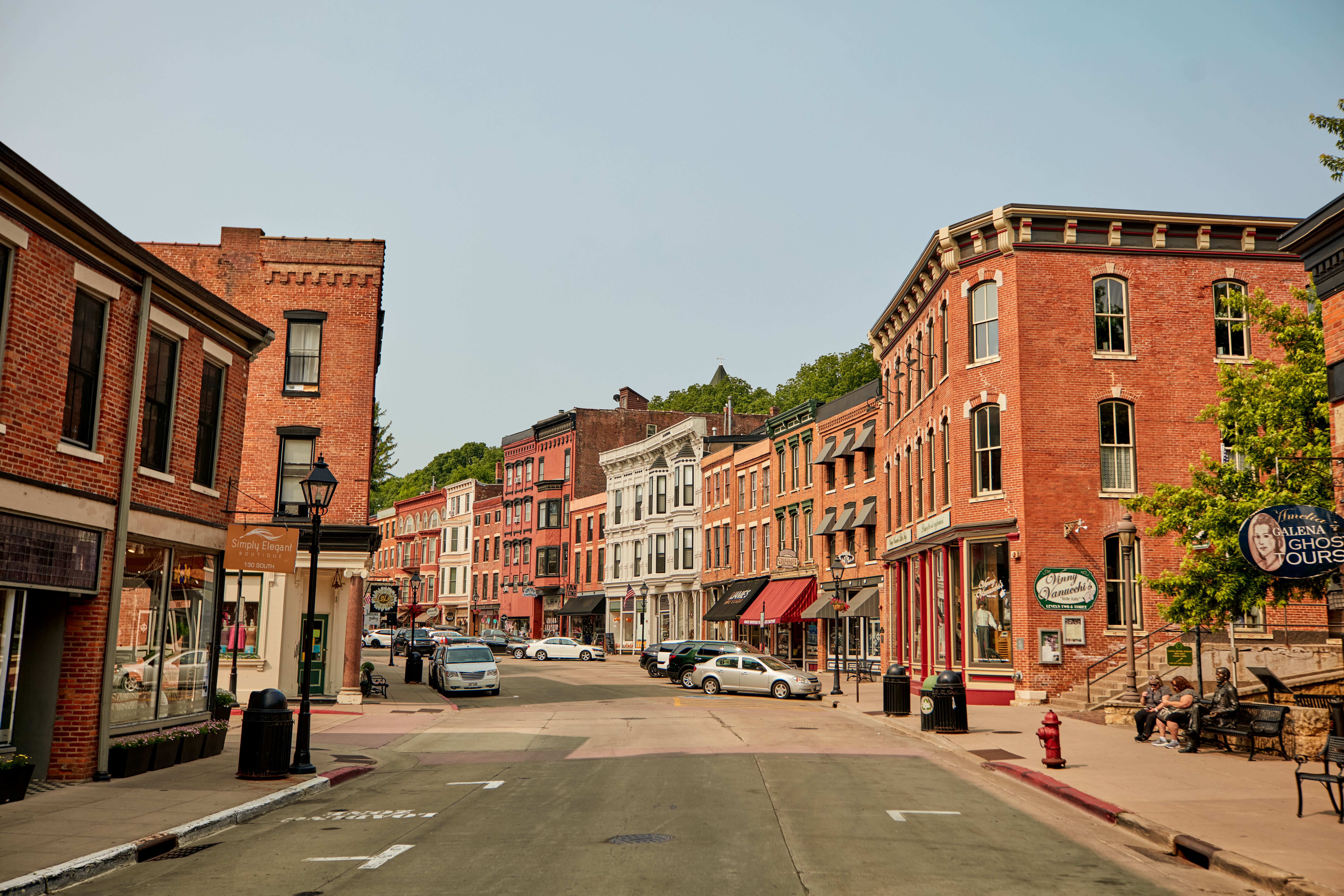
Galena, Illinois, is a three-hour drive from Chicago and makes a perfect weekend trip for anyone who can’t swing a full week off. The historic downtown has 19th-century brick buildings, antique shops, and bluffs overlooking the Galena River that turn every shade of amber.
It’s compact enough to explore on foot in a day but charming enough to justify two nights.
If you’re flying into Chicago and don’t want to commit to a long drive, the city’s own fall color is underrated. The North Shore suburbs — Evanston, Winnetka, Lake Forest — along Lake Michigan offer lakefront trails framed by mature hardwoods in full autumn color.
The Forest Preserves of Cook County, just outside the city limits, deliver serious foliage without leaving the metro area. Both are accessible by Metra commuter rail if you’d rather skip a rental car entirely.
Best for: Solo travelers or couples who want a low-key autumn weekend without the planning overhead of a multi-day road trip.
How to Plan Your Daily Stops and Activities?
Forget rigid schedules—the best fall foliage days are built around golden hours of light, a short hike to a waterfall, and the kind of roadside farm stand where you leave with cider donuts and a bushel of apples. Plan each day with one anchor scenic drive, one accessible trail, and one festive local stop.
Scenic Drives and Overlooks
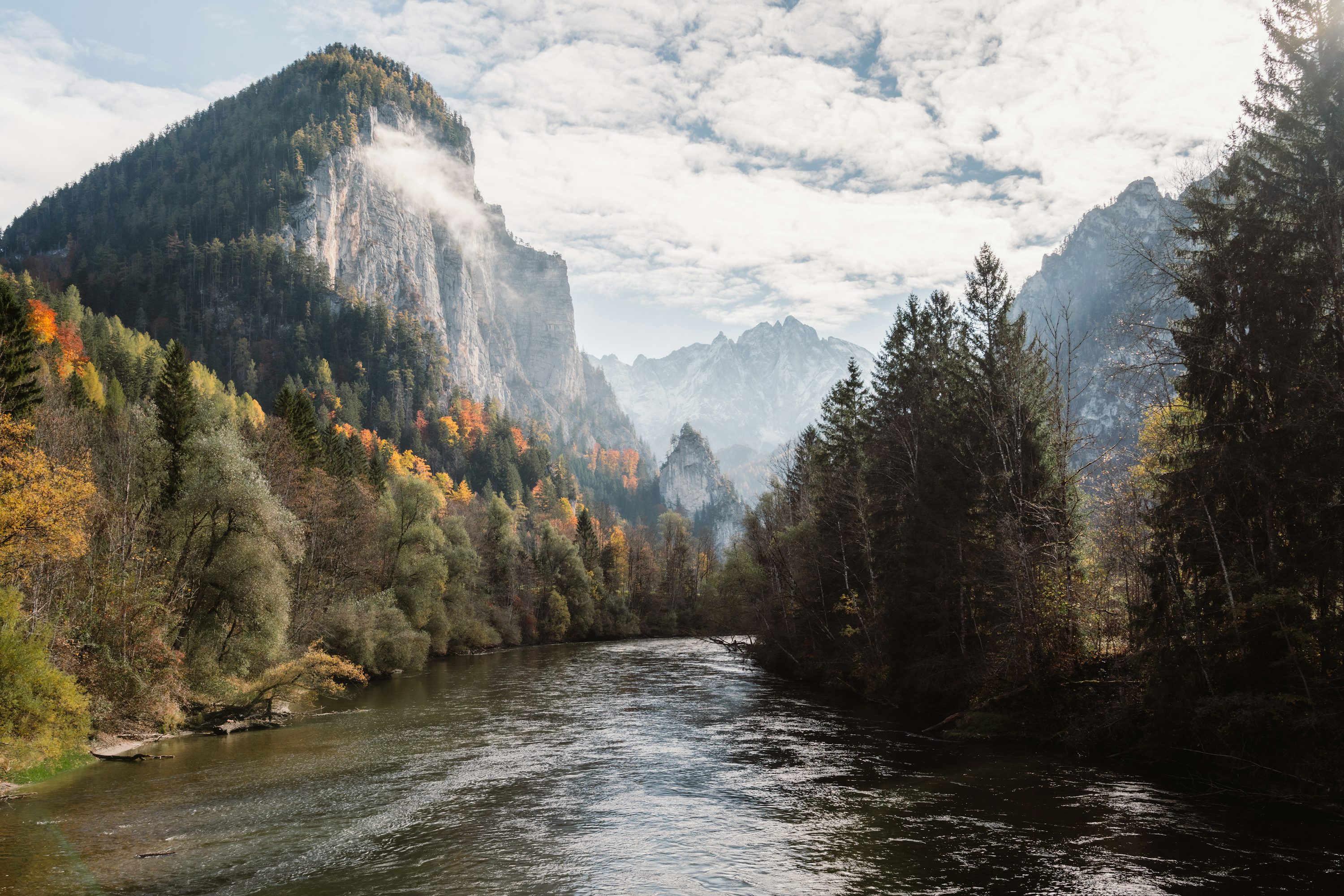
Design your driving days around sunrise or late afternoon light, when the colors glow. Never just point A to B; build in spontaneous pull-offs.
On routes like the Kancamagus Highway in New Hampshire or the Blue Ridge Parkway, overlooks are frequent. Your strategy: drive the route in one direction in the morning, stop at every overlook, and take a different route back for new perspectives.
For New York’s Route 32 through the Catskills, the towns of Woodstock and Kingston make perfect mid-drive anchors for coffee and galleries before you continue.
- Insider timing: Arrive at the most popular overlooks (like those on the Blue Ridge Parkway) before 9 AM on weekends. By 10:30, parking becomes a bottleneck.
- Vehicle note: For winding, narrow passes like Smugglers’ Notch in Vermont, confirm your vehicle can handle tight turns and steep grades—it’s thrilling but not for trailers or oversized RVs.
Hiking Trails and Waterfalls
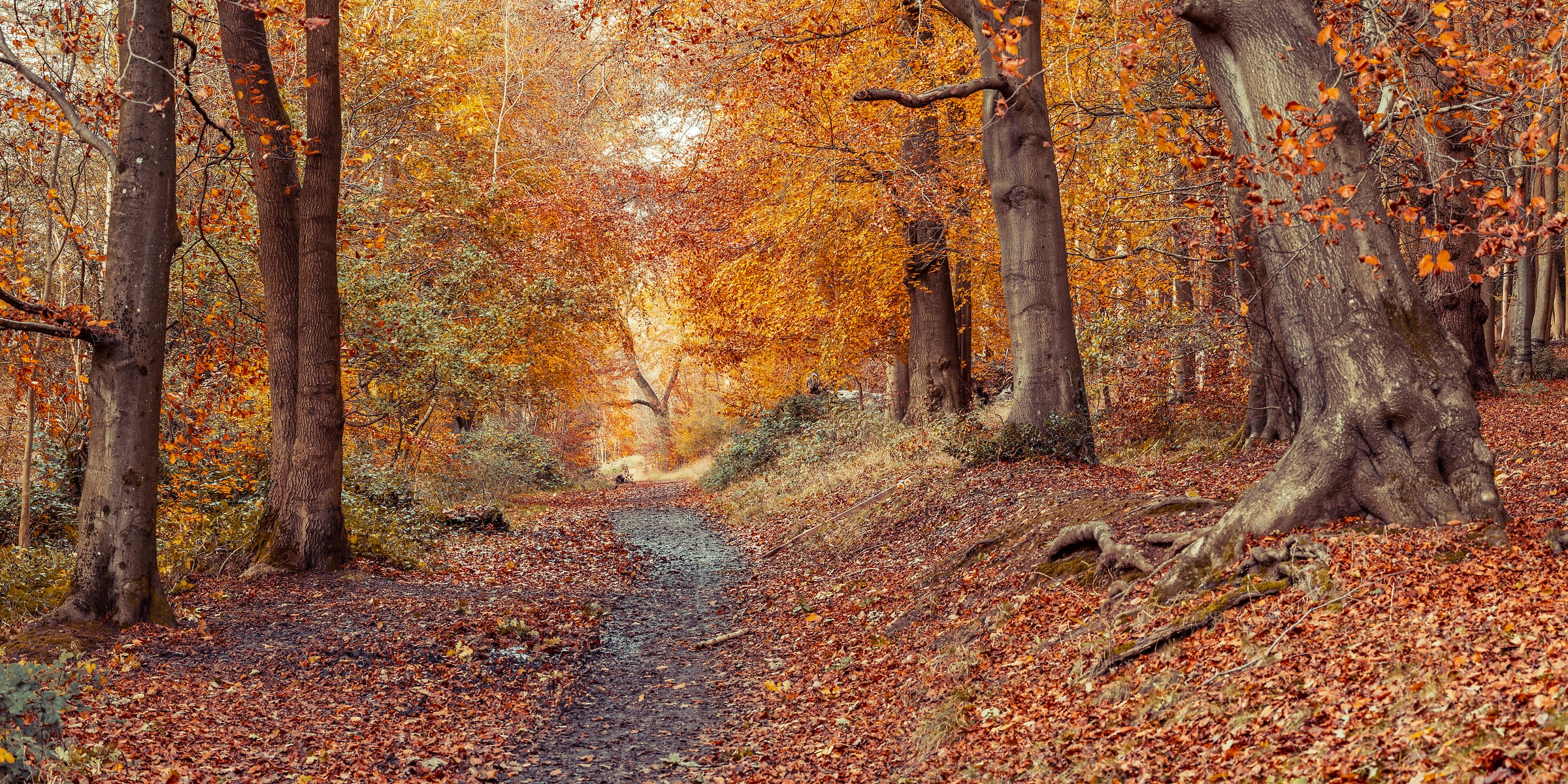
Pair your drive with a 2-4 mile hike that has a clear payoff: a waterfall, a summit view, or a gorge. This gives you a reason to get out of the car and experience the forest floor.
In the Catskills, the hike to Kaaterskill Falls is a classic—the trail carpeted with fallen leaves creates a unique autumn soundscape. In Vermont, the trails around Stowe or the hike up to the fire tower at Sterling Pond deliver big views for moderate effort.
- Trail selection: Choose trails marked as “moderate” on AllTrails or local park sites. “Strenuous” hikes can eat your whole day and leave you too tired for evening activities.
- Parking reality: Trailhead lots in popular areas fill by 8:30 AM on peak October weekends. Have a backup trailhead in mind.
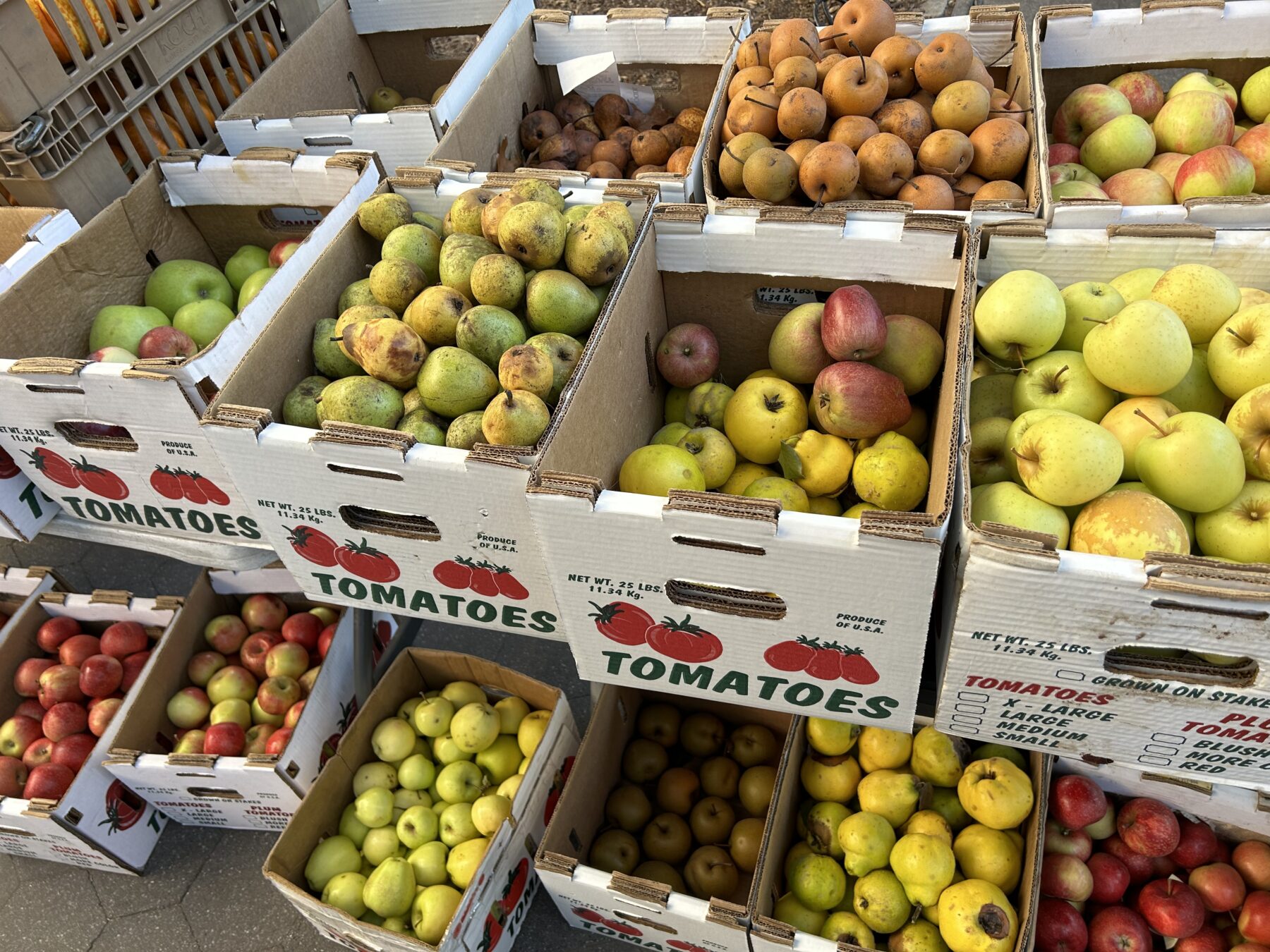
Farm Stands, Apple Picking, and Fall Festivals
This is the heart of an autumn day trip. Integrate one farm or festival stop per afternoon.
In the Hudson Valley and Catskills, you’ll find family-run stands selling homemade jams, apple cider, fresh honey, and pumpkins. Don’t just drive by—these are your snacks for the next leg of the drive and your breakfast tomorrow.
For festivals, prioritize small-town events over massive commercial ones; check town websites for weekend schedules in places like Galena, Illinois, or Stowe, Vermont.
- Cost control: Set a cash budget for farm stands ($20-$40). It’s easy to overspend on pies, crafts, and cider.
- Activity booking: If apple picking is a must, call the orchard the day before to confirm availability and hours—some popular spots require reservations for U-pick.
Quick-Reference: Daily Rhythm
| Time of Day | Activity Focus | Key Tip |
|---|---|---|
| Sunrise – 9 AM | Scenic Drive or Overlook | Catch the first light on east-facing slopes for photos without crowds. |
| 10 AM – 1 PM | Hike or Waterfall Visit | Start early to secure parking and finish before peak afternoon crowds. |
| 2 PM – 5 PM | Farm Stand, Festival, or Town | Visit orchards/stands on weekdays for fewer people; weekends for festival events. |
| Evening | Dinner & Overnight | Book lodging near your next morning’s drive start; see lodging sections for specific bases. |
What Transportation Options Work Best?
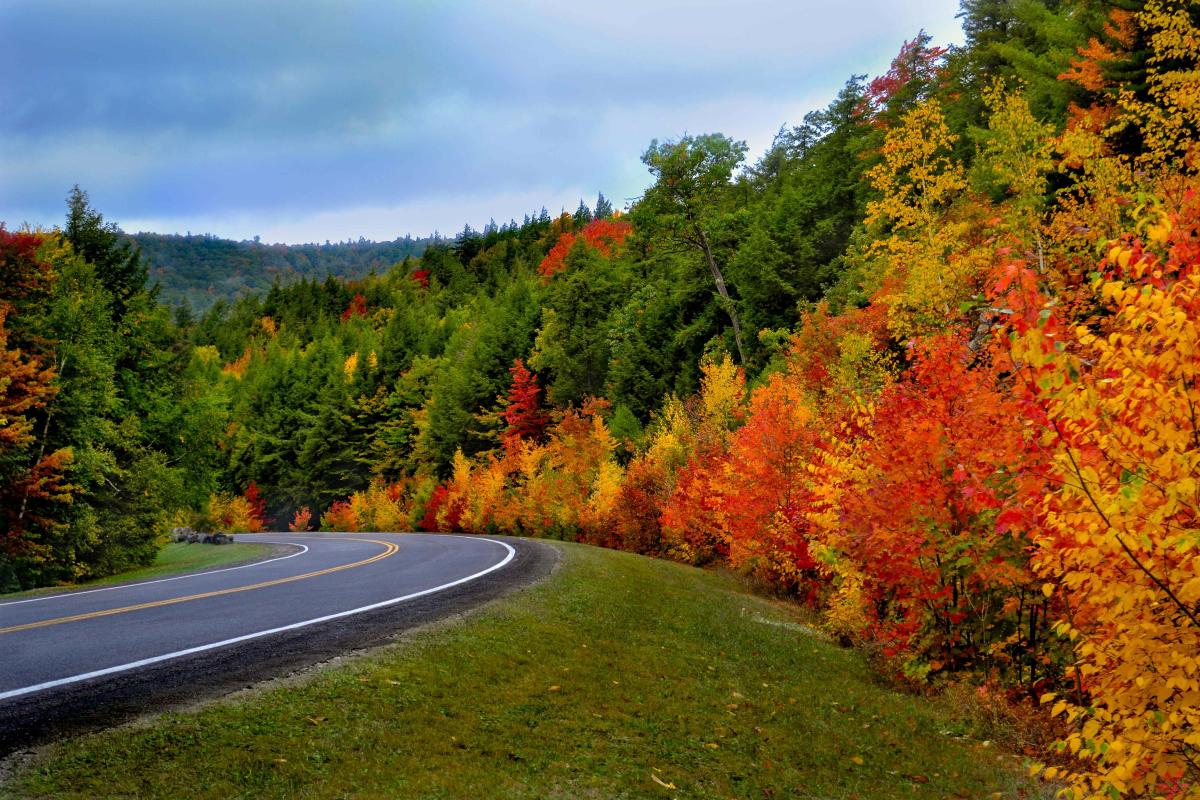
The single best way to chase peak color is behind the wheel of your own rental car — and not just any car. You need a vehicle that can handle sudden stops on narrow shoulders for perfect overlook photos and have space for farm stand hauls.
Renting a Car for Flexibility
A rental car isn’t optional; it’s your command center. Public transit doesn’t exist for the best foliage routes, and ride-shares will drain your budget.
Book an SUV or crossover — the higher clearance is a comfort on rural roads and the extra cargo space is non-negotiable for pumpkins and apple crates.
- The Booking Window: Secure your rental at least 3-6 months ahead for peak season (late September to October). Prices spike dramatically, and vehicle choice vanishes if you wait.
- The Insider Move: Pick up and drop off at a major airport hub (like Boston Logan, JFK, or Burlington) for the best rates and vehicle selection. Then immediately drive to your scenic base.
- The Road-Side Kit: Pack a blanket, reusable tote bags, and a small cooler. You will stop for unprompted farm stands and need to keep cider and cheese fresh.
Driving Specific Scenic Byways and Highways
Your route defines the trip. These are the drives that deliver, prioritized for color density and minimal commercial traffic. The goal is to connect scenic byways with short, strategic highway jumps to your nightly base.
The Unbeatable Combo: Kancamagus Highway (NH) + Route 100 (VT). This is the gold standard. The “Kanc” is a 34.5-mile white-knuckle ride of consecutive overlooks.
Pair it with Vermont’s Route 100, which strings together the classic towns of Stowe, Waitsfield, and Waterbury. Base yourself in Stowe or Waterbury for easy access to both.
The Southern Charm Offensive: Blue Ridge Parkway. It’s slower, more winding, and the color peak lags 1-2 weeks behind New England. The payoff is warmer weather, layered mountain vistas, and direct access to Shenandoah National Park.
Start in Virginia’s Skyline Drive and work south for progressive color.
The New York Power Drive: Route 32 through the Hudson Valley. This route beats the crowded interstates. It connects the Walkway Over the Hudson in Poughkeepsie to the artsy towns of Kingston and Woodstock, ending in the Catskills.
It’s a perfect 2-day drive with built-in antiquing and lunch stops.
| Route | Best For | Key Overlooks/Stops | Nightly Base |
|---|---|---|---|
| Kancamagus Hwy (NH) | Peak color drama, photography | Albany Covered Bridge, Lower Falls, Sugar Hill Overlook | Lincoln or Conway |
| Route 100 (VT) | Quintessential New England towns | Stowe, Moss Glen Falls, Warren Store | Stowe or Waitsfield |
| Blue Ridge Parkway | Long, immersive drives | Linn Cove Viaduct, Craggy Gardens, Waterrock Knob | Asheville, NC or Boone, NC |
| Route 32 (NY) | Cultural stops & scenic variety | Walkway Over the Hudson, Woodstock, Catskill viewpoints | Kingston or Woodstock |
One Final Tip: Download offline maps for your entire driving region before you leave. Cell service evaporates on the best scenic byways, and you won’t miss a turn near a waterfall.
Where Should You Stay During Your Fall Foliage Road Trip?
The wrong lodging choice will cost you an hour of driving each morning — and in peak foliage, that hour is your entire golden-light window. Pick your base towns around where you’ll end the day, not where you’ll start the next one.
Here’s how to lock in the right stay for each leg of the route.
| Region | Best Stay Style | Book By | Expect Per Night |
|---|---|---|---|
| Bear Mountain / Woodstock | Cabins, B&Bs | Mid-August | $150–$300 |
| Stowe / Montpelier / Manchester | Resorts, inns | Late July | $200–$450 |
| Poughkeepsie / Kingston / Bar Harbor | Budget hotels, unique stays | Early September | $90–$220 |
Cozy Cabins and B&Bs Near Bear Mountain and Woodstock
This stretch is where you want a fireplace and a porch, not a parking garage. Bear Mountain and the Hudson Valley corridor put you minutes from the walkway bridge, and the towns between New Paltz, Kingston, and Woodstock drip with pumpkins, hay bales, and seasonal menus that make even a cold rainy afternoon worth lingering over.
- Best for couples and weekenders: A B&B in Woodstock or New Paltz — both towns have walkable main streets lined with antique shops and galleries, so you don’t need the car once you arrive.
- Best for families or groups: A cabin rental in the Catskills near Tannersville or Hunter. You get space, a kitchen for farm-stand hauls, and that fiery red sunrise over the trees that the research describes as unforgettable.
- Insider detail: Woodstock B&Bs fill up for Columbus Day weekend faster than anywhere else on this route — if that’s your window, book by mid-August or you’ll end up 30 minutes out on a less scenic road.
Expect roughly $150–$300 per night depending on the town and whether you’re renting a full cabin or a single room. Prices spike sharply during the last two weekends of October.
Resorts and Inns in Stowe, Montpelier, and Manchester
Stowe is the single most recommended base town in this entire article, and for good reason: you’ve got Smugglers Notch, Cold Hollow Cider, and the Von Trapp Family Lodge all within a short drive, plus enough hiking to fill three days. Montpelier, 30 minutes southeast, trades resort polish for a quieter state-capital vibe with excellent farm-to-table dining.
Manchester, further south, sits closer to the Appalachian Trail and offers outlet shopping alongside its foliage credentials.
- Top resort pick: Stowe Mountain Resort if you want ski-lodge infrastructure — heated pools, on-site dining, and immediate access to mountain drives. Best for travelers who want a polished base without needing to leave the property every evening.
- Top inn pick: A small inn in Montpelier or Waitsfield for half the price and double the local character. Montpelier’s downtown is compact enough to walk to dinner, and the surrounding roads to Waterbury and Stowe are some of the most photographed in Vermont during October.
- Manchester advantage: If you’re driving south from Stowe toward the Berkshires or Connecticut, Manchester breaks up the drive and gives you Equinox Pond trails and the Hildene estate without adding detour miles.
Stowe fills up earliest — many returning visitors book their rooms right after the previous year’s trip. Budget $200–$350 per night for inns, $300–$450 for resort rooms.
Montpelier and Waitsfield usually run $50–$100 less. Book by late July for October stays in Stowe; by early September you’ll still find options in Montpelier and Manchester.
Budget Hotels and Unique Stays in Poughkeepsie, Kingston, and Bar Harbor
Not every night on a foliage road trip needs to cost $300. Poughkeepsie and Kingston sit directly on the Hudson Valley route between Bear Mountain and the Catskills, and both offer chain hotels and independent budget options in the $90–$180 range.
You’re here for the daytime driving and the Walkway Over the Hudson — save your lodging budget for Vermont.
- Poughkeepsie edge: Stay on the east side of the river if you want quick access to the Walkway bridge in early morning light. The bridge walk takes about an hour round trip, and parking fills up by 10 a.m. on October weekends — staying close means you can beat the crowds.
- Kingston pick: Kingston’s Rondout waterfront district has a handful of boutique inns and renovated properties that punch above their price point. The town also puts you right on Route 32 for the drive into the Catskills the next morning.
- Bar Harbor option: If you’re extending to Maine and Acadia, Bar Harbor is the obvious base — but book early. Budget hotels here are limited and seasonal; most properties close after mid-October. Expect $120–$220 for a basic room, $200+ for waterfront. Hostels and cottage rentals offer the best value if you’re flexible.
For Poughkeepsie and Kingston, you can often book within a few weeks of your trip unless it’s a peak Columbus Day weekend. Bar Harbor is tighter — availability drops sharply once October foliage reports go live, usually early in the month.
How Much Does a Fall Foliage Road Trip Cost?
A last-minute booking for a prime leaf-peeping weekend in Vermont or the Catskills can cost double—or more—than the same room booked six months ahead. This isn’t a trip where you wing lodging. Your biggest cost variable is timing, not destination.
Booking Accommodation Early to Avoid Peak Prices
Peak foliage is peak season for pricing. The cutest cabins, inns, and Airbnb rentals in high-demand towns like Stowe, Woodstock, or along the Kancamagus Highway book up months in advance.
Waiting until September locks you into limited, overpriced options or forces you to stay far from the scenic drives.
- Best Strategy: Target midweek stays (Sunday-Thursday) in late September or mid-October, depending on the region. Prices drop 20-40% versus weekends.
- Alternate Option: Use “shoulder season” dates at the very start or end of a region’s predicted peak. Foliage maps shift yearly, but booking for the last week of September in New England or the first week of November in the southern Appalachians is a calculated risk worth taking for savings.
- Insider Move: Many state-run foliage reports (like New York’s I Love NY site) link directly to lodging deals and packages. Check these official sources after you’ve pinned your dates—they often have partnerships with hotels that don’t list sales elsewhere.
Base yourself in gateway towns that offer variety: Stowe for Vermont’s Smugglers’ Notch, Tannersville or Phoenicia for the Catskills, or Banner Elk for the Blue Ridge Parkway. Having a downtown base with walkable restaurants saves time and taxi fares.
Fuel, Food, and Activity Budgeting Tips
Plan for 50-100 miles of driving daily on winding scenic byways, where fuel efficiency drops. Budget roughly $50-$80 per day for a standard rental car’s gas, depending on your route’s terrain and your vehicle.
Food is where you can save smartly without sacrificing experience.
- Prioritize: Farm stands and orchards for lunch (fresh apple cider donuts, baked goods, apples) over sit-down restaurants. It’s cheaper, fresher, and part of the autumn ritual.
- Splurge Wisely: Book one notable dinner reservation in a town like Rhinebeck or Woodstock for a seasonal, farm-to-table meal. Budget $60-$100 per person for this.
- Stock Up: Hit a grocery store on your first day for breakfast supplies, snacks, and drinks. A cooler in the trunk saves you $15-$20 per person daily.
Most of the best foliage experiences are free: driving the Parkway, hiking to a waterfall like Kaaterskill Falls, photographing covered bridges. Paid activities—like apple picking, corn mazes, or a scenic gondola ride—typically cost $15-$30 per person.
Allocate $40-$60 per day for one or two paid activities for a group.
Here’s a quick daily budget snapshot for two people traveling moderately:
| Category | Daily Estimate (for 2) | Notes |
|---|---|---|
| Lodging | $150 – $300 | Midweek in a nice B&B or cabin. |
| Fuel | $25 – $40 | Based on 50 miles of scenic driving. |
| Food | $60 – $100 | Groceries + one nice meal out. |
| Activities | $30 – $60 | Orchard visit + one paid attraction. |
| Total | $265 – $500 |
This doesn’t include car rental or one-time fees. For a week-long trip, expect a total of $1,855 to $3,500 for two, depending on your lodging choices and how many high-end meals you include.
Booking early and being flexible on exact dates is the single most effective way to keep this toward the lower end.
Frequently Asked Questions
How far in advance should I book hotels for a fall foliage road trip?
In top-tier foliage destinations like Stowe, the Kancamagus Highway corridor, or anywhere along the Blue Ridge Parkway, book accommodations at least two to three months out for October dates. Peak weekends — typically the third week of October in New England and the second week along the Appalachians — can sell out even earlier.
Smaller towns with limited inventory (think Woodstock, Vermont, or Galena, Illinois) are the first to lock up, so prioritize those bookings before filling in stops near larger cities where hotel supply is deeper. If you’re piecing together a multi-stop itinerary, lock in your trickiest overnight stays first, then build the rest around them.
What if I miss peak foliage — is the trip still worth it?
Absolutely, and here’s why: past-peak landscapes have their own appeal. Bare branches open up sightlines to ridgelines and waterfalls you’d otherwise miss behind a wall of leaves.
The Catskills and northern New England deliver a completely different but still striking experience once the canopy drops — forest floors blanketed in rust and gold, quieter trails, and the lingering aroma of fallen leaves. Farm stands, cider houses, and harvest festivals operate on fixed schedules regardless of what the trees are doing, so those stops still deliver.
The honest trade-off is fewer crowds and lower lodging prices in exchange for less color intensity on the canopy drives.
How many days do I actually need for a fall foliage road trip?
Five days is the realistic minimum for a satisfying loop through one region — say, a New England circuit hitting Vermont’s Route 100 and the Kancamagus Highway, or a New York route from Bear Mountain through the Catskills. Anything shorter and you’ll spend more time driving between stops than actually enjoying them.
Seven to ten days lets you comfortably cover two regions or add detours to farm stands, waterfall hikes, and towns you’d otherwise blow past. If you’re eyeing a coast-to-mountains sweep from Acadia to the Berkshires, plan for ten days to two weeks so you’re not racing sunset every evening.
Can I do a fall foliage road trip without renting a car?
Technically yes for a single destination — base yourself in a walkable town like Stowe, North Conway, or Bar Harbor and explore on foot or by joining guided foliage tours. But for a true multi-stop road trip with flexibility to pull over at overlooks, detour to a farm stand you spotted from the road, or pivot your route based on real-time foliage reports, a car is non-negotiable.
Public transit connections between small foliage towns are essentially nonexistent in most of rural New England and the Appalachians. If driving isn’t an option, your best bet is picking one scenic hub and making it your entire trip rather than trying to connect multiple stops.
Ready to Chase the Color
Start by locking in your primary region and dates using the peak foliage map, then book that critical lodging in a prime base town like Stowe or Woodstock.
This trip is worth the planning because it connects you directly to the land’s seasonal rhythm in a way few other American adventures can.
Pick your starting region, secure your car and core lodging, and leave the rest of your schedule open for the perfect overlook or cider mill you’ll discover along the way.
Leave a Reply