
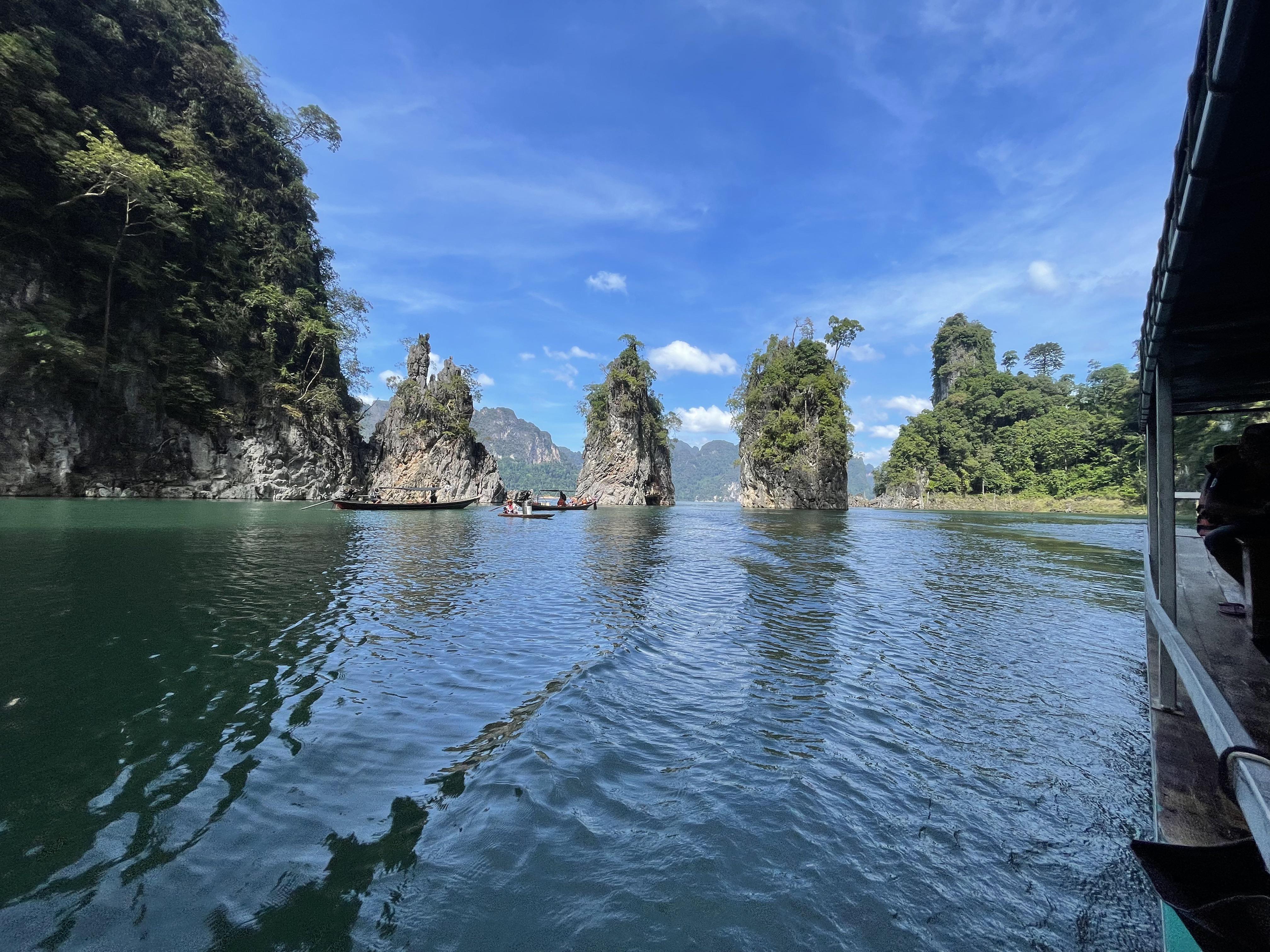
The longtail engine goes quiet, and suddenly there is nothing but the slap of glass-flat water against the hull and limestone karsts climbing out of Cheow Lan Lake like the walls of a drowned cathedral. Birdsong carries across the surface at dawn, and by mid-morning you are swimming off a raft-house platform into water so calm it barely ripples.
January is the one month when Khao Sok’s entire menu runs at full tilt at once — open caves, firm trails, Rafflesia blooms, night safaris and a lake you can actually paddle — which no other Thai park can match for sheer variety in a single dry, cool week.
This guide tells you straight whether a January trip is worth your leave days, and exactly how to book it so the crowds never own your itinerary.
Expect roughly ฿300 park entry per adult, village guesthouses from around ฿500–1,000 a night, mid-range floating bungalows near ฿2,500–5,000 per person with meals, and premium raft-houses climbing toward ฿7,000-plus over the holidays.
January at Khao Sok: The Snapshot I Would Want First
- Verdict: Yes, absolutely — if your dates are fixed to January, this is the month that delivers every activity on one trip.
- Book first: The Cheow Lan Lake overnight, at least 6–8 weeks out — mid-range raft-houses go before anything else in the park.
- Best conditions to exploit: Firm, leech-free trails at 25–27°C, glass-flat lake water for swimming and kayaking, and clear karst views instead of haze.
- Do not miss: Nam Talu Cave, fully open January through May after closing June–November for flood risk — go guided and expect to swim.
- Manage expectations: Waterfalls run at their thinnest of the year, and guided cave groups swell to 20–25 people instead of the low-season 4–8.
- Crowd workaround: Take the first lake departure of the day — the Phuket and Khao Lak convoys pile up mid-morning, and the lake disperses everyone within an hour.
Is Khao Sok Worth Visiting in January?
January is the only stretch when the entire Khao Sok menu runs at once — floating bungalows, cave treks, night safaris, river trips and jungle hikes all operating, all popular, all competing for the same days. That collision of full access and maximum pressure is the whole January story, and it is why this question deserves a straight answer before you book a single thing.
The short answer
Yes — and January is the month I endorse for any first-timer whose travel dates are fixed to January. Khao Sok rewards certainty: you want the trails, the caves and the lake to work on the day you planned them, and January gives you the highest odds of exactly that.
What you trade for that certainty is solitude and dramatic waterfalls. Those are real losses, and they rule out some travellers.
But for anyone making one planned trip to southern Thailand in the northern-hemisphere winter, this is the strongest month on the calendar.
My honest read: hesitate only if the trip in your head is empty jungle and thundering cascades. That is a different month entirely.
What January does better than any other month
Three things separate January from every other window at Khao Sok, and all three matter more to your trip than any rainfall statistic.
- Conditions that hold. This is the park at its most dependable — a guided trek, a boat transfer or a cave visit planned for a given day generally happens on that day. The on-the-ground feel is covered in the weather section; the planning takeaway is that January is when a fixed itinerary stops being a gamble.
- Every activity on the table. The seasonal caves are back in play alongside the year-round slate, so January offers the widest range of things to do in a single trip of any month. If you want caves, lake, river and night jungle inside four days, this is the month that lets you stack them.
- Scenery at its clearest. Long views across the karst skyline, clean light, no haze sitting in the valleys. This is Khao Sok legible — the landscape reads at full depth instead of dissolving into cloud and rain.
One planning trap to avoid: lock the lake segment before anything else. Inland activities have capacity; overnight options on the lake are January’s scarce item, and travellers who plan the park first and the lake second end up building their trip backwards.
The three trade-offs you are accepting
- Peak crowds. January is the busiest month of the year at Khao Sok. Trails, caves and boats all run at maximum load, and you will share viewpoints you hoped to have alone. The lake opens up once boats spread out, but the access points do not.
- Lake lead times. Overnight stays on the water are January’s hardest reservation, and the holiday stretch is harder still — treat this as a months-ahead item, never an on-arrival one. The exact booking windows are in the Cheow Lan Lake section.
- Lean waterfalls. The thundering cascades that fill postcards are a wet-season phenomenon. January gives you clear trails and open views instead; if falling water is the point of your trip, choose another month.
Is January worth it for you specifically?
Strip away the traveller labels and it comes down to four questions: how fixed your dates are, what you want to see, whether crowds bother you, and how far ahead you are willing to commit.
- Worth it if: your dates are fixed to January and cannot move; this is your first visit and you want the park to cooperate; you want the full activity menu rather than one highlight; clear lake views matter more to you than empty trails; you are comfortable reserving well in advance.
- Not worth it if: solitude is the reason you are going at all; waterfalls are the image in your head; you cannot commit to reservations until close to departure; or you would rather accept less predictable conditions in exchange for a quieter park.
The traveller-by-traveller breakdown is where the final go/no-go gets made — but if your dates are fixed to January, the answer is already yes.
What the January Weather Is Actually Like on the Ground
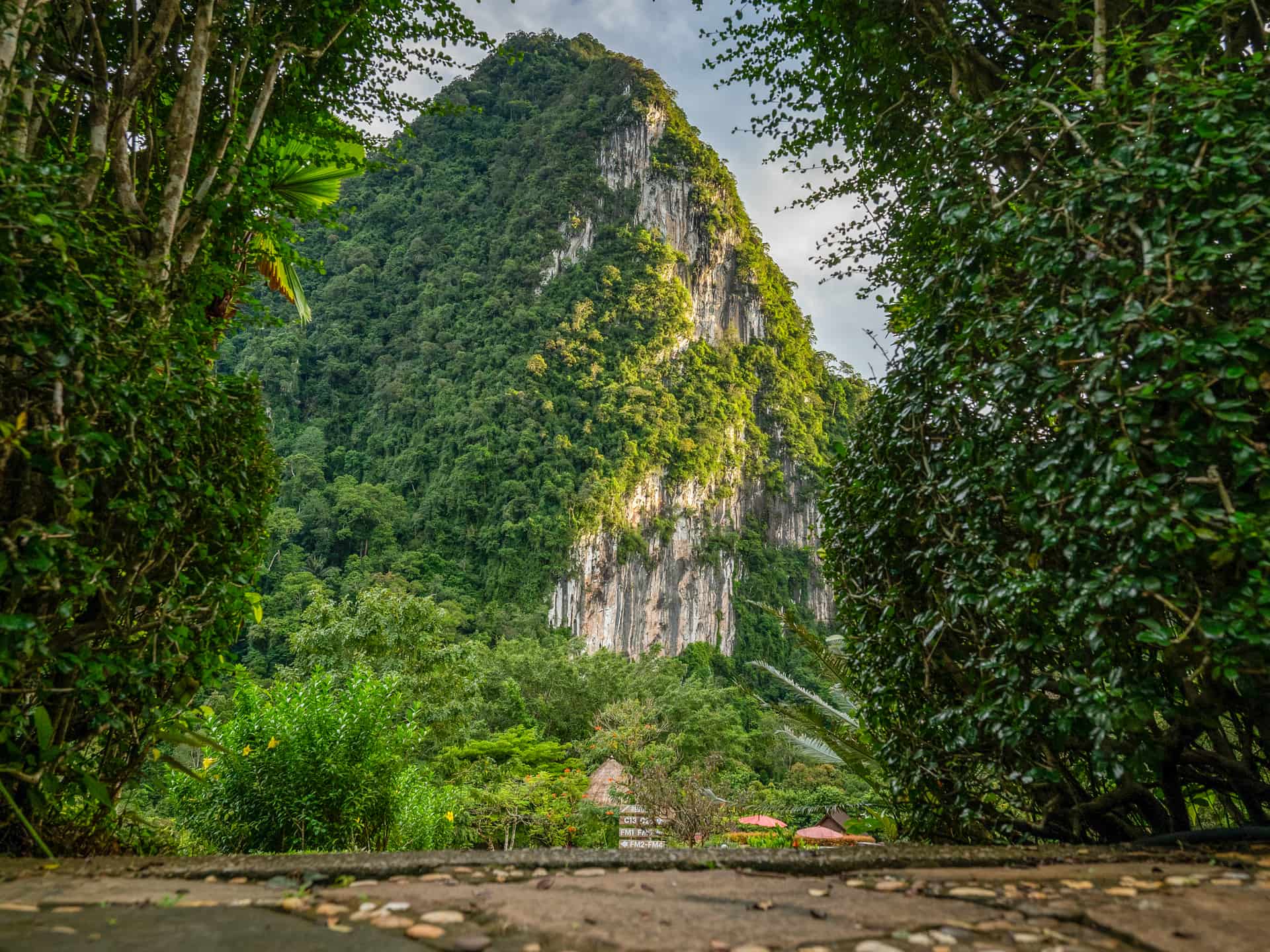
January posts roughly 60 mm of rain — the lowest monthly figure of the year — and it is the only month when the rainforest feels manageable rather than heroic. Air temperature sits around 25–27°C, humidity drops to its annual low, and the trails from park headquarters hold firm underfoot instead of swallowing your shoes.
If you have one shot at Khao Sok and you want the jungle without the endurance test, this is the window.
Temperature, humidity and the chance of rain
The numbers do the persuading: 25–27°C is warm enough for swimming and cool enough for a long trek without wilting, and it is the mildest stretch Khao Sok offers all year. Humidity bottoms out in January too, which matters more than the temperature for how the day feels — sweat dries, camera lenses fog less, and the mid-afternoon lull stops being a mandatory lie-down.
Rain does not vanish. Around 60 mm falls across the month, and the pattern is scattered showers and short passing storms rather than the sustained downpours of the back half of the year.
My read: plan every day as a full outdoor day and treat rain as an interruption, not a schedule-killer.
- Best use of the dry mornings: Start your hike or cave approach early. January mornings are typically the clearest part of the day, and you want daylight in hand if a storm rolls through later.
- Realistic rain risk: A shower most weeks is normal in the “driest month.” Build a slack hour into the afternoon so a passing storm never costs you the one thing you came for.
- What to carry: A packable rain shell lives in the bag even when breakfast is under blue sky. This is the single most useful thing I can tell you about January here.
What the trails underfoot are like
This is the real payoff of January and the reason trekkers should choose it over any other month. Footing is firm, roots are visible instead of buried in slick mud, and normal trail shoes are genuinely enough — no gaiters, no leech socks, no resigning yourself to wet socks by hour two.
- Leeches: Largely retreated. In the wet months they are a constant tax on every stop; in January they are close to a non-issue, which changes how long you are willing to stand still and watch for wildlife.
- Visibility through the undergrowth: Thinner vegetation means better sightlines off-trail, which is what turns a walk into a wildlife sighting.
- Distance is your friend: Firm, dry ground makes longer guided walks feel shorter. Pick the longest trail on the menu rather than the shortest one — you will not regret the extra kilometres in these conditions.
- Rocky or rooty sections: Dry limestone and exposed roots get slick in a shower even in January. Watch your footing on descents after rain, not just during it.
What “dry season” misleadingly implies
Call it the drier season, not the dry season — that one word is the whole correction. Khao Sok sits in one of the wettest regions in Thailand, fed by monsoon systems on both sides of the peninsula, and no month makes it arid.
January simply swaps daily soaking for occasional showers and swaps mud for dust.
The other false promise is that “dry” means guaranteed blue skies every hour. It does not.
A sharp afternoon storm can blow through the driest month of the year, dump real rain for an hour, and clear before dinner. What changes is the consequence: the trails drain fast, the river stays friendly, and tomorrow’s plan survives intact.
Go in expecting warm days, low humidity, firm ground, and one rain delay you did not plan for. Pack the shell anyway. That is January at Khao Sok, and it is about as easy as this jungle gets.
Everything That Is Open — and at Its Peak — in January
A Rafflesia kerrii flower can open wider than a dinner plate, smell like rotting meat, and collapse within three to five days — which is why January is the one window where a bloom hunt is genuinely worth building a trek around rather than hoping for.
The Rafflesia bloom window
Rafflesia kerrii enters its peak bloom window in January. These are parasitic, ground-level flowers with no leaves and no fixed address — they open where their host vine grows, scattered through the forest, and each individual bloom holds for only three to five days before it rots. That short life is the whole planning problem: you are booking a trek to a moving target.
My read: treat the Rafflesia as a bonus, never the objective. Anyone who commits money to a specific flower sighting is setting up disappointment.
- Book your guide the night before, not months ahead. Village guides know which flower is open before any tour listing does. A locally arranged trek beats a packaged day trip sold from Phuket or Khao Lak.
- Ask about bloom status when you check in. Operators will tell you honestly if nothing is currently open — a “no” here saves you a wasted half-day.
- Wear long trousers and proper shoes. Rafflesia sites are off-trail forest floor, not boardwalks.
Nam Talu Cave: open in January, and why that matters
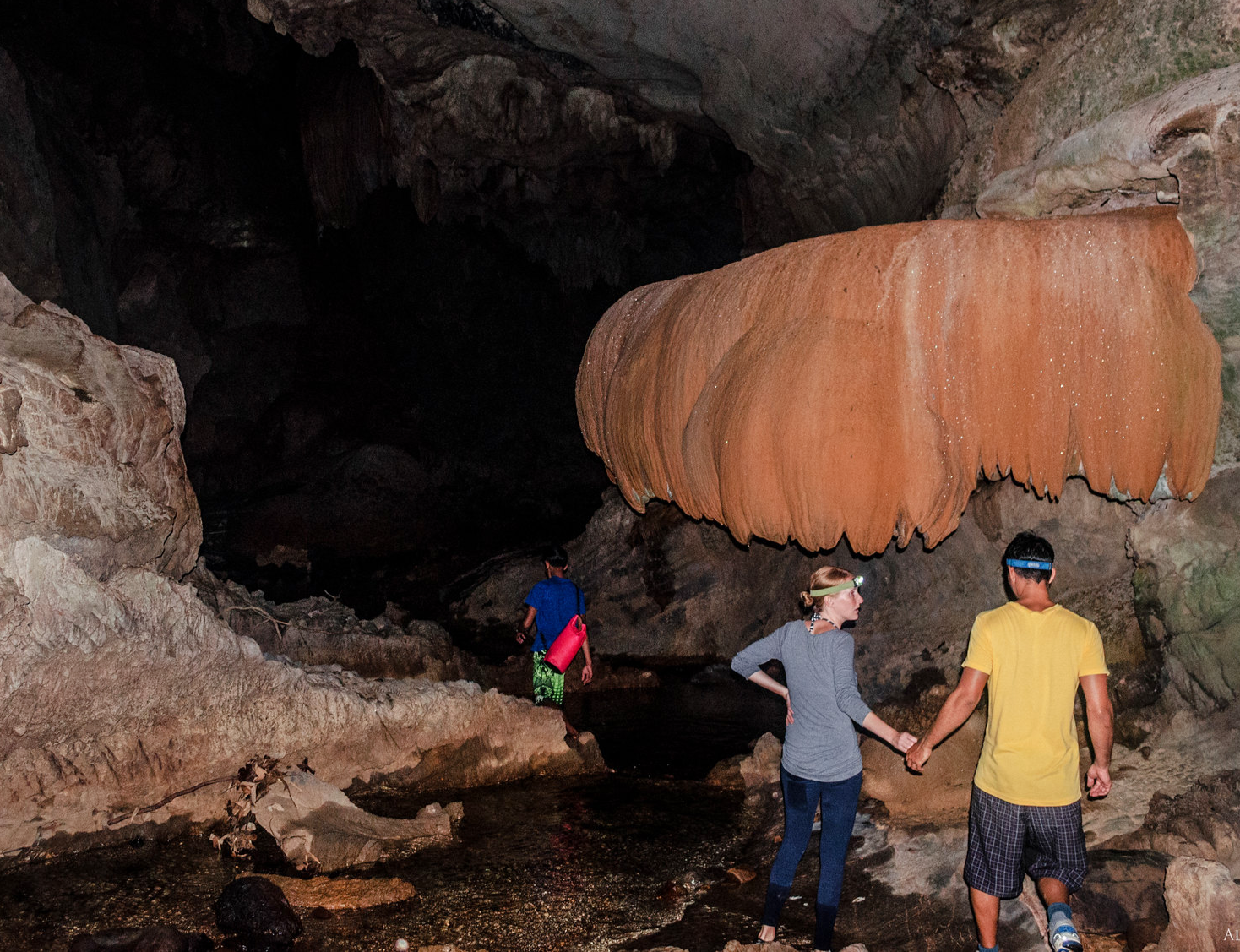
Nam Talu Cave is fully open in January — and that is the single biggest structural argument for visiting now. The cave closes June 1 through November 30 because of flash flood risk, so January sits squarely in the reliable access window.
Nam Talu is a river cave: expect wading and swimming with a guide through the rock, and expect to get wet.
Everything else underground and on the water runs year-round, but January is when the full set is available at once:
- Coral Cave and the lake-access caves: open under guide supervision, reached by longtail boat from Cheow Lan Lake.
- Night safari: operates year-round, so this is not a January-specific draw — do it if you want nocturnal wildlife, not because the season demands it.
- Cave tours require a guided group. Do not attempt Nam Talu or the lake caves independently; the flood and navigation risks are real.
The one thing January cannot give you: roaring waterfalls
Waterfalls are at their thinnest flow of the entire year in January. This is the honest trade-off, and no amount of dry-season sunshine changes it. If a thundering multi-tier cascade is the image in your head, you are coming in the wrong month.
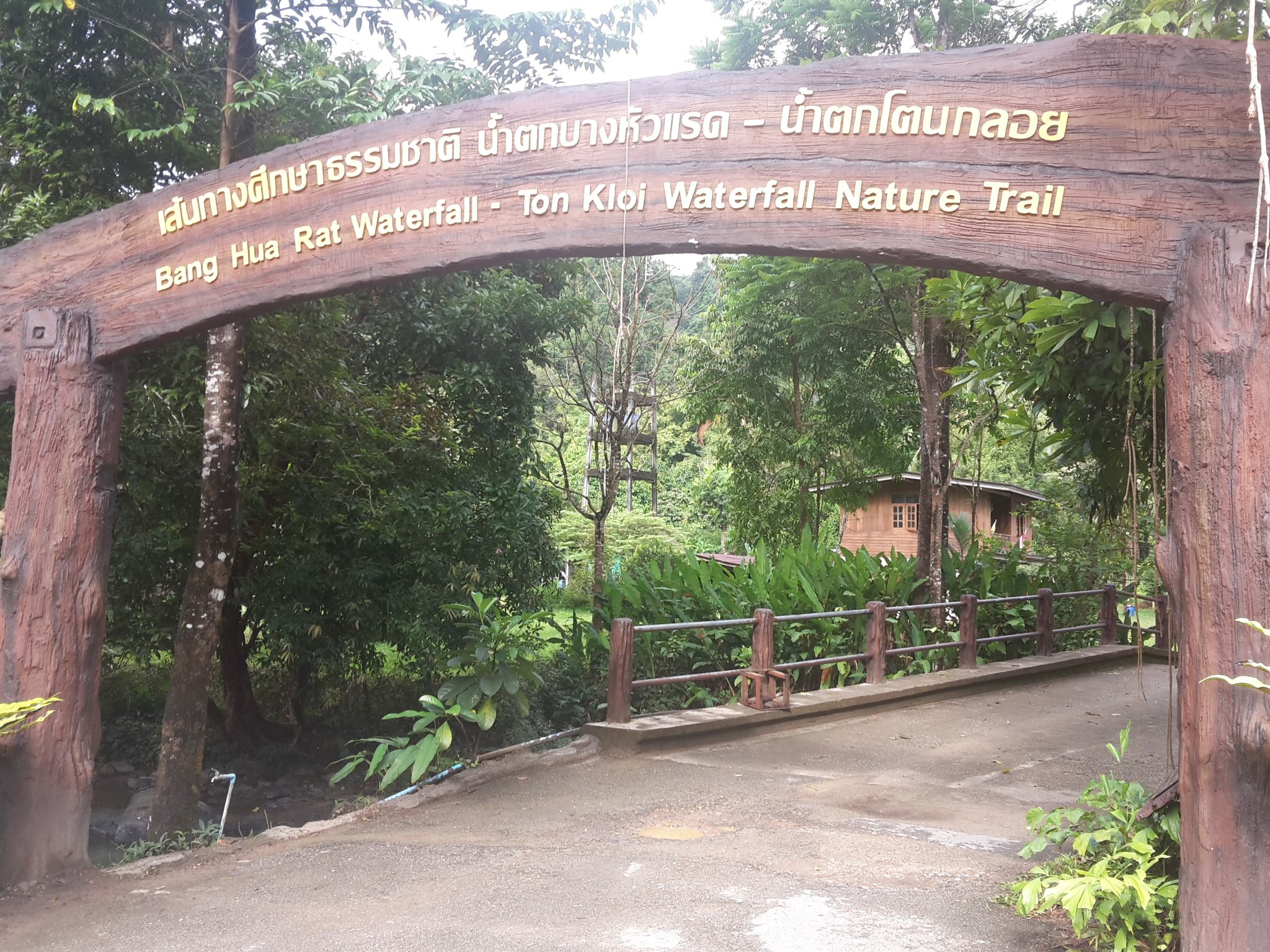
The Ton Kloi and Bang Hua Rad trails still run, and I would walk them anyway — January’s firm footing and thin undergrowth make the forest itself the reward, and wildlife visibility is at its easiest through bare branches. Just recalibrate the goal from “waterfall spectacle” to “good jungle walk.” You will be far happier for it.
Access and entry costs
Entry is cheap by national park standards, and the ticket covers more ground than most visitors realise. Fees are a planning baseline — confirm the current rate with the park before you go.
- Khao Sok headquarters zone: ฿300 for foreign adult visitors, ฿150 for children, and the ticket is valid for 24 hours.
- Cheow Lan Lake: a separate fee zone at the same rates — a lake day is not covered by a headquarters ticket.
- The 24-hour clock is your friend. Use it deliberately: enter in the afternoon for a shorter walk, then come back the next morning for a longer trek before it expires.
Cheow Lan Lake and the Floating Bungalows in January
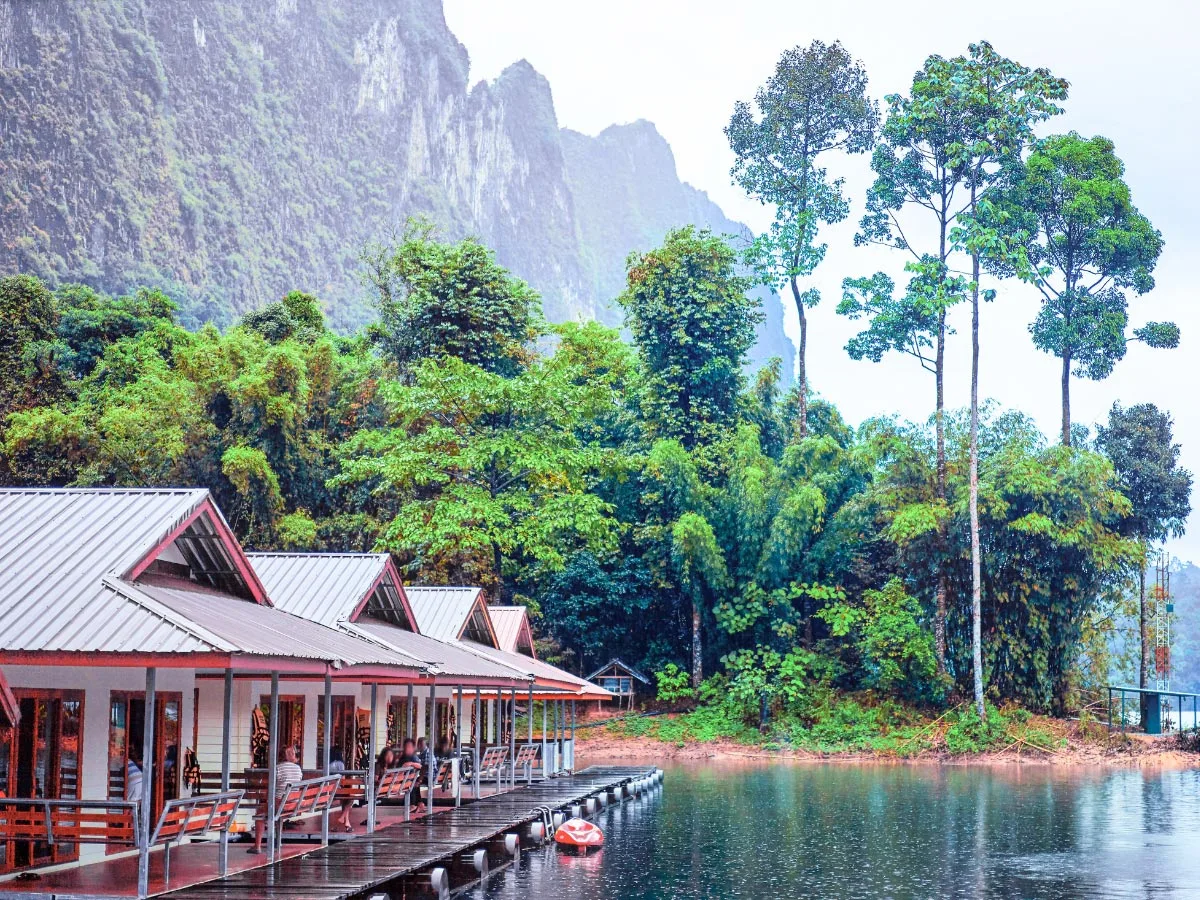
The lake’s surface in January is glass-flat by mid-morning, the kind of water that makes a kayak feel unnecessary — but the postcard shot most people come for, the karsts rising out of low dawn mist, is the one thing January’s air works against. Book the trip for the swimming and the paddling, not for the fog, and January on Cheow Lan Lake becomes the best conditions month of the year.
Why January is the best lake conditions month and the worst lake availability month
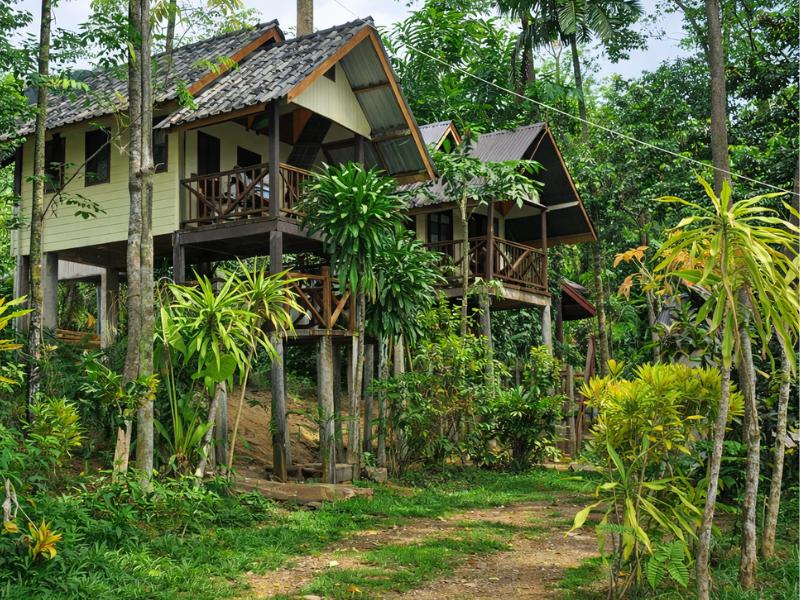
Floating bungalows operate year-round — this is not a seasonal accommodation type, and a wet-season visit will not leave you sleeping onshore. What changes is the water, and January hands you the lake at its most usable.
- Swimming: Calm, clear water directly off the raft-house platforms is the default state this month. This is the swim that justifies the overnight.
- Kayaking: Still mornings mean you can paddle the shoreline limestone before the day-boat traffic arrives, without fighting wind chop that builds in wetter months.
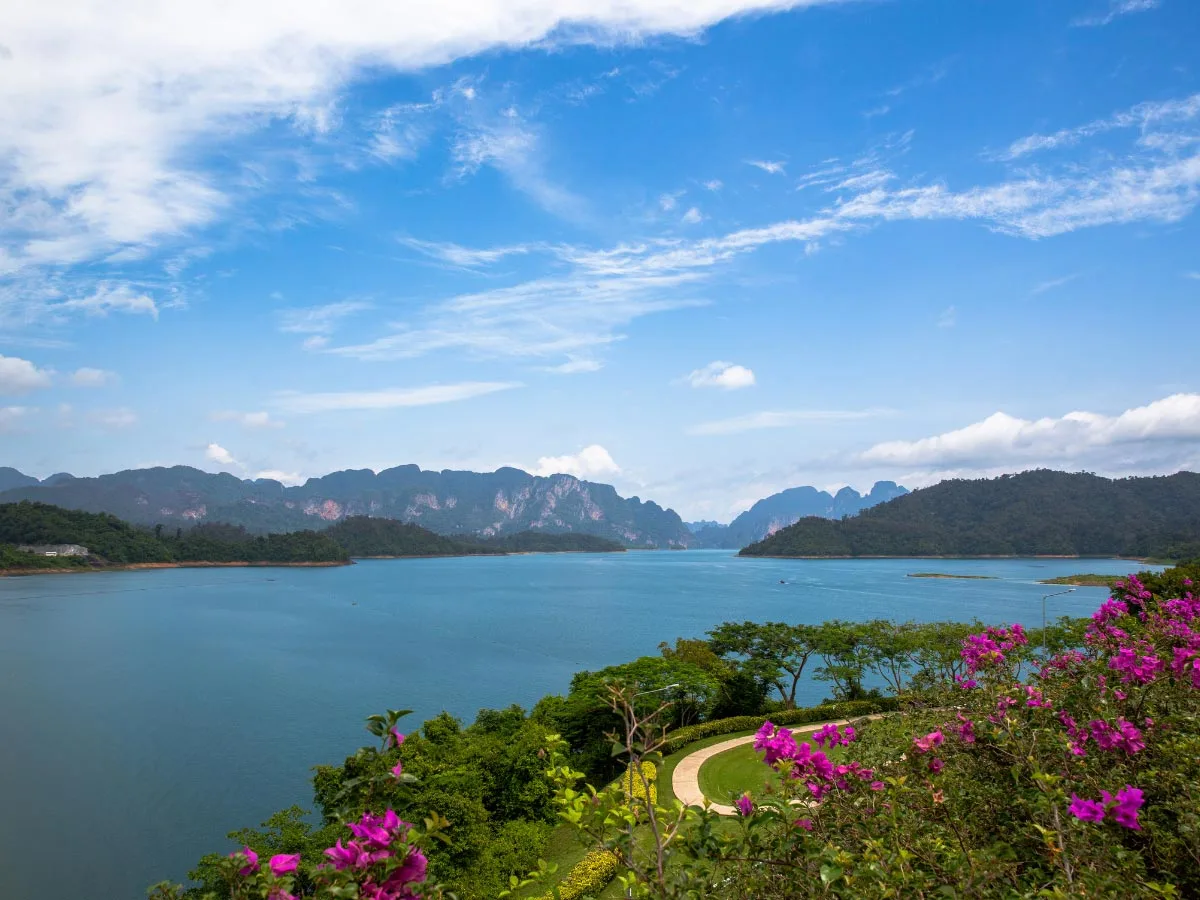
- Visibility: Clear skies put the full karst skyline in frame from your deck. This is the widest, deepest view of the lake you’ll get all year.
- The trade-off: Every advantage above is shared by everyone else with a fixed January date. Availability, not weather, is the constraint you’re actually solving for.
The mist photograph you may not get
The iconic Cheow Lan image — white mist pooling between green karsts at sunrise — is a product of moisture-laden air cooling overnight. January’s drier air simply holds less of it, so the famous dawn fog is markedly less likely than in the greener months.
My honest read: treat mist as a bonus, not a deliverable. The trade you’re making is real and worth it — you exchange a probabilistic fog shot for reliably paddleable, swimmable, clear-sky conditions on a lake that is otherwise weather-dependent.
Photographers whose entire trip hinges on that one mist frame should look at the wetter, greener months instead. Everyone else gets the better January lake.
The booking lead times you need
Here is the planning reality: mid-range floating bungalows need roughly a 6–8 week minimum lead time in January. That is the baseline, and it only tightens as your dates approach the holidays.
| Booking window | What you can expect | What to do |
|---|---|---|
| Dec 20 – Jan 5 | The hardest booking period of the entire year, across the whole lake. | Target the premium properties at least six months out, or move your dates outside this window. |
| Panvaree The Greenery & 500 Rai | These two fill the Christmas–New Year window roughly six months in advance. | Treat “six months ahead” as a deadline, not a suggestion, if either is your first choice. |
| Rest of January | Mid-range raft houses book out at the 6–8 week mark; late availability exists but is scrap. | Lock your preferred property at 8 weeks rather than gambling on cancellations. |
| Village accommodation | Frequently findable on arrival, even in peak January. | Use this as your fallback if lake inventory is gone — not as your lake substitute. |
The move I’d make: shift your overnight on the water to the second week of January or later. You keep the identical lake conditions, you escape the December 20 – January 5 crush, and the 6–8 week window becomes a comfort rather than a scramble.
Book the lake first and build the rest of your January trip around that confirmation — everything else in Khao Sok can be arranged closer to the date.
The Crowds: January’s One Real Downside
Mid-morning at the Ratchaprapha Dam pier is the moment January’s trade-off becomes visible: the long-tail queue is at its longest of the year, drivers are loading in shifts, and the departure volume hits its annual peak. Nothing about the park is closed or degraded — but everything that draws you here is drawing everyone else at the same hour.
What peak volume looks like at the pier
January’s congestion is not a slow trickle of independent travellers. It is scheduled, and it arrives in waves: day-trip convoys roll in from Phuket, Krabi and Khao Lak on roughly the same timetable, so the pier sees concentrated bursts rather than a steady stream.
Expect the heaviest loading between late morning and early afternoon, when the day-trip boats all turn up at once.
- Where the volume comes from: Phuket, Krabi and Khao Lak day-trip operators run shared transfers that converge on the pier simultaneously — the crowd is engineered by logistics, not by popularity alone.
- What it looks like on the ground: full parking areas, queued boats, and guides gathering groups before the same handful of signature viewpoints and caves.
- What it is not: a safety or access problem. Ratchaprapha simply runs at its highest departure volume of the year in January, and the system absorbs it.
What it does to the experience quality
The clearest casualty is solitude inside the caves. Guided cave hikes in January typically carry 20–25 people per group, against roughly 4–8 in the low months — that is the difference between moving through a chamber at your own pace and shuffling single-file behind a guide’s torch with a queue behind you.
I’d still do Nam Talu in January; I’d just go in knowing the intimacy is gone.
- Cave hikes: expect 20–25 per guided group versus 4–8 in the wet season.
- Night safari: departures run at their fullest permitted group size in January, so you share the torchlight trail rather than getting the near-private walk low-season visitors report.
- Village atmosphere: the village runs at peak — restaurants fill at dinner, guides get booked out, and the easy “just ask around and go tomorrow” rhythm of the quiet months is replaced by scheduling.
Where January crowds actually thin out
Cheow Lan Lake solves its own crowding problem within about an hour of departure. The pier is congested; the lake is not.
Once the boats move off, each one peels toward a different corner of the reservoir, and from the water you will rarely feel the day’s total volume.
- Get past the pier: the crowds are a boarding-area phenomenon. Everything past the first hour on the water disperses naturally.
- Take the first or the late departure: the mid-morning slot is where the day-trip convoys pile up. Early boats leave before the surge, and afternoon departures clear it entirely.
- Stay on the water: overnight guests have the lake to themselves once the day-trip boats turn back toward the dam in mid-afternoon — that is when the viewpoints, swimming spots and kayak routes go quiet.
- Choose the longer cave option: the harder-to-reach caves draw a fraction of the day-trip groups simply because of the extra effort required.
The single best crowd-avoidance move in January: book the earliest lake departure available and be standing at the pier before the first Phuket convoy lands. Everything downstream — the cave queue, the viewpoint stop, the swim break — follows from that one decision.
How January Compares to the Shoulder Months
Khao Sok sits in one of Thailand’s wettest corners, absorbing roughly 3,500 mm of rain a year because two monsoon systems — the southwest off the Andaman Sea and the northeast off the Gulf — both unload on the same limestone hills. That dual-monsoon pincer is the entire reason the calendar matters here: you are not choosing between “rainy” and “not rainy,” you are choosing which edge of a very wet year to stand on.
The case for choosing May or October instead
May and October are the balance months, and for anyone with a movable itinerary they are the smarter buy. The rains have either just arrived or are tapering, the jungle is at full intensity, and you are trading a small weather risk for a large drop in demand.
- More jungle, less company: September and October are the wettest and quietest stretch of the year — if solitude outranks guaranteed sunshine, that window delivers more of it than any dry-season month.
- Cheaper, easier logistics: lake stays, guides and transport can usually be arranged on far shorter notice than the peak weeks demand, and prices rarely carry holiday premiums.
- The realistic downside: expect heavy afternoon showers of one to two hours and muddy, slippery trails. Mornings and evenings are typically clear, so a flexible daily plan works; a rigid sunrise-to-sunset one does not.
The case for late November or early December
This is the window I would book over January for anyone who can shift by a fortnight, and it is not close.
- Water still in the system: the retreating monsoon keeps rivers and falls running high, and the wet-season cave closures have only just lifted.
- Conditions converging on January: the rains are winding down and trails are firming, so you get dry-season access before dry-season demand fully lands.
- The timing lever: travel in the first half of December and you beat the Christmas–New Year crush entirely — the busiest booking window of the year starts later in the month.
When fixed dates make January the right call anyway
Most American travellers arrive with dates carved out by school calendars, expiring leave and already-purchased flights, and that alone settles the question. If your window is fixed to January, stop second-guessing it: the shoulder months are a better deal on paper, not a better trip inside your actual calendar.
- Book the month, not the comparison: the flexible-dates argument only helps if you can genuinely move flights and leave — otherwise it costs you planning time and buys nothing.
- Watch February’s trap: it posts roughly 60–65 mm of rain and looks like January on a chart, but by then the Sok River runs low and the river-based activities that make the region are at their thinnest.
- My rule: fixed dates mean January and no regrets; flexible dates mean the first half of December, or May and October, and a quieter park for the same trip.
Who Should Book January — and Who Should Wait
January is the easiest month to be in Khao Sok and the hardest month to be spontaneous about it: trails, lake and caves all sit in their most usable state, but every other traveller in Thailand has noticed. Who you are decides whether that trade works in your favour.
Travellers January is built for
- First-timers with one shot at the park. If this is your only Thailand trip and you want the full activity menu on the table, take January and accept the crowds as the price of certainty.
- Families locked to school holidays. Dry-season conditions are the least stressful window for children in the jungle, and the lake swimming is at its most inviting. Just book the overnight well before the trip, not during it.
- Photographers chasing clarity. Blue-sky karst reflections and long visibility beat hazy low-season air. The trade is that the famous misty-dawn lake frame is far less likely here, so if mist is the entire shot, choose a wetter month.
- Rafflesia-motivated visitors. This is the strongest window of the year to aim for a bloom, but treat the flower as a bonus, never the spine of the itinerary — bloom timing is never guaranteed, and village guides are the only reliable bloom trackers.
- Anyone hiking with children or first-time trekkers. Longer routes toward the park’s interior waterfalls are at their most walkable now, which is the main reason I’d push a family here rather than into the monsoon.
Travellers who will be happier in another month
- Quiet-seekers. If empty trails matter more than perfect conditions, January will annoy you. The shoulder months covered earlier give you space without giving up accessibility.
- Budget travellers on peak dates. Accommodation sits at annual-high demand and pricing, and the cheapest beds disappear first. Move your dates and your money goes further.
- Waterfall chasers. Pick the wet months for full-volume falls and greener jungle.
- Flexible-date travellers. You have the single biggest advantage available: use it, and visit outside the holiday crunch.
The go / no-go
My rule: book January if your dates are fixed, your bucket list is long, and you plan ahead. Skip it if your dates float, your budget is tight, or you came for solitude.
Start planning a minimum of three months out, and considerably earlier if your dates fall over the turn of the year. Lock the lake overnight first, then arrange transport and village nights around it — reversing that order is how people end up doing Khao Sok as a rushed day trip instead of the trip they pictured.
Book it. January in Khao Sok is not the quiet version of the park, but it is the version that delivers everything on the poster.
Frequently Asked Questions
How far ahead should I book the floating bungalows?
Mid-range raft-houses need roughly 6–8 weeks minimum in January, and the premium properties fill about six months out for the Christmas–New Year stretch.
Shift your lake overnight to the second week of January or later and that lead time becomes a comfort instead of a scramble.
Will I see the famous mist over Cheow Lan Lake?
What you get instead is reliably paddleable, swimmable, clear-sky water, which is the better trade for most travellers.
Is it worth hiking to the waterfalls in January?
Yes, as jungle walks rather than waterfall spectacles — Ton Kloi and Bang Hua Rad trails reward you with firm footing and the year’s best wildlife visibility.
If thundering cascades are the whole point of your trip, you are choosing the wrong month.
Can I explore the caves without a guide?
No — Nam Talu and the lake caves require a guided group, and the flood and navigation risks that make that rule are real.
Arrange your cave trek through village guides rather than a packaged day trip sold from the coast.
Book the Lake First, Then Let January Fall Into Place
Lock your Cheow Lan Lake overnight at least eight weeks out, then arrange transport and village nights around that confirmation, and take the earliest boat departure of your stay on the water.
January hands you Khao Sok with every door open — caves, trails, blooms and a lake at its most usable — and that certainty is exactly what makes a once-in-a-lifetime trip land.
Save this guide to your Thailand board and start your lake booking tonight.
Leave a Reply