
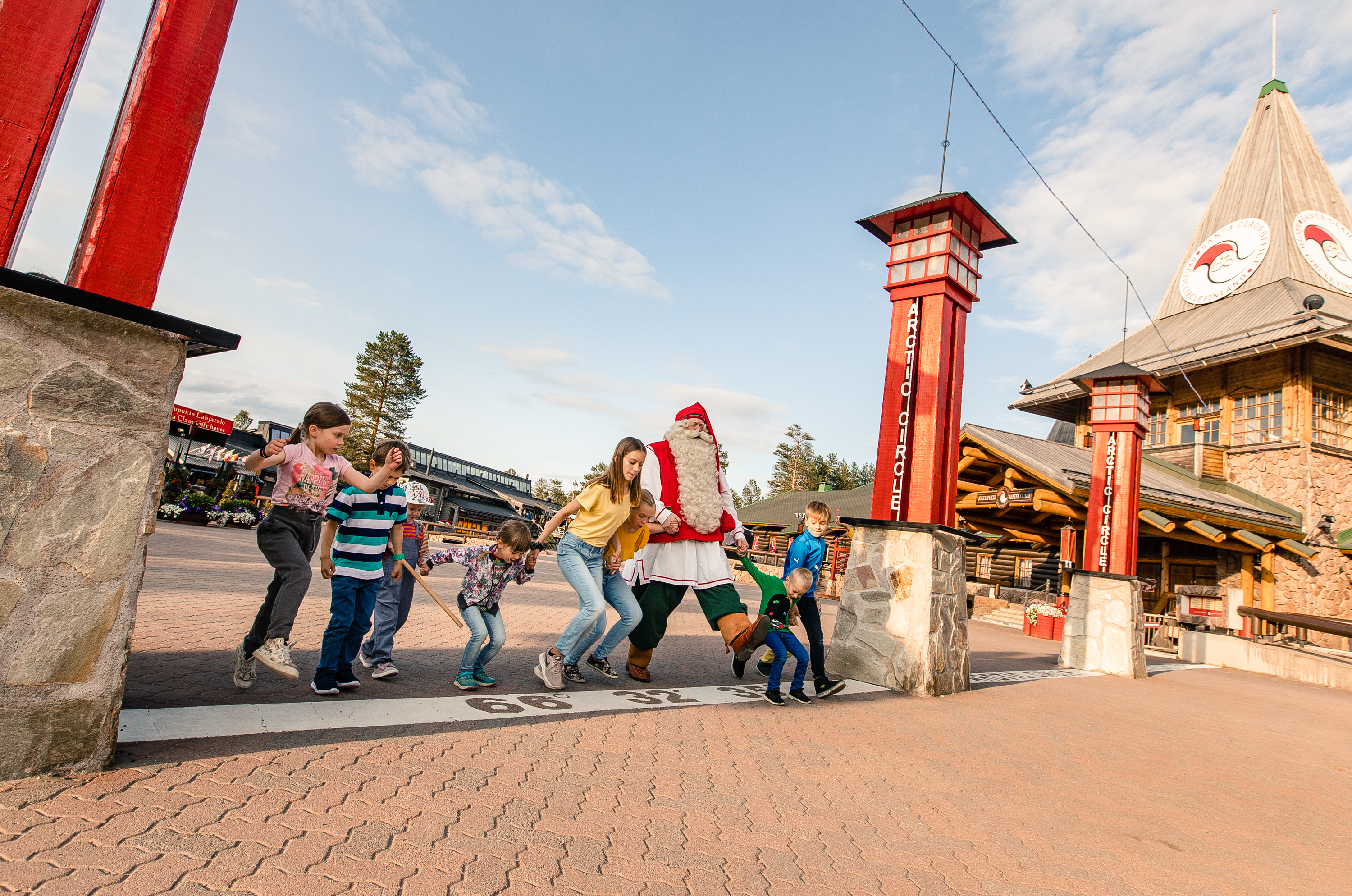
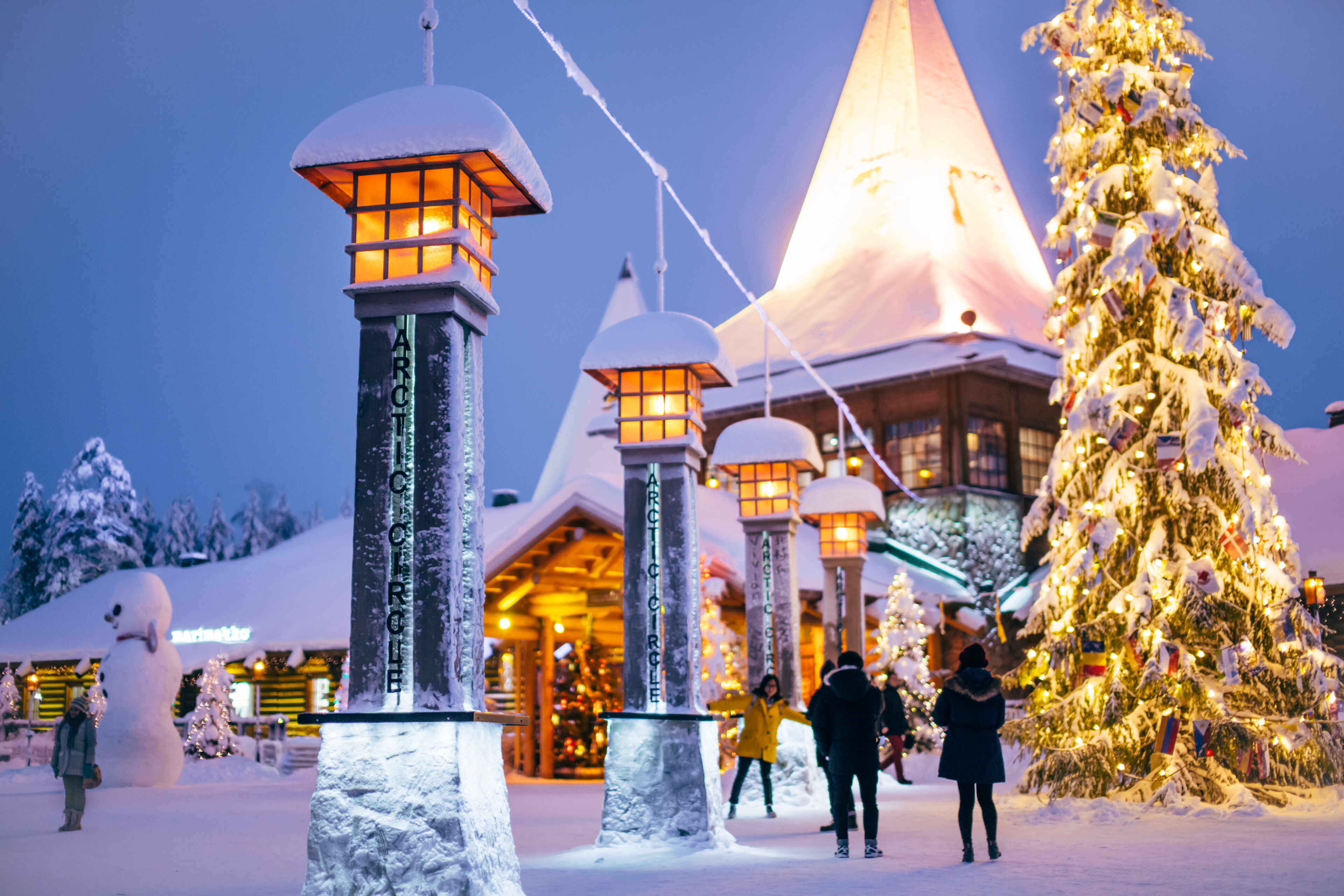
My boots found the brass Arctic Circle marker before my eyes did — a cold metal seam running across the square, snow packed hard into its edges. Downwind, a salmon fire sends woodsmoke over lit timber cabins while a reindeer sled drifts past the window glass.
By mid-afternoon the light goes low and gold, and the whole place smells like spruce and grilled fish.
Nothing here requires a ticket to enter: you cross the Arctic Circle line on foot, on a square that stays open every day of the year even when the rest of Lapland shuts down. Dozens of separate businesses compete for your money around it, which is why the free part of this village is far bigger than most visitors expect.
I’ll tell you exactly how long to give it, which handful of paid things actually earn a childless adult’s money, and what to skip without a second thought.
Budget about 25 to 35 EUR if you come for the salmon and the free square, 70 to 120 EUR once you add one real ride like the reindeer loop or the husky park, and 200 to 300 EUR if you stack a snowmobile run and the 55 EUR Santa photo package on top. The bundled four-hour tour with pickup sits near 200 EUR per person, and I’ll show you the two situations where that premium is honestly worth paying.
The Short Version, If You Only Read One Thing
- Give it half a day, not a full one. Two to three hours covers the Arctic Circle line, one activity, and a hot meal.
- Eat at Santa’s Salmon Place. The roughly 25 EUR fire-planked salmon is the only paid thing here that feels like Finnish food culture instead of a tourist transaction.
- Pay for exactly one ride. Take the 400 m reindeer loop for quiet, or Arctic Circle Husky Park for the kennel time with its herd of over 130 Siberian huskies.
- Skip the certificate, the elf workshop, and the ice bar. If you want photos of meeting Santa, the 55 EUR group package is the only buy that makes sense.
- Come in January or February, before 10:00 or after 16:00. Expect prices 20 to 40 percent under Christmas week and an empty square you can actually photograph.
- Pair it with ice floating from Nordic Adventures and the Arctic SnowHotel at dusk. Then sleep in central Rovaniemi — the on-site cabins cost 400 to 900 EUR a night for location alone.
Is Santa Claus Village Worth It for Adults?
This verdict comes from a February visit by adults with no children along: Santa Claus Village is worth the detour, but it is not worth a full day. It is a snow-dusted commercial square built around one gimmick, and it makes no apology for that.
Arrive treating it as Lapland’s postcard, not Lapland itself, and you will leave satisfied instead of shortchanged.
Why Half a Day Is the Right Dose
Two to three hours covers the core cleanly: the Arctic Circle line underfoot, one outdoor activity, one hot meal, and a slow walk through the shops. After that you are simply re-crossing the same square.
I would not build a day around it, and I would not schedule a return visit.
- Choose one paid experience. Book the ride or activity that genuinely appeals and let the rest go; stacking three of them turns the day into an expensive queue.
- The touristy feel is real and unavoidable. Costumed elves, staged photography, and gift shops at every turn. What you get in exchange is compact, well signposted, and easy to navigate in deep cold.
- Authentic Lapland begins where the pavement ends. Silent forest, frozen lakes, and unchoreographed snow deliver the trip you imagined. The Village delivers the souvenir of it.
Who Should Skip It Entirely
The condition is simple: skip the Village when your days are few and your goal is the landscape. Two or three days in Lapland is not enough time to spend half of one on a themed square.
- Short-trip wilderness travelers. Hours here are hours stolen from the fells, the ice, and the northern lights.
- Return visitors to Lapland. The novelty is the entire product; once spent, it does not come back.
- Anyone averse to staged Christmas. Adults who want quiet and scale over festive theater will resent the setting within the hour.
Travelers with young children during the Christmas rush are the exception — for them, the magic is the point, and this verdict does not apply.
What Santa Claus Village Actually Is
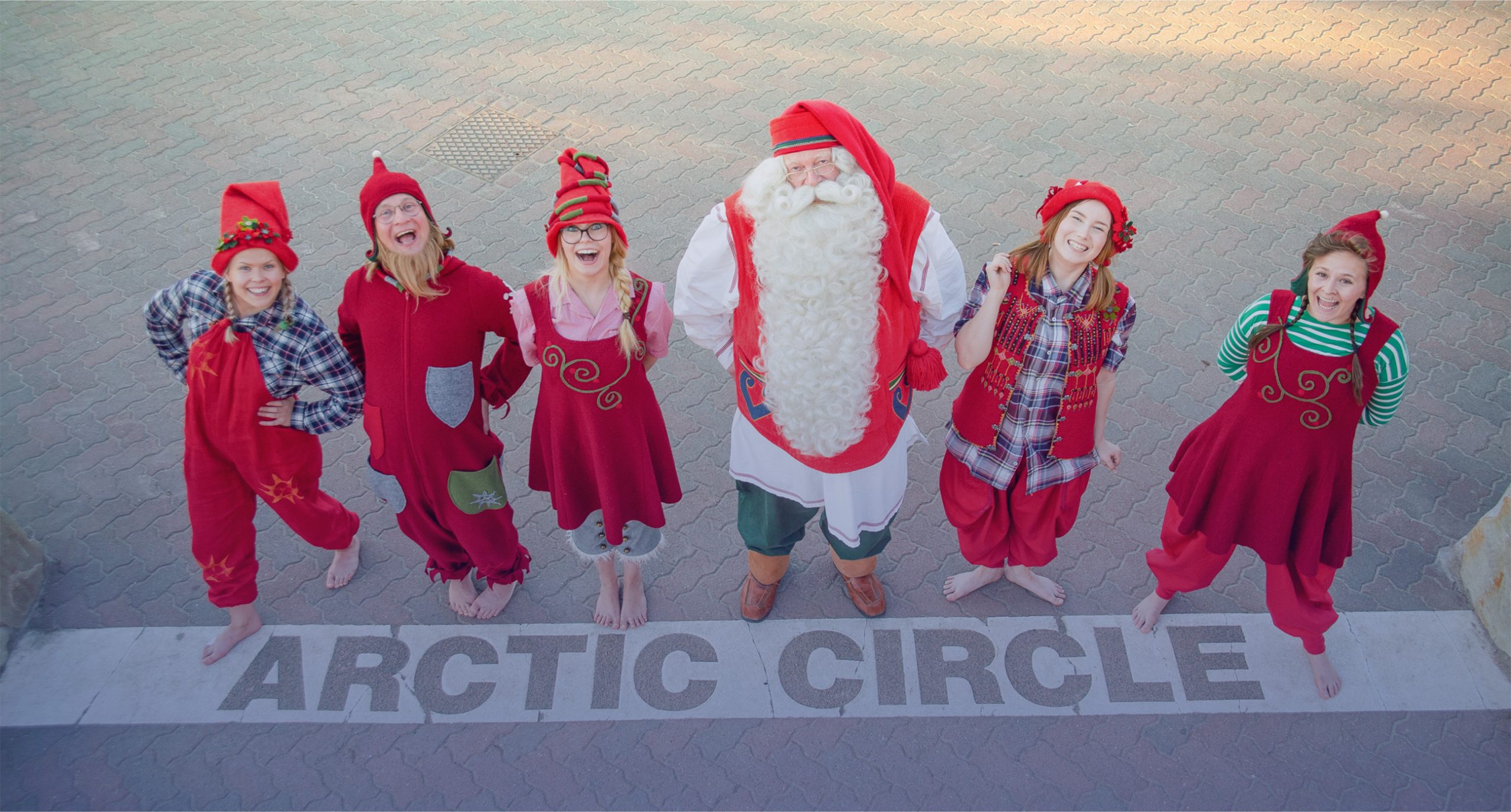
A brass-marker line runs straight across the central square of Santa Claus Village, and you cross it on foot with no gate, no turnstile and no ticket. That line is the whole reason the village stands at this exact spot on the map, and it is the one thing here you genuinely cannot get anywhere else.
Everything around it is a cluster of timber buildings — shops, restaurants, activity booking desks and small attractions — run by dozens of separate businesses, not one park operator. It is open every day of the year, including the dates when the rest of Lapland shuts down.
The oldest structure on site, Roosevelt Cottage, went up in 1950 as the village’s first building and still stands today.
The Free Core Versus the Paid Add-Ons
I would plan the visit around what costs nothing. The free core is where the value sits, and it is larger than most visitors expect before they arrive.
- Free — the Arctic Circle line in the square: Walk it, photograph it, cross back and forth. No charge, no timed entry, no certificate required to have stood on it.
- Free — the village itself: You can wander the paths, read the signage and step into most of the buildings without spending a euro.
- Free — Roosevelt Cottage: The 1950 original, worth a look as the piece that started the whole settlement.
- Paid — anything with a booking desk or a queue: Rides, safaris, ticketed indoor attractions and sit-down meals all price separately and are entirely optional.
That split is the useful mental model: you pay for activities, never for access. Treat the paid list as a menu you order from, not an admission fee you are obligated to fill.
Insider detail: Roosevelt Cottage sits slightly off the main square and most visitors walk straight past it toward the shopping arcades. Turn toward it first, while the paths are empty, then do the Arctic Circle line — reversing the order costs you the quiet.
How the Place Feels in Deep Winter
Deep winter turns the village into a compact, snow-loaded row of lit timber cabins with reindeer sleds moving past the windows — atmospheric in short doses, and best treated as a stroll rather than a destination to linger in. The layout is flat, small and easy to read on foot, so nothing about it requires a guide or a plan.
My read: it delivers atmosphere cheaply if you arrive with the mindset of a walk, not a day out.
What Is Actually Worth Paying for as an Adult
Fire-planked salmon cooked over an open fire and served with salad and bread for 25 EUR is the one paid thing at Santa’s Salmon Place I would build my day around — and the only item here that feels like Finnish food culture rather than a tourist transaction. Everything else on this list is optional entertainment, priced separately and worth wildly different amounts of your money and time.
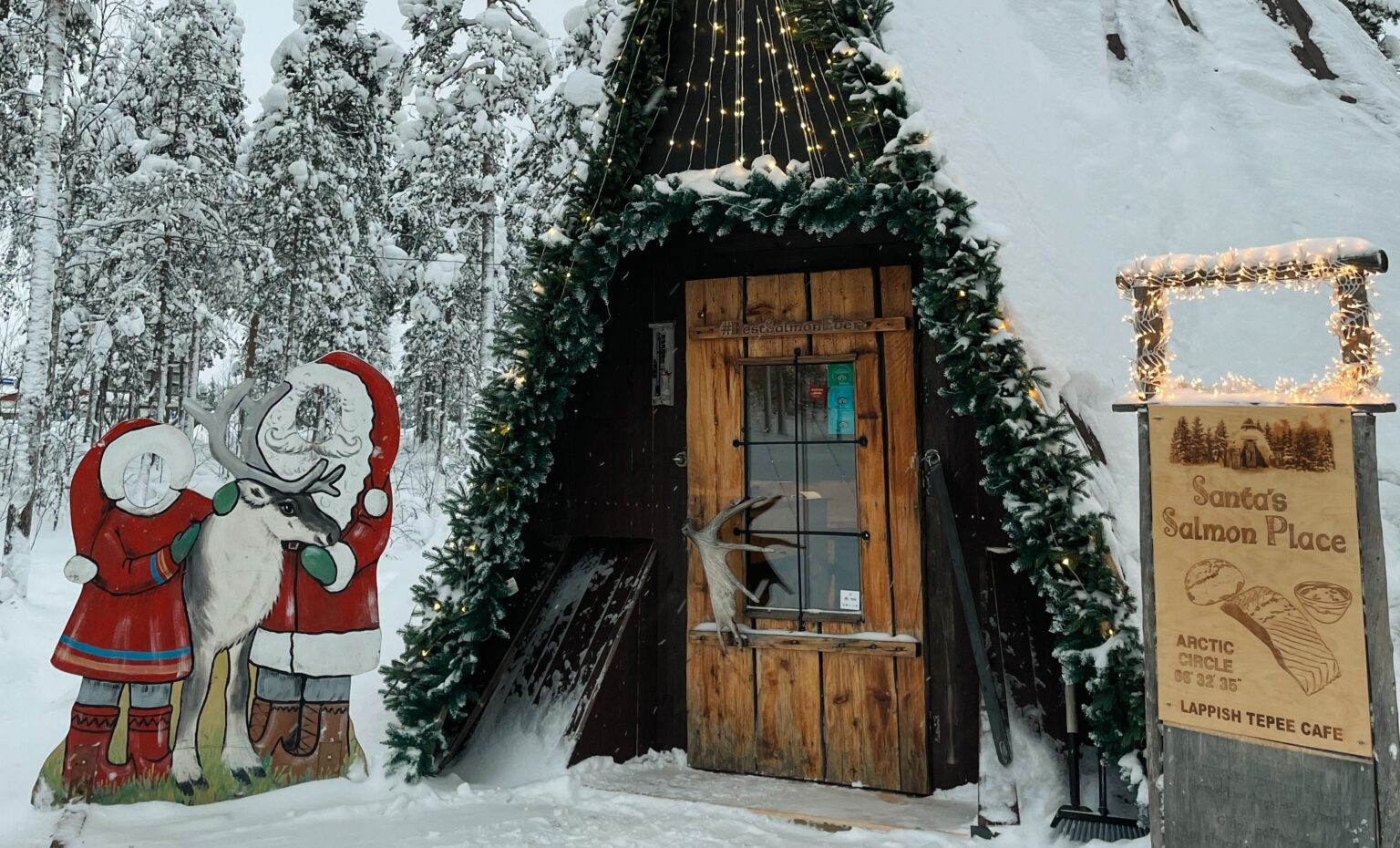
Santa’s Salmon Place: The One Thing to Plan Around
At roughly 25 EUR for a full plate, this is the cheapest serious meal inside the Village and the one I recommend you schedule your visit around rather than fit in when you get hungry. The salmon arrives cooked on a wooden plank over an open flame, which is the actual Lappish method, not a themed gimmick.
- Arrive early for lunch: The salmon pit fills fast once the day-trip crowds land, so eat before the main lunch crush or expect to wait for a seat near the fire.
- Expect a simple meal: Salad and bread come with the fish, which is enough to carry you through an afternoon of activities without a second stop.
- Budget impact: This single plate costs less than any ride on this page and delivers more than the cookie-cutter café options nearby.
Prices are planning baselines and can shift seasonally — confirm with the operator before you go.
The Reindeer Sleigh Ride
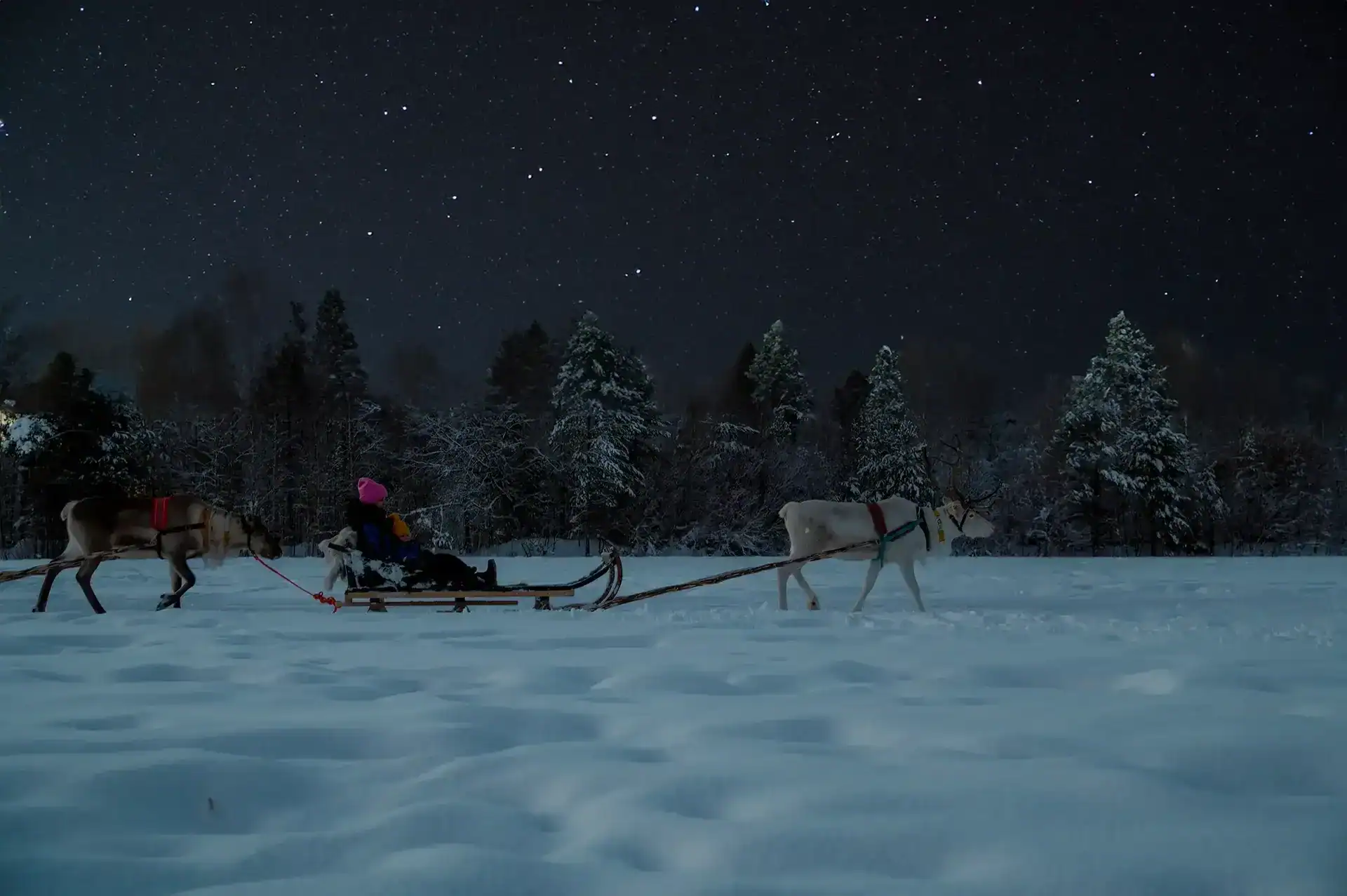
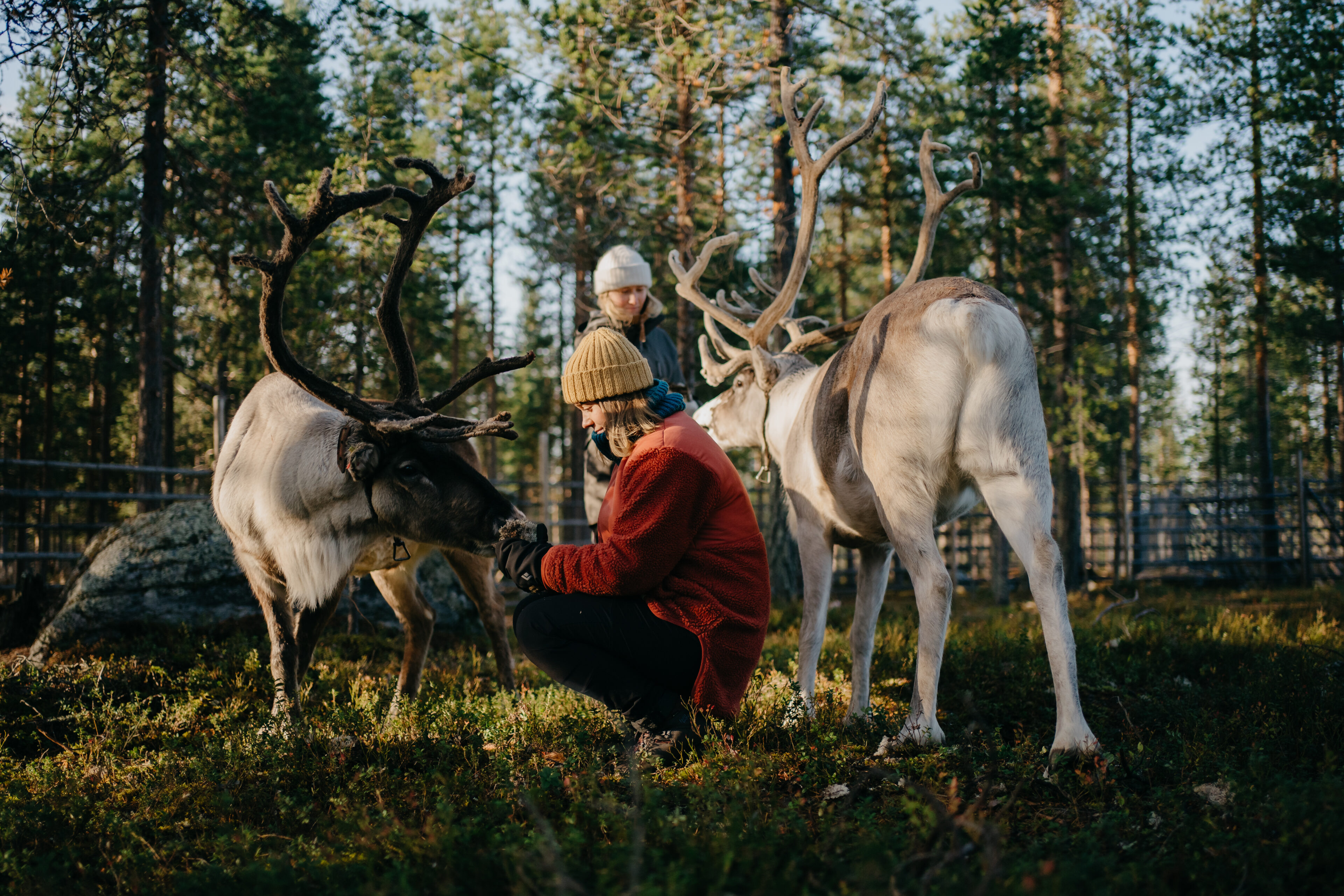
The 400 m reindeer loop is the ride I would pick if I only paid for one animal experience at the Village. It is slow, quiet and short, which is exactly why it works for adults — no adrenaline, no costume, just a reindeer pulling you through snow-covered forest.
- Standard pricing: Typically around 30 EUR for adults and 20 EUR for children.
- Peak surcharge: Rates usually rise to roughly 40 EUR and 30 EUR between December 1 and January 10.
- Booking: Rides are sold on the spot only, with no pre-booking, so you are gambling on availability rather than planning around a reservation.
- Timing tip: Since there is no reservation system, buy your ticket first and eat afterwards — the queue is what eats your limited hours here.
The Husky Loops
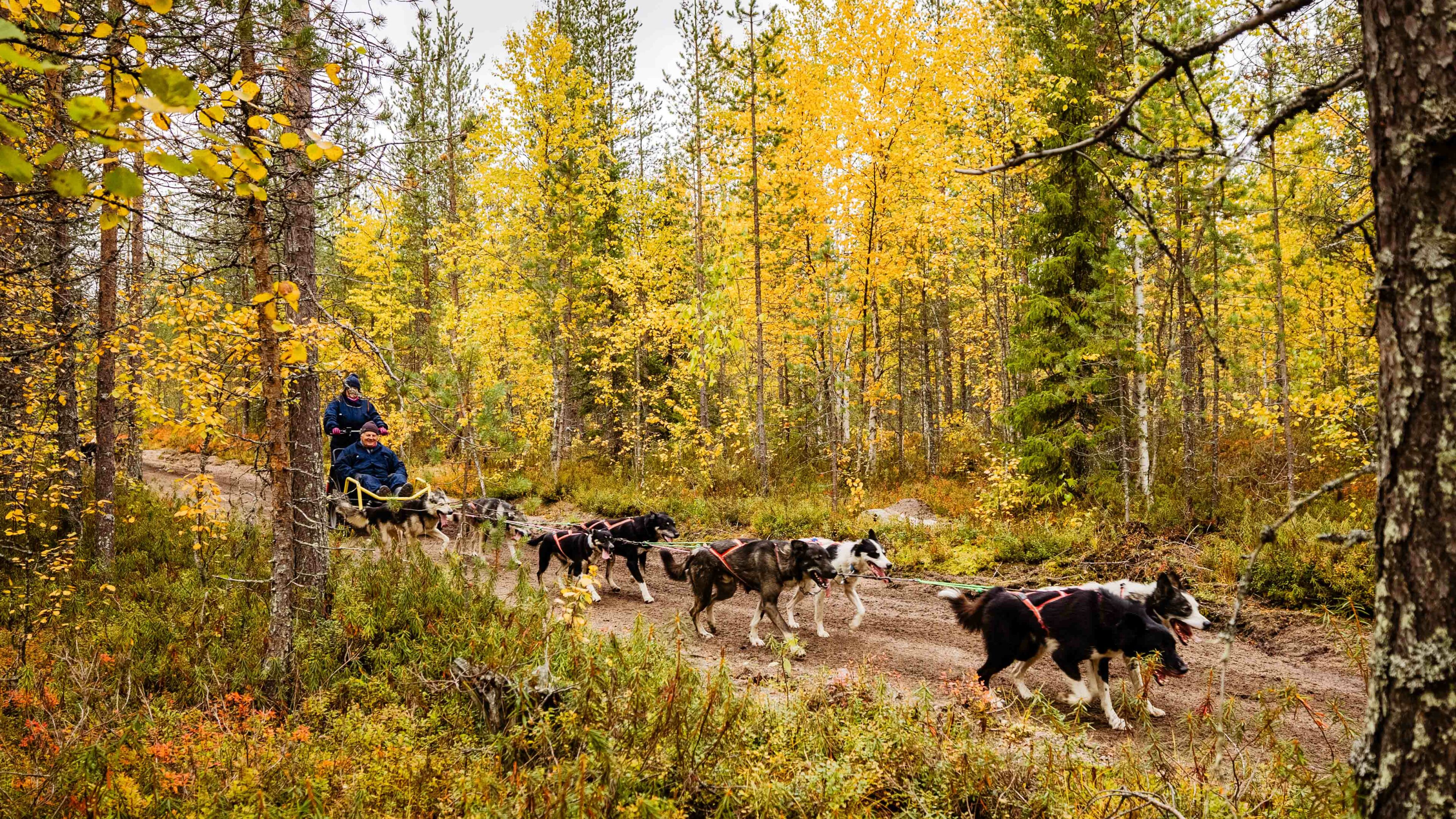
Two husky options compete for the same slot in your day, and the cheaper-looking one is not automatically the worse deal. Compare them directly before you hand over a card.
| Operator | Experience | Approx. price | Best for |
|---|---|---|---|
| Santa’s Husky Rides | 2.5 km loop | 63 EUR adults / 52 EUR children | Riders who want the longer run |
| Arctic Circle Husky Park | 2 km loop, kennel entry included | 65 EUR adults / 45 EUR children | Anyone who wants time with the dogs, not just the sled |
My call: Arctic Circle Husky Park wins for most adults because the included kennel entry means you get the behind-the-scenes half of the experience for roughly the same money. Only choose Santa’s Husky Rides if the extra half-kilometre of trail matters more to you than meeting the team — and note that children’s tickets are meaningfully cheaper there.
Snowman World and Snowmobiles
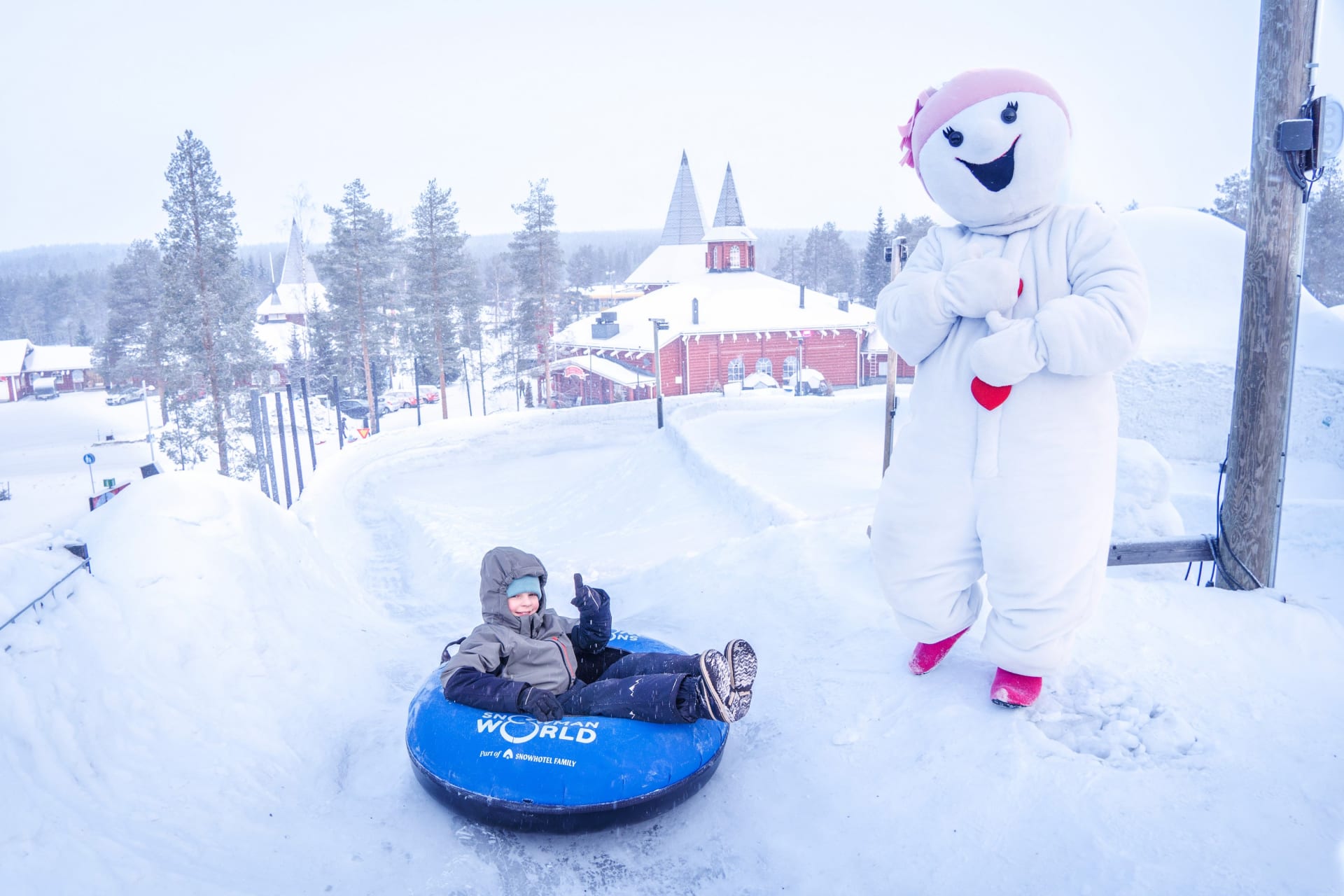
Snowman World charges around 35 EUR for a winter day ticket, which buys you snow and ice play designed heavily around families with children. For adults, I would spend that money on a snowmobile instead — that is where the Village actually delivers something you cannot replicate at a city playground.
- Short snowmobile runs: From about 70 EUR per machine for 15 to 30 minutes — the sensible choice if you just want to try it.
- Longer guided safaris: Usually 120 to 180 EUR per person, worth it only if snowmobiling is a priority rather than a curiosity.
- Per-machine pricing: Short rides are sold per machine, so sharing one keeps the cost sane; longer safaris are priced per head.
Confirm current rates and duration options with the provider, since snowmobile pricing tracks fuel and season costs and moves year to year.
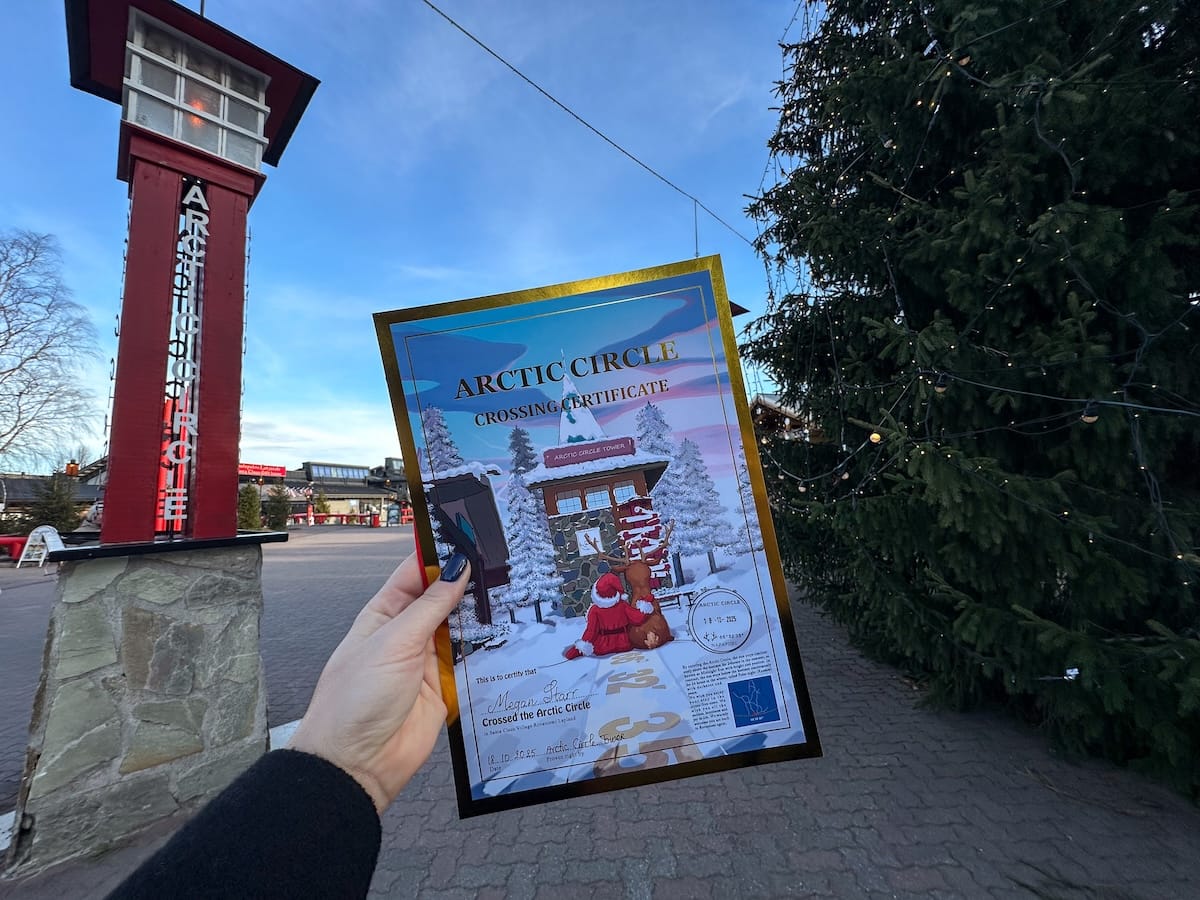
The cheapest souvenir in the Village is the one most visitors pay for twice: a printed Arctic Circle crossing certificate, sold for a line you can walk over for nothing.
The Arctic Circle Certificate
Skip it. The certificate documents an event that costs no money and takes no time — you cross the line on the central square and you’re done.
The shop’s piece of paper adds a name and a date, nothing you can’t capture with a phone photo. Spend that money on the salmon instead, which is the one paid thing here that earns its price.
The Village Gift Shops
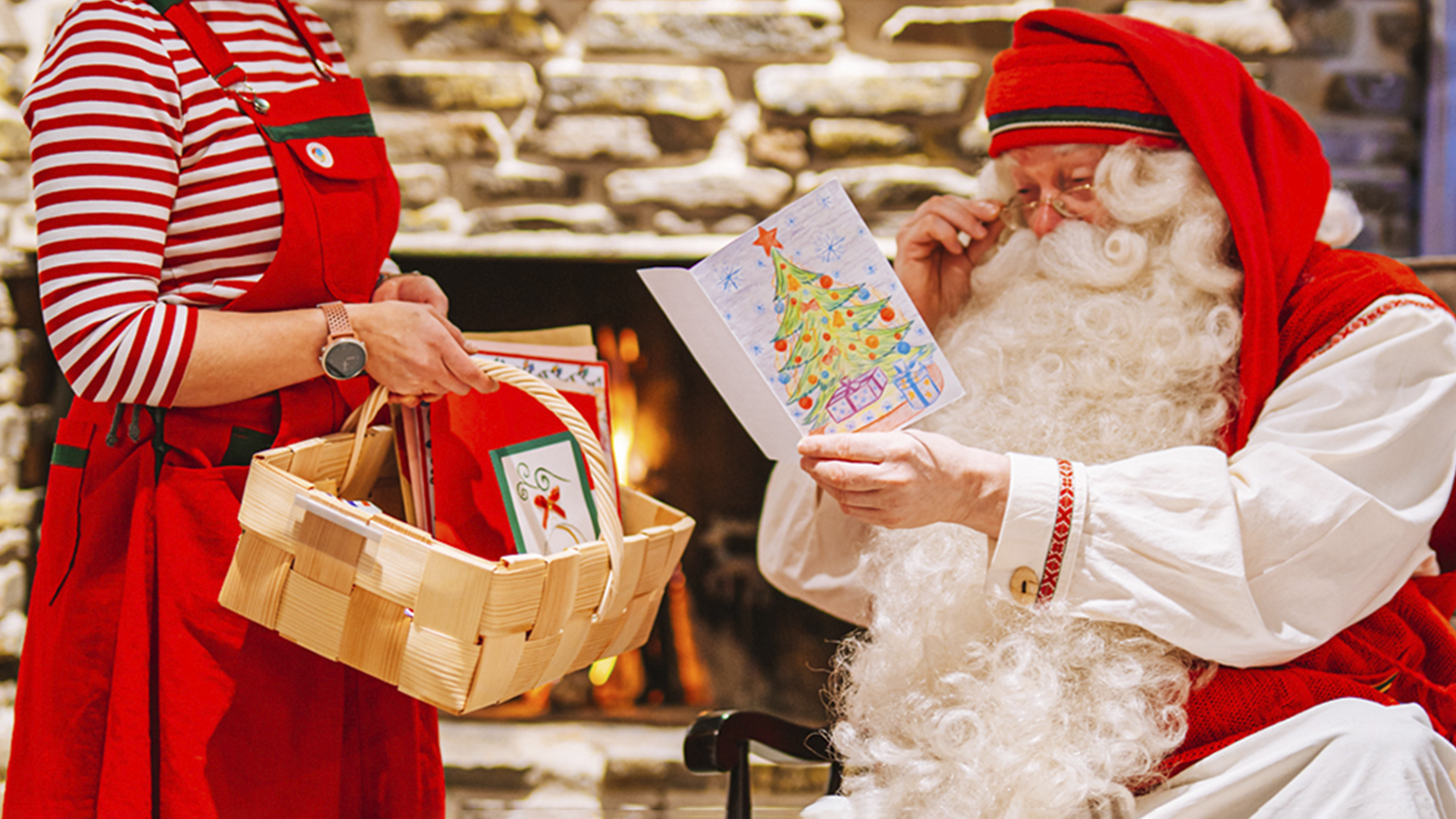
Do the opposite of what most day-trippers do and buy your Finnish tat here rather than in Rovaniemi city. The same reindeer keyrings and Santa mugs typically run 30 to 40 percent cheaper in the Village shops than in the city centre, because the operators here compete directly with each other.
- Buy here: Reindeer keyrings, Santa mugs and anything heavy or breakable — prices are lower and you can pack it immediately.
- Buy in town: Anything design-led, Marimekko-adjacent or genuinely Finnish. The Village skews hard toward novelty.
- The move: Price one item in the Village, note it, then check a city shop. The gap is consistent enough to plan around.
The Elf Workshop and the Ice Bar
The elf workshop runs 15 to 20 EUR per head for about 30 minutes of crafting — a children’s activity priced for adults with time to kill, and the weakest value in the Village. Skip it unless you’re travelling with kids who need a warm, quiet half hour.
The Arctic Ice Bar is the same judgment. On its own, you’re paying premium drink prices to sit in a freezer; only take it when it’s bundled into a tour or a Snowman-style package where the marginal cost is small.
A Free Stop With More Substance: Arktikum
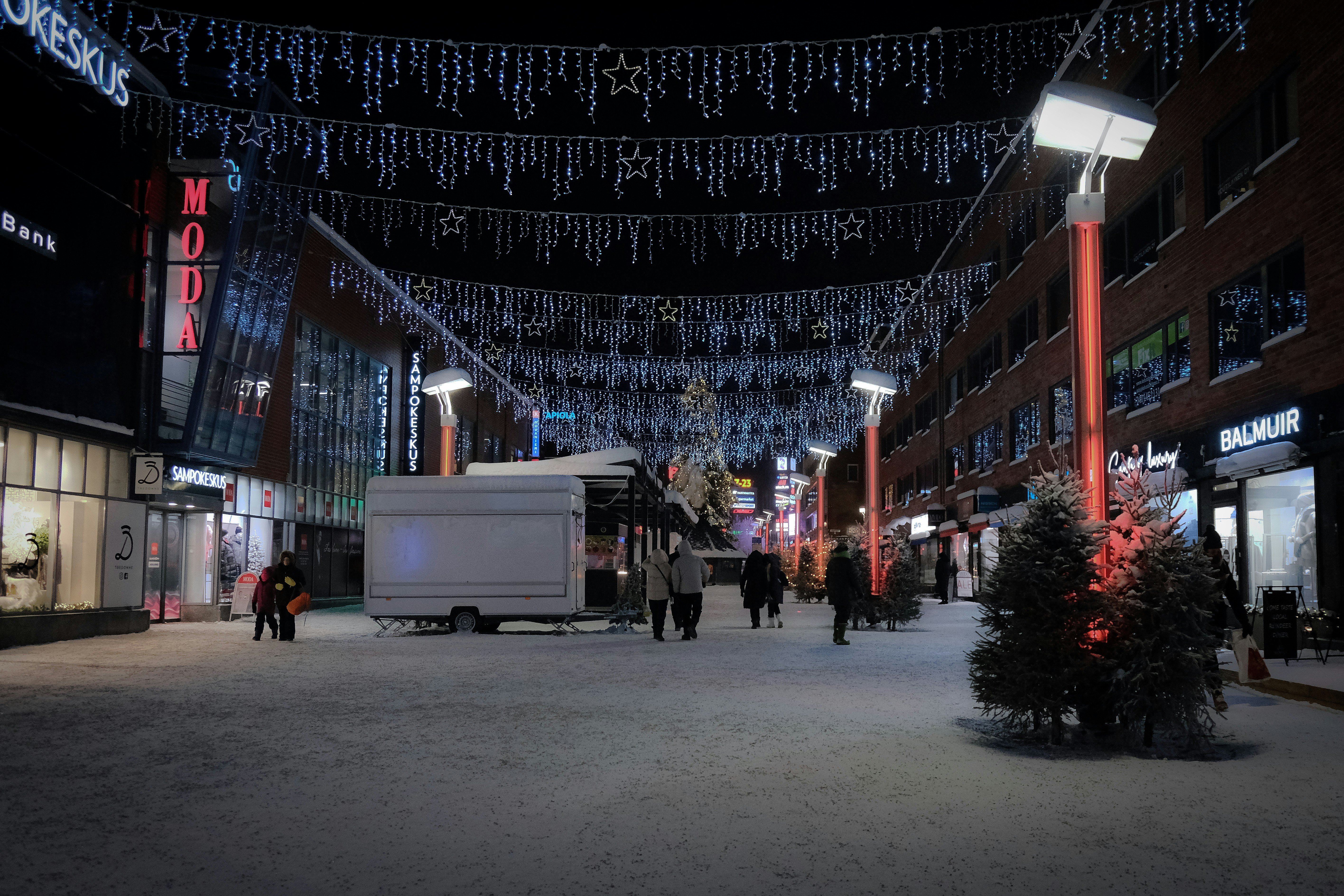
The riverside park beside Arktikum is free to walk and, in my view, beats anything the Village sells in the culture department. The museum itself covers Sámi culture, Arctic nature and Finnish history in real depth, and the park runs right along the river — a genuinely quiet stretch that lands well after the Village crowds.
Give the Village the morning, then come here. The contrast does more for understanding Lapland than another hour of gift shops ever will.
Meeting Santa: Worth It Without Children?
The Santa Claus Office photographs every meeting before you see a single price tag — entry costs nothing, the Office’s own team shoots the encounter, and the sale happens afterward at the exit. That sequence is the entire reason to know the numbers before you walk in.
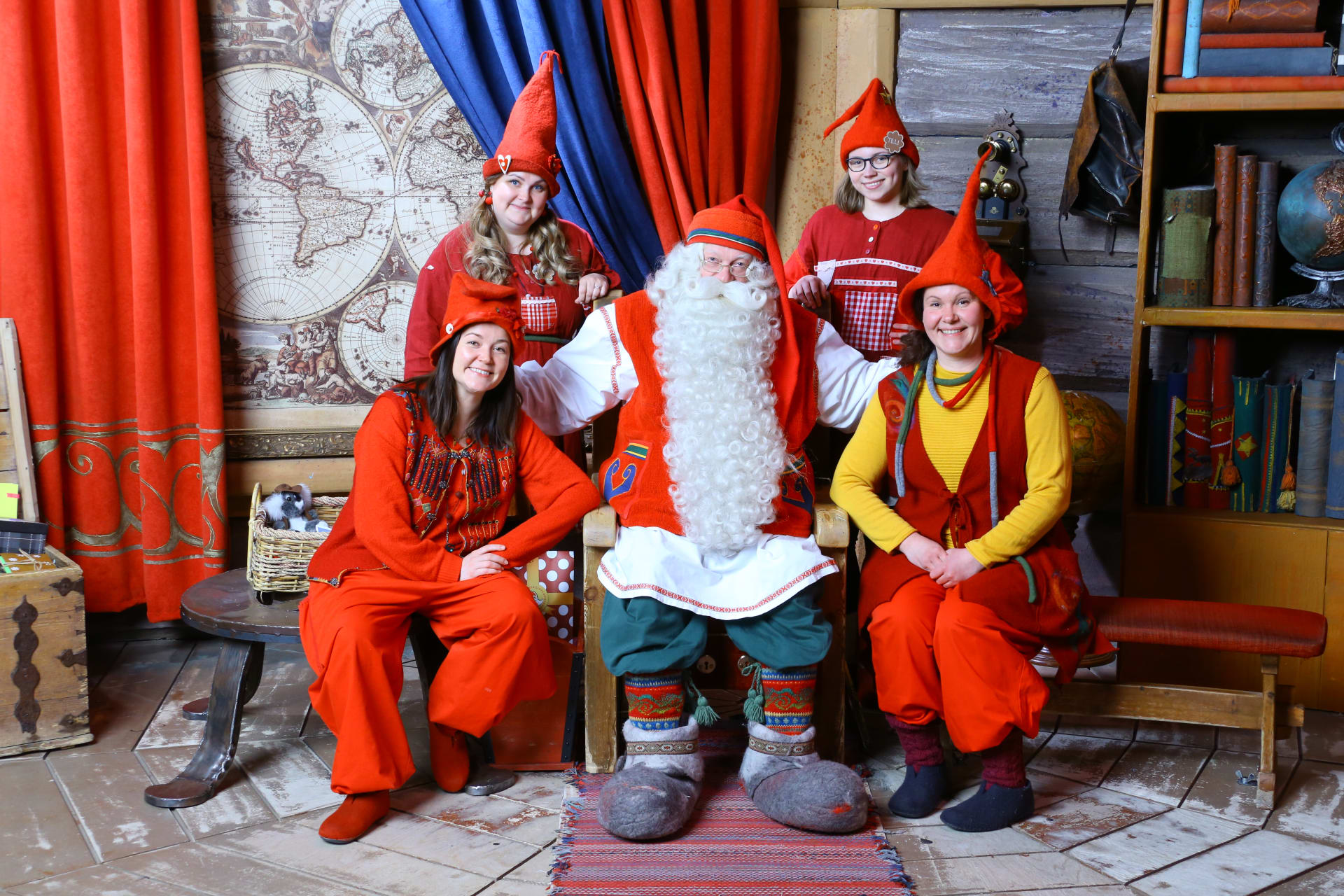
What the Free Visit Gives You
You pay nothing to enter the Santa Claus Office and nothing to sit down with Santa. The conversation and the moment are free; only the images have a price, and declining them is completely normal — nobody will chase you.
Winter hours: expect 10:00 to 18:00 through the season, stretching to 8:00 to 20:00 from November 30 to January 3. My move for adults is to use the extended 8:00 opening in that window — those early hours are when the Office is genuinely unhurried, and an unhurried Santa is the whole difference between a real conversation and a conveyor belt.
What the Official Photos Cost
Prices are per group rather than per person, which changes the math the moment you travel with anyone at all.
| Official product | Price |
|---|---|
| Photo and video package, up to five people | 55 EUR |
| Each additional person | 5 EUR |
| Single extra photo file | 25 EUR |
| One A4 print | 40 EUR |
| Five small prints | 50 EUR |
My verdict on the pricing: buy the 55 EUR package if you want anything at all — it is the only sensible entry point. A lone extra file at 25 EUR is the worst value on the board, and the prints are pure impulse: 40 EUR for one A4 sheet, or 50 EUR for five small ones, buys a lot more elsewhere.
These rates were checked in September 2026; confirm the current board before your visit, since the Office adjusts pricing seasonally.
When to Go and How Long to Give It
Between 11:00 and 15:00 the parking lots fill with tour buses and the whole village moves at the speed of the slowest queue — so the single best decision you make here is the hour you arrive, not the month.
Christmas Week Versus January and February
December 20 to January 6 is the peak of magic, price and crowds at once. You get the fullest Christmas atmosphere Lapland can offer, and you pay for it in top-tier rates and the longest waits of the season.
I book people into that window only when the Christmas date itself is the reason for the trip.
- Christmas week (Dec 20–Jan 6): Maximum atmosphere, maximum cost, maximum queues. Reserve everything months ahead.
- January and February: The adult sweet spot. Prices typically run 20 to 40 percent lower than Christmas week while the snow base is deep and every winter activity is running.
- Mid-February daylight: Roughly seven and a half hours — enough for a full outdoor day without feeling like you raced the sun.
My call: January and February win decisively for adults. The village looks nearly identical under snow, and you spend noticeably less for a calmer, more usable visit.
The Shoulder Months and Summer
March softens everything: expect temperatures of roughly -5°C to -15°C, longer days and spring snow rather than deep-winter powder. It is the most comfortable month to be outdoors here, and the queues thin out further — but the trading-card Christmas feel is at its weakest.
Summer is a genuinely different product. The midnight sun programme runs through the bright season and Santa still meets visitors, so the village stays open and relevant even without snow.
Only choose it if you are already in Lapland for the midnight sun; do not build a trip around the village in summer and expect the postcard version.
A Half-Day Sequence That Beats the Tour Buses
Give the village a half day and structure it around the bus window of 11:00 to 15:00. Before 10:00 or after 16:00 are the two windows where the place belongs to you.
- Before 10:00 — the empty square: Walk the central square and the Arctic Circle line while it is quiet. This is the only time the village photographs well without people in every frame.
- Early late-morning — queue-prone first: Do whatever requires a wait before the buses land, not after.
- 11:00–15:00 — the crush: Use this block for anything indoors or pre-booked, or duck into the shops and cafés while the queues do their worst outside.
- After 16:00 — second quiet window: The last buses pull out mid-afternoon, and the square empties fast. This is my favorite hour here for outdoor activities and low, golden light.
Sequence built this way, the village costs you half a day and delivers everything it has. Assemble the rest of your trip around the landscape, not the souvenirs.
Book It Yourself or Buy a Package
One bundled four-hour tour with hotel pickup runs about 200 EUR per person — near 800 EUR for a group of four. Book the same pieces yourself and you land at roughly 320 to 385 EUR plus bus fares.
That 400-ish EUR gap is the whole argument, and for adults traveling together, direct booking wins in almost every case.
When a Package Earns Its Price
- One reservation, zero logistics: Pay the premium if you want a single confirmation and door-to-door transport with no winter driving, no timetables and no cash juggling on the day.
- First-timers in deep winter: Short daylight and cold make a guided, timed itinerary genuinely easier than stitching activities together yourself.
- Christmas week arrivals: When slots vanish, a tour holding your places beats hunting for availability on the ground.
Even then, I’d negotiate the itinerary rather than accept it. A package is only worth 200 EUR per person if it delivers activities you could not have booked alone.
When Booking Direct Wins
For a group of four sharing transport, direct booking keeps several hundred euros in your pocket — money better spent on the paid priority ride at the reindeer operator, which lets you skip the paddock queue entirely. That upgrade is not sold inside most tour bundles, and it solves the single biggest time drain of a winter visit.
- Christmas week (around December 20 to January 6): Book roughly six months out — the tours and activity slots fill first.
- The rest of winter: One to two weeks ahead is usually plenty, so there is no reason to lock in a package months early at full price.
- Check your package holiday: If you booked a Lapland package, activities here are often already bundled in — confirm what you already own before paying twice.
Confirm current pricing with each operator before you commit; activity rates and bundle contents shift between seasons.
Are the Animals Well Treated?
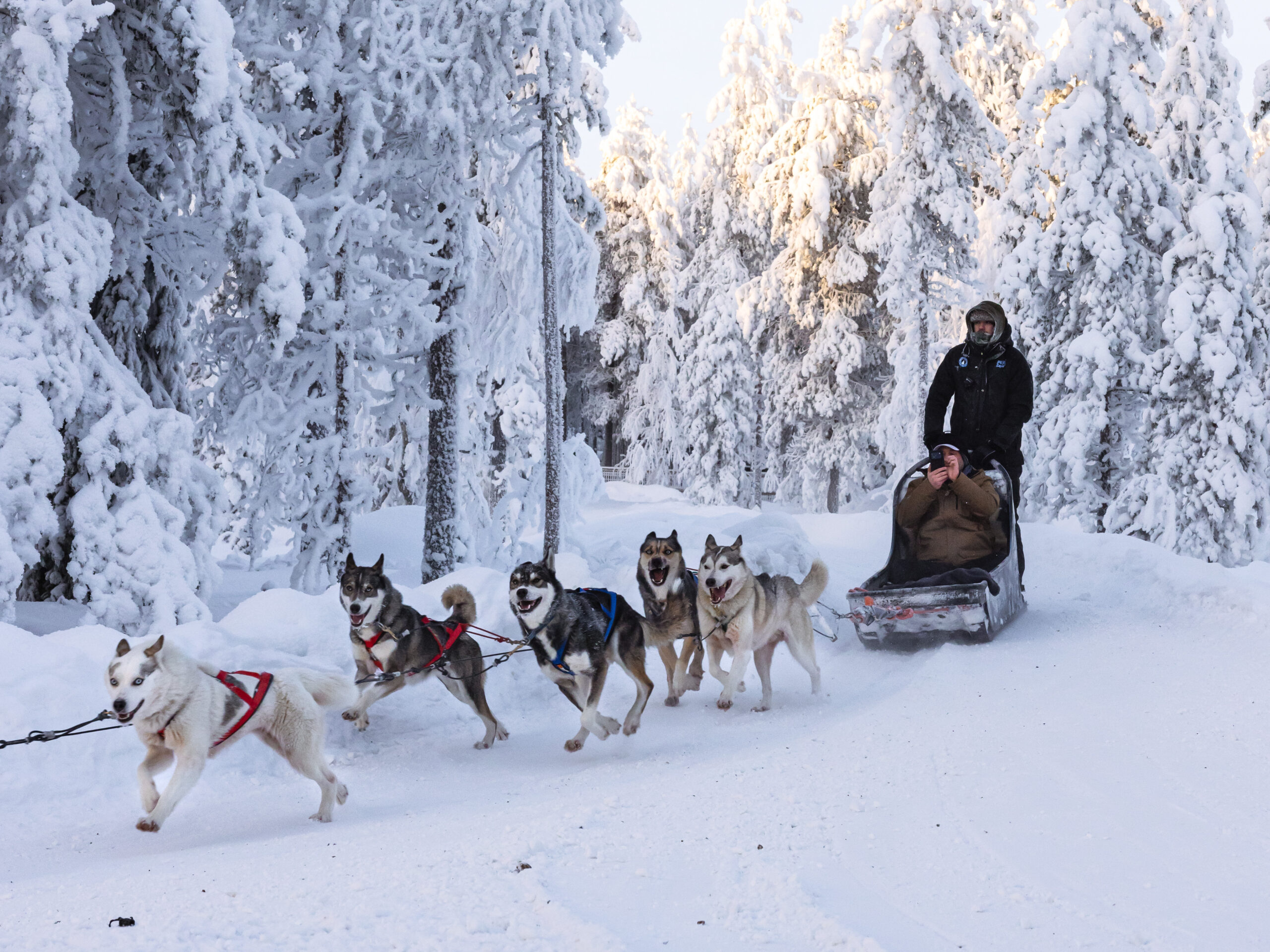
The three animal operators in and around the Village do not all offer the same proof. One publishes third-party sustainability certification, one ties its welfare rules to university research, and one describes its own husbandry in unusual detail.
That gap is the whole answer — and it is worth knowing before you hand over money at a booking desk.
What the Reindeer Operator Publishes
Santa Claus Reindeer holds the Sustainable Travel Finland label and Biosphere certification. In my judgment this is the strongest signal in the Village, because both are externally assessed schemes covering environmental and social practice rather than a company describing itself.
If reindeer matter more to you than speed, book here and skip the comparison shopping.
What the Husky Operators Publish
- Bearhill Husky: published welfare criteria, University of Lapland behaviour research informing its practices, and Project RePaw — a rehoming programme for retired sled dogs. The retirement pathway is what I would weigh hardest; a kennel with a rehoming plan is telling you the dogs have an end to their working life.
- Arctic Circle Husky Park: a herd of more than 130 Siberian huskies fed on raw food, with health checks, rest days and a stated retirement plan. Transparency about herd size, diet and veterinary care is rare at this price point.
Both clear the bar. Pick Bearhill if long-term dog welfare is your deciding factor; pick the Husky Park if visible daily husbandry — feeding, health checks, herd management — is what reassures you.
What None of Them Publishes
None of them publishes a set rest-day schedule, so you cannot verify rotation from a website. Ask at the desk which teams ran the previous day and how rest days are assigned before you pay.
If staff answer clearly and confidently, that is the clearest welfare signal you will get — and it costs nothing. My rule: do not book the operator that brushes the question aside.
Santa Claus Village vs SantaPark: Which One Do Adults Need?
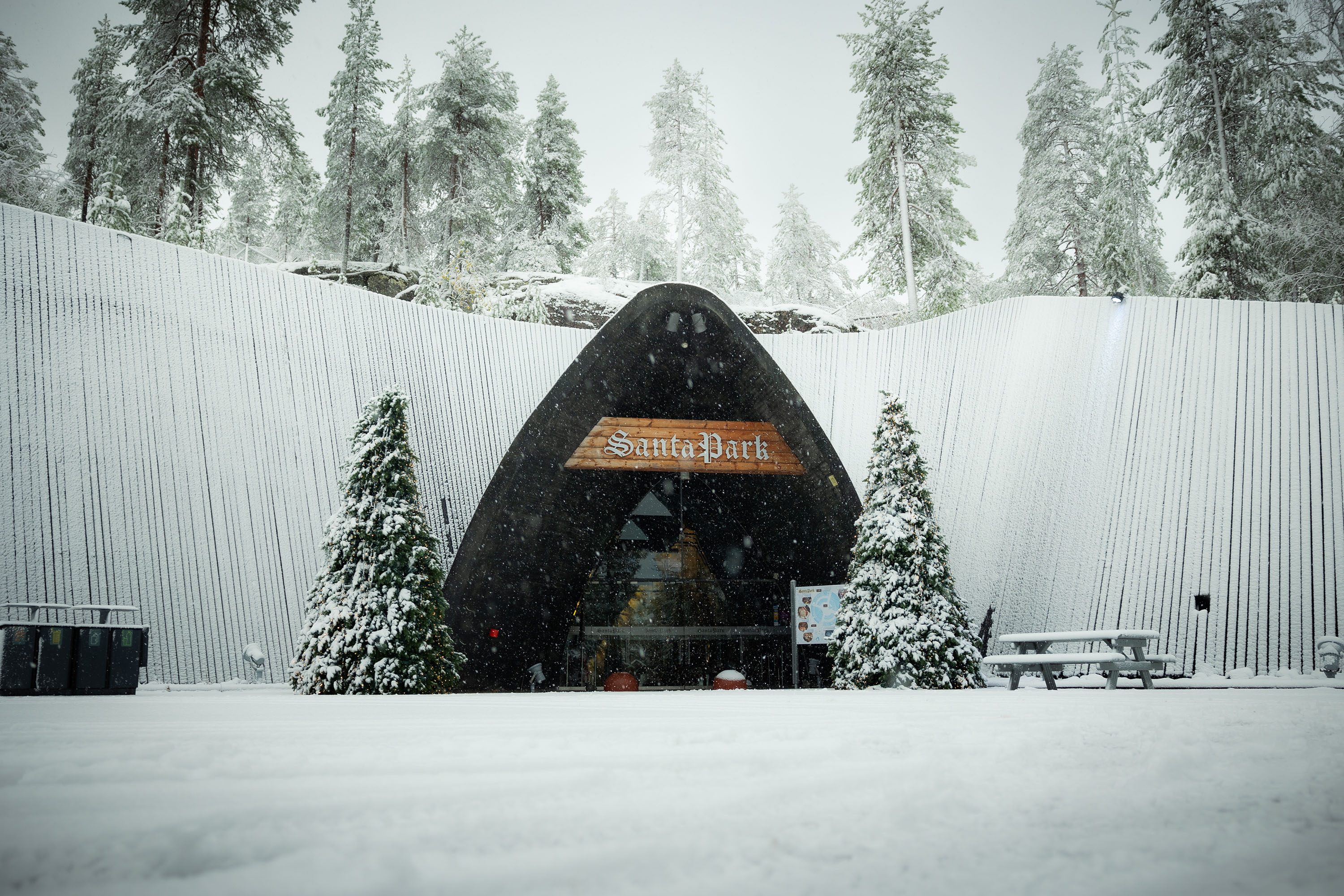
SantaPark is not a corner of the Village — it is a separate, ticketed Christmas attraction built inside a cavern a few kilometres away, and it only operates in winter. Booking one does not get you into the other, and confusing them is the easiest way to blow an afternoon.
How the Two Places Differ
The Village is an open cluster of businesses you wander through at no cost, paying per activity. SantaPark is the opposite: one gate, one dated ticket, everything bundled.
- Price structure: SantaPark charges from 42 EUR per adult, 37 EUR for ages 3 to 12, and nothing for under 3s. The Village charges nothing to walk in.
- What the ticket covers: Elf School with a diploma, the Magic Train, cookie decorating and the Elf Show are all included at SantaPark — no per-ride decisions once you are inside.
- Season: SantaPark’s current season runs October 31, 2026 to January 23, 2027. Outside that window it does not exist; confirm dates with the operator before you build a trip around it.
- Setting: the cavern is weatherproof and self-contained, which matters on the windiest midwinter days.
Which One Fits an Adult Group
For adults, I pick the Village almost every time, and SantaPark only under specific conditions. Its bundle is built around children’s programming — Elf School, cookie decorating, a stage show — and paying 42 EUR to watch that as a childless adult is a poor trade against free entry and à la carte choice.
Book SantaPark if: your group wants one fixed price with zero decision-making, or a storm front makes outdoor walking miserable. Budget a half day there.
Skip SantaPark if: you are travelling without children and would rather spend that 42 EUR on a salmon lunch or a sleigh ride in the open air.
What to Pair With It the Same Day
The most satisfying Lapland day runs backwards from how most tours build it: the built-up Village in the morning, the empty frozen landscape after lunch. Ice floating is the booking that anchors the afternoon; the SnowHotel is what you do once the light drops.
Do not stack the Village all day — by mid-afternoon the queueing at the Arctic Circle markers is all you will remember.
Ice Floating on a Frozen Lake
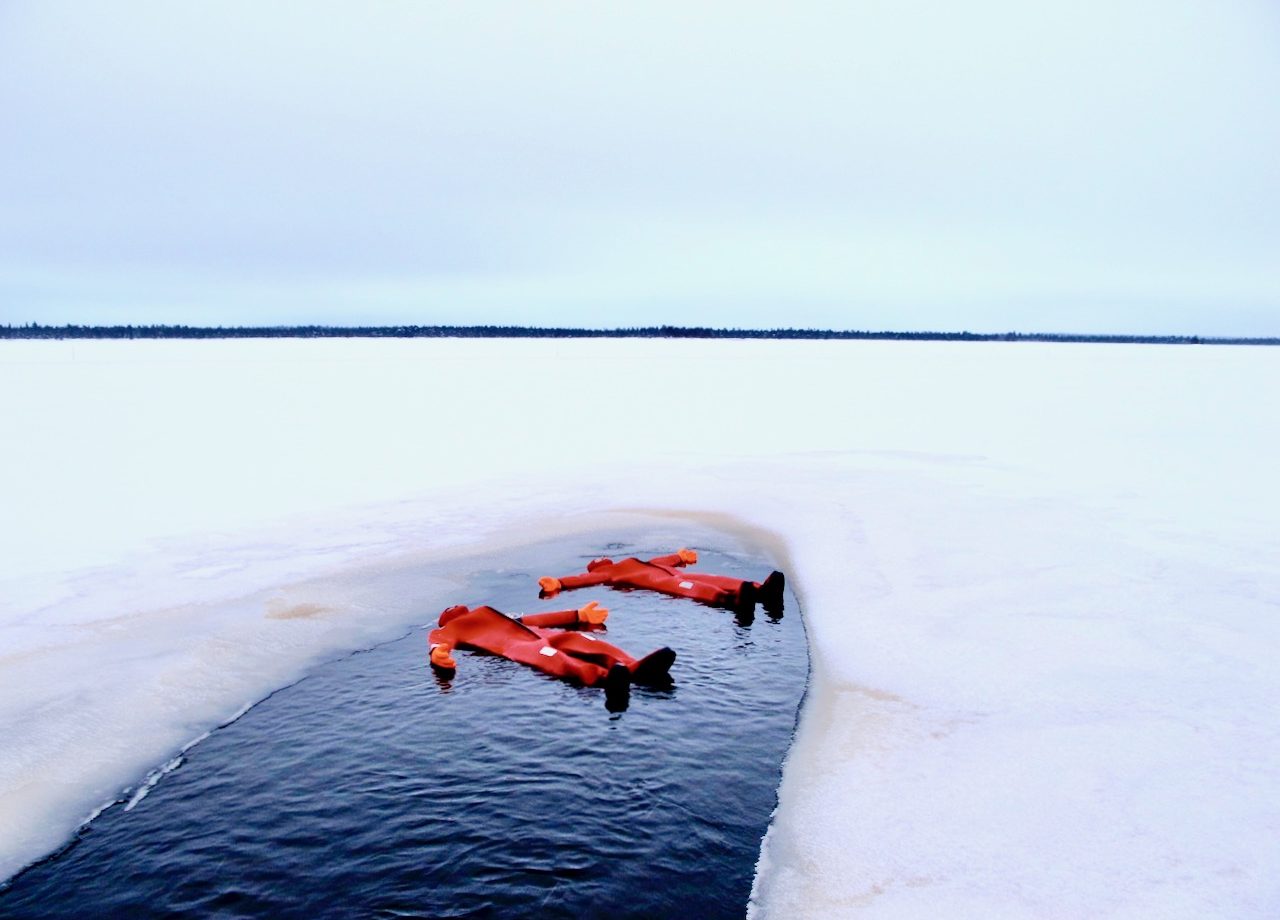
Zip into a thick waterproof survival suit and float on your back in open water among broken pans of ice. The suit keeps you dry and afloat, so no swimming is involved, and it held up fine on a −23°C February afternoon.
For an adult who finds the Village touristy, this is the reason to come to Rovaniemi at all.
- My pick: Nordic Adventures runs it as a small-group daytime outing outside Rovaniemi, which beats a large coach format for a cold-water experience where you want the guide’s attention.
- Book this first: it is the one item worth locking in before you arrive, then fit everything else around its departure time.
- Slot it after lunch: that puts you on the ice in the low blue afternoon light and leaves the morning free for the Village before the tour buses thicken.
The Arctic SnowHotel at Dusk
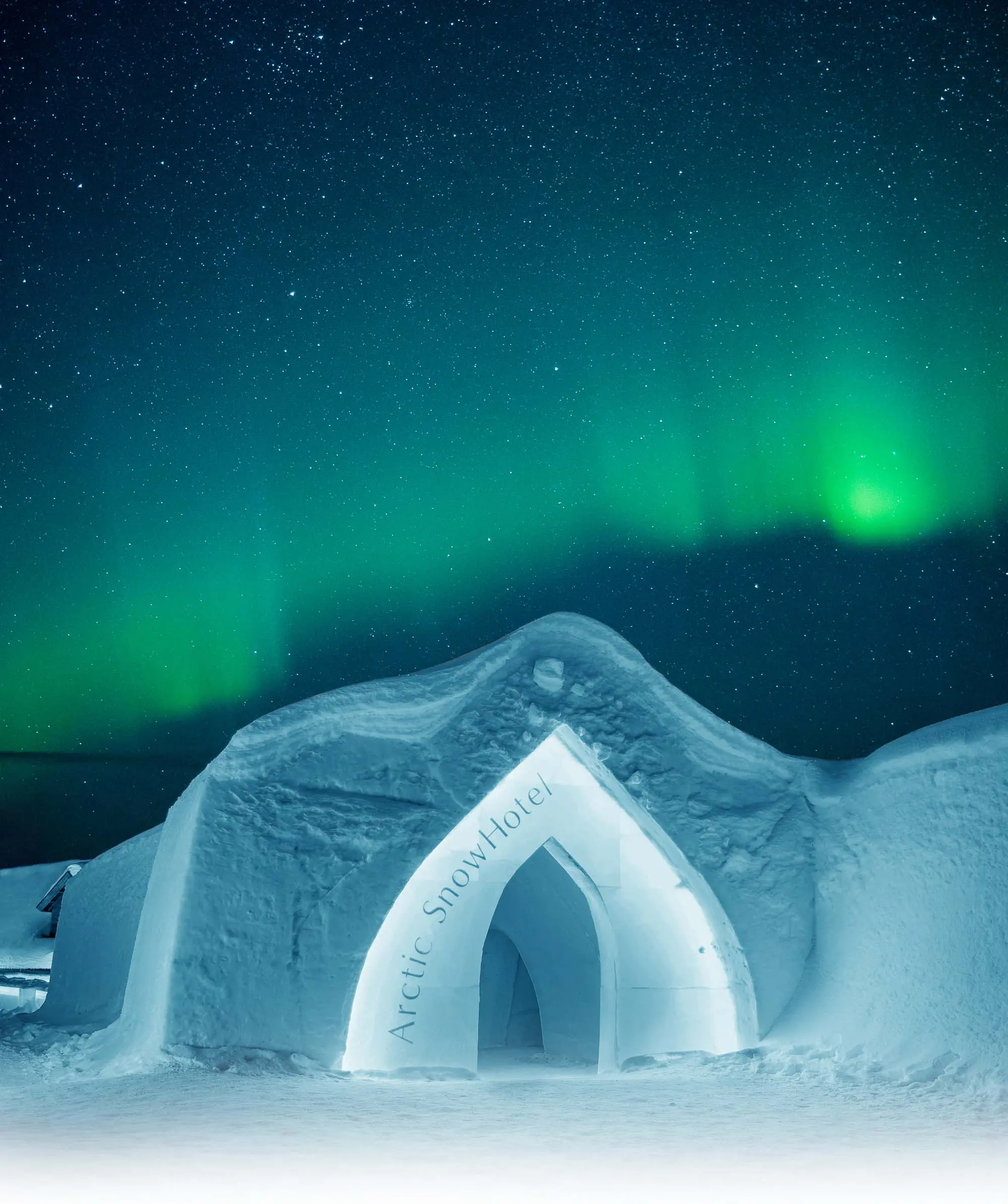
The Arctic SnowHotel is rebuilt from snow and ice each winter, so the structure you walk through is a single-season artifact — that alone makes it worth the detour after ice floating. Go at dusk and add the snow tubing; sliding down a lit slope in the last grey-blue light is a far better use of that hour than queuing back at the Village.
My advice: treat the SnowHotel as the closer, not a midday stop. Its appeal is architecture and atmosphere, both of which need darkness. Keep mornings for the built-up stuff and afternoons for the cold, quiet, genuinely Arctic experiences.
Stay in the City, Not Inside the Village
A Christmas night in the Village’s glass igloos and log cabins runs 400 to 900 EUR. Central Rovaniemi runs 120 to 250 EUR for the same night, and the city sits ten minutes away by taxi.
The On-Site Options
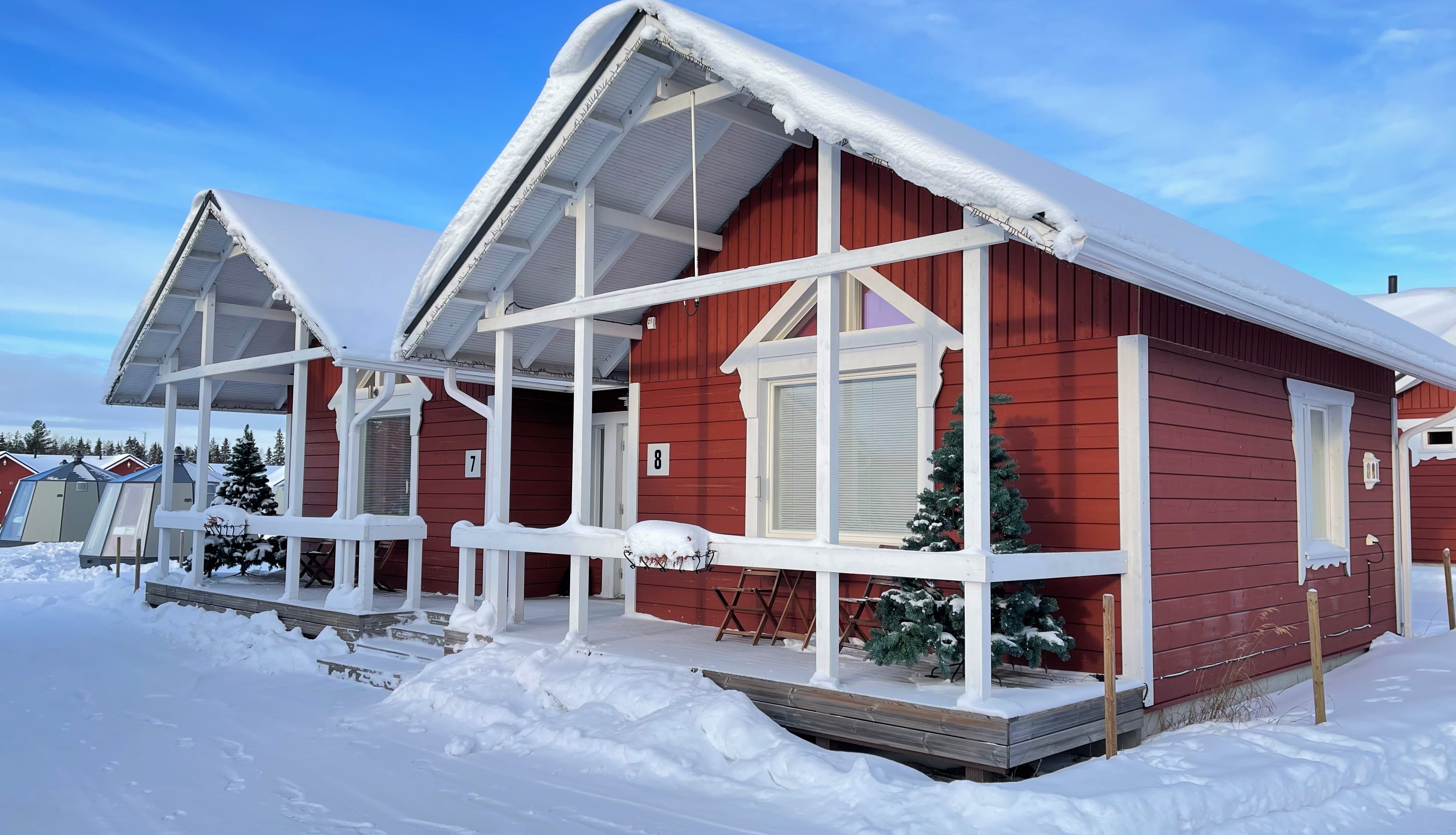
The on-site properties are not interchangeable, and only one of them earns the premium outside the Christmas window.
- Santa’s Igloos Arctic Circle: The serious one, with its own reception and restaurant, so you never suit up again just to eat. The glass roof is the entire reason to pay up — book it in deep winter, when the northern lights window is real, not in the shoulder months.
- Santa Claus Holiday Village: Red cabins and suite apartments sitting directly on the Village square. Choose it for proximity alone; the cabin itself is not the attraction, so don’t pay December rates for it in February.
- Apukka Resort: My pick as the February base. Best of the three for adults who want resort atmosphere over Village-square convenience.
Why the City Usually Wins for Adults
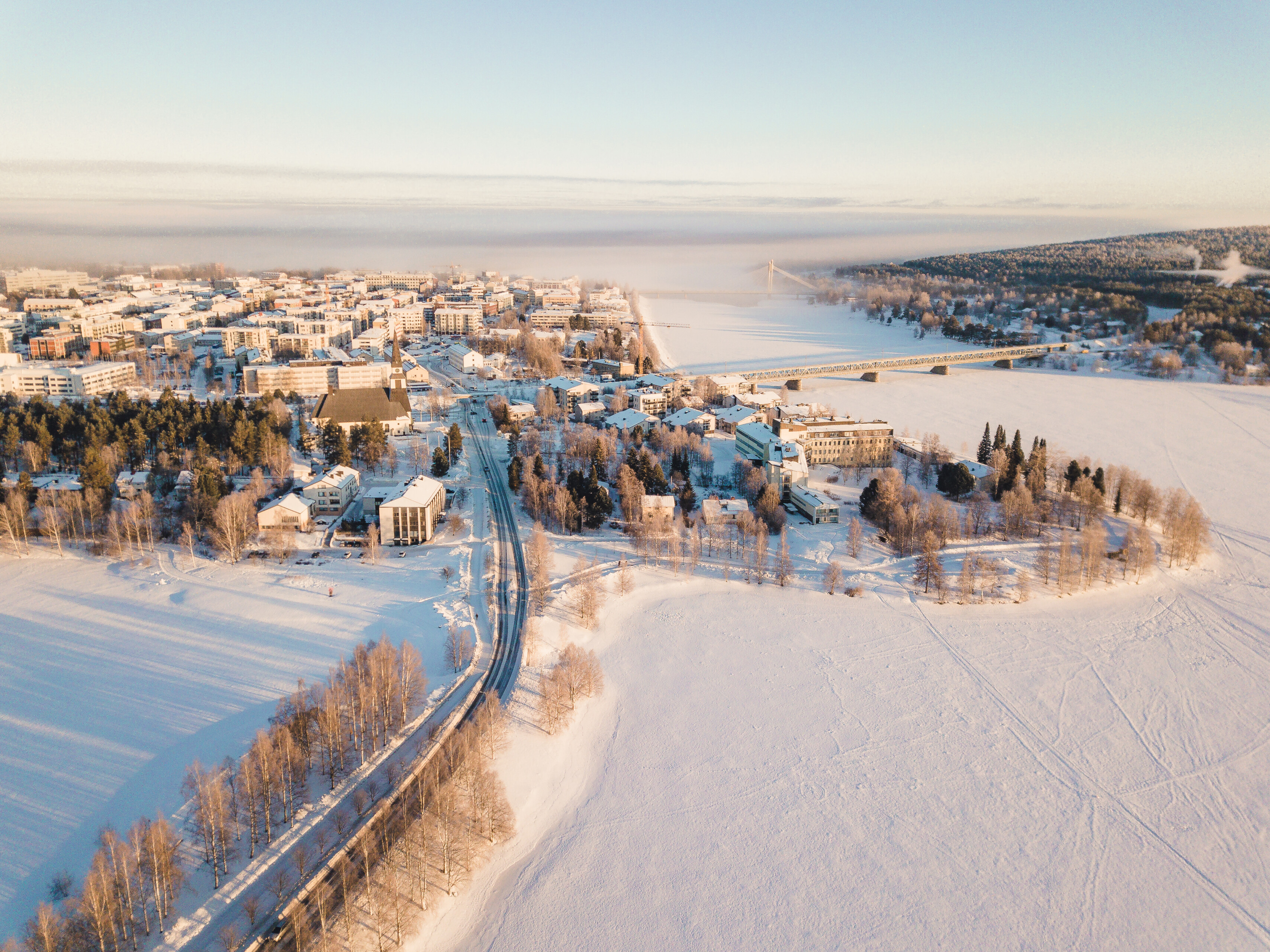
The on-site premium buys location, and that location is worth one short visit, not several nights.
- Time cost is trivial: Ten minutes by taxi each way means you can arrive before the tour buses and leave whenever you like, and still sleep in a city with a full spread of restaurants and bars.
- One base, one check-in: Stay in town and the Village slots into a day that also covers the landscape outings, with no luggage shuffle.
- The insider move: Book a glass igloo for exactly one midweek night and spend the rest of the trip in the city. You get the roof over your head without paying 400 EUR or more for a week of it.
Getting There and the Practical Details
The Village sits about 8 km north of Rovaniemi, close enough that the whole transfer question takes five minutes to answer — and close enough to the airport that it works as a first or last stop on a Lapland trip.
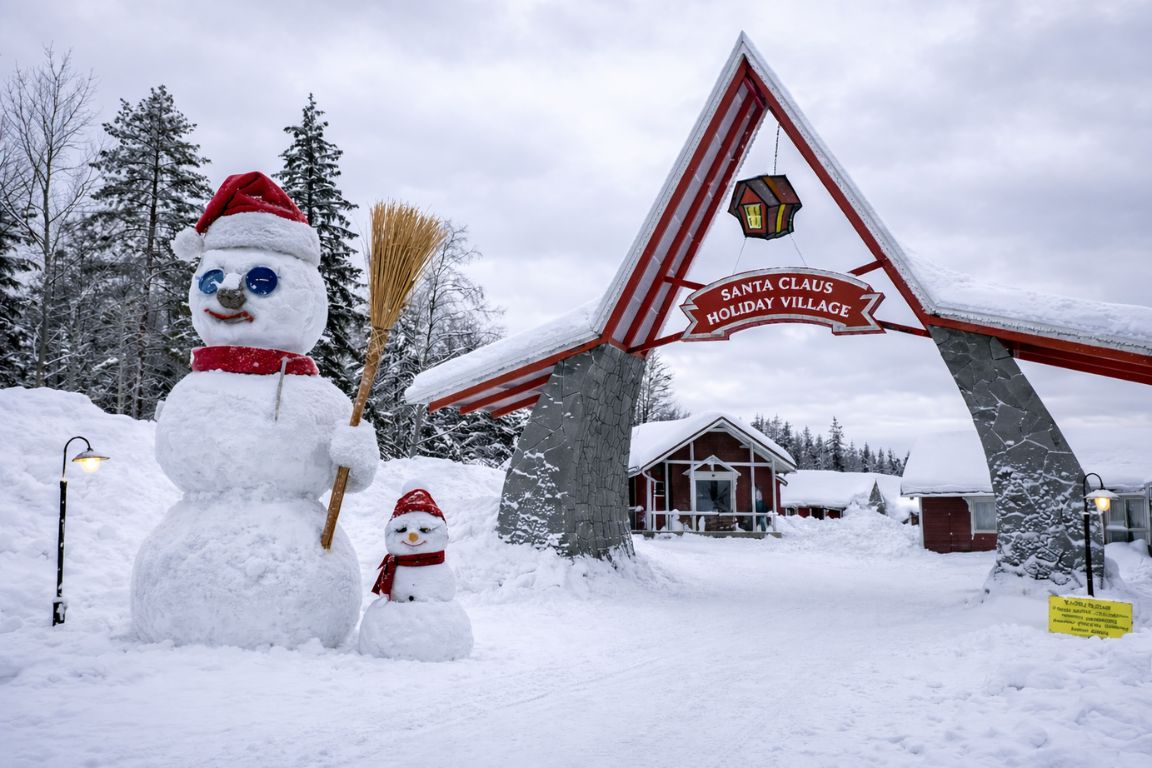
From the City and the Airport
Bus 8 is the cheap answer. It runs year-round between the Rovaniemi city centre and the Village for a few euros, though departures are limited — check current timetables with Visit Rovaniemi before you commit to it.
A taxi is the answer I’d give most adults. Expect roughly 15 to 20 EUR each way and a drive of about 10 minutes, though fares vary by provider and time of day. For two people splitting the fare, it beats waiting in the cold for the bus.
Driving is simple. Park only in the designated lots — roadside stopping is enforced, and you will want a guaranteed slot in the dark at 15:00 in December. From Rovaniemi Airport the Village is roughly five minutes away by car, so travellers with a rental can drop bags at the hotel and go straight there.
- Insider move: Santa Claus Holiday Village’s reception is open around the clock and stores bags at 5 EUR per piece per day, according to Visit Rovaniemi. That makes the Village genuinely useful on an airport-adjacent layover — leave the luggage, walk the Village, collect it before your flight.
What to Bring and What to Rent
Rent winter clothing at the Village rather than hauling it from home — but check the specs before you sign.
- Boots: insist on a rating to -30°C. Fashion boots fail on packed snow within an hour.
- Mittens, not gloves: shared-finger warmth beats dexterity you will not need.
- Portable charger: cold drains phone batteries fast, and a dead phone means no photos and no bus timetable.
Frequently Asked Questions
Can I see the northern lights from Santa Claus Village?
The Village itself is a daytime, floodlit square, and the article’s lights strategy is accommodation rather than a viewing spot. Book one midweek night at Santa’s Igloos Arctic Circle in deep winter, when the glass roof earns its price, and keep the rest of your trip based in the city.
Is Santa Claus Village worth it for teenagers?
Yes, if you hand them a choice of one active ride instead of the festive shopping circuit. A short snowmobile run from about 70 EUR per machine or the husky loop beats the elf workshop, which is a small-child activity priced for adults.
Do I need to speak Finnish or join a guided tour to get around?
No. The village is flat, small and well signposted, and you pay for activities individually at booking desks rather than through a gate or a guide.
What if I only have a few hours before a flight?
The Village sits about five minutes from Rovaniemi Airport by car, so it works cleanly as a first or last stop. Santa Claus Holiday Village’s reception stores bags around the clock at about 5 EUR per piece per day.
Go In, Cross the Line, Walk Out Happy
Book the ice floating with Nordic Adventures first and let its departure time set your day. Then put the Village in the morning slot, hit Roosevelt Cottage and the Arctic Circle line before 10:00, and be at Santa’s Salmon Place as the tour buses start to fill the square.
That brass line in the snow is the one thing on this trip you genuinely cannot walk over anywhere else on earth.
Decide your dates now — January or February, not Christmas week — and lock those two bookings before the rest of your Lapland days fill up.
Leave a Reply