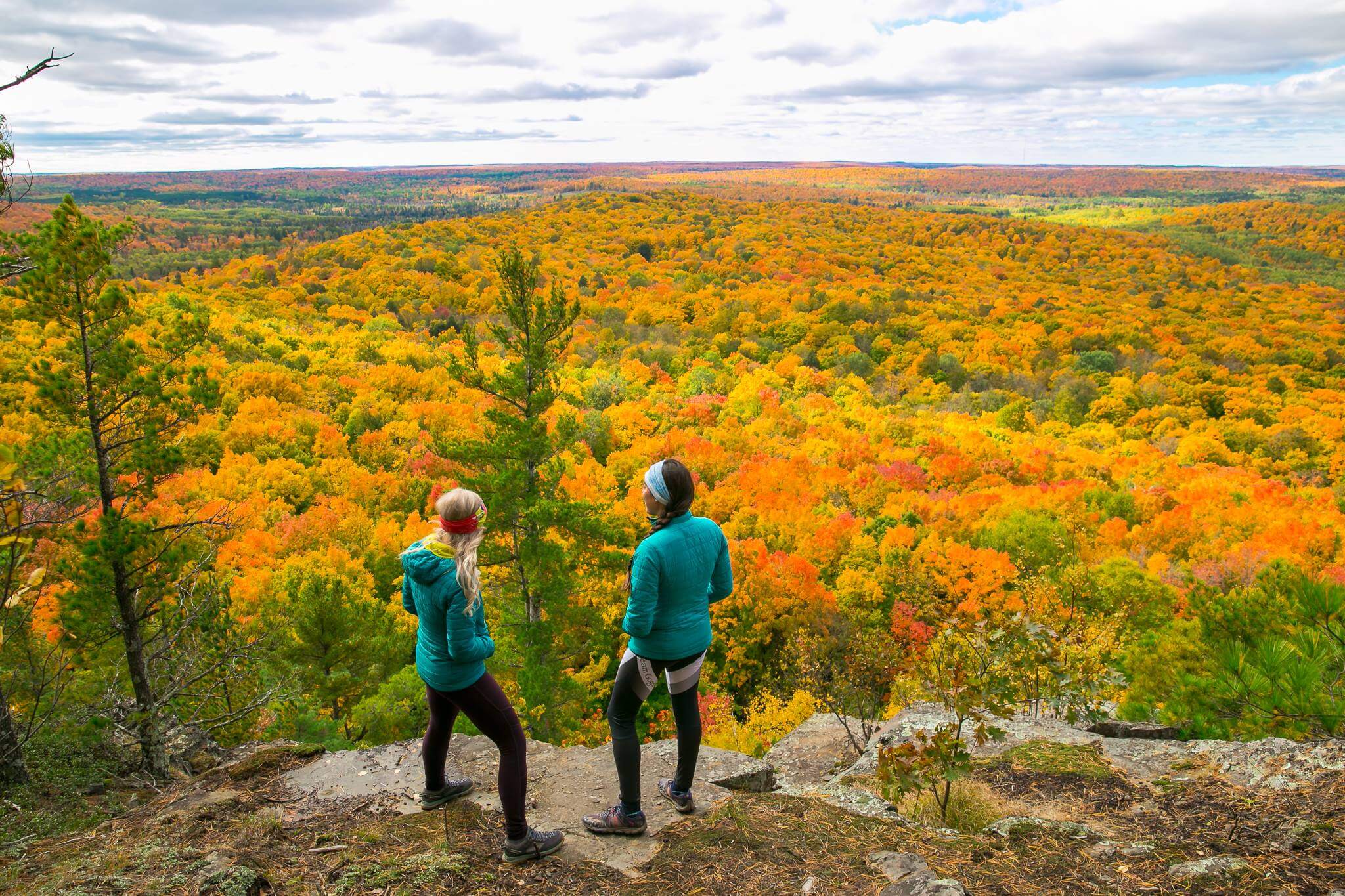
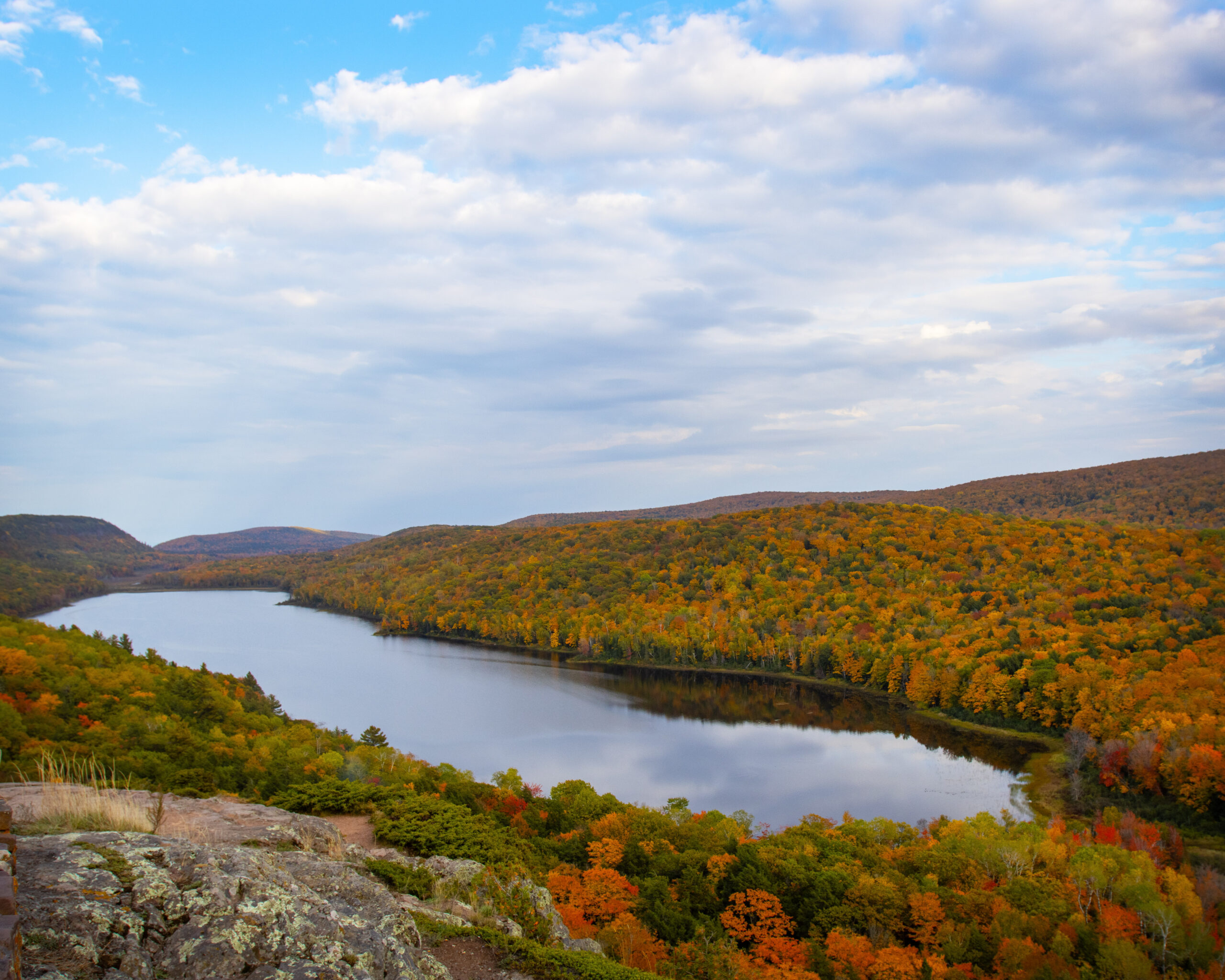
The fog lifts off Lake of the Clouds in layers, revealing a valley painted in impossible shades of amber, rust, and gold that stretch toward a distant ridgeline. Somewhere east, a 200-foot-wide waterfall churns root-beer-brown through a cathedral of sugar maples burning at full blaze.
What makes the Upper Peninsula unlike anywhere else in America for fall color is the collision of old-growth hardwood forest with Great Lakes coastline — no other destination stacks waterfalls, cliff overlooks, and canopy tunnels into a single road trip across this kind of distance.
This guide nails down exactly when to go, where to base yourself, and which drives and hikes deserve your limited daylight hours so you catch peak color instead of brown leftovers.
Budget motels in Ironwood or Ontonagon run roughly $80–$130 per night, mid-range stays in Marquette or Munising land around $100–$175, and waterfront cabins or lodges near Copper Harbor or Tahquamenon Falls push $200–$300 during peak weekends.
Your Quick-Reference Fall Foliage Cheat Sheet
- Best week to target: The first week of October catches the central UP at peak while color still holds west and east — book flexible dates around this window.
- Don’t-miss scenic drive: Brockway Mountain Drive in the Keweenaw Peninsula delivers the single most dramatic fall overlook in the state, with Lake Superior on both sides and unbroken forest between.
- Top quick hike: Sugarloaf Mountain near Marquette — under a mile round trip with a rock scramble to a 360-degree summit panorama.
- Best waterfall-and-foliage combo: Chapel Falls loop at Pictured Rocks pairs a 60-foot cascade with dense maple canopy and zero crowds on the backcountry stretch.
- Best for total solitude: Mount Baldy via the Nicole Bloom Memorial Trail — roughly 7 miles of quiet Keweenaw backcountry with near-solitude even on peak weekends.
- Smartest lodging strategy: Move west to east following the color wave, using Ironwood, Houghton, Marquette, and Munising as sequential hubs across four days.
When Is the Best Time to See Upper Peninsula Fall Foliage?
Forget vague “autumn weekends”—the Upper Peninsula’s explosive color window is shockingly short, and nailing the timing is the difference between a legendary trip and seeing mostly brown leaves. USA Today named this the #1 fall foliage destination in the country, but its peak is a fast-moving target that changes with elevation and proximity to the Great Lakes.
Peak Timing by Region and Lakeshore Effects
The UP’s color change starts in the northwestern highlands and rolls southeast. Think of it as a wave you need to catch.
| Region & Timing | Best Bet For | Lodging Base Strategy |
|---|---|---|
| Western UP (Porcupine Mountains, Ironwood) Last week of September |
Earliest peak; old-growth forests and mountain vistas. | Base in Ironwood or Ontonagon for quick access to the “Porkies.” |
| Central UP (Marquette, Keweenaw Peninsula) First week of October |
Dramatic drives and summit views; color often peaks here at the perfect time. | Marquette is your all-purpose hub with the most amenities. |
| Eastern UP & Great Lakes Shores (Munising, Tahquamenon) Mid-October |
The “lakeshore effect”—the moderating temps of Lakes Superior and Michigan can push peak color back one to two weeks. | Munising puts you minutes from Pictured Rocks and waterfalls. St. Ignace is a strategic gateway. |
Tools and Reports for Accurate Predictions
Don’t guess. Use these two resources to monitor the change in real-time as you get closer to your trip.
- Fun in the UP Fall Color Report: This is your secret weapon. They publish detailed, on-the-ground reports with photos from all over the peninsula. Check it weekly starting mid-September.
- SmokyMountains.com Fall Foliage Prediction Map: Useful for seeing the general trend, but treat it as a broad guide, not gospel. Conditions change fast.
Insider Tip: The single best strategy is to book a flexible trip for the first week of October and adjust your driving route based on the latest Fun in the UP report. You can chase the peak from the western to the eastern UP over a few days.
Which Upper Peninsula Regions Offer the Earliest Peak Colors?
The Western UP’s higher elevations and unique microclimate kick off Michigan’s fall color show weeks before the rest of the state, making it the prime target for early-leaf seekers. Focus your trip here in mid-to-late September for the best chance at peak vibrancy.
Porcupine Mountains Wilderness State Park
Michigan’s largest state park is the undisputed star of the early color season. Its 60,000 acres of old-growth forest and dramatic, hilly terrain create a staggered display—you’ll find pockets of peak color here while lower elevations are still green.
Base yourself in or near Ironwood for easy, 30-minute access to the park.
- Best for: Hikers and photographers who want immersive, forest-level color plus panoramic lake views. This is a wilderness experience, not just a drive-by.
- Don’t miss: The escarpment views from Lake of the Clouds. Arrive at sunrise for fewer crowds and golden light hitting the color-splashed hills.
- Insider edge: The park’s elevation changes mean you can chase color uphill as the season progresses. Start with the Summit Peak observation tower for the highest vantage, then work your way down to the shoreline trails.
- Stay style: Choose a cabin or vacation rental in the Ironwood area for a true fall getaway base, with quick morning access to trailheads.
Western Upper Peninsula Near Ironwood
Ironwood isn’t just a gateway—it’s a charming basecamp in its own right, offering services and lodging with the color show right on its doorstep. The entire region, including the drive along the Black River National Scenic Byway, erupts in color early due to its dense maple and aspen forests.
- Best for: Road-trippers who want a scenic, waterfall-rich driving loop combined with accessible hikes. Ideal for families or those who prefer variety over backcountry trekking.
- Key route: The Black River National Scenic Byway (County Road 513) connects a series of waterfalls draped in fall color. It’s a full sensory experience, not just a drive.
- Planning note: The popular Copper Peak adventure flying hill is in this area. Confirm its operational status directly before visiting, as hours and access can vary.
- Stay style: Downtown Ironwood puts you within walking distance of local diners and shops, with the scenic drives branching out from there. Book accommodations early—this region’s early peak draws dedicated foliage hunters.
For accurate, real-time reports on whether the Western UP is peaking during your planned window, always check the state’s official fall color map (updated weekly) right before you go. Conditions change fast.
Best Scenic Drives for Fall Foliage Views
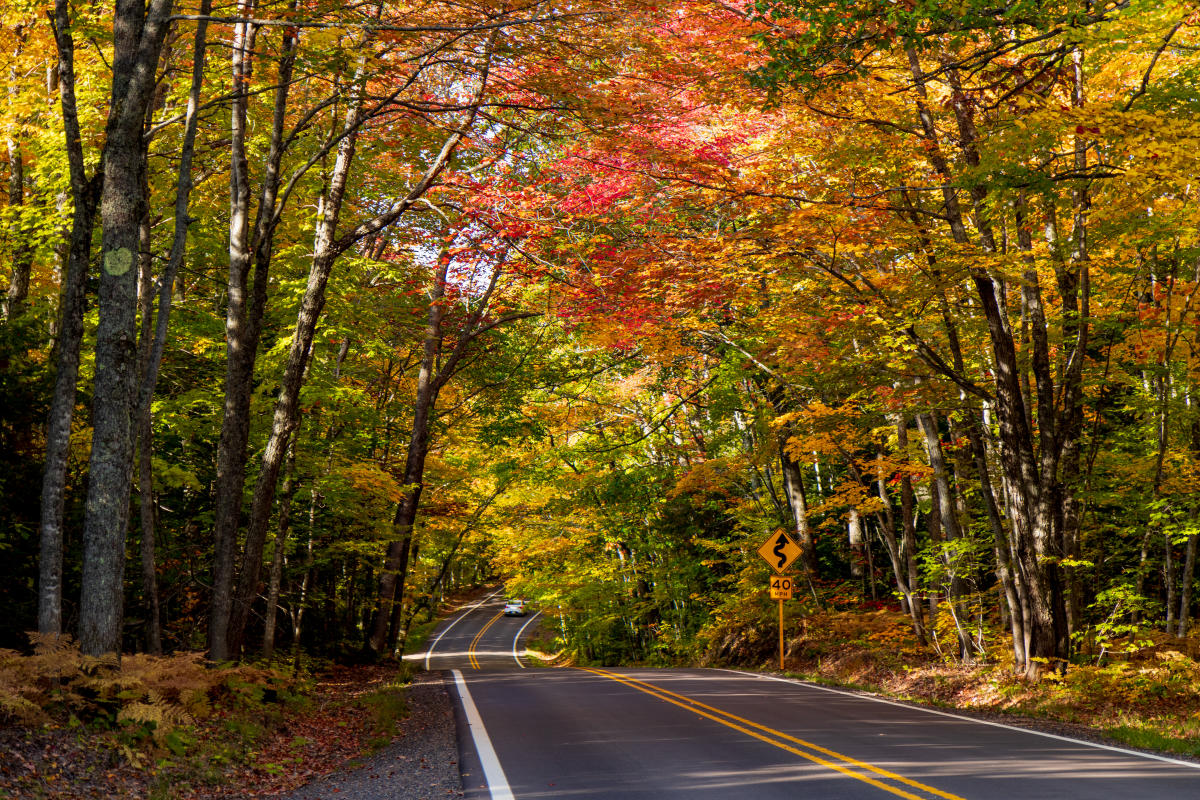
The Upper Peninsula rewards drivers more than hikers when it comes to fall color — the best foliage sits along roads where sugar maples and birch close overhead into glowing tunnels of gold and crimson. These three drives deliver that experience without requiring you to leave your car, though every one of them has at least one stop worth making on foot.
Covered Drive in the Keweenaw Peninsula
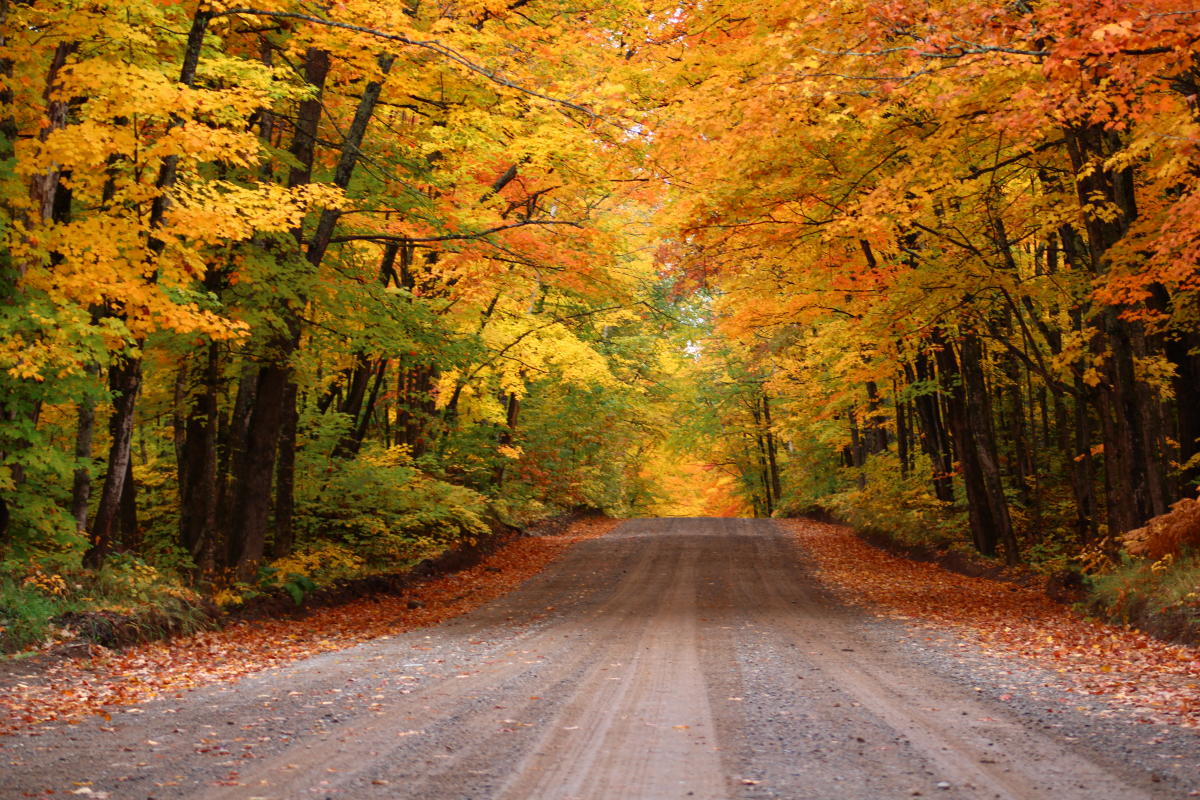
Labeled S-63 on Google Maps, this narrow backroad leads toward the small town of Redridge, and during peak season the trees arch so densely overhead that the road becomes a canopy tunnel of yellow and orange. It’s the kind of drive that makes passengers stop talking mid-sentence.
- Best for: Photographers and anyone chasing that single iconic fall tunnel shot without hiking a mile for it.
- Practical note: This is a genuine backroad — expect gravel sections, no shoulders, and almost zero cell service. Drive slowly and pull off only at clearings.
- How to fit it in: Combine with Brockway Mountain Drive since both sit in the Keweenaw Peninsula. Do the Covered Drive first thing in the morning when the light filters through the canopy, then head north to Brockway.
Brockway Mountain Drive
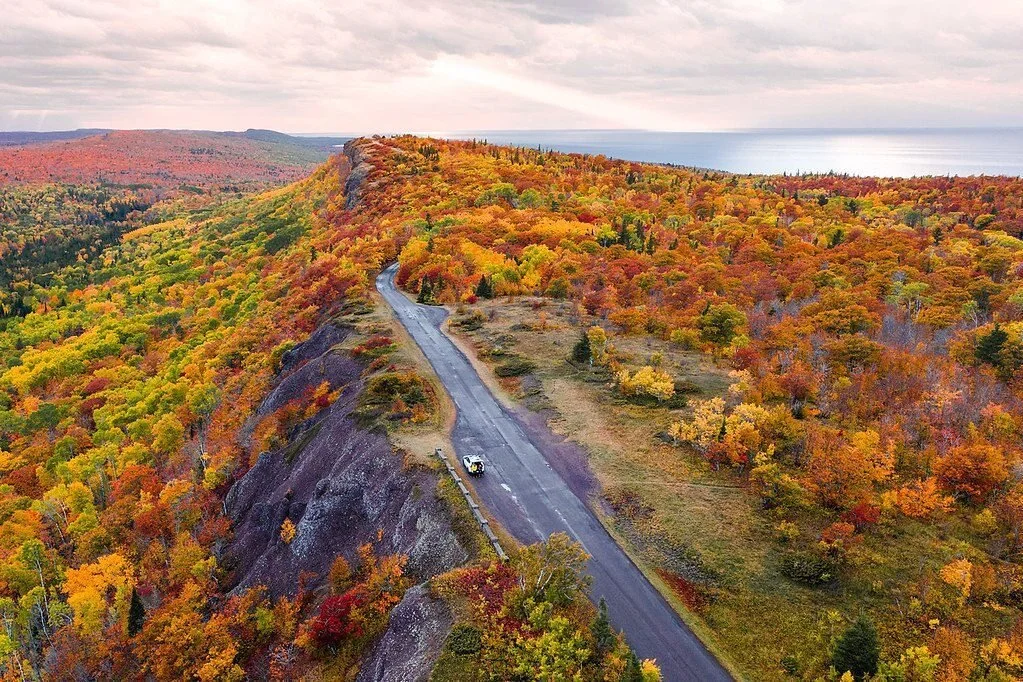
Ask anyone in the Keweenaw which drive matters most for fall color, and they’ll say Brockway Mountain without hesitating. This road connects Copper Harbor to Eagle Harbor and climbs to the Brockway Mountain Lookout, where panoramic views of Lake Superior and unbroken forest stretch in every direction.
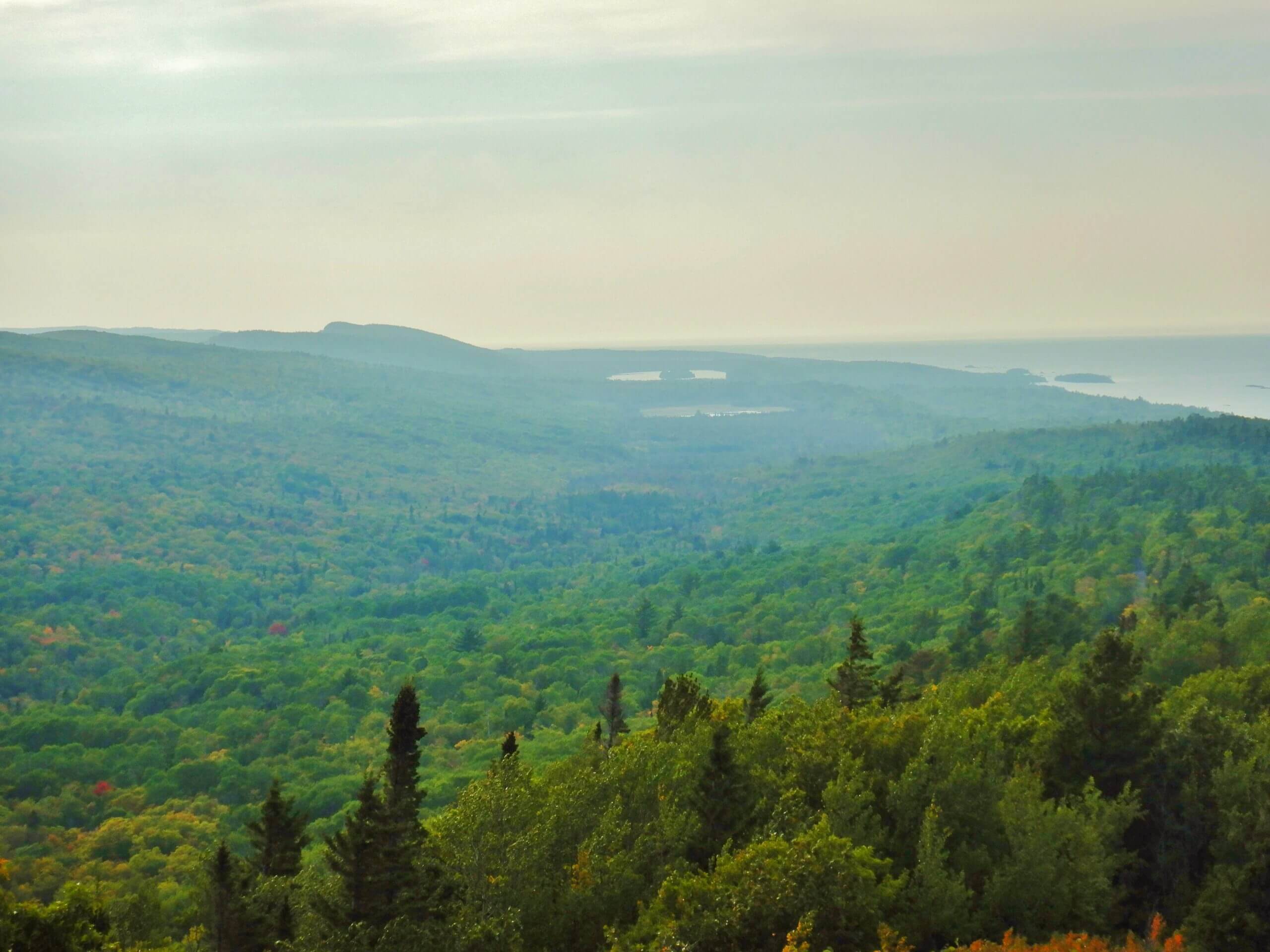
- Best for: First-time UP visitors who want the single most dramatic fall overlook in the peninsula.
- The lookout: Stop at the summit pull-off — this is where the payoff lives. On clear days you can see the Keweenaw Waterway and miles of unbroken color across old-growth hardwoods.
- Crowds: Even during peak season, the Keweenaw sees a fraction of the traffic that Porcupine Mountains or Tahquamenon Falls draws. This drive rarely feels busy.
- Timing: Plan roughly 30–45 minutes for the full drive without stops; budget 1.5 hours if you’re pulling over at every overlook, which you will be.
Base yourself in Copper Harbor for the easiest access — the drive starts right from town. A handful of small inns and cabins cluster near the harbor, making early-morning starts simple.
Black River National Scenic Byway
This byway in the western Upper Peninsula is the access road to Copper Peak, but it earns its own chapter as a fall foliage route. The drive threads through dense forest along the Black River, with the kind of quiet, unhurried beauty that defines the western UP — no billboards, no traffic, just river, rock, and color.
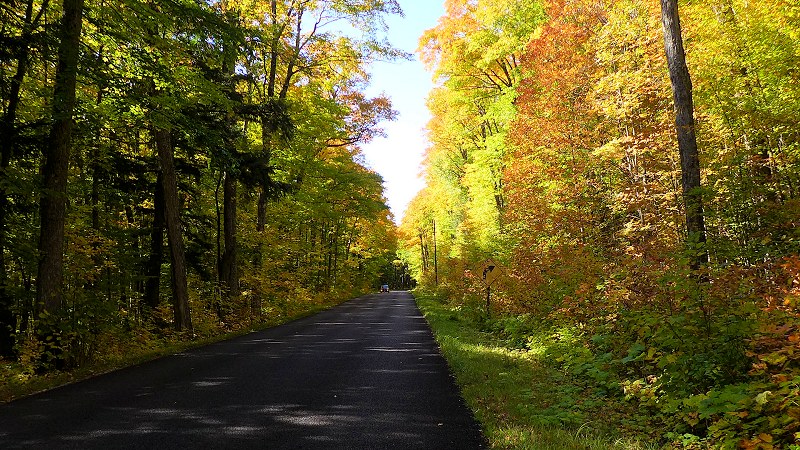
- Best for: Travelers who want a full scenic corridor with waterfall stops built in, not just a single overlook.
- Waterfall bonus: Several falls sit along or near the byway — Rainbow Falls and Sandstone Falls are both short detours worth making if the water levels cooperate in autumn.
- Getting there: The byway runs north from Bessemer toward Lake Superior. It pairs naturally with a visit to Ironwood or the western edge of the Porcupines if you’re already in that corner of the UP.
- Road condition: Paved and well-maintained, unlike the Covered Drive. Any passenger vehicle handles it without issue.
If you’re building a multi-day UP trip, run the Black River Byway on your way to or from Ironwood — it sits conveniently on the western edge and connects easily with a Porkies visit. Lodging options in Bessemer and Ironwood are sparse but affordable; book early for peak weekends in early October since the western UP draws color chasers from both Wisconsin and Minnesota.
Top Hikes to Experience Immersive Autumn Colors
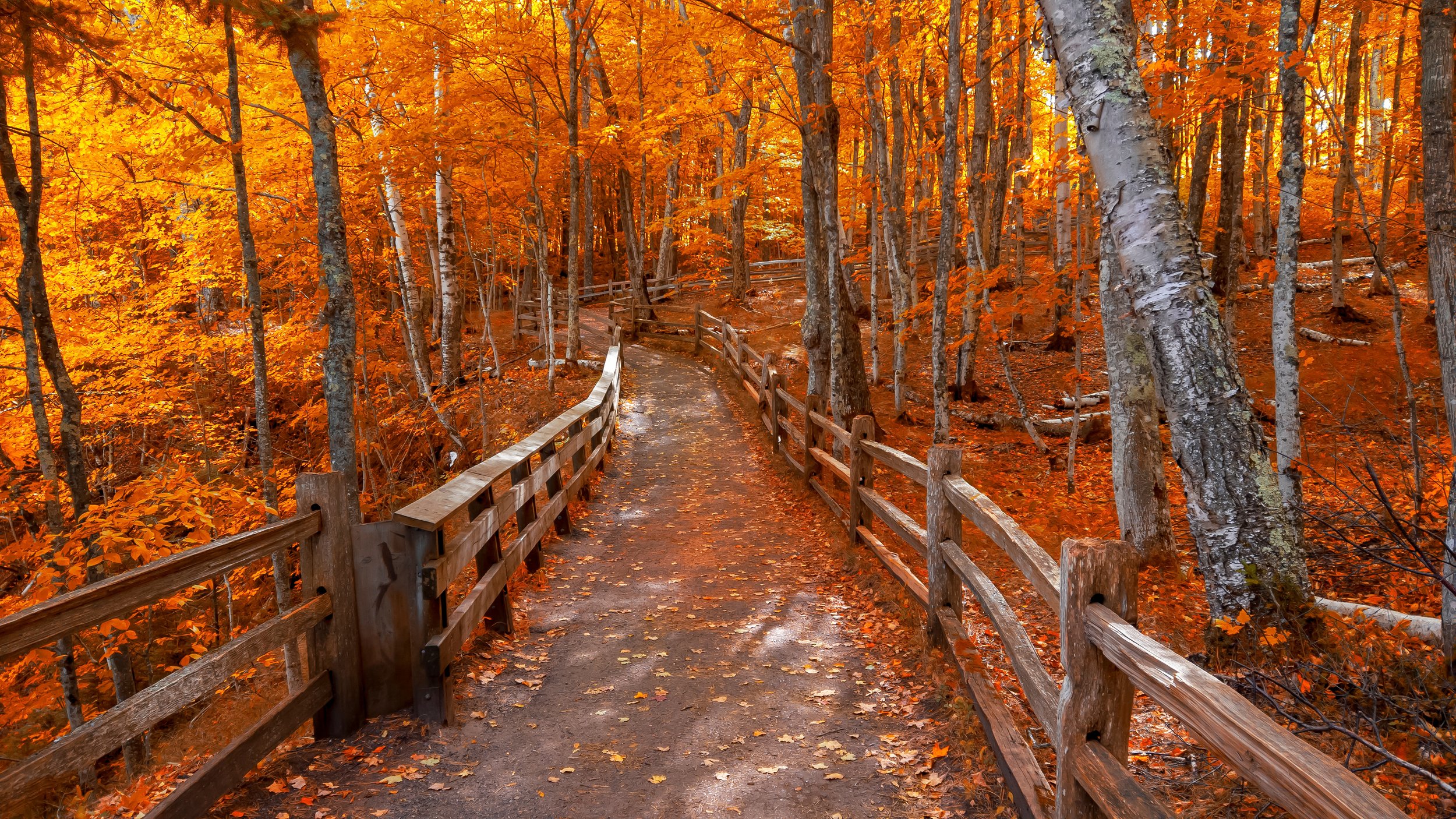
The overlooks deliver the panorama, but lacing up and walking into those red-and-gold canopies is an entirely different experience — the smell of decaying leaves, the silence broken only by your own footsteps, and the realization that UP fall color is best absorbed at walking pace. These three hikes cover the full range: a quick summit scramble, a hidden waterfall trek, and a half-day moderate push through Keweenaw backcountry.
| Hike | Distance | Difficulty | Best For |
|---|---|---|---|
| Sugarloaf Mountain | Under 1 mile round trip | Easy with rock scramble | Quick summit views, limited time, families |
| Hungarian Falls Trail | Under 2 miles round trip | Easy-Moderate | Waterfall lovers, solitude seekers, photographers |
| Mount Baldy / Nicole Bloom Memorial Trail | Roughly 6.5–7 miles round trip | Moderate | Half-day immersion, serious fall-color commitment |
Mount Baldy via Nicole Bloom Memorial Trail
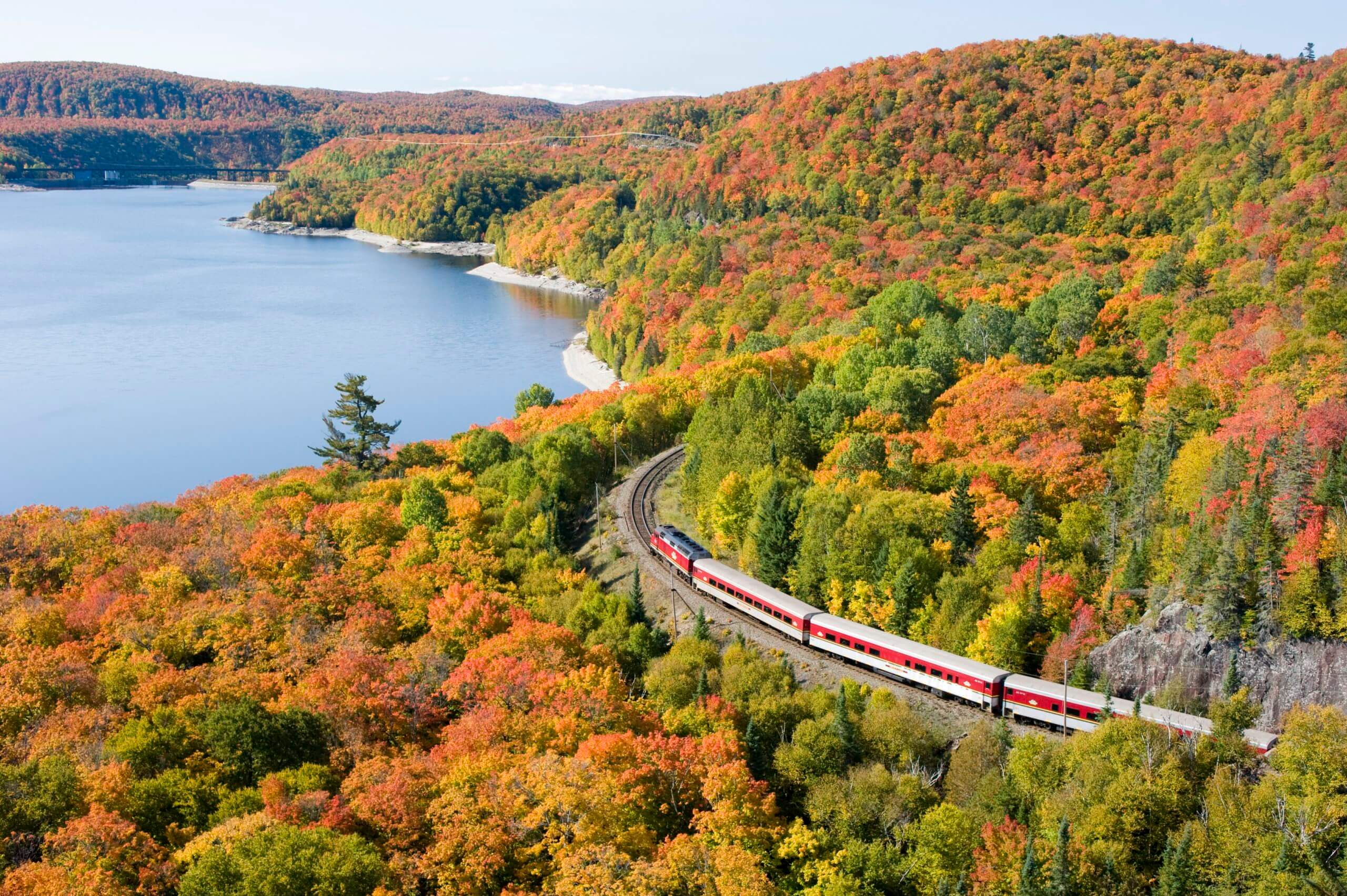
This is the hike that rewards the effort. Often called Lookout Mountain or Mt.
Baldy locally, the Nicole Bloom Memorial Trail runs roughly 6.5 to 7 miles out and back with about 826 feet of elevation gain through some of the Keweenaw’s quietest backcountry. The moderate rating is fair — expect sustained climbs rather than anything technical — and the payoff is a summit lookout above the tree canopy at peak color.
This is a lesser-known trail, which is its single greatest advantage.
- Time commitment: Plan 3 to 4 hours round trip at a comfortable pace with summit breaks.
- Crowds: Near-solitude is the norm, even on peak October weekends. If you have done Tahquamenon Falls and want zero people, this is the move.
- Footwear: Wear sturdy boots, not trail runners. Leaf-covered roots in October demand ankle support.
Insider note: The summit faces east. Start early and catch the first light hitting a frost-covered Keweenaw canopy — the kind of moment no overlook pullover can match.
Sugarloaf Mountain Loop
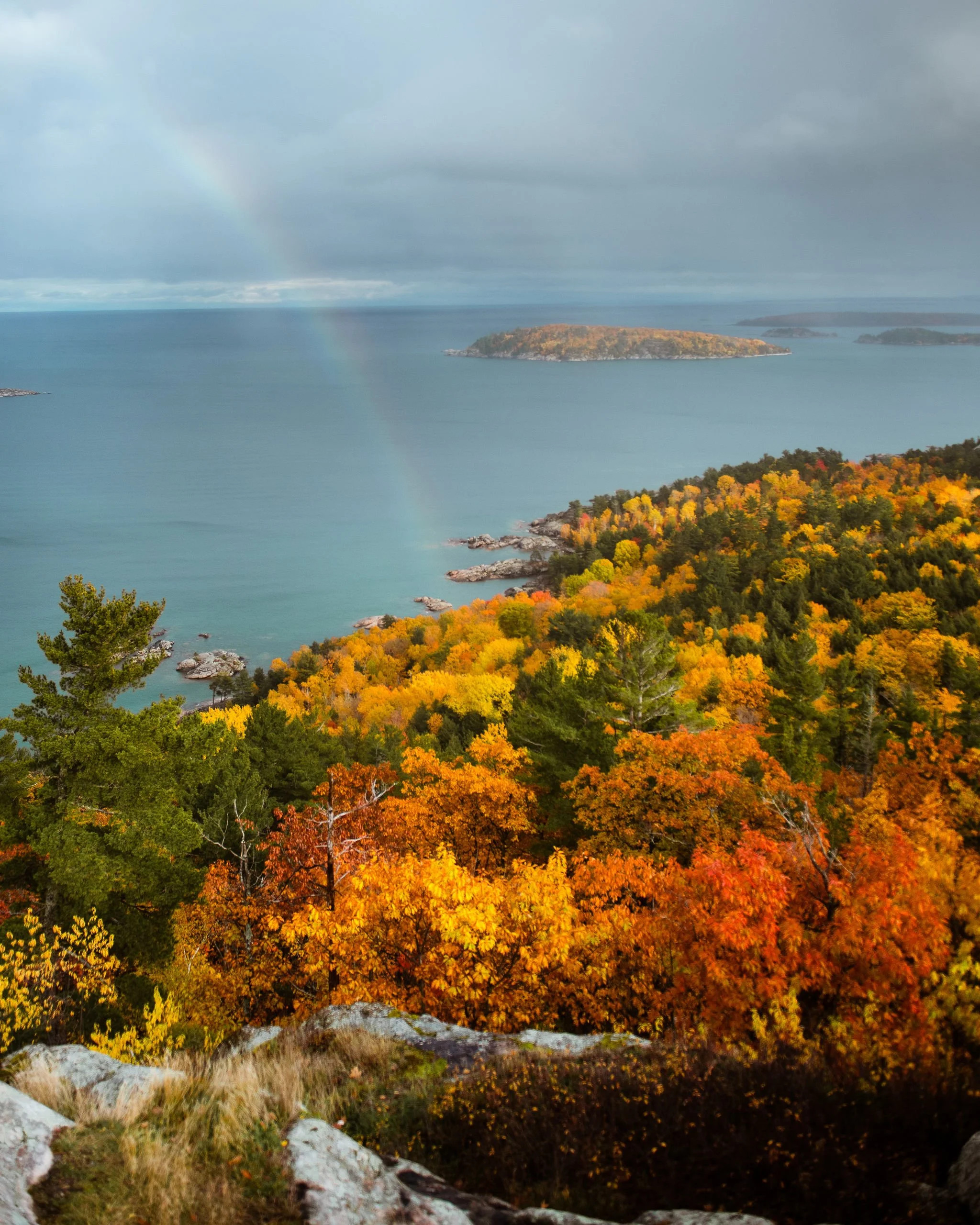
Sugarloaf Mountain near Marquette is the UP’s quickest summit payoff, and for anyone short on time it wins outright. The trail is short — under a mile round trip — but the final approach is a genuine rock scramble requiring hands on stone.
That effort makes the 360-degree panorama of Lake Superior and forested ridgelines feel earned, especially when the hardwoods below are on fire with color.
- Time commitment: 30 to 45 minutes round trip, though most people linger at the summit far longer.
- Crowds: This is the most popular short hike near Marquette. Arrive before 9 a.m. on October weekends to avoid sharing the summit ledge.
- Who it suits best: Families with older kids, road-trippers burning a morning between drives, or anyone who wants a dramatic canopy view without committing half a day.
Insider note: The scramble section gets slick with October morning dew. If the forecast calls for overnight rain, save Sugarloaf for the afternoon — wet granite here is genuinely treacherous, and gloves help on the climb.
Hungarian Falls Trail
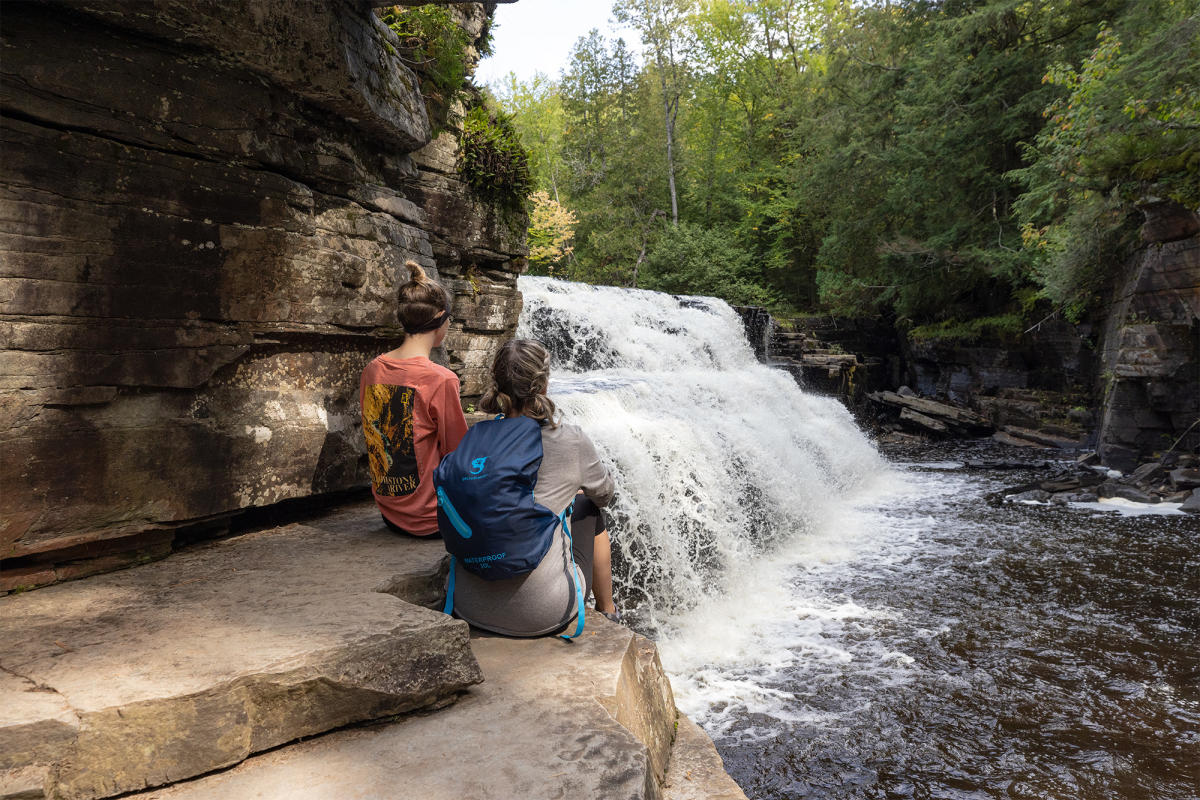
If you want fall color paired with the sound of rushing water and almost no one around, Hungarian Falls is the pick. This short trail near Torch Lake leads to multiple cascades on Dover Creek, with the Upper Falls being the main event.
The gorge trees turn brilliantly, and the combination of gold foliage framing white water is the shot that sells people on the Upper Peninsula as a fall destination.
- Finding the Upper Falls: At the trail junction near the river, turn right. The larger falls is upstream — turning left leads to smaller cascades that are pleasant but less dramatic.
- Time commitment: Under 2 hours round trip, making it easy to pair with a Covered Road scenic drive the same day.
- Crowds: Expect near-total solitude. Do not count on seeing another hiker.
Insider note: The trail is not heavily maintained and stays muddy well into October. Waterproof boots are non-negotiable.
More importantly, thick leaf cover obscures the blazes — download an offline trail map before you lose cell service in the gorge.
Where to base yourself: Copper Harbor and Eagle Harbor put you within easy reach of both Mount Baldy and Hungarian Falls, with cabin and lodge options that suit a fall road-trip pace. For Sugarloaf Mountain, Marquette is the natural base — walkable downtown hotels keep you 15 minutes from the trailhead and surrounded by restaurants and breweries after your hike.
Connect all three efficiently using the Sample 4-Day Itinerary section.
Waterfall Parks That Showcase Peak Foliage
Copper-toned water plunging 200 feet wide through a cathedral of amber maple — Tahquamenon Falls at peak color is the single most photographed autumn scene in the Upper Peninsula, and it earns every bit of the attention. These two parks pair moving water with blazing hardwoods in ways flat overlooks simply can’t match.
Tahquamenon Falls State Park: Upper and Lower Falls
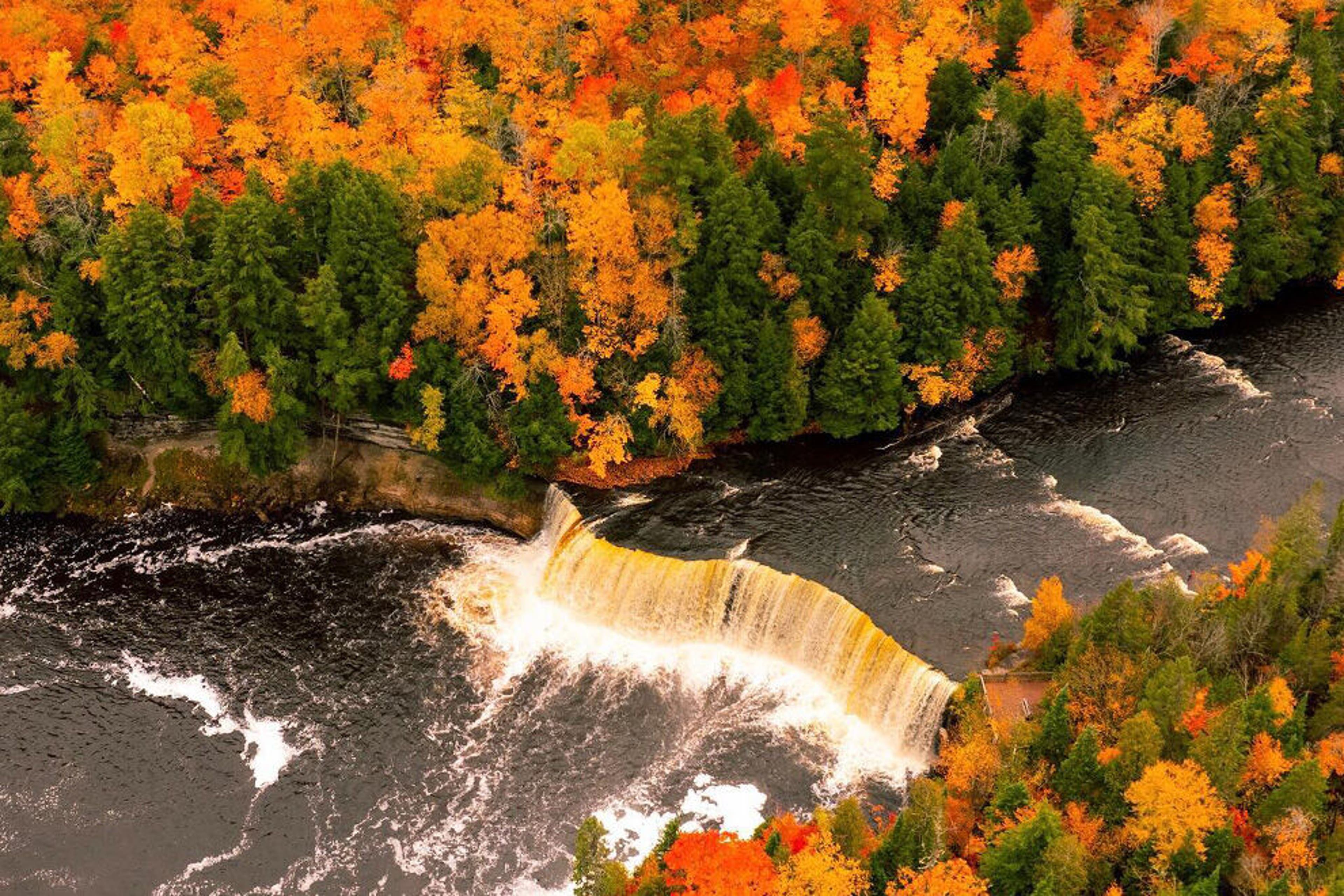
Michigan’s second-largest state park packs two dramatically different waterfalls into one visit, connected by four miles of hardwood forest that burns gold and red in early to mid-October.
Upper Falls is the headliner — a 48-foot, 200-foot-wide curtain that ranks as the largest waterfall east of the Mississippi. Multiple viewing platforms sit at different elevations, so foliage surrounds you from every angle.
The water’s distinctive root-beer amber tone (caused by tannins from upstream cedar swamps) against lingering gold canopy is striking even a week past peak.
Lower Falls, about four miles downstream, sits around a forested island you reach by trail or rowboat rental. Fewer crowds, slower pace, and a more intimate feel — this is where you actually sit and absorb the color instead of shooting and moving.
Best approach for both falls:
- Morning at Upper Falls first. Arrive before 9 a.m. to beat the tour-bus crowd that thickens by 10:30.
- Descend the 94-step staircase to the Upper Falls base. Most visitors never leave the top overlook — the base puts you eye-level with the falls and eliminates most of the crowd.
- Drive the park road to Lower Falls for a late-morning loop. The island trail circles the falls in under a mile.
- Connecting hike option: The North Country Trail links both falls through roughly four miles of old-growth hardwood at full color. Budget 2.5 to 3 hours one way.
Where to stay: Paradise, Michigan, is the closest gateway town — a handful of motels and cabin rentals line the main road. Campsites inside the park are popular for October weekends; book through the Michigan DNR as early as the reservation window opens.
Pictured Rocks National Lakeshore: Trails and Overlooks
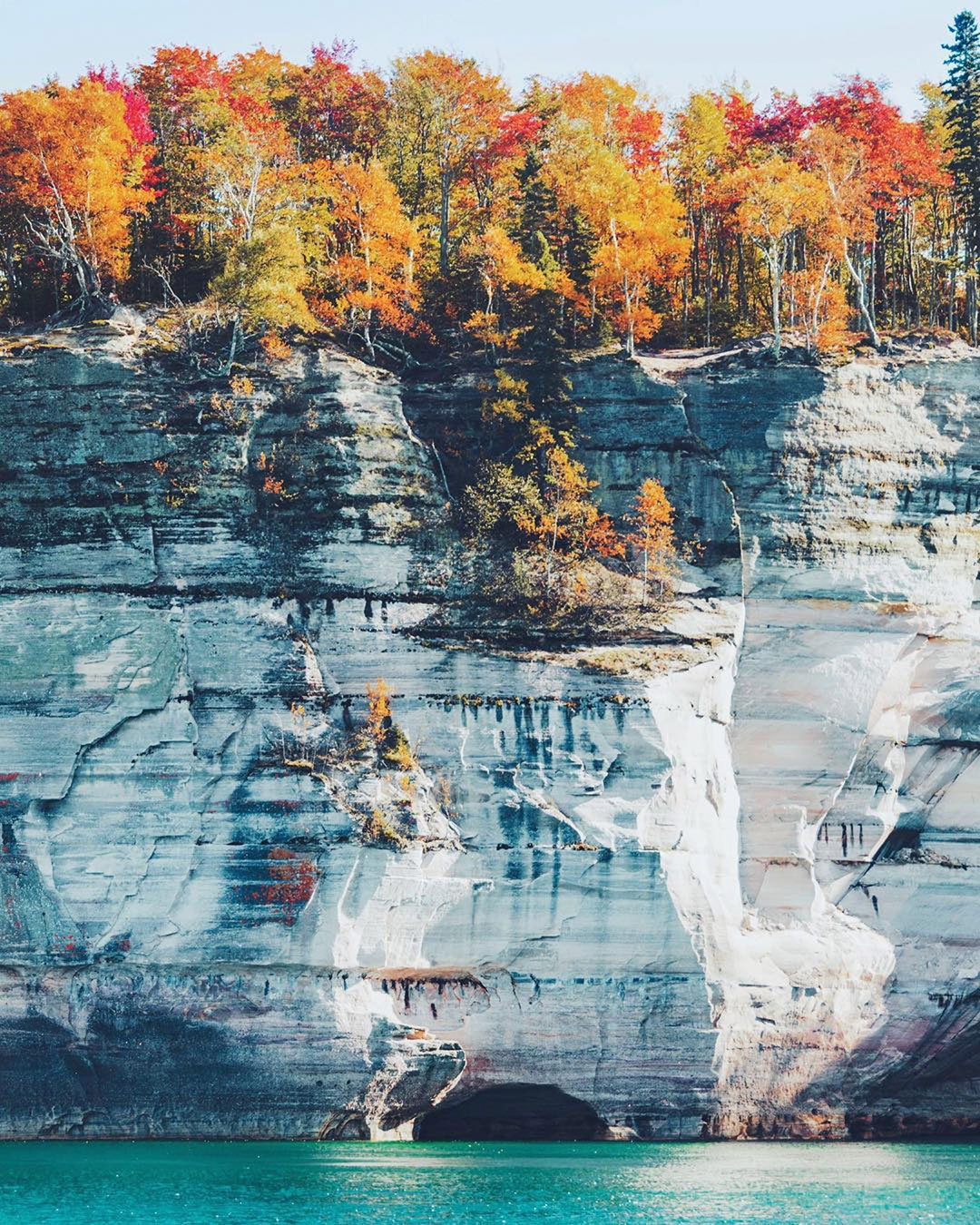
Pictured Rocks is famous for its painted sandstone cliffs, but the park’s real fall secret is its waterfalls — more than a dozen named cascades tucked into dense sugar maple and birch forests that peak in early to mid-October.
Best waterfall-and-foliage pairings:
- Miners Falls: The most accessible option — a short, paved trail leads to a 40-foot falls backed by a full-color hardwood canopy. Ideal if you have limited time or are traveling with kids or anyone with mobility concerns.
- Chapel Falls and Chapel Rock loop: A roughly two-mile hike through dense maple forest ends at a 60-foot cascade and the iconic Chapel Rock sea stack on the lakeshore. This is the single best pairing of cliff, water, and autumn color in the entire park — do not skip it.
- Backcountry stretch between Mosquito Beach and Chapel Rock: For hikers willing to commit five or more miles, this uncrowded corridor passes multiple unnamed cascades surrounded by peak-color forest with almost no other people.
The drive-and-look option: Sand Point Beach and the Miners Castle overlook both deliver sweeping foliage views over Lake Superior without significant hiking. Grand Portal Point requires a longer effort but offers the most dramatic cliff-to-forest panorama in the park.
Where to stay: Munising is the main base — it has the widest range of lodging, restaurants, and outfitters for boat or kayak tours of the painted cliffs. Lodging fills completely during peak color weekends, sometimes weeks in advance.
| Park | Foliage Quality | Waterfall Access | Crowd Level |
|---|---|---|---|
| Tahquamenon Falls | High — mixed hardwood across a broad river valley | Easy — boardwalk overlooks and maintained paths | Heavy at Upper Falls; moderate at Lower Falls |
| Pictured Rocks | High — dense maple forests along cliff edges | Moderate — short hikes to most falls | Busy at Miners Falls; quiet on backcountry trails |
The decision: Choose Tahquamenon if you want the iconic, low-effort waterfall-through-foliage photograph and have half a day. Choose Pictured Rocks if you want variety — hidden cascades, cliff overlooks, and backcountry solitude that Tahquamenon cannot offer.
Ideally, build both into a multi-day trip; they are roughly two hours apart by car, connected by a drive through some of the UP’s best undeveloped forest.
How Should You Plan a Multi-Day Upper Peninsula Road Trip?
Driving west to east is the move — it follows the color progression and keeps you from backtracking through empty two-lane highways at dusk. This itinerary hits every major fall destination in the article without wasting a single hour, and it starts in the region that typically peaks first.
| Day | Region | Key Stops | Base Yourself In |
|---|---|---|---|
| 1 | Western UP | Porcupine Mountains, Black River Scenic Byway | Ontonagon |
| 2 | Keweenaw Peninsula | Covered Drive, Brockway Mountain, Hungarian Falls | Houghton or Copper Harbor |
| 3 | Marquette to Munising | Sugarloaf Mountain, Mount Baldy | Munising |
| 4 | Eastern UP | Pictured Rocks, Tahquamenon Falls | Paradise or head south |
Day 1: Porcupine Mountains & Black River National Scenic Byway
Start at Porcupine Mountains Wilderness State Park in the upper northwest corner — Michigan’s largest state park at 60,000 acres. Hit Lake of the Clouds overlook early in the morning when fog lifts off the valley and the color below looks like it’s on fire.
The old-growth hardwoods here hold color differently than anywhere else in the UP because the elevation changes create layered gradients — golds on top, deep reds below.
After the Porkies, drive east along the Black River National Scenic Byway. This route is the real star of Day 1 — the forest canopy closes in overhead and the river gorge drops beside you.
Stop at the multiple waterfall overlooks along the way; they’re short walks, not full hikes, so you can cover ground efficiently.
- Where to stay: Ontonagon is the closest town with basic lodging — expect motels and small inns, roughly $80–$130/night in peak season. Ironwood has more options and better dining, but adds 45 minutes of driving.
- Insider tip: The park’s day-use vehicle permit is required. Buy it at the entrance or online from Michigan DNR before you go — the entrance booth line on a peak-color Saturday morning can eat 20 minutes.
Day 2: Keweenaw Peninsula — Covered Drive, Brockway Mountain & Hungarian Falls
Drive north from Houghton along the Covered Drive, where the tunnel of maples and birches overhead is exactly the kind of road that makes passengers stop talking mid-sentence. This is the warm-up for the real show: Brockway Mountain Drive, which climbs to one of the highest points between the Rockies and the Alleghenies.
The panoramic overlook at the top gives you Lake Superior on both sides and nothing but color between them.
Hit Hungarian Falls in the afternoon — the trail is short but steep, and the cascades framed by yellow birch and red maple are worth every uneven step. End your day back in Houghton for dinner and a craft beer at one of the downtown spots.
- Where to stay: Houghton is the best base — it has the most restaurant and lodging variety in the Keweenaw. Copper Harbor is quieter and more scenic but has limited dining and fills fast on peak weekends. Book Keweenaw lodging at least three weeks ahead for mid-October.
- Insider tip: Brockway Mountain Drive is technically a seasonal road that may close without warning after early snowfall. Late September is almost always clear; mid-October carries more risk. Check Houghton County road conditions the morning of.
Day 3: Marquette Area to Munising
Head east to Marquette and knock out Sugarloaf Mountain first — the trail is under a mile round-trip and rewards you with a sweeping Lake Superior panorama that makes it the best bang-for-your-buck hike in the entire UP. Then drive to Mount Baldy via the Nicole Bloom Memorial Trail for a longer forest immersion through peak hardwood canopy.
Both hikes are near Marquette, so you’ll finish by early afternoon and have a relaxed 45-minute drive east to Munising. Use the evening to scout Pictured Rocks National Lakeshore overlooks for tomorrow — Miners Beach at sunset is the move.
- Where to stay: Munising is the essential base for Pictured Rocks. Book accommodations early — the town is small and inventory disappears fast during foliage season. Expect $100–$175/night for standard rooms in early October. Lodging options include motels, cabins, and a handful of inns within a few minutes of park trailheads.
- Insider tip: Fuel up in Marquette. Gas stations between Marquette and Munising are sparse, and Munising’s prices typically run 15–20 cents higher per gallon.
Day 4: Pictured Rocks & Tahquamenon Falls

Start early at Pictured Rocks — the sandstone cliffs, more than 100 miles of trails, and Lake Superior backdrop make this the most dramatic foliage setting in the state, and the morning light on the painted cliffs is unbeatable. If you only have time for one trail, pick the Chapel area loop to hit Chapel Rock and Chapel Falls in a single outing.
Drive east from Munising to Tahquamenon Falls State Park (roughly 90 minutes to the Upper Falls). The Upper Falls drops 48 feet across a 200-foot-wide river stained amber by tannins — surrounded by peak color, it’s the most photographed waterfall in the state for a reason.
Walk the four-mile trail between Upper and Lower Falls if your legs still have it in them; the riverside hardwood corridor between the two falls is an immersive color tunnel.
- Wrap-up options: From Tahquamenon, you can drive west back toward Marquette (3 hours) or south through the Mackinac Bridge to head home. Paradise, the nearest town, has a few dining spots and limited lodging.
- Fayette detour: If you’re heading south along US-2, Fayette Historic State Park near Garden adds a fascinating layer — 90-foot limestone cliffs above Big Bay de Noc with five miles of trails and a preserved 19th-century iron-smelting town. It adds roughly 90 minutes to your drive but rewards you with southern UP color and zero crowds.
This route covers roughly 450 miles of driving across four days, keeping daily windshield time under three hours so most of your daylight is spent on trails, overlooks, and scenic byways — not behind the wheel.
Frequently Asked Questions
Do I need a car to explore the Upper Peninsula in fall?
Yes — a car is non-negotiable. There is no public transit connecting UP towns, and the best foliage spots (Brockway Mountain Drive, the Covered Road, Tahquamenon Falls) are spread across hundreds of miles of two-lane highways.
Marquette and Ironwood are the closest things to hub towns, but even they are roughly two hours apart. Fly into Marquette (MQT), Green Bay (GRB), or the Sawyer International Airport, rent a vehicle, and plan to self-drive the entire trip.
A standard sedan handles every paved scenic drive and main trailhead parking lot just fine in fall.
How far in advance should I book lodging?
Book at least two to three months out if you want a room anywhere near Marquette, Munising, or the Keweenaw Peninsula during peak week (typically the last week of September through the first week of October). Cabins in the Porkies and waterfront rentals in Grand Maraire fill first — sometimes by mid-summer.
If you’re planning a last-minute trip, target mid-October when crowds thin but color lingers at lower elevations. Check Travel Ironwood and local tourism sites for cancellations; small-town motels and B&Bs sometimes release rooms within a week of arrival.
Is it still worth visiting if I miss peak color?
Absolutely. “Past peak” in the UP still means rich amber and russet tones against evergreens — it looks spectacular on camera and in person.
Tahquamenon Falls and Pictured Rocks remain stunning well into the third week of October because the waterfalls and sandstone cliffs hold visual interest regardless of foliage stage. Late visitors also get thinner crowds, lower lodging rates, and easier parking at popular trailheads like Sugarloaf Mountain and the Chapel Rock area.
Do Upper Peninsula state parks and trails require a pass or fee?
Michigan state parks require a Recreation Passport ($17 for a day pass at the gate, or $38 annually for Michigan residents purchased at Secretary of State). Pictured Rocks National Lakeshore is free to enter — no park pass needed — though some backcountry campsites charge a small overnight fee.
National Forest lands (which include much of the western UP) are free to access for day use. Buy the annual Recreation Passport if you plan to visit more than one state park on your trip; Tahquamenon Falls, the Porkies, and Fayette Historic State Park all require one.
Start Planning Your Upper Peninsula Color Chase
Pull up the Fun in the UP fall color report this week and hold the first week of October on your calendar — that single move puts you in the window where peak color rolls across at least two regions during your trip.
The Upper Peninsula is the only place in the Midwest where you can drive through old-growth canopy tunnels, hike to summit panoramas above a sea of red and gold, and stand at the base of a 200-foot-wide waterfall framed in blazing hardwoods — all without leaving one state park system.
Pin this guide now so every drive, hike, and base town is mapped out the moment you’re ready to book your lodging.
Leave a Reply