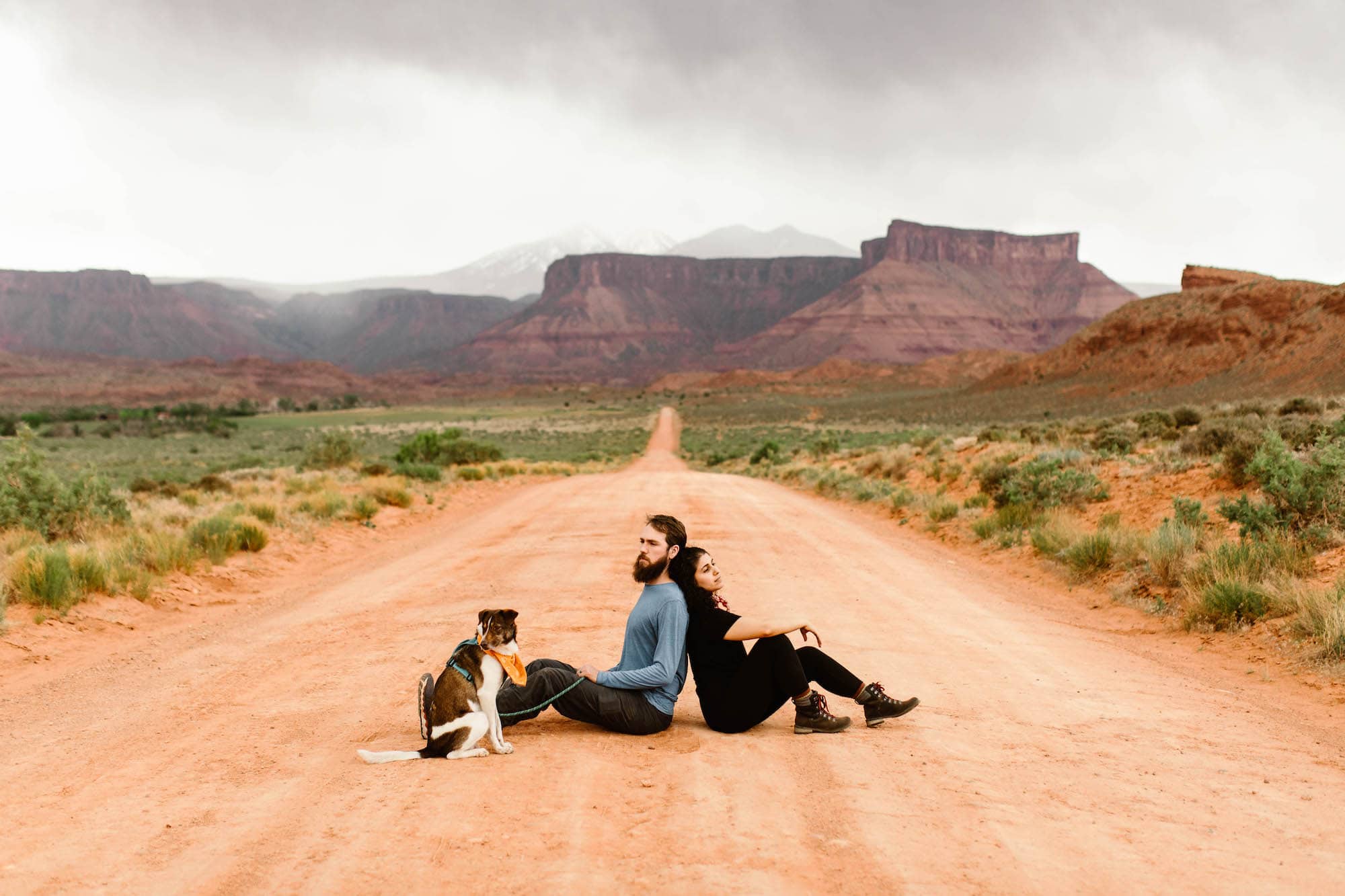
The red rock glows amber at dawn while cottonwood gold shimmers along the river below, and the air carries that particular crispness that tells you summer has finally broken its grip on the desert. I stood at Dead Horse Point last October with snow-dusted La Sal peaks filling the eastern sky and not another soul within shouting distance, and I thought: this is the Moab people pay thousands to chase.
What makes fall in Moab irreplaceable is the collision of three things no other desert season delivers together — peak foliage color, a low sun that paints the rock in warm amber light all day, and crowds that shrink by half or more after September. Summer scorches and crowds overwhelm; spring is gorgeous but packed.
Fall threads the needle better than anywhere in the American Southwest.
This guide walks you through exactly which month to target based on your priorities, which specific overlooks and trails deliver the goods, and how to pack and time your days so you actually experience the solitude you came for. Budget-wise, expect to spend roughly $80–$120/night for a basic motel in Moab in fall, $150–$250 for a solid mid-range hotel or vacation rental, and $300+ for a boutique property or upscale glamping setup — all meaningfully cheaper than spring peak pricing.
Which Month Delivers the Most Beautiful Desert Landscapes in Moab, Utah in Fall?
The canyon walls seem to hold the day’s heat longer in early fall, while by November, the air is so clear you can see snow on the La Sal Mountains from town. Your ideal month hinges on what you value most: the last warm days, the peak color explosion, or having the desert entirely to yourself.
September: Lingering Warmth and Early Color
September is for those who want to combine warm-weather activities with the first hints of autumn. Daytime temperatures typically sit in the 80s°F, perfect for hiking or biking without the brutal summer heat.
Crowds thin noticeably after Labor Day but remain busier than later fall months. The first golden leaves appear along the Colorado River corridors toward the month’s end, a preview of October’s show.
- Best for: Visitors prioritizing warm afternoons for active exploration who also want a taste of fall color.
- Key landscape feature: The contrast between still-green cottonwoods and the deep red rock is just beginning.
- The trade-off: You get better weather but miss the peak foliage and will share trails with more people.
October: Peak Color and Perfect Light
October is the consensus pick for a reason, and it’s not just the foliage—it’s the light. The sun sits lower in the sky, casting a warm, amber glow on the red rock that photographers chase all year.
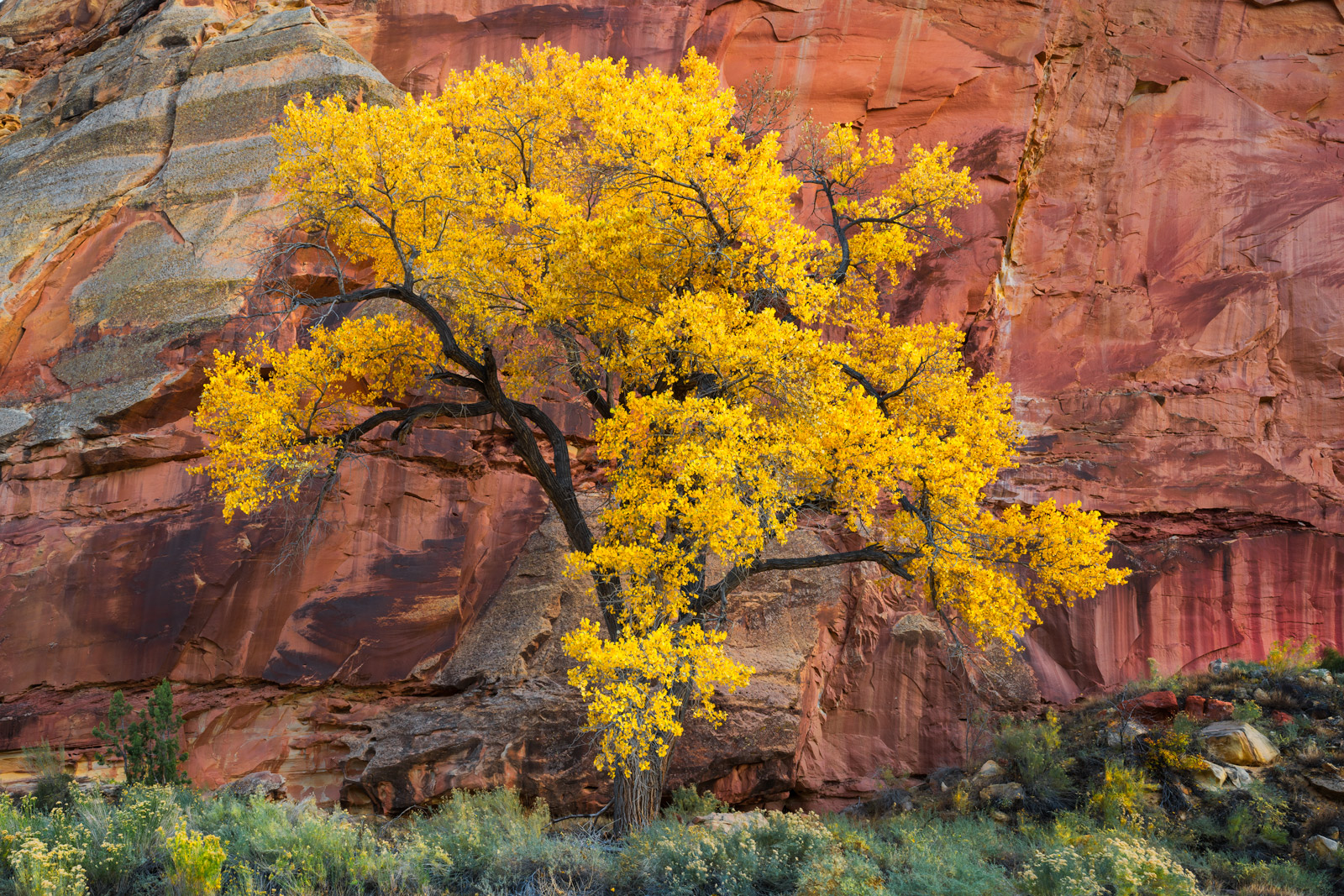
Mid-October is peak season for cottonwood gold along the river roads and in valleys like Professor Valley. Afternoon highs are a comfortable 60-70°F, and the air is dry.
This is also fall’s busiest month, so expect company at trailheads, especially on weekends.
- Best for: Photographers, foliage chasers, and anyone seeking Moab’s most iconic fall weather.
- Key landscape feature: The brilliant yellow and gold cottonwood trees set against the crimson canyon walls.
- The trade-off: You get the best visual spectacle and weather but navigate the largest fall crowds.
November: Solitude and Clarity
November is for the solitude seeker. The crowds evaporate, lodging rates often dip, and the desert takes on a stark, quiet beauty.
Morning temperatures hover near freezing, and afternoons are crisp, rarely exceeding the mid-50s°F. Foliage is mostly gone, but the clarity of the air is exceptional—views extend for miles across Canyonlands’ mesas.
The trade-off is warmth; you’re dressing in layers from dawn to dusk.
- Best for: Visitors who want empty trails, budget-friendly rates, and don’t mind bundling up.
- Key landscape feature: The vast, unobstructed panoramas and the feeling of having the parks to yourself.
- The trade-off: You gain profound solitude and clear skies but lose the warmth and fall color.
| Month | Crowd Level | Key Landscape Feature | Best For |
|---|---|---|---|
| September | Moderate | Early color, warm rock | Warm-weather activities + a hint of fall |
| October | Busy (Peak Fall) | Peak foliage color & golden light | Photographers & the quintessential fall experience |
| November | Very Low | Stark clarity, wide-open views | Solitude seekers & those prioritizing empty trails |
Insider Take: If your schedule is flexible, the sweet spot is often the first week of October. You catch the beginning of the peak color surge, the summer crowds are definitively gone, and the weather is reliably superb before any chance of an early cold snap.
Arches National Park Formations to Visit in Fall
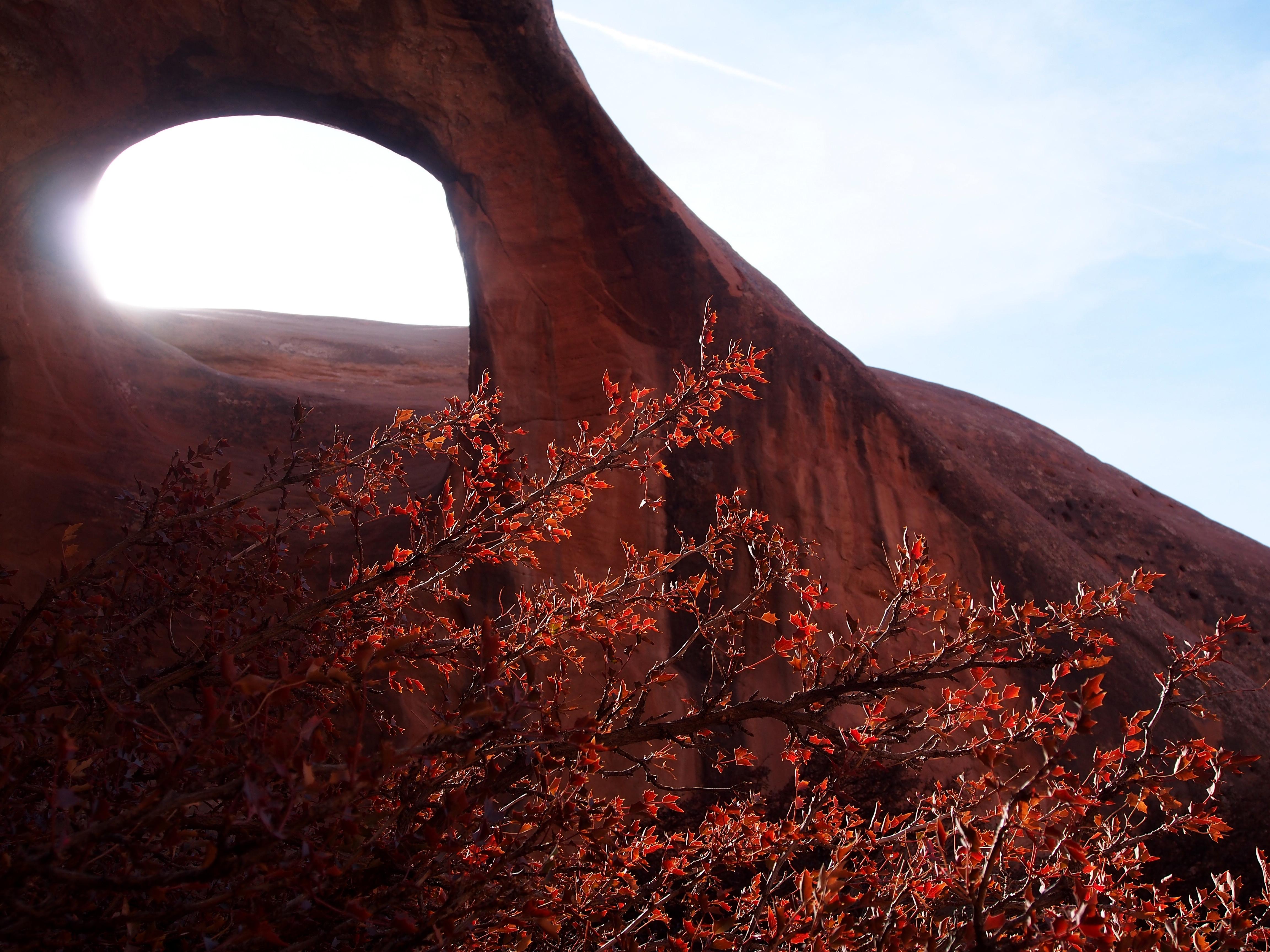
Arches National Park switches from stressful to straightforward once summer’s timed vehicle reservation window closes — typically by mid-October, though exact dates shift annually, so check the NPS website before booking. That alone changes the fall experience: no scrambling for a reservation slot weeks in advance, no predawn entry lines.
You drive in. Fall also slashes the numbers at every marquee formation — expect roughly 50–70 people at Delicate Arch on a fall weekend versus 200-plus in spring.
Delicate Arch and Surrounding Slickrock
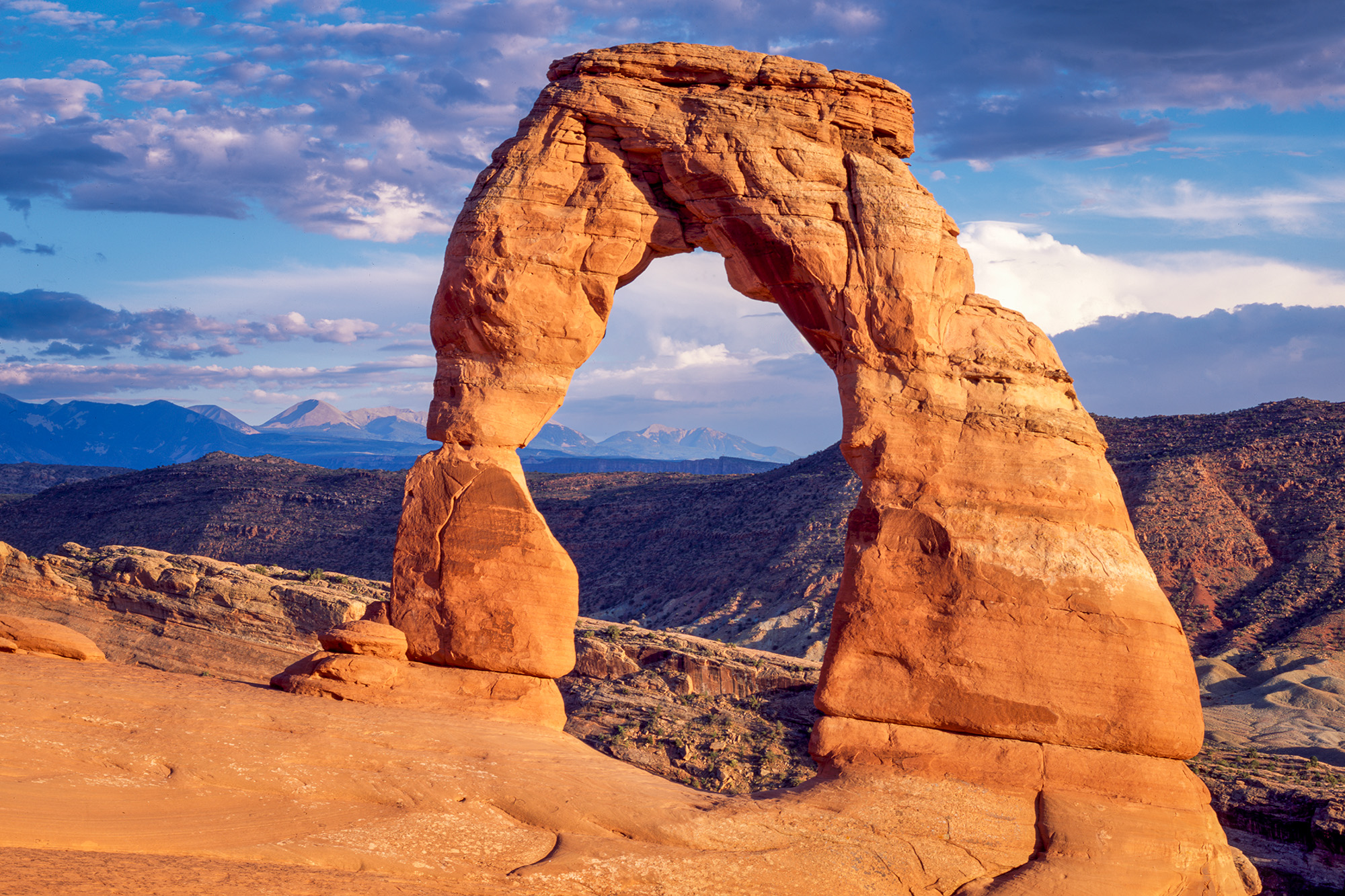
The 3-mile round-trip hike to Delicate Arch is the single most rewarding outing in the park during fall. Summer turns the exposed slickrock section into a heat trap; fall brings high temperatures in the 60s–80s°F, making the moderate climb genuinely enjoyable rather than an endurance test.
The arch itself — 52 feet of freestanding sandstone perched on a cliff edge — needs no introduction, but the surrounding slickrock terrain deserves more of your time than most visitors give it.
The natural amphitheater below the arch, the rolling sandstone fins, and the bowl-shaped slickrock expanses east of the viewpoint are all explorable. Most hikers snap their photo and leave within 15 minutes.
Linger and you’ll likely have stretches of this landscape to yourself, even on a moderate-traffic October afternoon.
- Best light for photography: The amphitheater faces due west, making late afternoon and sunset the move for warm light on the arch. Arrive by 4:00 PM to scout compositions before the golden hour rush. Bring a headlamp for the walk back — fall sunsets come fast and the trail has no lighting.
- Parking strategy: The Delicate Arch trailhead lot still fills in fall, just not as aggressively as summer. Arriving by 8–9 AM typically secures a spot. Afternoon hikers chasing sunset light should expect a full lot and plan to wait or park at the Upper Delicate Arch Viewpoint lot and walk the extra distance.
- Insider detail: The slickrock slabs about a quarter mile before the arch offer a dramatic foreground of rippled sandstone with the La Sal Mountains behind the arch — a composition most visitors walk right past because they’re focused on reaching the endpoint. Set up here instead of jockeying for position directly below the arch.
Double Arch and Fiery Furnace
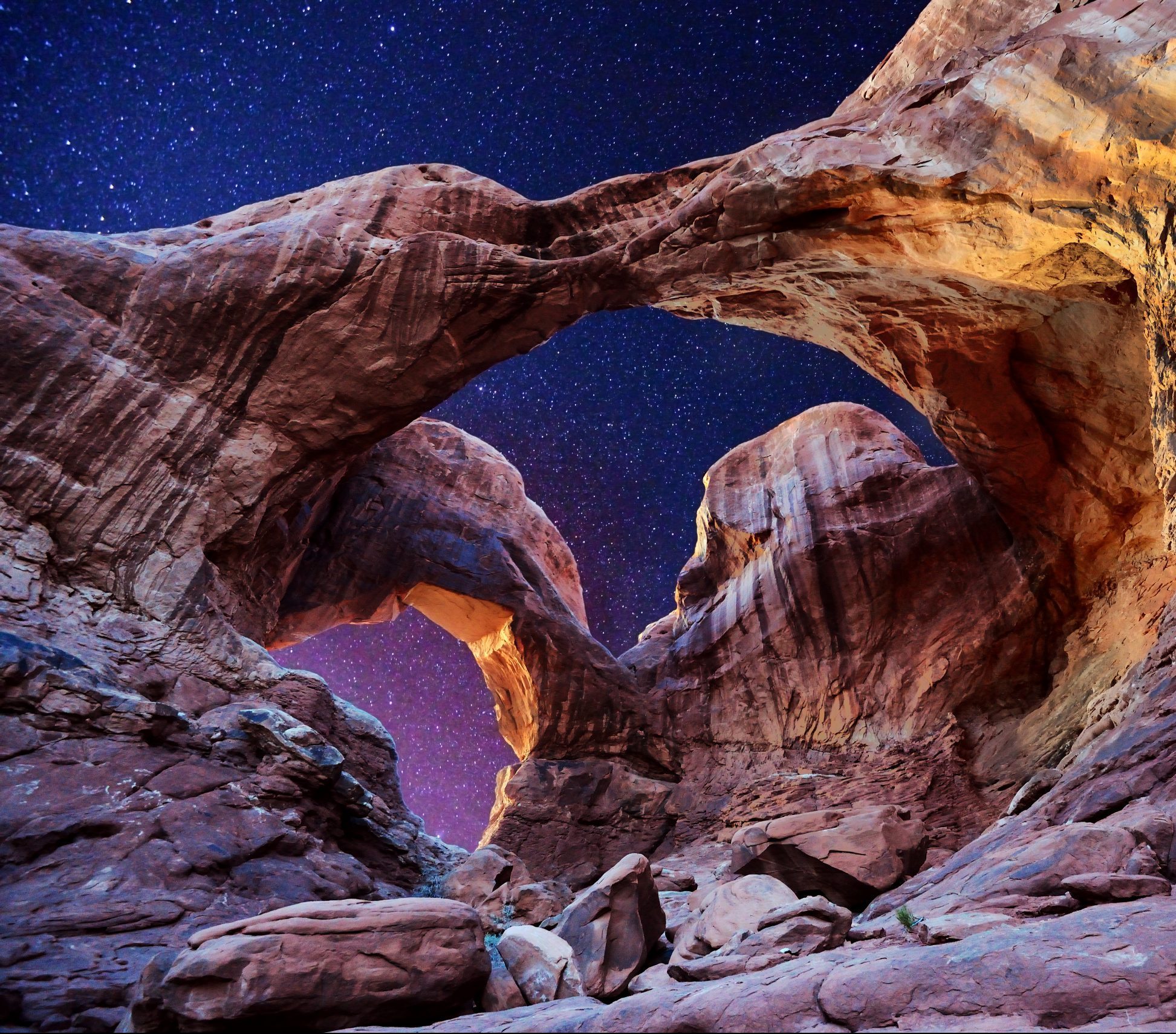
These two stops occupy the same section of the park but deliver opposite experiences. Double Arch is the quickest wow in Arches — a flat half-mile walk to two massive arches sharing a single sandstone pedestal.
Fiery Furnace is the park’s most demanding and disorienting terrain, a permit-only labyrinth of fins, slots, and dead ends that rewards skilled route-finding with complete solitude.
Double Arch is the right call if you’re short on time, traveling with kids, or want a low-effort introduction to the park’s scale. The two arches tower 112 and 94 feet respectively, and you can walk directly beneath them — something you cannot do at Delicate Arch.
Pair it with the nearby Windows and Turret Arch loop (another 0.75 miles on flat ground) for four major formations in under two hours of easy walking. This combination is the single best half-day allocation in Arches for first-time visitors.
Fiery Furnace requires either a self-guided permit (roughly $6 per person, reservable through recreation.gov or in person at the visitor center) or a ranger-led hike (typically around $16 per adult, with reduced frequency after early October). The self-guided permit requires watching an orientation video at the visitor center beforehand.
There is no marked trail — you navigate by spotting small cairns, following natural drainages, and making judgment calls at every junction.
- Why fall matters here: The Fiery Furnace traps heat between its sandstone walls. Summer scramblers contend with temperatures that can exceed 100°F in the slots. Fall drops those temps into a comfortable range, making the climbing, squeezing, and route-finding genuinely fun instead of punishing. Permit availability also improves significantly after mid-September.
- Honest assessment: Skip Fiery Furnace if you’re uncomfortable with scrambling, tight spaces, or route-finding without signage. It’s not dangerous for reasonably fit hikers, but it’s not a casual stroll either. Double Arch plus the Windows loop delivers 80 percent of the wow factor with none of the physical demands.
- Efficient pairing: Hit Double Arch and the Windows trail in the morning (cool light, easy parking), then tackle Fiery Furnace in the early afternoon when the sun is high enough to illuminate the narrow slots from above. Base yourself in Moab — the park entrance is just five minutes north of town — and you can return for a Delicate Arch sunset the same day.
Canyonlands National Park Desert Vistas in Autumn
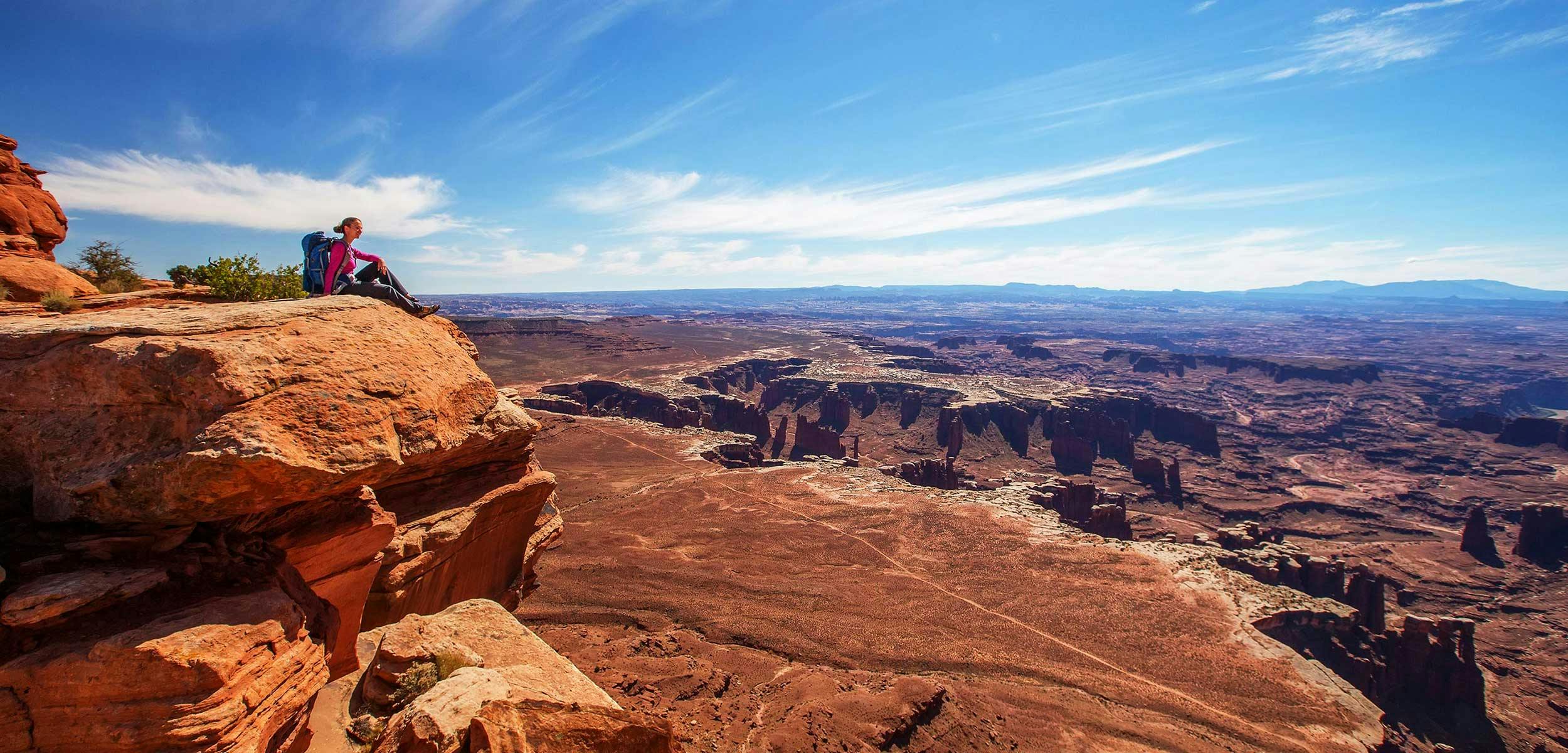
Canyonlands splits into three districts, but only one delivers massive desert panoramas within minutes of your car: Island in the Sky. This flat-topped mesa sits 1,000 feet above the confluence of the Green and Colorado Rivers, and in fall the cooler air sharpens visibility to a degree summer haze never allows.
October and November turn these overlooks into arguably the best desert vista experience within an hour of Moab — and the crowds thin significantly once September’s heat-chasers leave.
Mesa Arch Overlooks
Mesa Arch is the single most photographed spot in Canyonlands, and for good reason: at sunrise, the underside of the arch glows fiery orange while the Washer Woman towers and Monster Butte fill the frame behind it. The problem is that everyone knows this.
By mid-morning in peak season, you’ll share the arch with 30–50 tripods.
Fall fixes the crowd problem. Arrive at the Mesa Arch trailhead by sunrise in late October or November, and you may share the frame with fewer than 10 other photographers. The arch itself is a flat, 0.5-mile round-trip walk — easy enough for anyone, which is exactly why it fills up in spring and summer.
In fall, the lower sun angle actually improves the glow effect on the arch’s underside, and the surrounding desert takes on warmer earth tones that contrast better with the red rock than summer’s bleached-out palette.
- Best time to arrive: 30 minutes before sunrise. The arch faces east, so the glow effect lasts roughly 20–30 minutes after the sun clears the horizon.
- Insider detail most visitors miss: Walk past the arch another 50 feet to the cliff edge. The view straight down into the canyon is staggering and almost no one goes there because the arch photo is the draw.
- Seasonal note: The trailhead parking lot holds about 15 cars. In late October and November, this is rarely full. Earlier in September, expect it to fill by 7:30 AM on weekends.
Island in the Sky Canyons
The Island in the Sky district sits on a massive mesa with a single paved road running to its southern tip. Every pullout along this road delivers a different canyon perspective, but three stops matter most for fall desert vistas:
Grand View Point Overlook is the payoff spot. A short, flat 1-mile round-trip walk from the parking area leads to the southern tip of the mesa, where you stand at the edge of a 1,000-foot cliff with views stretching 100+ miles across layered canyons, buttes, and the Needles district.
In fall, the reduced haze means you can actually see the La Sal Mountains dusted with early snow from here — a combination of red desert and white peaks that summer obscures.
Green River Overlook faces west and catches the Green River’s serpentine path through Shafer Basin. Late afternoon light in October and November paints the canyon walls in alternating bands of shadow and gold.
This is the better sunset spot than Grand View Point because the west-facing angle catches direct light on the rock formations rather than shooting into the sun.
Upheaval Dome is the oddball — a massive crater-like depression that geologists still debate (salt dome impact vs. meteorite). The first overlook is a 0.5-mile hike; the second adds another 0.8 miles.
Neither delivers the sweeping grandeur of Grand View, but the bizarre geology makes it a worthwhile detour if you have an extra hour.
| Stop | Best For | Hike | Best Light |
|---|---|---|---|
| Mesa Arch | Sunrise photography, iconic frame | 0.5 mi round-trip, easy | Sunrise only |
| Grand View Point | Maximum canyon drama, wide panoramas | 1.0 mi round-trip, easy | Morning to midday |
| Green River Overlook | Sunset, river views, layered shadows | Parking-area viewpoint | Late afternoon |
| Upheaval Dome | Unique geology, fewer people | 0.5–1.3 mi, moderate | Midday (no preferred angle) |
Driving logistics: The Island in the Sky entrance is 32 miles from Moab via US-191 and UT-313 — roughly 40 minutes. The park road is paved and well-maintained, but services inside the park are limited to pit toilets at overlooks.
Fill your gas tank and bring water and snacks before you leave Moab. The entrance fee is $30 per vehicle (valid for 7 days) or free with an America the Beautiful pass.
Canyonlands has no timed-entry reservation system as of this writing, unlike neighboring Arches during peak months.
For backcountry canyon access: White Rim Road is a 100-mile dirt loop below the mesa rim that requires a permit and a high-clearance 4WD vehicle. Fall is the ideal season for this multi-day drive — summer heat makes it punishing.
Day-trip access is also possible via Shafer Trail Road down to the White Rim, but this is steep, exposed, and not for rental sedans. Jeep and 4WD rentals are available in Moab through outfitters if you want to attempt it without risking your own vehicle.
Base yourself in Moab for Canyonlands access — the town sits directly between Canyonlands and Arches, and fall lodging rates typically drop 20–40% below spring peaks. Most visitors concentrate on Arches, which means Canyonlands’ overlooks are noticeably quieter even on the same weekend.
Dead Horse Point State Park Scenic Overlooks
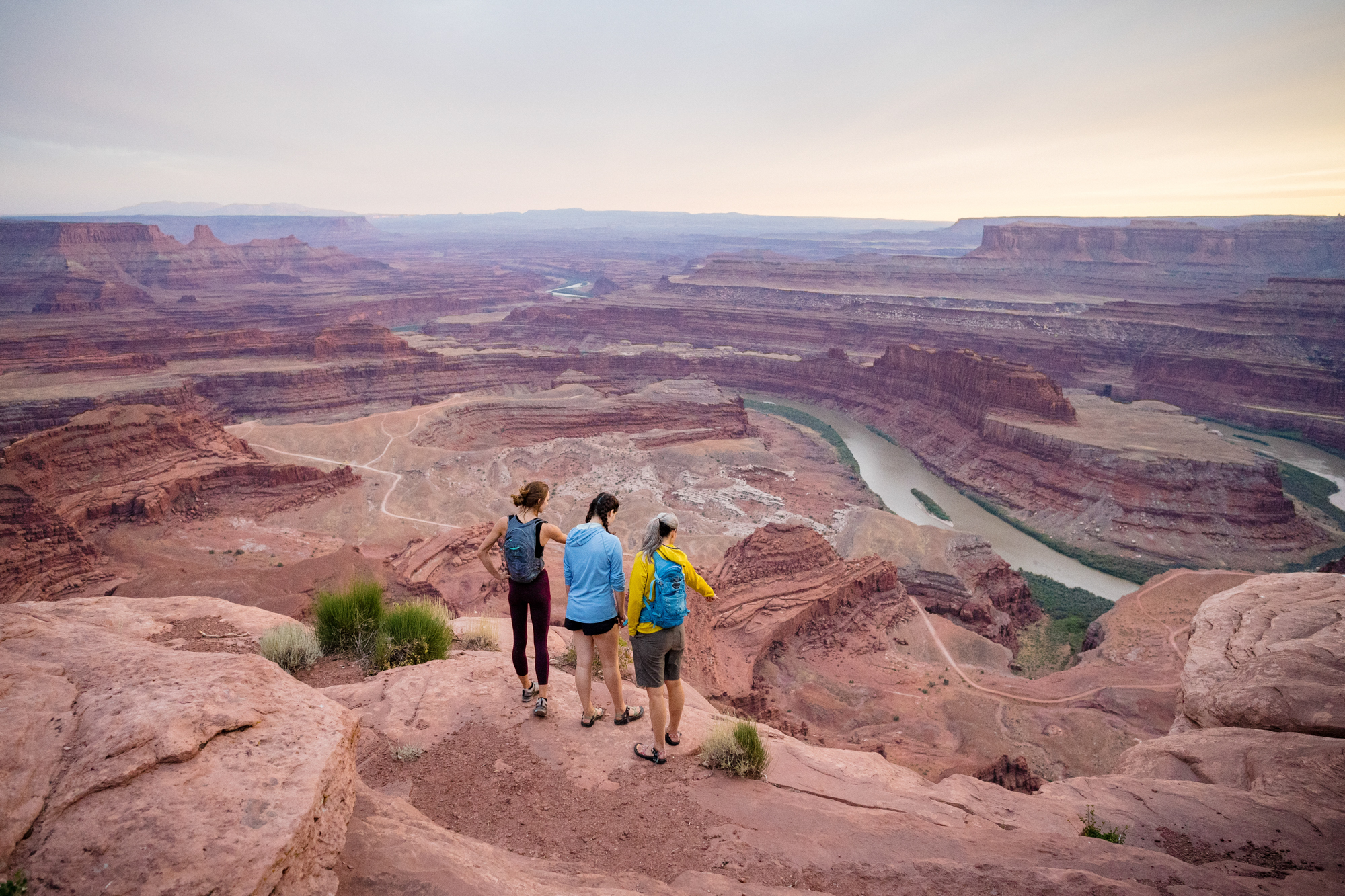
Dead Horse Point’s rim sits roughly 2,000 feet above Moab, and in fall that elevation gap is the difference between a mild morning in town and a biting wind at the overlook — pack a real jacket, not just a flannel. This state park charges a separate entrance fee from the national parks (typically $20 per vehicle, confirm current pricing at the gate), but the payoff is a viewpoint that delivers both the Colorado River gorge and the snow-dusted La Sal Mountains in a single frame.
Most visitors who drove into Arches or Canyonlands never make it here, which is exactly why you should.
Colorado River Gorge Views
The signature overlook drops your eye straight down 2,000 feet to a gooseneck bend in the Colorado River — it’s the shot that made this park famous, and fall is when it actually looks its best. Mid-October, the cottonwood trees lining the river corridor burn gold against rust-red cliffs, and the dry, clear air sharpens every detail.
The main overlook platform is paved and wheelchair-accessible, so anyone in your group can reach it. Walk past the first viewpoint, though: the short West Rim Trail stretches along the cliff edge and reveals increasingly dramatic angles of the gorge that the parking-lot crowd never sees.
Budget 30–60 minutes for the walk, not because it’s long, but because you’ll keep stopping.
Arrive by 8 a.m. on a weekday in October and you’ll likely share the rim with a handful of photographers. By 10 a.m. on a Saturday, expect a full parking lot — the overlook is small and there’s nowhere to spread out.
La Sal Mountains Backdrop
Turn around from the gorge and the La Sal Mountains fill the eastern skyline. In fall, the aspens and oaks on those slopes shift to orange and gold at roughly 8,000–10,000 feet, creating a color contrast against the red desert floor that you won’t get any other season.
Peak alpine foliage typically hits early-to-mid October, but snow can dust the peaks as early as late September, adding another layer to the backdrop.
The 60-mile La Sal Mountain Loop (covered in detail in our foliage guide) lets you drive directly into those colors after you finish at the overlooks. That combination — morning light on the Dead Horse rim, then an afternoon loop through alpine color — is one of the strongest single-day plans for fall photography in the Moab area.
Insider tip: Most visitors park at the main overlook, take the photo, and leave. Walk the West Rim Trail even a quarter mile and the La Sal backdrop opens up at a better angle with the canyon in the foreground — it’s the composition you actually came for, and almost nobody is there for it.
Colorado River Corridors with Golden Cottonwoods
The Colorado River isn’t just a border—it’s Moab’s most vivid fall artery. When the cottonwoods ignite in gold along its banks, the desert’s red rock drama gets a season-long curtain call in warm yellow.
Professor Valley Rafting Routes
Floating Professor Valley is the premier way to experience this foliage spectacle. The river runs well through October, with cottonwood trees forming a golden corridor against red cliffs.
Most commercial outfitters close by early November as water temperatures drop, so plan accordingly.
- Best for: Photographers and anyone wanting a relaxing, immersive perspective of the fall color.
- Timing: Book for mid-October for peak color. Confirm the operator’s final launch dates, as they vary annually.
- Insider detail: The late afternoon light turns the cottonwood leaves into glowing lanterns. For the best photos, ask your outfitter about a half-day trip that launches after lunch.
Kane Creek Canyon Foliage
If you prefer to keep your feet (or wheels) dry, Kane Creek Canyon is your best bet for accessible, stunning foliage without a river trip. The canyon road is an unpaved, scenic drive that follows the creek, with cottonwoods and willows creating a tunnel of color in fall.
- Best for: Drivers and mountain bikers looking for a quick, beautiful immersion from town.
- Timing: Color usually peaks from mid-September to early October, but this shifts yearly with rainfall and temperatures.
- Vehicle note: The road is generally passable for high-clearance vehicles, but conditions can change. Check with the Moab BLM office for current status, especially after any rain.
Base yourself in Moab for easy dawn or dusk access to both the river corridors and the nearby parks. The drive into town along the river road itself can offer a stunning first glimpse of the season’s color.
How to Reach Remote Desert Landscapes Without Crowds
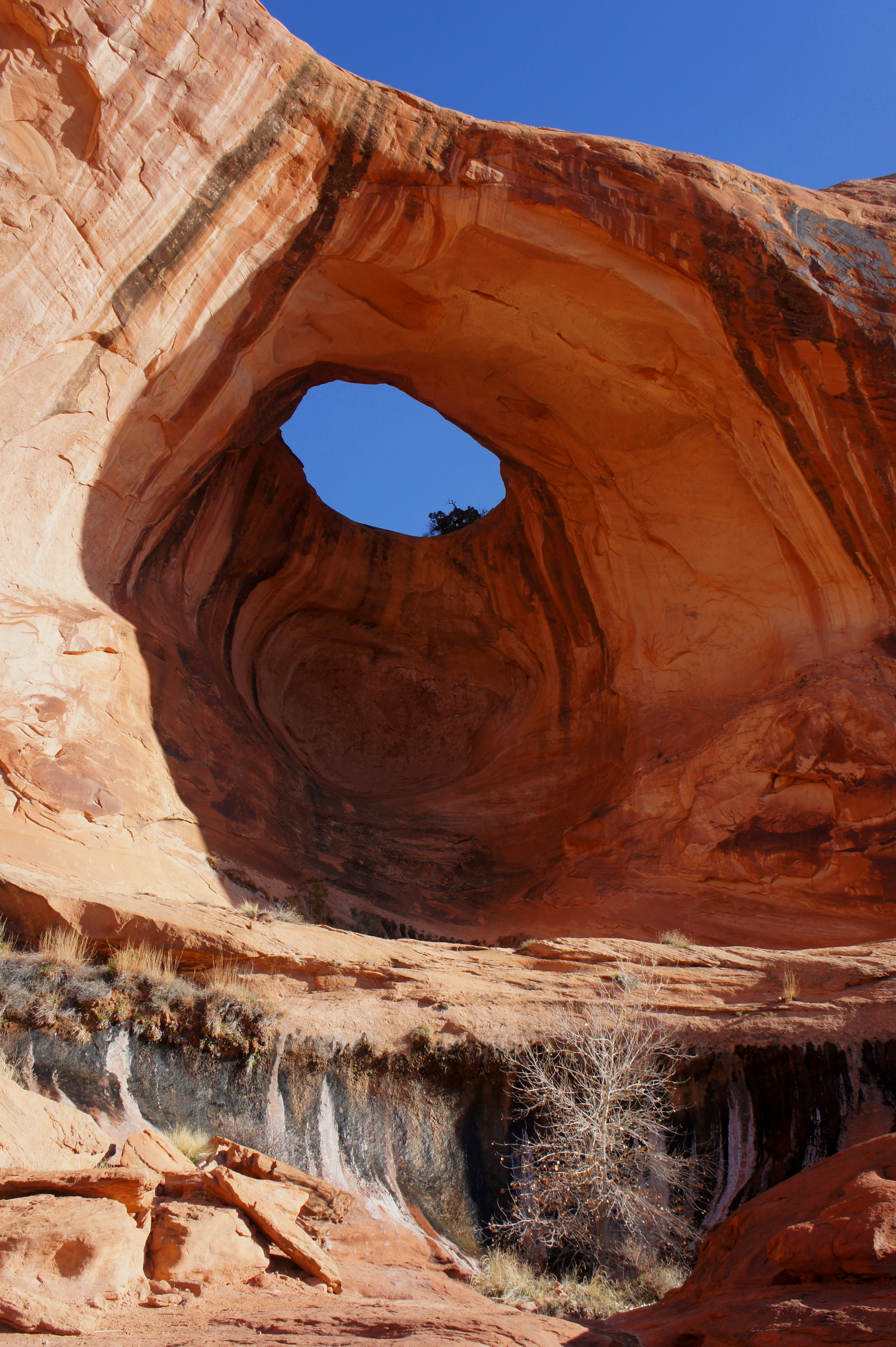
You can see Delicate Arch with only 50 other people on a fall weekend instead of 200-plus in spring. That single number justifies every early alarm this season.
Best Arrival Times for Trailheads
Arrive by 8-9 AM to secure fall trailhead parking. This timing beats the mid-morning influx while giving you soft, golden light for photography.
The window is consistent from September through November, though November’s shorter days push this slightly earlier.
- For Delicate Arch: The lot fills first. Get there by 8 AM, especially on weekends in October. You’ll hike in crisp air and beat the afternoon heat.
- For Remote Gems (Corona Arch, Fisher Towers): You have more leeway. Arriving by 9 AM is fine, but earlier is always better. These trails see roughly a dozen groups per day in fall.
- Insider Detail: Check the La Sal Mountains forecast. A cloudy morning in the valley often means clear skies at higher elevations like Fisher Towers—the opposite of what most visitors assume.
Weekday vs Weekend Access
Weekdays are non-negotiable if solitude is your priority. A Tuesday at Mesa Arch is a completely different experience than a Saturday. The difference is most dramatic in October, fall’s busiest month, and nearly vanishes by late November.
| Factor | Weekday | Weekend |
|---|---|---|
| Crowd Density | Noticeably light; you’ll often have viewpoints to yourself | Moderate; popular spots feel busy but not oppressive |
| Parking | Arrive by 9 AM for choice spots | Arrive by 8 AM for major trailheads |
| Road Access | Canyonlands Island in the Sky & Arches scenic roads flow freely | Expect slower-moving traffic, especially on paved scenic drives |
| Best For | Photographers, solitude-seekers, anyone with flexible dates | Travelers on fixed schedules; still far better than spring |
Base yourself in Moab town for quick access to both parks. This lets you capitalize on early starts without a long morning drive.
For ultimate quiet, consider a weekday stay in late October or November—lodging rates are typically more budget-friendly, and the trails belong to you.
What to Pack for Fall Desert Landscape Photography
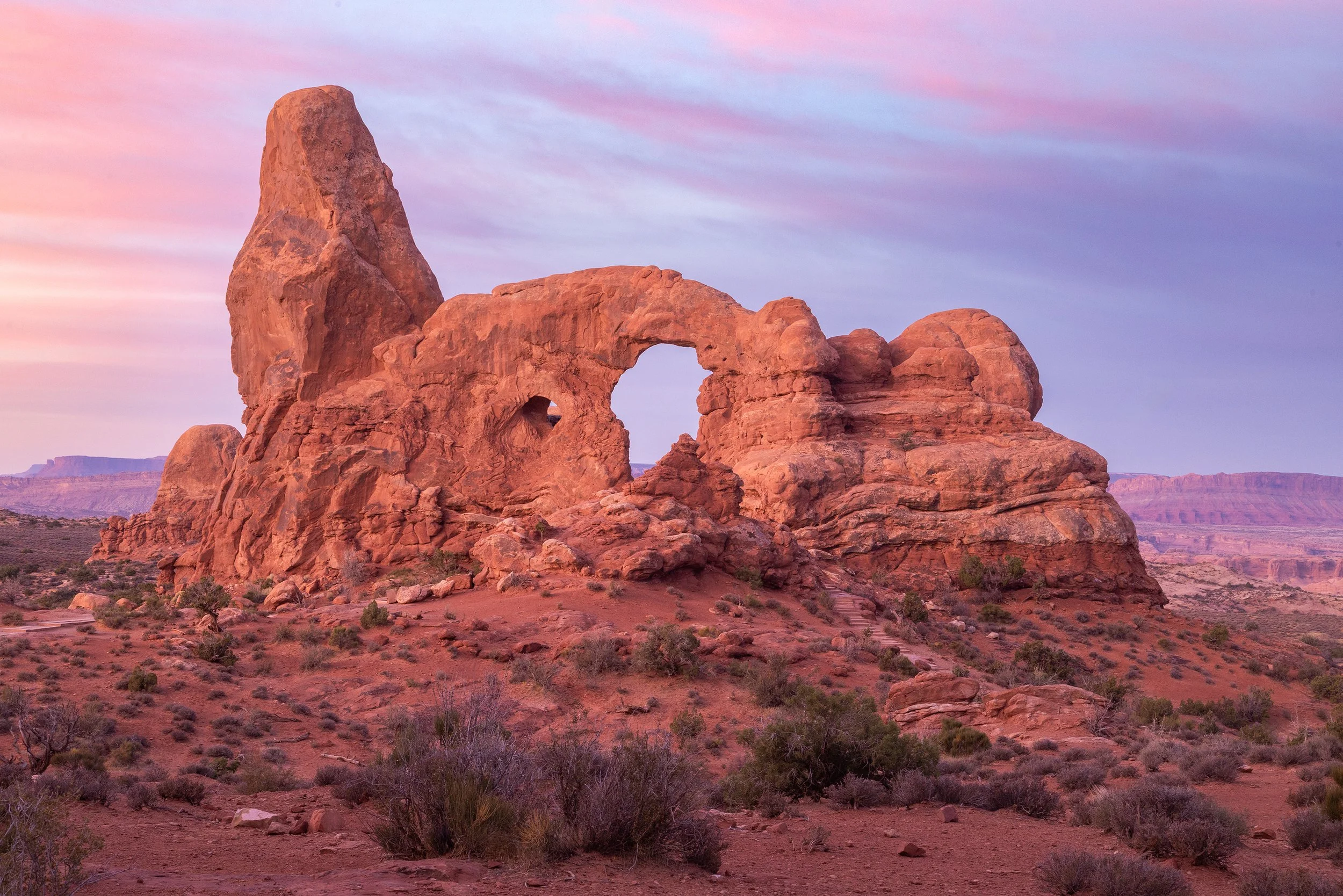
Morning frost on red rock at 50°F, midday sun baking your back at 75°F, golden cottonwoods glowing against sandstone at golden hour — Moab’s fall temperature swing is exactly what makes the light spectacular, but it will punish anyone who packs like it’s still summer. October delivers what many locals consider Moab’s best all-around weather, yet a single day can move through 25 degrees and three different lighting moods.
Pack for the range, not the average.
Layers for Temperature Swings
Moab’s fall afternoons typically hit 50–75°F, but pre-dawn shoots at Mesa Arch or Dead Horse Point start well below that, especially by late October and November. The ~2 inches of total fall rainfall means rain gear is secondary, but wind protection matters — fall wind is calmer than spring, yet canyon rims and exposed overlooks still cut through a cotton t-shirt fast.
- Base layer: Lightweight merino wool or synthetic moisture-wicking top. Skip cotton entirely — it holds sweat during midday hikes and chills you at sunrise.
- Mid layer: A packable fleece or lightweight down jacket. You will wear this every morning and stash it by 10 a.m. Down packs smaller for trail carry, but fleece handles light sweat better.
- Outer shell: A windproof, water-resistant softshell jacket. Full rain gear is overkill for most fall days here, but a softshell blocks canyon-wind gusts at overlooks without trapping heat on the hike in.
- Extremities: Thin gloves with touchscreen-compatible fingertips — your bare hands will seize up adjusting tripod knobs at a 5:45 a.m. Mesa Arch setup. A lightweight beanie for dawn shoots, a brimmed hat or buff for midday sun.
- Legs: Convertible hiking pants beat dedicated shorts and long pants for the daily temperature swing. Lightweight synthetic, not denim.
Essential Gear for Red Rock and Foliage Shots
Moab’s fall light works differently than most destinations. Daylight runs 10–13 hours across the season, and the low-angle autumn sun hitting Wingate sandstone produces reds and oranges that are nearly impossible to reproduce in summer’s overhead glare.
Cottonwoods along the Colorado River corridor peak mid-October, and the La Sal Mountains may carry early snow for backdrop contrast. Your gear should handle both landscape scale and color detail.
- Polarizing filter: The single most important filter for red rock photography. It deepens blue skies against orange sandstone and cuts glare off wet rock or river surfaces. Circular polarizer, 77mm or sized to your widest lens — buy a step-up ring if needed rather than multiple sizes.
- Graduated neutral density (GND) filter: Moab’s high-contrast scenes — bright sky over dark canyon walls at Island in the Sky or Dead Horse Point — demand a 2- or 3-stop soft-edge GND. Digital bracketing works too, but a GND lets you nail the single exposure in fast-changing dawn light.
- Sturdy tripod with low-angle capability: Arches and Canyonlands compositions frequently need ground-level perspectives shooting up at formations or across slickrock. A tripod with independently adjustable legs that splay flat beats a center-column design here.
- Wide-angle lens (14–24mm range): Essential for formations like Double Arch and the Fiery Furnace slot canyons, and for foreground-background compositions across Canyonlands’ mesa vistas. Pair with the polarizer for the signature Moab look.
- Telephoto lens (70–200mm): Compresses the La Sal Mountains against red rock spires and isolates cottonwood clusters along Kane Creek Canyon or Professor Valley. This is the lens most visitors leave in the car and regret.
- Extra batteries: Cold mornings drain lithium-ion batteries 20–30% faster. Carry at least one spare in a warm pocket, not buried in your pack.
- Microfiber cloths (plural): Fine red sand is ubiquitous and abrasive. One for the lens, one backup, stored in zip-lock bags. Blowing dust at exposed overlooks coats gear faster than you expect.
Insider tip: The best red rock color saturation happens roughly 30–45 minutes after sunrise, not at the moment of first light. The warm directional light hitting east-facing walls like those along the Windows Section produces the richest reds before the sun climbs high enough to flatten the contrast.
Plan your arrival at the trailhead 20 minutes before sunrise, but keep shooting past the “golden hour” window most guides recommend — in Moab’s fall, the color deepens as the light rises.
Frequently Asked Questions
Is Moab too cold to visit in fall?
Not for September and October — those months deliver daytime highs between 60°F and 80°F, which most hikers and photographers consider ideal desert conditions. Mornings run cool enough to want a layer by the trailhead, but you’ll shed it by mid-morning.
Late November is a different story: highs drop into the 50s and overnight lows can hit the 20s, so that month only works if you’re prepared for genuinely cold desert mornings and shorter daylight windows.
How crowded does Moab get in fall?
Fall is Moab’s second-busiest season, but that still means dramatically fewer people than spring. Expect roughly 50 to 70 weekend visitors at Delicate Arch versus 200-plus during peak spring weeks.
Quieter trails like Corona Arch or Fisher Towers see about a dozen groups per day. Arriving by 8 or 9 a.m. still secures fall trailhead parking without the pre-dawn scramble spring demands.
If solitude matters most, target late October through November — that window delivers the thinnest crowds of the entire season.
Which fall month is best for visiting Moab?
October is the consensus pick among locals, and for good reason: it combines the best all-around weather, peak cottonwood color along the Colorado River (typically mid-October), and noticeably thinner crowds compared to September. September still carries late-summer warmth and works better for rafting and river activities, while November trades foliage and heat for total solitude and crystal-clear views.
Pick your priority — October balances all three, but each month wins decisively on one.
Is rafting still available in Moab during fall?
Yes, but the window closes faster than most visitors expect. Commercial rafting on the Colorado River typically runs through late October or early November, depending on the outfitter and water levels.
September and early October are your best bets for warm-water conditions and full trip availability. By late October, fewer operators run daily departures and river temperatures drop noticeably — book with your chosen outfitter directly to confirm current schedules before committing to dates.
Start Planning Your Moab Fall Trip Now
Lock in your October dates and book lodging in Moab today — that town is the hub between Arches, Canyonlands, and Dead Horse Point, and the best mid-range options disappear fast once fall foliage photos start circulating on social media. Target the first week of October if your schedule bends at all; it is the sweet spot where color, weather, and manageable crowds all overlap.
Fall in Moab is worth your time because it is the single season where the desert delivers everything at once — warmth, color, light, and breathing room — without forcing you to compromise on any of it. I have visited in spring, summer, and winter, and fall is the only time I left already planning my return.
Pin this guide now so you have every overlook, trailhead, and timing detail ready the moment you sit down to plan your trip.
Leave a Reply