
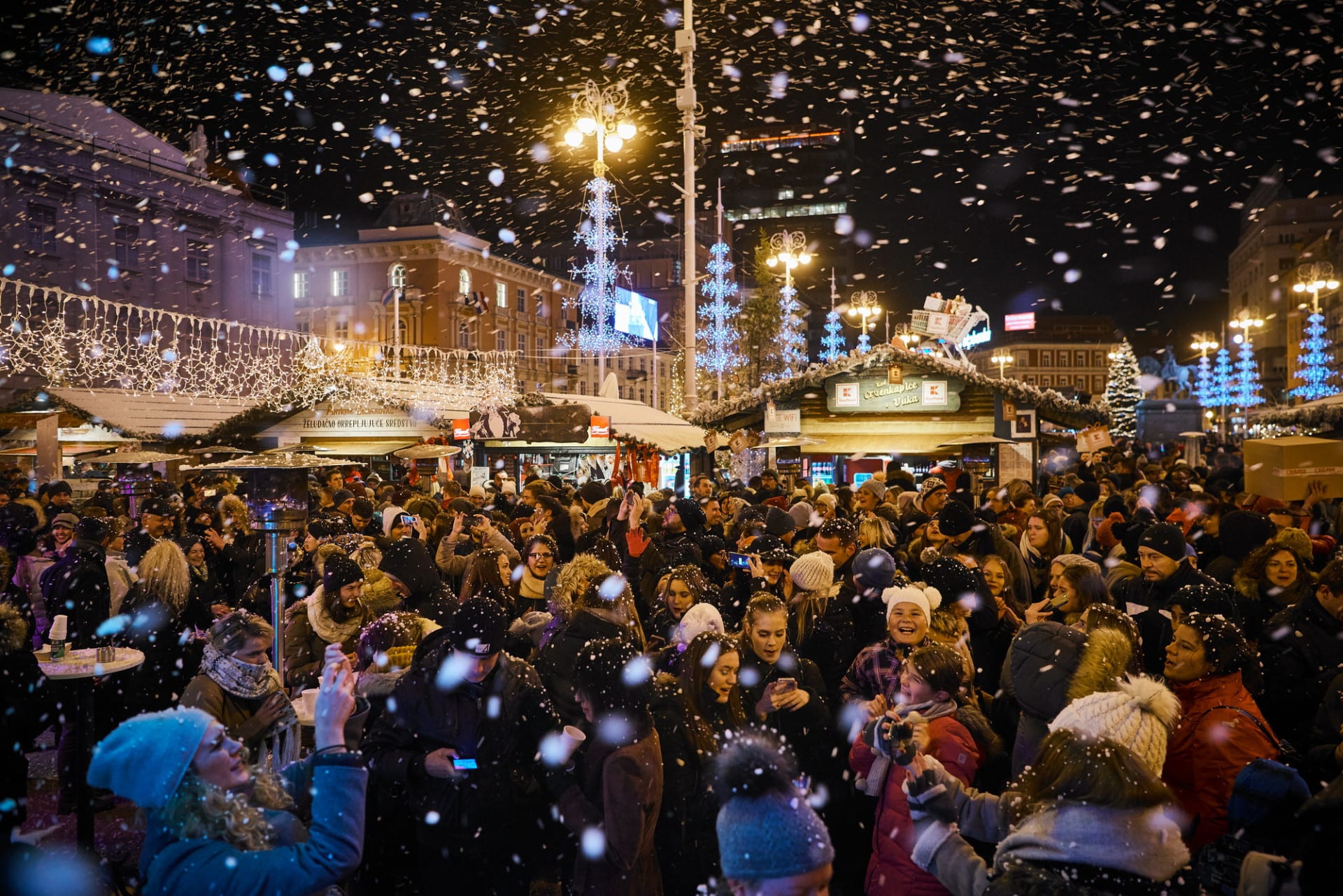
Warm sugar-dusted fritule in one hand, your phone in the other, you’re standing beneath a canopy of lights so dense the sky disappears entirely. Above you in Zagreb, the Strossmayer Promenade glows amber against medieval stone, and every direction offers a shot worth posting before the mulled wine cools.
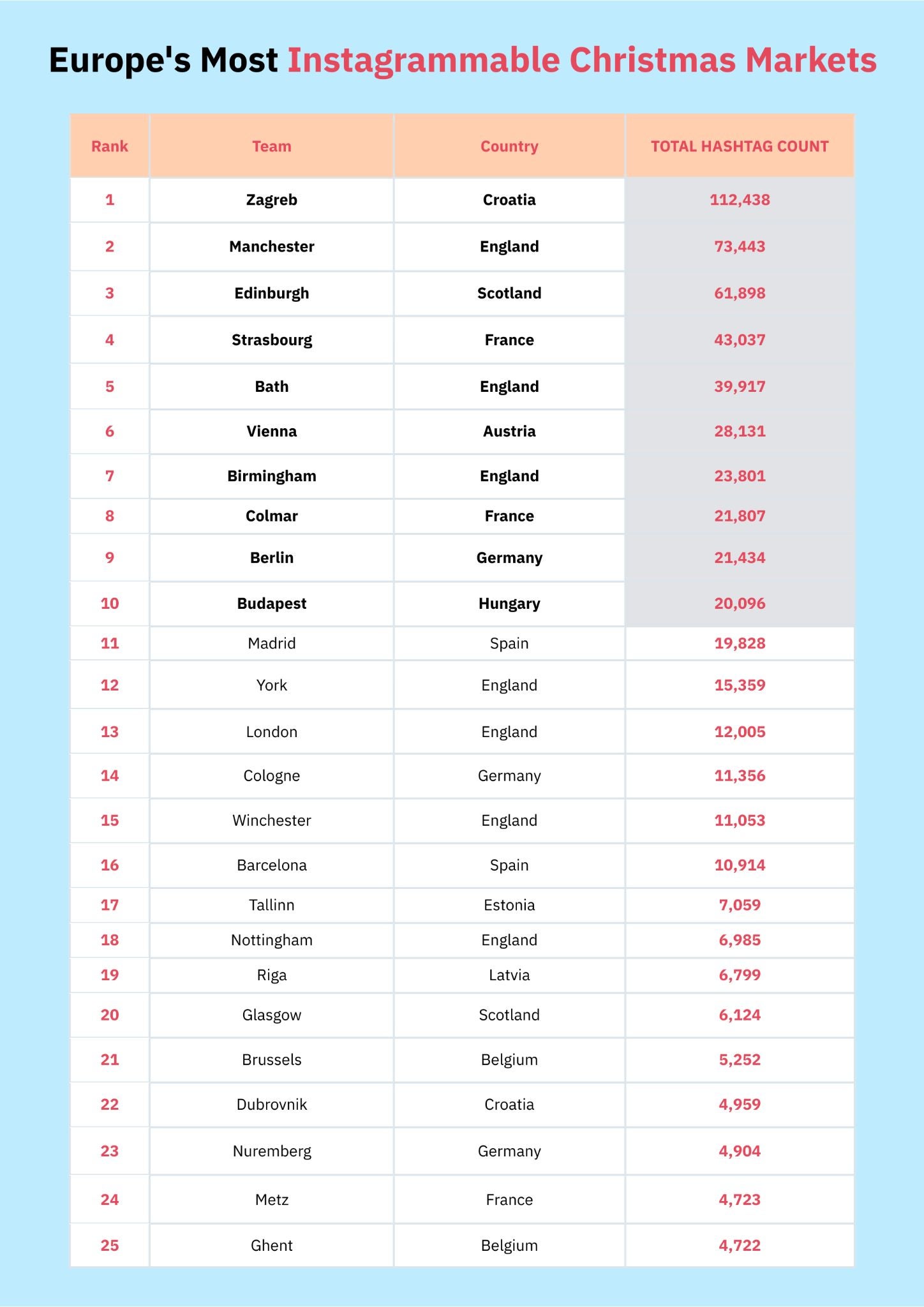
What makes these markets different from a holiday display at your local mall is the sheer density of photogenic moments per city block. Zagreb alone has generated over 112,000 Instagram hashtags — tripling the next closest competitor — because its Advent festival spills across the entire historic core instead of cramming into one square.
This guide ranks Europe’s Christmas markets by verified Instagram hashtag data, then tells you exactly which ones match your travel style, when to go, and what to eat when you get there.
Budget roughly €40–80 per person per day on food, drinks, and stalls at most markets, with mulled wine running €2–8 depending on the city. Flights from the U.S. to major European hubs typically range from $350 (budget off-peak) to $900+ (peak December), while a comfortable mid-range hotel near the market averages €100–180 per night.
Splurge stays in places like Strasbourg’s Grande Île or Edinburgh’s Old Town can run €250–400 nightly.
Top 25 Most Instagrammable Christmas Markets in Europe (2025 Rankings)
Forget the usual suspects. The data reveals a clear social-media winner and some stunning upsets in the race for Europe’s most photogenic festive markets. This ranking cuts through the noise, showing exactly where your phone will get the most likes.
How We Ranked These Markets: The Hashtag Methodology Explained
This isn’t a popularity contest based on vibe alone. The ranking is built on a single, verifiable metric: total Instagram hashtag volume for each market’s primary location tag (e.g., #zagrebchristmasmarket).
The raw numbers are a direct proxy for how many people felt compelled to photograph and share each market. While visitor numbers and snow probability matter for a “festive” trip, pure visual shareability is the rule here.
A critical note: different studies use different data sets and timeframes. The top-spot discrepancy you might see online (Zagreb vs.
Manchester) stems from this. Our consolidated table below prioritizes the most current available data to reflect the 2025 season.
Why Zagreb Crowned the Number One Spot With Over 112,000 Hashtags
Zagreb’s victory isn’t just a number—it’s a function of smart, city-wide design. The market isn’t contained in one square; it’s a “Festival of Advent” that weaves through the entire historic core, creating a non-stop sequence of photo opportunities.
You walk from Zrinjevac Park’s romantic, light-draped trees to the Tomićeva Street funicular for panoramic shots, then up to the Strossmayer Promenade for views over the twinkling rooftops.
The market’s scale and diversity are its Instagram engine. You get ice sculptures, live music stages, artisan stalls in Upper Town’s cobblestone lanes, and massive illuminated installations—all within a 20-minute walk.
This density of unique, high-contrast backdrops is why Zagreb generates more shareable content per square foot than markets relying on a single iconic square.
- Decision Factor: Best for travelers who want a full-day immersion and non-stop variety.
- Insider Tip: Visit after Christmas Eve. The official market runs until early January, and the crowds thin dramatically while the lights stay on, giving you clearer shots.
- Stay Strategy: Base yourself in Donji Grad (Lower Town) for walkable access to the central market hubs at Zrinjevac and Trg bana Jelačića.
Europe’s 5 Most Instagrammable Christmas Markets: Why They Dominate Social Media
These five markets collectively pulled in over 327,000 Instagram hashtags — and every single one has a food scene that’s doing more heavy lifting for its social media presence than most visitors realise. The lights draw you in; the eating is what makes you post.
| Market | Hashtags | Signature Shot | Food Highlight |
|---|---|---|---|
| Zagreb, Croatia | 112,438 | Strossmayer Promenade at dusk | Fritule and Croatian street food under lights |
| Manchester, England | 73,443 | Giant Santa sculpture | Multi-national chalet vendor variety |
| Edinburgh, Scotland | 58,735 | Ferris wheel framing the castle | Whisky-laced hot chocolate and haggis bon bons |
| Strasbourg, France | 43,037 | Half-timbered Petite France streets | Flammekueche and Alsatian vin chaud |
| Bath, England | 39,917 | Bath Abbey behind the stalls | Somerset cider and artisan cheeses |
Zagreb, Croatia — Twinkling Lights, Ice Sculptures, and the Strossmayer Promenade
Zagreb’s 112,438 hashtags put it in a league of its own — no other European market comes close. The city doesn’t concentrate everything in one square.
It spreads across the entire historic centre, so every turn produces a different frame: illuminated trees in Zrinjevac Park, ice sculptures under spotlights, and the Strossmayer Promenade’s elevated city views that are unbeatable at dusk.
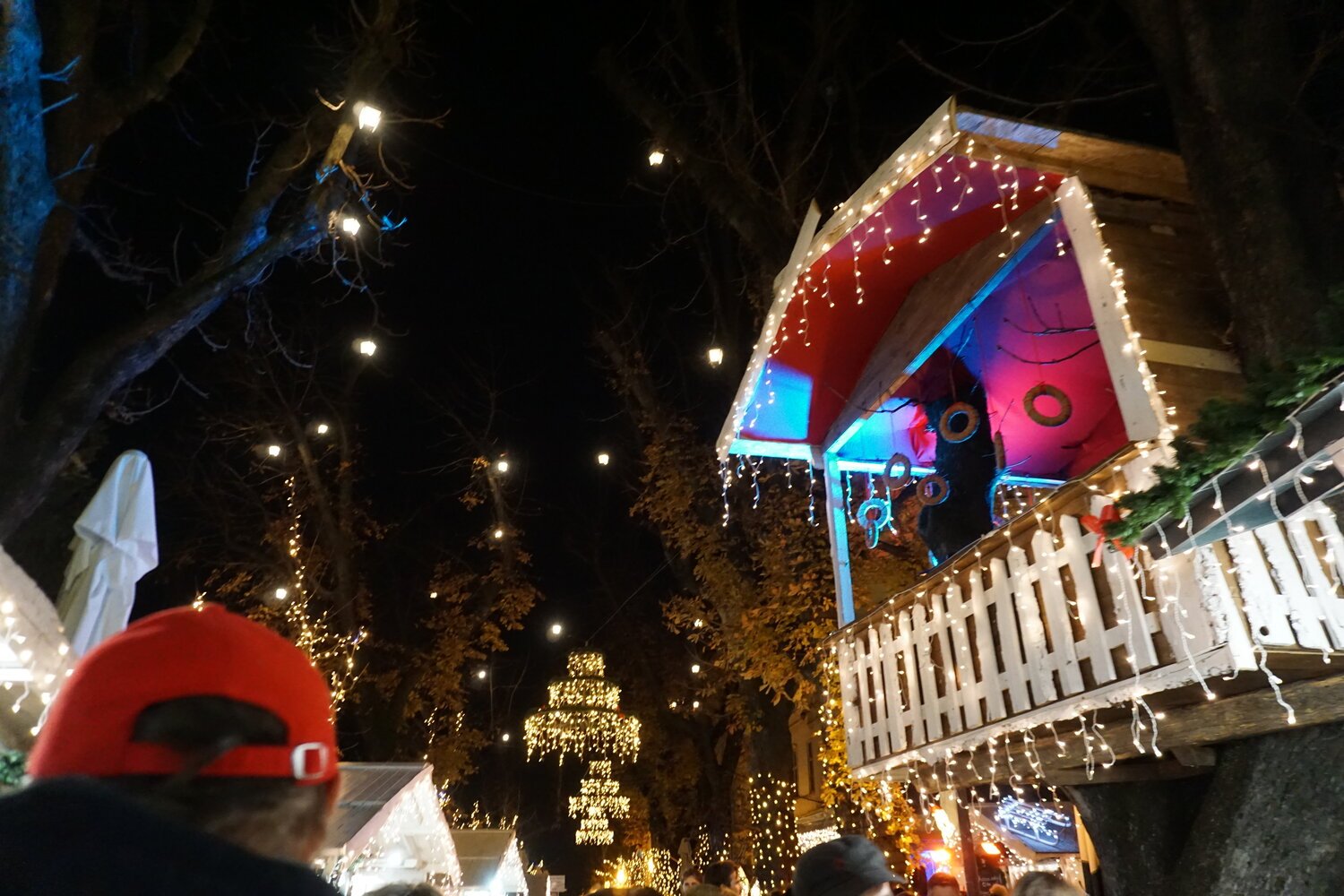
The food stalls here lean Croatian — grilled sausages, ćevapi, and fritule, those mini doughnuts dusted with powdered sugar that photograph like edible snowballs. Mulled wine typically runs €2–4 per cup, noticeably cheaper than Western European markets.
The wooden stall design, strung with lights against Austro-Hungarian architecture, makes even a humble cup of kuhano vino look editorial.
Insider tip: Arrive at the Strossmayer Promenade just before sunset. The elevated vantage catches the last light on Zagreb’s rooftops while the market lights below start flickering on — that 20-minute window produces the golden-hour-meets-twinkling-lights shots that drive the highest engagement.
Base yourself in the Upper Town (Gornji Grad) for walkable access to every market cluster without relying on trams.
Manchester, England — The Giant Santa, European-Style Chalets, and City Energy
Manchester earns its 73,443 hashtags through sheer scale and one prop no other city can match: the enormous Santa sculpture that towers over the market. Spread across Albert Square, St. Ann’s Square, and Exchange Street, the market creates a sprawling maze of European-style chalets where German bratwurst sits steps from Dutch poffertjes and French crêpes.
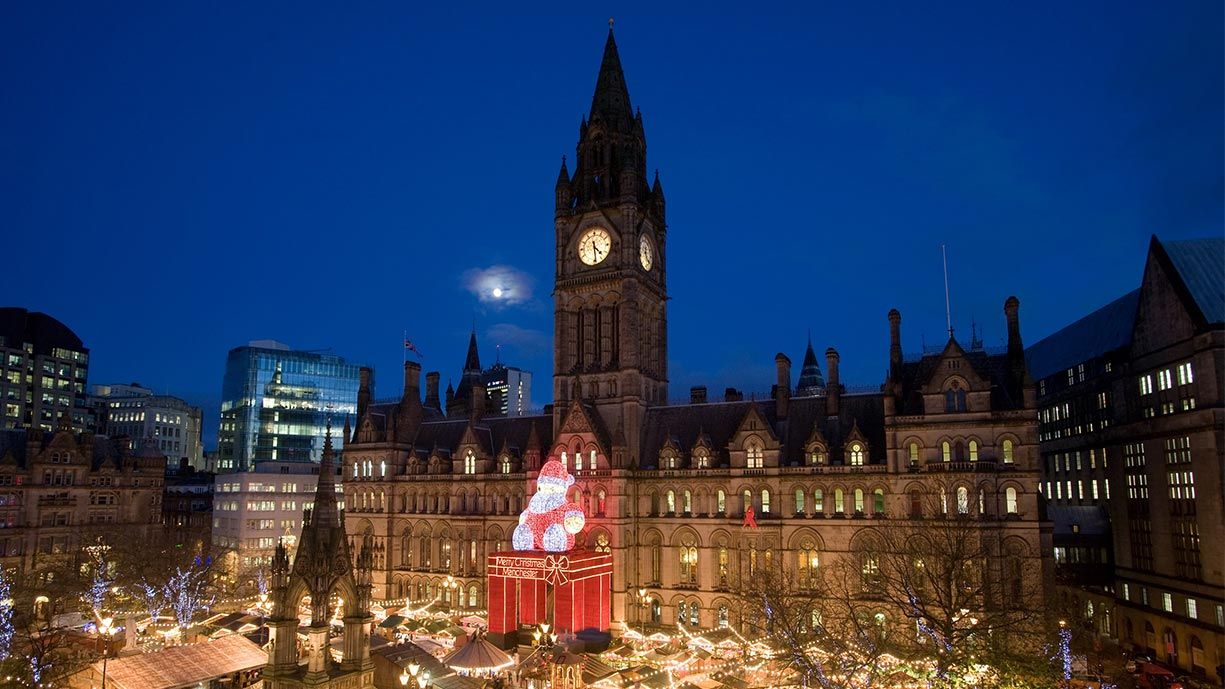
That food diversity is the real content-creator advantage. Unlike markets anchored to one national cuisine, Manchester’s vendor mix means your feed gets variety — a raclette pull in one square, a hog roast in the next.
The city’s energy also means better-lit streets and longer hours than most UK markets, typically running until around 8–9pm. Prices here skew £5–8 for main dishes, £3–5 for drinks.
Best strategy: Start at Albert Square for the giant Santa photo — it’s the single most-shared image from any UK Christmas market — then weave through the chalets toward St. Ann’s Square where food stalls pack in densest. Weekday afternoons before 4pm give you the optimal light-to-crowd ratio.
Edinburgh, Scotland — Castle Backdrops, the Ferris Wheel, and Old Town Charm
Edinburgh’s 58,735 hashtags are powered by one advantage no other market can replicate: the castle. The Christmas market in Princes Street Gardens sits with Edinburgh Castle looming directly above, creating a backdrop that turns a standard market shot into something cinematic.
The large Ferris wheel frames the castle through its spokes — a compositional element that’s become the city’s definitive festive image.
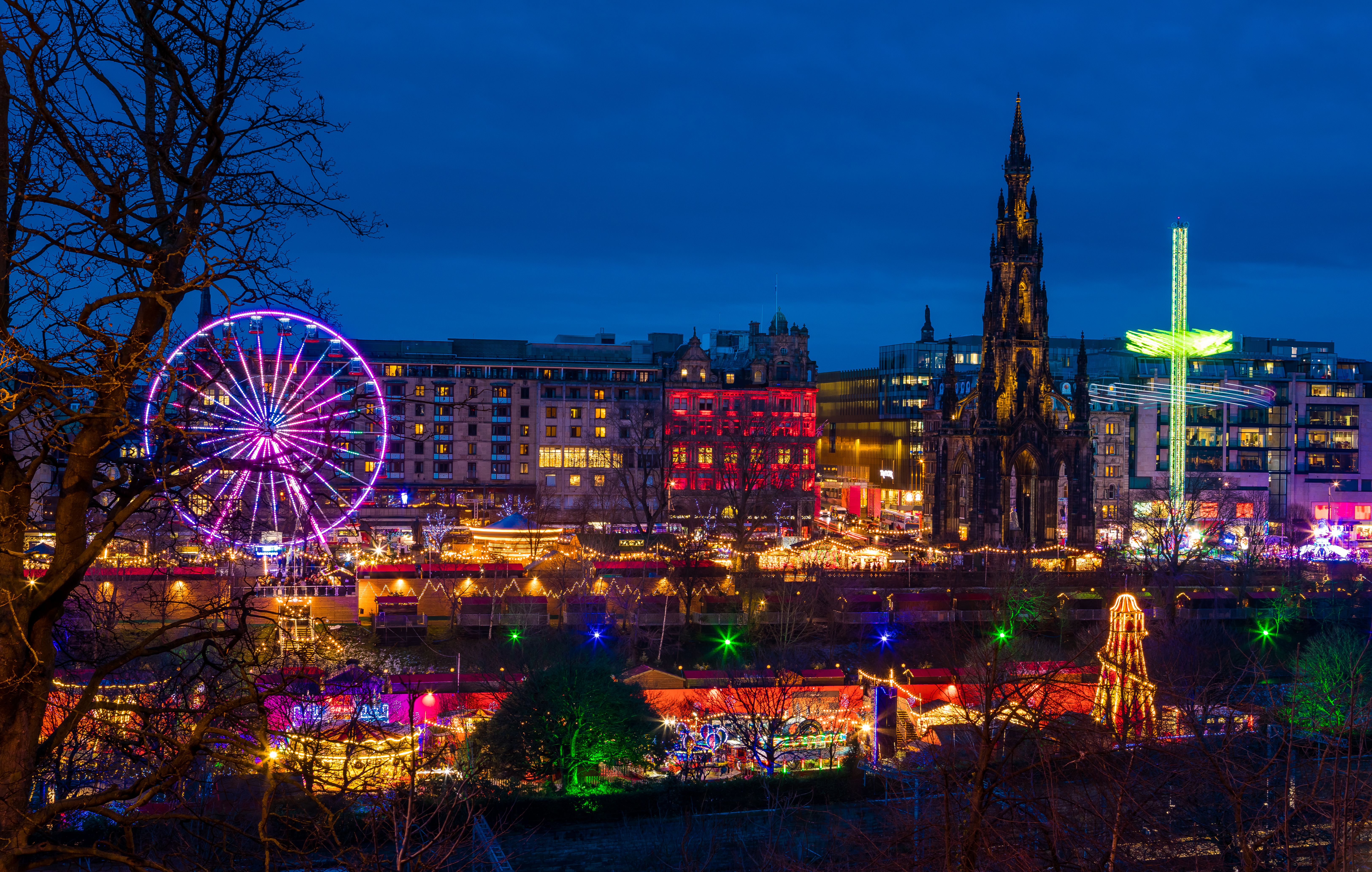
The food stalls lean Scottish: haggis bon bons, venison burgers, whisky-laced hot chocolate, and tablet — a crumbly Scottish fudge that photographs beautifully in close-up. The market usually runs mid-November through early January, though exact dates shift annually — confirm with Edinburgh’s city events page before booking flights.
Don’t miss: Walk up the Mound toward the Royal Mile after dark. Looking down at the market with the castle lit above it produces an angle almost nobody captures from ground level, and it outperforms the standard eye-level shots consistently.
For overnight stays, Old Town guesthouses on Cockburn Street or the Grassmarket put you within a five-minute walk of both the market and the best vantage points.
Strasbourg, France — The Capital of Christmas, Half-Timbered Houses, and Place Kléber
Strasbourg doesn’t just host a Christmas market — it invented the concept. Called “Capitale de Noël” by the French, it’s one of Europe’s oldest, dating back to 1570.
The 43,037 hashtags reflect a setting that looks AI-generated but isn’t: half-timbered houses draped in golden lights, a towering Great Christmas Tree in Place Kléber, and a cathedral square that glows amber after sundown.
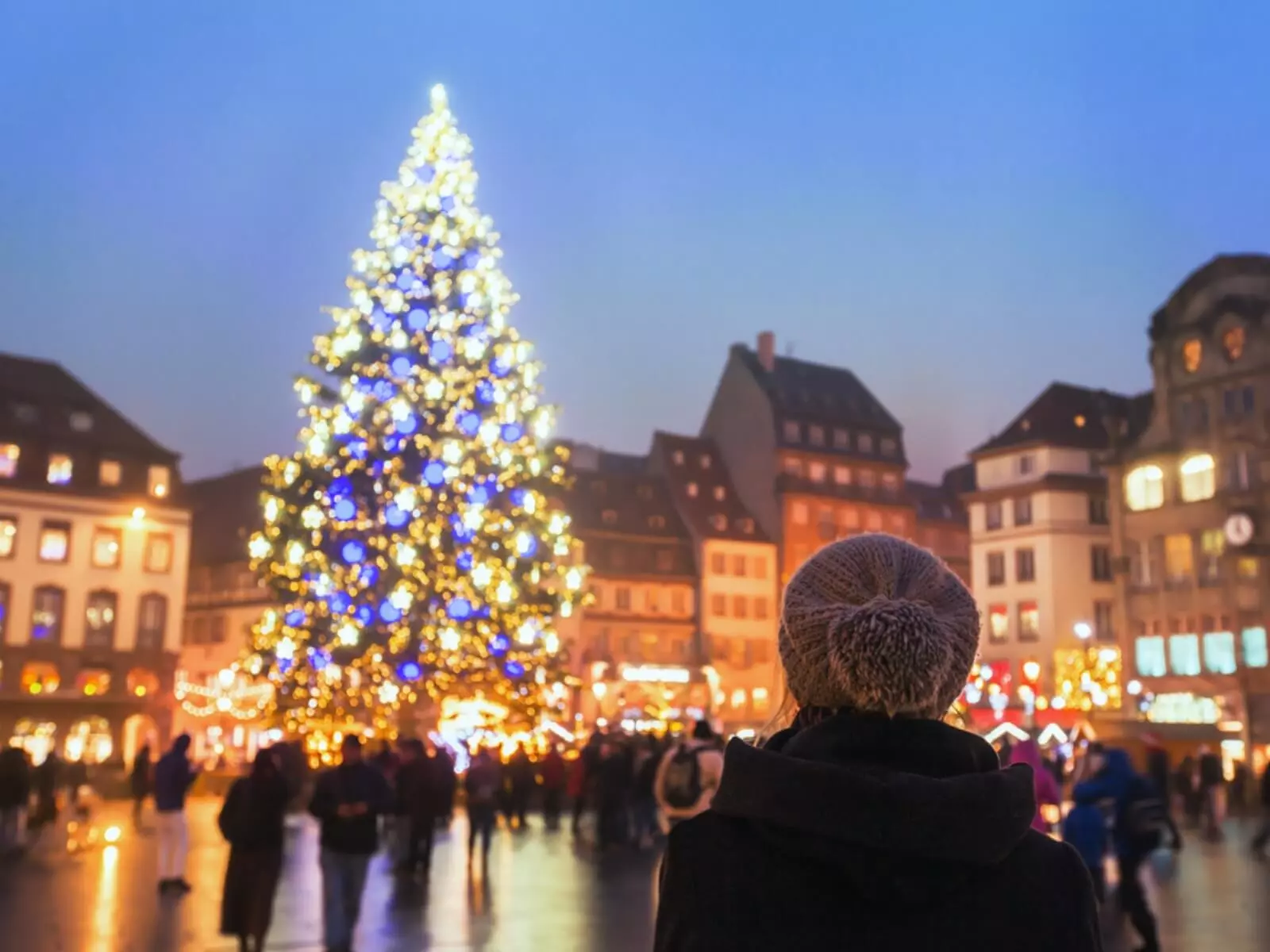
This is where Alsatian cuisine steals the show. Flammekueche — thin-crust flatbread with crème fraîche, onions, and lardons — runs about €5–8 for a generous portion.
Bredele, traditional spiced Christmas biscuits, fill bags at nearly every stall. Vin chaud here is spiced properly with cinnamon and star anise, usually €3–5.
The food isn’t just photogenic; it’s legitimately some of the best eating at any European Christmas market.
Insider detail: The market spreads across 10-plus locations throughout the city, but the most photogenic cluster is around Petite France — the neighbourhood of canals and timber-framed buildings. Go before 10am when stalls are setting up and streets are empty.
The half-timbered facades with garland and lights but no crowds produce the fairy-tale shots that dominate Strasbourg’s hashtag feed. Stay in Grande Île for walkable access to every market site.
Bath, England — Georgian Architecture, Bath Abbey, and Artisan-Led Stalls
Bath’s 39,917 hashtags come from a market that trades scale for atmosphere. Where Manchester and Zagreb go big, Bath goes intimate.
The stalls wind through streets of honey-coloured Georgian stone, and Bath Abbey’s Gothic façade rises directly behind the market — a backdrop that looks like a Dickens novel come to life.
The food focus is distinctly artisan. Bath’s market emphasises local producers over international vendors: Somerset cider, handmade chocolates, Bath chaps (a traditional cured pork specialty), and award-winning cheeses from nearby farms.
If you care about photographing genuine craftsmanship over commercialised chains, Bath delivers far more than its hashtag count suggests. Prices hover around £4–7 for hot food servings.
Practical note: Bath’s market runs a shorter window than most — typically about 18 days in late November through mid-December, so timing matters. Book accommodation early; the city is compact and rooms fill fast.
A guesthouse within walking distance of the Abbey puts you steps from everything, since the entire market clusters within a 10-minute radius.
Which European Christmas Markets Are Best for a White Christmas?
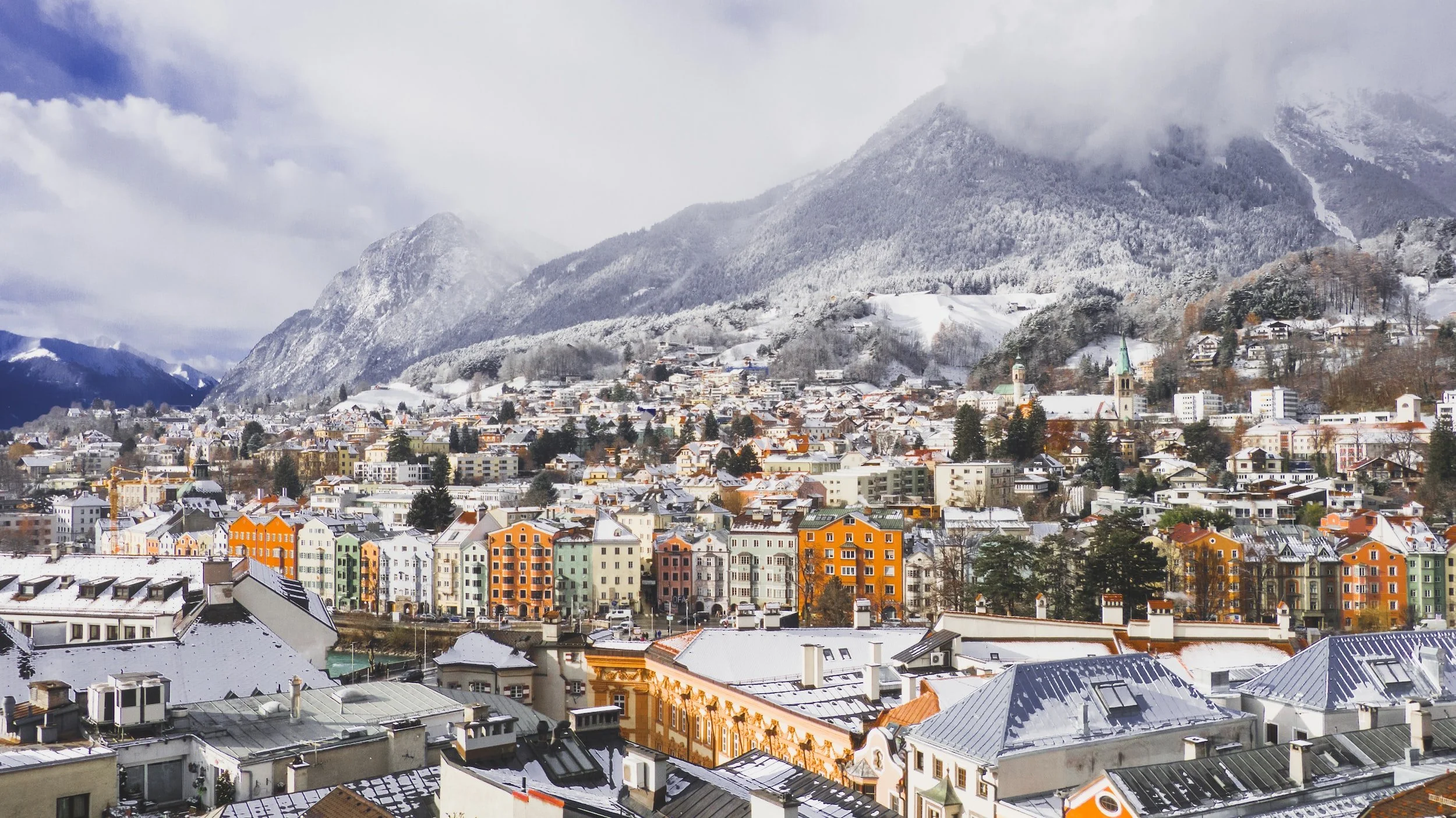
Snow on cobblestones changes everything — the fairy lights multiply, the glühwein steam curls higher, and every photo looks like it belongs on a postcard. If you’re chasing that white Christmas backdrop, these markets give you the best statistical odds in Europe.
| Market | Snow Probability (per day) | Snow Days/Month | Instagram Hashtags |
|---|---|---|---|
| Innsbruck, Austria | 46% | 13.7 | 1,000 |
| Tallinn, Estonia | 40% | 12 | 5,000 |
| Helsinki, Finland | 39% | 11.6 | 1,000 |
| Riga, Latvia | ~35–40%* | ~10–12* | Lower volume |
| Oslo, Norway | ~35–40%* | ~10–12* | Lower volume |
*Riga and Oslo snow data is estimated from regional climate averages, not the same study source as the top three.
Innsbruck, Austria — Snow-Covered Mountains and a 46% Chance of Snow
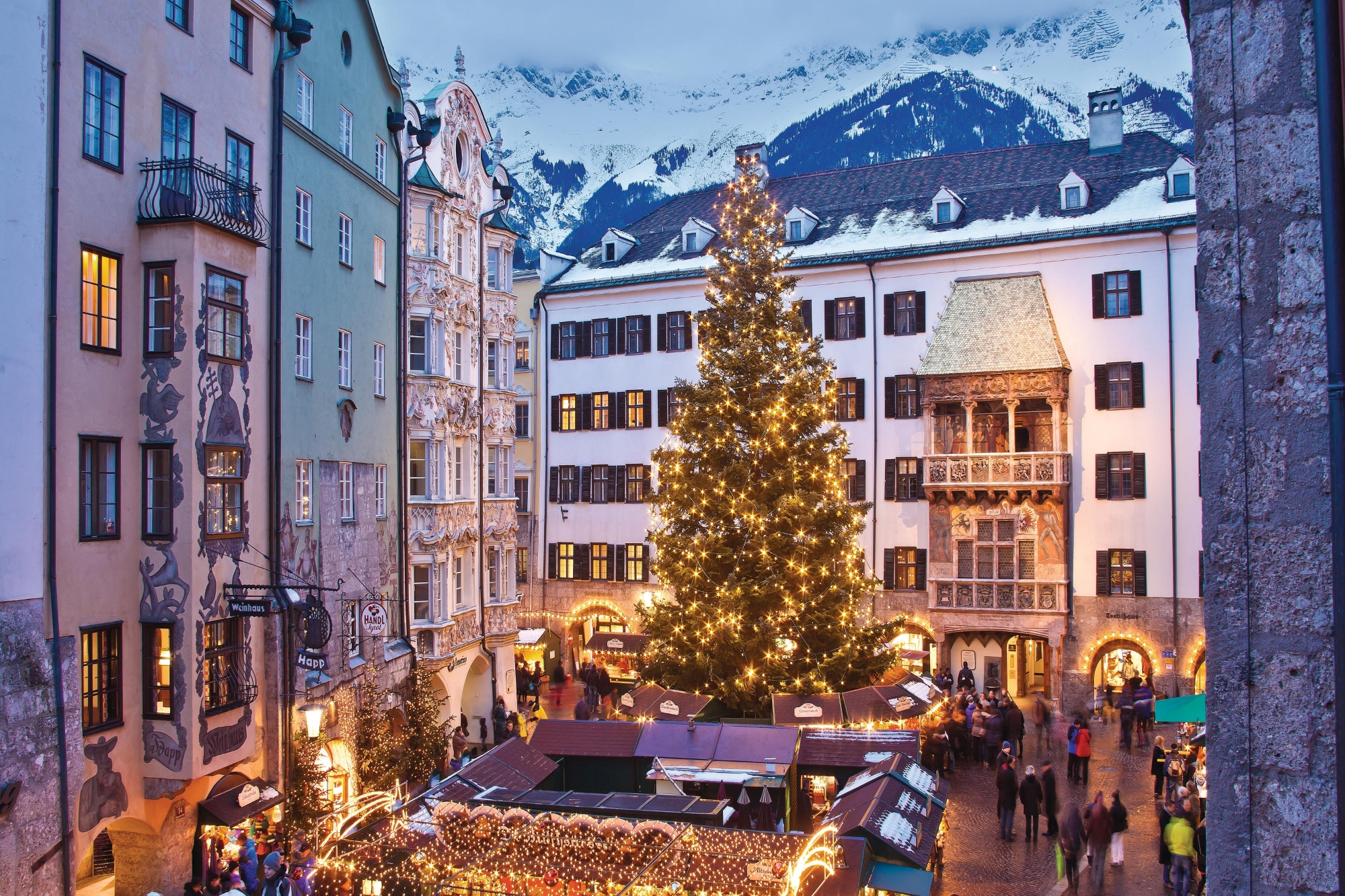
Innsbruck takes the top spot for a white Christmas market visit, scoring 95 out of 100 in festivity rankings. The city sits in a valley ringed by the Nordkette range, so even when the Old Town streets are merely cold, the peaks above are blanketed in white — giving every photo a dramatic alpine frame that flat-city markets simply cannot match.
- Snow odds: 46% daily chance during market season, averaging 13.7 snow days per month — the highest in Europe.
- Market scene: Six individual market locations spread across the Old Town, Maria-Theresien-Straße, and Hungerburg. The Maria-Theresien-Straße market sits on a wide pedestrian boulevard lined with Baroque facades.
- Visitor volume: Expect roughly 600,000 visitors across November and December — a 19% spike compared to off-season months. Weekends near mid-December are packed.
- Base yourself: Stay in Innsbruck’s Altstadt (Old Town) for walkable access to multiple markets. Hotels along Maria-Theresien-Straße put you between two major market clusters.
Insider tip: Take the Nordkette funicular up to Hungerburg for a panoramic snow photo above the city, then walk down through the Hungerburg Christmas market on your return — most visitors only visit the low-altitude markets and miss this one entirely.
Tallinn, Estonia — Medieval Old Town With a 40% Chance of Snow
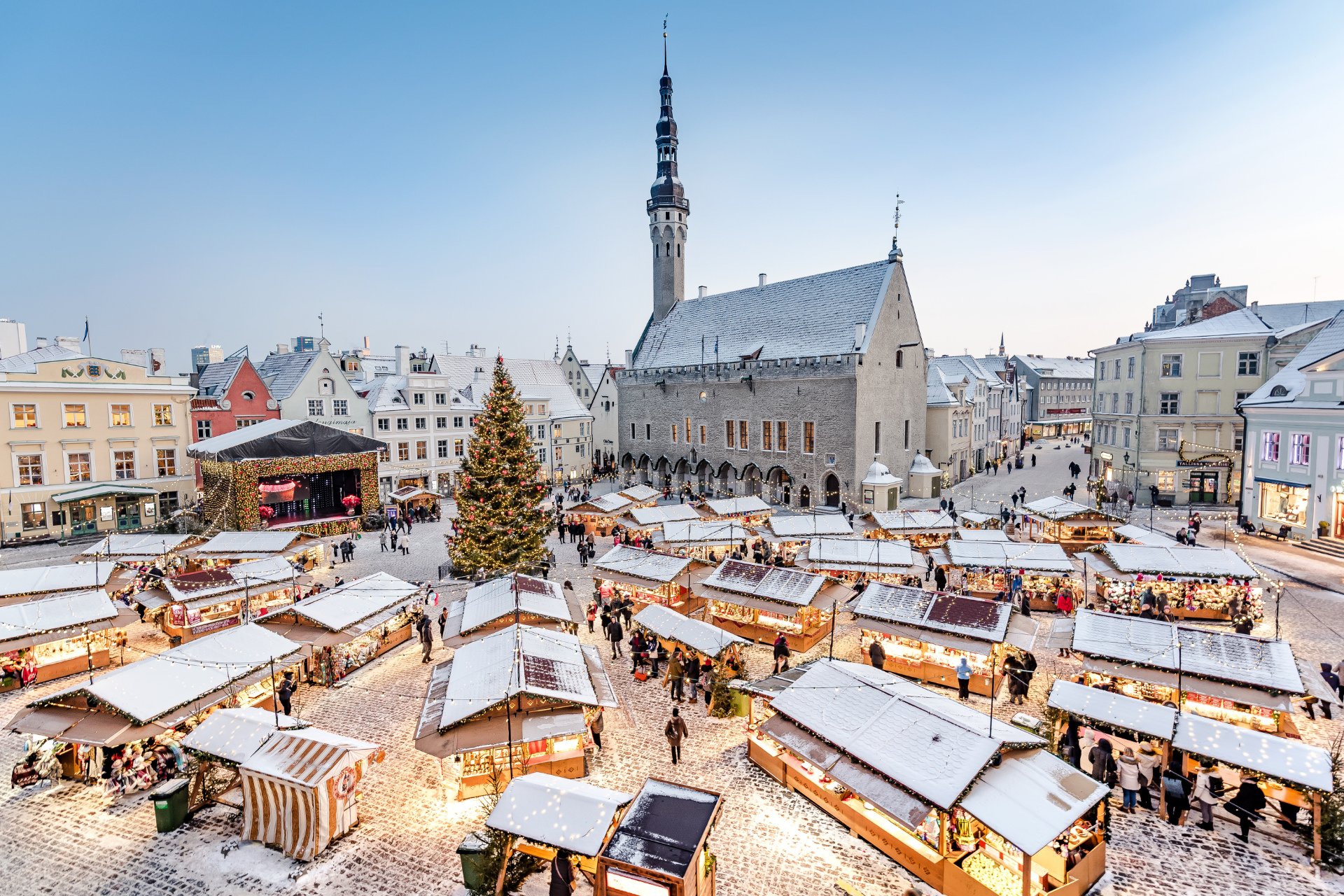
Tallinn is the sleeper pick for a white Christmas market trip. The medieval Old Town — UNESCO-listed, with Gothic spires, merchant houses, and cobblestone lanes — looks genuinely otherworldly under fresh snow.
The market fills Town Hall Square (Raekoja plats), and the 40% daily snow probability means you have real chances of catching it mid-blizzard.
- Snow odds: 40% daily chance, averaging 12 snow days per month in November–December.
- Market scale: Smaller and more intimate than Western European counterparts — the entire market sits in a single square, surrounded by cafés and restaurants with heated terraces.
- Getting there: Flight demand to Tallinn jumps 28% during market season. Book flights early — direct routes from major European hubs are limited and fill fast.
- Base yourself: Stay inside the Old Town walls for the full medieval immersion. Hotels in the Vanalinn neighborhood keep you steps from Town Hall Square.
Insider tip: Visit on a weekday morning before 11 a.m. The square is nearly empty, the snow is untracked, and you can photograph the market stalls without a single person in frame. By noon, day-trippers from Helsinki ferry arrivals fill the square.
Helsinki, Finland — Closest to Lapland and 11.6 Snow Days Per Month
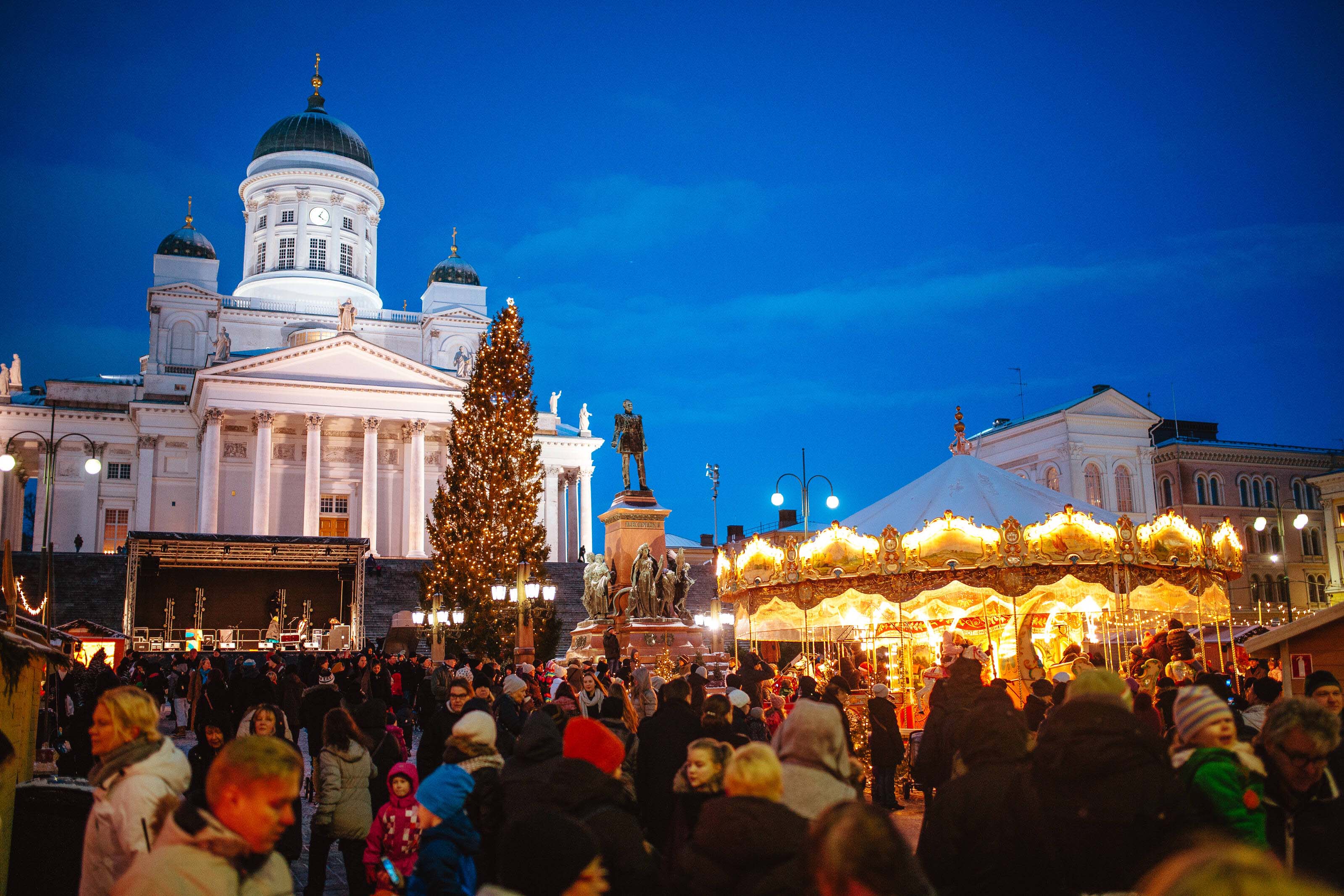
Helsinki gives you the best chance of combining a European city Christmas market with genuine Arctic atmosphere — it’s the closest major market to Lapland, with 39% daily snow probability and an average of 11.6 snow days per month. Senate Square is the main market location, framed by the white Helsinki Cathedral rising above the stalls.
- Snow odds: 39% daily chance, 11.6 snow days per month. Less than Innsbruck or Tallinn statistically, but the city’s northern latitude means snow sticks around longer once it falls.
- Visitor volume: Around 300,000 visitors per year — significantly smaller crowds than Innsbruck, which is a real advantage for photos and browsing.
- Day trip option: Overnight trains and short flights connect Helsinki to Rovaniemi (Lapland) in roughly 3 hours by air or 12 hours by sleeper train — easily doable as a side trip.
- Base yourself: Hotels around Senate Square or the Kluuvi neighborhood keep you central. The main market and the Aleksanterinkatu shopping street are both walkable.
Insider tip: The Aleksanterinkatu Christmas Street — a pedestrian corridor lit with elaborate decorations — connects Senate Square to the main shopping district. Most visitors only photograph the market itself, but this street produces better wide-angle holiday shots, especially during the brief afternoon twilight around 3 p.m.
Riga, Latvia, and Oslo, Norway — Europe’s Other Snowy Market Gems
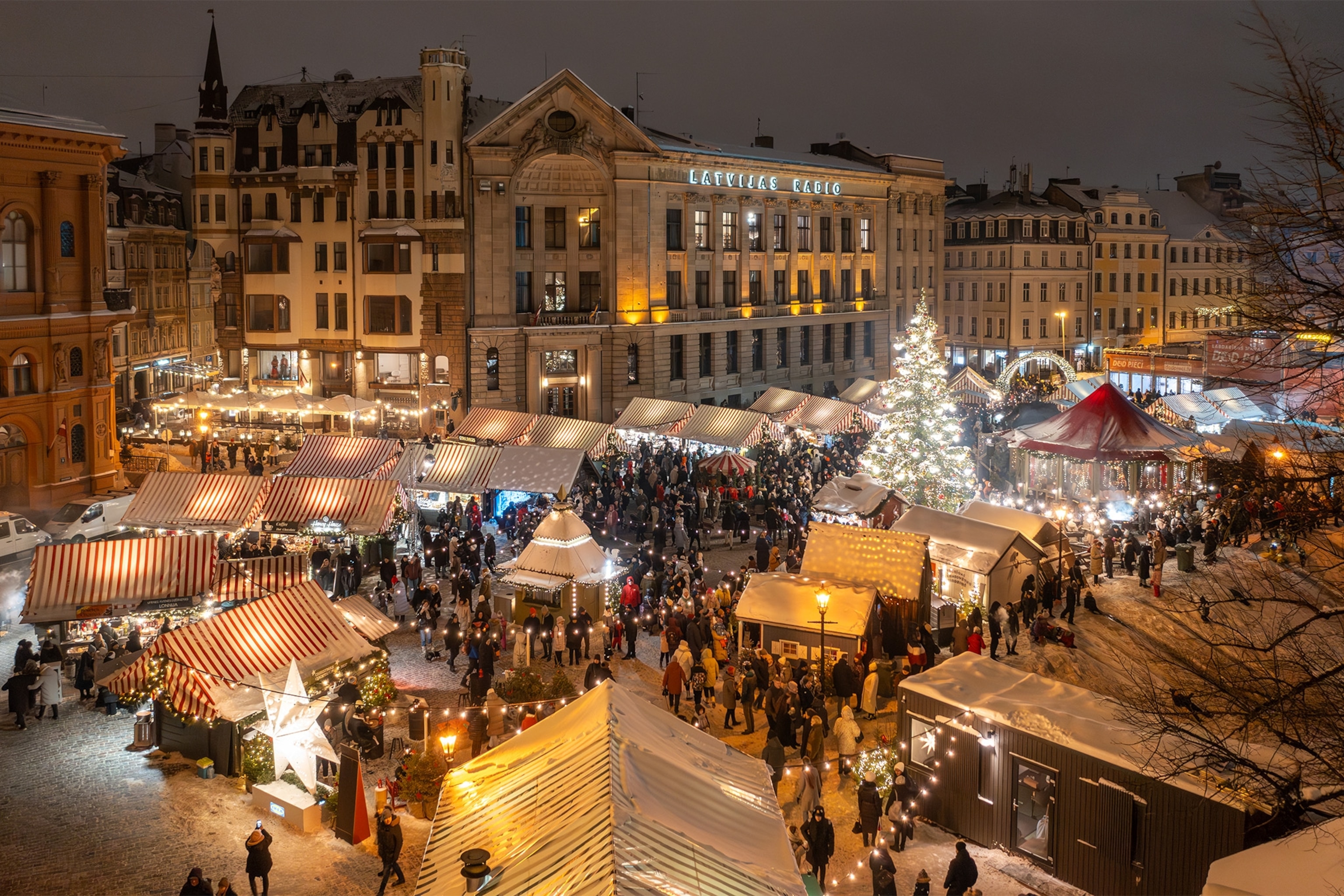
Riga and Oslo round out the snowy-market lineup with comparable winter conditions to Helsinki but smaller tourist footprints — which makes them ideal if you want snow photos without crowds.
- Riga: The market fills Doma Laukums (Dome Square) in the heart of the Old Town, surrounded by Art Nouveau architecture and medieval churches. Latvia’s capital sees consistent snow from mid-November onward, and the market has a distinctly local feel — fewer tour groups, more Latvian crafts and food. Stay in the Vecrīga (Old Riga) neighborhood for walkable access.
- Oslo: The main market at Spikersuppa and the Folkemuseet outdoor museum on Bygdøy peninsula both get reliable snow. Oslo’s advantage is its combination of city markets with easy access to Norwegian winter wilderness — Holmenkollen ski jump is 20 minutes from downtown and offers panoramic fjord-and-city views. Base yourself in the Sentrum or Aker Brygge area.
Why choose these over the top three: Both Riga and Oslo see fewer international tourists during market season, which means better prices on flights and hotels, shorter lines at stalls, and cleaner snow on the ground for photos. If your priority is a quiet, snowy market experience rather than maximum festivity, either city delivers without the December crowds of Innsbruck or Tallinn.
Most Instagrammable Christmas Markets by Country
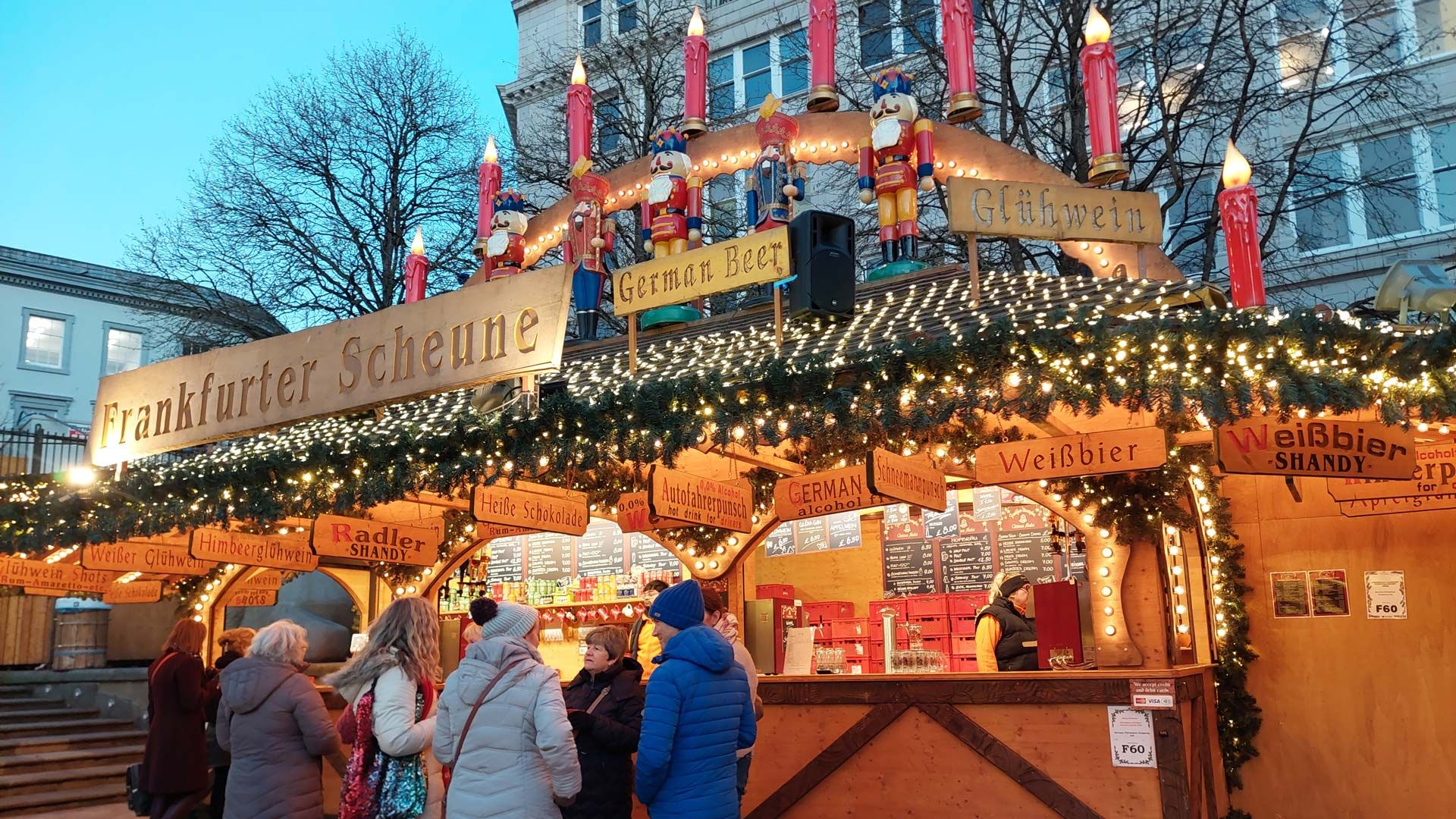
The best Christmas market in Europe is whichever one has the food stall you are still thinking about in February. Lights and ornaments are everywhere — but the mulled wine recipe in Strasbourg tastes nothing like the Punsch in Vienna, and that difference is the real reason to cross borders.
Here is how the top-rated markets break down by country, with the food and drink that makes each one worth the detour.
| Country | Top-Ranked Market | Instagram Hashtags | Signature Bite |
|---|---|---|---|
| France | Strasbourg | 43,037 | Flammekueche, vin chaud |
| England | Manchester | 71,117 | German-style bratwurst, mulled cider |
| Scotland | Edinburgh | 58,735 | Whisky hot chocolate, hog roast |
| Austria | Vienna | 23,816 | Punsch, Krapfen |
| Germany | Frankfurt | 11,753 | Bethmännchen, apple wine |
| Croatia | Zagreb | 112,438 | Fritule, kuhano vino |
| Hungary | Budapest | 13,564 | Chimney cake, goulash |
| Czech Republic | Prague | 10,998 | Trdelník, klobása |
| Estonia | Tallinn | 5,000 | Gingerbread, hot blackcurrant wine |
The Best Instagrammable Markets in France: Strasbourg, Colmar, and Lyon
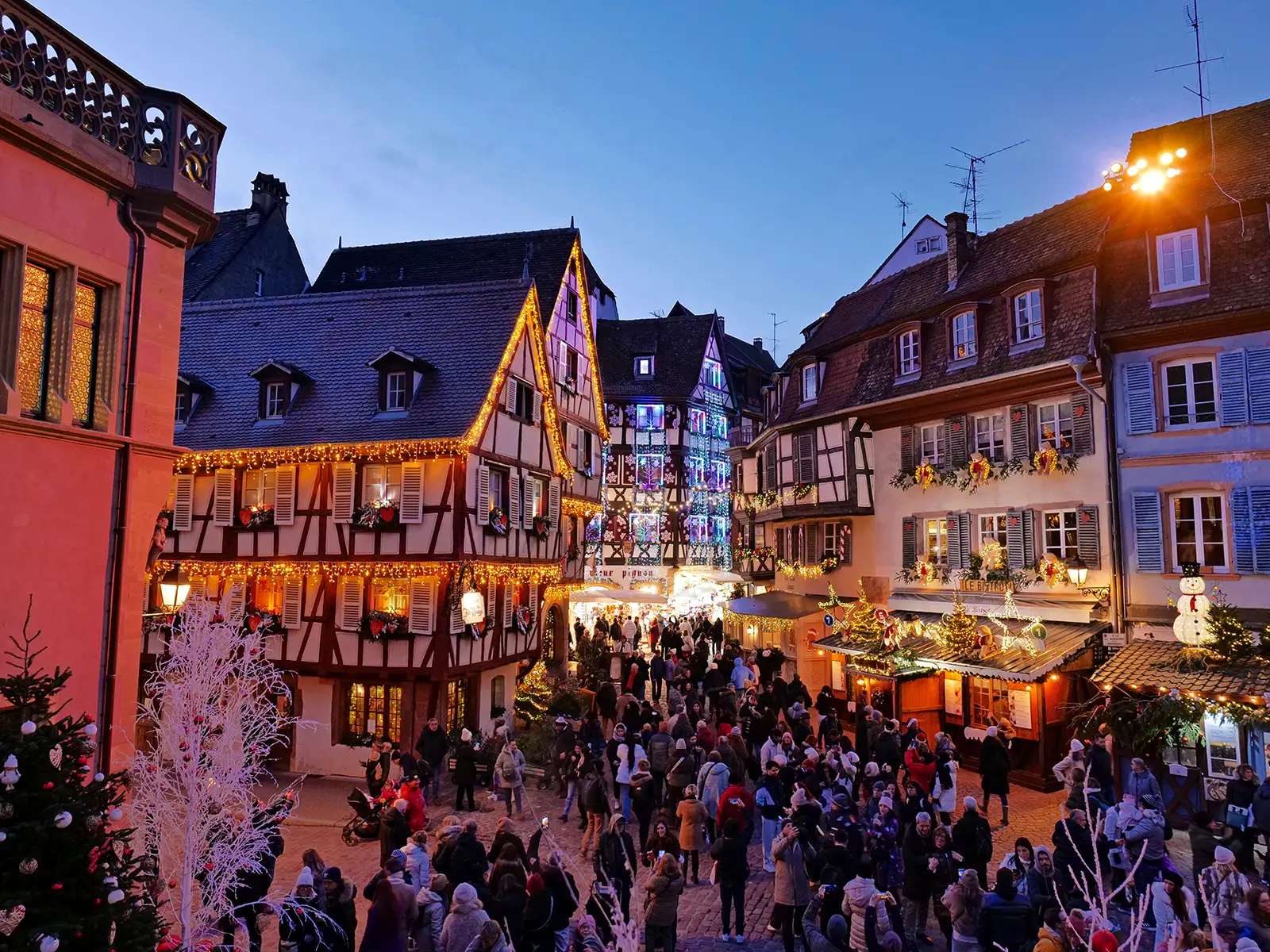
France dominates the Instagrammable market conversation with three distinct entries. Strasbourg — already profiled in this article — leads with 43,037 hashtags, and its food scene is equally photogenic: rows of bredele (spiced Christmas cookies) stacked in wooden stalls, bubbling pots of vin chaud rouge, and flammekueche served hot from wood-fired ovens in Place Broglie. This is the market where you eat first and photograph second.
Colmar (18,695 hashtags) is the pick for anyone who wants Strasbourg’s Alsatian food without the shoulder-to-shoulder crowds. The five interlinked markets across the old town each have their own food focus — the one in Place des Dominicains specializes in Kougelhopf, a buttery ring-shaped cake dusted with powdered sugar.
Base yourself in Colmar’s old town, walk everywhere, and eat your way through it comfortably in a day.
Lyon does not rank in the top Instagram hashtag counts, but it earns its inclusion as France’s gastronomic capital. The market on Place Carnot serves praline brioche — a Lyonnais specialty with a bright pink sugar crust that photographs as well as anything on this list.
Lyon is worth combining with Strasbourg on a multi-city French market trip, reachable by TGV in roughly five hours from Strasbourg.
When Should You Visit Europe’s Christmas Markets for the Best Photos?
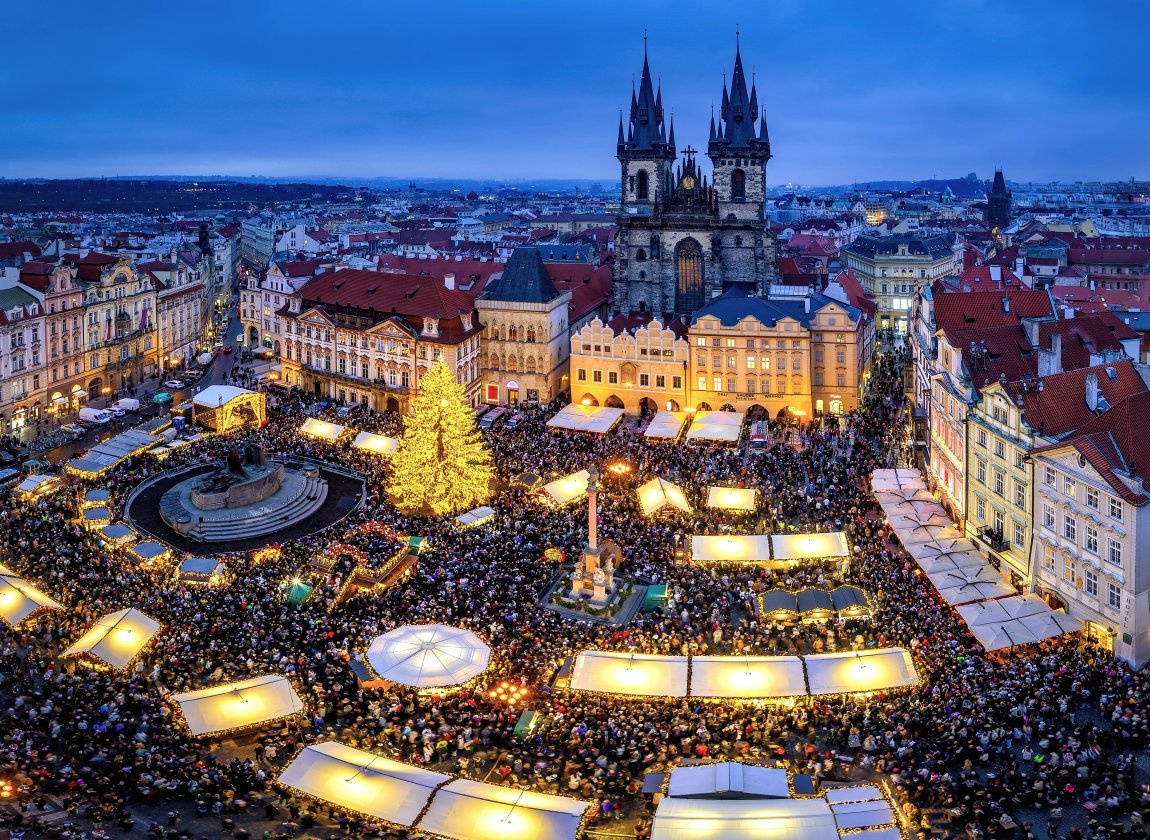
The 30-minute window between 4:15 and 4:45 p.m. — when fairy lights are fully blazing against a fading blue sky — is when every market on this list becomes an Instagram machine. But landing that shot requires arriving at the right time of day and the right week of the season, and those two things don’t always overlap.
How Early Do European Christmas Markets Open and Close?
Most European Christmas markets follow the liturgical Advent calendar, which means opening dates shift slightly each year. The pattern is consistent enough to plan around:
- Early openers (mid-November): Zagreb, Manchester, and Birmingham typically launch around November 15. These markets run longest — Zagreb often extends through early January — giving you the widest booking window.
- Advent-aligned markets (late November): Vienna, Frankfurt, Innsbruck, and most German/Austrian markets open on or just before the first Advent Sunday, usually around November 28 to December 1. Strasbourg typically opens the Friday before that first Advent weekend.
- Christmas Eve closers: German and Austrian markets are strict — most shut down December 23 or 24. If you arrive December 26 expecting mulled wine in Frankfurt or Innsbruck, you’ll find empty stalls.
- Extended-season markets: Zagreb, Edinburgh, Manchester, and Birmingham frequently run through December 30 or into early January, giving post-Christmas travelers a second-chance window.
Always confirm exact dates with each city’s official tourism site before booking flights — opening weekends can shift by a few days year to year.
Best Weeks for Crowds, Lights, and Festive Atmosphere
Not every week of market season delivers the same experience. Here’s the honest breakdown of what each window actually gives you:
| Timing Window | Lights & Decor | Crowds | Photo Quality | Verdict |
|---|---|---|---|---|
| Opening weekend | Stalls are up, some lights still being finalized | Moderate — locals dominate | Good but occasionally incomplete | Best for relaxed exploring; worst for “everything glowing” shots |
| Week 2 (late Nov / early Dec) | Fully installed, tree lightings done | Low to moderate | Excellent — full setup without the crush | The sweet spot most people miss |
| First two weeks of December | Peak decoration, full stall lineup | Building but manageable on weekdays | The best overall — full atmosphere, pre-rush | Top recommendation for serious photographers |
| December 15–23 | Maximum festive intensity | Peak — weekends are genuinely packed | Magical but you’ll fight for a clear shot | Go for the vibe, not for clean compositions |
| Post-Christmas (Dec 26–31) | Markets thinning, some stalls already closed | Low | Lights still on but atmosphere fades fast | Only worth it at extended-season markets like Zagreb or Edinburgh |
Weekday mornings are the single best time for unobstructed photos at any market — stallholders are setting up, the crowds haven’t arrived, and you can frame a clean shot of Zrinjevac Park’s illuminated trees in Zagreb or Strasbourg’s half-timbered houses without strangers’ elbows in the way.
Avoiding Peak Tourist Days While Still Getting the Full Experience
Weekend afternoons from December 8 through December 22 are the worst possible time for photos — every market on this list will be shoulder-to-shoulder. The fix isn’t complicated:
- Arrive on a Tuesday or Wednesday and stay through Friday. You get four days of the best atmosphere with a fraction of weekend foot traffic.
- Hit the market by 10 a.m. for stalls and architecture shots, leave for lunch, then return at 4 p.m. for the blue-hour magic. The midday gap avoids the worst crowding and gives you the two lighting conditions that photograph best.
- Skip Saturdays entirely for photos. Use them for museums, day trips, or non-market sightseeing — save the market for your clear weekdays.
- Avoid the week of December 8 if you can — the Feast of the Immaculate Conception is a public holiday across Austria, Italy, Spain, and parts of France, creating a long weekend that pulls extra European tourists into markets like Vienna, Innsbruck, and Strasbourg.
One detail no tourism board will tell you: the first snowfall of the season triggers a social media surge at every market it hits. If you see snow in the forecast for Innsbruck, Tallinn, or Helsinki during your trip, drop everything and get to the market that evening — your photos will have the kind of rare, ephemeral magic that no amount of planning can manufacture.
How to Plan an Instagram-Worthy Multi-City Christmas Market Trip Across Europe
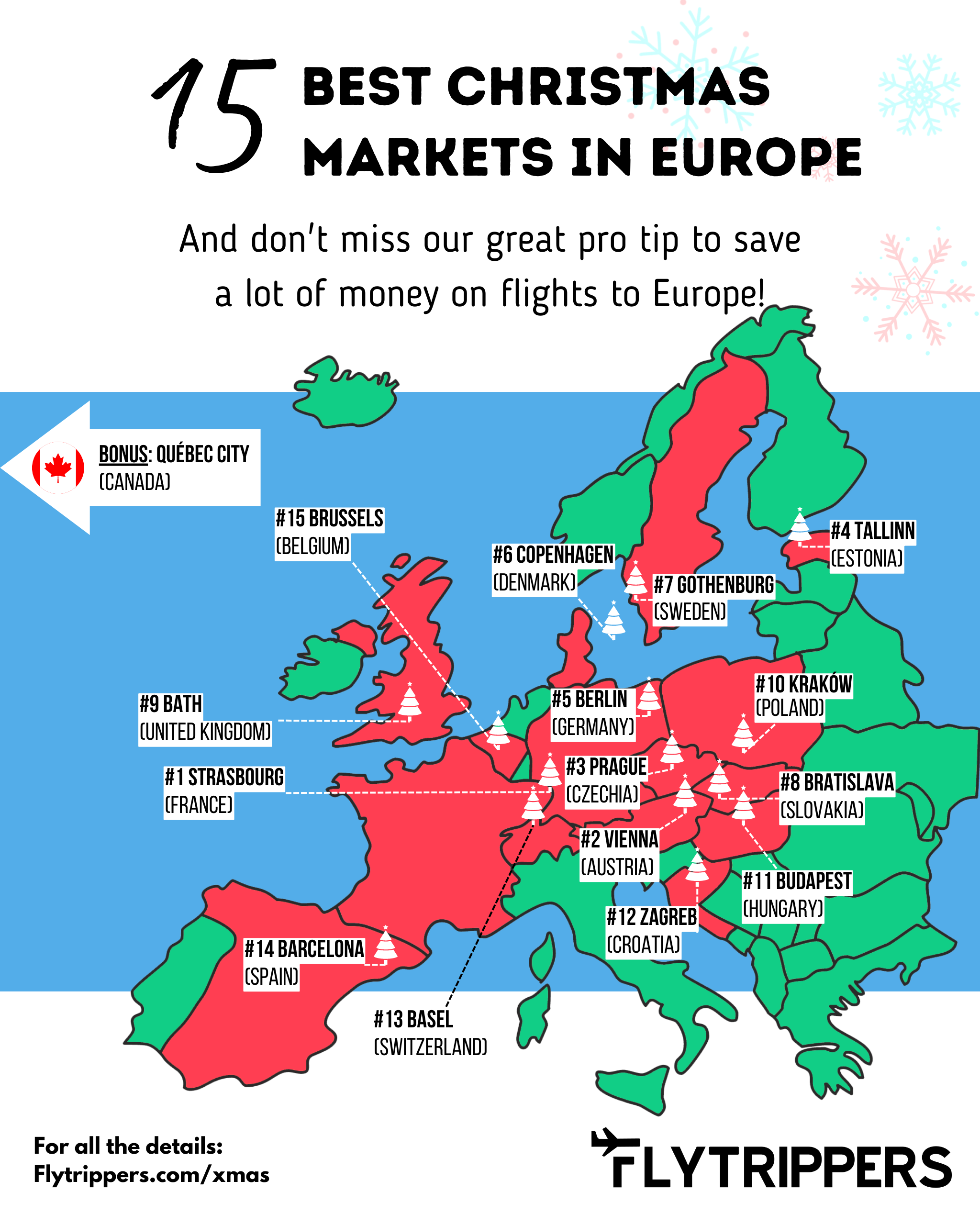
A two-week trip hitting four or five of Europe’s most photogenic markets is perfectly doable—and strategically grouping them by region is the key to avoiding travel exhaustion and maximizing your time under the twinkling lights.
Best Market-to-Market Routes for a Two-Week Trip
The smartest itineraries follow geographic logic, not just hashtag rankings. This avoids backtracking across the continent and cuts down on expensive, time-consuming long-haul transport.
The Classic Western Loop (10-12 days): Start in the UK for strong city energy, then hop to the continent for fairy-tale charm. This route is ideal for first-time Europe visitors.
- Start in Manchester, England. Fly into Manchester (MAN). Spend 2 days exploring the massive, bustling market across multiple squares before taking the ~2-hour train to your next stop.
- Edinburgh, Scotland. Spend 2-3 days with the castle and Old Town as your backdrop. A direct flight from Edinburgh (EDI) to Strasbourg (SXB) is possible, but often easier to fly via London or Paris.
- Strasbourg, France. The “Capital of Christmas” deserves 2 full days. From here, Colmar is just a 30-minute train ride—perfect for a day trip without changing hotels.
- Finish in Colmar, France. Spend 1-2 days in this storybook town. Fly out from Strasbourg (SXB) or Basel (BSL), which is about 50 minutes away by train.
The Alpine & Imperial Route (10-14 days): Best for those seeking snow odds, mountain scenery, and grand historical backdrops. Requires more flexibility due to variable winter weather.
- Start in Innsbruck, Austria. Fly into Innsbruck (INN) for your best chance at a snowy market backdrop. Spend 2-3 days here, using it as a base for mountain views.
- Vienna, Austria. A 4.5-hour scenic train ride brings you to imperial elegance. Dedicate 3 days to explore multiple markets like Rathausplatz and Schönbrunn Palace.
- Prague, Czech Republic. A ~4-hour train from Vienna. Spend 2-3 days in the Old Town Square market, arguably the most architecturally stunning in Europe.
- Finish in Budapest, Hungary. A ~7-hour train or a quick 1-hour flight from Prague. Spend 3 days dividing time between the Vörösmarty Square and St. Stephen’s Basilica markets. Fly out from Budapest (BUD).
Getting Between Markets: Flights, Trains, and Driving Tips
Trains win for comfort and scenery on routes under 5 hours. Book through Rail Europe or national carriers like Deutsche Bahn (DB) or SNCF. The key is to book “advance” fares the moment they’re released, usually 3-4 months out, for the best prices.
A Manchester-Edinburgh ticket can be as low as £30 if booked early; Vienna-Budapest fares start around €19.
Flights are necessary for longer hops or when time is short. Use Skyscanner for cross-border comparisons. Remember to factor in the real cost: a 2-hour flight becomes a 5-hour door-to-door journey with airport transit and security.
Carry-on only is essential for a multi-stop trip to avoid checked bag fees and carousel waits.
Driving is only recommended if you’re comfortable with winter conditions and plan to explore rural areas. A rental car offers freedom but brings challenges: high rental costs, winter tire requirements (mandatory in many countries), tolls, and the headache of city parking. It’s the best option only if your itinerary includes remote Alpine villages outside of train networks.
Staying Connected Across Multiple Countries With an eSIM
A Europe-wide eSIM is non-negotiable for a multi-country market trip. It provides immediate data upon landing in each country, perfect for real-time map navigation, translating menus, and posting to Instagram without hunting for Wi-Fi.
Choose a plan from a provider like Holafly that covers all your destination countries in one package. For 14 days of heavy social media use (uploading photos/videos, stories, and constant mapping), a plan with 20-30GB of data is the safest bet.
Install the eSIM on your phone before you leave home—this is the single biggest travel hack for seamless connectivity.
Estimating Your Data Usage for Social Media on the Road
Posting high-quality Christmas market content chews through data fast. Here’s a realistic breakdown for planning your eSIM data package:
| Activity | Estimated Data per Action | Daily Estimate (Heavy Use) |
|---|---|---|
| Uploading a single high-res photo to Instagram | 2-5 MB | |
| Posting a 15-second Instagram Story video | 10-20 MB | |
| Uploading a 60-second Reel (1080p) | 80-150 MB | |
| Using Google Maps for navigation (1 hour) | 5-10 MB | |
| TOTAL | 500 MB – 1 GB |
Insider Tip: When you’re at your hotel or a café with reliable Wi-Fi, switch your phone’s data off and upload your biggest Reels and photo carousels there. This alone can cut your mobile data usage by 60%, making a 20GB plan more than enough for two weeks.
Tips for Taking Stunning Christmas Market Photos for Instagram
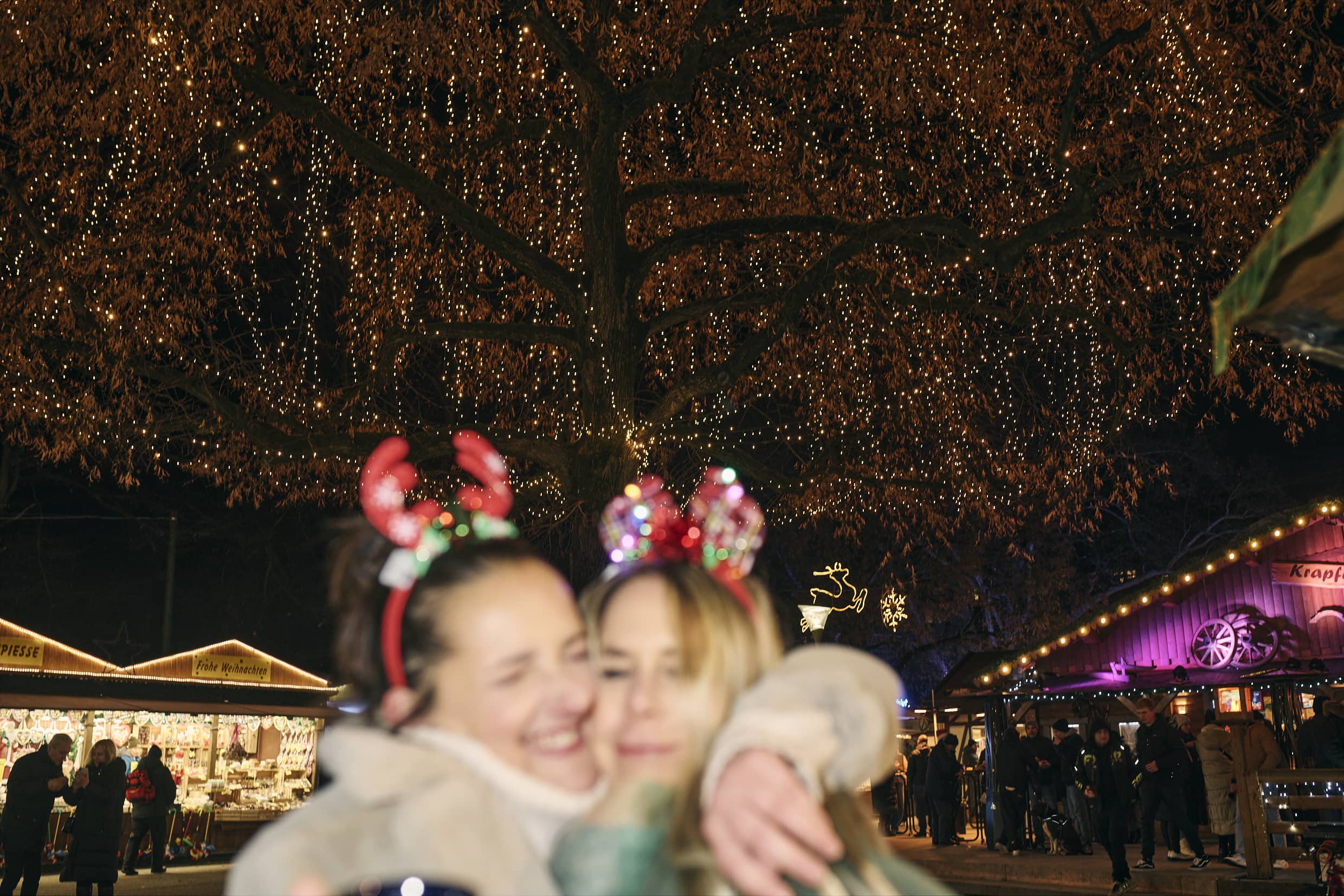
The difference between a market photo that stops the scroll and one that vanishes into the feed comes down to three things: timing, settings, and knowing exactly where to stand. Europe’s top Christmas markets attract tens of thousands of hashtags — Zagreb alone crosses 112,000 — so the competition for attention is real.
These tips get you there.
Best Camera Settings and Phone Tricks for Low-Light Festive Shots
Christmas markets are almost entirely lit by string lights, candles, and ambient glow after 4 p.m. That means low light is the default, not the exception. Here is what actually works:
- Night Mode on iPhone or Pixel: Let the phone do 3–5 seconds of exposure on a tripod or braced against a flat surface. Handheld Night Mode works in a pinch but smudges detail at anything longer than 2 seconds.
- Manual exposure lock: Tap and hold on the brightest light source to lock focus and exposure, then slide the exposure slider down one notch. This keeps bokeh lights glowing without blowing out the highlights — essential for those twinkling-canopy shots.
- Shoot in RAW or ProRAW: If your phone supports it, turn it on for market night shots. The dynamic range recovery in editing is massive when you are dealing with pitch-black skies next to bright chalet lights.
- Portrait mode for food and ornaments: Use it on mulled wine mugs, ornament stalls, and any close-up within arm’s reach. The background blur turns chaotic market stalls into a soft, festive wash.
- Turn off the flash permanently: Flash at a Christmas market kills every atmospheric highlight and washes out faces against darkness. The only light source you should ever use is what the market gives you.
- Shoot between 4:30 and 5:30 p.m.: This is the golden window — lights are on, but the sky still holds a deep blue rather than pure black. The contrast makes every photo 10x more compelling than a fully dark sky.
Top Photo Spots at Each of Europe’s Top 10 Markets
Every highly-ranked market has one or two spots that dominate Instagram for a reason — they combine scale, light, and a clean background. Go there first before the crowds settle in after 6 p.m.
| Market | Signature Photo Spot | Best Time to Shoot |
|---|---|---|
| Zagreb, Croatia | Zrinjevac Park’s tree-lined canopy of lights — shoot from the far end looking down the full tunnel | 5 p.m. for blue-hour glow |
| Manchester, England | The Giant Santa installation at Piccadilly Gardens — frame it with the city skyline behind | After 4:30 p.m. when lights activate |
| Edinburgh, Scotland | Princes Street Gardens with Edinburgh Castle lit above and the Ferris wheel in the foreground | Dusk, around 3:30–4 p.m. in December |
| Strasbourg, France | Place Kléber’s towering Christmas tree — shoot wide from the south side to capture the full height with half-timbered façades flanking it | 5 p.m. for color in the sky |
| Bath, England | Bath Abbey backdrop from the market stalls — the Georgian stonework glows warm under amber lighting | 4:30–5 p.m. before stall crowds peak |
| Vienna, Austria | Rathausplatz with Vienna’s City Hall as the frame — the Gothic façade is its own light show | 5 p.m., before the square fills |
| Birmingham, England | The Victoria Square market entrance with the Frankfurt-style chalets stretching toward the city center | 5–5:30 p.m. for atmospheric haze |
| Colmar, France | Petite Venise canal reflections — the half-timbered houses and lights double on the water surface | After dark, around 5:30 p.m. |
| Budapest, Hungary | Vörösmarty Square from the elevated café terrace — gets the full market layout from above | 5 p.m. for the blue-hour palette |
| Prague, Czech Republic | Old Town Square with the Týn Church twin spires towering behind the tree — shoot from the Astronomical Clock side for depth | 4:30–5 p.m., before tour groups flood the square |
How to Capture Crowds, Lights, and Food Without Blurry Shots
Blur ruins more Christmas market photos than bad composition does. Here is how to eliminate it while keeping the energy of a packed market:
- Brace everything: Press your elbows into your body or lean against a chalet wall, lamppost, or railing. Even a 1/15-second exposure needs stabilization. A pocket-sized flexible tripod that clips to a railing is the single best accessory for these markets.
- Use burst mode for crowd shots: Hold the shutter for a 2-second burst when people are moving through a lit alley. Pick the sharpest frame where no one is mid-blink. This beats trying to time a single click.
- Shoot food from above at 90 degrees: Mulled wine, bratwurst, and chimney cakes photograph best from directly overhead on a flat surface. Set the mug on a stall ledge, lean in close, and use Portrait mode to blur the stall background into warm light dots.
- Embrace motion blur on purpose: For one or two hero shots, slow the shutter to 1/4 second and hold steady while crowds blur past a static stall or tree. The streaked figures convey energy that a sharp crowd photo never does. This works best at Strasbourg’s Place Kléber and Vienna’s Rathausplatz where the scale handles the blur.
- Arrive when gates open, not when the sun sets: Getting to any top-10 market 30 minutes before dusk gives you empty-aisle shots with lights already on. By 6 p.m., shoulder-to-shoulder crowds make clean compositions nearly impossible at Zagreb’s Strossmayer Promenade and Edinburgh’s Princes Street Gardens.
- Back up for scale, zoom for details: The Instagram grid rewards two types of market photos — the wide establishing shot and the tight detail. Shoot both at every stop. Wide shots with a phone’s 0.5x ultrawide lens capture the full chalet row; 2x or 3x zoom isolates ornament clusters, candle arrangements, and food close-ups without distortion.
Frequently Asked Questions
What Is the Most Instagrammable Christmas Market in Europe?
Zagreb, Croatia, wins this title decisively. According to the most comprehensive hashtag analysis, it leads with over 112,000 Instagram tags, more than tripling the volume of the next-ranked market.
Its photogenic power comes from city-wide installations, from the ice sculptures in King Tomislav Square to the thousands of lights draping Zrinjevac Park.
Which European Christmas Market Is the Most Festive Overall?
“Most festive” is subjective, but for pure, concentrated Christmas atmosphere, Strasbourg, France, earns the nickname “Capital of Christmas” for a reason. Its over 300 chalets spread across multiple historic squares, all set against the stunning backdrop of the cathedral and half-timbered houses in the Petite France quarter, create an immersive experience that feels larger than the sum of its parts.
Are European Christmas Markets Free to Enter?
Yes, the vast majority are free to walk through. Your money goes to the vendors.
Expect to pay for Glühwein (mulled wine), typically €5-€8 for a cup, often with a refundable deposit (€2-€5) for the mug. Food items like bratwurst or pastries range from €4-€10.
Some markets, like Birmingham’s, charge a small entry fee (around £1-£3) on peak weekends to manage crowds.
How Much Money Should I Budget for a Christmas Market Trip?
Beyond flights and accommodation, budget for market spending. A realistic daily range for food, drinks, and small gifts is €40-€80 per person.
A classic souvenir mug costs €8-€15 to keep. For a weekend trip centered on markets, allocate €200-€300 in spending money.
Major markets like Vienna or Prague attract millions, so prices reflect demand.
Is It Safe to Visit European Christmas Markets at Night?
Generally, yes. These are major, family-oriented municipal events with high foot traffic and police presence.
Use standard big-city awareness: watch your belongings in dense crowds, stick to well-lit paths, and keep valuables secure. The biggest risk is pickpocketing in packed areas like near stages or popular food stalls.
Can I Visit Multiple Christmas Markets in One Trip?
Absolutely, and you should. Many are clustered by country or region. The most efficient pairings are:
- France: Strasbourg and Colmar are only 30 minutes apart by train.
- Germany: Frankfurt, Nuremberg, and Munich can be connected via a fast, direct rail trip.
- UK: Manchester, Birmingham, and Winchester form a logical triangle, though trains are slower than European high-speed rail.
- Austria/Slovakia: Vienna and Bratislava are under an hour apart by boat or train.
What Should I Wear to a European Christmas Market?
Dress in warm layers. Think thermal base layer, a sweater or fleece, and a wind/water-resistant outer jacket.
Comfortable, waterproof walking shoes are non-negotiable—you’ll be on your feet on cobblestones for hours. Add a warm hat, gloves, and a scarf.
The markets are outdoors, and evenings can be bitterly cold, even if daytime temperatures seem mild.
Do I Need a Visa to Visit Christmas Markets in Europe?
For U.S. passport holders, no visa is required for stays under 90 days within the Schengen Area (which includes Germany, France, Austria, and others). The UK has separate entry requirements—also visa-free for short visits.
Always check the official government travel website for the specific country you are visiting, as requirements can change.
Pick Your Market and Book the Flight
Start by deciding whether you want maximum Instagram content (book Zagreb), a fairy-tale French backdrop (fly into Strasbourg), or a snowy alpine experience (choose Innsbruck). Then target the first two weeks of December on weekdays — that window delivers the full festive setup with a fraction of the crowds that flood every market by mid-month.
Europe’s Christmas markets are one of the few travel experiences where the photos genuinely capture what it feels like to be there — the steam curling off your mug, the lights multiplying in fresh snow, the warmth of a crowd that chose to stand outside in December because the atmosphere is that good.
Open Google Flights right now, search your top pick for the first week of December, and set a price alert before fares climb.
Leave a Reply