
Golden-yellow row houses stretch in perfect geometric lines down Nyboder’s quiet lanes, and 16th-century cobblestones on Magstræde lean under facades that practically glow in Copenhagen’s impossibly soft northern light. This city doesn’t photograph like anywhere else — it’s small enough to cross in a morning, yet dense enough that every block hides a different color story waiting to fill your grid.
What sets Copenhagen apart for Instagram is that the most iconic shots aren’t locked behind paywalls or museum hours — they’re on public streets, free canalsides, and neighborhood parks that real Danes actually use every day. This guide maps every spot worth your battery life and tells you exactly when to show up so you leave with real photos, not crowded afterthoughts.
Most of the locations in this guide are completely free to access, with a handful of paid entries like Tivoli Gardens (~$22 USD) and the Round Tower (~$6 USD). Budget travelers can cover admissions, transport, and a pastry stop for under $50 a day; mid-range visitors sitting down for proper meals and maybe a guided photo walk should plan $100–$150; splurge territory starts around $250 and up if you’re adding fine dining and a private photography session.
Quick-Reference: Copenhagen’s Top Photo Picks
If you only have a day or two, these six spots deliver the highest return on your time and give your feed the full Copenhagen story without endless scrolling.
- Can’t-Miss Classic: Nyhavn before 9 AM — the candy-colored harbor shot everyone wants, completely empty if you commit to the early alarm
- Best Streetscape: Magstræde — Copenhagen’s oldest surviving lane, warm ochres and reds on original 1520s cobblestones
- Highest Viewpoint: Church of Our Saviour — 400 steps up an exterior spiral spire for the best 360° panorama in the city
- Best Park for Photos: Tivoli Gardens — fairytale lights after dusk, especially during Halloween and Christmas overlays
- Best Local Secret: Christianshavn Canals — same waterfront charm as Nyhavn with a fraction of the crowds on weekday mornings
- Best Seasonal Shot: Bispebjerg Cemetery cherry blossoms — late April only, sunrise or nothing, worth every minute of lost sleep
Best Waterfront & Canal Photo Opportunities
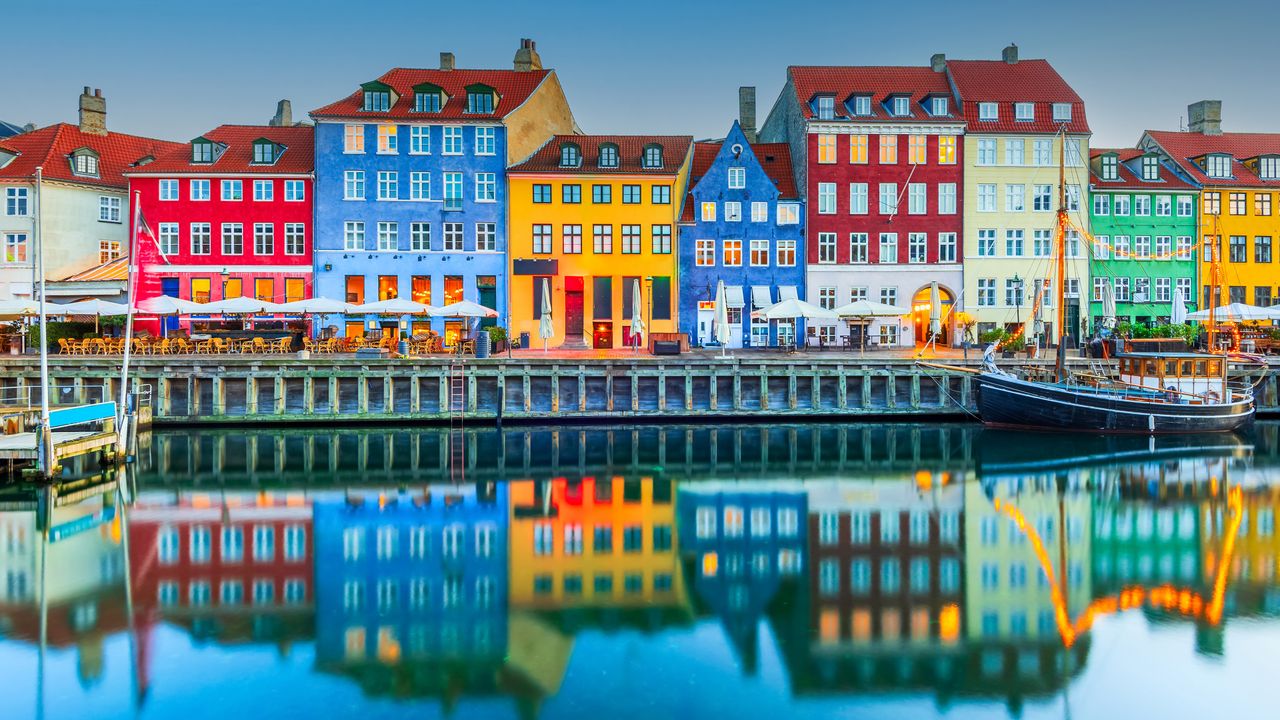
Copenhagen’s harbor cuts through the city like a mirror — and the best waterfront shots come from knowing which section of water to shoot and when to show up. All three spots below are free and walkable from central Copenhagen, but they deliver completely different moods.
| Spot | Best Time | Vibe | Crowds |
|---|---|---|---|
| Nyhavn | 07:00–09:00, any season | Iconic, colorful, postcard-perfect | Heavy by mid-morning |
| Christianshavn Canals | Weekday mornings, 07:30–09:00 | Industrial-chic, moody, local | Minimal |
| Islands Brygge Harbour Baths | 07:00–09:00, June–August only | Urban summer energy, skyline views | Quiet mornings, packed evenings |
Nyhavn: The Classic Copenhagen Shot
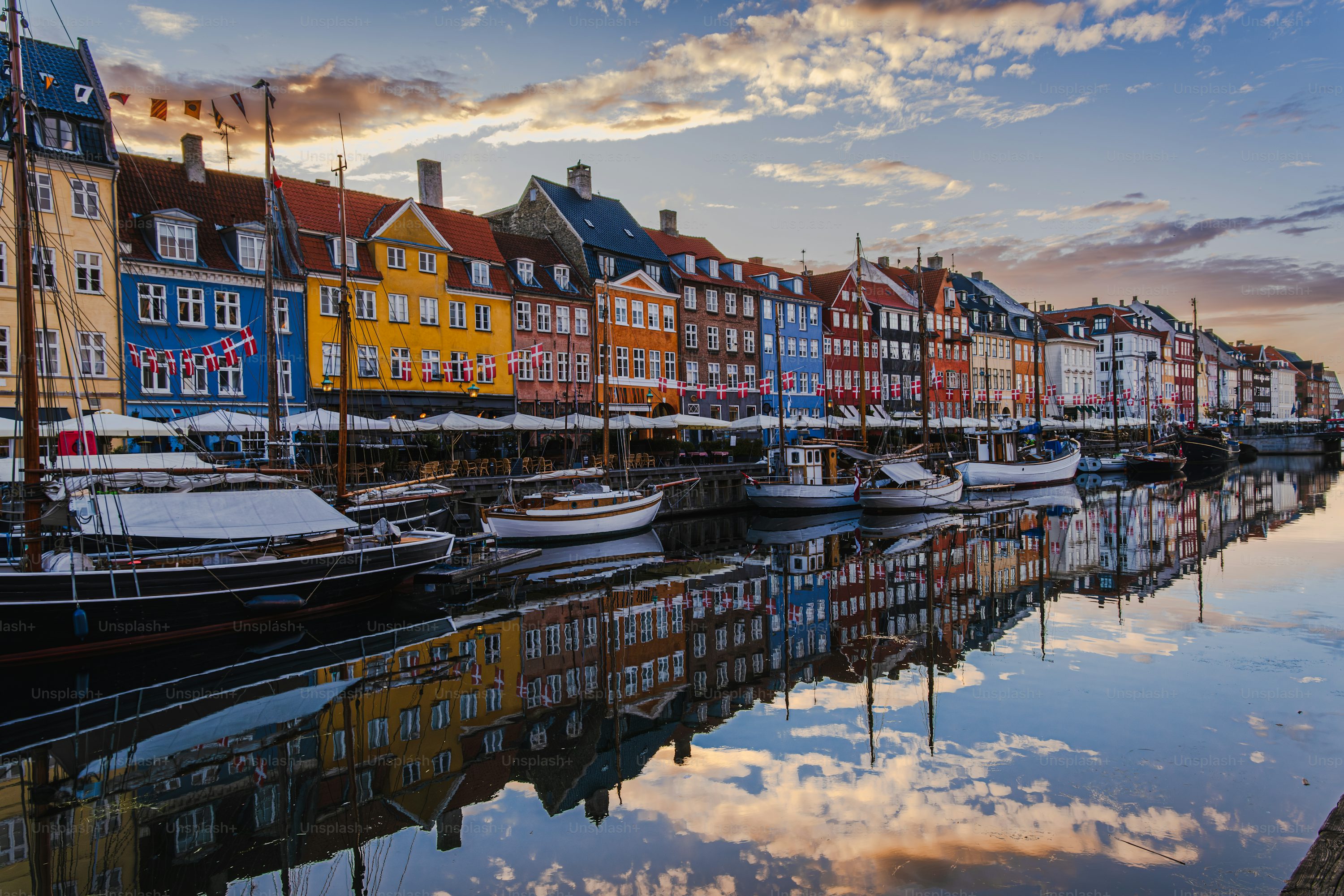
If you clicked a single image of Copenhagen on Pinterest, this was probably it — the leaning 17th-century townhouses in ochre, red, and blue reflected in still canal water. Nyhavn is the shot everyone wants, which is exactly the problem.
By 10:00 the waterfront is shoulder-to-shoulder, and your photo becomes a crowd shot with a colorful background.
Show up between 07:00 and 09:00 and you’ll own the composition. The light hits the east-facing facades directly in the morning, warming the painted wood in a way that flat afternoon light never replicates.
Shoot from the south quay looking north toward the anchor monument for the classic symmetrical vanishing-point frame. The canal itself stays photogenic year-round — winter fog and frost on the boat riggings arguably look better than summer blue skies.
Nyhavn is free to visit anytime. Base yourself within a 10-minute walk in Indre By or Kongens Nytorv for the easiest pre-dawn access.
Christianshavn Canals: The Quieter Alternative
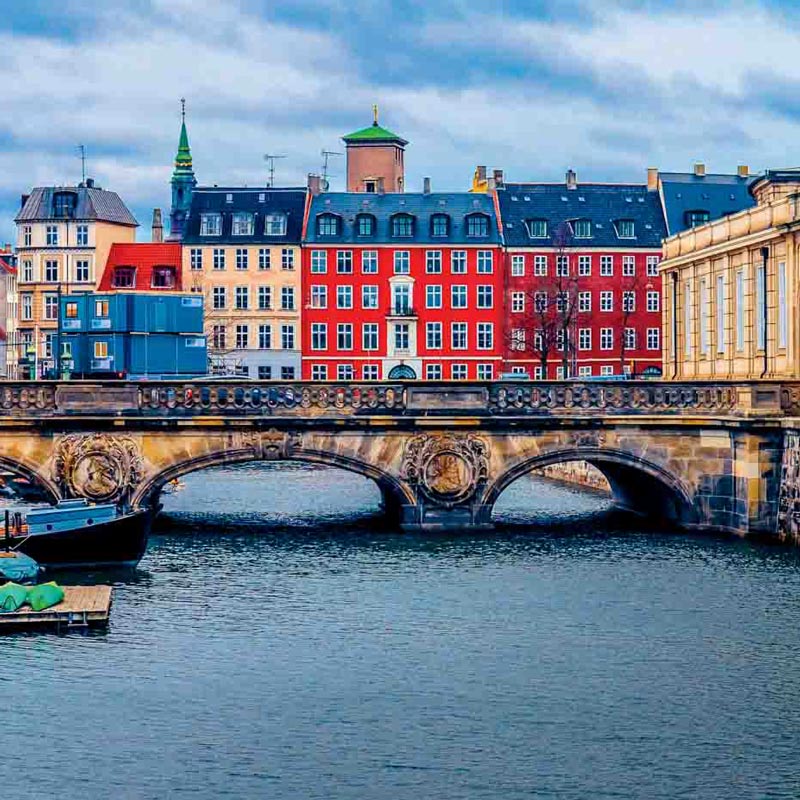
Cross the main canal south from Nyhavn and the city changes personality fast. Christianshavn’s secondary canals are lined with converted warehouses, working drawbridges, and houseboats — a scene that photographs with the same depth and color as Nyhavn but without a single tour group in sight.
Walk the stretch along Overgaden Oven Vandet and Neden Vandet for the best angles. The drawbridges give you a natural foreground element that Nyhavn lacks, and the warehouse brick tones photograph warmer and grittier than Nyhavn’s candy-colored facades.
Weekday mornings between 07:30 and 09:00 are the sweet spot — locals cycling across bridges, morning light bouncing off the water, and almost zero foot traffic.
This is the better choice for anyone who already has a Nyhavn shot or wants something that reads as “real Copenhagen” rather than “postcard Copenhagen.” Pair it with a walk through Christiania afterward, which sits just to the south — though photography inside Christiania requires respecting posted rules about no photos in certain areas.
Islands Brygge Harbour Baths: Summer Vibes
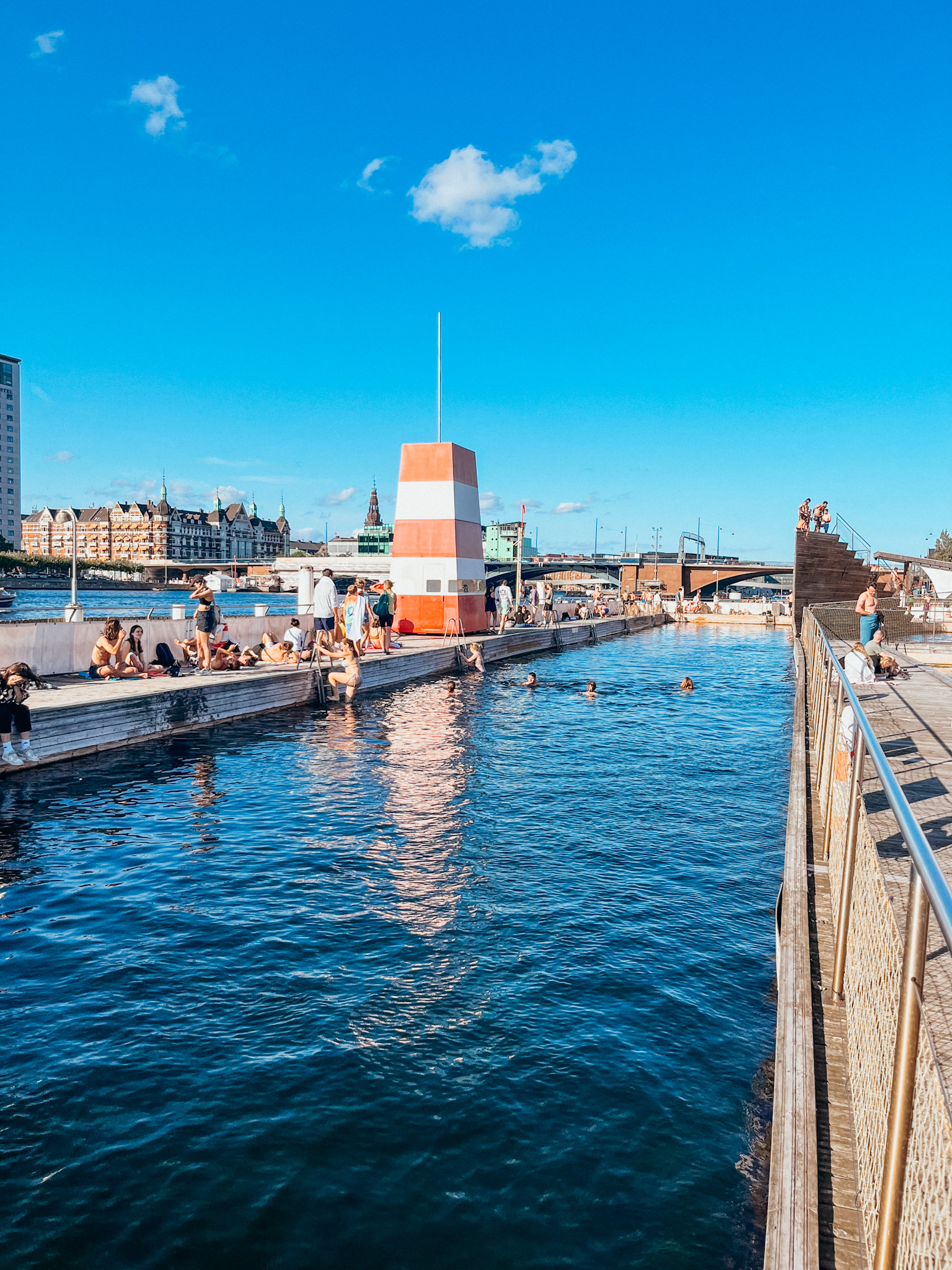
Five outdoor pools built on floating platforms in the harbor, with Copenhagen’s skyline as the backdrop — this is the shot that says “summer in Scandinavia” without a single word. The water is genuinely clean enough for regular swimming (Copenhagen’s harbor has been safe for swimming since the early 2000s), and Danes treat these baths like a public living room from June through August.
The composition that works best: swimmers in the foreground pool with the city’s spires and apartment blocks stretching across the harbor behind them. Weekday mornings before 09:00 give you calm water, empty platforms, and clean lines — perfect for architectural or minimalist shots.
If you want the social, joyful energy that makes this spot famous, come between 16:00 and 19:00 on a warm day and capture the after-work crowd with golden-hour light.
Smaller harbor baths exist at Fisketorvet and Sluseholmen, but Islands Brygge wins on skyline framing alone — it sits directly across from the city center. The baths close outside summer months, so plan accordingly.
Reach it in about 15 minutes by metro to Islands Brygge station, then a short walk east to the waterfront.
Where to Find Copenhagen’s Most Colorful Streetscapes?
Copenhagen’s visual appeal isn’t built on grand monuments — it’s woven into the streets themselves, where 400-year-old cobblestones meet candy-colored facades and every lane has its own photographic personality. These three streetscapes each deliver a completely different color story, so pick based on the mood you want your feed to project.
| Streetscape | Color Palette | Best For | Crowd Level |
|---|---|---|---|
| Magstræde | Warm ochres, reds, and deep greens | Nostalgic, storybook shots | Busy by mid-morning |
| Nyboder | Iconic yellow rows with orange accents | Uniform, geometric compositions | Residential — usually quiet |
| Jægersborggade | Bold street art, muted Scandi tones | Edgy, contemporary contrast | Livelier on weekends |
Magstræde: Copenhagen’s Oldest & Most Photogenic Lane
Magstræde dates back to the 1520s, making it one of the oldest continuously existing streets in Copenhagen — and it looks the part. The lane is narrow, the cobblestones are original, and the leaning, colorful buildings on either side create a tunnel effect that photographs beautifully in almost any light.
The oldest surviving building is the symmetrical house at No. 17-19, which dates to the 1640s. At No. 6 sits the Schäffer House, built in 1733–34 for Court Carpenter Diderich Schäffer, who worked on Christiansborg Palace — its original Rococo interiors are now preserved at the National Museum, so what you see from the street is a shell of even greater history.
- When to shoot: Arrive before 9 a.m. Tour groups and selfie sticks flood the lane by mid-morning, and the narrow space makes it impossible to get a clean shot once it’s packed.
- Light tip: Overcast days actually work in your favor here — Copenhagen’s soft, diffused sky eliminates the harsh shadows that plague this alley on bright midday sun.
- Best lens: A wide-angle (24–35mm equivalent) captures the full lane effect; anything longer will just flatten the depth that makes Magstræde special.
Location: Central Indre By, a two-minute walk from Gammel Strand Metro station. There’s no entrance fee — it’s a public street.
Nyboder: The Historic Yellow Row Houses
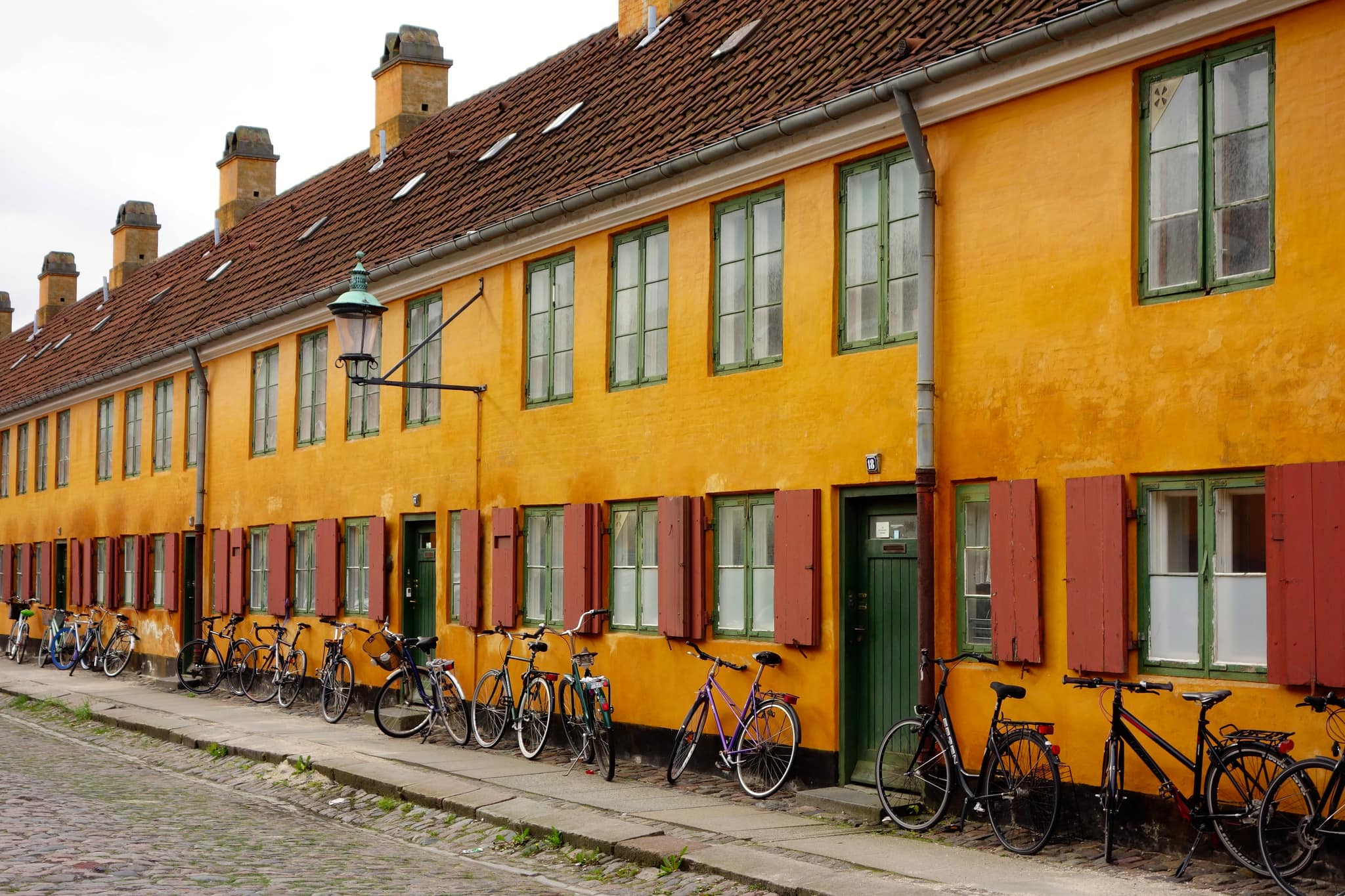
Nyboder is a military housing district built in the early 1600s under King Christian IV to house naval personnel and their families. The uniform rows of golden-yellow houses with green or orange window frames stretch across several blocks, creating one of the most recognizable and Instagrammed streetscapes in the city.
The power of Nyboder for photography is repetition — the identical facades in perfect rows create compositions that feel almost surreal. The color palette is tight and consistent, which means your shots will have built-in visual coherence without any editing gymnastics.
- Which streets to focus on: St. Pauls Gade and the intersecting lanes running north of Øster Voldgade offer the best-preserved and most photogenic rows. The section between Sankt Pauls Plads and Borgergade is the sweet spot.
- When to go: Early morning or late afternoon. This is a residential neighborhood — residents live here year-round — so be respectful of doorways, windows, and private spaces while shooting.
- The underrated shot: Look for the narrow side lanes perpendicular to the main rows. They frame a vanishing point of yellow facades that performs extremely well on Instagram’s vertical format.
Location: Østerbro, about a 15-minute bike ride or Metro ride (Østerport station) from the city center. Free to walk through.
Jægersborggade: Street Art & Scandinavian Cool
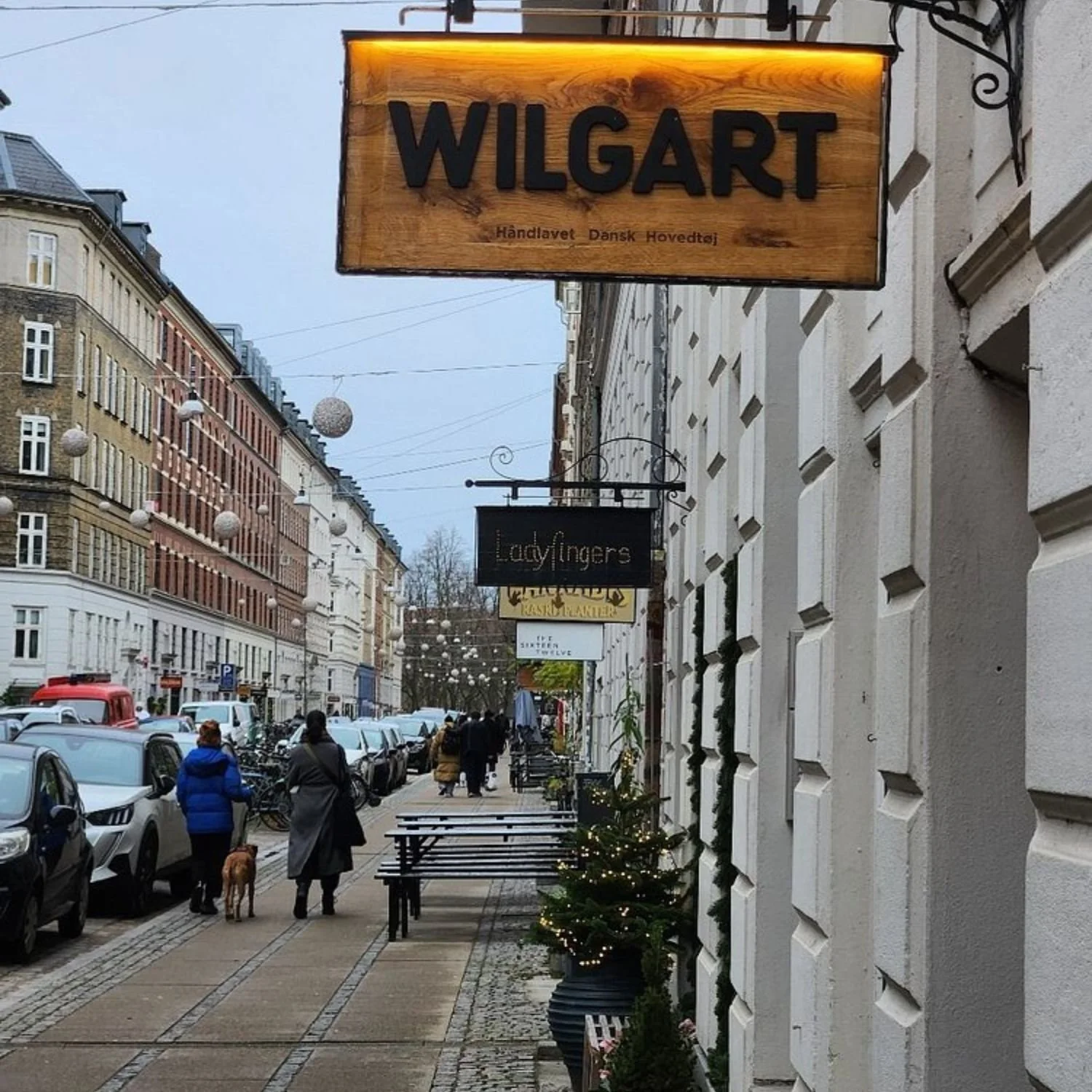
Jægersborggade sits in the heart of Nørrebro, Copenhagen’s most photographically diverse neighborhood. The street is lined with independent design shops, specialty coffee spots, and bold murals that rotate regularly — it’s the anti-Nyhavn, gritty where the canals are polished, and constantly evolving where the old town is frozen.
What makes this street worth the trip from the tourist center is the collision of cultures. You’ll find a Kurdish bakery next to a Scandi minimalist ceramics shop next to a wall-sized piece of street art that wasn’t there last month.
The color palette shifts block by block.
- What to photograph: The shopfronts and murals change frequently, so specific spots go stale fast. Walk the full length of the street (it’s short — roughly 500 meters) and shoot whatever catches your eye on the day.
- Nearby bonus: Superkilen Park, with its globally sourced design elements and bold geometric lines, sits just a few blocks south — combine both for a full Nørrebro content session. (See the Parks & Gardens section for details.)
- Food stop: This street has some of the best independent eateries in Copenhagen. Grab something to-go and use the packaging as a prop against the street art backdrop — it’s the most Copenhagen content move you can make.
Location: Nørrebro, accessible via Nørrebrogade (a 10-minute bike ride from Nyhavn) or the Metro to Nørrebros Runddel station. Free to explore.
Insider note: Nørrebro’s photographic strength is its unpredictability — street art fades, shops rebrand, and murals get painted over. If you see something that stops you, shoot it immediately. Don’t count on finding it again next trip.
Iconic Landmarks & Monuments You Can’t Miss
Copenhagen’s three most photographed monuments are spread across different neighborhoods — plan a route connecting them rather than making separate trips, and you’ll knock out the city’s greatest hits in a single morning walk.
The Little Mermaid Statue
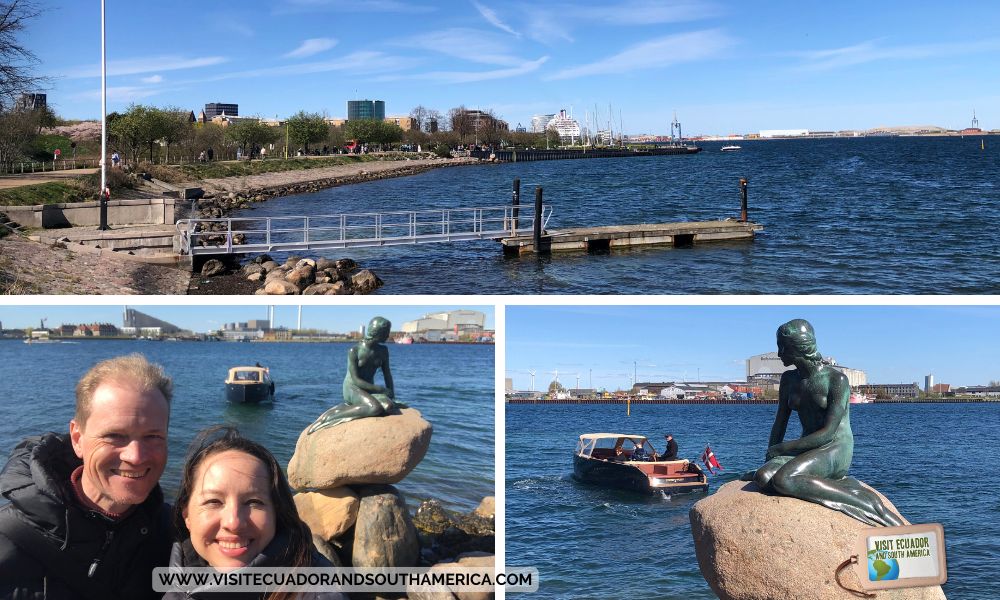
Let’s manage expectations: she’s 1.25 meters tall, perched on a rock at Langelinie, and surrounded by tour groups by mid-morning. The statue is a Copenhagen icon worth seeing — but only if you time it right and pair it with the harbor walk, not as a standalone detour.
- Best time to visit: Before 8 AM or after 8 PM. Between 10 AM and 5 PM, you’ll fight selfie sticks and coach buses for a clear frame. Winter mornings offer moody, low-light shots with rough harbor water — arguably better than a sunny summer cliché.
- Best angle: The straight-on front shot is every tourist’s default. Shoot from the side along the water-facing path instead, or position yourself lower on the rocks for a composition that includes the harbor behind her.
- The honest verdict: If you have one day in Copenhagen, skip this and spend your time at Nyhavn or Tivoli. With two or more days, pair the statue with a Langelinie harbor stroll — the waterfront setting justifies the trip.
Amalienborg Palace & Frederiksstaden
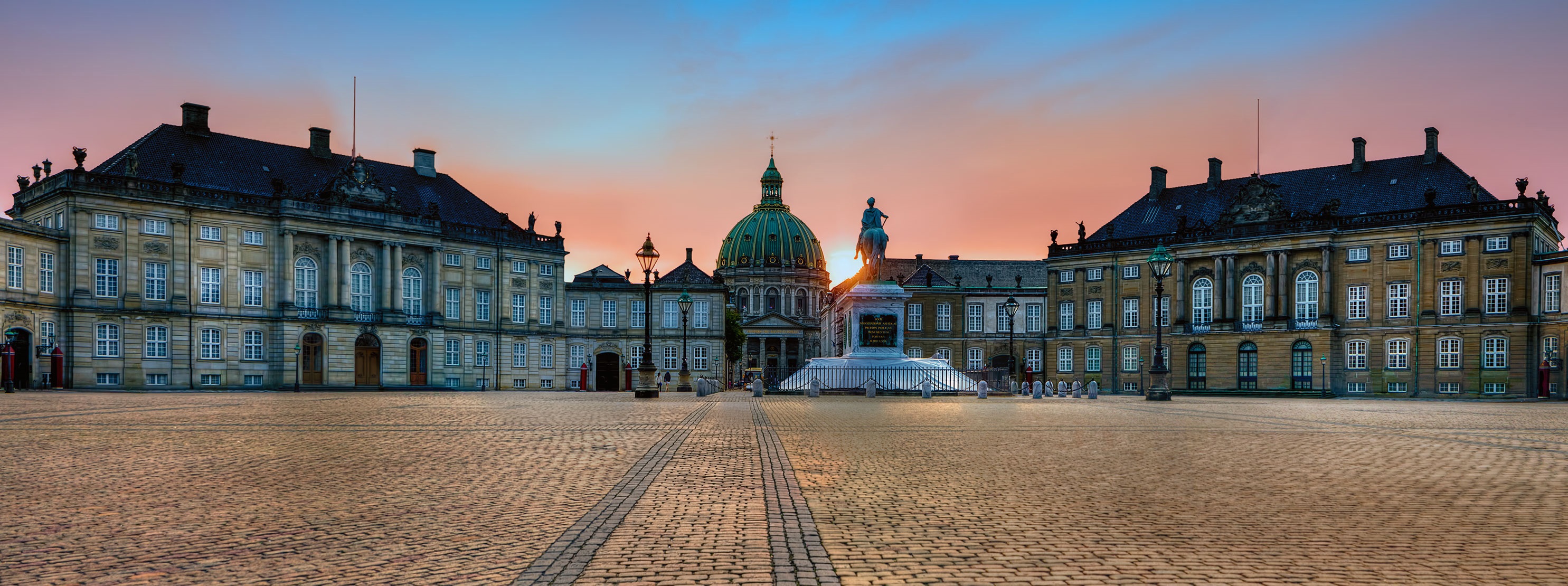
Amalienborg is the Danish royal family’s official winter residence — four identical Rococo palaces facing each other around an octagonal courtyard, with a statue of King Frederik V at the center. The Frederiksstaden district surrounding it is one of Europe’s finest Rococo ensembles, and the courtyard itself is free and open to the public all day.
The changing of the Royal Guard happens daily at noon when the monarch is in residence, drawing a crowd. This is the one moment worth structuring your visit around — arrive 15 minutes early to claim a spot along the courtyard edge.
- Photo move: Stand at the courtyard center near the equestrian statue and shoot toward any one of the four facades for perfect symmetry. The Amalienhaven gardens behind the palace toward the waterfront offer a softer, less-visited angle with greenery framing the buildings.
- Walking connection: Amalienborg sits a 10-minute walk from Nyhavn along the harbor — combine both in one loop. From the palace, continue east along the waterfront toward Kastellet and the Little Mermaid.
- Stay context: Frederiksstaden and the Nyhavn area are Copenhagen’s most walkable hotel zones for first-time visitors — you’ll reach all three landmarks in this section on foot within 30 minutes from any hotel in this district.
The Church of Our Saviour’s Spiral Tower
This 17th-century Baroque church in Christianshavn has the most dramatic exterior staircase in Scandinavia — a golden-crowned spiral spire you climb from the outside, 90 meters above street level, with 400 steps total. The final 150 steps wrap around the outside of the spire with no walls, just open air and a railing.
Locals voted the 360° view from the top the best in the city.
- Who should skip this: Anyone with vertigo. The last section spirals upward on an exposed exterior ramp that narrows as you go — there’s no shame in stopping at the interior landing.
- Insider detail: The interior hollow core photographs beautifully looking straight up from the ramp — a spiraling cylinder of light that shows up differently at every height. This shot is often more interesting than anything from the top, so shoot on the way up before the staircase gets crowded.
- When to go: The church is part of Christianshavn, and this neighborhood is covered in more detail in the canals section. Climb early in the morning for fewer people on the narrow staircase — the spire is one-way, so a crowd means a slow wait on every landing.
Quick comparison: If time is tight, prioritize Amalienborg for the architecture and ease of access (no tickets, no climbing), the Church of Our Saviour for the best photos and physical experience, and the Little Mermaid only if you’re already walking the harbor route. They sit along a natural east-to-west walking path — start at Christianshavn, cross to Amalienborg via Nyhavn, and finish at the Mermaid.
Top Viewpoints for Panoramic Instagram Shots
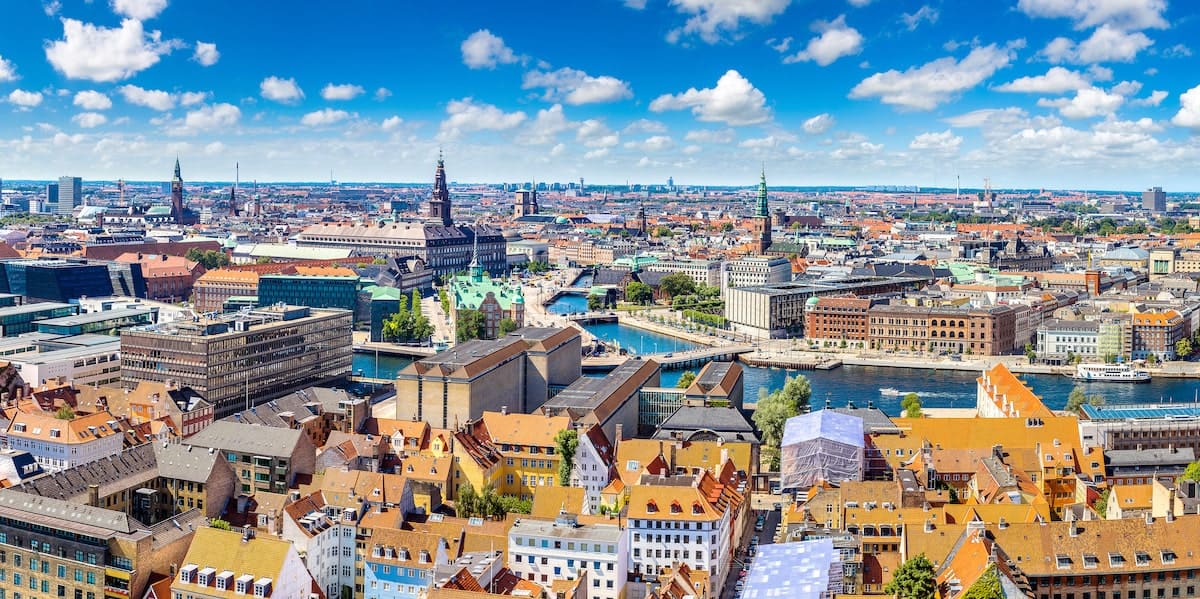
Copenhagen’s best skyline shots all require climbing — and each climb delivers a completely different photo. Here’s how to pick the right one based on your tolerance for stairs, crowds, and the kind of background you want in frame.
| Viewpoint | Climb Type | Height | Best For |
|---|---|---|---|
| Rundetårn | Spiral ramp (no stairs) | 36 m | Interior shots + easy access |
| Vor Frelsers Kirke | 400 steps (150 outside) | 90 m | Highest city views + dramatic exterior climb |
| CopenHill | Rooftop incline / hiking trail | 85 m | Industrial-meets-nature aesthetic |
The Round Tower (Rundetårn)
Built in 1642 as an astronomical observatory, the Round Tower sends you to the top via a continuous spiral ramp — no stairs, just a smooth helical path winding seven and a half times around a hollow core. This is the only viewpoint in Copenhagen you can comfortably reach with a stroller or limited mobility.
The real Instagram move here isn’t the exterior parapet view — it’s the interior. The hollow cylindrical core drops from the ramp to the ground floor, and shooting straight up or down from any point on the spiral creates a dizzying circular composition that looks nothing like a typical city panorama.
Arrive right at opening to get this shot without strangers walking through your frame.
- Insider tip: The library hall midway up the ramp has a glass floor revealing the core below — most visitors walk right past it.
- Best time: Late afternoon light hits the rooftops beautifully from the open parapet.
- Getting there: Købmagergade, central Copenhagen — a 5-minute walk from Nørreport station.
CopenHill: The Power Plant with a View
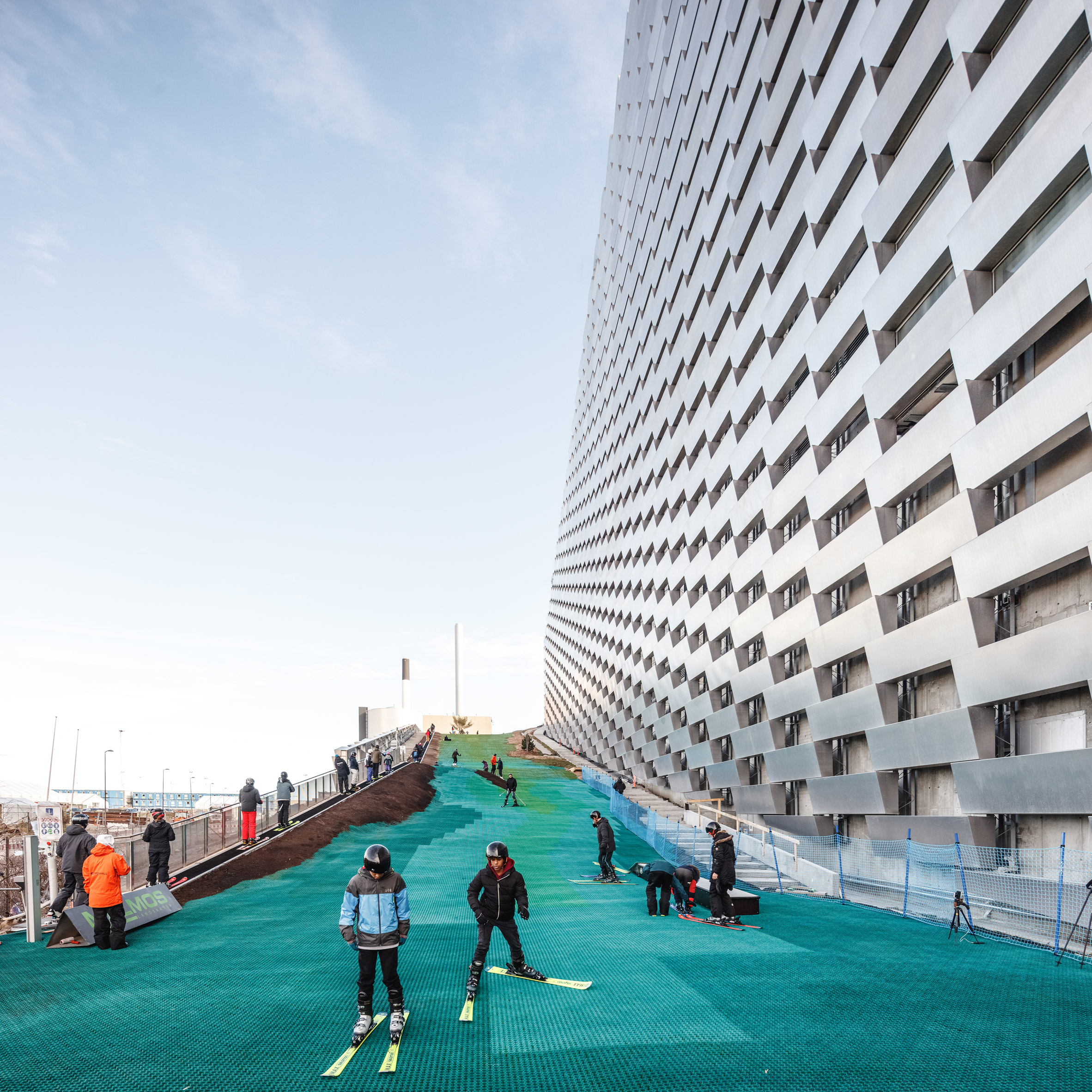
CopenHill (Amager Bakke) is a functioning waste-to-energy power plant with an artificial ski slope, a hiking trail, and a climbing wall bolted to its facade. The rooftop panorama stretches across Copenhagen’s harbor and the Øresund strait toward Sweden — and no other viewpoint in the city gives you industrial infrastructure in the foreground and open water in the background.
This is the pick if you want a shot that makes people ask, “Wait, where is that?” The framing is unlike anything else in Copenhagen. The hiking trail up the exterior incline is free to access and takes roughly 15 minutes.
- Best for: Anyone wanting a non-traditional Copenhagen shot — the power plant smokestack against a Nordic sky is genuinely one-of-a-kind.
- Location: Amager neighbourhood, about 15 minutes by metro from the city center (get off at Amager Strand or Lergravsparken).
- Insider tip: Visit on a clear day for visibility across to Malmö. Overcast days flatten the entire panorama.
Vor Frelsers Kirke (Church of Our Saviour)
At 90 metres, the Church of Our Saviour’s spiral tower offers the highest public viewpoint in central Copenhagen — and the final 150 steps climb the outside of the baroque spire itself, with the city unfolding below you in every direction. Locals voted this the best view in the city back in 2007, and nothing since has displaced it.
The exterior staircase narrows considerably near the top, and there’s no barrier between you and a long drop. Skip this entirely if you have any real issue with heights.
If you don’t, the 400-step climb rewards you with unobstructed 360-degree views that take in Christianshavn’s canals, the harbor, and Copenhagen’s full roofline — and the spiraling staircase itself photographs beautifully from the ground looking up.
- Best for: The most dramatic “climb shot” in Copenhagen — the exterior staircase is as photogenic as the view.
- Timing: Go early morning to avoid packed staircase bottlenecks. The spire opens around 10 AM seasonally — confirm current hours before visiting, as they shift throughout the year.
- Getting there: Christianshavn, a 10-minute walk from Christianshavn Metro station.
Best Parks, Gardens & Atmospheric Cemeteries
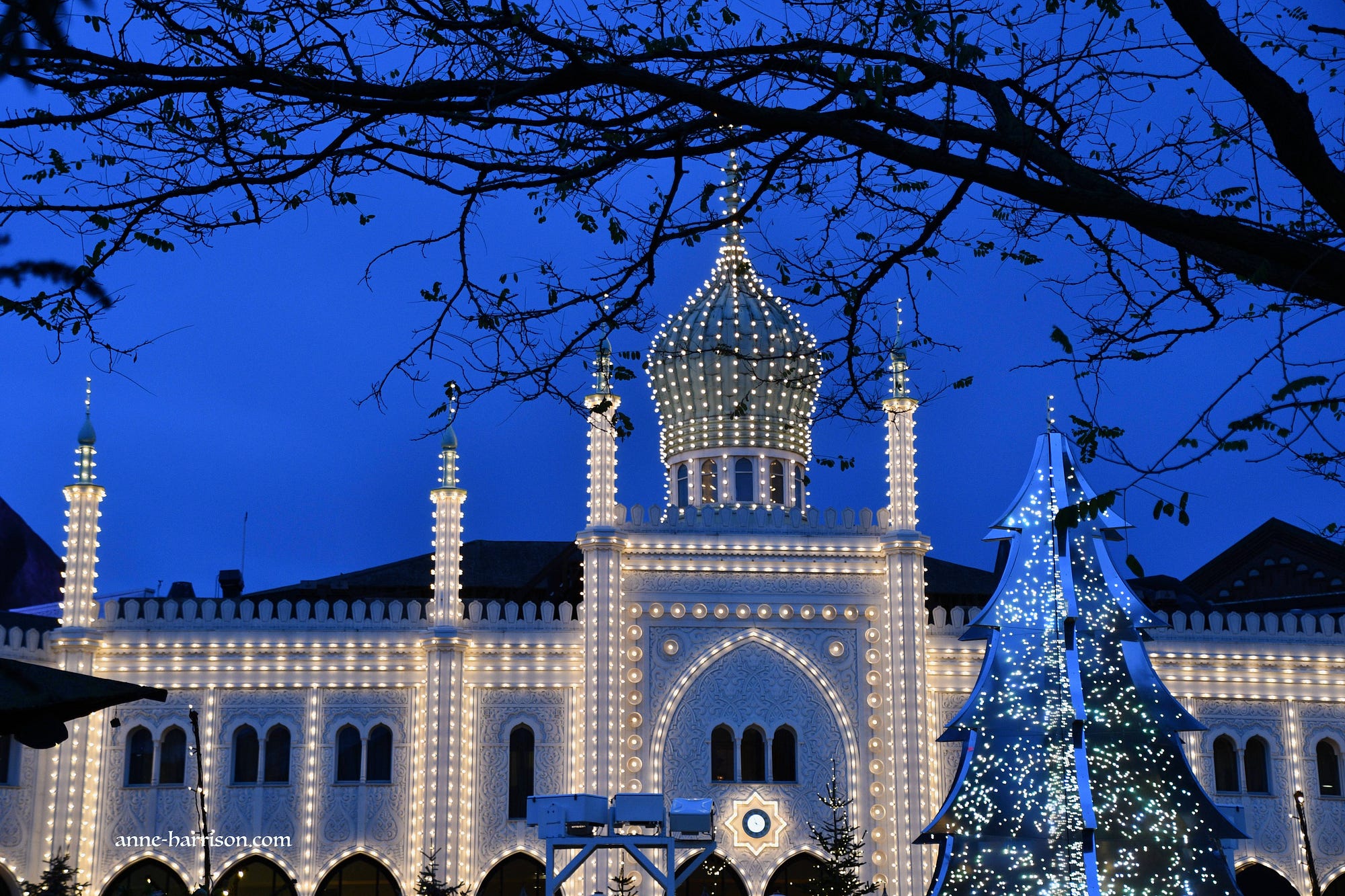
Copenhagen’s green spaces aren’t just background scenery — they’re where the city’s personality actually lives. These five spots give you everything from neon-lit amusement park magic to cherry-blossomed graveyards where locals picnic on blankets.
| Spot | Vibe | Best For | Cost | Peak Season |
|---|---|---|---|---|
| Tivoli Gardens | Fairytale amusement park | Night photography, families | ~155 DKK entry (~$22 USD), rides extra | Year-round (Halloween & Christmas themes are standouts) |
| King’s Garden | Formal royal garden | Classic European backdrops | Free | May–September |
| Superkilen Park | Bold urban design | Color-blocking, street-style shoots | Free | Year-round |
| Assistens Cemetery | Pastoral & unexpected | Cherry blossoms, contemplative moods | Free | Late April for blossoms |
| Botanical Garden | Tropical greenhouse escape | Rainy-day shooting, palm house interiors | Garden free; Palm House ~60 DKK (~$9 USD) | Year-round; Butterfly House summer only |
Tivoli Gardens: Fairytale Lights & Rides
Tivoli inspired Walt Disney to build Disneyland — and once you see it draped in thousands of colored lights at night, you’ll understand why. It’s the world’s second-oldest amusement park, but the real Instagram draw is the scenery: exotic architecture, historic buildings, and lush gardens that shift themes with the seasons.
Halloween and Christmas are the most photogenic periods by far.
- When to go: Arrive at opening for empty garden shots, then stay through dusk when the lights switch on — that’s when Tivoli transforms completely.
- Budget reality: Entry is roughly 155 DKK (~$22 USD); individual rides cost extra. A ride pass makes sense only if you plan to ride multiple attractions.
- Insider tip: The area near the lake and the Pantomime Theatre gives the strongest composition — ornate Chinese-style architecture reflected in water with gardens framing both sides. Most visitors cluster near the main entrance and miss this entirely.
King’s Garden & Rosenborg Castle
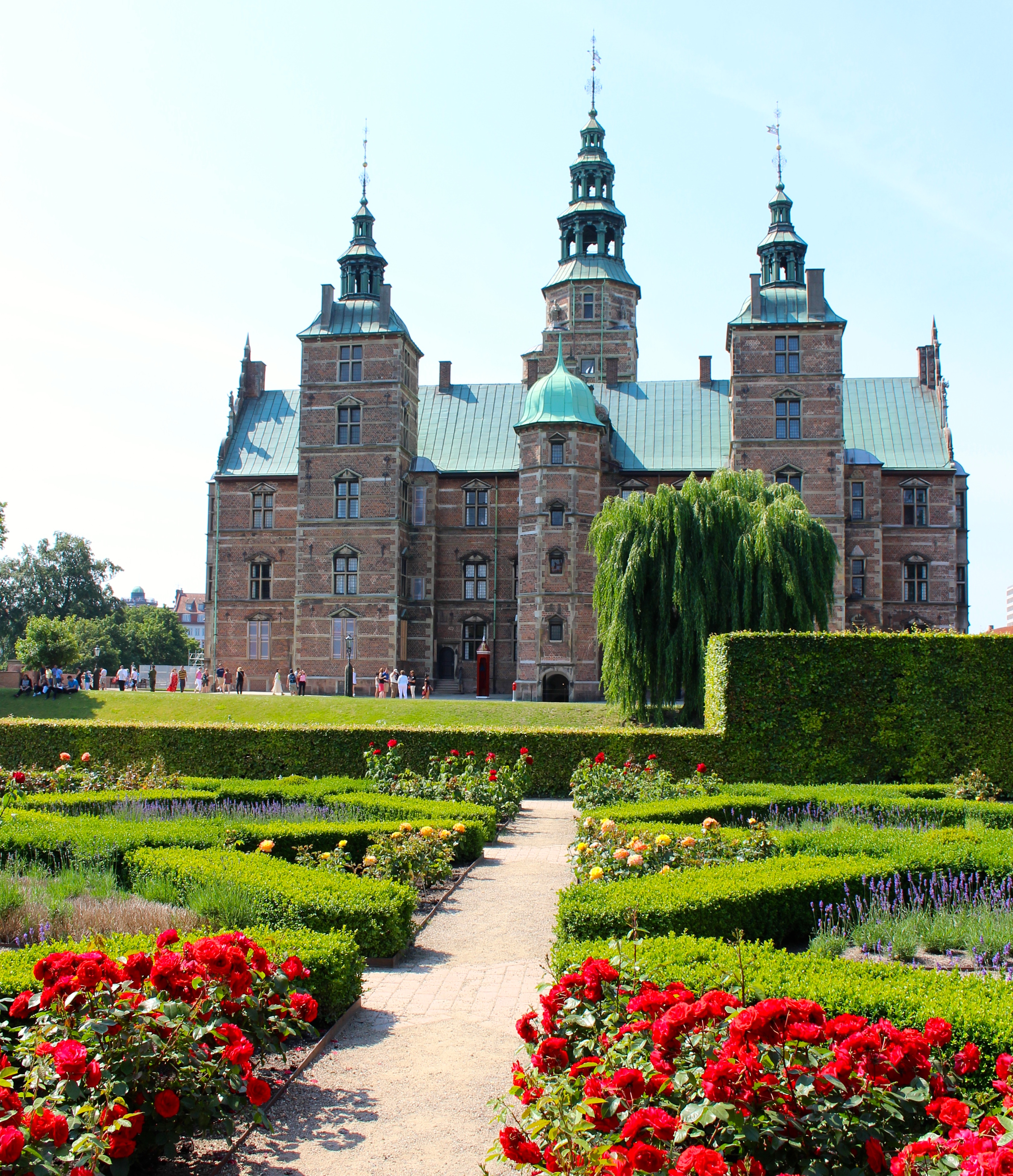
The King’s Garden is Copenhagen’s oldest park and its most visited — for good reason. The 17th-century Rosenborg Castle sits at its center like a storybook set piece, giving you that “European royalty” backdrop without leaving central Copenhagen.
The garden is free, with three entrances and tree-lined paths leading past rose arches, the Hercules Pavilion, a Hans Christian Andersen statue, fountains, and herbaceous borders.
- Best shot: Stand at the south end of the main axis looking toward the castle — the symmetrical path and flanking trees create a natural leading line straight to the turrets.
- Crowds: Weekday mornings before 10 AM are quiet enough for clean compositions. Summer weekends get packed by midday.
- Combine with: Rosenborg Castle interior if you want crown jewels and royal chambers (separate ticket, roughly 125 DKK / ~$18 USD).
Superkilen Park: A Global Design Playground
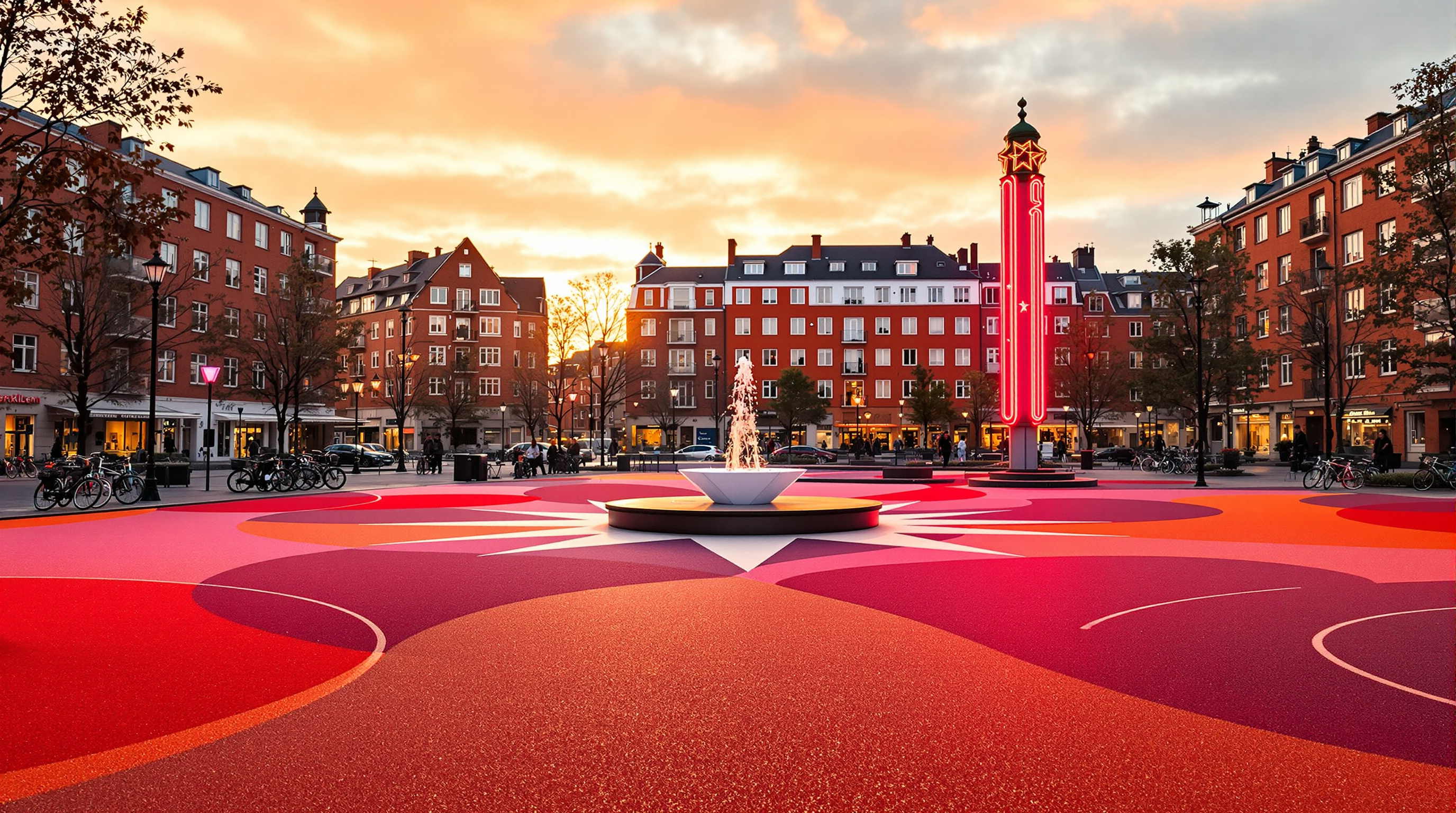
Superkilen in Nørrebro is unlike any park you’ve seen. Designed by BIG Architects, it pulls objects, surfaces, and design elements from 60 different countries and arranges them across three bold zones — the red rubberized Red Square, the monochrome Black Market, and the green landscaped Green Park.
The result is a photographer’s playground of color-blocking, graphic patterns, and unexpected textures.
- Photo priority: The Red Square’s neon ground surface is the money shot — it pops in any light and reads instantly on a phone screen.
- Best approach: Walk from Nørrebro metro station; the park runs along Thoravej. Give yourself 30–45 minutes to move through all three zones.
- When to shoot: Overcast days actually work best here — the colors stay saturated without harsh shadows washing out the surfaces.
Assistens Cemetery: Spring Blossoms & Picnics
Yes, a cemetery. Assistens in Nørrebro is where Hans Christian Andersen and Søren Kierkegaard are buried, but Copenhageners treat it like a public park — sunbathing on blankets, strolling under tree-lined allées, and picnicking among the headstones.
In late April, the cherry blossoms along the main paths create one of the most unexpectedly beautiful scenes in the entire city.
- Timing is everything: Cherry blossom peak usually falls in late April, but it shifts with the weather — check local bloom reports before building your visit around it.
- Mood: This is the opposite of a manicured tourist attraction. Come for contemplative, golden-hour shots with soft light filtering through the canopy, not for polished backdrops.
- Neighborhood bonus: Nørrebro’s side streets around the cemetery overflow with street art and independent cafés — combine both for a half-day walk.
The Botanical Garden: Palm Houses & Butterflies

Ten hectares of garden right next to the King’s Garden, holding Denmark’s largest collection of living plants. The free outdoor grounds are worth a wander, but the real Instagram payoff sits inside: the 1874 Palm House, a soaring cast-iron-and-glass greenhouse with a 16-metre spiral staircase that wraps up through the canopy.
The Butterfly House opens summer-only and puts you face-to-face with tropical species in flight.
- Cost: Garden entry is free. The Palm House costs around 60 DKK (~$9 USD); the Butterfly House is a separate ticket, open roughly June through September — confirm dates with the garden before visiting.
- Insider detail: That spiral staircase inside the Palm House is the shot everyone wants but few actually climb. It’s narrow and gets congested — arrive right at opening on a weekday to have it nearly to yourself.
- Rainy day ace: The Palm House and Herbarium make this Copenhagen’s best park option when the weather turns, since the most photogenic elements are entirely indoors.
Quirky Eats & Culture Spots with Great Photo Ops
Copenhagen does a double-take café culture better than almost any European capital — and two spots in particular pair genuinely great food with settings so unexpected they practically beg for the camera.
Gasoline Grill: Burgers at a Gas Station
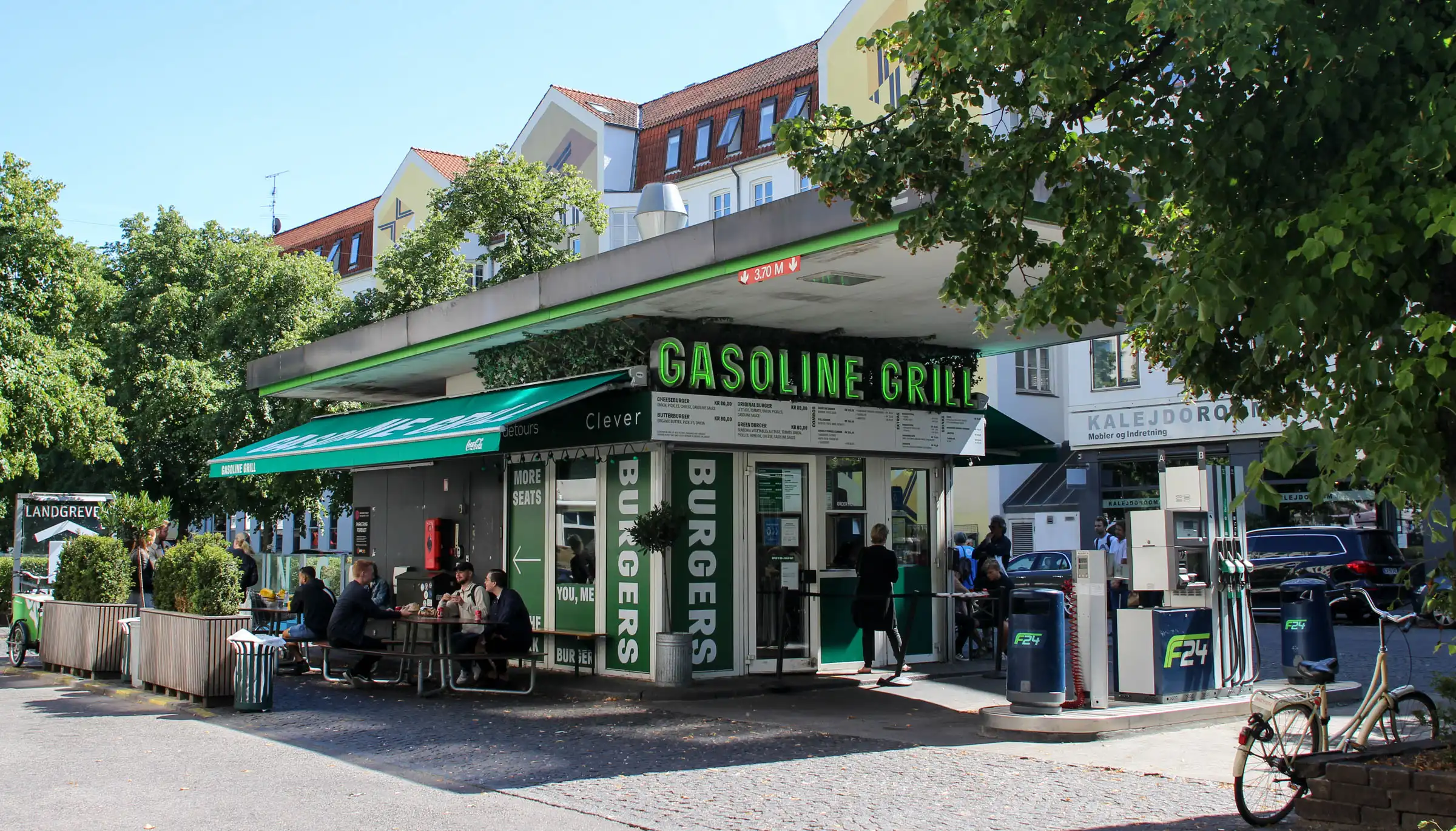
Strip away the hype and Gasoline Grill still earns its reputation: a legit smash burger counter operating out of a functioning gas station on Landgreven, near Kongens Nytorv. The contrast — neon fuel signage, chrome pumps, and one of the city’s most-loved burgers sizzling on the griddle — is the photo.
Flat-lay the tray against the retro canopy for your feed shot.
- What to order: The classic cheeseburger. It’s simple, properly smashed, and what built the cult following.
- When to go: Arrive right at opening (usually 11:00) or accept a 15–25 minute queue during peak lunch hours. The line moves fast but midday in summer is genuinely long.
- Photo angle: Shoot from inside looking out through the service window — you’ll capture both the burger and the gas station framing in one frame. The fluorescent overhead lighting actually photographs well against overcast Copenhagen skies.
- Price: Expect roughly 85–120 DKK ($12–17) for a burger combo — very reasonable by Copenhagen standards.
There’s no indoor seating. You eat standing or perched on the concrete barriers nearby, which honestly makes the whole experience better and more photogenic.
Sct. Peders Bageri: The Famous Cinnamon Roll Bakery
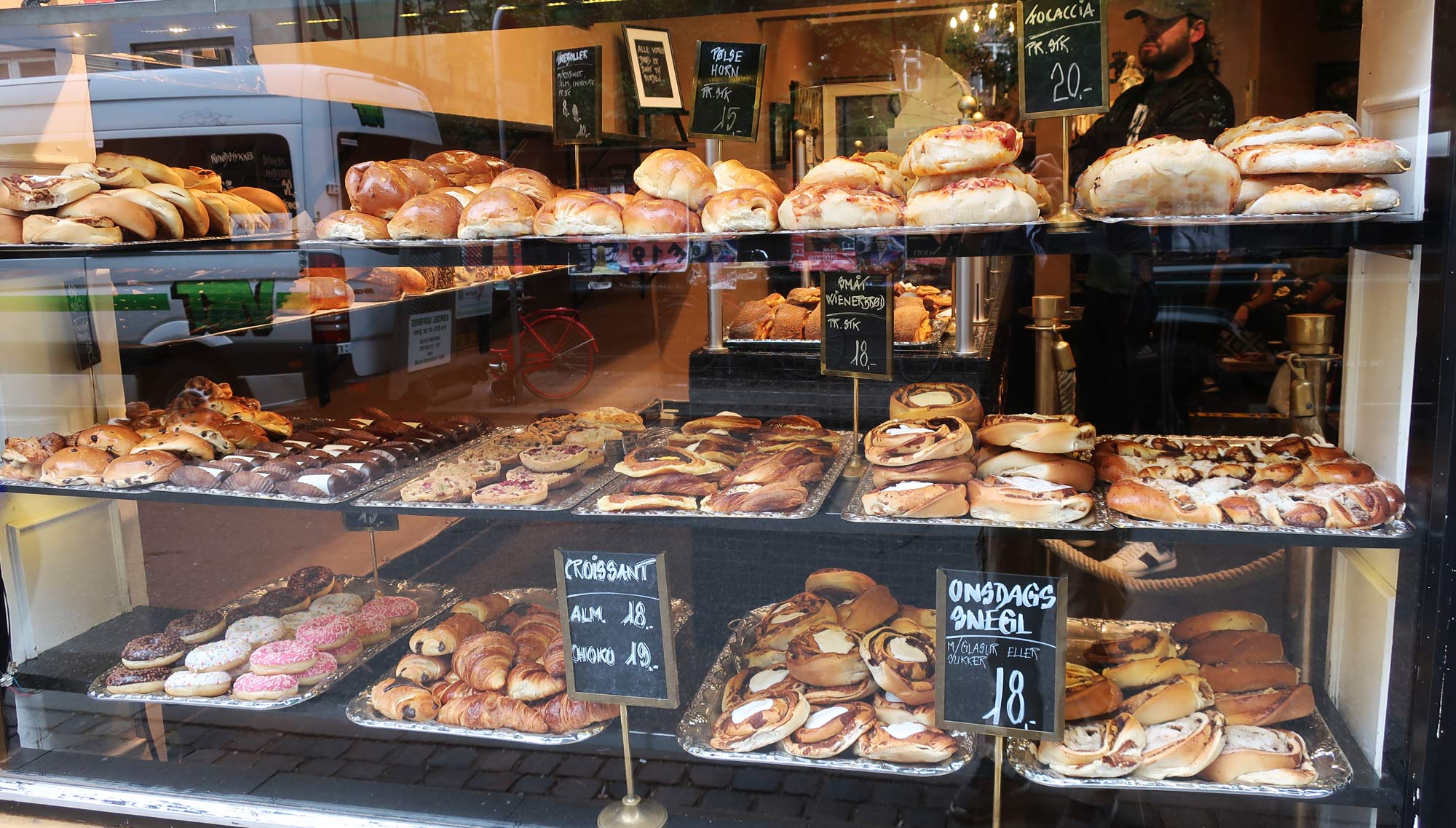
Denmark invented the cinnamon roll — or at least the Danish version that conquered every airport pastry case on earth — and Sct. Peders Bageri in the Latin Quarter is where that heritage gets taken seriously.
The bakery dates to 1652, making it one of the oldest in the city, and the interior still has the low ceilings and worn wooden shelves that signal authenticity.
- What to order: The kanelsnegle (cinnamon snail). This is non-negotiable. It’s richer, flakier, and more butter-forward than the American cinnamon roll it inspired.
- When to go: Wednesday is “Onsdags Snegl” day — a supersized version of the cinnamon roll made fresh and typically selling out by early afternoon. Show up before noon if you want one.
- Photo angle: The exterior half-timbered facade on Sankt Peders Stræde is the money shot, especially with a tray of pastries held up in foreground. Inside, shoot the glass display case with the bakery’s old signage overhead.
- Price: Pastries typically run 30–55 DKK ($4–8). Coffee is priced in the usual Copenhagen range.
The surrounding streets — Sankt Peders Stræde and the lanes branching off it — are cobblestoned and colorful, tying directly into the Magstræde area covered elsewhere in this guide. Spend 20 minutes here and you’ll bank shots for multiple posts.
Insider tip: Both spots get crowded, but for opposite reasons — Gasoline Grill draws a fast-moving lunch crowd, while Sct. Peders Bageri has a slower, more deliberate morning rush of locals grabbing coffee and a pastry.
Visit Gasoline Grill between 11:00–11:30 and the bakery between 8:00–9:00 on a weekday to beat both crowds and get clean shots without strangers filling your frame.
How to Capture the Perfect Copenhagen Photos?
Copenhagen’s compact layout means every top photo spot sits within a 25-minute walk or bike ride of each other — so the real challenge here is not logistics, it is timing, gear, and knowing which angle to commit to before the crowds fill in behind you.
What Gear & Settings Work Best for Copenhagen?
A 24-70mm equivalent lens is the one to pack if you carry only one. It covers canal-wide shots at Nyhavn, street-level compositions on Magstræde’s cobblestones, and rooftop panoramas from the Round Tower without swapping glass.
- 24-70mm: The workhorse. Handles roughly 80% of Copenhagen’s photo subjects — canals, colorful facades, and Tivoli’s gardens.
- 70-200mm: Worth the weight for compression shots of cycling traffic and for isolating church spires, architectural details, and the stacked geometry of Nyboder’s row houses.
- Smartphone shooters: Copenhagen’s light and color are strong enough that a phone captures the essentials. Use the 2× or 3× zoom to flatten canal perspectives and cut clutter from wide-angle compositions.
Copenhagen sits at 55°N latitude, which means summer daylight stretches past 10 PM in June and July. That extended golden hour is your biggest technical advantage — you get soft, warm light for hours instead of the 20-minute sprint common in southern Europe.
Winter flips the script: expect a narrow window of usable light roughly 9 AM to 3 PM between November and February, and plan indoor or covered locations for the rest.
Should You Book a Guided Photography Tour?
If Copenhagen is a dedicated photography trip — not just a city break where you also want good photos — a private tour with a local photographer is worth the cost. Expect roughly €100–200 per person for a two- to three-hour session, depending on group size and provider.
The value is not just in finding spots; it is in timing and composition coaching at each location so you leave with portfolio-quality images rather than tourist snapshots.
Book through platforms like GetYourGuide, which lists private Instagram-focused photography tours in Copenhagen. These tours typically cover three to five locations in a single session, hitting the classic spots (Nyhavn, Nyboder, the canals) at optimal light angles.
Book at least a few days ahead in peak season (June–August) since solo photographers take limited clients per day.
Skip this if you already shoot regularly and just want location scouting — the rest of this article gives you that map. Book it if you want someone to handle the route logic so you can focus entirely on shooting.
Navigating Crowds & Finding the Best Light
Nyhavn draws crowds from roughly 10 AM to 6 PM in summer, and there is no trick that eliminates people from the frame during those hours. Your two realistic options are early morning (arrive by 7–8 AM for near-empty quays) or leaning into the crowd as part of the scene — shoot wide, embrace the energy, and let the colorful backdrop do the heavy lifting.
- For fewer crowds at colorful buildings: Head to Hammerichsgade near Vesterport station. The back of the Nordisk Film Biografer Palads — a building drenched in pink, blue, and purple — photographs strikingly and draws almost no foot traffic compared to Nyhavn.
- Tivoli after dark: Thousands of colored lights transform Tivoli Gardens into a genuine fairy-tale setting after sunset. This is one of the strongest night-photography opportunities in any European capital. Arrive before closing and use a wider aperture to capture the glow without excessive ISO grain.
- Magstræde and Nyboder: These are residential and narrow-street environments. Morning light hits the facades best, and pedestrian traffic is lighter before 10 AM.
- The Round Tower and Church of Our Saviour spiral: Both offer elevated vantage points. Visit either in the hour before sunset for warm directional light across the cityscape — midday flattens the skyline into haze.
The single most useful planning detail: Copenhagen’s weather shifts fast. A flat grey sky at 9 AM can open to brilliant blue by noon, especially in spring and autumn.
Build flexibility into your shooting schedule and check forecasts hourly rather than planning a full day around a morning prediction. The Danish Meteorological Institute (DMI) is the most accurate local source for hourly Copenhagen forecasts.
Seasonal & Thematic Photo Highlights
Forget the canals—Copenhagen’s most surreal, social-media-breaking seasonal spectacle happens in a cemetery, where aisles of cherry trees explode into pink clouds each spring.
Cherry Blossoms at Bispebjerg Cemetery (Spring)
This is a spring-only event, and timing is everything. The famous sakura allée typically blooms in late April, but the exact window is narrow—usually just two weeks.
Check local bloom trackers before your trip. The cemetery is in the Nørrebro neighborhood, about a 15-minute bike ride from the city center.
- Best for: Photographers and anyone chasing that surreal, petal-strewn fairy tale.
- When to go: Sunrise. By 9 AM on a sunny day, it’s an elbow-to-elbow queue for photos. Arrive at 7:00 for soft light and space.
- Pro tip: Walk beyond the main avenue. Smaller, equally beautiful clusters of trees are scattered throughout the cemetery grounds, offering similar shots without the crowd.
Christmas & Halloween Themes at Tivoli Gardens
Tivoli transforms completely with the seasons, making it a year-round content machine. While its charm is timeless, the Christmas (typically November–December) and Halloween (usually October) overlays are its most photogenic themed events.
- Christmas: Thousands of lights, wooden stalls, and a blanket of festive décor create a genuine European Christmas market atmosphere. It’s magical at dusk when the lights dominate.
- Halloween: The park goes all-in with spooky decorations, jack-o-lanterns, and themed rides. It’s playful, not scary, and the autumn light is often fantastic for photography.
- The catch: Theming is best at night, so you’ll need a camera that handles low light well. A tripod is useful for the long-exposure light shots, but isn’t always permitted near rides.
Photography note: Overcast days are your friend here, especially at Bispebjerg, providing soft, even light without harsh shadows. For Tivoli’s lights, arrive right at dusk for the perfect balance of ambient twilight and sparkling illumination.
| Highlight | Best Time | The Vibe | Pro Tip |
|---|---|---|---|
| Bispebjerg Blossoms | Late April, 7-9 AM | Ethereal, serene, natural wonder | Go on a weekday; weekend crowds are intense. |
| Tivoli Christmas | November-December, dusk | Cozy, festive, magical | Visit on a weeknight closer to Christmas for peak decor and thinner crowds. |
| Tivoli Halloween | October, afternoon/dusk | Playful, spooky, family-friendly fun | The decorations are great in daylight; don’t wait only for night. |
Frequently Asked Questions
What is the single most Instagrammable spot in Copenhagen?
Nyhavn wins, no contest. The candy-colored 17th-century facades lining the canal, the wooden boats moored bow-to-stern, the cobblestones — it’s the frame most people picture when they think of Copenhagen, and the visual density in one shot is unmatched anywhere else in the city.
The catch: everyone else knows it too, so your photo will share the same composition as thousands of others unless you nail the timing (see below).
How can I avoid crowds when photographing Nyhavn?
Arrive between 07:00 and 09:00, any season. The morning light hits the facades beautifully, the canal is calm, and cruise-ship tour groups haven’t arrived.
In summer this window gives you warm sunrise tones; in winter you get blue-hour light that makes the colors more saturated — arguably the stronger shot. Avoid 11:00–16:00 in July and August at all costs.
The quayside will be packed with outdoor diners, the boats will be loaded with tourists, and your composition will be cluttered with people instead of architecture.
Are there any Instagrammable spots that are free to visit?
Most of them. Nyhavn, the Christianshavn canals, Magstræde, Nyboder’s yellow row houses, Amalienborg Palace square, King’s Garden, and CopenHill’s trail and terrace are all completely free to access and photograph.
The main exceptions are Rundetårn (typically around 40 DKK) and Tivoli Gardens, which requires an entrance ticket regardless of whether you ride anything. Copenhagen’s best photo spots cost nothing — your biggest expense will be a coffee while you wait for the light to shift.
What time of day is best for photography in Copenhagen?
Golden hour is non-negotiable. In summer, that means very early mornings and late evenings — sunrise hits around 04:30 and sunset stretches past 21:30, which rewards the dedicated.
In winter, golden hour lands in the afternoon thanks to the low sun angle, making it far easier to shoot without losing sleep. Here’s the real insider move: overcast days are a gift, not a setback.
Copenhagen’s colorful architecture and canals look significantly better in soft, diffused light than under harsh midday sun, which throws ugly shadows across the facades. If clouds roll in, grab your camera — don’t wait for blue sky.
Can I photograph inside Tivoli Gardens without a ride ticket?
You don’t need a ride ticket, but you do need an entrance ticket — Tivoli charges admission just to walk through the gates. Prices vary seasonally, so check the Tivoli website for current rates before you go.
Once inside, the gardens, exotic architecture, and atmospheric lighting are free to photograph endlessly. Ride tickets are purchased separately on-site.
If photos are the priority, visit after dark when thousands of colored lights create the fairy-tale atmosphere that makes Tivoli genuinely unique — daytime visits don’t deliver the same impact.
Are there any lesser-known Instagram spots locals recommend?
Christianshavn’s canals are the quiet alternative to Nyhavn — same style of colorful waterfront buildings and water reflections, a fraction of the people, especially on weekday mornings around 07:30–09:00. Jægersborggade in Nørrebro has Scandinavian-cool independent storefronts and street art without tourist foot traffic.
Superkilen Park offers something completely different — bold, globally-inspired design pieces that pop on camera in ways nothing else in Copenhagen does. Nyboder’s historic yellow row houses are underrated and rarely crowded.
These spots won’t show up in every guidebook, which is precisely why they photograph so well.
What’s the best way to get between these photo locations?
Copenhagen is compact and built for bikes — that’s the fastest way to hit multiple spots in one session. Most major photo locations sit within a 20-minute ride of each other.
City bike rentals are available throughout the center. For longer stretches, the metro covers ground quickly (Nørrebro to Christianshavn in roughly 10 minutes).
For the tightest walking itinerary — Nyhavn, Christianshavn canals, Vor Frelsers Kirke, and Magstræde — you can cover the entire route on foot in about 30 minutes. Don’t overthink transport here; the real time sink is waiting for the right light, not moving between spots.
Go Shoot Copenhagen Before Everyone Else Wakes Up
Start with Nyhavn at 7 AM, then loop south through Christianshavn’s canals and up the Church of Our Saviour’s spiral for the best three-photo sequence the city offers — all within a 30-minute walk of each other. The next morning, hit Magstræde and Nyboder before the tour groups mobilize, and you’ll have covered Copenhagen’s most iconic compositions in two early sessions.
Copenhagen earns its reputation as one of Europe’s most photogenic capitals because the beauty isn’t curated or seasonal — it’s baked into the architecture, the light, and the daily rhythm of a city that still lives in its own streets.
Save this guide to your Copenhagen board right now, set an alarm for 6:45 AM on your first morning there, and go get the shots that will actually stop the scroll.
Leave a Reply