
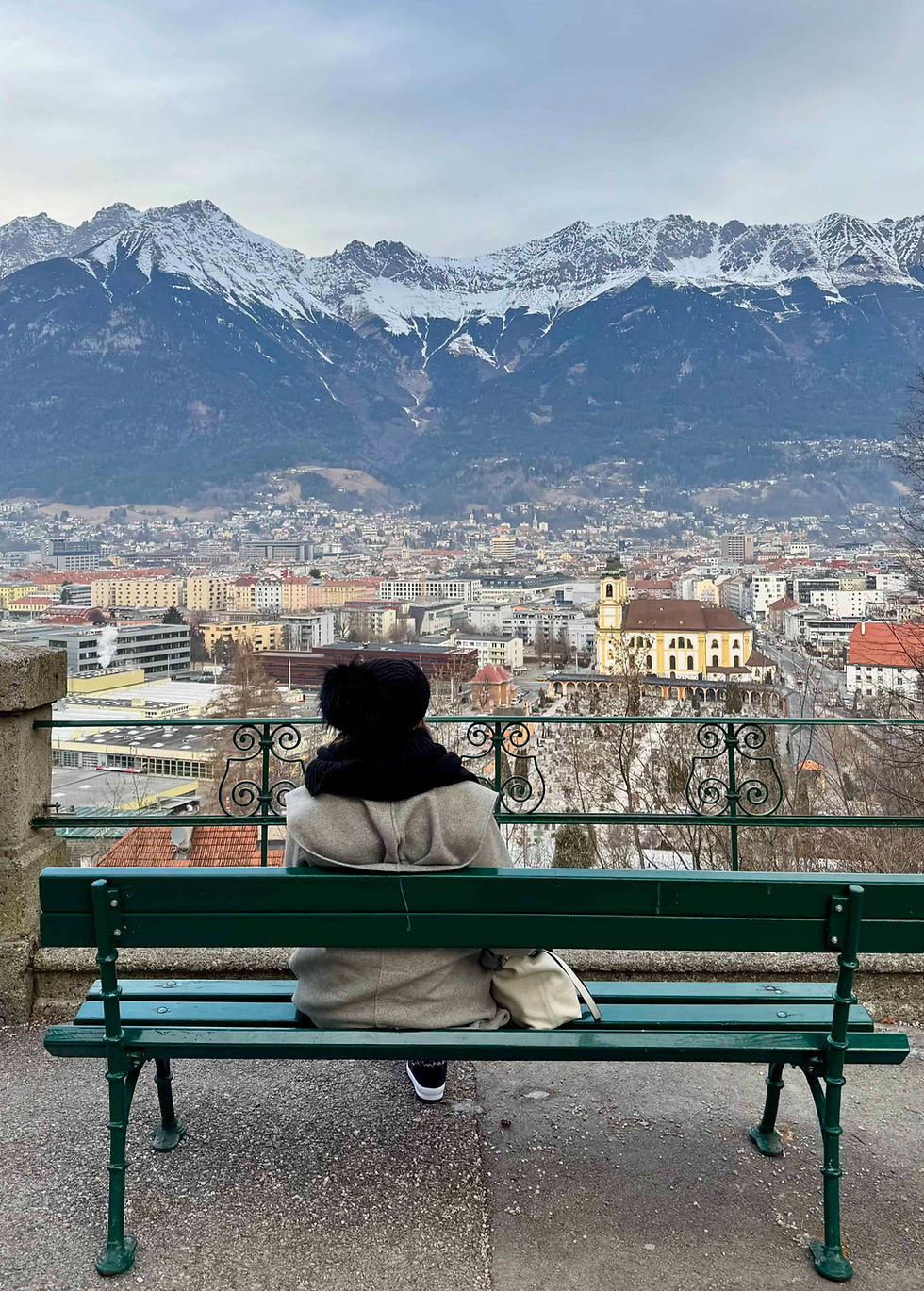
At blue hour in Innsbruck, the mountain backdrop stays visible against a deep indigo sky while the city lights glow warm underneath — a twenty-to-forty-minute window that flat cities simply cannot offer. Down by the Inn, glassy morning water doubles the painted riverside facades, and one cable car ride hauls you from a shopping street to a cliff-close panorama in under an hour.
What separates this city from every other alpine backdrop is that the money shots sit on top of each other: a medieval core, a modernist ski jump and a 2,256-metre summit platform are all reachable in a single morning. Almost every frame on this list costs nothing but an early alarm.
Here is exactly where to stand, when to arrive and what to skip, so you stop guessing and start shooting.
On a budget, plan roughly €20–40 a day beyond your room if you stick to free street, bridge and viewpoint shots and eat simply. Mid-range runs about €50–90 with one lift ride or a couple of ticketed interiors, while a splurge day of €120-plus gets you the full summit ascent, a crystal chamber detour and a rooftop table at dusk.
Free in Innsbruck is not a compromise — the postcard frames cost nothing at all.
Your Fast Photo Plan for Innsbruck
Skimming this on the train? These are the calls that matter most.
- Must-shoot landmark: The Golden Roof on Herzog-Friedrich-Straße before 7:30 AM — after that, tour groups own the square until late afternoon.
- Best panorama: The Hafelekar platform at 2,256 m via the Nordkettenbahnen, with Seegrube on the way down for the terrace composition.
- Best free skyline shot: The Innbrücke looking upstream between 8–11 AM, or the Alte Innbrücke if you want a quiet foreground.
- Best interior: The Hofkirche bronze statues in the 3–5 PM golden light, and the Hofburg state rooms only if they are open on the day.
- Best half-day detour: Swarovski Kristallwelten in Wattens for controlled indoor light; skip it if you only have one morning.
- Best after dark: Weitsicht rooftop bar at blue hour, plus Bergisel for breakfast and the strongest architectural frame in the region.
Old Town landmarks that define Innsbruck’s skyline
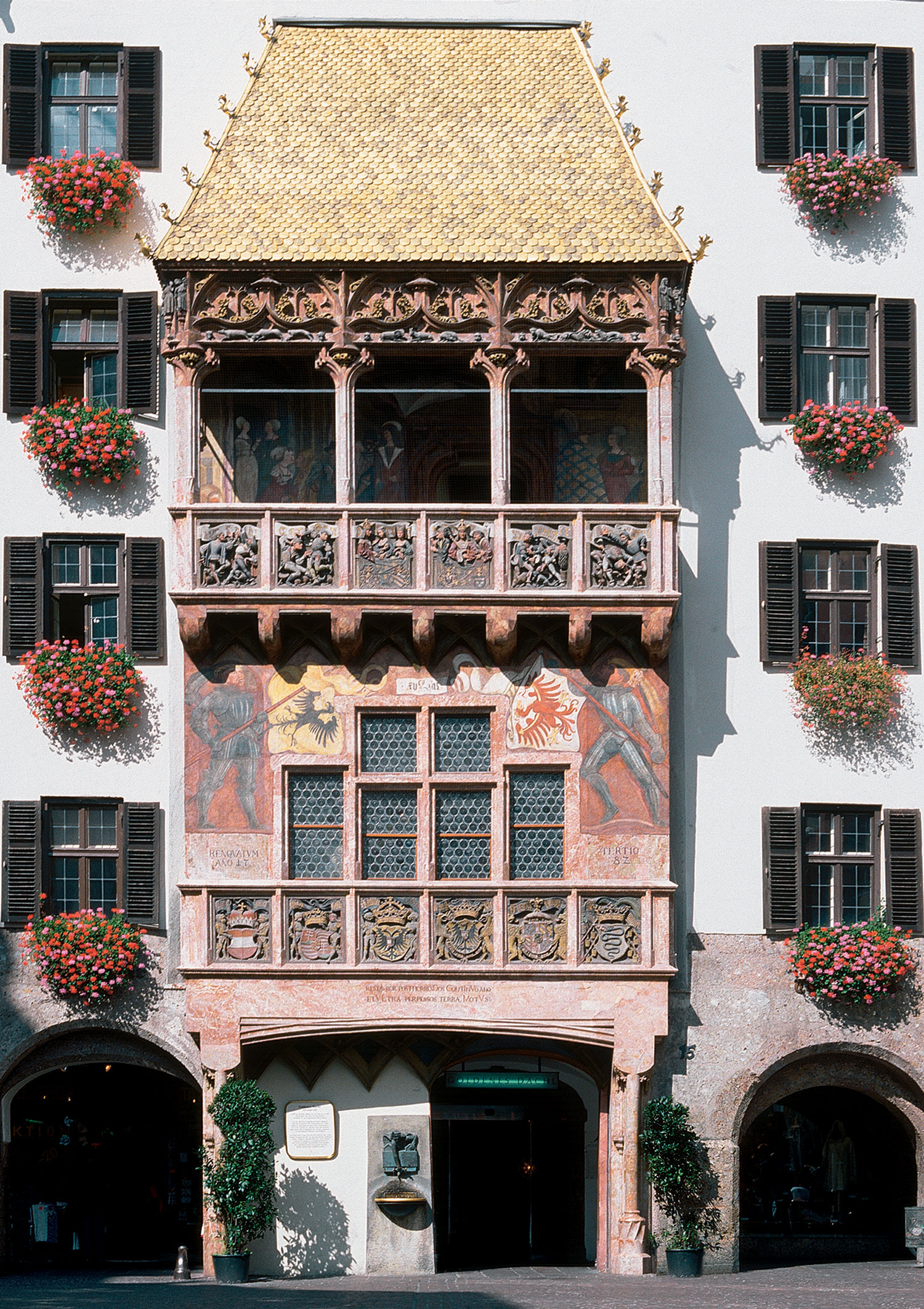
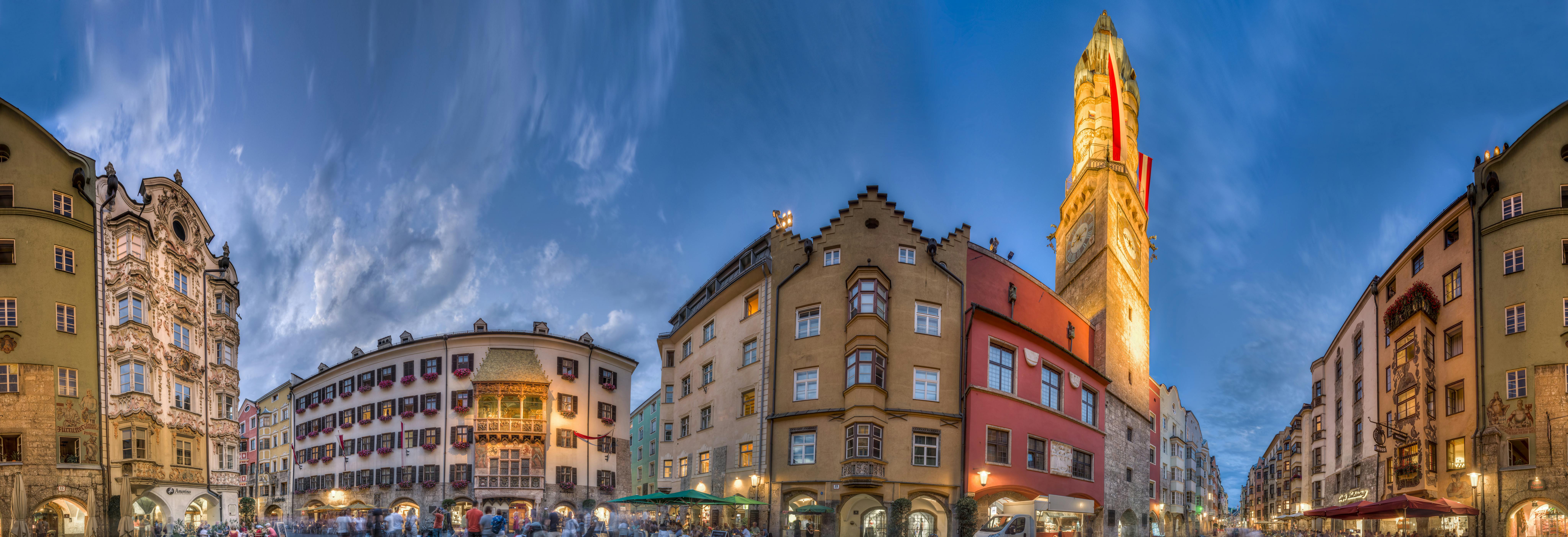
The Goldenes Dachl is why most people book the flight: a late-Gothic oriel wrapped in 2,657 fire-gilded copper tiles, commissioned in 1500 by Emperor Maximilian I as a royal box from which he watched tournaments and square festivities below. It is the single most photographed structure in Tyrol, and the four landmarks in this walk sit within a few hundred metres of each other — you can shoot all of them in one concentrated morning without ever leaving the Altstadt.
Golden Roof & Herzog-Friedrich-Straße
Herzog-Friedrich-Straße delivers the classic postcard frame: the oriel centred, the pastel arcaded facades flanking it, and the Nordkette massif rising between rooftops. The street is narrow, so a wide-angle lens in the 16–24 mm range is the tool that captures the whole composition without you backing into a shopfront.
Morning side-lighting does the most for the gilded relief and the sculpted reliefs beneath the balcony; harsh overhead midday sun flattens them into a yellow smear.
- Best shot: Stand mid-street, dead centre, and include the mountain gap behind the roofline — the tile pattern alone is a detail shot, not the money shot.
- Timing: Arrive before 7:30 AM. The square fills with tour groups by mid-morning and stays busy; early you get empty paving and delivery vehicles instead of a hundred shoulders in frame.
- My call: This is the one Old Town landmark worth setting an alarm for. The street is otherwise unphotographable between about 10 AM and 4 PM in peak season.
Stadtturm: 133 steps to the best Old Town panorama
The Stadtturm next door has guarded Innsbruck since 1450, and its 51-metre tower is the only elevated vantage point inside the Old Town itself. A spiral stairway of 133 steps climbs to a viewing platform at 31 metres — enough height to look down on the tiled roofs and outward to the Nordkette without a cable car.
- Entry: Around €4.50 per adult, one of the cheapest paid viewpoints in the city centre.
- Hours: Typically open 10 AM–5 PM — confirm before you go, because tower access can be suspended in poor weather or off-season.
- Photography verdict: The platform is the best Old Town panorama available on foot, and sunset here is the warmest light the medieval facades get all day. The rail is at chest height, so bring a wide-angle and shoot over it rather than through it.
Hofburg Palace & its Habsburg rooms
The Hofburg is Innsbruck’s imperial core — a sprawling Habsburg residence with Renaissance- and Baroque-era state rooms that once hosted emperors and their courts. For photographers, the draw is the interiors: painted ceilings, grand ceremonial halls, and the kind of ornate detail you cannot fake in a city square.
- Tickets: Expect roughly €8.50–€21 depending on the combination ticket, with under-19s admitted free — a solid-value stop if you are travelling with teenagers.
- Hours: Usually 9 AM–5 PM, with last admission around 4 PM.
- Critical warning: Check for temporary room closures before you buy. Restoration work and staged exhibitions have been known to shut the main state rooms while leaving only smaller displays open, which turns the visit into a disappointment. Verify on the day.
- My call: If the state rooms are open, this is the strongest indoor photography location in the Altstadt. If they are not, skip the ticket and put the time into the Hofkirche instead.
Hofkirche (Court Church): the bronze statues in golden light
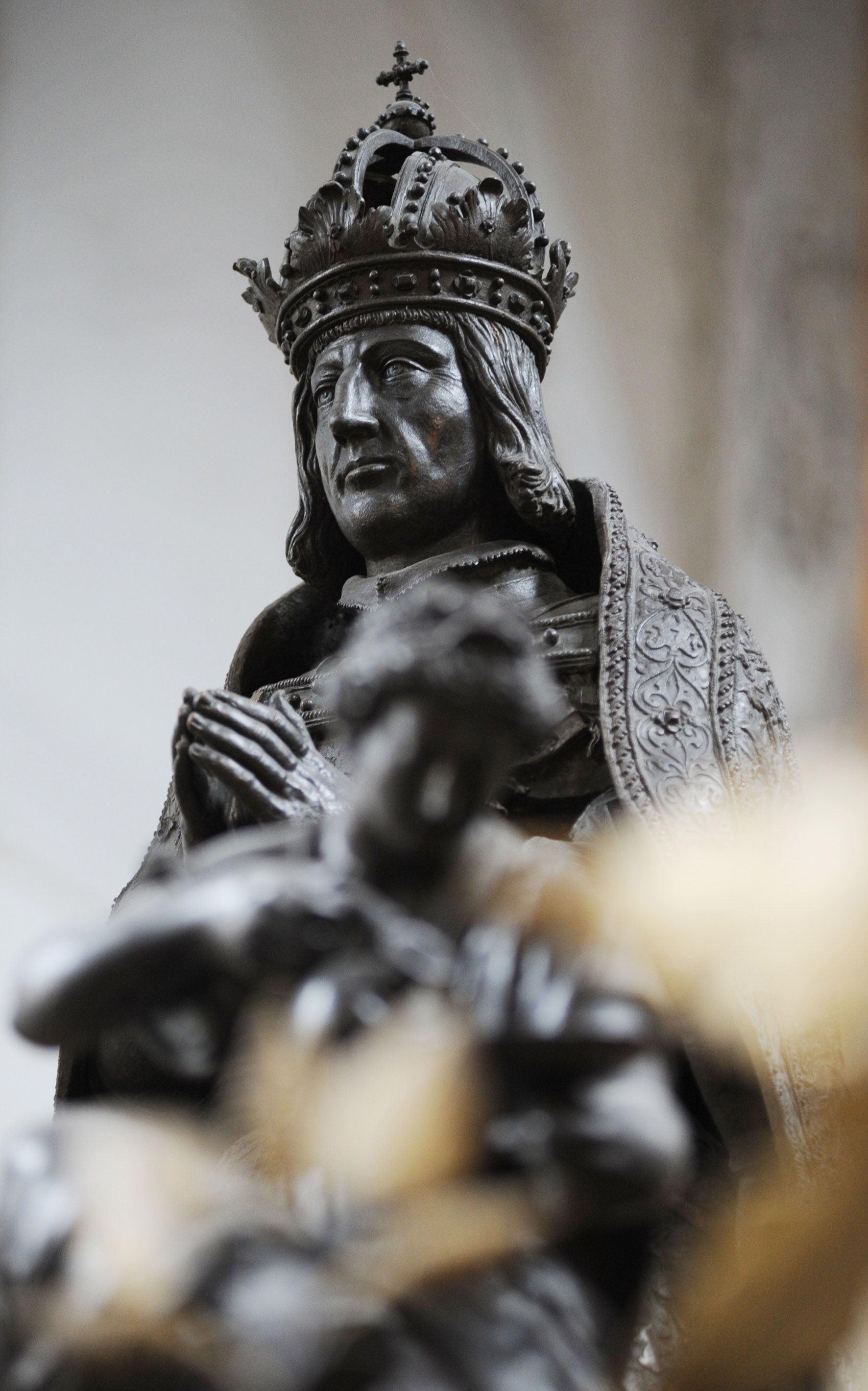
The Hofkirche holds 28 larger-than-life bronze figures — the famous “Black Men” — kneeling in mourning around the cenotaph of Maximilian I, beneath one of the most intricate ceilings in Austria. This is the interior shot that stops the scroll: dark bronze, warm stone, and directional light that rakes across the statues’ armour and faces.
- Tickets: Around €7–€14 on its own, or bundled with the Hofburg combination ticket if you plan both.
- Hours: Last entry is around 4:30 PM, so plan accordingly.
- Best window: Go in the late afternoon, roughly 3–5 PM. The low sun reaches into the courtyard and church with golden light, and the tour-group wave has thinned. Shoot the courtyard first while the light holds, then move inside.
- My call: Photographers should treat the Hofkirche as the climax of this walk, not a filler stop. The bronze statues are the closest Innsbruck gets to a genuinely cinematic interior.
Squares, streets and river views in the city centre
Stand on the old-town bank of the Inn and the Innsbruck postcard stacks up in a single frame: pastel Mariahilf facades sitting on the water, a bridge cutting the middle distance, the Nordkette piled behind it. Everything in this section sits within one compact walk of the old town — but shoot it in this order, because the river is a morning subject and the grand boulevard is an evening one.
Marktplatz & the colourful houses on the Inn
Marktplatz delivers the Innsbruck classic: the Nordkette rising straight out of the market square’s roofline. Shoot from the open centre of the square facing north and put a telephoto 70–200 mm lens on the camera — compressing the distance hauls the peaks up behind the facades so they read as a wall of rock instead of a distant grey strip.
A wide angle flattens them into wallpaper.
The colour in this city lives across the water. The Mariahilf row houses on the Inn are worth the short detour out of the old town, and the reflection is what turns them into a photograph: get low on the opposite bank so the mirrored facades fill the bottom half of the frame.
- Calm water: the river is glassiest early, so the doubled facades are cleanest in the morning rather than the afternoon.
- Advent, November to December: the row carries Advent decoration and the lights repeat in the water — the only winter version of this frame worth building a trip around. Decorations and dates shift year to year, so check the current season’s setup before you book.
- Crop choice: a tight vertical running from roofline to reflection turns the row into pure pattern and survives the Instagram format far better than a wide landscape.
Maria-Theresien-Straße: from the Annasäule to the Triumphpforte
One boulevard, two baroque monuments, a five-minute walk between them: the Annasäule at the town-square end, the Triumphpforte at the far end. Work the street in that direction and finish on the arch, because the arch gives you the better closing frame.
- Annasäule: pastel buildings close in around the column and the Nordkette rises beyond it. Stand to the south so the facades frame the column instead of competing with it.
- Triumphpforte: shoot it from the south and the arch becomes a foreground window onto the mountains — historic stone in front, alpine wall behind, exactly the juxtaposition people come to Innsbruck for.
- Anichstraße intersection: the creative shot on this street. Traffic moving through the crossing turns into streaking light trails with an ND64 filter or a long exposure, and the surrounding architecture stays razor sharp.
Munding Platz and the quiet old town lanes
The best old-town photographs are the ones nobody is queuing for. Leave the main square, turn into the lanes behind the facades, and the crowd thins with every step.
- Munding Platz: the insider tip I would normally keep to myself. Most visitors walk straight past it on the way to the next landmark, which is precisely why it works — painted facades, tight sightlines, and space to set up a shot without a tour group stepping through it.
- Schlossergasse, Seilergasse and Kiebachgasse: the lanes worth the detour. Expect painted facades and compressed perspective lines that give your feed a European texture the mountain shots cannot.
- Marktgrabenstraße / Stainerstraße intersection: point the camera towards the Brandjoch and the mountain closes the end of a plain city street. This is the shot that proves how close the Alps sit to Innsbruck’s shops.
Which Inn river bridge gives the best shot?
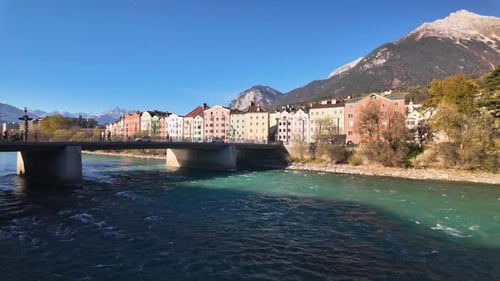
Short answer: the Innbrücke, if you only shoot one. It is the classic upstream view, and the 8–11 AM window puts usable light on the facades while the river still holds a reflection. Everything else on the river is a variation on that frame.
- Innbrücke — the classic: the postcard composition of city, water and mountain in one look upstream. Expect company; this is the shot everyone already knows.
- Alte Innbrücke — the quiet one: the pedestrian span draws noticeably fewer photographers, so it is the pick for anyone who wants a clean foreground and time to work the composition.
- Universitätsbrücke — the modern frame: the glass railings give you a contemporary foreground the old bridges cannot. This one only earns its keep in late-afternoon summer light.
Whatever bridge you choose, shoot it from the riverside paths rather than the deck. Standing back lets you layer foreground water, mid-ground bridge and background mountain in a single frame — that three-deep stack is the composition that separates a shot worth posting from a snapshot.
Mountain viewpoints and lifts above Innsbruck
The single best shot in Innsbruck is taken from 2,256 meters up, where the city shrinks to a strip of colour between the Inn and the Karwendel — and you reach that platform in about 30–40 minutes from the city centre without touching a car. Everything above the rooftops clusters on the north side of town plus one hill to the south, so do the Nordkette lifts and the Hungerburgbahn in one morning, then finish at Bergisel.
Nordkettenbahnen to Hafelekar (2,256 m)
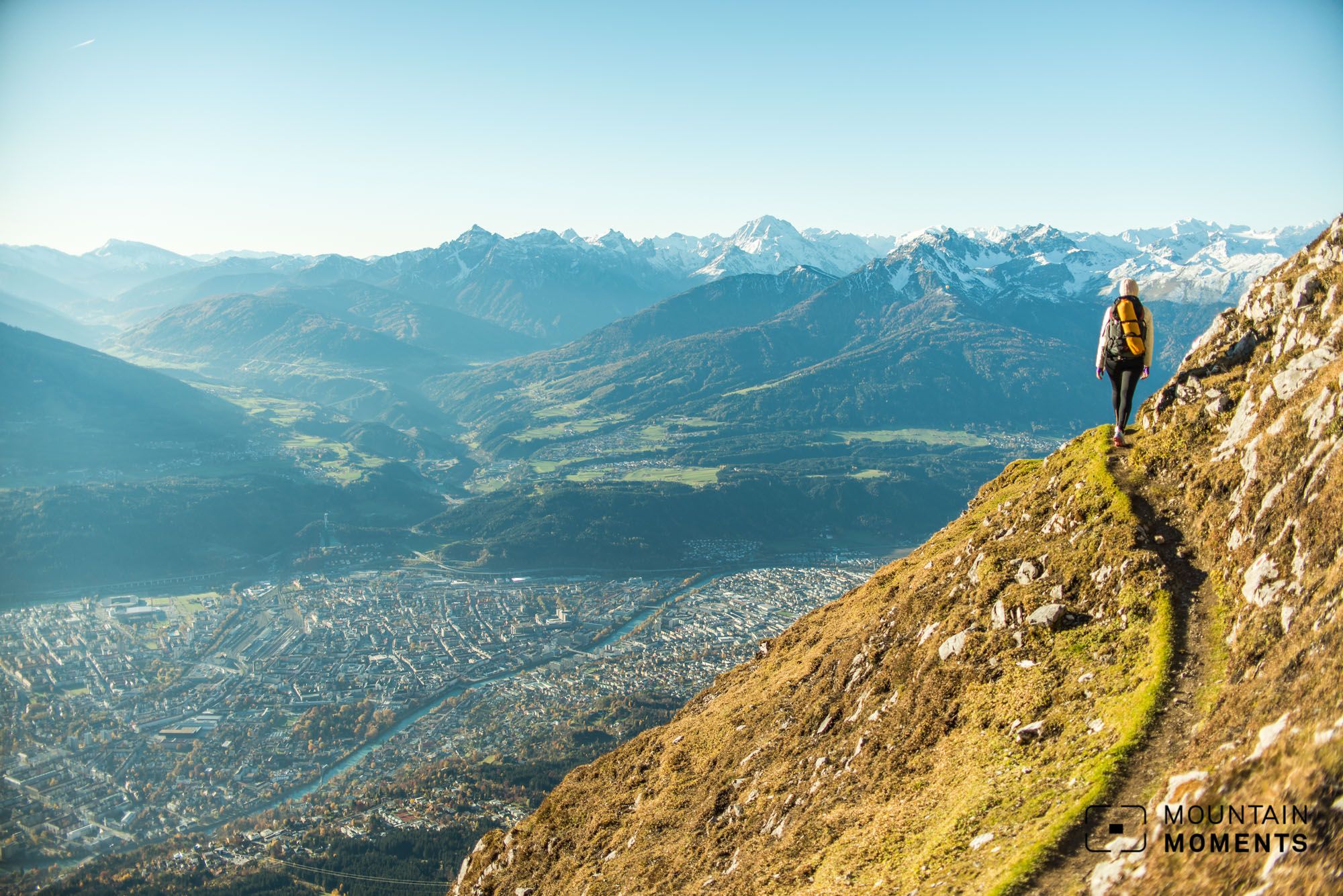
This is the headline ascent: the Nordkettenbahnen chain whisks you from the city centre to the Top of Innsbruck at Hafelekar, where a 360° platform opens onto the Karwendel range and the full sweep of the Inn valley. If you take one expensive lift in Austria, take this one — the mountain arrives abruptly, cliff-close, instead of fading into distant haze.
- Best shot: The Hafelekar platform panorama, with the Inn valley falling away behind the ridgeline. Shoot wide and keep the ridge in the upper third.
- Worth the money: A full round trip is roughly €56 for adults, €51.50 for seniors and students, and €33.60 for children, though lift pricing shifts seasonally — confirm current fares before you go.
- Weather reality: At over 2,000 meters the platform is exposed to wind and fast cloud. If the valley is clear but the summit is socked in, wait at the mid-station rather than burning your ascent on grey.
- Insider move: Skip the first departures that fill with tour groups; a slightly later car usually leaves the platform nearly empty, which is what you want for a clean foreground.
Seegrube: the mid-station terrace shot
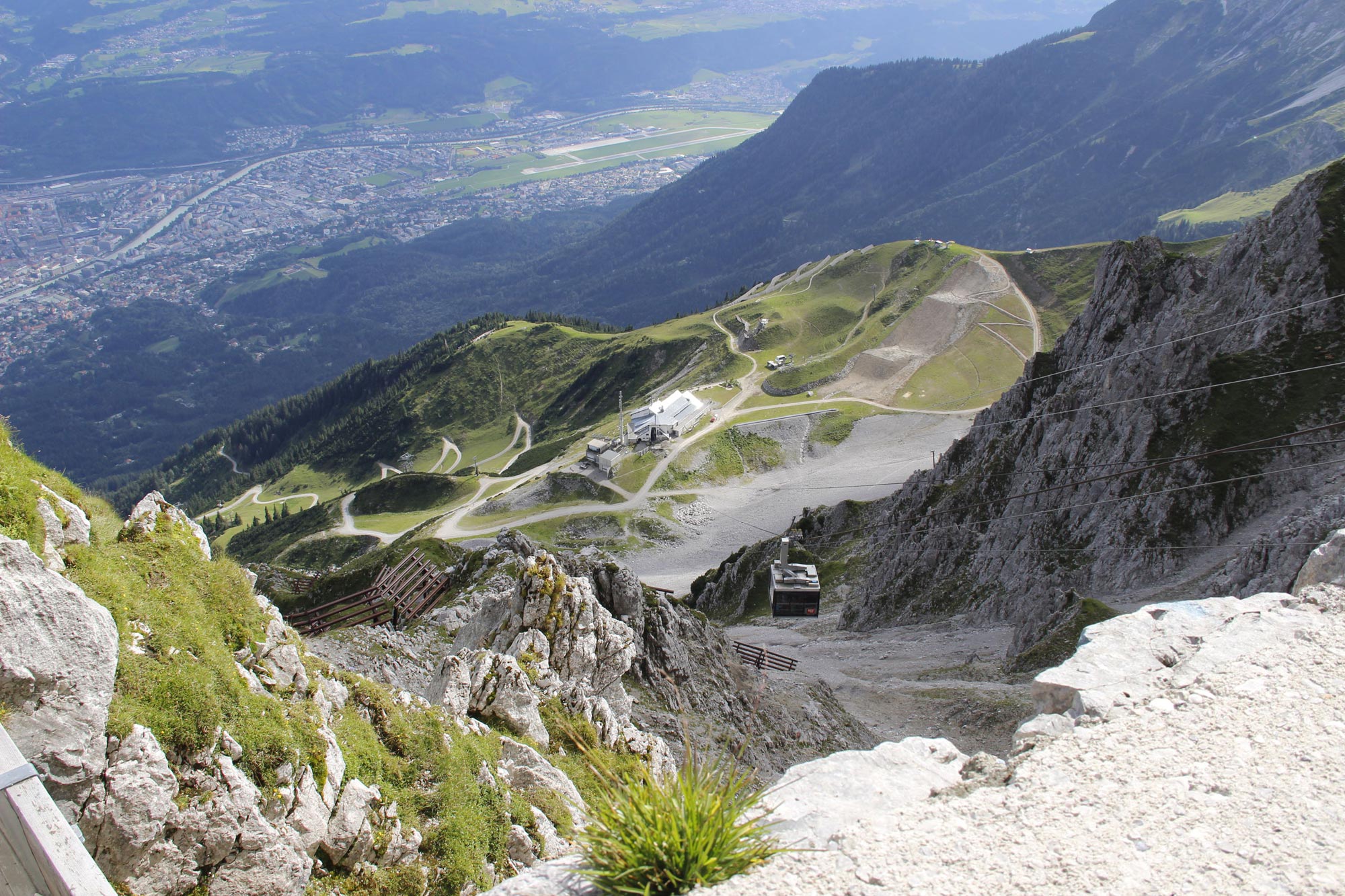
Seegrube, at 1,905 meters, is the underused frame on this mountain: Innsbruck sits more prominently below you here than at the summit, the mountain backdrop stays dramatic, and the station’s restaurant terrace doubles as a comfortable photography platform with seating and refreshments between shots.
- Who it wins for: Anyone chasing city-plus-mountain composition in one frame. The lower elevation means fewer weather complications than the summit, so Seegrube stays usable on days when Hafelekar is whiteout.
- Blue hour: The city lights read beautifully from this height once the valley dims — this is the shot to plan a tripod for, and the terrace lets you work without freezing on an exposed ridge.
- My call: Ride straight to Hafelekar first while the light is clean, then stop at Seegrube on the way down for the terrace composition and a warm drink. Reversing that order wastes your best clarity.
Hungerburgbahn & the Alpine Zoo
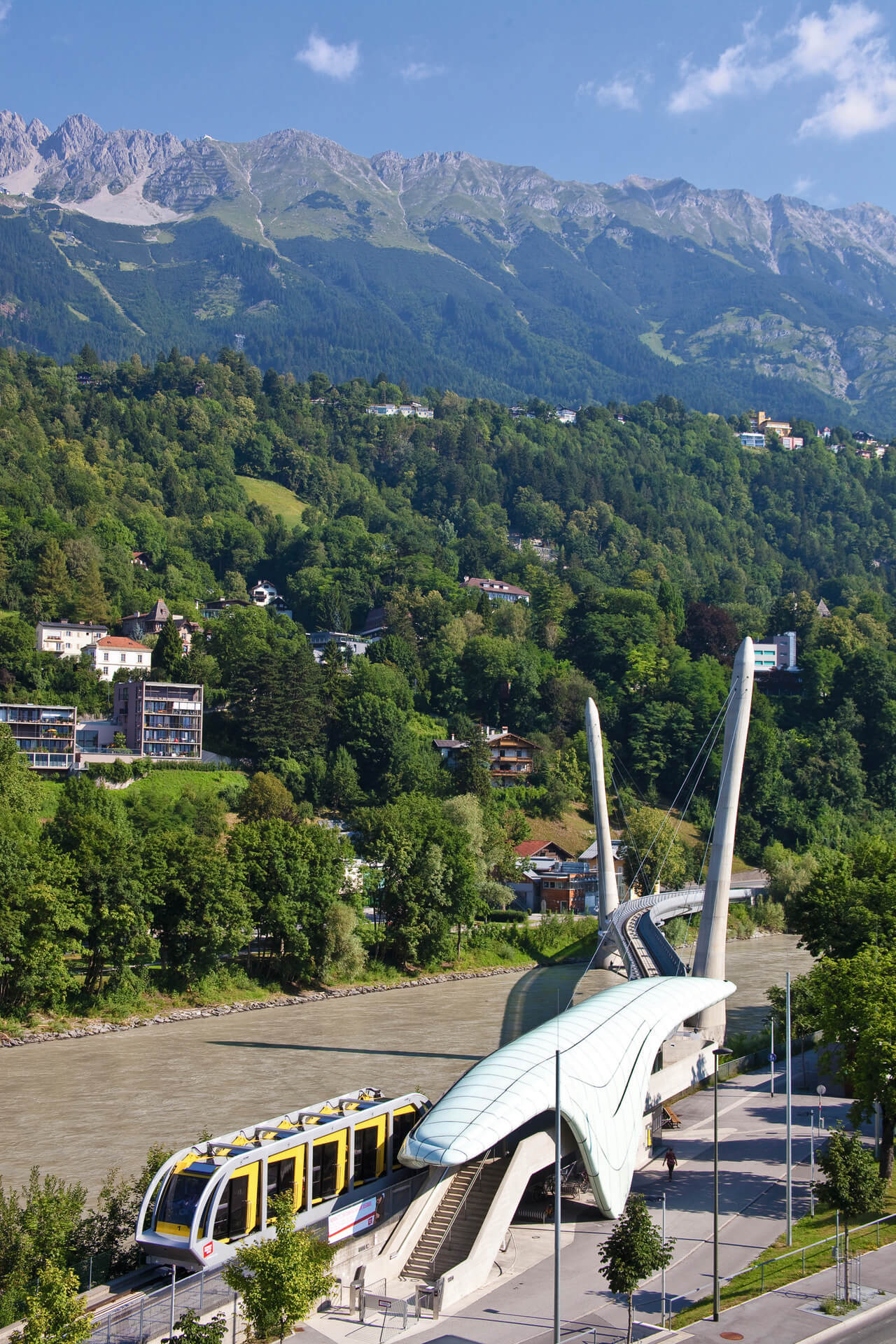
The Hungerburgbahn is Zaha Hadid’s 2007 hybrid funicular and the rare transit ride that is itself worth photographing — its glazed, glacier-shaped stations look like something landed on the hillside. The ride to Hungerburg, at 868 meters, takes about 8 minutes.
- Pair it with the zoo: The Alpine Zoo sits at 750 meters and holds over 2,000 animals from more than 150 alpine species — Europe’s highest zoo, and the natural companion to the lift ride rather than a separate outing.
- Cost: Zoo entry is roughly €16 for adults and €13 for students and seniors, separate from the funicular fare; prices can change, so check before you set out.
- Who should skip it: Photographers on a tight schedule. The zoo and Hungerburg are a half-day commitment, and the Hafelekar panorama delivers more per minute for a photo-led trip.
Bergisel ski jump & Sky restaurant
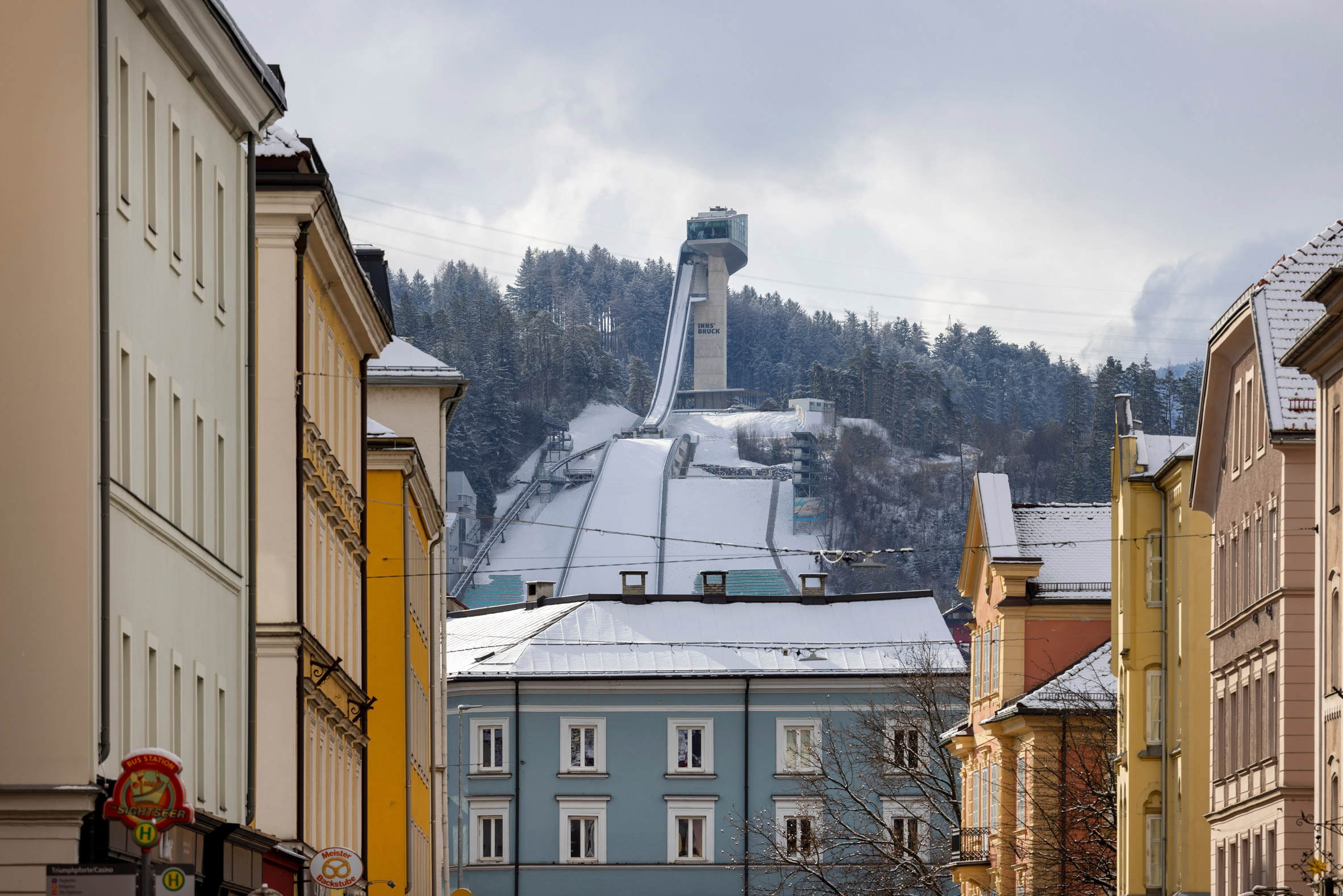
Bergisel is the one stop here that gives you two subjects at once: Zaha Hadid’s 2002 redesign of the ski jump, a cobra-like form rising 40 meters, and the city-and-mountain view from its observation tower. The futuristic curves against the historic skyline make it the strongest architectural frame in the region.
- Getting there: Bus 1SE or tram 1 reaches Bergisel from the city centre in about 15 minutes, followed by a 10-minute scenic walk up to the jump.
- Cost: Entry to the jump and museum without a meal runs about €11, a reliable baseline worth confirming on the day.
- Eat with the view: The Sky restaurant turns the stop into a meal with a panorama; breakfast packages typically land around €30–40 depending on what’s included, and booking ahead is the smart move for a window seat.
- My call: Go for breakfast rather than dinner — you get the same view, better light for the tower shot, and the rest of the day stays free for the Nordkette.
Do this loop in this order and you capture Innsbruck’s three altitude stories — the modernist jump, the funicular’s cliff stations, and the high-alpine platform — without backtracking or repeating a single viewpoint.
Photo spots worth the short trip out of town
Twenty minutes from Innsbruck, a giant’s head of glass and crystal spills a waterfall into a garden with a labyrinth — Swarovski Kristallwelten in Wattens is the one half-day detour I would trade a second morning of Old Town shooting for. Add a rooftop bar on the 12th floor and a hilltop Renaissance castle, and these three stops cover everything the city centre cannot: controlled interior light, a night skyline, and empty-frame architecture.
Swarovski Kristallwelten
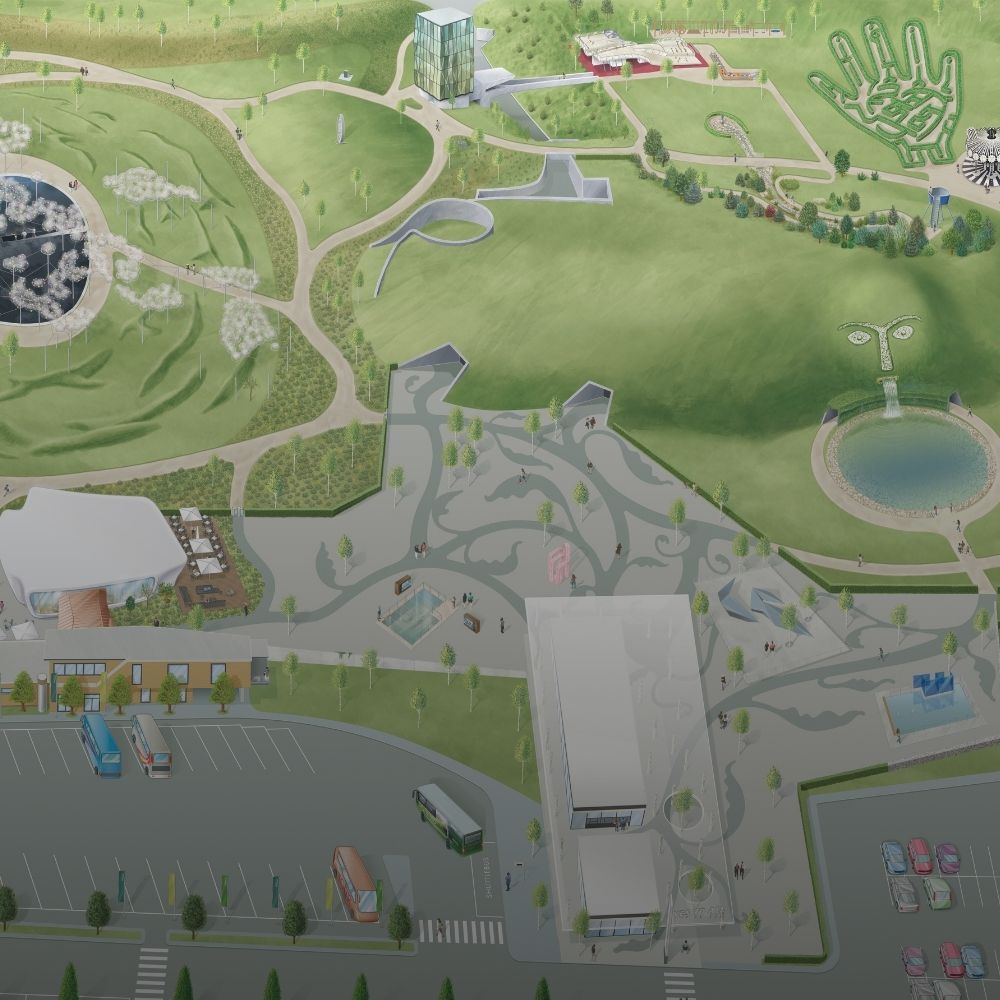
This experience centre in Wattens is the strongest single shot within reach of the city, and the reason is light control: eighteen themed crystal rooms give you reflective, glittering, low-light interiors that no street in Innsbruck can match. Outside, the park adds a labyrinth, a waterfall, a playground, a restaurant, a bar and a shop, so you can frame glass-and-crystal against greenery in the same visit.
- Cost: €25 per adult when booked online versus €27 on site, €9 for children aged 6–17, and free under 6. Prices are planning baselines — confirm on the official site before you go.
- Time needed: Plan on three to four hours including lunch. Anything shorter means you skip the park, which is half the photo material.
- Hours: Usually open 9 am to 7 pm with last admission at 6 pm.
- Getting there: The shuttle runs about €13 return; a taxi is roughly €45 one way. The shuttle is the obvious call unless you are travelling as a group of three or more.
My verdict: Go in the morning and eat lunch on site. Midday outdoor light is harsh anyway, so spend it underground in the chambers and let the park photograph itself in softer afternoon light.
Weitsicht rooftop bar & restaurant
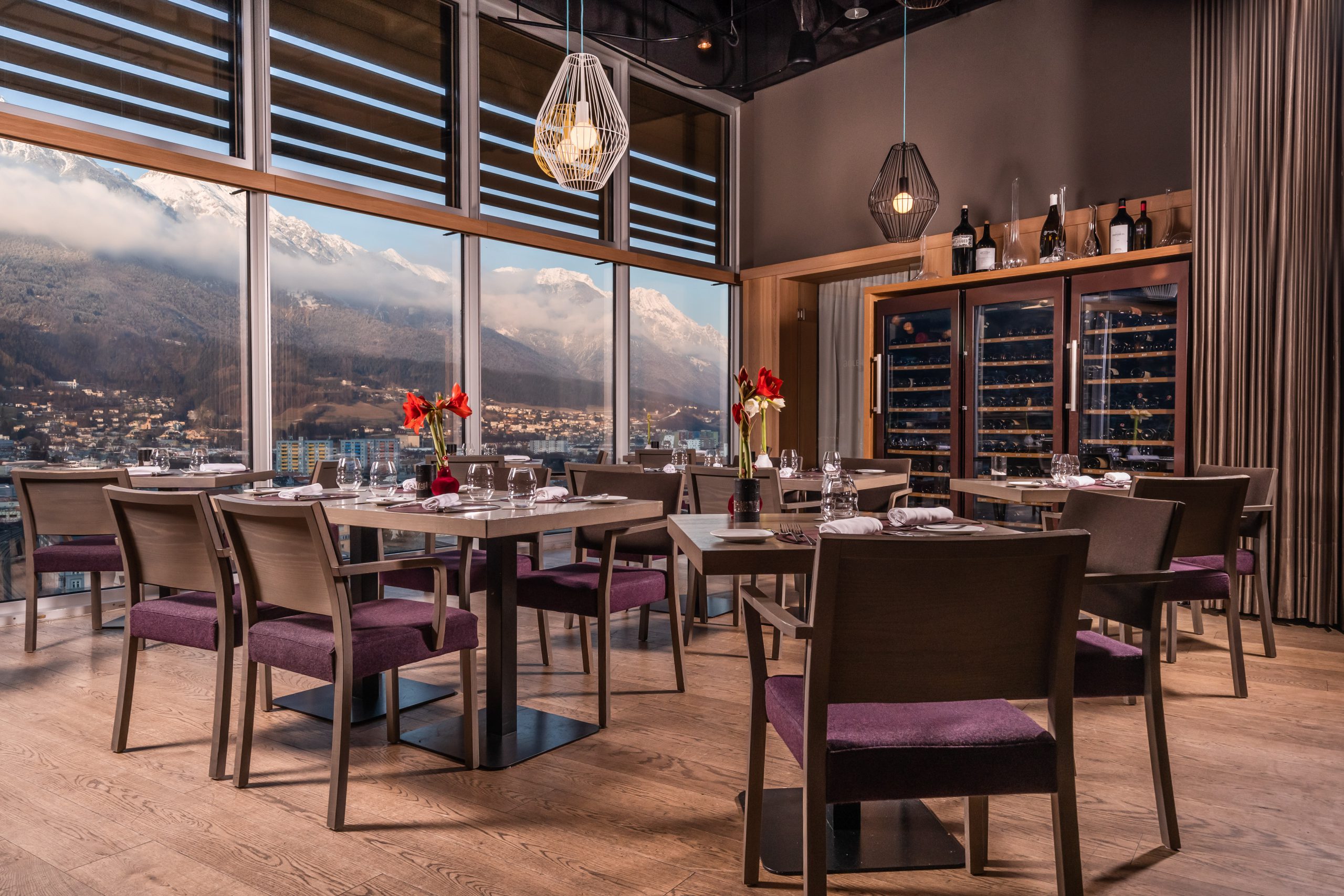
On the 12th floor of Adlers Hotel, the Weitsicht rooftop bar and restaurant delivers 360° views of the lit-up city ringed by snowy Alps — this is the night shot, and it is the easiest one on the list to get wrong by arriving too early.
- What to book: A drinks slot rather than a full dinner if you are shooting. You want to be up there when the city lights are on and the sky is not yet black.
- What it beats: Every mountain viewpoint for sheer convenience. No lift queue, no cable car timetable, no weather gamble on a summit.
- What it cannot do: It will not give you the alpine drama of the high viewpoints. This is a city-lights frame with mountains as backdrop.
Insider move: Shoot from the terrace first and order second. The tables fill up as the light goes, and the best unobstructed edge positions go to whoever is already standing there.
Book ahead regardless — this is a hotel bar, and walk-ins at dusk are a gamble.
Ambras Castle
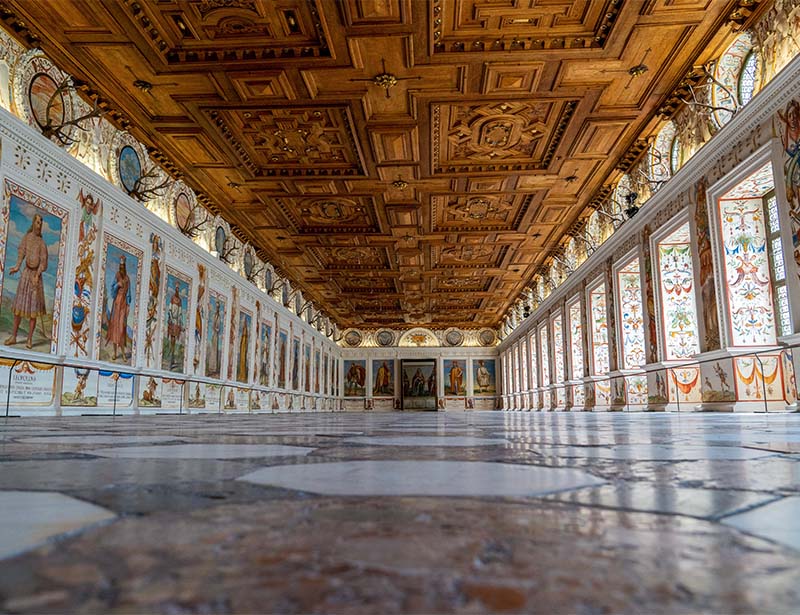
Southeast of the centre, Schloss Ambras sits on a hill in Renaissance style, with a courtyard, formal gardens and the ornate Spanish Hall — the rare interior here that photographs like a palace rather than a museum.
- Free to shoot: The exterior, courtyard and gardens cost nothing, and the elevated grounds give you city views back toward Innsbruck.
- Quieter than the centre: Fewer photographers means you can work a composition properly instead of dodging tour groups.
- Best use of your time: Pair it with an afternoon visit and shoot the gardens in the low sun before heading back toward the rooftop bar.
My take: If you only have room for one of the three, choose based on your light: Swarovski for overcast days and interiors, Weitsicht for a clear evening, Ambras for a sunny afternoon when the Old Town alleys are packed.
When should you shoot Innsbruck for the best light?
The single best light of the day in Innsbruck lasts 20 to 40 minutes — the blue hour window after sunset when the mountain backdrop is still visible against a deep blue sky while the city lights glow warm underneath. Flat cities lose their skyline the moment the sun drops; Innsbruck keeps its peaks, and that contrast is the shot worth planning your whole day around.
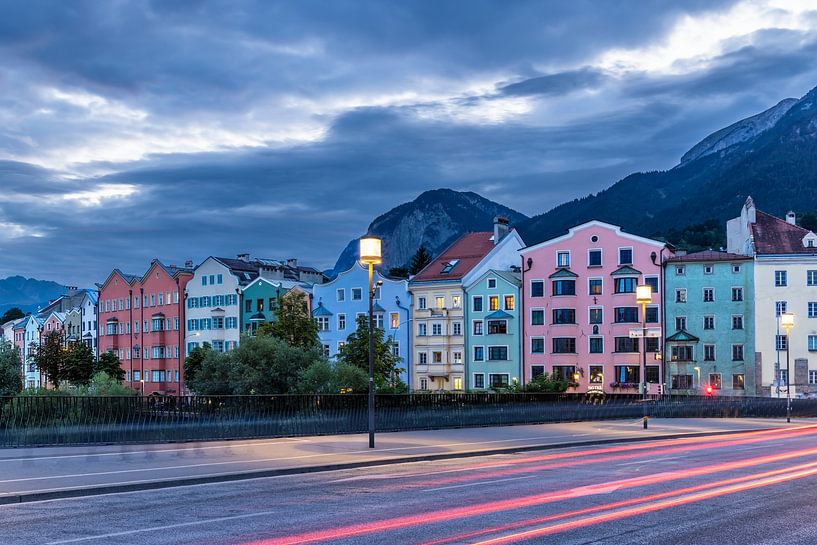
Golden hour and blue hour windows
Innsbruck’s mountain position means the peaks catch the first and last light before the streets do. Warm, directional light saturates colour and lengthens shadows for texture, so front facades and cobbled lanes come alive at these times.
- Summer (June–August): Golden hour lands at roughly 5–6 AM and again at 8–9 PM. It rewards commitment — the empty, warm-street shot is impossible to fake at any other hour.
- Winter (December–February): Golden hour happens mid-morning and mid-afternoon. This is the easy season to photograph: no alarm clocks, and the low sun rakes across facades all day.
- Spring and autumn: The compromise I recommend for most travellers — reasonable timing with genuinely good light quality.
- Blue hour, any season: Work fast and bring a tripod. Long exposures are unavoidable, and the light shifts every few minutes, so recheck exposure constantly rather than trusting your first frame.
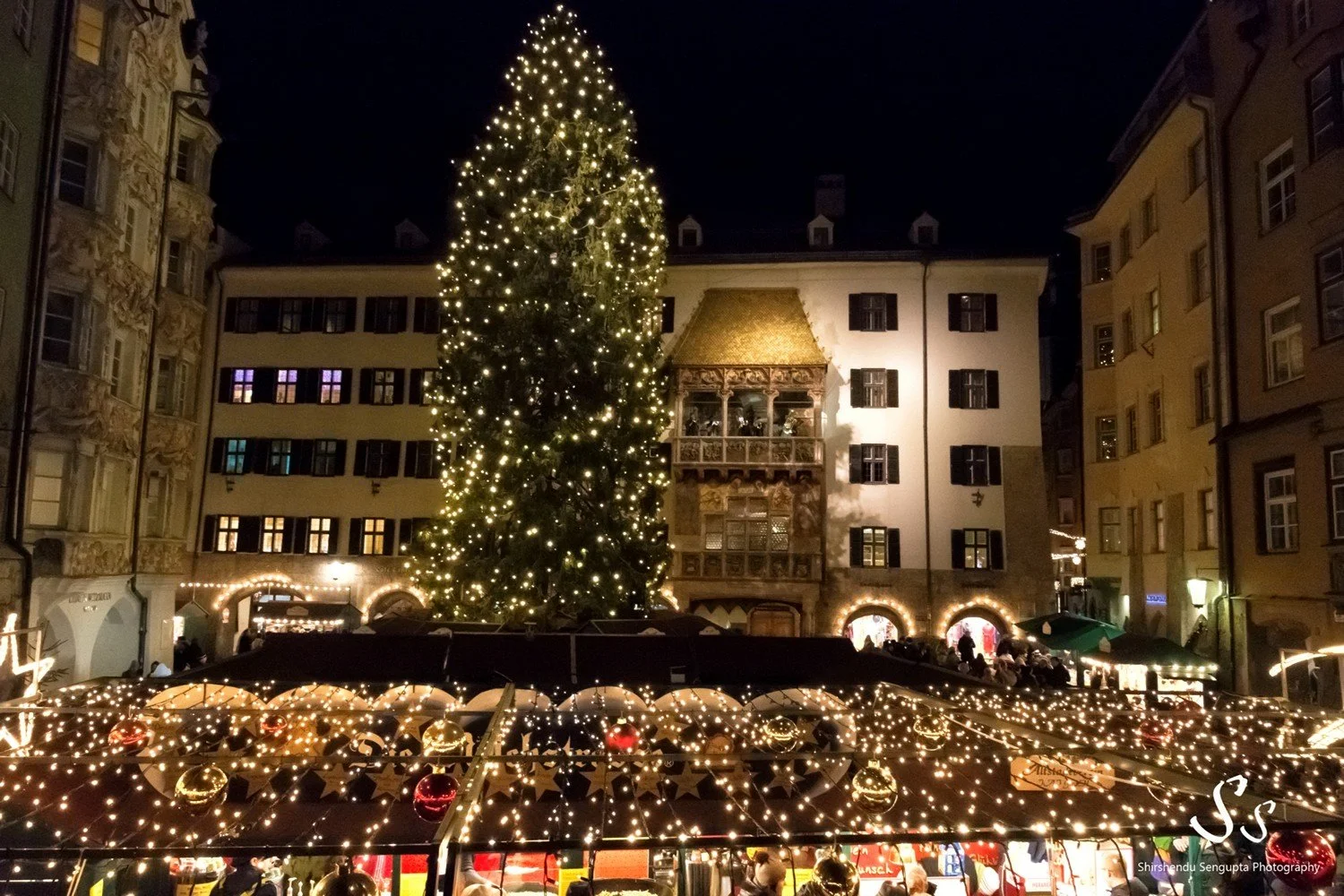
Insider move: If you want the Golden Roof without fighting for space, go during the Christmas market instead of trying to erase the crowds. The stalls and lights in front of the facade turn congestion into atmosphere — an evening image that reads as festive rather than empty, and one most visitors never think to shoot.
Midday and “bad weather” strategies
Midday harsh sun is Innsbruck’s only real photographic problem, and it is easily solved by going where the sun cannot reach.
- Narrow old town alleys: The lanes stay in shade and the light bounces softly off painted plaster. Colours look richer here at noon than they do in open squares.
- Interiors: Museums, courtyards and cafés are the correct midday answer. Save the outdoor panoramas for the edges of the day.
- Overcast skies: Treat cloud cover as a gift, not a loss. Diffused light is what makes Innsbruck’s coloured facades look saturated instead of blown out.
- Rain: This is the detail most photographers miss. After a shower, hunt the puddles — the locals call them Lacken — on the cobbles and shoot low for a mirrored reflection of the buildings above. A grey day with wet pavement produces a more striking image than a clear one.
Angles, filters and hashtags that make the shot stand out
Motion is the differentiator. An ND64 filter stretches clouds and smears water and traffic into clean lines during daylight; step up to an ND1000 for near-smooth, glassy results under brighter skies.
No filter? Use your smartphone’s built-in long exposure mode and brace the phone on a wall or railing.
For reach on social, tag deliberately and stay under the platform’s comfort zone — cap each post at 20 hashtags. Mix destination and landmark tags:
#Innsbruck #VisitTirol #Austria #AlpineCity #GoldenRoof #Nordkette #TravelAustria #InnRiver #MountainCity #TiroleanAlps
My honest take: light beats gear here. Show up at 8 PM on a summer evening with a phone and you will outshoot anyone arriving at noon with a full filter kit.
Does the Innsbruck Card cover the photo spots?
The Innsbruck Card does not buy you a single city-centre shot — the Old Town facades, squares and river bridges you’ve already mapped cost nothing to photograph. What the card unlocks is everything with a ticket gate: the mountain lift, the ticketed interiors and the shuttle to Wattens.
My rule of thumb: if your shot list includes a Nordkettenbahnen ascent plus any two paid entries, the card is already cheaper than paying separately — and it removes the friction of queuing for tickets between golden-hour windows.
Innsbruck Card prices and what’s included
- 24 hours — €69 adult / €34.50 child (6+): only sensible if you ride the mountain lift and hit two paid sights on the same day. Any slower pace and you’ll waste the pass.
- 48 hours — €79 / €39.50: the one I’d buy. It costs just €10 more than the day pass and lets you split the mountain day from the museum day instead of sprinting.
- 72 hours — €89 / €44.50: pay the extra €10 only if a third full sightseeing day is genuinely on your plan.
Every version includes free entry to 22+ attractions, one ascent and descent on the Nordkettenbahnen, unlimited public transport, the Swarovski shuttle and the hop-on hop-off bus. Two to three days in the city is enough to work through that list comfortably.
Buy online via Innsbruck.info or at the tourist office in the city centre.
Welcome Card and free city transport
Staying two or more nights at a partner hotel gets you the Welcome Card free at check-in, covering public transport and discounts on tours. Confirm the property is a partner when you book, since participation varies.
Which one wins: if every location on your list is a free street, bridge or viewpoint, skip the Innsbruck Card and take the Welcome Card for transport alone. The Innsbruck Card only earns its price once lifts and ticketed interiors enter the plan.
Frequently Asked Questions
How many days do I need to cover these photo spots?
Two to three days in the city is enough to work through this list comfortably without sprinting between golden-hour windows. That lets you split the mountain day from the museum day instead of stacking everything into one exhausting push.
What should I prioritise if I only have a single day?
Do the Golden Roof at dawn, the river bridges mid-morning, then ride up to Hafelekar and finish at the Weitsicht rooftop for blue hour. Drop the zoo and Hungerburg first — they are a half-day commitment that delivers less per minute for a photo-led trip.
Can I reach all of these spots without a car?
Yes, and the article’s routes assume you are using public transport: Bergisel is about fifteen minutes from the centre by bus or tram, and the Swarovski shuttle covers the Wattens detour. Everything in the Old Town and along the river is one compact walk.
Where can I eat with a photo-worthy view?
Two stops earn their keep: the Sky restaurant at Bergisel for breakfast with a panorama, and the Weitsicht rooftop bar for drinks over the lit-up city. Both reward booking ahead and arriving before the light goes.
Go Get Your Innsbruck Shot
Start tomorrow before 7:30 AM on Herzog-Friedrich-Straße, walk the bridges and lanes while the light is clean, then book the Nordkettenbahnen for a late-morning ascent. Save the Hofkirche for the 3–5 PM window and end your day at the rooftop terrace when the city lights come on.
Few cities anywhere stack medieval facades, imperial interiors and a 2,256-metre summit platform this tightly into one walkable frame. Innsbruck rewards the traveller who plans around light instead of landmarks.
Save this shot list to your Innsbruck board and build your two-day route around the golden-hour and blue-hour windows first.
Leave a Reply