
The morning fog lifts off the Salzach in slow ribbons, revealing a fortress perched on a ridge so dramatic it barely looks real. I stood on the Humboldt Terrace at dawn and counted six completely different compositions without moving my feet — that kind of density doesn’t exist in Vienna, Prague, or Munich.
Salzburg’s secret is scale: the Old Town, the river viewpoints, and the Alpine backdrop compress into a walking radius most cities can’t match, giving you world-class shots without a single taxi ride. This guide lays out every Instagrammable spot I’d actually return for, from fortress terraces to turquoise Alpine waterfalls, plus exactly when to go and where to sleep for the best light.
Budget reality: a walking-focused photo trip costs almost nothing beyond lodging — every major Old Town spot is free. Expect €80–120 per night for guesthouses outside the center, €150–300 for boutique Old Town hotels, and €350–700 for flagship properties right on the most photogenic streets in the city.
Quick Picks: Salzburg’s Best Instagram Moments
- Best Free Old Town Shot: Humboldt Terrace — overhead panorama of the entire Old Town and fortress, zero cost, best at golden hour
- Best Single Composition: Mirabell Gardens at dawn — symmetrical garden axis framing Hohensalzburg, opens at 6 AM
- Best Day Trip: Gollinger Wasserfall — 40 minutes south, a turquoise cascade that looks imported from Bali
- Best Time to Visit: September through October — golden light on baroque facades, moderate crowds, crisp mornings
- Best Hotel for Photographers: Hotel Stein — rooftop terrace with the most compressed fortress skyline view in the city
- Best Seasonal Event: Christmas Markets at Residenzplatz — cathedral backdrop, warm stall lights, and blue hour magic
Top 10 Most Instagrammable Places in Salzburg’s Old Town
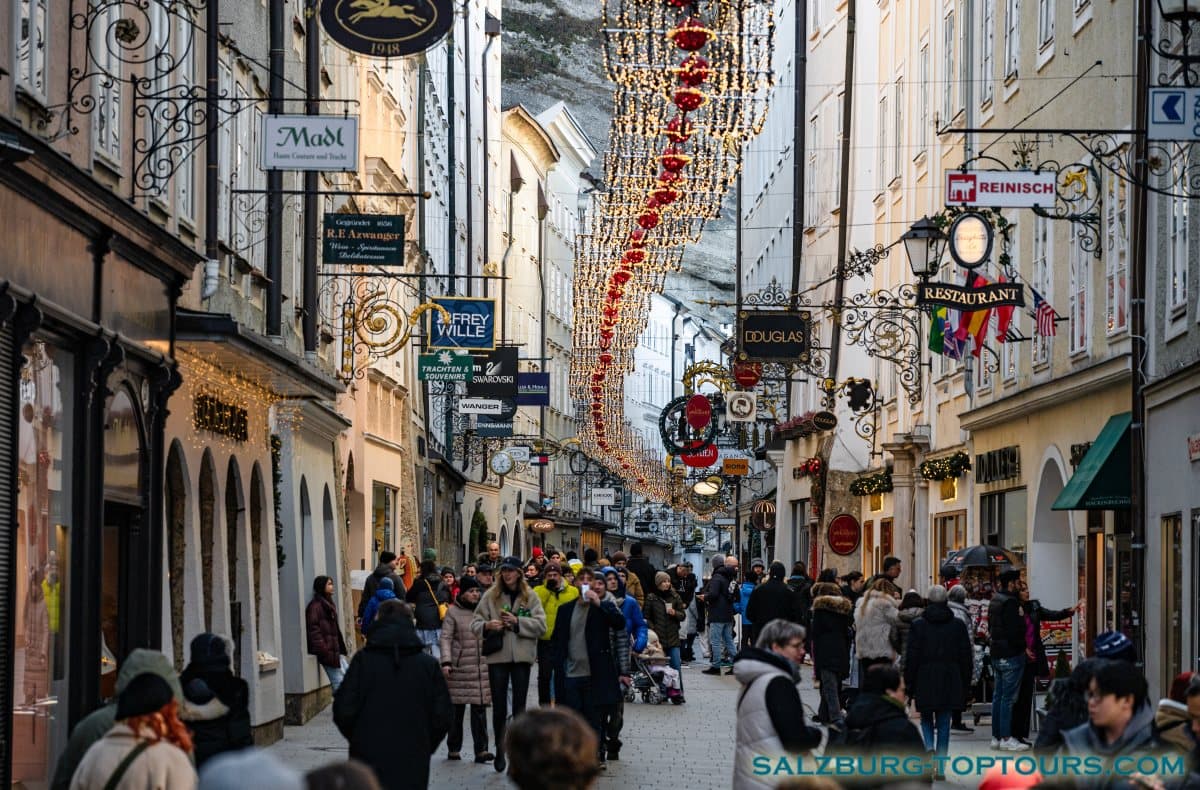
Salzburg’s Old Town packs more photogenic density per square block than almost any city its size in Europe. Wrought-iron guild signs overhead, baroque domes punching above tiled rooftops, a fortress crowning the ridgeline — and all of it walkable in under 20 minutes.
These 10 stops form a natural loop worth building your entire Old Town morning or golden-hour session around.
| Spot | Best For | Best Time | Cost |
|---|---|---|---|
| Getreidegasse | Street photography, architecture | Blue hour or early morning | Free |
| Makartsteg | Fortress framing, romance | Golden hour | Free |
| Kapitelplatz & Sphaera | Contemporary art contrast | Midday or afternoon | Free |
| Residenzplatz & Cathedral | Grand baroque square | Morning (fewer crowds) | Free (square) |
| Steingasse | Quiet medieval alley | Any time — rarely crowded | Free |
| Petersbrunnen & St. Peter’s | Fountain + church combo | Morning light | Free |
| Catacombs at St. Peter’s | Atmospheric stone interiors | Midday (escape the sun) | ~€5 |
| Domquartier & Dombogenterrasse | Cathedral terrace, rooftops | Late afternoon | ~€13 |
| Mozart’s Birthplace | Iconic yellow facade | Early morning | Free (exterior) |
| Christmas Markets | Festive lights, stalls | After dark, Nov–Dec | Free (entry) |
Getreidegasse & Its Wrought-Iron Guild Signs
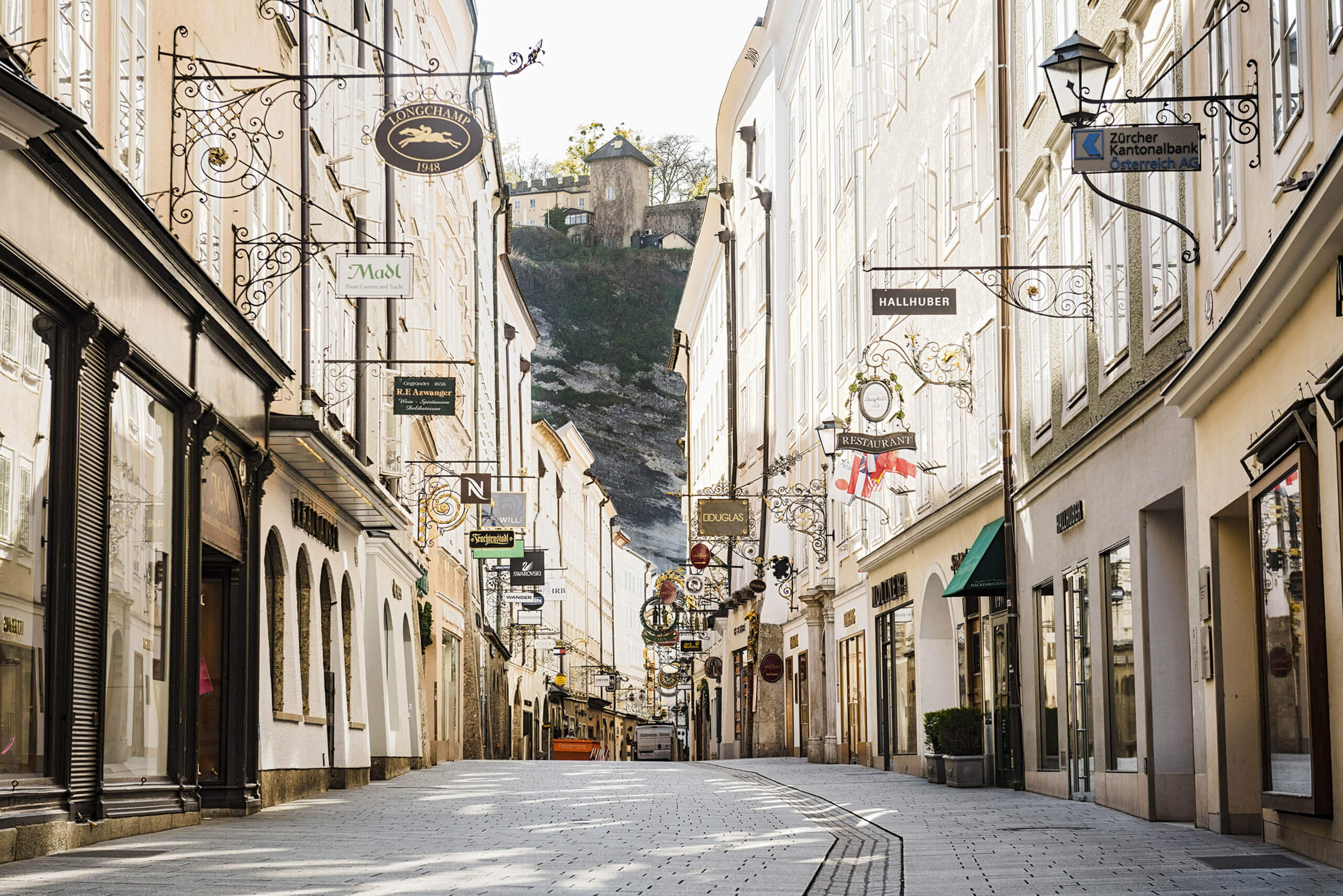
This is the single most photographed street in Salzburg, and it earns the title. The narrow lane is flanked by centuries-old facades hung with wrought-iron guild signs — gilded keys, carved shoes, painted pharmacy symbols — that have marked these shops for hundreds of years.
The buildings sit close enough together that morning and evening light falls through the gap almost theatrically, creating natural spotlights on the cobblestones.
What most visitors miss: hidden passageways connect Getreidegasse to the parallel Griesgasse and a series of inner courtyards tucked behind the storefronts. Duck through any open archway you spot — the quiet, half-timbered backcourts make for stronger photos than the main drag when it’s packed with shoppers.
Best time to shoot: Blue hour, when the guild signs glow against the darkening sky and pedestrian traffic drops. Early morning (before 8:30 AM) works nearly as well. Access: Free, always open.
Makartsteg (Love Lock Bridge)
This pedestrian bridge across the Salzach delivers one of Salzburg’s most distinctive compositions: shoot through the dense cluster of padlocks on the railing and your frame fills with the Old Town rooftops and Hohensalzburg Fortress stacked behind them. The city removes roughly 1,000 kilograms of locks each year to protect the bridge’s structural integrity, so the density fluctuates — but there are always enough for a compelling foreground layer.
Best time to shoot: Golden hour, when the fortress glows warm against the sky. The bridge is open 24/7 and free to access. Arrive early in the evening to claim a spot along the railing without competing for frame space.
Kapitelplatz & the Golden Sphaera Sculpture
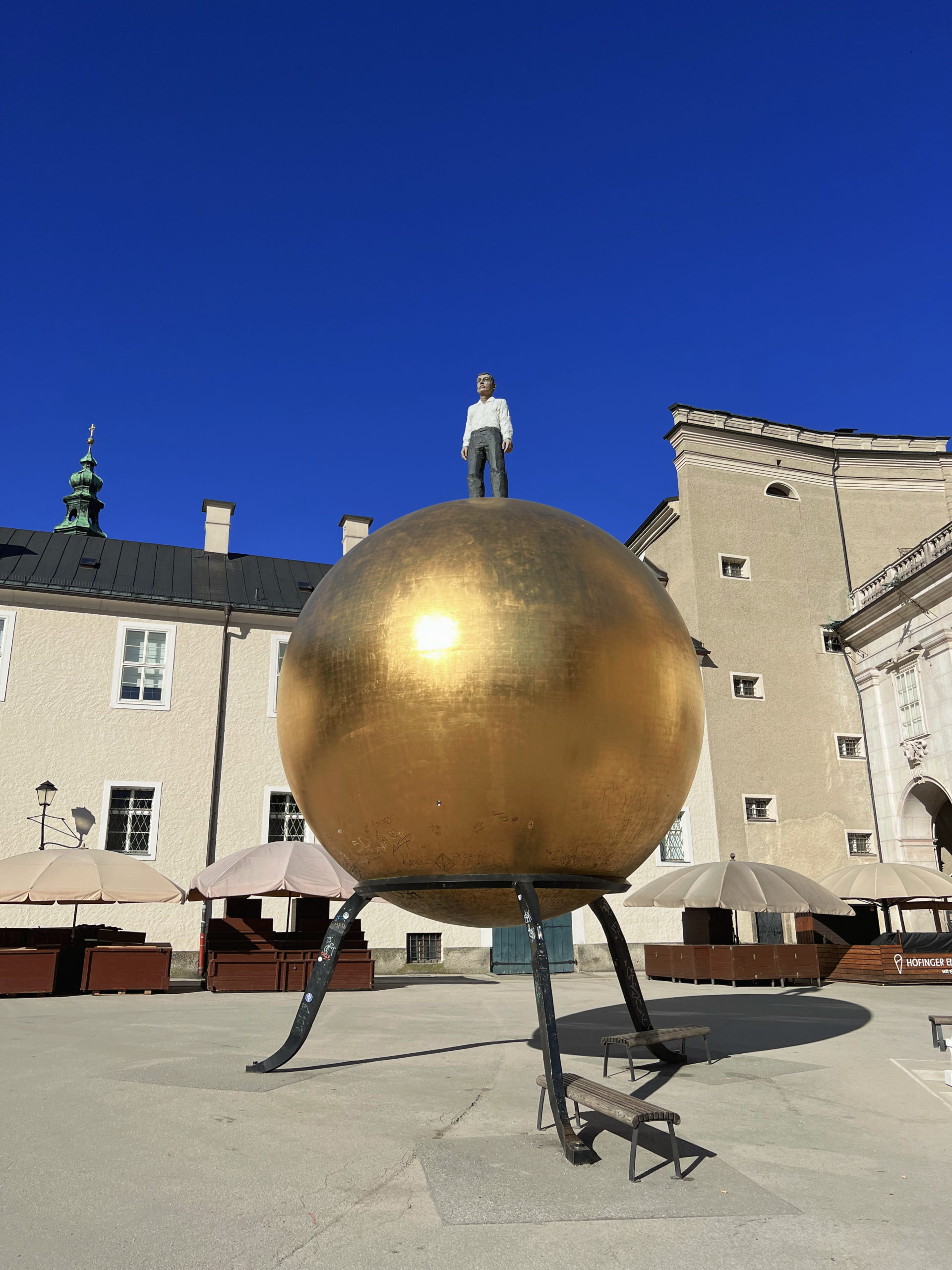
The oversized golden sphere with a seated figure on top — Stephan Balkenhol’s “Sphaera” — sits in the middle of Kapitelplatz like a piece of contemporary art deliberately dropped into a baroque movie set. It’s one of Salzburg’s most recognized photo subjects precisely because of that contrast: the warm gold orb against Hohensalzburg’s grey stone fortress rising behind it.
Walk around the sphere to find your angle. The classic shot frames the figure gazing upward with the fortress filling the background.
Midday works here because the open square gets even light without harsh shadows on the sphere’s surface. Access: Free, always open — it’s a public square.
Residenzplatz & Salzburg Cathedral
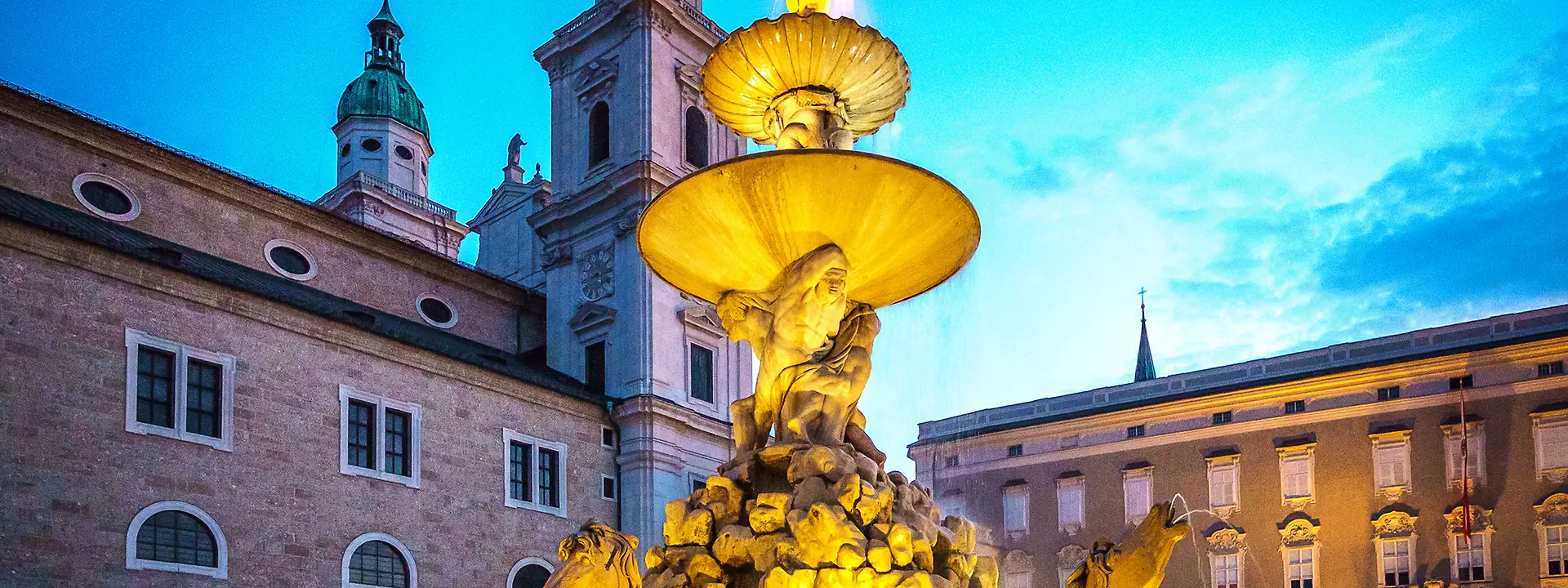
Residenzplatz is Salzburg’s grandest open square, anchored by the 17th-century Residenzbrunnen fountain — the largest Baroque fountain in Austria — and framed on one side by the twin-towered façade of Salzburg Cathedral. The cathedral’s green dome and Baroque marble interior are worth the visit on their own, but the exterior is the real Instagram payoff: stand at the fountain and shoot toward the cathedral entrance for a perfectly symmetrical composition.
Best time: Arrive before 9 AM to photograph the square without tour groups clogging the frame. The cathedral interior opens at 8 AM on most days (confirm current hours at salzburg.info) — the nave is enormous and nearly empty first thing.
Entry is free.
Steingasse
Steingasse is what Getreidegasse would be if 90% of the tourists vanished. This narrow medieval lane on the left bank of the Salzach — just a few minutes’ walk from the Old Town center — retains its rough stone facades, cramped archways, and low-rise character without the souvenir-shop polish.
Even during peak summer, most visitors never make it here.
The lane is especially photogenic in overcast or rainy conditions, when the wet cobblestones reflect whatever light is available and the narrow walls create natural vignetting. No admission, no hours — it’s a residential street.
Be respectful of doorways and residents.
Petersbrunnen & St. Peter’s Church
The Petersbrunnen fountain sits in a small square directly in front of St. Peter’s Church (Stiftskirche St. Peter), and the pairing works beautifully: the ornate fountain foreground with the church’s Romanesque-and-Baroque façade rising behind it. St. Peter’s is one of Salzburg’s oldest churches — the current structure dates to the early 12th century, though the site has held a church since roughly 696 AD.
Shooting from the far side of the fountain toward the church gives you the cleanest composition. Morning light hits the church façade directly. Access: The square and fountain are free and open at all hours.
The Catacombs at St. Peter’s
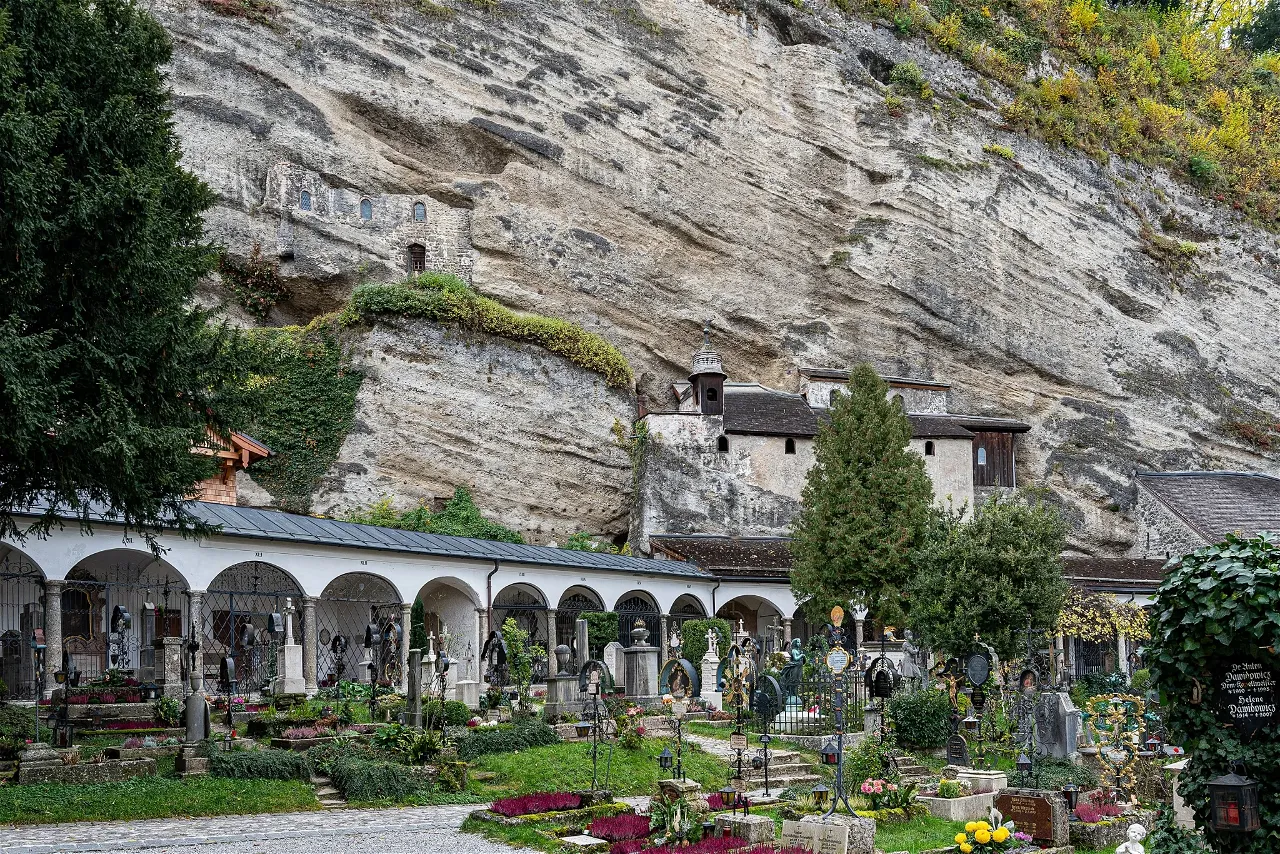
Carved directly into the Mönchsberg cliff face behind St. Peter’s Church, these early Christian rock chambers and galleries date to roughly the 12th century and offer a dramatic change of register from Salzburg’s polished Old Town surfaces. The dimly lit stone passages and arched openings cut into raw rock make for atmospheric interior shots — especially the apse-like niches with their small windows framing slivers of light.
Practical details: Entry is typically around €5. Hours vary seasonally — usually open spring through autumn, sometimes with reduced winter access.
Confirm current opening times at stift-stpeter.at before visiting. Photography is generally permitted without flash, but verify at the entrance.
Domquartier & the Dombogenterrasse
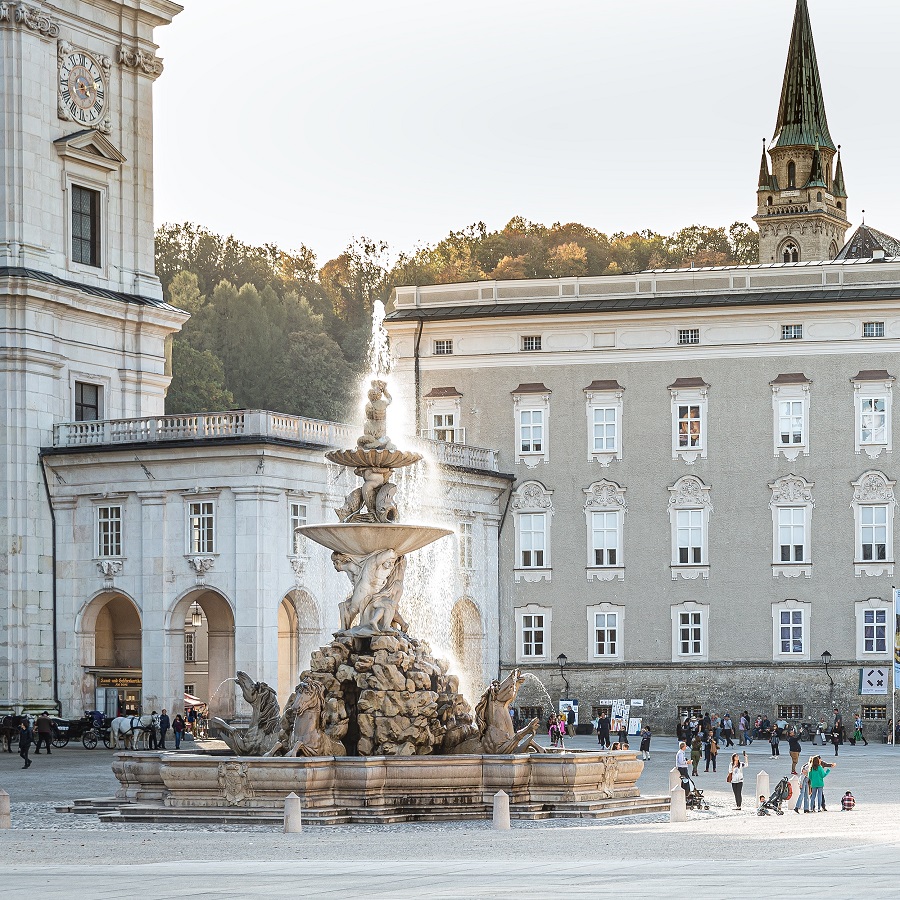
The Domquartier is a museum complex that threads through the Cathedral, the Residenz, and the connecting galleries — but the real photo draw is the Dombogenterrasse, the cathedral terrace that opens onto rooftop-level views of the Old Town. From up here you’re looking down at the grid of narrow streets, the Salzach, and the fortress ridge simultaneously.
It’s one of the few elevated Old Town vantage points that doesn’t require a hike.
Admission: Expect roughly €13 for the full Domquartier circuit (confirm current pricing at domquartier.at). The terrace is accessed as part of the museum route, so you can’t visit it standalone.
Late afternoon light is the best bet — the western-facing terrace catches warm tones on the rooftops below.
Mozart’s Birthplace (Mozarts Geburtshaus)
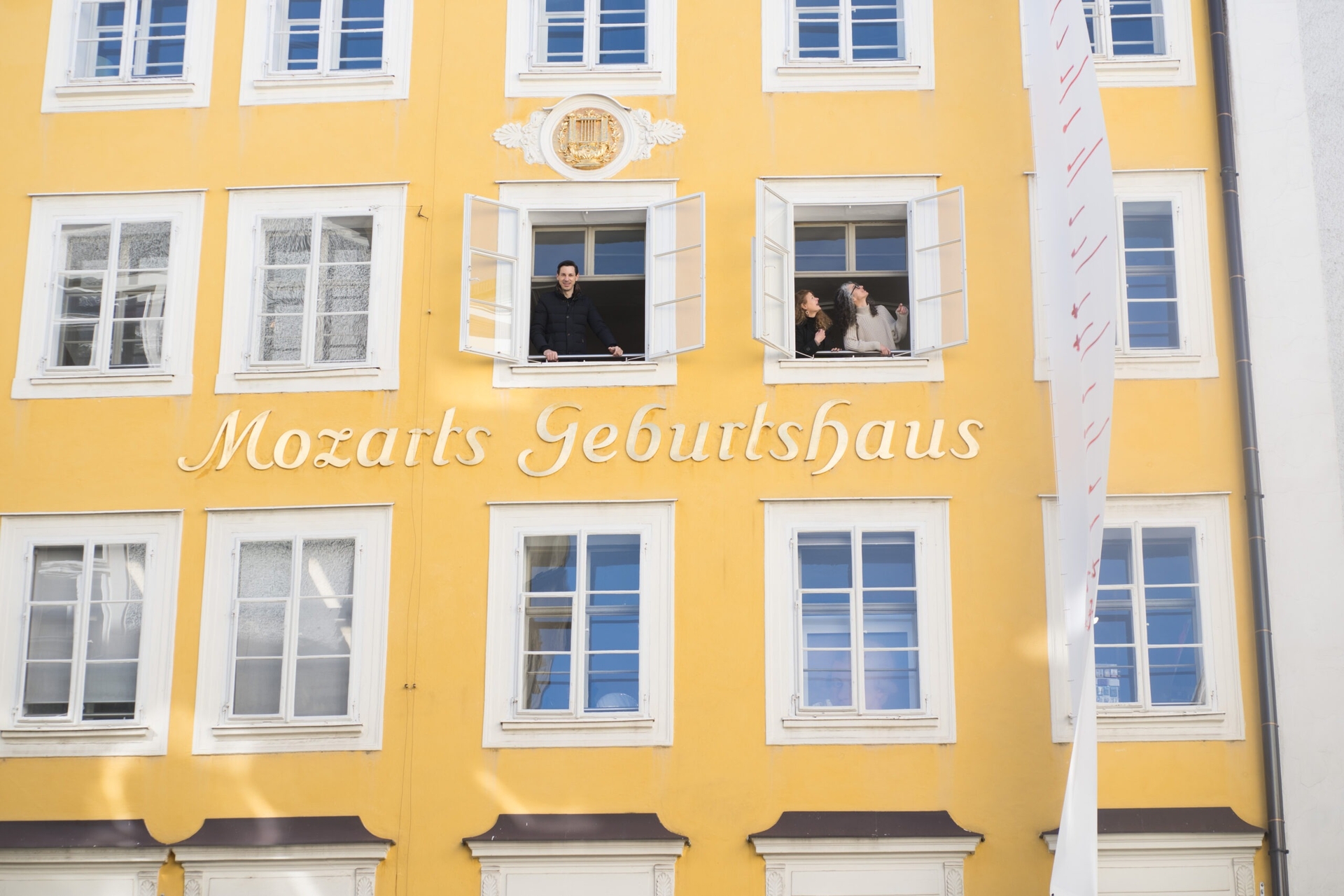
No. 9 Getreidegasse — the bright yellow townhouse where Wolfgang Amadeus Mozart was born on January 27, 1756 — is the building most tourists photograph without even entering. The façade itself, with its Mozart portrait banner and wrought-iron sign, is the shot: it’s instantly recognizable and reads as “Salzburg” in any feed.
The interior is a worthwhile museum (admission around €14 for adults, confirm at mozarteum.at), but for Instagram purposes, the exterior is the money shot. Shoot from across the narrow street to get the full yellow façade in frame without distortion.
Early morning, before the street fills with foot traffic, is the only realistic window for a clean shot.
The Salzburg Christmas Market at Domplatz & Residenzplatz
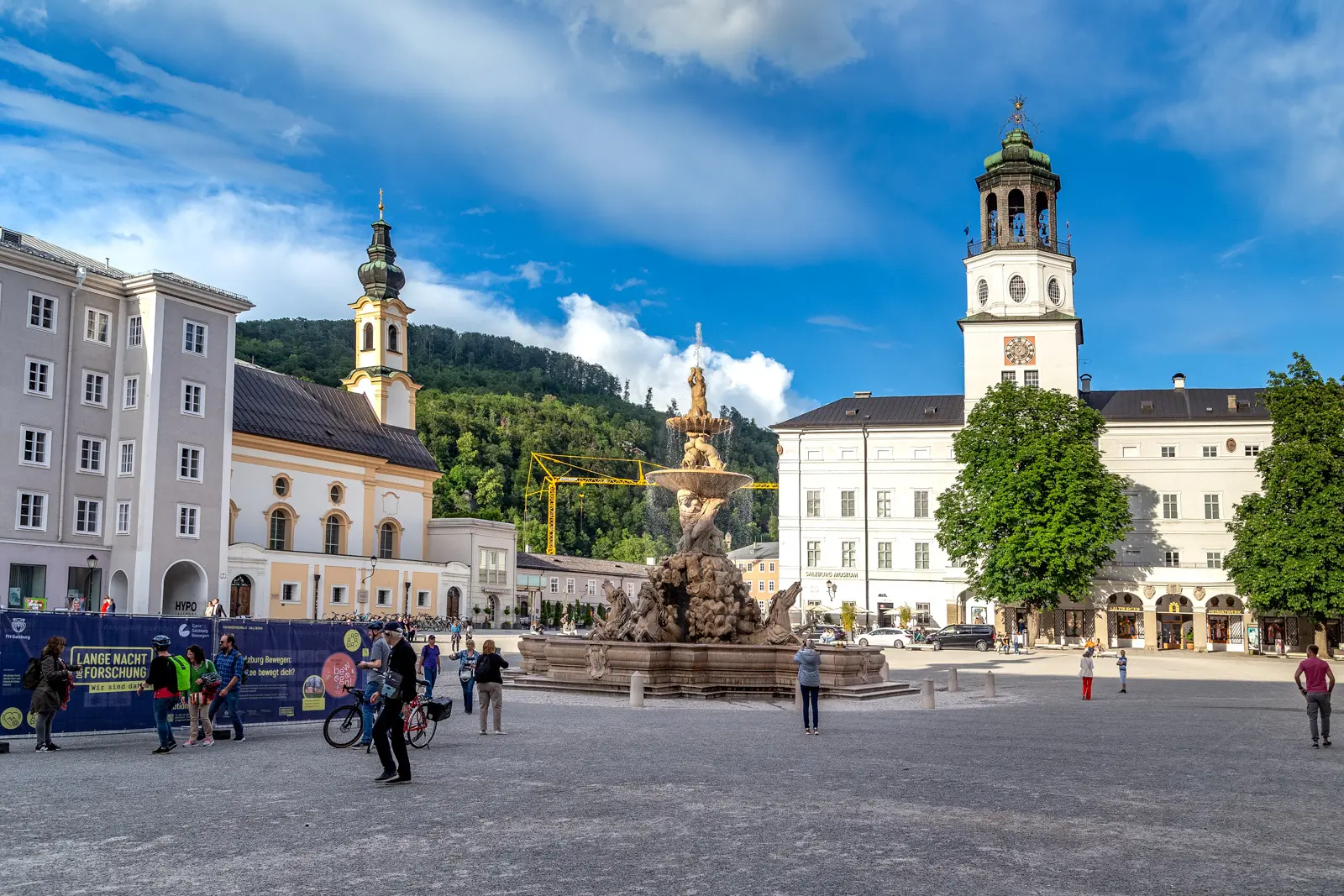
If you’re visiting between mid-November and late December, the Christmas markets at Domplatz and Residenzplatz transform the Old Town’s photo portfolio entirely. Wooden stalls draped in snow (or string lights), steaming mugs of Glühwein, and the cathedral façade lit against the winter dark — the compositions here are warm, textured, and distinctly seasonal.
The Residenzplatz market is the larger and more photogenic of the two, with the Residenzbrunnen fountain at its center and the cathedral steps providing an elevated vantage point. Arrive at dusk when the lights come on but before peak evening crowds — typically around 4:30–5:30 PM in late November and December.
Entry is free; markets usually run from roughly mid-November through December 26, though exact dates shift annually — confirm at salzburg.info before planning around them.
Most Instagrammable Viewpoints & Elevated Spots in Salzburg
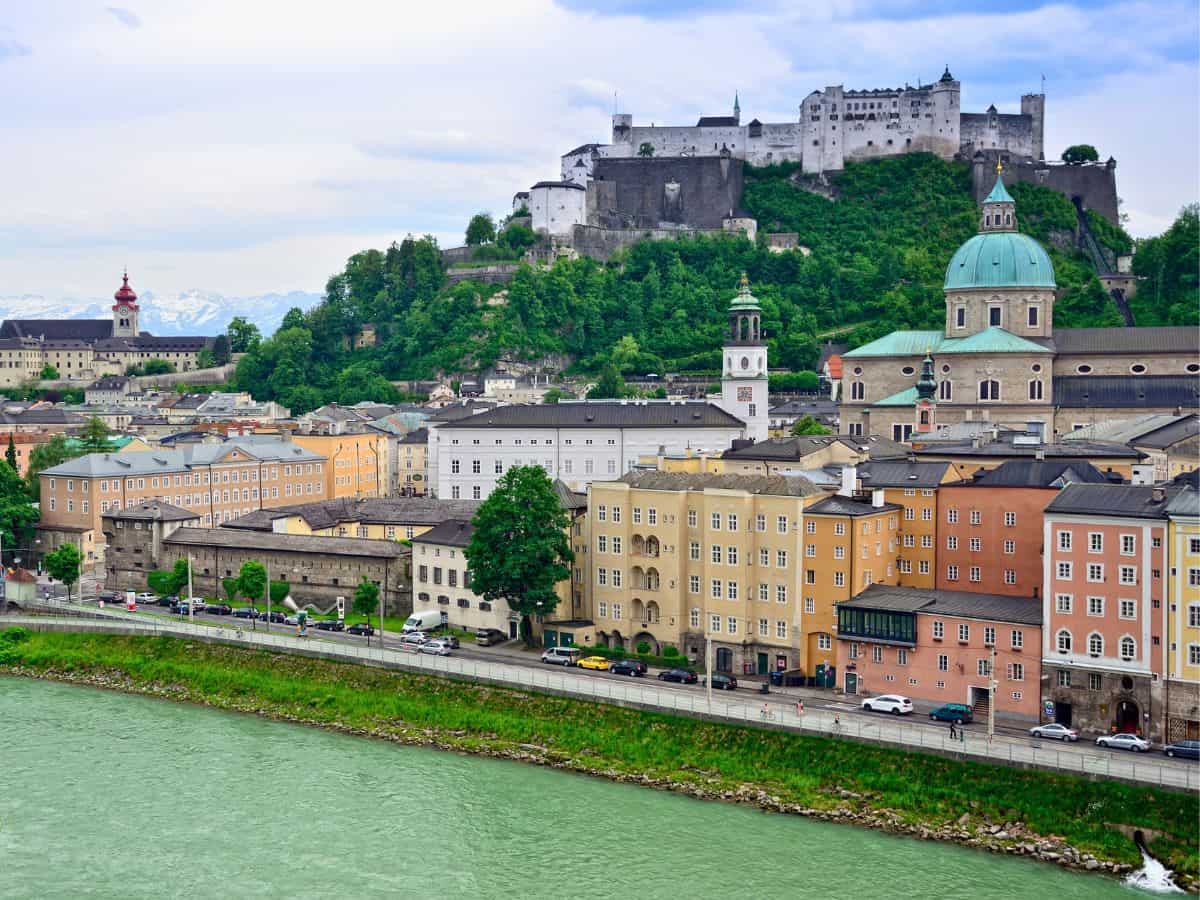
The single most-photographed terrace in Salzburg sits above a medieval gate and costs nothing — while the best rooftop shot belongs to hotel guests eating breakfast with a telephoto lens. Salzburg’s six main elevated viewpoints each deliver a completely different frame, and knowing which one matches your shot list saves you from hiking up the wrong hill at the wrong hour.
| Viewpoint | The Shot You Get | Access | Best Light | Cost |
|---|---|---|---|---|
| Hohensalzburg Terrace | 360° city + Alps panorama | Funicular or steep walk | Morning | ~€15–18 combo ticket |
| Humboldt Terrace | Overhead Old Town + fortress | Stairs, free | Golden hour | Free |
| Stadtalm Terrace | Mönchsberg ridge + relaxed Spritzer | Walk from Old Town | Afternoon | Free (drinks extra) |
| Hotel Stein Rooftop | Compressed fortress skyline | Hotel guests only | Morning | Room rate |
| Kapuzinerberg | Old Town framed through trees | Hike 20–30 min, free | Early morning | Free |
| Gaisberg Summit | Full sunset + Alps + paragliders | Car, ~30 min from center | Sunset | Free parking |
Hohensalzburg Fortress Terrace
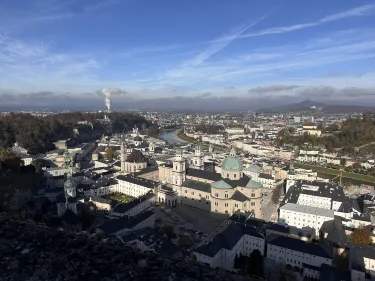
The funicular from Festungsgasse reaches the ramparts in under a minute, but the steep walking path is free, nearly empty before 9 AM, and earns you a full 360-degree sweep: Old Town rooftops to the north, the Untersberg massif to the south, and the Salzach curving through the valley below. Morning light hits the cathedral spires directly — this is when the terrace photographs best.
The fortress interior and history are covered in the Old Town section; the terrace alone justifies the trip as a viewpoint.
Expect roughly €15–18 for the funicular-and-interior combo ticket, though pricing varies by season. Arrive before 9:30 AM in summer — tour buses hit the terrace by 10 and the crowds are relentless after that.
Humboldt Terrace (Klausenkavalier)
This is the viewpoint locals send visitors to first, and the reason is obvious: perched directly above the Klausentor gate, the Humboldtterrasse drops the entire Old Town at your feet — fortress, cathedral dome, river, rooftops, all in one unobstructed panorama. It is completely free, open year-round, and reachable by a short staircase from the Mönchsberg lift exit or from the Old Town side.
Seasonal light changes the shot dramatically. In winter, the terrace catches the last warm rays before the sun dips behind the Mönchsberg ridge.
In summer, golden hour stretches longer and the warm tones on the stone facades are exceptional. Either way, this is where the classic overhead Salzburg shot happens with minimal effort and zero cost.
Stadtalm Terrace
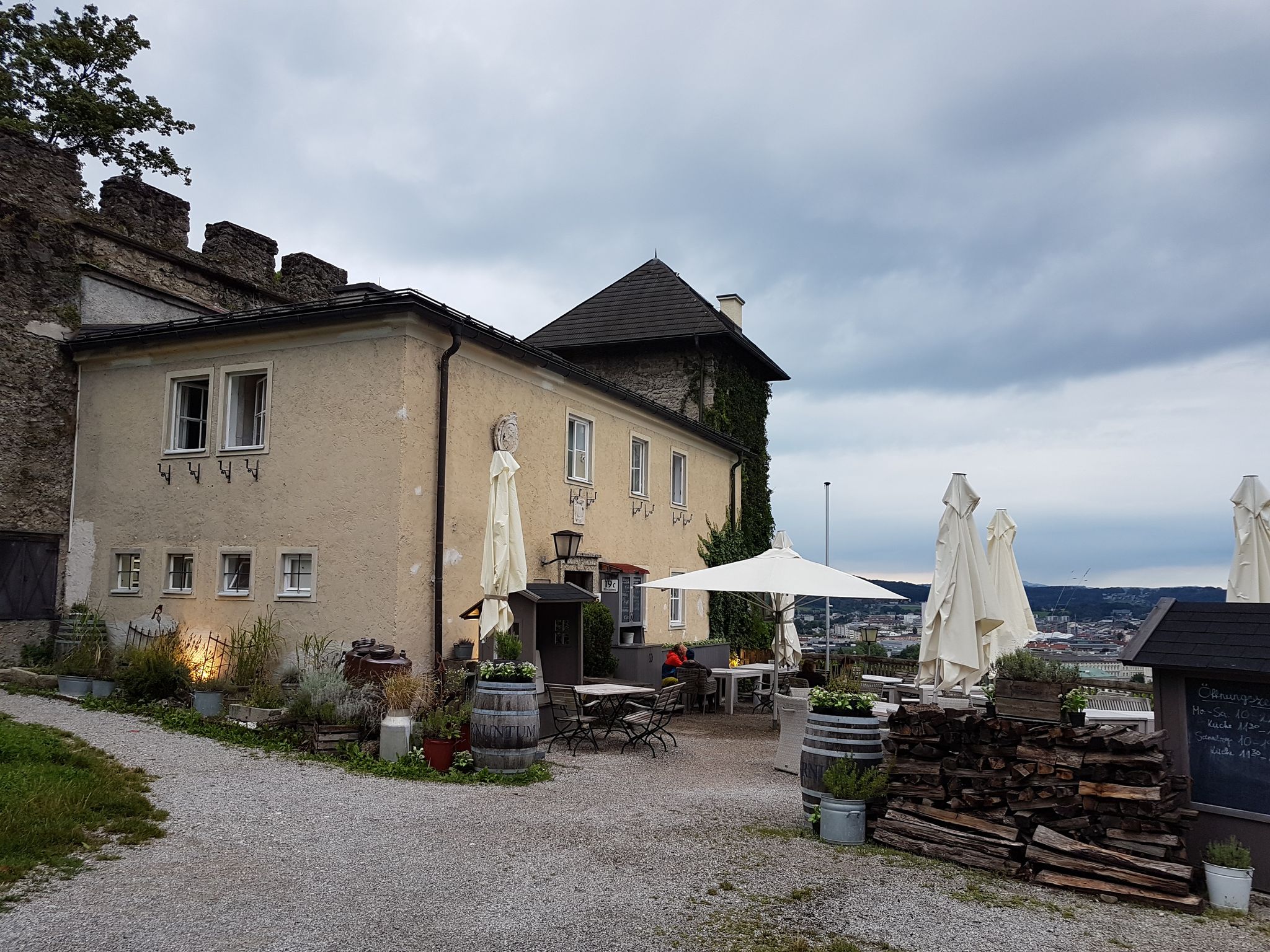
Tucked along the Mönchsberg ridge, the Stadtalm is a casual mountain restaurant with an outdoor terrace overlooking the Old Town’s southern edge. It lacks the dramatic overhead angle of the Humboldt Terrace, but it makes up for that with atmosphere — this is the spot for a relaxed afternoon Spritzer above the city rather than a single frame worth framing.
The terrace is free to access; food and drink prices are standard Salzburg mid-range. Come on a sunny afternoon when you want to combine a break from sightseeing with an altitude advantage you did not have to hike for.
Hotel Stein Rooftop (Steinterrasse)
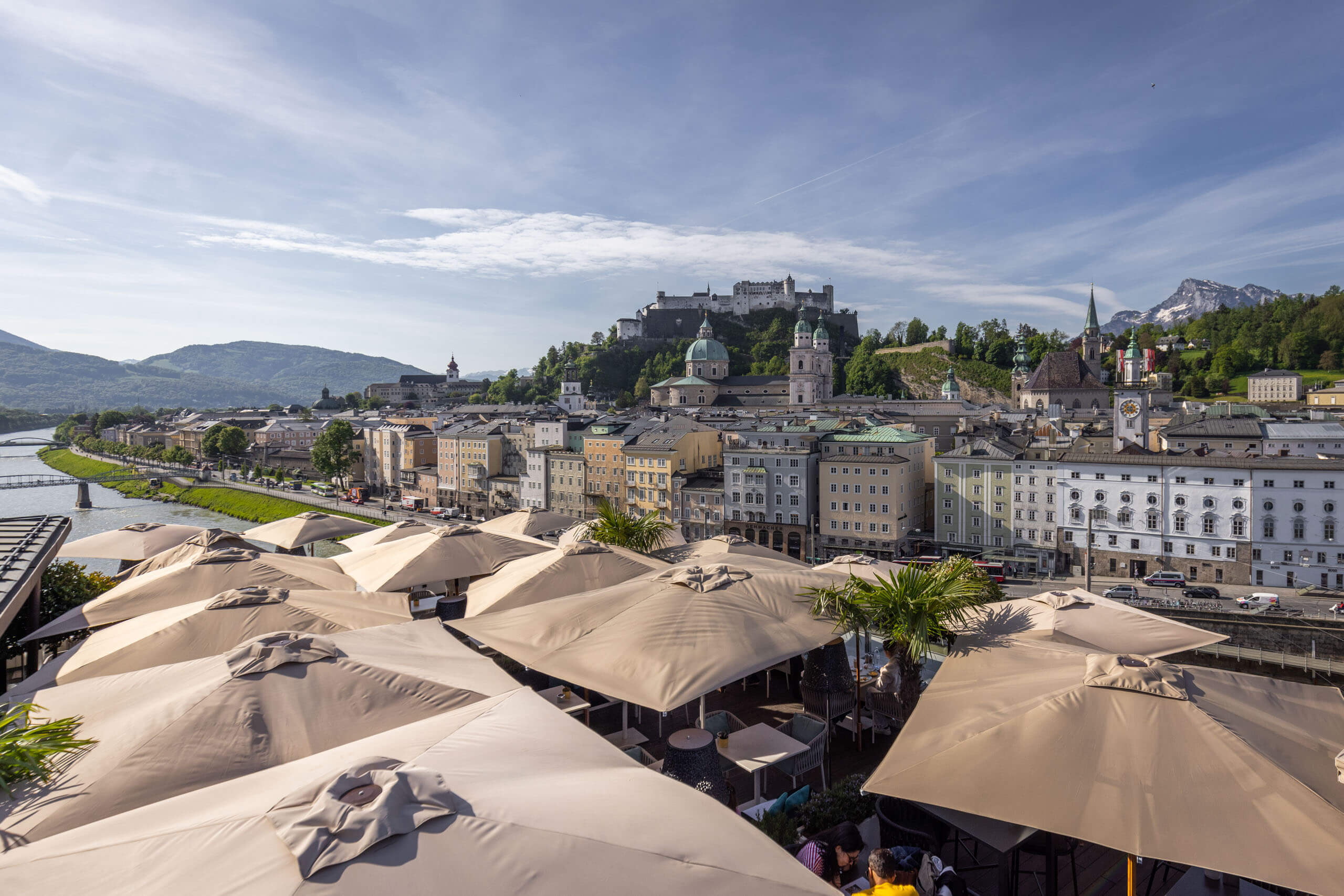
The Steinterrasse at Hotel Stein delivers the most compressed, cinematic view of the fortress in the city — the Hohensalzburg looms dramatically behind the Old Town rooftops in a way no public viewpoint replicates. A 70–200mm telephoto lens isolates the fortress against the skyline beautifully from this angle, making it the single best reason for serious photographers to book this hotel over competitors at the same price.
The terrace is reserved for hotel guests, which means no crowds, no jostling for rail space, and morning coffee with what is arguably the best rooftop view in Salzburg.
Rooms on the river-facing side look directly across the Salzach. Request a top-floor room when booking and plan your best shots for morning light, when the fortress glows and the river reflects the sky.
For photographers specifically, this is the strongest mid-range hotel pick in the city.
Kapuzinerberg
Kapuzinerberg is Salzburg’s green hill east of the Salzach — a forested slope with well-marked trails that reward a 20–30 minute uphill walk with framed views back across the Old Town and fortress. Unlike the Mönchsberg-side terraces, Kapuzinerberg includes the river bridges and the cathedral’s west facade in one natural frame, with tree branches and hillside greenery adding depth that the open terraces lack.
Early morning is the move: trails are quiet, light is soft, and you will likely have the viewpoints entirely to yourself.
The main trailhead starts near the Kapuzinerberg access point off the Linzer Gasse area. Free access, no ticket, no lift — just your legs and a moderately steep path.
Gaisberg Summit at Sunset
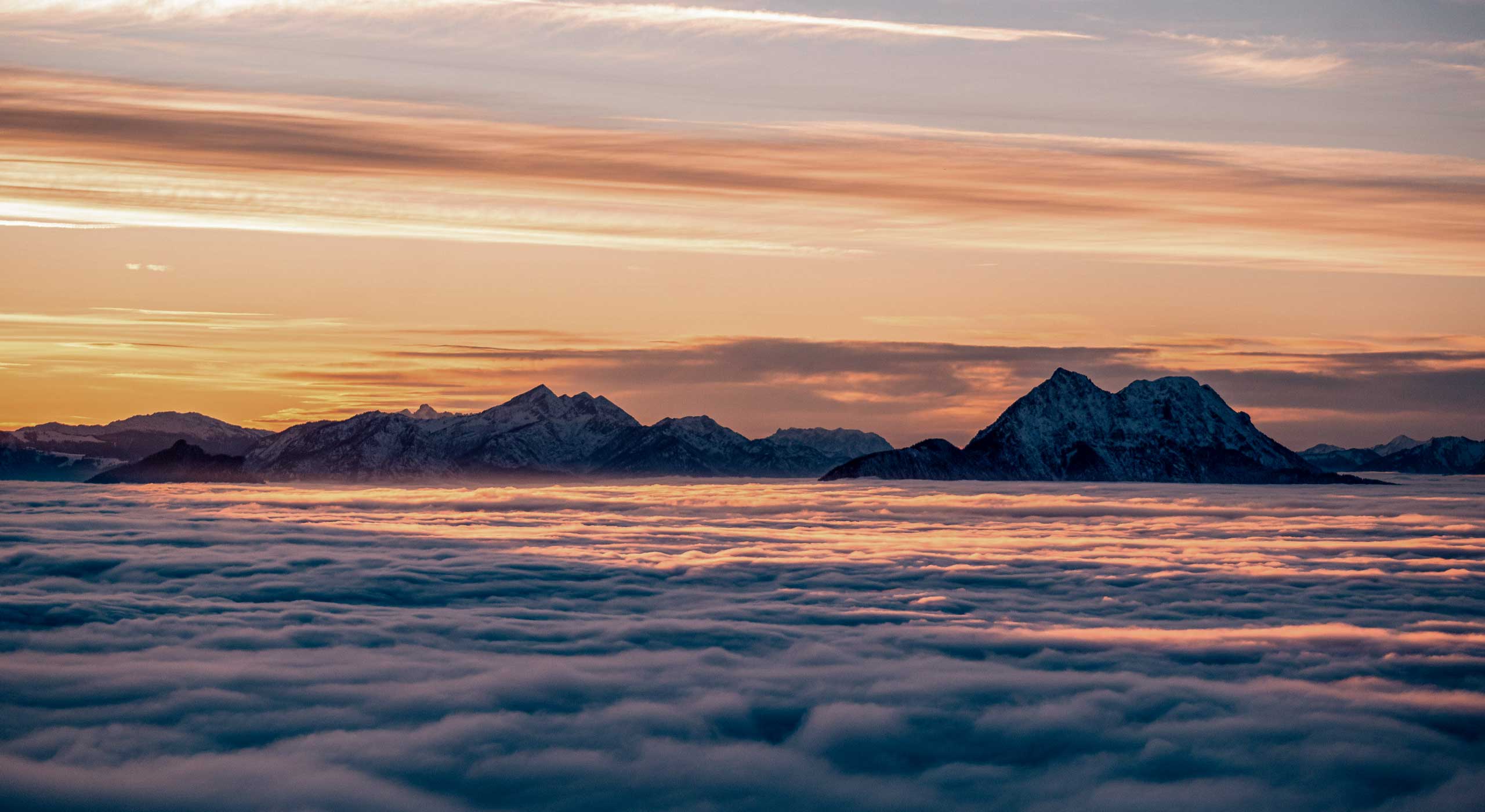
Gaisberg is the non-negotiable sunset outing if you have a car. At 1,287 meters, the summit delivers a panorama stretching from the Salzburg basin across the surrounding Alps and — on clear evenings — to the Chiemsee in Germany.
Paragliders regularly launch near the summit at golden hour, catching the last thermals as they glide toward the valley, adding movement and scale to wide-angle shots that no other viewpoint in the area can match.
The insider detail worth knowing: the drive from Salzburg center takes a solid 30 minutes on a winding mountain road, and the summit parking area fills quickly on warm evenings. Leave significantly earlier than you think — the research repeatedly warns that visitors have nearly missed the sunset entirely by underestimating the drive.
Free parking is available at the top. The summit restaurant terrace is a comfortable place to wait for peak color if you arrive with time to spare.
Instagrammable Spots Beyond Salzburg’s Old Town
The geometric perfection of Mirabell Gardens, where Pegasus fountains fly and Baroque statues pose, is Salzburg’s most photogenic backdrop — and your first move at dawn. Step outside the Old Town’s cobblestone lanes and you’ll find the city’s most open, manicured, and frankly famous photo ops.
This is where you get the fortress framed by symmetry, the palace glowing in soft light, and the kind of wide, clean compositions that feel impossible to get in the narrow Getreidegasse. Prioritize these spots early or late in the day; they’re public and popular.
| Location | Best For | Key Photo Tip | Time Needed |
|---|---|---|---|
| Mirabell Gardens | Classic, postcard-perfect shots | Use the main avenue to frame Hohensalzburg. | 30-60 mins |
| Elisabethkai | Fortress + river + bridge combo | Walk along the promenade for layered views. | 20 mins |
| Schloss Leopoldskron | “Sound of Music” & reflection shots | Shoot from the far side of the pond at sunrise. | 45 mins (inc. walk) |
| Stift Nonnberg Viewpoint | Unique angle of the fortress and old roofs | Find the garden wall by the monastery gate. | 15 mins |
| Nonntal / Hans-Donnenberg-Park | Fortress framed by trees, tranquil greenspace | Look for gaps in the foliage along the path. | 20 mins |
| Bürglstein | Modernist architecture contrast | Use the bridge’s lines to lead to the Old Town. | 15 mins |
Mirabell Palace & Gardens
Skip the palace interior unless you’re specifically after the Marble Hall or Angel Staircase (the rest is working city offices). The gardens are the real star.
The Pegasus fountain, the Grand Fountain, and the “Dwarf Garden” are all iconic, but the absolute killer shot is the view down the main central axis directly at Hohensalzburg Fortress. Arrive before 8 AM to get it without crowds.
The gardens open at 6 AM and are free. For a different angle, find the staircase on the east side that leads to a terrace—this gives you elevation and a classic symmetrical frame.
The wrought-iron gates and seasonal blooms (tulips in spring, roses in summer) add color.
Elisabethkai
This riverside promenade is your go-to for a layered Salzburg panorama: the Makartsteg love-lock bridge in the foreground, the green copper roofs of the Old Town in the middle, and the fortress looming in the back. The path runs along the Salzach’s right bank, north of the Staatsbrücke.
It’s flat, easy, and perfect for a golden-hour stroll. The views are continuous, so just walk and find your angle.
It’s less of a “spot” and more of a 10-minute walk with constantly good views. Avoid midday when the light is flat and harsh.
Schloss Leopoldskron & Leopoldskroner Weiher
This is the “Sound of Music” lake view. The palace is now a private conference center (Mozarteum University), so you can’t tour it, but the path around the adjacent pond is public.
The money shot is from the opposite, southern shore, where you can capture the palace’s reflection in the water with the fortress in the background. Early morning is best: the water is still, the light is soft, and you might see local fishermen.
It’s about a 20-minute walk southwest from Mirabell Gardens. A wide-angle lens captures the scale; a telephoto compresses the palace and fortress together.
- Insider Detail: The most famous “boat house” view from the movie is on private property and not accessible. Don’t trespass. The public view from the path across the pond is superior for photography anyway.
Stift Nonnberg Viewpoint
Forget the crowded fortress terrace. This quiet, elevated spot offers a unique top-down angle onto the monastery rooftops and the surrounding Old Town.
Walk up to the Stift Nonnberg monastery (the oldest continuously existing convent in the German-speaking world) and find the low wall at its entrance gate. You’ll look down over a cascade of traditional rooftops toward the river.
It’s particularly beautiful in the late afternoon. It’s a steep 10-minute walk from the Kapitelplatz.
This is a perspective almost every tourist misses.
Nonntal & Hans-Donnenberg-Park
This residential neighborhood just south of the Old Town is a local’s escape, with small parks and clear sightlines back to the fortress. Hans-Donnenberg-Park, in particular, offers a perfectly framed shot of Hohensalzburg through the leaves and branches of mature trees.
It’s a calm, green foreground that contrasts with the stone fortress. Access it from the Nonntaler Hauptstraße.
It’s a great spot for a picnic and a relaxed photo session, best in the soft light of morning or late afternoon.
Bürglstein
For a completely different aesthetic, head to Bürglstein. This district features the striking contemporary architecture of the Mozarteum University’s Unipark Nonntal building.
The angular, modern glass structure creates a fascinating visual contrast when photographed with the historic Old Town and fortress in the background. The best vantage point is from the Herbert-von-Karajan-Platz bridge.
The interplay of sharp modern lines against the organic Baroque cityscape is a composition you won’t find anywhere else in Salzburg. Use the leading lines of the bridge’s architecture to guide the eye.
What Are the Most Instagrammable Day Trips from Salzburg?
Salzburg sits on the doorstep of Austria’s Salzkammergut lake district — a region where turquoise water, sheer Alpine walls, and storybook villages collide in a way that makes every filter irrelevant. These seven day trips each produce a distinct shot your Salzburg Old Town photos simply cannot, and several are reachable in under an hour.
A rental car opens all of these up. Without one, Hallstatt is doable by train (roughly 2.5 hours each way with a ferry transfer at Hallstatt station) and Zell am See has direct rail service — but the waterfalls, peaks, and the German church require a vehicle.
| Destination | Drive from Salzburg | Best For | Effort |
|---|---|---|---|
| Hallstatt | ~75 min | Iconic lakeside village | Easy |
| Gollinger Wasserfall | ~40 min | Tropical-looking cascade | Easy (10-min walk) |
| Obersee | ~40 min | Mountain-reflected stillness | Easy–moderate |
| Zell am See | ~75 min | Lake + glacier backdrop | Easy |
| Bleckwand & Wolfgangsee | ~40 min | Lakeside panorama from above | Moderate–hard |
| Nockstein Gipfel | ~20 min | Closest summit viewpoint | Hard |
| Maria Gern (Germany) | ~20 min | Pastoral church-and-mountain | Easy |
Hallstatt
Yes, you have seen it a thousand times on Instagram. Yes, it still looks exactly like that in person.
Pastel houses stacked along mirror-still water, a white church spire cutting the sky, mountains rising straight from the shore — the composition is almost unfair. The problem is that roughly a million other visitors know it too.
- Arrive before 9 a.m. in summer or after 4 p.m. to shoot without day-trippers filling every frame. September through early October brings the bonus of morning fog lifting off the lake.
- The classic shot is from the lakeshore near the ferry dock, shooting across the water toward the church steeple. A secondary composition waits at the far end of the village where the lake narrows and the mountains close in.
- Parking: Use the P1 garage at the village entrance — upper overflow lots force a much longer walk. In peak summer, P1 fills by mid-morning.
- Seasonal reality: December trades crowd chaos for Christmas market atmosphere and shorter daylight, but the village glows after dark. Summer delivers the longest shooting window but the thickest crowds.
Gollinger Wasserfall
This 75-meter cascade tucked into a forested gorge genuinely looks like a Bali waterfall — the turquoise pool, the dense green surrounding rock walls, the tropical intensity. It is the single most surprising photo spot within an hour of Salzburg, and most visitors have never heard of it.
- Drive: About 40 minutes south of Salzburg.
- Walk from parking: Roughly 10 minutes on a well-maintained path to the base.
- Light timing: Harsh midday sun creates ugly shadows across the falls. Mid-morning or late afternoon gives you even light on the full cascade.
- Bonus shot: Continue past the base uphill to the waterfall’s origin — adds 20–30 minutes and gives you a completely different perspective that almost nobody captures.
Obersee
A pristine alpine lake in the Salzkammergut that rewards anyone chasing a perfect reflection shot without Hallstatt’s crowds. Still mornings produce mirror-clean reflections of the surrounding peaks, and the shoreline stays quiet even in July and August.
Bring a wide-angle lens — the scale of the mountains demands it. Arrive before 8 a.m. for the calmest water and the softest light.
Zell am See
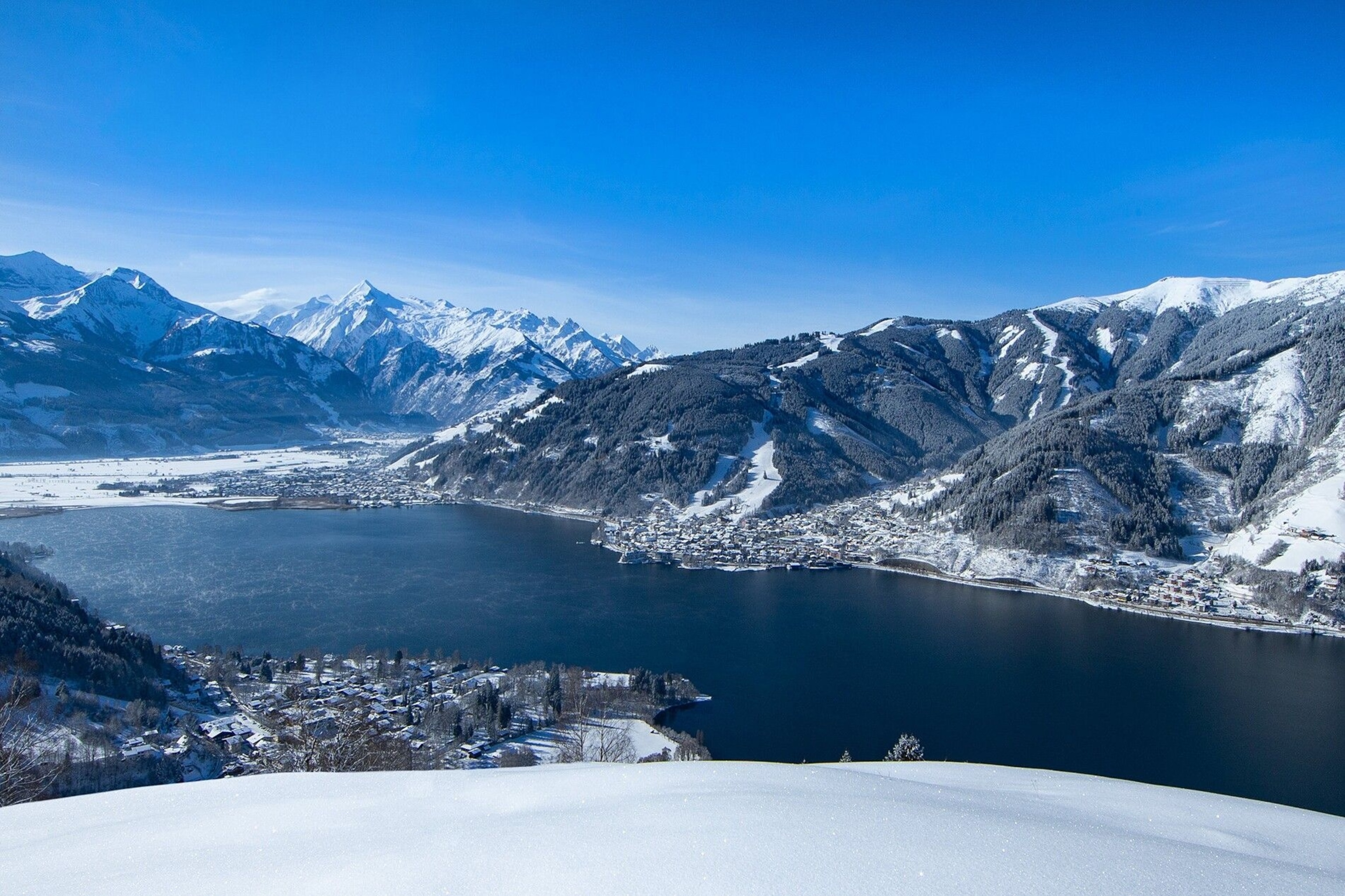
A turquoise alpine lake, a walkable town, and the Kitzsteinhorn glacier catching light in the distance — even in midsummer. That glacier-visible-in-warm-weather shot is what separates Zell am See from every other lakeside Austrian town.
For the money composition, enter “Mitterberghof Jausenstation” into your GPS and pull over at the roadside spot. You get the lake, town, and surrounding peaks in one panoramic frame — the single best overview shot of Zell am See without climbing anything.
- Stay option: Basing yourself here for a night lets you catch both golden hours at the lake. Several lakeside hotels sit within a five-minute walk of the waterfront promenade.
- Combine with: The Grossglockner High Alpine Road is another hour south if you want to extend the day trip into a full alpine driving route.
Bleckwand & the Wolfgangsee
Wolfgangsee is one of the Salzkammergut’s warmest and most photogenic lakes, and the Bleckwand trail above Strobl gives you a panoramic perch over the entire body of water, the village of St. Wolfgang, and the Schafberg peak beyond. This is the shot that separates your feed from the lakeside selfies everyone else takes.
- The hike: Steeper than most visitors expect — wear proper shoes and budget about 90 minutes to the main viewpoint.
- Best combined with: A post-hike swim or lunch along the Wolfgangsee waterfront in St. Wolfgang.
Nockstein Gipfel
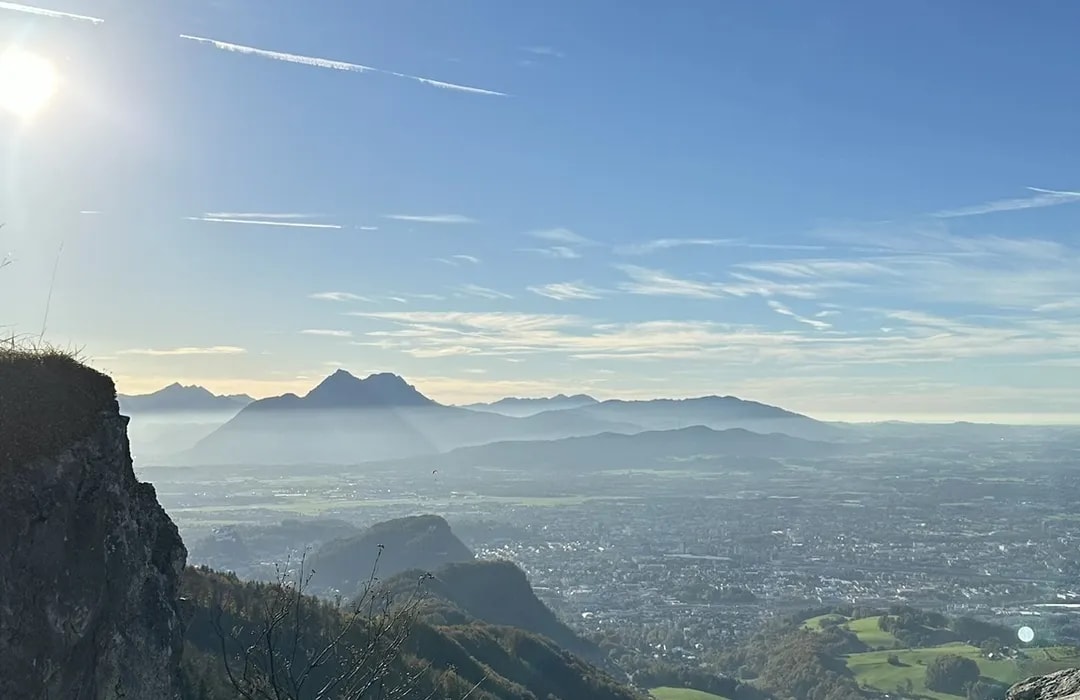
The closest summit hike to Salzburg and a genuine workout. The trail takes about an hour, but the final section involves a steep scramble that demands solid footing and zero fear of exposure.
The payoff is a 360-degree panorama covering Salzburg, the Untersberg massif, and the surrounding Alps — a perspective no rooftop terrace in the city can touch.
- Start early: The exposed upper section becomes genuinely brutal in midday heat from June through August. Morning light is also far better for shooting.
- Reality check: This is not a casual stroll. The scramble near the summit is closer to a short climb than a hike. Bring proper footwear, not fashion sneakers.
Maria Gern Church (Germany)
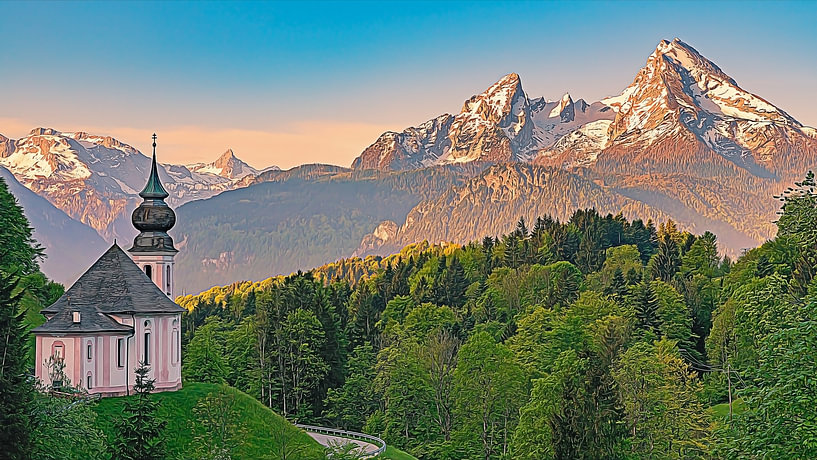
Cross into Bavaria and in 20 minutes you reach a small white pilgrimage church backed by a sheer mountain wall rising dramatically behind it. The composition is almost absurdly perfect — white steeple, green meadow, jagged Alpine peaks — and it captures a completely different visual mood than anything on the Austrian side.
- Drive: 20 minutes from Salzburg’s Old Town.
- Combine with: Berchtesgaden or Königssee to fill a full German-border day trip with multiple strong shots.
- No car: Public transit to Maria Gern is impractical. A rental car is effectively required.
When Is the Best Time of Year to Visit Salzburg for Instagram Photos?
Salzburg’s baroque facades hit differently in every season — and choosing the wrong month means fighting crowds for shots that look flat. Here’s the honest breakdown of what each season actually delivers for your feed, so you book the right window for your style.
| Season | Best For | Crowd Level | Light Quality | Drawback |
|---|---|---|---|---|
| Sept–Oct | Golden facades, misty mornings | Moderate | Exceptional | Rain probability rises late October |
| December | Christmas market glow, festive atmosphere | High on weekends | Warm but short days | Sunset before 4:30pm |
| Spring | Empty streets, soft greenery | Low | Gentle, diffused | Weather is unpredictable |
| Summer | Festival energy, long golden hours | Maximum | Golden hour past 8pm | Peak prices, queues everywhere |
September & October for Golden Autumn Light
This is the photographer’s season — and it’s not even close if your priority is light quality. Autumn turns Salzburg’s baroque Old Town amber and gold, with misty mornings that make the Salzach River look almost ethereal from Makartsteg or the Kapuzinerberg path.
The facades of the Residenz and St. Peter’s Church catch a warm, low-angle light that is genuinely softer and richer than anything summer produces.
- Why it wins: Fewer tourists than summer, more reliable light than spring, and the city’s architecture was practically designed for this palette.
- Timing: Mid-September through mid-October is the sweet spot. By late October, rain picks up and foliage drops, so the window narrows.
- Early mornings at Mirabell Gardens: Expect near-solitude before 8am, especially on weekdays — the autumn light through the geometric hedges at this hour is worth the alarm.
December for Christmas Market Magic
If your feed leans warm, cozy, and atmospheric, December is Salzburg at its most cinematic. The Christmas markets at Domplatz and Residenzplatz light up the cathedral and surrounding facades in ways that make evening shooting almost effortless — string lights do half the work for you.
The trade-off is brutal: sunset arrives before 4:30pm, and weekends pack the market stalls shoulder-to-shoulder.
- Best shooting window: Weekday mornings through early afternoon for crowd-free market details, then return at blue hour (roughly 4:15–5pm) when the lights glow but the sky still has color.
- Base yourself near the Old Town so you can shoot before tour groups arrive and again at twilight without commuting. Steingasse and Getreidegasse are beautifully quiet mid-morning in December.
- Insider detail: The Residenzplatz market stalls facing the Residenz fountain are the most photogenic cluster — position yourself with the cathedral spire as a backdrop and you get three layers of Salzburg iconography in one frame.
Spring for Soft Colors & Empty Streets
Spring delivers Salzburg’s quietest streets, which is the real draw for anyone who hates cloning tourists out of photos. The Salzach Riverbanks turn soft green, early flowers appear in Mirabell Gardens, and the Old Town lanes feel genuinely local.
Light is diffused and gentle — flattering for portraits but less dramatic for architecture shots.
- Why choose it: If your feed values clean, crowd-free frames and you’re flexible with weather, spring gives you the most honest, everyday version of Salzburg.
- The risk: Rain and overcast days are common March through early May. Pack a backup plan — Domquartier’s interior galleries and the St. Peter’s Catacombs don’t depend on weather.
- Base yourself in the Altstadt for quick access to Getreidegasse and Kapitelplatz before tour buses arrive around 10am.
Summer for Festival Energy & Long Evenings
The Salzburg Festival (typically July through August) transforms the city into a stage — black-tie audiences spilling from the Felsenreitschule and Grosses Festspielhaus, buzzed café terraces, and a cultural energy you won’t find any other time of year. The photographic upside is real: long evenings push golden hour well past 8pm, giving you extended runway for rooftop shots from the Stadtalm terrace or Hotel Stein’s Steinterrasse.
- The catch: Peak prices, maximum crowds, and queues at Hohensalzburg Fortress’s funicular. Festival performance tickets and top restaurants (including St. Peter Stiftskulinarium) book out months ahead.
- Best summer move: Shoot the fortress terrace and Humboldt Terrace early morning, then save rooftop viewpoints for that extended golden hour after dinner.
- If you only have one summer evening: End it at Stadtalm — the panorama over Salzburg’s rooftops with the fortress lit up is the single strongest end-of-day shot in the city.
Where to Stay in Salzburg for the Most Instagrammable Access
Sleeping inside Salzburg’s Old Town means your first photo of the day is a medieval cobblestone lane at dawn — no commute, no crowds, just you and the soft morning light. These five hotels put you within steps of every major shot covered in this guide, but each serves a different traveler and budget.
| Hotel | Price Tier | Best For | Instagram Payoff |
|---|---|---|---|
| Hotel Goldener Hirsch | Luxury | Old Town purists | Step onto Getreidegasse before anyone else |
| Hotel Sacher Salzburg | Luxury | River & fortress shots | Waterfront views morning and evening |
| Hotel Stein | Upper-mid / Boutique | Panorama lovers | Rooftop terrace with the best overhead city view |
| Arthotel Blaue Gans | Mid-range boutique | Style-conscious mid-budget | Old Town base with art-filled interiors |
| Hotel am Dom | Mid-range | Simple, central, affordable | Steps from Residenzplatz and the cathedral |
Hotel Goldener Hirsch — Right on Getreidegasse
This is the address photographers dream about. The Goldener Hirsch has occupied the same building on Getreidegasse since 1407 — that is over six centuries on the most photogenic street in Austria.
Mozart’s Birthplace sits a few doors down. The Hohensalzburg Fortress is visible down the lane.
The 70 rooms are filled with genuine Salzburg antiques and handcrafted details, and the in-house restaurant doubles as one of the most atmospheric dining rooms in the city. Expect roughly €400–700 per night depending on season and room category.
Book river-facing or upper-floor rooms for natural light. The trade-off: you are paying a premium to wake up inside the postcard.
For anyone whose top priority is being steps from every Old Town shot at sunrise — before tour groups clog Getreidegasse by 9 a.m. — this is the move.
Hotel Sacher Salzburg — River & Fortress Views
The Sacher sits directly on the Salzach riverbank, giving it the best waterfront positioning of any hotel in the city. Rooms along the river provide genuine fortress-and-old-town views that are hard to match from any other accommodation.
The property shows its age despite recent renovations, and it is no longer Salzburg’s sharpest luxury option — but the river-facing rooms remain beautiful, the service is consistently warm, and the Sacher Café downstairs serves the hotel’s original Sachertorte and an exceptional hot chocolate that are worth the stay alone. Pricing typically runs €350–600 per night.
The real advantage here is location: you can photograph the Makartsteg Love Lock Bridge and the waterfront promenade at golden hour without leaving your block. For morning and evening riverside photography, no other hotel comes close.
Hotel Stein — The Best Rooftop Viewpoint in the City
Hotel Stein’s Steinterrasse rooftop terrace delivers the single most impressive overhead panorama in Salzburg — the Old Town rooftops, the fortress, the Salzach, and the Alps all in one frame. The hotel itself is a modern boutique property on Giselakai, recently renovated with contemporary design.
Rooms are clean and stylish without the antique grandeur of the Goldener Hirsch or Sacher, but you are not paying for the room — you are paying for the terrace. Booking a stay here means early-morning access to that rooftop before it fills with non-guest visitors.
The breakfast on the terrace is the insider move: arrive right at opening for an empty terrace and the best light. Rates usually fall in the €200–400 range, making it the best value-for-view ratio on this list.
Best Mid-Range Options
Arthotel Blaue Gans occupies a 14th-century building steps from the Franciscan Church and Getreidegasse, with contemporary art throughout and warm, personal service. It delivers an authentic Old Town location at roughly €150–250 per night — well below the flagship luxury properties.
The interior design makes for strong lifestyle and detail shots without leaving the lobby. This is the best pick for travelers who want Old Town immersion without the Goldener Hirsch price tag.
Hotel am Dom sits directly beside Salzburg Cathedral, placing Residenzplatz and the Domplatz Christmas market (in winter) literally at your doorstep. It is a simpler, more straightforward property — no boutique flourishes, no rooftop terrace — but the location is unbeatable for cathedral-square shots at off-peak hours.
Rates typically start around €130–200 per night. Choose this if you want maximum Old Town access at the lowest price point and plan to spend your budget on experiences rather than the room itself.
Booking insider: Salzburg’s Old Town hotels fill months ahead for the December Christmas market season and during the Salzburg Festival in late July and August. For shoulder-season visits in May, June, or September — which offer the best combination of light, weather, and thin crowds — you can often find rates 20–30% below peak pricing if you book six to eight weeks out.
Which Festivals & Events Make Salzburg Most Instagrammable?
Four weeks each year, Salzburg shifts from a beautiful city into something cinematic — and your feed will show it. These aren’t background events; they fundamentally change the light, the crowds, the energy, and what ends up in your frame.
| Event | When | Photo Style | Planning Move |
|---|---|---|---|
| Christmas Markets | Late Nov – Dec | Warm lights, baroque backdrop, blue hour | Go first week of Advent, arrive at dusk |
| Salzburg Festival | July & August | Street style, crowd energy, golden hour | Book tickets & hotels 3–6 months out |
| Rupertikirtag | Late September | Tracht, folk color, candid people shots | Wander Old Town mid-afternoon |
| Mozartwoche | Late January | Classical culture, quiet winter city | Expect thin crowds, easier access |
Salzburg Christmas Markets (Late November – December)
The Christkindlmarkt at Residenzplatz and Domplatz is one of the oldest Christmas markets in the world, and the visuals live up to the reputation. The baroque cathedral, the fortress lit above, and hundreds of warm-lit stalls create a photographic combination that is genuinely hard to replicate elsewhere in Europe.
The full market details and layout are covered in the Christmas Market section — here, focus on when and how to shoot it.
- Best window: The first week of Advent, before peak December tourism clogs the lanes. You get the full market experience with breathing room.
- Best time of day: Arrive at dusk and stay through blue hour. The stalls stay lit into the evening, and cold, clear air gives the light a sharpness that photographs exceptionally well.
- What to wear: Real winter temperatures — Salzburg in December averages around freezing. Gloves that let you operate your phone are non-negotiable.
If you’re choosing between the first and second week of Advent for photography, take the first. The difference in crowd density is massive and the lights are identical.
Salzburg Festival (July & August)
The Salzburg Festival is one of the premier classical music and opera events in the world, and for roughly six weeks it transforms the city’s visual identity entirely. Black-tie pedestrians on medieval streets.
Overflowing restaurant terraces. A buzz that doesn’t exist any other month.
- Strongest photo ops: The pre- and post-performance crowds outside the Felsenreitschule and Grosses Festspielhaus — street photography gold. Formal dress against centuries-old stone is a combination that reads instantly on screen.
- Light advantage: Summer evenings push golden hour past 8pm, giving you extended warm light that winter visitors never get.
- The tradeoff: Peak prices, maximum crowds, and queues at the funicular to Hohensalzburg. Book accommodations and performance tickets three to six months in advance — this is not an exaggeration.
Base yourself in the Old Town or directly across the river in the Andräviertel neighborhood to stay within walking distance of all festival venues. Hotels at every price point fill early — secure yours as soon as performance dates are announced, usually in spring.
Rupertikirtag (Late September)
This is Salzburg’s traditional folk festival honoring St. Rupert, the city’s patron saint, and it’s the single best event of the year for people photography. The Old Town fills with locals in authentic Tracht — dirndls and lederhosen worn with genuine pride, not costume-shop irony.
Folk music, fairground stalls, and a community atmosphere that no staged tourist event can match.
- Why it reads on Instagram: Saturated color, real emotion, and a sense of place that screams Austria without a single cliché. The Tracht is authentic, the setting is baroque, and the energy is spontaneous.
- Best approach: Wander the Old Town from mid-afternoon onward. The festival is compact enough that you’ll naturally cross every photogenic corner without a route plan.
Late September also brings reliable shoulder-season weather — crisp air, lower sun angle, and far thinner crowds than summer. This is the sweet spot for Salzburg overall, and Rupertikirtag is the bonus that pushes a great trip into unforgettable territory.
Mozartwoche (Late January)
Mozartwoche — Mozart Week — fills Salzburg with concerts and cultural events around the composer’s January 27 birthday. The photography angle here is subtler: a quiet winter city with a cultural heartbeat, far from the tourist crush of summer and December.
Snow on baroque rooftops, near-empty Old Town streets between performances, and a moody atmosphere that pairs well with minimalist compositions.
- Who it’s for: Photographers who prefer atmosphere over spectacle. You won’t get festival-scale crowd shots, but you’ll get the Old Town almost to yourself.
- Practical reality: January is Salzburg’s coldest month, with average highs near freezing. Short daylight hours mean planning around a narrow window of usable light — roughly 8am to 4:30pm.
This is the quietest major event on the calendar and the cheapest time to visit. Hotels and restaurants are readily available without advance booking, which is unheard of for Salzburg’s other festival periods.
Confirm exact Mozartwoche dates with the Salzburg Festival organization each year, as the schedule shifts slightly.
How to Take the Best Instagram Photos in Salzburg
Salzburg’s architecture is a photographer’s gift: graphic, warm in the light, and scaled perfectly for both camera and phone. The city’s human scale means you won’t need an ultra-wide lens to capture the charm.
Here’s the gear and knowledge to make the most of it.
Best Camera Gear & Lenses for Salzburg’s Compact Streets
Leave the heavy zoom at home. Salzburg’s streets are narrow and scenes are layered. A versatile kit wins. For most travelers, this is the move:
| Gear Type | Recommendation | Why It Works for Salzburg |
|---|---|---|
| Primary Lens | 24-70mm f/2.8 (or equivalent zoom) | Captures everything from Getreidegasse’s guild signs to fortress vistas without lens swaps. |
| Compact Option | 35mm or 50mm prime | Fast aperture for low-light blue hour shots at Residenzplatz; forces creative composition. |
| Tripod | Travel-sized carbon fiber | Essential for the crisp blue-hour shots the city is famous for. Aluminum is cheaper but heavier. |
Insider Tip: For the fortress terrace or Humboldt Terrace, a polarizing filter is non-negotiable. It cuts glare on the Salzach River and deepens the sky behind the Hohensalzburg Fortress.
iPhone Photography Tips for Salzburg
This city is one of the better European capitals for iPhone photography. The light is forgiving and the scenes are naturally composed. Maximize it with these settings:
- Use the 2x Telephoto Lens: Default to this for street scenes on Getreidegasse. It flattens the perspective and isolates details like wrought-iron signs without the distortion of the main lens.
- Shoot in ProRAW/RAW: Gives you massive editing flexibility for the warm, high-contrast light of Salzburg’s limestone buildings.
- Embrace Portrait Mode Sparingly: Use it for focused details—like a coffee at Café Tomaselli or a lock on Makartsteg—but avoid it for wide architectural shots where it creates unnatural edge blur.
- Golden & Blue Hour are Prime Time: Arrive at Kapitelplatz or Mirabell Gardens 30 minutes before sunrise. The soft light and empty plazas are worth the early alarm.
Drone Regulations & Aerial Photography in Salzburg
Do not plan to fly a drone in Salzburg’s Old Town. The city center is controlled airspace, and its UNESCO World Heritage status adds strict visual and noise restrictions. Unauthorized flight risks significant fines.
If you are determined to get an aerial shot:
- You must register your drone with Austro Control (Austria’s aviation authority) and pass the appropriate EU drone certification.
- Use the official AMC (Austro Control Mobile Flight Planning) app or website to check restricted zones for every single flight.
- Your best options are outside the city center, in the Salzkammergut lake district. Even then, verify rules for each specific lake and launch point.
The Verdict: The hassle and risk are not worth it for most travelers. Invest your time in the spectacular ground-level and elevated vantage points listed in this article instead.
Getting Around Salzburg for the Best Shots
Salzburg’s photographic core is wonderfully compact. You can hit every key Old Town spot on foot in a single, productive day.
- Walk. Always. The distances between Getreidegasse, Residenzplatz, Stift St. Peter, and the Love Lock Bridge are under 10 minutes. Walking lets you discover the passageways and hidden courtyards that are the city’s secret photo ops.
- Use the Fortress Funicular (Festungsbahn) for Logistics: This is a transportation tool, not a photo op. Buy a ticket to ride up to Hohensalzburg Fortress, but get your shots from the terrace at the top, not from the car. Book tickets online to skip the line.
- Bike for Riverside Shots: Rent a bike to efficiently cover the paths along the Salzach River for shots back toward the Old Town and the fortress. It’s the fastest way to access viewpoints along the bank.
- Bus 25 for Elevated Perspectives: This bus goes to the Gaisberg summit viewpoint. It’s the easiest way to get that epic sunset panorama over the city without a car rental.
Base Yourself Strategically: Staying in the Altstadt (Old Town) or directly across the river in the Nonntal neighborhood puts you steps from every dawn and dusk shot. This minimizes transit time and maximizes golden hour opportunities.
Frequently Asked Questions
Is Salzburg only worth visiting at Christmas?
Absolutely not. While the Advent markets are magical, September and October deliver stunning photography conditions with beautiful light on the city’s baroque architecture and comfortable temperatures.
Spring offers soft, green landscapes along the Salzach River. You’ll find authentic character and fewer crowds in these shoulder seasons.
Where should I stay for the best photo access?
Stay within walking distance of the Old Town—this is non-negotiable. The entire historic core, from Getreidegasse to Residenzplatz, is compact and rewards proximity with early morning and late evening shooting access without transport hassles.
For a luxury lakeside retreat, Rosewood Schloss Fuschl is extraordinary, but it’s a 30-minute drive east of the city with private transfers costing approximately €75 each way. Plan your logistics carefully if you choose it.
What are the best day trips from Salzburg for photography?
Hallstatt is the classic choice for its iconic lakeside village views. For a closer, less crowded alternative, drive just 20 minutes into Germany to photograph the Maria Gern Church with its stunning alpine backdrop.
Both make excellent half-day or full-day excursions.
Start Building Your Salzburg Photo Itinerary
Start by mapping your first two mornings around the Old Town loop — Getreidegasse at blue hour, then straight to the Humboldt Terrace as the light warms. Save Mirabell Gardens and a Salzkammergut day trip for when you’ve nailed the core city shots.
Salzburg packs more photographable variety into a city this size than anywhere I’ve shot in Central Europe, and nearly all of it costs nothing beyond a pair of comfortable shoes.
Book your hotel inside the Old Town or directly across the Salzach — being steps from your first shot at dawn is the single decision that makes everything else fall into place.
Leave a Reply