
The air smells like wet oak leaves and woodsmoke as you crest a ridge and the entire valley below ignites — not a single tree left out, every shade of amber and crimson stacked against itself like a painter went overboard. Pennsylvania in mid-October doesn’t just show you fall; it drops you into the middle of it so completely you forget other seasons exist.
What makes this state different from Vermont or the Blue Ridge is the sheer density of things layered inside those colors — waterfalls you can hike to, covered bridges you can drive through, elk grazing in meadows framed by blazing hardwoods, and entire Victorian towns built right into the mountainside. You’re not just staring at trees from a pulloff here; you’re inside the landscape from every possible angle.
This guide lays out exactly where to go, when to be there, and how to piece together a trip that actually hits peak color instead of missing it by a frustrating week.
Pennsylvania state parks charge zero admission, so budget travelers can camp for $20 to $35 a night and spend almost nothing on access. Mid-range visitors should plan for $150 to $250 per night at hotels in gateway towns like Wellsboro, Jim Thorpe, or Somerset, plus gas and meals.
Splurge options run $300 to $450 a night for boutique inns and B&Bs in Jim Thorpe or New Hope. Add the Lehigh Gorge Scenic Railway at $20 to $30 per ticket for the full autumn fantasy.
When Is Peak Fall Foliage in Pennsylvania?
When Is Peak Fall Foliage in Pennsylvania?
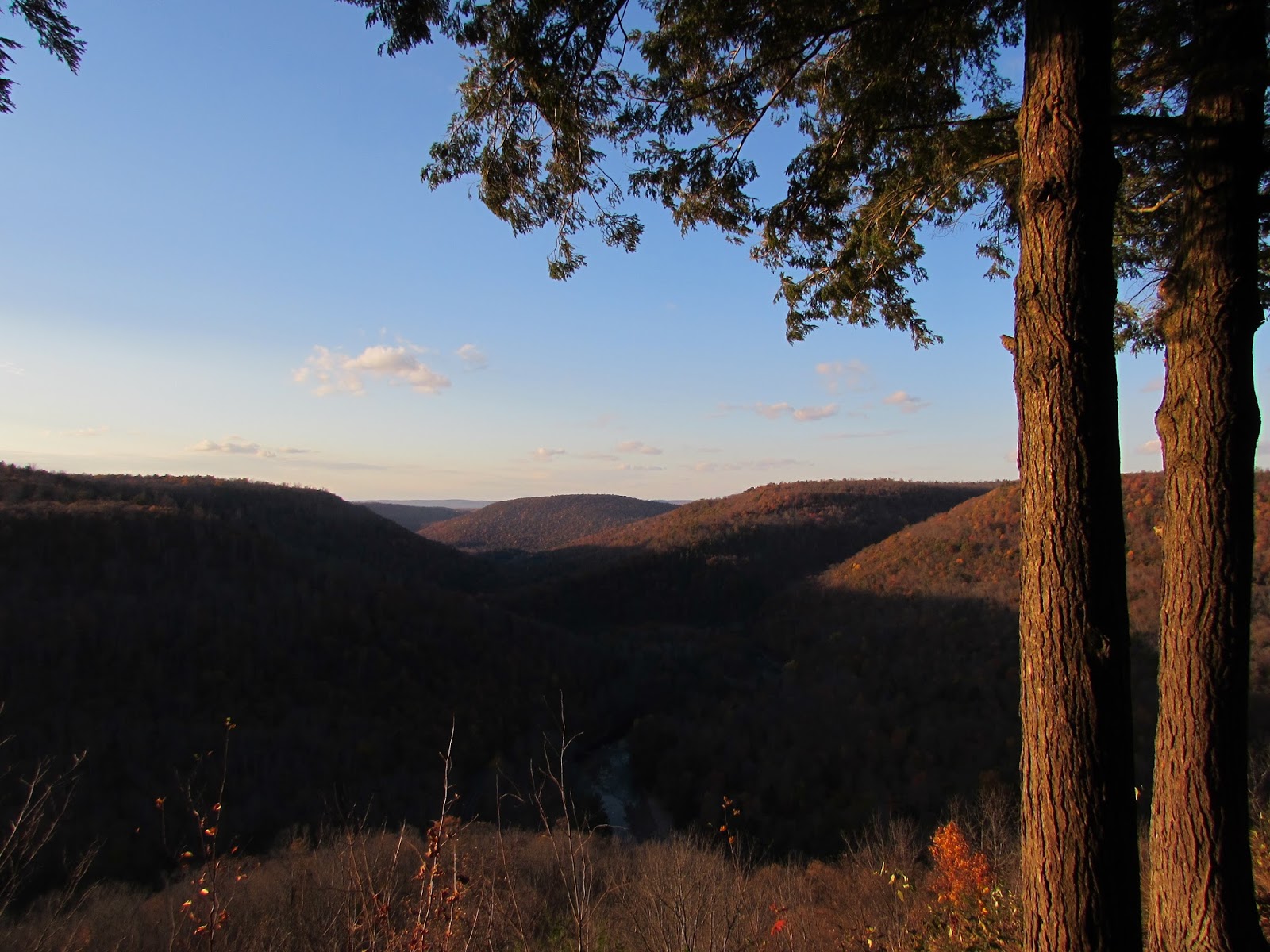
Pennsylvania’s color window stretches an unusually generous four to five weeks — early October through the first days of November — but the state’s north-south range means you’re chasing a moving target. The northern tier counties peak a full two weeks before Philadelphia’s exurbs even start to turn.
Time your trip wrong by a week and you’ll find bare branches or dull browns where the magazine covers showed fire-red maples. Time it right and every overlook delivers.
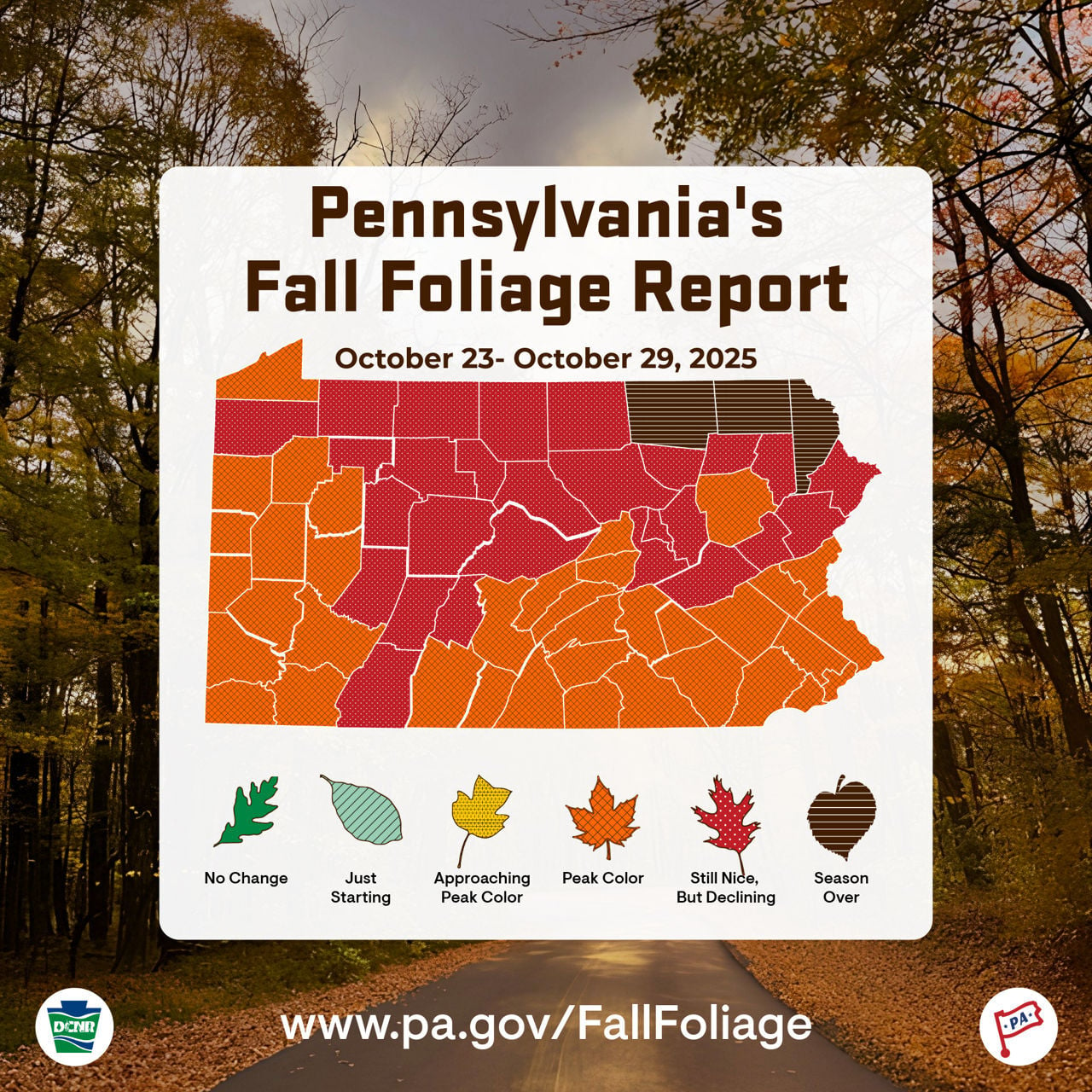
How to Use the DCNR Fall Foliage Report
The Pennsylvania Department of Conservation and Natural Resources (DCNR) publishes a weekly fall foliage report every Thursday from late September through early November at dcnr.pa.gov. This is the single most reliable planning tool available — ignore influencer posts and “best time to visit” listicles that recycle last year’s dates.
The DCNR report is updated in real time by district foresters who are actually watching the trees change.
- Check it every Thursday: The report updates weekly with region-by-region color ratings (just starting, near peak, peak, fading) and specific tree species breakdowns.
- Compare across counties: Even adjacent counties can be a week apart — the report helps you shift plans between, say, Centre County and Clinton County to stay in the sweet spot.
- Use it as a booking trigger: Once a region hits “near peak,” accommodations fill fast. Book when the report first flags your target area, not after peak arrives.
- Start checking in late September: The first reports drop before colors are obvious on the ground — this gives you a planning head start that most tourists miss entirely.
The insider trick: cross-reference the DCNR report with the state’s historical average-peak map (based on multiple years of county-level data). When the weekly report aligns with the historical window for a given county, that’s your highest-confidence bet.
Average Peak Weeks by Region
Pennsylvania’s foliage wave rolls south. Here are the general windows you can count on — use these as your baseline, then fine-tune with the DCNR weekly report.
| Region | Average Peak Window | Best For |
|---|---|---|
| Northern Tier (Tioga, Potter, Cameron, Clinton) | Late Sept – early Oct | Wild, unbroken forest panoramas; Worlds End, Hyner View |
| Northcentral Highlands (Centre, Clearfield, Elk) | Early – mid October | State forest vistas; Rothrock State Forest, Black Moshannon |
| Laurel Highlands (Somerset, Fayette, Westmoreland) | Mid – late October | Waterfalls plus color; Ohiopyle, Laurel Hill, Laurel Summit |
| Northwest PA (Erie, Crawford, Butler, Lawrence) | Early – mid October | Lake effect sunsets with color; McConnells Mill, Moraine, Presque Isle |
| Poconos & NE Mountains (Monroe, Pike, Luzerne) | Early – mid October | Higher elevation lakes; Promised Land, Hickory Run |
| Southcentral PA (Berks, Cumberland, Perry, Franklin) | Late October – early November | Rolling farmland and ridge vistas; Colonel Denning, Pine Grove Furnace |
| Southeast & Piedmont (Chester, Lancaster, Bucks) | Late October – early November | Pastoral valleys and covered bridges; longest tail-end of color |
If you can only pick one week, mid-October is the safest overlap — the northcentral and Laurel Highlands regions will be at or near peak, and you’ll catch late color in the northern tier while the south is just ramping up.
Factors That Shift Foliage Timing
No two autumns hit the same calendar dates. These variables can push peak color a week earlier or later than averages suggest:
- Summer drought stress: A dry July and August often trigger early color — leaves start shutting down sooner. But the colors can be muted rather than vibrant.
- Night temperatures: The best color comes from warm, sunny days followed by cold (but not freezing) nights. Prolonged warm spells in October delay the show.
- Wind and rain storms: A single heavy storm during peak week can strip trees bare overnight — especially in exposed ridge-top areas. Build in a buffer day if storms are in the forecast.
- Elevation: For every 1,000 feet of elevation gain, expect peak color roughly three to five days earlier. This matters in the Laurel Highlands and Poconos, where valley and summit foliage rarely peak the same week.
- Tree species mix: Oaks hold their color longest (often into November) but turn later than maples and birches. A ridge dominated by oaks will peak a week or two after a nearby sugar maple stand.
The practical takeaway: build flexibility into your schedule. A three-day window centered on the DCNR report’s “near peak” call gives you the best odds of hitting it right.
One-day leaf-peeping trips based on dates you Googled in August are a coin flip — and the losses are frustrating.
Which State Parks Deliver the Best Fall Colors?
Forget single viewpoints—Ricketts Glen State Park delivers a double punch of blazing foliage and 22 stunning waterfalls along one iconic trail. This is the park for anyone who wants their leaf-peeping layered with dramatic, roaring water.
Ricketts Glen State Park
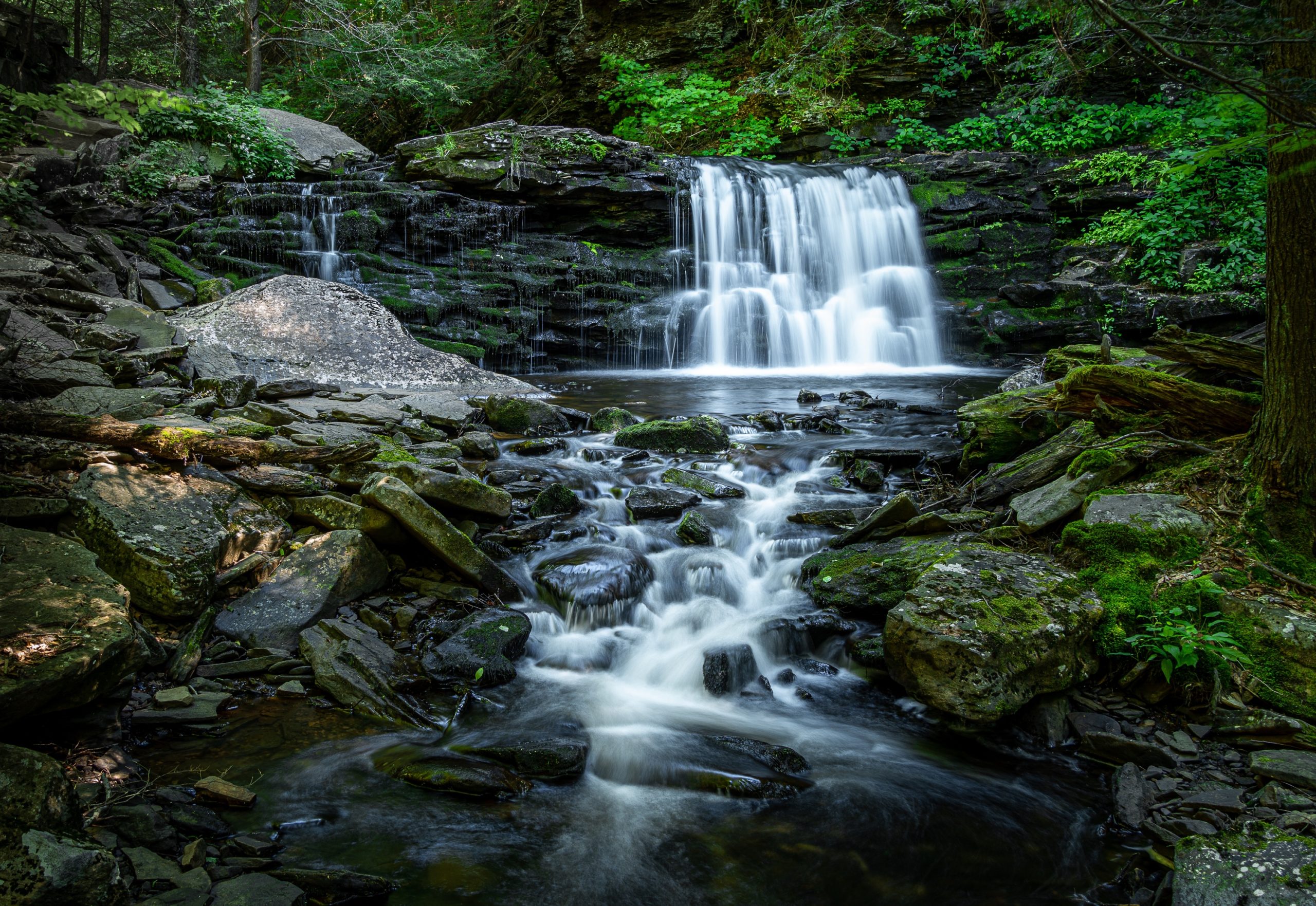
This is the undisputed heavyweight. The Falls Trail, a challenging 7.2-mile loop, packs more sheer visual impact into one hike than almost anywhere else in the state.
Your reward for navigating the steep, rocky terrain is a relentless sequence of waterfalls framed by gold, orange, and crimson canopies. It’s crowded on peak weekends—start at dawn or visit on a weekday to feel like you have it to yourself.
Ohiopyle State Park
Choose this park for river valley drama. The foliage here clings to steep gorges along the Youghiogheny River, and the view from Cucumber Falls or the natural waterslides is spectacular.
It’s more about active pursuits—biking the Great Allegheny Passage trail or whitewater rafting—set against a fall backdrop.
Worlds End State Park
The name promises drama, and the view from the Canyon Vista overlook delivers. The Loyalsock Creek gorge cuts through a dense forest that erupts in color.
This is a quieter, more rugged alternative to the Poconos’ more popular parks, ideal for those seeking solitude on trails like the Double Run Nature Trail.
Black Moshannon State Park
For a unique fall palette, head here. The boggy, acidic soil creates a mix of tamarack, highbush blueberry, and black spruce that turns brilliant shades of russet and gold not commonly seen elsewhere.
The relatively easy trails around the bog make it an accessible, fascinating walk.
Cook Forest State Park
Come here for cathedral moments. The Forest Cathedral Natural Area, a stand of ancient white pines and hemlocks, creates a magnificent evergreen backdrop for the surrounding hardwoods’ color change.
Kayaking or canoeing the Clarion River through this corridor is a top-tier fall experience.
McConnells Mill State Park
This park combines industrial history with natural beauty. Fall colors frame the historic grist mill and covered bridge. The Slippery Rock Creek gorge provides a dramatic setting, and the trail to Hell’s Hollow waterfall is a short, rewarding hike.
Hickory Run State Park
The star attraction is Boulder Field, a vast, otherworldly plain of rocks, but the surrounding forest puts on a solid color show. The Shades of Death Trail, despite its name, is a lovely forested walk.
This is a great park for families who want a mix of easy trails and a unique geological sight.
Laurel Hill State Park
A solid, less-crowded choice in the Laurel Highlands. The 63-acre Laurel Hill Lake is the centerpiece, offering clear reflections of the surrounding maple and oak forests. It’s a good base for exploring nearby attractions like Fallingwater.
Keystone State Park
A simple, accessible option focused around a 78-acre lake. The flat, paved trail circling the lake is perfect for a leisurely walk or bike ride with continuous waterfront color. Rent a kayak or rowboat to experience the reflections up close.
Locust Lake State Park
Similar to Keystone but smaller and often quieter. The 52-acre Locust Lake is great for a relaxed fall outing, with easy trails and good picnic spots. It’s a no-fuss option for a half-day trip.
Pine Grove Furnace State Park
This park stands out with two lakes—Laurel and Fuller—doubling your reflection photography opportunities. The historical aspect of the old furnace adds interest. Fuller Lake is particularly scenic, with clear water and a rocky shore.
- Best For: Photographers and history buffs.
- Insider Tip: The view from the Appalachian Trail as it passes through the park offers a surprising panoramic overlook of the surrounding forest.
Moraine State Park
The vast, 3,225-acre Lake Arthur dominates this park. The best foliage views come from the water—rent a pontoon boat or kayak from the Pleasant Valley Marina (check for seasonal availability, typically open into October) to explore hidden coves painted in color.
The paved, 7-mile Multi-Use Trail is excellent for biking with lake views.
Presque Isle State Park
A different vibe entirely. This sandy peninsula jutting into Lake Erie offers fall foliage in a coastal setting.
The colors are less about towering mountains and more about golden grasses, dune vegetation, and the brilliant contrast of autumn leaves against the vast blue lake. Sunsets here are legendary.
Promised Land State Park
A Poconos classic for a reason. With over 50 miles of trails and a beautiful lake, it’s a fall foliage workhorse.
The Little Falls Trail is a particularly easy, rewarding walk to a cascading waterfall framed by autumn color. It can get busy, so explore trails farther from the main picnic areas.
Colonel Denning State Park
This is your pick for a genuine wilderness feel without the crowds. The 273-acre park is rugged, with a challenging climb to Doubling Gap Vista for a payoff view of the forested valley. It’s a no-frills, hike-focused park where the foliage is the main event.
Comparison at a Glance
| Park | Top Feature for Fall | Best For | Crowd Level |
|---|---|---|---|
| Ricketts Glen | Waterfalls + Foliage | Strong hikers | High (Peak Weekends) |
| Ohiopyle | River Gorge Views | Active adventurers | Moderate to High |
| Worlds End | Canyon Vista Overlook | Solitude seekers | Moderate |
| Black Moshannon | Bog Ecosystem Colors | Easy, unique walks | Low to Moderate |
| Cook Forest | Ancient Forest Cathedral | Iconic PA scenery | Moderate |
| Pine Grove Furnace | Twin Lake Reflections | Photographers | Moderate |
| Moraine | Lake Arthur Boat Views | Boaters & cyclists | Moderate |
| Presque Isle | Lake Erie Coastal Color | Coastal fall vibe | Moderate |
How to Find the Best Overlooks and Vistas
Pennsylvania’s most dramatic fall panoramas aren’t always found on a marked trailhead sign; the best are often at the end of a steep, narrow road or a short, unmarked scramble. These 11 spots deliver the state’s most expansive and unforgettable leaf-peeping views.
| Overlook | Best For | View Type | Effort Level |
|---|---|---|---|
| Hyner View | The iconic, must-see vista | River valley, endless ridges | Paved road to parking, short walk |
| Big Mountain Overlook | Wide-open, endless horizon | Expansive rolling farmland & ridges | Drive-up |
| Chimney Rocks | Rocky outcrop adventure | Rocky promontory, valley below | Short hike/scramble |
| Bake Oven Knob | Adventurous scramblers | Layered ridges from a rocky outcrop | Steep scramble |
| Washington Park | Urban & natural blend | City, river, and forested hills | Drive-up in a city park |
| Marie Antoinette | History buffs, unique story | Allegheny River bend & gorge | Drive-up with facilities |
| Jacks Mountain | Quiet, technical panorama | Ridgeline views over Kishacoquillas Valley | Roadside pull-off |
| Rimrock Overlook | Allegheny National Forest immersion | Reservoir & vast forest canopy | Short, paved path |
| Jakes Rocks | Rock formation explorers | Kinzua Dam reservoir & forest | Short walks from lots |
| Irving Cliff | Quick, easy sunset view | Dingmans Ferry & Delaware River | Very short walk |
| Mount Davis | State highpoint collectors | 360° view from PA’s rooftop | Drive-up tower |
Hyner View State Park
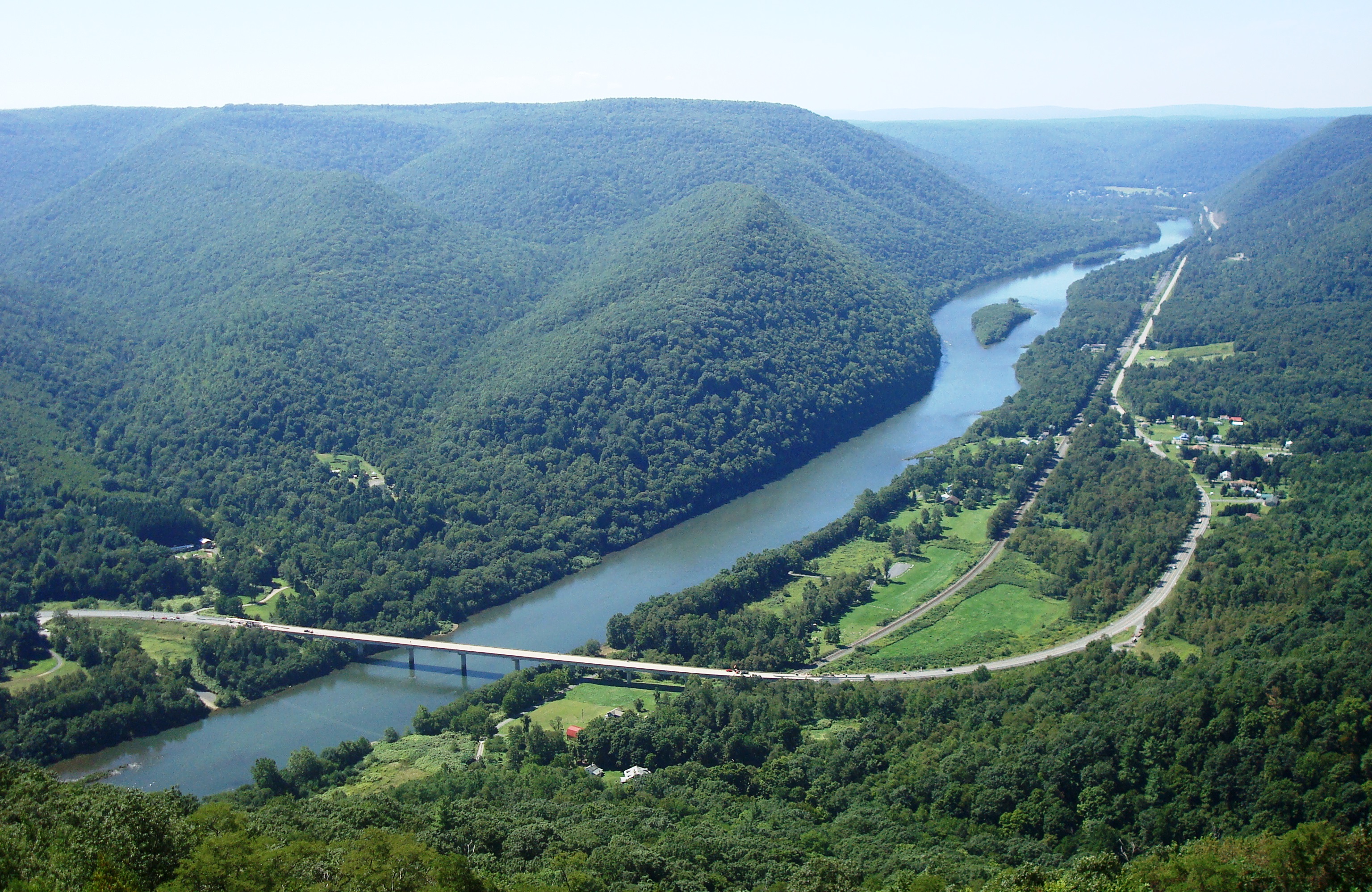
This is the non-negotiable starting point for any overlook tour. The view from the observation deck, high above the West Branch of the Susquehanna River, is Pennsylvania’s most photographed autumn vista for a reason.
The scale of the valley is staggering. On clear, windy fall days, you can often watch paragliders launch from the cliff edge—a spectacular bonus.
- Insider Tip: The park is a top paragliding site. If you see crews setting up, stay to watch the launches for an unforgettable show against the autumn backdrop.
- Stay Nearby: Base in the charming, remote river town of Renovo for a true mountain getaway, about a 15-minute drive away.
Chimney Rocks Park
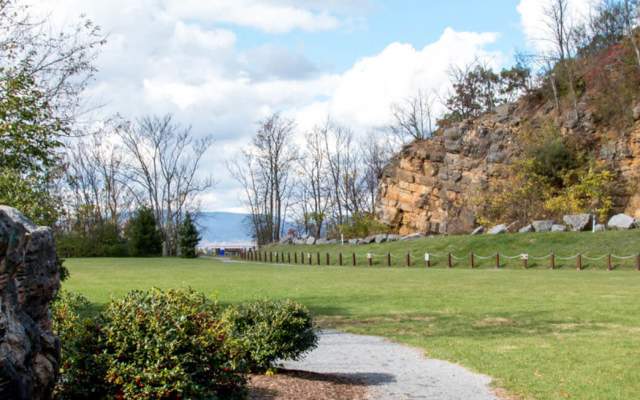
For a view that feels earned and adventurous, Chimney Rocks in Hollidaysburg delivers. It’s a short but steep hike up a rocky outcrop that juts out dramatically over the valley below.
The payoff is a private, cliff-side perspective you won’t share with crowds. It’s less about endless ridges and more about the intimate drama of the immediate gorge.
Mount Davis
At 3,213 feet, this is Pennsylvania’s highest point. The observation tower provides a 360-degree view that’s particularly stunning when the valleys are filled with morning fog and the surrounding maple and oak forests are blazing.
The drive up is a scenic route in itself.
Big Mountain Overlook
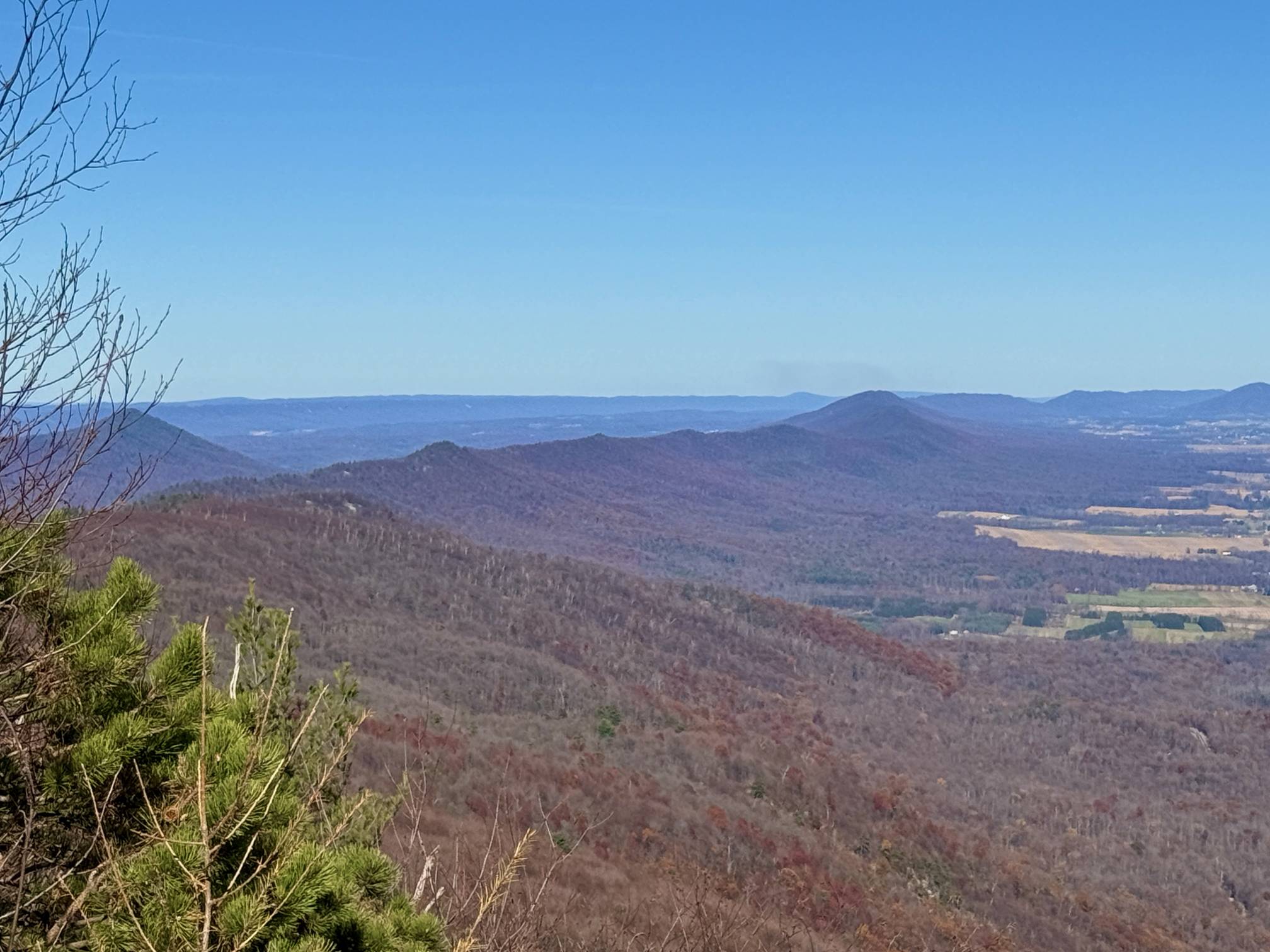
If Hyner View is the classic, Big Mountain is the most expansive. Located in Buchanan State Forest on the Franklin-Fulton County line, the vista here is relentlessly open, stretching over waves of ridges and fertile farmland.
It feels like you can see half the state. Arrive for sunset—the colors are unreal.
Marie Antoinette Overlook
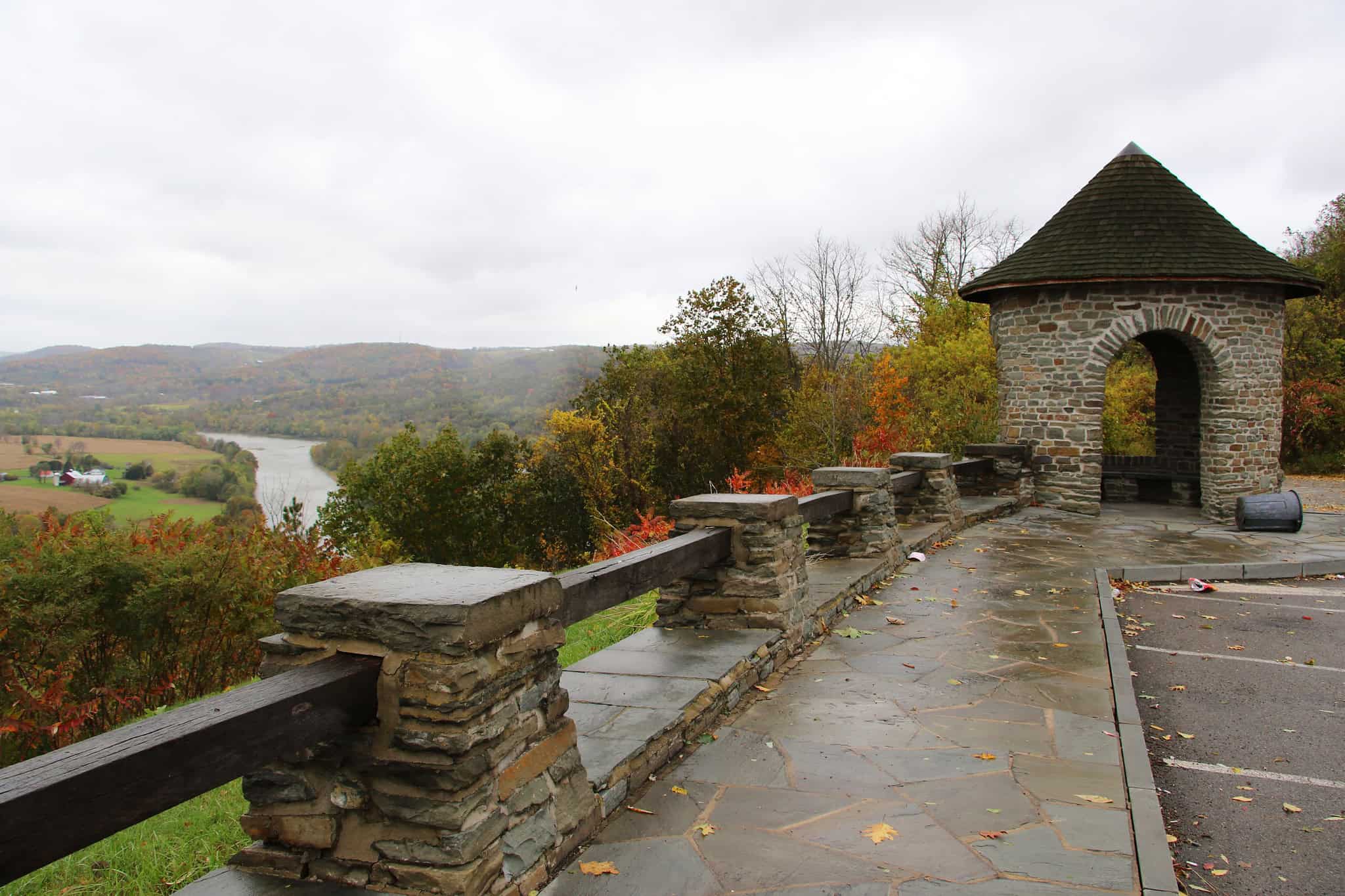
More than just a view, this spot in the Endless Mountains has a quirky history tied to French royalty. The vista itself is a dramatic, sweeping bend of the Allegheny River and its gorge.
It’s an easy, scenic drive-up with excellent facilities, making it perfect for families or those who want a big reward with minimal effort.
Jacks Mountain Overlook

A favorite of photographers seeking a classic layered ridge effect. This pull-off along Jacks Mountain Road offers a striking view over the Kishacoquillas Valley, with the ridges of Stone Mountain in the distance creating perfect bands of color.
It’s a quiet, roadside stop without the fanfare.
Bake Oven Knob
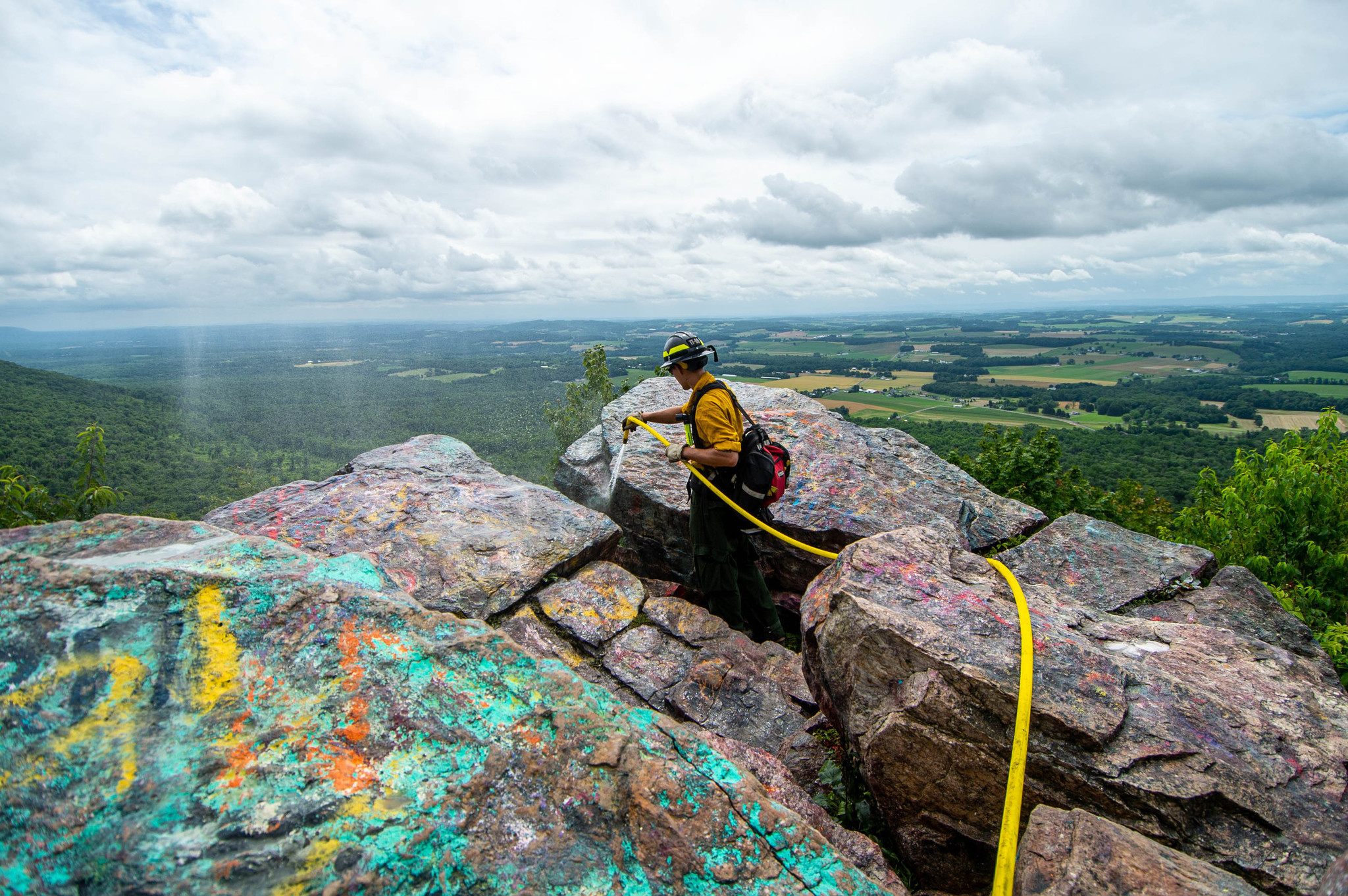
On the Appalachian Trail in the Lehigh Valley, this is an adventure overlook. You’ll need to scramble up large boulders to reach the summit.
The reward is a raw, rocky perch with a fantastic view of the Blue Mountain ridgeline. It’s more rugged and less manicured than state park overlooks, which is its appeal.
Irving Cliff
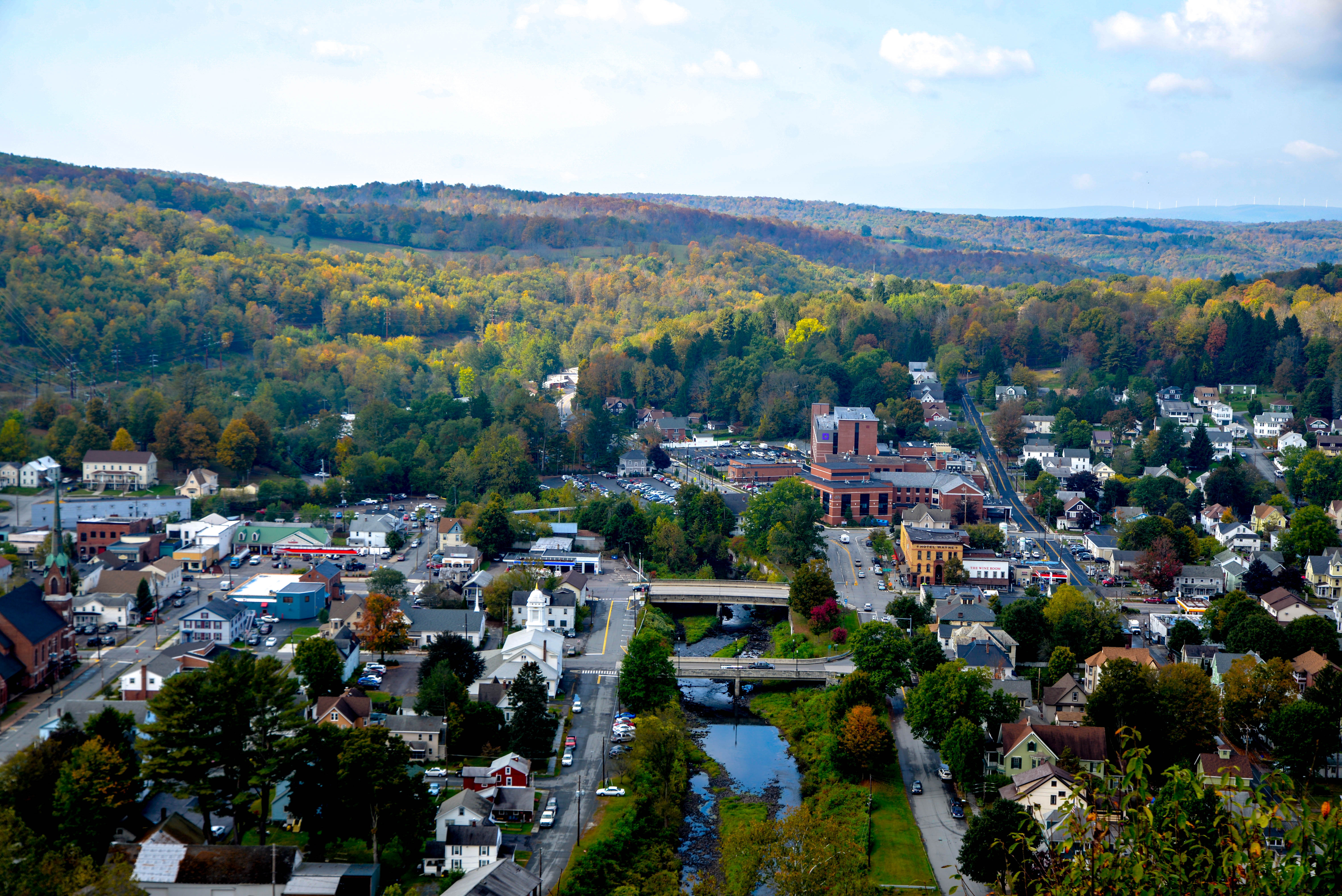
For a quick, easy hit with a stunning river view near the Delaware Water Gap, head to Irving Cliff in Greeley. The short walk to the cliff edge delivers a surprisingly beautiful vista over Dingmans Ferry and the Delaware River.
It’s ideal for a sunset stop on your way back from other Poconos adventures.
Washington Park Overlook
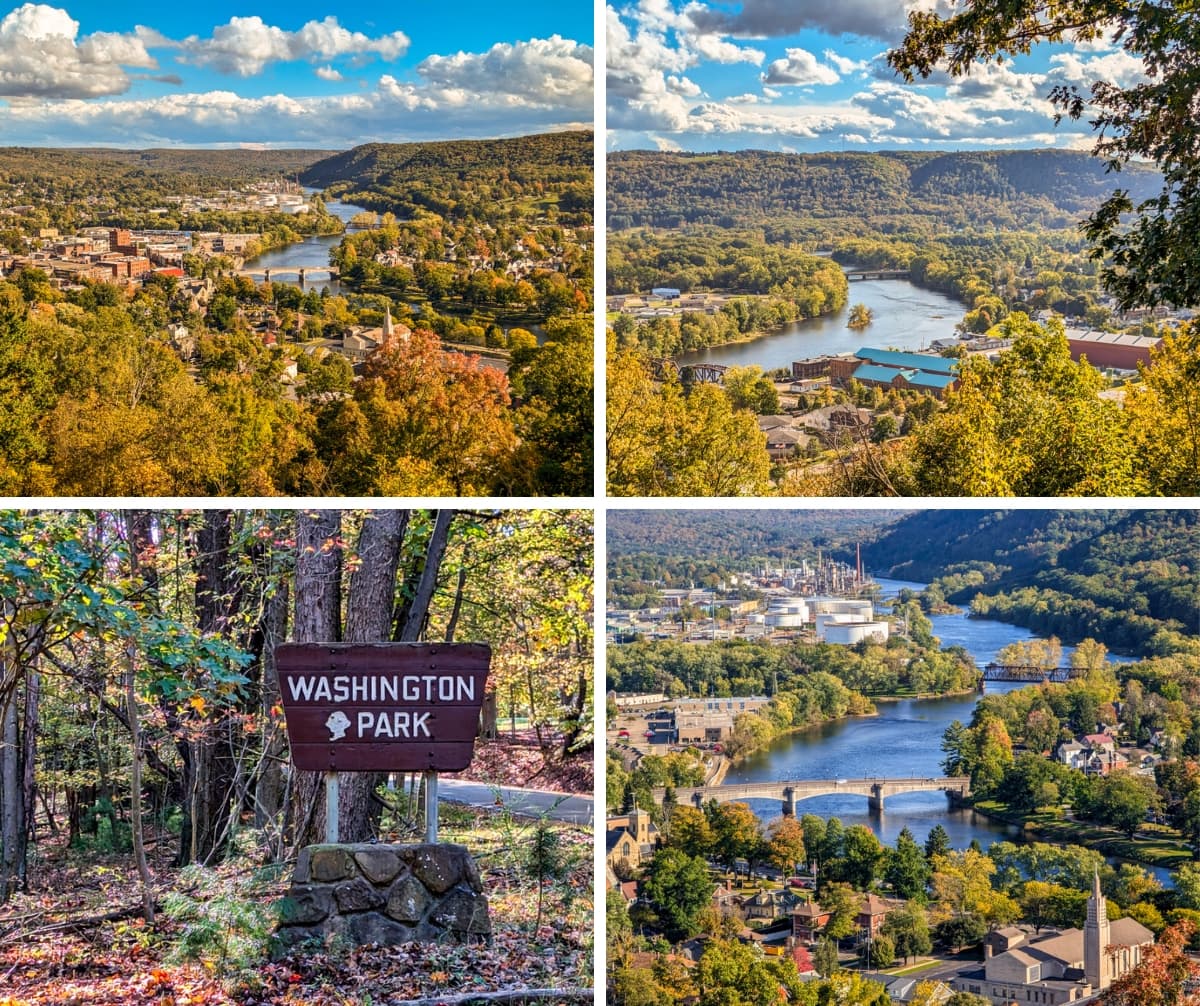
This is your best choice for a view that blends fall color with charming urban scenery. From its perch in Warren, you look out over the Allegheny River, the town’s bridges, and the forested hills that frame the valley.
It’s easily accessible and offers a different kind of autumn photo opportunity.
Rimrock Overlook
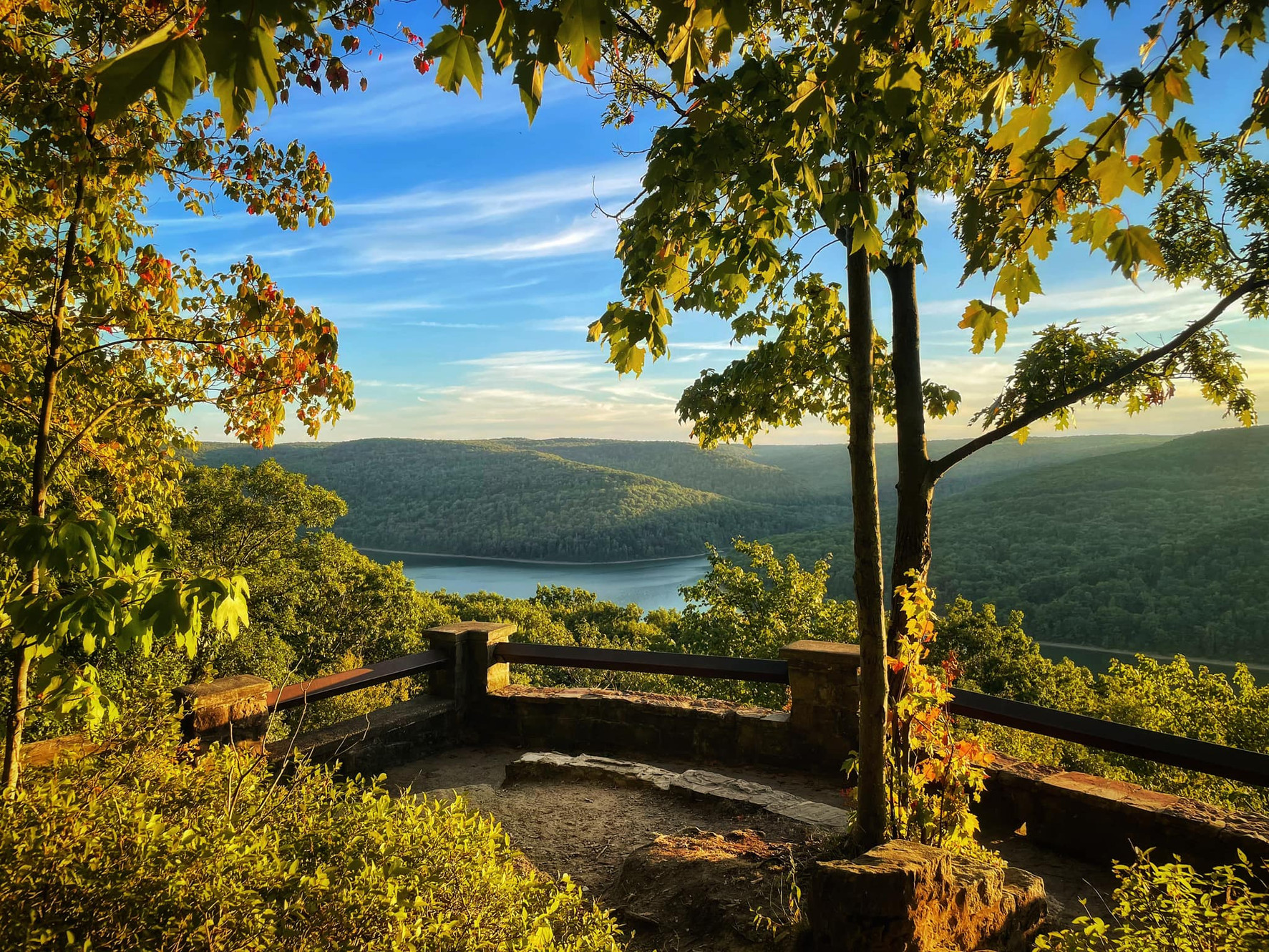
Located in the Allegheny National Forest, this overlook provides a stunning view of the Kinzua Dam reservoir (the Allegheny Reservoir). The vast expanse of water surrounded by shoreline forests in peak color is breathtaking.
The access road is paved and the path is short, making it a must-see in the ANF.
Jakes Rocks
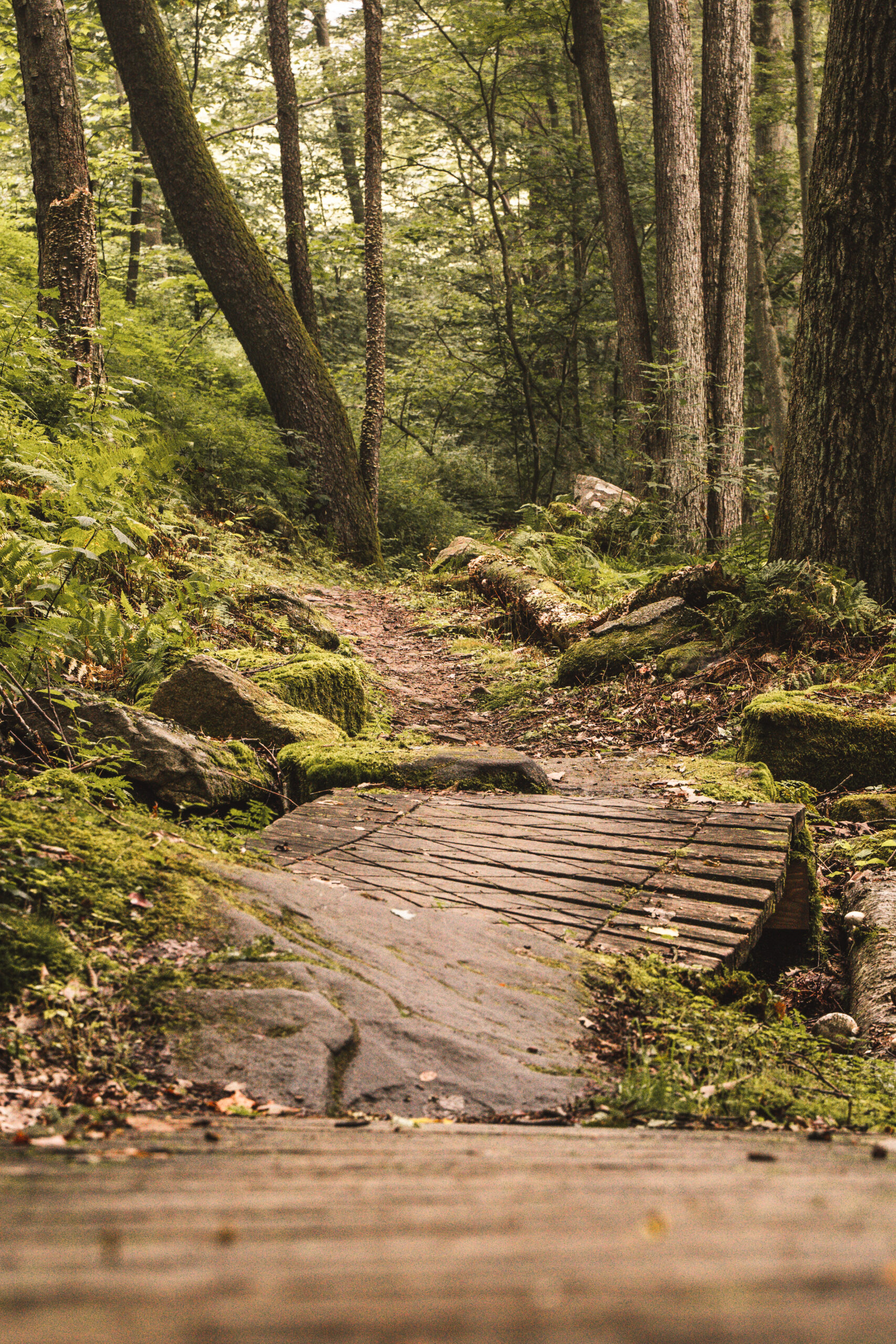
Not to be confused with Rimrock, Jakes Rocks is another ANF gem famous for its unique rock formations and mountain biking trails. The overlook areas here offer fantastic views down to the Kinzua Dam and reservoir.
Explore the formations, then find a quiet rock to sit on for the view.
Planning Your Route: Cluster these. Hit Hyner View, then drive south to Chimney Rocks and Mount Davis.
For the ANF, combine Rimrock and Jakes Rocks in a loop. Big Mountain and Bake Oven Knob make a great pair in the eastern part of the state. Most require only 30-90 minutes of your time, making a multi-stop overlook day trip entirely feasible.
Top Waterfall Trails for Fall Foliage
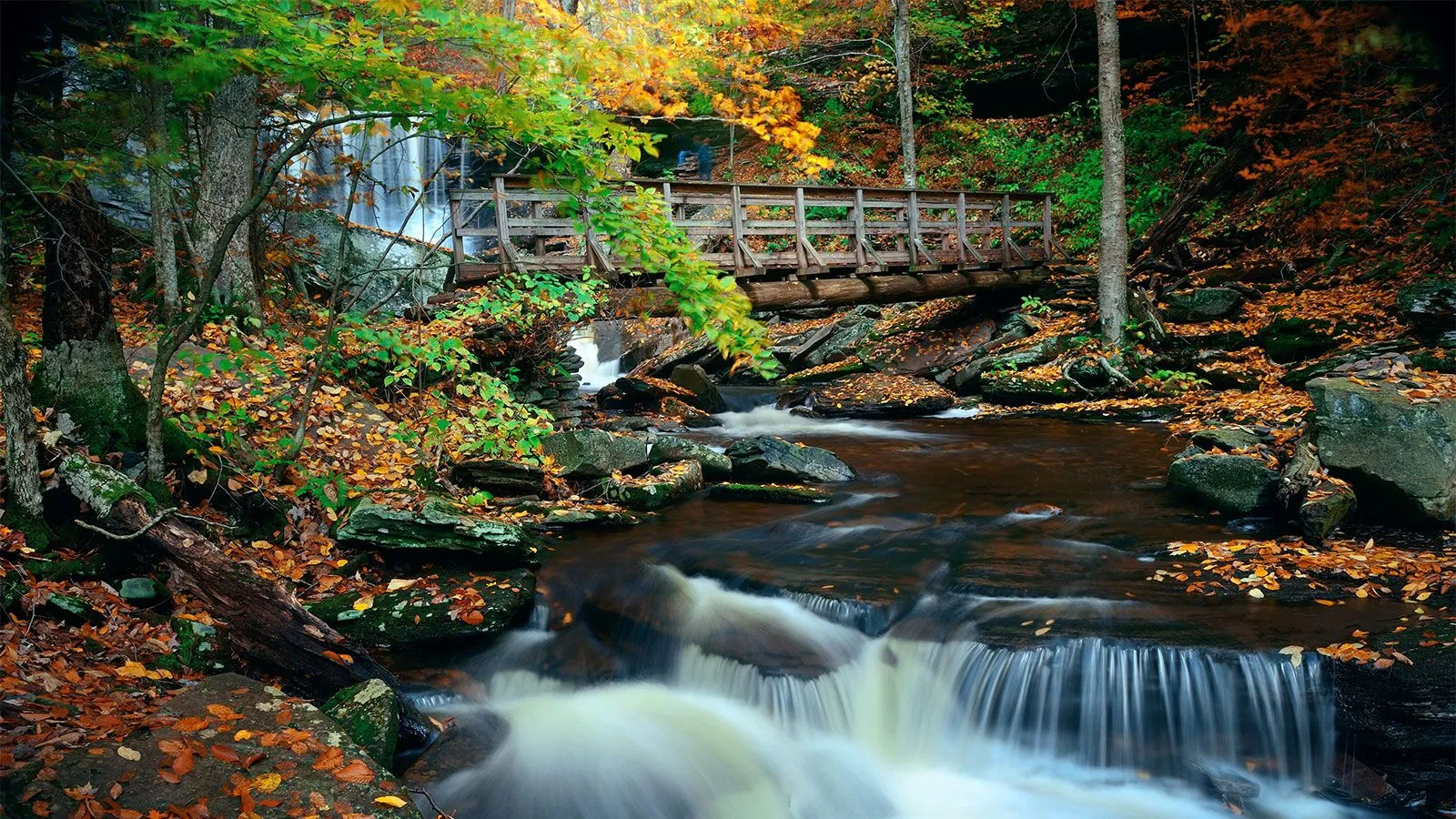
Waterfalls surrounded by peak-season maples offer something overlooks can’t — moving water reflecting crimson and gold, mist catching the light, the sound amplifying the sense of being inside the season. These six trails combine Pennsylvania’s best cascades with the state’s most vivid foliage, and each demands a different level of effort.
| Trail | Waterfalls | Difficulty | Best For |
|---|---|---|---|
| Falls Trail, Ricketts Glen | 22 named falls | Strenuous | Full-day immersion |
| Turkey Path, Leonard Harrison | 1 major cascade | Moderate–Strenuous | Canyon views + waterfall |
| Little Falls Trail, Promised Land | Several small falls | Easy–Moderate | Families, casual hikers |
| Hawk Falls, Hickory Run | 1 cascade | Easy | Quick payoff, beginners |
| Dry Run Falls, Loyalsock SF | 1 cascade | Roadside | No-hike waterfall fix |
| Rainbow Falls, Trough Creek | 1 major cascade | Moderate | Full gorge experience |
Falls Trail at Ricketts Glen State Park
The single best waterfall hike in Pennsylvania — 22 named waterfalls in a 7.2-mile loop through a narrow, steep-sided gorge. During peak foliage, the canyon walls blaze with color and the mist from Ganoga Falls (94 feet) catches light in a way that makes the scramble worth every rocky step.
This is a strenuous trail with stone stairs, wet rock, and serious elevation change — wear real hiking boots, not sneakers.
Ricketts Glen has its own dedicated section in this guide with full park details. For the falls specifically, start early on a weekday in mid-October to have the gorge mostly to yourself.
Turkey Path at Leonard Harrison State Park
The Turkey Path drops roughly 800 feet from the rim of Pine Creek Gorge — Pennsylvania’s answer to the Grand Canyon — down to the canyon floor, passing a waterfall on the descent. The foliage here operates on two planes: the distant canyon walls painted in full autumn color from the overlook, and the intimate close-up canopy wrapping the trail itself.
Most hikers do this as an out-and-back, climbing back up the way they came.
- Best vantage point: The overlook at the top before you descend gives the most sweeping foliage panorama.
- Planning note: Leonard Harrison is a small park — parking fills fast on October weekends. Arrive before 9 AM or plan a weekday visit.
- Stay context: Wellsboro, about 10 minutes away, is the natural base with inns, diners, and a walkable Main Street.
Little Falls Trail at Promised Land State Park
Promised Land State Park sits at over 1,800 feet elevation in the Poconos, which means its foliage peaks earlier than the valleys below — often a full week ahead of surrounding areas. The Little Falls Trail follows a stream through hemlock and hardwood forest with several small cascades.
It’s not a dramatic single-drop waterfall; it’s a series of intimate riffles and ledges that reward a slower pace.
- Why this trail wins for families: Manageable terrain, short distance, and enough water features to keep kids engaged without the technical footing of Ricketts Glen.
- Park context: Over 50 miles of trails in the park give you fallback options if this one fills up. The full park profile is covered in the Promised Land section of this guide.
Hawk Falls at Hickory Run State Park
Under a mile to reach Hawk Falls, making it the easiest waterfall payoff on this list. The falls drop into a rocky pool hemmed in by rhododendron and deciduous canopy — in mid-October, the surrounding maples frame the cascade in orange and yellow.
Expect company: this is one of the most popular short hikes in the Poconos.
- Crowd strategy: Weekday mornings are your only real escape from the October weekend rush here.
- Don’t stop at one: Hickory Run’s Boulder Field and Shades of Death Trail are worth combining in the same visit — details are in the Hickory Run section of this guide.
Dry Run Falls in Loyalsock State Forest
This one requires almost no hiking — the falls sit just off Dry Run Road in Sullivan County, making it a drive-and-see waterfall rather than a trail. The cascade drops over a wide rock ledge into a forested pool, and the surrounding Loyalsock State Forest canopy turns spectacular in early to mid-October.
If you’re road-tripping the Loyalsock Creek valley, this is the easiest foliage-and-water stop you’ll find.
- Best paired with: The Loyalsock Trail and Worlds End State Park, both nearby, for anyone wanting a longer day in the forest.
- Insider detail: There’s no signage at the falls — you’ll see a small pull-off. Walk upstream about 30 feet for the best angle.
Rainbow Falls at Trough Creek State Park
Trough Creek carves a 541-acre gorge through Terrace Mountain in Huntingdon County, and Rainbow Falls is its centerpiece — a tall cascade that catches light in the narrow canyon, especially during midday in autumn when the sun angle is low enough to illuminate the mist. The trail to the falls crosses a suspension bridge and passes Balanced Rock, adding to the sense that this gorge packs more drama per mile than its size suggests.
- Why it stands apart: The gorge depth creates a microclimate — the foliage lingers here longer than the surrounding ridgelines, sometimes extending peak color into late October.
- Stay context: Raystown Lake is 15 minutes away with cabin rentals and the Lake Raystown Resort. Huntingdon, a small college town, has a handful of restaurants and basic lodging.
- Worth noting: Trough Creek is less known than the Poconos parks listed here, which means fewer crowds — a genuine advantage during peak foliage weekends.
Best Scenic Drives and Road Trips
Two dark tunnels cut through a mountain of blazing hardwoods, no cars allowed — that’s the Abandoned Pennsylvania Turnpike, and it anchors the most unexpectedly photogenic fall drive in the state. Pennsylvania offers a handful of routes where the foliage hits harder from behind a windshield or handlebars than it ever does from a trailhead overlook.
These six picks span the spectrum from river-hugging cruises to car-free rail trails, each with a distinct reason to make it your next autumn outing.
| Route | Type | Length | Best For |
|---|---|---|---|
| Route 32, Bucks County | Scenic drive | ~25 miles | Weekend couples, towns + river views |
| Abandoned PA Turnpike | Bike/hike trail | 13 miles | Adventure seekers, photographers |
| Ridge Road, Cameron County | Scenic drive | ~12 miles | Elk viewing + wild forest canopy |
| Somerset Covered Bridge Tour | Self-guided driving loop | ~80 miles | History lovers, families |
| Lower Trail Rail Trail | Rail trail (bike/hike) | ~16 miles | Easy riverside ride, all skill levels |
| H&BT Rail Trail | Rail trail (bike/hike) | 12 miles | Trestle bridge views, autumn colors |
Route 32 in Bucks County
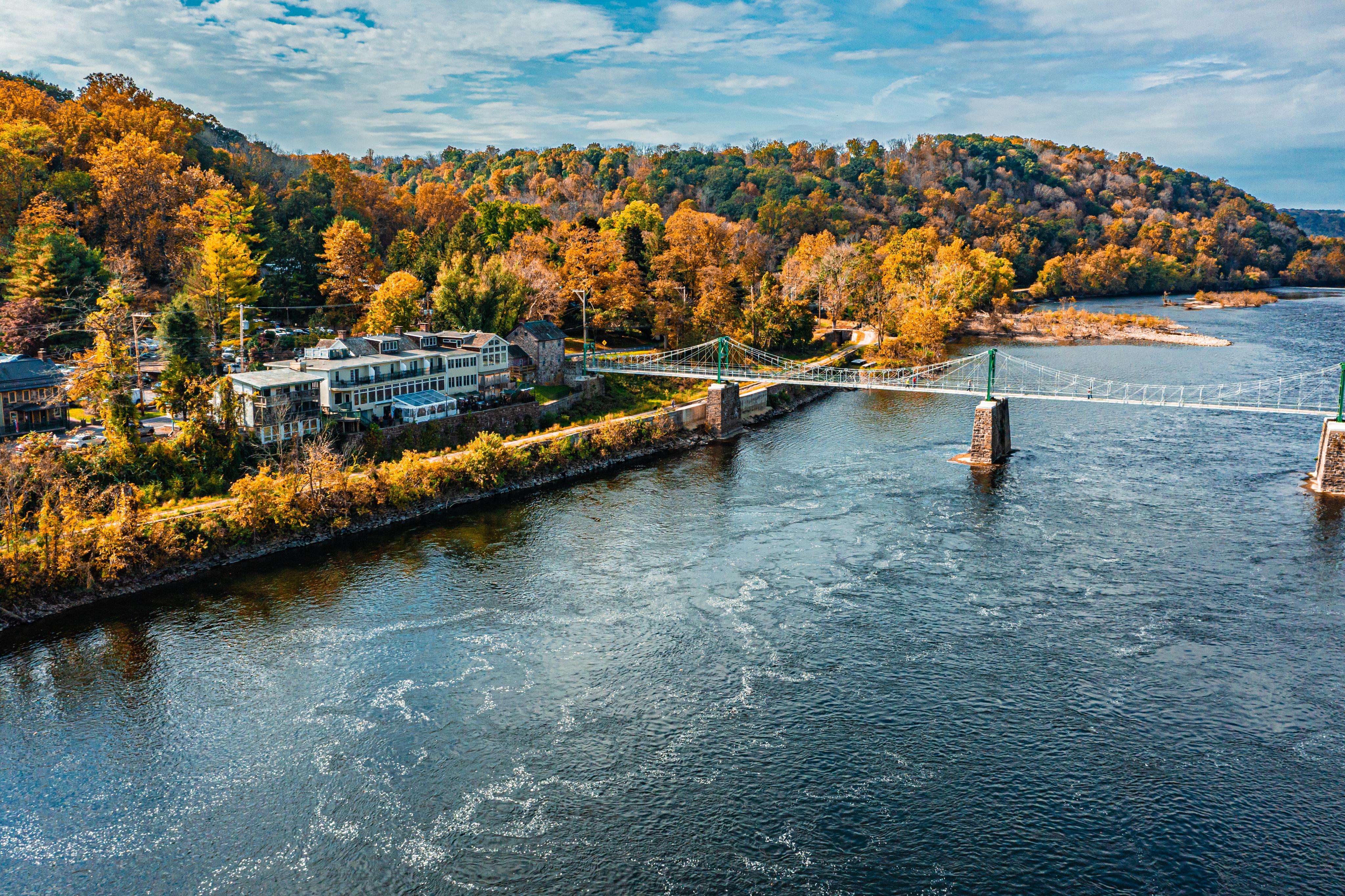
Route 32 traces the Delaware River from Washington Crossing to north of New Hope, delivering roughly 25 miles of sycamore-lined river bluffs, colonial stone walls, and some of the most charming small-town scenery in eastern Pennsylvania. This is the drive to pair with a long lunch stop — New Hope and its neighbor Lambertville, NJ (connected by a walkable bridge) are packed with independent restaurants and galleries.
The stretch through Washington Crossing Historic Park is particularly striking mid-October when the riverbank maples peak.
- Best time: Mid to late October for peak color along the river corridor.
- Drive time: The full 25-mile stretch takes about 50 minutes without stops. Plan for 2–3 hours with lunch and photo breaks in New Hope.
- Base yourself: New Hope or Doylestown for walkable dining and boutique inns. This is an easy day trip from Philadelphia (about 1 hour) or a weekend overnight.
- Insider tip: Drive south to north in the afternoon — the western-facing river bluffs catch golden light and the foliage glows. Morning runs put you in shadow for most of the route.
Abandoned Pennsylvania Turnpike
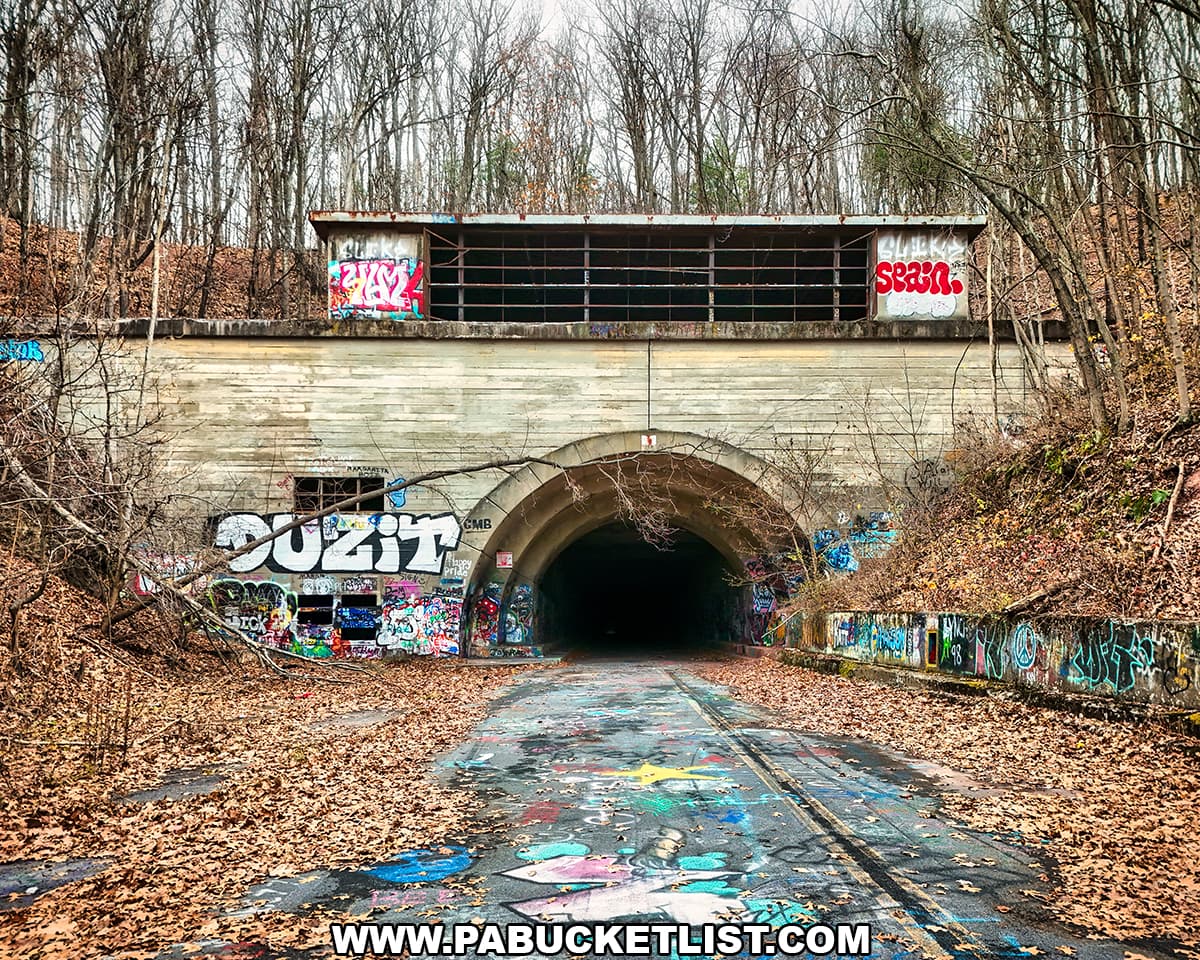
This 13-mile stretch of the original 1940s Pennsylvania Turnpike near Breezewood was abandoned in 1968 when the highway was rerouted, leaving behind two massive tunnels — Rays Hill and Sideling Hill — surrounded by second-growth forest that turns electric in October. It is free to access and open to bikes and foot traffic only, which makes it one of the only places in Pennsylvania where you can pedal through a pitch-dark mountain tunnel and emerge into a canopy of reds and golds.
- Access: Enter from the Breezewood end (near the Turnpike interchange) or from the Fulton County side near Crystal Spring. Both ends have parking areas.
- Surface: Cracked asphalt — hybrids or mountain bikes handle it best. Road bikes will struggle.
- Time needed: 2–3 hours round trip by bike; faster on foot if you only want the tunnels.
- What to bring: A strong headlamp or bike light is non-negotiable for the tunnels. They are completely dark inside.
- Insider tip: The foliage peak here runs slightly later than the surrounding Laurel Highlands — typically the last week of October into early November — because the elevation inside the cut sits lower than the surrounding ridgeline.
Ridge Road in Cameron County
Ridge Road runs through the heart of Pennsylvania’s Elk Country, cutting across elevated forest plateaus in Cameron County where the canopy stretches unbroken in every direction. This drive is less about curated overlooks and more about sustained immersion — miles of hardwood forest that in mid-October becomes a tunnel of orange and gold.
The real bonus here is the chance of spotting elk grazing in meadows along the route, especially at dawn and dusk.
- Peak timing: Usually the second to third week of October, but Cameron County’s elevation varies significantly, so color shifts fast — confirm with the DCNR weekly report before driving.
- Pair it with: The Elk Country Visitor Center in Benezette (about 20 miles east) for elk viewing platforms and interpretive programs.
- Base yourself: Benezette or Emporium for cabin rentals and proximity to both the drive and elk viewing. Expect rustic lodges rather than hotels.
- Insider tip: Arrive by 6:30 a.m. or plan to be on the road by 4 p.m. — elk are most active in low light, and the herds move through meadows visible from Ridge Road at those times.
Somerset County Covered Bridge Tour
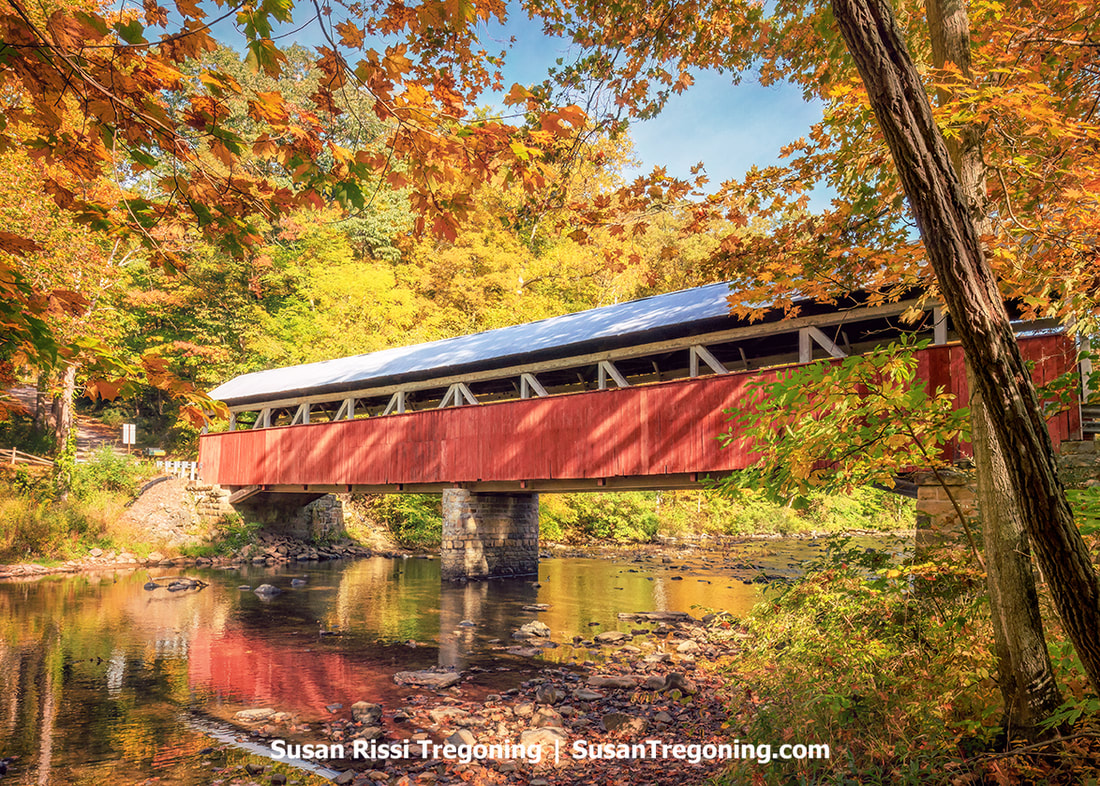
Somerset County holds more covered bridges than any other county in Pennsylvania, and a self-guided driving tour strings roughly a dozen of them across rolling Laurel Highlands farmland where barns, red oaks, and creek valleys deliver layered fall color you won’t find on any single overlook. The full loop runs approximately 80 miles and can be done in a half day, though most people stretch it into a full day with stops for photos and lunch in the small towns along the way.
- Start point: The Somerset County visitors bureau publishes a covered bridge driving tour map — pick one up at their office or download it online before you go. The route is not well-signed, so the map is essential.
- Highlights: Packsaddle Bridge and Barronvale Bridge are the two most photogenic stops, set against steep creek banks lined with mature hardwoods.
- Peak timing: Mid-October is the sweet spot for Somerset County’s foliage, though the Laurel Highlands runs a week or two earlier than the Pittsburgh metro.
- Base yourself: Somerset borough has chain hotels and a few local eateries. For more character, look for cabins near Seven Springs or Laurel Hill State Park (both covered in the state parks section).
- Insider tip: The bridges face every compass direction, and the best light for photography shifts throughout the day. Hit the eastern-facing bridges (like Packsaddle) in morning light and save the west-facing ones for late afternoon.
Lower Trail Rail Trail
The Lower Trail runs about 16 miles along the Frankstown Branch of the Juniata River through Blair and Huntingdon Counties on a crushed-limestone surface that’s flat and smooth enough for any fitness level. In autumn, the river reflects the surrounding hardwoods so closely that the trail feels like riding through a painting — the water acts as a mirror for color in a way you won’t get on a ridgeline drive.
- Surface: Crushed limestone — suitable for hybrid bikes, gravel bikes, and strollers. Road bikes with narrow tires will find it soft.
- Access points: Multiple trailheads between Williamsburg and Alfarata. The Canoe Creek State Park access point at the southern end has parking and restroom facilities.
- Length options: Ride the full 16 miles one way if you have a shuttle plan, or do an out-and-back of any distance. The section between Williamsburg and Petersburg offers the best river views.
- Peak timing: The Juniata River valley typically peaks in mid to late October.
- Insider tip: Morning fog sits in this river valley longer than the surrounding hills, which means an 8 a.m. start sometimes delivers misty, ethereal foliage shots that clear by 10. Bring a camera and patience.
Huntingdon and Broad Top Rail Trail
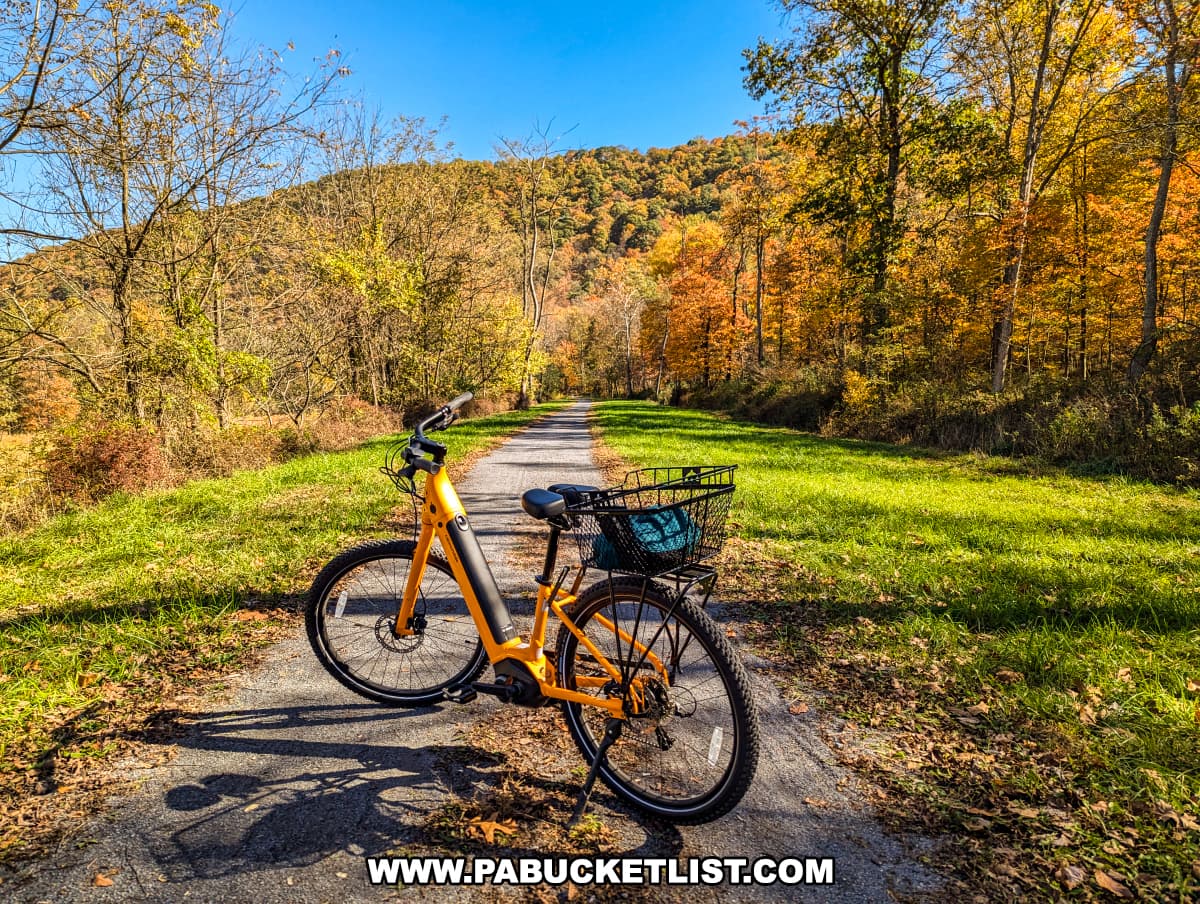
The H&BT Rail Trail in Bedford County is a 12-mile crushed-stone corridor that follows the Raystown Branch of the Juniata River past a 1930s trestle bridge — and that bridge, framed by peak autumn color arching over the river below, is the single most photographed spot on any rail trail in central Pennsylvania. The trail is flat and quiet, running through farmland and forest patches that light up in gold, orange, and red from early to mid-October.
- Access: Main trailhead parking is near Hopewell, with additional access points along the route. No entrance fee.
- Surface: Crushed stone — same as the Lower Trail, so hybrids and gravel bikes are the right call.
- Time needed: 2–4 hours for the full out-and-back, depending on pace and how long you linger at the trestle bridge.
- Pair it with: Bedford is 15 minutes south and has restaurants, the historic Bedford Springs resort, and easy access to the Somerset County covered bridge tour if you want to combine both in a weekend.
- Insider tip: The trestle bridge sits roughly 4 miles from the Hopewell trailhead — plan to reach it mid-morning when sunlight hits the eastern-facing bridge face directly. Afternoon puts the bridge in shadow and flattens the photo.
Which Towns and Urban Areas Offer Great Leaf Peeping?
Forget the idea that fall color requires a long drive into the woods — Pennsylvania’s best leaf-peeping towns let you grab a craft beer or coffee, stroll cobblestones, and look up at a canopy of reds and golds without ever lacing up hiking boots.
Here’s a quick comparison to help you choose:
| Spot | Best For | Peak Window | Effort Level |
|---|---|---|---|
| Jim Thorpe | Train rides + mountain-town charm | Mid-to-late October | Low (walkable town) |
| Old City Philadelphia | History + urban canopy | Late Oct – early Nov | Low |
| Downtown Harrisburg | Capitol views + riverfront | Mid-to-late October | Low |
| Frick Park, Pittsburgh | Forest-trail feel inside the city | Mid-to-late October | Low–moderate |
| Schenley Park, Pittsburgh | Panoramic overlooks + easy walks | Mid-to-late October | Low–moderate |
| Wissahickon Gorge, Philadelphia | Rugged gorge scenery without leaving Philly | Late October | Moderate |
| Gettysburg Battlefield | Open meadows + rolling hills of color | Mid-to-late October | Low (drive or bike) |
| Reading Pagoda | Panoramic hilltop views | Late Oct – early Nov | Low |
Jim Thorpe
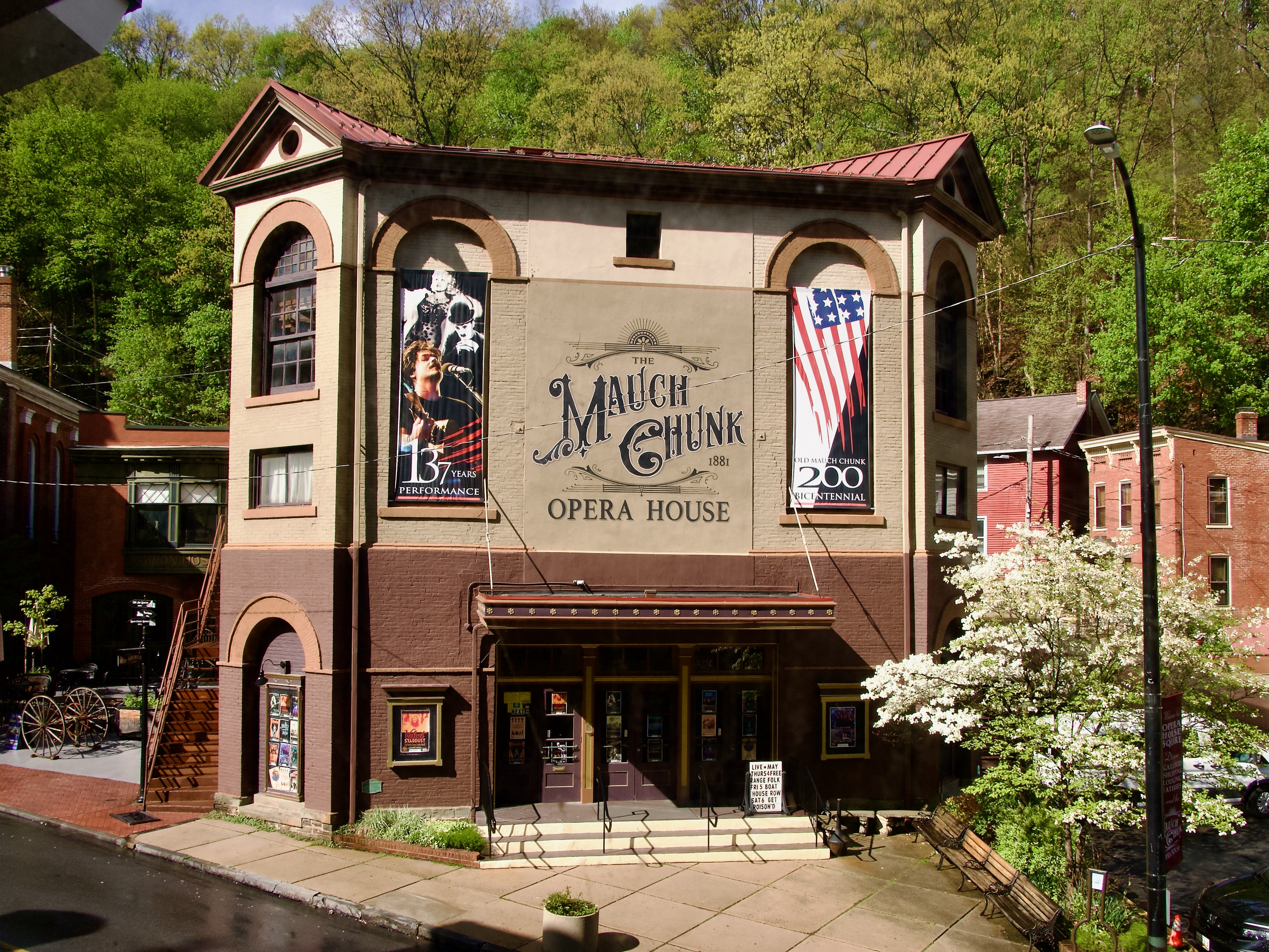
This is the single best town-based fall foliage experience in Pennsylvania — no contest. Nestled in the Lehigh Gorge with steep, forested mountainsides rising directly behind Victorian storefronts, Jim Thorpe looks like someone built a New England postcard in the Poconos.
The Lehigh Gorge Scenic Railway is the main draw, and it earns the hype. The roughly 70-minute round-trip ride follows the Lehigh River through a narrow gorge where hardwoods explode in color on both sides.
Foliage trains run from late September through early November, with the most popular departures on weekends in October. Book at least two to three weeks ahead — these sell out.
Expect roughly $20–$30 per adult, though prices vary by car class and date.
Even without the train, downtown Jim Thorpe is worth a full afternoon. Walkable streets, independent shops, and enough cafés and restaurants to fill an easy half-day.
The town fills up fast on October weekends — arrive before 10 a.m. if you want parking within reasonable walking distance of Broadway.
Stay option: Several small inns and B&Bs sit right in the walkable downtown core, putting you steps from the train station and restaurant row. Booking a midweek night gets you the same views at lower rates and far thinner crowds.
Old City Philadelphia
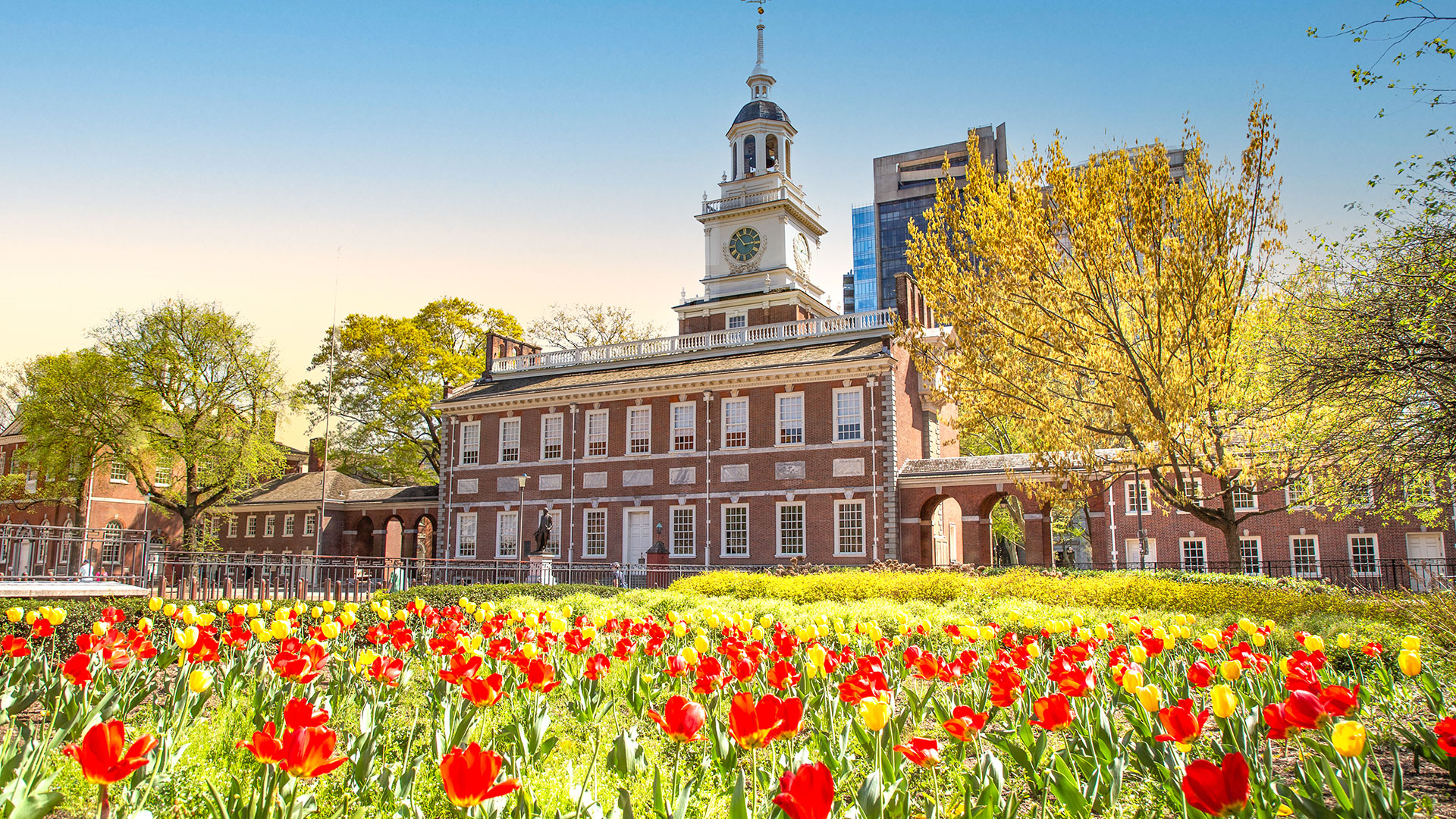
This one surprises people. Old City Philadelphia’s brick sidewalks, Georgian architecture, and mature street trees create a canopy of warm tones framed by some of America’s most iconic buildings.
The area around Independence Hall and Washington Square hits its stride in late October, when the maples and oaks shift against red-brick facades.
Walk the block between Independence Hall and Christ Church, then cut south to the waterfront for river views. You’ll get better color photos in the soft morning light before the crowds settle in.
No fees, no tickets needed for the outdoor scenery — just show up.
Stay option: Old City has some of Philly’s most walkable boutique hotels, putting you within steps of the foliage corridors and the restaurant scene along Chestnut and Market streets.
Downtown Harrisburg
The state Capitol complex is the anchor here. The grounds around the Pennsylvania State Capitol building feature mature oaks and maples that frame the dome beautifully when the color peaks in mid-to-late October.
Walk the Capitol steps, then head to Riverfront Park along the Susquehanna for wide-open water-and-color views — a completely different feel from the wooded gorge spots.
Harrisburg works well as a quick stop rather than a destination. Budget an hour or two, grab lunch on Second Street, and combine it with a drive to nearby Colonel Denning or Pine Grove Furnace State Park for a fuller day of foliage.
Frick Park in Pittsburgh
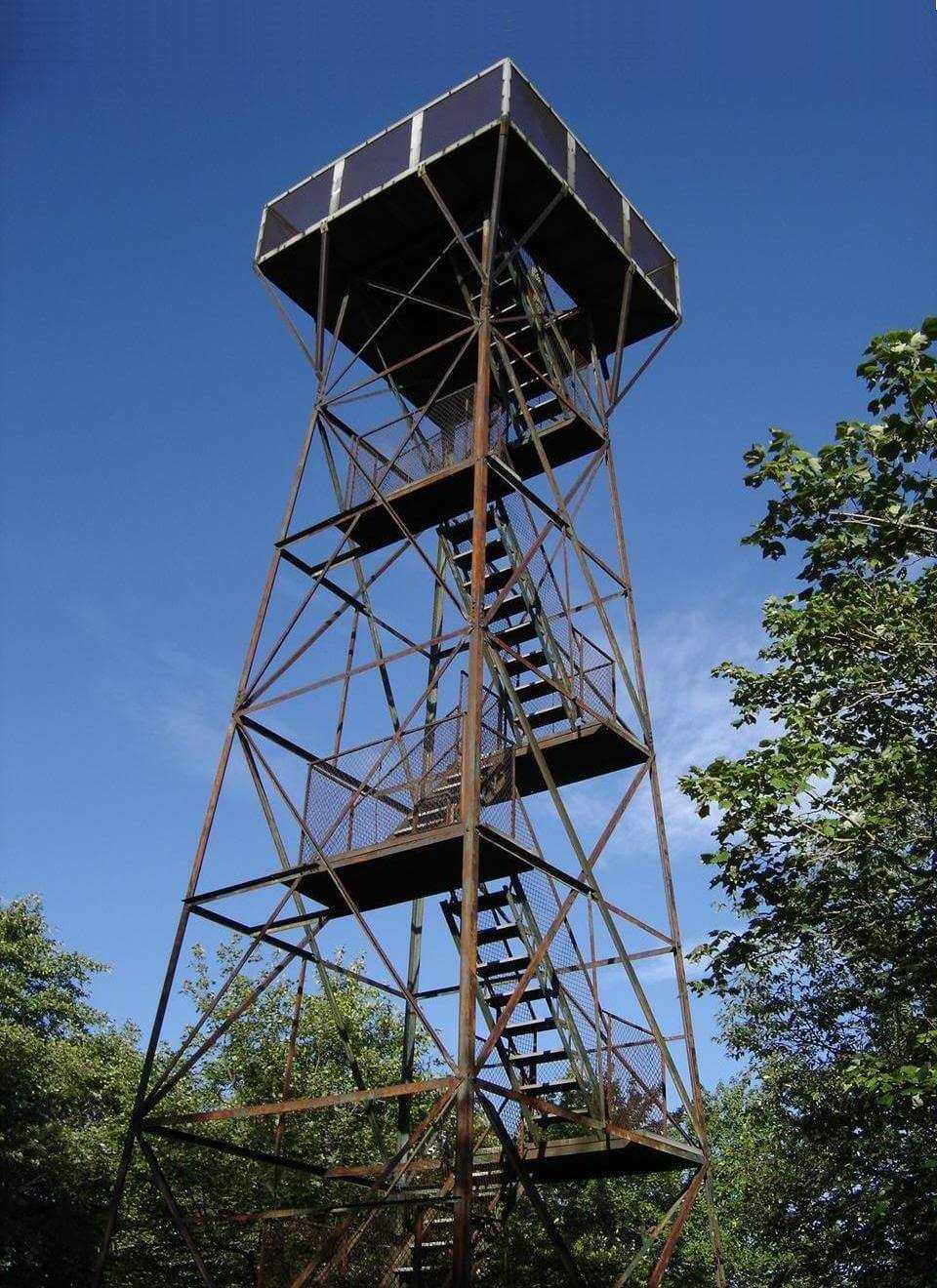
Frick Park is Pittsburgh’s largest municipal park at over 640 acres, and in mid-October its deep ravines and old-growth pockets turn into a surprisingly wild scene for a city park. The trails along Nine Mile Run and the Tranquil Trail loop offer the best color concentration — flat enough for casual walkers, wooded enough to feel like you left the city.
Free parking is available at the Frick Environmental Center on Beechwood Boulevard. Mornings are quieter; by early afternoon on peak weekends, the main lots fill.
Schenley Park in Pittsburgh
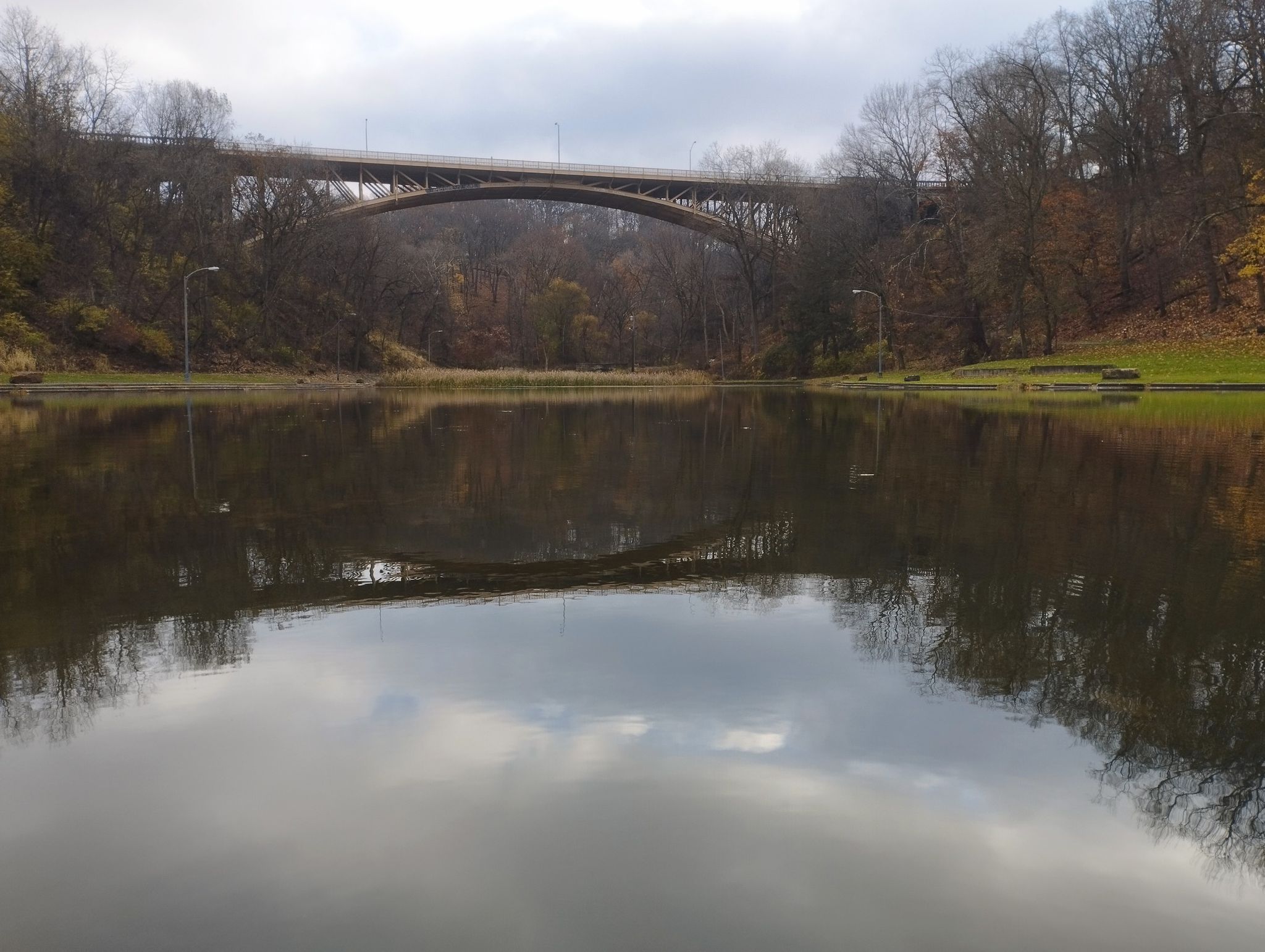
Schenley sits right next to the University of Pittsburgh campus, and the view from the Schenley Park Overlook near Panther Hollow Lake is one of Pittsburgh’s most rewarding autumn snapshots — a layered look down into a valley of hardwoods with the skyline beyond. The walk from the visitor center to the overlook is short and paved.
Combine Schenley with nearby Frick Park for a two-park Pittsburgh foliage day — they’re roughly 10 minutes apart by car.
Wissahickon Gorge in Philadelphia
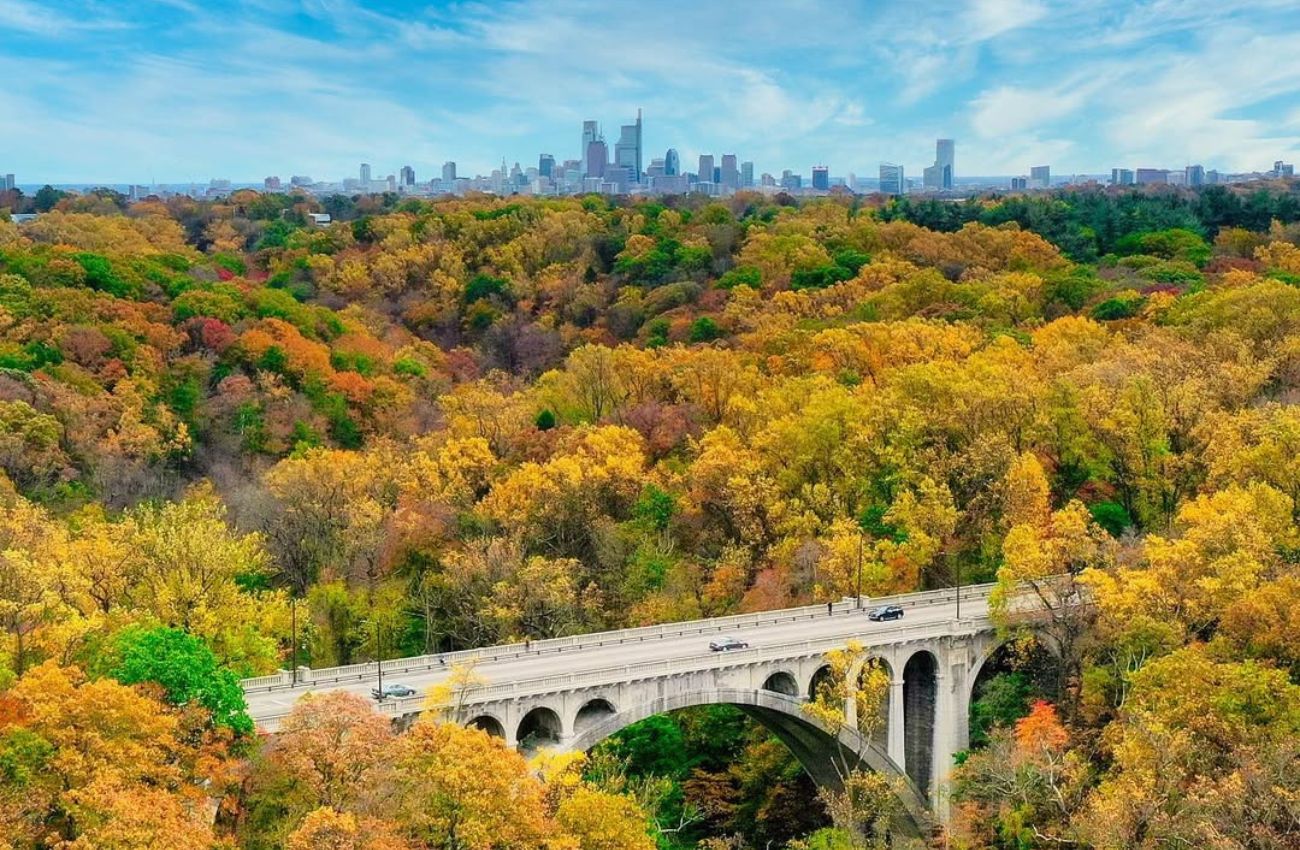
If you want a genuine gorge-and-trail experience without leaving Philadelphia, Wissahickon Valley Park delivers. The 50-plus miles of trails inside this 1,800-acre park follow a creek through steep, wooded ravines where color builds in layers from the waterline up.
Forbidden Drive — the main flat gravel path — is the easiest way in and the best option for all skill levels.
Access from the Northwestern Avenue entrance or the Valley Green Inn parking area. Valley Green Inn sits right on the creek and makes a natural mid-hike stop.
October weekends get crowded on Forbidden Drive by mid-morning; weekday visits or early starts pay off.
Gettysburg Battlefield
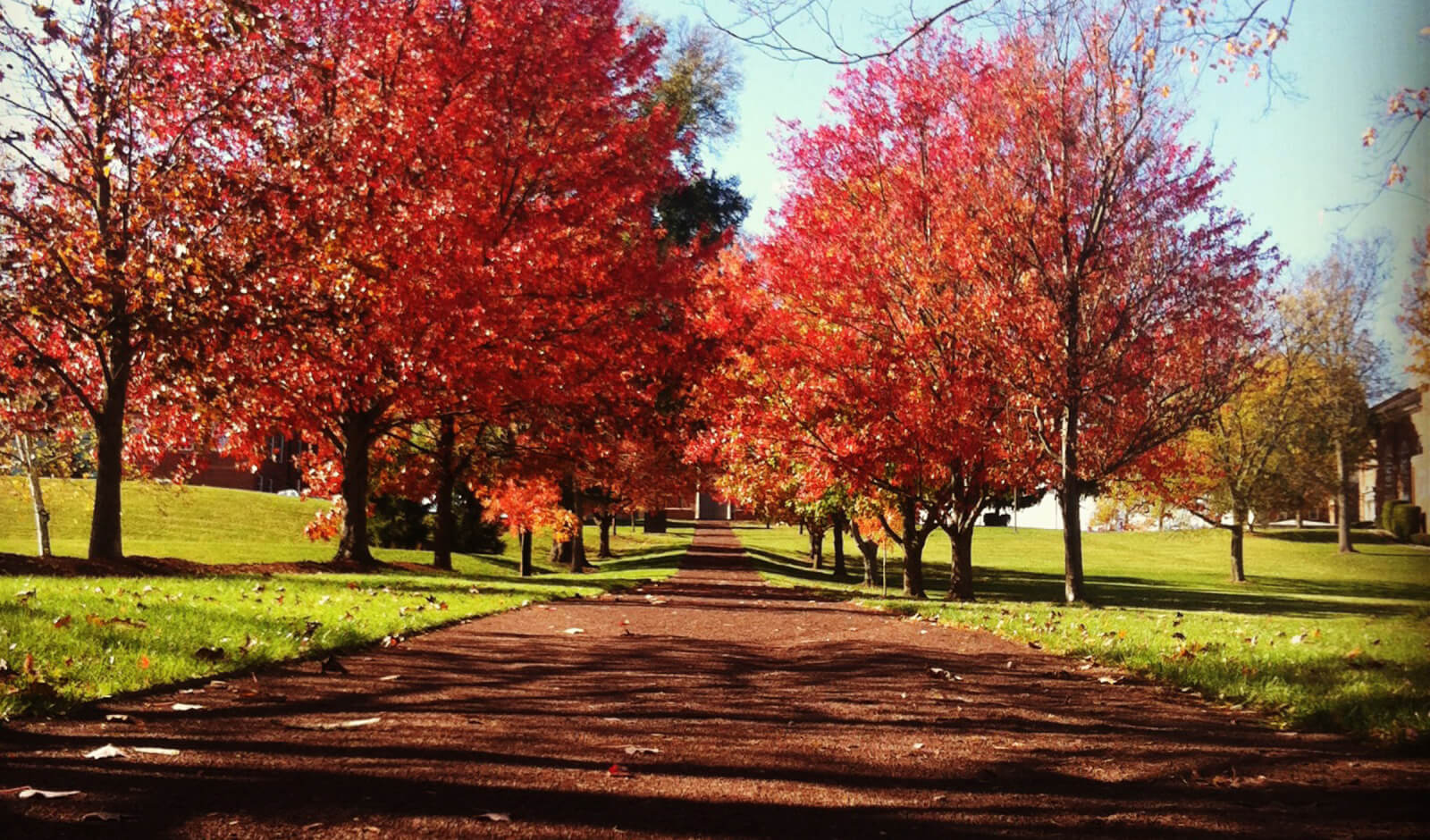
Gettysburg’s battlefield is fundamentally different from every other spot on this list. Instead of dense forest, you get sweeping open meadows, scattered tree lines, and rolling hillsides — a wide-angle fall palette rather than an enclosed canopy experience.
The 24-mile auto tour loop takes you past monuments and cannons set against fields that glow amber and gold in mid-to-late October.
The National Park Service operates the battlefield year-round with no entrance fee for the grounds. Start at the Visitor Center to grab the auto-tour map.
Cemetery Hill and Little Round Top are the two strongest color-and-panorama combo stops. Weekday mornings are the best time to drive the loop with minimal traffic.
Stay option: Downtown Gettysburg has walkable inns and hotels within a short drive of the battlefield loop. Base yourself on or near Baltimore Street for easy restaurant access after a day of driving the tour roads.
Reading Pagoda
The Pagoda sits atop Mount Penn and overlooks the entire city of Reading and the rolling Berks County hills beyond. The building itself is closed for interior visits, but the grounds and terrace remain open and free, offering one of the most unusual panoramic fall views in the state — a seven-story Japanese pagoda against a backdrop of Appalachian color.
Peak color in Berks County typically arrives in late October through early November. Drive up through the residential switchbacks of Duryea Drive, park at the top, and take in the view — this is a 15-to-30-minute stop, not a half-day commitment.
Combine it with a drive through the surrounding Berks County countryside or a visit to nearby French Creek State Park for a full foliage day.
Insider tip: The Pagoda parking lot is small and fills fast on peak October weekends around sunset. Arrive at least an hour before golden hour if you want a spot without circling.
Frequently Asked Questions
Do Pennsylvania state parks charge admission during fall foliage season?
No — every Pennsylvania state park is free to enter, including during peak foliage weekends. That means you can hit Ricketts Glen, Ohiopyle, Worlds End, or any other park in this guide without paying a gate fee.
State forests like Rothrock (215,000 acres across Centre, Huntingdon, and Mifflin Counties) are equally free. The only costs you might encounter are camping fees, which typically run $15–$35 per night depending on the site and hookups.
Book campgrounds through the DCNR reservation system — popular parks fill fall weekends months ahead.
Where can I see great fall foliage near Philadelphia or Pittsburgh without a long drive?
If you’re based in Philadelphia, Berks County delivers rolling hills, lakes, and historic sites under peak color — typically late October through early November — and it’s roughly an hour’s drive. Valley Forge National Historical Park and the Brandywine Valley also put on a solid show without requiring a highway commitment.
From Pittsburgh, McConnells Mill State Park and Laurel Hill State Park are both under 90 minutes and pack gorge views, covered bridges, and lake reflections into compact visits. Neither requires a full day — a half-day morning trip beats fighting weekend afternoon crowds at either spot.
What’s the best weekend road trip route for Pennsylvania fall foliage?
The strongest two-day route runs from the PA Grand Canyon (Pine Creek Gorge in Tioga County) south through the central mountains. Day one: hit Barbour Rock Vista and the canyon overlooks in the morning, then drive south through Rothrock State Forest on PA Route 26 in the afternoon.
Day two: swing through Black Moshannon State Park or Colony Park State Park before heading to Cook Forest State Park for old-growth hemlock canopy. Base yourself in State College or Wellsboro — both have enough lodging and dining options to support a fall weekend without feeling like you’re roughing it.
Do I need to book lodging far in advance for peak foliage weekends?
Yes — and “far” means by midsummer for the best options near popular parks. Cabins and lodges near Ricketts Glen, Ohiopyle, and the PA Grand Canyon fill first, often 3–4 months out for October weekends.
Hotels in gateway towns like Wellsboro, Jim Thorpe, and Ligonier hold out longer but surge in price once DCNR peak reports hit the news. If you’re planning a spontaneous trip, target weekdays — Tuesday through Thursday — when availability opens up and trails thin out dramatically.
Small inns and B&Bs in towns like Wellsboro and Jim Thorpe are worth the extra research over chain hotels; they book early but deliver the best fall ambiance.
Start Planning Your Pennsylvania Foliage Trip
Open the DCNR weekly foliage report at dcnr.pa.gov right now and bookmark it — every Thursday from late September through early November, real foresters update region-by-region color ratings that beat any influencer post or recycled listicle. The moment your target area hits “near peak,” book your lodging immediately because cabins near Ricketts Glen, inns in Jim Thorpe, and hotels in Wellsboro disappear fast once peak reports hit the news.
If you only have one weekend, target mid-October and base yourself in the Laurel Highlands or Poconos — you will catch the widest overlap of peak color with the highest concentration of parks, waterfalls, and overlooks within a short drive of each other.
Pennsylvania packs more concentrated fall variety — gorges, waterfalls, elk herds, covered bridges, Civil War fields, and Victorian mountain towns — into one state than anywhere else in the Northeast, and nearly all of it is free to access.
Pin this guide to your travel board this week and start building your October itinerary before the best weekend lodging and train tickets vanish.
Leave a Reply