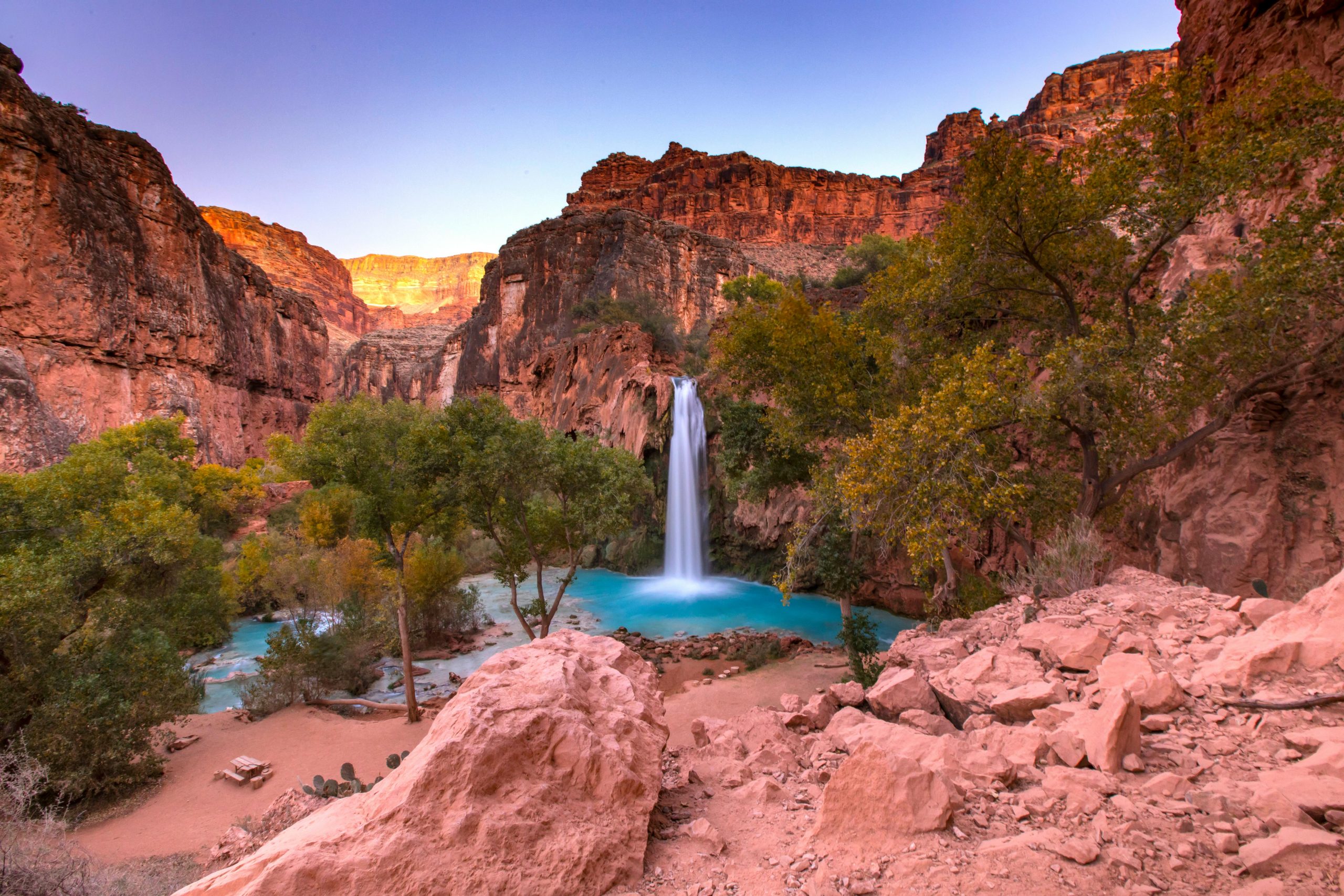
The moment you step into Oak Creek Canyon in early October, the temperature drops 10 degrees, the air smells like wet earth and turning leaves, and suddenly you’re hiking through reds and golds that rival Colorado—except the canyon walls behind them are actual red rock, not distant mountains. This is what makes Sedona’s fall different from everywhere else: the foliage isn’t the whole show, it’s the accent that transforms the landscape into something you didn’t know Arizona could be.
Fall here peaks early October through mid-November, but timing is everything because water-fed canyons like Oak Creek turn first and fastest, while higher elevations extend the season into November. This guide cuts through the hype and tells you exactly when to book, where to stay, which trails deliver actual color (not just red rocks), and how to beat the Phoenix day-trippers who flood these trails by 9 a.m.
Budget-wise, expect $100–200/night for mid-range lodging in central Sedona, $200–400+ for upscale resorts, and $50–80 for budget options slightly outside town. Hiking and scenic drives are free or under $15 per vehicle for state parks.
Your Fall Foliage Snapshot: Timing, Locations, and What to Expect
- Peak Color Window: Early October (most vibrant) through mid-November (reliable but fading); early October weekdays are your sweet spot for color and solitude.
- Best Trail for Foliage: West Fork Trail in Oak Creek Canyon—the only hike where you’re surrounded by a tunnel of maples, sycamores, cottonwoods, and oaks turning brilliant reds and golds. Arrive before 7 a.m. or plan a weekday visit.
- Best for Fewer Crowds: Eagle’s Nest Loop Trail at Red Rock State Park or Munds Mountain Wilderness—genuine fall color without the West Fork crush, peak mid-to-late October.
- Best for Families or Easy Access: Bell Rock Pathway or Slide Rock State Park—flat, short, and accessible, with scattered fall color against red rock or water features.
- Where to Stay: Central Sedona or Uptown Sedona for walkable restaurants and shops; or closer to Oak Creek Canyon if maximizing early-morning hike access is your priority.
- No-Hike Option: Drive Oak Creek Canyon Scenic Byway (SR 89A) or Red Rock Scenic Byway (SR 179)—both deliver continuous foliage views without leaving your car, best in morning light.
When Is Peak Fall Foliage Season in Sedona?
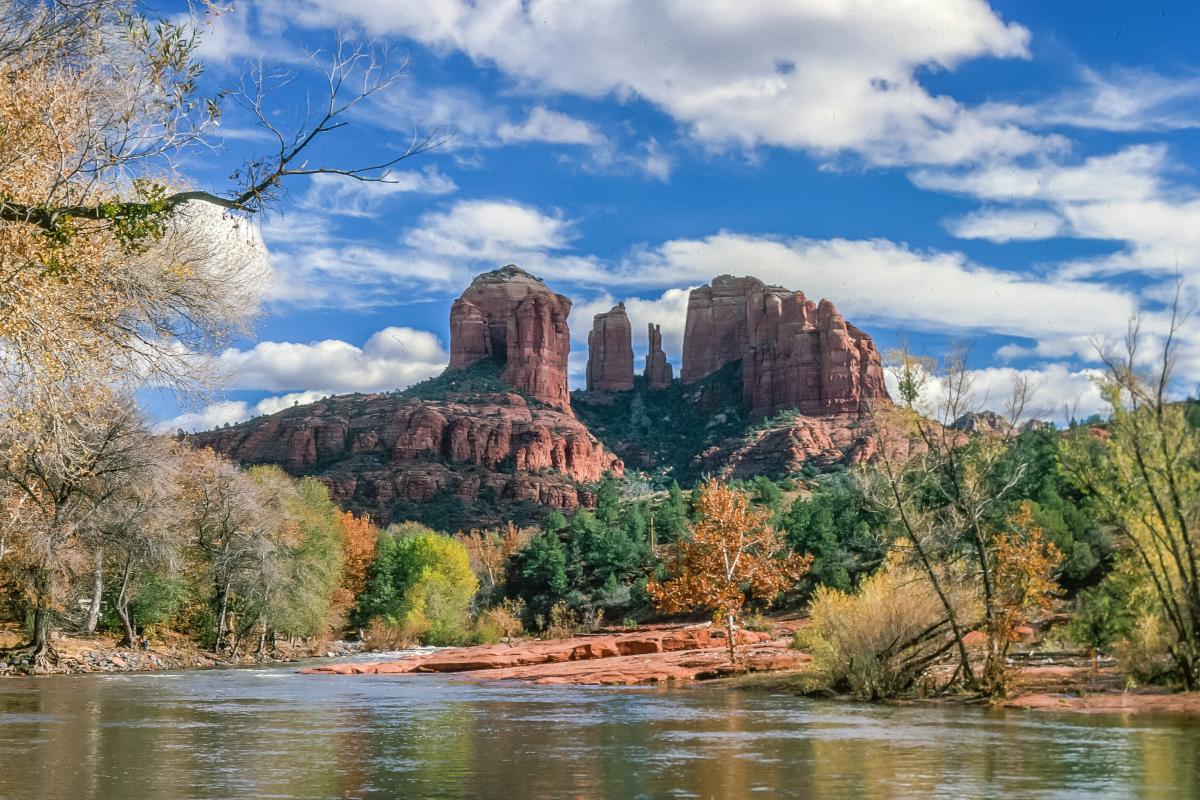
Peak fall color in Sedona arrives in early October and holds strong through mid-November, but the timing depends entirely on which canyon you’re visiting—and that matters for your planning. Oak Creek Canyon’s deciduous trees (oaks, maples, sycamores, cottonwoods) turn earliest and most reliably because the cooler microclimate and water source trigger vibrant reds and golds starting in early October.
The higher elevation areas and red rock formations stay colorful slightly longer, extending the season into November. If you’re chasing the most dramatic color contrast against Sedona’s red rocks, early to mid-October is your window—wait much past mid-November and you’ll find mostly bare branches.
Early October: The Sweet Spot
Early October is when Oak Creek Canyon peaks, and this is when you’ll see the most saturated fall colors paired with the dramatic canyon walls. The air cools noticeably, making hiking comfortable even at midday.
Expect the trails to be crowded on weekends—West Fork Trail in particular draws large groups during peak fall weekends and even weekdays. If crowds frustrate you, plan a weekday hike or arrive very early (before 8 a.m.) to secure parking and beat the rush.
Temperatures typically range from the mid-70s to low 80s during the day, dropping to the 50s at night, so pack layers.
Mid-October Through November: Extended Color
Mid-October through mid-November extends the foliage window, though colors gradually fade as leaves drop. The advantage here is fewer crowds than peak early October weekends, and temperatures remain pleasant for hiking and outdoor exploration.
By late November, many trees are bare, but the season doesn’t completely end—some color persists, especially in protected canyon areas. If you prefer solitude over peak color saturation, this window works well.
Avoid Summer Heat, Plan Around Crowds
Sedona’s summer heat (regularly exceeding 95°F) makes fall foliage season genuinely special—the temperature drop alone signals the shift. However, that appeal draws crowds.
If you’re booking lodging or planning hikes, secure reservations by late August for early October travel. Weekday visits are significantly less crowded than weekends.
The cooler microclimate of Oak Creek Canyon means foliage peaks there first, so if you’re timing a single trip, prioritize that area in early October before moving to higher elevations or red rock viewpoints.
Where Should You Stay in Sedona to Maximize Fall Foliage Access?
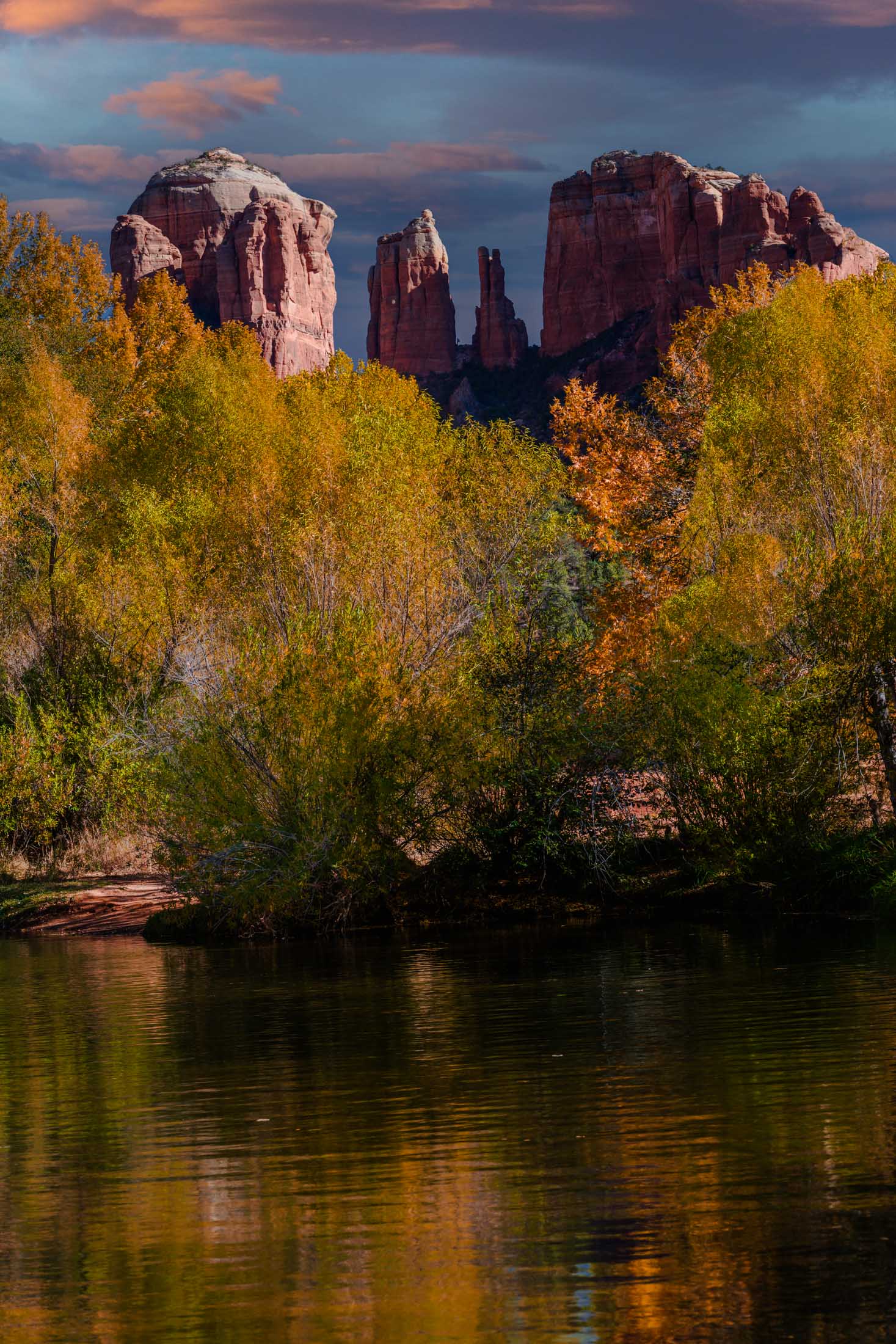
Base yourself in Sedona town proper, not Phoenix or Flagstaff—the 2-hour drive from Phoenix kills your early-morning light for photography and hiking, and Flagstaff is even farther. Sedona’s compact layout puts you within 15–45 minutes of every major fall foliage spot, which means you can chase sunrise at West Fork Trail without wasting daylight on the road.
Book accommodations 2–3 months ahead for fall (September through November), especially for weekends. Fall is peak season in Sedona, and Phoenix residents treat it as a day-trip destination, so lodging fills fast and prices climb.
Mid-week stays (Tuesday–Thursday) are cheaper and quieter than weekends.
Stay Uptown or Central Sedona for Trail Access
Uptown Sedona and the central core give you the shortest drives to Oak Creek Canyon trailheads (West Fork, Eagle’s Nest Loop) and easy access to Cathedral Rock, Bell Rock, and Slide Rock State Park. You’ll also be walking distance to restaurants and shops in Tlaquepaque Arts & Shopping Village if you want to decompress after hiking.
This is the strategic choice for anyone prioritizing foliage hikes over resort amenities.
Stay in Oak Creek Canyon Itself for Maximum Immersion
If you want to wake up surrounded by fall colors, consider lodging directly in Oak Creek Canyon near Call of the Canyon recreation area (the West Fork Trail trailhead). This puts you steps away from the canyon’s deciduous trees—oaks, maples, sycamores, and cottonwoods—which produce the most vibrant reds and golds starting in early October.
You’ll also beat the crowds by starting hikes before sunrise, when Phoenix day-trippers are still on the highway.
Book Early Mornings as Your Non-Negotiable
Regardless of where you stay, arrive at major trailheads before sunrise if possible. West Fork Trail and other popular routes are packed by 9 a.m. during fall.
Early arrival secures parking, solitude for photography, and the best light on the canyon walls. Plan your lodging checkout time around a sunrise hike, not the other way around.
Avoid Staying in Phoenix and Commuting
Phoenix is only 2.5 hours south, but the drive erases the advantage of fall’s short daylight hours. You’ll lose 5 hours daily to driving, leaving you with mid-morning to mid-afternoon light—the worst time for canyon photography and hiking in heat.
Stay in Sedona proper and use Phoenix only as a gateway if you’re arriving by plane.
Best Places to See Fall Foliage in Sedona
Sedona’s fall foliage isn’t confined to hiking trails—the most dramatic color happens in specific canyons and parks where water, elevation, and tree species converge to create scenes that outshine the red rocks themselves. The key is knowing which spots peak when and what to expect at each one, because timing matters more here than in most fall destinations.
Oak Creek Canyon
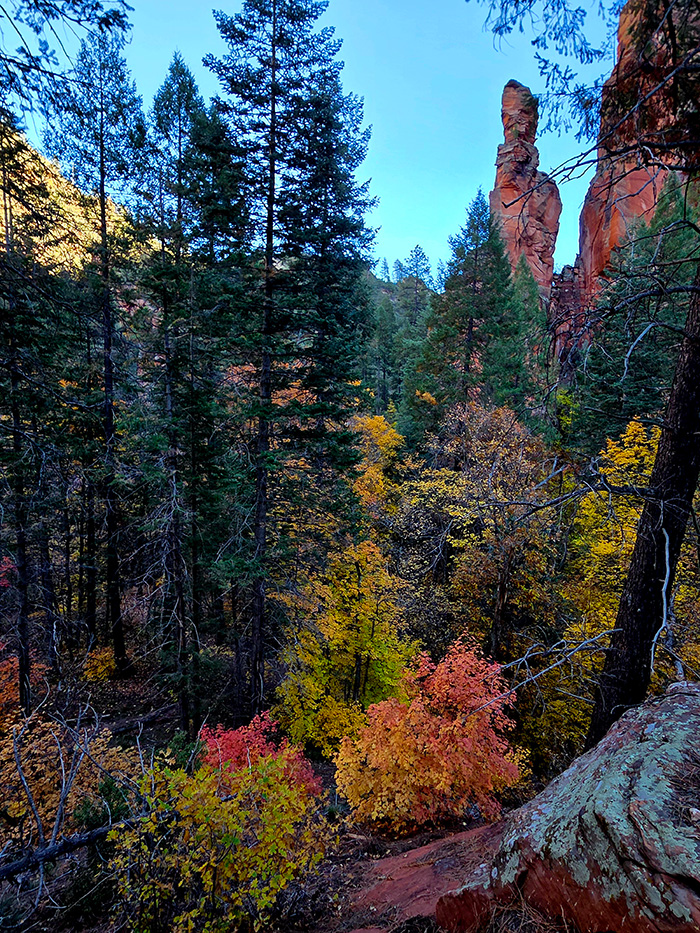
This is the undisputed champion for fall color density in the Sedona area. The canyon’s elevation (starting at 4,350 feet and climbing to 6,000+ feet) creates a cooler microclimate where deciduous trees—oaks, maples, sycamores, and cottonwoods—thrive and turn brilliant reds, oranges, and yellows starting in early October.
The canyon floor’s water source is what makes the difference; without it, you’d see only the red rocks.
Drive SR 89A north from Sedona through the canyon for the scenic experience, or hike the West Fork Trail (covered in detail in the hiking section) for immersive color. The drive alone takes roughly 30 minutes from central Sedona to the top of the canyon and delivers nonstop foliage views.
Expect the canyon to be crowded on weekends in October and early November—arrive before 9 a.m. if you want parking at trailheads or pullouts.
Insider tip: Late October through early November is peak color, but bring layers and expect temperatures 10–15 degrees cooler than Sedona proper. Ice can form on creek crossings and trail rocks in late fall; trekking poles are smart, and microspikes aren’t overkill.
Red Rock State Park
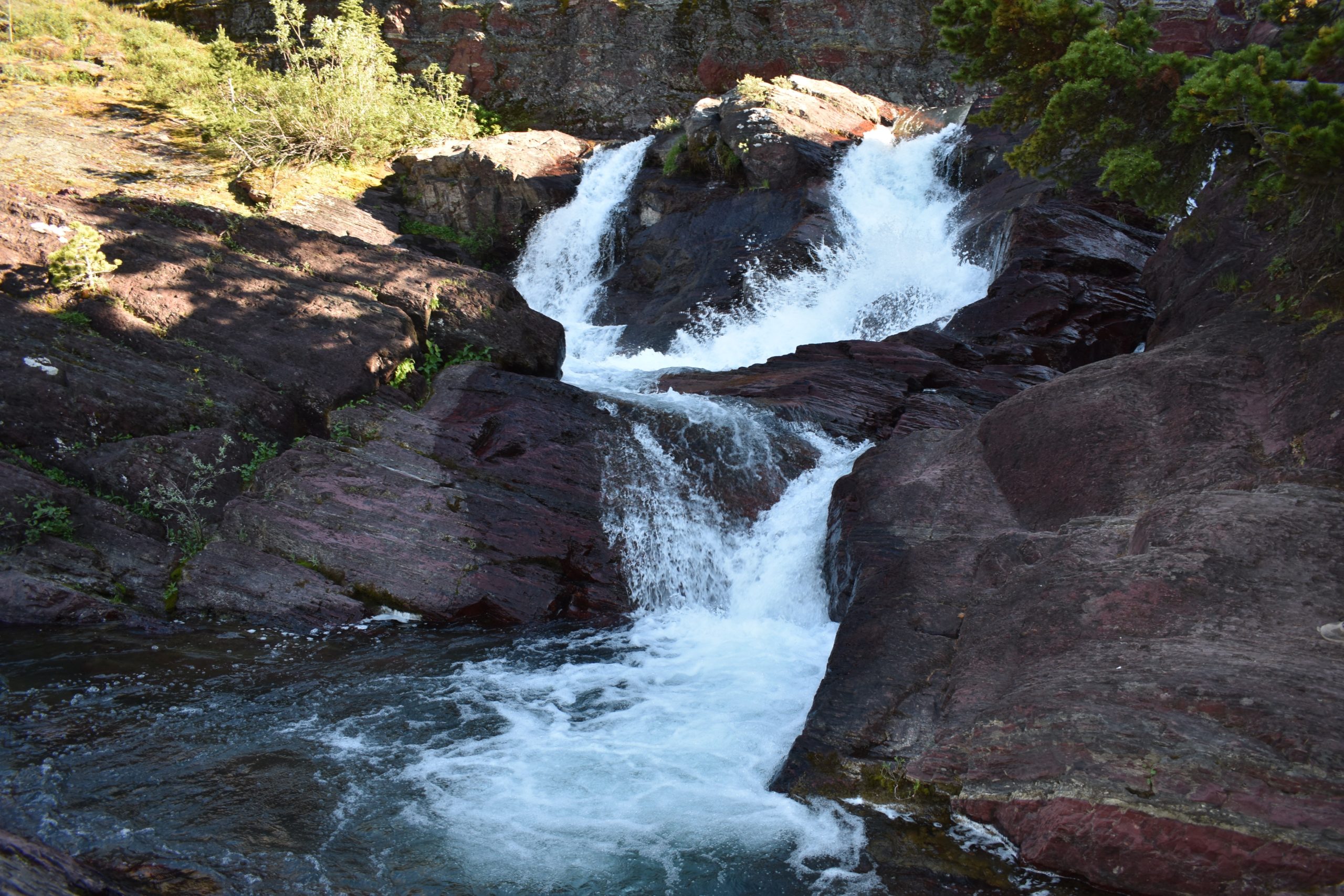
Red Rock State Park delivers fall foliage with easier access than Oak Creek Canyon’s trails. The Eagle’s Nest Loop Trail (covered separately in the hiking section) showcases both changing leaves and red rock formations without the extreme elevation gain or creek crossings.
The park’s location and water sources support similar deciduous trees as the canyon, so color timing overlaps—early October through mid-November.
Day-use admission is typically around $5 per vehicle. The park has restrooms, picnic areas, and a visitor center, making it a solid choice for families or anyone who wants fall color without committing to a serious hike.
The Eagle’s Nest Loop is roughly 3.5 miles and moderate in difficulty, offering views that justify the effort without the crowds of Cathedral Rock.
Cathedral Rock
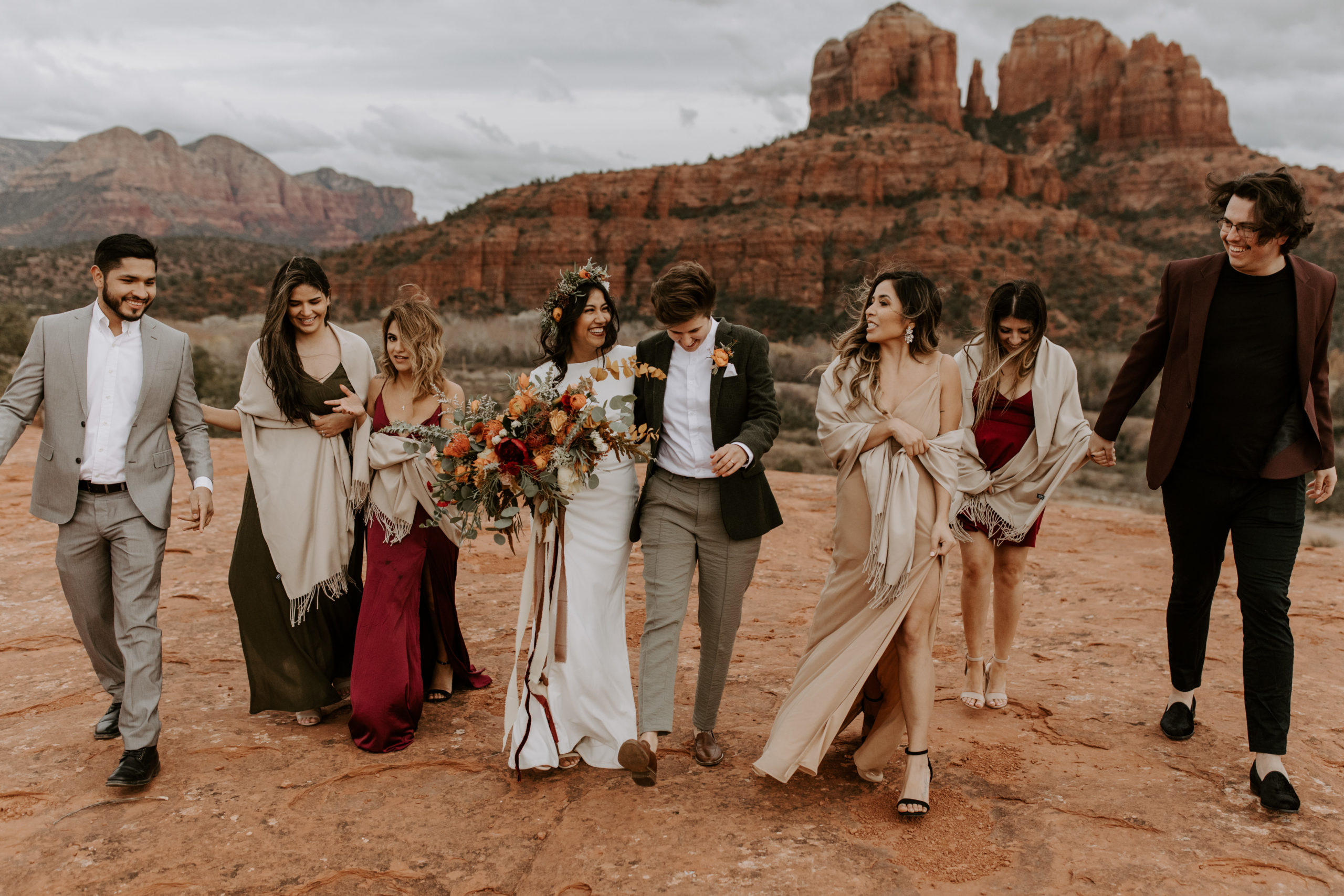
Cathedral Rock is the most photographed red rock formation in Sedona, and fall foliage frames it beautifully—but the hike itself (1.2 miles, 741 feet of elevation gain) is steep and rocky, not a leisurely color-viewing walk. The payoff is 360-degree views of the surrounding landscape, including whatever fall color is visible in the mid-elevation vegetation below the formation.
This spot works best if you’re already committed to hiking and want dramatic photo opportunities, not if you’re primarily chasing foliage. The trail is heavily trafficked year-round; go at sunrise or late afternoon to avoid crowds.
No fee, but parking fills quickly on weekends.
Slide Rock State Park
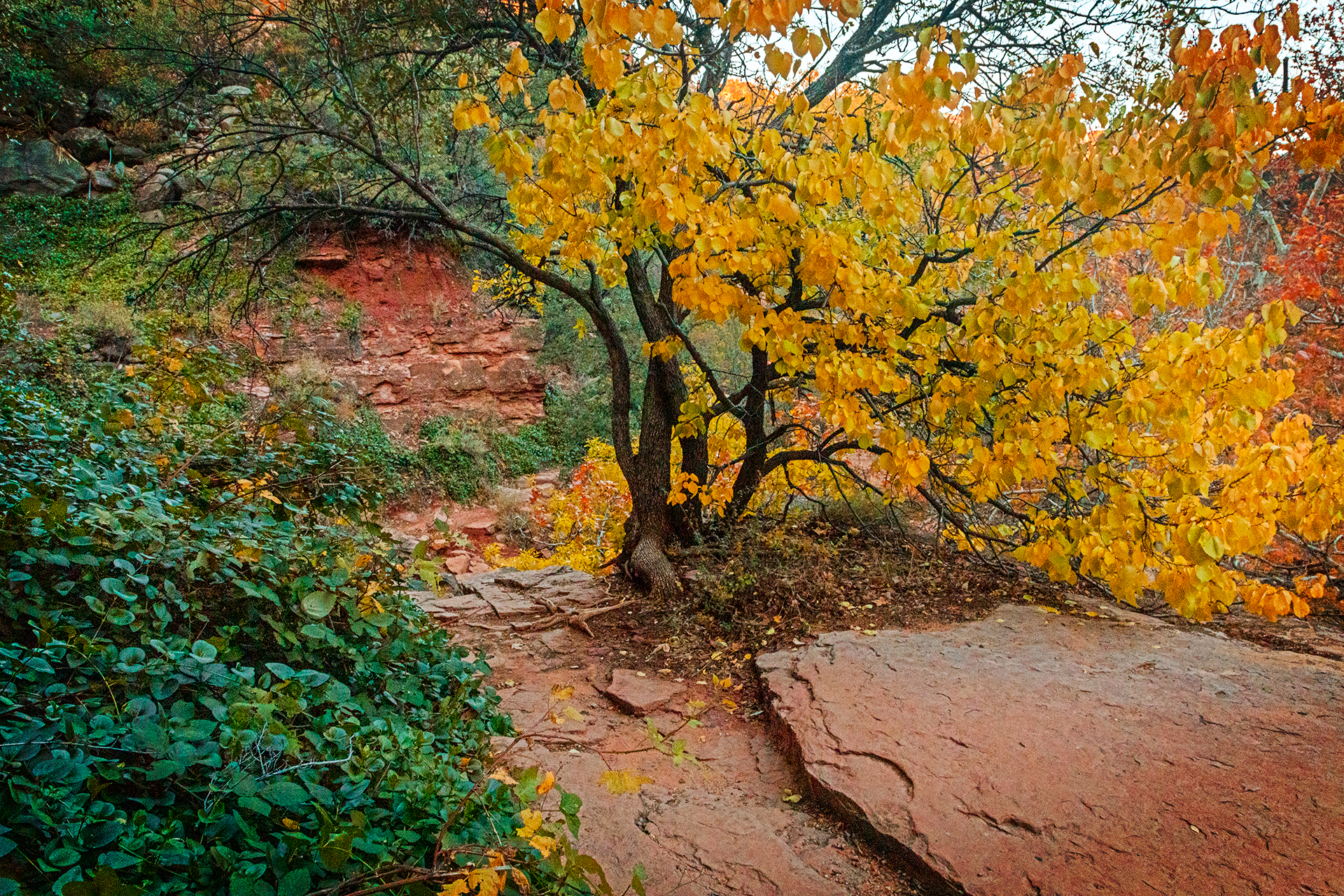
Slide Rock is famous for its natural water slides, but fall visitors come for the apple trees that explode into bright reds and yellows across the park. The park sits at a lower elevation than Oak Creek Canyon (roughly 4,350 feet), so color peaks slightly later—mid-October through November.
The setting is more open and less forested than the canyon, so you’re seeing scattered color against red rocks rather than a dense canopy change.
Day-use admission is typically around $15 per vehicle. The park has a creek for wading, picnic areas, and easy walking paths, making it accessible for all fitness levels.
The fall color here is real but less dramatic than Oak Creek Canyon—come for the combination of water access, easier terrain, and the novelty of apple trees in a desert setting, not as your primary foliage destination.
Munds Mountain Wilderness
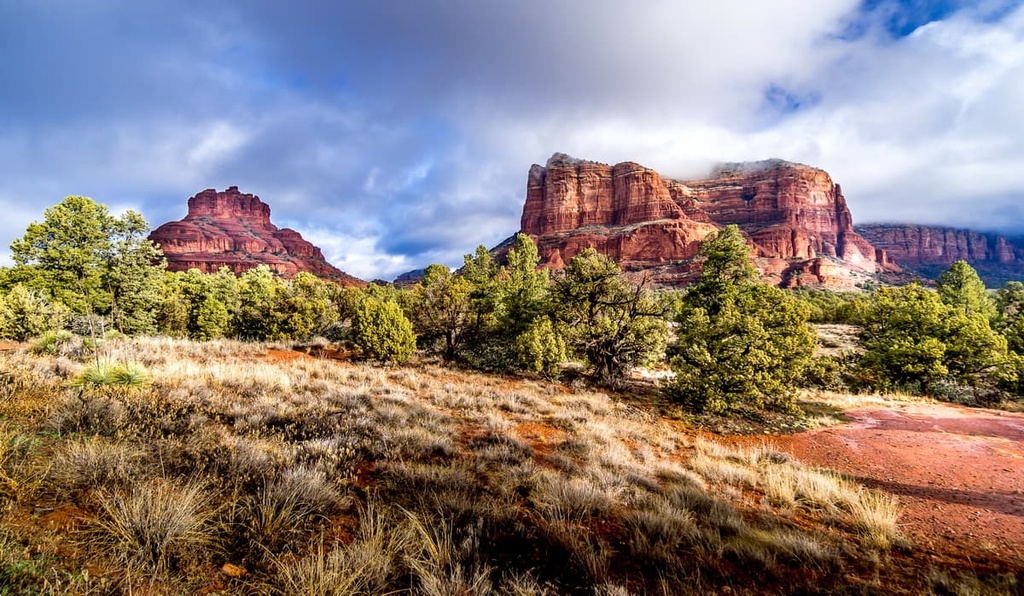
Munds Mountain offers a quieter alternative to the heavily trafficked trails closer to town. The wilderness area sits at higher elevation (5,000+ feet), so fall color is reliable and peaks in mid-to-late October.
The terrain is more exposed than Oak Creek Canyon, with scattered deciduous trees rather than dense canopy, but the solitude and views of the surrounding red rock landscape make it worthwhile for hikers seeking less crowded foliage experiences.
The main trailhead is accessed via Munds Canyon Road, which requires a short drive from central Sedona. Trails here range from moderate to strenuous; pick your distance based on fitness level.
No day-use fee. This spot is best for experienced hikers comfortable with less-maintained trails and minimal crowds.
Tlaquepaque Arts & Shopping Village
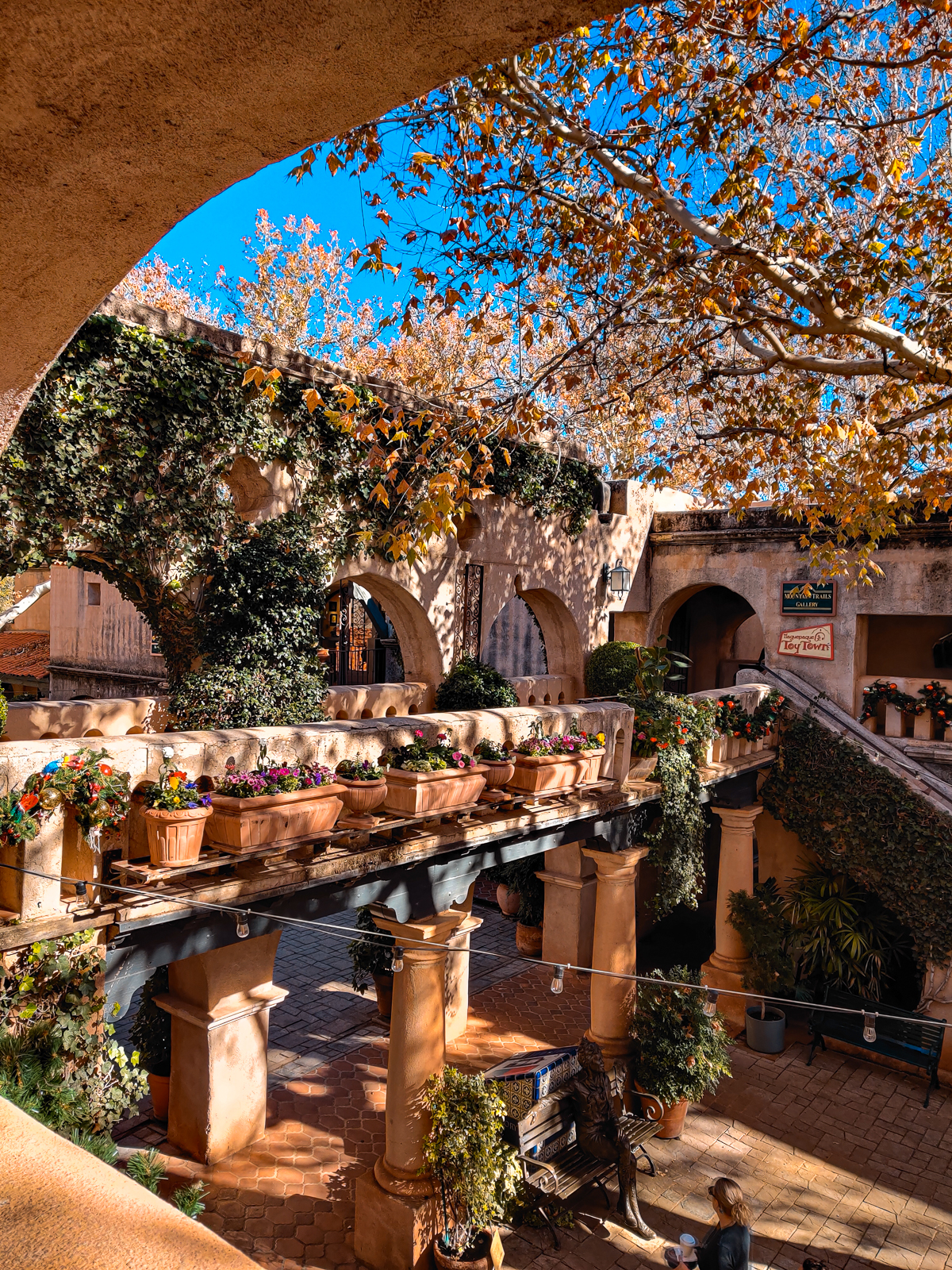
Tlaquepaque is not a natural foliage hotspot, but it’s a worthwhile stop if you’re based in central Sedona and want to break up hiking with shopping, dining, or coffee. The village has pretty architecture and landscaping, and while the fall color here is limited (mostly ornamental plantings), it’s a pleasant place to walk around and refuel.
The village is close to central Sedona, making it an easy afternoon addition to a foliage-focused trip.
Bell Rock
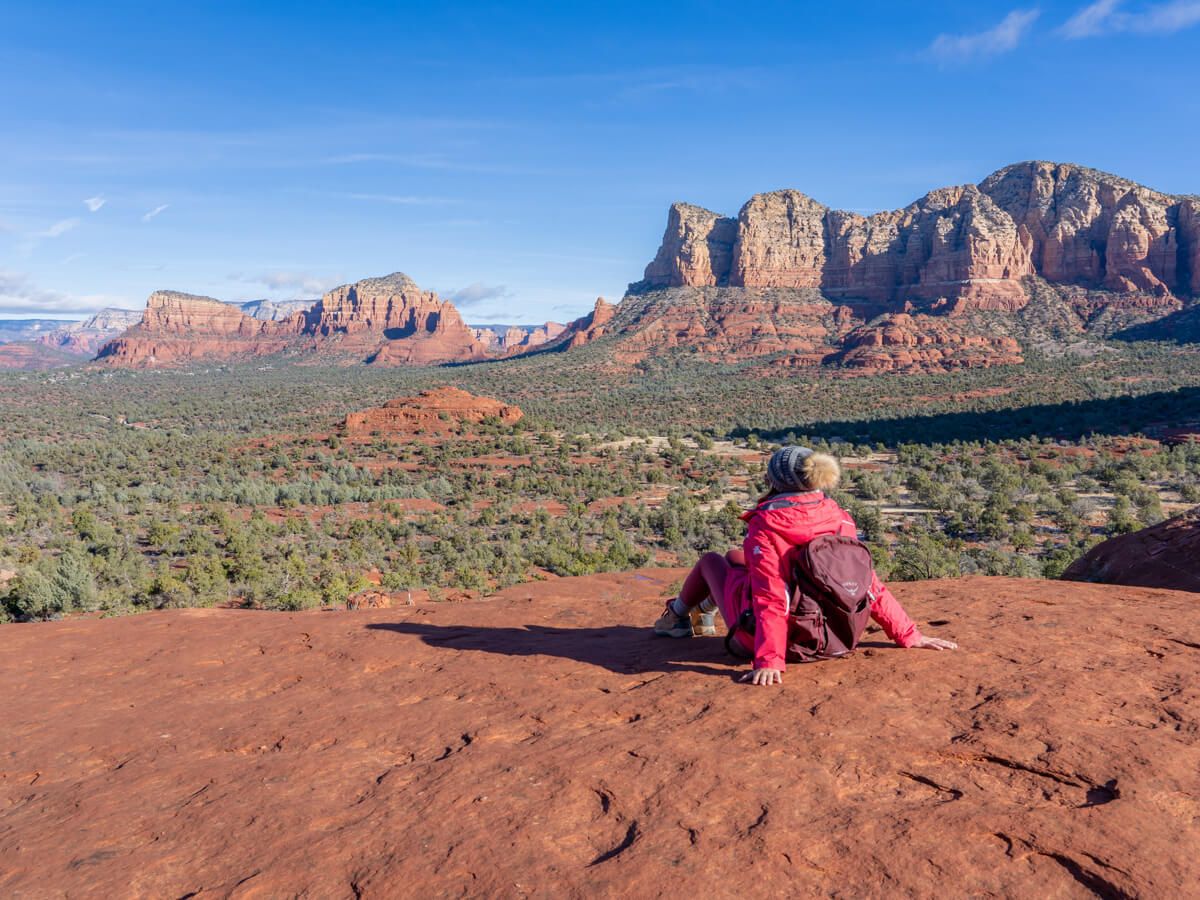
Bell Rock is an iconic red rock formation with easy access via the Bell Rock Pathway (covered in detail in the hiking section). The pathway itself is relatively flat and short, making it accessible for casual walkers.
Fall foliage here is minimal—you’re primarily seeing red rocks and scattered desert vegetation—but the formation’s distinctive shape and easy access make it a solid choice if you want to tick off a famous Sedona landmark without a strenuous hike. The area can be crowded, especially on weekends.
Scenic Byways
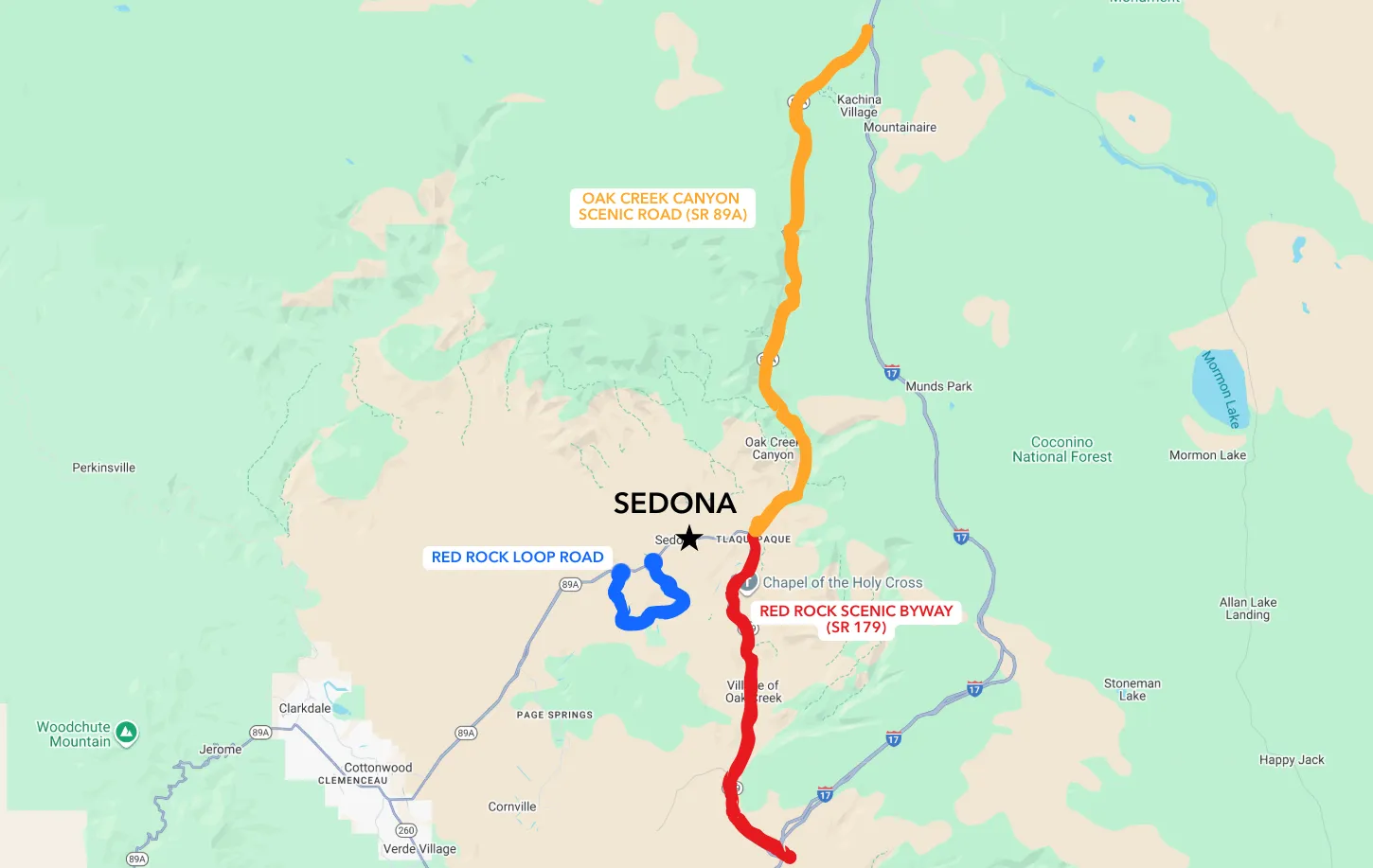
For travelers who prefer driving to hiking, Sedona’s scenic byways deliver fall foliage without leaving your car. The Red Rock Scenic Byway (SR 179) and Oak Creek Canyon Scenic Drive (SR 89A) both offer continuous views of changing leaves and iconic formations.
SR 89A is the more dramatic drive, climbing through the canyon with switchbacks and elevation changes that create varied foliage views. SR 179 is shorter and closer to town, running south through red rock country with scattered deciduous trees.
Both drives are free and can be done in 30–45 minutes at a leisurely pace, or longer if you stop at pullouts and trailheads. Peak color timing is the same as the canyon and parks—early October through mid-November.
Drive these routes in the morning when light is best for photography and traffic is lighter. Neither byway requires reservations or advance planning; just fill your tank and go.
Where to Base Yourself for Fall Foliage
| Location | Best For | Peak Color Timing | Effort Level |
|---|---|---|---|
| Oak Creek Canyon | Maximum color density and canyon scenery | Early Oct–mid Nov | Easy (drive) to strenuous (hike) |
| Red Rock State Park | Foliage + red rocks + moderate hiking | Early Oct–mid Nov | Moderate |
| Slide Rock State Park | Families, water access, easy walks | Mid Oct–Nov | Easy |
| Cathedral Rock | Dramatic photos and summit views | Early Oct–mid Nov | Strenuous (short) |
| Munds Mountain Wilderness | Solitude and higher-elevation color | Mid–late Oct | Moderate to strenuous |
| Scenic Byways | No-hike foliage viewing | Early Oct–mid Nov | None (driving) |
Base yourself in central Sedona or Uptown Sedona if you want walkable access to restaurants and shops between foliage outings. Both areas are 15–30 minutes from Oak Creek Canyon and Red Rock State Park.
If you’re prioritizing Oak Creek Canyon hikes, staying closer to the canyon’s Call of the Canyon recreation area (roughly 30 minutes north of central Sedona) cuts drive time and lets you start hikes earlier, before crowds arrive.
How to Plan the Best Fall Hikes in Sedona?
Sedona’s fall hiking window is brutally short—peak colors hit early October through mid-November—and the trails that deliver those colors are the ones fed by water sources and canyon microclimates that keep deciduous trees thriving when the desert around them is still bone-dry. This means your hike choice matters far more than your fitness level.
Pick wrong, and you’ll see red rock without the foliage payoff. Pick right, and you’re hiking through a canyon that feels like autumn in Colorado, not Arizona.
The five trails below are ranked by fall foliage payoff, not difficulty. Start early—before sunrise if possible—because Phoenix day-trippers (only 2.5 hours away) flood these trails by mid-morning, especially on weekends.
Weekday mornings in early October deliver solitude and the best light for photography.
West Fork Trail
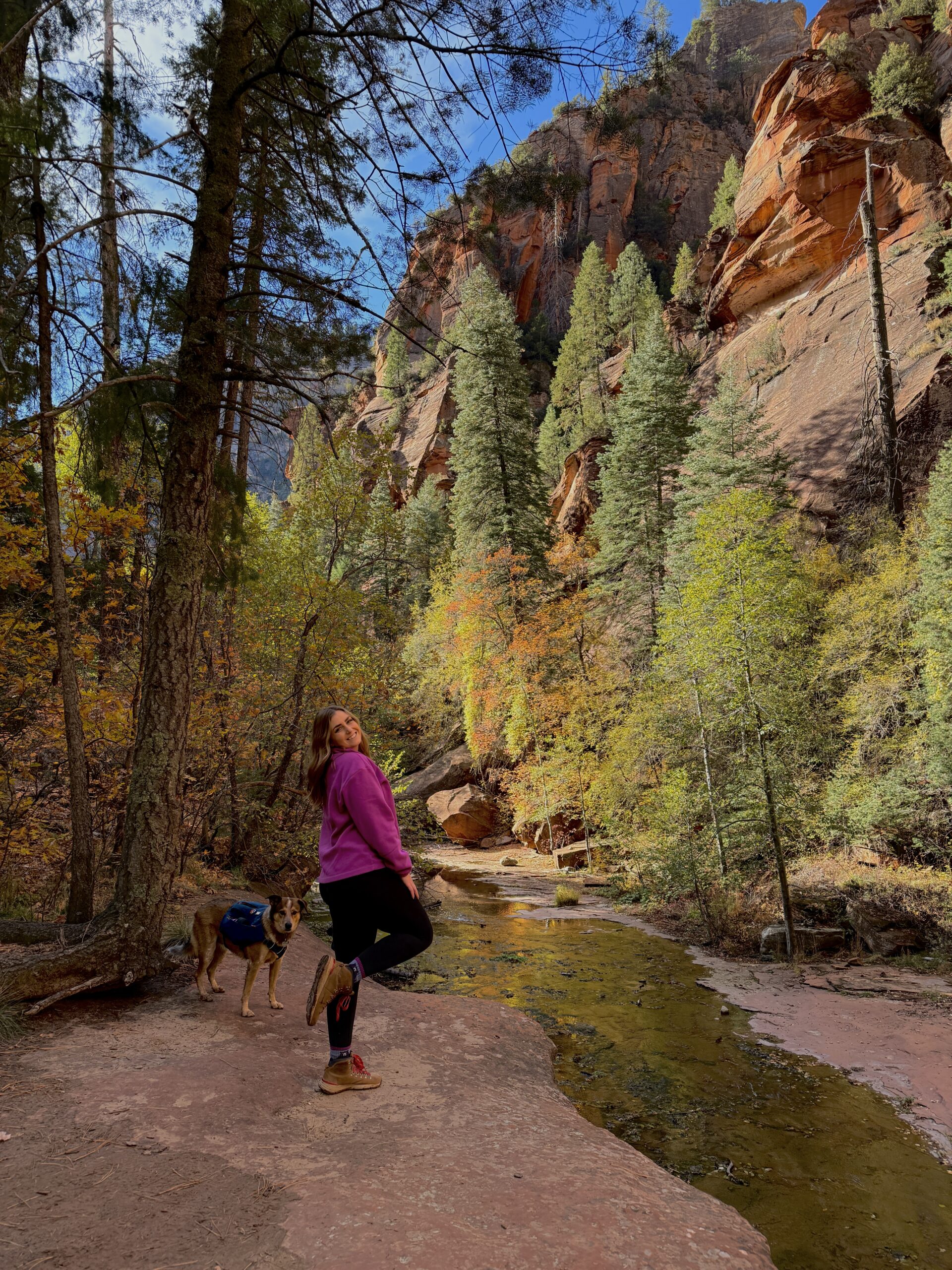
This is the non-negotiable choice if fall foliage is your only priority. The trail parallels West Fork Creek through a narrow canyon where oaks, maples, sycamores, and cottonwoods create a tunnel of vibrant color starting in early October.
The water source keeps this microclimate cool enough for deciduous trees to thrive while the surrounding desert stays barren. You’ll cross the creek multiple times on the canyon floor, and the gentle flowing water adds ambience that dry-canyon hikes simply cannot match.
The catch: This is Sedona’s most popular fall hike by far. Arrive before sunrise to secure parking and enjoy even 30 minutes of solitude before crowds arrive. Weekdays in early October are dramatically quieter than weekends in mid-October.
- Distance & Difficulty: Typically 6–7 miles round trip; moderate, with creek crossings that require balance but no technical climbing.
- Best Time: Early October for peak color and smallest crowds; avoid mid-October weekends entirely.
- Parking: Arrive by 7 a.m. or risk a full lot and overflow parking 15+ minutes away.
- What to Bring: Water shoes or sandals for creek crossings; the trail is wet and slippery even in dry conditions.
Eagle’s Nest Loop Trail
Red Rock State Park’s Eagle’s Nest Loop delivers the second-best foliage display without the West Fork crowds. The trail climbs gradually through mixed terrain, offering views of changing leaves against red rock formations.
The park’s elevation and water features support enough deciduous growth to create genuine fall color, though it’s less concentrated than West Fork.
- Distance & Difficulty: Approximately 3–4 miles round trip; easy to moderate with steady but manageable elevation gain.
- Best Time: Mid-October; the loop peaks slightly later than West Fork.
- Park Entry: Red Rock State Park charges a day-use fee; arrive early to avoid the gate backup.
- Why Choose This: Shorter than West Fork, fewer crowds, and you still get genuine canyon foliage without the creek-crossing hassle.
Cathedral Rock Trail
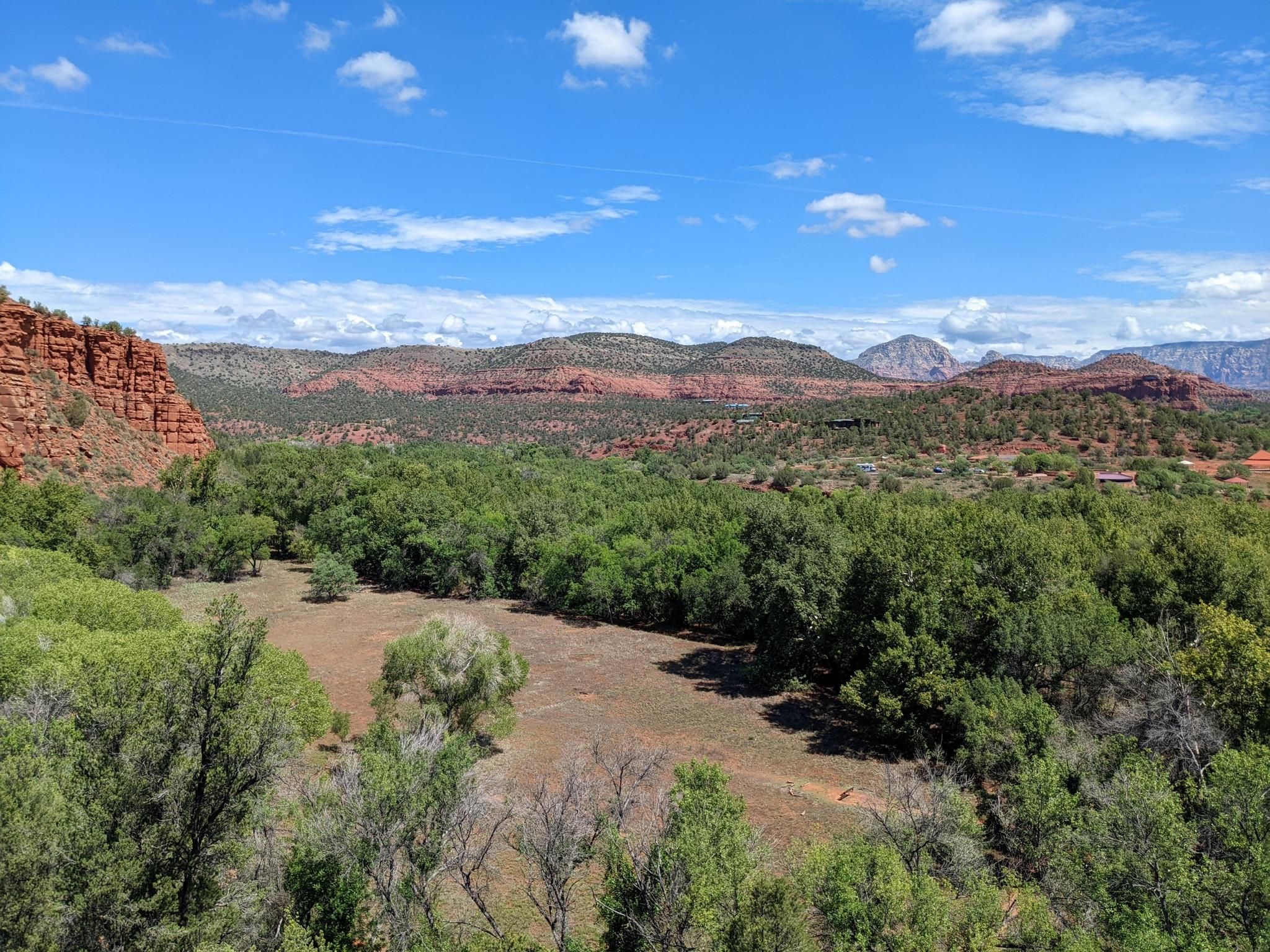
This is the move for photographers and anyone willing to work for the payoff. The 1.2-mile climb gains 741 feet of elevation with steep pitches and scrambling near the top, but the panoramic views from the summit frame fall foliage against red rock formations in a way that justifies the effort.
The hike is short enough that you can summit, shoot, and descend before the afternoon crowds peak.
- Distance & Difficulty: 1.2 miles round trip; steep and technical with rock scrambling; not beginner-friendly despite the short distance.
- Best Time: Early October; the high elevation means color peaks earlier here than on lower trails.
- Timing Tip: Start at sunrise to have the summit to yourself for 45 minutes before other hikers arrive.
- Why It’s Worth It: The views are unmatched for framing fall color against Sedona’s iconic red rock backdrop.
Bell Rock Pathway
This is the only choice if you’re hiking with young kids, older adults, or anyone who wants fall color without technical difficulty. The pathway is flat and easy, leading to the base of Bell Rock where you get genuine views of colorful trees against the iconic red formation.
It’s not a deep-canyon foliage experience like West Fork, but it delivers the visual payoff with minimal effort.
- Distance & Difficulty: 3–4 miles round trip; flat and easy; accessible for most fitness levels.
- Best Time: Mid-October; the lower elevation means color peaks slightly later than Cathedral Rock.
- Crowd Reality: This is popular but less intense than West Fork because it’s easier and requires less planning.
- Why Choose This: Best for families, photography without scrambling, or anyone who wants fall color without a strenuous hike.
Munds Mountain Trail
This moderate hike climbs steadily through mixed forest and open terrain, gaining elevation that shifts you into cooler microclimates where fall color is more pronounced. The views expand as you climb, and the serene environment makes this the best choice for reflective walks or landscape photography away from the West Fork crush.
- Distance & Difficulty: Approximately 6–8 miles round trip (depending on turnaround point); moderate with consistent elevation gain.
- Best Time: Early to mid-October; the elevation gain means you’ll see color at multiple stages as you climb.
- Crowd Factor: Significantly quieter than West Fork or Cathedral Rock; popular with locals but not Instagram-famous.
- Why It Works: Longer than Cathedral Rock but less crowded than West Fork, with genuine fall foliage and solitude.
Planning Your Fall Hike: Quick Decision Guide
| Trail | Best For | Distance | Difficulty | Crowd Level | Peak Color Window |
|---|---|---|---|---|---|
| West Fork | Maximum foliage, creek ambience | 6–7 miles | Moderate | Very High | Early Oct |
| Eagle’s Nest Loop | Foliage + fewer crowds | 3–4 miles | Easy-Moderate | Moderate | Mid-Oct |
| Cathedral Rock | Photography, summit views | 1.2 miles | Steep/Technical | High | Early Oct |
| Bell Rock | Families, easy access | 3–4 miles | Easy | Moderate | Mid-Oct |
| Munds Mountain | Solitude, elevation gain | 6–8 miles | Moderate | Low | Early-Mid Oct |
Where to Stay for Easy Trail Access: Base yourself in Sedona’s central area or near Tlaquepaque for walkable access to downtown restaurants and shops, then drive 15–30 minutes to most trailheads. If you’re prioritizing West Fork, consider staying closer to Oak Creek Canyon to minimize drive time and maximize your early-morning window.
Phoenix is only 2.5 hours south if you want to split your trip between the city and Sedona.
The Insider Move: October 1–7 delivers the best combination of peak color, smallest crowds, and earliest-morning light. Book lodging and plan your week around these dates, not around mid-October when every hotel is full and every trail is packed by 9 a.m. If you can only visit mid-October, commit to weekday hikes and accept that you’ll share the trail with crowds.
How to Make the Most of Fall Foliage in Sedona?
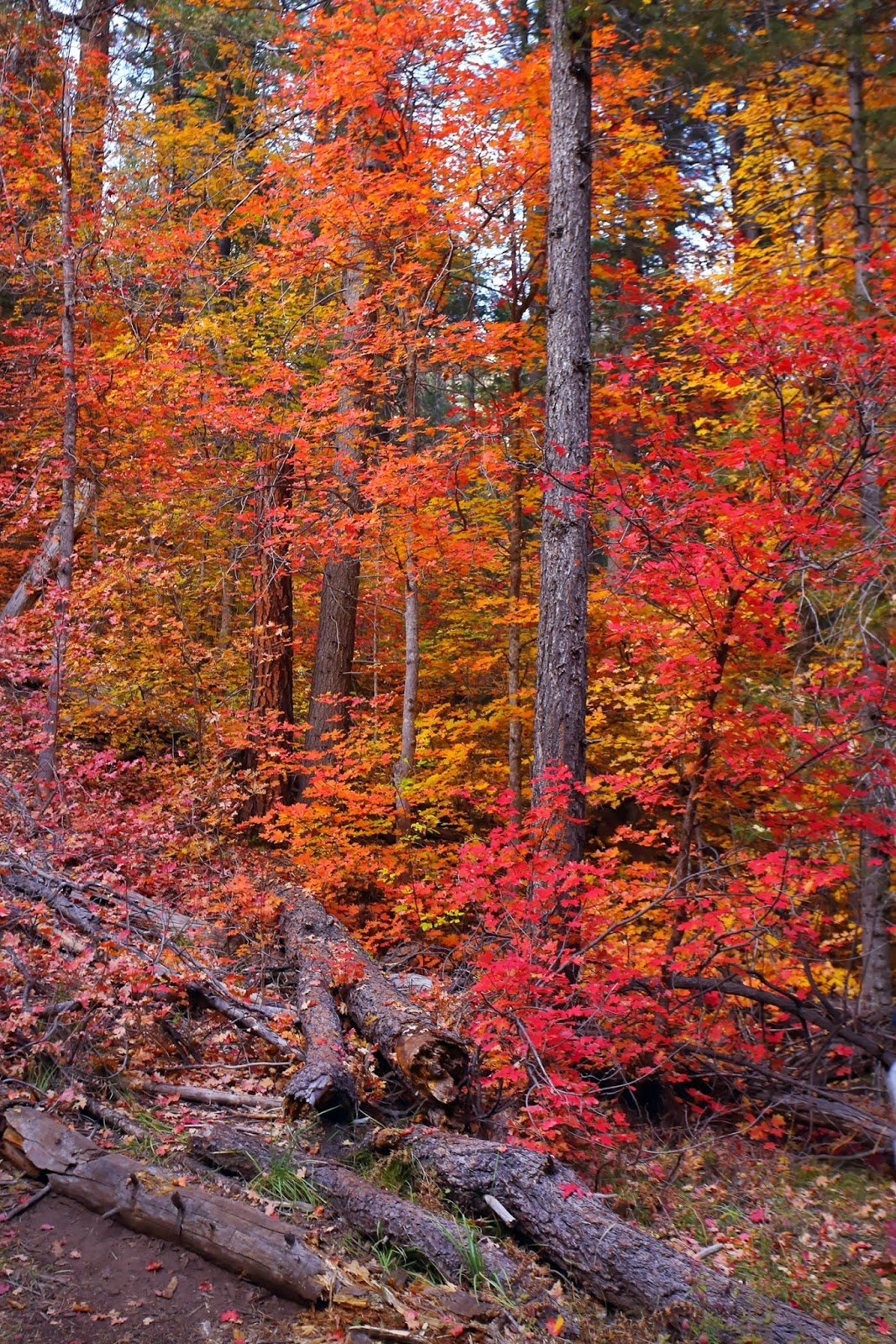
The real advantage of fall in Sedona isn’t just the colors—it’s the cooler temperatures that finally make hiking comfortable, the thinner crowds on weekday mornings, and the way water-fed canyons like Oak Creek create their own microclimate where maples, sycamores, cottonwoods, and oaks actually thrive and turn vibrant. This combination of geology, hydrology, and timing is what separates a mediocre fall trip from an unforgettable one.
Timing Matters More Than You Think
Peak fall color typically arrives in early October and holds through mid-November, but the window is narrower than you’d expect. The cooler canyon microclimates—especially along West Fork Trail and in Oak Creek Canyon—see color change first because of water proximity and elevation.
Plan your trip for early October if you want the most vibrant reds and golds; by late November, much of the color has dropped. Mid-October to early November is the safest bet for guaranteed color without the absolute peak-season chaos.
Fall is also the busiest season in Sedona, with Phoenix residents (only 2.5 hours away) treating it as a weekend escape. Weekday mornings—ideally before sunrise—are the only way to experience trails like West Fork without crowds.
If you can’t do a weekday, arrive at trailheads by 7 a.m. on weekends, not 9 a.m.
Base Yourself for Early-Morning Access
Stay in Sedona proper or in the Oak Creek Canyon corridor if your priority is catching sunrise light on fall colors and beating crowds to trailheads. Sedona town offers walkable dining and shops, but if you want to maximize hiking time, a lodge or cabin closer to Oak Creek Canyon (like near Slide Rock State Park or Call of the Canyon recreation area) cuts your drive to trailheads to minutes instead of 20–30 minutes from downtown.
This matters when you’re trying to arrive before sunrise.
Pack for Temperature Swings
Fall mornings in Sedona’s canyons are cool—expect 40–50°F at sunrise in October—but midday climbs into the 70s. Wear layers you can shed as the day warms.
Bring a light jacket, long sleeves for sun protection on exposed red rock, and good hiking boots with grip for wet creek crossings (West Fork has multiple water crossings that can be slippery after rain). A camera or phone with a good lens is non-negotiable; the contrast between red rock and golden leaves is the entire point.
Choose Your Experience by Crowd Tolerance and Fitness
- Best “pound for pound” fall experience: West Fork Trail (Call of the Canyon recreation area). Restrooms, picnic areas, and the water source that creates the most vibrant color make this the safest choice for first-timers—but go before 8 a.m. or on a weekday.
- Want solitude and dramatic scenery: Munds Mountain Wilderness or Eagle’s Nest Loop Trail. These are less crowded, still offer excellent fall color in oak and juniper, and reward early starts with empty trails.
- Prefer short and accessible: Cathedral Rock Trail or Bell Rock Pathway. These are shorter, less water-dependent, and still frame fall color against red rock—but color here is more subtle (desert shrubs and grasses) than in canyon trails.
- Photographers chasing dynamic light: West Fork Trail at sunrise or Slide Rock State Park in late afternoon when light hits the water and canyon walls. The flowing creek and layered canyon walls create depth that flat desert views cannot match.
Bring Water and a Real Plan
Fall weather is mild, but trails are still desert trails—bring at least 2 liters of water per person, even on shorter hikes. Creek water on West Fork is flowing and cool, but don’t rely on it; treat it or bring your own.
Check trail conditions before you go; fall rains can make creek crossings tricky and muddy sections slippery. Start early, tell someone where you’re going, and plan to be off the trail by mid-afternoon so you’re not hiking in fading light.
Don’t Skip the Scenic Byways
If hiking isn’t your priority, drive Oak Creek Canyon Scenic Byway (Arizona Route 89A) from Flagstaff to Sedona or vice versa. The 28-mile drive takes 45 minutes to an hour, but pull-offs reveal fall color framed by canyon walls without requiring a 6-mile hike.
Slide Rock State Park offers short walks and swimming holes alongside fall foliage—less strenuous than full hikes but still immersive. Tlaquepaque Arts & Shopping Village provides a walkable, shaded alternative if weather turns hot or you need a break from hiking.
Frequently Asked Questions
What’s the best time to visit Sedona for fall colors?
Early October through mid-November is peak season, with the most vibrant foliage typically appearing in early to mid-October. The cooler canyon microclimates—particularly Oak Creek Canyon—trigger color changes in deciduous trees like maples, sycamores, cottonwoods, and oaks first, so those areas peak slightly earlier than surrounding regions.
Confirm current conditions with local visitor centers or trail reports before booking, since timing varies by 1–2 weeks depending on temperature and moisture.
Do I need a car to see fall foliage in Sedona?
A car is strongly recommended. While Sedona has limited public transit and some walkable downtown areas, the best fall foliage spots—West Fork Trail, Cathedral Rock, Slide Rock State Park, Bell Rock, and the scenic byways through Oak Creek Canyon—require driving to access trailheads and viewpoints.
Rideshare and tour services exist but are less flexible for the early-morning starts and multiple stops that maximize fall photography and hiking.
How crowded is Sedona in the fall, and should I book ahead?
Fall is peak season, and popular trails like West Fork can become very crowded, especially on weekends. Book accommodations 2–3 months in advance if traveling during October or early November.
Arrive at trailheads by 7–8 a.m. to secure parking and avoid midday crowds. Weekday visits are noticeably quieter than weekends if your schedule allows.
What should I pack for a Sedona fall trip?
Layers are essential—mornings and evenings are cool (40s–50s°F), but midday sun warms things quickly. Bring a light jacket, long-sleeve shirt, comfortable hiking boots with good grip (trails cross water and can be slick), sunscreen, and a hat.
The desert sun is intense even in fall. If you plan to hike West Fork or Slide Rock, pack water shoes or be prepared to get wet; these trails involve creek crossings.
Book Your Early October Trip Now
Secure your Sedona lodging and plan your week around October 1–7 if possible—this is when peak color, smallest crowds, and earliest morning light converge. If mid-October is your only option, commit to weekday hikes and arrive at trailheads by 7 a.m., or choose easier trails like Bell Rock or Slide Rock where crowds are less suffocating.
Fall foliage in Sedona is worth your time because it’s the one season when Arizona’s desert actually feels like autumn, and the combination of water-fed canyons, cooler temperatures, and dramatic red rock backdrops creates a landscape you won’t find anywhere else in the country.
Start by checking current trail conditions and fall color reports on the Sedona Chamber of Commerce website or local hiking apps, then book your lodging immediately—early October fills up fast, and mid-range properties book out by late August.
Leave a Reply