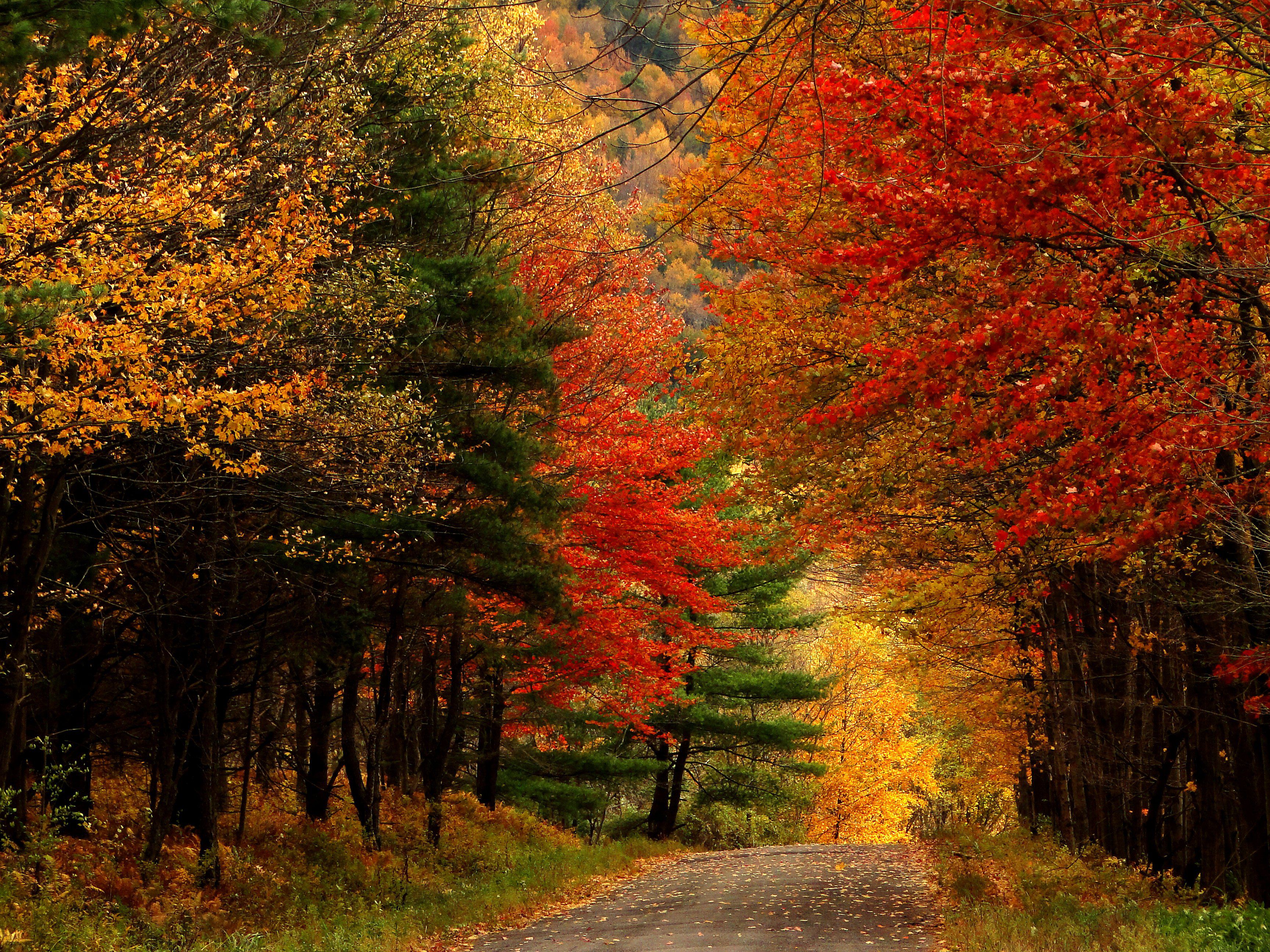
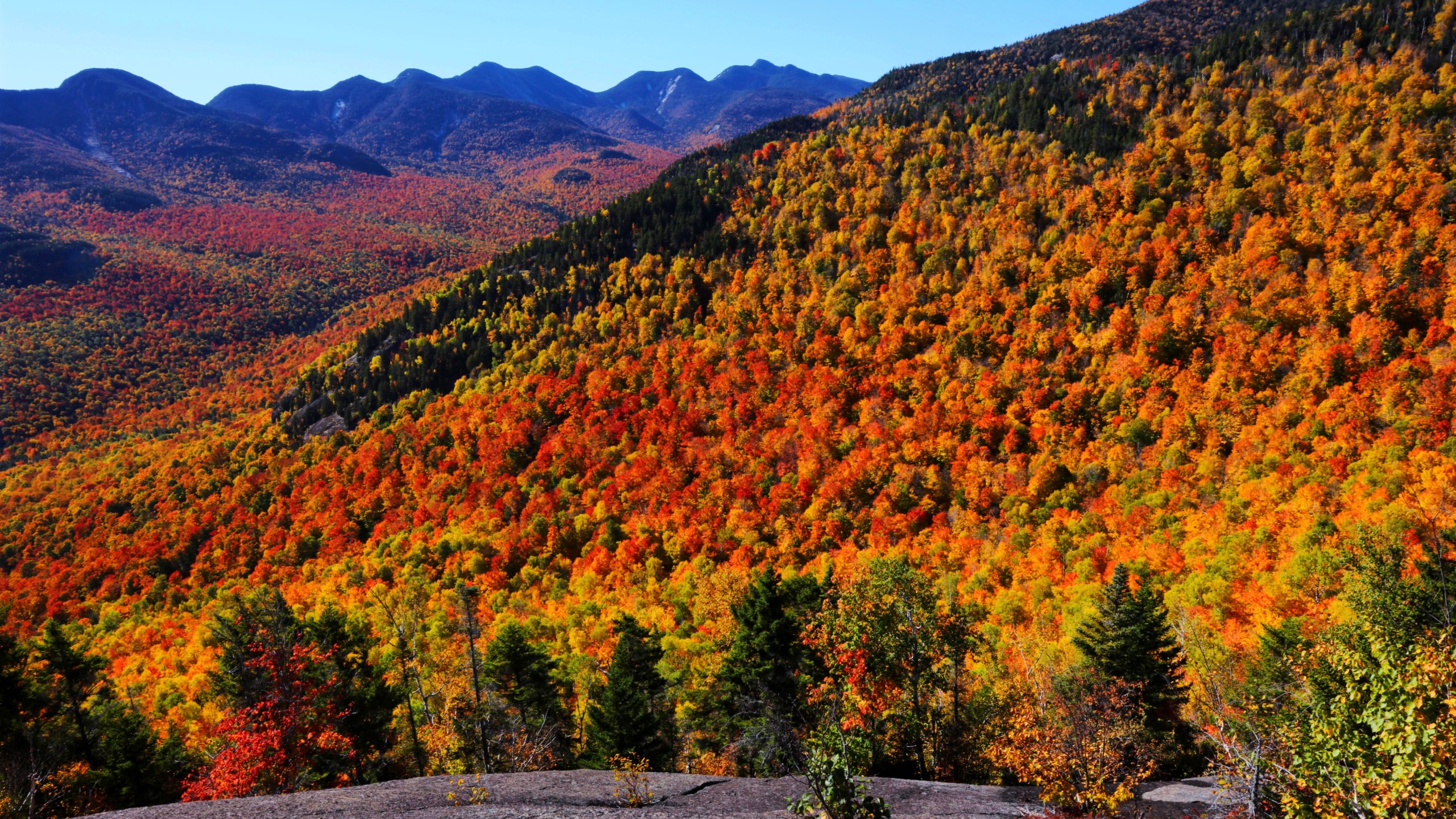
The smell hits you first—wood smoke curling from cabin chimneys, wet leaves underfoot, the sharp bite of 45-degree mornings that make you actually want to be awake before sunrise. Upstate New York’s fall doesn’t announce itself all at once; instead, it rolls south like a slow-motion wave, igniting the Adirondacks in late September, then sweeping through the Hudson Valley and Catskills by mid-October.
This staggered timeline is your real advantage over New England—while Vermont and New Hampshire peak simultaneously and then fade, upstate gives you six weeks to chase color without fighting the same crowds everywhere at once. The landscape here is wilder and grittier than New England’s manicured parks, with hidden waterfalls, alternative breweries, and small towns that actually reward a detour instead of feeling like theme parks.
This guide cuts through the guesswork and tells you exactly when to book, which scenic drives deliver the most color, and where to stay so you’re positioned for early-morning hikes instead of wasting daylight on logistics.
Budget ranges: budget travelers can find solid Airbnbs and small inns for $120–180 per night in gateway towns like New Paltz and Kingston; mid-range stays in Woodstock and Hudson run $180–280; splurge-worthy mountain cabins and boutique resorts in the Catskills start at $300 and climb from there.
Your Quick-Reference Fall Foliage Timeline and Best Bets
Late September (Adirondacks Peak): Old Forge, Lake Pleasant, and Tupper Lake show bold oranges and yellows; fewer crowds; crisp mornings around 40–50°F; book lodging by mid-August.
Early to Mid-October (Central NY & Mohawk Valley): Utica, Herkimer, Cooperstown, and Cazenovia reach full color; temperatures 50–60°F; ideal for road trips and hiking; this is the most reliable sweet spot for most travelers.
Mid to Late October (Catskills & Hudson Valley): Woodstock, Cold Spring, and New Paltz peak; farm stands still stocked; seasonal menus running; best for combining foliage with fall activities.
Essential tracking tool: Check New York State’s weekly fall foliage report at iloveny.com/seasons/fall/foliage-report/ every Sunday if planning a trip for the following week; it breaks down color status by region (North Country, Central, Hudson Valley, Catskills).
Booking strategy: Reserve accommodations by mid-August for any October weekend; weekday stays (Tuesday–Thursday) offer better availability and fewer crowds on scenic drives; early mornings (sunrise to 9 a.m.) deliver the best light and fewest visitors regardless of week.
When is the Best Time to See Upstate New York Fall Foliage?
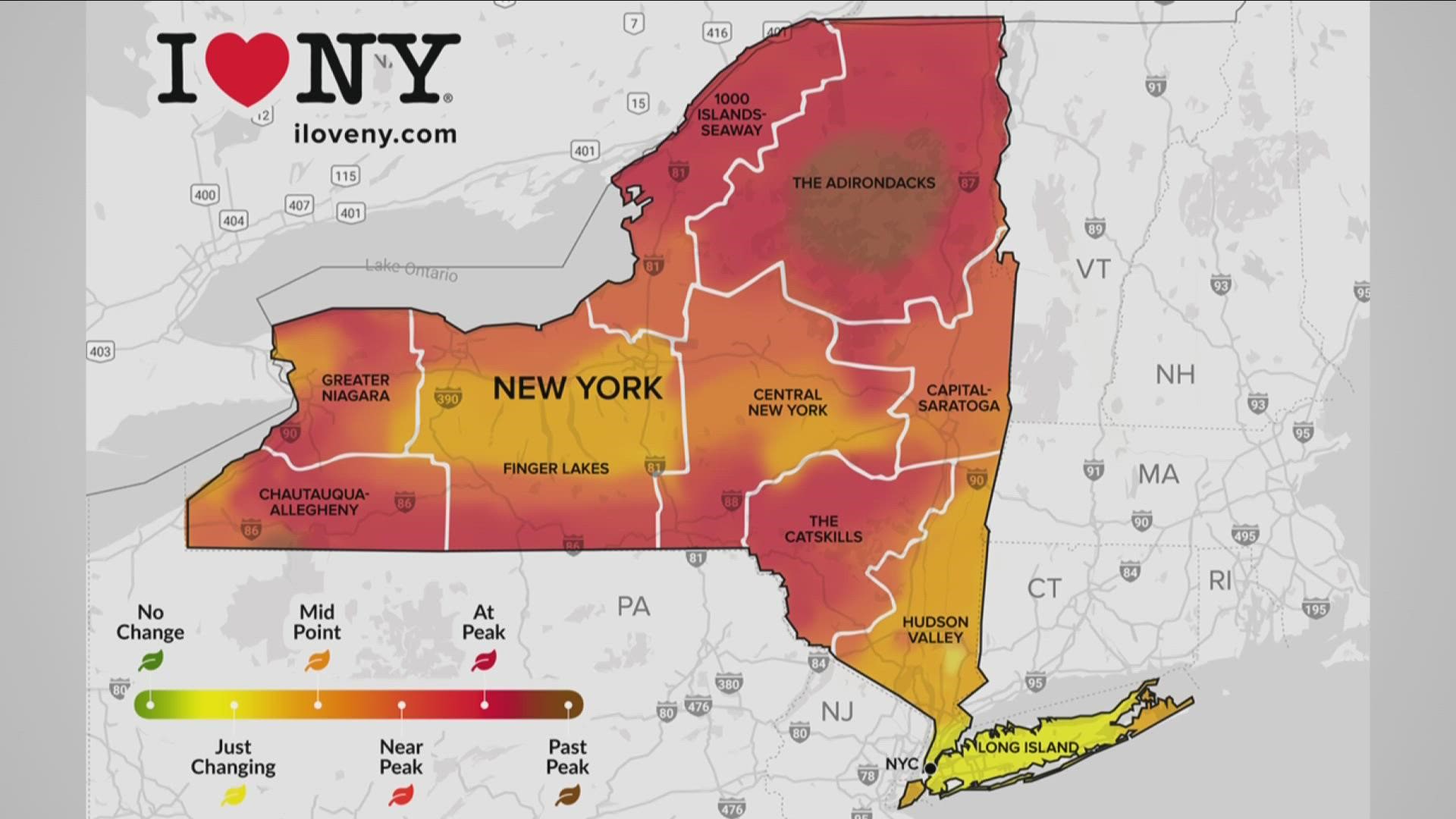
Upstate New York doesn’t peak all at once—the color parade moves south like clockwork, which means you can chase peak foliage for six weeks straight if you time it right. The Adirondacks ignite first in late September with bold oranges and yellows, while the Hudson Valley and Catskills don’t reach their peak until mid-to-late October.
This staggered timeline is your advantage: if one region is past peak, another is just starting to glow.
Late September: The Adirondacks Peak First
The Adirondacks are your opening act. Places like Old Forge, Lake Pleasant, and Tupper Lake are already showing bold oranges and yellows by late September, making this the earliest reliable window for peak color in the state.
This timing works best if you want to avoid the October crush—weekends in late September are noticeably quieter than early October, and you’ll still catch vibrant color. The trade-off: temperatures drop faster at elevation, so pack layers and expect crisp mornings around 40–50°F.
Base yourself in a mountain town with easy access to scenic drives and trailheads. The Adirondack High Peaks Scenic Byway (Route 73) and Route 28 offer the most dramatic foliage backdrops during this window.
Book lodging by mid-August if you’re targeting a specific weekend—fall weekends fill fast, even in September.
Early to Mid-October: Central New York and Mohawk Valley
By early October, the color wave hits Central New York and the Mohawk Valley. Utica and Herkimer start showing yellows in early October, then shift into full-on color chaos by mid-month.
This is the sweet spot for most travelers: temperatures are still pleasant (50–60°F), daylight lasts long enough for afternoon hikes, and the color is reliable without the November brown-out. Early to mid-October is also when most upstate towns—Cooperstown, Cazenovia, and surrounding villages—are dressed in peak autumn dress.
If you’re planning a road trip through the Mohawk Valley or along Route 20 near Cazenovia, aim for October 5–15 for the highest probability of peak color. Accommodations book up fast during this window, so secure your stay by late August.
Mid to Late October: Catskills and Hudson Valley
The Catskills and Hudson Valley peak last, typically mid-to-late October, which gives you a second chance if you missed earlier peaks. This timing is ideal if you want to combine foliage with the full fall experience: farm stands are still stocked with apples and cider, pumpkins line storefronts, and restaurants are running seasonal menus.
The Palisades Byway to Route 32 (connecting New Paltz, Woodstock, and Tannersville) is at its most photogenic during this window.
One insider detail: if you’re hiking to waterfalls like Kaaterskill Falls or Taughannock Falls in late October, expect the forest floor to be carpeted with fallen leaves—beautiful for photos and hiking, but harder to spot trail markers. Bring a headlamp or plan hikes for midday when light is strongest.
Stay in towns like Woodstock, Cold Spring, or Livingston Manor, which offer walkable main streets, galleries, and restaurants within a short drive of peak foliage hikes.
Essential Maps and Reports to Track the Peak Colors
New York State publishes a fall foliage report updated weekly at iloveny.com/seasons/fall/foliage-report/. This is your most reliable tool—it breaks down color status by region (North Country, Central, Hudson Valley, Catskills) and tells you exactly which areas are at peak, near-peak, or past peak.
Check it every Sunday if you’re planning a trip for the following week.
Pair the state report with real-time photos from the towns and scenic byways you’re targeting. Towns like Woodstock, Cold Spring, and Beacon post seasonal updates on their visitor websites and social media, giving you on-the-ground confirmation of color status.
If you’re flexible on dates, check the report mid-week and book your trip for the region showing “peak” or “near-peak” status.
Booking strategy: Reserve accommodations by mid-August for any October weekend. Fall weekends—especially October 5–20—are the most competitive.
If you can travel on weekdays (Tuesday–Thursday), you’ll find better availability and fewer crowds on scenic drives and at trailheads. Early mornings (sunrise to 9 a.m.) offer the best light and the fewest visitors, regardless of which week you choose.
What are the Most Scenic Fall Foliage Road Trips in Upstate New York?
These six routes are engineered to deliver maximum color with minimum backtracking—each one pairs winding mountain roads or lakeside drives with waterfalls, farm stands, and small towns that actually reward a stop. Pick based on which region peaks when you’re traveling, and base yourself in a nearby town to avoid the drive-all-day trap.
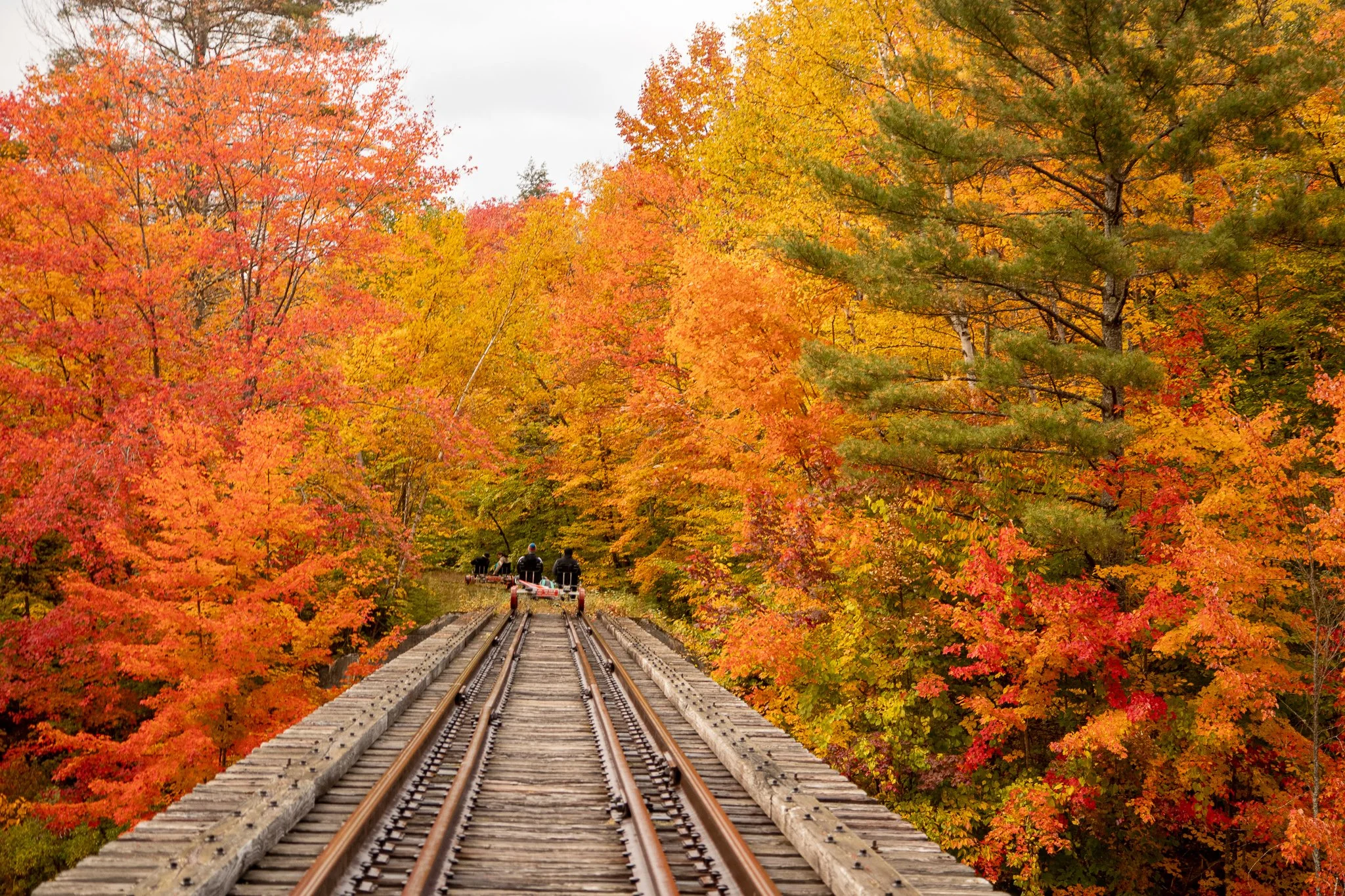
Adirondack High Peaks Scenic Byway (Route 73)
This is the road trip for hikers and anyone who wants dramatic elevation change mixed with color—Route 73 winds through valleys with mirrored lakes and opens onto peaks that turn fiery by late September. The drive alone justifies the trip, but quick hikes like Bald Mountain or Black Bear Mountain let you step directly into the canopy without committing to a full day on the trail.
Base yourself in a gateway town like Lake Placid or Saranac Lake to split your time between driving and exploring; both towns have lodging and dining that won’t slow you down.
Best for: Anyone who wants color plus outdoor movement, not just a scenic drive.
Why it wins: Peak color hits here first—late September—so if you’re traveling early in the season, this is your only choice for full saturation.
Cayuga Lake Scenic Byway
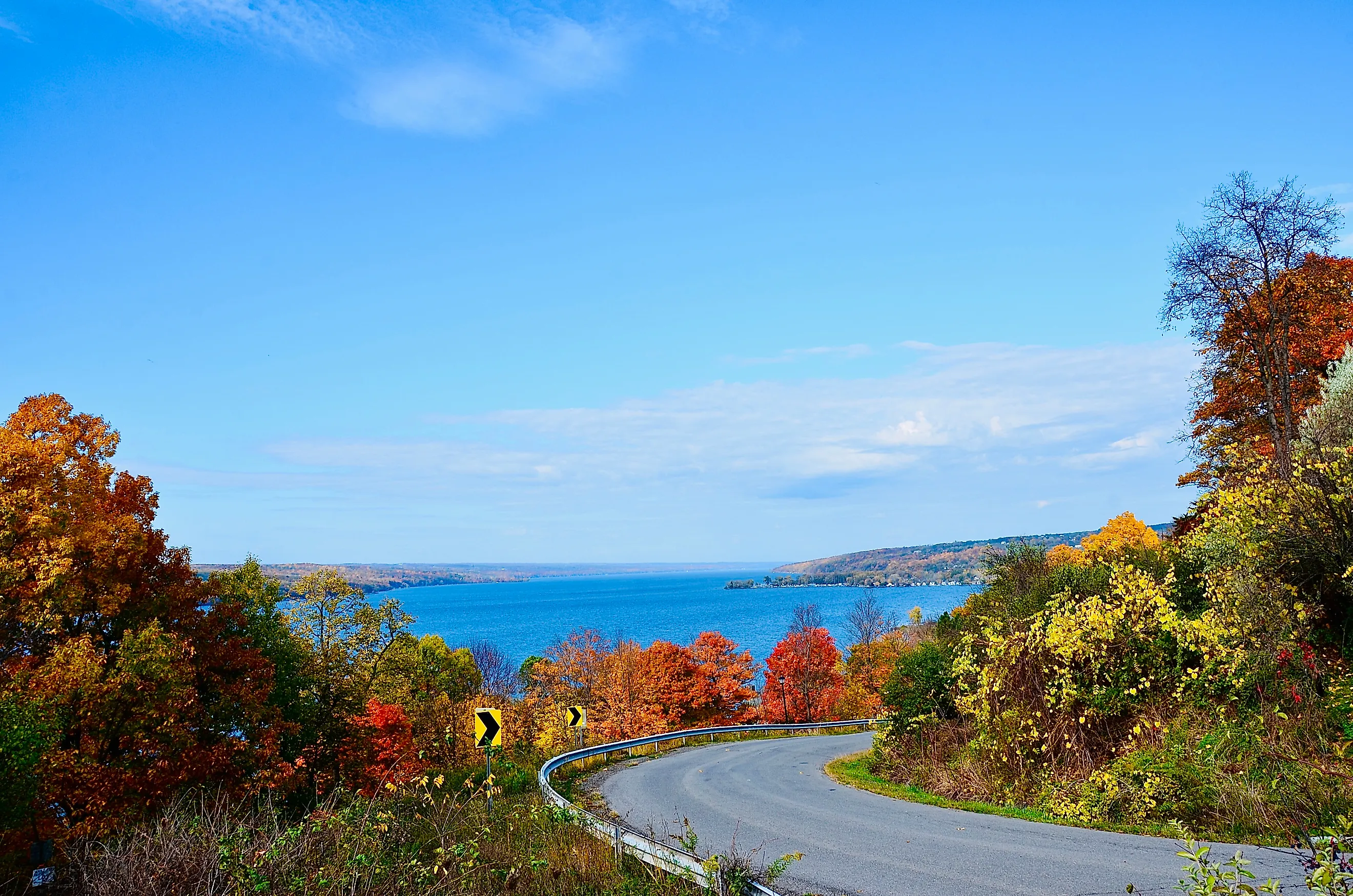
An 87-mile loop that hugs the eastern shore of Cayuga Lake, this route stacks three reasons to stop: vineyard views, hillsides that turn gold and crimson, and Taughannock Falls State Park, where a 215-foot waterfall drops through a gorge lined with autumn color. The drive is gentle, the stops are frequent, and the wine tastings are legitimate—not a gimmick.
Overnight in Ithaca or the smaller villages along the lake to break up the drive and catch sunrise over the water.
Best for: Wine drinkers and anyone who wants scenery without steep elevation or strenuous hiking.
Why it wins: This loop compresses more visual variety into one drive than any other route—water, vineyards, waterfalls, and forest all in sequence.
Seneca Lake Scenic Byway (Route 414)
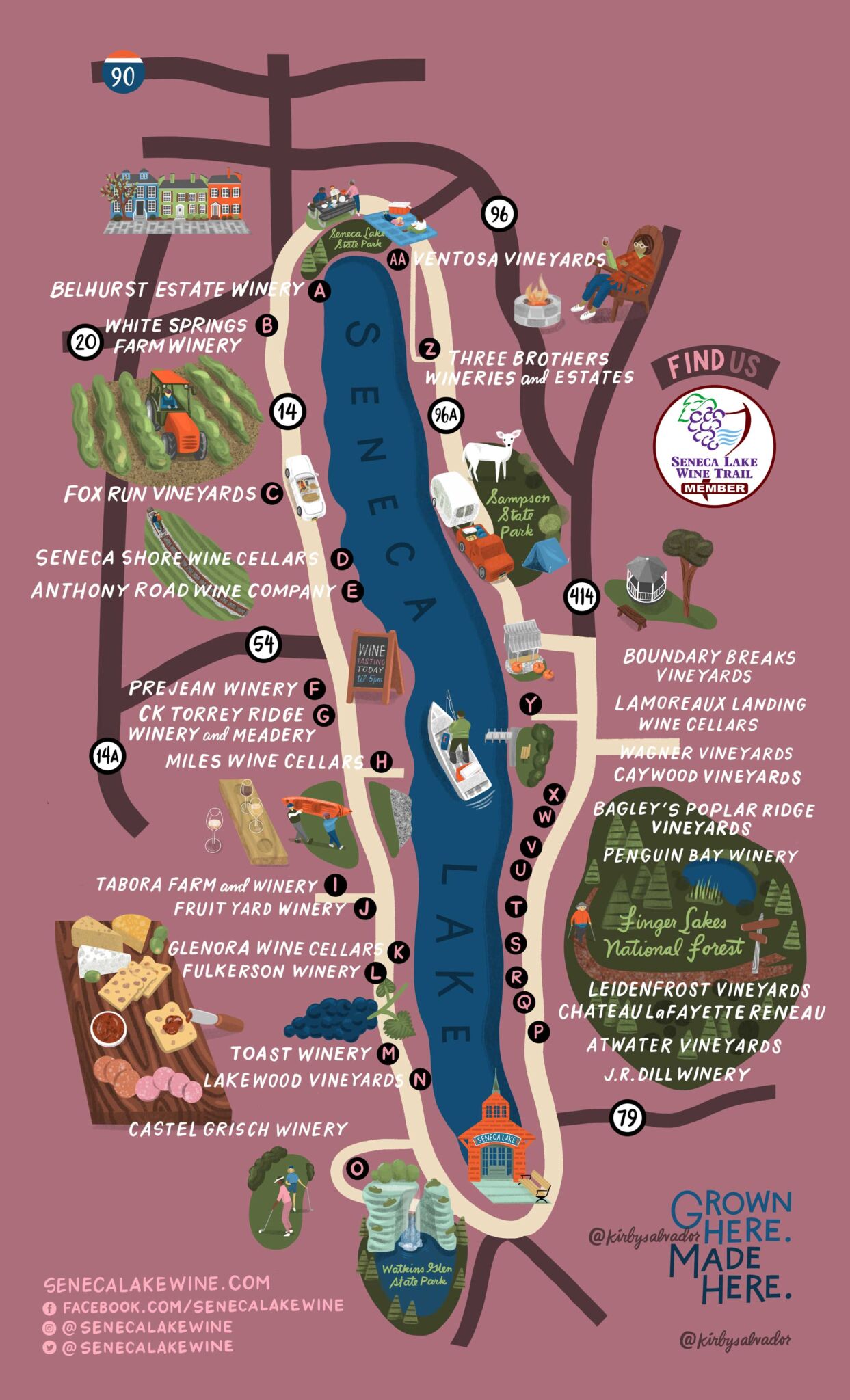
Route 414 runs the west side of Seneca Lake and delivers a perfect Saturday formula: wineries, farm stands overflowing with cider and fresh produce, and lakeside color reflected in the water. The drive is slower and more intimate than the Cayuga route, with fewer crowds and more room to linger at orchards and roadside vendors.
Stay in Geneva or Watkins Glen for access to both ends of the lake and easy morning departures.
Best for: Travelers who want a quieter alternative to the busier Cayuga loop and don’t mind a slower pace.
Why it wins: Farm stands here are genuinely stocked with things you can’t find elsewhere—homemade jams, local honey, apples picked that morning.
U.S. Route 20 Near Cazenovia
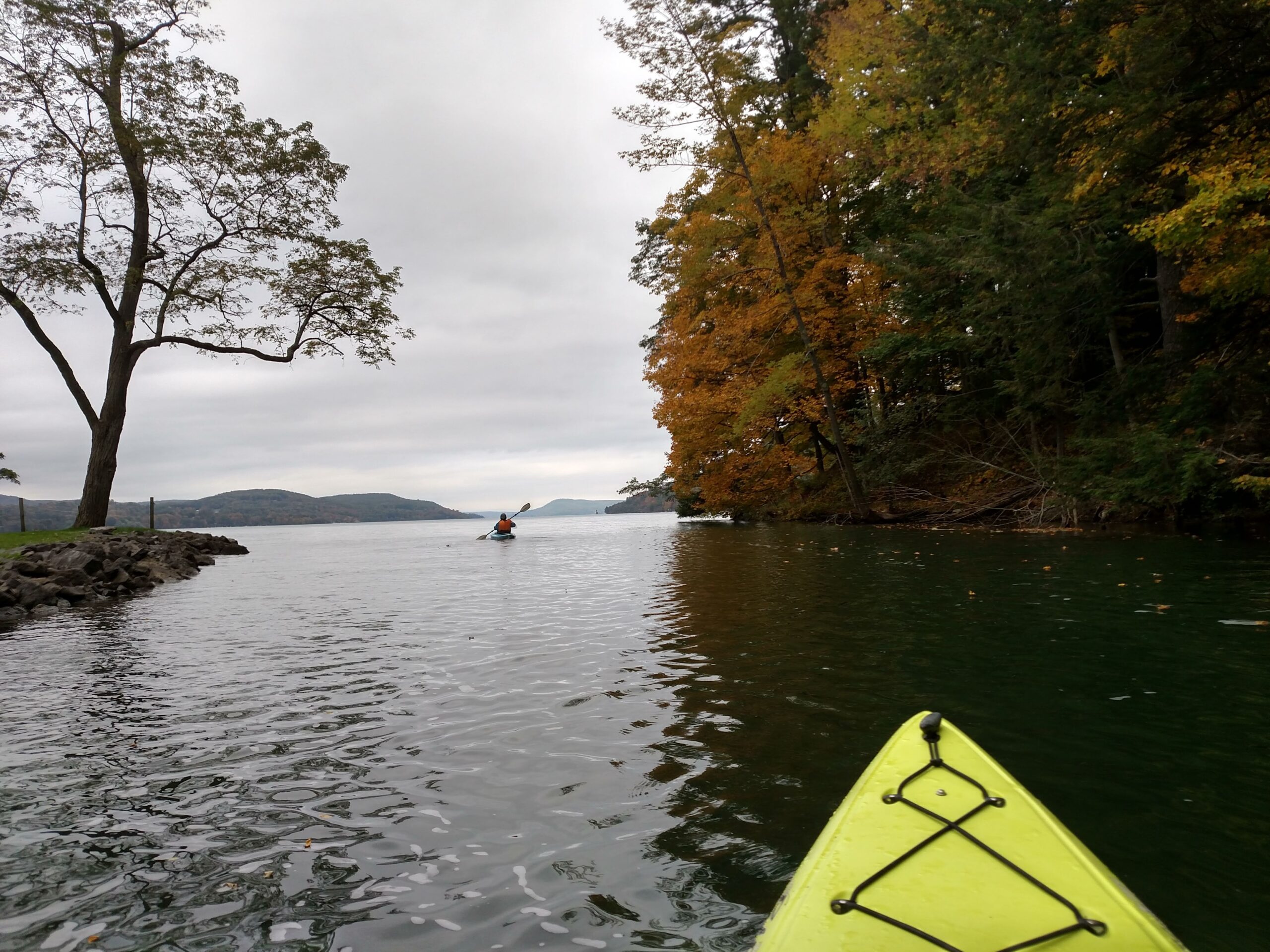
This route cuts through rolling farmland and historic villages with minimal traffic, making it ideal for photographers and anyone who wants to stop constantly without feeling rushed. The real payoff is a quick detour to Chittenango Falls, where a 215-foot cascade drops through a gorge surrounded by maples and birches at peak color.
The drive itself is the point—no major attractions, just pastoral landscape that glows in October light.
Best for: Photographers, slow travelers, and anyone avoiding the crowded scenic byways.
Why it wins: Chittenango Falls delivers waterfall-plus-foliage drama without the parking lot chaos of more famous falls, and the surrounding farmland is genuinely quiet.

Route 28 to Cooperstown and Otsego Lake
This drive is lined with fiery trees and ends at Fly Creek Cider Mill, where you can taste fresh cider and walk through orchards surrounded by color. Cooperstown itself is a small, walkable village with a baseball museum and antique shops—enough to justify an overnight stay.
The lake views are consistent and calming, and the drive doesn’t require constant navigation; it’s a straightforward push north with scenery the entire way.
Best for: Families, anyone seeking a low-stress drive, and cider enthusiasts.
Why it wins: Fly Creek Cider Mill is a genuine destination, not a tourist trap—the cider is excellent and the orchard setting is peak autumn.
Palisades Byway to Route 32 (Hudson Valley to Catskills)
This route starts at the Hudson River and climbs west into the Catskill Mountains, passing through charming towns like New Paltz, Kingston, and Woodstock before reaching higher elevations where the landscape turns more dramatic. The Poughkeepsie Walkway offers a one-hour detour 212 feet above the river with a natural tunnel of yellow leaves overhead.
Route 32 itself is the scenic spine—stop in towns for antique shops and galleries, pick up farm-fresh apples from roadside stands, and plan to overnight in Woodstock or Tannersville to catch a fiery sunrise before heading deeper into the mountains.
Best for: Antique hunters, gallery browsers, and anyone who wants small-town charm mixed with mountain scenery.
Why it wins: This route offers the most dramatic color progression in a single drive—you start at river level in early-peak color and finish in the mountains where leaves are still full and vivid, extending your viewing window by weeks.
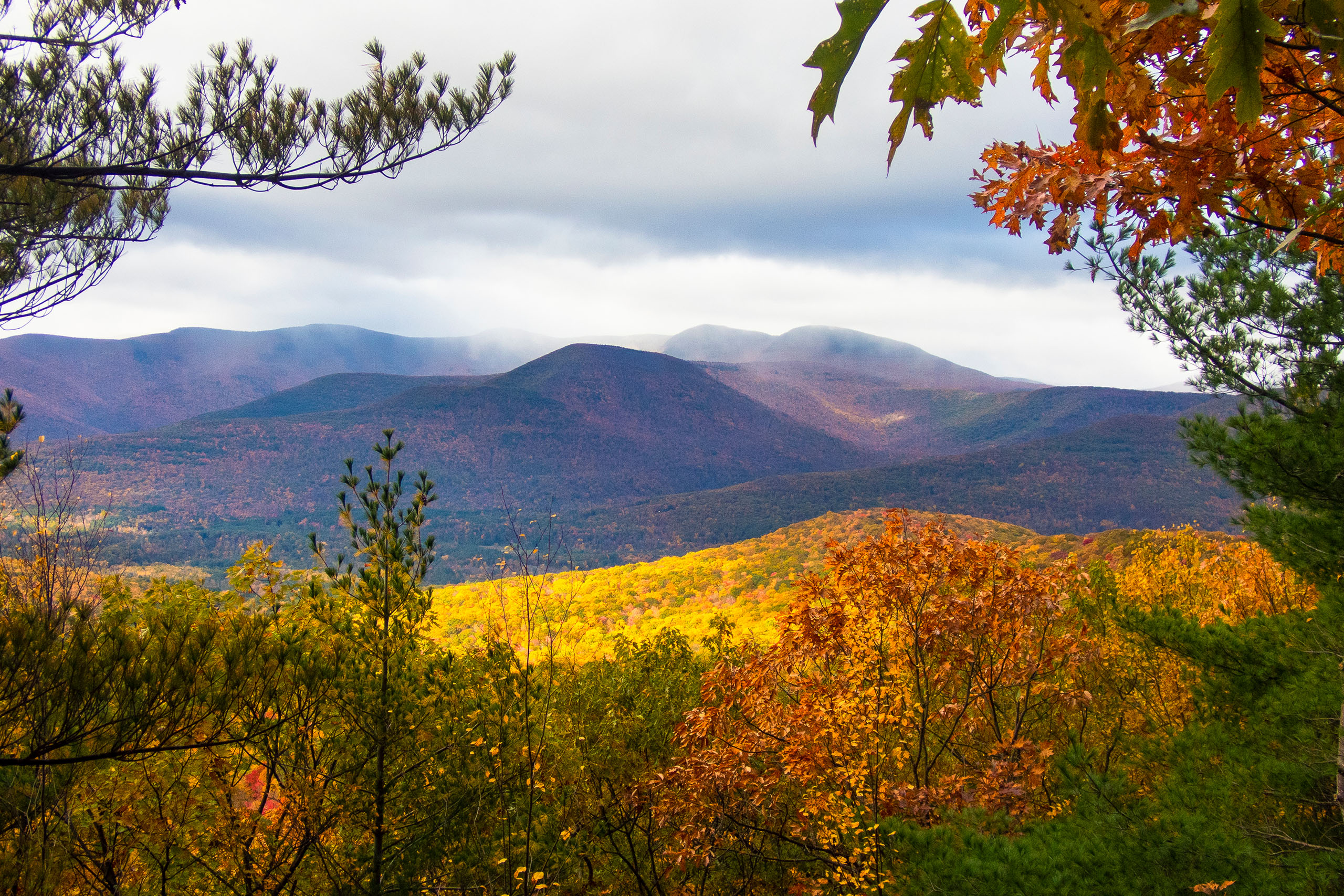
Timing and Route Strategy
The Adirondacks peak first in late September; follow the color south and west through October as the Mohawk Valley, Catskills, and Hudson Valley reach their stride. If you’re traveling early October, combine the Cayuga and Seneca lake routes in central New York.
If you’re going mid-to-late October, focus on the Hudson Valley and Catskills routes, where elevation keeps the color locked in longer. Avoid weekends in October if possible—all six routes draw crowds, but weekday mornings offer quieter roads and easier parking at overlooks and farm stands.
Which Waterfalls Offer the Best Fall Foliage Backdrops?
Waterfalls become natural amphitheaters for fall color when the leaves turn — the water’s mist catches reflected reds and golds, and the gorge walls frame the canopy like a stage set. These four destinations turn a waterfall hike into a foliage experience you can’t get on a road drive alone. Each one pairs a different waterfall drama with distinct hiking access and leaf-peeping timing.

Chittenango Falls State Park
Chittenango Falls drops 167 feet in a single cascade, and the trails let you chase the view from top to bottom — meaning you get multiple vantage points as the foliage frames each one differently. This works best for anyone who wants a short, manageable hike (roughly 1.5 miles round trip) without the scramble factor.
The waterfall wins because the height and single-drop design create a clean backdrop that doesn’t compete with the leaves — the foliage becomes the real star.
Taughannock Falls State Park
Near Ithaca, Taughannock plunges 215 feet past towering cliffs nearly 400 feet high, making it the tallest single-drop waterfall east of the Mississippi. The gorge and rim trails give you both overhead views and up-close approaches, so you can shoot the same waterfall in completely different light and foliage angles.
This is the pick for hikers who want scale and drama — the sheer cliff walls create a natural canyon that amplifies the color intensity, and you get two distinct trail experiences in one stop.
High Falls Gorge
Located in the Adirondacks, High Falls Gorge offers a short walk along the Ausable River with tons of cascades (not one single drop) and water reflections that bounce vibrant leaf tones right back at you. This one wins for anyone who wants the easiest access to waterfall-plus-foliage without committing to a full hike — the cascading design means water is constantly moving and reflecting, which amplifies the color effect.
Kaaterskill Falls
In the Catskills, Kaaterskill Falls is a two-tiered drop (260 feet total) surrounded by dense forest, and by mid-to-late October, the ground becomes carpeted with fallen leaves that crackle underfoot as you hike. The leaf carpet is the insider detail here — it transforms the trail experience into something tactile and immersive that photographs don’t capture.
This is the move for anyone visiting the Catskills during the tail end of peak color, when the trees have mostly shed but the forest floor is still vibrant.
Stay Strategy: Base yourself in Ithaca for Taughannock, the Adirondack gateway towns (Lake Placid, Saranac Lake) for High Falls Gorge, and the Catskill towns like Woodstock or Livingston Manor for Kaaterskill Falls. Each region has cabin lodges and mountain inns with fireplace access — essential for warming up after a wet-weather hike.
12 Best Upstate New York Towns and Preserves for Autumn Views
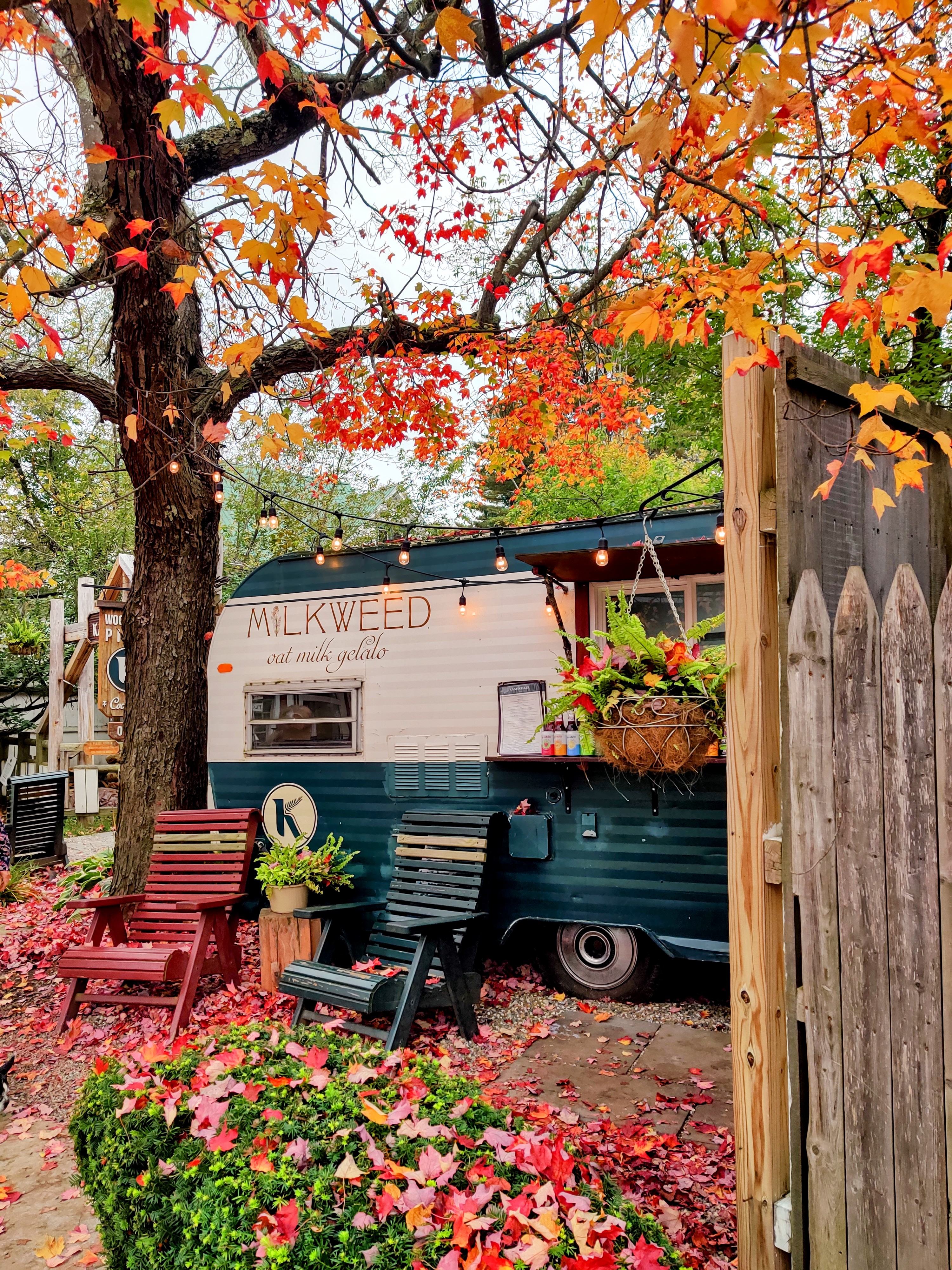
Upstate New York’s fall towns split into two distinct camps: rugged, alternative villages catering to Brooklyn transplants and outdoor enthusiasts, versus manicured New England–style towns with antique shops and galleries. The difference matters because it shapes your entire trip—wild hiking and hidden breweries versus vintage shopping and gallery hopping.
These twelve towns let you chase color while actually enjoying where you land, not just passing through.
Mohonk Preserve (The Shawangunks)
A private 8,000-acre hiking preserve centered around a historic Victorian mansion hotel, Mohonk Preserve is the move for travelers who want serious fall foliage without the crowds of state parks. The preserve operates its own network of marked trails through the Shawangunks ridge system, where the combination of elevation change and diverse tree species creates a longer color season than lower-elevation towns.
Day-use passes are required (confirm current pricing and hours directly with the preserve); arrive early on weekends in peak foliage weeks because parking fills by mid-morning. The single best insider move: hike the Labyrinth Trail or Beacon Hill loop in the first two hours after sunrise—you’ll have the ridge views almost entirely to yourself before the midday crowds arrive.
Mountaindale
Mountaindale wins for fly fishers and anyone seeking a genuinely off-the-map fall experience—this is where Brooklyn creatives go to disappear into the Catskills without hitting a tourist trap. The town centers on trout streams and secret bars hidden in the woods, making it ideal for travelers who want to combine active outdoor time with unexpected nightlife.
There’s no single “main street” here, so come with a specific plan (fly-fishing guide, brewery, or cabin rental) rather than expecting walkable town amenities.
Livingston Manor
Livingston Manor is the Brooklyn-transplant answer to upstate fall getaways—craft breweries, farm-to-table restaurants, and a genuinely cool vibe without feeling forced. The town has become a hub for the fly-fishing community, but the real draw for fall foliage travelers is the combination of walkable downtown (Main Street has galleries, shops, and restaurants) plus immediate access to easy hiking and the Willowemoc Creek.
Book lodging early; fall weekends fill months in advance. Stay in town or nearby cabins for walkable access to breweries and restaurants after your hike.
Woodstock
Woodstock delivers the bohemian charm and eclectic shopping you expect—vintage boutiques, art galleries, and the kind of village green that looks like it was designed for fall foliage photos. Beyond the main drag, the real wins are the side trips: a hidden wooden church and a monastery in the mountains nearby offer quieter, more contemplative autumn experiences than the busy town center.
Woodstock peaks in mid-October; arrive on a weekday if you want to actually park and walk without fighting crowds.
Cold Spring
Cold Spring is a small Hudson River village that punches above its weight for hikers willing to tackle serious elevation gain—the Breakneck Ridge Trail offers some of the most dramatic Hudson River valley views in the state, but it’s genuinely challenging (212 feet of exposed bridge crossing, steep scrambles, and a reputation for testing your nerve). The payoff is unmatched: autumn foliage framing the river below, and a town small enough that you can walk the entire waterfront in an afternoon.
This is the pick for experienced hikers who want a real challenge; skip it if you’re looking for casual strolls. Stay in Cold Spring village itself for river access and walkable restaurants after your hike.
Storm King Art Center (Cornwall)
Storm King is an open-air sculpture museum set across 500 acres of Hudson Valley landscape, making it a rare hybrid: art and nature combined during peak foliage season. The museum’s large-scale installations take on new visual drama when surrounded by red and gold trees.
Admission is required (confirm current hours and pricing directly); allow at least three hours to see the major works. This works best as a half-day stop on a larger Hudson Valley road trip, not a full-day destination on its own.
Beacon
Beacon is the grunge-shopping and contemporary-art answer to Hudson’s antique-focused vibe—the Dia:Beacon museum is one of the most respected contemporary art spaces in New York state, and the downtown has a genuinely cool, unpretentious energy. The food scene is diverse and inventive, and the town attracts a younger, more creative crowd than some of its neighbors.
Beacon works best as a day trip or overnight stop on a Hudson Valley loop, not as a multi-day base.
Hudson
Hudson is the antique-shopping and gallery destination for fall foliage travelers who want to spend more time indoors browsing than hiking. Warren Street is lined with vintage shops, galleries, and cool bars that justify a full day of wandering.
The town has a strong historic-preservation ethos and attracts serious collectors and designers, so the quality of antiques and design goods is genuinely high. Stay overnight in Hudson itself for walkable access to restaurants and bars; the town is compact enough to explore entirely on foot.
Tannersville
Tannersville sits in the heart of the Catskills and is known for its quintessential fall aesthetic—pumpkins stacked on porches, seasonal restaurant menus, and the kind of small-town charm that makes for perfect Instagram photos. The town is a natural stop on Route 32 heading north from Kingston and Woodstock, making it ideal for road-trip travelers who want to break up driving with a quick walk and a meal.
Tannersville peaks in mid to late October as you move further north into the mountains.
Rhinebeck
Rhinebeck is a Hudson Valley village with serious historic credentials—estates, gardens, and a walkable downtown that balances upscale shopping with genuine small-town character. The town is close enough to New York City for a weekend escape but far enough north to catch peak foliage a week or two after the Hudson River towns.
Rhinebeck works well as a base for exploring both the Hudson Valley and Catskills; stay in town for walkable access to restaurants and galleries.
Kingston
Kingston is the gateway town for Route 32 heading north into the Catskills and Woodstock—it’s less charming than its neighbors but strategically important for road-trip planning. The Rondout waterfront has some character, and the downtown has improved significantly in recent years with new restaurants and galleries.
Kingston is better as a quick stop or overnight break than a destination in itself; use it as a jumping-off point for the more scenic towns north.
New Paltz
New Paltz is a college town (SUNY New Paltz) with a young, outdoorsy vibe and direct access to the Mohonk Preserve and Shawangunks hiking. The downtown has breweries, casual restaurants, and shops catering to climbers and hikers rather than antique collectors.
New Paltz peaks in early to mid-October and works best as a base for serious outdoor time rather than town wandering. Stay in New Paltz for early-morning trailhead access to the Shawangunks.
Planning Your Town-to-Town Fall Loop
These twelve towns break into three geographic clusters: the Shawangunks and Hudson Valley (Mohonk, New Paltz, Cold Spring, Storm King, Beacon, Hudson, Rhinebeck, Kingston), the Catskills west of the Hudson (Woodstock, Tannersville, Mountaindale, Livingston Manor), and the Catskills interior (Livingston Manor, Mountaindale). Book lodging early—the cutest cabins and inns fill months in advance for fall weekends.
A typical three-day loop might run Hudson → Woodstock → Livingston Manor, or Beacon → Cold Spring → Rhinebeck, depending on whether you prioritize shopping and galleries or hiking and breweries. Route 32 connects most of these towns and is itself one of the most scenic drives in the state during peak foliage.
Where Should You Stay? Best Hotels and Cabins for a Fall Getaway
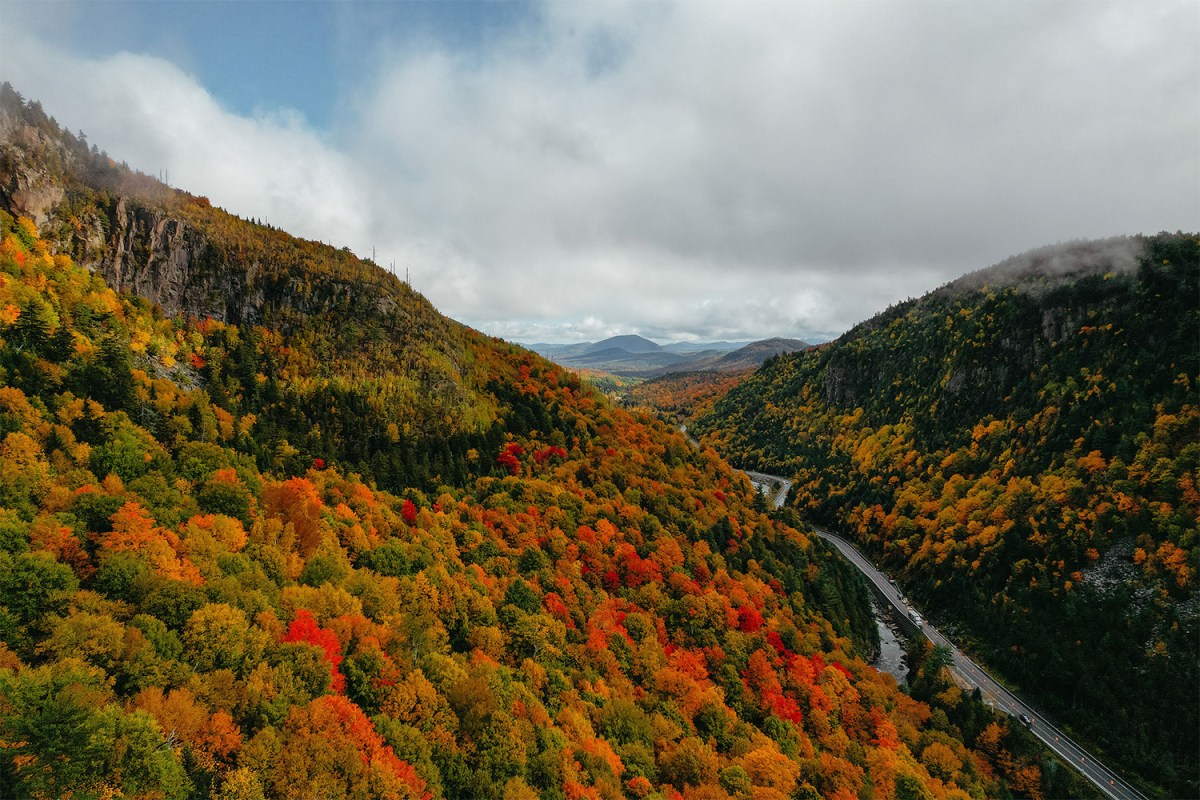
The best fall lodging in Upstate New York isn’t about thread count—it’s about waking up to crisp mornings, fireplace access, and being positioned to drive peak-color routes without backtracking. Book early: the cutest Airbnbs and small inns fill months in advance during October weekends.
Your base matters more than the room itself because fall foliage season rewards early starts and flexible routing through multiple scenic towns.
Cozy Cottages and Apartments Near Bear Mountain and Cold Spring
Cold Spring offers the fastest escape from NYC and direct access to Breakneck Ridge and Hudson River views—stay here if you’re doing a long weekend and want hiking-ready lodging without the Catskills drive. Cottages and rental apartments in Cold Spring keep you walkable to Main Street antique shops and restaurants while positioning you for early-morning trailhead access.
The single advantage: you’re 45 minutes from Manhattan, so last-minute bookings are actually possible here when everywhere else is sold out.
Boutique Hotels and Charming B&Bs in Woodstock
Woodstock is the fall foliage town that actually delivers on its reputation—choose a boutique hotel or B&B here if you want walkable dining, galleries, and vintage shops without feeling like you’re performing a Pinterest aesthetic. The town’s compact Main Street means you can park once and spend the afternoon on foot, which beats driving between scattered attractions.
Book a room with a fireplace or shared common area; October evenings in Woodstock demand hot cider and conversation, not isolation.
Cabins and Luxury Villas in Catskill
The Catskill Mountains west of the Hudson River deliver the most dramatic foliage and the most isolation—rent a cabin or villa here if you’re prioritizing scenery over walkability and want a base for multiple day drives on Routes 28, 32, and 414. Cabins with fireplaces and views of the valley are the move for couples or small groups; they cost more but eliminate the need to eat every meal out.
Position yourself in the central Catskills (near Tannersville, Livingston Manor, or Phoenicia) to access both the Hudson Valley scenic drives and the Adirondack routes without doubling back.
Wellness Resorts and Guesthouses Across the Catskills
If your fall trip includes yoga, farm-to-table meals, or spa time, wellness resorts scattered across the Catskills offer all-in-one packages that justify staying put for two or three nights. These properties typically include breakfast and activities, which simplifies planning and removes the daily restaurant hunt.
They work best for travelers who want structure and don’t mind paying premium rates for convenience and curated experiences.
Budget-Friendly Hotels in Poughkeepsie, New Paltz, and Kingston
These three towns form the gateway to the Hudson Valley and Catskills—stay here if you’re driving Route 32 through multiple scenic stops and want a central base that won’t drain your budget. Poughkeepsie sits closest to the Walkway Over the Hudson and offers the most hotel variety; New Paltz and Kingston are smaller and more charming but book faster.
The trade-off is clear: you’ll spend 20–30 minutes driving to peak foliage zones, but you’ll save $50–100 per night compared to Woodstock or mountain resorts, and you’ll have easy access to farm stands, cider mills, and antique shops along the main roads.
Booking strategy: Reserve your October lodging by late August. Fall weekends (Friday–Sunday) book out completely; weekday stays (Monday–Thursday) offer better availability and lower rates.
Airbnbs in small towns often require two- or three-night minimums during peak season, so plan accordingly. If you’re driving multiple scenic routes, split your stay between two towns—three nights in the Hudson Valley, then two nights in the central Catskills—rather than staying in one place and driving long loops each day.
Frequently Asked Questions
When exactly should I book my trip to catch peak foliage?
Peak timing shifts by 3–4 weeks depending on elevation and geography. The Adirondacks typically peak in late September, central New York and the Mohawk Valley in early to mid-October, and the Catskills and Hudson Valley in mid-to-late October.
Rather than guessing, check the New York State fall foliage report (published weekly during autumn) before booking—it tracks color progression by region and removes the guesswork. Book accommodations 2–3 months ahead if you’re targeting a specific weekend, especially in popular towns like Woodstock, Hudson, and Rhinebeck; the best Airbnbs and inns fill up fast during peak season.
Do I need a car to see fall foliage in upstate New York?
A car is essential for accessing the best scenic drives and remote waterfalls, but not if you’re staying in a walkable town base. Towns like Hudson, Woodstock, and Cold Spring have downtown galleries, restaurants, and shops within walking distance, plus nearby hiking trails.
However, to drive the Adirondack High Peaks Scenic Byway, Cayuga Lake Scenic Byway, or Route 28 to Cooperstown, you’ll need your own transportation—public transit doesn’t connect these routes reliably during fall.
What’s the difference between upstate New York fall foliage and New England’s?
Upstate New York’s landscape is wilder and more rugged than New England’s manicured parks, with a grittier, less-polished aesthetic. The towns cater to a different vibe—think alternative breweries, hidden woodland bars, and outdoor pizza joints rather than quintessential New England charm.
Upstate also offers vibrant art and antique scenes (Hudson and Woodstock are standouts), plus fewer crowds than peak New England destinations. The trade-off: New England’s foliage is often slightly more vivid, but upstate delivers better solitude and a more eclectic cultural experience.
Should I stay in one town or move around during a fall foliage road trip?
Base yourself in one central town for 2–3 nights rather than moving nightly—it eliminates packing stress and lets you explore surrounding drives without constant hotel changes. For Hudson Valley trips, Hudson or Rhinebeck work as anchors; for Catskills, Woodstock or Livingston Manor are ideal bases; for Adirondacks, any town along Route 73 gives you access to high peaks and waterfalls.
Book accommodations early (2–3 months ahead), especially for fall weekends, since availability drops sharply once peak color dates approach.
Book Your Peak Foliage Trip with Confidence
Check the New York State foliage report this Sunday, pick the region showing “peak” or “near-peak” status, and book your lodging immediately—the best cabins and inns in Woodstock, Hudson, and Livingston Manor fill months in advance during October weekends. If you’re flexible on dates, target a weekday stay in early to mid-October when the Mohawk Valley and central New York are at their most vibrant and crowds are thinnest on scenic drives.
Upstate New York’s fall delivers something New England can’t: genuine solitude mixed with dramatic color, plus towns that feel like real places instead of foliage-viewing machines. You’ll wake up to crisp mornings, drive empty scenic byways, and actually have time to linger at farm stands and waterfalls without fighting crowds.
Pick your region based on the foliage report, reserve your stay this week, and plan to arrive early enough for a sunrise hike on your first morning—that’s when the light is strongest and the trails are entirely yours.
Leave a Reply