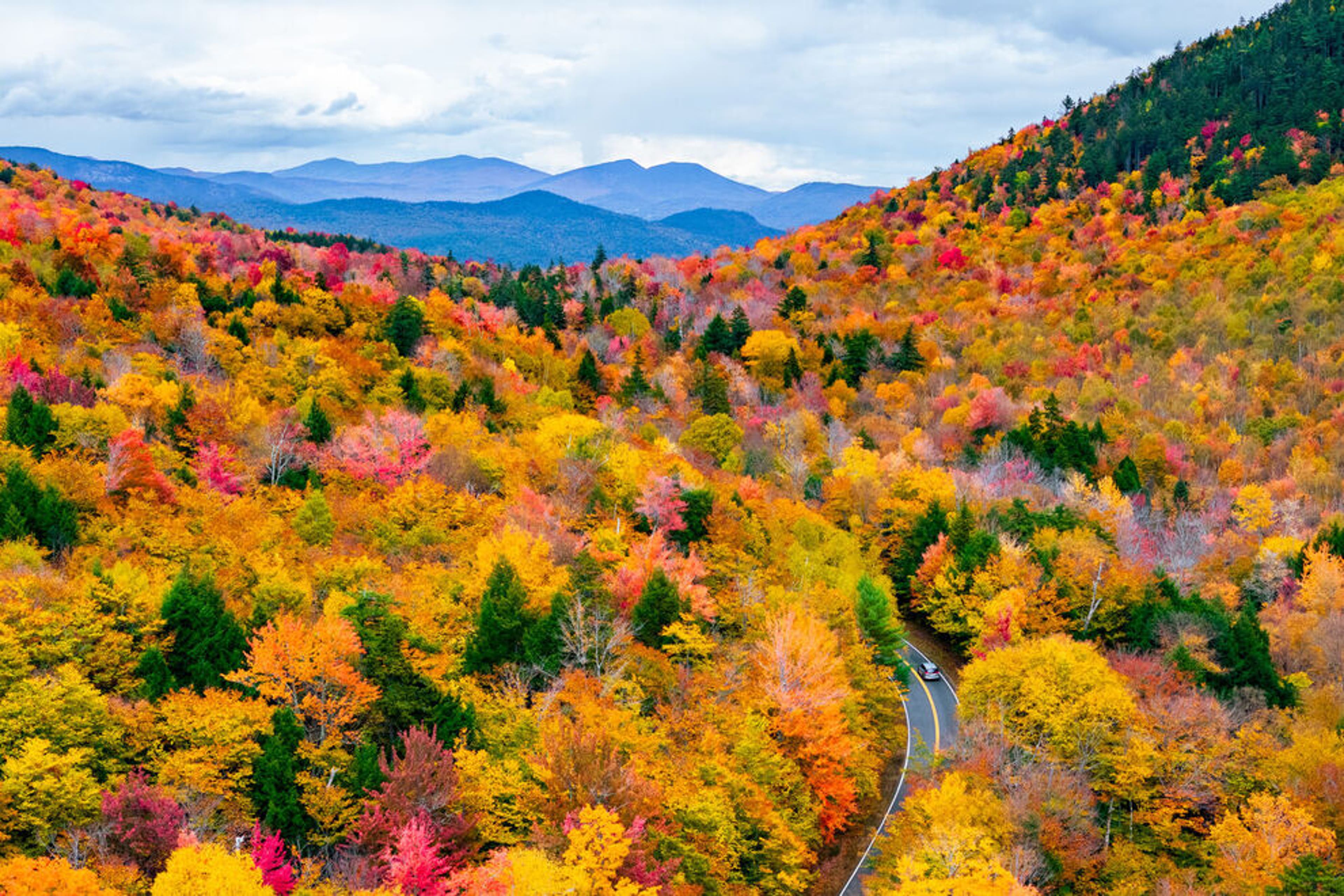
The October air hits your face the moment you step out of the car — crisp, woodsy, carrying the faint sweetness of decaying maple leaves and wood smoke from somewhere you can’t quite place. Ahead of you, the Kancamagus Highway unfurls like a corridor of fire, every ridge blazing in layers of amber, crimson, and gold that look almost too saturated to be real.
What makes this corner of New Hampshire impossible to replicate is the sheer density of fall experiences stacked into one compact region — a world-class scenic drive, above-treeline summit views, vintage train rides through mountain notches, and a postcard village with a covered bridge, all within a 45-minute radius. This guide walks you through exactly when to go, where to base yourself, and how to build an itinerary that hits every essential stop without wasting a mile.
Expect to spend $150–$300 per night on lodging during peak October, with budget motels around $100–$140 and resort splurges like the Omni Mount Washington running $300–$500. All-in for a two- to three-day trip, plan on roughly $400–$800 per person covering lodging, food, gas, and one paid attraction.
Your White Mountains Fall Itinerary at a Glance
Six decisions will shape your entire trip. Get these right and everything else falls into place.
- Best time to visit: First two weeks of October — use foliage trackers starting mid-September to confirm before booking.
- Must-drive route: Kancamagus Highway, 34.5 miles between Lincoln and Conway — plan a full day with stops at Lower Falls and Champney Falls.
- Best base for first-timers: North Conway — direct access to the Kanc eastern terminus, most lodging and dining options in the region.
- Best base for romance: Jackson — covered bridge, quiet village, The Wentworth inn, and Jackson Falls just minutes away.
- Top train ride: North Conway Scenic Railway — flexible 1- to 5-hour excursions departing right from downtown.
- Ideal trip length: Three days minimum to cover the drive, a summit hike, charming towns, and a train ride without rushing.
When Is the Best Time to Visit the White Mountains for Fall Foliage?
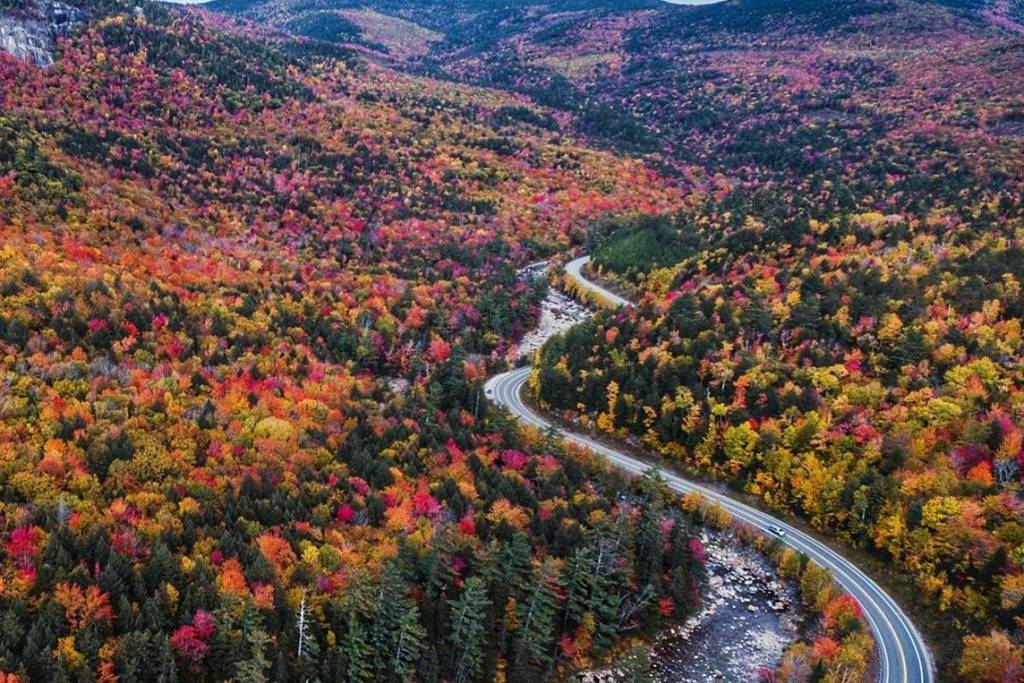
The window is narrow and unforgiving — peak color in the White Mountains typically hits during the first two to three weeks of October, but it shifts every year depending on summer rainfall, early frost, and temperature swings. Miss it by a week and you’re looking at bare branches or still-green canopy.
Nail it and the entire Kancamagus Highway looks like it’s on fire.
The Elevation Trick Most Visitors Miss
Color doesn’t hit the whole region at once. Higher elevations — think Crawford Notch, the slopes around Bretton Woods, and anything above 2,500 feet — peak first, usually in late September to very early October.
Valley towns like North Conway and Jackson follow roughly a week to ten days later. This actually works in your favor: if you’re flexible, you can chase color from high ridges to low valleys over a few days and catch it at its best in multiple spots.
How to Track Peak Foliage in Real Time
Don’t guess. Use foliage trackers that update weekly once September rolls around. The two most reliable for New Hampshire are:
- New Hampshire Division of Travel & Tourism: Publishes a fall foliage map with weekly color reports broken down by region. Check it starting mid-September.
- I Love Fall Foliage (social media and web): Crowdsourced reports with real-time photos from hikers and drivers already on the ground. More useful than any official forecast for day-to-day accuracy.
Bottom line: if you have flexibility, wait until trackers confirm peak is underway before booking. Two to three days of lead time is usually enough to snag lodging outside the most saturated weekends.
Timing Around Crowds and Prices
Columbus Day weekend (Indigenous Peoples’ Day) is the single busiest stretch of the fall season in the White Mountains. Lodging prices spike, the Kancamagus Highway slows to a crawl, and parking at popular trailheads fills by mid-morning.
The weekend before Columbus Day often delivers the same color with noticeably thinner crowds — that’s the sweet spot for anyone who can take a Friday off.
If you’re locked into a specific date, aim for the second full week of October as your safest baseline. Confirm closer to your trip with the trackers above — foliage reports change quickly once fall sets in.
- Late September: Best for high-elevation drives and early color; valley towns still mostly green.
- First two weeks of October: Peak zone for most of the region. This is when you want to be here.
- Third week of October: Color fading at higher elevations but still solid in sheltered valleys like Jackson and North Conway. Fewer crowds, lower prices.
Lodging during peak week books out months in advance — especially cabins and mountain inns in Jackson and Bartlett. If you want a specific property, lock it in by mid-summer.
Last-minute bookings during foliage season tend to mean either premium pricing or long drives from the edges of the region.
Do You Need a Car for a White Mountains Fall Itinerary?
Yes, unconditionally. A car isn’t just helpful—it’s your only realistic way to experience this region. The White Mountains are a collection of distinct towns and trailheads separated by winding mountain roads, not a walkable destination.
The verdict: Rent a car. Everything that makes a fall foliage trip here spectacular—the scenic drives, the covered bridges, the spontaneous waterfall stops—requires the freedom of your own vehicle.
- If you’re flying: Rent at Boston Logan (BOS) or Manchester-Boston Regional (MHT). The 2-2.5 hour drive north is part of the foliage immersion.
- Public transit: It exists in theory but fails for this itinerary. You’d waste hours on limited schedules and miss every essential stop between towns.
- Rideshares (Uber/Lyft): Unreliable and prohibitively expensive for the distances involved. Don’t count on them for anything beyond a single town.
Base yourself smartly: Choose lodging in North Conway or near Lincoln for direct access to the Kancamagus Highway endpoints. This lets you drive the entire byway one day, then use your car to explore surrounding areas like Jackson or Bretton Woods on another without long commutes.
Insider parking tip: The most popular pulloffs along the Kancamagus Highway, especially around Lower Falls and the Albany Covered Bridge, fill to capacity by mid-morning on peak foliage weekends. Arrive before 9 AM or target late afternoon to avoid the scramble.
Where Should You Stay for a White Mountains Fall Itinerary?
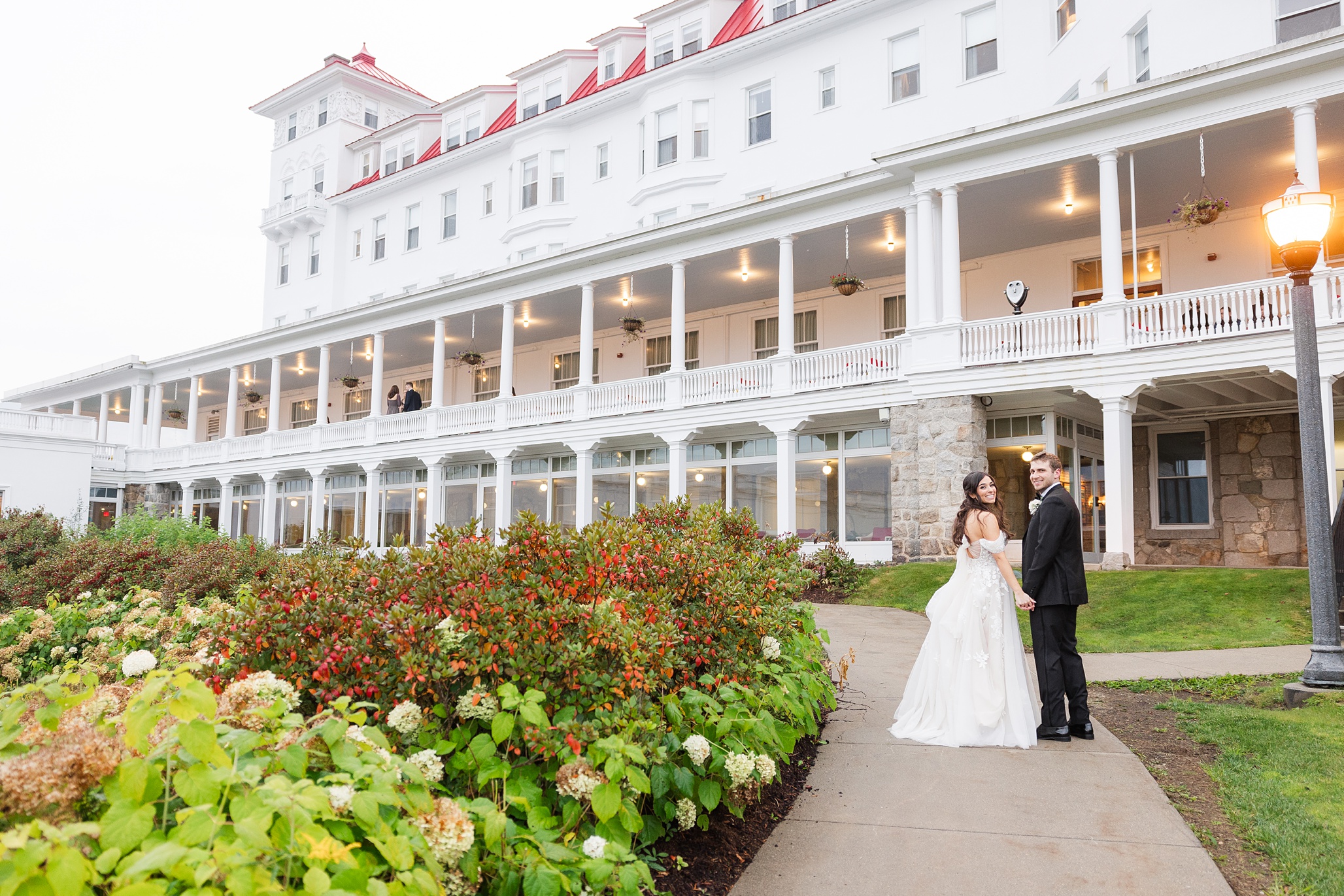
Elevation changes everything in the Whites — leaves peak in Bretton Woods nearly two weeks before they hit North Conway, which means the town you sleep in literally determines what color show you wake up to. These four bases each pull you in a different direction, so choose based on what matters most to your trip: grand resort energy, walkable nightlife, storybook charm, or quiet proximity to the Kancamagus.
| Base | Best For | Vibe | Access to the Kanc |
|---|---|---|---|
| Bretton Woods | Couples & splurge trips | Grand resort, polished | 45 min to Lincoln end |
| North Conway | Families & first-timers | Shopping, restaurants, lively | Direct — eastern terminus |
| Jackson | Romance & quiet seekers | Tiny, picturesque, slow-paced | 20 min to Conway end |
| Bartlett | Budget-conscious explorers | Low-key, outdoors-focused | 15 min to Conway end |
Bretton Woods
Bretton Woods sits at the northern edge of the range, higher in elevation and earlier to peak — plan for peak foliage here in late September to early October, roughly a week or two before the Kancamagus hits its stride. The draw is the Omni Mount Washington Resort, the iconic 1902 grand hotel with a sweeping veranda facing the Presidential Range.
Rooms here start around $300–500/night in foliage season, and they book out months ahead — lock in by midsummer or you’re out of luck.
- Who it’s for: Travelers who want a resort experience with dining, spa, and golf all on-site, so you don’t have to drive anywhere after a long day of leaf-peeping.
- The catch: You’re 45 minutes from the Kancamagus, and the restaurant scene beyond the resort is nearly nonexistent. This base works best if you plan your Kanc day as a dedicated full-day outing from here.
- Insider detail: Even if you don’t stay at the Omni, grab a drink on the veranda at sunset — staff won’t turn you away, and the west-facing porch view of the Presidential Range draped in reds and golds is one of the best in New England.
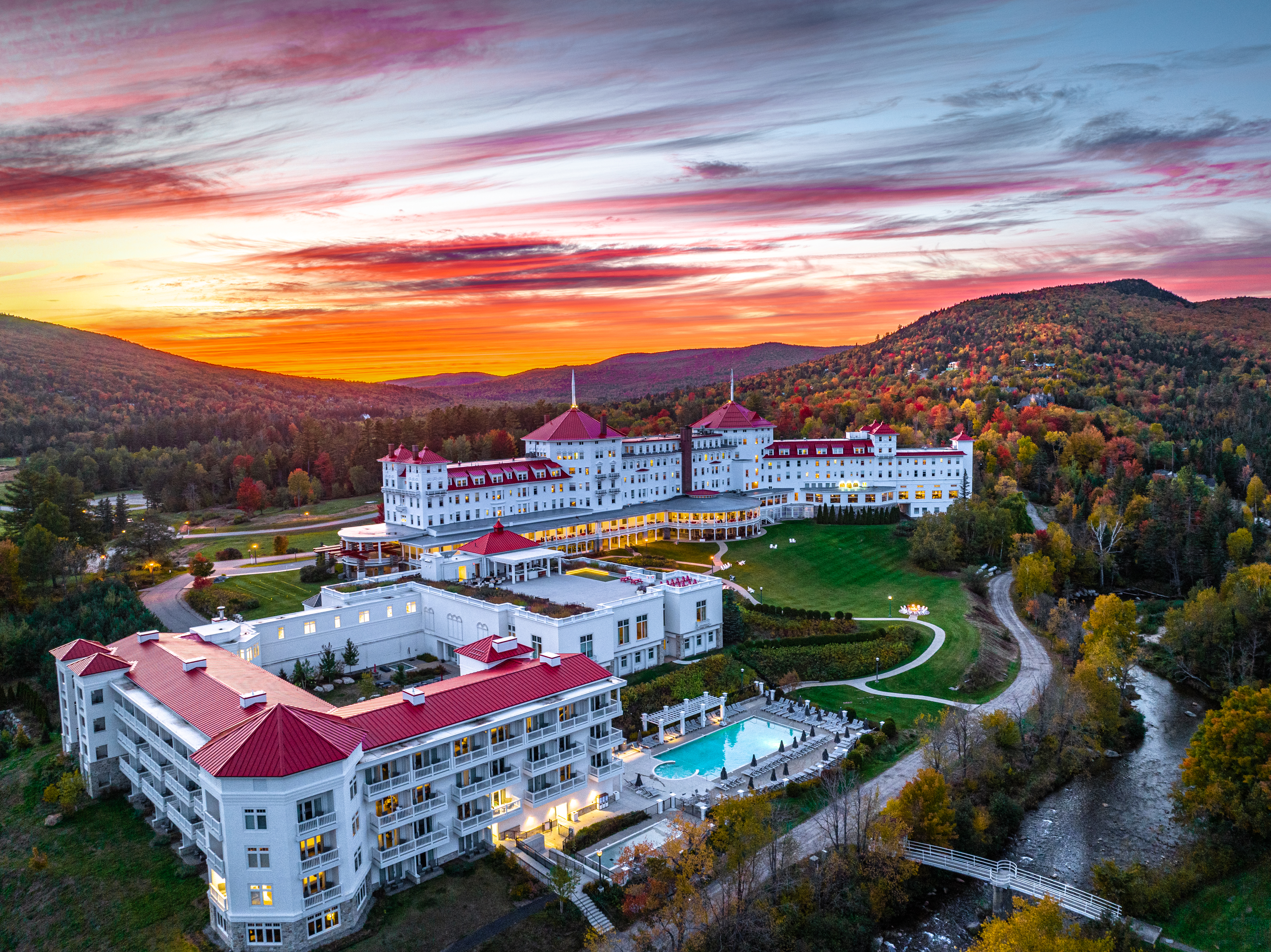
North Conway
North Conway is the engine of the White Mountains — more restaurants, more shops, more lodging options at every price point than anywhere else in the region. It’s also the eastern terminus of the Kancamagus Highway, which means you can roll out of bed and start the drive without burning an hour just getting to the starting line.
- Who it’s for: First-time visitors and families who want convenience, variety, and the option to grab dinner without a 30-minute drive. The Conway Scenic Railroad departs from here, and outlets line Route 16 for rainy-day backup.
- The catch: Route 16 is a commercial strip — it’s functional, not charming. If you’re picturing a quaint New England village, this isn’t it. Traffic backs up on weekends during peak foliage, especially midday.
- Price range: Expect $150–350/night at mainstream hotels; budget motels dip below $120. Book at least six weeks out for October weekends.
- Where to focus: Lodging within a half-mile of the Kancamagus Highway eastern entrance saves you the worst of the Route 16 bottleneck each morning.
Jackson
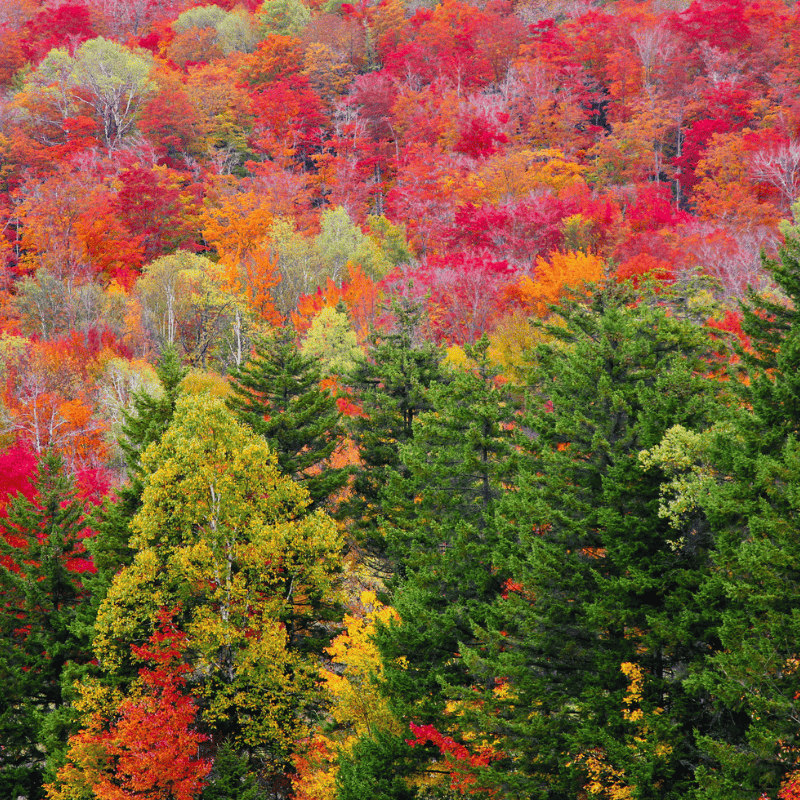
Jackson is the postcard — a covered bridge, a white steeple, and a village green that looks like it was staged for a calendar shoot. The Wentworth, a quintessential New England inn, anchors the town with a lively bar, mountain views, and an on-site golf course.
Rooms typically run $200–400/night in peak season.
- Who it’s for: Couples and anyone who wants to feel like they stepped into a quieter era. Jackson sits just north of North Conway, close enough for dinner runs but far enough to escape the strip-mall energy.
- The catch: Dining is limited to a handful of spots, and the town essentially shuts down by 9 PM. If you want nightlife or diverse restaurant options, you’ll drive to North Conway anyway.
- Insider detail: Jackson Falls, just minutes from the village center, is a local favorite for autumn photos and easy wading — the falls are referenced in the towns section, but staying in Jackson means you can visit at dawn before anyone else arrives.
Bartlett
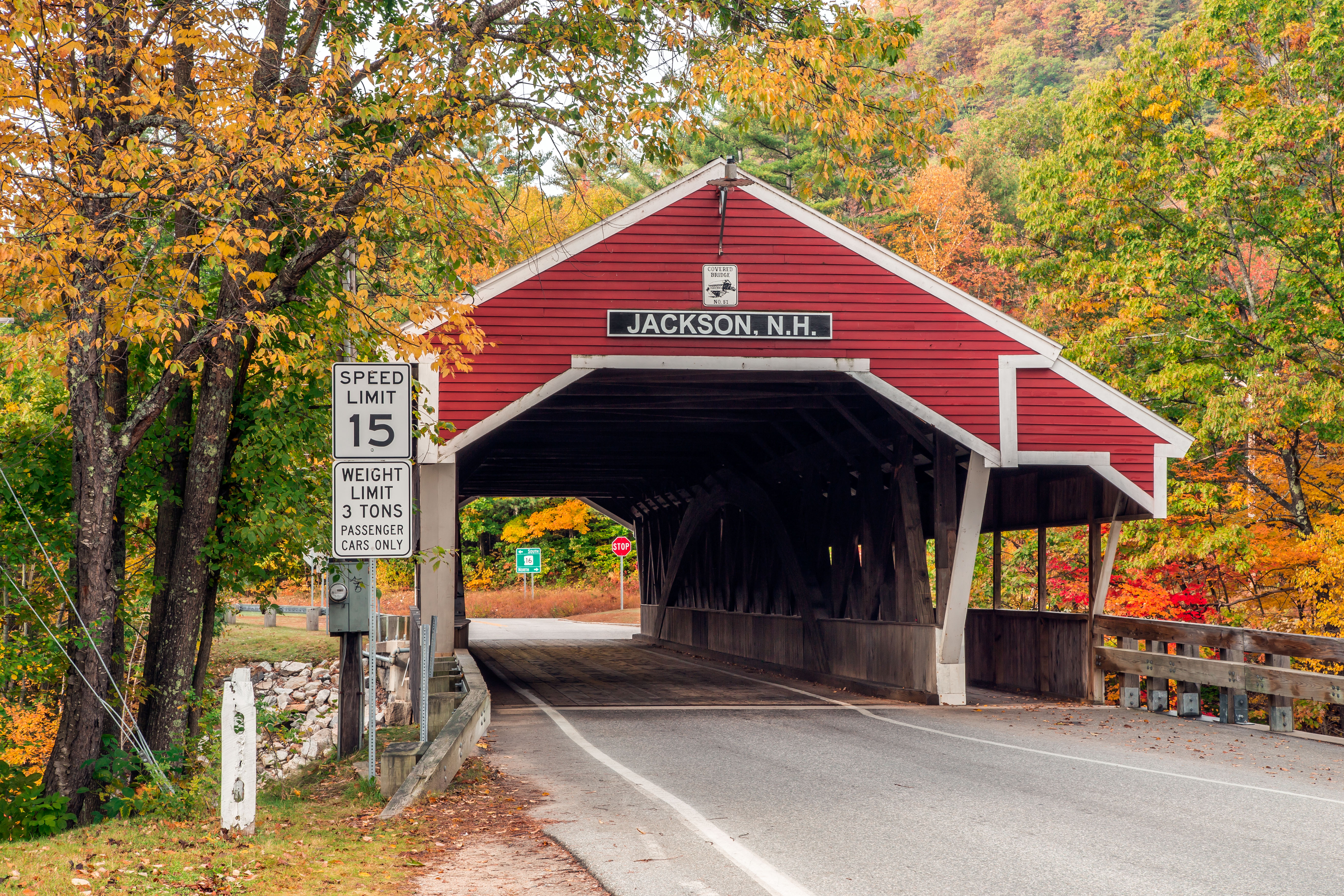
Bartlett flies under the radar, wedged between North Conway and the Kancamagus corridor. The Grand Summit Hotel at Attitash sits right at the base of Bear Peak with a year-round outdoor pool, an on-site pub, and a grab-and-go café for early mornings — exactly what you need when you’re trying to hit trailheads by 7 AM.
Expect roughly $150–275/night depending on the weekend.
- Who it’s for: Budget-minded explorers who want a solid home base without paying North Conway prices, and outdoorsy travelers who’d rather spend money on experiences than a lobby chandelier.
- The catch: Bartlett itself has no real village center or walkable dining scene. You’re driving 10–15 minutes to North Conway for most meals.
- The win: You’re positioned perfectly between the Kancamagus eastern entrance and the Bretton Woods corridor, making it easy to split your days between the two without long drives in either direction.

What Are the Best Scenic Drives and Stops?
For foliage that hits at 2,900 feet, the Kancamagus Highway is your non-negotiable main event. For a completely different perspective—panoramic valley views without the climb—add Cathedral Ledge to your afternoon.
Kancamagus Highway

The Kanc is 34.5 miles of pure, elevated spectacle between North Conway and Lincoln. This isn’t a quick through-drive; block a minimum of three hours, but a full day lets you actually stop.
The route gains nearly 3,000 feet, which means colors peak here a week or two before the valleys—plan your dates around it.
Drive west from Conway to Lincoln to hit the most iconic stops in logical order. Skip generic overlooks and focus on these:
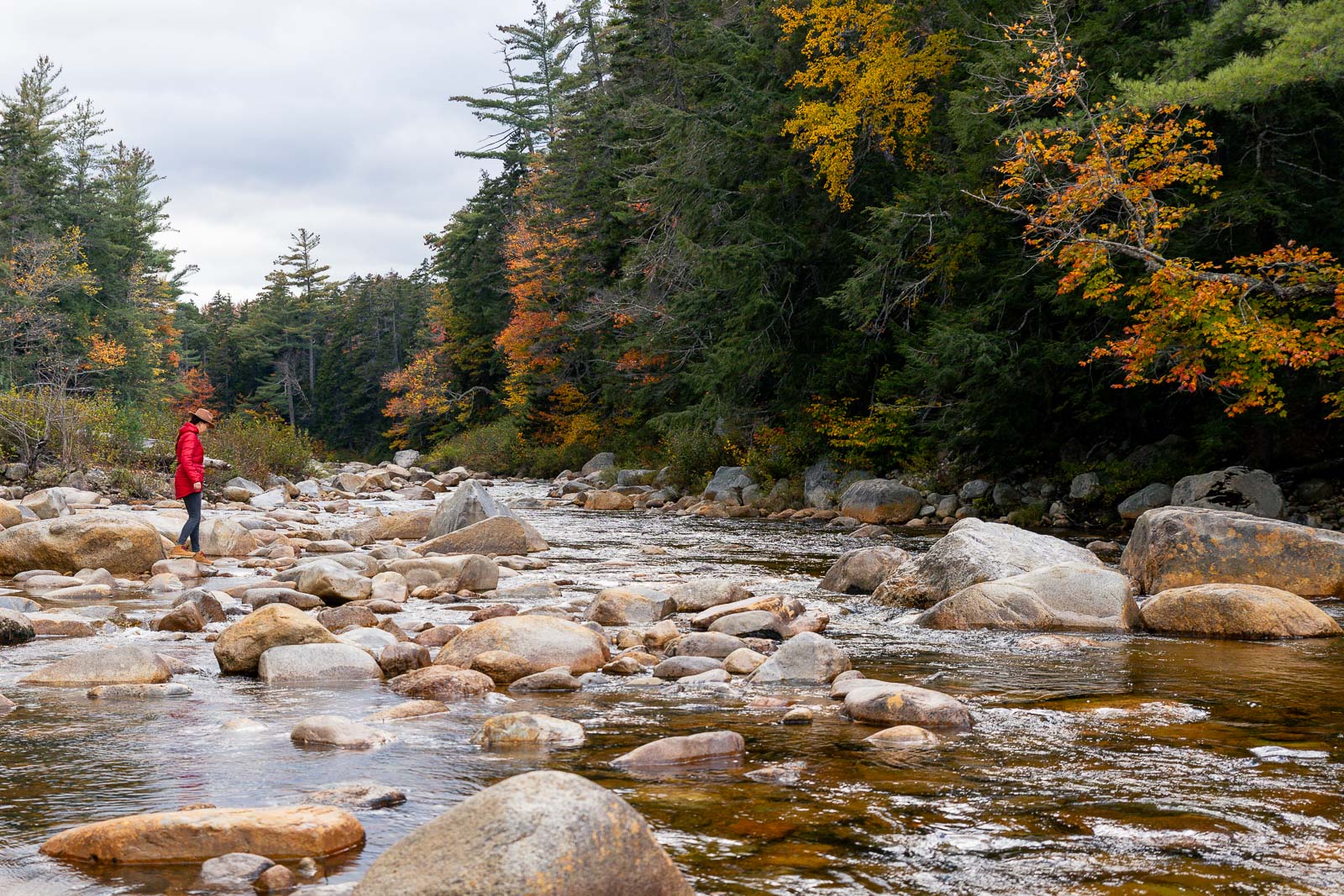
- Lower Falls: Your first must-stop. It’s a short, easy walk from the parking area to the Swift River and a popular swimming spot. The combination of river, rocks, and color is the classic Kanc shot.
- Champney Falls Trail: A 2.8-mile round trip hike to a stunning pair of waterfalls framed by blazing maples. The moderate effort is worth it for the intimate view away from the roadside crowds.
- Sabbaday Falls: A shorter, easier walk than Champney to a multi-tiered waterfall. It’s gorgeous but often mobbed—hit it early or skip it for quieter stops if you have limited time.
- C.L. Graham Wangan Overlook: The highest point on the highway. Stop for the 180-degree view, but know the parking lot is small and fills fast. Arrive before 9 a.m. on peak weekends.
Insider Decision: If you only have half a day, drive the eastern half from Conway to the height of land. The western descent into Lincoln has fewer standout stops and the light is often better in the morning facing east.
Cathedral Ledge

This is your move for the best aerial foliage without a hike. The short, paved road to the summit puts you at a 700-foot cliff overlooking the Saco River Valley and Echo Lake.
The view is wide, colorful, and completely accessible from your car. It’s the perfect late-afternoon stop when your legs are tired from walking.
The road is steep and winding. Arrive before 4 p.m. as the small summit parking area fills and the light gets harsh. Unlike the Kanc, this is a single, profound viewpoint, not a drive with multiple stops. The reward-to-effort ratio here is unbeatable.
Combine it with a quick loop around Echo Lake State Park at the base for a change of scenery. The reflections of the ledge and foliage in the lake are stunning.
Base yourself in North Conway or Jackson to easily access both this ledge and the Kancamagus starting point.
| Drive / Stop | Time Commitment | Best For | Critical Tip |
|---|---|---|---|
| Kancamagus Highway | Half to full day | Deep foliage immersion, waterfall hikes, iconic road trip | Drive Conway to Lincoln; prioritize Lower Falls and Champney Falls. |
| Cathedral Ledge | 1-2 hours | Effortless panoramic views, sunset photos, accessible overlook | Go before 4 p.m.; the summit lot is tiny and crowds peak at golden hour. |
Which Train Rides Offer the Best Fall Views?
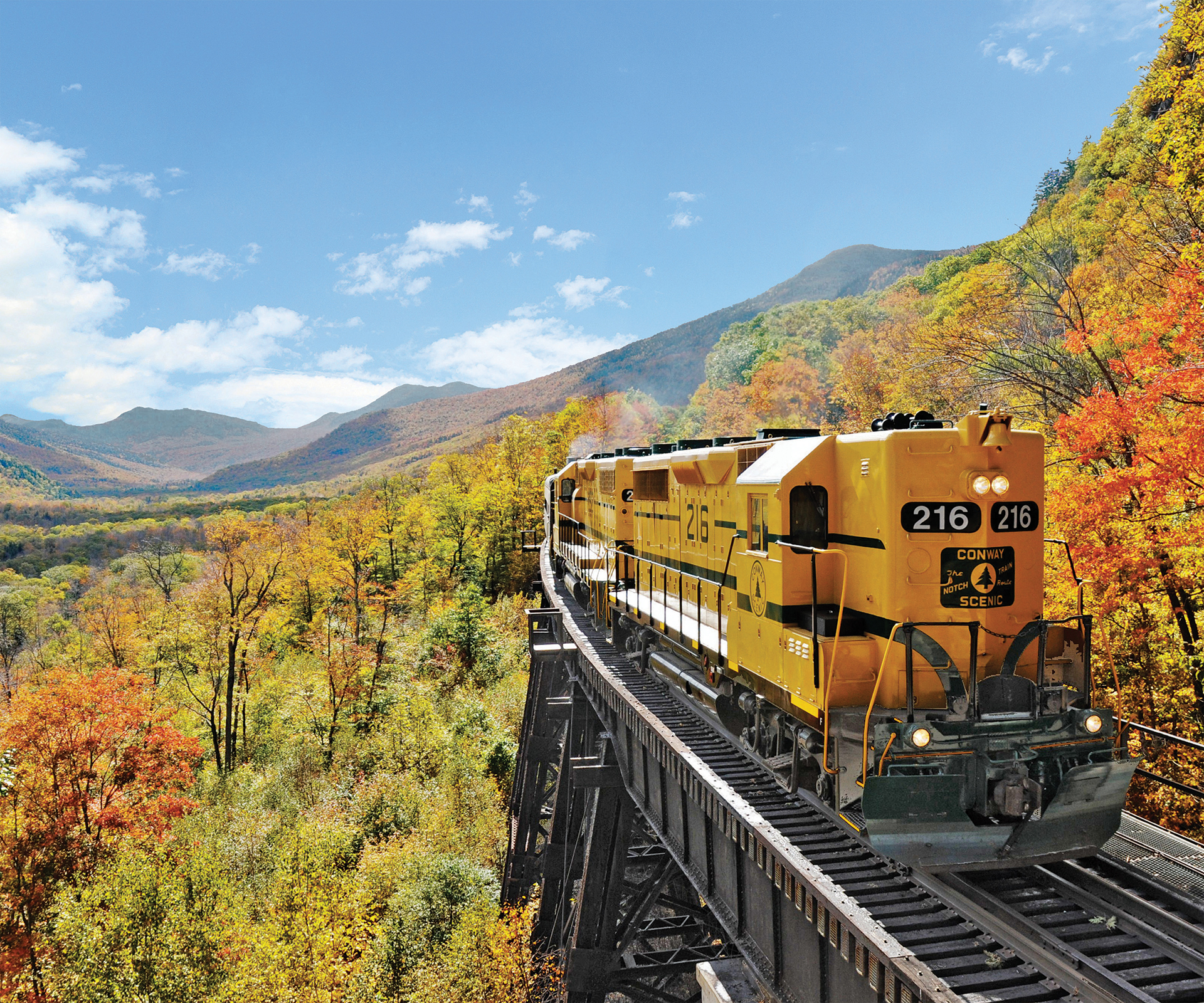
Sitting on a vintage rail car while crimson and gold hillsides roll past at walking pace is the one White Mountains experience you simply cannot replicate by car. Two railways dominate the fall foliage train scene here, and they serve completely different goals.
North Conway Scenic Railway
This is the move for anyone who wants maximum foliage immersion with zero driving stress. The train departs daily in fall from the station right in downtown North Conway — walkable from most North Conway hotels and restaurants — and winds deep into the mountains with stops at Willey House and Crawford Notch Depot, both on lakeshore settings that photograph beautifully.
Why I’d pick this one: You choose your commitment level. Excursions range from a quick 1-hour valley loop to a full 5-hour journey through Crawford Notch, with prices starting around $20 per person for the shortest ride and roughly $69 for the longest.
The 4-hour Notch route hits the sweet spot — enough time to sink into the scenery without losing half your day.
- Best for: Families, photographers, and anyone who wants flexible timing with multiple duration options.
- Departure point: North Conway village — pair it with a downtown dinner or shopping.
- Insider detail: Sit on the left side of the car heading northbound for the best notch views. Most passengers crowd the right, but the dramatic cliff exposure faces left.
Mt. Washington Cog Railway
The Cog does something no other New England train can: it climbs to the 6,288-foot summit of Mt. Washington itself.
The 3-hour round trip takes you above treeline, where on clear fall days the foliage panorama stretches across multiple states. Tickets typically start around $49 per person.
Why I’d pick this one: You want a summit experience without the hiking. The views from the top are genuinely above-the-clouds territory — not just “pretty leaves,” but an entire mountain range laid out below you in peak color.
- Best for: Bucket-list travelers and anyone who wants altitude with their foliage.
- Catch: Weather rules everything at the summit. Cloud cover can eliminate the view entirely, so check conditions the morning of. This is not the ride to book on a grey day.
- Logistics: The base station sits near Bretton Woods, roughly 30 minutes northwest of North Conway. Plan accordingly if combining both trains in one trip.
Quick comparison at a glance:
| Feature | North Conway Scenic | Mt. Washington Cog |
|---|---|---|
| Duration | 1–5 hours (your choice) | ~3 hours fixed |
| Starting price | ~$20 per person | ~$49 per person |
| Scenery type | Valley and notch foliage | Above-treeline summit panorama |
| Walkable from North Conway | Yes | No — 30 min drive |
| Weather dependent | Moderate | High — summit views vanish in clouds |
One bonus worth knowing about: the Cafe Lafayette Dinner Train runs a 2-hour evening ride with a 5-course seasonal meal through the White Mountains. Tickets start around $95 per person.
It’s the only option here that pairs foliage with fine dining — worth it if you want to combine your train experience and dinner into one booking.
Both the Cog and the North Conway Scenic Railway sell out during peak foliage — usually mid-October. Book online at least two to three weeks ahead, and aim for weekday departures if flexibility exists. Weekend trains in October fill fastest.
What Towns and Local Experiences Should You Include?
The most memorable White Mountains moments aren’t just grand vistas—they’re the bite of a warm cider donut at 8 AM or a glass of wine with a panoramic view at 3 PM. These two stops deliver that perfect, grounding contrast to the epic drives.
Jackson and Jackson Falls
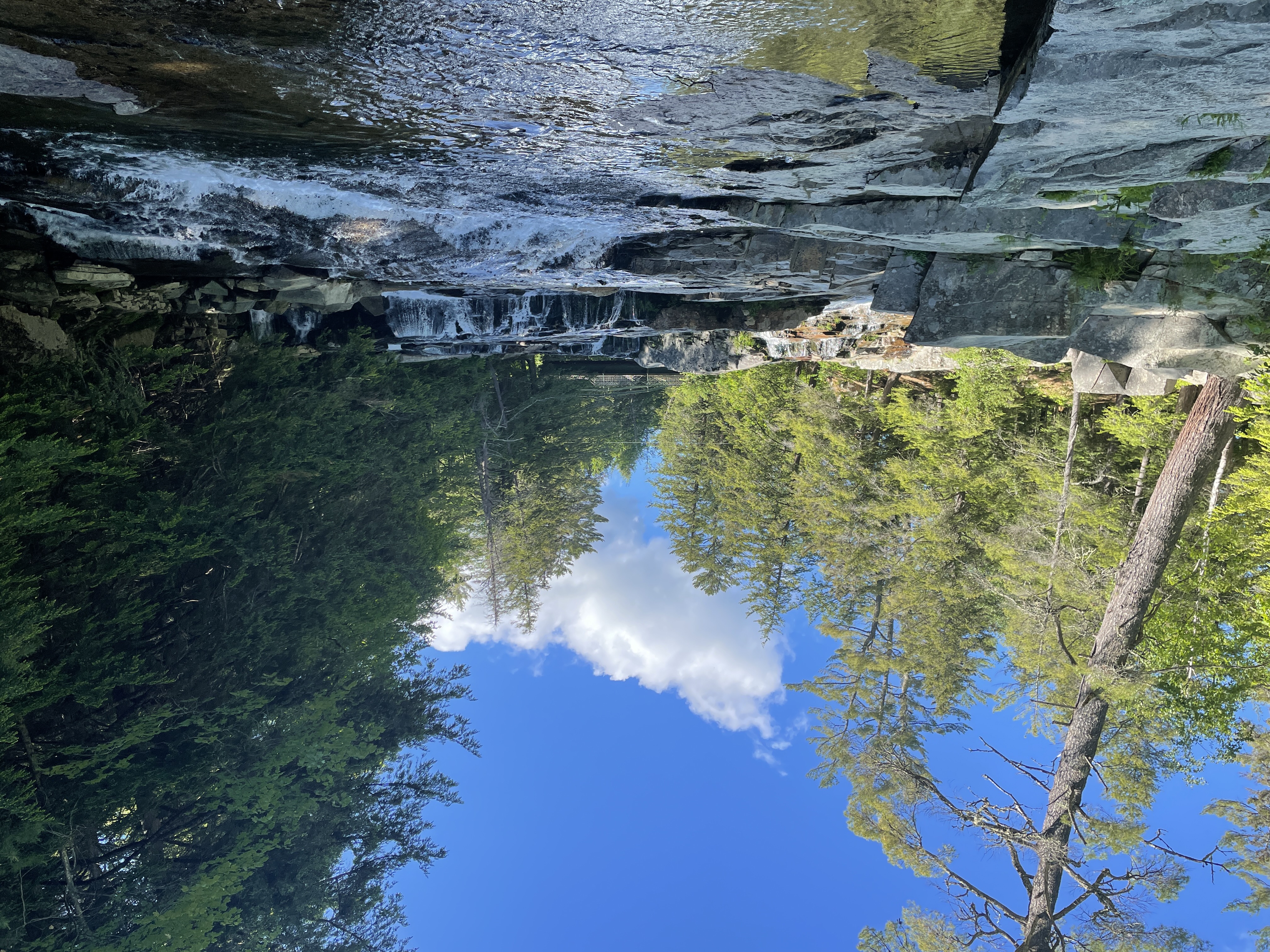
Jackson is the quiet, covered-bridge alternative to busier base towns. The village itself is a cluster of inns and a general store, but the real draw is Jackson Falls, a cascading series of rock ledges and pools right beside Route 16B.
It’s less of a hike and more of a roadside spectacle, making it an ideal first stop on a morning drive.
- Best for: Photographers and families wanting easy, stunning water access without a hike.
- Do this: Park at the small lot by the Honeymoon Bridge. The falls are immediately accessible; walk upstream for better photo angles away from the road.
- Insider detail: The falls face west, so late afternoon light creates the best glow on the water and surrounding foliage. Morning visits are more shadowed.
- Stay context: Choosing a cabin or inn in Jackson puts you minutes from the falls and offers a serene, less commercialized overnight compared to North Conway.
White Mountain Cider Co. and Alpine Gardens Winery

Pair the region’s best snack with its best view. White Mountain Cider Co. in Bartlett is a mandatory stop for fresh, hot apple cider donuts made daily.
Alpine Gardens Winery, perched above Glen, provides a laid-back vineyard setting with mountain panoramas—your reward after a day of driving.
- White Mountain Cider Co.: The donuts are the star. Go early; they sell out and lines form. Buy a dozen to go for your car snacks. The adjoining store also sells local cheeses and preserves worth grabbing for a picnic.
- Alpine Gardens Winery: This is a sunset or late-afternoon stop. The outdoor seating faces the mountains, and the vibe is relaxed. Their wine flights are the move—expect a range of fruit and grape wines in a rustic setting.
- Combined itinerary flow: Hit the Cider Co. in Bartlett in the morning as you head toward the Kancamagus Highway. Save the winery in Glen for your return leg in the late afternoon. This creates a satisfying bookend to your day.
- Logistics: The Cider Co. is cash-friendly but does accept cards. Confirm winery hours and reservation policies directly before your visit, especially for weekends, as they can vary seasonally.
Together, these stops provide the essential sensory anchors—taste and tranquility—that balance the high-adrenaline foliage drives and hikes.

Best 2-Day and 3-Day White Mountains Fall Itineraries
These itineraries run south-to-north so you never double back on the same road — every mile earns new color. The three-day version is the real play; two days works if you accept cutting either a hike or the eastern towns.
Base yourself in North Conway or Lincoln to anchor both options.
| Itinerary | Day 1 | Day 2 | Day 3 |
|---|---|---|---|
| 2-Day | Kancamagus Highway full drive | Hike + Cathedral Ledge or towns | — |
| 3-Day | Kancamagus Highway full drive | Hiking day (Franconia Notch or Presidential Range) | Cathedral Ledge, Jackson, scenic railway |
Day 1: The Kancamagus Highway
Start early — the Kancamagus Highway is 34.5 miles from Lincoln to Conway, and while you can drive it in under an hour, you need a full day to do it right. Plan on 3–4 hours minimum with stops; most visitors fit 10–14 viewpoints and short trails into the day.
- Before you hit the road: Grab apple cider donuts at White Mountain Cider Co. in the morning — they sell out by late morning on peak weekends.
- Morning–afternoon: Drive the Kanc west to east (Lincoln toward Conway) so the sun hits the mountain faces in front of you, not behind. Pack lunch; there are no restaurants on the highway.
- Must-stop trails along the way: Champney Falls for a moderate waterfall hike, and Boulder Loop Trail for a quick climb with wide valley views. Both trailheads have parking but fill fast by 10 a.m. on foliage weekends — another reason to start early.
- Late afternoon: End at Alpine Gardens Winery near Conway for wine with arguably the best post-drive reward view in the region.
- Evening: Explore whichever town you’re staying in. North Conway has the most restaurant density; Lincoln is smaller and quieter.
Insider detail: The Kanc has zero cell service for nearly its entire length. Download your trail maps and save the Google Maps offline area for the full corridor before you leave your hotel.
Day 2: Choose Your Hike
This is your day in the mountains — pick the challenge level that fits your group and commit to it instead of trying to half-do two trails.
- For strong hikers: Mount Lafayette and Franconia Ridge Trail in Franconia Notch State Park is rated the number-one trail on AllTrails in the White Mountains. The loop summits three peaks above treeline with unobstructed 360-degree foliage views. Budget 6–8 hours; bring layers — exposed ridgelines are significantly colder and windier than the valley floor, even in mid-October.
- For moderate hikers: The Presidential Range (Mt. Washington, Adams, Jefferson) offers dozens of trail options of varying length. Tuckerman Ravine trail is the classic approach for the best balance of scenery and effort.
- For minimal effort with maximum payoff: Artist Bluff Trail is only 1.5 miles roundtrip and delivers a stunning valley overlook. Arrive at sunrise — by mid-morning the parking lot overflows and you will wait in a literal line to reach the viewpoint. If even that feels like too much, the gondola at Loon Mountain runs scenic rides and eliminates hiking entirely.
After your hike, grab dinner in Lincoln or North Conway. Polly’s Pancake Parlor in Sugar Hill is worth the detour if you want a post-hike carb load with real maple syrup and mountain views.
Day 3: Views, Towns, and Trains
Day three is lower intensity — scenic overlooks, a charming town crawl, and a train ride if the timing works.
- Morning: Cathedral Ledge in North Conway gives you aerial panoramic views of the Saco River Valley without breaking a sweat. You can drive to the top or hike the 3-mile loop trail — the drive is the move if your legs are spent from yesterday.
- Midday: Head to Jackson, a small town with an iconic covered bridge, pumpkin people displays at nearly every business (an annual fall tradition), and Jackson Falls — a cascading mountain river framed by peak foliage. This is the most photographed fall scene in the White Mountains for a reason.
- Afternoon option: The North Conway Scenic Railway departs daily in fall from downtown North Conway for a roughly 4-hour ride through the mountains, with stops at Willey House on the lake and Crawford Notch Depot. Book at least a week ahead during peak foliage — the dome car sells out first.
- Evening: Drinks on the Wentworth Inn deck in Jackson and pizza at Shannon Door Pub — the bar pizza here is a local favorite and exactly what you want after three days on the road.
Planning note: If you’re compressing this to two days, combine Day 2 and Day 3 by doing an early hike, driving to Cathedral Ledge by late afternoon, and hitting Jackson for dinner. Skip the train — it deserves a relaxed half-day, not a rushed stopover.
Frequently Asked Questions
Is the White Mountains area better than Vermont for fall foliage?
For sheer variety of things to do alongside the leaves — yes. Vermont wins on pastoral charm and covered bridges, but the White Mountains pack elevation-driven color, the Kancamagus Highway, train rides, alpine summits, and wineries into one concentrated area.
If you want fall foliage with actual activities beyond driving, the White Mountains deliver more per mile. Vermont is the pick only if you want a quieter, slower pace with farm stands and village greens as your primary entertainment.
How much does a White Mountains fall trip cost?
Budget roughly $150–$300 per night for lodging in peak October — cabins and inns in Jackson and Bartlett book up fast and command higher rates, while North Conway has more competitive pricing. Dining in the area runs $15–$30 per entree at sit-down spots, though places like Polly’s Pancake Parlor and Flatbread Company keep things affordable.
The Kancamagus Highway is free to drive, but the Mt. Washington Cog Railway runs around $50–$75 per adult depending on the route.
All told, expect to spend $400–$800 per person for a 2–3 day trip including lodging, food, gas, and one paid attraction.
What if I miss peak foliage?
Don’t panic — peak timing shifts by elevation, so higher areas like Crawford Notch and Franconia Notch often turn 5–7 days before valleys like Conway and North Woodstock. If the valley leaves have dropped, drive higher.
The Kancamagus Highway’s 3,000-foot elevation means its color often outlasts lower-elevation areas. Visit online foliage trackers during the weeks leading up to your trip, and if you have flexibility, wait to book until color reports confirm peak conditions in the zone you’re targeting.
Are the White Mountains too crowded on fall weekends?
The Kancamagus Highway on a peak-October Saturday is genuinely congested — parking lots at popular overlooks fill by mid-morning, and you’ll sit in traffic at the busiest pull-offs. Weekday visits between Tuesday and Thursday are the move if you have any flexibility at all.
If weekends are your only option, start the Kanc drive from Lincoln heading east before 8 a.m. to beat the Conway-side crowds. Alternatively, skip the Kanc entirely and drive Crawford Notch or Bear Notch Road for comparable color with a fraction of the traffic.
Plan Your White Mountains Fall Trip
Start by checking the New Hampshire Division of Travel & Tourism foliage map in mid-September to confirm the exact week peak color is hitting your target zone. Then book lodging in North Conway or Jackson immediately — properties sell out six to eight weeks ahead of October weekends.
Block a full day for the Kancamagus Highway and a half-day for the North Conway Scenic Railway.
The White Mountains deliver the most concentrated, varied fall foliage experience in the Northeast, and a single long weekend here will genuinely raise the bar for every leaf-peeping trip that follows.
Lock in your dome car tickets on the North Conway Scenic Railway the same week you book lodging — that seat sells out faster than any other fall experience in the region.
Leave a Reply