The Overseas Highway unfolds ahead, a ribbon of asphalt suspended between two shimmering bodies of water, the salt air warm on your skin. In Louisiana, the scent of fried dough and chicory coffee mingles with the damp, earthy smell of the bayou.
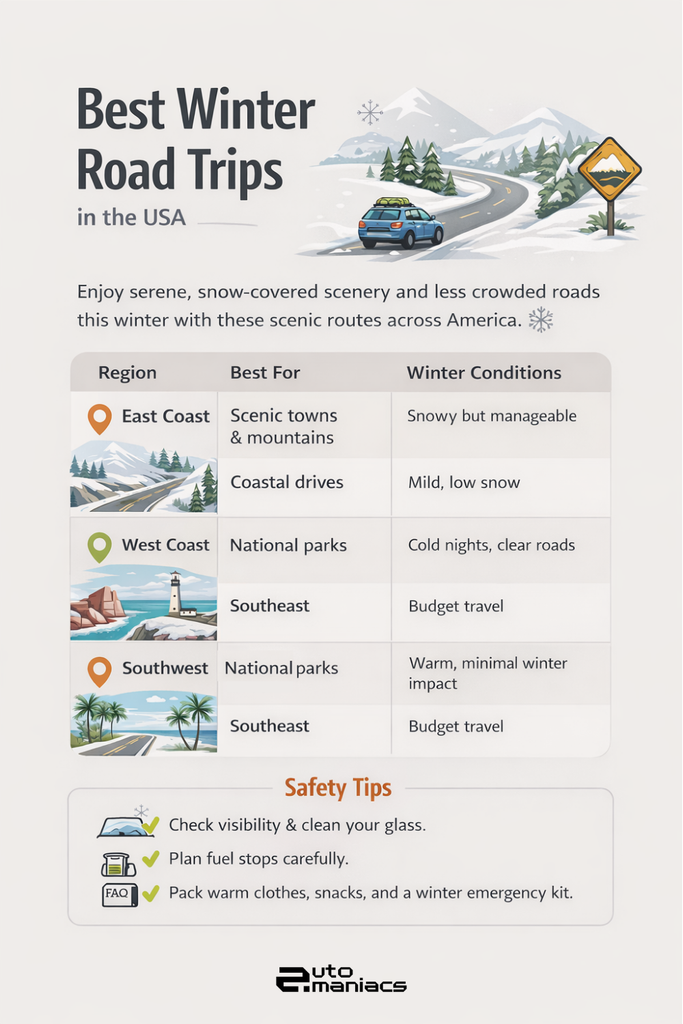
Winter road trips here offer a tropical passport-free escape you can’t get anywhere else, swapping snow for guaranteed warmth or trading crowds for snowy solitude. This guide helps you choose between five warm-weather classics and five iconic snowy drives.
Budget for a 7-day trip runs from $1,500 for a couple in a fuel-efficient car to over $4,000 for a splurge with nightly lodges and dining, depending on your route and lodging style.
Your Quick-Pick Guide to Winter Road Trips
Choose your vibe and hit the road. Here are the standout routes from the article, sorted by what they do best.
- For Guaranteed Warmth & Island Vibes: The Florida Keys: Miami to Key West drive delivers tropical temps and open-ocean views.
- For Cultural & Culinary Immersion: The Louisiana Bayou: New Orleans and Swamp Country loop focuses on food, music, and history.
- For Otherworldly Landscapes: The California Deserts: Death Valley & Joshua Tree offer stark, sunny beauty without summer heat.
- For Lush Drama & Big Scenery: Hawaii: Big Island or Maui Loops give you volcanic roads, waterfalls, and whale watching.
- For Historic Charm & Easy Pace: The Georgia & South Carolina: Atlanta to Savannah route trades snow for Spanish moss and historic squares.
Best Warm Winter Road Trips: Escape the Cold
Swap the snow shovel for sunglasses. These five routes deliver genuine warmth, stunning scenery, and a major drop in crowds, making your winter getaway both comfortable and compelling.
Florida Keys: Miami to Key West
This is the winter road trip for guaranteed warmth and open-ocean driving. The 113-mile Overseas Highway from Key Largo to Key West is the main event, a bucket-list drive where the Atlantic and Gulf of Mexico shimmer on both sides.
Winter is the ideal season: hurricane season is over, humidity drops, and daily highs hover in the mid-70s°F. Base yourself in Islamorada for a quieter, resort-style vibe with great fishing, or in Key West for walkable nightlife, history, and iconic sunset celebrations at Mallory Square.
Accommodations book up fast and prices peak—reserve months ahead, especially for holiday travel.
- The Drive: About 3.5-4 hours from Miami to Key West without stops, but plan for a full day to explore.
- Best For: Couples, seafood lovers, and anyone craving a tropical feel without a passport.
- Don’t Miss: The view from the Seven Mile Bridge and a slice of Key lime pie at Kermit’s in Key West.
- Insider Tip: Street parking in Key West is notoriously difficult. Look for public lots on Grinnell and Caroline Streets, or better yet, book a hotel with included parking and use bikes or walk.
Louisiana Bayou: New Orleans and Swamp Country
Winter in south Louisiana means cool, pleasant days perfect for exploring without the oppressive summer heat and humidity. Start with a few nights in New Orleans, where the culinary scene alone justifies the trip—beignets at Café Du Monde, a po’boy from Parkway Bakery, and dinner at a classic spot like Commander’s Palace are non-negotiable.
Then, rent a car and head west on US-90 into Cajun Country. The real magic is in the small towns: Breaux Bridge (the “Crawfish Capital”) for a plate lunch, and St. Martinville for its historic charm.
A guided swamp tour from a place like Lafayette is the best way to safely see the bayou’s ecosystem.
- The Route: A loop from New Orleans to Lafayette via I-10 and US-90, with stops in the Atchafalaya Basin.
- Best For: Foodies, music fans, and travelers interested in unique American culture.
- Don’t Miss: The drive along the Creole Nature Trail All-American Road for wildlife sightings.
- Lodging Strategy: Stay in New Orleans’ Garden District or Marigny for walkability, then use Lafayette as your hub for exploring Cajun Country.
California Deserts: Death Valley, Joshua Tree, and Beyond
While the rest of the West freezes, the California deserts offer their most comfortable and dramatic season. This is a 6-day, 880-mile loop from Los Angeles that delivers otherworldly landscapes without the scorching 120°F summer heat.
Death Valley is sublime in winter—comfortable for hiking to the Mesquite Flat Sand Dunes or viewing the Artist’s Palette. Joshua Tree’s surreal rock formations and twisted trees are best explored when nights are chilly (bring layers) and days are perfect for scrambling.
The route can include quirky stops like the desert art oasis of Bombay Beach at the Salton Sea.
- Itinerary Flow: LA → Joshua Tree NP → Mojave National Preserve → Death Valley NP → return via US-395 and I-14.
- Best For: Photographers, hikers, and lovers of stark, open landscapes.
- Critical Detail: Death Valley has very limited services and no cell service in most areas. Fill up your gas tank whenever you can and carry extra water (a gallon per person per day).
- Lodging: Book the oasis lodges inside Death Valley (The Oasis at Death Valley) well in advance. Joshua Tree has great vacation rentals in the towns of Joshua Tree and Twentynine Palms.
Hawaii: Big Island and Maui Loops
Hawaii’s winter is its rainy season, but it’s also when the islands are at their most vibrant, lush, and affordable. A 7-10 day trip lets you do justice to one island.
The Big Island is a road-trip masterclass: you can drive from black-sand beaches to the summit of Mauna Kea (check for snow!), and through the steaming landscapes of Hawai’i Volcanoes National Park. Maui’s legendary Road to Hana is a 64-mile, waterfall-rich drive best done over two days with an overnight in Hana.
For fewer crowds and lower rates, visit in January after the holiday rush or in February.
- Big Island Focus: The Saddle Road (Hwy 200) connects the wet Hilo side to the dry Kona coast, passing through surreal volcanic terrain.
- Maui Focus: The Road to Hana demands a rental car with good clearance and an early start. Don’t try to do it round-trip in one day.
- Why Winter: Whale season (humpbacks are present December-April) and surf season on the North Shores add unique activities.
- Booking Note: Rental car prices spike in winter. Book your vehicle the same day you book your flights.
Georgia and South Carolina: Atlanta to Savannah
This Southern road trip trades snow for Spanish moss and historic squares. Start in Atlanta for its world-class food scene (don’t skip the Varsity or a meal in the Sweet Auburn district), then drive 4 hours to Savannah, one of America’s most walkable and beautiful cities.
Winter means mild 50-60°F days, perfect for strolling the 22 park-like squares, taking a ghost tour, and enjoying Lowcountry cuisine without breaking a sweat. The drive itself is straightforward via I-16, but consider detouring to the charming small town of Madison, GA, for its antebellum architecture.
- Best For: History buffs, foodies, and anyone who wants a sophisticated, slow-paced cultural getaway.
- Savannah Musts: Dinner at The Olde Pink House and a walk through Bonaventure Cemetery.
- Extend the Trip: From Savannah, it’s an easy 2-hour drive to Charleston, SC, for another world-class historic and culinary city.
- Lodging: Stay in Savannah’s Historic District for walkability. Charming inns and boutique hotels are the move here—look around Forsyth Park or Jones Street.
| Route | Climate | Vibe | Ideal Days |
|---|---|---|---|
| Florida Keys | Tropical, 70s°F | Island, Beach, Party | 4-6 |
| Louisiana Bayou | Cool/Mild, 50-60s°F | Cultural, Culinary | 5-7 |
| California Deserts | Sunny, 60-70s°F (cold nights) | Otherworldly, Adventurous | 5-7 |
| Hawaii | Tropical, 70-80s°F | Lush, Dramatic, Relaxing | 7-10 |
| Atlanta to Savannah | Mild, 50-60s°F | Historic, Walkable, Culinary | 5-7 |
FAQ
How can I plan an affordable winter road trip?
Travel on weekdays to save 20-40% on lodging. Book hotels with free breakfast and hit grocery stores for snacks and simple meals to cut dining costs.
Focus on free activities like scenic drives, hikes, and exploring small towns. Splitting gas and accommodation costs with a travel partner is the easiest win.
What’s the ideal trip length for these routes?
For a single region like the Florida Keys or Atlanta-to-Savannah, 4-7 days is the sweet spot. For a multi-destination trip like the California deserts or a Hawaiian island, allow at least 6-10 days to explore without rushing.
Two weeks allows for a deeper dive or combining two distinct regions, like New Orleans and the Florida Panhandle.
Do I need a 4WD or special vehicle for these trips?
For the standard routes listed, no. A regular sedan will handle the Overseas Highway, the bayou, the desert highways, and the city-to-city drives perfectly.
The main exception is Hawaii’s Road to Hana, where a rental with some clearance is recommended. Always check your specific rental car agreement regarding unpaved roads.
Top Snowy Winter Road Trips: Embrace the Winter Wonderland
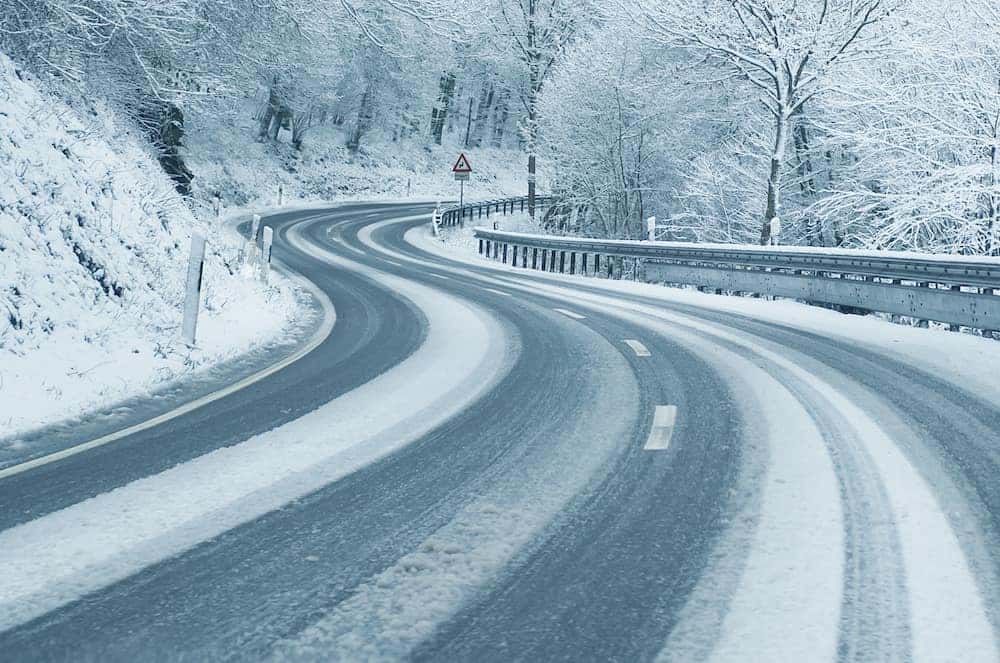
Forget the beach — the most dramatic winter landscapes are on roads where snow blankets the mountains and frosts the villages. These five routes deliver that magic, but each serves a different traveler.
| Road Trip | Best For | Key Condition | Base Town |
|---|---|---|---|
| New England Lighthouses | Postcard villages & coastal drama | Moderate snow; check I-95/Route 1 | Boston, Portsmouth, Portland |
| Colorado I-70 Corridor | Easy access + big ski mountains | Well-maintained; high traffic on weekends | Denver, Vail, Glenwood Springs |
| Utah Scenic Byway 12 | Red rock solitude under snow | Remote; services sparse; 4WD/AWD recommended | Bryce Canyon City, Torrey |
| New Hampshire White Mountains | Short, spectacular, classic New England | Moderate to heavy snow; mountain roads | Lincoln, North Conway |
| Vermont Route 100 | Ski culture, cozy towns, covered bridges | Well-plowed; ski traffic possible | Stowe, Wilmington |
New England: Boston to Maine Lighthouses
This isn’t a fast drive — it’s a slow coast from city lights to icy harbors where lighthouses stand guard over a frozen Atlantic. Start in Boston, take I-95 North to Route 1, and follow the shoreline.
The real magic begins north of Portsmouth, New Hampshire, where the vibe shifts from suburban to starkly coastal.
- The pay-off: Seeing Portland Head Light in Cape Elizabeth dusted with snow, with virtually no other tourists.
- The reality check: Many small coastal restaurants and shops close or reduce hours in deep winter. Pack snacks and check hours online before you go.
- Overnight stay: Base in Portland, Maine’s Old Port district for the best concentration of walkable hotels and restaurants. For a quieter, upscale stay, look at inns in Kennebunkport.
Colorado: Denver to Glenwood Springs via I-70
The I-70 corridor through the Rockies is Colorado’s main winter artery, and for good reason. It’s the easiest way to connect a major city to world-class ski areas and hot springs. The drive itself is stunning, but it can be crowded and require traction laws.
- The must-do stop: Glenwood Hot Springs Resort. Soaking in the world’s largest hot springs pool after a mountain drive is a non-negotiable reward.
- The smarter alternative: If Vail’s crowds and prices overwhelm you, exit at Copper Mountain or drive a few minutes past Vail to the Minturn area for a more local, less polished feel.
- Key logistics: Colorado’s Traction Law (Code 15/16) is in effect on I-70 from September to May. Ensure your vehicle has proper winter tires or chains. This is not optional.
Utah: Bryce Canyon to Capitol Reef on Scenic Byway 12
This 124-mile All-American Road is a winter secret. The red rock parks get dusted with snow, creating a surreal, quiet landscape you’ll share with few others. But this is a remote undertaking, not a casual cruise.
- Essential decision: Use a high-clearance vehicle with all-wheel drive. While the main road is often plowed, side roads and access to some viewpoints are not.
- The insider detail: The entire route has almost no cell service and few gas stations (Boulder and Torrey). Fill your tank fully in Bryce Canyon City or Panguitch before starting.
- Where to stay: Your only real base is Torrey, the gateway to Capitol Reef. Lodging options are limited — book the Cougar Ridge Lodge or Torrey Schoolhouse B&B well in advance. Don’t plan to drive this in a day from Bryce; stay in Torrey.
New Hampshire: The White Mountains and Kancamagus Highway
Locals call it “The Kanc,” and this 34.5-mile pass between Lincoln and Conway is the purest, most accessible shot of White Mountains winter scenery you can get by car. It’s a short, powerful drive.
- Time it right: Start early from Lincoln to have the pulloffs (like the Lower Falls) almost to yourself. The light is best in the morning.
- The critical detail: The Kanc is a fully serviced scenic byway only in summer. In winter, it is not treated for ice as aggressively as other highways. Drive cautiously, especially on shaded curves. The Passaconaway and Sugar Hill overlooks are plowed but can be icy.
- Base camp: Lincoln is the practical choice for direct access, with plenty of chain hotels. North Conway is better if you want outlet shopping and a larger town vibe after the drive.
Vermont: Route 100 Through Ski Country
This 216-mile artery runs the spine of Vermont, connecting classic ski towns like Stowe, Killington, and Mount Snow. It’s less about remote wilderness and more about the cozy, alpine village culture of New England.
The road is well-maintained, but expect slower speeds and plow traffic.
- Beyond the ski resorts: Stop in towns like Waitsfield or Weston. Weston is home to the Weston Playhouse and the Vermont Country Store — perfect for a non-skiing afternoon.
- The best side trip: From Waitsfield, detour east on Route 17 (the Appalachian Gap) for a steep, winding climb with phenomenal valley views. It’s plowed but challenging in snow — only for confident drivers.
- Lodging strategy: You can’t go wrong basing in Stowe for one or two nights. For something more intimate, the Green Mountain Inn in Waitsfield puts you central on the route with great access to Mad River Glen.
Most Scenic Winter Drives in the USA
Bare mountains and frosted valleys replace the summer crowds, offering a sharper, more dramatic perspective on America’s most iconic landscapes. These five routes deliver unforgettable scenery when the leaves are gone and the air is crisp.
Blue Ridge Parkway, Virginia
The Parkway in winter is a study in subtle beauty. With the foliage gone, the sweeping views of the folded Appalachian Mountains become infinite, and the bare tree canopy reveals hidden waterfalls and rock formations you’d miss in summer.
The drive is famously winding and slow—plan for that.
- Best for: Photographers and solitude-seekers who don’t mind unpredictable weather.
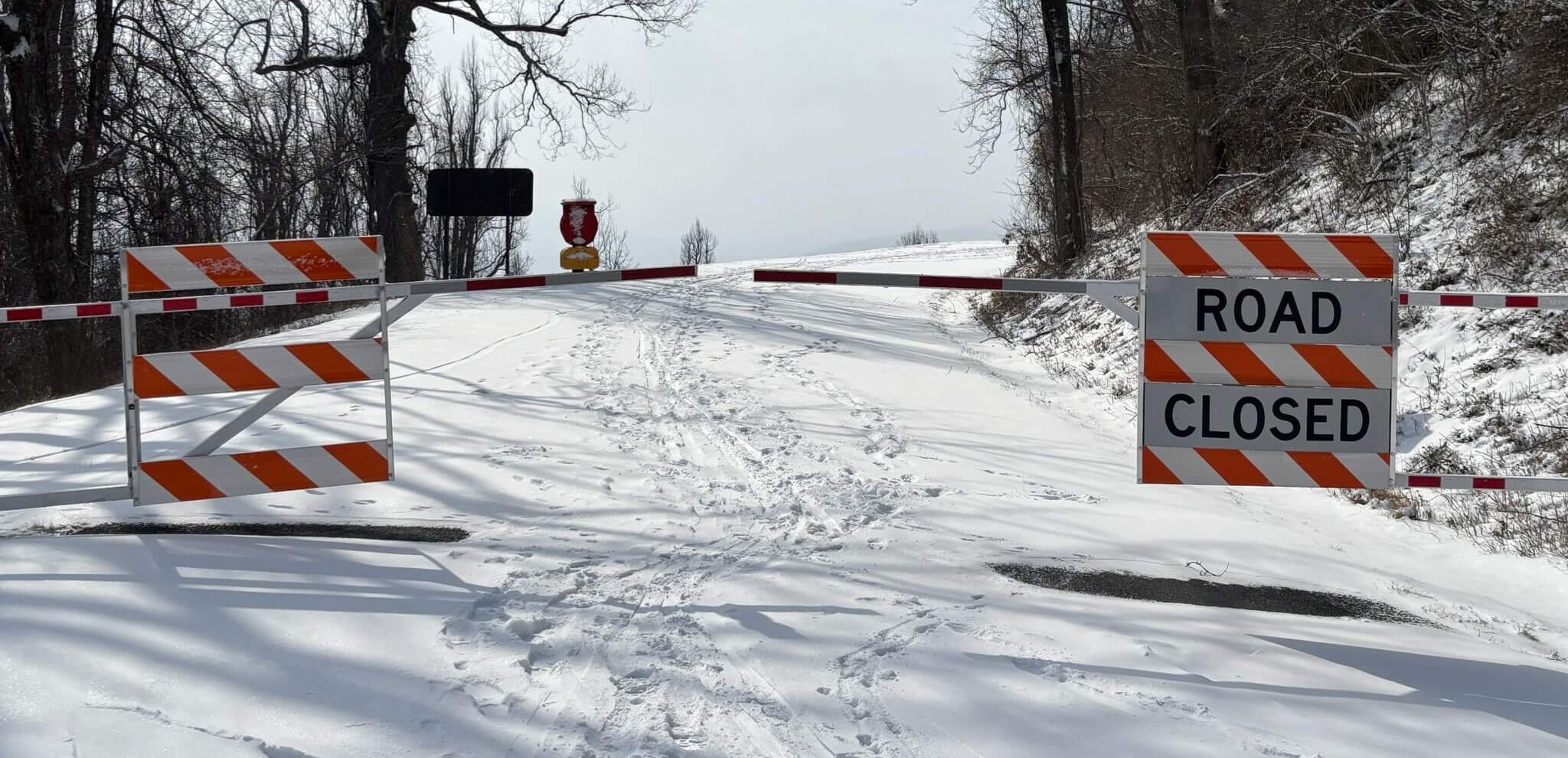
- Key detail: Sections are routinely closed for ice, snow, or fog. Check the National Park Service’s road closure map daily.
- Base yourself: Asheville, NC is the most robust gateway town for this route, with excellent food and lodging options. From here, you can enter the Parkway and explore segments like the Craggy Gardens area.
- Insider tip: Pack a thermos. The overlooks are breathtaking but breezy and cold in winter, and services along the parkway are almost entirely closed.
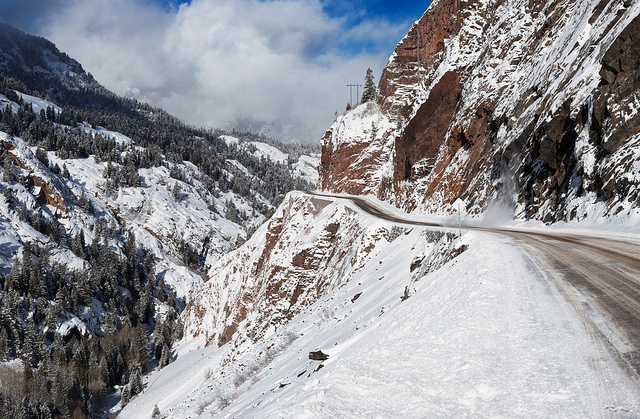
Million Dollar Highway, Colorado (US-550)
This 25-mile stretch between Ouray and Silverton is arguably the most thrilling winter drive in the Lower 48—sheer drops, no guardrails, and the towering San Juan Mountains blanketed in snow. It’s not for the faint of heart or those with a fear of heights.
- Best for: Experienced winter drivers seeking jaw-dropping mountain drama and access to skiing and hot springs.
- Key detail: The road is typically plowed, but chains or four-wheel drive with winter tires are often mandatory. Conditions change rapidly; an avalanche can close it without warning.
- Stay options: Ouray (“Switzerland of America”) offers hot springs lodges and cozy inns. Silverton is a historic mining town with more rustic options. Both are small, so book ahead.
- Do not miss: A soak in the Ouray Hot Springs after the white-knuckle drive.
Cascade Loop, Washington
A 440-mile circle through the Cascades, this loop packs in rainforests, glacier-capped peaks, and high desert. In winter, the snowy forests along Stevens Pass and the Methow Valley feel utterly magical, like driving through a snow globe.
- Best for: Those who want diverse scenery—mountains, valleys, and cute towns—in one trip.
- Critical note: The full loop is not possible in winter. SR 20 (North Cascades Highway) closes typically from November to April. Focus on the western leg from Whidbey Island over Stevens Pass to Leavenworth, or the eastern leg through the Methow Valley.
- Activity focus: Base in Leavenworth, a Bavarian-themed village that becomes a Christmas card in winter, for easy access to snowshoeing and cross-country skiing.
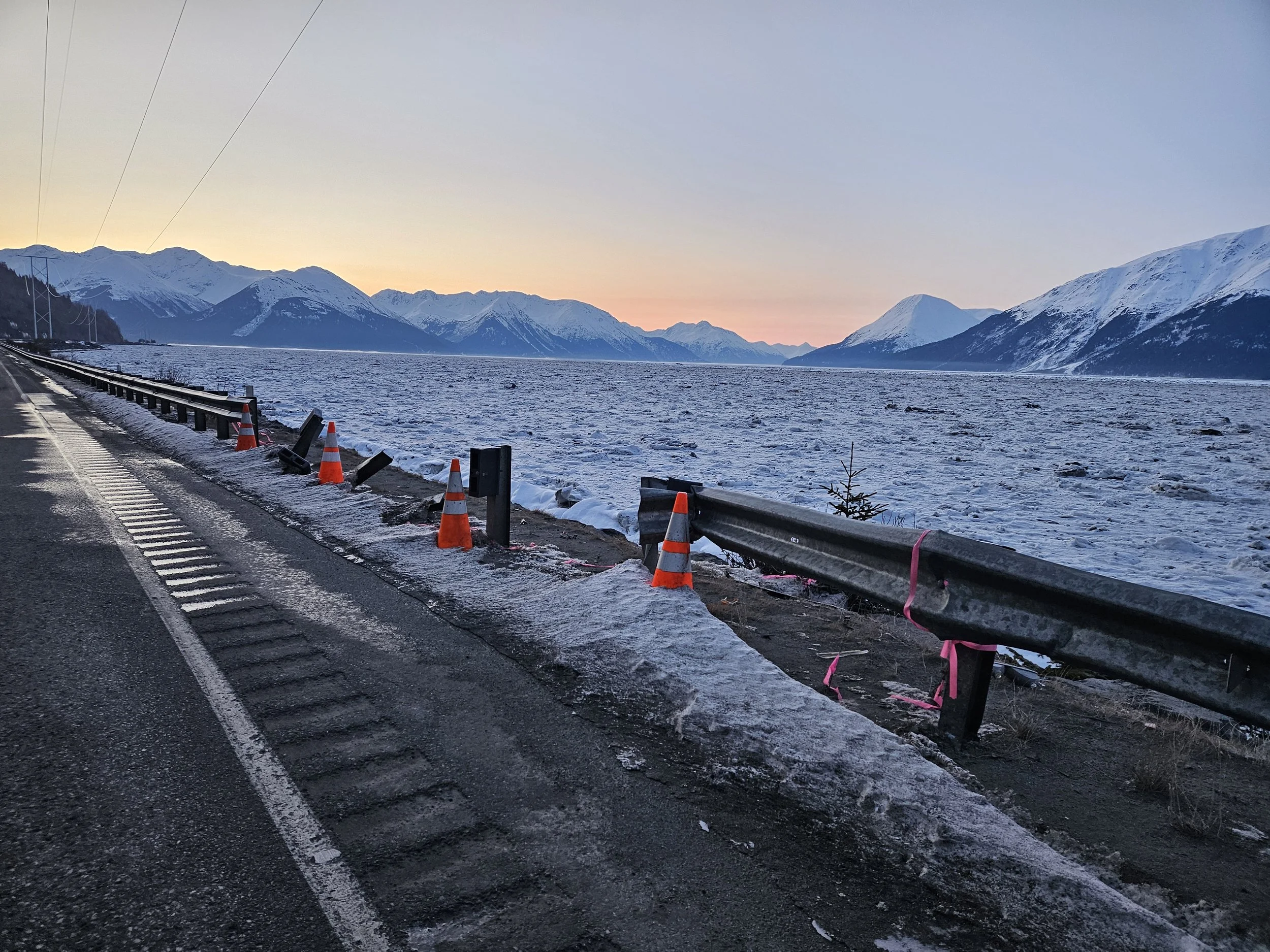
Seward Highway, Alaska
The 127-mile drive from Anchorage to Seward is a compressed tour of Alaska’s brutal winter grandeur: fjords, glaciers, and mountains where the sun hangs low on the horizon. The light in winter is uniquely golden and short-lived.
- Best for: The adventurous traveler prepared for extreme cold and limited daylight (around 6 hours in December).
- Key detail: Road conditions can be icy and snowy but are generally maintained. Wildlife sightings (moose, eagles) are common.
- Best activity: Take the Alaska Railroad’s Winter Hurricane Turn train from Anchorage into the backcountry for an even more immersive experience—book well in advance.
Natchez Trace Parkway, Mississippi to Tennessee
This 444-mile historic route offers a gentle, contemplative winter drive. Without the summer haze and traffic, the old-growth forests, cypress swamps, and rolling hills of Mississippi and Tennessee are peacefully stark.
Speed limits are low (50 mph max) by design.
- Best for: History buffs and drivers seeking a relaxed, non-mountainous route with minimal commercial traffic.
- Key detail: Services are scarce—the Trace is a protected parkway with no gas stations or restaurants on it. Plan fuel and food stops in towns like Tupelo, MS, or Florence, AL.
- Recommended pace: Don’t try to drive it all in one day. Break it into segments, overnighting in Natchez, MS, or Nashville, TN, and explore the well-preserved historical sites along the way.
| Drive | State(s) | Winter Vibe | Biggest Challenge | Best For |
|---|---|---|---|---|
| Blue Ridge Parkway | VA/NC | Subtle, misty mountain views | Road closures; limited services | Photography & solitude |
| Million Dollar Hwy | CO | Heart-pounding alpine drama | Steep cliffs; avalanche risk | Thrill-seekers & skiers |
| Cascade Loop | WA | Snowy evergreen forests | Major road closures | Diverse scenery & cozy towns |
| Seward Highway | AK | Boreal wilderness & low light | Extreme cold & limited daylight | Hardcore adventurers |
| Natchez Trace | MS/TN | Peaceful, historic countryside | No services on parkway | History lovers & easy pace |
Planning Your Winter Road Trip: A Step-by-Step Guide
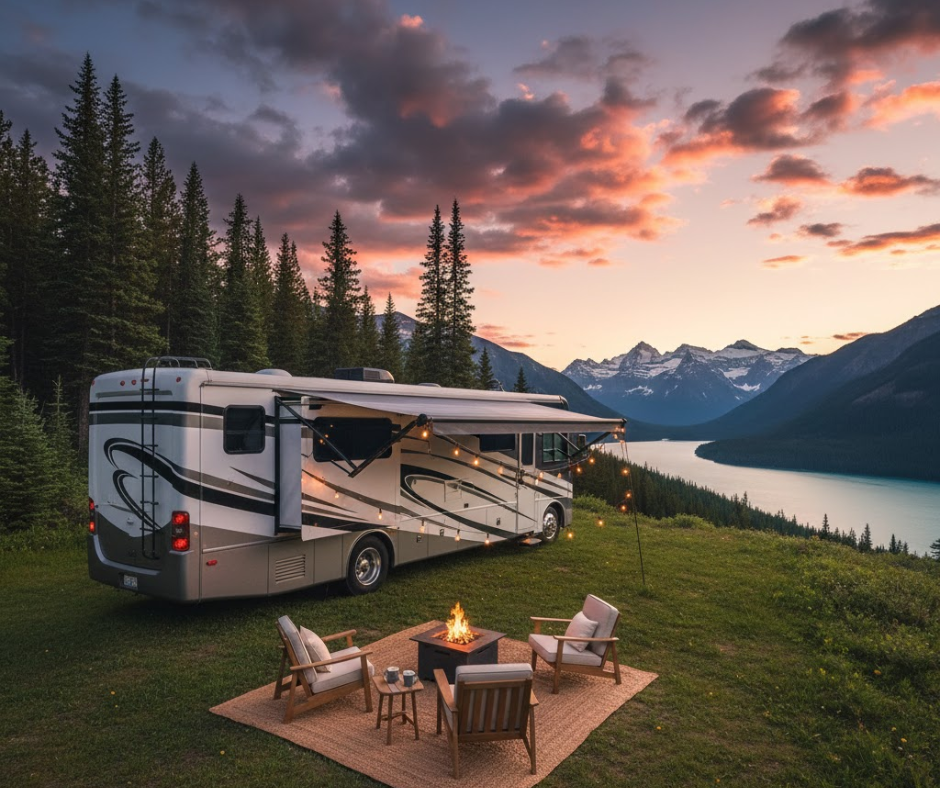
The difference between a stressful winter drive and a perfect one comes down to a few hours of smart prep. You’re not just planning a vacation; you’re orchestrating a mobile base camp for unpredictable weather.
Choosing the Right Route for Your Interests
Don’t pick a road trip based on a single photo. Match the route to your actual travel style.
- For warm-weather escapes and easy driving: The Florida Keys (Miami to Key West) or Georgia & South Carolina (Atlanta to Savannah) loops offer mild winter temps, low chance of ice, and plenty of coastal towns for overnight stops.
- For dramatic scenery and winter sports: The Colorado I-70 corridor (Denver to Glenwood Springs) or Utah’s Scenic Byway 12 deliver world-class landscapes, but require confidence with mountain driving and a flexible schedule for weather delays.
- For a cultural and culinary deep-dive: Louisiana Bayou (New Orleans to Lafayette) focuses less on miles and more on food, music, and history—ideal for a slower pace.
- For iconic, snowy wonderlands: New England’s Route 100 in Vermont or New Hampshire’s Kancamagus Highway are quintessential but expect cold, snow, and the need for a winter-ready vehicle.
When to Go: Timing Your Winter Road Trip
Timing isn’t just about temperature; it’s about cost, crowds, and daylight. The core advice: travel on weekdays whenever possible. Hotel rates often drop 20–40% compared to weekends, especially near ski resorts and popular national parks.
- Best Value: Early December (after Thanksgiving) and January (excluding MLK weekend) typically offer the lowest lodging rates and thinnest crowds.
- Best Weather (for warm routes): Late February through early April in the Southeast and Southwest offers the most reliably mild and sunny conditions.
- Best for Snow Activities: Mid-January through early March has the most reliable snowpack in mountain regions, but it’s also peak season. Book lodging 3–6 months ahead for popular Colorado or Utah mountain towns.
How to Find Accommodations on the Road
Winter travel demands a different lodging strategy than summer. Your top priorities should be access, cancellation policies, and included perks.
Book your first and last nights, plus any stops near major attractions, ahead of time. For the in-between, consider these options:
| Lodging Type | Best For | Insider Tip |
|---|---|---|
| National Park Gateway Towns | Proximity and early trailhead access | Book months in advance. The lodges *inside* national parks like Bryce Canyon or Arches are often cheaper than the gateway towns, but book a full year out. |
| Hotel Chains with Free Breakfast | Budget-conscious travelers, families | A free hot breakfast saves $30–$50/day for a couple. Chains like Hampton Inn and Holiday Inn Express are consistent bets. |
| Boutique Inns & B&Bs in Small Towns | Couples, atmosphere seekers | Often have fireplaces and local knowledge. Call directly; they may have last-minute availability not listed online. |
| Vacation Rentals (Airbnb/Vrbo) | Groups, extended stays, kitchen access | Filter for “instant book” and check for winter-specific amenities: working fireplace, good heating, covered parking. |
| Ski Resort Towns (Off-Peak) | Snow sports, vibrant apres-ski scene | Visit mid-week. Many resorts like those near Park City, Utah or Stowe, Vermont offer discounted midweek lodging packages. |
Creating a Flexible Itinerary
Winter roads are unpredictable. A rigid schedule is a recipe for frustration. Build your plan around “must-see” anchors, then fill in with options.
- The 60/40 Rule: Plan 60% of your trip (key overnight stops and must-do activities) and leave 40% open for weather changes, closed roads, or a town you want to explore longer.
- Daily Driving Limit: Cap driving at 4–5 hours per day. Winter daylight is short (check sunrise/sunset times for your route), and conditions can slow you down. This leaves time for activities and ensures you arrive at your lodging before dark.
- Have a “Weather Day” Buffer: If you’re driving through mountain passes (like I-70 in Colorado or the Cascades in Washington), build an extra day into your trip. Use it for a forced relaxation day if a storm rolls in, or as a bonus day to explore your favorite spot longer.
Insider Planning Detail: For routes with significant elevation changes (e.g., driving from Denver to Glenwood Springs), always check road conditions with the state’s DOT website *the morning of* each drive. Carry tire chains even if you have all-wheel drive; they’re often legally required during active snowfall.
What to Pack for a Winter Road Trip
Winter weather shifts fast enough to catch even experienced drivers off guard — a sunny morning in Denver can turn into a whiteout on I-70 by the Eisenhower Tunnel, and a mild afternoon in Vermont can drop 20 degrees after sunset on Route 100. Packing right for a winter road trip is not about overloading your trunk.
It is about choosing the exact layers, safety gear, and road supplies that let you adapt to whatever the next 200 miles throw at you.
Essential Clothing Layers for Changing Conditions
The biggest winter road trip mistake is packing bulky coats instead of versatile layers. You will cycle between heated car interiors, freezing gas station parking lots, short scenic stops, and warm restaurants — sometimes all within an hour.
Build a layering system, not a pile of heavy clothes.
- Base layer (moisture-wicking): Merino wool or synthetic long underwear tops and bottoms. Cotton kills warmth — skip it entirely. These go on first every morning and stay on all day.
- Mid layer (insulation): A fleece jacket or lightweight down puffy. This is your adjustable dial — wear it when stopped, toss it in the back seat when driving.
- Outer layer (shell): A waterproof, windproof jacket with a hood. Non-negotiable for snowy routes like New Hampshire’s Kancamagus Highway or Utah’s Scenic Byway 12.
- Bottoms: Fleece-lined pants or hiking pants over your base layer. Jeans absorb moisture and stay cold — leave them at home for anything north of Virginia.
- Accessories: Insulated gloves (not fashion ones), a wool beanie that covers your ears, a neck gaiter or balaclava, and wool socks — at least two pairs per day of driving. Cold feet ruin everything.
- Footwear: Insulated, waterproof boots with good tread for icy parking lots and trailheads. Pack a lighter pair of shoes for indoor stops so your boots can dry overnight.
Keep a separate dry bag in the car with a complete change of base layers. If you get wet — and you will at some point — having dry clothes within arm’s reach matters more than having ten jackets.
Car Emergency Kit Must-Haves
A winter road trip emergency kit is not optional, even on well-traveled interstates. Stranded vehicles on mountain passes, icy shoulders, and remote stretches of routes like the Million Dollar Highway or Alaska’s Seward Highway are real scenarios.
Here is exactly what to pack and why each item earns its trunk space.
- Jumper cables or a portable jump starter: Cold kills batteries overnight. A lithium jump starter costs roughly $60–100 and fits in your glove box — far better than waiting for a stranger in a blizzard.
- Ice scraper and snow brush (full length): Buy the longest one you can find. Short scrapers force you to lean across the hood, which leads to scratches and frustration.
- Foldable snow shovel: A compact aluminum avalanche-style shovel digs you out of unplowed pullouts. This is not overkill in Colorado, Vermont, or anywhere mountain passes are on your route.
- Traction aids: Pack a set of tire traction mats or even a bag of kitty litter or sand. Cheap insurance for getting unstuck on ice.
- Blanket or sleeping bag: One per person, stored in the passenger area — not buried in the trunk. If the engine dies, the trunk becomes unreachable in deep snow.
- First aid kit: Stock it with adhesive bandages, antiseptic, pain relievers, and any personal medications for at least 48 hours longer than your planned trip.
- Flashlight with extra batteries: Headlamps work best because they leave both hands free. Winter daylight ends around 4:30 PM in northern states during December and January.
- Tire chains or cables: Required by law on certain mountain passes in California, Colorado, and Oregon during winter months. Check your specific route’s chain requirements before departure — fines for non-compliance typically run $50–$250, and some roads will turn you around entirely without them.
- Windshield washer fluid (winter-rated to -20°F or below): Summer formula freezes on contact. Carry at least one extra gallon.
- Reflective triangles or road flares: Visibility drops fast during winter storms. Place them at 50, 100, and 150 feet behind your vehicle if you stop on a shoulder.
Before leaving, check that your spare tire is properly inflated and that you have the tools to change it. Cold air drops tire pressure — roughly 1 PSI per 10°F temperature drop. Under-inflated tires on icy roads are a leading cause of winter accidents.
Food, Water, and Snacks for the Road
Stocking your own food saves real money on a winter road trip — hotel rates and gas already take enough. Grocery stops along the way cut dining costs fast and keep you flexible when a snowstorm closes the only restaurant in a small mountain town.
- Water: Carry at least one gallon per person per day. Dehydration creeps up in heated car interiors even when it is freezing outside. Keep water bottles in the passenger cabin, not the trunk — bottles left in sub-freezing trunks can burst or become undrinkable.
- Sturdy snacks: Trail mix, jerky, nut butter packets, granola bars, dried fruit, and whole apples or oranges. These survive temperature swings without spoiling. Skip anything chocolate-based unless you want a melted mess on your dashboard.
- Easy meals: Pre-made sandwiches, hard-boiled eggs, cheese and crackers, and instant oatmeal packets that work with hot water from a gas station. A small insulated bag keeps perishables safe for the first day or two.
- Thermos: Fill it with hot coffee, tea, or cocoa before each driving day. A 20-ounce stainless steel thermos keeps liquids hot for 8–12 hours and eliminates expensive coffee shop detours.
- Cooler strategy: Use a hard-sided cooler as your pantry, not a beer fridge. Fill empty space with crumpled newspaper or towels — insulation works better when there is less dead air. In below-freezing temps, a cooler actually protects food from freezing solid.
Hit grocery stores in larger towns for restocking. Smaller mountain towns and rural gas stations charge a premium for basics. Stock up when you see a Walmart, Kroger, or Aldi — your next stop might be a three-hour stretch with nothing but highway.
Gadgets and Gear for Comfort and Safety
The right gadgets turn a stressful winter drive into a comfortable one. You do not need a gear overhaul — just a handful of items that solve the specific problems cold-weather driving creates.
- Phone mount and car charger: Your phone battery drains 2–3 times faster in cold weather. A dashboard mount keeps navigation visible without holding the phone, and a dual-port USB charger (at least 2.4 amps per port) keeps both driver and passenger powered up.
- Downloaded offline maps: Cell service disappears across large stretches of routes like the Natchez Trace Parkway, rural Vermont, and much of Alaska. Download Google Maps or Apple Maps offline areas for your entire route before you leave home.
- Hand warmers and toe warmers: A box of disposable chemical warmers costs under $15 and provides instant relief during scenic stops, short hikes, or roadside emergencies. They last 5–8 hours each.
- Portable battery bank: A 20,000 mAh power bank charges a phone 4–5 times. Keep it inside the car, not in the trunk, so it stays warm enough to function.
- Sunglasses: Winter sun glare off snow is blinding, especially at higher elevations. Polarized sunglasses are not a luxury — they are a safety item on routes like Colorado’s I-70 corridor or the Blue Ridge Parkway on clear winter days.
- Windshield sunshade (for cold mornings): Placing one on the inside of your windshield overnight prevents frost buildup on the glass. Saves 10–15 minutes of scraping every morning.
- Seat cushion or heated seat cover: If your car lacks heated seats, a 12V heated seat cover plugs into your cigarette lighter and makes long winter drives dramatically more comfortable. They typically cost $20–$40.
- Compact binoculars: Winter wildlife — elk in Colorado, eagles in Alaska, frozen waterfalls in New Hampshire — rewards a closer look. A small pair in the glove box gets more use than you expect.
One final detail most packing lists skip: bring a small dry bag or zip-lock bag for your phone when stepping out in snow or rain. Wet phones fail. A $2 waterproof pouch eliminates that risk entirely.
Winter Driving Safety: Essential Tips
Black ice forms at 32°F or below — and you won’t see it until your tires lose grip. That single fact should shape every decision you make on a winter road trip, from tire choice to travel timing.
Winter driving varies dramatically by state and elevation, so what works on a coastal Georgia highway will get you stranded on a Colorado mountain pass. Here’s how to handle every scenario.
How to Drive in Snow and Ice
Snow and ice demand a fundamentally different driving style. Most winter accidents happen because drivers maintain summer habits — following too closely, braking too hard, or steering too aggressively. Slow down before you need to, not after.
- Reduce speed by 30-50% on snow-packed roads. Posted speed limits assume dry pavement. On ice, even 30 mph can be reckless.
- Double your following distance to 8-10 seconds. Stopping distances on ice stretch up to 10 times longer than on dry roads.
- Brake gently and early. Slamming brakes on ice causes instant skidding. Ease onto them. If your car has ABS, press and hold — the pedal will pulse, which is normal and means it’s working.
- Turn into a skid, not away from it. If your rear wheels slide left, steer left. It feels wrong, but it works. Don’t overcorrect.
- Never use cruise control on wet or icy surfaces. If the car hydroplanes or hits a patch of ice, cruise control accelerates to maintain speed — exactly the worst response possible.
- Use low beams in snow, not high beams. High beams reflect off falling flakes and reduce visibility. Fog lights help in heavy snowfall.
- Keep your fuel tank above half. Running out of gas in freezing temperatures turns a minor inconvenience into a genuine emergency. A fuller tank also adds weight over your rear axle for better traction on rear-wheel-drive vehicles.
What to Do If You Get Stuck
Getting stuck in snow isn’t a question of if on a long winter road trip — it’s when. What separates a 15-minute delay from a dangerous situation is preparation.
- Never spin your wheels. This digs you deeper and can overheat your transmission. Instead, gently rock the car between drive and reverse, applying light gas each direction.
- Clear snow from around your tires and undercarriage. A small folding shovel (typically $15-25 at any auto store) is worth every inch of trunk space. Traction mats work even better.
- Place kitty litter, sand, or salt in front of your drive tires. This creates grip on packed snow. Floor mats work in a pinch — lay them rubber-side down under the tires.
- If truly stranded, stay with your vehicle. Your car is visible to rescuers and provides shelter. Run the engine 10-15 minutes per hour for heat, but crack a downwind window slightly to prevent carbon monoxide buildup. Make sure the exhaust pipe is completely clear of snow first.
- Turn on hazard lights and tie a bright cloth to your antenna or door. Visibility is everything when rescue crews are searching in heavy snow.
Insider move: Pack a dedicated winter kit in an old cat litter bucket — small shovel, jumper cables, a wool blanket, hand warmers, flashlight, and bottled water. Total cost is under $40, and it fits behind your back seat.
Drivers in northern states consider this standard equipment, not optional. Don’t wait until the first storm to realize you need it.
Checking Road Conditions and Weather Updates
Every northern and mountain state maintains a real-time road condition system. Use them — not just your weather app. General forecasts miss localized black ice, avalanche closures, and chain requirements that DOT sensors catch in real time.
| Resource | What It Covers | Best For |
|---|---|---|
| State DOT 511 websites and apps | Real-time closures, chain requirements, construction | Day-of driving decisions |
| National Weather Service (weather.gov) | Zone-specific forecasts, winter storm warnings, wind chill | Planning 1-3 days ahead |
| Google Maps traffic layer | Crowd-sourced slowdowns and accidents | Live rerouting |
| State-specific webcam portals (COtrip.org, TripCheck.com, NVroads.com) | Live camera feeds on mountain passes and remote highways | Visually confirming actual conditions |
Check conditions the night before each driving day, then again 30 minutes before departure. Weather in mountain passes changes by the hour — a clear morning can become a whiteout by noon.
Chain and traction laws vary by state and road. Colorado’s I-70 corridor requires traction devices (chains or winter-rated tires with the three-peak mountain snowflake symbol) from roughly September through May. California requires chains on certain Sierra Nevada passes regardless of vehicle type.
Violating these laws means fines and being turned around — wasting hours you can’t get back.
Emergency Protocols and Communication
Cell service drops to zero on many of the best winter routes — mountain passes, rural highways, and national park roads. Assume you’ll lose signal and plan accordingly.
- Tell someone your exact route and expected arrival time before every driving day. A simple text: “Driving US-550 from Silverton to Ouray today, ETA 2pm.” If you don’t check in by evening, they know where to start looking.
- Download offline maps before you leave home. Google Maps and Apple Maps both allow offline area downloads. Do this for every segment of your trip, especially mountain and rural areas where cell towers are sparse.
- Carry a portable power bank rated for cold weather. Cold drains phone batteries up to 50% faster than normal temperatures. Keep your phone in an inside jacket pocket close to your body when not actively using it.
- Know your exact location at all times. If you need to call for help, “I’m somewhere on that mountain road” wastes critical time. Note mile markers, highway numbers, and the last town you passed.
- Call 911 even without cell bars. Your phone will attempt to connect to any available tower, including other carriers. Even a failed call can ping your approximate location to dispatchers.
- Consider a satellite communicator for remote routes. Devices like the Garmin inReach Mini typically run $300-400 plus a $15-50 monthly subscription, but they work anywhere via satellite. For routes through Alaska, Utah’s backcountry, or the Colorado Rockies, this is genuine peace of mind — not overkill.
A winter breakdown is entirely survivable with the right preparation. The drivers who end up in real trouble are the ones who treat a January mountain pass like a July highway cruise.
Pack smart, check conditions daily, and adjust your timeline without ego. The destination isn’t going anywhere.
Sample Winter Road Trip Itineraries
These four routes cover vastly different terrain — high desert art towns, Bavarian mountain villages, frozen waterfalls, and slot canyons — and each one works as a complete winter trip without burning PTO you’ll regret.
| Route | Days | Distance | Standout |
|---|---|---|---|
| Denver to Albuquerque | 7 | ~450 mi | Santa Fe art + New Mexican green chile |
| Seattle to Leavenworth | 3 | ~130 mi | Bavarian village draped in half a million lights |
| Niagara Falls to NYC | 3 | ~410 mi | Frozen falls to Manhattan skyline |
| Phoenix to Page | 2–3 | ~280 mi | Red rock canyons + Horseshoe Bend |
Denver to Albuquerque Road Trip (7 Days)
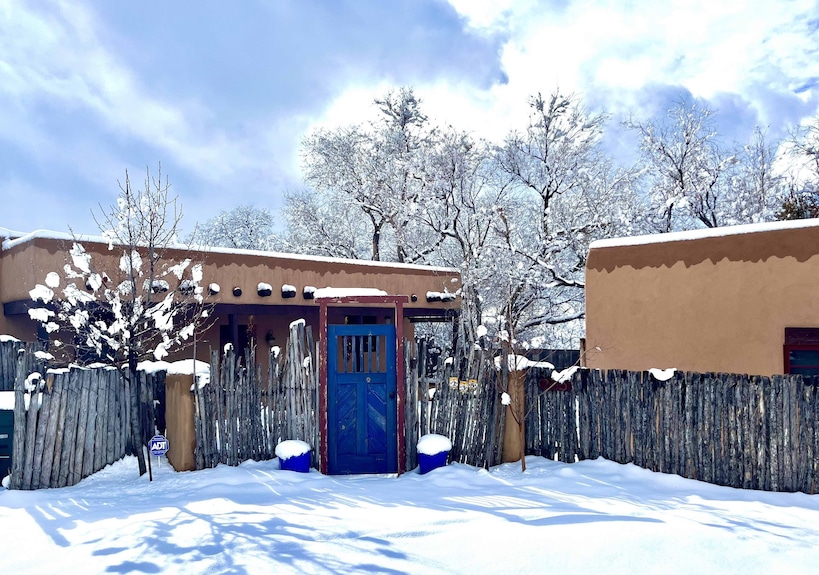
This I-25 corridor delivers more culture per mile than almost any drive in the West — snow-capped peaks behind Garden of the Gods, art galleries stacked three-deep on Canyon Road, and green chile on literally everything from breakfast burritos to cheeseburgers. At roughly 450 miles total, seven days gives you generous time to linger in the two cities that deserve it most.
Days 1–2: Denver to Colorado Springs (~75 miles, 1.5 hours)
Start with Garden of the Gods — the red sandstone formations against a snowy Pikes Peak backdrop are genuinely better in winter than summer, and parking is free. The Cheyenne Mountain Zoo is worth the admission for its mountain overlook alone.
Base yourself downtown or near Old Colorado City for walkable dinner options.
Days 3–4: Colorado Springs to Santa Fe (~250 miles, 4 hours via I-25 through Raton Pass)
Push straight through to Santa Fe — the drive through Raton Pass is scenic but not worth splitting into an overnight unless you genuinely love tiny New Mexican towns. Once in Santa Fe, spend two full nights.
Base yourself near the Plaza or on Canyon Road for walkable access to galleries and restaurants. This is the trip’s anchor city.
Must-do in Santa Fe:
- Canyon Road: Over 80 galleries in a half-mile stretch. Most open around 10 a.m. — go early to browse without weekend crowds.
- Meow Wolf: House of Eternal Return: An immersive art installation that works for adults and kids alike. Book weekday tickets in advance; weekend slots sell out.
- The Plaza restaurants: Green chile stew at The Shed or posole at Tomasita’s — both are institutions, not tourist traps.
Days 5–6: Santa Fe to Albuquerque (~65 miles, 1 hour)
Albuquerque’s Old Town is smaller and quieter than Santa Fe’s Plaza but worth an afternoon for its centuries-old adobe architecture and local jewelry vendors. The Sandia Peak Tramway runs year-round and delivers a 2.7-mile ride to 10,378 feet — winter sunsets from the top are spectacular.
Base yourself in Old Town or the Nob Hill neighborhood for the best restaurant access.
Day 7: Depart Albuquerque
ABQ Sunport is a strong departure airport with direct flights to most major hubs. If driving back, break the 450-mile return into two days with an overnight in Las Vegas, New Mexico — a small, photogenic town with well-preserved Victorian architecture and none of the Santa Fe tourist markup.
Insider detail: New Mexico’s famous “green chile cheeseburger trail” isn’t a formal route — it’s a collection of roadside diners and drive-ins across the state. Ask any local in Albuquerque or Santa Fe for their favorite and you’ll get a passionate, specific answer.
Blake’s Lotaburger is the statewide chain version, but the real gems are mom-and-pop spots in towns like Hatch or Socorro.
Lodging baseline: Expect roughly $120–$180/night in Colorado Springs, $150–$250/night in Santa Fe near the Plaza, and $100–$160/night in Albuquerque — though prices vary by season and provider. Book Santa Fe early; it’s the most in-demand stop on this route.
Seattle to Leavenworth, Washington (3 Days)
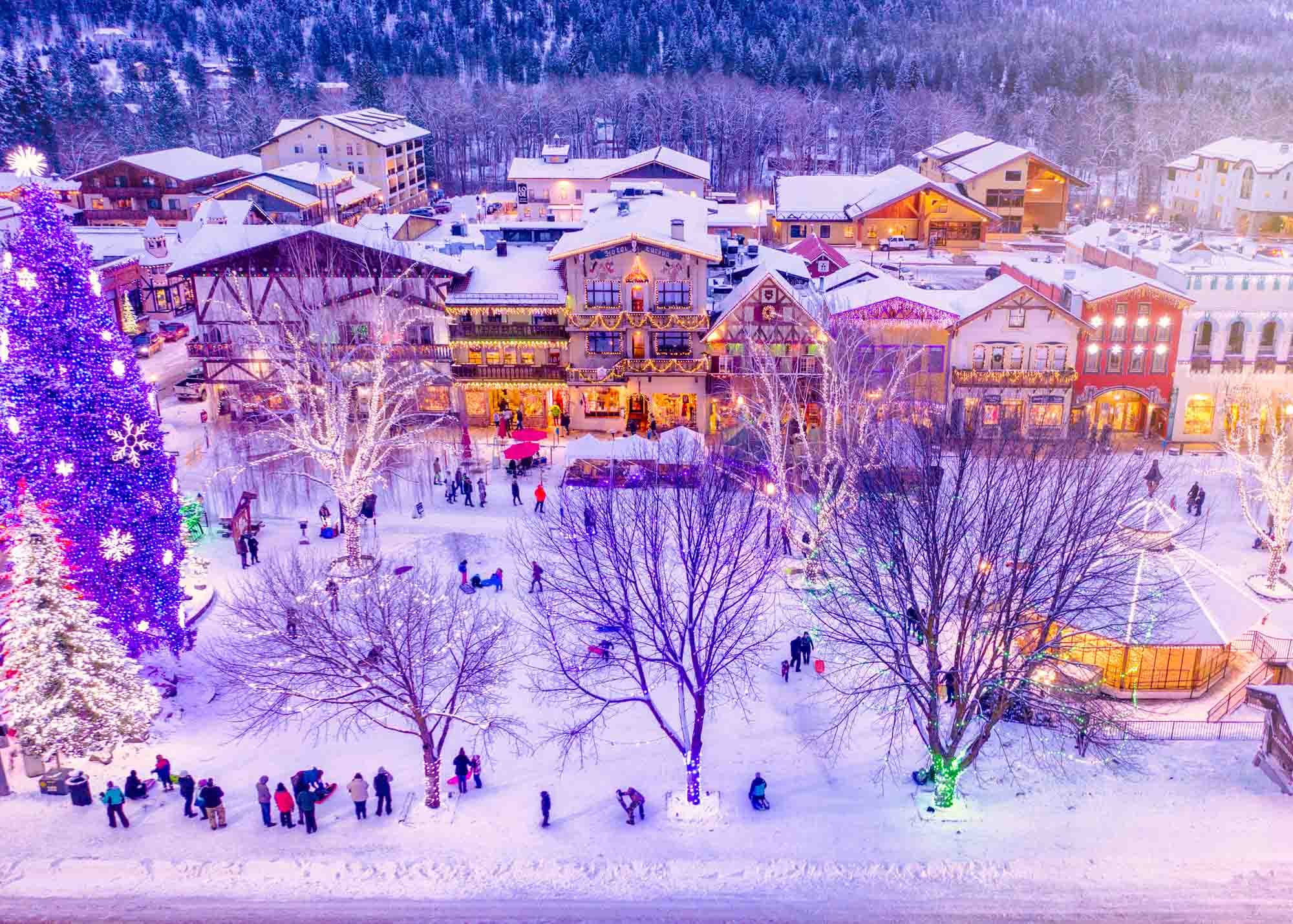
Leavenworth’s half-a-million Christmas lights stay up through late February, transforming this Bavarian-themed mountain village into something that looks pulled from a snow globe — and unlike December, you can actually get a dinner reservation without booking weeks ahead.
Day 1: Seattle to Leavenworth via Stevens Pass (~130 miles, 2–3 hours)
Take US-2 over Stevens Pass rather than routing through Blewett Pass — the scenery is better and you’ll pass through the tiny town of Skykomish, a decent coffee-and-snack stop. Stevens Pass ski area sits right on the route if you want to squeeze in a half-day on the mountain.
Arrive in Leavenworth by mid-afternoon to wander the village before dark, when the lights turn on.
Day 2: Full day in Leavenworth
- Morning: Snowshoe or cross-country ski at the Leavenworth Ski Hill or Icicle River trail — rentals are available in town.
- Afternoon: Wine tasting along Front Street. Several tasting rooms pour Washington state wines, and they’re rarely crowded midweek in winter.
- Evening: Dinner at Andreas Keller for the full Bavarian experience (live accordion music, schnitzel, and German beer on tap) or Munchen Haus for casual sausages and craft beer under heat lamps.
Day 3: Explore and return
Drive the short stretch of Icicle Road for frozen creek views and pull off at any trailhead that looks passable. Head back to Seattle by early afternoon, or extend to a fourth day if conditions are good for skiing at Stevens Pass.
Insider detail: Midweek winter rates in Leavenworth are dramatically lower than weekends — some hotels drop 30–40 percent. The Enzian Inn and Bavarian Lodge are the most popular picks, but smaller B&Bs on the edge of town offer better value and often include breakfast.
Staying within walking distance of Front Street matters in winter when roads can be icy — you’ll want to park the car and not touch it again.
Weather note: Stevens Pass can close temporarily during heavy snowfall. Check the Washington State DOT pass conditions page before departing Seattle, and carry chains regardless of your vehicle — they’re sometimes required by law on US-2.
Niagara Falls to New York City (3 Days)
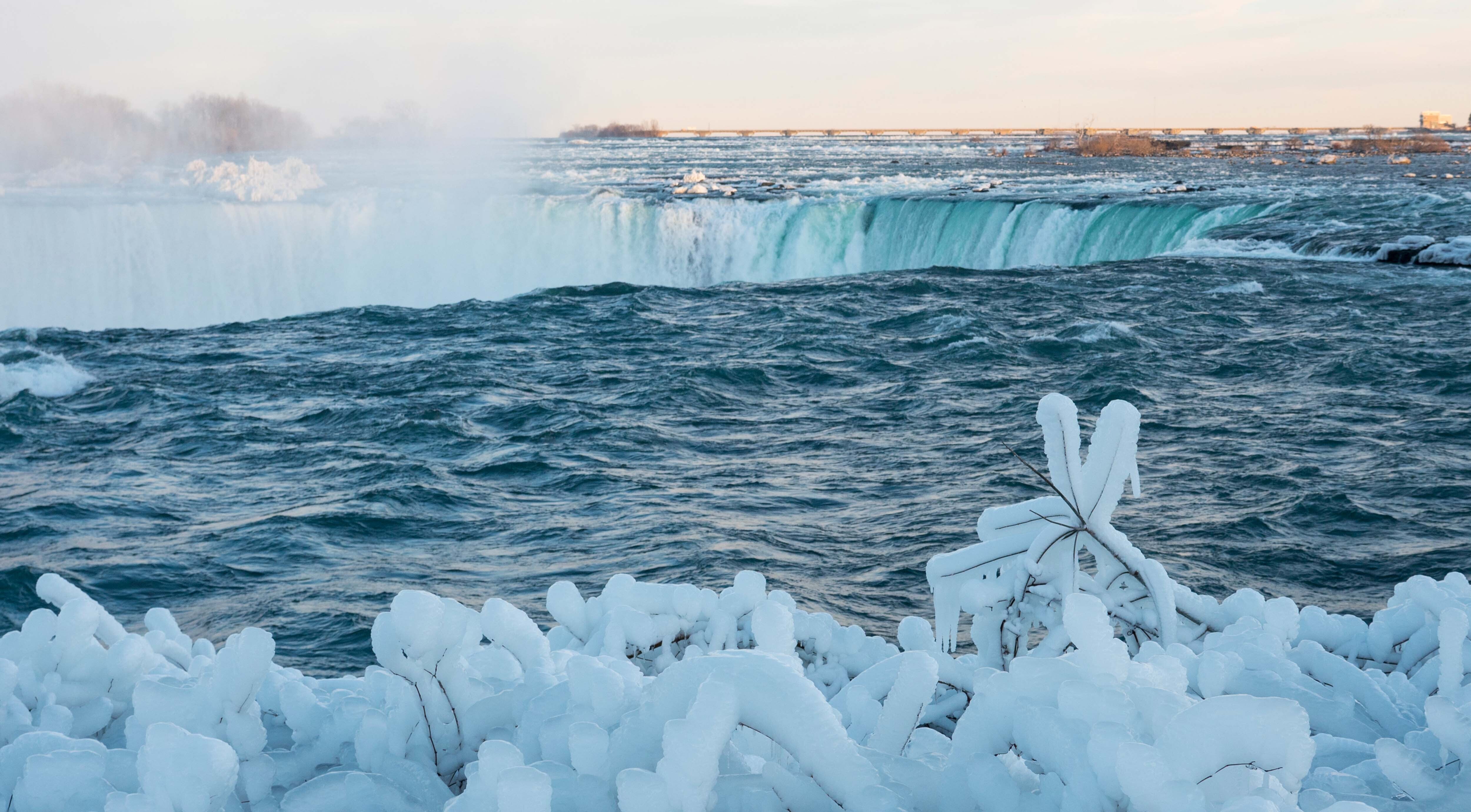
At 410 miles, this route trades the predictable tourist-heavy summer version of Niagara Falls for a nearly empty observation deck where ice mists your eyelashes, then threads through Finger Lakes wine country and the Hudson Valley before dropping you into Manhattan — one of the most dramatic final-act city arrivals of any American road trip.
Day 1: Niagara Falls to Finger Lakes (~175 miles, 3 hours)
Spend the morning at Niagara Falls State Park — the American side’s observation areas stay open year-round, and winter means virtually no crowds. The Cave of the Winds attraction closes seasonally, but the falls themselves don’t need an activity to justify the visit; the frozen mist columns are the show.
Afterward, head southeast through Buffalo toward the Finger Lakes. Skaneateles, on the northern tip of Skaneateles Lake, is the best overnight base — it’s a walkable village with good restaurants and a lakefront that looks sharp under winter light.
Day 2: Finger Lakes to Hudson Valley (~200 miles, 3.5 hours)
Drive south through the Finger Lakes and pick up I-88 or Route 28 toward the Hudson Valley. This stretch is heavy on rolling farmland and small towns — charming but not packed with stops, so drive with intent.
Rhinebeck or Hudson, New York, make excellent overnight bases. Both have walkable downtowns with independent bookshops, farm-to-table restaurants, and enough character to justify a full evening wandering.
Rhinebeck skews quieter and more village-like; Hudson has a trendier, Brooklyn-adjacent energy with antique shops and cocktail bars.
Day 3: Hudson Valley to New York City (~100 miles, 1.5–2 hours)
Take the Taconic State Parkway or Route 9 south into the city for a scenic alternative to I-87. Arrive in Manhattan by early afternoon to avoid the worst of metro-area traffic.
Drop the car at a rental return in Midtown or the Upper West Side — you won’t need or want a vehicle in NYC.
Insider detail: Manhattan hotel rates drop significantly in January and February compared to the holiday surge. Expect roughly $150–$250/night for a mid-range hotel in Midtown or the Lower East Side during winter weeks — prices that would be unthinkable in October or December.
Book hotels with subway access within a block or two; walking four avenues in January wind chill is miserable.
Phoenix to Page, Arizona (2–3 Days)
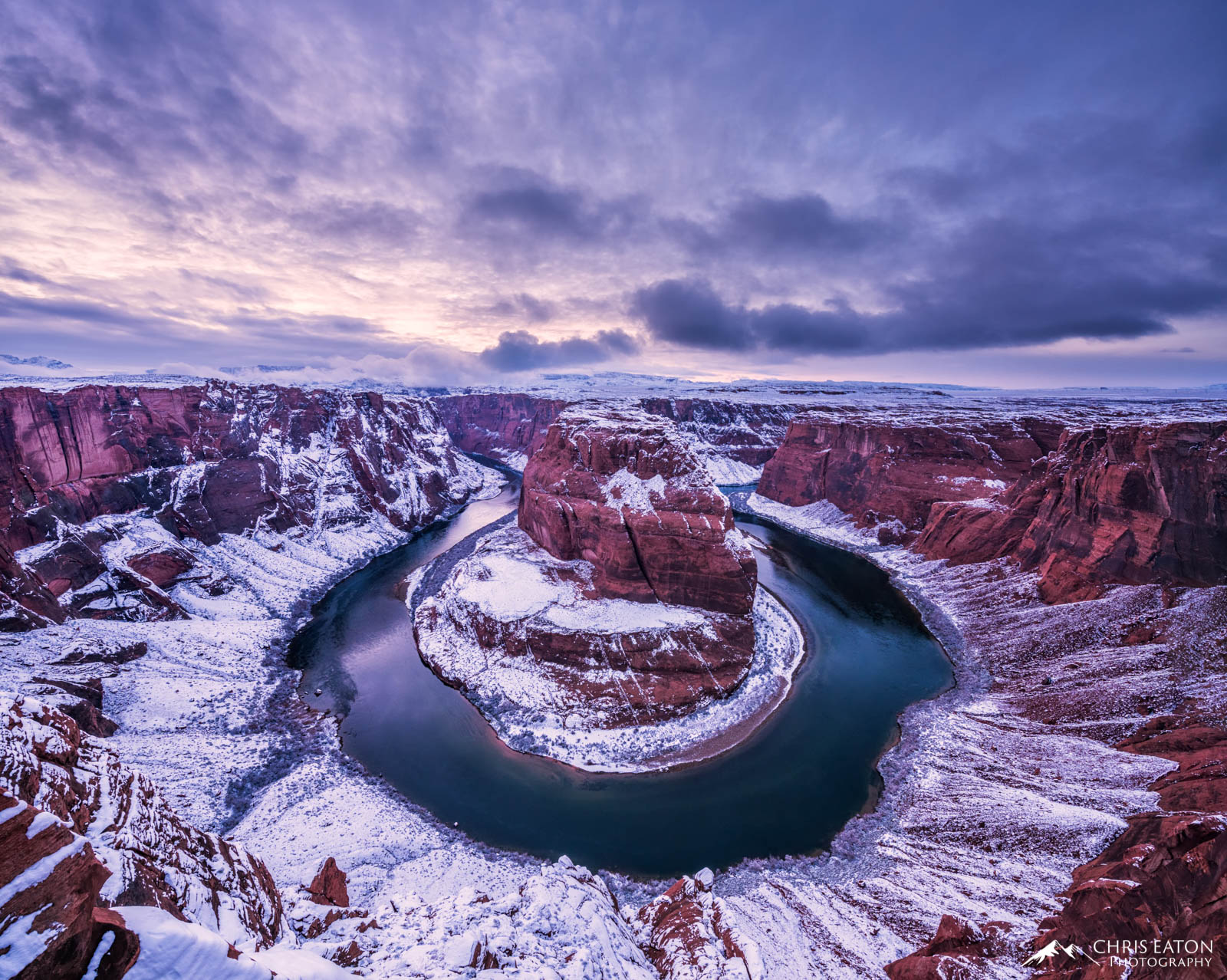
This 280-mile route climbs from Sonoran Desert cactus to high desert ponderosa pine to Navajo sandstone in under five hours of total driving — but three days lets you stop at every viewpoint that deserves lingering, which is most of them.
Day 1: Phoenix to Sedona (~115 miles, 2 hours)
Leave Phoenix on I-17 north, then take the AZ-179 exit into Sedona. The red rock formations along this final stretch — Bell Rock, Cathedral Rock, Courthouse Butte — are the most photographed in Arizona for good reason.
Winter brings fewer tourists, shorter wait times at trailheads, and crisp air that makes the red rocks look even more saturated against blue sky. Base yourself in Uptown Sedona or along 89A near Tlaquepaque Arts Village for walkable access to galleries, restaurants, and trail access.
Day 2: Sedona to Flagstaff to Page (~170 miles, 3 hours total)
Drive AZ-89A through Oak Creek Canyon — a winding, forested ascent that’s one of the most scenic drives in the state — then continue to Flagstaff. This mountain town sits at 7,000 feet and gets genuine snow, so check road conditions before committing.
Lowell Observatory on Mars Hill is worth a quick stop if you’re passing through in the afternoon. Push on to Page via US-89 through the Navajo Nation, arriving by late afternoon for sunset at Horseshoe Bend.
Day 3: Page area
- Horseshoe Bend: A 1.5-mile round-trip walk from the parking lot. Winter sunset light hits the Colorado River at an angle that can make the water glow green-blue — arrive 45 minutes before sunset for the best positioning.
- Antelope Canyon: Located on Navajo Nation land and requires a licensed tour operator — book ahead, as tours can sell out even in winter. Upper Antelope Canyon is the more accessible option; Lower requires climbing ladders.
- Lake Powell: Wahweap Marina area is the main access point. In winter the lake is quiet and most boat tours suspend operations, but the shoreline views from the overlooks remain open.
Insider detail: The parking lot at Horseshoe Bend charges a per-vehicle fee (typically $10 for private vehicles — confirm current pricing with the Glen Canyon National Recreation Area). Arriving before 9 a.m. or after 4 p.m. in winter means you’ll share the overlook with a fraction of the summer crowds.
There’s no shade, no guardrails in some spots, and the drop is 1,000 feet — wear proper shoes, not sandals.
Lodging note: Page is the only real base for exploring Horseshoe Bend, Lake Powell, and Antelope Canyon. Expect roughly $80–$150/night at standard motels and $150–$250 at lake-view properties — though prices vary by season and provider.
Sedona is pricier; budget $180–$300/night for a central location. In both towns, booking midweek saves money and secures better room selection.
Budgeting for a Winter Road Trip
The biggest winter road trip budget mistake isn’t overspending on a fancy lodge—it’s failing to account for the cold itself. Your heater runs constantly, daylight hours are shorter meaning more nights in lodging, and vehicle fuel efficiency drops in freezing temperatures.
Build your plan around these seasonal realities first.
Estimating Fuel Costs for Your Trip
Forget generic gas calculators. Winter driving burns 15-25% more fuel due to idling, cold engines, and winter-grade gasoline blends.
For a 1,500-mile trip in a typical SUV, budget $250-$350 for fuel (at roughly $3.50-$4.25/gallon, though prices fluctuate wildly by state and season). Use the GasBuddy app to plot state-by-state prices along your exact route—the difference between filling up in Colorado versus Utah can be significant.
Finding Affordable Hotels and Rentals
The cheapest room isn’t the best value. Prioritize these factors in order:
- Free hot breakfast: This single amenity saves $30-$50/day for a couple. Properties like Holiday Inn Express and Residence Inn consistently deliver this.
- Indoor parking or a garage: Essential in snowy regions to avoid scraping ice or digging out your car at 7 AM.
- Weekday stays: Hotel rates in popular winter destinations (Park City, Stowe, Jackson) often drop 20-40% Sunday through Thursday. This is your single biggest savings lever.
Book a refundable rate, then monitor prices. If you find a better deal within the cancellation window, rebook. Use the “map view” on booking sites to find hotels just outside a ski town’s core—often a 10-minute drive saves 30% with identical access.
Saving on Food and Activities
Your road trip cooler is your best friend. Stock it with:
- Breakfast staples: Yogurt, granola, fruit. Eat a real breakfast at your hotel, then save the cooler food for lunch.
- Lunch-building supplies: Deli meats, cheese, bread, wraps. Picnic at scenic overlooks or park visitor centers (many have heated indoor spaces in winter).
- Snack arsenal: Nuts, jerky, fruit, protein bars. Gas station snacks are a budget killer.
For activities, leverage the “free” list heavily. Scenic drives, snowshoeing on public lands (often free with no pass required), exploring charming downtowns like those in Vermont’s ski villages, and soaking in natural hot springs (like those near Glenwood Springs, Colorado) cost little to nothing.
A National Parks Pass ($80/year) is worth it if you’ll hit three or more parks.
Budgeting for Emergencies and Extras
Winter requires a thicker financial cushion. Add 15-20% to your total estimated trip cost for:
- Vehicle preparedness: New wiper blades, a winter emergency kit ($40-$70 for a good one with jumper cables, blanket, and shovel), and a full tank anytime you’re in remote areas.
- Weather delays: One unplanned hotel night due to a closed mountain pass. Budget for it mentally.
- Spontaneous splurges: That hot chocolate at the lodge after a freezing hike, or a discounted mid-week ski lift ticket.
Keep this emergency fund separate—a prepaid travel card or distinct savings account you don’t touch unless absolutely necessary.
| Budget Category | Two-Week Trip Estimate (Per Person) | Pro Tip |
|---|---|---|
| Fuel | $400 – $700 | Hybrid or fuel-efficient vehicles pay off fast in winter. |
| Lodging | $840 – $1,400 | Book mid-week in resort areas for the deepest discounts. |
| Food & Drink | $420 – $700 | A cooler and grocery runs cut this by 30-40%. |
| Activities & Fees | $200 – $400 | Prioritize free adventures; ski mid-week for deals. |
| Emergency Buffer | $200 – $400 | Non-negotiable in winter. Weather is unpredictable. |
| Total Estimate | $2,060 – $3,900 |
Insider Detail: Winter tire requirements are legally enforced on many mountain passes (I-70 in Colorado, for example). Not having them can result in a fine and being turned around—completely derailing your budget and timeline.
Confirm chain/tire requirements for your specific route with state DOT websites before departure.
Frequently Asked Questions
What’s the ideal length for a winter road trip in the USA?
For routes like the Blue Ridge Parkway or Colorado’s I-70 corridor, three to five days hits the sweet spot — enough time to explore without rushing through the best stops. Longer journeys like Atlanta to Savannah or a multi-state southwestern loop work best at seven to ten days, giving you buffer for weather delays and the freedom to linger in towns worth a second night.
If you have two weeks, go big: cross-country trips or deep dives into one region become realistic, and you’ll have room for spontaneous detours when a frozen waterfall or unplanned hot spring demands your attention.
How do I keep a winter road trip affordable?
Travel on weekdays whenever possible — hotel rates in popular winter destinations typically drop 20 to 40 percent compared to weekend pricing, especially around ski towns and southern beach cities. Book hotels that include free breakfast; it’s the easiest budget win on a road trip.
Hit grocery stores along your route for snacks and simple meals instead of dining out for every stop. Prioritize free activities: scenic drives, short hikes, wandering through small towns, and pulling over at overlooks cost nothing.
Splitting gas and sharing a room as a couple makes multi-day trips surprisingly cheap compared to flying and resort stays.
What do I need to pack that I wouldn’t think of for summer trips?
A winter road trip trunk needs layers, not just one heavy coat. Pack a warm hat, gloves, and a waterproof outer layer for stops at overlooks and short hikes — you’ll be jumping in and out of a heated car into freezing air constantly.
Keep a blanket, ice scraper, and a small bag of kitty litter or sand in the trunk for traction if you get stuck on icy shoulders. Carry extra water and snacks in case weather closes a pass or delays you by hours.
A portable phone charger matters more in winter because cold drains batteries fast, and you may need navigation rerouted around closures.
Are winter road trips actually less crowded than summer?
Yes — and it’s the single biggest reason to choose winter. Expect significantly fewer tourists at national parks, scenic overlooks, and small-town restaurants, especially on weekdays.
Traffic on popular routes like the Natchez Trace Parkway or coastal drives drops noticeably. The trade-off is shorter daylight hours and the real possibility of weather-related road closures in mountain regions, so build flexibility into your schedule.
But for anyone who hates fighting summer crowds at places like Garden of the Gods or Vail, winter delivers the same scenery with a fraction of the people.
Ready to Roll?
Pick your vibe—sun-soaked keys or snowy peaks—and lock in your first and last night’s lodging now. Booking your rental car and flights immediately is crucial, as winter prices spike fast.
A winter road trip delivers America’s landscapes at their most dramatic, with far fewer people to share them with.
Go book that first flight and car rental today; your unforgettable winter drive is waiting.
Leave a Reply